












![[일반물리학 & 고급물리학 강의] 3-(1)-3. 렌즈에 의한 상](https://i.ytimg.com/vi/R3JyaBU3zxA/hqdefault.jpg?sqp=-oaymwEmCOADEOgC8quKqQMa8AEB-AH-CYAC0AWKAgwIABABGGIgFSh_MA8=&rs=AOn4CLB4p1YmpjdQWF6PpA7mq57WssU7YQ)












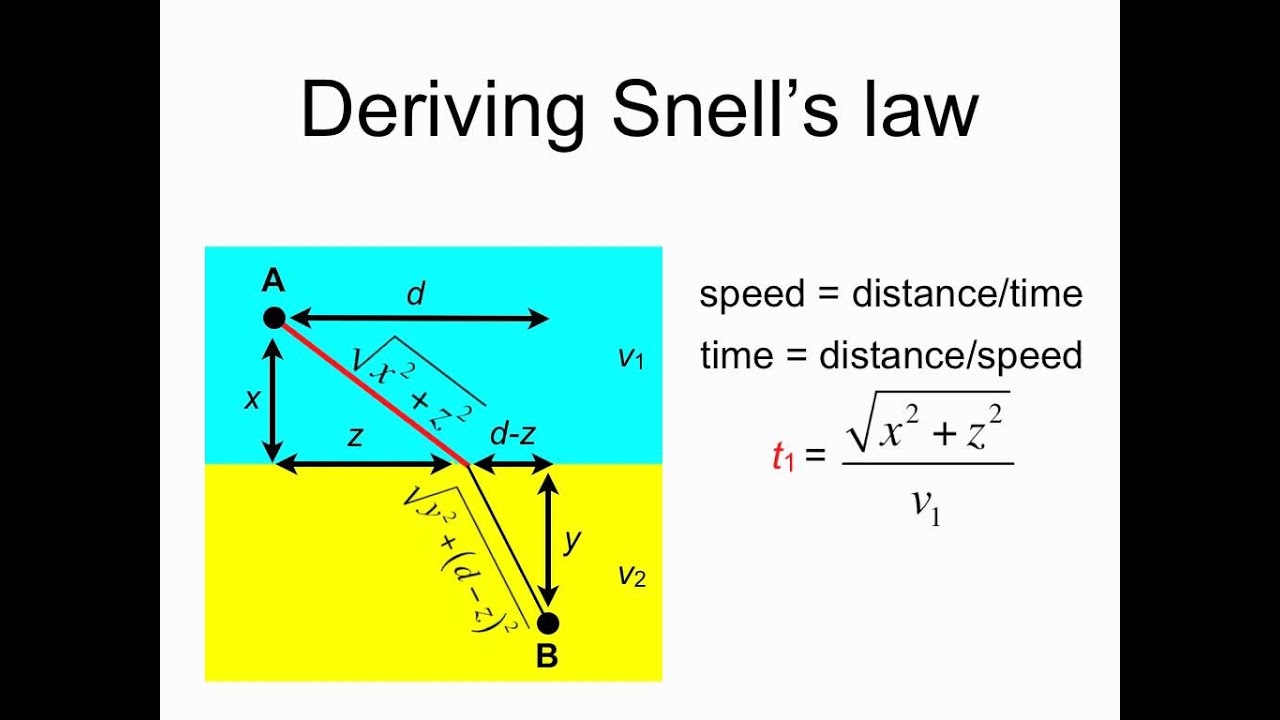
This lecture covers fundamental principles of geometric optics including pinhole imaging (simplest imaging device forming inverted images with size dependent on object distance), laws of reflection (angle of incidence equals angle of reflection, incident ray, reflected ray, and normal lie in one plane), and spherical mirrors (concave and convex types with focal length equal to half the radius of curvature). The course also covers Snell's law for refraction (n1 sinθ1 = n2 sinθ2), critical angle and total internal reflection (occurring when incident angle exceeds critical angle, enabling fiber optics and right-angle prisms), and prismatic effects in lenses (Prism Diopter = height in cm × lens power in diopters). Clinical applications include retinoscopy, ophthalmoscopy, and prisms for measuring squint angles and relieving eye strain.
Geometric Optics I: Pinhole, Mirrors, and Refraction
Added:bismillah ar-rahman ar-rahim badminton in amateur Ilgaz Hospital optics talented inertia goes another a teeny Mitama therapy geometric optics pinhole optics what spin wound it's the simplest imaging device type Donna city responder foodie Donna and the object which would act as a source of light one the screen a monthly aperture so error which will act as a pinhole one the film other stay Bradley it will image many rays a dilemma at daya mineral pinhole the MHD at the Posche Flamel is a HEPA faint whatever inverted we're size Baja will depend on the object distance to the pinhole type the image data by inverted action erase a I mean top will bottom of the object would intersect at a pinhole like the size of the pinhole will be one or two millimeters in diameter and not less than one millimeter live-action know who LM in one millimeter it will lead to decrease in the resolution by diffraction that he clinical uses of the pinhole lenin an ideal a diameter of the pin hole is one point two millimeter anti to uses clinical uses I would hide to scream in errors without lenses is a here without restriction to the amount of light that enters the pupil and reduces the blue circle on the back of the retina and will lead to increase individual equity then Hagar Donna Angie I yen the pistol cracked in James's potato hot italian pinhole harder are will cause of the decrease in visual equity is a lana lab is to enlarge the tattoo hot italian pinhole now eight individual equity with r2z edit if l costs henna Konya orleans opacity Lee Shannon opacity with a little visual equity by scattering types highlight in an elated individual equity the unlit eBay L cosine and the macular disease as decrease in the amount of the light geometric optics would even as I lived world in Adobe M chief of staff leave me with semi-arid later an occurrence or the Rays D salable mirrors balance type I was in are of Elmo pineal the doula Maher al-asad yes at Hagerman our bar about cylinder last minute at D our Hegeman Contessa I has a transmission Duda now insert header is boomer or ADO Den Haag among Contessa a reflection of light so a speaker ow diffuse tell it Hegeman tassel he'll absorption of light low in acid header or peak media rubber hanger ma-kun tassel here combination to Coulomb Assam reflection of light what's the definition of reflection it is the sent back of light at an interface between two media into the first medium example light reflection by matters types of reflection is either specular reflection or diffuse reflection type law after London Ana and Assad when Assad had died he Valley a shot to do when Assad had a most of themes is a tremor a the inertia fiend Faro razzamafoo phonetic had cooling a charlatan Z Buddha was yeah the nikes world of motivation violation a sofa letter McCune wife dig a Mayan with a holiday in Samia specular reflection dive low in subtle and emotions Taoism a very ninety-first millennium phonetic at wooden in a char Minar casa had an extra ticket and patella fun holiday with Samia and diffuse reflection glimmer and I Kazuto Montpelier salon Torino in Minami read a map limb middle o spiritual matter well had an FTD Nicola Murray high-heeled limiters was abdomen Academy rules of reflection vishwatma so hot Pleasant Abarth in huh that was sinner a smelly foodie they who were normal normal it is the line perpendicular to the surface at the point of reflection the a heel angle of incidence is the angle between in Norman incidentally the be Hale angle of reflection is the angle between normal with a flick today the rules of reflection and the two rules I will rule with would in an angle of incidence equals the angle of reflection Danny Hagar incidentally would reflected ray who Norman iterator are all in one plane type sorter glimmer of The Bachelor Hamill is day when I was such first millet a CD I'm deeply mirror wine the object with an image detail damage the bipasha climate is a bit a virtual Annie virtual yawning shri mother shuffle screen will acquaint erect module will be a same size and same distance Jonnie Jonnie in myself am I being an object would clean mirror he he equally massive Amma be implemented will image will occur man laterally inverted why shanky the helmet ambulance out his hive with mm of to Bob likes Al Arabiya to decide Lee a chinois novices film array when I say the mega was a limit is half a suitable model uses of play mirror it can be used in retinoscopy indirect ophthalmoscope ii in slit lamp and three mirror corner lands and all of this will be discussed later then I have an anomaly in the spherical mirror what's the definition of spherical mirror it's a reflecting surface having the form of a portion of sphere that was the types of spherical mirror we have two times the first one is concave mirror if the reflecting surface lie inside the curve the second one is convex mirror if the reflecting surface lies outside the curve type was the rules of spherical mirror fish white monster hot resin Navarre FINA navasana a smelly no city in Hawaii its center of curvature hawa is center of sphere of which the mirror is a part of a whole pole of the mirror of Harvey that is centered reflecting surface type a hole radius of curvature how distance may be see Willie for the radius of curvature the be whole principal axis over the principal axis no a is axis passing through the pole of the mirror type what's the principal focus in our heart we left it's the point in front of concave mirror or behind convex mirror at which parallel raised to the principal axis are reflected type a word focal lens focal length is the distance my beam f Willie Oh half C a radius of curvature type no personal our last meeting I would ask Maggie Lana and Imre it could be Taha Kabir's a de la sha in mutasa Linea in a slatted Maria could show a few minimal a when a ticket in sod in Maria Kabir and Lena shafted gamma so utmost Oliva how different for size M - why I mean Lee haggis man's physical abrasion table Anna and the Marais the curve of Daha soil ze de L a sharp the gamma Florida focus how to construct an image by spherical mirror ELISA McCool and ii telephoto in our navasana largest mallet at d as an echoing image doesn't even little attitude I would hot lower a real parallel to the principal axis will horrible Luna less data will be reflected to the principal focus type ten-hut array from the top of an object passing through centre of curvature at Auburn last murder will be reflected upon itself tear it hot array passing through the principal focus the whole balloon laughs Dada will be reflected parallel to the principal axis checklist surat al concave mirror which clam alizée the characteristic of the image will depend on the distance of the object situated on the well access from the mirror Annie alla hasa McCain an object minimally and la vecina Allah our asthma lower object a McKenna octoman center of curvature after Missy mhm potato well as far as apply harmless they have a tab area we inverted we diminished McKenna Mabini LF you see the pilot in object and the center of curvature and see the MHA anomalies they have a real we inverted same size McKenna and the C type now will object became a beam see will F and M Sheva at harmless day at a Perry who inverted who magnified were McKenna after you see dive Halton an object and the element principal focus in mhm batalla con unless they have a virtual direct magnified am avenues well convex mirror LM Egypt at the bomb less they learn and the object data at any finite distance on the principal axis of the mirror the image will be virtual where it we diminished McKenna inside F versions are reflecting power in all versions are reflecting power or aloft a Shahadah hell to it concave mirror be a positive the healthy convex mirror will be a negative I'm a healthy primera B / 0 type how to calculate the position of the image will formula d non-iodized in distance of the object minimal a1 the focal length of the mirror other Allah will distance of the image minimal a type unification the harder a supposed a pill Formula D Nana ass him in height of the image ala l height of the object what's the of thermic uses of the spherical mirror number one in return asked P and ophthalmoscope e number two to study red reflex and number three cornea is treated as a convex mirror in croteau meter and all of these will be discussed later refraction Alan Kassar was the definition of refraction it is like bending on passing obliquely between two transparent median of unequal dynasty fish white mr. heartless in Arafah Louis in a less manly foodie a whole normal world hotter not balloon it is with the over line perpendicular to the interface at the point of refraction type a hora the angle of incidence D is the angle between incident ray will not dub a here an angle of refraction D is the angle between the refracted ray we normally type any rules of refraction our Snell's law I would hide in the incident ray would refracted ray will normally with the letter all in one plane type now Anna and E incidentally perpendicular to the interface they normal it will pass undeviated tell it Hagar in the incident ray will refracted ray lies on the opposite side of the normal rubber Hagar and one Lael incident in this x sine angle of incidence equals and to Elia refracted index times sine angle of refraction type hems Hagar and assign angle of incidence Allah signer angle of refraction equal constant nail em out the index of refraction one DSO Hagar new n equals speed of light in vacuum Allah speed of light in the medium factors affecting refractive index and it that Haggard be a sort of refractive index our Haggard came here composition of the material then high temperature will borrow metric pressure will be small enough to be ignored except heritage silicon tell it haggle wavelengths linen short wavelengths travel slower then long wavelengths wash Ankita by banda higher refractive index Alligator Alley da da da da refractive index less some materials we mean residue often requires refractive index tile airs one refractive index Tarwater 1.33 doctor cornea 1.37 the aqueous and width is 1.33 the ground glass 1.52 PMMA 1.49 put a credit beeper 1.46 with silicone 1.44 tap how to measure refractive index it is measured by ABS refractometer and it depends on critical angle high refractive index material them ona in the chemical composition of the material is very important as a factor affecting its effectiveness with daily coulombs telefilm at the lab nevermind high glass Estela effective at next item type out hagen caramel in her glass window na ground glass with the undue relative low refractive index love foreign to the way and wild loss factor n expect a 1.5 buddha man almond Alec Trevelyan silicate Finnerty knee a small plant plus refractive index pair of 1 point 65 with a most norman lead oxide Mehsana in Devon Inlet oxide that acts as a source of pollution for today arou the millennia they live titanium or zirconium pin or telling a small titanium reptilians be more recently where my Zetas Nova very thin very flexible Wando High attractive index range it from 1.7 to 1.9 Fino a small and l+ with a with an object is I still Armenian mr. Noah very thin were effective index potato 1.9 am Abin is valid plastic phenomenon when plastic is no polycarbonate plastic mama is heir to a Noah 50 vegandon no current Doble glass who acts as a natural violent filter want to hire effective index 1.6 watching today mr lumic did not die watch the disadvantages of highly effective index material I would hire and then whip it out week until healthy crown glass with me tell 2 point 5 gram per centimeter cube - Bell Atlantic glass will be tail for gram per centimeter cube hunter polycarbonate plastic we will be tell 1.2 gram per centimeter cube hugger 10 you need these lenses are not impact resistant percent begin to mean it is real and apparent depth objects in an optically dense medium appears displaced when viewed from less dense medium and he and mostly a smell of body no Angie soil båstad Samak lishala mineral ammonia because Allah refraction wash an effective annexed Alma actor min in L a Charlotte alladhi with Salah refraction away from the normal washes oily surface simcha we have a projection little raised a little Adi if I had been Lisa mica displeased on mechana Hawaii by washing Kayla objects in water seem less deep then they are type parallel side plate of glass don and the peroxide p2 plus Damon would Andy Torres Montaigne laurenandy incidentally a salut refraction we are solar reflection team in one area in animation trader build a parallel to incident ray must be deviated laterally example the teaching mirror Phil indirect refraction by a glossary laminar flow Slidell applicator non Andy incident three salute refraction will emerge in three lotta Lotta become Perl little incident tree must be laterally displaced but this displacement depends on fifteen incident angle we thickness dial it of Gloucester critical angle Sheena from here critical angle ambos harassment foodie laughter on analysis of light ammonia Lea moon more denser medium than air will to do the without Mustafa today in Nevada a salut refraction away from the normal ly due to the increase in the velocity flight in the second medium real ear while Rainicorn Marriott though it a do column a refracted ray is refracted away from the node one but after a meal do had muscle in affected vada is parallel to the surface of the water over Haredi we call an angle of incident lady critical angle whenever affected angle lady equals ninety degree perdóname into do GL is ugly the holiday race feels to emerge from this denser medium and is reflected back to itself at this case we'll call it total internal reflection and the angle of incidence is larger than the critical angle if critical angle E here it is an incident angle in a denser medium with refractive angle equals 92 Haredi the index of refraction equals one Alice sign with critical angle critical angle that will crown gloss equals 41 degree by a Lea total internal reflection the mourner if the incident angle is greater than critical angle the ray will be totally reflected type in clinical application that alone a total internal reflection here I will hide it occurs at the surface with the eye and prevent visualization of parts of the eye as the angle of the anterior chamber type to overcome this with we apply contact lens made of a material with a higher refractive index than the eye and we fill the space with gel to destroy in corneal air and affecting surface but then he had stirred amethyst detainee forms of prison used in ophthalmic insturments as right angle prism tell Tiger the fiber optics the hay fiber optics mercenary smell audacity him Kawena meanie consists of a core of transparent solid material with a higher refractive index surrounded by cladding with a lower refractive index even make away Namine core mean higher refractive index Wiley haven't surrounded cladding was lower and refractive indices linked Elmen highly reflective endings to lower and an effective index between the core and the glass tube is the goal of repeated total internal reflection prisms lol press press miss a portion of a reflecting medium bodied by to play in reflecting surface which are inclined at finite angle at the apex of the prism cold retracting of apical and type lava Sun are a smelly fully present a macaw a mini with calm in epics hill epics the angle entirety in semi an apical angle hula bees when an orientation of the present is indicated by the position of the bees rule in imprisoned peace out this in this up this down but a person already a he an angle of daeviation to an Angie incident tree a solo refraction with Guinea immersion three angle in mavin hundy in Samia angle of daeviation if a here angle of deviation which is the total amount of deviation between incident ray and emergent ray type in angle of daeviation D depends on e our higher on incidence angle the personal president Elaine Donna and the incident ray the solute refraction our surface water soluble fraction terrible surface teenie geenie emergent tree Lao n incident angle equal emergent angry fahara d LD our angle of daeviation been Samia angle of minimum daeviation but I wanna Andy present in fear print his position and imprint his position in an incident three hard surfaces Eleni perpendicular to it Machado refraction were hassle refraction and surface attain who were heard by Jeanne immersion three in angle D been Samia angle of daeviation if a here print his position is the position in which the prison is oriented such that their light enters it at an angle of ninety degree to the first surface and it will not be refracted at this surface and all deviation caused by the prism takes place at exit surface Jenny hi garnet if we can angry Hallinan and is more apical angle LM Mahadeva sign nil angle to be equally angry type Holiday Inn angle of minimum deviation equals 1/2 little egg teletig angle Prizm material the AMOLED applicator effective and ecstatic length will be that will crown glass real data titanium kahlúa puny fact appendix most alpha we tell no angle of daeviation of the rubber hi candy wavelengths of light has none and II do feel well Mustafa who called me lonely wavelength move to live another hundred Allah presents a forest MIDI pain Castle cool you do al-hasa with less detail within haggis man chromatic dispersion which roof at well octave light of shorter wavelengths is deviated more than light of longer wavelengths type AB number he will add number did a measurement for the material dispersion column an AB number the Z column at dispersion metal material de and present measurement replacement as butter a teeny a man president dr. absent rod type panic Alomar prison doctor a whole prison doctor a prism of one doctor produces a linear apparent displacement of one centimeter of a tangent of an object situated at 1 meter type II wasn't rod sinned rod it is the strength of a press which produces an apparent displacement of one centimeter of an arc of the object situated at 1 meter by Nagini calomel a worker is Matic effect of lens apprentice rude how are never not allow behind no equals h VD will H stands for distance from optical center in centimeter we Dida halwa a lens power type a year clinical importance platter prismatic effect of lens hacked in our Hager Colette Illinois Zootopia ever been learning with kun after me in doctor la mulana give us a develop small duration neuro hip abbas is very high optical center laughs AHA gasps man single vision differential prismatic effect now after min wonder up to Lion highest achievement vertical diplopia 10 hyah the centration film spectacle lenses now and now in an optical centre of the lens does not consigned was center of the pupil family prismatic effect why Schanke Donna bamadoro laser a poodle IPD mas whoop as a novel optical center of the lens which would them most problem had a milli prismatic effect special types of prisms and friends present a rotatory prism in who will free the oppressed Mahabharat plastic thin flexible membrane of peril tiny prisms of identical apical angle type OA based on e1 opposite for the conventional present a the inertial term in non refracting portion hey Jeanie el Freeman present lead acidy that acts as a single large prism undo light weight one to larger diameter optical element ty was the advantage of freedom press advantage tattoo and huwa b path in uno light in which no undue large diameter so it can be applied to the back surface of the spectacle lens type what's this advantage disadvantage potato and how a bit decrease visual equity due to the visibility of the grooves and due to the reflection and scattering of light from the prism facet 10 Hagen calimary ha ha ha to replace a whole rotor to repress who are abhorrent to presence of equal power power that counter-rotate each other these prisms are placed one on top of the other initially their base direction are exactly identical but as the prisms are rotated their base is moved by equal extent in opposite direction for example suppose to presence of 10 doctor each are placed on top of one another base to base the total prismatic effect will be equal to nth adapter but if they are placed base to ables the total prismatic effect will be equal to zero so the net power is a vector addition depending on the power and the direction of such prisms a special types of prisms used in optical instrument and the right angle prism on D a dog prism opposite imprisonment avellaneda our right angle prism with 90 degree deviation the angle of incident bataille turbot kun 45 degree which is grated then the critical angle of the glass which is 41 washing kada bezel total internal reflection nested entry in the - lady strike a surface de which is on the side of the right angle and emerge from the surface on the other side al-hawa de with 90 degree deviation and mg love authority had a bilaterally transposed novice it will appraise Metheny de for a right angle prism with 180 degree division with a me Porro prism the incident really deaf lady strike beside them which is opposite to right angle yes a low total internal reflection with Guinea 180 degree deviation the image after cloudy happily inverted as a press monkey who is both press with no deviation and less than 3 - lady Salah total antenna reflection in image laterality had a very inverted but not laterally transposed thermic uses of bezel and it at least the met our higher we saw them after instruments they shot the right angle prism to deviate trace dan Hagar study method diagnostic Emma to measure angle of squint combined with Maddox wrote how to estimate a relative range of convergence after Hagane therapeutic saw a kinetic sir sizing our living will exercising two strands weak muscle palatal horizontal phoria without web after exophoria our base in fill easily seldom recommend for relieving I strain a little hyper Fourier who command mr. de Mille old press BIOS
Up Next

IGCSE Physics Unit 3: Waves Revision for 2023 Syllabus
@PhysicswithMoAli
200.3K views•2023-04-19

21cm Hyperfine Transition in Neutral Hydrogen: Radio Astronomy Basics
@AaronRobertParsons
12.4K views•2011-10-13

NMR Spin Physics I: Zeeman Effect, Resonance Condition & Larmor Frequency
@nptel-indianinstituteofsci8064
2.3K views•2024-01-17

Entropy and the Second Law of Thermodynamics Explained
@veritasium
27.5M views•2023-07-01
Related Study Plans & Knowledge Roadmaps
Structured learning paths in Physics