












![[뉴탐스런 물리Ⅰ] 39강 파동(4) (이광조)](https://i.ytimg.com/vi/54UTdq1bwD0/maxresdefault.jpg)






This comprehensive revision video covers Unit 3 Waves for Cambridge IGCSE Physics 2023, including wave types (mechanical vs electromagnetic, transverse vs longitudinal), key properties (amplitude, wavelength, period, frequency, speed), electromagnetic spectrum (gamma, X-ray, UV, visible, infrared, microwave, radio), wave behaviors (reflection, refraction, diffraction), sound waves (speed ~330-350 m/s in air), light refraction (refractive index n = c/v), total internal reflection (critical angle), and lens applications for vision correction (converging lenses for long-sightedness, diverging lenses for short-sightedness).
IGCSE Physics Unit 3: Waves Revision for 2023 Syllabus
Added:Basic algebraic skills to manipulate simple physical formulas, such as speed equals distance divided by time.
The conceptual understanding that energy can be transferred across distances without the physical transfer of matter.
Familiarity with the particle model of matter to understand how mechanical waves travel through different states of medium.
An introductory awareness that light and sound are forms of energy that behave like waves.
Advanced mathematical applications of wave behaviors, specifically Snell's Law and the calculation of critical angles during total internal reflection.
Real-world technological applications of wave behaviors, such as medical ultrasound, sonar, and optical fiber telecommunications.
The study of wave superposition, constructive and destructive interference, and the formation of standing waves.
The Doppler effect and its application in astrophysics to determine the redshift of stars and the expansion of the universe.
An introduction to quantum physics through wave-particle duality and the photoelectric effect.
200.3K views3.3Klikes1:31:22Original Release: 2023-04-19
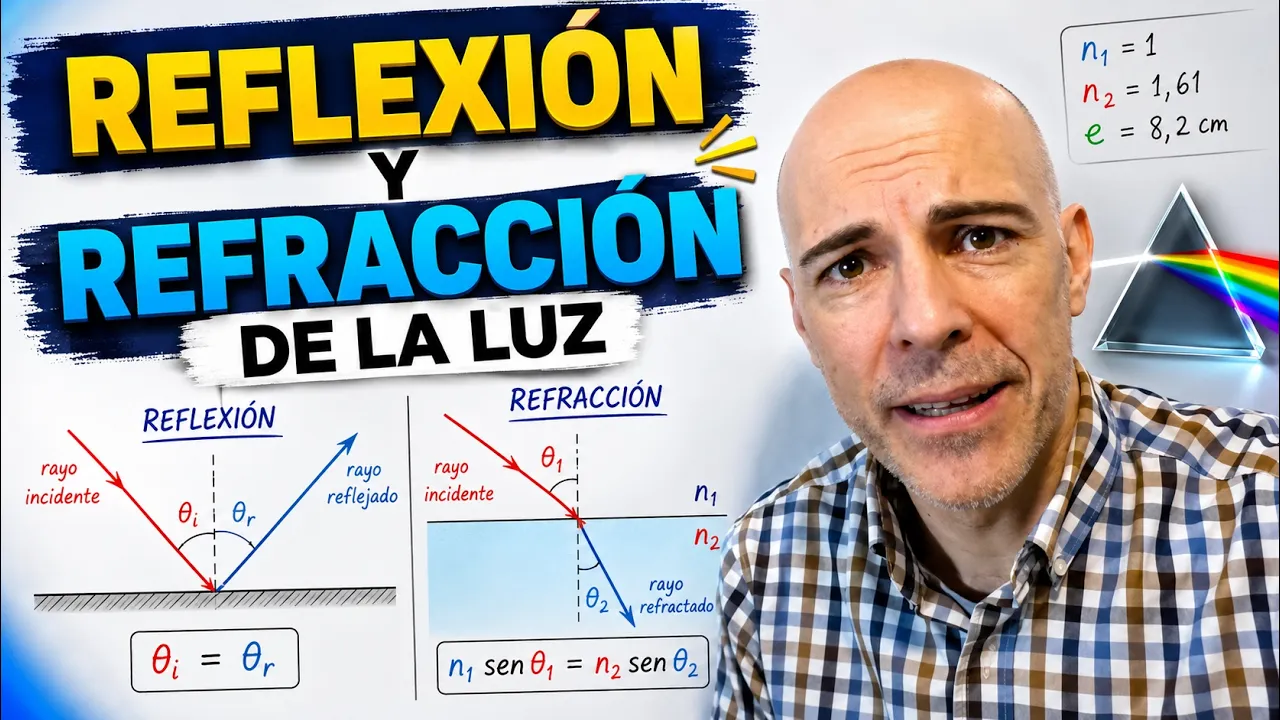
so in this video we're going to be revising waves very simple what do we do however syllabus update again because 2023 now in 2023 they didn't remove anything from waves They just added a few things sure it's not written here and the overall things except this it says electromagnetic spectrum edition of learning objectives concerning communication but you'll find out that this is a lot larger than what you expect compared to the original curriculum this is why first first this is all stuff we know when it comes to lenses you know what the lens is what's the focal point focal length principle Focus we're going to revise the stuff anyway but that has not changed the only thing that has changed is this when it comes to lenses it's the addition of describing the diverging lens like understanding what is a Divergence and how we can use it to correct short and long-sidedness so excitedness so folks like me who use glasses glass gang for that one there's a reason why we wear glasses like it has to do with our own lenses and our eyes but that's another story additionally this is the part that they added for uh for communication for core students which isn't really much satellites use microwaves that's it so there's a difference between low orbit and geostationary orbits but that's the same thing they both use microwaves this is the new stuff that you extended students need to know what type of ways to use for mobile phones for Bluetooth for optical fibers what's the difference in digital and analog and here's the thing if you're if you watch the electricity chapter you'll know that digital and analog which is digital electronics has been removed from the syllabus but they basically shifted the concepts of digital analog from electricity to waves here so digital analog still exists as their definitions are still there and we need to know that sound is capable of being transmitted is digital analog and we'll talk about their advantages so this is all new stuff then finally core students please note if you see this especially at the top of the page this is not for you but please do listen it'll help you round out your understanding of physics uh and if you see it right next to an equation that equation will not be used by you at all and let's get started wait what are we starting where's the content well before we start with the content like what are we studying today we need to ask a question what's a wave the answer it's a transfer of energy that's it it's a method of transferring energy primarily through vibrations so for example I'm talking right now I'm emitting sound waves or actually I am producing look at the beautiful aren't doing see this is what I look like anyway or should we call this guy pen OD gang Mr U anyway so when Mr U starts the talk it produces energy sound energy and that sound energy gets transferred through the vibration of the air molecules reducing a sound wave so the purpose of energy of a wave is to transfer energy whatever the type light energy heat genetic whatever the sound very good next so what are we talking about first we'll talk about the different types of waves transverse longitudinal electromagnetic and mechanical what are the properties that we measure in a wave so it's amplitude wavelength period and frequency and stuff the electromagnetic spectrum so what are the different types of waves that we have that are all electromagnetic besides the spectrum of light besides roigibility the general behavior of waves reflection refracted and diffraction because they both apply to light and sound so we're going to apply them to sound waves first and then to light waves when it comes to light we'll focus on two things the refraction of light and the reflection of light when it comes to mirrors and the refraction of light when it comes to lenses and how we can use lenses to correct addition next the socket types we have four types the first two types are called mechanical and electromagnetic these two are opposites we basically ask you hey does this wave need a medium or not so a mechanical wave is a wave that needs a medium but electromagnetic waves do not need a medium so we need to answer a question what do we mean by medium a medium means matter so the solid or liquid or gas that the wave is going to go through the wave is going to go through something and the molecules are going to vibrate it's called mechanical for example you have sound waves water waves or Ripple waves these are all mechanical waves because they need method to go through they cannot travel through empty space they cannot travel through a back electromagnetic waves on the other hand like light and infrared and UltraViolet and gamma rays and whatnot these are all waves that are able to travel through a vacuum because they do not need particles in other words they do not vibrate particles they vibrate something else to be honest like there is some form of vibration in the form of electric and magnetic fields but it's not particles that are vibrating since particles are not vibrating they don't need them which means the Sun is emitting ultraviolet rays or infrared or light they can all travel through space or a vacuum because they're electromagnetic because they don't need media so chemical waves like sound cannot travel through a vacuum that's why you know the famous saying nobody can hear you scream in space because you know what sound waves are mechanical next the other two types of waves are also opposites and they're called transverse and longitudinal these have to do with how molecules vibrate these have to do with how molecules vibrate a transverse wave is where the molecules vibrate perpendicular to wave motion meaning if you have a single molecule here this molecule vibrates up and then down up follow the cursor and then down you can see them up so if you notice a single molecule doesn't move from its place it's just vibrating up and down but because the other molecules are also vibrating up and down in order because they're vibrating up and down in a certain order or sequence they create this illusion of something moving well technically something is moving to the right what is moving to the right is the energy which is the wave but the molecules are vibrating up and down producing what we call crests which is the upper Peaks and thrusts which are the lower Peaks this is basically all Waves by the way except for sound waves I'm kind of spoiling it right now but sound waves are what we call longitudinal waves this is where the molecules do not vibrate up and down or perpendicular to the direction of wave motion they vibrate forwards and backwards they vibrate forwards and backwards so if you look at a single molecule here take a look at this red dot focus on it a bit let's see if we can zoom into this just a second what do you do it's not going to move as long as zoomed in but this little dot over here it's going to be moving left and right it's not going to be moving up and down and this instead of creating crests and drops this creates regions where the molecules are close to each other which we call a compression and it creates regions where the molecules are far apart called a rare faction so you have compressions and refraction obviously these are animated pictures and such gifs but if you're just drawing the waves yourself this is how we draw a transverse wave it's nothing special you have Preston troughs this is how we represent longitudinal waves we draw multiple lines close to each other then a few lines far apart then a few lines close to each other a few lines far apart this represents the compression all of this represents a rare action Crystal trough yeah I did say sound waves are the only longitudinal waves but there is actually one more type of longitudinal when it comes to earthquakes once when there's an earthquake underground due to the you know vibration Collision of the tonic plates of the outer crust of the crust but happiness is the Fallen the Earth starts to vibrate the surface vibrates up and down right we call them S waves because they're on the surface and these are transverse but the rocks or the ground itself underground does not vibrate up and down it vibrates forward and backwards creating what we call a P wave be short for pressure wave they used to call it a pressure wave before defining it as longitude so during an earthquake you have two types of waves waves on the surface which break your buildings and breaks the ground these are called S waves and waves underground called p waves these are longitudinal very good [Music] let's look at properties there are five properties that we need to measure amplitude and wavelength are the distances period and frequency are related to time and finally their speed amplitude is defined as the maximum displacement of the molecules from the mean position what's the mean position the center line of a wave this is called the mean position the word mean s average so Center position original position they're offline the distance that the molecules move up or down is called displacement the maximum displacement this is called amplitude maximum displacement is called amplitude all right this represents the amount of energy in a wave so the more energy a wave has the greater the amplitude the less energy wave has the smaller the amplitude wavelength is defined as the distance between two successive crests or two successive crops literally from its name it's the length of a wave it's how long one wave is if a wave starts at the crest then the distance from one press to the next that's called the wavelength and this is the symbol called Lambda the distance from trough to the next trough is also called London the wavelength but a wave or a single wave is not only defined by the distance from a Crest to a Crest or a trough to a trough realistically you can start from the center as well if you go up to the crest down to the trough then back up to the crust to the center of the wave again like we've started the center and you end in the center after touching a Crest and a trough this is also considered one wavelet so the wavelength is not just from Crest to Crest or tractor trough on a diagram it's also from the center not to the one right next to it to the other that's one complete wave or oscillation when it comes to longitudinal waves they don't have trusses and troughs so we measure it from a compression to the next compression or from a rare faction to the next rarefaction but because you have so many different lines in a wave like this you have to choose the center or to choose the same line but I prefer to choose the center of the compression so this is wavelength or the center of the refraction to the next Center very good next what is period Then period is defined as the time taken is defined as the time taken for one complete oscillation time for one complete oscillation so when a wave moves from crust to crust the time that it takes for it to see one Crest the next that's called period if I go back for a second to this animation and let's draw a line right here if I were to start a stopwatch let me pull out the stopwatch give me a second and stopwatch and I'll wait until the wave hits this line and start and one two three four stop it took 4.14 seconds for a wave for one wave to go through that's what we call the period kind of also why there's no diagram for it because it's literally a time that you measure frequency on the other hand is defined as the number of oscillations you could also say waves per unit time or per second so how many waves pass by you per second the unit of measurement of frequency is called Hertz HZ so for example if I tell you that the wave has a frequency of 10 Hertz this means that it completes 10 oscillations per second finishes 10 oscillations per second now there is an equation that relates period and frequency they're inversely proportioned because if you think about it the higher the frequency of a wave the lower the period it takes less time and also the lower the wavelength by the way the shorter the wavelength will be but if you have a wave with a very low frequency meaning the number of oscillations has decreased the wavelength and the period increases so it takes more time to finish one complete oscillation and obviously it travels longer and won't complete our solution so we simply say that frequency and period are inversely proportional or f equals 1 over t where T is not just any time T is the time of one oscillation as always remember to hydrate gosh I'll I'll preach this forever and I'll still forget to drink water myself anyway finally how do we calculate speed now we know that speed is distance over time that's not an issue speed is distance over time but in a way we don't really measure the total distance and the total time instead we measure the distance of one oscillation and the time for one oscillation so we simply say that speed is Lambda over t wavelength over time however with a little bit of you know smart maths remember that f equals 1 over t a little bit of substitution you can remove the one over t and replace that with f so you can say F times lump so you change the over t to Lambda your substitute so the equation that we use to calculate the speed of a wave is V equals F times Lambda right frequency times wavelength for a quick example let's say you're given away with a frequency of 10 Hertz and you know that the speed of this wave is 300 meters per second calculate the wavelength see this time I didn't ask you to calculate the speed I'm actually asking to calculate the wavelength it doesn't matter you're given the frequency or given the speed you can calculate Lambda very easily Lambda equals V over F so rearrange this formula the speed is 300 the frequency is 10.
300 over 10 gives you third meters it's very long Wave by the way which makes sense it's a very small frequency 10 oscillations a second is actually a very low frequency next yeah this is where most of the new stuff regarding waves has you know thrown up in the syllabus we already talked about what electromagnetic waves are electromagnetic wave is a wave that does not need a medium to propagate or to travel through it can travel through a vacuum but it's not just light that's electromagnetic we have a ton of electromagnetic waves and they're all listed in front of you right now before we discuss them individually they all have the same speed they all have the same speed and they're all transfers there's no such thing as a longitudinal electromagnetic wave they all have the same speed and they're all transverse you have to memorize this value though 3 times 10 Power 8 which is about 300 million meters per second it's very fast honestly there's nothing faster than the speed of light in air right very good now before I talk about these there are a few questions so let's go over them uh remember to type your questions in chat guys year 10 we don't need to memorize equations right no you have to with Cambridge specifically you have to memorize all of the equations please like he does give a formula sheet and we'll discuss this during the problem solving section so we'll see what the exams are like and it does give you a formula sheet but it's uh a very very very anemic formula sheet it barely has anything useful so yes please that's that's part of the difficulty of the subject you have to memorize formulas all right so when you say this equation do you mean the speed equation this is only for year 10 students not for Year 9. all right this is only for standard students not for core students oh this is not an equation this is a value of speed and you have to memorize it you have to memorize temporary it's not going to ask you what type of equations more along the question it's more along the lines of hey what's the speed of light in air it's three times temperature eight is the tricky one what's the speed of radio waves in here that's the trick they all have the same speed in there you are so moving on so what are the different types of electromagnetic equations we have and why are they ordered this way because they're ordered in terms of frequency as you go to the right the frequency increases so this has the highest frequency and the other side is the lowest frequency earlier we mentioned that frequency and wavelength are inversely proportional so as the frequency increases the wavelength decreases and vice versa if the frequency decreases the wavelength will increase how do we memorize them well I always like to start in the middle of the table if you have visible light which consists of seven different colors they are red orange yellow green blue indigo and violet or Roy gibbets it doesn't matter just try to remember that and remember red has the lowest frequency Violet has the longest frequency highest frequency if you go higher than violet you end up with ultraviolet and keep that in mind the word Ultra means greater than so when I say ultraviolet I mean it's a wave with a frequency higher than violence right after violence following UltraViolets you have x-rays and then you have gamma rays and it kind of looks like UV X and Y but I digress you go even lower than red however you end up with infrared again the word infra means below so infrared means less than red or below red then you have microwaves and then you have radio waves very good you need to memorize these in order of their frequency and wavelengths the only one that's visible is light everything else is invisible yeah let's briefly discuss some of their applications because you need to remember some of the applications for each individual type of way and here's a quick table remember to snapshot it if you need it or you'll find it in your notes or summaries gamma rays let's start from the heist what are they used for mainly to treat cancer or to sterilize medical equipment or food and such what are X-rays used for to check for broken bones so if I put my hand for example my arm and x-ray machine the x-rays work or like help me see my bones are broken because they're absorbed by materials that are very dense but they can go through less dense objects so my bones are very dense x-rays cannot go through my bones like imagine this here's a bone in my arm I know I'm I'm an artist by nature but please do not envy me someday you'll be able to draw amazing Arts such as fun assume this is my arm now if I break my arm x-rays cannot go through a bone or they barely go through but they can go through my fracture because they can go through my flesh and everything else so the reason why x-rays work is that they cannot pass through the bones or more dense objects but they can pass through your flesh or any cracks or such we also use it when it comes to Security checks at airports uh when you want to check if you have any metallic objects in your luggage so if I have I have a pistol or anything else in my luggage you should be able to you should be able to call I'm sorry if I'm laughing because somebody sent me a very funny message I'll share it in a bit but anyway if I have a pistol or a knife or any kind of dangerous metallic object in my bag you don't have to open my back to find out what's inside x-rays just go through they're stopped by the metallic object and you can see them on the screen ultraviolet rays come primarily from the Sun right it has a lot of applications but the primary thing is my body uses it for what to produce vitamin D sure you can use it to check for fake banknotes and sterilized water and such like that but your body needs it to produce vitamin D uh we don't need to discuss what we use light for infrared waves now they're very wide ranging first we discussed infrared waves earlier when we talked about thermal physics so they transfer heat but it's also used for remote controls TV remotes and air conditioning remote controls it's also used for intrude alarms and thermal imaging so think of it this way you're in a museum you have cameras that see light I'll show you pictures but they have these infrared cameras that show heat signatures that's how they can detect if somebody's in a room even though it might be dark and there's no light and we can also use it to transfer uh information using optical fibers all right microwaves primarily used for satellite television mobile phones and a certain frequency is used for microwaves of microwave ovens but it's primarily used for these two radio waves are used for again radios obviously right RFID tags like NFC like stuff on your phone when you tap a card or something to your phone it triggers something that works but it's mainly communication yeah what are the dangers or hazards microwaves and I don't mean all microwaves I don't mean the microwaves from your phone I mean microwaves that are using a microwave oven it can be used to internally heat your cells boil you on the inside infrared waves again the certain frequencies that actually heat things they can cause you skin damage or Burns that can literally burn you ultraviolet rates now remember your body needs it for vitamin D too much of a good thing is a bad thing so too much ultraviolet radiation exposure could cause skin cancer extras and gamma rays are both what we call ionizing radiation which means when they go through cells and atoms they remove electrons from those atoms causing them to ionize and that could cause damage to cells so how do we protect ourselves in general you stay away from them from the source reduce your exposure time as much as possible and maybe use a shield or a barrier to protect yourself right yeah this is for extended folks what do we mainly use electromagnetic waves for when it comes to communication though specifically like we said your phone and Wi-Fi they all use microwaves they can go through walls you don't need very large receiving equipment to detect or to emit or receive microwave so we use it for Wi-Fi and headphones Bluetooth you know Bluetooth headsets and stuff this this isn't a Bluetooth headset itself or earphones they use radio waves right Optical fibers what do they use infrared waves or visible light so the optic fibers that are in the ground we'll talk about them in a bit optic fibers that transfer information for internet use and so on they use wavelength sorry infrared waves and visible light to transfer information we already mentioned satellites they use microwaves right regardless of whether it's a low orbit satellite or a geostationary satellite it doesn't matter we use my microwave strip one more thing there are two types of signals when it comes to transferring information called analog and digital for example you have sound waves sound waves can be transmitted as either analog or digital but what do I mean by analog or digital their definitions are literally analogs or signals are just continuous values whereas digital have fixed values again what does that basically mean to us right now I'm speaking to you right you can share my voice got a lot of inflection different types of sounds that I'm emitting and I can raise my voice lower my voice and so on my voice is not something constant it changes that's considered an analog signal it doesn't have a fixed value it keeps fluctuating all the time depending on the signal whereas a digital signal has fixed values it's either High or low think of a sound wave that sounds like a beep like P that's a fixed signal that doesn't change right so it's either on or off when it comes to transmitting information you can transmit it as analog signals like you can take the current or the voltage that's uh that's going to be going through that's going to be going through a wave and transmit it as a digital signal or analog but digital is so much better why because here's the problem any wave as it travels gets weaker and it loses energy if an analog signal loses energy it's very hard to regenerate it or Amplified it's hard to make it louder because what happens when it gets weaker is that it gets affected by other waves and it gathers what we call noise when you regenerate it to make the signal stronger Bye by just adding a little bit more energy to the wave it ends up adding some noise to it so you know it sounds terrible if it's a sound it's like listening to a song on a radio with the antenna missing and you got all the static in the in the music all of that random noise as you're listening to the song it's terrible digital signals are so much better why because it's only one of two values it's like high or low high or low higher low higher low it's very easy to transfer this information like circuits are literally designed for digital things like high and low so it's very fast when it comes to this transfer second even if this signal gets weaker over time like oh my God no the signal is weak this is still low the signal is weak this is the low signal is weak we know what this value should be it's very easy to put a regenerator or an amplifier and it just immediately gives me the exact same signal again because there's no continuous variation noise doesn't affect it so we say that digital is better than analog because one it increases the rate of transmission how fast you're transferring this information and increases the range of it listen how far it can travel because even if it loses energy it isn't affected by noise very much and therefore it's easier to amplify or regenerate [Music] nice one extend this focus is one way to call someone tall then what should I call a not so tall people not so extended anyone let's move on let's talk about the behavior waves there are three types of behavior an extended an extended nice one there are three types of behavior that you need to keep in mind we call them reflection refraction and diffraction so three types of behavior all waves exhibit this Behavior light wave sound waves water waves everything so you just need to understand the basic concept of these behaviors and then we'll apply them to sound online before we do when we draw waves you have to understand what the term wavefront means instead of drawing a transverse wave like this with crests and drops instead we draw the wave as if we're looking at it from above so we draw an arrow that is called the array this represents the direction of the wave and then we just draw straight lines where the crests are supposed to be we call these straight lines wave runs the whole point of this drawing method or system the whole point of this is to simplify my diagram so I don't have to waste my time drawing crests and troughs and rolling things and to show me what happens to the wave itself does the wavelength increase does the wavelength decrease because the distance between two successive wave fronts is the wavelength because if this is a Crest and this is a crust the distance between them is London away from it also show us what happens to the shape of the wave does it Bend does it curve does it stay straight so what is reflection so the change in directional wave when it hits the surface it's refraction it's change in speed it's not changing direction it's changing speed when a medium changes but it can cause the direction to change what is diffraction it's the spreading of wave when it goes through a gap or around an edge or a corner so one behavior is when a wave hit something and then comes back it's called reflection another is when a wave travels from one medium to another so it changes speed and it can also Bend that's also fine and diffraction is when a wave spreads out because it goes through an opening or a gaffer so reflection a wave that's going to hit this surface this could be a solid surface this could be a water wave this could be a light wave this could be a sound wave anyway this Ray is going to hit the surface is called the incident Ray this is called the incident Ray when it hits the surface it reflects so the ray that comes back is called the reflected array that's great nice incident and reflective reflection only follows one simple rule which is one which is that the angle of incidence I is equal to the angle of reflection r but what are the easier well the angle between the insulin drain and the normal this is called I angle of instance and the angle between the reflected ray and the normal is called r now that you've heard that properly your question might be what's the normal it's just an imaginary line you can draw a dotted you can draw it solid doesn't matter it's just an imaginary line that's at 90 degrees to the surface to the mirror that's doing the reflection that's why it's called normal in mathematics the word normal means perpendicular not normal and regular so the angle between the angle of the incident Ray and the normal it's called the angle of instance the angle between the reflected ray and the normal is called the angle of reflection easy piece finally the wave fronts of the wave nothing about them changes just their Direction they're always wavefronts are always perpendicular to the array so if a wave is going up they're also going up with it if it's going down it's going down with with the wavelength doesn't change the speed doesn't change the frequency does not change nothing changes this is the direction then what is refraction refraction is when a wave changes its speed as it travels from one medium to another for example this is deep water this is deep water and this is shallow when water waves travel from Deep to shallow the speed decreases for water waves this change in medium this change in depth is a change in medium if a sound is traveling through the air and goes into water that changes the speed if light is traveling through the air and goes through glass that changes the speed through water waves and just for now we're talking about waterways when a wave moves from Deep to shallow the speed goes from high to low the speed decreases and it's not just the speed that decreases take a look here's the wavelength now here's the wavelength the wavelength also decreases we call the shallow water a more dense medium so the speed decreases and the wavelength decreases we call Deep Water a less dense medium this has nothing to do with density which is mass over volume it's just the figure of speeches just like me saying hey this medium is heavy and this medium is light so if you're going through a heavy medium it's uh you're going to move slowly if it's going through a light medium front move quickly all right good very good now you're going to have to memorize I'm just going to have to memorize what mediums change which waves we only have three waves that you have to remember water waves sound waves and light waves so for water waves as you just saw they travel faster in deep water but slower in shallow before I move on frequency is always constant I don't care what anyone says frequency does not change during refraction all right we're not going to go over why what shallow water is a more dense medium just memorize it as it is because we're just trying to revise everything as quickly as possible but you can think of it as well fine you can think of it this way there's less water for the molecules to vibrate up and down so the water molecules find it harder to vibrate up and down and transfer the energy to the neighboring molecules so they slow down the transfer Banner the more space the molecules have to vibrate up and down the faster they can transfer the energy you could think of it that way kind of helps amplitude is not something we often discuss that's another question the question was what about the amplitude amplitude is not something we will often discuss because if you see the amplitude decreasing the wave has simply lost energy is the way of losing energy because of a refraction or not that's not our concern but if you see the amplitude decreasing it has lost energy that's the that's the same point refraction does not only change this feed it also changes the direction if a wave or array is moving from less dense to more dense and it's perpendicular to the surface it does not change direction but if the wave hits the surface at an angle it does change direction it does not keep moving in a straight line instead it bends the ray bends closer to the norm and vice versa if a wave is moving from a more dense medium to a less dense medium it doesn't move in the same direction it bends away from the norm the question is why that's because before the wave hits that you know surface the entire wave is moving the same speed but at a certain point part of the wave is still in the less dense medium so it's moving more quickly the other part is in the more dense medium so it's moving more slowly so the entire wave ends up bending a bit because part of it is slower than the other and as you can see here the wavelength decreases why because the speed decreases same thing the wavelength here has increased why because the speed has decreased increased [Music] you have to memorize a change in Direction next why did this game okay the fraction that's the last Behavior the fraction is defined as a spreading of a wave as it goes through a gap meaning if these are your reference and it hits a barrier a wall essentially and that barrier has a gap in it an opening this is the gap that we're talking about the wave will not continue moving with the same size of the Gap no no no no the moment it goes through the Gap Shore takes the size of the gap but then the wave front itself starts getting longer and longer and longer in other words it spreads it doesn't stay at the same size of the Gap it just spreads and spreads and spreads but the amount of spreading like how much does it spread by depends on the wavelength and how big this Gap is when the Gap is very large or the wavelength is very small meaning the Gap is greater than the size of the wavelength there is very little diffraction there is very little spreading but if you make the Gap smaller or the wavelength larger like they're almost equal or the Gap is a bit smaller than the wavelength like it's it's not like an absolute thing it's not larger and small it's if you gradually keep decreasing it what's going to happen is that this wave will now change its shape and it will curve more and more and more it's like you took the wave front and you squished it so it bends and it starts to curve outwards so the smaller the Gap the more the wave diffracts and the larger the gap the less the way the track less diffraction this is more diffraction so any questions before we move on the sound waves and light waves and everything else all right let's move on so so what are sound waves that's what God sound like filter Sounders sound waves are basically mechanical and longitudinal waves they're both mechanical and longitudinal waves because they need a medium and the molecules vibrate forward and backwards producing compressions and refractions is it but sound waves don't just you know put these compressions interfactions they also change the pressure of the air or the atmosphere also change the pressure of the atmosphere during a compression because the molecules are super close to each other the pressure of the atmosphere increases during a rare faction because the molecules are all far apart the pressure of the molecules decreases why because the closer you push the molecules together the more frequently they collide with each other so the pressure increases and the farther apart the molecules are the less frequently they collide with each other so the pressure decreases this is why if you draw a graph of how the pressure of the atmosphere changes with the distance traveled by the wave you will see a waveform similar to the transverse wave but these aren't crests and troughs these are compressions and rare factions because a compression is a region where the pressure is higher than atmospheric and the refraction is the original the pressure is lower than right good yeah sound waves have speed what's the speed of sound in air the speed of sound is around 330. meters per second to around 350 meters per second that's the range in liquids the speed is around 1 500 meters per second it's actually about nine hundred two thousand but that's the middle of it in steel it's around 5000 meters per second so around three thousand to ten thousand it's a bit faster in solids than liquids and faster than liquids than gases why because solid molecules are already very close to each other whereas gas molecules are far apart so it's a lot easier to transfer molecules that vibrate affordable backwards when they're already touching each other but if the molecules are far apart it takes more time so therefore the sound travels a lot slower in air compared to liquids and salts by the way it's not slow by any account like by our standards 330 meters per second is still very fast it's just slow relative to liquids and so like I said you're going to have to memorize how speeds change for different waves so for water waves it was the depth of the water for sound waves it's the material but moving from solid to liquid to gas the speed decreases it's fastest solids and slowest and gases if you want to measure the speed of sound if you want to measure speed of sound it's very simple although it's not a very accurate experiment but you can get two people one of them with something like a starting pistol or anything that produces both light and sound a flash and the sound and somebody else should have a stopwatch then you measure the distance between the two of you the measuring tape you are the one with the pistols and you fire the pistol the second person sees the flash first so we press a start on the stopwatch to start and then a few moments later he hears the sound so I press a stop so he gets the time taken it's the time taken for the sound to travel to him this is all assuming that light travels instantly like it it doesn't it doesn't somebody commented saying he won't hear the sound he's already dead no no no no no it's just it's that starting pistol it's a it's a pistol that just produces splash of flash of light and some smoke and some sound no bullets huh we'll touch to be so gruesome oh it was me anyway any so we assume that light travels in zero time and that's why we can do this and just like you said lightning and thunder you see the lightning first because we have a lightning storm last night it was beautiful you see the lightning first like the sky lights up and then a few moments later you hear you hear the sound right definitely they should get an A Star for thinking outside the box okay moving on amplitude affects the loudness of the sound so when I raise my voice or I raise the volume or you raise the volume this uh sorry of this video or this recording or whatever it is on your phone you raise the volume you're actually increasing the amplitude of the sound you decrease the volume you're decreasing the amplitude so a large amplitude it's a very loud sound a small amplitude is a very quiet sound next frequency affects the pitch of the sound how high pitched or how low pitched it is and they're proportional so a high frequency wave has a very high pitch so it's a very sharp Cheryl sound think like a banshee screaming or something if you don't know what the Banshee is just I don't know play a video game or two or like watch a horror movie or two and if you have a low frequency wave it has a low pitch so think something like an opera singer oh deep voice we human beings don't hear everything though we can only hear from 20 to 20 000 Hertz or 20 kilohertz this is called the range of audible frequencies anything less than 20 is called an infra sound just like infrared but this time it's infrasound anything higher than 20 000 is called an Ultra so very good finally what about Echoes an echo is just a reflection of sound so just applying reflection the sounds if you're on a let's say you got stranded on an island or something and you shout because for some reason you knocked your boat off of that Island you emit a sound hello or Hell or I'm hungry anything when that sound hits this cliff on the other Island and it reflects back maybe that's the main one this reflection is called an echo this reflection is called in Echo and Echo is just the reflection of sound when hit the surface came back what you need to be wary of when it comes to Echo questions is the concept of distance why let's say you are uh 300 meters yeah 300 meters away from this other Island from the surface and I tell you that the speed of sound is something that you have to memorize is 330 meters per second as an example can you find the time taken for you to hear the echo of course you can if I say speed is distance over time this means time is distance over speed what's the distance 300 no wait wait the distance traveled by the sound to produce the echo is 300 meters to the wall and then it came back another 300 meters so it reflected back so that's 300 to the wall 300 from the wall you actually travel a distance of 600 so it's 300 times two over 330.
so this gives me 600 divided by 330.
which gives us a time of 1.8 seconds which makes sense like 1.8 seconds is pretty decent a pretty decent time to be able to measure quickly very good uh so that's the one thing I want you to be careful of when it comes to solving Echo questions and that is the distance traveled by the echo is back and forth but the distance between you and the surface is a half of that distance half of the back and forth uh we have a question here what's the difference between pitch and speed pitch is how sharp or deep a sound is it's the type of sound that you hear is it like a low very or a very sharp beep right so it's like the tone of the sound speed is just how fast it travels doesn't really affect what you're here how fast does it travel from point A to point B light waves [Music] what is a light wave it's an electromagnetic and transverse wave we said that all electromagnetic wage or transfers but we're going to study a few things in Britain first let's talk about the refraction point if I give you a glass block for light waves glass is considered a more dense medium whereas air is considered a less dense reading in other words light travels much faster in air than it does in glass which makes sense if array of light hits the surface of this glass block at 90 degrees it does not Bend it just continuous three no bending why because if it's perpendicular to the surface it doesn't matter it slows down sure the speed of light and air is around 3 times 10 power 8.
the speed of lighting glass is going to be around 2 times 10 Power 8 this is a number that you don't have to memorize but chances are you'll eventually memorize it because most of the questions involving the speed of light and glass give you this as an or as a value but if the light is moving from Air to glass at an angle you have another story first some of the light reflects we call this partial reflection but most of the light refracts bends closer to the normal that's fine you draw normal here it then bends away from the normal again so it depends towards the normal bends away from them this is a refraction but turns out there's a funny thing when it comes to the values of that change in speed and angle this angle was around 30 degrees this is going to be approximately 20 degrees it's actually 19.5 degrees but still if the angle here is 20 degrees goes back to 30.
in other words the ray that's incident on the glass block is parallel to the ray that leaves because the surfaces are parallel to each other because the surfaces are parallel to each other all right speaking of which this is extended okay there's a ratio that you have to memorize which is the ratio of the speed of light and air over the speed of lighting glass it is also the ratio of the angles so when the speed changed from three to two and then back to three the angles also changed with roughly the same ratio with roughly the same ratio oh if you want uh there's a question can you specify the angle of refraction here it is r this is also an angle of refraction outside of the block bar this is an angle of incidence this is an angle of incidence the ratio of the speeds is the same as the ratio of the angles so n is equal to speed of lightning air over speed of light in the medium or the glass let's solve this as a quick example n equals speed of lightning air this is something we memorize 3 times 10 power 8. over speed of light and glass which was given the previous page 2 times 10 power 8.
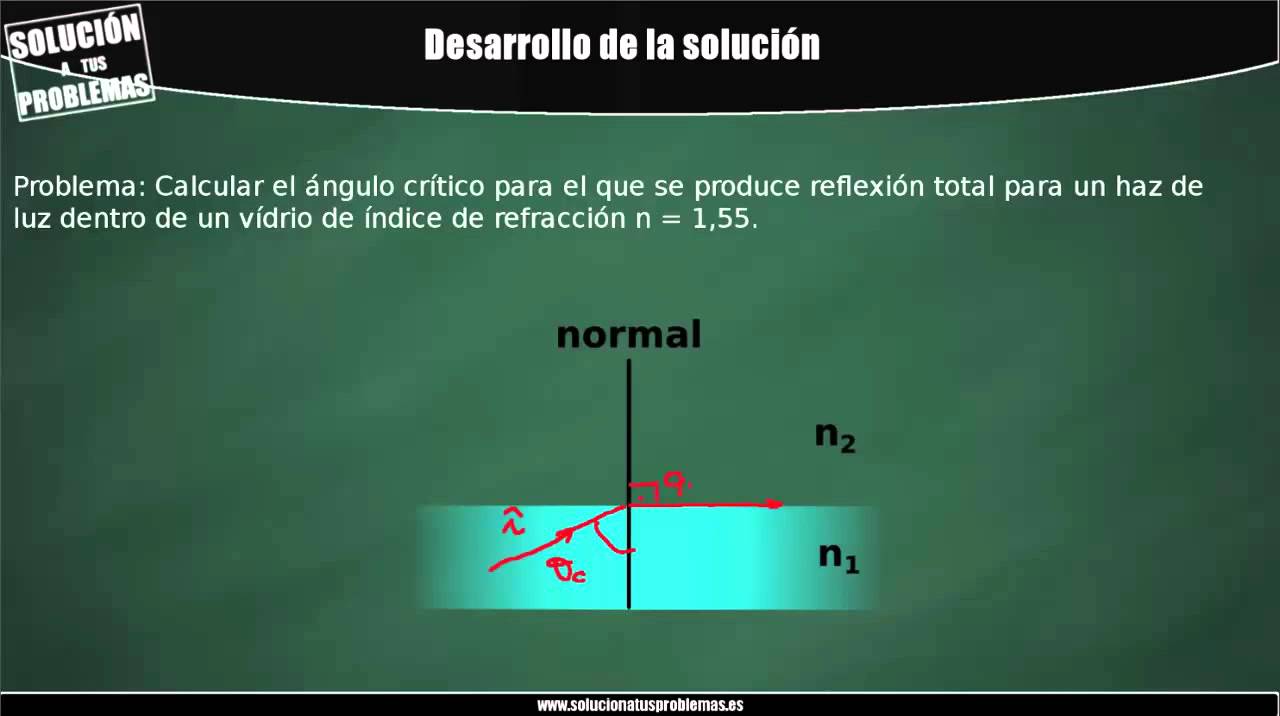
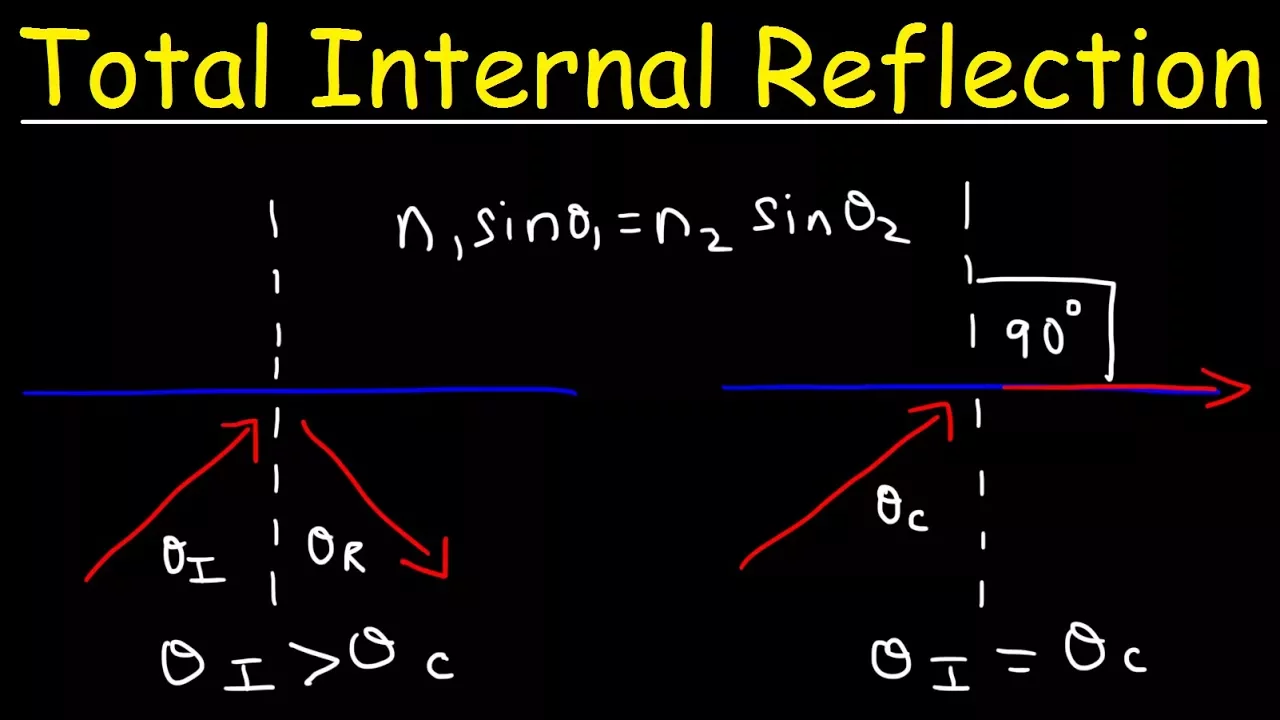
this gives you an end of 1.5 an N of 1.5 literally translates to this that the speed of light in the air is 1.5 times faster than the speed of light in the medium in the glass for example it just tells you how dense that Medium is the larger the value of n the slower the speed will be in the glass bar okay then next what about the index what is this refractive index when it comes to the angles it's the same thing it's the same thing it's just the ratio of sine the angle and error sign the angle in glass so as a follow-up question I can say hey uh sorry the angle of incidence in the air in the previous question was 50 degrees so you've got light incident on a glass surface at 50 degrees if the N is 1.5 just like we calculated find the angle of refraction which is find the angle here inside the glass so it's quite simple n equals sine angle and error over sine angle in the glass so n is 1.5 which is equal to sine 50 over sine r so sine R is equal to sine 50 over 1.5 this gives us let me plug these numbers in 0.51 amazing I'm no not done if you want the angle R you have to remove the sign so you shift sign the answer that you get sine to the power this gives you an R of 30.7 degrees or 31 degrees which is correct by the way because the angle should decrease if you're moving from Air to Glass it should bend closer to the room yes this is only for extended C right one more thing there is one special thing that does happen when light travels from glass to air this is very important if light is traveling from last air meaning if you have a ray of light that's incident on this glass block at 90 degrees and it hits the center this ray of light will bend away from the norm like it won't be here it'll just simply Bend away from the norm and this is fine but then if this angle increases a bit this angle must increase like it has to bend even further away from because you can't just keep increasing this and the external rate doesn't change no that's the movement so the increase increase this rate will continue to increase increase increase in angle until it eventually almost touches the glass surface so it was refracting normally so far until it almost touches the glass surface this angle is called the critical angle of incidents and this is around 42 degrees it depends on the material and we will see how we can find it in a bit but this angle is called the critical angle it's the angle of incidence inside glass like when light is moving from glass to air that causes the angle of refraction in the air to become 90.
so again what is the critical angle it is the angle of incidence in glass or if the light is moving from glass to air that causes the angle of refraction to be ninth very good the more important thing is what happens if you increase the angle of incidence even Beyond this like what if you go even more well the ray of light has already like extended past this like it can't move any further unless it goes inside the glass and it does if the angle of instance is greater than the critical angle then the light will simply reflect the light will simply reflect this occurs when the angle of incidence is greater than the critical angle and this is called total internal reflection so again what is total internal reflection it's the complete reflection of light inside a glass block like when it's moving from glass to air when it's moving from glass to air that causes the light rate to completely reflect within the glass it acts like a mirror the glass surface acts like a mirror but this has one condition the angle of instance has to be greater than critical greater than 42. 45 46 50 55 and it follows the roles of reflection just as fine angle of instance equals angle of reflection no big deal all right yeah how do we find this critical angle like if I tell you for example but hey uh you have a light right here touches the surface as it leaves you know that this angle is 90. you know that this angle is 90. then what's the angle inside it's called the critical angle I don't know what the critical is but I do know that the angle of refraction the air is 90. and that the value of n of this material is 1.5 we got it through some other means whether we measure different angles or speed it doesn't matter if the N is 1.5 and you want to find out the critical angle this is the formula that we use n is equal to 1 over sine C technically technically this is actually n equals sine 90 which is the angle in air over sine C which is going but sine 90 gives you one n is called the refractive index don't forget this is the same formula as before n equals n equal sign error over sine glass speed over speed so n is the refractive index which is equal to sine 90 over sine C so n equals 1 over sine C so if I want C I'll say sine C equals one over n which is 1 over 1.5 and remember you're going to have to shift sign your answer so 1 divided by 1.5 shift sign the answer this gives me value of C of 41.8 degrees which is almost 42.
again you don't have to memorize 42.
you just have to memorize this thing over here n equals 1 over sine C again n is the refractive index n is the refractive index don't forget it a lot of you keep forgetting what N means n is the refractive index which is just the ratio of the speeds or the angles which shows you how dense the material is optically when it comes to light is this clear any other questions all right good finally let's talk about dispersion of life this is when white light splits and stuff but wait what if you don't have white light what if you have what we call monochromatic light monochromatic means light of one frequency or a single frequency I can't even say one color even though the word chroma means color but I can't say one color because actually the color red for example has multiple frequencies so when I say monochromatic I own one specific frequency as the light moves from Air to glass it bends closer to the normal and then it bends away from the norm and that's fine this is just regular reflection the dispersion happens if you get white light why because white light consists of seven different colors and each color has a different frequency and a different wavelength so each color has a different index as in each color will refract by a different amount so when you have array of white light it splits because every color refracts this is still a refraction by the way this is nothing special this is still refraction it's just that every color has a different angle of refraction and it slows down differently so each color bends with a different angle red is the color that bends the least because it has the lowest frequency whereas Violet is the color that bends the most because it has the highest frequency the higher the frequency of a wave the more it slows down inside the medium by the way and the smaller the frequency of a wave the less it slows down inside a medium as for y let's not get into it to be honest it's it's irrelevant to our discussion today so if you pass white light through a prism it splits into the seven different colors Roy Gibble above red you still have infrared assuming the source emits infrared waves or below Violet you have or above Violet meaning you have ultraviolet because it has a high frequency than Pi so in the original block and that is this version this is still called refraction by the way like the bending is still called refraction dispersion is only when the light splits all right good and this is what it basically looks like white light shining through you got your spectrum Roy you can tell by the way that you know Violet isn't really purple it's just a very very dark shade of blue let's talk about reflection so what is reflection reflection is when light hits the surface and comes back cool but if you're standing in front of a mirror you end up seeing what we call an image you end up seeing what we call an image this image is considered a virtual image it is not real in other words it cannot be seen on a screen it's not actual light being emitted from the mirror the mirror is just reflecting the light so it makes you think that there's an image behind it when there isn't there's a difference between a virtual image which is an image that you cannot see on a screen and a real image which you're looking at right now you're looking at the screen whether it's your phone your laptop your TV whatever this is that you're looking at right now this is an image that's in front of you on the screen but it's called a real image because the image comes directly from the screen itself the lights from the screen itself it's not the light hitting a surface reflecting to my eyes and it makes me think the light comes from the mirror if they're different properties uh the images are the same size same distance from the mirror they're upright they're not upside down and they're laterally inverted meaning the right side becomes the left side and the left side becomes the right side so this is actually the right of the image this is the left of the image this is his right hand this is his left hand and vice versa how do we draw question is every human who looks into a mirror hallucinating absolutely yes exactly we're all crazy now how do we draw a ray diagram for a mirror let me just show you the shortcut since we know the image supposed to be behind the mirror and at the same distance from the object to the Mirror what we do is this we measure the distance here between the object and the mirror then we take that same distance behind the mirror and we Mark the image I'm just showing you a method which I used to cheat and get this answer very quickly not the actual diagram let's erase this so the first thing you do is you draw where the image is supposed to be if this is the object this is where the image would be same distance and same position then draw any two light rays from the diagram from the object to the mirror I don't care draw a normal here because light is supposed to hit the surface and reflect the light is supposed to hit the surface and reflect and then from the image draw a line to this point and extend it draw a line from the image to this point and extend you don't even need a projector this diagram will be almost 100 accurate you don't need to draw the reflections accurately because this will draw the reflections accurately for it so again step one we Mark where the image is it's the same distance between it and the object between the image and lever I'm sorry the object in the mirror image in the mirror all right so yes the question literally asks you hey draw a ray diagram to find the position of the image so like I said we're cheating we're marking the image first after we Mark the image we draw these rays and then from the image we draw two more rays the actual two rays passing through the mirror itself where it reflects good and this is what it looks like if you've drawn it proper finally then this is the last thing we'll discuss for tonight and with this will finish unit 3.
let's talk about lenses and I mean lenses like the ones I'm wearing they're just pieces of glass that are shaped a certain way some of them are thin from the edges and thick in the middle called convex lenses like so and some of them are thick from the ends but thin in the middle this is called a concave lens or a Divergence first let's talk about converging lenses or what we call convex lenses the whole idea of a convex or converging lens is that if flight rates are parallel to each other as they strike the full the the lens the light rays will bend due to refraction this is just regular refraction due to refraction they will bend but because of the shape of the lens they all pass through the same point before moving along forward along their way this point where they meet is called the focal point this is the point where if light rays are parallel to each other like from the Sun hit the lens they will pass through that focal point if you do this with sunlight you can focus sunlight and burn stuff but that's not our Focus for today if you take an object that's emitting light and you have it passed like through a lens the light rays will focus the light rays will focus somewhere in the air because you know that's the focal point and then create an image on a screen for us then create a big image on the screen for us this image will always be inverted because if you take a look at this diagram the light rays from the top of the object or hitting the top of the lens go down and the lighter is hitting the bottom of the lens go up so the image itself gets flipped over not to mention this is a real image why because the light is literally on a screen it's not just reflection of a mirror it's actually light on a screen one more thing just just one more thing here something I need to point out clear this the distance that we clear the starters the distance between the center of the lens and our focal point is called the focal length or the focal distance and there are always two focal points for a lens one on the left and one on the right because lenses are symmetrical it doesn't matter which side the light decides to go through depends on us so it will focus and produce images either way how do we draw the ray diagram follow my steps very closely before I show you the final results for any case you have step number one draw array from the top of the object that's horizontal and Strikes the middle of the lens step number two it needs to go through the focal point now you might be wondering where is the focal point you mister he didn't tell me well he will either mark it for you or he will tell you for example that the focal length or the distance is two centimeters for example and every one square on this diagram is one centimeter so from the center of the lens you count two centimeters so it's one and two and you mark that is your phone so you will either mark it for you which is what he'll do most of the time or he'll just draw a focal point like he'll give you sorry the focal length when you find that so Ray number one from the top of the object which is the arrow over here from the top of the object draw a horizontal line until it hits the center of the lens and then from the center of the lens have it pass through focal point to where to infinity and beyond Buzz Lightyear Style step number two we need a second Ray to intersect with the first tray in order to produce an image you have two options first option is to pass through from the top of the object through the center of the lens perfectly through the center and that will continue without bending if you've drawn this correctly they should intersect here this is your image I a third Ray which is possible by the way you don't have to draw it you can choose not to draw it passes through the focal point first until it hits what pass through the focal point first until it hits the center of the lens and then it leaves horizontal it's basically the mirror opposite of the first tray if the first Ray is a horizontal rate that hits the center of the lens that goes through the focal point this one pass through the focal point first and then it left horizontally either way no matter what you draw this image should be real should be inverted but the size of the image will change depending on where [Music] you put the object depending on where you put the object right so you can either move the object close or farther right I have three cases that you need to memorize case number one if you put the object very close to the lens but not beyond the focal point like not between the focus components if you move the object closer the image becomes bigger and magnified me and farther away this is what we use for a projector by the way we're in the same if you have if you move the object far away from the lens really far away from the lungs in the focal point the light rays will intersect and give you a smaller image so the image is smaller and closer and this is what we use foray camera like the whole point of a camera or a camera's lens no matter what type of lens it is is to take in light from a very large object that's far away from it and squish it down to a very small size so it can fit on the sensor that gives you the there's only one case in a converging lens or a convex lens that gives us a virtual image and that's if you put the object between the focal point and the loss it's the only case if you put the object between the focal point and the lens if you try to draw these rays this goes through the focal point this goes through the center they will never meet so you have to extend the Rays backwards and if you do this is just like what you've done in a mirror the light rays reflect and then they're extended the backwards why to find where the images so going back to lenses if you move the object very close to the lens between the focal point and the lens the image becomes virtual and it appears behind the object this is what we call a magnifying let's chill you put it on top of something you look through the lens and you see a much bigger image this is the only one that's for the rest are real very good yeah one more lens and it's application instead of a converging lens we have another thing called a diverging lens which is called a concave lens the word to diverge means to move things farther apart so if you're diverging light this means that if the lighters are horizontal or parallel like they were in a convex lens they move further away instead right that's why it's called the diverging lens the Rays Bend away from the center line not towards the focal point here but they always bend so that their extensions pass through the focal point that's why it's called divert moving the Rays away from each other and not towards each other there are obviously before I talk about the applications here's the quick gray diagram for diverging lens even though you won't really need it still first horizontal line from the top of the object to the center of the lens and then this will bend away or diverge it will diverge according to where the focal point is because even though it's moving away from the center because of the shape of the glass and how it bends the extension still has to pass to the focal point right very good so that's the first try secondary just pass through that Center of terms do you see where they intersect yeah you see where they intersect here so diverging lenses do produce an image but it's very small and it's very close to the lens it has its applications all right so you could say that this thing is diminished or any other description [Music] then what's the difference really somebody lasted somebody who's long-sighted and short side people who are long-sighted not me can see things very far away but they struggle with things that they have to look up close and look closer the other word they can't see it properly now here's the reason why when something is really close to your eyes and your eyes are very good at seeing very long distances that's because the light rays that are coming from the object get focused very far from your dragon if the objects are far away sure the light race meets at your refill and produce an image if not however what do we do people who are alongside what do we do we use a lens reading glasses essentially with the convex lens does is that it helps the light rays Focus all right at the correct spot so it's just focusing the light so since my eyes if I'm alongside my eyes cannot focus the lens far enough we need to put a lens in here so it can focus the light for me so that when it hits my retina I can Secret the opposite is true for folks like me who are short-sighted like I do not see long distances at all I'm very good at seeing things that are up close with or without my glasses but I struggled seeing things far away things are very far away light rays are often patented and the problem with my lens my disc length that's in my side of my mind is that it's way too strong at focusing stuff it's way too strong at focuses people so it doesn't create an image on the retina it just creates something blurry on Direct so if the problem with short-sightedness is that they focus too hard like their eyes are focusing too hard then what do we do we spread them further apart you spread them farther apart so we can give them enough time to focus so that they can travel a bit further and focus on the rep so again how do you correct short-sightedness you use a diverging lens because you spread it out a bit before they converge very hard whereas how do you correct long-sightedness if their issue with their issue is that they don't see things that are up close because their eyes don't focus it fast enough we pre-focus it for them so the purpose of the lens a convex lens is to pre-focus the light going into your eyes represent the diverging lens is to just help you understand what is that if my eyes are focusing things too hard diverging lens diverges them a bit before they go into my eyes so even though my eyes are like super strong at focusing and they want to focus it here because they're originally moving away from each other they focus at the retina itself very good and we are Ledon complete game anyway we're done with unit three hope you enjoy the evening goodbye
Up Next
43:16
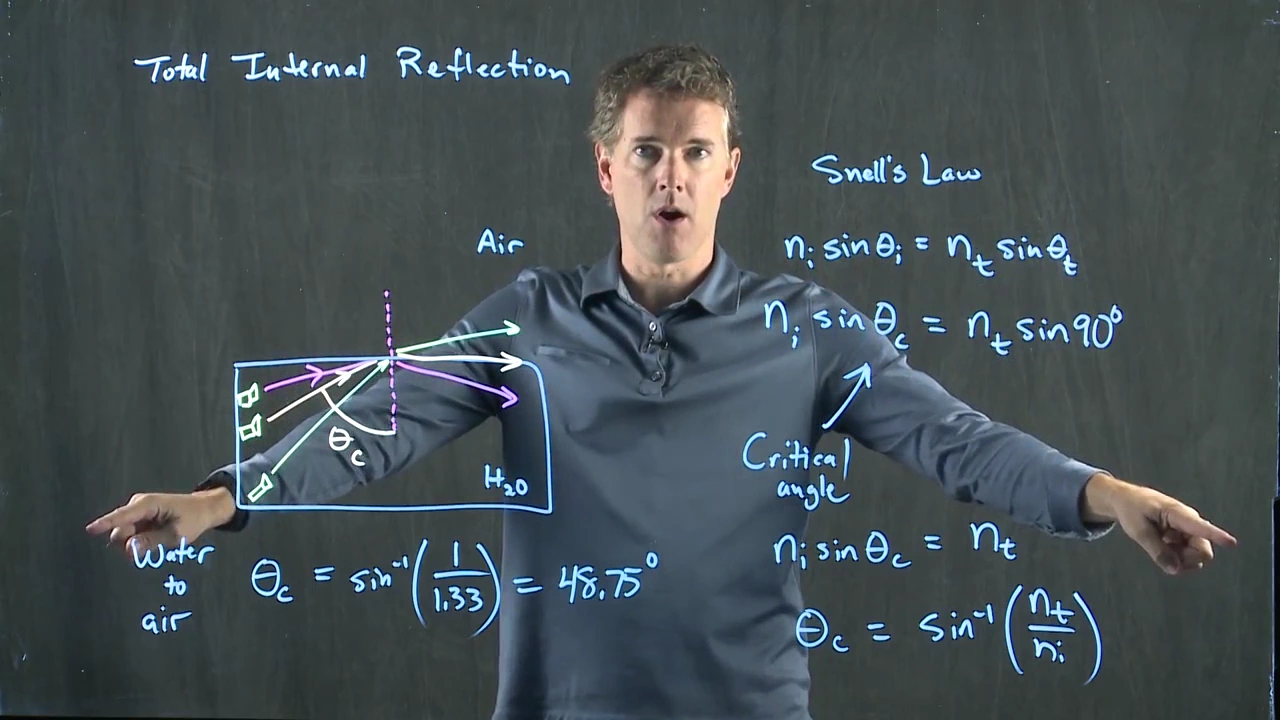
Total Internal Reflection & Thin Lens Optics Explained
@yoprofmatt
118.1K views•2016-11-10

12:53
21cm Hyperfine Transition in Neutral Hydrogen: Radio Astronomy Basics
@AaronRobertParsons
12.4K views•2011-10-13

32:32
NMR Spin Physics I: Zeeman Effect, Resonance Condition & Larmor Frequency
@nptel-indianinstituteofsci8064
2.3K views•2024-01-17

27:14
Entropy and the Second Law of Thermodynamics Explained
@veritasium
27.5M views•2023-07-01
Related Study Plans & Knowledge Roadmaps
Structured learning paths in Physics
physics
Nuclear Physics (Decay, Fission & Reactors)
01Atomic Structure and the Binding Force
02Radioactive Decay and Half-Life
03Nuclear Fission Mechanics and Chain Reactions
+ 2 more learning modules
12h5 modules
Explore Roadmap
physics
Soft Matter (Polymers, Colloids & Rheology)
01Foundations of Soft Matter & Thermal Forces
02Polymer Physics and Macromolecules
03Colloids, Surfactants, and Self-Assembly
+ 2 more learning modules
38h5 modules
Explore Roadmap
physics
Analytical Mechanics: Lagrangian & Hamiltonian
01Mathematical Foundations: Calculus of Variations
02From Newtonian Mechanics to Constraint Dynamics
03The Principle of Least Action & Lagrangian Mechanics
+ 3 more learning modules
28h6 modules
Explore Roadmap
physics
General Relativity (Spacetime & Cosmology)
01Foundations of Relativity: Special Relativity
02The Geometry of Spacetime: Equivalence Principle & Curvature
03Einstein's Field Equations: The Mathematics of Gravity
+ 2 more learning modules
55h5 modules
Explore Roadmap