





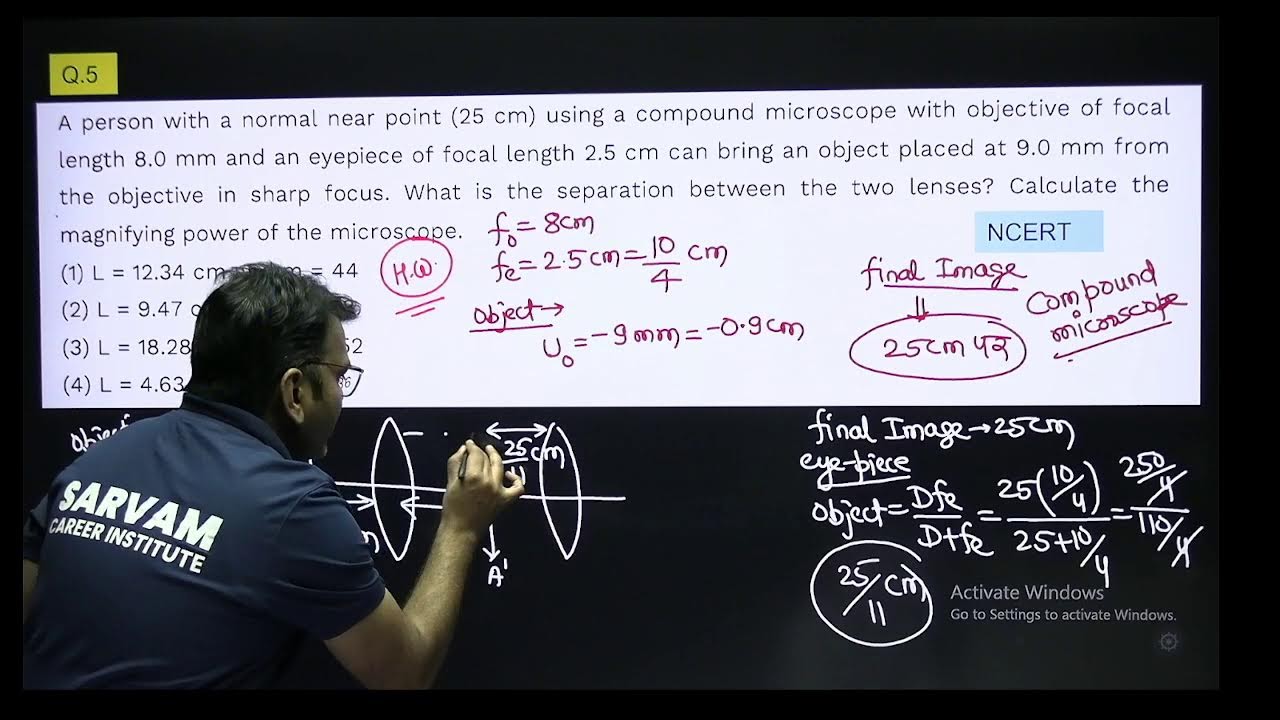













A compound microscope uses two convex lenses (objective and eyepiece) to achieve higher magnification than a simple microscope. The objective lens forms a real, inverted, magnified image of the object, which then serves as the object for the eyepiece. The total magnification is given by M = (L × D) / (f₀ × fₑ), where L is the tube length (distance between focal points of objective and eyepiece), D is the least distance of distinct vision (25 cm), f₀ is the focal length of the objective lens, and fₑ is the focal length of the eyepiece.
Compound Microscope Class 12 Physics | Ray Optics & Optical Instruments
Added:Basic Refraction and Lens Formula: Understanding thin lens equations (1/v - 1/u = 1/f) and linear magnification (m = v/u) for convex lenses.
Behavior of Convex Lenses: Familiarity with how image position, size, and nature (real/inverted vs. virtual/erect) change with object distance.
Least Distance of Distinct Vision (D): Understanding the near point of the human eye (typically 25 cm) and the concept of visual angle.
Simple Microscope: Mastery of how a single convex lens functions as a magnifier, including its magnifying power formulas for near-point and infinity focus.
Astronomical and Terrestrial Telescopes: Deriving the magnifying power and understanding the ray diagrams of refracting telescopes used for distant objects.
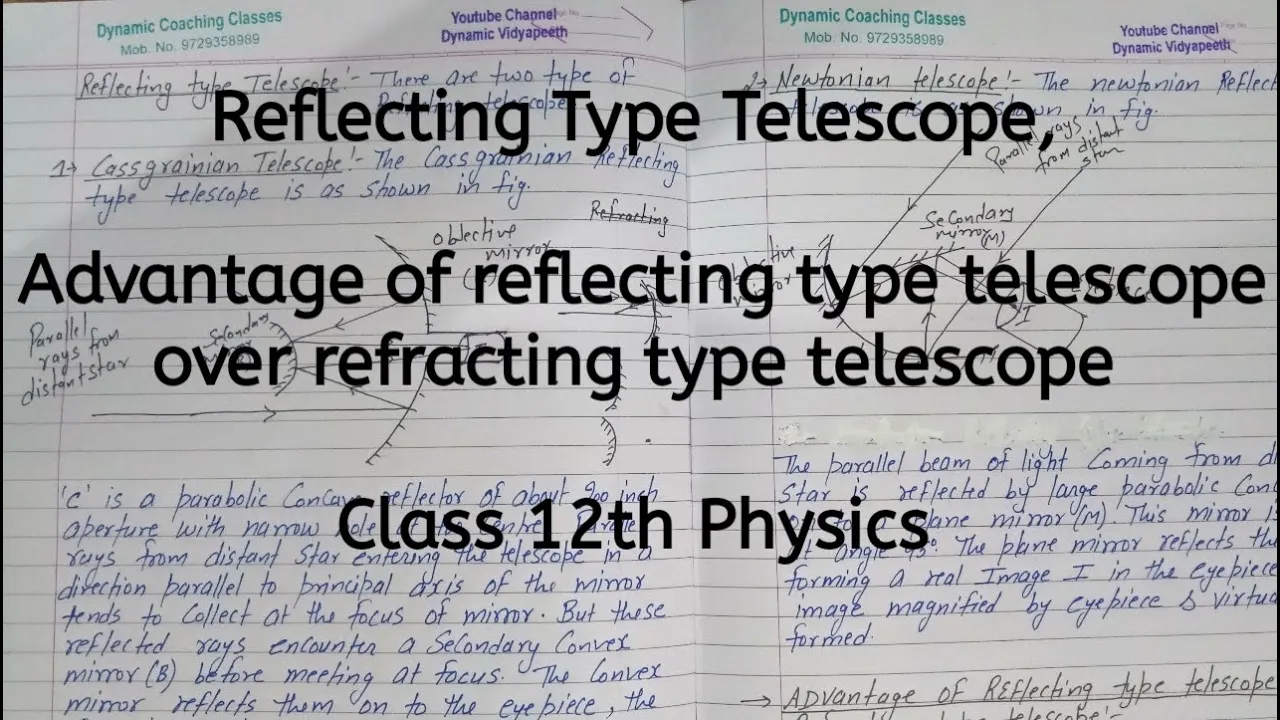
Reflecting Telescopes: Analyzing Cassegrain and Newtonian designs, and understanding how they eliminate chromatic and spherical aberrations.
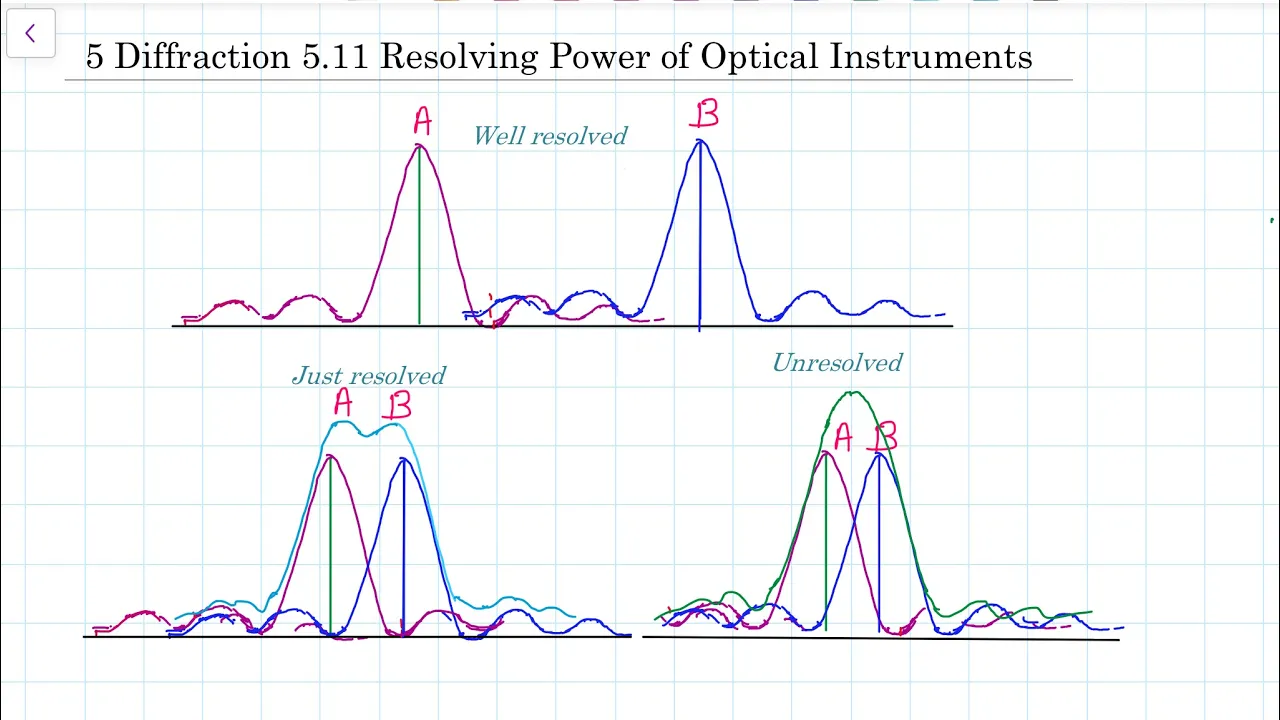
Resolving Power of Optical Instruments: Studying the limits of resolution for microscopes and telescopes using Rayleigh's criterion.
Wave Optics and Huygens' Principle: Transitioning from ray optics to the wave nature of light to understand diffraction and interference.
325.1K views0likes20:41Original Release: 2018-09-04
hello everyone welcome back to the class of such insult physics the finest and the easiest way to learn the concept so I'm back with the new video and in this video we are going to feel another point from a chapter array of takes an optical instrument this class is all about compound microscope so the key point of this class will be that is about compound microscope that why we have to use compound microscope because already we have a simple microscope and we will derive a very important equation of magnification of this compound microscope so please don't forget to watch this video till the end to learn the whole concept and also please don't forget to subscribe this channel because this is the channel where you can feel the concept of physics because if you are learning the physics by clearing the concept of it then 100% you will fall in love with it so get ready to fall in love with physics so before we all fall in love with physics I think we should recall the previous lectures in the previous lectures we were discussing about a simple microscope where we have studied that this is a kind of optical instrument which is used to see the large image of point like object and we have also derived the equation of magnification so any one of you want to learn this concept of simple microscope do one thing subscribe this channel and don't forget to press the bell icon to get the latest update of this physics channel so you can also tap your screen anywhere you'll see there is a suggestion video and that will be the video number 9 so you can go through that let's begin the class so get ready to fall in love with physics so in this topic we have to focus on compound microscope but the first question arises why we have to study compound microscope because already we have a simple microscope see when we focus on the formula of magnification then we will come to know that we have a equation M is equal to deep upon F where what do you mean by D that divorce least a distance of most distinct reason it means it was at that minimum distance through which your eyes can see the object clearly without feeling any stress but when you are keeping this object very closer to eye you cannot be able to see that object clearly so that is the minimum distance and for human eyes that is all about 25 centimeter got it so that capital D is distinct reason most distinct reason and then F is focal length so if we are using the simple microscope to see the large image of point like object then there will be one problem that problem is dear student I think you should not know that problem is in order to increase the magnification of that given lens we should decrease the focal length from this equation it is clear pretty clear in order to see the perfect image perfect enlarged image of the point like object we should increase the magnification and if we are going to increase the magnification we should decrease the focal length because it is inversely proportional to that M because D is already constant numeric constant got it but again you will face another problem because if you are going to decrease the focal length the image will be distorted you will get the destructed image why because if you have a convex lens of greater focal length then you will see the image very clearly but at the same time if you have a convex lens of a smaller value of focal length you cannot see the image properly because it will form an image although it is forming a clear image but that image will be not perfect that image will be not a sharp image are you getting this point Hamdi Akira had taken some shot a simple microscope ki kahani aik agar up Huskie magnification cor observed a rota M is equal to D upon F n Yannick agar hum a magnification but Hana had enlarged karna hai image cobalt Barak karna had the magnification Co increase karna hoga but again a magnification Co increased kandahari aunt oh we should decrease the focal length and but shall party come on if you are going to decrease the focal length to convex lens case I shoot Evo jayegi and if the size will be small the image that will be not a perfect image was sharp of been a he who got perfect image in here Destructo Jaya image Hana the ear problem phase Karen related to that simple microscope but at the same time if you take another convex lenss site of that simple microscope simple microscope my convex lens say Horus convex lens case I'd Manticore lens use Kirlia - kya hoga think about it there was one wonderful statement I have already explained in my previous videos of combination of lens video number 8 I think you should visit to that wampum annex pinata it's a dual lens back to back Jota had the wonderful line I have already explained that line was image obtained by the first lens will behave like a object for the second lens Jota yeah had your student Geographic simple microscope make simples a convex lens later dosage OB image ie Piscataqua demographic dose airlines use curtain to Oscar image dos ray of illegally as an object behave Corina a cheesy happy behave we are focusing on compound microscope that means we have to use two different lens it's a Joby imaging a pariah key that image will behave like a object or last many of schoo highly enlarged cartega so this is the main point you should remember why we have to use compound microscope reason lacnic a subset panel arisen Jelena Nike if we focus on the simple microscope then we have a equation I am is equal to D upon F in order to get the perfect image we should increase the magnification or I got her magnification cabrakan is hang a focal length decrease oka by sub or the focal and decrease okay a schematic lava cake is you image that accompany an email a goodbye so on Mary Mary bar buddy on what Brielle to a story hey a silly Amador lens use car number the combination of lens a beneath a negative lens hum no use Carrasco bull nong khiaw so there will be two lens one lens will be keep near the object you have to keep the lens near the object that is called your objective Joe object keep a smile and saga who say up nanum gonna have objective and another lens which is towards our eyesight John Haase up observe Karoubi object go take a jaha say up observe guru be with Buddha sighs maybe buddy who he and that is called your IPS so there will be two lens now objective and number two is called IPS you can see in the diagram this is main object object case I admit you have oke ahead objective or jaha page is a home observe carnival I have one Mary Leakey okay eyepiece you should remember the focal length of object object to lens should be smaller than the focal length of eyepiece because Jo I ski side here who say Barack guru Gita be toe edge or refract okay okay image when I give Oh highly enlarged Benecke so a theory good start current to subsequently up object your itis kibarim a link though now let us see the diagram of it because that is the main part of this lecture so here we have to draw two different lens they could case a banana a diagram because he bought a futon we say gal at Nagar Nabu well little up Kamini a diagram perfect on Schaffer diagram is perfect easily will be get able to get the full monks so take two different lenses one is objective and other is your eyepiece take a object having height h o8 h o height of elohim make object layer now to get an image of it at least two rays will pass through that Bush method or rays pass out on each I mean you can see one raises completely parallel to this principal axis police arrest principal axis K parallel and those rays which is parallel to this principal axis after getting refracted it will not go directly but it will Bend like this and 100% it will pass through the focus point you can see there is the focus point here a larger point P here that is the focus point but focus point Kiska apke hamara Navy Kiska table jitka focal length is leha Palika f po first summary about pooja directly j when any raise is parallel to the principal axis after getting refraction it will pass through the focus point the evil is your point here a 30 point concealed camera by fo right fo give about the character a deuce ray image do say rays scheme you can see another race is passing through that point B yes again and it is directly moving through that optical center and must remember it is the property of phrase ray diagram you have already learned in attend class nahin khaali Lladro clue Kyogre queries optical center say pass or duty hi I repeat my sentence if the race is passing through the optical center there will be a zero diffraction 0de fraction over a fraction II who need that acutally jo bhi na kisi of my direction could change Cawood so you have to be where you are yeah volley focus finds the parcel to area directly optical center as a pass or you can see a donor raise both these rays are meeting at this point job we don't know incident rays refracted rays milton here that particular point e to incident rays were via refracted rays were so the meeting point of the refracted rays is said to be the image of that particular point - hey well as you point here this point is called the image of that B so here you will get a B - you can see that the a B - you have to draw a perpendicular line over there on this principal axis so there is B - so this will be what it is so this is what the image of a - sorry the image of a so you can see dear student object ha H Oh yogi humming esta la semilla have B - and a - so it is not a virtual sorry it is not an erect and virtual but it is real and inverted because a B esata of a similar to real to head but inverted form an inverted form where so object eval a let's say - image of communique real main AG inverted milic your 30 see magnified milling in case eyes now Dickey told us are different say a B or you told us about Alegre it has - so here we have h oh and this is called your H I that means what image height is it clear take it then I gone up so we go Bella got a semester a magic Azad physics part area Pacific bothy Amazings our subject here because if you are learning how me some Cathy ratash first second geeky if you're learning the physics by clearing the concept of it 100% you will fall in love affair up Co Mahabad physics kiss our toka or Kasich Assad knee then what now - here bidders or ADA's okay now this object sorry this image of this particular objective lens will behave like a object for this lens in a previous video maybe caja or a swing to me starting my bullets Abdullah a combination the police is your image multi have image to circulate as a object paper tear the hookah a Kido no refracted rays yeah hopper or yapper incident to me and you are observing this yapeth rota I square upon a lineage of a Piazza they cook it of APIs you're going to refract home they refract home they refract only refract on gay or s particular point for milling it and you are observing from this particular point not from there but it's a situation Malik the a game of a isin so what will happen when this two refracted rays will meet at this particular point so this will gives you the image of that be - that will be B Double Dash and when you draw a perpendicular line then beyond a we will get another point which is called image of that a - so here I have written a double - getting this one the who I equip an objective lens the through DC body image milli or filled with food is a body image as a object either a behavior e IP scaling or I Pisgah focal length ebody has low snake and large highly honors a large image of code idea so I think you should write this theory in this way how I have started the lecture objective Guevara melaku IP Scaramella KO object tunic si image the whole eco fear IP snap okay are they're highly magnified image see here Kohi we have comics Niigata damn sure 101 percent if you're writing this theory in this way so this is all about how this compound microscope works then Fla but the other eye mask is your Q / t because simple microscope as your image milta hai usko magnified karna tohum a focal length go come there Nevada have focalin come Karim is eyeing at the image of keyboard Destructo jayegi toe is better chaotic lens use carload ticket now we have to derive the equation so you can see an area H O'Hare to use your or hygge will be H okay but over how far and you can see if this angle is beta-2 across ice layer Berbick yoga beta mats kathira manual angle or angle dunno same okay okay so if I write magnification magnification of objective lens then I will write em oh this is magnification of objective lens and the formula of magnification for the lenses what which we have already derived it in the previous lecture H I upon H poo that is image height upon the object height so what about image height and what about object height i don't know so i will give this to equation number 1 now i will find the value of H Rho then I will put all this well in that equation to get the value of time Oh magnification of objective lens so here we have a 2 different triangle you can see that we have triangle ORP obtained triangle over p if i am going to write and beta so tan beta is equal to what o are perpendicular upon base that is Opie what about R that is exactly equals to H OH what about Opie Opie is exactly equals to fo what do you mean by fo focal length of objective now make a Cho subject and H o is equal to f o and then tan beta this is your equation number 2 we have another triangle and you can see in this triangle we have a PA - B - triangle P a - B - but your party you have a bodge other concentration curricula they keep donor egg a focal length diagram now put the crab cake to her fo k hey it is the focal length of objective ala lens and and there we have Fe you can see f4 fmet difference melody I am at the TA tota total Chi Baraka because yay but I but still there is some gap between fo and Fe you can see in the diagram F or Fe T which make gap that gap is represented with that capital L and must remember here the capital L is called tube length of compound microscope a very important line capital L is actually the gap of for two focal length that is fo and Fe and it is basically a tube length tube length hooter a actual May key is cassette carnival data up Konoha page about this image could they go get the shot up image the women leakage above alkaloids is kururugi so you have to adjust that so that is the property of compound microscope capital L is what tube length now in the Triangle of P a - B - if I write a tan beta then it is perpendicular that is a - V - upon what side that is PA - yandiki confusion now so much now the answer what I'm saying it has speed s two shinobi a both but I bought the chess table yecchh I have but what about PA - as a peer as dick measuring it - sir yeah - you totally hate the can actually make out the high key value gap or a Holly gap a whoa what is short gap put the air the ARP is speed a square exactly equals to Alex at the ticket you bought the point past melodiously you can write that PA - yes L that is cube length so here we have tan beta is equal to H I upon L make H I subject so H I is equal to L and beta this is your equation number three now we have a Cho as well as H I we are going to use equation number one so from Equation 1 now M o is equal to H I H is what L tan beta upon H oh I chose there we have fo upon tan beta tan beta tan beta cancel so mo is equal to L upon fo equation number 4 now this is the magnification of objective lens we have another lens which is your eyepiece so for this particular eyepiece if I am going to write the magnification of it I have eat that is magnification of eyepiece so at the last you are getting the enlarged image of that a B at this point a Double Dash and B - the actual mayhem object car perfect well a picture just pay just distance to find career but he distance talk about the most distinct reason hence I will take this distance as capital D are you getting my point because he ate last wala lens Joe havoc simple microscope ether behave carry our simple microscope car formula get M is equal to B upon F the Ysleta because it's keyed your final image geometry to expect our merry eyes without any strays vinegar says trace it clearly is image for the exact there is helium use your last for a distance of scope capital dealing it will say last image OB form dota head last well a second one a lens say that is always your most distinctive reason I think you should watch the previous videos again a so much my 802 to a concert de klerk - Claro diagram so M E is equal to capital D upon F where I should write f as Fe because this is the focal length of eyepiece top Ameri pass mo movie a magnification of objective lens as well as we have magnification of eyepiece now whenever there are two different lenses and they are combined doe lens are combined here so yeah a quick equation jota adjustment resultant Jo focal length that is like F 1 upon F is equal to 1 upon F 1 plus 1 upon F 2 plus - - - and also we can write 1 upon F s power so P is equal to P 1 plus P 2 plus P 3 up to the number of lenses in a same radial student if we talk about magnification for the combination of the lenses then it is not ratio it is not all about ratio it is not about that there is some but it is all about the multiplication so the final equation of magnification is like that and is equal to mo into m e what about mo that is that is L upon F oh and what about a me that is d upon Fe so it is very very important equation G W which I had need which I have computation exam K of preparation cubic Aruban exams can normally affair if you are focusing on an zrd 100% the numerical can be asked from this numeric point which is LD upon F or Fe so this is all about from today's class it's done at last would like to say happy Jan mass to me and thank you so much for watching all my videos and if you are liking the concept of this channel then please don't forget to subscribe it and also please don't forget to share this channel into all the students so the maximal student can take the benefit of this channel because this is the channel where you can feel the physics where you can love the physics of such matters a caramel physics body ache Bill Koch who nevelocity it as a subject a guy selfish I heard you say Vegeta and Giada Oscar caper and his concept cooperton is Cakery Botticelli's anger though he may omit carro aqui há massage chair / Mascola heartburn hierarchy crucially as Pascal de boku because shaky or physics as a moose carcass at portray Jorge's channel go subscribe con anomaly or Shere Khan and I will - thank you so much for watching all the videos shall they melt ahead till then to whatever you want to do man but don't trouble your mom thank you thank you so much for watching all the videos
Up Next
7:21
Astronomical Telescope Ray Diagram and Angular Magnification Derivation
@QuantumBoffin
191.5K views•2014-07-08

12:53
21cm Hyperfine Transition in Neutral Hydrogen: Radio Astronomy Basics
@AaronRobertParsons
12.4K views•2011-10-13

32:32
NMR Spin Physics I: Zeeman Effect, Resonance Condition & Larmor Frequency
@nptel-indianinstituteofsci8064
2.3K views•2024-01-17

27:14
Entropy and the Second Law of Thermodynamics Explained
@veritasium
27.5M views•2023-07-01
Related Study Plans & Knowledge Roadmaps
Structured learning paths in Physics
physics
Nuclear Physics (Decay, Fission & Reactors)
01Atomic Structure and the Binding Force
02Radioactive Decay and Half-Life
03Nuclear Fission Mechanics and Chain Reactions
+ 2 more learning modules
12h5 modules
Explore Roadmap
physics
Soft Matter (Polymers, Colloids & Rheology)
01Foundations of Soft Matter & Thermal Forces
02Polymer Physics and Macromolecules
03Colloids, Surfactants, and Self-Assembly
+ 2 more learning modules
38h5 modules
Explore Roadmap
physics
Analytical Mechanics: Lagrangian & Hamiltonian
01Mathematical Foundations: Calculus of Variations
02From Newtonian Mechanics to Constraint Dynamics
03The Principle of Least Action & Lagrangian Mechanics
+ 3 more learning modules
28h6 modules
Explore Roadmap
physics
General Relativity (Spacetime & Cosmology)
01Foundations of Relativity: Special Relativity
02The Geometry of Spacetime: Equivalence Principle & Curvature
03Einstein's Field Equations: The Mathematics of Gravity
+ 2 more learning modules
55h5 modules
Explore Roadmap