



















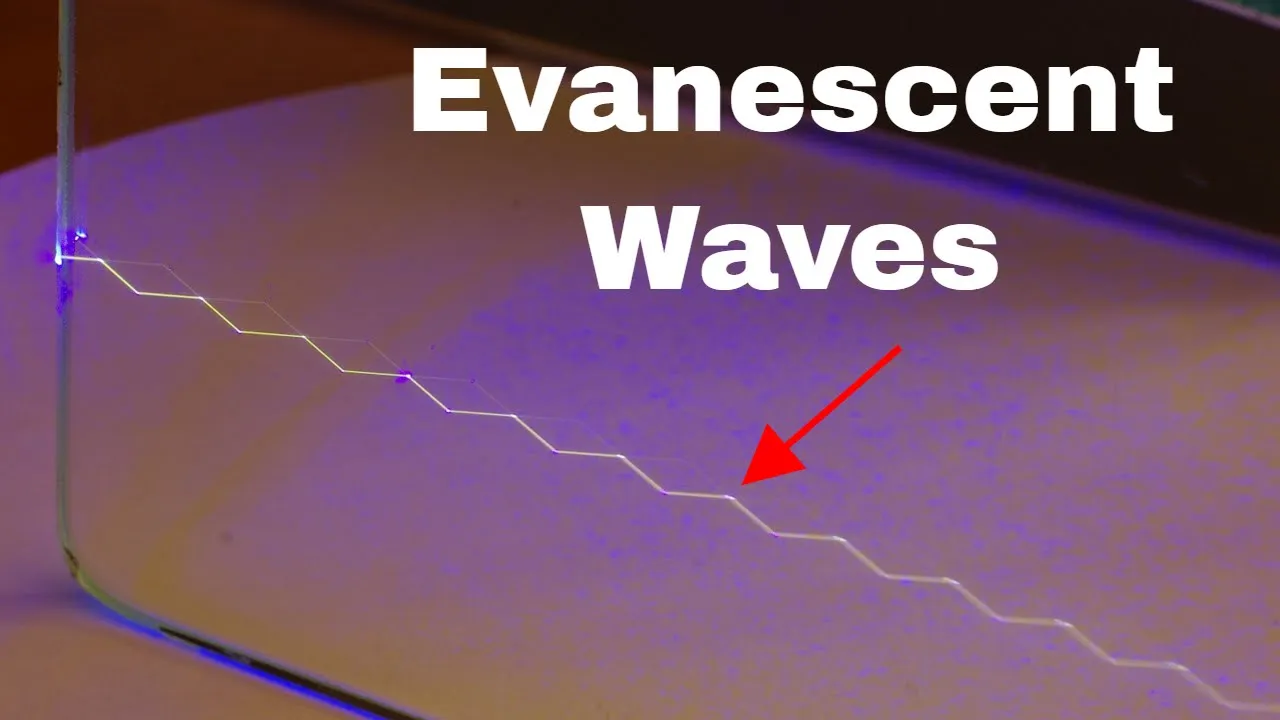

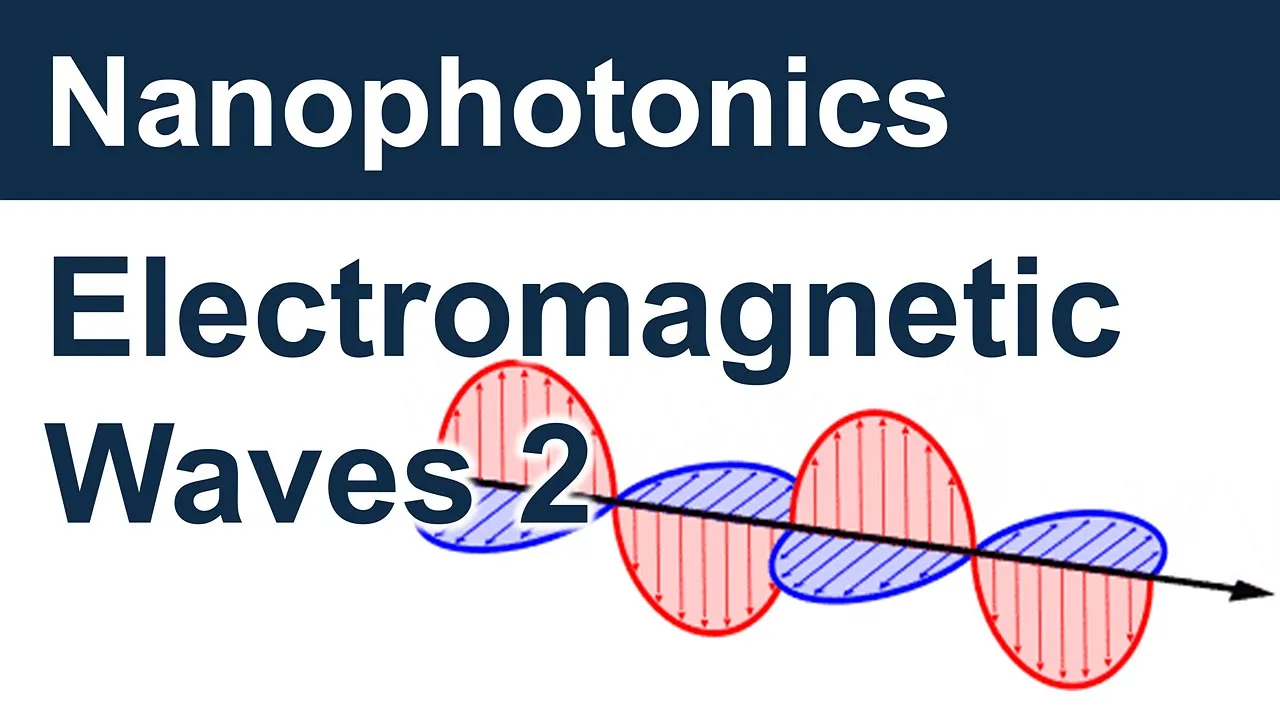
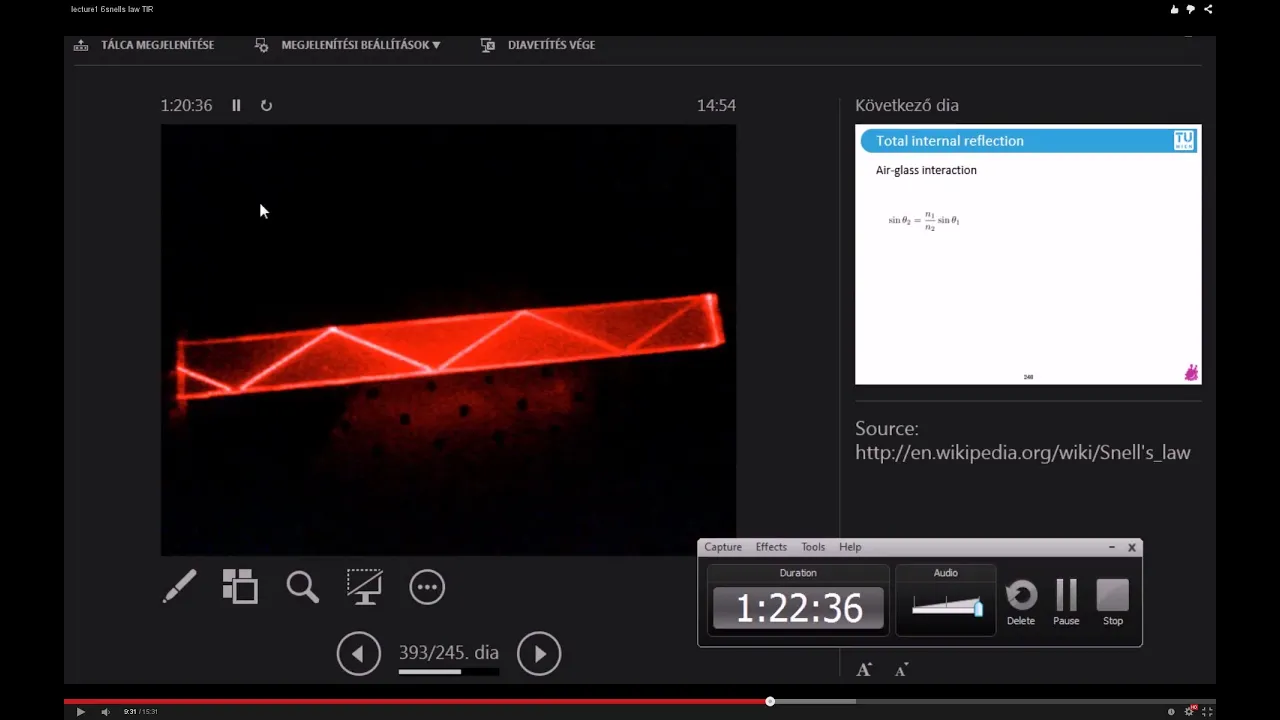
Total internal reflection occurs when light travels from a medium with a higher index of refraction to one with a lower index, and the incident angle exceeds the critical angle—the angle at which the refracted ray makes 90 degrees with the normal. The critical angle can be calculated using Snell's Law: θc = sin⁻¹(n₂/n₁), where n₁ is the higher index and n₂ is the lower index. When the incident angle exceeds this critical value, no refraction occurs and all light reflects back into the original medium.
Total Internal Reflection & Critical Angle | Physics Tutorial
Added:Understanding the basic concept of light refraction and how light bends when transitioning between different media.
Familiarity with the Index of Refraction (n) and how it represents the speed of light in a material.
Knowledge of Snell's Law (n1 * sin(theta1) = n2 * sin(theta2)) and how to apply it mathematically.
Basic trigonometric skills, specifically the ability to work with sine functions and calculate inverse sines (arcsin).
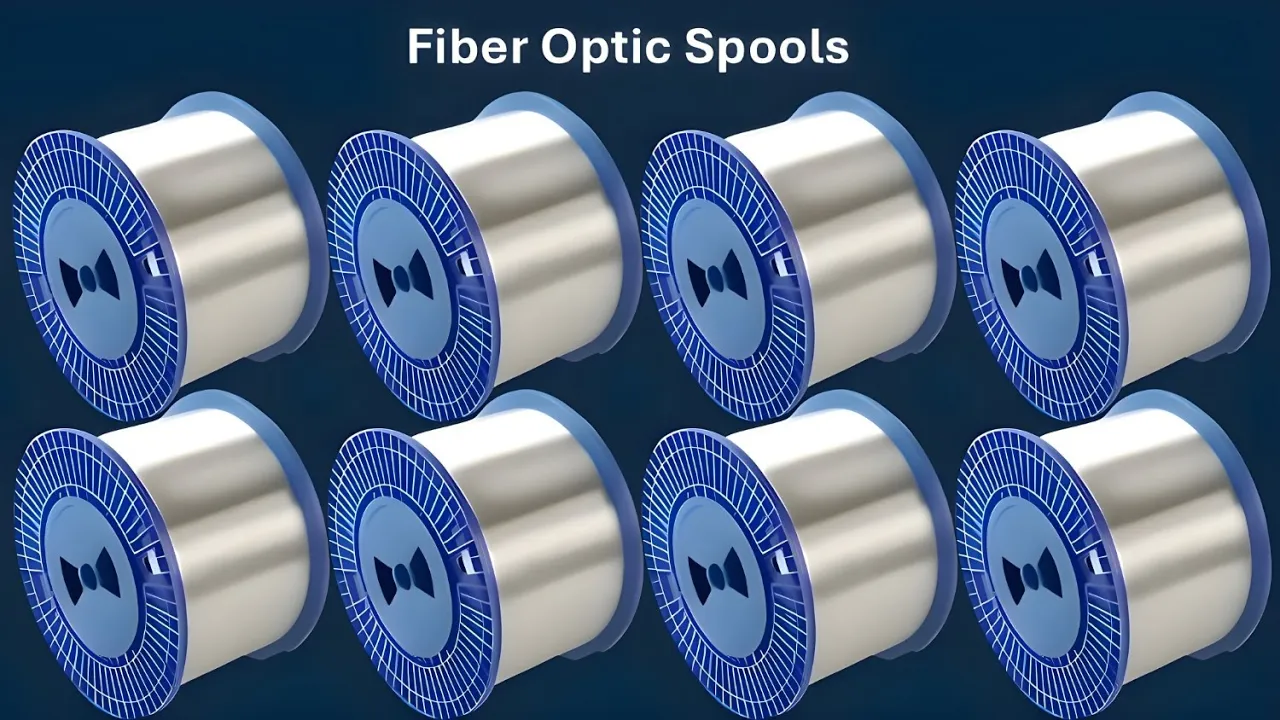
Exploring the technology and applications of fiber optics in telecommunications and medical endoscopy.
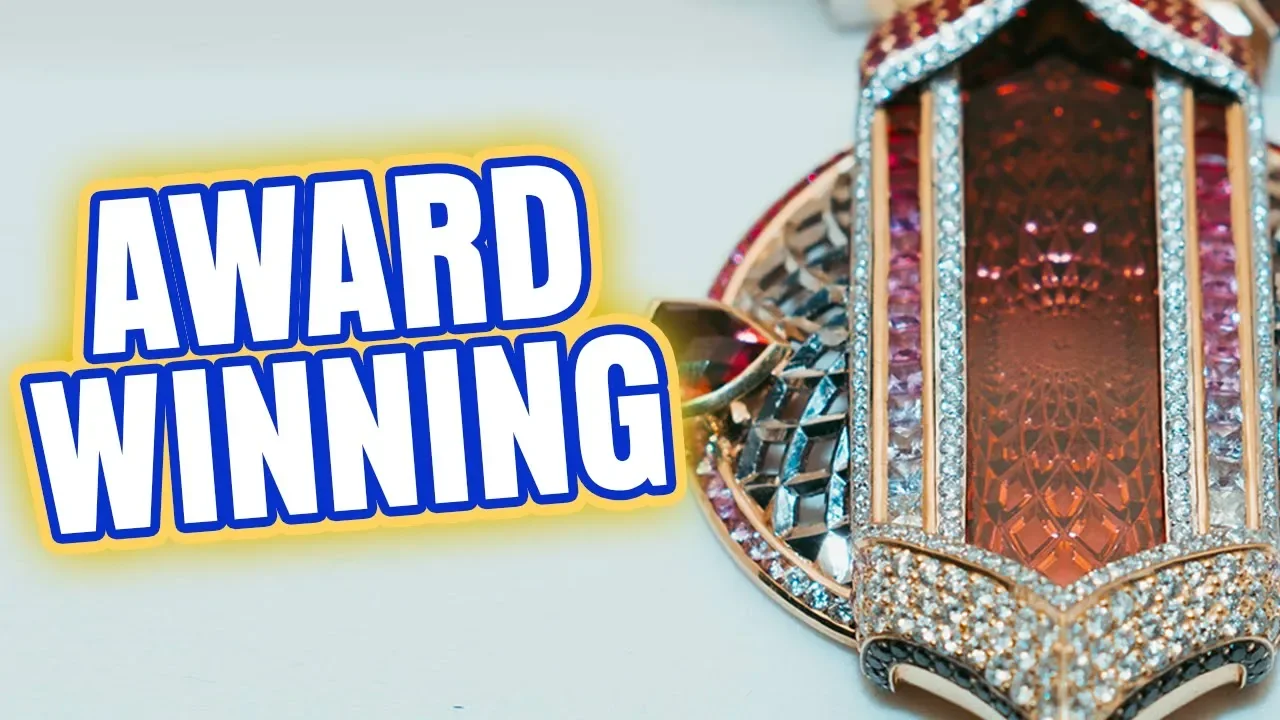
Analyzing the optical physics behind gemstone cuts, explaining why diamonds are cut at specific angles to maximize brilliance.
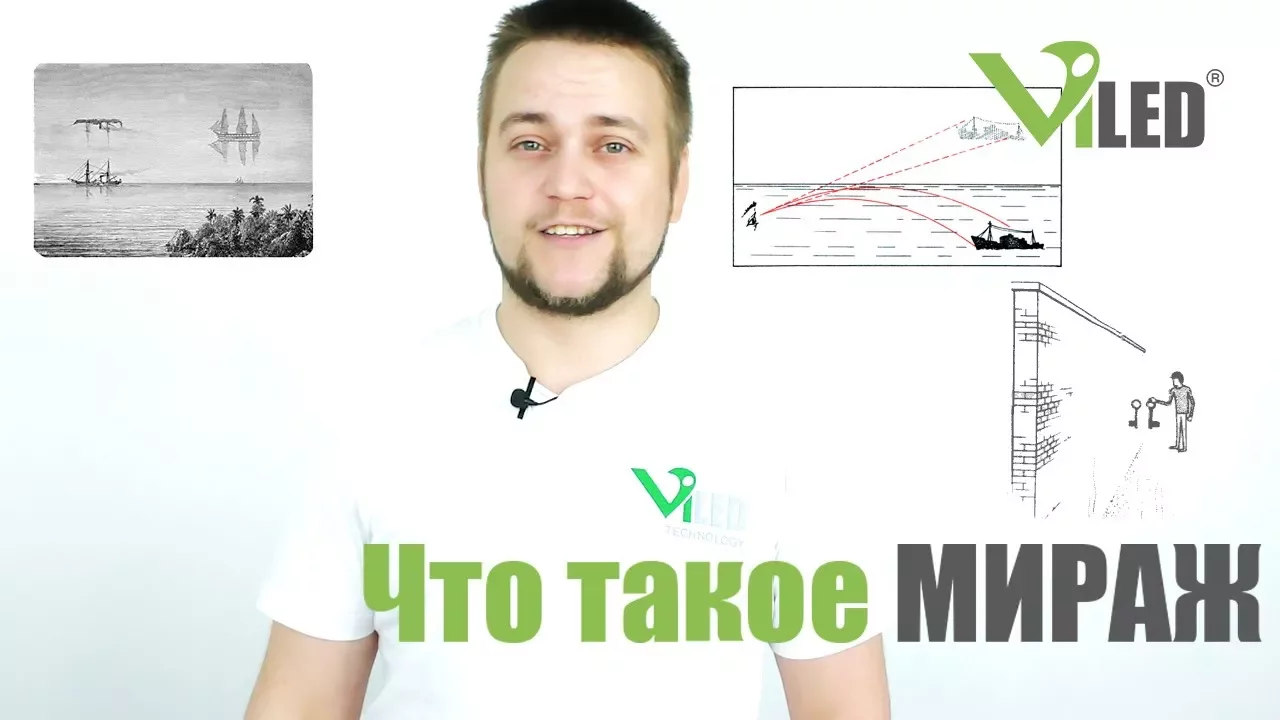
Investigating atmospheric phenomena caused by refraction and reflection, such as mirages and rainbows.
Studying the design of optical instruments like binoculars, periscopes, and SLR cameras that utilize reflecting prisms instead of standard mirrors.
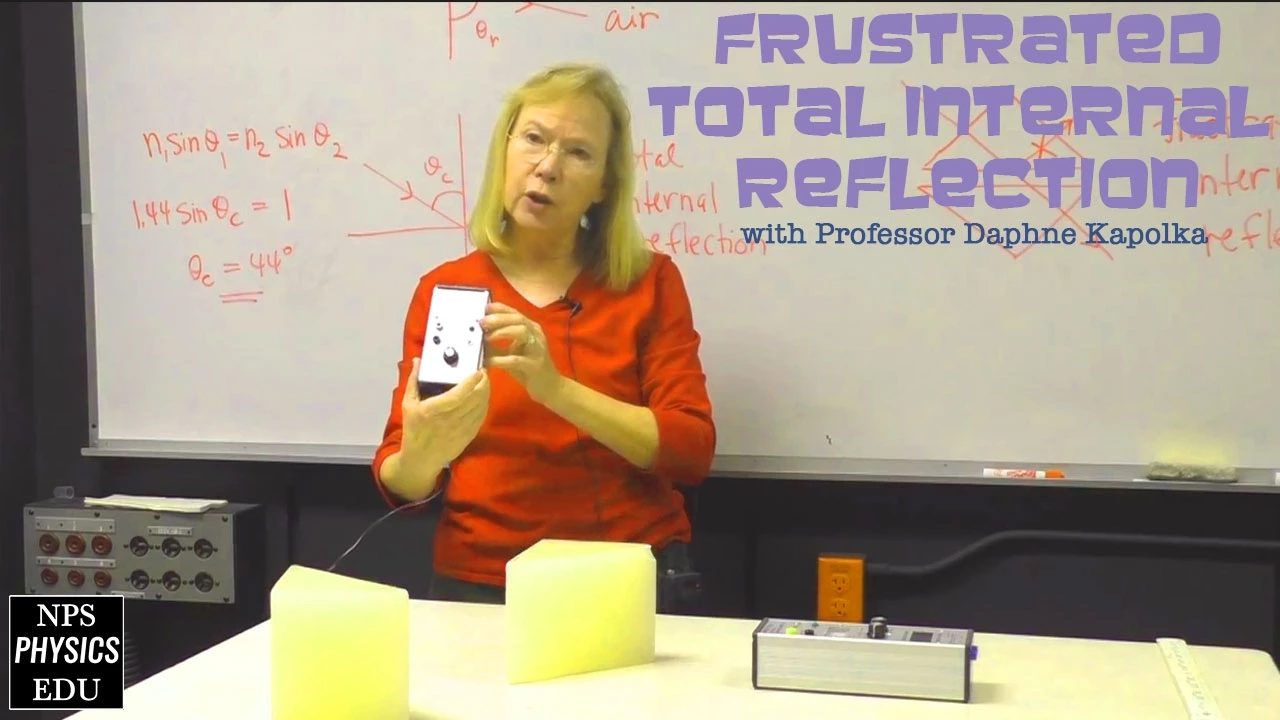
Introduction to advanced wave optics concepts like evanescent waves and Frustrated Total Internal Reflection (FTIR).
551.2K views9.5Klikes14:56Original Release: 2016-08-06
in this video we're going to go over total internal reflection and also how to calculate the critical angle so let's say if this represents the boundary between two materials on top we have air and on the bottom actually let's use water instead of glass so this is the normal line which is perpendicular to the surface and the ray that strikes the boundary between air and water is called the incident Ray and the angle between the Ray and the normal line is the incident angle or the angle of incidence now two things can happen the ray can reflect or it can then refract if it bounces back to the water this is reflection the angle of incidence is equal to the angle of reflection so Theta I is equal to Theta R this is the law of reflection now it can also refract it can bend as it passes from water to air this is the angle of refraction the equation that relates the angle of incidence and the angle of refraction is Snell's law it's N1 sin Theta is equal to N2 sin Theta 2 the index of refraction for air is about one and the index of refraction for water is 1.33 so as the light Ray travels from a material with a high index of refraction to a material with a low index of refraction it bends away from the normal line notice that Theta R is greater than the angle of incidence so it bends away from the normal line now let's say instead of using Diamond I mean instead of using air we use diamond diamond has a much higher index of a fraction than air it's it's about 2.42 so if we have a light Ray that travels from water to Diamond it's going to bend towards the normal line and so the angle of refraction is much less so therefore as n increases Theta decreases now for total internal reflection to occur light has to travel from a highend value to a low end value not from a low end value to a high end value so total internal reflection will not occur between water and Diamond as light travels from water to Diamond but it can occur as light travels from water to air the reason for that because the angle of refraction it bends away from the normal line and So eventually total internal reflection can occur if you increase the angle of incidence so make sure you keep that in mind total internal reflection will only occur if light travels from a material with a high index of refraction to a low index of refraction and the other way around so anytime you have an instant R strike in a boundary two things can happen it can reflect or it can refract but let's focus on the refraction part so this is the angle of incidence and this is the angle of refraction and let's say this is air and water now what's going to happen if we increase the incident angle if you increase the incident angle the angle of refraction will increase as well as you increase the incident angle there comes a point where the angle of refraction becomes 90 when the angle of refraction is 90 the instant angle has now become the critical angle so the critical angle is the incident angle when the refracted angle is 90 now if if the incident angle exceeds the critical angle that is when total internal reflection will occur so now let's understand why as the incident angle increases when it exceeds the critical angle there's no more refraction once the refracted angle once it reaches 90 if you go past that there's no more refraction so the only thing that can happen is reflection keep in mind you always have reflection but once you take away refraction then only reflection occurs therefore you have total internal reflection so anytime the incident angle exceeds the critical angle total internal reflection occurs so let's try an example using air and water calculate the critical angle what must be the incident angle at which the refracted angle is 90 so if you want to calculate the critical angle use Snell's law N1 sin Theta 1 is equal to N2 sinet 2 keep in mind the index of refraction for air is 1 and for water it's 1.33 so let's say one is for air two is for water so N1 is going to be 1 sin Theta 1 that's going to be 90 and on the other side N2 is 1.33 * sin Theta 2 which is the critical angle so the critical angle is simply 1 / n it's just 1/ n so 1 over 1.33 that's 7519 now to find a critical angle it's the inverse sign of 1 / n or inverse sign of 7519 so therefore the critical angle in our example is about 48.75 at this angle the angle of refraction is 90 if the incident angle exceeds the critical angle then total internal reflection will occur so let's see what happens if we increase the incident angle to 90 by the way keep in mind that the incident angle could be anything the critical angle is simply the incident angle when the refraction angle is 90 so using this equation again N1 sin Theta 1 is equal to N2 sin Theta 2 so we're going to use 1 and 90 N2 is going to be 1.33 actually let's change it let's solve for the new refracted angle if the incident angle exceeds the critical angle let's say the incident angle is 50 keep in mind the critical angle is about 48.75 so let's attempt to solve for the refracted angle if the incident angle exceeds the critical angle so N1 is one we're looking for the refracted angle N2 is still 1.33 and Theta 2 is 50 so 1.33 * s of 50 is 1.02 now sign can never be greater than one it doesn't happen if you were to type in the inverse sign of 1.02 you will get an error in the calculator it it just it doesn't work so therefore there is no refracted angle when the incident angle exceeds the critical angle refraction doesn't occur anymore and that's that's why you have total internal reflection if you try to solve it you're going to get an error sign cannot be greater than one so after 48.75 refraction no longer occurs and so total internal reflection um is what will occur so now let's work on some practice problems calculate the critical angle between glass and water so the first thing we need to know is the index of refraction for these two materials the index of refraction for water you can look it up it's 1.33 and for glass it's about 1.5 so using the equation N1 sin Theta 1 is equal to N2 sin Theta 2 which angle do we need to look for and which one is the refracted angle keep in mind for total internal reflection to occur the light has to travel from a high index of refraction to a low index of refraction or to a material with a a lower index of refraction so it has to go from glass to water it can't go from water to Glass so therefore the refracted angle the one that's 90 is the one that is associated with the lower index of refraction so if N2 is 1.33 Theta 2 has to be 90 which means Theta 1 is the critical angle that we're looking for N1 is 1.5 if you try solving it the other way it won't work so whenever you're looking for the critical angle the 90 is associated with the smaller index of refraction it's always going to work out that way so so 1.33 * sin 90 is 1.33 sin 90 is always going to be 1 so sin Theta C is 1.33 ID 1.5 which is 887 so therefore the critical angle is going to be the inverse sign of 887 so it's about 62.5 Dees that's the critical angle for this particular problem the critical angle for the interface between a solid and air is 40° what is the index of refraction of the solid so how can we solve this one so we have solid and we have air the index of refraction for air is about one and for the solid we don't know what it is we're looking for it so let's draw a picture so let's put the solid on the bottom and let's say uh the air is on top so light is going to travel from the solid into the air and since we're going from a highend value to a low end value the light rate is going to bend away from the normal line but since we're dealing with the critical angle the angle of refraction must be 90 and we know the critical angle is 40 so we just got to solve for n so let's write the equation that we need N1 sin Theta 1 is equal to N2 sin Theta 2 so so let's say N1 is the index of refraction for air and then it's going to be multiplied by s 90 n 2 is the index of a fraction for the solid that's what we're looking for times sin 40 so N2 is simply sin 90 which is 1 / sin 40 and so the answer is 1.56 that's the index of a fraction of the solid so anytime you're dealing with a critical angle problem just make sure that the angle of refraction is 90 that's what we need to plug in for the other angle so that is it for this video thanks for watching and have a great day
Up Next
15:32
Snell's Law and Total Internal Reflection Explained
@TwoMinutePapers
12K views•2015-03-25

4:32
How Tuned Mass Dampers Stop Structures from Shaking
@MinutePhysics
573K views•2018-08-28
64:54
Static Equilibrium: Tension, Torque, Beam, and Ladder Problems
@TheOrganicChemistryTutor
1.7M views•2016-10-07

33:44
The Blue LED: A Decade-Long Scientific Challenge Explained
@veritasium
46.5M views•2024-02-08
Related Study Plans & Knowledge Roadmaps
Structured learning paths in Physics
physics
Medical Physics: Imaging, MRI & Radiotherapy
01Foundations of Radiation and Matter Interaction
02X-Ray Imaging and Computed Tomography (CT)
03Magnetic Resonance Imaging (MRI) Physics
+ 3 more learning modules
15h6 modules
Explore Roadmap
physics
Nuclear Physics (Decay, Fission & Reactors)
01Atomic Structure and the Binding Force
02Radioactive Decay and Half-Life
03Nuclear Fission Mechanics and Chain Reactions
+ 2 more learning modules
12h5 modules
Explore Roadmap
physics
Soft Matter (Polymers, Colloids & Rheology)
01Foundations of Soft Matter & Thermal Forces
02Polymer Physics and Macromolecules
03Colloids, Surfactants, and Self-Assembly
+ 2 more learning modules
38h5 modules
Explore Roadmap
physics
Analytical Mechanics: Lagrangian & Hamiltonian
01Mathematical Foundations: Calculus of Variations
02From Newtonian Mechanics to Constraint Dynamics
03The Principle of Least Action & Lagrangian Mechanics
+ 3 more learning modules
28h6 modules
Explore Roadmap