



![What is a Force & Types of Forces in Physics? - Gravity, Normal Force, Contact Forces - [1-5-1]](https://i.ytimg.com/vi_webp/HPfmSLDtP3c/maxresdefault.webp)



![FISICA - Estática Parte 02 [CICLO FREE]](https://i.ytimg.com/vi/ziuZKR7cdJw/maxresdefault.jpg)




![Elasticity in Physics - Stress & Strain [Young’s / Bulk / Shear Modulus]](https://i.ytimg.com/vi/K93SlL_NShE/maxresdefault.jpg)







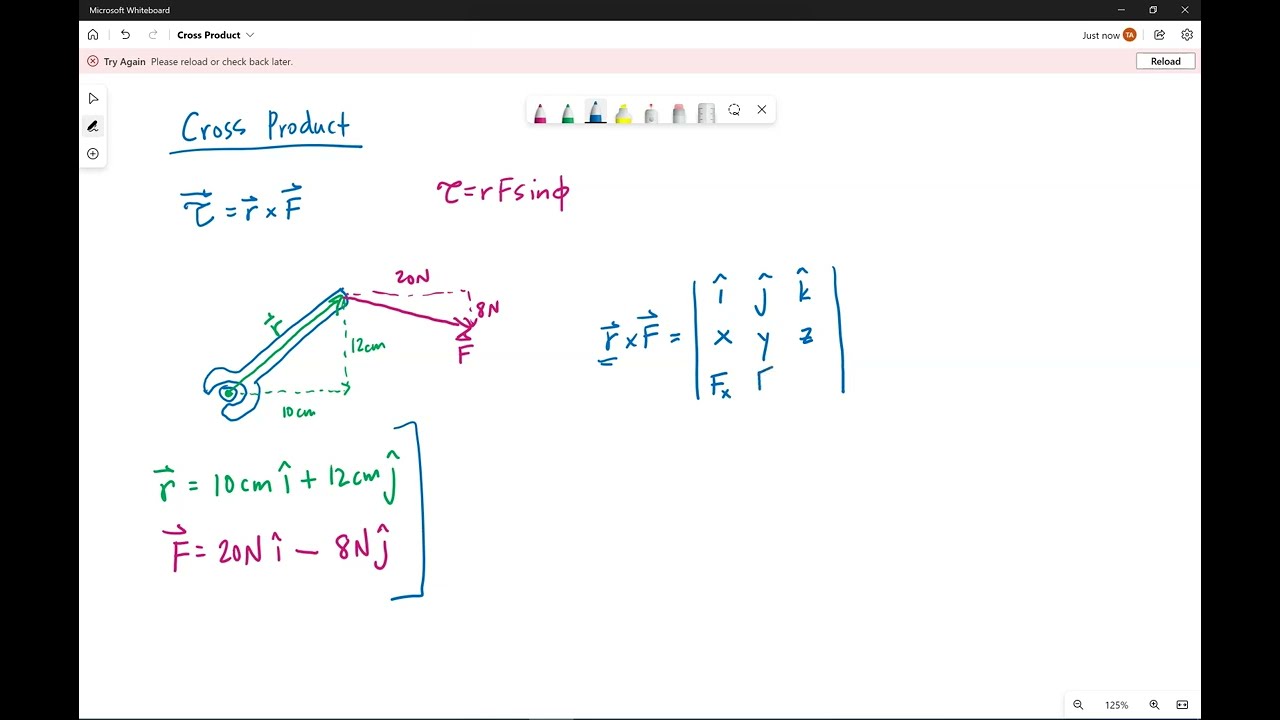
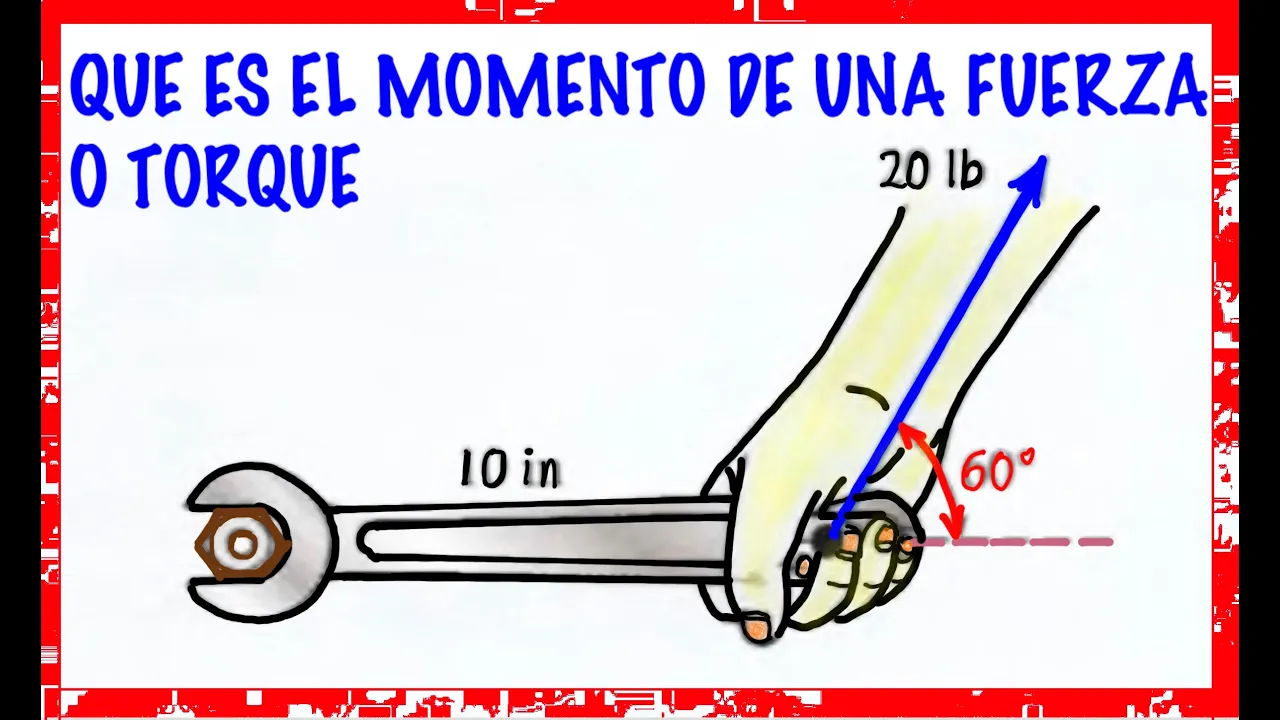
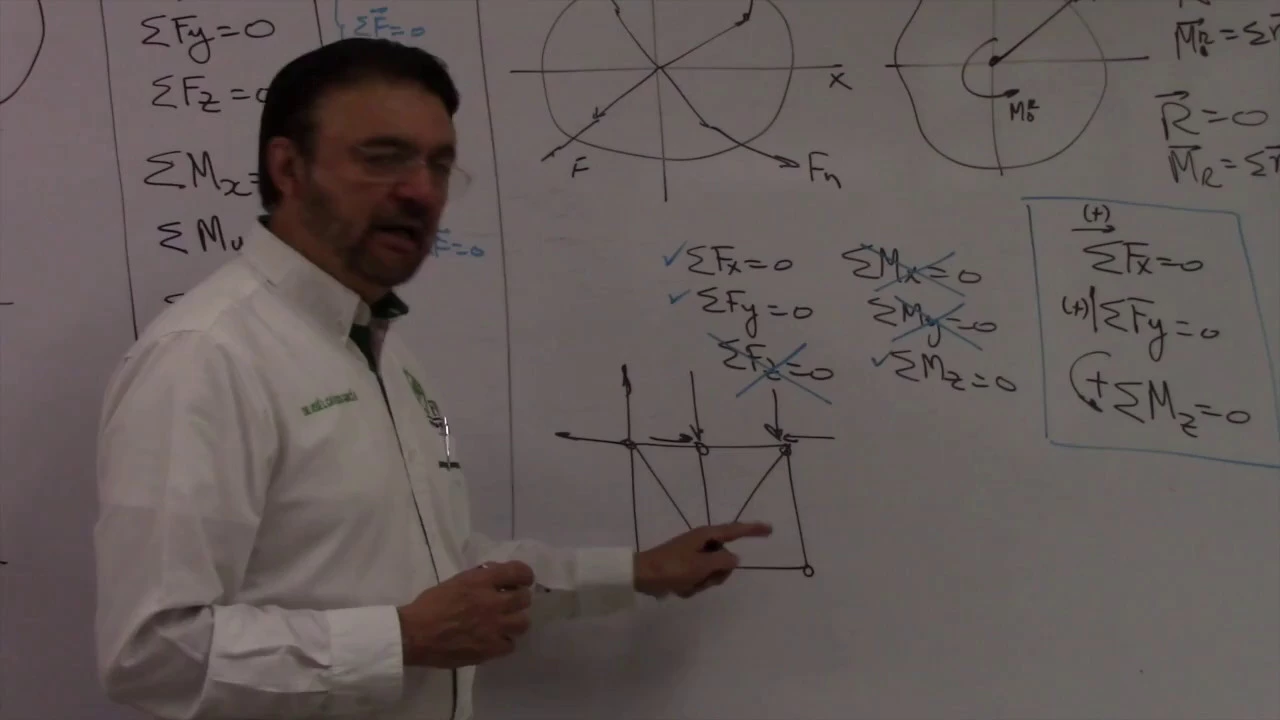
Static equilibrium occurs when both translational equilibrium (net force equals zero) and rotational equilibrium (net torque equals zero) are satisfied simultaneously; torque is calculated as the cross product of the force vector and the position vector (τ = r × F = F × r × sinθ), with counterclockwise torques considered positive and clockwise torques negative, enabling systematic solution of problems involving seesaws, hanging signs, beams, and ladders by applying force and torque balance equations.
Static Equilibrium: Tension, Torque, Beam, and Ladder Problems
Added:Newton's Laws of Motion, particularly the first law concerning translational equilibrium (the sum of external forces equals zero).
Basic vector algebra and trigonometry, specifically decomposing force vectors into perpendicular horizontal and vertical components.
The fundamental definition of torque (moment of a force) and how to calculate it using the cross product or lever arm method.
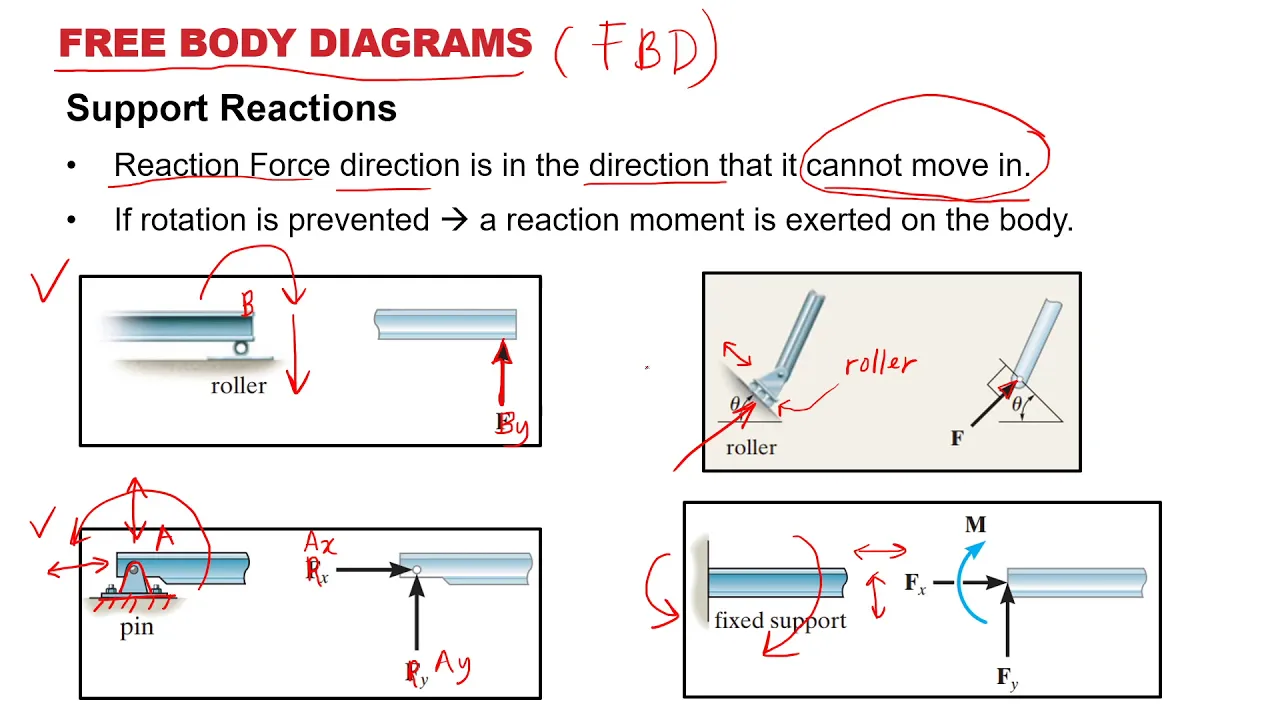
Creating and interpreting Free-Body Diagrams (FBDs) to isolate and identify all external forces acting on a rigid body.
Rotational Dynamics, including torque, angular acceleration, moment of inertia, and Newton's second law for rotation.
The study of elasticity, stress, and strain (such as Young's Modulus) to analyze how physical structures deform under static loads.
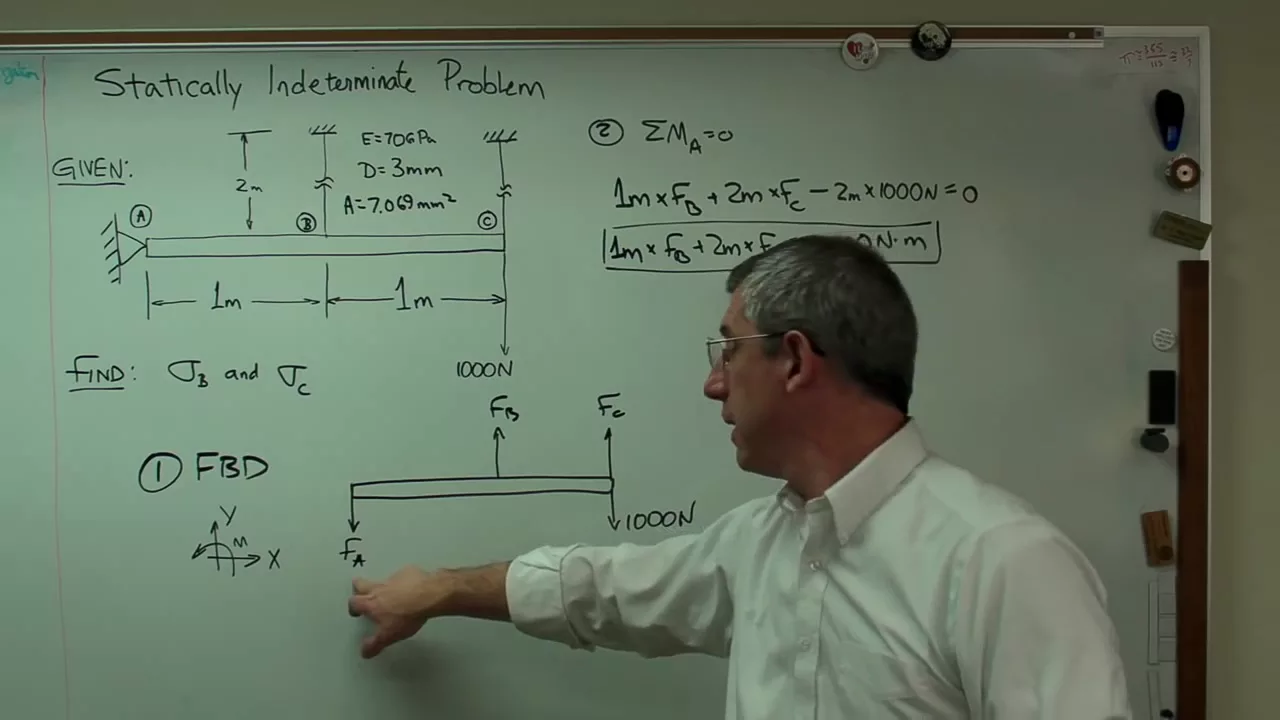
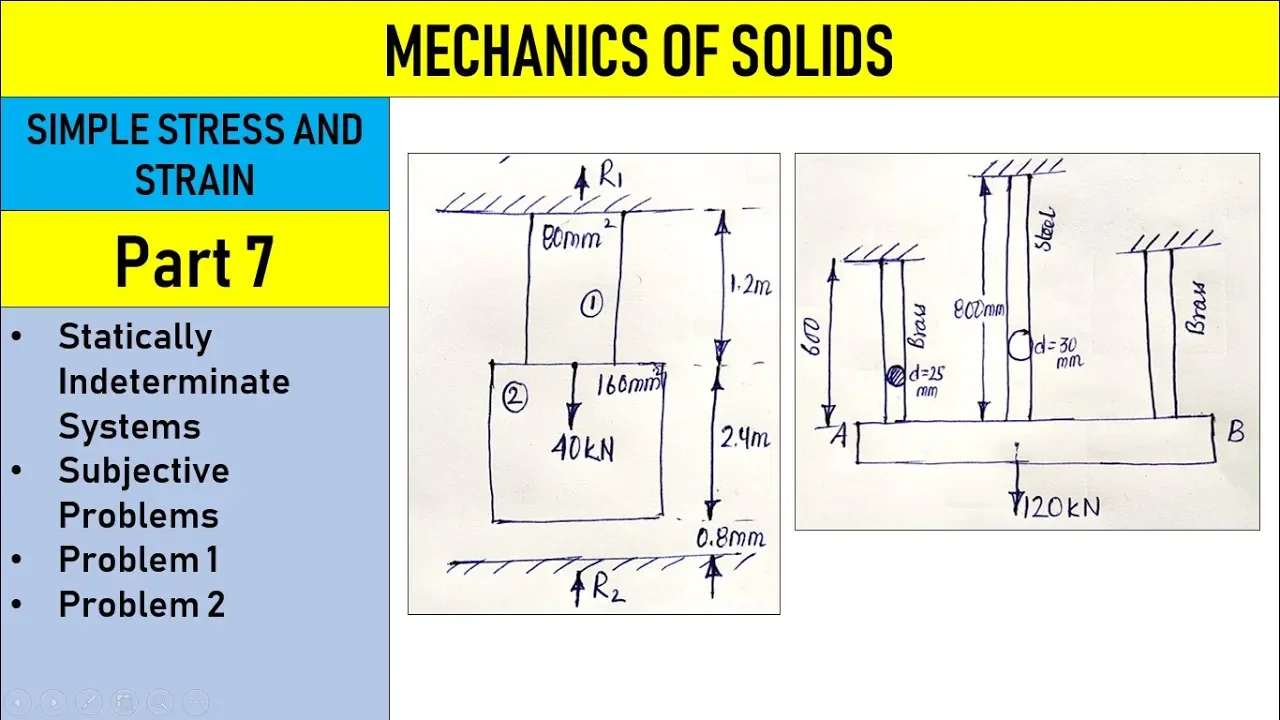
Analyzing statically indeterminate systems, where equations of static equilibrium are insufficient and material deformation properties must be considered.
Applied structural engineering concepts, such as the analysis of trusses, frames, and bridges using the Method of Joints or Sections.
1.7M views22.8Klikes1:04:54Original Release: 2016-10-07
In this video, we're going to go over a few static equilibrium problems. Now, there are two things that you need to know. The net force must be zero. The sum of all forces in the x and y direction must be equal to zero. So, you have translational equilibrium. Now, you must also have rotational equilibrium. So the sum of all the torqus must be equal to zero as well. So when these two conditions are met then static equilibrium will occur. Now let's review torqus. Let's say if you have an object that can rotate about this pivot point and if we apply a force at an angle and let's say this is the the length of the bar so to speak then the torque is the crossroduct of R and F which is F * R sin theta where theta is the angle between R and F. So we're going to use this formula a lot to calculate the torque in these problems. In addition, we need to talk about the sign conventions that we're going to use for our torque calculations. Let's say if we have two forces F_sub_1 and F_sub_2, F_sub_2 will create a counterclockwise rotation, so it's going to create a positive torque. F_sub_1 will create a clockwise rotation, so it's going to create a negative torque. Let's try this problem. A 40 kg child sits on a seessaw 3 m away from the pivot point. The mass of the bar is 10 kg. Where should a 30 kg child sit to balance the seesaw? So, let's begin by drawing a free body diagram. So, here's the pivot point or the fulcrum and here's the first child. Let's just draw a stick figure.
Now the force the weight force exerted by the first child let's call it F1 and this child is 3 m away from the pivot point. Now the second child is X meters away from the pivot point. That's what we're looking for. And this child will exert a weight force that we're going to call F_sub_2. Now the mass of the bar also exerts a weight force and the pivot point exerts an upward normal force which supports the other three downward forces. So we can calculate the normal force first or the location where the 30 kg child sit. Doesn't matter what order we do it. So let's start with the normal force. So we know that the sum of all forces in the y direction must be equal to zero if we are to have static equilibrium. Now the normal force is an upward force and the other three forces are downward forces. So we're going to put a negative sign in front of it.
Now if we add the three forces with a negative sign and move it to the left side of the equation, we can see that f_sub_1 plus f_sub_2 plus the weight force of the bar is equal to the normal force exerted by the pivot point. So the weight force of the first child is simply mg. It's 40 kg * 9.8. The weight force of the second child is 30 kg * 9.8. And the weight force of the bar, the mass of the bar is 10 kg. So it's going to be 10 * 9.8. And this should equal the normal force exerted by the pivot point. So because each term has a common number 9.8, we can add 40, 30, and 10, which is 80. So it's 80 * 9.8 and therefore the normal force exerted by the pivot point is 784 newtons. Now that we have the normal force, let's calculate the location where the 30 kg child should sit. So now we need to analyze the torqus created in this situation.
So let's choose the center of rotation as the pivot point. So therefore the normal force and the weight force will not create a torque because they're located at the pivot point. Their R value is zero.
Torque is F * R. So if you're directly on the pivot point, that force will not create any torque. So there's going to be two torqus created.
T1, which is a counterclockwise torque, that's positive. And T2, that's a clockwise torque. So that's going to be negative. So we know that the sum of the torqus must add up to zero. So that's T1 minus T2. If we add T2 to the other side, we can see that T2 is equal to T1.
T2 is F_sub_2 * R2. That's X * F_sub_2. And torque 1 is F_sub_1 * R1.
f_sub_2 is m_sub_2g. f_sub_1 is m1g. So if we divide both sides by g, we can get rid of gravitational acceleration. So the mass of the second child is 30 kg * x and the mass of the first child is 40 kg * r1 which is 3. So let's divide both sides by 30.
So 30 over 40 we can cancel a zero.
That's basically 4 over 3. So it's 4 * 3 / 3 which we can cancel of 3. So therefore x is equal to 4.
So to balance the seessaw, the 30 kg child needs to sit 4 m away from the pivot point. Here's another problem. So, let's say if this is the wall and here's the ceiling and if we have a hanging sign supported by two ropes and let's say the mass of the sign is 50 kg. Now let's call this force T1 and the tension in the other cable T2. How can we calculate T1 and T2? What would you do? And let's say this is the weight force mg.
Well, let's write the equations that we have.
T1 has an x component and a y component. And there's one thing I'm forgetting, and that's the angle. Let's say this angle between t1 and the ceiling is 60°. So that would mean this is 60.
These are alternate interior angles and they're congruent. So this is 60 as well. So the sum of the forces in the y direction must equal zero. Which means that t1 y minus mg has to equal z. Therefore we can say that t1 y is equal to mg.
Now, what about the forces in the x direction? These two must add to zero. So, we have t1x and t2. So, t1x is directed towards the right. So, we're going to put a positive sign in front of it. And t2 is directed towards the left, so it's negative. So, if we add t2 to both sides, we can see that t2 is equal to t1x.
Now, it turns out that we don't really need to use torqus to solve for t2 and t1 in this equation. But we know that for this to remain still, the net torque must be zero. Now, we can calculate t1 y because we know the mass. T1 y is equal to mg and that's 50 kg time a gravitational acceleration of 9.8. By the way, for these problems, make sure you always draw a free body diagram. It helps when you can see all the forces. So 50 * 9.8, this is uh 490. So that's uh t1 y. Now if we have the value of t1 y, we can calculate t.
Now according to SOA sin theta is equal to the opposite side T1 Y / the hypotenuse T. So if you rearrange that equation to solve for T1 Y, T1 Y is T sin theta or T sin 60. So to solve for T, it's going to be 490 / sin 60. and make sure your calculator is in degree mode. So the tension force is about 568 I mean 565.8 newtons and this is of course T1. So now that we have the value of T1, we can calculate T2 by finding T1X. So let's go ahead and do that.
Let's move this somewhere else.
So t2 which equals t1x and t1x is t1 cosine theta or t1 cosine 60. So this is simply going to be t1 which is 565.8 * cosine of 60°.
And so the tension force in the other cable is 282.9 newtons. And that's all you got to do for this problem. Now let's try another problem similar to the last problem. This time we have a hanging mass that has a mass of 80 kg and we have two cables. We want to calculate T1 and T2. So what can we do to solve for the two tension forces? So we need to draw a free body diagram. T1 has an x component which we'll call t1x and it has a y component t1 y. Now if this angle is 40 then this angle must also be 40 as well. Now t2 has an x component and a y component.
T2X and T2Y and this angle is also 50.
And then we have the weight force mg. So the sum of the forces in the x direction must be balanced. Therefore, there's only two forces in the x direction. And those two forces must equal each other. They have the same magnitude, but they're opposite in direction. So t1x is equal to t2x.
Now the sum of the forces in the y direction must also add to zero. So t2y and t1 y has to support the weight force mg. So we could say that t1 y plus t2y = mg. So we have two equations and two variables t2 and t1.
How can we use these two equations to solve for these two variables? So we need to use substitution to get the answer. So let's start with this equation. T1X is T1 cosine theta and the angle associated with T1 is 40.
t2x is t2 cossine 50. So let's solve for t2. So t2 is going to be t1 cossine 40 / cosine 50. And cosine 40 over cosine 50 is about 1.198. So 1.1918 t1 is equal to t2.
Now let's save that equation. So I'm going to write it here. Now let's work with the second equation. T1 y is t1 sin theta. So that's t1 sin 40. t2 y is t2 sin 50. And mg is basically 80 * 9.8 which is equal to 784. Now let's replace t2 with 1.1918 t1.
Now let's simplify the expressions that we now have. Let's convert everything into decimal values. Sin 40 is about 64 28 * t1 1.1918 * sin 50 is equal to 91 3 or 297 which we can round it to a three uh t1 and that's equal to 784. So at this point we can combine like terms.
But before we do that let's uh make space. So 91297 plus 6428. If you add those two this is going to be 1.5558 t1 and that's equal to 784. So to solve for T1, let's divide 784 by 1.5558. So T1 is equal to 503.9 newtons. So now that we have the value of T1, we can calculate T2 using this equation. So T2 is simply 503.9 time 1.1918.
and you should get about 600.5 newtons. So that's T2 and T1. Let's try another problem. So let's say if we have a uniform beam, that's this object right here. And let's say it has a mass of 100 kilogram.
And on top of it, we have a 20 kilogram box. And let's say that the length of the beam is about 10 m.
And the box is located 8 mters from the left vertical support column which is this part right here. What are the forces exerted by each support column? So what is the value of f_sub_1 and the value of f_sub_2? What can we do to calculate these two forces? Go ahead and try this problem. So the weight of the beam is located at the center of gravity. So that's going to be five meters from the first vertical column and from the other one too. And then we have the weight of the box which we'll call mg. So let's write an equation for all of the forces in the y direction.
So the sum of all forces in the y direction, it's going to be f_sub_1 plus f_sub_2. These are upward forces minus the downward forces. mg for the beam and mg for the box. Now we know that the forces in the y direction must add up to zero if this situation is to be in static equilibrium.
mg is going to be the mass of the beam which is 100 time G which is 9.8 so that's 980 and the other mg is 20 * 9.8 Okay. So that's uh 196. So let's go ahead and replace these values. So this is 980 newtons and this is 196.
So if we add these two and then move it to the other side, we can see that f_sub_1 plus f_sub_2 is equal to 980 + 196 or 1176 newtons. So at this point we only have one equation but we have two variables. So to solve those two variables we need another equation. So we need to use torque. So we need to choose an axis of rotation. We can choose the left support column or the right support column because it can cancel either F1 or F_sub_2. It really doesn't matter which column we choose. Both ways will give you the same answer. But let's choose the left support column. So if this is the axis of rotation, F_sub_1 will create no torque. Now F_sub_2 will create a counterclockwise torque. So it's going to be positive. Let's call the torque created by F_sub_2 T2. And the torque created by the box, let's call it T1. And because it's moving in a clockwise direction, that torque will be negative. And a torque created by the mass of the beam is also negative. Let's call it uh we'll call this one, let's say t1 and t3.
So the sum of all torqus is going to be t2 which is positive created by f_sub_2 minus t1 which is created by the beam minus t3 which is the clockwise torque created by the mass of the box. So all of these torqus must add up to zero.
T2 is going to be F_sub_2 times the moment arm, which is the distance between F_sub_2 and the axis of rotation. So F_sub_2 is about 10 m away from the axis of rotation. T1, the torque created by the mass of the beam, it's about 5 mters from the axis of rotation. So this is going to be 980. That's the weight of the beam times 5. T3, the weight of the box is 196 and it's 8 m from the axis of rotation. 980 * 5 is 4900 and 196 * 8 is 1568.
If we add those two, we should get 6468. So 10 * f_sub_2 - 6468 is equal to zero. So 10 f_sub_2 is equal to 6468. And if we divide by 10, f_sub_2 is going to be 646.8 newtons.
So now that we have the value for f_sub_2, we could solve for f_sub_1. So f_sub_1 + f_sub_2 or 646.8 is equal to 1176. So f_sub_1 is simply 1176 - 646.8. And that's going to be 529.2 newtons.
Now in this problem we have a hanging mass of 200 kg and the mass of the beam let's say it's 30 kg and the angle that the tension or the cable makes with the beam let's say this is 30° and this is the tension force E. And here is the hinge which I forgot to draw. Let's put it there. And so this is going to be the axis of rotation. Let's say the distance between the hinge and the hanging sign. Let's say this is about 2.2 actually just 2 meters.
So with this information, go ahead and calculate the tension force and also the components of the forces that the hinge exerts on the beam. So the hinge is going to exert a y component which is we'll call it fhy and it's going to exert a force in the x direction which we'll call fhx. So feel free to pause the video and try this example.
Now we need to realize that the tension force has a y component which we'll call ty and it has an x component which we can call tx. So the only forces that are acting in the x direction is f hx and tx. So these two forces are equal to each other. So tx is equal to f hx.
So we can't do anything with this equation right now. So now let's look at the forces in the y direction. We have ty fhy. We also have the weight of the side which we'll call mg and the weight of the beam which we'll call uh capital mg.
So the two upward forces ty and fhy they have to support the downward forces that is the weight of the beam and the weight of the hanging sign. So the weight of the beam is going to be 30 * 9.8 which is 294 and the weight of the sign is 200 * 9.8 which is 1960. If you add 1960 and 294, this is going to be 2254 Newtons. So that's equal to T Y + FHY. Right now we have two equations and four different variables. So we need more information. So now let's analyze the torqus in this problem. Ty is going to create a torque in the counterclockwise direction. So that torque is going to be positive and let's call it T1. MG is going to create a torque in the clockwise direction. So that torque is going to be negative. Let's call it T2. And the weight of the beam will also create a torque T3. Now if we choose the hinge as the axis of rotation, then these forces will create no torque because the R value will be zero. So therefore we can write an equation for the sum of all torqus. It's going to be T1 which is positive minus torque 2 and torque 3. Now the net torque has to add up to zero. And T1 is basically TY times the length of the beam which is 2 m. And TY is T sin theta. And the angle is 30. So it's sin 30 * 2 and then minus t2 which has a weight force of 200 * 9.8 and that's 1960 times an r value or moment arm of two and then minus t3 which has a weight force of 30 * 9.8 8, which is 294 and it's at the center of gravity, so it's half of 2. So that's 1. So it's 294 * 1. Sin 30 is 12. And 12 * 2 is 1. So this is simply t. 1960 * 2 is 3920. And if we add 294 and 3920, we're going to get 4214.
So that's the tension force T. Now that we have the value of T, we can calculate everything else that we need. So let's find the X component of the force that the the hinge exerts on the beam.
So let's calculate f hhx which is equal to tx and tx is t cosine theta and t is 4214 and then times cossine 30. So this is equal to 36 49.4 newtons.
So that's the x component of the the force exerted by the hinge. Now to find the y component, we need to use the second equation which is uh this one. So ty is going to be uh t sin theta plus fhy and that's equal to 2254. Now t is 4214 time sin 30 plus the other stuff.
Sin 30 is a half and half of 42 14 is basically uh 21 07. Half of 42 is 21 half of 14 is 7. So therefore f of hy is 2254 minus 21107 which is 147 units. So that is it for this problem.
So here we have another hanging sign problem. The mass of the sign is 15 kg. We have a tension force T by means of the cable and it forms an angle of 30° with the beam.
Now the length of the beam that's about 10 m and the mass of the beam is 20 kg.
And this distance is about let's say 4 meters between where the uh tension force connects with the pole and the hinge or the pivot point.
So with this information, go ahead and find the tension force and the x and y components of the force that the hinge exerts on a beam. So that's uh fx, fhx, and uh fhy. So let's go ahead and solve it. So let's look at the forces in the x direction.
The tension force is completely horizontal. So this is the same as TX.
It has to be equal to FHx. Those are the only two forces acting in the x direction. Now in the y direction we have an upward uh force exerted by the hinge fhy and that supports the weight of the beam and the weight of the hanging sign. So we could say that FHY is equal to mg that's the weight of the beam which is basically 20 * 9.8 which is 196 plus mg the weight of the sign which is uh 15 * 9.8 and that's 147.
So if we add these two numbers, we could see that FHY is equal to 343 newtons. So we need to find T and FHx. Once we find one of them, then that's it. We're done with this problem. Now let's consider the torqus acting on a system. Our axis of rotation is going to be the pivot point. So, FHY and FHX will not create a tension or a torque around the pivot point. Now, the tension force will create a positive counterclockwise torque, which we'll call T1. The 15 kg sign will create a torque that's negative, which we'll call T2.
And the 20 kg beam will create a negative torque called T3.
So the sum of torqus the sum of all the torqus it's going to be uh positive t1 minus t2 minus t3. So now how can we find t1? It turns out that torque 1 is simply the tension force time 4. Four is the moment arm. Now, for those of you who are unsure about that, we know that if you have an object that can rotate, if you apply a force, then the perpendicular distance between where you apply the force and the line of action of the force. This is called the moment arm, that perpendicular distance. And the torque is simply the product of the force and the moment arm. Now if you apply it at an angle, let's say if you apply the force here, then the torque is simply FR sin theta. But let's understand why that's the case. When you apply a force at that point, this is the line of action of the force.
And the perpendicular distance between the line of action of the force and the axis of rotation is this distance right here. And according to SOA sin theta is equal to the opposite side which is the moment arm divided by the hypotenuse of the triangle which is across the 90° angle.
And so that's r. So if you solve for the moment arm you'll see that it's r sin theta which gives you the same equation.
So the torque is F times the moment arm which is the perpendicular distance between the line of action and the axis of rotation.
So therefore for our particular example T1 the torque created by the tension force is simply going to be the tension force and this is the line of action. So four is the moment arm that's the distance between the line of action and the axis of rotation. So torque one is simply t * 4.
Now, if you prefer to do it the other way using the equation f_sub_r sin theta, you're going to get the same result, but there's more work involved.
So, let's do it the other way. And so, you could see why it's t * 4. So, this is going to be the tension force times the distance between the axis of rotation and where you apply the tension force, which is the hypotenuse of that triangle, time sin theta. Let's call that distance L.
So notice that L is not 10 is less than 10. 10 is the length of the entire beam.
But we're trying to find L, the distance between where the tension force acts and the axis of rotation. So let's focus on this particular triangle and let's redraw it.
So we have a 30° angle. This is the right angle. This is four. And we're looking for L. So according to SOA, sin theta or sine of 30 is equal to the side opposite to it, which is 4 / the hypotenuse, which is across the box. And so that's L. Now if we rearrange the equation or if we cross multiply 1 * 4 is 4 * l sin 30.
So solving for L, it's going to be 4 / sin 30. Now keep in mind this angle is also equivalent to sin 30. So now let's plug in L into the equation. So it's going to be T * L which is 4 / sin 30 time sin 30. So, as you can see, these angles will cancel and it's simply going to be T * 4. So, regardless of which method you choose to use, that's going to be the tension force. I mean, the torque created by the tension force. It's just four times T. So, now let's move on to T2 and T3.
So T2 is created by the 15 kg mass. So it's the weight force which is 15 * 9.8 which we already know it to be 147 time L or the length of the beam but this is the entire beam which is 10 m and time sin theta. But now what angle should we use? Now let's focus on the 30° angle.
So here's the tension force, here's the beam, and there's a weight force. So the angle between the weight force and the length of the beam, which you can call it R or L, is this angle, which is 60°. And even if you analyze another force, this is going to be 30 and this is going to be 60 as well.
just based on rules of geometry. So knowing that that means that this angle here is 60° and this angle is also 60 as well.
So let's multiply 147 and 10 by sin 60 and then minus t3 which is the weight force created by the 20 kg mass. So 20 * 9.8 is 196 and it's at the center of gravity.
So it's located at the center of the beam which is half of 10 and that's 5 m and it creates an angle of 60° between itself and the beam. So that's sin 60. Now what we need to do is make some space. So let's get rid of most of this stuff.
So what we now have is 0 is equal to 4t and 147 * 10 is 1470 * sin 60 and that's uh -1273 minus 196 * 5 which is 980 * sin 60 and that's going to be 848.7.
7 1273 + 848.7 that's 2221.7. It's negative on the right side but if you move it to the left side it's going to be positive and that's equal to 14. So now let's divide both sides by four.
So the tension force is 530.4 newtons. Now keep in mind the tension force is also equal to the x component of the force exerted by the hinge or the pivot point. So fhx is also 530.4 newtons. So that is it for this problem.
So, here's another problem. Uh, this time we have a ladder leaning against a wall and the length of the ladder is 10 m. and the mass of the ladder, we're going to say it's uh 8 kg. Calculate all the forces that are acting on the ladder. So you want to find the force exerted by the wall. Let's call it FW. And the force exerted by the ground.
FGX and also FGY.
Now this distance here is 8 mters. Feel free to pause the video and work out this problem. So let's analyze the forces in the y direction. We have fg y and the weight force mg. So therefore we could say that fgy has to be equal to mg. So that's 8 * 9.8 which is about 78.4 newtons. Now notice that the forces in the x direction are fgx and fw.
So the force exerted by the ground in the horizontal direction FGX is equal to the force exerted by the wall on the ladder FW. Now we need to use torqus to solve this particular problem. So we're going to say this is the axis of rotation. So we can eliminate FG Y and FGX from the torque expression.
And so there's going to be two torqus that we need to be concerned with.
That's the torque created by FW. That's going to be a positive torque. We'll call it uh T1. And the 8 kg mass will create a negative torque t2. So the sum of all torqus is simply t1 minus t2. And that needs to equal zero.
T1 is the product of the force on exerted by the wall and the lever arm.
To easily find the lever arm, extend the line of action of FW and draw a parallel line that passes through the pivot point or the axis of rotation. The distance between these two lines is the moment arm, which is eight.
So that's a simple way to find the moment arm. So it's going to be FW * 8. Now uh T2 if you notice it's created by the 8 kg it's created by the weight force of the 8 kg object. And if we draw a parallel line that passes through the axis of rotation the distance between these two points is the moment arm for the 8 kg mass.
So this is going to be mg which is 8 * 9.8 that's 78.4 time whatever this distance is. Now let's uh go back into geometry or trigonometry. You need to know special triangles such as the 345 triangle.
According to the pagan theorem a^2 + b^2 = c^2 3^2 + 42 = 5^2 32 is 9 42 is 16 9 and 16 is 25 which is 5^2 Now you can also use a similar ratio instead of the 3 4 5 triangle you can use the 6 8 10 triangle notice that the hypotenuse is 10 this side is eight so the missing side must be six. So this distance here is 6 m. Which means the distance that we want between the two lines, the two yellow lines must be 3 m. It's half of six. So torque 2 is going to be the weight force of the ladder, which is 78.4 times a moment arm of three. So FW is going to be 78.4 4 * 3 which is 235.2. If you move it to the left side, it's positive 235.2 / 8. So FW is equal to 29.4 newtons. Now for those of you who like to get the same answer but using the other method, here's what you can do.
So let's get rid of this for now. So let's say if you simply want to use the distance of the beam. If you're going to do it that way, you need to find the angle between the force and the length of the beam. So let's say the length of the beam is L.
T1 the torque created by FW is going to be F * L time s of theta where theta is the angle between the length of the beam and FW. So that's theta. This is theta according to um the alternate interior angle theorem. So there must be this other angle. I believe that's called fi if I remember correctly.
So if you extend the the weight force of the 8 kilogram mass this angle is also phi. So for t2 it's going to be the weight force mg which is 78.4 4 times the length of the beam times the angle between the weight force which is right here and the beam which is five. So that's going to be sign of that angle. Now let's draw a triangle. So here's theta. Here's the other angle. The hypotenuse is 10. This side is eight and we know this side is six. So it's FW time L where L is 10 time sin theta. Now based on this triangle sin theta is equal to the opposite side / the hypotenuse which is 8 / 10. So as you can see uh 10 cancels and it's just going to be FW * 8 which we had before minus 78.4. Now this is really supposed to be L over2 because the 8 kg weight force is at half of the beam. It's not at this point where the length is 10. It's at the middle. So it's really L over two. So 10 over two which is five. And sign of the other angle is going to be opposite which is 6 / the hypotenuse which is 10. So this is 6 / 10. 5 * 6 is 30 and 30 / 10 is 3. So we get the same equation FW * 8 - 78.4 4 * 3 and as we know 78.4 * 3 / 8 will give us the same force of 29.4 newtons. So you want to learn how to do it the easy way and that is finding the moment arm that is perpendicular to the line of action and it's the distance between the axis of rotation and the line of action.
So now that we have FGX, FW and FGY, let's calculate the force that the ground exerts on the ladder. That is the resultant force FG. So FGX is horizontal. FGY is vertical.
So fg the resultant vector is the hypotenuse of this triangle. And let's also calculate the angle that it makes with the ground. So according to the pagorean theorem we know that c^2 is a square b which means the hypotenuse c is the roo<unk> of a + b. So the hypotenuse f of g must be the square root of f of gx^2 plus fg y^2. So that's going to be the square<unk> of 29.4 2 + 78.4 2. So the resulting force vector is 83.7 newtons. So now that we have that value we can calculate the angle.
So according to SOA TOA to OA tangent theta is equal to the opposite side / the hypotenuse. So theta is the inverse tangent of FGY / FGX. So that's the inverse tangent. fgy is 78.4. FGX is 29.4.
And so the angle theta is 69.4°. So this is going to be the last problem for today. This time we're going to have a person standing on the ladder.
Now the mass of the ladder is going to be let's say uh 10 kilogram. Maybe I should put that on top.
And the mass of the person is going to be 70 kilograms. Now the length of the ladder, we're going to say it's 15 m. And we're going to say this distance is 9 m.
Now, let's say that the ladder and the wall, there's no friction between the ladder and the wall. But at this position where the person is located, the ladder begins to slide at its base. And our goal is to find the coefficient of static friction in this problem. When the ladder begins to slide, Now, we also know the length of the base, how far the base of the ladder is from the wall. And let's say this distance is 12 m.
And let's say that the person is located 8 m from the foot of the ladder. Now with this information you can calculate the coefficient of static friction between the ladder and the floor or the ground. So let's begin. Let's label the forces that we have. So we have the force exerted by the wall on the ladder and since this force is perpendicular to the wall it's by definition a normal force. Now we also have the force of the ground FGY and also FGX.
Now let's say if we have a box on a surface, if we apply a force, we know that static friction will resist the applied force to keep the box steady. And there's also the normal force exerted by the ground on the box.
So notice that the normal force exerted by the ground is the same as FGY and the static frictional force is the same as FGX. So in this problem you want to understand that FGY is the normal force exerted by the ground on the ladder and FGX is a static frictional force.
Now we know that static friction is equal to mu s * normal force. So the coefficient of static friction is static friction divided by the normal force and static friction is fgx and a normal force is fgy. So if we could find fgx and fgy we could find the coefficient of static friction. We simply need to divide the two. So let's begin with the forces in the x direction. So we know that fgx has to equal fw because those are the only forces in the x direction.
And fgy has to support the weight of the ladder and the weight of the person. So fgy is going to equal mg the weight of the ladder and mg the weight of the person. Now the weight of the ladder is simply 10 * 9.8 which is 98 newtons. And the weight of the person is 70 * 9.8 which is 686 newtons. So therefore fgy which is 98 + 686 that's 784 newtons. So let's conserve space. Let's get rid of this stuff and let's move this here.
Now let's consider the torqus in this problem. So the sum of all the torqus is equal to so we have t1 created by the force of the wall and that's in the counterclockwise direction. So that's going to be positive. T2 created by the weight of the person that's negative.
and T3 created by the weight of the beam or the the ladder and that's negative. So we're going to find the torqus using the easy method that is finding the moment arm that is uh perpendicular to the line of action. So let's start with t1. The sum of all the torqus is going to be zero.
So to find the moment arm the easy way, draw the line of action of the force that creates torque one, which is FW, and draw a line that's parallel to that line, but passes through the pivot point. The distance between those two lines is the moment arm. So the moment arm for FW is nine.
So T1 is going to be FW * 9. Now let's work with T2. So torque 2 is created by the weight of the person. And so this is the line of action for the weight force. Let's draw a parallel line that passes through the pivot point. And the distance between these two lines is 8 m. So that's the moment arm. So t2 is going to be the weight force of the 70 kg mass which is uh 70 * 9.8 and that's 686 times the moment arm of 8. Now T3 the weight force for T3 is the 10 kg mass time 9.8 which is 98. And to find the moment arm, draw a line parallel that is the line of action which is parallel to the weight force of the ladder. And let's draw a line parallel that passes through the pivot point. And so the distance between these two lines is the moment arm.
So if this distance is 12 and we know that the weight of the ladder is right in the middle at the center of gravity, this must be six. Half of 12. So it's going to be 98 * 6. 686 * 6 I mean 686 * 8 that's uh 54.88 88 and 98 * 6 is 588. So if we add 5488 + 588 and move it to the other side, it's going to be 676 is equal to 9 * FW. So if we divide both sides by 9, the force exerted by the wall is 675.1 Newtons. Now remember FW is the same as FGX. So fgx is equal to 675.1 newtons. Now that we have fgx and fgy, we can calculate the coefficient of static friction. And so that's uh fgx which is 675.1 / fgy which is 784.
So this is equal to861. So this is the coefficient of static friction. So that is it for this video. Thanks for watching and have a great day.
Up Next

4:50
Viscoelasticity Explained: Spring-Dashpot Models & Cell Mechanics
@bamlab6787
167.4K views•2013-09-18

12:53
21cm Hyperfine Transition in Neutral Hydrogen: Radio Astronomy Basics
@AaronRobertParsons
12.4K views•2011-10-13
14:56
Total Internal Reflection & Critical Angle | Physics Tutorial
@TheOrganicChemistryTutor
551.2K views•2016-08-06

27:14
Entropy and the Second Law of Thermodynamics Explained
@veritasium
27.5M views•2023-07-01
Related Study Plans & Knowledge Roadmaps
Structured learning paths in Physics
physics
Nuclear Physics (Decay, Fission & Reactors)
01Atomic Structure and the Binding Force
02Radioactive Decay and Half-Life
03Nuclear Fission Mechanics and Chain Reactions
+ 2 more learning modules
12h5 modules
Explore Roadmap
physics
Soft Matter (Polymers, Colloids & Rheology)
01Foundations of Soft Matter & Thermal Forces
02Polymer Physics and Macromolecules
03Colloids, Surfactants, and Self-Assembly
+ 2 more learning modules
38h5 modules
Explore Roadmap
physics
Analytical Mechanics: Lagrangian & Hamiltonian
01Mathematical Foundations: Calculus of Variations
02From Newtonian Mechanics to Constraint Dynamics
03The Principle of Least Action & Lagrangian Mechanics
+ 3 more learning modules
28h6 modules
Explore Roadmap
physics
General Relativity (Spacetime & Cosmology)
01Foundations of Relativity: Special Relativity
02The Geometry of Spacetime: Equivalence Principle & Curvature
03Einstein's Field Equations: The Mathematics of Gravity
+ 2 more learning modules
55h5 modules
Explore Roadmap