





















This lecture introduces optics as the study of light phenomena and optical system design, covering the dual nature of light as both electromagnetic waves and particles (photons), where light carries energy E = hν (with h = 6.6×10^-34 J·s) and propagates with speed c = λν in vacuum. The course balances physical intuition with engineering applications, focusing on imaging systems like microscopes and telescopes. Key concepts include wavefronts (surfaces of constant phase), rays (normals to wavefronts), and the principle that light minimizes optical path length (n×distance). The historical development traces from ancient Greek misconceptions to modern quantum mechanics, with major advances including lasers and holography. The class structure follows geometrical optics first (approximating light as rays) before advancing to wave optics, preparing students for advanced topics in optical engineering and research.
Optics Course Introduction | MIT 2.71 Lecture 1 (Spring 2009) | Light, Refraction, Optics Basics
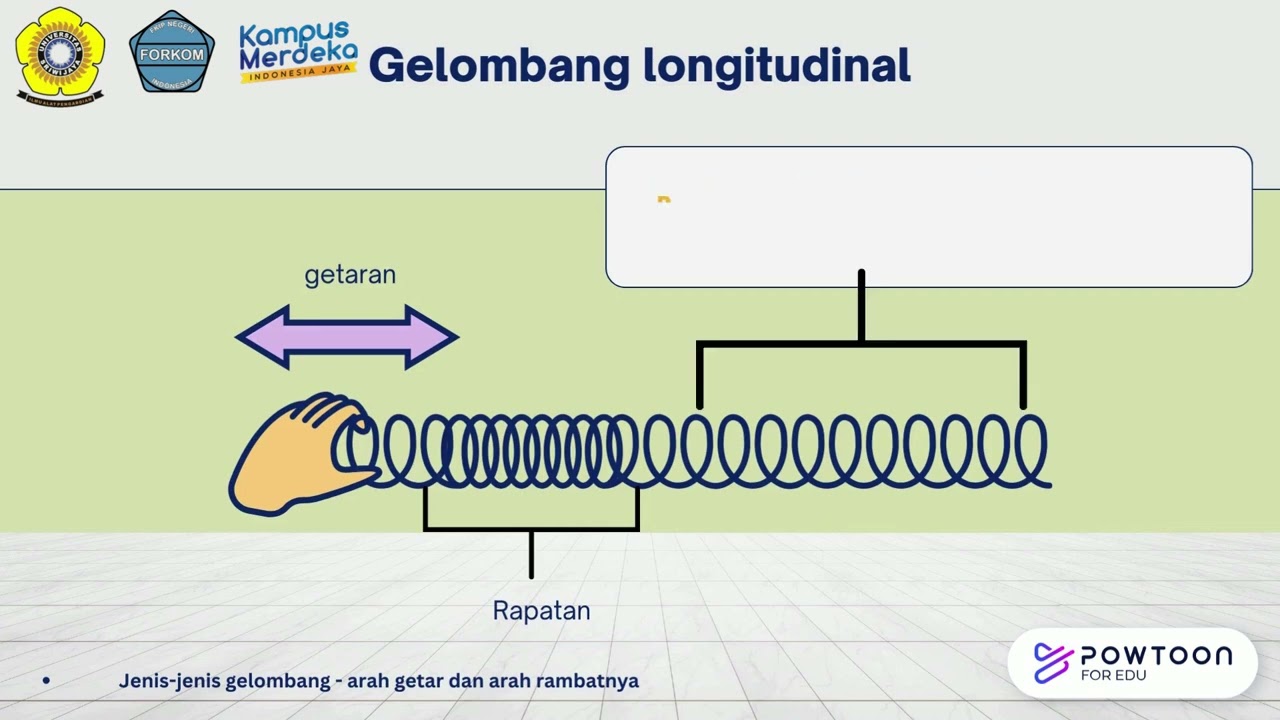
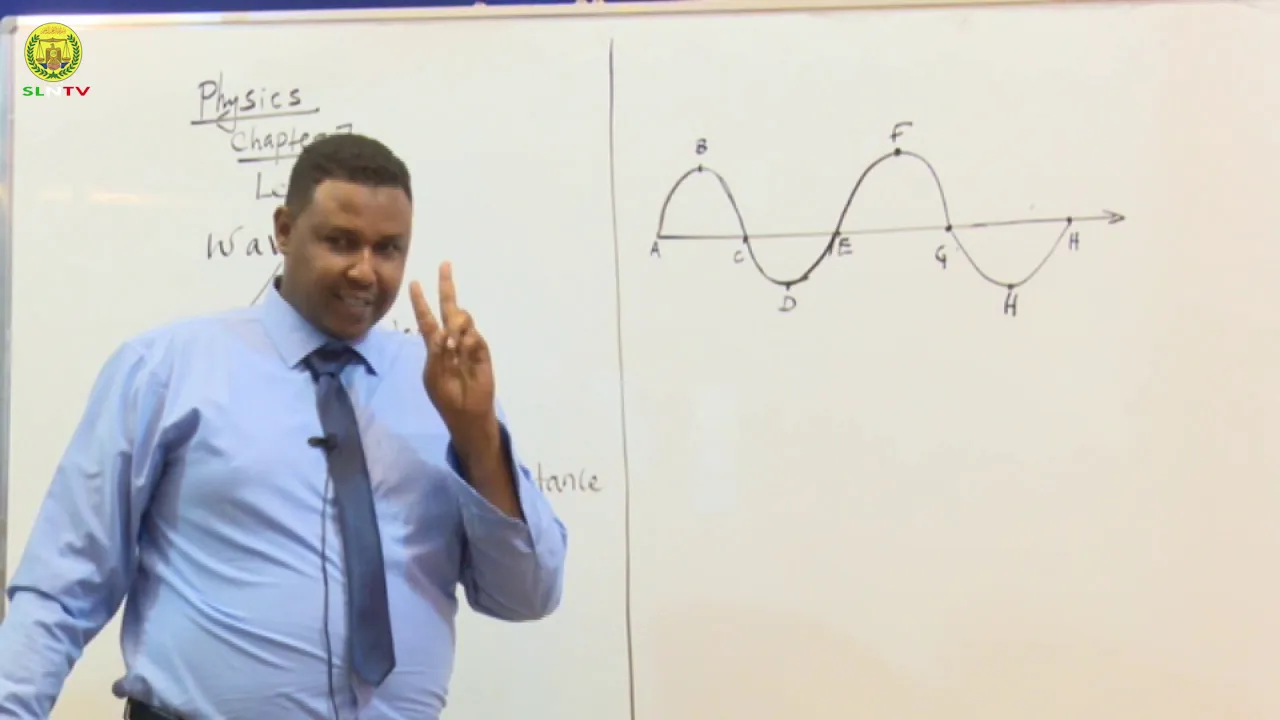
Added:the following content is provided under a Creative Commons license your support will help MIT open courseware continue to offer highquality educational resources for free to make a donation or to view additional materials from hundreds of MIT courses visit MIT open courseware at ocw.mit.edu hi everyone okay so let me yeah so let me tell you my version of what SMA is and uh what we're supposed to do oh before I do that let me do one more introduction this is Professor Colin Shepard sitting on the other side so he's the instructor on the Singapore side so basically the four of us are the team of instructors Professor Shephard sebec Pepe and myself and um the class is not quite an SMA class it is not quite part of the Singapore mat Alliance it is part of something else called Singapore MIT Alliance for research and Technology smart and uh this is a very complicated description of what smart is and why we're teaching the class but the bottom line is that this is more or less the same class uh of Optics that has been taught at MIT for the last 10 years actually an improved version of the class and it has been broadcast to Singapore at a very inconvenient time for everybody involved both in Singapore and for us so I think it is fair um so this is a this is a summary a little bit of what I just said about the instructors we also have two assistants primarily you'll be dealing with Kate those of you who are here she's my assistant at MIT and for those of you in Singapore if you need sometimes to tend in assignments or desperately get hold of me or whatever Adana is your contact she in build in in I'm sorry in Block s16 um uh by way in Singapore uses English as the official language but as you will notice throughout the class there's some differences for example in Singapore we don't say building we say block so and there's also some other subtle differences in Singapore English okay uh we will seldom give any handouts in the class everything you need is in the website I've listed the link over here and when you log in there you will see two three things actually you'll see the syllabus has been posted uh a set of policies have been has been posted which says some obvious things like you know don't copy don't see on exams and stuff like that and uh and um also the first lecture has also been posted and I will tell you a little bit about how we deal with the posted lectures and so on and these are some administrative details here that uh I'm not sure if I want to spend any time on those for those of you who are course to if you're undergraduate it meets your restricted elective requirement if you're graduate It prepares you for one of the qualifying exams offered in the department um a little bit about uh about uh what um what the class covers so so the class is very introductory about light phenomena and how we design Optical systems um so this is sort of a bunch of pictures I sto from various websites it shows a rainbow it shows a Galaxy that we can capture with Advanced telescopes it shows here um do I have a pointer or I maybe I'll just use this for now um well I guess I cannot use anyway uh so it shows a cell over here captured with a microscope uh which I believe is a confocal microscope so it is Professor seer's expertise and this is the picture of the esophagus of a person captured with an endoscope so they basically lower the fiber uh bundle inside you know down someone's uh throat and using a technique called Optical coherence tomography it is an optical Imaging technique they captured the the the esophagus so so and finally what you see here is um is of course an optical disc you're all familiar with those and over here I believe that's a holographic setup it is a diffusion screen and uh this is supposed to be a um a setup for a three-dimensional display when you look at it it creates the illusion of a three-dimensional uh projection so if we had this for example in Singapore then I would in principle appear as if I'm standing over there this of course still at the science fiction stage but a lot of people are working on it and in fact nowadays um uh some companies they offer three-dimensional television sets that you can buy for a small additional amount I think it's a few hundred Samsung offers 3D TV set anyway so so the point of this slide is that there's many applications of Optics that uh that um are interested in engineering and of course light phenomena are sort of interesting for in their own right so the class will try to balance sort of a curiosity based sort of more the science approach where we learn basic facts about how light behaves how it propagates how it interacts with matter and we'll balance those with engineering applications that are presumably of interest to to many of you um for reasons that have to do with the expertise of both of us uh both of the the instructors we will concentrate most of the applications on imag so we'll be dealing a lot with things like microscopes and telescopes uh primarily these are the sort of the uh major Imaging instrument but we'll also cover some other things for fun for example we will talk about about the human eye will describe its structure its biology how it works not in great detail because this is after all not a biology class but uh just for fun because the human eye turns out to have some very interesting Optics inside it and it's kind of and also we'll discuss very briefly the eyes of insects which as you can see from the picture and you may you may already know uh they're very different than the human eye and we'll discuss a little bit why they're different and and how each one of them operates and finally there some other Optical imag systems that look very surprising uh this picture over here is the is an instrument called the very large array telescope or vaa it is located in Soro New Mexico here in the states and um it's composed of 27 antennas each one of these little white things is an antenna it's about 27 M tall and the diameter of the instrument this uh branch of here is approximately well it varies I don't know what it was when this picture was taken but it can be between 3 miles the diameter that is the size of Cambridge Massachusetts and 13 miles that is the size of Washington DC so that is an instrument an optical instrument if you can believe that has the size of an entire uh state in the US and it is used to observe a very remote galaxies with high resolution so so it falls a little bit outside the scope of the class because it uses um it uses um statistical Optics which we don't cover over here but we may mention it in passing a little bit later um so and there of course some other things that you may have seen uh but actually cannot be done this is Luke Skywalker I'm old enough to to have been around when this movie came out Star Wars and I just want to point out that a lightsaber can actually not be made it is one of these impossible things that you will be you know you can see in science fiction but but it violates some physical principles so unfortunately it cannot be made but anyway it is still fun to to to think about okay so I think I covered the class objectives uh we try to balance here physical intuition with with engineering uh understanding and design uh so we'll cover the fundamentals in pretty good detail and we'll also cover some applications in pretty good detail to the degree that we can within the scope of a semester right so so so we'll try to be uh to be very careful about that how we how we balance the two sometimes the two can compete right so we'll try to balance the competition between Basics and and and application and also we'll uh we'll uh we'll cover some applications as I mentioned primarily we we'll deal with microscopy and uh also with some some topics related to telescopes there's some other topics that I will not really cover in class like Optical data storage but um as I will mention in a second there is class projects that uh sort of like a mini research project that you will do later in the semester so you're welcome to pick topics out of those if you're interested some Basics about the sort of prerequisites this is some basic math and and uh and physics that you need I think most of you have covered these topics in your at least on the MIT side you covered those in places like 1803 and two4 and 802 so I I assume that all of you who are undergraduates have taken those classes and um and there is two textbooks so the class is a little bit expensive sorry about that there's two textbooks hect and Goodman uh will be using uh throughout the first half of the semester mostly hecked and then throughout the second half mostly Goodman but um the textbooks uh we would not really cover the sequence of the textbooks so you you should use them primarily as a reference uh all the stuff is posted by the way in the website so so um you don't need to to write down the book names but anyway so so so who the textbooks as reference your primary resources are the notes and what we do in class and then you can go back and read them and there are some other texts that are sort of sort of useful if you have access to them through the library and so on some other administrative details uh this is a great distribution for the undergraduate class 271 30 homeworks 30 quizzes 40 final we have eight homeworks um and um oh and the homeworks are du actually they do 9 days after the after they're posted so you have plenty of time to work on them and also Pepe will strategically schedule his office hours so that you can ask questions before the homework and uh we'll see how to do the office hours for the Singapore students we work something out when they get there anyway the first homework is not due until February 18 so so so there's no need to panic about that yet uh and the homeworks will also be posted in the website and the 710 is very similar but 710 The Graduate version also has a project so the project also counts for a significant portion of the grade and I think I already mentioned it's like a mini research project where you either give a short lecture on a sort of a Hot Topic in current Optics research or you sort of pick your own topic and and um and you you do a little bit of calculation or um you know some uh some simple thinking or you know it's supposed to be a class topic it's not a thesis or anything but like I me research topic in fact a couple of people already asked me if they can do something related to their current research and that's perfectly fine but you have to sell it because this is a this is a team project right so if you want to do something related to your research you will need to recruit two three four other colleagues from the class and form a team around it so so it's up to you I'm certainly I certainly encourage actually um research related projects in the class so this is only for 710 if you are enrolled in 71 and would like to be involved in this uh you're welcome to do it but uh you know to be fair you cannot get credit however you can be undergraduate and enroll in The Graduate version of the class so for example if you are uh planning to stay on at MIT for graduate school it's not a bad idea because the class is H level so it will already count to towards some of your credits later so anyway this is something that we can discuss um separately if you like and finally the ugly side we do have quizzes and exams and all that stuff I hatte them myself I hated them when I was a student but a little bit like the dentist right you know you you hate it but you have to do it so so this is the um distribution of the quizzes and the and the final uh one important thing I would like to emphasize which is uh I always deliver a small sermon when I start a class and that has to do with asking questions uh I really think that you get the most benefit not from listening to me while I lecture especially at 7:00 a.m. you know when including me you you know you're all sleepy and I will be sleepy in Singapore too because it's going to be late anyway so you don't get the most benefit out of that you don't get the most benefit by reading your book alone at home in your bed or or and so on the most benefit you get is actually from uh participating in discussions in the classroom with uh your peers with the instructors everybody so it so I would like to encourage you to not hesitate for no reason whatsoever if there's something that bothers you some question something you're not understanding something you are um uncertain or whatever please do ask you know there's no no reason to be S um very often um people myself included you know if you're in a big audience you may be reluctant because you say well gee what if my question is not good or or what if I embarrass myself so there's no such thing okay if you are if if a question pops up in your mind the prob probability is very high that someone else in the class has the exact same question and this person is equally shy as you are to ask that question so you do yourself a favor and you do many of your other classmates a favor if you just interrupt me and ask a question so please do that and and I will also on my side I will treat all questions equally and I will do my best to answer every possible question sometimes I might not answer a question if I don't know the answer myself and this happens very often in my classes in I think in everybody's classes always someone can come up with a question that I don't know the answer if that happens I'll tell you sorry I'll get back to you in the next lecture right or by anyway uh I I think it will take a few lectures usually in my classes it takes a few lectures for the students to to overcome that threshold but I think it becomes very productive actually when you engage in discussions in the class and uh yeah don't worry about falling behind the syllabus or anything it is much more important that we learn well what we do learn than that we cover a lot of material and in the end nothing has been left in your mind right so one of the benefit of discussions especially arguments if we get into an argument about something then everybody will remember right because it's kind of fun right to watch people argue a topic so yeah by all means please interrupt and U and ask and uh we don't have recitations but as you notice the class has a slightly unusual schedule we have have a 2hour lecture on Wednesday and 1 hour on Monday so who have structured the syllabus so that most of the material is covered on Wednesday and most of the examples and practice and so on they happen on Mondays so this is how we deal with the recitation issue and of course there's also the office hours and um oh yeah um sometimes H we cover some mathematical topics that um some of you may have forgotten or may not be sort of um very up to speed with especially for it transforms so when the time comes we might do a special lecture in the evening MIT time uh and if we need to do that in Singapore we'll do it actually individually with me sort of in my office or something like that those of you at MIT you'll probably do it with sebec or Pepe come back one evening after 7 p.m. so we obey Institute policies and do like a math review so this may happen once or twice in the semester especially when it comes to F transforms because in my experience um um you need sort of the logistics of f transform in order to follow a significant fraction of the class so if you are not really you know up to speed with your basic F transforms from uh wherever you learn those things 1803 or 2671 and so on we'll we'll do that for you okay um this is a list of topics that we cover in the class you can browse them in the website I will not go through each topic now because you know I don't want to give it away right I want to leave an element of of surprise uh but basically the class is divided into geometrical Optics and wave Optics and we'll start with geometrical Optics for about 4 weeks and then we'll move to wave Optics so the differences really has to do with approximations of um when we deal with light phenomena it's actually very complicated how light interacts with matter and how it propagates and so on it is a really a horrendous problem but over the years over the centuries actually people have come up with different approximations of progressive accuracy so geometrical Optics is the simplest o imation that gives you very simple formulas very simple math uh and actually describes light quite well up to a point so we'll do that first and then we'll sort of graduate to wave Optics which is a little bit more involved mathematically but it also gives better approximations about the propagation of light and then finally in the very last few probably in the last lecture and only if we have time we'll cover a topic called subwavelength Optics which is an even better approximation but that is actually pretty much impossible to do analytically so one has to go to a computer and do numerical solution of a nasty set of coupled differential equations so anyway we'll we'll do that not in the computational way but we'll cover some of the related phenomena and what is approximations give but um but roughly anyway the class is structured according to this uh approxim any questions so far I if you think of a question you can also interrupt me right you're always welcome oh and one more thing yeah anyway I I I'll tell you the one more thing perhaps later um let me start with a little bit of of a history this of course not the subject of the class but it's kind of fun to do I used to start my classes with a joke that not everybody got I used to start by saying that um Optics is the most ancient science not the most ancient profession that's something else but it's the most ancient science um and I think the reason is because humans are um very visual animals our vision for those of us who are lucky enough to have it uh um our vision is one of the most dominant senses so people got interested in phenomena involving light relatively early on in the sort of in the early ages and this probably happened across civilizations Chinese Egyptian um Western Greek and so on uh but as it happens the Greeks were the only ones to publish you know they were open about what they were discovering uh the Egyptians and the Chinese they were the priests kept every everything under control so we don't know much about what they did but from what we've discovered we you know archaeologists have discovered in ancient tombs and so on they also knew quite a bit about light um uh of course the Greeks made a major mistake so Greek science was very interesting because it was the flip side of modern science the Greeks had the sort of the attitude that um you can understand nature just by thinking uh so the Greeks actually discour discouraged the experiment strangely enough this tradition has followed the Greek psyche because if you look at the faculty in the mechanical engineering department there's a lot of Greeks uh or you know professors of Greek origin and most of them are theoreticians anyway I'm just joking but anyway the ancient Greeks they have this attitude that you know you don't need to do experiment in fact you must not do experiment you have to understand everything everything by thought so because of that they came up with some strange ideas so for example the Greeks they thought that when you look at something your eyes emit some substance which they called simulacra and this substance is kind of the their thought of what light is so you know when I look at you I transmit a substance the substance comes back to me and that's how I see you which is of course a very bizarre bizarre way of thinking but anyway that's what I thought and it was the Arabs much later in the 10th Century or so who read the Greek scripts and they said well that doesn't make any sense at all so the Arabs for the first time thought well it must be the other way around there must be light sources like the Sun or a fire or that's about it at the time right they didn't have light bulbs yet so so they must be that they emit something that is called light and that's how we see so it took about a thousand years I guess to to resolve that that question and also the Arabs did a lot of the very first basic work in optics for example Snell slow the low of refraction that I will cover in in a little bit the Arabs discovered it first uh and then much later another 400 400 years later H the cart sort of he did two things he put the basic foundations of science the cart in case you may not you may you may Noti this the cart was the first philosopher I should say who flipped the Greek point of view and he said that it's actually the other way around science must follow experiment instead of Jud thinking about nature and explaining it he said that it's the other way around science must be driven by observation so we observe something we create experimental conditions to to test it and then we come up with a theory that tries to explain the observation not the other way around and of course modern science still follows follows that principle that principle at least hopefully right because there there have been you know occasions of cheating and so on right you probably see those in newspaper I think there was a guy who invent who sort of created data at HP laborat what HP Labs anyway so so there's some people who violate that principle but hopefully 99.9999% of us we actually followed the cart we we make an observation we report it faithfully and then we try to explain it to the best we can and in the simplest way that we can that that's the scientific method but also the cart as it ends out worked on Optics and he also derived snails law in his own way and uh this something called the decart sphere which was invented independently by the Arabs in the 11th century or 12th I forget 9th actually and uh then uh the cart sort of reinvented it about four or 500 years later uh then the next major advanc Sy Optics came from Newton uh uh actually Newton and hens who tried to explain light in two different ways Newton was of the opinion that light is a bunch of particles that travel sort of in air and um and he tried to explain various phenomena like refraction from a prism and so on based on this idea hens thought that light is a wave very similar to water waves they did not know about actually Newton also postulated that sound is a wave but for some reason Newton thought that light is not not a wave in fact the two of them fought I don't know fought over it but they you know they they disagreed over it but I guess because Newton was more famous uh he was a professor at you know a Lucasian professor at Cambridge right so Newton's view actually prevailed prevailed for for several years uh it prevailed and the particle theory of light was dominant until about a century later when people experimentally again here comes the scientific method people experiment Mally observed phenomena like interference that could only be described as if light were a wave so the particle theory got a big hit then because it could not explain uh defraction interference and so on so forth but yet people were observing them in the laboratory of course now after one more Century people discovered that guess what both theories are correct with quantum mechanics light can be thought of as both as particle and as and as a wave and in fact Einstein and some other scientists shinger Plank and so on they they reconciled um the two points of view not perfectly there's still some puzzling aspects of the quantum theory of light but I think nowadays most people are comfortable with the idea that you can use both approaches to describe light phenomena you simply select the one that best suits your approximations and your conditions at any given moment so for example if a particle approach is sufficient to describe a phenomenon then you use it and of course there's also typically or not typically always let me State there better be an equivalent wave description of whatever phenomenon you're describing but it may be more complicated right so in that case you use the particle theory or the other way around if if it is easier to describe something as a wave you opt for the wave Des description so of course in this class we don't cover Quantum Optics at all professor sapiro in the electrical engineering department offers a class on Quantum Optics and I suppose at n us there is also a Quantum Optics class for those of you who are interested it's a very elegant topic so the other major advanc synoptics came um in the mid in the middle of the last century when uh the laser was invented and a technique called hologra holography was invented not because holography is somehow dominant in practice I mean you see Holograms typically in museums it's no big deal but holography turned out to be a very interesting mathematical way of looking at Optics now that really had a major impact in the subsequent um subsequent developments of optical science so for this reason both of these inventions led to Nobel prizes there were you know very major advances in in the theory of light and especially after the invention of the laser uh Optical science had a huge impact on everyday applications if you think about devices you use in your everyday life uh when you every time you pick up a telephone or um you use the internet there's typically especially if you use a long distance there's some Optics involved because uh the signals propagate through Optical fibers at least in part of the part of the part of the telecommunication networks um if you're are unlucky enough to have surgery there's many kind of many kinds of laser surgery uh lots of clinical medical diagnosis is done using high-end microscopes including confocal microscopes Optical coherence tomographers and so on and so forth these are all commercial instruments these applications in industry for example laser cutting laser welding laser Metrology that is used in in in in um high-end um Precision Engineering applications and of course finally every time you pick up a computer the chips that are in there are all made using optical lithography which is a really high highly sophisticated form of optical Imaging and I use the term Optical here in a very general way uh most of it is really Optical they use light in some really extreme high-end applications they use electron lithography but still electrons behave like light when it comes to these um to these scales so basically they use the same equations that we use to describe light they use them to describe Imaging by electrons so so so it is really a huge huge huge um U domain of application it Still Remains a very active scientific field so if you look at the list of Nobel prizes this is a very incomplete list that I compiled from the Nobel uh website um even the latest Nobel Prize that was awarded uh in chemistry actually it was in the field of Optics um these fellows um they invented something green fluorescent protein which is um um I may embarrass myself now because I don't understand the biology of it but my of very simple understanding is that uh they can genetically program this protein to get into some animals DNA so they basically create animals that have this protein embedded in their genes and then this protein can also be designed to turn itself on or off depending on what on What happens to the animal for example if the animal is exposed to a disease or if it is exposed to a certain chemical agent or you know anyway whatever is of to the particular biological experiment it's sounds kind of funny but the animal becomes fluorescent so or more more interestingly certain parts of the tissue of the animal for example the liver or or you know some tissue of Interest becomes fluoresent so then you can pump the animal with a laser beam you can measure the fluoresence that is coming out of the animal's tissue and then you can derive conclusions about what happened to the animal so this is a fantastic fantastic way of studying genetics studying diseases studying a number of different um and very important biological phenomena so for that reason these fellows were awarded the Nobel Prize and actually many people including myself uh at least not yet but I'm sure in Collins lab already uh uh we use um uh animals that are sort of genetically modified with this it's called gfp Green fluorescent to study various biological phenomena now it is a very commonly used technique in microscope so this was the most recent Optics related Nobel Prize there's a bunch of others my well uh my favorite is actually where is it this one uh in 1997 uh this was given for optical traps so Optical trap is actually a way to move particles by using light it's a very surprising thing because we don't none of us in everyday life will experience mechanical force from a light beam but in actuality there is one if you're sitting on the path of the light you're feeling a force this force is very weak is the range of f to newtons typically really tiny tiny Force but if you're but we're also very big so the force is not enough to move us but if you're really tiny like a cell for example the force especially if you design the Optics right with a very highly focused beam you can boost that Force to the range of perhaps a few pick Newtons not really that's a very high Force but anyway in that order of magnitude it can be enough to actually move a particle so you can make you can apply mechanical forces using light so this this was another Nobel Prize so anyway the reason I'm bring bringing this up is because uh this is a very exciting field at least well I'm partially because I work on it but but it's a very exciting field people come up with clever crazy inventions all the time and uh many many of these inventions have a you know usually they have a very high impact and um so it is kind of interesting to to see both sides of the coin both the science side of the coin that is purely curiosity driven and very often people in government question it because they say well why are you guys doing all this crazy stuff you know who cares about Optical forces but of course these people are shortsighted because uh history shows that most of the time these curiosity driven discoveries they end up having a huge impact in every everyday life some crazy you know person you know there were friends American and Chinese American right three crazy persons thought about focusing light to move particles then all of a sudden this is used in biological research to try to understand diseases like malaria I don't know if any of Professor subra students are here but the the one of my colleagues subes study in malaria using this technique that won the Nobel Prize in 1997 so so it is so it's kind of our duty as Engineers or scientists whatever the case might be to emphasize to the people in government and politics that yes there is value in fundamental science when they Basit thre and they say that why you guys are playing Laboratories and so on okay so I went on my tiid and um any questions I've got one yeah so I think I'm on yeah said that can you hear him okay you said that you can describe how an electron beam images you know similar way as Optics but electrons interact with matter and so how does light interact with matter yeah so we will cover that of course they interact in very different ways right uh uh the fundamental difference is that um electrons are fa imun so they cannot really go be in the same in the same state uh photons are bosons so they can actually be in the same state so what I really should have said and thank you for pointing it out is that in free space they're described by the same equations of course when they get inside matter the behavior is quite different but again for example if you look at the electrons that go ballistically through matter they experience an effect that is very similar to refraction so you can describes you know you still see snail low and so on but of course you see add additional phenomena like o electrons right which you don't see in light beams so you're absolutely right there is some significant differences um which are very important but there's also some very very dominant and prominent commonalities the same goes for light and sound um in our our department recently um merged with ocean engineering and in oan engineering there's a lot of professors who do Acoustics so as a result I started sitting in at the beginning out of curiosity I started sitting in a couple of the acoustic classes and also this year I sat in the doctoral exam in Acoustics and I was surprised to see the same terms defraction refraction snails low wave guiding all of these things they happen in Acoustics as well so you could say the same thing about sound to some approximation sound effects are identical to Optics identical to light defraction but there's also cases of interaction between sound and matter that is radically different than interaction between light and matter for example it is I think it is impossible for sound to ionize matter right you know light can ionize matter I think s have to pretty pretty darn strong to ionize right so you know there's significant differences but but um uh but also some very convenient commonalities so all of a sudden by study in one field all of a sudden you discover that you can understand quite a bit about a different field so that's kind of useful any other questions let's start by saying a few things about what is light so light is actually a form of energy that's the really that's the simplest that's the only correct to describe it it is a form of energy that is transmitted as an electromagnetic wave that's that's a quite correct description but as I said before you can think of it either as particles or as waves so the particles are officially called photons and um what is a photon is actually not an easy thing to describe various scientists over the centuries fought over the definition of a photon and we certainly don't want to go into Quantum Optics in this class so so we'll think of photons in a very simpleminded way as bullets that carry energy a very small amount of energy uh as we'll see in a second um and uh they follow certain trajectories so the trajectories we will call rays and I will describe these Rays a little bit later now the photon um one thing that the photons do have in common is their speed it is of course the speed of light which in vacuum is the familiar 3 * 10 8 m/s um how much energy they carry well the amount of energy is given by uh planks constant which is um a very small amount of um 6.6 10us 34 4 juw time second and then multiply by a frequency okay so the frequency is of course her so the units work out the product over there is um is energy uh what is the frequency where does it come about well to really justify the presence of a frequency there I have to cheat I have to go actually to the other way of describing light which is as an electromagnetic wave and um of course the the name wave implies some sort of oscillatory motion so the horizontal axis here is the direction of the propagation of the light so the light is propagating sort of from the left to the right what is the vertical axis the vertical axis is electric field actually it is the same stuff that you have in a capacitor where you charge it right so it is convenient to describe as an electric field you can also describe it as a magnetic field the same stuff that you see when you have a sort of a refrigerator magnet you can put either quantity over here on the vertical axis because they're coupled the electromagnetic field by as the name suggests it is a coupled illation of electric and magnetic fields for now let's stick to Electric fields in this class I will say very little about magnetic fields when I describe light as a wave I will sort of by default refer to an electric field okay so light is an electric field that oscillates as a function of position and of course a wave is not static you all of you have seen waves in the Singapore Harbor the Singapore River you cannot see waves on the Charles right now because it is frozen but uh during more normal times you can see waves on the chge right so you know a wave implies both a spatial structure if you look at the picture of wave you see sort of oscillatory picture but also time because the wave travels in time right so in the context here the time variable um well okay I'll go to that back but after some time lapse the wave will actually move a little bit further okay so this is the sense of the wave propagation so since we have an oscillatory quantity here the period is called the wavelength in the the period in the space domain so the distance between two peaks of the electric field um oscillation there we Define it as a wavelength and it is related to the frequency this quantity that enters in the particle description of light using this equation here the speed of light equals the product of the wavelength times the frequency so let's do a calculation here um well before we do a calculation I need to say something about what is oh I think I did something I was not supposed to do here but any the the Blackboard went up by itself but uh um this classroom is highly automated so I guess there's some things that that cannot cannot be done okay so so so what are the typical wavelengths so the the electromagnetic spectrum actually SP all wavelengths from sort of infinitely long or kilometers long to very very short down to nanometers the visible light the light that we see with our own eyes is in this range over here between uh approximately um uh 650 Nom or so and 450 nanom or or so so what's a nanometer it is 10- 9 M so let's pick a convenient number here let's say Lambda equals I I okay how about I do this here okay this is the wavelength uh so our equation is Cals Lambda new so it means that new equals um 3 * 10 8 over 5 * 10- 7 so this is something of the order uh 6 * 10 14 uh what hertz right it's a temporal frequency so this oscillation that I showed before is a very high frequency oscillation it is in the in the order of 10 to the 14 Herz now we don't listen to the radio anymore we listen to uh you know podcasts or or satellite and so on so we're not very familiar with um with um radio frequencies but I'm old enough to remember when you tune your radio to 104.3 mehz that happens to be Boston's wbcn station so okay Boston's wbca station emits at 100 mahz it is actually the same stuff I'm going to force the machine to do what I wanted to do so I'm going to keep this down Okay so let's say new equals 100 MHz that is 10 to the 8th correct so therefore the the frequ the H the wavelength now is what C over the frequency so it is 3 * 10 8 m/s over 10 8 Herz so this is now 3 m so it is still the same stuff it is still light if you wish but of a much much longer wavelength at the radio frequencies so you can see that you can you can see that electromagnetic waves can span a very broad range of scales in this class the the wavelengths of Interest are in this range between the dust lines at the infrared which is sort of nominally ends at about 10 micromet and the ultraviolet which Nom nominally ends at about 30 nanometers where do the names come from infra in Latin means below below red so therefore the term infra refers to what the frequency or the wavelength the frequency right infrared has longer wavelengths than visible and therefore it has smaller frequencies so it is below the red in frequency Ultra of course means higher also in Latin so ultraviolet means higher frequency than violet light not violent light but violet light okay uh and the meure difference if you look at light propagation in free space it doesn't really matter which wavelength you are considering but of course the interaction with matter is radically different as you change wavelength uh so it is kind of similar to the question you asked about electrons it is also true for micro you know for even for electromagnetic waves themselves the way visible light interacts with matter is very different than microwaves and RF waves and it's also very different than x-rays so x-rays are actually the next higher in frequency after ultraviolet and even higher in frequency are gamma rays and I guess we stop there but actually we don't stop the frequencies can go in principle or the way to Infinity but gamma ray is the highest that we can observe now I promise to do a calculation of the energy how much energy is carried by by a photon remember the Formula E = H new uh where H is 6.6 * 10 to the remember how much it was the exponent 34 right so let's pick one here let's say this one which is a a visible wavelength so it is 6 * 10 14 Herz inverse second right okay so this conveniently cancel and 6 * 6 is let's call it uh let's call it 10 for convenience so it is 10 and this is 14 of course so this is 10us 20 Jew okay my arithmetic is obviously wrong okay ped what is the PED pedagogical message here that when we do order of magnitude calculations 6.6 * 6.6 * equals 10 right actually got it wrong you should have put a 100 so minus 19 okay okay so just order of magnitude right I'm Lo I'm not looking for the exact answer here actually very interesting when I did mind a graduate in Greece and over there the professors were very careful so here they would have written 39.6 or whatever is the actual number then went to graduate school at Caltech and had I took my first class in Quantum Electronics by fellow called amnon J who is he's pretty well known in the field of lasers so he walked into classes he he started doing things like that that Pi = 3 < Square = 10 and at first I was horrified but then I realized he had the point that you know very often it is pointless to do exact calculations if you're looking for an order of magnitude result right for example is the bullet going to crash into a wall or is going to go through it's going to go back or what then you don't need exact numbers of course exact numbers are valuable in some other cases it's kind of an interesting skill to know when to do a rough calculation and when to do a sort of an exact calculation and what level of accurac you need depending on the resources that you have the time that you have the nature of the answer you're looking for and so on and so forth okay okay so for our purposes here for now 6 * 6 = 100 so we get a very small energy right it is 10us 19 Jew if you go to higher frequencies in the range of xray the energy would go up by a factor of maybe a couple of orders of magnitude so in this kind of frequ of energies if you go to 10 Theus 16 Jew or so it becomes comparable with the ionizing radiation so you see now why light frequency is very important when it comes to interaction with matter because visible light the photon each Photon that impedes on an atom in a material has relatively low energy it can do something to the material we'll talk about it later but it cannot ionize it if you increase the frequency you increase the energy of the photon and all of a sudden you can get ioniz in effect so it is so so so this sort of calculations give you an idea of what's going on um and of course U if you compute the fre I mean the energy carried by a microwave Photon it would be you know several Ord of magnitude lower right you know something like five or six orders of magnitude smaller okay any questions about that about photons or let me say a few things about wave propagation the at the beginning of the class we'll do geometrical Optics but I want to say a few things about waves that we kind of need because before geometrical Optics begins to make sense so the first thing that we learned is wavelength and frequency right these two things are important even in geometrical Optics right the wavelength a very important concept the thing I want to talk about is a little bit to show you what a wave looks like so this is a very simple onedimensional wave and what I've done is I've plotted it at different snapshots in time so the horizontal axis again is the propagation distance that the wave is propagating and the vertical axis is well each one of the small axis is time and then I've capsuled different snapshots so as you can see there's a sense of motion here if you if you latch on a peak of the wave you will see that at different instances the peak is moving from the left to the right and of course the symbol upper case T here is the frequency I think it was defined in an early slide it is simply the inverse I'm sorry the t is the period the temporal period the inverse of the temporal um frequency and of course after one full um time period the wave replicates itself so if you look carefully at this wfront over here it is identical to the wfront at equal Z that I'm not tall enough to to reach so you can pick arbitrarily you can pick any point in the wave okay I happen to pick I happen to pick a peak okay I happen to pick a peak and I track the peak as the wave propagates I could equally well have picked a point over here and tracked it it would also have propagated the same way um so this concept of a point in the wave if you wish or more generally a surface on the wave that propagates with a wave as a function of time this called the wfront and uh the the term is very suggestive it implies motion right it's like a Battlefront what is a Battlefront is the people who are unlucky enough to have been picked to be at the front line of a battle right so if you've seen all these old horrible movies about middle you know battles in the Middle Ages you see all these guys with the seals you know going ahead and so okay that's the Battlefront right moving so the way front is kind of a similar concept right you have a front that is moving uh as the energy of the wave is propagating so this perhaps not a very interesting wavefront because it is onedimensional right the the wave is propagating along a sort of linear axis in a second I will show you sort of more interesting wonts that are of relevance in this class the thing I want to point out here is again I want to bring up the concept of the wavelength and we Define the wavelength for as the distance between two peaks right so if you look at two peaks over here the distance is by definition of a wavelength but also the wavelength it has a different meaning if you look at it from the point of view of propagation of the wave it is also the distance that the wave propagated in how long well one period right and in fact this is where the equation Cals lamb new comes from I let you do that as a homework but uh if you think about it if you treat the wave as a particle that took T seconds to move Lambda units of distance then its velocity C must obey this equation over here it's a one line derivation kind of thing and let you do it as a homework and also I want to emphasize that this equation that we call this persion relation in the previous slide it is only true if light propagates in free space or in uniform media if you put light for example in a well in a confined space this equation changes and it becomes a little bit more complicated uh but in this class we don't deal with this phenomenon if you want to if you want to learn about sort of more complicated dispersion relations you would have to take Professor fujimoto's class in electrical engineering uh I might mention something like this in passing but not in great detail for us we'll be happy enough to take this as the dispersion equation of the light but but again I want to alert you that there's also other dispersion relations that may may occur okay the other thing that uh I will not spend too much time here but it will come up later with great force and and great uh detail is the concept of phase delay so um you probably remember this this from your trigonometry class uh if you have a periodic phenomenon or a periodic function you can pick an arbitrary point in time and call it your reference and then as the phenomenon evolves you can refer to this initial Point as the with with a phase DeLay So the phase delay is relative to 2 pi which measures one full cycle so the you can interpret this snap snapshots over here as phase delay versions of the original wave so for example between 0 and 1/8 of a period your phase delay equals pi over 4 right because 2 pi/ 8 equals pi over 4 so this is a concept that will come up again again as I said in great detail I just wanted you to be a little bit aware of it right now what I really wanted to to emphasize over here is that light does not usually propagate along as just one line as I showed in the previous slide but it propagates in 3D space so it can expand it can contract it can do weird things right so to do those we need a slightly more elaborate description so this is sort of an attempt to to plot 3D space and if you think about the W in this case it is a surface that moves from left to right as a function of time so as the wave front propagates the surface is moving by the way this a fictious surface I I'm not thinking of a physical surface or anything but um if you think about the energy that the light carries the energy is actually moving uh as the wave propagates this is how you can connect the two if you go out to the charge okay you have to wait until April when it unfreezes but if you look at the waves on water of course you can do it at home on on a bucket or something like that but if you look at the waves there's also a physical sense because the water waves they have a Crest so the wfront of the water wave is the crest that moves as the as the wave propagates so so this surfaces the wave they can have different shapes they cannot have arbitrary shapes because they're governed by the laws of light propagation okay but um certain allowable shapes then now to to be very simple and we will be dealing with them a lot so the simplest is the planer wavefront that is as the name implies is a plan and the next simpler is the spherical wavefront which again as the name implies is a sphere so you can think of those as sort of our two major wavefronts that we'll be dealing with throughout the class the planer wavefront and the spherical and we'll yeah so in the last slide you showed the electric field as being the Y AIS but here it's it's space not field ah yes so that is correct so so and thank you and I should relabel the slides here the two axes the two axes they correspond to X and Y the the space coordinates yeah and the electric field is not shown here because I don't have a I cannot plot a fourth dimension so what is happening here is the electric field is maximum equal to e0 so at t equal Z the electric field is maximum on this plane if you wait 1/8 of a period the field will be maximum at this plane if you wait another eigh of a period the field is maximum on this plane so the wfront in this case is the maximum of the electric field the crest if you wish of the electric field as it propagates through space and the same is here again these surfaces mean that the field is maximum on the surface at T equals z and then eighth of a period later the field is maximum on this surface and so on and so forth thanks yeah so that's that's a very important clarification now what do you think should happen to the energy density in the two cases suppose I have a fixed amount of energy that is entering on the left are they different in some way yeah that's right can I ask you to push the botton and repeat yeah the plane waves energy is constant energy density is constant and the spherical waves energy density is smaller corre as a experence correct yeah because uh energy have to be conserved so in this case the wfront is is uh is um invariant so the energy must remain constant in this case the won is expanding so the energy density will decrease as you go away we'll make this more precise later we'll Define what we mean by energy density in fact it is called intensity so will Define that uh so so basically if you measure the energy in watts per area watts per centim square in this case it has to decrease in order to make sure that the energy you started with at the center of the sphere is preserved throughout the next concept I would like to Define is the Rays and and the reason I introduced wave front is primarily because I wanted to Define relatively precisely now what I mean by array and for the next four weeks we'll be talking about Rays exclusively okay so array is basically a normal to the wfront that is the correct accurate definition of array you take the surfaces you plot the normals and these lines are the Rays so in this case the rays are parallel because of all the surfaces are parallel planes in this case the rays form a fan like a Divergent fan that at at each point on this spheric on these spheres the fan components are normal to the surfaces and you can also think of them as trajectories over which the particles of light propagate um is not perhaps very accurate to think of the particles as photons in this case just think of them as sort of some sort of fictitious light bullets that propagate down the Ray trajectories and the rest have several properties which I will justify later in the class the Rays have to be continuous and piecewise differentiable array cannot jump for example you cannot have a array that looks like this that cannot happen forbidden array can have a continuous but perhaps not differentiable uh like like a bent like this so that's allowed and it can also have a smooth continuous path that's also allowed okay that is sort of obviously why it is forbidden it is kind of strange to imagine the photon disappearing and appearing again someplace else um the other the others we will sort of see later in action um for our experience raise a straight lines and why do we say that that from our experience where have you seen rays in everyday life but lasers lasers is one that usually if you have a sort of the beam kind of the laser it looks kind of like a like a straight line another example perhaps from even more everyday life yeah um Shadows Shadows that's right if if you look at Shadows the light appears to come out Straight Out of The Shadow right um so it's a little bit strange that the aray as a curved trajectory we will see a little bit later maybe even today if we don't run out of time that light rays can actually follow curved paths under certain conditions but what is for sure that in free space or uniform space like air we observe shadows in air right so air is pretty much uniform and for that reason U um uh Rays propagating straight lines by the way you don't have to go too far to see examples of curved Ray propagation uh the best example is flicker if you go up in the mountain at night and you look down at the City Beneath I don't think you can do that in Boston we don't have any mountains high enough but in Los Angeles for example is very pronounced if you go to the Hollywood Hills and look down you see flicker the lights in the city they're not steady they kind of okay flicker so the reason of that is because the atmosphere it is not exactly uniform medium you have uh temperature changes air currents and so on and because of that the ray between the city lights in your eye the r follow a sort of curved path very slightly curved but because they propagate a long distance it is enough to result in this flicker phenomenon okay so from that it is not quite obvious as in the shadow but from that we have kind of experienced all of us that the ray might actually will not propagate along straight paths and in a second I will Define when that happens when a ray can propagate in a curved um in a cavity trajectory before I do that I already implied that the reason Rays might do strange things like deviate from the straight and narrow I'm sorry they might deviate from the straight path is because of interaction with matter right it is the non-uniformity in air in my a example that caused the Rays to to bend so then the next topic is sort of a a very simple description of how light interacts with matter and for now we I will say it as a fairy tale because we don't know enough electromagnetics yet I will come back to this topic after we Define light as an electromagnetic wave I will come back to this topic and tell you more rigorously how light interacts with matter for now very briefly I will tell you that there is three types of interaction that we'll discuss in this class absorption refraction and scattering so today I will Define absorption and refraction in very simple phenomenological terms anybody knows what it means phenomenological I am Greek so I have a kind of a benefit of of the language phenomenological means based on observation it means uh we Define this phenomena based on what we observe but we don't try to dig any deeper into the basic principles Define this phenomena you will see in a second what I mean anyway we'll Define absorption and refraction and uh what I want to emphasize also that this is not the only three types of interaction like can do a lot of other things there's fluorescence that you are familiar if you go to nightclubs where they use ultraviolet right people look kind of funny that is fluoresence um there is a nonlinear phenomena there's ionization that can happen so a lot of different things that can happen but I will not cover them in this class okay so as they say they're outside the scope of our interest here um going on with it let me Define absorption first so from experience we know that anything that travels through a medium suffers losses you know many of you mechanical engineers you know that if you um have a mechanical disturbance like sound propagating down a medium at the exit you see less of the energy that you put in some of you electrical engineers you know that if you run current through a device typically at the exit of the device you see less current or less electrical energy typically you see a voltage drop than the energy that you put in so why does this happen well because of uh why why does it happen I'm sorry yeah that's right it is conversion of energy to heat right and generally is undesirable unless anyway we seldom hit ourselves with well unless it's the light on a day like this we appreciate the heating right but um in Singapore generally we don't appreciate the heating because the sunlight is too intense typically to to tolerate but yeah the fact of the matter is that that there is omic losses or dissipation like you very correctly said that cause a decrease in power so the uh phenomenological law that describes this effect is exponential in the length of propagation in matter so by phenomenological what I mean is but that I throw this equation at you but I haven't told you why okay I will tell you why later when we do electromagnetics I will justify why this law comes about and strangely enough it is called Beer's Law no it's not pronounced beer it is pronounced bear this fellow was German but anyway and light does get absorbed by beer actually and um strangely enough I did see a paper at conference on where someone was measuring the optical properties of beer I'm not kidding actually they were they had they had a project funded by I don't know whom to shot laser beams through big you know containers of beer and then I don't know exactly what they measuring but I thought it was a very cleverly conceived project because after you finish the experiment what you do you drink the beer okay so now so I said that the output energy DEC exponentially as a function of the length of the medium the coefficient that goes in the exponent is again very highly dependent on the material that the light propagates conductors like metals that do have they tend to have very high dissipation if you might propagate a few microns inside the metal and the light is all lost it is all converted to heat so on the other hand the electrics like glass they can have very low dissipation in fact some materials that they use some special glasses in Optical fibers that they use to transmit light over very long distances in these cases the dissipation is in the order of a fraction of a DB per kilometer so it is I don't know how many orders of magnitude there around eight or nine orders of magnitude in the dissipation coefficient and again that depends on the way light interacts with matter I will say a little bit more about that later but for now again take it take me to my word never take anybody to their word by the way but I think for reasons of organizing the presentation of the material sometimes I will ask you to take my word for granted and usually when I ask you to do that I will come back and justify myself perhaps a few lectures later or something like that okay um the other thing I want to emphasize is that um dissipation or absorption depends strongly on wavelength and that again goes back to what we were saying before different w lengths carry different energy and different energies of the photons they will interact with matter in different ways they might set into oscillation they might set it into dipole polarization they might set matter they might ionize It Whatever right so depending on what happen you get different Behavior so this is the atmosphere uh the percent of transmission not exactly the alpha coefficient but the transmission percent transmission throughout the a nominal length I believe it is a in the order of of a few meters as a function of wavelength so you can see that it varies quite a bit even within the visible range the atmosphere is not completely transparent it is a little bit less transparent at um at um blue wavelengths becomes then um almost transparent at longer wavelengths and then at this is infrared now in the infrared you see you have some very strong um absorption the transmission coefficient goes down that means strong absorption here that actually has to do with molecular resonances you can think of molecules as little Mass spring dumper systems and the photon comes in and kicks them so it sets them into oscillation when that happens the energy of the photon gets transferred resonantly into the molecule and then you get lost right so so this case it is a little bit more complicated than than heating than simple heating but the net effect is still the same you still get heating from the motion of these molecules but anyway that's the reason you why you get this this strong um absorption maximum over here what I really wanted to get to today so that so that we can progress with geometrical Optics is the phenomenon of refraction so refraction is a refers to actually a rather strange thing that that again I will ask you to take for granted until we talk in detail about polarization and that is the fact that the speed of light changes when light enters the material in this case we're talking primarily about di electrics but it's also true for Metals but of course in metals the light doesn't go very far so okay the speed changes but it doesn't go very far in the electric the light can go quite far but it speed is different and again phenomenologically without describing the physical origins of Y the speed is of course reduced and reduced by a constant that is known as index of refraction or refractive index and most books use the symbol n to denoted and um the value of n can vary a lot in in vacuum n equals exactly one so the speed of light in vacuum equals exactly C in air it is close to one within two significant digits maybe 1.005 or something like that and it depends also on the temperature the pressure a number of different um properties of the air as we will see in the and again later and then typical di electrics that we see are water of course so in what why is water interesting well because well water but also because our bodies are composed mostly of water tissue is a approximately 70 or 75% water so light index of refraction in our body is also equal to the same quantity 1.3 actually this would be 1.33 you know if you if you really want to be more accurate and glass so glass is used in pretty much every Optical instrument for Visible wavelengths so in glass the index of refraction is approximately 1.5 okay what does this mean now the speed of light changes another way to to say it is that the wavelength of the light changes and this is actually a more proper way to think of the phenomenon when we'll see when we do uh electromagnetics we'll see that you know the change in speed is actually derived from that observation and um the way the wavelength changes it becomes shorter so if you have a light happily propagating in free space and then all of a sudden there's an abrupt interface and light enters a DI electric the wavelength become shorter now what does this mean does it mean that uh for example if I have red light and the red light goes into glass the light becomes green that is certainly not what we observe right if you if you I'm sure many of you have seen if you put a yellow pencil in glass the pencil remains yellow it does not and blue right so what what is a possible does anybody know the explanation or yeah the frequency stays the same so you you see frequency as it comes out it's going to be vacuum pretty much any that's right so very correctly he said that the frequency of the light Remains the Same anybody want to guess why the frequency of the light might remain the same but the wavelength can change the speed changes that's right the speed yeah that's right so both of you are right so first of all they can change simultaneously the wavelength and the speed because of this equation we said that the speed of light I mean the speed of light in vacuum or in general in you know in well in vacuum it is related to the frequency I'm sorry to the frequency of the wavelength by this equation over here well you can just divide the two sides of the equation by n and the equation Remains the Same but that's not very physical I did the mathematical trick what the hell does that mean I divide both sides by n um that is out to be correct and this is indeed the dispersion relation in a dialectric material but you don't really know which one should you divide should you divide the wavelength by n or should you divide the frequency by n or maybe divide both by square root n or you know all of these are possibilities right so the physical argument that allows you to decide what to divide is what I'm sorry your name what Al Al right Li I'm sorry so the so the physical argument is what Liz just said which is that the energy of the photon cannot change because the photon well I haven't said that yet but the photon is a fundamental Quant mechanical particle it cannot be divid well okay it can be divided in some special cases but in the approximation that we deal with here the photon must maintain its energy so therefore the frequency of of the photon must remain the same new the temporal frequency is conserved so if the wave length changes because light entered into matter then the velocity must change to compensate in the dispersion relationship okay in our context here the only thing that can happen to the photon is it can disappear it can con and it doesn't really disappear it gets converted to heat right so when a light hits a material it actually hits the material in discrete Quant some of the photons that that come from the light source discrete discrete quantities that equal to you cannot see it over there because I rais it but discrete quantities of approximately 10 Theus 19 Jew one of them at a time can be converted to heat and hit the material but you cannot get 60% of the photon energy to go to heat the material that's not the correct way to think about it if 60% of the energy goes into heat in the material it means that 60% of individual photons died and gave up their energy to the molecules of the material if you have a single Photon arriving into a material it will either survive and go through intact or it will die and be converted to heat you cannot have 60% of an individual Photon heat in a material okay so because of this line of reasoning that really requires quantum mechanics so I cannot really justify it very well without spending a semester of quantum mechanics but because of this of reasoning the energy of the photon is invariant therefore new is invariant so believe it or not I've watched someone at a conference stand up and say well does the light really become green and that was an Optics conference so it was very embarrassing but but it's very useful to remember no light does not become green when uh enters when it enters glass and in any case your eyes respond to the energy of the photon right because well I haven't said how your lies perceive color yet but they respond to the energy so you still perceive it as red because the energy of the photon it is still red okay so having said that now having said that the index of refraction is a property of the material I can consider materials where the index of refraction is a function of position and that was the case oops the bad thing about animations you have to wait for them to finish okay so you can conceive materials where the index of refraction is variable so the example I gave before is air where because of temperature pressure and so on the index changes so if the index is functional position you can define a quantity that is called the optical path length so if you follow the trajectory of the aray so here is a aray and that's its trajectory you can integrate the index of refraction in small individual segments as the light propagates along the R so the basic principle that I would like to I would like to carry with you when you leave this class today is that the basic law that covers light propagation in the aray description is that this quantity the optical path must be preserved uh I'm sorry it must be minimized of course it has to be preserved but also has to be minimized so if you have different paths for example if you compare the path gamma and the path gamma Prime the light will take the path where this quantity is minimal okay now that sounds very abstract I know but I will make it more specific with examples to those of you who are mechanical engineers or more likely applied mechanicians this is reminisent of another principle that you may have learned in your lran mechanics uh you can make the same the exact same arguments about particles moving in a gravitational field particles moving in you know that's the reason why Stars rotate around the sun why they have electrical trajectories and so on so forth is because they also obey a minimum path principle and um well let's see it in action here so we apply this principle we'll apply it in seven locations during the class but today I would like to apply it to the to discover what happens to light when it arrives at an interface between two dielectrics so on the left you have one dialectric say air and on the right hand side of an interface you have another the electric say glass so what will happen to the light well two things will happen some fraction of the light energy that is some fraction of individual photons will be reflected and some other fraction of the light will be will enter the interface but it might enter at an angle that is different than the angle of arrival that portion of light that goes in we call it refracted so this is the refracted portion of the light it's a little bit confusing because the two terms are the same except for two letters so hope you can sort of capture the difference one is reflected and the other is refracted so the question is what is the direction that these Rays propagate at the interface so we will invoke the minimum path principle for that so consider first reflection and what I'm about to say applies to the electric interface just as well as a mirror a metal a metallic mirror so the minimum path principle says that the light must be reflected symmetrically so the reflect reflected ray makes the same angle with the normal as the incident Ray because that's the minimum path really if you if you force the light to go to a different path for example this way then you can see very easily it is a very simple calculation to show that p o the P Prime is longer than p o p okay I will let you think about that on yourselves you can very easily convince yourselves that that this is true and therefore the light must follow the symmetric path so this is rule number one let me skip the next slide I'll skip a little bit and then uh I'll come back to this later but I want to First say something else okay now let's think about the LW of let's think about the refracted light the light that end as the medium okay so the first thing to we need to do in order to complete this calculation is to Define two points on the R so let's say you have Point p on the incident Ray and then point P Prime on the refracted Ray so let's compute this quantity the optical path so the optical path equals the index of refraction on the leg on the left times the length of the array from P to the interface and then the index of refraction n Prime on the right hand side times the length of the ray from the interface to P Prime so this I will I will repeat what I have on the slide I will repeat it on the Blackboard so you have n times the hypotenuse so my notation here is X for this distance Z for this distance so that's the hypotenuse plus n Prime Times the other hypotenuse so this other hypotenuse if I call H the vertical distance between the two points simple geometry shows that this other hypotenuse is something like that okay okay so the question here how do I pause the question what is the unknown here what what have I left un specified let me start with what I have already specified a specified Theta the angle of incidence I specify the two points p and p Prime and I specify the vertical distance h and also should say that Z Prime is also specified because Z and Z Prime are specified because okay I have specified the coordinates of p and p Prime what is left Theta prime or another quantity that is also left unspecified x and x Prime right because the a might go like this all we know is that light starts at p and ends at P prime it can go like this it can go like this it can go like this it can go like this right which is the case Okay so therefore each one of those has a different value of x right so how do we find X well fat says that uh light must minimize this quantity the quantity that I wrote on the Blackboard and on the slide FMA says that it has to be minimized and opl by the way stands for optical path length right so to minimize it I have to compute the derivative right with respect of this quantity with respect to my unknown I manage to have only one unknown in this quantity so to find this unknown I better take the derivative and set it to zero so if I take the derivative I will get n times what is the derivative huh someone I guess I had more coffee than everyone so I can still do the derivative so it is NX / theare root minus n Prime H - x divided by the other square root okay okay give me now a simple observation that solves the problem right away that's right this quantity X over the hypotenuse is the sign of this angle this angle is the same as this angle right so for therefore this quantity is its sign and the same for the other one the other quantity over here is the S of theta Prime so if you substitute these quantities into the derivation then you find this relationship over here n * sin Theta must equal n Prime * sin Theta Prime and this is the law of refraction also known as Snell's law so officially I think we're run out of time but I can take a couple of very few I should say very quick questions about that or about anything else yeah so you how is it that you can assume p and p Prime without knowing these other things yes okay so I was hoping that you would ask that that's a very good question so the way this problem is posed is as follows I take for Gra granted that there is a light Ray that goes between p and p Prime the reason I can take it for granted is another very basic principle that says that if I have a light source say at P then light propagates in spherical bundles so I will actually have many many Rays uh coming from p and if I have another Point any point out here P Prime I'll also have I will also have many many Rays arriving here from the left hand side one of these Rays has come from P right so the question is how can you connect these Rays right well the principle that allows you to connect them is the minimum path principle the problem can become impossible I will show you examples later where in fact you might have a case where no rise reach P Prime you can see that here if I play with the numbers and make one of these if I play with these numbers so that one of the sign becomes bigger than one then the problem becomes impossible right so what that means is that light never makes it there so so this way of thinking is very typical when we deal with minimum with minimization principles like FMA in lran principle in mechanics we assume that our particle or our system or whatever has follow the trajectory that connects an initial point in the space with a final point in the space and then we try to find the trajectory that minimizes the path between the two points whether it is Optical path length or lagrangian in mechanics or there's a lot of other different contexts where the same thinking applies any other questions okay so we see you I will see you all in Singapore next week and I will see you all in video next week
Up Next

Pyramid vs Shack-Hartmann Wavefront Sensors: Sensitivity Gain
@PadovAdOpt
6.9K views•2012-03-06

21cm Hyperfine Transition in Neutral Hydrogen: Radio Astronomy Basics
@AaronRobertParsons
12.4K views•2011-10-13
Lagrange's Method with Examples | MIT 2.003 Engineering Dynamics
@mitocw
747.1K views•2013-09-03

Entropy and the Second Law of Thermodynamics Explained
@veritasium
27.5M views•2023-07-01
Related Study Plans & Knowledge Roadmaps
Structured learning paths in Physics