![Properties of waves [IB Physics SL/HL]](https://i.ytimg.com/vi/Cb9jUOFDBiE/maxresdefault.jpg)










![Ch.10:[L-3]: Young's double slit expt./ Wave optics/XII physics/ Silvervalley public pu college / NR](https://i.ytimg.com/vi/X7g0DhP_h5M/maxresdefault.jpg)


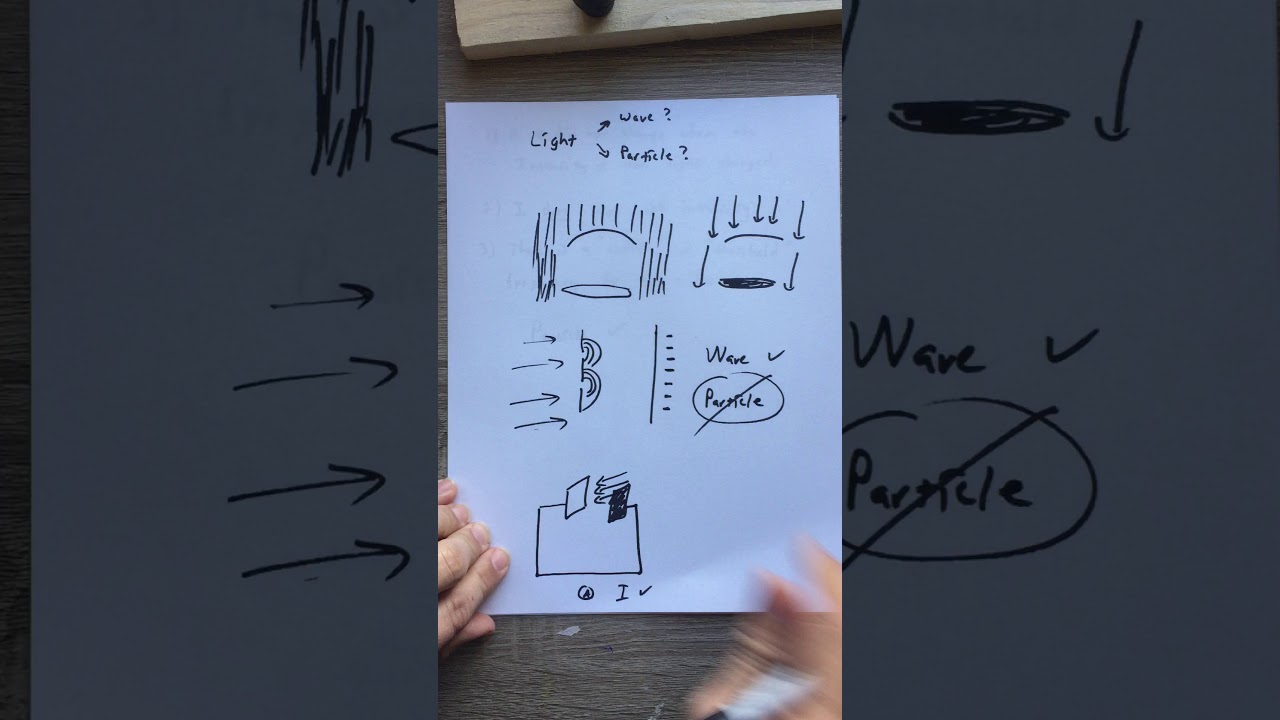
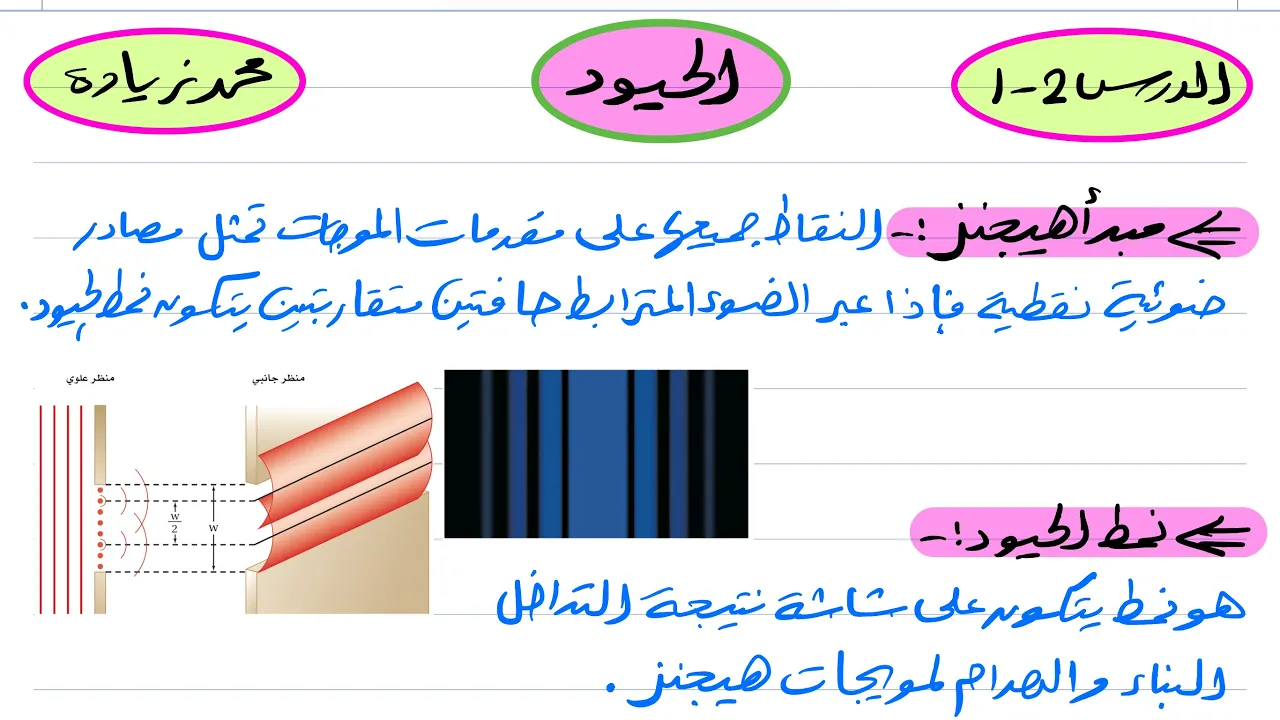










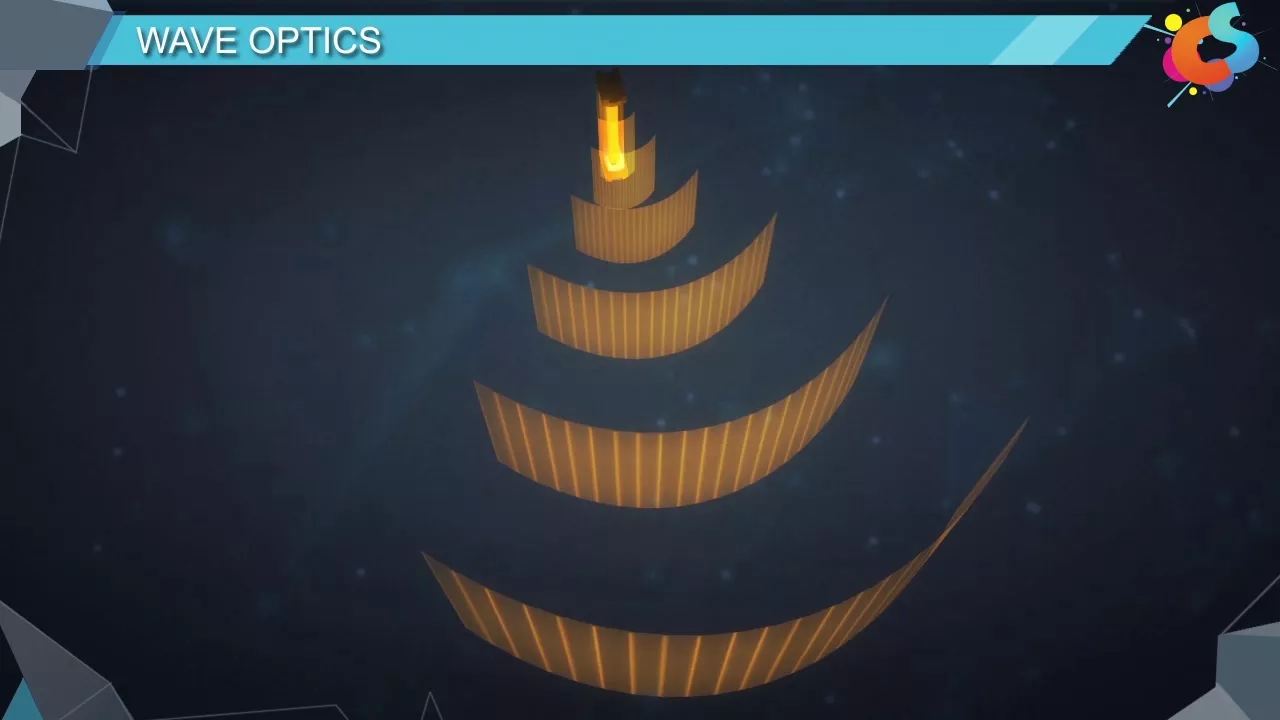
Using Huygens' principle, which treats light as waves where each point on a wavefront acts as a secondary source, we can geometrically derive both the law of reflection (angle of incidence equals angle of reflection) and Snell's law of refraction. For reflection, constructing common tangents to secondary wavefronts proves i = r. For refraction, considering different velocities in different media (V1 and V2), the ratio sin(i)/sin(r) = V1/V2 emerges, which is equivalent to Snell's law. Interestingly, while both Newton's particle theory and Huygens' wave theory can derive Snell's law, they predict opposite relationships between medium density and light velocity—Newton predicts higher velocity in denser media, while Huygens predicts lower velocity, demonstrating how fundamentally different theoretical frameworks can yield the same mathematical results but contradict each other physically.
Huygens Principle: Deriving Reflection & Refraction | Wave Optics
Added:so now let's see whether we can use the wave theory and explain the concepts of reflection and refraction now it's going to be a little bit tedious to draw all this stuff so I better do all everything nicely in a nice civilized manner so I'm going to use all the equipments that I have let's start with Reflections so here is the interface over here is the interface and imag imagine there incoming waves and let's say that the incoming waves are like the following incoming this way I'm going to draw two of these rays and these two will be extreme Rays so one is here and one is over here and how are going to be the wave fronts well we already know that if you have parallel rays of light source must be at infinity and therefore the wavefronts must be plane waves so we should have plain wave fronts so I'm going to draw a wavefront which is over here it has to be perpendicular and so for that I need my set Square yeah so it has to be perpendicular like so and therefore my wavefront I'm just directly going to draw a vave front over here let's see I got this right yeah so this is what my w is going to look like so what is the angle of incidence well this is going to be the angle of incidence and if this angle of if this angle is I then this angle has to be I because this is perpendicular to it okay now what is going to be the new wavefront once it hits over here well I have to to consider all the points on this current wavefront as a hyen source including this point which is on the surface that itself acts as a hen source and then I have to draw a secondary wavelength but what I'm going to do is to do it in a nice and you know to make sure it's presentable I'm going to choose only two hen sources I'm going to choose a hen source which is over here and I'm going to choose a radius which is exactly y big so that corresponds to sometime delta T I don't know but that's the radius which I'm going to choose all right so my new source begins as following it's going to have a source over here oops a little bit bigger yeah so this is the secondary wave which is given out by this particular source and the surface the point on the surface also o gives out a secondary wave and that way wave travels is the following and it has to travel exactly the same distance outwards right because the same time and so now my new wavefront has to be a common tangent which connects this point and this point so this new wavefront I better draw the new color I will use red for that red indicates a new wavefront and the wavefront has to be in such a way it has to form a tangent so here it is try my best do this as this possible all right that's my new wavefront and so the new direction of propagation I have to now draw by making sure that my rays of light are perpendicular to the wavefront so I think I need my set Square again and I'm going to put it this way it's going to come out like so yeah so that's what it's going to look like and I'm going to draw this over here as well all right and minor construction I have to just just add this there we have it and this angle also has to be 90° and now what we have is a reflected wave and we constructed the reflected wave using hen's principle and this by definition now becomes the angle of refraction but if that is the angle of refraction then this angle must be 90 minus r and therefore this angle must be R convince yourself of that pause for a second and convince yourself of that now let me use some names to this I'll call this as o That's the angle of incidence of the first first first ray of light call this as P where secondary of light hits I'll call this as M and I'll call this as M and what we have to do now is concentrate on the triangle om m p and triangle om m p I swear just a little bit longer and we will have our Concepts and we'll have our proof done so if you now look at these two triangles I can say well they have the same side or P the same side so I can just say op equals op they have two angles to be 90° so I have two angles to be equal and also MP must be equal to o n because I took the same radius right so MP and o n are equal MP and M M O are equal what more do you want these are congruent triangles and if the triangles are congruent then all the angles must be equal and this immediately proves that I should be equal to R taada uh there you have it it's a very um not so simple maybe as uh Newton's Theory but hey hey that's that's perfect so that makes sense so he's able to explain why I equals R by making use of his weird but yet good enough theory of secondary hyen sources and now comes the most important one let's see whether it can do refraction so you have to bear with me for a while now as we do refraction so the initial conditions are the same initial things are the same you start with the interface of the medium here it is and we incident some ray of light so I draw always two extreme Rays it has to be parall to this one I'm trying to get this as accurate as possible okay and I have to draw the wavefront and that wavefront is going to be perpendicular to this one so it's going to be sort of like this I'm going to draw the wavefront right at this point because that's where things get interesting again this is 90° and if I draw the angle of incidence this now is the angle of incidence okay what's going to happen next well well what's going to happen that now since it's going into another medium forget about reflection we covered that but now let's consider about the refraction part of it what happens when it enters this medium well if these two are different media then the velocity of a wave is going to be different in different media think of a string right if you make a pulse on a string then how fast the pulse moves depends upon this properties of the string right if you want you can think about the spring also or a slinky doesn't doesn't matter whatever you want to think about definitely the velocity of the Waves depend upon the medium so we can say maybe the Velocity in this medium is V1 and the Velocity in this medium is V2 as well so haen is also saying that refraction takes place due to changes in velocity just like Newton H maybe both of them agree with each other maybe we can some up somehow maybe somehow both of them are true I don't know let's see okay so what's going to happen next I have to again consider each point on this wavefront as a secondary hyen source but I'm going to choose this one a secondary hyen source and I'm going to draw a wavefront again the radius which I'm going to choose I'm going to cleverly choose the radius such that it hits over here so that's my radius okay all right since I am waiting for sometime delta T this distance has to be equal to this one has to be equal to V1 delta T now in that same time delta T all the other points on this wavefront is going to give out secondary waves but I am interested on this one it gives out his secondary waves in the second medium and let's say let's just say that V is smaller than V1 smaller than V1 then the radius of this one is going to be vs2 * delta T the time is the same right and V2 tangent is going to be a little bit smaller so I have to make sure that going to be a little bit smaller okay I'll choose this one so here is going to be my secondary wave and somehow I should have a wavefront that is parallel to even this one and this one it has to be a tangent as it should be tangential to this one and so my new wavefront sort of kind of uh maybe going to look like this from here it has to be parall to this one uh sort of like this and now I can draw direction of the propagation direction of the propagation it has to be perpendicular to this one so I'm going to use my set Square again and it's going to look like this there it is and so I can draw now this parallel to this one yeah so I haven't shown a dramatic refraction over here but you can kind of see it is refracted a little bit uh because I didn't I think I I chose this radius to be very close to this radius so it does not turn out to be all a dramatic defraction but but you can still see that there is some refraction you can see that these two are not parall to each other I'm sorry for that but hey it'll work it'll work don't worry now how much is going to be this length this length over here well you must have guessed it it has to be equal to V2 * delta T that has to be the new radius all right now our angle of refraction is going to be this one R but if this is the angle of refraction R and this is 90° this 90 minus r this must also be R and now what I can do is yeah I can call this as I same thing as over here and I can look at these triangles and I can ask myself what is sin I sin I is going to be the opposite side which is V1 delta T divided by this side I don't know what that side is call it as o and call it as P it's called as op and if I look at sin r this triangle it's going to be the opposite side V2 delta T divide op and therefore if I divide them the last step we get the V1 / by V2 and and look what we have we have Snell's law he says I have proved that sin I by sin R is a constant and that constant has to be V1 / V 2 and that's what Snell call it as N2 over N1 so there it is so I have proof so you have proof Now using haens wave theory oh but look at the difference between this hen's wave theory and Newton's particle theory they both prove refraction in their own way but but do you see a big difference there Newton says Sin i/ Sin R must be V2 over V1 and hen says it has to be V1 over V2 what oh my god um so what basically uh Newton is saying is that the Velocity in the second medium must be greater than the Velocity in the first one right see and since this is bending towards the normal this must be a denser medium so Newton predicts that light moves with a higher velocity in a denser medium and hyen predicts exactly the other way around hen predicts the Velocity in the denser medium must be smaller see that's how I drew a smaller one over here there it is it has to be smaller that is amazing both excuse me both of them are able to prove Snell's law but they're both contradicting each other in reality I'm not surprised because particle theory and wave theory are two contradicting theories for example particles have collisions particles have momentum waves do not have collisions they don't collide with each other they just shake hands and they pass each other and so we have two contradicting theories and both of them the remarkable thing is they're explaining refraction in their own ways and they are completely opposite to each other so this can only mean one thing only one of them has to be true because both can't be that's it's not possible so which one is true who's right Newton or haen
Up Next

Young's Double Slit Experiment: Wave Interference | Physics
@khanacademymedicine
1.1M views•2014-07-07

21cm Hyperfine Transition in Neutral Hydrogen: Radio Astronomy Basics
@AaronRobertParsons
12.4K views•2011-10-13

Relativistic Origins of Magnetic Fields Explained
@Mahesh_Shenoy
1.1M views•2022-11-12

Entropy and the Second Law of Thermodynamics Explained
@veritasium
27.5M views•2023-07-01
Related Study Plans & Knowledge Roadmaps
Structured learning paths in Physics