






















Moving charges produce magnetic fields not because of a separate fundamental force, but as a consequence of length contraction and time dilation in Einstein's theory of relativity; when observed from the reference frame of a moving charge, the charges in a current-carrying wire appear to be compressed (length contraction), making the wire appear positively charged and attracting the moving charge through Coulomb's law, while time dilation explains why moving charges repel more slowly than expected from Coulomb's law alone.
Relativistic Origins of Magnetic Fields Explained
Added:Basic electrostatics, including Coulomb's Law, electric charges, and the concept of an electric field.
Fundamental concepts of magnetism, specifically how moving charges generate magnetic fields and experience the Lorentz force.
Einstein's Special Theory of Relativity, focusing on reference frames and the relative nature of motion.
The phenomenon of length contraction, where space contracts in the direction of motion relative to an observer.
Maxwell's Equations in relativistic covariant form, utilizing four-vectors and the electromagnetic field tensor.
The study of Quantum Electrodynamics (QED), which describes how electromagnetism operates at the quantum level within a relativistic framework.
Practical applications in particle physics, such as how synchrotron radiation and particle accelerators utilize relativistic electromagnetism.
A deeper exploration of electromagnetic induction (Faraday's Law) viewed as a relativistic transformation of fields between moving frames.
1.1M views34.5Klikes17:52Original Release: 2022-11-12
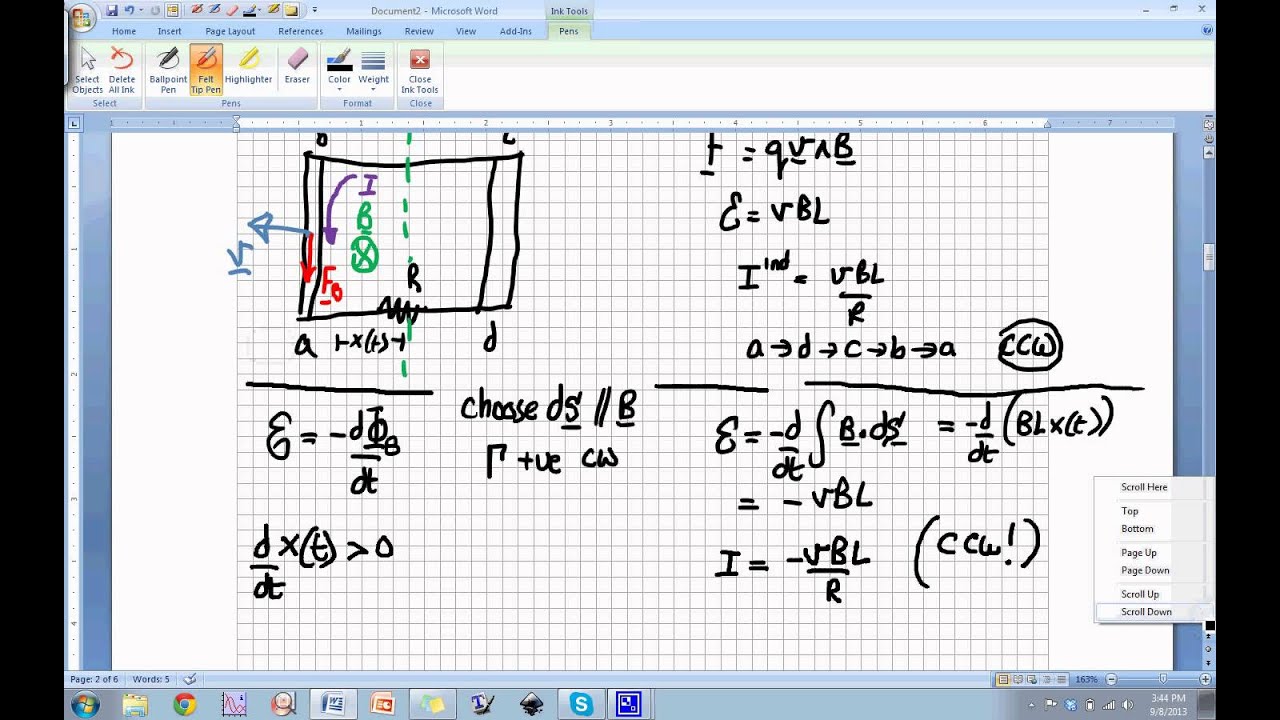
why do moving charges produce magnetic fields do they in this video I want to throw in a brand new perspective using Einstein's relativity now before we start Einstein is going to ask us hey why do you even say that why do you say moving charges produce magnetic field and our answer to that could be because if you have a moving charge let's say you have a current carrying wire and you place it next to a magnetic needle that needle gets deflected so it certainly acts like a magnet and therefore we say it produces magnetic field another example could be that if you have another moving charge close to a current carrying wire it gets deflected by the current due to the current carrying wire again how do you explain that without using magnetic fields and Einstein comes back and says what if I can explain all of this without a magnetic field what if I can explain all of this just by using Coulomb's law well I'm very intrigued I'll say Einstein let's do it help me understand how you can use Coulomb's law to explain all of this so well let's take the example of the current carrying wire kept close to a moving charge let's say we have a moving charge you have a current carrying wire we know it gets deflected either two words or away from it depending on the charge so let's understand how do you explain that using Coulomb's law like how how Einstein just says that well um that's basically the force of attraction between charged particles you have a charge over here the current carrying wire is also charged and they just attract or repel each other and I'll say Einstein hold on the current carrying wire is not charged so here is our current carrying wire let's say the current is upwards and let's say there's an electron that's our moving charge that's moving downwards then experiment shows that this electron actually gets attracted towards the wire okay you can use your Lorenz Force you can use your right hand thumb rule you can use your I don't know you have all those rules you can use all of that the traditional rules that we've learned in our classical electromagnetism courses and you would actually see that the electron gets attracted towards it but Einstein says that attraction is due to the charge of the wire the wire is charged and I'm saying the wire is uncharged I mean if you if you could peel into the wire into the wire then you have all the positive charges over here and you have all the electrons over here the electrons are moving down because remember we assume the current is upwards we assume the current is upwards all right so for every single proton we will find there will be an electron for every single positive charge there will be an electron and therefore if you take any section of the wire you will find that the total charge would be zero equal amount of positive and negative and therefore the whole wire is neutral and therefore I go back and Einstein says how do you use Coulomb's law to explain this this whole wire is neutral electric force cannot explain this and Einstein comes back and says Mahesh remember we want to calculate the force on the moving charge therefore we need to look at things from the perspective of the moving charge in other words we need to jump into the moving charges a reference frame to see what's really going on and I say okay let's let's play on let's play along this is the ref this is the lab reference film our reference frame a reference frame in which the conductor appears to be addressed but the this electron our moving charge is moving now let's jump into the electrons reference frame this electrons reference frame and see what we see okay and to keep things simple let's just assume that the the speed at which these electrons are moving down that's causing the current is the same as the speed of these electrons we'll just do that for the convenience sake okay all right so if we jump into the electrons reference frame what will we see let's look at that so this is the electron's reference frame what will we see well because the electron this moving charge are electron and these electrons are moving at the same speed their relative speeds are zero right this relative speed is zero so they will appear to be at rest with respect to each other so let me get rid of this velocity Vector right so in the from the perspective of this electron all these electrons appear to be at rest however now these protons appear to be moving backwards just like when you're going in a car the whole world appears to be moving backwards these protons and the entire conductor appear to be moving backwards so from the electrons perspective this electrons perspective the current is caused by the moving protons upwards by the whole conductor is moving while the electrons are stationary but does it look charged to you no it still looks uncharged to me for every single proton there is an electron if I take any section of the wire I will find the same number of protons and electrons and therefore the whole thing still looks uncharged and so I go back to Einstein says Einstein it still looks the wire still looks uncharged how do you explain that there is a force acting on this electron without using magnetic fields Einstein says Mahesh you forgot something when you're changing reference frames you can't really use Newtonian physics you have to use Einstein's theory of relativity that's the more accurate physics and one of the results of Einstein's theory of relativity is that when things are moving let's say when a pen is moving with respect to me its length in the direction of motion shrinks this is called length contraction so when the pen is moving with respect to me I would actually find its length to be smaller and when the pen stops the length becomes larger this is a real effect it sounds insane in crazy and it's negligible at normal speeds and that's why we don't usually notice it but it's there at extremely high speeds close to speed of light this is very very apparent and so Einstein says this is true we have to use it so what it means is that when things are moving with respect to us the length shrinks the atoms inside the the atoms inside the pen actually come closer to each other and when moving things stop the atoms go farther away from each other you got that this is called length contraction will not worry about why that happens we just accept Einstein's we'll just take Einstein's word for it but now let's see let's use this in our situation so when we jump from the lab reference frame to the electrons reference frame the protons which were at rest start moving and the electrons which were moving come to a rest so can we use Einstein's length contraction and see how the situation really looks I want you to pause the video it's can you pause the video and see what the situation looks like and whether the wire looks charged after using link contraction all right let's see well because the protons started moving the whole conductor started moving the whole conductor will shrink length contraction protons will come closer to each other when I look at it from the electrons reference frame and therefore this whole conductor I have to shrink it the whole conductor shrinks I'm exaggerating the effect over here the effect is actually very very very negligible but I'm exaggerating it over here and what about the electrons well the electrons were moving they come to a stop remember when things which are moving come to a stop they go farther away from each other because link contraction goes the other way around so the electrons they will go farther away from each other okay and now if you look at the situation you no longer have I mean you actually see if you take any section of the wire since the protons have come closer to each other the electrons have gone farther away from each other the whole conductor has now become positively charged and Einstein says well it's this positive charge of the conductor that attracts the electron towards it good old Coulomb's law beautiful isn't it when I first learned about this it blew my mind away the there are many questions that come to my mind the first question would be that hey is the force that we calculate using length contraction the same as the force that we get using our traditional magnetic fields and stuff and the answer is pretty much yes if you can actually calculate how much the link contraction happens and then you figure out how much the charge gets on this and then you actually use Coulomb's law and you figure out the force you get the exact not the exact there's one more effect that we need to consider from relativity but pretty much the same answer the second question that comes to my mind is hey Einstein is this you said that this effect of Link contraction is very very minimal and negligible at regular speeds right um the over here the protons are moving very slow actually they're not going close to speed of light they're crawling actually all right so shouldn't the effect of Link contraction be very negligible here as well yes it is insanely negligible however and I've exaggerated over here however however the important thing is there are so many protons there are in so many protons and so many electrons that even when you consider this insanely negligible tiny effect but you add it up for all the protons and electrons you actually end up getting a macroscopic like a big enough effect that you can see it in the lab which means as mind-blowing as it seems this is one of the everyday examples of Relativity coming in action the very fact that moving charges get attracted to a current carrying wire is an everyday example of length contraction how insane it is to think of it that that way okay but we're not done here this is an example that you would see in most places but I want to take one more example I had a third question third question I had is cool this explains why a current carrying wire acts like a magnet behaves like a magnet or feels like it behaves like a magnet but what about a single moving charge why does a single moving charge uh produces a magnetic field and again Einstein comes back and asks us remember why you have to answer the question why do you think so why do you say that a single moving charge produces a magnetic field we can again say because a single moving charge can deflect a magnetic needle but that's a more complicated example another example would be if I take another single moving charge if I have two moving charge let's say you have two electrons all right if the two electrons are moving with respect to me if I see them moving then here's an experimental fact all right we know that these electrons are going to repel each other because of which we would expect the electrons to move away from each other we can calculate the force of repulsion using Coulomb's law right and as a result we can calculate how fast they go fast they separate but if you actually carry out this experiment I don't know how you're going to carry this out but if you do this if you carry out this experiment what you will find is that these electrons will be separating slower than expected they will not be separating as quickly as you would want as quickly as you would calculate from Coulomb's law so the explanation for that as to why they're not as quickly separating as we would expect is because there is an additional force a force of attraction between them and this is the magnetic force the two moving charges act like a magnet and they attract each other this attractive force sort of dilutes the Coulomb's Force kind of not completely cancels out but sort of cancels some part of the Coulomb's repulsion as a result of that the net force decreases and as a result of that the separation speed the time it takes to separate also decreases this is a traditional explanation for y to moving electrons separate slower than what we would expect from Coulomb's law but now let's throw this to Einstein because according to Einstein there is no such thing as magnetic field that's what it's saying so Einstein how do you explain this how do you explain that if you have two moving electrons parallel to each other they separate slower than what you would get from Coulomb's law well Einstein says again let's first jump into the electrons reference frame and see what we see the electrons appear to be addressed with respect to each other right because I don't see the moving and now if I calculate how fast they would be separating then I mean I I don't see them moving this way that's what I meant okay now if I um think about how fast they were moving apart using Coulomb's law I'll get some answer I'll see that they're separating with some speed all right now this is from the electrons reference frame now what happens when I jump out to the lab reference frame there's a second effect of Einstein's theory of relativity which is called time dilation this says that when something is moving with respect to U their clocks tick slower with respect to you all right which means if you have a friend that's saying bye to you and is moving with respect to you he will or she will actually appear doing bye in slow motion and the weird thing about this is that emotion is relative so if you are also saying bye to her from her perspective you're the one who's moving and so she would say my clock is ticking slower our clock is ticking slower so that's the relative part of it again very negligible effect at everyday speeds and so we don't usually see it but it's true it happens practically we've seen it and uh yeah let's apply that to our situation and see how this helps us make sense of things so again from the electrons perspective we've seen that they get separated and the speed is predicted by Coulomb's law there's only Coulomb's Force but when I come out and jump into our reference frame with respect to us these electrons that are separating these electrons are moving with respect to us these electrons are moving and because these electrons are moving with respect to us their clock appears to take slower which means the whole thing appears in slow motion and it's for that reason the separation also appears to be in slow motion so Einstein says the reason why the electrons are separating slower than we would expect is not because there's another mysterious magnetic force there's only the Coulomb's Force it's just that due to time dilation things have slowed down and again if you use the the math of Einstein's relativity and calculate how much the time dilation is you would get the exact same answer as you would find experimentally so there is no need to cook this magnetic field you can just say there's only Coulomb's law but the reason it moves apart slower than you expected is not because there's a magnetic attraction but because of time dilation things slow down that's it that's the answer to it and again this is mind-boggling if you think about it right so there could be more questions now a question could be so does it mean that there is no such thing as magnetic field at all there's only electric field and there's only Coulomb's law can you say that I don't think so not an expert on this and this is the part where I'm coming to the edge of my knowledge but I don't think that would be accurate because consider this if you have a single electron or a proton for that matter it's not moving let's say it's not moving at all we would still find it can deflect a magnetic needle if you have a very sensitive needle how do you explain that it's not moving so there's no I cannot choose relativity over here Northern contraction or time direction if it's addressed you can still deflect it you may have heard about this idea called intrinsic electron spin the magnetic field generated by an electron Spin and clearly there is as of now I can think of any way in which I can explain that without using Einstein's relativity but if I go one step further what's more important is instead of saying that hey there is no such thing as magnetic field I think a more accurate statement would be something like you know something that appears to be a magnetic field in one reference frame can transform and appear to be an electric field in other another reference frame I think that's the bigger takeaway from Einstein's theory of relativity and what that basically means is that electric and magnetic fields might be the same manifestation of something more fundamental underlying phenomena which we called electromagnetic fields so sometimes electromagnetic fields look towards as electric field sometimes we look through us as magnetic fields sometimes they do look towards as both electric and magnetic fields but at the heart of it it's just one single electromagnetic field and therefore in physics we say there's one force the electromagnetic force we don't say electric and magnetic forces are two different forces of nature we say they are one single forces of nature because they're actually unified and what unifies them in our understanding is Einstein's theory of relativity I have one last question for you because whenever you use Einstein's theory of relativity there seems to be some kind of a paradox apparent Paradox but when you think through it you'll realize there is no such thing so if I come back to this electrons reference frame we are seeing from this electron's reference frame um the protons have come close to each other the electrons have gone farther apart from each other the whole conductor has shrunk what about charge conservation there were no charges to begin with earlier but now there is a charge on this conductor where did this extra charge come from imagine if this imagine this was a part of a complete circuit over here there's a battery somewhere can you look at that complete circuit and somehow convince yourself where this extra charge comes from because relativity or not charge conservation should hold true when you change reference frames you cannot suddenly have charge coming out charge is not relative concept it's an absolute concept you cannot suddenly create charges uh you know you cannot net charge cannot be created that's what I mean so interesting thing about that and yeah I'll leave it see you
Up Next

49:34
Magnetic Levitation & Superconductivity: Physics Lecture 19
@lecturesbywalterlewin.they9259
1.1M views•2015-02-14

12:53
21cm Hyperfine Transition in Neutral Hydrogen: Radio Astronomy Basics
@AaronRobertParsons
12.4K views•2011-10-13

15:00
Huygens Principle: Deriving Reflection & Refraction | Wave Optics
@Mahesh_Shenoy
241.2K views•2014-12-02

27:14
Entropy and the Second Law of Thermodynamics Explained
@veritasium
27.5M views•2023-07-01
Related Study Plans & Knowledge Roadmaps
Structured learning paths in Physics
physics
Nuclear Physics (Decay, Fission & Reactors)
01Atomic Structure and the Binding Force
02Radioactive Decay and Half-Life
03Nuclear Fission Mechanics and Chain Reactions
+ 2 more learning modules
12h5 modules
Explore Roadmap
physics
Soft Matter (Polymers, Colloids & Rheology)
01Foundations of Soft Matter & Thermal Forces
02Polymer Physics and Macromolecules
03Colloids, Surfactants, and Self-Assembly
+ 2 more learning modules
38h5 modules
Explore Roadmap
physics
Analytical Mechanics: Lagrangian & Hamiltonian
01Mathematical Foundations: Calculus of Variations
02From Newtonian Mechanics to Constraint Dynamics
03The Principle of Least Action & Lagrangian Mechanics
+ 3 more learning modules
28h6 modules
Explore Roadmap
physics
General Relativity (Spacetime & Cosmology)
01Foundations of Relativity: Special Relativity
02The Geometry of Spacetime: Equivalence Principle & Curvature
03Einstein's Field Equations: The Mathematics of Gravity
+ 2 more learning modules
55h5 modules
Explore Roadmap