


![Conservation of momentum (a.k.a., Navier-Stokes) [Fluid Mechanics #3]](https://i.ytimg.com/vi_webp/C5yxsYKy7Ts/maxresdefault.webp)
![Conservation laws [Aerodynamics #5]](https://i.ytimg.com/vi_webp/EovzNQ2oGyY/maxresdefault.webp)














![Stokes Flow, Microfluidics; Thermofluids [Book Club #2-5] Ep27](https://i.ytimg.com/vi/Hg-HX0xTtYs/sddefault.jpg)
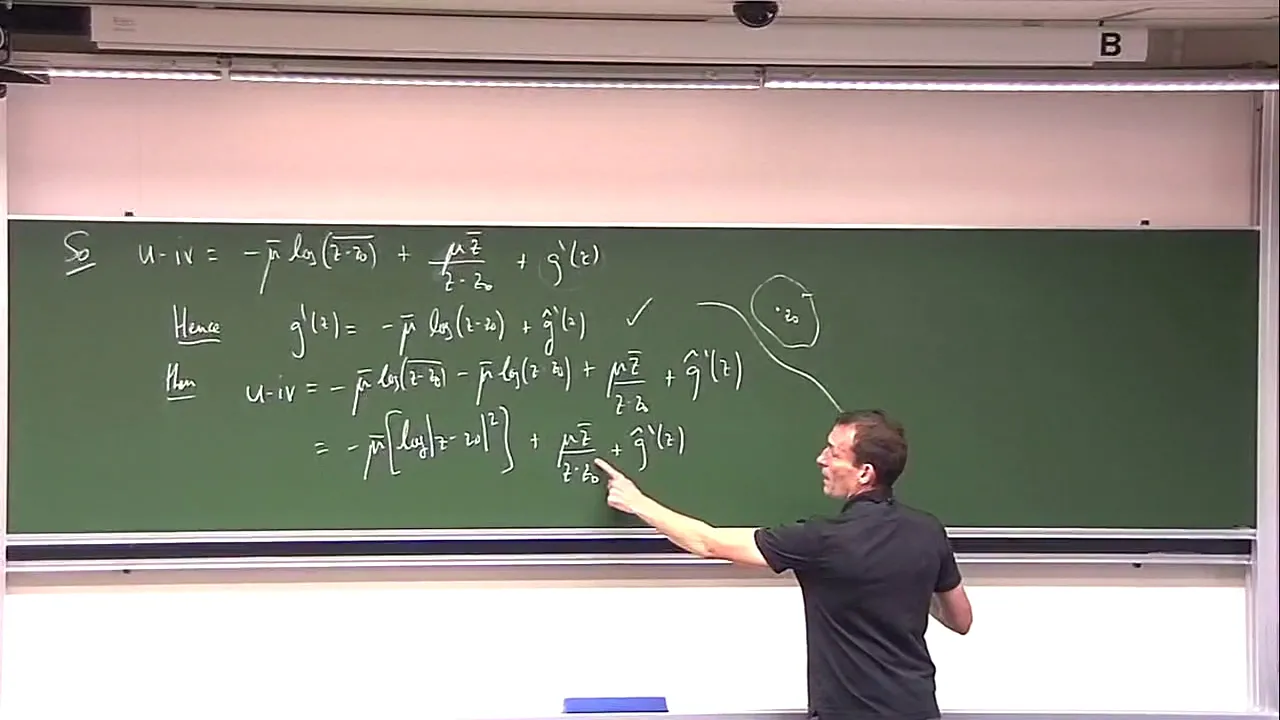
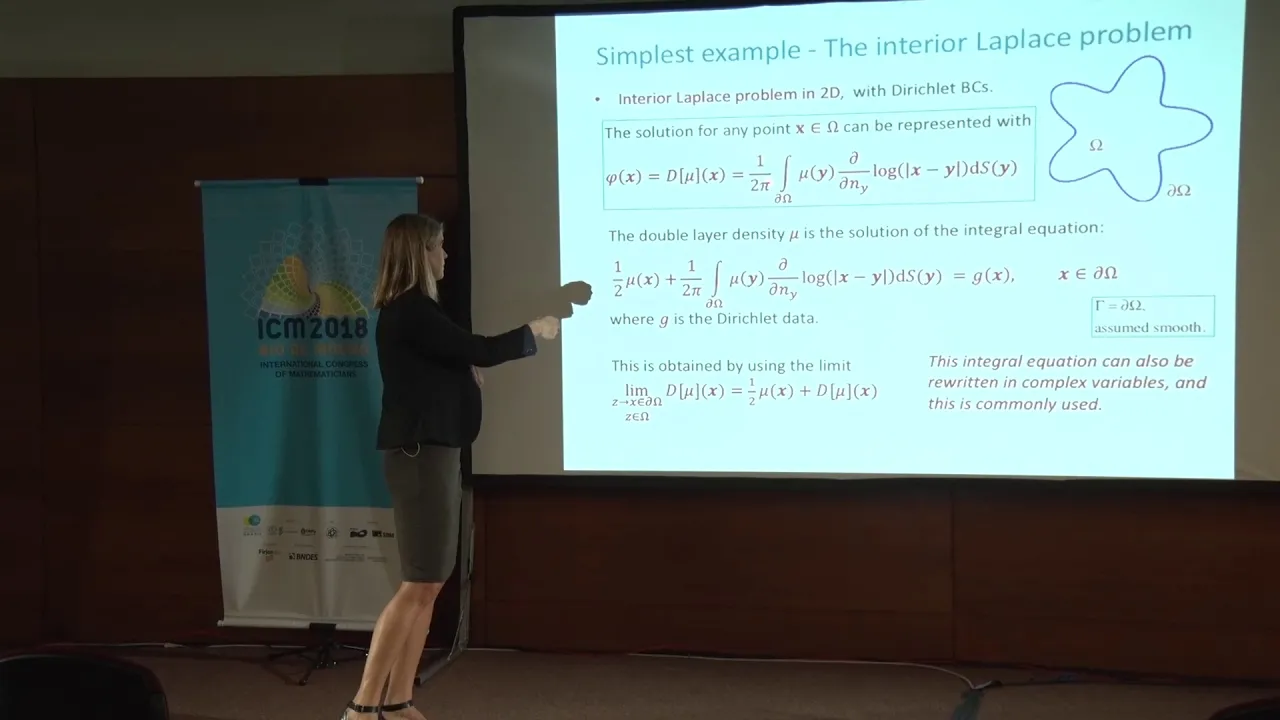
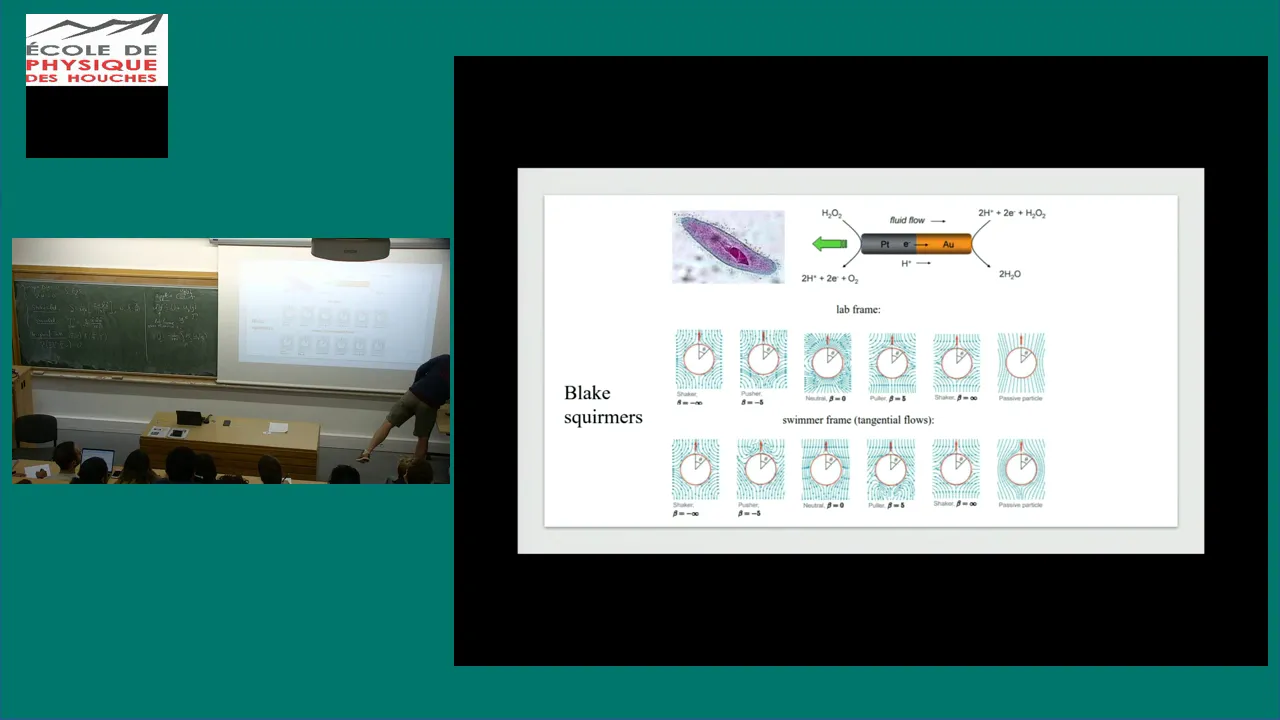


In low-Reynolds-number flows, viscous forces dominate over inertial forces, meaning the motion of fluid is primarily determined by viscosity rather than the inertia of the fluid itself; this regime is characterized by Reynolds numbers much less than one, where the Reynolds number (Re = ρLV/μ) provides a quantitative measure of the relative importance of inertia versus viscosity, and such flows exhibit unique properties including reversibility (where reversing boundary motion returns the fluid to its original state) and different propulsion mechanisms compared to high-Reynolds-number flows.
Low-Reynolds-Number Flows: Fluid Mechanics Fundamentals
Added:The definition and physical interpretation of the Reynolds Number (Re) as the ratio of inertial forces to viscous forces.
Fundamental fluid properties, particularly dynamic viscosity, density, and the behavior of Newtonian fluids under shear.
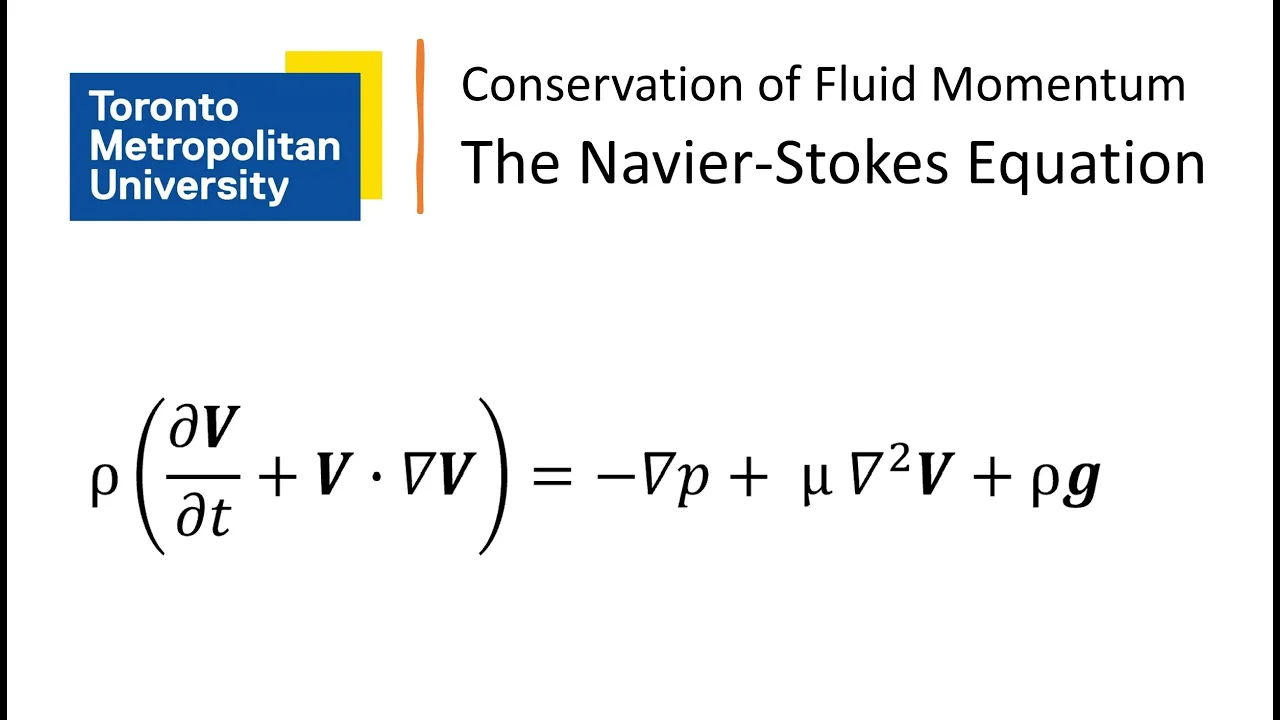
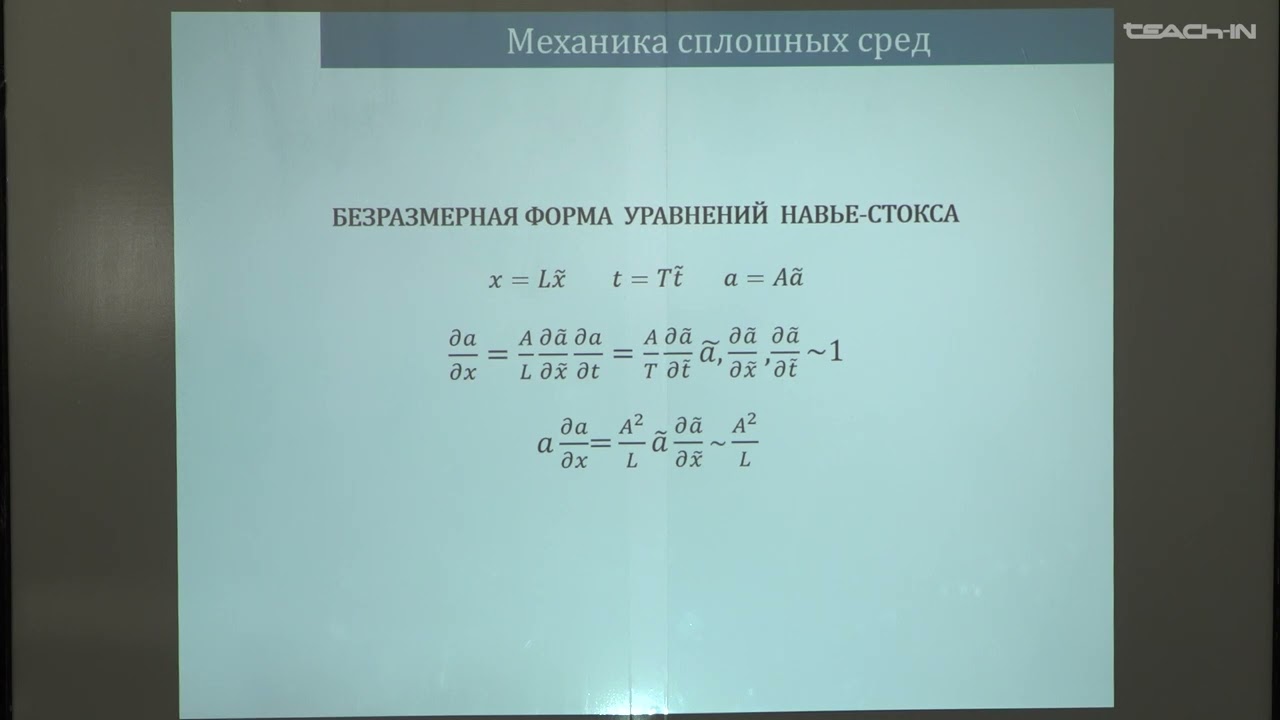
The Navier-Stokes equations, specifically how they represent the conservation of momentum in fluid flow.
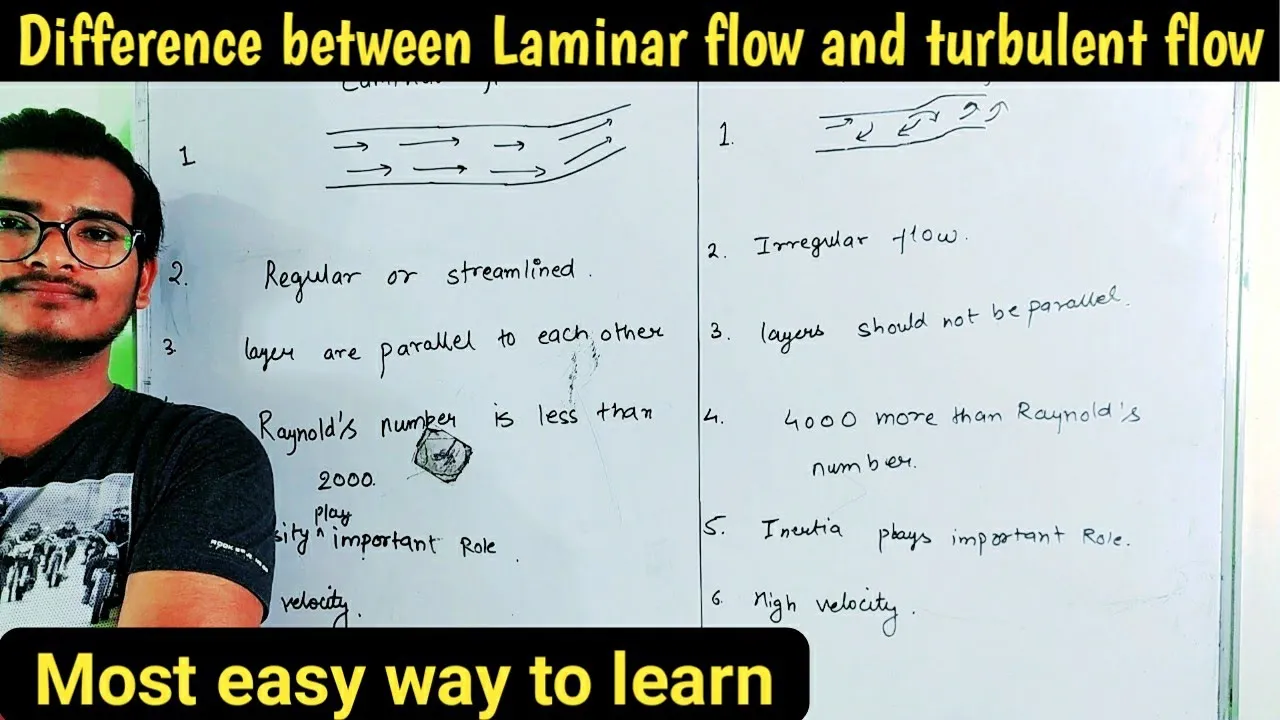
The qualitative differences between laminar and turbulent flow regimes.
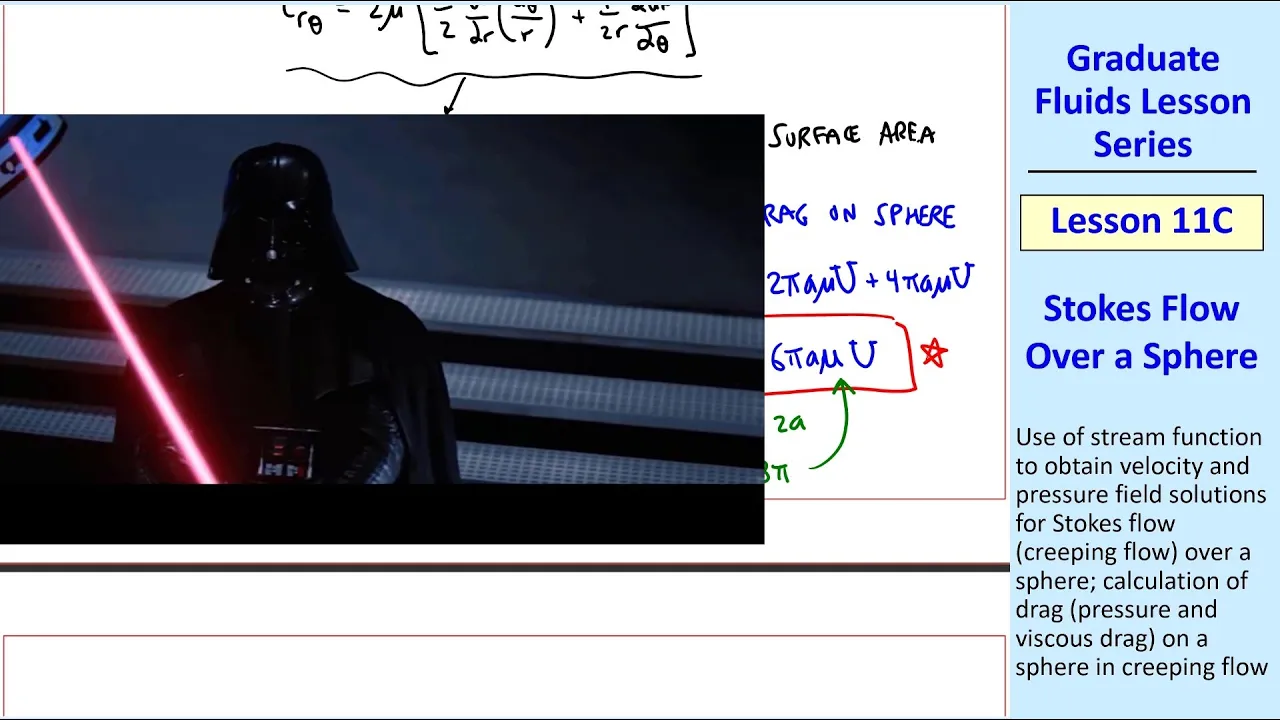
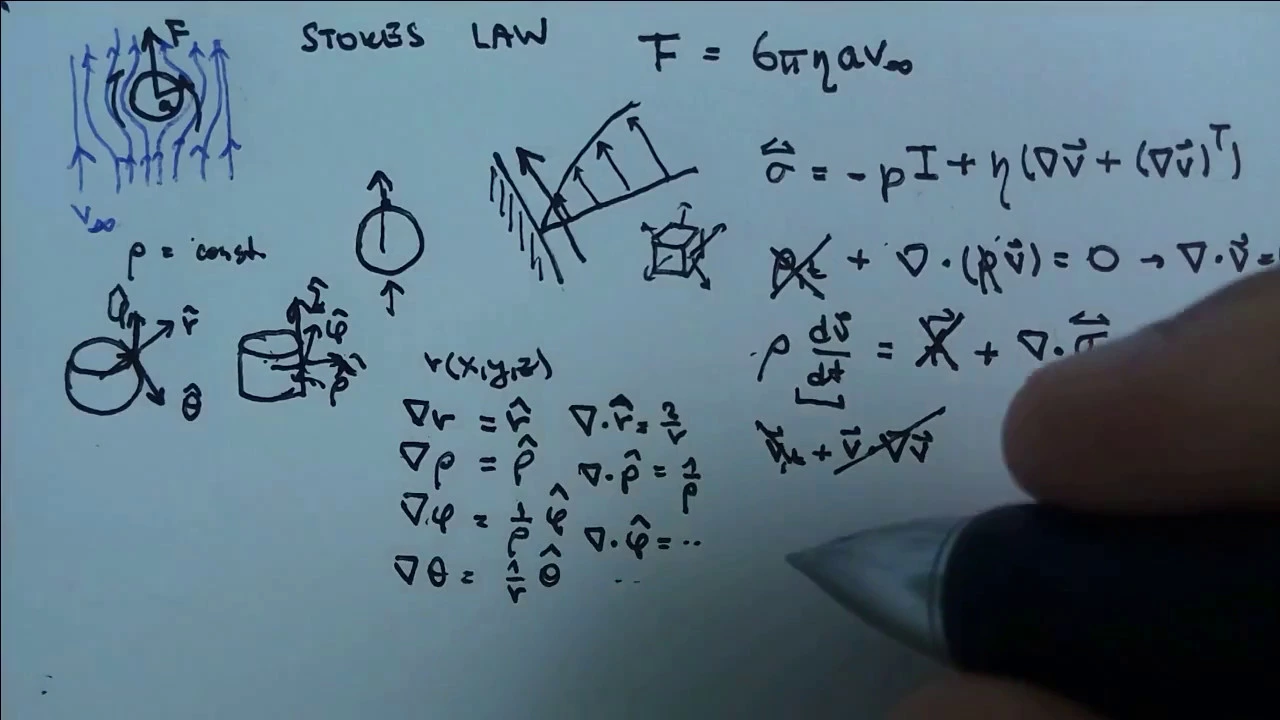
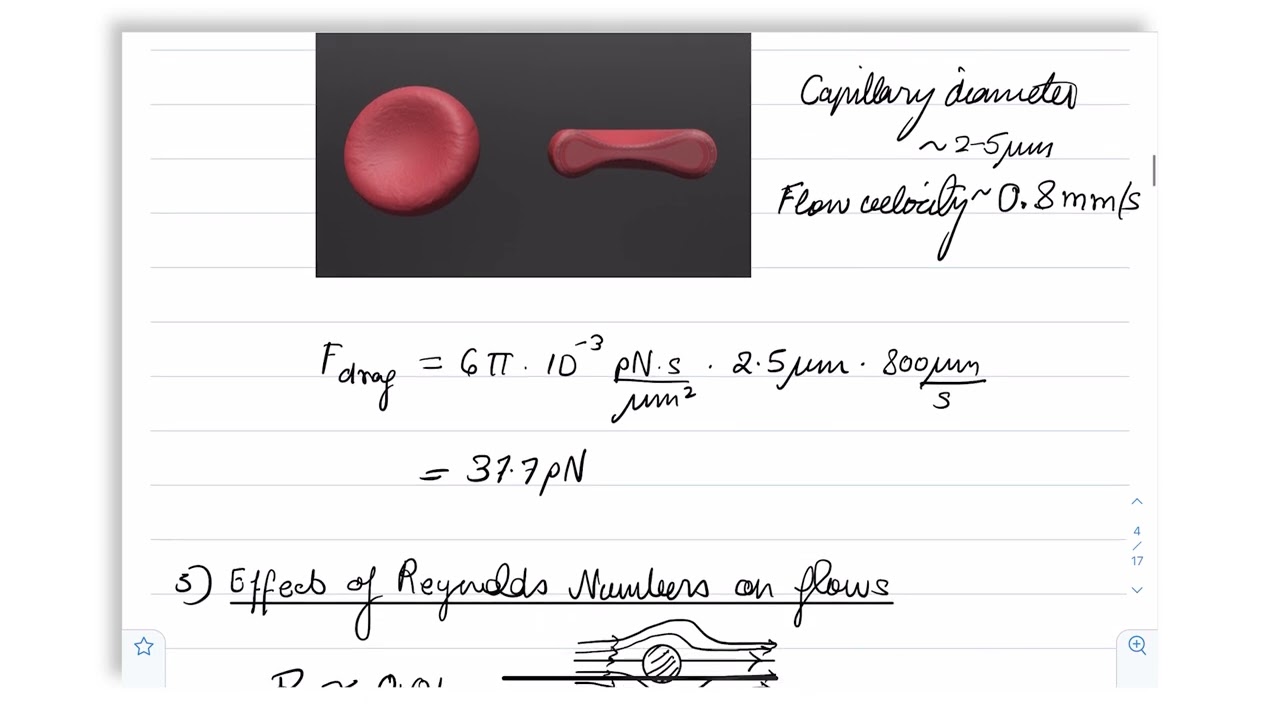
Mathematical derivation and applications of Stokes' Law for drag on a sphere in creeping flows.
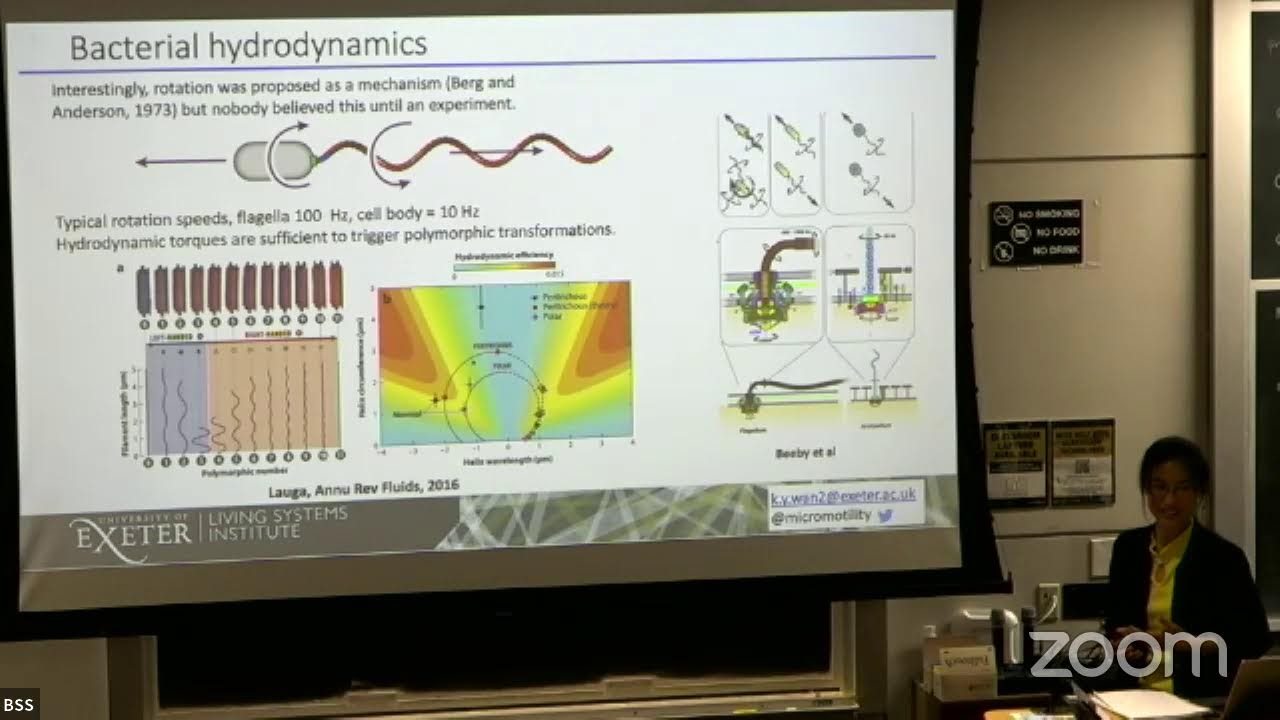
Biological propulsion at the microscale, including bacterial flagellar locomotion and Purcell's Scallop Theorem.
The design and physics of microfluidic systems (lab-on-a-chip) where low-Reynolds-number dynamics dominate.
Advanced mathematical techniques for Stokes flow, such as the use of singularity methods (Stokeslets and stresslets).
114.8K views940likes32:59Original Release: 2011-04-28
low Ral number flows are those in which inertia plays only a very small part in the conditions which determine the motion bren's number for a flow which is characterized only by density and viscosity is defined as r equal l v r over mu here L is a length characteristic of the field of flow V is a characteristic velocity row and mu are the density and viscosity of the fluid the numerical value of R provides a rough estimate of the relative importance of inertia and viscosity in any fluid flow when R is small the importance of inertia is small compared with that of viscos some examples are the flow produced by the movement of such small creatures as these ball sperms for which L is very small or glacia flow for which V is small and mu is very large note the red flags across the ice field here they are 2 years later pulling a knife from a pot of honey for which is very large demonstrates two properties of viscous fluid it can resist both tangential and tensile stresses the honey can only be lifted by a tangential force exerted by the knife surface which must be transmitted through adjacent layers of the honey the stretching of the stream as it leaves the knife gives rise to tensile stresses across horizontal section these make the speed of falling much less than if the honey had been falling freely though this honey stream shows us something about the properties of viscosity it doesn't give us any physical insight into the relative importance of viscosity and inertia a similar set of experiments done with a controlled jet entering a quiescent mass of the same fluid can give us such an Insight in defining Reynold's number the appropriate length and velocity to be used are the diameter and the velocity of the jet as it enters the fluid here the fluid is syrup and the Reynolds number is 0.05 at this low renals number the jet hardly penetrates at all now let's repeat the experiment using different fluids the other three boxes contain lerine Glycerine and water and water each jet will be driven by this piston and the velocities will be identical this Glycerine jet penetrates to a depth of a few diameters at this renals number the jet penetrates many diameters the tangential force acting on the outer surface of the jet is insufficient to reduce its velocity very much before it reaches the bottom of the box this stret becomes turbulent here for comparison are the four situations this experiment justifies Us in leaving out of consideration the effect of inertia in situations for which R is much less than one the geometry involved here makes this case unsuitable for simple mathematical analysis however the flow of fluid through tubes of uniform bore provides a simple case in which inertia plays no part in the mechanics of the flow here the tangential stress due to viscosity is balanced only by the driving pressure though the Reynolds number is not necessarily small there is no change in the inertia of the flow as it passes through the tube so that the results of calculations of the kind used in thinking about low renals number flow are replicable the B of one of these tubes is twice as big as the other but they have the same length and the fluid is driven through them at the same pressure head calculation shows that the discharge from the large tube should be 16 times that of the other the recepticles are marked at 1 o and 16 oz in this experiment the pressure difference Delta P acting over the area of cross-section A4 Pi d^ 2 balances the tangential stress Sigma which acts over the wall area P DL the pressure change therefore is balanced by Sigma * 4 L / D when L is large compared with d as it is here a small tangential stress can produce a large change in pressure this is the principle on which hydrodynamic lubrication is based a very simple experiment can demonstrate that the coefficient of friction which is the ratio of the tangential to the normal force between two bodies in relative motion can be much reduced by hydrodynamic lubrication holding this sheet of paper horizontal I give it a slight forward movement and drop it it slides quite a distance as it settles the air is forced out of the narrow space between it and the table the tangential stress so produced Ena enough pressure to be built up beneath the Note Paper to support it for a time and during that time the friction retarding sideways motion is very small if a few holes are made in the sheet so that the air can escape without passing under its Outer Edge it stops much more quickly to reduce the friction between continuously moving surfaces it is necessary to introduce the lubricant at a place where the pressure is low and sweep it into a place where it is high it was only when a method for doing this was discovered that the design of thrust blocks capable of maintaining the large load between a ship and its propeller ceased to be a major difficult ulty in the development of large Steamers this little device which I call a TTM works on the same principle each of its blades is inclined slightly upwards if they turn counterclockwise close to the tabletop air is swept into the converging space and gives rise to this distribution of pressure under the blades the pressure so produced by the counterclockwise motion supports it for some time the apparent backward motion that you may see is a stroboscopic effect on the other hand when it spins in clockwise Direction the air is rapidly swept into the wider part of the space below the blades solid contact occurs and the ttem stops much more quickly clockwise counterclockwise the action which supports the ttem is employed in these Journal bearings in a journal A cylindrical shaft rotates ins inside a cylinder of very slightly greater diameter the shaft assumes an eccentric position so that there is a narrowing Gap into which fluid is dragged this model Journal bearing has been fitted with three manometers midway between its ends the shaft is fixed with its narrowest Gap at the top the center monometer is located at the narrowest part with the other two equally distant from it here the fluid is water and the monomers are open to the atmosphere in the converging Channel the pressure rises above atmospheric and then Falls below it an equal amount on the diverging side reversing the direction of rotation reverses the stresses and the pressure distribution very large pressure differences can result from greater excentricities or speeds or if the fluid is very viscous in this case the journal has been filled with syrup by sealing the journal from the atmosphere such a strong negative pressure is built up in the diverging section that cavitation bubbles appear the bubbles get longer as the speed increases low Ral number flows are reversible when the direction of motion of the boundaries which gave rise to the flow is revers first this may lead to some surprising situations which might almost make one believe that the fluid has a memory of its own here are two concentric cylinders the fluid can be moved by turning the inner cylinder with this handle the anulus between them is filled with Glycerine into this space I introduced some dye which stays put owing to the high viscosity of the Glycerine note its position before I start turning it I now turn it four times pushing the handle clockwise the dye seems to mix as a drop of milk mixes when it is stirred into a cup of tea now I reverse the direction ction and after turning exactly four turns the dyed area reappears in its original position with a little fuzziness due to molecular diffusion to see what happens we have a second apparatus that is filled with syrup it has a wider Gap and we can look down on it a little colored syrup is injected to Mark the fluid when the cylinder is turned this fluid is stretched around the annulus now the inner cylinder is turned back exactly to its starting position during the forward motion the boundary of the fluid follows a path determined at each Instant by the motion of the wall at these very low Ryals numbers particles within the fluid move when the boundary moves and they stop when it stops during the Reversed motion the boundary of the flu position the motion of a rigid body is also reversible here is one with a gap to Mark its orientation this is set initially in the 12:00 position the motion carries the body around and also makes it rotate on reversing the rigid body returns to its original position and orientation if however a flexible body like this bit of yarn is inserted the reversal of stress will alter the shape of the body so that it will not return to its original position in the next experiments we will look at the resistance of solid bodies at lowless numbers here are two brass spheres in syrup they have diameters in the ratio of 2: 1 we release one now and the other later when the smaller ball has one more unit to go the larger one is released they reach the bottom Mark at the same time the drag of a falling sphere is proportional to its diameter and to its speed the net weight of the sphere is proportional to the cube of its diameter the velocity is therefore proportional to D squ they have diameters in the ratio of 2: 1 so that the larger one Falls in syrup four times as fast as the smaller at low renals numbers the disturbance produced by a moving ball extends many diameters so that beads far from the ball are moved by its passing thus the presence of a nearby wall can be important here are two identical balls one near a wall and one far from it the ball near the wall Falls more slowly incidentally it remains at a constant distance from the wall a consequence of reversibility this retarding effect also slows the fall of a particle surrounded by many similar ones so that a cloud of them Falls more slowly than a single one when a cloud of a Ed particles Falls in a fluid it develops a sharply defined top a particle which has a terminal velocity rather lower than its neighbors doesn't always get left behind if it did it would find itself isolated and would fall faster and therefore catch up the rest the left box has many particles they are close together and the boundary is sharp the right box has few particles they fall with less influence on one another and the boundary is less sharp and travels faster when the moving body is not spherical the resistance is not the same in all directions of motion these identical rods are held so the bottom of the vertical one is at the same level as the horizontal one when released simultaneously the horizontal one travels half as fast as the vertical one at low renold's number they have just half as much resistance to longitudinal motion as they have when moving perpendicular to their exes at the same speed this is a property common to all long thin bodies of revolution when a rod Falls obliquely it drifts to one side and terminal speed the net weight is just balanced by the drag which therefore acts vertically the drag may be regarded as being the resultant of two forces one parallel to the long axis and one perpendicular to it these two forces are represented by CA and BC in the Triangle of force ABC remember that a Force moves the cylinder 1 half as fast when applied in the transverse direction as when applied longitudinally the triangle of velocities can therefore be constructed by bisecting BC at the point D AC and CD are the velocity components a d then represents the direction of motion when the cylinder is falling in the inclined position to find the largest possible angle of the flight path to the vertical this geometrical construction can be materialized using a draftsman square and two drawing pins the pins are placed at C and a point F situated vertically above C at a distance equal to AB this Square can be moved round so that its two perpendicular edges are in contact with the pins the axis of the cylindrical falling body coincides with the lower edge of the square the flight path is then the line joining the corner of the square with a point e situated vertically below C at a distance equal to CF eyes at 35° to the horizontal I want to draw your attention specially to this experiment because it has an important bearing on why it is that microscopic animals can swim all the familiar self-propelling bodies owe their thrust to inertial reaction of air or water to the motion of their propelling mechanisms the propeller of a motorboat is an example here the water which is thrown backwards forms a well defined wake the body and tail of a fish form another example but here the wake is not so well defined even a snake swims by moving its body so that each section of it is pushed forward by inertial reaction as the waves of bending move them obliquely in the water all those we have seen have Reynolds numbers of order thousands or even Millions microscopic creatures which may have Reynolds numbers as low as one over 10,000 cannot derive any appreciable thrust from inertia they rely on moving their bodies in such a way that they derive their thrust from viscous stresses the Tails of these bull sperm Zur move like those of tpes or Snakes by sending waves of bending backwards so that each section moves obliquely in the fluid here however the viscous reaction to the motion pushes on the tails in the same way that it pushed on the obliquely falling Rod to illustrate the difference between inertial and viscous propulsion I have constructed two models both operated by the same source of power a twisted elastic band in this model A rlike tail oscillates about a hinge at the rear waving the rudder of a boat is so well known as a method of propulsion that the rules of yacht racing legislate against it putting this model in water shows us why but when the model is put into syrup it cannot move going to the reversibility of low Reynolds number flow the forward motion of the blade is neutralized by the backward motion this spiral model does swim each element of the Spiral is behaving like the obliquely falling Rod because lateral resistance is greater than longitudinal motion at right angles to the axis of the Spiral can contribute to a longitudinal component the spirals are right and left-handed to keep the model from from rotating the last example I will show of low Reynolds number flow is that between two parallel plates separated by a very small Gap this Arrangement known as the hela cell has a special interest because because paradoxically it offers a means for making visible the streamlines in certain cases of Ideal flow of a nonviscous fluid the gap between these two thick plastic plates is formed by this gasket when fluid is forced to flow through the cell all particles in the same neighborhood are subjected to the same pressure gradient the fluid velocity varies being zero at each plate and a maximum midway between them but at all points on a line perpendicular to the plates they are moving in the same direction in the heish shore apparatus colored fluid is injected into the stream through a number of regularly spaced holes and since the stream lines originating in any neighborhood remain close to one another the lines of color remain sharp when they are deflected by a thin dis placed between the sheets they assume the same form as those of an ideal fluid when deflected by a cylinder of the same crosssection now instead of a solid body a source is started in the flow here is the flow around a half body the red Dy shows the internal streamlines when the rate of fluid flowing from the source is constant the streamlines are sharp but when the flow from the source changes the lines of color become blurred because the faster particles midway between the top and bottom plate no longer find themselves close to the lines of slower particles which started earlier from the same neighborhood the experiments you've seen are limited to fluids which possess the simplest possible relationship between stress and rate of strain since most fluids do in fact conform very closely to this ideal these experiments are a very General application for
Up Next
10:24
The Physics of Wine Tears and the Marangoni Effect
@physicsgirl
702.1K views•2019-10-25

12:53
21cm Hyperfine Transition in Neutral Hydrogen: Radio Astronomy Basics
@AaronRobertParsons
12.4K views•2011-10-13

32:32
NMR Spin Physics I: Zeeman Effect, Resonance Condition & Larmor Frequency
@nptel-indianinstituteofsci8064
2.3K views•2024-01-17

27:14
Entropy and the Second Law of Thermodynamics Explained
@veritasium
27.5M views•2023-07-01
Related Study Plans & Knowledge Roadmaps
Structured learning paths in Physics
physics
Nuclear Physics (Decay, Fission & Reactors)
01Atomic Structure and the Binding Force
02Radioactive Decay and Half-Life
03Nuclear Fission Mechanics and Chain Reactions
+ 2 more learning modules
12h5 modules
Explore Roadmap
physics
Soft Matter (Polymers, Colloids & Rheology)
01Foundations of Soft Matter & Thermal Forces
02Polymer Physics and Macromolecules
03Colloids, Surfactants, and Self-Assembly
+ 2 more learning modules
38h5 modules
Explore Roadmap
physics
Analytical Mechanics: Lagrangian & Hamiltonian
01Mathematical Foundations: Calculus of Variations
02From Newtonian Mechanics to Constraint Dynamics
03The Principle of Least Action & Lagrangian Mechanics
+ 3 more learning modules
28h6 modules
Explore Roadmap
physics
General Relativity (Spacetime & Cosmology)
01Foundations of Relativity: Special Relativity
02The Geometry of Spacetime: Equivalence Principle & Curvature
03Einstein's Field Equations: The Mathematics of Gravity
+ 2 more learning modules
55h5 modules
Explore Roadmap