

















Liquid crystalline materials are characterized by two fundamental order parameters: the orientational order parameter S, defined as S = 2⟨cos²θ⟩ - 1 (where θ is the angle between molecular orientation and the director), which equals 1 for crystalline solids and 0 for isotropic liquids with values between 0-1 indicating liquid crystalline phases; and the translational order parameter Σ, defined as ⟨cos(2πz/a)⟩ (where z is position along the layer normal and a is layer spacing), which distinguishes smectic phases (Σ > 0) from nematic phases (Σ = 0), enabling quantitative description of both orientational and translational ordering in liquid crystals.
Liquid Crystal Theory: Order Parameters Explained
Added:Basic thermodynamics and phase transitions, including the concepts of entropy, enthalpy, and free energy.
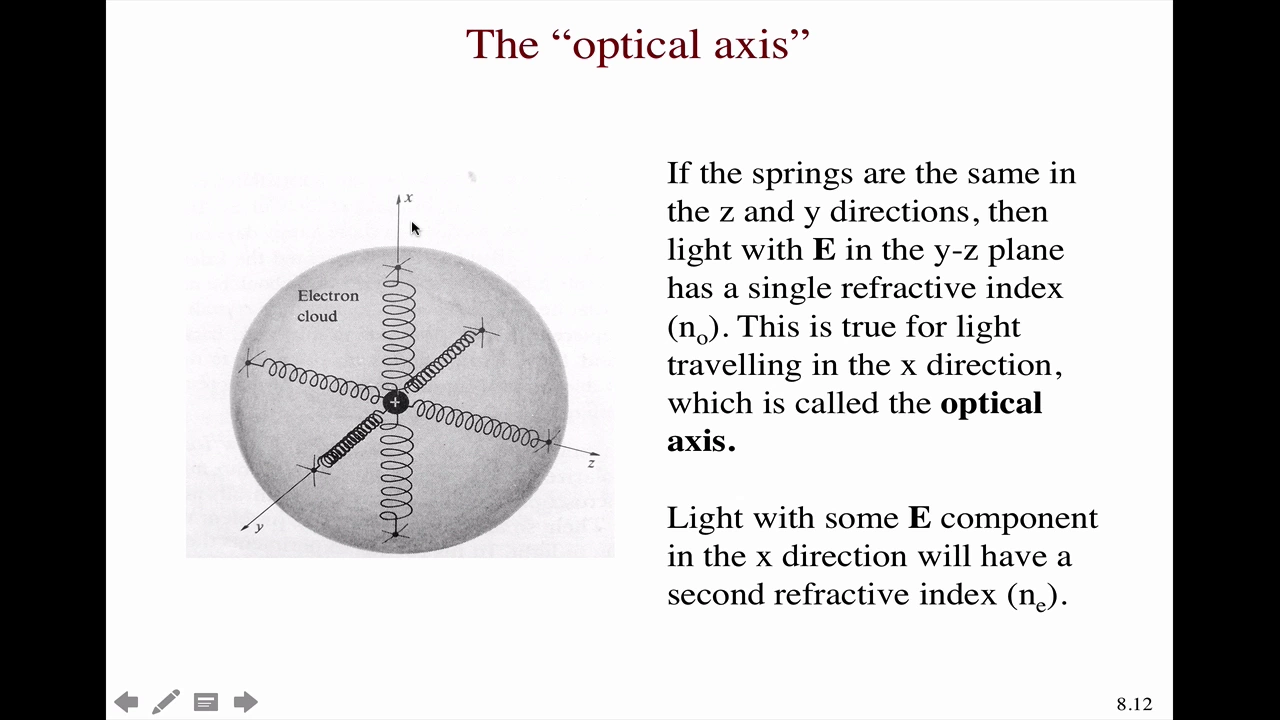
Anisotropy in molecular structures, specifically how rod-like (calamitic) or disc-like (discotic) molecules behave differently along different spatial axes.
Fundamentals of statistical mechanics, particularly ensemble averages and how macroscopic order emerges from microscopic states.
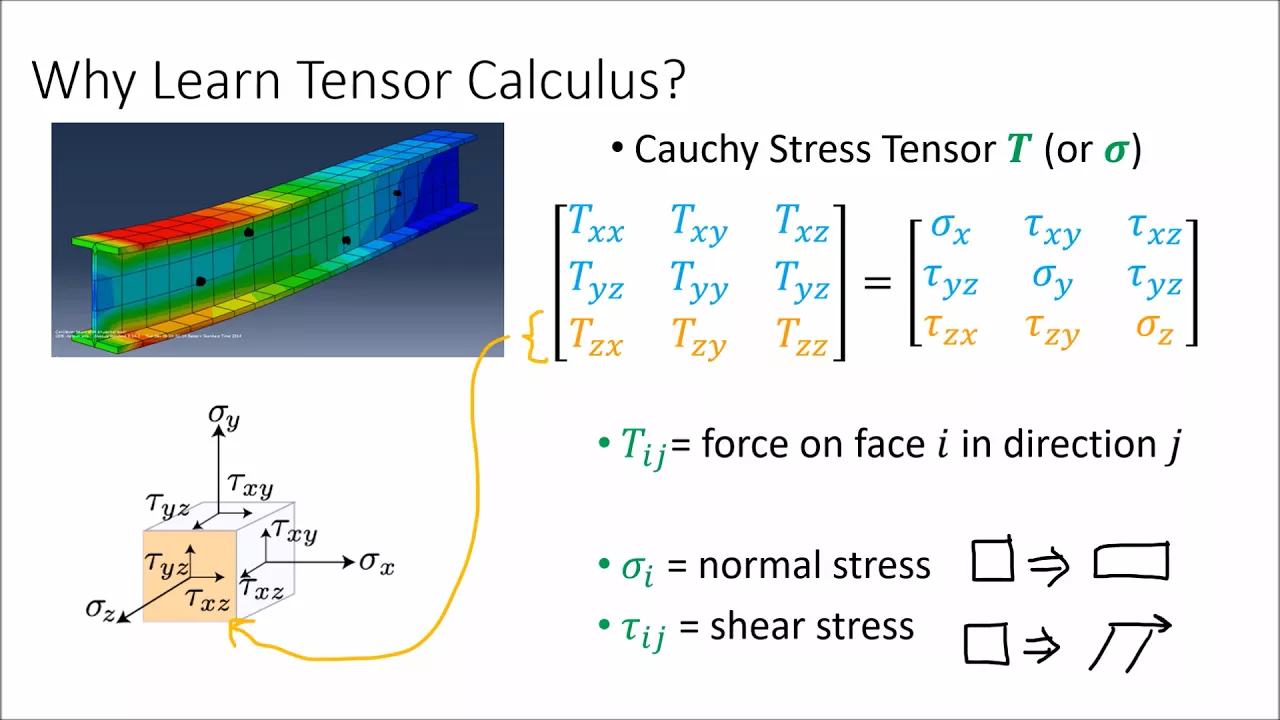
Intermediate vector calculus and tensor algebra, which are essential for understanding how orientation is mathematically represented using directors and second-rank tensors.
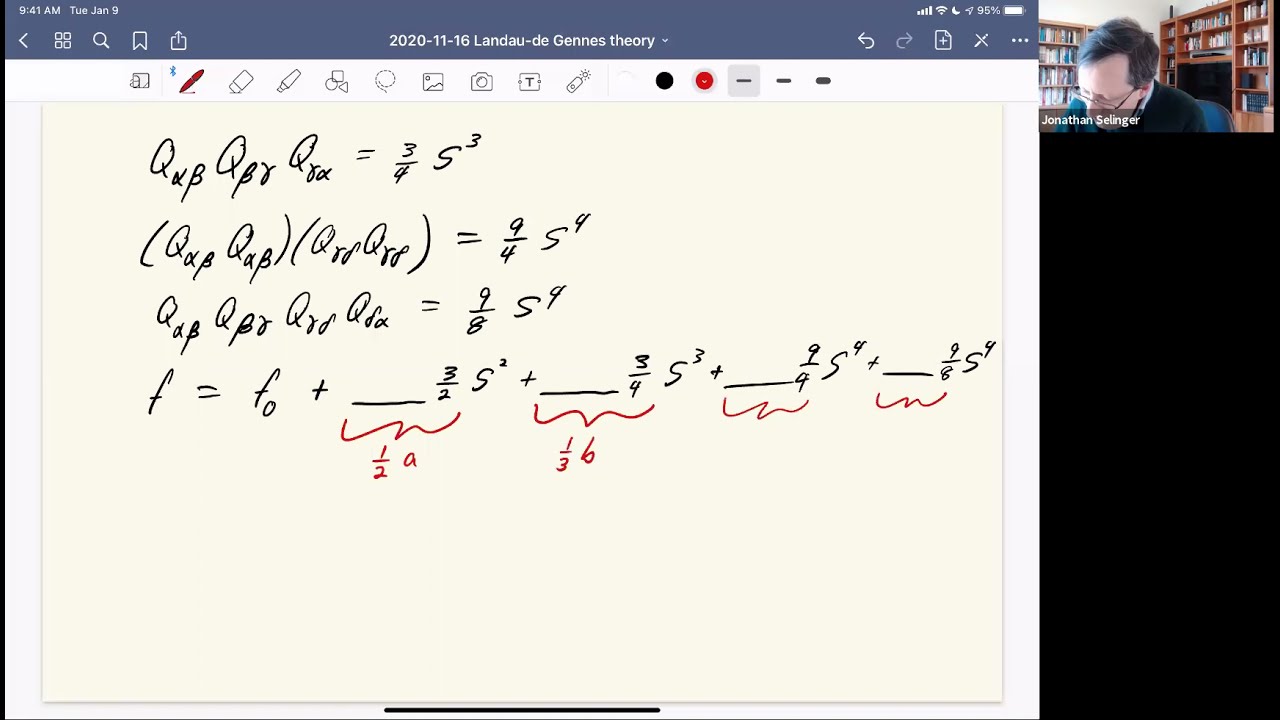
Landau-de Gennes free energy theory, which utilizes these order parameters to model phase transitions quantitatively.
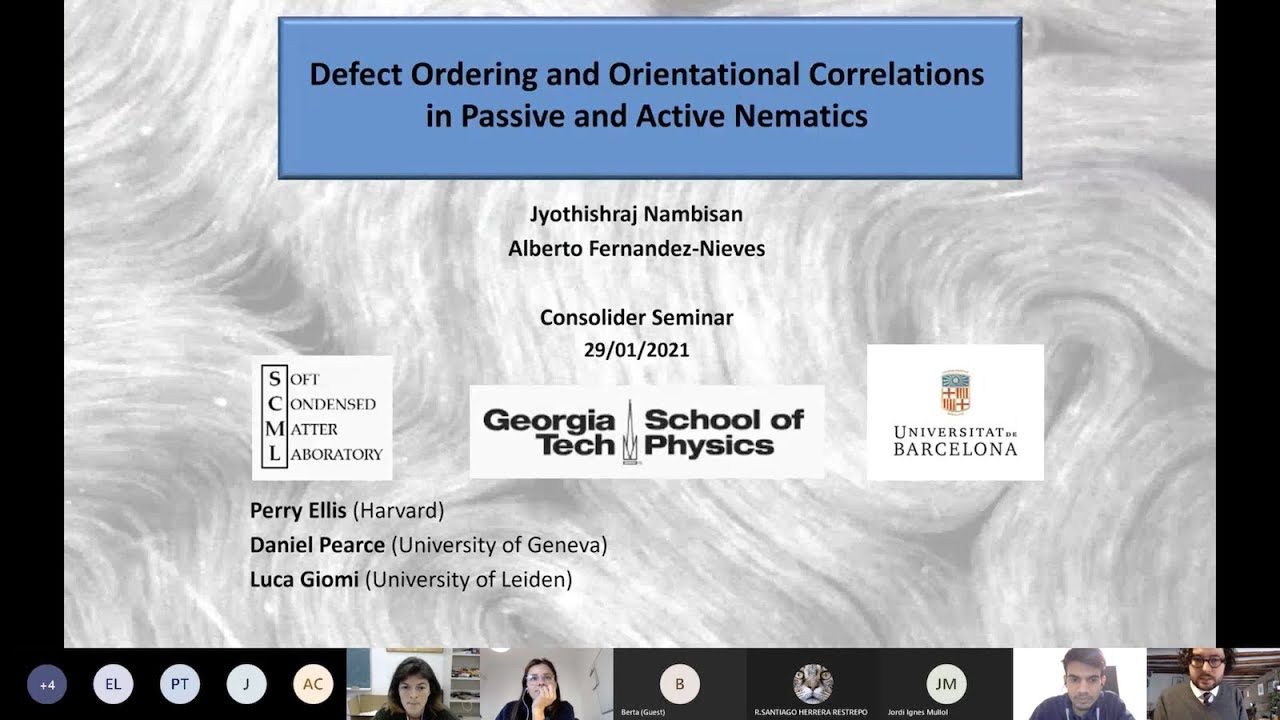
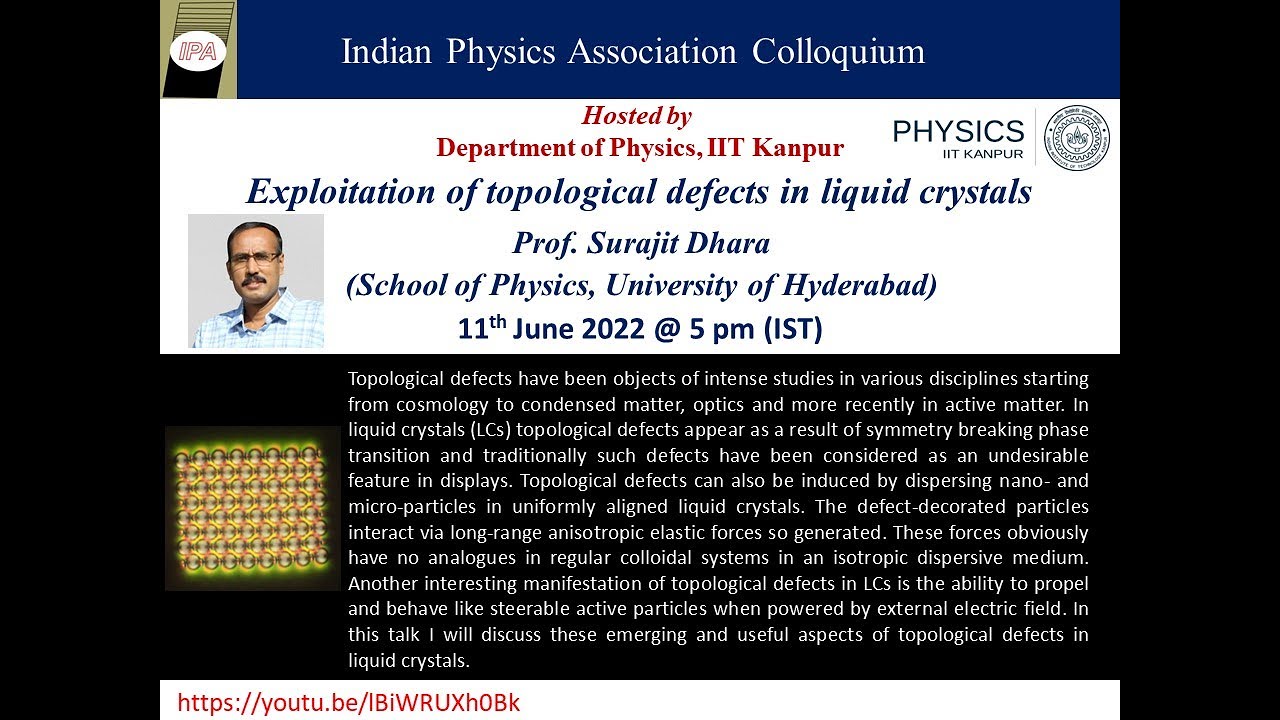
Topological defects and disclinations in liquid crystals, exploring how the order parameter field behaves around discontinuities.
Electro-optic effects and the engineering principles behind Liquid Crystal Displays (LCDs) and spatial light modulators.
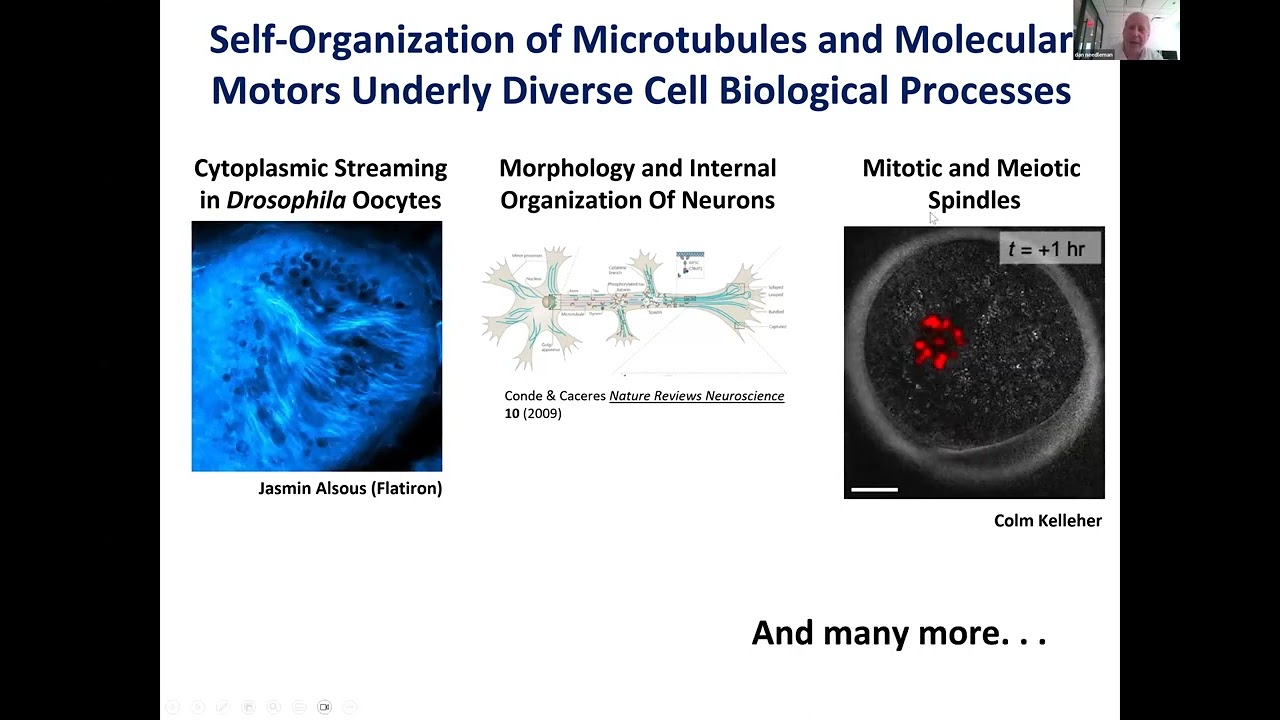
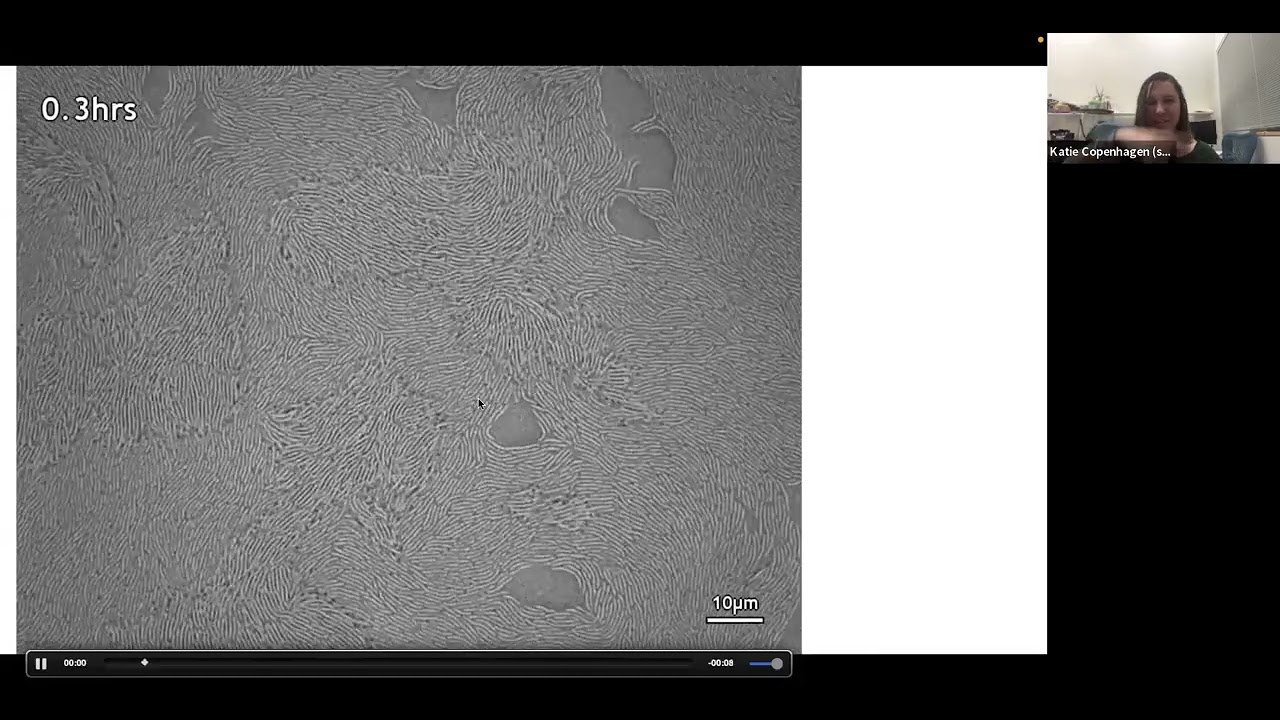
Active matter physics, studying how self-propelled biological systems (like microtubules, actin filaments, or bacteria) exhibit liquid crystalline order.
2.9K views50likes18:54Original Release: 2020-03-16
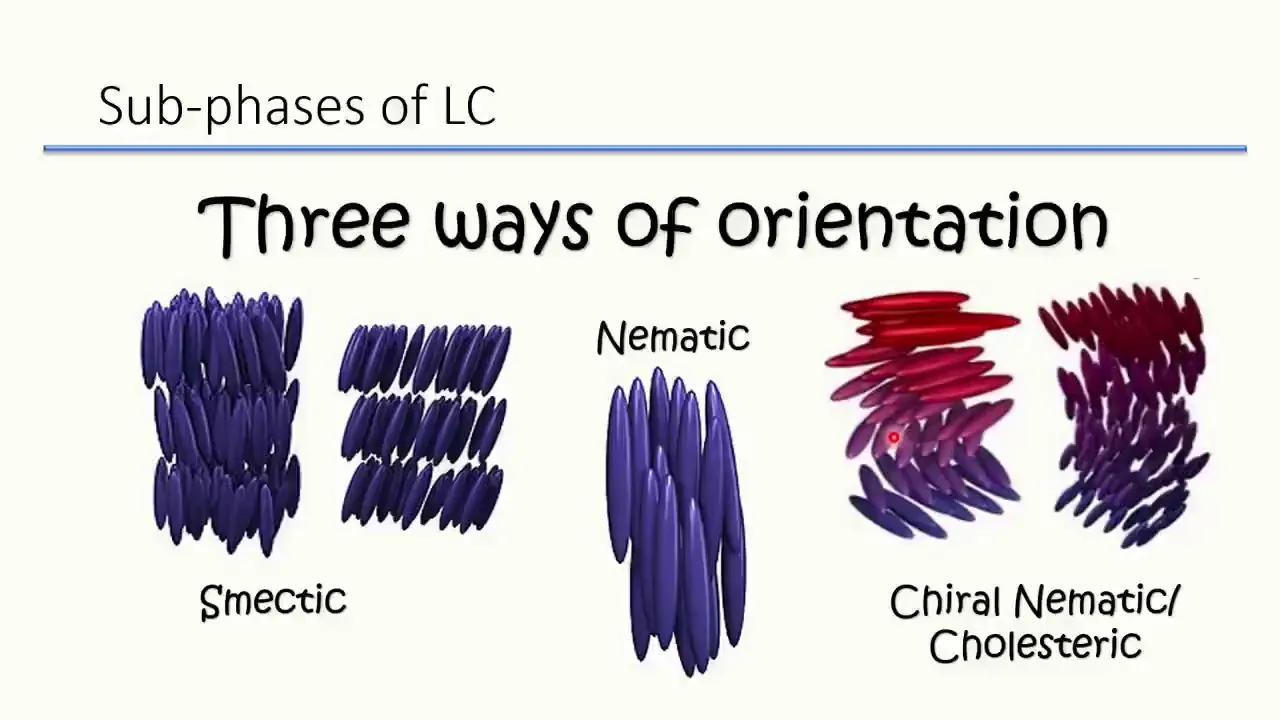
that's right okay so again the third distribution function can be used to describe liquid crystalline materials again luckily there are other descriptors that can describe these structures even even better and that can actually tell you what is the difference between the mathematic and the smectic phase etc and we will define them as the orientational order parameter as and as the translational order parameter Sigma so we will see that the orientation order parameter as is relevant for pneumatic but as soon as you start to talk about the somatic phases it becomes this translational order parameter becomes more relevant okay so we will define this orientational order parameter as in two steps so first I will describe you how this how is this define in two dimensions simply because the mat is a little bit easier and simpler and then I will show you how this is done in three dimensions okay so we are starting with the idea is that that you have individual molecules in a liquid crystalline form and again each molecule has its own direction eternal describes SPI and this particular material also has a director which is let's say in this direction and the angle between the P I and n will be the angle theta I so each molecule within the liquid crystalline material can be defined in this form so then I can define a no rotational ordered parameter as as follows first I will define it and then we will see that it has very specific characteristics that are very useful to describe this but the definition of the orientation of parameter as is two times the average over the volume of n times P I squared and these brackets indicate that I'm averaging over the volume with what what that means is that I'm averaging this value over all of the molecules within the crystal and then minus one so first we will calculate what is this n times P I it is equal to the magnitude of n times the magnitude of the P I times cosine of the angle theta and by the definition the length of these vectors is equal to one so what is really relevant is simply the orientation their magnitude is equal to one and for that reason this that this results is in cosine theta I so then I have to calculate what is the this s so it will be two times cosine squared of theta I which is average over the volume minus one and then I can calculate what is the average orientation of or what is the average value for this cosine squared theta and for that I need to know what is the distribution of the orientation of the molecules so for example if I define cosine squared theta over the volume this will be equal to the integral from 0 to PI of cosine squared theta times the probability that a certain molecule has an orientation in a certain direction and I will describe this in a more details right now that is integrated over all of the angles theta and this theta can go from 0 to PI and then I'm averaging or I'm normalizing this over the integral of 0 to PI of the probability that you will find a certain orientation that is integrated over the angle so this will be just a simple definition of cloud how I can calculate this average value of this equation here the question is what is this probability that you will find a certain orientation of a molecule in liquid crystalline materials as we mentioned last time this probability would look somehow like this so this was the probability for the liquid crystalline material how would this look like so this is the probability that you will find an orientation of a molecule in a certain direction or how would this look like we talked about this last time yes did you erase yeah no yes so that so there will be a peak that is centered around the orientation of the director for that crystal what that means is that most of the molecules have the orientation of that director some of them can deviate from that and again the ordering of how well they're oriented simply tell is described by the weight of that particular picture so if I for example have a solid material okay if I have a solid crystal and if I look at this equation what would be this probability for a crystalline material so I'm looking at this particular case here what is this probability of theta for this particular case maybe some yes it would be one discrete point what that means is that it would have very low zero for theta that is different from zero and where zero will be the direction of the of the director or the orientation of the molecules and it would be one for this angle equal to zero and if I calculate then this cosine squared theta and if I average this over over the volume the month so that this equation here would be simply equal to 1 and therefore the S or the order parameter would be 2 times 1 minus 1 is equal to 1 so what that means is that in the solid crystalline material this particular equation how we defined it has the value of 1 okay so I can calculate this same equation for a completely isotropic liquid so I'm looking at this particular case so if I'm looking at the liquid so this P or theta will be what maybe this part of the classroom yes so the question is what is the probability that you will find a certain orientation in a completely isotropic liquid what is this P theta yes it would be constant right so what that means is that the orientation of the molecules is completely uncorrelated what that means is that the probability that you will find an orientation of the molecule is equal for all of the angles so this would be a constant so if I calculate the value for us in this particular case oh gosh so this would be two times I will calculate the I can actually write this down so the cosine squared theta that is average over the volume would be one-half of PI over PI and the value would be one-half and when you calculate as it would be two times one half minus one and it would be equal to zero so what we just calculated is that if you define the order parameter in this particular way it has two very distinct values or magnitudes for the crystalline material and for the liquid so for the solid for the crystalline material S will be equal to one for crystal it will be zero for liquid and for liquid crystalline materials it can have any value in between so if you have this order parameter and if the order of this is between zero gosh is between zero and one this is liquid crystal yes so so this ordered parameter itself is defined by the direct director itself right so the director itself is is a descriptor that will tell you what is the orientation of that particular liquid crystal in that particular area of the crystal this particular ordered parameter will be used we don't see that it can tell you whether the material is liquid whether it's crystal and etc right and we will see that it can tell you whether the material is pneumatic smectic etcetera so you're just defining the level of the description so the oil that the director itself can certainly be used but it describes only a certain feature that material right it describes the orientation of the molecule in certain direction direction this tells you even more than that this tells you whether the material is completely liquid whether it's crystalline and the magnitude of this tells you what is the ordering because the pneumatic phase it can be more or less ordered right so the magnitude of that will tell you what that is and you cannot distinguish that simply from the from the director right okay so this was the case for a two dimensional crystal or liquid crystalline material so we define this in this particular way so we can do the same exercise in three dimensions the thing is a little bit more complicated because now you have different angles so this is this is the orientation of a molecule and this is the director and if I define this as a Z direction then and this will be done Y and this will be X then in principle this theta is still here but I do have an additional angle which is simply that the projection of this individual direction of molecule in the XY plane and I will call this Phi so in two-dimensional case we just cared about one particular angle in three dimensions this molecule in addition to this orientation can have any orientation like this right so this will be described by this V I Phi I so in that particular case the order parameter and getting the description or the probability that you will find a molecule in a certain angle is against centered and its position at a certain set of theta and five values that describing the the director itself right so to speak here again would be for the combination of these angles that are telling you where this director is so I can define the order parameter in this particular cases as s equal 1/2 of 3 times and times V I that is squared and then average over volume minus 1 and again in this particular case this will be equal to 1/2 of 3 times cosine squared theta which is average over the volume minus 1 and then again I have to calculate this cosine squared theta that is average over the volume and in this particular case I have to average this over all of the solid angles and then the solid angle D Omega will be equal to sine of theta D theta D Phi so just simply plug this into the equation so this will be from 0 to PI which is the theta angle 0 to 2 pi cosine squared theta times probability that you will find this molecule in this certain orientation so this is the P theta P Phi times sinus theta D theta D Phi and we are normalizing this to the probability that you will find a molecule in general so this is the integral from 0 to PI integral 0 to 2pi be it Phi D theta and D Phi okay so do you okay you seem to be are confused do is is everything okay yeah it's the one inside parentheses are outside Francis something actually let me let me bear yes it's actually I'm sorry it's inside so again the way how this is defined there is a specific reason why define like this again if you have a very specific values for the crystalline and for the liquid phase and anything in between before liquid crystalline phase again so that the reason why these numbers 3 1/2 and minus 1 are defined is to give this these values at the end so if you do calculate this then the S value for crystals in three dimensions will be 1 it will be 0 like in the two-dimensional case for liquids and it will be in between for most of the liquid crystalline materials is typically between 0.3 to 0.7 for liquid crystalline materials but again anything in between in principle can be called a liquid crystalline material it happens to be that for many of them is in this range of values there should be and you're right Thanks so again we won't go through the entire mod you're welcome to do it at home it's a relatively straightforward mod but the take-home message is that this is the result and when you calculate this order parameter and then you plot it as a for it for example function of temperature forgiven material it would have this general form so what that means is that if you have a crystalline material and it's at low temperature when you switch to the liquid crystalline form which is in this particular case nematic then again the value will be close to 1 but less than 1 and then as the temperature decreases this value goes down why does it go down I mean the liquid crystalline phase so this is not a fixed value it'll give it a 4 for all of the temperatures why does it go down at the end I will heat the liquid crystalline phase which is I'm sorry liquid phase which is highly as a chocolate right so the question is what's the meaning of the magnitude of this order parameter why does it go down so when you start at relatively low temperatures alright although you hit a liquid crystalline phase you are relatively highly ordered so the magnitude of this order parameter you'll tell you what is the level of the ordering when you increase the temperature as you mentioned it becomes less and less ordered and this magnitude goes down eventually you lose completely the information about the ordering and you hit the value of zero which is for liquids ok so that certainly can be used for pneumatic crystals for the somatic crystals again it can be used but because there is an additional level of the ordering we can define yet another descriptor that is quite useful so for example when I plot the probability that you find a molecule at a certain distance C along the layered smectic crystal then this probability would look somehow like this so the probability that you will find a molecule would be centered around the center of the mass within this layer so there is high probability that I will find a molecule here and then it drops down very quickly and then it's again layered periodic function so this periodic function then goes like this right and it's layered and in this particular case we can define yet another descriptor which is called translational order parameter and the name itself tells you that it gives you the information whether there is translational order in the pneumatic face we did not care about this because we there was no translational order but in the somatic crystals there is so again how do you quantify this so again these layers can be very well ordered but they can be some mismatches between them how do you quantify this so this particular value will be defined as Sigma as an is equal the average over the cosine 2 pi Z over a that is average over the volume of the crystal and again this can be written as an integral from minus 1/2 to 1/2 cosine to PC or a probability that you will find a molecule at a certain distance Z times DZ so you're integrating over the distance and again it's averaged over the minus 1/2 to 1/2 P Z DZ and again when you calculate this very carefully you will see that the value of this order parameter is equal to 0 for nematic crystals and it is fine and number less than 1 but is different from 0 for smectic again the reason and the way how this is defined is simply to distinguish if you do have any ordering in the liquid crystalline phase right in the previous case the S ordering factor would simply tell you what is the orientational order to quantify this potential translational order you have to define this number here so when you look more carefully than there are different types of descriptors so the smectic so the ordered parameter the smectic translational order and at the end the somatic phase order parameter can be described as a product of them and if you simply plot this it would look somehow like this and again based on the mullick on the magnitude and how this particular shape looks like you can tell something whether there is ordering or not for example for the translational ordering parameter Sigma this number goes to it starts from a certain value then it decreases because you're losing the translational order and then it drops at this particular temperature where the material goes from from what what what is these this VC what's that number here yes it goes from smack to two nematic phase that's right so basically there are different ways how you can describe different features of the liquid crystalline materials and they extensively
Up Next

69:26
Self-Propelled Hard Rods in Active Matter Physics
@ICAMI2CAMpresentations
202 views•2016-04-26

12:53
21cm Hyperfine Transition in Neutral Hydrogen: Radio Astronomy Basics
@AaronRobertParsons
12.4K views•2011-10-13

32:32
NMR Spin Physics I: Zeeman Effect, Resonance Condition & Larmor Frequency
@nptel-indianinstituteofsci8064
2.3K views•2024-01-17

27:14
Entropy and the Second Law of Thermodynamics Explained
@veritasium
27.5M views•2023-07-01
Related Study Plans & Knowledge Roadmaps
Structured learning paths in Physics
physics
Nuclear Physics (Decay, Fission & Reactors)
01Atomic Structure and the Binding Force
02Radioactive Decay and Half-Life
03Nuclear Fission Mechanics and Chain Reactions
+ 2 more learning modules
12h5 modules
Explore Roadmap
physics
Soft Matter (Polymers, Colloids & Rheology)
01Foundations of Soft Matter & Thermal Forces
02Polymer Physics and Macromolecules
03Colloids, Surfactants, and Self-Assembly
+ 2 more learning modules
38h5 modules
Explore Roadmap
physics
Analytical Mechanics: Lagrangian & Hamiltonian
01Mathematical Foundations: Calculus of Variations
02From Newtonian Mechanics to Constraint Dynamics
03The Principle of Least Action & Lagrangian Mechanics
+ 3 more learning modules
28h6 modules
Explore Roadmap
physics
General Relativity (Spacetime & Cosmology)
01Foundations of Relativity: Special Relativity
02The Geometry of Spacetime: Equivalence Principle & Curvature
03Einstein's Field Equations: The Mathematics of Gravity
+ 2 more learning modules
55h5 modules
Explore Roadmap