






![Alternating Current JEE L4 [All About Transformers] | JEE Physics (12th)| JEE 2022 | Vedantu Enthuse](https://i.ytimg.com/vi/exgJ9_aPwDI/maxresdefault.jpg)




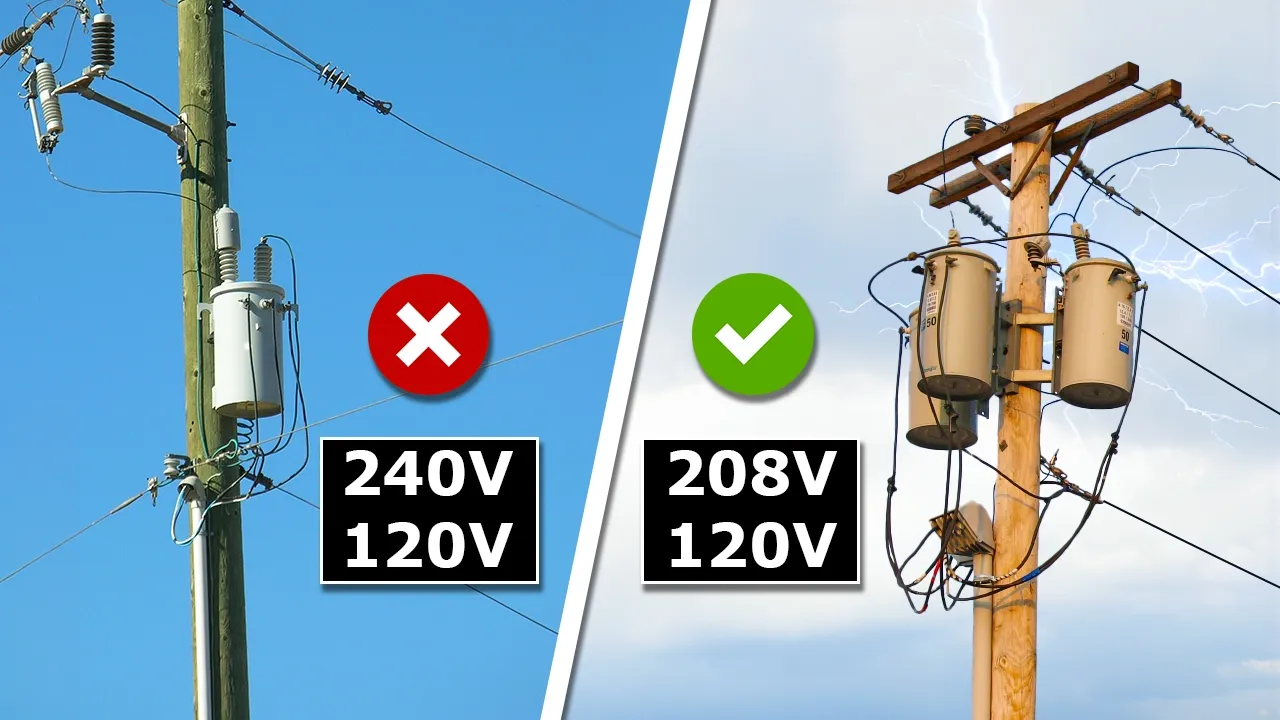

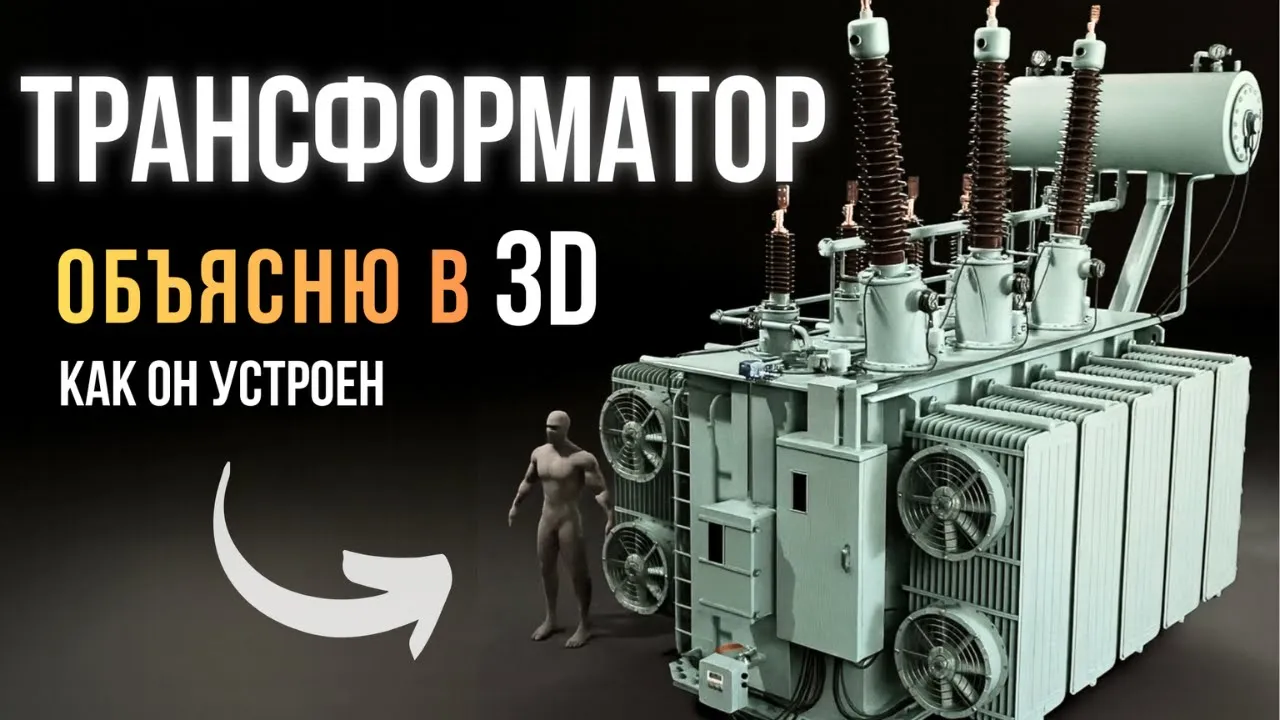
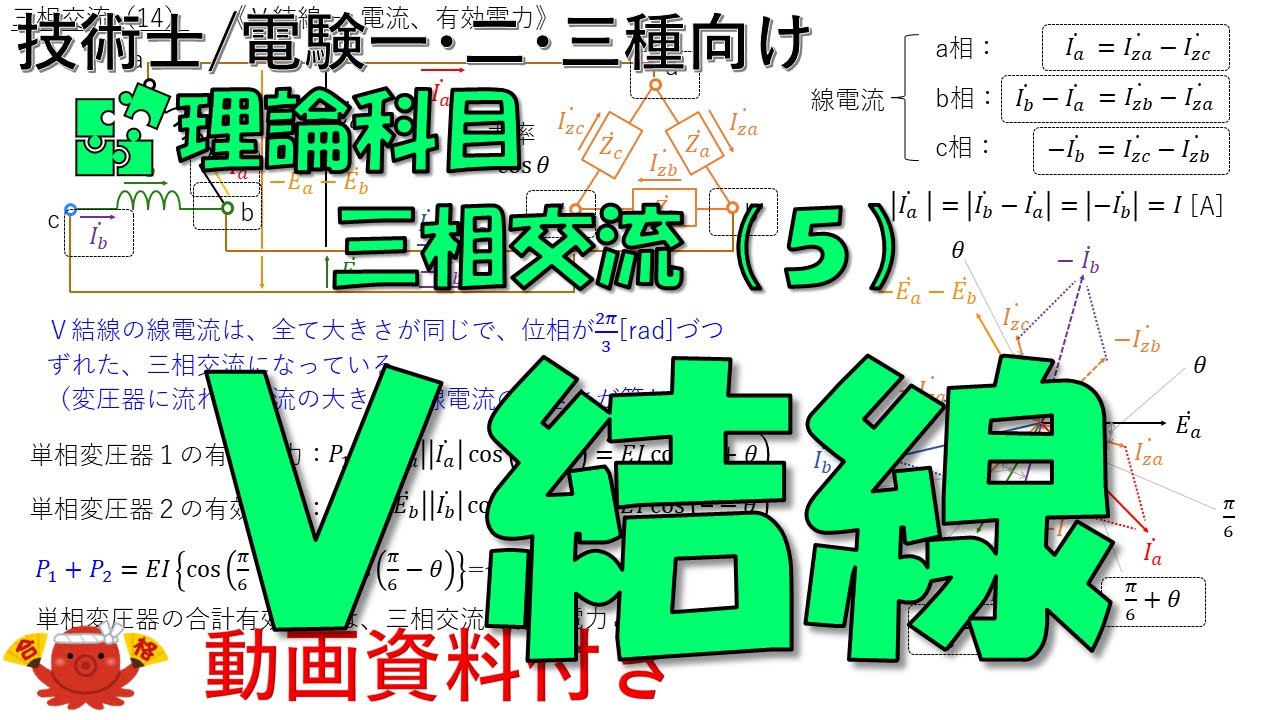
![Transformator - [RS Elektronika] #19](https://i.ytimg.com/vi_webp/qn_qco9DWSg/maxresdefault.webp)



Electric transformers, consisting of two coils of wire wrapped around an iron core, enable efficient long-distance power transmission by stepping up voltage and reducing current, thereby minimizing energy loss; this technology evolved from Michael Faraday's 1831 discovery of electromagnetic induction, through Emil Lenz's mathematical formulations, Nicholas Callan's electromagnetic repeater, Heinrich Ruhmkorff's induction coil, and finally Lucien Gaulard's 1882 AC transformer, which George Westinghouse commercialized in the War of Currents, while Nikola Tesla's later contributions to polyphase motors were significantly overstated in popular history.
The History and Physics of the AC Transformer Explained
Added:Basic principles of electromagnetism, specifically how electric currents generate magnetic fields.
The fundamental differences between Alternating Current (AC) and Direct Current (DC).
Faraday's Law of Electromagnetic Induction and the concept of magnetic flux.
The mathematical relationships governing electrical power, voltage, current, and resistance (Ohm's Law and Joule's Law).
The architecture of modern electrical grids, detailing how step-up and step-down transformers minimize energy loss during long-distance transmission.
Analysis of non-ideal transformer losses, including eddy currents, hysteresis, flux leakage, and copper loss.
Three-phase AC power systems and the configuration of three-phase transformers in industrial applications.
Modern power electronics, such as switched-mode power supplies (SMPS) and the development of solid-state transformers.
161.1K views6.7Klikes54:49Original Release: 2023-08-09
- Hello, my name is Kathy Joseph and I've done a lot of original research from 1800s.
patents, magazines and newspaper articles to tell you the shocking history of AC electric transformers.
Now, electric transformers are very simple devices.
Basically, they're just two coils of wire wrapped around iron.
However, these simple devices allow us to harness energy from far away power plants and electrify our world.
And the story of how anyone thought of using coils for this purpose and the effect of the electric transformer on the War of the Currents is truly shocking, both literally and figuratively.
I'm not kidding.
Ready?
(lively piano music) - Fasten your seat belts, it's going to be a bumpy night.
- Let's go!
♪ Electricity ♪ ♪ Electricity ♪ - So before I get to the AC electric transformer, I need to start with a shocking DC battery electric transformer, which brings me to Part 1: The DC Transformer.
I'd like to start on August 29th, 1831 where my all-time favorite scientists, Michael Faraday, hopefully titled his diary, "Experiments on the production of electricity from Magnetism".
See, Faraday knew from his good friend Andre-Marie Ampere, that if he added current to a coil wrapped around a glass bar, the joint actions of what Ampere later called the solenoid made this coil act in a way that was perfectly similar to the action of a bar magnet.
Faraday also knew from a retired soldier and shoemaker with some fabulous mutton chops named William Sturgeon that wrapping a coil around an insulated iron bar made a much stronger magnet, stronger than they could get from any bar magnet at the time.
As current could make a magnet, Faraday was quite sure that a magnet could make current, but he wasn't having very much luck with a bar magnet.
That is why Faraday decided to try to use the magnetism from an iron ring to attempt to carry electricity from one coil to the other.
What Faraday found when he first tried it was the ring didn't carry anything.
However, when he first connected or disconnected the battery to the first coil, the separate second coil would cause a magnetic needle to twitch one way or the other, which is how Faraday knew that the second coil had current induced in it.
After thinking about it for about a month, Faraday came up with a theory that this occurred, because when he first connected the battery, the first coil went from not acting like a magnet to acting like a magnet, and when he disconnected the battery, the first coil went from acting like a bar magnet to not being magnetic again.
In other words, it was the changing magnetic field that induced electricity in the second coil.
By October 1831, Faraday came up with an experiment to validate his theory.
He demonstrated that he didn't even need an electromagnet, he could just move a bar magnet into or out of a coil of wire and still induce electricity.
Faraday's work was published in November of 1831 and was an international sensation.
That is why a 27-year-old man named Emil Lenz living in St. Petersburg heard about it.
Now, before this time Lenz had little interest in electricity.
He was mostly focused on climate and oceanic studies and had just published his memoirs about traveling around the world as a naturalist in his late teens and early twenties.
Then in 1830 or so, Lenz read Georg Ohm and Ohm's Law, and he started getting intrigued with electricity, and then when he read Faraday, he was hooked.
By November 1832, Lenz wrote that he was sure there would be a flood of papers due to, "The great interest which the latest discoveries of Faraday in the field of electromagnetism must awaken in all the natural philosophers of Europe."
Lenz added that after he read about Faraday's experiments, "I first proposed to myself to find out in what manner the phenomena of magnetic action on a spiral suddenly approached or moved might be produced in the easiest and most powerful manner."
Yes, Lenz wrote in a kind of awkward way, but you can see from the statement that Lenz was interested in more than the current or how much the needle twitched, but the power of this induction, which turned out to be the same thing as the induced voltage or the electromotive force, EMF, in the wire.
Now, he could have measured that power or EMF by using his body as a volt meter where the shock was equal to the current through him, which is proportional to the induced voltage, or he could have used the spark it made.
However, how shocked you are isn't very mathematical and they couldn't really produce a spark at all with their weak bar magnets that they had at the time.
Instead, Lenz declared that the power was dependent on the square root of a trigonometric function called the versine of the angle.
I had to look up what a versine is.
It's 1 minus the cosine.
Anyway, Lenz then used the math conversion, that 1 minus the cosine equals 2 times the sine squared of the half angle, to get the power induced in the coil is dependent on the sine of the half angle of the deviated compass.
I know it's crazy, but it worked.
He then found that if he used the same length of wire, but coiled it up between 5 and 30 loops or convolutions, then the electromotive power which the magnet produces in the spiral is directly in the same proportion to the number of convolutions.
In other words, more coils, more shocking voltage.
When I was in school, I was taught that this equation is called Lenz's Law, but as I was editing the video, I learned that sometimes only the negative sign is Lenz's Law and the whole thing is called Faraday's Induction Law.
This drives me crazy, because 1, Lenz should get credit for his work and 2, Maxwell wrote what Heaviside called Faraday's Law, which is a law of induction as the Curl of E equals negative dB/dt.
And although these two laws are mathematically equivalent, it seems very confusing to use the same name for two different equations.
So I'll continue to call this one Lenz's Law, notice that Lenz's Law as well as Maxwell's equation called Faraday's Law, both have a negative sign, and that is because induction is a type of friction.
If you didn't have the negative sign, then the change in flux would induce a current that would create its own magnetic field that would work to change the flux even more.
Of course, our friend Michael Faraday wasn't done yet.
A little over a year later on January 1835, for Faraday's ninth paper on electricity and magnetism in four years, logically, if not poetically titled "The Ninth Experimental Researches in Electricity", Faraday noted that a friend had found that if you wrapped a coil around an electromagnet instead of around the other end of an iron ring, a shock was felt each time the contact with the electro motor is broken.
This was better for Faraday as he had no math skills and he had also not read Lenz or Ohm.
Meanwhile, William Sturgeon the shoemaker with the fabulous facial hair who had discovered that iron makes a stronger electromagnet, nine years earlier, was getting deeply frustrated with the institute where Faraday worked.
It's started to feel to sturgeon that despite the fact that he had won an award for his electromagnet, the Royal Institute was only willing to publish work from a poor person with no background and no math skills, and that person's name was Michael Faraday.
That's possibly true.
By October 1836, Sturgeon gave up and started his own magazine where he promised that every description of new experiments or instruments in electricity or magnetism will find a place in this work.
Soon the articles came pouring in including an article from an Irish priest and scientist named Nicholas Callan.
Now, Callan had read Faraday's comments about getting shocked every time the connection to the battery was broken or connected and was inspired to build what he called, "An electromagnetic repeater, devised for rapidly breaking and renewing communication with a voltaic battery."
Callan's repeater consisted of a wheel where if a person spun it once a second, it would create 3,600 shocks a minute, which Callan was very pleased about, but that's not all.
With his repeater to give basically constant shocks, Callan could manipulate the coils to give himself better and bigger shocks.
That is how Callan found that when he took shocks from wires of different lengths coiled on the same iron bar, he always found that the strongest shock was obtained by the longest wire.
That's how Callan experimentally determined that more loops made more shocking voltage, just like Lenz did with his moving magnet and his mathematics.
Now, Callan wasn't the first to make a shocking repeater.
Heck, he wasn't even the first to publish a description of a repeater in that magazine, but he was the first, as far as I can tell, to publish a description of a machine that would create repeated higher voltages and more shock by using more loops, which makes him possibly the inventor of the step up transformer.
Anyway, these shocking devices were instantly popular for entertainment and medical devices, and soon there was a running competition to make the biggest shock or spark possible.
By 1851, a 48-year-old German mechanic living in Paris named Heinrich Ruhmkorff invented a new method of winding these coils and managed to make a device that could make sparks that were an eighth of an inch long, which was considered quite good at the time.
Soon after that, he was advised by a physicist named Hippolyte Fizeau that adding what Fizeau called a condenser or what most physicists called a capacitor to the circuit, caused significantly greater sparks and shocks.
By 1864, Ruhmkorff coils were so powerful that he won a 50,000 franc prize from the Emperor Napoleon III for the most important discovery and application of electricity.
Five years later in 1869, a German scientist named Hermann Von Helmholtz devised the mathematics of why adding the capacitor or condenser to the circuit increased the efficiency of the Ruhmkorff coil and determined that the capacitor, inductor circuit or tank circuit created pulses of alternating current, irrespective of how the Ruhmkorff coil worked.
They made big sparks and therefore they were very popular with scientists and for amateur doctors.
Edison himself sold a version of the Ruhmkorff coil called an inductorium in 1874 for $6 as a specific cure for rheumatism and as an inexhaustible fount of amusement, which I find amusing.
Speaking of Edison, four years after he made a good profit off of these shocking inductoriums.
On September 8th, 1878, Edison visited an engineer named William Wallace who's demonstrating a direct current system to illuminate streetlights called arc lamps.
According to the reporter who Edison invited to the event, "Wallace's demonstration filled up Mr. Edison's cup of joy."
At first, Edison was only interested in electrical power for workers, but within the week of the visit, Edison switched to focusing on electric lights for homes and businesses and declared that he had, "Discovered how to make electricity a cheap and predictable substitute for illuminating gas, and that with 15 or 20 of these dynamo-electric machines recently perfected by Mr. Wallace, I can light the entire lower part of New York City and it would be demonstrating this marvel within a few weeks."
Of course, it took more than a few weeks to demonstrate it and even longer to light up any part of New York City.
In fact, it took until September 4th, 1882, almost four years to the day when he visited Wallace's shop for the first electric power station in the world to be turned on.
As Edison was initially only interested in motors, which at the time only worked with DC or direct current, Edison felt no need to use the inferior AC generators for his incandescent lights, and at the time there wasn't.
However, on September 13th, 1882, just nine days after Edison's electric power station was turned on, a Frenchman named Lucien Gaulard and his financial backer, John Gibbs filed for a patent for something they called a secondary generator.
Within four years, Gaulard's idea had inspired the creation of a $1 million AC electric lighting business and soon after that caused Edison to lose his mind, which brings me to Part 2: Electric Transformers for AC Transmission.
Now I'm gonna go back to, you guessed it, Michael Faraday.
Back in January 1835 for his ninth paper when Faraday mentioned how the transformer can shock you, the purpose of the paper was to study what he said was, "The influence by induction of an electric current on itself."
Faraday's conclusion was clear.
"There can be no doubt that the current in one part of a wire can act by induction upon other parts of the same wire."
Faraday even determined that if he induced current in a very long wire, it would remain cold but give a bright spark on breaking contact.
Whereas if he induce current in a wire 12" long, it would become very hot from the greater quantity of electricity passing through it and yet the spark on breaking contact was scarcely visible.
Now the thing about Faraday is he was beyond brilliant, but he couldn't do any mathematics.
That is why beginning in 1855 a young Scottish scientist named James Clerk Maxwell decided to add mathematics to Faraday's ideas, including Faraday's theory that maybe light was a vibration of electric and/or magnetic lines of force, which is how Maxwell ended up with with Maxwell's equations.
I'm not exaggerating how influenced and inspired Maxwell was by Faraday.
For example, in the introduction to Maxwell's 1873 Electrodynamics book he wrote, "If anything I've written may assist any student in understanding Faraday's modes of thought and expression, I will guard this accomplishment as one of my principle aims to communicate to others the same delight which I have found myself in reading Faraday's Researches."
In his paper, Maxwell called the Magnetic Field, the magnetic induction as that's what changes when you induce electricity in a coil of wire.
In 1873, when Maxwell wrote a book, he labeled this magnetic induction with the letter B where the letter doesn't mean anything, it was just randomly chosen, 'cause he wanted to have the letters from A to K for all his vectors.
It was also in this book where Maxwell wrote out Lenz's Law, which he wrote as words as, "When the number of lines of magnetic induction which passed through the secondary circuit in the positive direction is altered, an electromotive force acts round the circuit, which is measured by the rate of decrease of the magnetic induction through the circuit."
This statement actually explains why Lenz and Callan found that more loops made more electromotive shock.
If you increase the number of loops, you also increase the number of lines of magnetic induction which passed through the secondary coil by the same amount so you get more induced voltage.
In other words, the change in magnetic field in the loop increases when you increase the size of the loop by adding more loops.
Maxwell also translated Faraday's discoveries of self-inductance from his ninth paper into mathematical form, which can be written as a modified Ohm's Law or what I like to call an Ohm/Faraday Induction Law V minus L di/dt equals iR where di/dt is the change in current over time and L is what Maxwell called the self-induction of the coil, which depends on the physical properties of the coil.
The reason Ohm's Law is modified is because if a current is changing, then that changing current creates a change in magnetic field, which by induction, induces a back voltage which reduces the total current.
You might notice that in this equation the induced voltage is the potential difference and given the letter V, whereas in Lenz's Law, the voltage is called the EMF and given the Greek letter epsilon.
Let me explain, first for a DC battery, these two things are different.
The EMF is the potential of the battery without any current or electrical load.
A 9-volt battery has nine volts of EMF.
However, if you have current in a battery, then due to internal resistance, the actual potential difference is smaller with the equation, potential difference equals EMF minus ir where r is the internal resistance of the battery.
When it comes to induced voltage in a coil however, it gets confusing, 'cause you always have current in the coil.
In that case, engineers use the term EMF and the letter epsilon in equations to determine the induced voltage due to external magnetic fields like Lenz's Law and the term potential difference or induced voltage with the letter V in equations where you determine the relationship between the potential and the current and the wire like the Ohm/Faraday Induction Law.
Anyway, you can see from this Ohm/Faraday Induction Law that if the current changes then the current is always smaller than expected from Ohm's Law with alternating current.
The current is always changing, so you always get a current that is smaller than you expected For Ohm's Law.
Now straight wires have a self-inductance, but it tends to be very, very small, so mostly it is either ignored or sort of folded into increasing the resistance of the wire.
Coils of wire on the other hand have significantly greater values for the self-inductance L as the magnetic field from one wire affects the current in the opposing wires.
In fact, the self-inductance of a solenoid is related to the number of coils square.
That is why although the voltage increases linearly with the number of coils, even in an ideal situation with no resistance and no hysteresis in the magnets, the current decreases by the number of coils.
In real world situations, the current is even smaller than that.
That is why when you have a transformer with more coils, you get more voltage and less current.
One more comment about transformers and power and energy.
Like I said, due to self-inductance, alternating current is always less than what you would expect from Ohm's Law.
That also mean that Joule's and Lenz's Power Law P equals i squared R tells you how much power is lost to heat in the wire, not the total power of the coil.
However, if you combine these laws, you get P equals iV and that works every time.
That is why most transformers are rated for kilovolt amps, because that tells you the power of the transformer.
Now power is the derivative of energy over time, so the average energy is the power times the time.
That's why if the number of coils increases, the amount of current must decrease by that amount or more, or you'll get more energy than you began with and that would violate the first law of thermodynamics.
- Lisa, get in here.
In this house, we obey the Lords of thermodynamics!
- Now we get to 1882 and Lucien Gaulard the inventor of the AC transformer.
Gaulard did not leave a lot of clues that I could find as to what influenced him to change the Ruhmkorff induction coil into a method of AC transmission, but here's my best guess.
I don't think Gaulard read Maxwell, because most people found Maxwell's book to be impossible to read.
However, there is no doubt in my mind that Gaulard read Faraday's "Researches in Electricity".
Every electrician at the time had read Faraday's collection of his 29 papers on electricity and magnetism, especially as it contained no math.
If you wanna see how influential Faraday was with electrical engineers and electrical engineering, just take a look at a few of the terms the Faraday coined or asked the linguist friend to help him coin that electrical engineers still use today in the way Faraday intended.
Magneto electric induction, anions, anode, cathode, cations, ions, electrolyte, electrolyzed, dielectric, magnetic field, diamagnetic, paramagnetic and ferromagnetic, and I'm sure I'm missing a lot.
Anyway, Gaulard could see that the Ruhmkorff coil could produce a terrific spark and therefore according to Faraday, we produce less current and less heat in the wire.
Gaulard also realized that the Ruhmkorff coil had a lot of complicated parts, but most of the materials in it, the automatic magnetic switch and the capacitor, condenser and often other doodads were just there to make the direct current from the battery produce pulses of alternating current.
Gaulard realized that the current from an AC generator didn't need all that.
It was already constantly alternating.
All you need is two separate coils of different lengths wrapped around an iron bar.
Then if you put alternating current in one coil, a different alternating current and voltage would pop out the other coil.
Gaulard then had a vision, generate the electricity at high voltage to the ground and low current far out of town where one could be loud and make fumes or where one could build a hydroelectric dam, transmit the electricity high up in the air and isolated areas so that the dangerous electric potentials wouldn't be a problem and the low currents would cause the heat loss to be minimal then near a city or town, use the Ruhmkorff coil backwards as what he called a secondary generator to transform the electric potential down to a safe level.
The current will go up when you do this of course, but by this time it didn't have as far to go.
As he put it, his device made it "Possible to carry a large amount of electrical energy on a small conductor and to draw it off at various points under such conditions as required."
Where, "The means by which this is affected recalls the Ruhmkorff coil consisting as it does of two distinct coils and an iron core.
The first, which is traversed by an alternating current induces or generates a current in the second at every pulsation of the current.
There's no mechanical movement whatsoever, the motion being entirely molecular."
Although Gaulard said he was inspired by the two coils of a Ruhmkorff coil, his device didn't look anything like it, and that's because of something called eddy currents.
See if you have a changing magnetic field near iron, it creates current in the iron too, and this current doesn't do anything useful.
It just creates a lot of heat.
That is why the iron in a Ruhmkorff coil was not a solid iron bar, but a bunch of laminated iron cords put together, an idea that came from William Sturgeon of the fabulous sideburns.
However, Gaulard found that most of the eddy currents were down the iron, not across the iron, which is why his device looked like stacked plates.
At first, everyone ridiculed Gaulard's idea, but they started to change their tunes in September 1884 when he won 10,000 francs for demonstrating his device for transmitting electricity 25 miles away and back.
Quickly, a trio of Hungarian engineers named Zipernowski, Blathy and Deri nicknamed the ZBD group made a far more practical transformer and electrical system in parallel instead of in series as well as the name transformer.
Although even they admitted that, "Gaulard and Gibbs are undoubtedly to be credited with first having proved the practical applicability of secondary generators."
You might wonder why so few people have heard of Gaulard and the answer is tragic, truly tragic.
See, after 1884, they got a commission to light a gallery in England and an Englishman named Sebastian Ferranti was hired to run it.
By December 1885, Ferranti filed for a patent that was according Gaulard's lawyer, "Identical to Gaulard except in parallel."
When Gaulard and Gibbs sued for patent infringement, Ferranti counter-sued them to revoke their patent for not being novel as everyone knew about Ruhmkorff coils.
As the court case heated up, Gaulard had a mental breakdown and in February of 1888, less than six years after Gaulard filed for his patent, he was found on the streets declaring himself a god and demanding to see the President as, "God does not wait."
He was taken away to an asylum and as the newspaper sadly noted, the unfortunate man who's affected with lunacy and general paralysis is none other than Mr. Lucine Gaulard of secondary generator fame.
A few months later in July, Gaulard's financial backer, Willard Gibbs tried his best to defend them in court.
However, after Ferranti's star witness Sir William Thomson, aka Lord Kelvin testified that, "It was perfectly known in 1882 how to construct the coil so that the current might be of an required quantity tension in the secondary," Gaulard and Gibbs lost the case.
The editor of the "Electrical Review" then wrote an article about why Gaulard and Gibbs are certainly to have full credit for the invention of alternating transformer distribution and how we felt sorry for them that they, "Cannot hold their patent, especially after the pluck and determination they showed when everyone, ourselves included ridiculed their scheme."
Poor Gaulard died in an asylum in November of that same year and Gibbs went bankrupt trying unsuccessfully to win in court.
But Gaulard's idea was to have a lasting impact on our lives because in December 1885, just as Ferranti was filing for that patent that was identical to his, there was an American named George Westinghouse Jr.
who got his hands on Gaulard's device, which brings me to Part 3: Transformers and the War of the Currents.
George Westinghouse Jr, who was only 39, was a brilliant inventor and had formed several companies around his ideas, mostly centered around his ideas for safety devices for trains.
In fact, Westinghouse's initial interest in electricity was electrify the train signals to make them safer, but when he heard about Gaulard's system in mid-1885, he was immediately inspired towards AC for incandescent lights.
When Westinghouse finally got to see a secondary generator in person, he realized that Gaulard's device wasn't really practical for industry and according to the man who was hired to both deliver and explain Gaulard's secondary transformer, "Mr. Westinghouse applied himself to the production of a piece of apparatus that could be wound on a lathe," and, "It took Mr. Westinghouse only a few days to design an apparatus which has been the standard ever since," 'cause Westinghouse was so excited that even before he had a working AC system, he formed an incandescent light company just in case.
By March 20th, 1886, Westinghouse had perfected the AC transformer enough for Westinghouse to ask an employee named William Stanley to secretly try out AC transformers for incandescent lamps in an out of the way town where no one would hear about it if it failed.
Then as soon as Westinghouse finalized the purchase of Gaulard's patent in May 1886, he filed for an induction coil patent, which for the first time used coils wrapped around layers of iron with insulated materials in them to reduce the amount of eddy currents and was designed for simple manufacture.
By late November or early December of 1886, Westinghouse announced that, "The Gaulard and Gibbs system of electric distribution has been adopted by the Westinghouse Electric Company of Pittsburgh who proposed to put it in active operation in this country."
Gaulard came up with the idea of the AC transformer.
The ZBD group improved it, but Westinghouse was the one who patented and came up with the idea of the modern single phase AC transformer and I know it was Westinghouse and not one of his employees, because Westinghouse let his employees file for patents under their own name while working for him.
Speaking of which, four months after Westinghouse's patent, William Stanley patented his own electric transformer, which gave people the false impression that Stanley not Westinghouse modernized the transformer, especially as Westinghouse was shy and Stanley was not.
So most people believed Stanley as they were friends with him.
There's even a modern plaque honoring how, "William Stanley demonstrated the first practical system for providing electrical illumination using alternating current with transformers to adjust voltage levels of the distribution system."
That doesn't even mention Westinghouse's name, let alone his input.
We have this fake history, because William Stanley actively pushed it.
A Westinghouse employee named Panteolini, who was the person hired by Westinghouse way back in 1885 to investigate and report on the Gaulard and Gibbs alternating current system, recalled that that wasn't true and in his memory the opposition by all the electric part of the Westinghouse organization was such there was only Mr. George Westinghouse's personal will to put it through.
If you look at a photograph of a Stanley transformer used in some of the very first AC transmissions from the Ford Museum, one can see that Westinghouse's former employees remembered correctly as clearly Westinghouse's patented design, not Stanley's, it even has the same wood platform holding it up.
Anyway, Stanley's transformer wasn't practical, but it was clear from looking at it how it worked.
And by November 1886, Edison understood what Westinghouse was up to and freaked out.
He started writing in his notebook that, "Just as certain as death, Westinghouse will kill a customer within six months of installing a system of any size."
By December 1887, the price of copper went sky high and Edison went into fear and paranoia.
He had always been against war, against the death penalty, but he was so upset that he wrote that if we have to have the death penalty, "The most effective killing machines are known as alternating machines, manufactured principally in this country by Mr. George Westinghouse, Pittsburgh."
After that, Edison started publishing articles and even a book about how deadly AC was and soon there was an AC panic.
By June 1888, Westinghouse tried to smooth things over with Edison writing to him that, "I believe there has been a systematic attempt on the part of some people to do a great deal of mischief between the Edison Company and the Westinghouse Electric Company," but Edison was not convinced.
Instead, Edison started to work with a man named Harold Brown, demonstrating the deadlines of AC on animals.
Edison even ironically sent a letter to the local SPCA, Society for the Prevention of Cruelty to Animals, asking for some, "Good-sized animals," so they could publicly execute them to safeguard the lives of men engaged in electric lighting business.
It was only after this in December of 1888, the Westinghouse bought Nikola Tesla's patent for a 2-phase motor and generator, which used two sets of AC wires as well as 3-phase and 4-phase for $5,000 in cash, 200 stocks with a further unspecified amount per horsepower of motor produced.
You might think that Westinghouse vastly underpaid for Tesla's patents, but then they couldn't get the motor to work well enough for industry.
By April 1890, an Edison spy sent him a letter that, "Mr. Westinghouse has only one alternating current motor experiment, which is a failure, and Mr. Westinghouse has quarrel with Mr. Tesla misspelled Mr. Tessler, who invented the alternate current motor."
So if Tesla's motor was a failure, how did it affect our electrical world?
That brings us to Part 4: Nikola Tesla's Surprising Influence.
There's an autobiography written in 1926 by a former employee of Westinghouse's named Benjamin Lamme, which makes some truly astonishing statements about Tesla and his motor, which I think is worth looking at at some depth.
According to Lamme, Westinghouse actually gave up on having an AC motor just after this letter was written in 1890.
Lamme then claims that in early 1891 he told Westinghouse he could improve the windings and get Tesla's 2-phase motor up to snuff, but Westinghouse was burnt out on the whole issue and would let him.
Then, according to Lamme, after Tesla became famous for his Tesla coil, Westinghouse changed his mind in late 1891 and finally let Lamme try to improve it.
Lamme said he succeeded in late 1892 or early 1893 to create the first induction motor built by the Westinghouse Company, which bears any close resemblance to the modern type, but that's not all.
Lamme said that after he perfected Tesla's motor, they had a big meeting to try to figure out how they could convince people to buy 2-phase generators so that they could sell them 2-phase motors and that Lamme suggested that Westinghouse pays Tesla polyphase on everything so they can make a "Fad" out of Tesla's 2-phase generators.
Lamme also suggested that they, "Get out a standard line of polyphase generators and push them on any and every occasion," so that everybody would buy them.
Now, you probably don't believe Lamme.
I mean, this is an outrageous statement.
Lamme is saying that he, not Tesla perfected Tesla's motor for industry and that they only used Tesla's name to increase sales.
Take a moment, process, because it turns out that it was true and it wasn't a secret.
There are literally dozens of comments from contemporaries about this.
For example, when Westinghouse won the international engineering's highest honor the Edison Award in 1912, Elihu Thompson said that it was, "Well known to all that Westinghouse became one of the foremost exponents of the alternating current system of distribution by transformers in spite of considerable opposition, which was two or three years later strengthened by the acquisition of patents of Tesla in the polyphase field."
Although, and this is an important part, he added that, "It took years of skill and able engineers to render available in industry the induction motor."
Even Tesla super fans like Bernard Behrend knew about it and mentioned it, and Behrend was such a Tesla fan that he hosted Tesla's own Edison Medal Award, given in December 1916 by saying that, "Not since the appearance of Faraday's "Experimental Researches in Electricity" has a great experimental truth been voiced so simply and so clearly as this description of Mr. Tesla's great discovery of the generation and utilization of polyphase alternating currents, he left nothing to be done."
Anyway, despite this outrageous statement, Behrend not only knew and acknowledged Lamme's involvement, he thought it was wonderful and actually hosted Benjamin Lamme's award ceremony two years later for, "His work in the transformation of Nikola Tesla's great creative ideas into commercial form," but why?
Why would Thomson and Behrend say such nice things about Tesla when he had nothing to do with the development of the single-phase AC transformer and he didn't even create the first industrial AC motor?
Well, there's different answers for the different men.
First, Elihu Thomson had lived through the birth of our electrical age.
He knew, and we forgot that if you wanted to use our powerful waterways for electricity, like if you wanted to use the power of Niagara Falls to power industry in New York City over 400 miles away, as Edison originally envisioned in 1878, then you need more than a powerful DC generator, powerful DC motors and cheap electric light bulbs, because before the invention of semiconductor diodes, they didn't have a simple way to transform the electricity, so they couldn't transmit the electrical energy that far without losing too much energy to heat, and you also need more than just an AC electric transformer, because that only worked for electric lights.
What you needed for true electrical world with both lights and power was more than one phase of electricity, and Thomson knew that that idea was first patented and first promoted by Nikola Tesla.
Others perfected Tesla's idea.
Michael Dolivo Dobrowisky implemented a 3-phase transmission in motor in 1891.
Benjamin Lamme, as I said before, perfected Tesla's 2-phase motor in late 1892 or early 1893 and made Tesla's polyphase into a popular thing for the public.
Charles Proteus Steinmetz created a math trick called phasors to help the Edison-free GE install three phases throughout the world.
All of these ideas stemmed from Tesla's insistence that multi-phase would work for motors and lights at a distance.
It is hard not to look at Tesla's patents and find them beautiful.
They really showed a new way of using electricity that we continue to use to this day.
However, at the time, no one thought that Tesla had anything to do with the development of single-phase AC transformers.
Then in 1895, Westinghouse sued GE who is using 3-phase and Stanley, who is using 2-phase for using Tesla's polyphase.
That is when Westinghouse took out full page ads that stated the Tesla system was, "Especially adapted for the transmission of power over great distances."
Now, this is technically true, because with just a single-phase transformer, they could transform the electrical power, but they couldn't use it for power, they could only use it for lights, but you can see how people got confused and start to think that Tesla not only created the idea of polyphase for motors, but also came up with the idea of the transformer.
That is why Bernard Behrend, who was only 13 years old in 1888 said, "Were we to seize and to eliminate from our industrial world the results of Mr. Tesla's work, the wheels of industry would cease to turn.
Our electric cars and trains would stop, our towns would be dark, our mills would be dead and idle.
Yea, so far reaching is this work that has become the warp and woof of industry."
That line, "Our towns would be dark," means that Behrend believed that Tesla had not only invented the AC motor, he had also invented the AC transformer.
As the years passed, Tesla started to believe his own hype.
Then after Henry Ford had a giant party for the 50th anniversary of Edison patenting his first light bulb, the papers were filled with accolades for Edison without mentioning Tesla.
This infuriated the 73-year-old Tesla who wrote a letter to the editor where he said that he not Westinghouse was Edison's main rival during the War of the Currents, because he had inspired the whole AC transformer issue writing, "Edison and his associates bitterly opposed the introduction of my system, raising a clamor against the deadliness of alternating current."
This was the origin of the Edison/Tesla rivalry during the War of the Currents.
Before this, neither man had said anything about a rivalry with each other.
In fact, when a magazine tried to manufacture a rivalry in 1896, Edison wrote a private note chastising the editor as, "Tesla is of a nervous temperament and it will greatly grieve him and interfere with his work."
And Tesla said multiple times that meeting Edison was, "Extraordinary," and that, "When I saw this wonderful man and saw the great results by the virtue of his industry and application, I felt mortified that I had squandered my life."
Once Tesla had convinced himself that he and Edison were rivals, his tales got even more outlandish and by the end of his life he told his biographers some truly wild tales that have ended up being part of the myth that is told today.
For example, in the book, "Prodigal Genius", Tesla told the author that he dreamed up the idea for polyphase motors and generators while reading poetry in February of 1882, and within two months working out the, "Design of dynamos, motors, transformers, and all other devices for complete alternating current system."
Mind you with this date, he is saying he came up with the idea of polyphase transformers five months before Lucien Gaulard filed for patent for his secondary generator for a single-phase AC.
Of course, Tesla doesn't mention Gaulard's or Westinghouse or the ZBD's involvement in the development of the single-phase AC transformer.
Instead, he convinced his biographer that it was, "Tesla's alternating current power system, that freed electricity from its bondage to local isolation by a highly efficient method of using transformers, which consists of two coils of wire around an iron core."
Tesla also said that he quarreled with Edison about AC in 1884, but Edison only heard about AC transformers from the ZBD group in 1885, and he only started worrying about it in November of 1886, after Stanley published his patent for a simplistic transformer.
Tesla also said that as soon as Westinghouse heard about his system in 1888, he offered a startled Tesla $1 million cash on the spot.
Where the truth is Westinghouse paid him $5,000 in cash in two installments after negotiating.
Tesla also insisted that Westinghouse visited Tesla after the War of the Currents was over to tell Tesla that his, "Polyphase system was the greatest discovery in the field of electricity," and it was Westinghouse's, "Efforts to give it to the world," that were the reason that Westinghouse created his, "Original plans to put the country on an alternating current basis."
This can be simply denied by the fact that Westinghouse published that he was installing Gaulard's AC transformer in December of 1886 and only purchased Tesla's patent in late 1888, which how did people miss this one?
Anyway, Tesla also said that later in that conversation, Westinghouse convinced Tesla to donate his royalties to Westinghouse that we're worth $12 million and which, "Resulted in one of the greatest handicaps to scientific and industrial progress which the human race has experienced."
This was completely made up.
The truth is that in April, 1896, Westinghouse dropped his lawsuit with GE over Tesla's polyphase, instead got in a patent sharing deal where Westinghouse gave Tesla a lump sum of $216,600 in order that both companies might manufacture apparatus comforted by those patents without the payment of royalties.
This one was particularly cruel to Westinghouse's reputation, because now many people think that Westinghouse was a greedy, selfish banker who kept us from the Tesla utopia, when in fact Westinghouse was a brilliant visionary who created our first industrial AC transformer, and everyone talked about how generous and kind Westinghouse was to his employees, both the engineers and the regular workers.
In fact, he was so good to its employees that the founder of America's biggest union said, "I will say this for George Westinghouse, if all employers of men treated their employees with the same consideration he does, the American Federation of Labor would have to go out of existence."
That is why in 1900, 44-year-old Nikola Tesla, yes, Nikola Tesla said, "Had other industrial firms and manufacturers been as just and liberal as Mr. Westinghouse, I would've had many more of my inventions in use than I now have."
Despite this, these stories have been repeated verbatim in books and documentaries and videos and websites, even though I hope I've proven they're just not true.
I feel like the Tesla myth is particularly damaging.
Instead of science being a river of ideas inspired by and debated by a whole range of people.
Everything comes straight from the brain of one man "Like Minerva emerging fully armed from the head of Jupiter," as Marie Sklodoska Curie like to say.
If you read Tesla's biography, you'll read that, "Even the gods of old in the wildest imaginations of their worshipers, never undertook such gigantic tasks of worldwide dimension as those which Tesla attempted and accomplished.
On the basis of his hopes, his dreams and his accomplishments, he rated the status of the Olympian gods and the Greeks would've so enshrined him."
And it's because Nikola Tesla like Gaulard before him, told everyone he was God.
The only difference is people believed Tesla and believe him still.
This version of history denies not only the influence of Westinghouse on the AC transformer, but also the ZBD group, Gaulard, Maxwell, Helmholtz, Fizeau, Ruhmkorff, Callan, Lenz, Sturgeon, Ampere and Faraday and more.
A minimization of Faraday's influence is particularly galling to me as he was without using any mathematics.
The inspiration of not just the AC transformer and the induction coil, but also the generator, electric and magnetic fields, the electromagnetic view of light, Maxwell's equations, radio, E equals mc squared.
The discovery of the electron, x-rays, radium, the nucleus, quantum mechanics and more.
Faraday was venerated in his life and Queen Victoria wanted to knight him, but he refused all honors and lived a humble and quiet life dedicated to the pursuit of knowledge.
I happen to think he's the GOAT, greatest of all time, and I'm not alone in that sentiment.
In 1931, Ernest Rutherford, who is pretty inspiring himself said, "There is no honor too great to pay to the memory of Michael Faraday, one of the greatest discoverers of all time."
It might sound like I'm doing the same thing for Faraday that Behrend was doing for Tesla, and although I am a Faraday super-fan, I think there is a significant difference.
Unlike Behrend, I don't think Faraday's discoveries were complete and that he left nothing to be done for those who followed him.
Instead, I think Faraday's main accomplishments and Tesla's were for how much work they inspired in others, not how little.
You might've noticed that I tell a lot of stories that you probably haven't seen in any other books or websites or magazines, and that's because I don't use books and websites and magazines to make my stories.
Well, that isn't technically true.
I start with Wikipedia or maybe a really old book from the early 1900s, late 1800s to give me dates and quotes and a general idea of what people think the story was, and then I use Google Books and other sites to find the original documents and make sure they're true.
For example, I looked up Lucine Gaulard's Wikipedia page and it said that Gaulard died in an institution, the Sainte-Anne Hospital in Paris.
Sorry if I pronounce that wrong, so I searched for Gaulard and Sainte Anne in Google Books and Bob's your uncle.
I found the original death notice in French, and I do that for everything, why?
Because I'm trying to teach the physics and engineering through its history and it doesn't work if the history is fake.
If you wanna see the original sources for yourself, I tried to make it as easy as possible.
I put the script for this video on my website, www.kathylovesphysics.com, and in it I put not only the citations, but I make them links, so you just have to click on it and then you can go straight to the original book or article or patent or what have you.
No researching the web required.
Also, when you find places where you feel I've made mistakes or misrepresented things or could have expanded things more, please don't just tell me, tell other people.
Write an article, a blog, a Facebook post, Reddit post, YouTube video, whatever is your long form mode of communication, and that way other people can argue with you and we can get a dialogue started.
I tried my best to be as accurate as possible, but I'm just one person and it's silly to just rely on me and my work.
In fact, I think it's silly to rely on any one person and their work.
Why not work collectively to increase our understanding of the world?
That's how science develops.
Why can't that be how science understanding develops too?
Anyway, I have a ridiculous number of videos on all sorts of subjects, including how the Tesla myth became a ubiquitous, the evolution of 2-phase and 3-phase, and the life of Edison and Westinghouse, and two, on the life and work of one of my favorites, Charles Proteus Steinmetz, but I haven't said how on a fundamental level phasors work, why Steinmetz accidentally convinced us that Ohm's Law works for circuits with changing current when it doesn't.
So that is next time on the evolution of wireless.
If you wanna know more, my first book is out "The Lightning Tamers".
Also, big thank you to my patrons.
Thank you patrons for putting up with me, and thank you everyone for watching me.
Stay safe and curious, my friends, bye!
I have over 100 videos and they're all crazy long and detailed like this.
I'm a little crazy and let me try again.
If you want more detail in written form, my first book is out "The Lightning Tamers: True Stories of the Dreamers and Schemers Who Conquered Electricity".
And what does I call it?
"True story, harnessed electric..." See, I can't remember my subtitle.
Up Next

33:44
The Blue LED: A Decade-Long Scientific Challenge Explained
@veritasium
46.5M views•2024-02-08
73:35
Deriving Maxwell's Equations in Geometric Algebra (QED Prereqs) 11
@XylyXylyX
2.6K views•2024-09-08

32:32
NMR Spin Physics I: Zeeman Effect, Resonance Condition & Larmor Frequency
@nptel-indianinstituteofsci8064
2.3K views•2024-01-17

27:14
Entropy and the Second Law of Thermodynamics Explained
@veritasium
27.5M views•2023-07-01
Related Study Plans & Knowledge Roadmaps
Structured learning paths in Physics
physics
Medical Physics: Imaging, MRI & Radiotherapy
01Foundations of Radiation and Matter Interaction
02X-Ray Imaging and Computed Tomography (CT)
03Magnetic Resonance Imaging (MRI) Physics
+ 3 more learning modules
15h6 modules
Explore Roadmap
physics
Nuclear Physics (Decay, Fission & Reactors)
01Atomic Structure and the Binding Force
02Radioactive Decay and Half-Life
03Nuclear Fission Mechanics and Chain Reactions
+ 2 more learning modules
12h5 modules
Explore Roadmap
physics
Soft Matter (Polymers, Colloids & Rheology)
01Foundations of Soft Matter & Thermal Forces
02Polymer Physics and Macromolecules
03Colloids, Surfactants, and Self-Assembly
+ 2 more learning modules
38h5 modules
Explore Roadmap
physics
Analytical Mechanics: Lagrangian & Hamiltonian
01Mathematical Foundations: Calculus of Variations
02From Newtonian Mechanics to Constraint Dynamics
03The Principle of Least Action & Lagrangian Mechanics
+ 3 more learning modules
28h6 modules
Explore Roadmap