















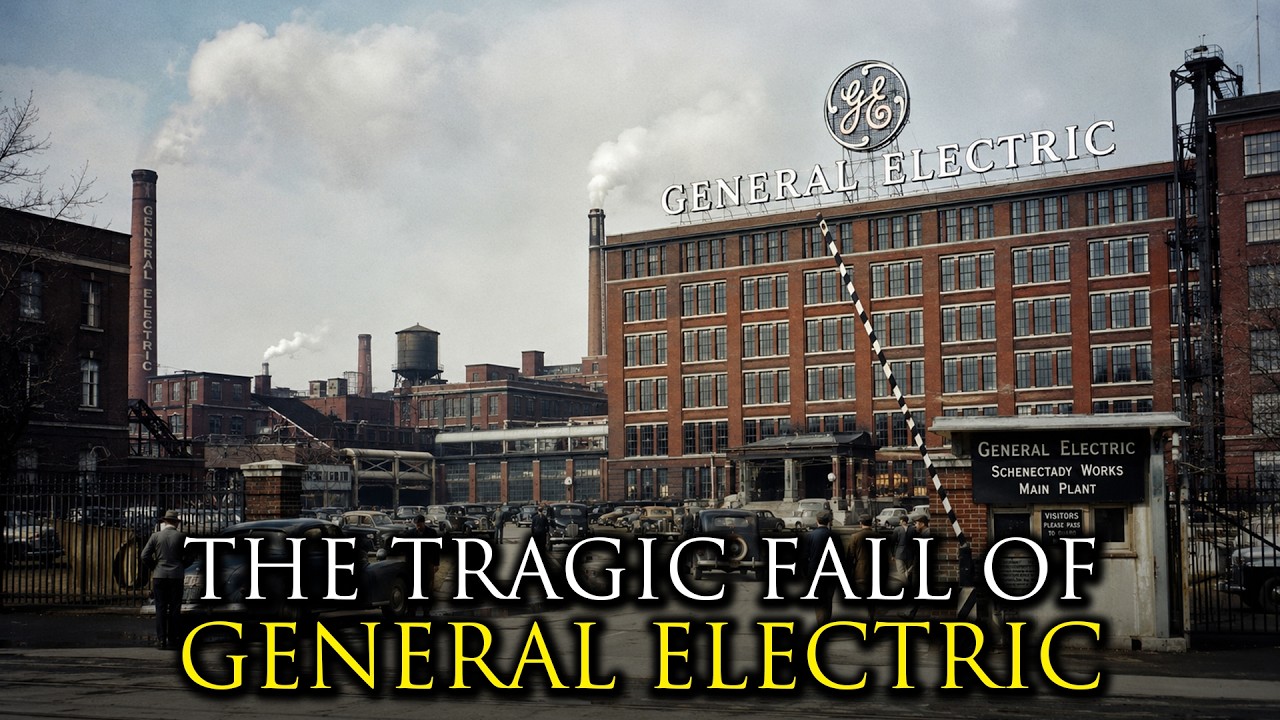

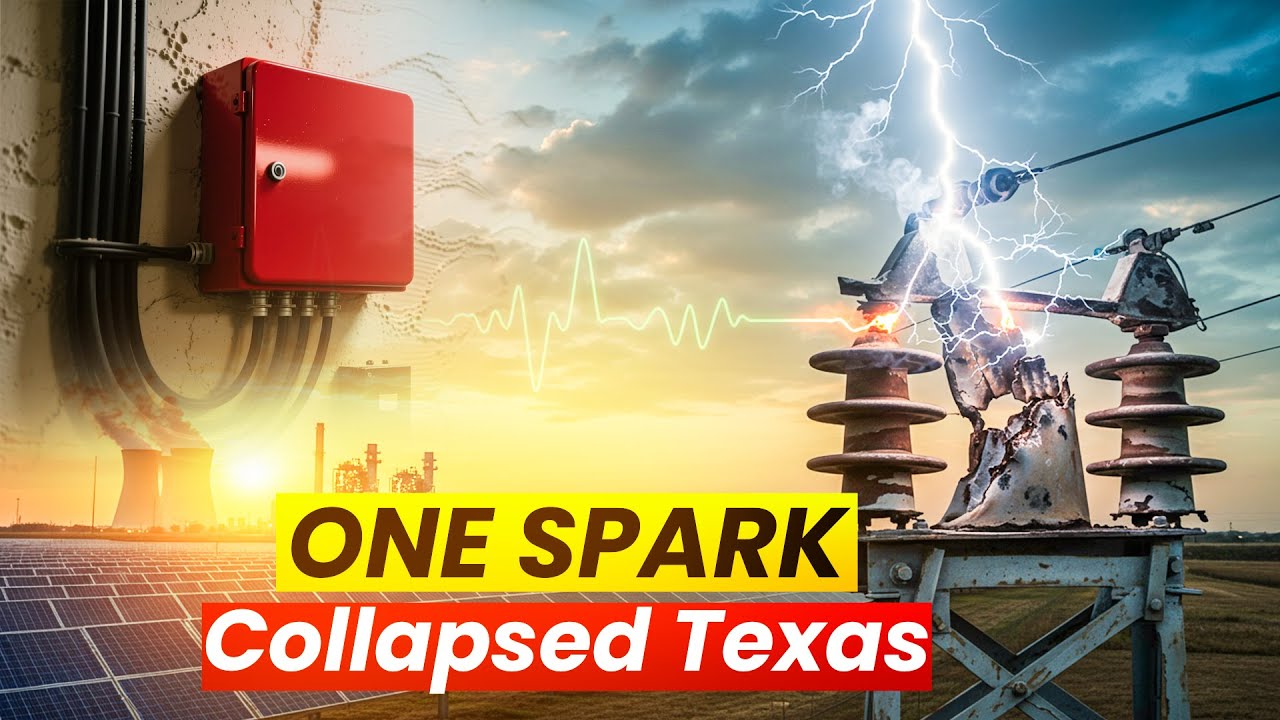

This video explores how JP Morgan partnered with Thomas Edison to develop direct current (DC) electricity, while simultaneously facing competition from Nikola Tesla's alternating current (AC) system; despite initial setbacks including Edison's controversial electric chair demonstrations and Westinghouse's aggressive competition, Morgan ultimately prevailed by acquiring Edison's company and converting it to AC, creating General Electric and establishing the AC standard that remains in use today.
The War of the Currents: Edison, Tesla & the Electrification of America
Added:Basic principles of electricity, including voltage, current (amperage), resistance, and Ohm's Law.
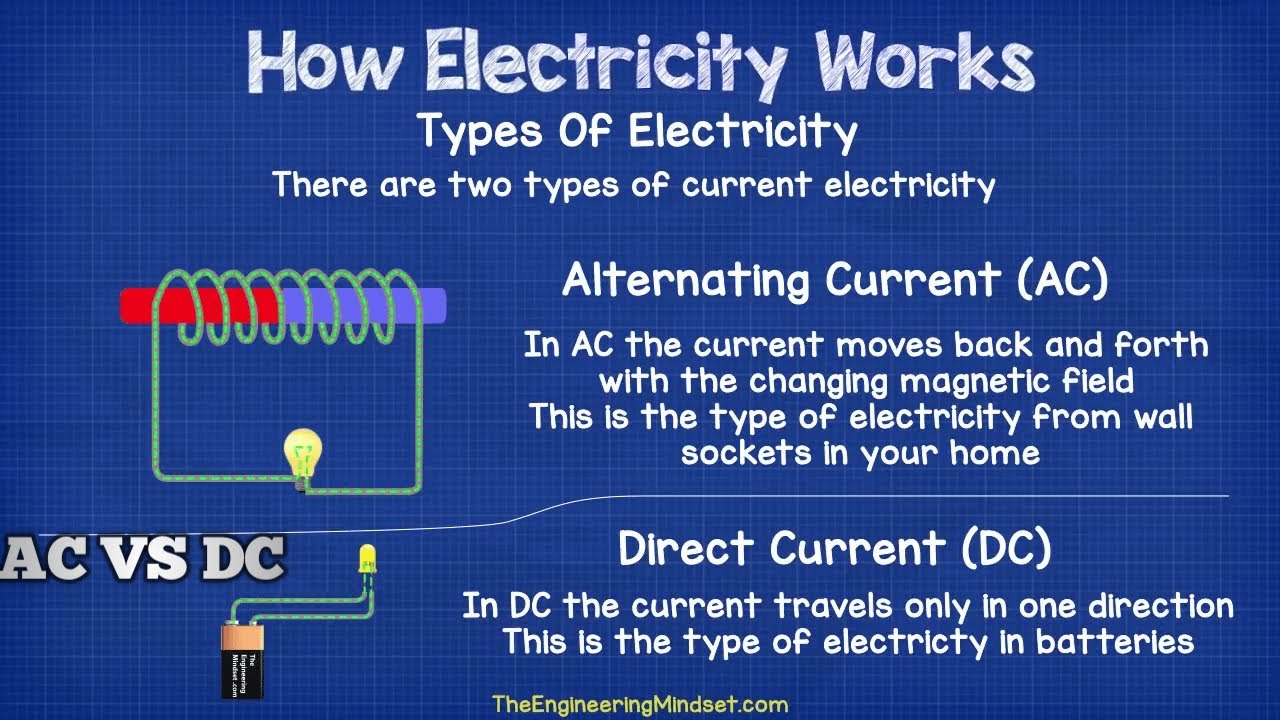
The fundamental conceptual difference between Direct Current (DC) where electrons flow in one direction, and Alternating Current (AC) where flow periodically reverses.
Faraday's Law of Electromagnetic Induction and how changing magnetic fields can generate electrical current in a conductor.
The basic mechanics of electrical power transmission and the concept of energy loss (Joule heating) over long distances.
The engineering design of the modern three-phase AC electrical grid, including transformers, substations, and local distribution.
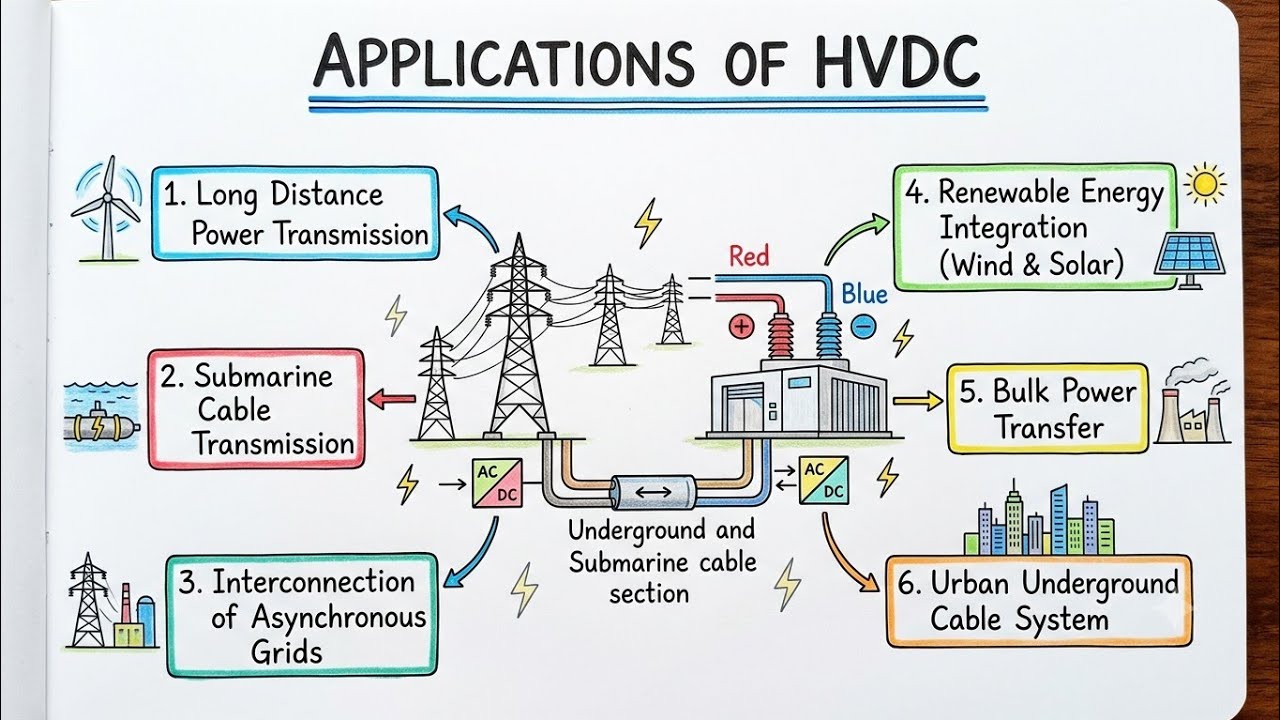
The emergence and application of High-Voltage Direct Current (HVDC) systems in modern long-distance power transmission.
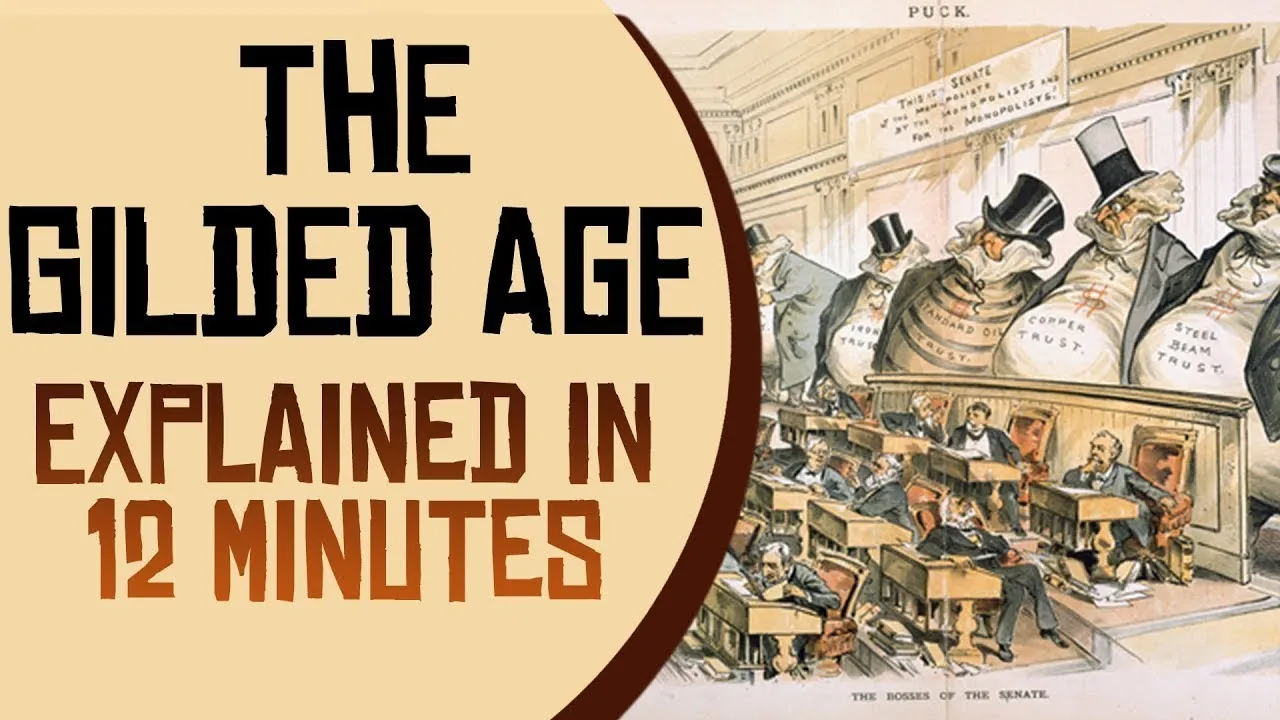
The business history of the Gilded Age, focusing on corporate consolidation, patent wars, and the rise of industrial monopolies like General Electric.
The integration challenges of modern renewable energy sources (like solar and wind) which generate DC power or variable AC and must interface with the existing grid.
2.1M views13.4Klikes1:28:33Original Release: 2022-05-17
NARRATOR: Previously on "The Men Who Built America," the country has bounced back from a long civil war and is now stronger than ever.
Cornelius Vanderbilt used brute force and intimidation to build a railroad empire that unites the country.
John D. Rockefeller rose from humble beginnings and with complete confidence and ruthlessness, created a total monopoly of the oil industry.
Then, a new product transformed the American landscape.
I am convinced that steel is the future.
NARRATOR: And thanks to Andrew Carnegie Steel, America's cities now reach the sky.
Nothing's impossible.
NARRATOR: But after his name is linked to one of the worst disasters in American history, Carnegie's empire begins to fray.
His chairman, Henry Frick, pushes his workers to the breaking point, causing them to fight back-- All those in favor of striking, raise your hands.
[cheering] NARRATOR: --barricading Carnegie Steel's flagship plant, and when Frick decides to take it back by force-- Fire!
[music playing] NARRATOR: --an attempt is made on his life.
Mr. Frick.
NARRATOR: Andrew Carnegie is forced to rethink everything.
[MUSIC - BLUE SARACENO, "SAVE MY SOUL"] (SINGING) When I got to Memphis to put my ol' baby down, he said, I can't take you to heaven.
I can't take your soul.
I can't promise forever.
Got my heart in your hands, I can't feel-- feel my soul.
[music playing] NARRATOR: With his chairman shot and his workers rebelling, Andrew Carnegie's back is against the wall.
His company and his reputation are under threat, and the empire he spent a lifetime building is on the verge of collapse.
Hoping to salvage his legacy, Carnegie cut short his trip abroad and returns to Pittsburgh.
[music playing] Henry Frick survives the attempt on his life.
Only three days after being shot and stabbed, he's back in his office at Carnegie Steel.
[grunting] Frick's brush with death only strengthens his resolve, but for his boss, Andrew Carnegie, it's a reminder that his chairman is a liability.
There came a time when Frick thought to himself, I'm running this business.
I'm the one in Pittsburgh.
I'm the one working the 12-hour days.
I'm the one taking the bullet in the head.
I deserve to be number one.
NARRATOR: Carnegie's relationship with Frick deteriorates, and he realizes he needs to make a change.
DAVID NASAW: Carnegie isn't happy.
He whispers to newspaper reporters in Pittsburgh that if he had been around, it would have been different, that there wouldn't have been this bloodshed, that he had more respect for the workers, and he undercuts Frick.
NARRATOR: But Frick refuses to accept any responsibility, outraged that Carnegie has hung him out to dry.
He even goes behind his back and attempts to orchestrate a hostile takeover.
Carnegie Steel is eroding from the inside out, but the biggest challenge to Carnegie's empire isn't coming from within.
[music playing] A new threat is emerging.
JP Morgan is a banker, who's made a fortune consolidating broken industries, buying out failing companies, and returning them to profitability, companies like Carnegie Steel.
DONALD TRUMP: You look at JP Morgan, the way he controlled the banking system.
Basically, he's one man who just literally dominated the banking industry and essentially dominated financing in the country.
NARRATOR: Morgan most recently consolidated parts of the broken railroad industry, making them profitable by eliminating unnecessary competition.
[interposing voices] I've heard enough.
This is what's going to happen.
There's going to be an end to this war.
The Morgan Bank will buy the West Shore and lease it to the central.
It'll also buy the central stake in the South Pennsylvania in exchange for a share in other railroads.
MAURY KLEIN: He excelled at taking warring parties who were destroying an industry and bringing peace on terms that was suitable to them, profitable to him, and which gave him leverage in the business itself.
Anyone who knew anything about him realized that like him or not he got things done.
NARRATOR: Due to Frick's callousness, Andrew Carnegie fears he might become Morgan's next target.
He makes a bold move.
One that's become all but inevitable.
[music playing] Andrew?
Henry.
How are you?
Fine.
Good.
The board of managers met yesterday.
I was unaware.
The board has decided that it's best if Carnegie Steel invoked the provision of their agreement with you.
You will have to surrender your interest in the company.
You will of course receive full compensation at book value.
Carnegie!
[knocking] [toilet flushing] NARRATOR: As Carnegie struggles to repair his broken empire, JP Morgan continues to target failing companies-- working alongside his legendary father.
Junius Morgan is the founder of one of the world's first modern investment banks.
A financial empire that will come to be known as the House of Morgan.
HW BRANDS: JP Morgan was born into the banking business.
His father was one of the first generation of Trans-Atlantic bankers.
And as a result, he identified finance as the industry that was going to command all other industries.
NARRATOR: From the time he could count, JP is taught that there's only one way to do business-- the Morgan way.
Investing other people's money to make a fortune for yourself.
I will return tonight.
See that these accounts balanced by then.
JENNIFER TONKOVICH: Morgan's father had a controlling presence.
Junius really didn't take his eye off Morgan for so many years.
It was very difficult for him to bear.
Go ahead, open it.
Now pick it up.
Feel the weight.
You know what that is?
That's what it feels like to hold $1 million.
Now-- learn to earn it yourself.
NARRATOR: JP Morgan's strained relationship with his father continues.
And by age 40, he's looking to create an identity of his own.
Is all this furniture really necessary?
That painting's 400 years old.
Yes, sir.
I don't see why you feel the need to pillage Europe of its art.
I bought a few paintings, father, not a whole gallery.
The Bank of England have asked me to handle the next bond issue.
So I'm assuming you'll accompany me back to London?
I have plenty of work to do here.
Just remember where our loyalties lie, Pierpont.
I'll try not to forget.
Let me know how you get on.
I'll leave you in peace to arrange your paintings.
HW BRANDS: JP Morgan understood the game.
And at some point, he realized that as successful as his father had been, he could become even more successful.
NARRATOR: Morgan's father always taught him to avoid taking big risks.
But JP Morgan is tired of doing things his father's way.
[music playing] He doesn't want to simply buy businesses.
He wants to build them from the ground up.
He's watched as John Rockefeller and Andrew Carnegie have built empires from nothing.
And he wants to be next.
But to do that, Morgan needs to find an innovation to call his own.
He sets his sights on one of the world's most famous inventors.
Thomas Edison has been a renowned innovator since the age of 19.
He first made his name by perfecting the telegraph before going on to invent the stock ticker and the phonograph.
In his lifetime, Edison will secure over 1,000 patents.
But now at 31, Edison is on the verge of his greatest innovation yet.
RICHARD PARSONS: Edison had that unique ability to sort of look at this thing, then figure out how to use it in a way that no one had thought of to use it before.
[music playing] So this is where genius resides.
Genius is the eternal patience.
Michelangelo.
NARRATOR: One invention catches Morgan's eye.
The light bulb and the electricity that powers it.
A stream of invisible energy that heat tiny filaments in the bulbs that like magic make them glow.
[music playing] NARRATOR: Electric light will revolutionize the world.
Like fire or the wheel, it will transform human existence.
JP Morgan sees the potential in the revolutionary new technology immediately.
And knows it's his chance to create his own legacy.
One that will change the world forever.
As the turn of the 20th-century approaches, America is the most rapidly growing country on Earth.
Rail, oil, and steal have driven the expansion.
But a new technology is emerging that may be even more powerful.
Electricity has the potential to completely change the world.
And JP Morgan sees it as something he can own.
RUSSELL SIMMONS: Most people are too busy looking on the outside to really check what their barometers say inside.
So as an entrepreneur, if you look inside, you'll find things that they all need that could become immensely popular if someone had the courage to promote it or to build it.
NARRATOR: For years, JP Morgan has lived in the long shadow of his legendary father.
He's desperate for a way to make his own mark.
And electricity might be it.
Morgan is considering an investment in Thomas Edison's company and his newly developed electric light bulb.
He hires Edison to install electric lighting in his home on Fifth Avenue in New York.
Sometimes you've got to take ownership.
They call it eating your own dog food.
If you aren't willing to use your own product, then how is anybody else going to trust it and have confidence.
Some people might call that being a showman.
I call it demonstrating trust in your product, which any smart business has to do.
NARRATOR: The Morgan home quickly turns into a laboratory for Thomas Edison's famous electric experiments.
Edison installs a small power plant in a shed on Morgan's property.
He then runs 4,000 feet of wiring through the walls and ceilings of the house and installs nearly 400 electric light bulbs, some of the first to ever be manufactured.
After months of trial and error, the home is ready to be displayed.
JERRY WEINTRAUB: When I believe in something and I want to sell it to somebody, I want to put it in the best light.
I don't just package it.
I creatively package it.
NARRATOR: Morgan invites many, including his father, to see the marvel of electric lighting for the first time, knowing the demonstration will put him at the forefront of a new industry.
Ladies and gentlemen.
Behold the miracle of modern science.
The gas lamp is dead.
Long live the electric light.
[music playing] [gasping] [laughs] [applause] Marvelous!
Every light you see is powered by electricity.
There is no gas, no oil, no flame, just a invisible stream of energy.
JILL JONNES: Electricity was viewed as something miraculous.
And people were amazed.
First of all, they didn't understand how it worked because you can't see electricity.
And so it was viewed as something almost magical by most people.
NARRATOR: JP Morgan's home is the first private residence in the world to be lit with electricity.
Well, father, what do you think?
You disappoint me, Pierpont.
I thought you knew better.
This is the future.
This is the stuff of carnivals and fares.
And you've been played for a fool.
NARRATOR: Despite his father's disappointment, Morgan's event is a success.
You're about to become a very busy man.
Darius Ogden Mills wants you to electrify his home.
He'll have to wait.
The Vanderbilt family is next on my list.
NARRATOR: Electricity becomes a must-have for the country's elite-- with one notable exception.
John D. Rockefeller.
[music playing] Rockefeller has created the largest fortune in America by refining oil for kerosene lamps.
He realizes electric light has the potential to replace kerosene as America's primary light source.
If the technology goes mainstream, Rockefeller will face his biggest challenge ever.
Following the success of his home lighting display, Morgan believes that electricity could be the opportunity he's been waiting for.
His chance to control a new business from its start.
And become a pioneer like Carnegie and Rockefeller.
But investing in Edison goes against everything JP Morgan's father has ever taught him.
DONNY DEUTSCH: You have to be able to take risk.
You can't have greatness in anything without putting it on the line.
Otherwise, everybody would have it.
If there was no apparent loss if there was no chance of tremendous failure or tremendous setback, you can't have the upside.
To what do I owe the pleasure, Mr. Morgan?
There's a noise in the basement.
It's upsetting my wife.
It's the generator.
I'll send someone round to soundproof it.
[music playing] JUNIUS MORGAN: You disappoint me, Pierpont.
I thought you knew better.
JP MORGAN (VOICEOVER): This is the future.
JUNIUS MORGAN: This is the stuff of carnivals and fairs.
And you've been played for a fool.
How much competition do you have, Edison?
Nothing worthy of note.
You know, if you could help me raise money to install a central power station, there would be no need to have a generator in your basement.
I could power anything within a half-mile radius.
What would it take to light all the homes in New York City?
I'd need a network of power stations.
What would the cost be?
I'll have to go through my figures.
Bring them to me Monday morning.
Is that model train set powered by electricity?
Yes.
I want one for my daughter's birthday next week.
[music playing] NARRATOR: For Morgan, the potential reward is too great.
Against his father's advice, he invests everything in electricity.
Determined to create his own legacy.
Even if it means going against everything he's ever been taught.
America is undergoing amazing changes.
Steel is building futuristic cities of unimaginable height.
And kerosene is lighting homes across the country.
But a magical new innovation is emerging.
And JP Morgan is determined to bring it today the world.
[laughs] NARRATOR: Electricity has captured the public's imagination.
But the technology is still unproven and virtually unused.
But partnered with Thomas Edison, JP Morgan is convinced he can bring electricity to the entire country.
There is no success without risk-taking.
And I think that is actually what distinguishes the captains of industry from others.
NARRATOR: Morgan gives Edison what amounts to $83 million today.
And together, they form a new business, the Edison Electric Light Company.
Funding Edison is a huge risk for Morgan and goes against everything his father taught him.
For years, Morgan was instructed to avoid investing in new and unproven industries.
But where his father sees risk, JP Morgan sees opportunity.
STEVE CASE: I think what's great about the truly transformative inventions and the entrepreneurial ideas that really end up having a significant impact is they start relatively small.
And most people don't quite understand even what you're talking about.
And they take some time before they get traction.
But, eventually, they break through.
And the impact is far broader than anybody could have imagined.
NARRATOR: Morgan and Edison get right to work transforming a building in lower Manhattan into the world's first central power station.
A high-tech wonder filled with massive generators, capable of lighting thousands of homes.
The idea was that from this central station would flow all this direct current.
But it also meant that it had to be transmitted.
MAURY KLEIN: The future of electricity wasn't just illumination it was power.
And power required transmission over long distance.
NARRATOR: Edison's workers labored day and night, digging a network of ditches over 15 miles long.
They lay over 100,000 feet of thick copper wire connecting Edison's power station to hundreds of homes and businesses throughout New York.
Edison's power grid becomes the model for how electricity is transmitted in the United States.
JILL JONNES: He had never worked so long and so hard at any invention to make it functional as he did with electricity.
NARRATOR: With Edison's power station up and running, a new era dawns.
The city lights up for the first time ever.
And soon, Edison's power grid covers half of Manhattan.
Electric street lights line avenues.
And homes throughout New York are buzzing with electricity.
JIM CRAMER: Edison had a big think approach which said that we can build giant distribution centers and make it so that electricity is cheap enough for the masses.
What a brilliant idea.
NARRATOR: JP Morgan and Thomas Edison stand to make a fortune.
But their success is bad news for the most powerful man in the country.
Until now, John Rockefeller has been virtually unchallenged while providing light to homes from coast to coast.
But as Edison's power grid expands over a greater and greater area, he realizes his kerosene empire is at risk.
Every home Edison wires with electricity is a lost customer for John Rockefeller.
The great titans of the late 1800s, like Rockefeller, they tended to be very ruthless.
They were interested in dominating the market.
And moved in every way they could to get as big a chunk of the market as they could in order to ensure their own profits.
JIM CRAMER: The industrialists of that time are naked capitalists.
They absolutely want to get rich, and wanted to build something that lasted.
Rockefeller wanted Standard Oil to be the greatest oil company in the world.
NARRATOR: Rockefeller launches a targeted PR campaign against electricity, painting the new technology as dangerous, even deadly.
He warns of mass electrocutions and out-of-control fires.
Rockefeller knows if he can frighten the public, kerosene will continue to be the dominant light source.
JERRY WEINTRAUB: I am not a good enemy.
I'm a terrible enemy.
So if you screw around with me or you hurt me, I'm going to hurt you back.
Now that doesn't mean physically, but I will, in the end, win because I'm a winner and I don't lose.
NARRATOR: But John D. Rockefeller is about to become the least of Morgan's problems.
A new competitor emerges.
Ladies and gentlemen.
Nikola Tesla.
NARRATOR: A war over the future of electricity is coming.
And JP Morgan could be the first casualty.
America's explosive change transforms the world's view of the country.
Where many once saw failure, innovation is now leading the nation into a new age.
Railroads, oil, and steel have rebuilt the country.
And electricity is creating unimagined advances.
JP Morgan's attempt to unseat John D. Rockefeller as the man lighting America has led him to partner with Thomas Edison to form one of the first electric companies.
And together, they're electrifying homes throughout New York.
The inventions, the things that literally almost come out of nowhere, require incredible vision and support from leadership.
Because those are big leaps.
If a leader doesn't take that invention and really embrace it and own it, it won't happen.
NARRATOR: Morgan has gone against his father's advice by backing Edison.
But he's maintained one of the rules he's learned.
How much competition do you have, Edison?
Nothing worthy of note.
NARRATOR: Edison is ignoring what's potentially the biggest challenge to his design for electricity.
And it comes from inside his own lab.
His apprentice, Nikola Tesla.
JILL JONNES: Nikola Tesla from a very young age was obsessed with electricity.
And when he first meets Thomas Edison, initially he worships him.
Mr. Edison, sir.
What is it?
I was wondering if you had a chance to look at my AC motor design?
Nobody's interested in your design, Tesla.
Alternating current is not safe, which is why we use direct current.
NARRATOR: Tesla has developed a new form of electricity known as alternating current or AC.
But Edison believes that higher voltage AC is more dangerous than the direct current electric standard he's pioneered.
JILL JONNES: I think Edison probably saw Tesla as a junior employee.
I mean, remember, Edison is world-famous and Tesla is just one of many very bright young men who worked for him.
And the fact that he's pushing AC is no big deal to Edison.
Because Edison sees himself as the person who's really solved this problem and made it commercial.
What's this?
My resignation.
You won't find anybody else to employ you.
I'll set up my own company.
Good luck finding an investor.
[music playing] NARRATOR: Now free to pursue his own ideas, Tesla begins looking for an investor to back his AC technology.
He finds one in inventor turned businessman George Westinghouse.
The magnetic field when it moves, it carries the motor around.
Motor powers itself.
How far do you think you can take AC?
I mean, what is its potential?
Build one power plant can supply enough electricity to eastern part of the United States.
That's amazing.
NARRATOR: Morgan and Edison may have lit up in New York, but Westinghouse and Tesla believe alternating current's greater power is more effective.
Thank you.
NARRATOR: And they set out to prove it.
Good luck, Nikola.
Thank you, Mr. Westinghouse.
ANNOUNCER: Ladies and gentlemen, please welcome the new wizard of electricity, Nikola Tesla!
My first demonstration is for those amongst you who fear that AC and high voltage will make the world unsafe.
[buzzing] NARRATOR: Tesla travels the country showing AC pulsing through him.
The successful demonstrations have orders for Westinghouse power stations pouring in.
People who understood the science of electricity realized that Tesla was a new giant and a significant rival.
NARRATOR: JP Morgan suddenly finds himself in an unfamiliar position.
I thought you didn't have any competition.
None that are worthy of note.
I have just seen the drawings and descriptions of an electrical machine lately patented by Mr. Tesla, which will revolutionize the world's electrical business.
AC has a very high voltage and is lethal.
A young boy touched a struggling wire and was killed instantly.
You, sir, you have DC running through your home.
None of your family are at risk.
Edison, I see that the electrical industry has two competing systems right now AC and DC.
This world has room for only one of them.
[music playing] NARRATOR: JP Morgan is staking everything on Thomas Edison.
But as the battle to electrify the nation heats up, the pressure Morgan puts on Edison sends him down a dark path.
[music playing] NARRATOR: America's advancement in the last three decades is staggering.
Railroads have replaced wagon trails to unite the nation.
And the country's cities stand tall on steel.
First, kerosene transformed the night.
And now electricity is about to light homes from coast to coast.
Only John D. Rockefeller isn't about to let JP Morgan and Thomas Edison put him out of business.
He's determined to keep kerosene the leader in the light game.
He begins a campaign to stop electricity before it gains traction, though he may underestimate the draw of this magical new power.
[applause] JP Morgan has more to worry about than Rockefeller.
Morgan's father always told him to avoid competition at all costs.
And now he and Thomas Edison are locked in a heated battle over what will become the dominant form of electricity.
Nikola Tesla has developed a whole new way to transmit electricity.
And his technology threatens to destroy everything Morgan and Edison have built.
The electrical industry has two competing systems right now AC and DC.
This world has room for only one of them.
NARRATOR: If Morgan loses, he risks ruining his reputation and his name.
Morgan ratchets up the pressure on Edison telling him to take out the competition in any way he can.
ALAN GREENSPAN: JP Morgan was really an extraordinary character.
He was steely-eyed, determined, very smart, and somebody who had that characteristic I will take charge.
And he did.
[music playing] NARRATOR: Feeling the pressure from Morgan, Edison sets out on a mission to prove his direct current is the safest form of electricity.
The war of the electric currents is the dark side of Thomas Edison.
The tactic that Edison took was to persuade people that alternating current was the killer current.
It is a side of Edison we don't normally see.
NARRATOR: He begins using Tesla's alternating current in a series of demonstrations, hoping to scare the public about AC's power.
Edison used all sorts of dirty tricks to try to discredit AC.
He killed animals before an audience.
NARRATOR: But nothing seems to be slowing the enthusiasm for Tesla's stronger current.
Growing ever more desperate to please Morgan, Edison is relieved when a letter arrives that could be his opportunity.
A New York State Prison has been looking to replace hanging as a means of execution.
Many have come to believe that the medieval method is cruel and inhumane.
Electricity could provide a useful alternative.
The design Edison envisions is simple yet groundbreaking.
[music playing] JILL JONNES: Edison became very happy to help develop an electric chair as long as that electric chair used Westinghouse alternating current generators.
NARRATOR: Edison devotes his lab's attention to the development of the world's first electric chair.
It's the perfect opportunity to prove that Tesla's AC is dangerous-- even deadly.
The prison invites the press to witness the most sensational demonstration imaginable-- the world's first human execution by electricity.
[chains rattling] Is it ready?
Yes.
Goodbye, William.
He's dead.
He's bleeding.
He's breathing.
I'm going to be sick.
JILL JONNES: They then essentially roasted this man alive.
It was a botched execution.
NARRATOR: The gruesome act backfires on Edison.
The public doesn't connect AC to Tesla.
All they remember is that electricity was used to kill a man and that Edison was behind it.
The damage to his reputation is massive.
And JP Morgan endures an even worse fate.
Now I have to read in the newspaper my son is funding Edison, a latter-day Frankenstein.
He didn't pull the switch.
Let me make a few points clear to you.
I do not want the House of Morgan associated with electricity or any of the Devil's works.
I've spent my entire life making a name.
And I'm not about to let you destroy it.
I have a chance to build!
Pierpont!
It's over.
I set sail for Monaco tomorrow.
While I'm away, see to it that you sell whatever stakes you have in these Edison companies.
NARRATOR: Morgan set out to become a legendary innovator in his own right.
But now his dream has come crashing down.
Edison has played directly into John Rockefeller's hands, demonstrating electricity to be dangerous and deadly.
Morgan knows that pulling his funds from Edison would completely destroy the electric industry and leave Rockefeller at the top of the light game.
But despite his father's objections, Morgan is still convinced that electricity is the future.
And soon news of a new project reignites his ambitions.
A project that will remove the stain of Edison's experiments and restore the public's trust in the electric industry.
Electricity is about to go national.
[music playing] A company at Niagara Falls has begun work on one of the most ambitious construction projects ever undertaken.
The world's largest power plant is being built.
And 1,300 men are digging a massive tunnel 2 and 1/2 miles into bedrock.
Once complete, the raw power of the falls will generate a mind-boggling 120,000 horsepower-- more than all the electricity being produced throughout the country combined.
MAURY KLEIN: Niagara is a watershed in the history of the electric industry.
It shows that it is not only feasible but practical to transmit electricity over distance.
NARRATOR: The Niagara power station will be capable of generating enough electricity to light the entire Northeast.
JERRY WEINTRAUB: To take such a incredibly famous place that's got this extraordinary water power and harness it to electricity was going to make the case to the world that this was something you could do everywhere.
NARRATOR: But the Niagara power company hasn't yet decided who will power the generators.
Morgan and Edison's DC or Tesla's AC.
The world's biggest power station would be a huge game-changer.
JP Morgan knows it's his opportunity to create the empire he's always wanted.
But he also knows that getting the contract to power Niagara would require a massive investment, one his father would never allow.
Morgan agonizes over his next move until tragedy strikes.
What's that?
NARRATOR: His father has been in a horrible carriage crash.
Junius Morgan dies as a result of his injuries.
JP is now left in charge of the House of Morgan.
[music playing] The empire includes a vast portfolio of businesses invested in railroads, real estate, shipping, manufacturing, and electricity.
With his father gone, nothing is holding Morgan back.
JENNIFER TONKOVICH: When Junius died, it was truly a devastating moment for Morgan.
But also ended up being a bit of a relief.
Because after his father's death, he really came into his own.
The freedom really helped him realize his full potential in some ways.
NARRATOR: Morgan's net worth more than quadruples and, instantly, he has hundreds of millions of dollars.
Money he plans on using to win the Niagara contract.
[music playing] The best time to buy is when there's blood on the streets.
I'm not sure I follow you.
It's advice Lord Rothschild gave my father.
It's advice he never took.
I'm increasing my investment to $4 million.
I'll give you an extra $1 million cash to pursue other projects.
That shouldn't be a problem.
Good.
Niagara Falls Power Company is inviting bids for the new Niagara Falls central power station.
They haven't yet decided if they want to go with AC or DC.
I want you to prepare a bit Edison.
This is now a race.
You better win.
[music playing] NARRATOR: 30 years of unparalleled growth have made America one of the world's most powerful countries.
Coast-to-coast travel, artificial light, and skyscrapers now dot the landscape.
Men like Vanderbilt, Carnegie, and Rockefeller have made fortunes building modern America.
And now JP Morgan is hoping to join them by bringing a revolutionary new technology to the masses.
But Morgan's attempt to build the world's leading electric company is being challenged.
While he's backing Thomas Edison's direct current, George Westinghouse and Nikola Tesla are developing a different standard-- alternating current.
As the competition heats up, the opportunity to operate the Niagara Falls Power Station reignites Morgan's ambitions.
He knows that whoever controls Niagara Falls will control the future of electricity.
RICHARD PARSONS: Timing is everything in business.
Everybody wants to be the first mover.
Everybody wants to be on the bleeding edge or the cutting edge.
You have to be on the pulse of the moment.
Timing in business just like timing in life is perhaps as important as any other single factor.
[music playing] NARRATOR: Construction of the Niagara power station is continuing at a blistering pace.
Workmen are almost finished with a 2 and 1/2 mile-long tunnel.
And it won't be long until water shoots through it powering turbines the size of houses.
Those turbines will generate enough electricity to light up the entire Northeast.
Morgan knows that to win the contract, he'll need to eliminate the competition.
Tesla and Westinghouse are making headway with alternating current.
But after the company's rapid expansion, Westinghouse is drowning in debt and his business is struggling to stay afloat.
JP Morgan sees an opportunity to take advantage of his vulnerability.
[shouting] JP Morgan was a huge power on the stock market when it was not at all regulated.
In the case of George Westinghouse, his company on a number of occasions was assaulted on the stock market by Morgan entities.
NARRATOR: Morgan capitalizes on a downturn in the economy, launching a smear campaign designed to trigger a sell-off of Westinghouse stock.
Mr. Morgan!
What is to be done about the panic?
There's no need to panic.
Mr. Morgan are we on the verge of a depression?
Not if we act wisely.
How many more companies will go bust, Mr. Morgan?
The only companies at risk are those fast-expanding, capital-intensive, debt-ridden ventures.
Thank you, gentlemen.
Mr. Morgan!
NARRATOR: Morgan's remarks are subtle, but his influence on Wall Street is so great their effect is devastating.
Over the next few weeks, investors sell off Westinghouse stock sending the company into a tailspin.
Within days, it's almost bankrupt.
You get successful at something and all of a sudden you make a lot of money and the world says you're successful.
There's no margin of failure anymore.
There's only degrees of success.
NARRATOR: With Westinghouse driven into debt, Morgan is convinced there's no longer any competition to win the contract for Niagara.
Unable to raise additional funds, Westinghouse is ready to admit defeat.
Tesla, the reason I'm here is to tell you that my company is on the verge of bankruptcy.
You have my AC motor design.
You can raise more money.
It's the opposite.
Nobody will lend me money because of the royalty deal on your patent.
Benefits that will come to civilization from my polyphase system will mean more to me than money involved.
Mr. Westinghouse, you will save your company to develop my invention.
This is my contract and I will tear it to pieces and you will no longer have any troubles from my royalties.
[music playing] Thank you, Nikola.
NARRATOR: Tesla gives Westinghouse control of AC and foregoes all claim to his patents.
Investments soon pour in and Westinghouse Electric is viable again.
Westinghouse knows that to beat Morgan he needs a bold move.
And soon he has the perfect opportunity.
Chicago is about to host one of the globe's landmark events, the World's Fair.
Organizers want it to be the most stunning display of technology ever seen.
They decide to light the entire event using electricity.
The managers and creators of the Chicago World's Fair of 1893 want to have an entirely electric city.
And they want to be cutting edge.
They invite companies to bid on this contract to electrify the fair.
NARRATOR: Morgan assumes that he and Edison are a lock to light the fair.
But Westinghouse has other plans.
He drastically underbids the project, claiming he can light the fair for less than a quarter of what Morgan and Edison have bid.
The bold move secures the contract.
And Westinghouse and Tesla immediately get to work wiring the fairgrounds.
And finally, on opening night, with the eyes of the world on Chicago, they flip the switch.
And instantly over 200,000 light bulbs come to life.
[music playing] JILL JONNES: 27 million people came to this fair and saw an electrified world and that had a huge, huge impact in spreading this technology.
People realized that there was a whole electrical future coming.
NARRATOR: It's a display unlike any the world has ever seen.
And it's all powered using George Westinghouse and Nikola Tesla's alternating current electricity.
The fair forever demonstrates the safety and viability of AC.
Westinghouse and Tesla's incredible display has another consequence.
A decision is made on who will power the Niagara Falls station.
Two letters go out-- but only one man can win the contract.
America is now the most technologically advanced nation on the planet.
Trains, oil, and steel have built the country.
And the newest sensation is electric light.
Showcased at the Chicago World's Fair.
Electricity is about to go national.
But a battle has broken out pitting JP Morgan and Thomas Edison against George Westinghouse and Nikola Tesla, in a fight for control of the world's largest power plant at Niagara Falls.
STEVE CASE: If you're really trying to not just create a company, but create a new industry and change the world in a fundamental way, then you really need to believe in the idea and stick with it through thick and thin because it's going to be a tough road.
NARRATOR: JP Morgan has invested millions in the electric industry hoping to replace John D. Rockefeller as the man lighting America.
And the Niagara power plant could give him control over the future of electricity.
JILL JONNES: Whoever wins this contract is going to be the preeminent electrical company-- not just in America, but the world.
[music playing] NARRATOR: The plant at Niagara Falls reaches a decision and two letters go out.
But there can only be one winner.
In a shocking twist, George Westinghouse wins the contract for the power station.
JACK WELCH: You always want to be in the winning locker room.
You don't want to be in the loser's locker room with a towel around your head.
NARRATOR: JP Morgan has been badly defeated.
His dream of building an industry from the ground up is over.
His attempt to make his own name, ruined.
JUNIUS MORGAN: This is the stuff of carnivals and fairs.
And you've been played for a fool.
NARRATOR: He realizes his father may have been right all along.
But never willing to admit defeat, JP Morgan immediately sees a way to turn failure into opportunity.
DONALD TRUMP: JP Morgan made a mistake backing Thomas Edison.
I mean, they all make mistakes.
And I always say that you have to guard against the downside.
Because it can be the greatest deal you've ever seen.
And there is a chance that deal won't work out.
Don't let a deal like that take you down if it doesn't work.
NARRATOR: Morgan is determined to gain control of the electric industry.
And he's going to do it the Morgan way.
JILL JONNES: If you were on his bad side or he coveted your company or the technology that your company had, you did not want to be in that position.
NARRATOR: Morgan returns to the lessons of his father.
He's going to intimidate the competition into submission.
He starts his attack by going after Westinghouse and everything he owns, including Tesla's AC electricity patents.
Congratulations, Westinghouse.
I hear you won the Niagara Falls contract.
I'll be taking you to court for patent infringement over AC designs.
Why would you start a legal case that will cost millions, a case that you will lose?
Because you don't have the resources to fight such a case.
And you'll go under.
What is it you want?
You know the answer to that.
My first demonstration is for those amongst you who fear.
NARRATOR: Westinghouse has no choice but to give in to Morgan's demands, knowing that the cost of a lawsuit will put him out of business.
He's forced to sign over the patents for Tesla's AC electricity.
But Morgan doesn't stop with Westinghouse.
With the loss of the Niagara contract, the company Morgan started with Thomas Edison is broken.
And Edison's DC electricity looks like a failure.
MAURY KLEIN: Thomas Edison is probably the most brilliant inventor America ever had.
And like many brilliant men, he was capable of spectacularly wrong choices.
NARRATOR: As far as Morgan's concerned, there's only one way to fix Edison Electric.
He's going to streamline the company.
And his first step is to eliminate Thomas Edison.
Morgan buys up additional shares of Edison Electric stock until he has complete control of the company.
[music playing] It's a device that shows moving pictures.
We'll put the Niagara business behind us and Edison General Electric will move forward to greater things.
The name of the company has been changed to General Electric.
But it's my company.
Surely, I have a say?
Not anymore.
You no longer have a majority stake.
[music playing] NARRATOR: Morgan's new electric company, General Electric, is instantly one of the most powerful corporations on Earth, valued at $50 million or the modern equivalent of over $1 billion.
With Edison out of the way, Morgan converts the company to AC electricity.
The standard that's still used today.
STEVE CASE: With General Electric, you could tell they were building a big company.
And something that was really going to change the world.
They were really trying to position it in the marketplace as a significant, lasting company.
NARRATOR: General Electric will go on to become one of America's biggest corporations.
DONNY DEUTSCH: The players change, the stakes change, but the essence of the game stays the same.
Whether it's understanding who it is that you have to kind of massage, who it is you've got to knock on the head, who it is you have to buy off to do this.
That's the game.
NARRATOR: With the creation of GE, JP Morgan has consolidated the electric industry, just like he did with the railroads- and Wall Street.
It's a move he learned from his father.
A move JP Morgan has now made his own.
STEVE WYNN: There's always a reason why you can't do something.
But if deep inside you it's what you want very badly, you take chances.
You measure opportunity and get where you want to go.
[music playing] NARRATOR: JP Morgan joins Rockefeller and Carnegie as one of the most powerful men in the country.
But Morgan's rapid rise to the top makes him hungrier than ever.
And as his power grows, his rivals are forced to adjust.
America is the fastest-growing country on the planet, linked by railroads, fueled by oil, and built on steel.
The nation has become a battleground for a magical new innovation.
Electricity is transforming the world.
And with General Electric, JP Morgan is the uncontested leader in the industry.
Using his millions to build power stations from coast to coast, bringing electricity to the masses for the first time.
STEVE CASE: Entrepreneurs who want to change the world want to have a significant impact.
Don't want to just build a company.
They want to build an industry.
Don't want to just create another product or service, they really want to fundamentally improve aspects of people's lives.
NARRATOR: But JP Morgan doesn't want to be confined to just one industry.
He wants to own them all.
As the head of the biggest investment bank in the world, Morgan has unrivaled power and influence.
And he's returned to his old ways.
Only now, he's taken the House of Morgan to another level.
MAURY KLEIN: Morgan's reach was very broad in American industry.
He becomes the most respected, reliable, and trusted figure not only because of the power and wealth that he wields but just because of his character.
[music playing] NARRATOR: After a two-year depression, the US Treasury has come perilously close to bankruptcy.
And there's only one man the government can turn to.
JP Morgan is called to Washington to help.
JIM CRAMER: We think of bankers now as just greedy, bankster gangsters.
Morgan was maybe one of the greediest of all.
But he also had this side of him which just said I have faith in men, I have faith in the country, and I am going to lend them.
NARRATOR: Morgan puts together a loan worth over $100 million, almost $3 billion today, and bails out the federal government, saving the American economy from complete collapse.
DONALD TRUMP: JP Morgan was really the country's banker.
Today, when you think of that, it's inconceivable.
But he would loan the country money when the country was in trouble.
ALAN GREENSPAN: Morgan obviously was looking at the national interest in the context of his own, that is saving the US Treasury was an act of basic self-interest, but it was an act of nationalism.
NARRATOR: Morgan's newfound power is a huge wakeup call to his rivals.
They see Morgan as a threat they need to deal with before he deals with them.
John Rockefeller feels the pressure to keep his empire intact like never before.
Despite his best efforts to stop it in its tracks, electricity has gone mainstream.
STEVE WOZNIAK: The people started these great companies.
They just think out solutions on their own to problems.
You don't do it the way it's been done before, that's in a book.
You go out and you try something new because you think that you'll be able to make it work.
NARRATOR: To keep Standard Oil profitable, Rockefeller needs to find a product to replace kerosene.
And the answer may have been in front of him the entire time.
Just over 100 degrees, you get a mixture of alkanes.
Sadly, it can't be used for anything.
Why not?
Too volatile.
NARRATOR: Rockefeller targets a byproduct of refining oil that for years has been thrown away.
The highly flammable runoff is soaking fields and polluting rivers.
The toxic substance is called gasoline.
And so far, no one has figured out a use for it.
DONALD TRUMP: Oftentimes, I'm asked do you have to be ruthless to be very successful?
And I say you do not have to be ruthless, you have to be smart.
Smart is the keyword.
You have to be smart.
NARRATOR: Rockefeller hires a team of scientists to try to find a use for the toxic substance.
First, they create small products like synthetic beeswax and petroleum jelly.
But Rockefeller becomes convinced gasoline has a bigger potential.
[music playing] The quest to create a more powerful motor leads to the development of the internal combustion engine.
The exact properties that make gasoline so dangerous also make it the perfect fuel to power this engine.
JACK WELCH: You're always looking for the next innovation, the next niche, the next product improvement, the next service improvement.
You're always trying to get better.
[music playing] NARRATOR: The timing is perfect for Rockefeller.
Already in possession of the world's largest supply of gasoline, he starts using gasoline-powered engines to run machines in his refineries.
The efficiency and power of the engine quickly make it the standard in factories across the country.
But when the engine is put on wheels, creating what's being called the horseless carriage, Rockefeller realizes that gasoline could be even bigger than kerosene.
But right when Rockefeller sees the future of the oil industry-- WILLIAM JENNINGS BRYAN: No man can earn a million dollars honestly!
NARRATOR: --an outside threat emerges.
WILLIAM JENNINGS BRYAN: I will tear down those trusts.
NARRATOR: Who could destroy everything he and his rivals have built.
WILLIAM JENNINGS BRYAN: (ANGRILY) Do you hear me, Carnegie?
Do you hear me, Rockefeller?
[music playing] NARRATOR: As the 20th-century approaches, JP Morgan and John Rockefeller have been locked in a battle pitting electricity against kerosene.
Their rival, Andrew Carnegie, has stayed out of the fray.
He's been quietly building his steel empire bigger than ever, including landing lucrative contracts with the US Navy to provide steel for warships, making him one of the country's first defense contractors.
DONNY DEUTSCH: The great business icons, it's not that they were worth hundreds of millions or billions of trillions of dollars.
It's that they move society forward.
Whatever their motivations, whatever it was, they being here and their lust for success, for power, for money, for fame moved us forward.
NARRATOR: But now JP Morgan is about to take business to a whole new level.
He begins looking for other ways to make money.
Building on his father's business model, he creates a tactic that's so innovative it becomes known as morganization.
Morganization in effect means taking companies that were fighting each other, bringing them together, and managing the company in such a way that competition is reduced, profits are increased.
In other words, trying to impose order on these fiercely competitive industries.
NARRATOR: Morgan starts restructuring companies in industries across the country, firing workers, and eliminating inefficiencies while prioritizing profits over everything else.
And soon, Morgan's rivals adopt the same approach.
STEVE WYNN: The private sector-- greed, ambition, dreamers, the stuff of entrepreneurs.
Look at it too closely, you may not admire it as much as you do after the fact.
[music playing] NARRATOR: Carnegie and Rockefeller begin morganizing their own companies, maximizing profits by slashing their workforce.
Those who still have a job are forced to work longer hours for even less pay.
What we saw during this golden age of capitalism was the unregulated side of capitalism that make us feel these days glad for federal government.
Because no one else was keeping an eye on things.
NARRATOR: Conditions for workers across the country become almost unbearable as going to work for many Americans becomes a dangerous proposition.
STEVE WYNN: You had a working-class or even the unemployed, who had a very hard time of it.
They had low-paying jobs if any at all in this period.
A little bit above starvation wages, many of them.
So there's a growing disparity of wealth in this period that was very striking.
DONNY DEUTSCH: What people define is haves and have nots, super-rich hedge fund guys and people just trying to pay their mortgage, is still nowhere near what was going on in the old days as far as your truly abusive conditions for workers.
NARRATOR: The gap between the rich and the poor continues to grow at a staggering rate.
While the working-class struggles, profits for Carnegie, Morgan, and Rockefeller are better than ever.
To millions of workers around the country, the titans of industry have become a symbol of everything wrong with America.
A seething undercurrent of anger takes hold.
One that quickly bubbles to the surface.
With an election year on the horizon, a politician from Nebraska is channeling the public's frustrations-- I will tear down those trusts.
NARRATOR: --and directing them right at America's richest men.
Do you hear me, Carnegie?
Do you hear me, Rockefeller?
NARRATOR: William Jennings Bryan is an up-and-coming political force who's drawing huge crowds, vowing to put an end to the country's monopolies.
But Bryan's promise of change is bad news for the leaders of American business.
HW BRANDS: To many people, it seemed as though big money, big corporations, and the biggest of all Standard Oil, were taking over the country.
From this emerged the progressive movement.
And a major part of its platform was antitrust legislation.
Not just legislation but antitrust prosecution.
[music playing] NARRATOR: Rockefeller, Carnegie, and Morgan have built entire industries from the ground up.
They're not about to let a charismatic politician destroy their empires.
But public opinion is solidifying against them.
And as Bryan begins a campaign for the White House, the titans know that stopping him won't be easy.
They devise a plan so bold no one has ever attempted it before.
There's only one problem.
To be successful, they can't work alone.
For the first time, America's most powerful men will have to put their rivalries aside and start working together.
What do you think?
We need to buy the President.
[music playing] NARRATOR: They've battled each other for decades.
But now the country's biggest titans have no choice but to unite.
In a pivotal election, Rockefeller, Carnegie, and Morgan joined forces to ensure the White House will bend to their will.
I'll make sure he'll be our man in the White House.
And as they continue to amass their fortunes-- Congratulations, Carnegie.
You're now the richest man in the world.
NARRATOR: --a legendary innovator from a new generation transforms the country.
The Ford motor car is the first car affordable for the common man.
NARRATOR: Ushering in a whole new era.
[music playing] And due to an unlikely turn of events-- He's got a gun!
[gunshot] THEODORE ROOSEVELT: I, Theodore Roosevelt, do solemnly swear-- NARRATOR: --the titans face their toughest challenge yet.
The United States versus Standard Oil is now in session.
Up Next
31:27
History of Candles & Medieval Lighting: From Oil Lamps to Rushlights
@LynneFairchild
5.5K views•2021-02-11
126:17
The Birth of Modernity: 1900-1914 Documentary (SLICE HISTORY) | A Turning Point in Western Civilization
@SLICEHistory
173.9K views•2025-07-20
29:57
Arts & Crafts Movement: Industrial Design History
@HistoryofID
24K views•2020-10-05
17:05
Understanding the Cold War: Superpower Conflicts and the Road to Détente
@OverSimplified
46.1M views•2019-01-24
Related Study Plans & Knowledge Roadmaps
Structured learning paths in History
history
Byzantine Iconoclasm: Theology, Art & Politics
01Foundations of Byzantium and Early Christian Images
02The First Iconoclasm: Leo III and the Crisis of Images
03Empress Irene, Nicaea II, and the Second Iconoclasm
+ 2 more learning modules
9h5 modules
Explore Roadmap
history
Iranian Revolution (Causes, Events & Legacy)
01The Pahlavi Dynasty and the Roots of Discontent
02The Spark of Rebellion and the Rise of Khomeini
031979: The Fall of the Shah and the Climax of the Revolution
+ 2 more learning modules
8h5 modules
Explore Roadmap
history
Mali Empire: Mansa Musa, Trade & Timbuktu
01Foundations of the Mali Empire
02The Trans-Saharan Gold and Salt Trade
03The Reign and Pilgrimage of Mansa Musa
+ 1 more learning modules
6h4 modules
Explore Roadmap
history
1947 Partition: Politics, Borders & Legacies
01Foundations of British India and the Divide
02The Political Negotiations and the Mountbatten Plan
03Drawing the Boundary: The Radcliffe Line
+ 2 more learning modules
8h5 modules
Explore Roadmap