

![10년만에 돌아온 김정운 교수의 창의성 특강 f. 문화심리학자 김정운 교수 [신과대화]](https://i.ytimg.com/vi/pG3PHxxlbNc/hqdefault.jpg)






















The Arts and Crafts Movement, founded by John Ruskin and William Morris in response to industrialization's dehumanizing effects on workers, advocated for returning to medieval craftsmanship, honest construction, and good materials to improve quality of life for both craftsmen and consumers; however, despite its noble ideals, the movement ultimately failed to achieve systemic change because progress and technology proved impossible to stop, and the movement's aesthetic principles were co-opted by manufacturers who stripped away the ethical foundations, demonstrating that meaningful reform requires engaging with industry rather than opposing it.
Arts & Crafts Movement: Industrial Design History
Added:The Industrial Revolution: Understand the transition from manual labor to machine-based manufacturing and the resulting social and economic shifts in the 19th century.
Traditional Craftsmanship: Familiarity with the guild system and the historical methods of artisanal production prior to mass industrialization.
Victorian Era Aesthetics: A basic grasp of the dominant, highly ornate design styles in Victorian Britain that the Arts & Crafts movement reacted against.
Art Nouveau and the Secession Movement: Explore how the next generation of designers integrated Arts & Crafts philosophy with organic forms and new materials.
The Deutscher Werkbund and the Bauhaus: Investigate the reconciliation of craft and machine production, leading to the birth of modern industrial design.
Mid-Century Modernism and Scandinavian Design: Trace how the emphasis on natural materials, functionalism, and simple lines evolved in 20th-century furniture and interiors.
The Sustainable and 'Slow Design' Movements: Examine contemporary design philosophies that mirror the Arts & Crafts critique of mass production, focusing on ethical production and ecological impact.
24K views634likes29:57Original Release: 2020-10-05
welcome back last week was a celebration of mechanical innovation with the addition of power to scale stuff up as a result design happens separate from making for the first time which will be the discussion for most of the rest of the semester wealth was produced designs were created it could go right it could go wrong and last time you saw me i was at a fork in the road there are only two directions industry yes or industry no in the past years i assigned readings to students from ruskin and hoffman and moser and morris and eastlake and all the great thinkers of the arts and crafts era as a result i could include that a little bit less in my lectures because it's easier to understand the arts and crafts movement through the writing that explained the ideas than through the objects that were made to investigate the ideas but will this year's students read those writings in our new remote landscape without me whacking them over the head perhaps not so i've increased the arts and crafts conversation a little bit and made this separate video so that it's really part of everyone's thinking before we venture any farther forward the industrial revolution had pretty much ruined the landscape and the quality of life for anyone stuck working in the factory system in just 100 years industrialization had done terrible things to the earth which up until then had survived us pretty well for thousands of years and it became increasingly clear that industrialization benefited some but on the backs and in many cases the tiny little fingers of many others there are a few big names involved in the development of the arts and crafts movement and then lots of people who worked to explore how the ideals set out by those originators could be realized ruskin laid out the complaints morris tried to get design working to support a solution to those complaints they were convinced that returning to medieval levels of craft the rejection of mechanized production and the use of good materials would contribute to improved quality of life for craftsmen and for those who use their products lots of designers followed ruskin and morris eastlake being one of the most influential so we're going to look at them and what happened after john ruskin was a writer mostly about art and art criticism who switched to focusing on social issues with a series of articles that were later republished as unto this last and it was a really big redirect for him i want to read a few of his ideas forgive the yield the englishy but it's important to have some of that thinking in our brains before we look at what happened in 1853 he wrote the stones of venice and the chapter the nature of gothic offers some really important foundational language to understand the arts and crafts movement ruskin wrote it is not that men are ill-fed but that they have no pleasure in the work by which they make their bread and therefore look to wealth as the only means to pleasure it is not that men are pained by the scorn of the upper classes but they cannot endure their own for they feel that the kind of labor to which they are condemned is verily a degrading one and makes them feel less than men i've paired ruskin's writings with some photographs by lewis hein from america's industrialization these are from fall river which is right near where i live and i think seeing the children in the factories really helps you understand and appreciate the anger and energy and sentiment in his writing it is a good and desirable thing truly to make many pins in a day but if we could only see with what crystal sand their points were polished sand of human soul much to be magnified before it can be discerned for what it is we should think there might be some loss in it also there's somebody doing the labor that produces the stuff that we consume and this one's really damning so brace yourselves it feels every time i read it like a smack in the face glass beads are utterly unnecessary and there is no design or thought employed in their manufacture they are formed by first drawing out the glass into rods which are chopped up by the human hand and the fragments are then rounded in the furnace the men who chop up the rods sit at their work all day their hands vibrating the beads dropping beneath their vibration like hail neither they nor the men who draw out the rods or fuse the fragments have the smallest occasion for the use of any single human faculty and every young lady therefore who buys glass beads is engaged in the slave trade so next time you go to target or walmart or the supermarket and look at the abundance of things we have available to us you have to remind yourself that there is a whole system behind that making it available and there's an ugly aspect to that system ruskin looked to older times and saw the imperfections of hand executed work as evidence of the freedom of the workers and so he saw the perfection of industrialized era objects as evidence that those workers were enslaved and dehumanized by the results of mass production and that thinking inspired a lot of people william morris was the first person to take those ideas and try and work them into practice we need to look at his work next this is a reprinting of ruskin's book by morris from his kelmscot press in a very limited edition only 500 copies were made and you can see it's all handset with beautiful borders artisanal printing high-end handmade paper in a format that really suits the message here's an example of why it's easier to appreciate the arts and crafts movement through their writing than through their objects from any distance these two pieces of furniture communicate a style the medieval revival more than they communicate a set of ideas or ideals in 1861 morris founded a company maurice marshall faulkner and company a decorative arts firm that had the intention of returning to a gothic medieval craftsmanship and apprentice system in producing goods morris wanted to get the worker back in the equation which proved difficult to do in any meaningful way because the company wound up making pretty small numbers of really high-end goods i find it amusing that morris's language is about returning to a medieval era craft guild system but his work is actually dialing production back to the 1820s to just a handful of decades earlier if you think about lambert hitchcock's chairs and the beginnings of industrialization that's sort of what morris was doing in practice while he talked about the medieval era in words from 1862 on morris focused more on pattern making for wallpaper and this is where his artistic output becomes groundbreaking and important and also astounding morris's flat pattern work is a triumph of combining natural motifs with geometry and repeat patterns they're incredibly complicated and rich and wonderful images they also are hauntingly beautiful because of the pigments that he used he objected to the bright colors that were so popular at the time produced through chemistry and with aniline dye and pigments and he worked with natural mineral pigments instead which produced these beautiful colorways but also made the wallpaper more expensive he designed over 50 wallpapers most of which are still in production today it's important to remember when you look at morris's wallpapers that they were almost entirely printed by hand with wooden blocks not rollers separate hand carved wooden block for every color and each one is 20 inches square so for every 20 inches of wallpaper the wood had to be inked and transferred to the paper by hand in repeat that made this expensive wallpaper in 1875 he assumed total control of the company and renamed it morris and company and really focused on wallpaper and textiles and stained glass and also found increasing success as the victorian era began to embrace new ideas about wall decoration that better suited his patterns it was important to mars to pay his workers well he paid above average wage but when i see images of his workshops and the people working there it's clear that although he paid his workers well it's not a lot of people it's not really going to change the landscape of employment in a nation and this proves how difficult it would be to make these ideals take root in the real world from 1875 on morris focused on textiles and his textile output is pretty astounding these are really high-end fabrics hand-woven indigo discharge block printed cotton super high-end expensive luxury fabrics in 1891 he refocused his attention again to printing he founded the kelmscott press with the intention of using handmade paper vellum hand set type and medieval illuminated manuscript sort of formats instead of or to counter the mass-produced increasingly generic books that were being printed kalmscott press produced 50 different publications in the seven years it was in operation the arts and crafts movement took hold throughout england and a number of utopian communities were formed throughout the 1870s and 1880s to try and investigate living in a world that rejected mechanization or was trying to reconcile mechanization with other ideas about making things by hand some of these include the century guild of artists the art workers guild you could even argue the later omega workshops fit into this tradition of utopian craft-based thinking the best remembered is the guild and school of handicraft founded by cr ashby which lasted all the way until 1907.
also in 1897 the arts and crafts exhibition society was formed in london in an effort to help artisans get their work to a broader audience it's easy to decide you're going to make things by hand figuring out how to make a living doing it and figuring out a distribution system was a challenge because one of the important aspects of industrialization was that it happened in tandem with distribution systems so if you're going to go against industrialization you're also going to give up on those distribution systems and you have to invent another way to find customers i have to confess i kind of struggle to care about any of that i care about the quality of life of workers yes but i think it's difficult to attach the study of industrial design to the arts and crafts movement in a way that can help designers do better work in an instrumental active way however looking at some of the objects and really scrutinizing why they look the way they do is really rewarding here are three pieces of furniture from the english arts and crafts movement and there's a lot to learn from them the basic belief is that wood should be wood there's no reason to carve it to look like a bunch of grapes or an animal if you're making a table top it should be a hard and durable wood like oak if you're using flat boards because there's no reason to decorate them or carve them into anything else you have to treat the edges so that they will wear well and then all of the construction methods are visible so these tables have through tenons and pins holding them together the legs on the upper right are wide at the bottom but they're relieved in the middle with a notch so that that wood can move and so that the table sits on the ground nicely there's an integrity to these pieces that comes out of the honesty of construction that is allowed to be visible and that's something we can all learn from charles eastlake's work offers us a chance to see how a movement which is a set of ideas can get transformed for better and for worse for better or for worse for better and for worse into a style what stuff looks like although he published one of the most successful books related to the arts and crafts movement his own furniture is extremely rare i can only find two pictures that i can tell you are charles eastlake's designs the one on the left is an out-of-focus picture from a book from years ago i haven't been able to find a reprinted version of that image the one on the right is a digital image in black and white that's all i have to offer you so i've augmented this with illustrations from his book to help you appreciate his ideas about furniture eastlake furthered this idea that construction should be the decoration the methods of assembling a piece of furniture offer you enough places to introduce subtlety that create a decorative effect without needing to add that as a separate layer for example in the piece on the left the wide doors are made up of smaller separate panels those panels are inset with illustrations because if you're going to have a break and separate pieces you might as well make that a decorative effect because they're long doors they need a long strap hinge and those strap hinges are on the outside as part of the decorative effect of this cabinet if you look in the back layer behind the gallery at the top you can see diagonal lines those are separate boards that have been slotted together on an angle on the diagonal creating this zigzag effect if you don't have plywood if you're not using plywood and you need to build something up out of smaller pieces of wood those seams instead of being hidden could become decorative as well as structural to me this makes so much more sense than trying to make something look like a medieval design as an expression of contemporary investigation the problem is that eastlake's book was really successful and he was essentially giving manufacturers permission to do less work and call it today's fashion so imagine a manufacturer looking at his book and saying what i don't have to add decorative effect i can just have boards and people will still buy it great sign me up make it for less sell it for more so the legacy of eastlake is that people liked how his work looked so much they kind of didn't care about the thinking behind it anymore and what we see is a long tradition of bastardizing poor east lakes work all of the pictures on the slide now are not by charles eastlake these are east lakes style furniture and if you google eastlake furniture good luck to you in determining what he did and what he didn't do all sorts of stuff comes up this was a really popular style that was easy to manufacture in large quantities many of the manufacturing techniques used in furniture at the time the ability to repeat carvings suited this furniture really well here's the sofa not made by eastlake but i think looking at the sofa helps you appreciate his writing in hints on household taste in 1868 eastlake wrote our modern sofas and chairs aspire to elegance not with gaily embossed silk or delicate inlay of wood but simply because there is not a straight line in their composition the tendency of the present age of upholstery is to run into curves chairs are invariably curved in such a manner as to ensure the greatest amount of ugliness with the least possible comfort the backs of sideboards are curved in the most senseless and extravagant manner the legs of cabinets are curved and become in consequence constructively weak drawing room tables are curved in every direction perpendicularly and horizontally and are therefore inconvenient to sit at and always rickety so if this is what victorian designers aspired to it's not hard to imagine why there was discontent the larger arts and crafts movement fought to establish or to re-establish some constraints to get manufacturing not only making better things but doing so to the advantage of workers instead of at their expense and again this is not an eastlake sofa it illustrates his point and it's rare to be able to combine a drawing with the actual object so i wanted to show them to you but every year some student mistakenly thinks this is eastlake's work i want to be really clear it's what he was responding to the arts and crafts movement may have started in england but it wasn't constrained to there let's look at how it percolated up around the world as other people took up the cause in america gustav sickly is the biggest name of the arts and crafts movement and with stickley it is still a movement not a style his work was ideal and belief driven in 1901 stickley founded the craftsman a periodical which promoted the english arts and crafts movement but became the voice of the american movement and it was hugely influential there are some problems talking about stickley because although he talked about ethics he was pretty amoral in his business practices almost all of his designs were copied from other people and from his own employees and all of his writing was actually produced by a woman named irene sargent so he gets credit for being the most important voice in the arts and crafts movement in america it doesn't stand up to scrutiny as well as it might nevertheless his furniture was even more production oriented than east lakes with minimal ornament with the purity of form the richness of the wood showing the plain boards the honest connections as a result it suffered the same fate as eastlake imagine you're a manufacturer and someone says don't even round the edges just leave that board flat don't carve anything like sign me up i'm going to make that stuff so also with stickley if you google stickley furniture you can find a lot of things that are stickly inspired and the distance between the originals and what we call stickly is pretty dramatic in the united states the arts and crafts movement played out more as a celebration of the handmaid as a way to counter industry than an effort to reform industry it seems to me that in england there was still a belief that they could change things and in america we were so far down the path of industrialization that we realized can't stop that but we can offer a different option we can produce and celebrate and distribute handmade goods and hope for the best in boston the society of arts and crafts was established in 1897 so same time as things were happening in england to help distribute crafts that was happening in america we also had several utopian communities focused on the ideals of the arts and crafts movement and hand production we had rose valley in pennsylvania birdcliff in woodstock new york and the most famous is roycroft in upstate new york the wealthy industrialist albert hubbard was inspired by william morris and kelmscutt and he set up his own printing shop which grew into an entire craft community and they printed books and they made furniture and they produced metal work hubbard founded it and funded it but it's important to remember that all these utopian communities had teams of artisans making things whether we remember their names or not we tend to attach the name of the founder to the object which for me kind of goes against the spirit of the endeavor but whatever the handmade nature of american arts and crafts work is probably easiest to appreciate by looking at the really remarkable ceramics that were produced by companies like techo and rookwood and roseville and in this case gruby the american art pottery movement produced some really remarkable ceramics there are a few more directions of spread that we need to look at charles randy macintosh is sometimes considered part of the arts and crafts movement because he was working at that time but i think that's a strange fit he's also often considered part of the art nouveau style which might work visually but it doesn't work in a lot of other ways in graphic design history they've solved this problem neatly by dividing art nouveau into the curvilinear art nouveau from france and belgium and the rectilinear art nouveau from scotland and vienna and that works better on paper than it does in objects nevertheless i'm putting him here in the arts and crafts conversation not because of his style or what his stuff looked like but because of his influence it's even harder to pin his work to any one particular other thing when you consider that he made the furniture for particular environments he was an architect and furniture maker and he worked throughout his career with his wife margaret mcdonald when you see an interior you are seeing a collaboration where he's designed the space and she has designed all of the sort of effect that space creates they are a great example of a husband and wife design team working together where it is impossible to look back at what they did and tease out who did what and i would argue it's also impossible to really appreciate the work as anything except a collaboration so we traditionally say this is the work of macintosh i would look at it differently even if it's two people working separately when that work comes together there's a conversation going that changes our ability to understand the pieces individually when you see macintosh's tall black severe ladder back chair outside of this room it has a completely different aspect than it does when in this room with all of its white and lightness and sort of organically decorated surfaces you may want to learn more about margaret mcdonald she was a pretty interesting woman and check out this hairdo the austrian industrialist fritz verendorfer met macintosh and mcdonald and her sister frances mcdonald and her husband james herbert mcnair the four of them were these sort of radical revolutionaries in glasgow that we call the glasgow four so varendorfer met the glasgow four when he was visiting scotland and he invited macintosh to create a display room for the upcoming eighth secession exhibition in 1900 in vienna macintosh then went on to design a music room for varendorfer's home a lot of people in vienna were inspired by this totally unique work that macintosh and macdonald presented at the secession exhibition the influence of their rectilinear art nouveau style is very easy to see in the work produced in vienna right after this exhibition in 1903 joseph hoffman and colin moser founded the vinoverstada to preserve the role of the craftsmen and to promote the sanctity of individual craftsmanship to improve the quality and the availability of design by giving designers the opportunity to go into business themselves rather than have their work exploited by manufacturers fritz verendorfer was an important part of the success of this effort because he funded it so there's a whole collision of people and aesthetics happening at this time where an aesthetic from scotland is transferred to vienna or helps augment what was happening in vienna and then the ideas of the arts and crafts movement are infusing that work with an interest in the handmaid and a care for the worker hoffman and moser published the work program of the wiener virgstad to explain their thinking behind starting this organization and they wrote the boundless evil caused by shoddy mass-produced goods and by the uncritical imitation of earlier styles is like a tidal wave sweeping across the world so the ideas are the same as the english arts and crafts but there's a slight difference which is that they're interested in exploring a modern new aesthetic that also supports hand production they wrote we cannot and will not compete with cheap work which has succeeded largely at the expense of the worker we have made it our foremost duty to help the worker recover pleasure in his task and obtain humane conditions in which to carry it out so that language is very much like the english arts and crafts expressions the subtle difference is there seems to be an acknowledgment that this will end up being expensive stuff for my dollar hoffman's metal work is about as refined and beautiful as any metal work could ever be the problem for me is that these objects are thrown into the history of design in a way that i don't think honors the fact that they're actually handmade and handcrafted they weren't designed to be reproduced in multiples they are designed and that hoffman drew them and someone else made them so there's that translation happening but it's the aesthetic that's forward-looking not the manufacturing techniques so for me i separate out what they look like which is awesome from how they were made which is fine but old-fashioned also i wondered for years where the dividing line was between the conception and the execution what was the design and what was the craft and a show at the noya gallery in new york city kind of answered that question for me because they had the original drawings next to the objects and you could see what hoffman drew and what was realized and that's where i realized i'm not sure hoffman actually should get credit for designing some of this stuff because if you look at the drawings it's a mere suggestion of what the object should look like if you've ever made anything you know that there are a thousand decisions about what's the radius how far is the undercut where will the bezel go up on the stone what makes the cigarette case so extraordinary are all those small subtle decisions that the craftsmen who executed that drawing introduced the drawing itself leaves a lot out so hoffman may have designed it but there was so much work to realize that design that i feel like the people who made it deserve more of the credit for the success of these objects the virgstada struggled financially they made exclusive expensive luxury items that had a pretty limited audience also they thought they were making not high-end luxury items because they were using silver not gold and they were using semi-precious stones and not diamonds they still were making expensive things out of high-end luxury materials this also was a challenging aesthetic for the time which prevented it from finding a wider audience beyond the wealthy intelligentsia who were looking to embrace a new aesthetic fritz vandendorfer who had funded the vina virgstadt emigrated to the united states in 1913 and his financial support went with him which added to the struggle although the work of the vinoverstadt is almost universally a complete artistic triumph they struggled to achieve that larger goal of establishing a lasting change in how art and craft and design functioned in an industrialized world which was the fate of the larger arts and crafts movement as well progress and technology proved ultimately impossible to stop another thing to think about is that world war one arrived and moved the world into a totally different place the technology and innovation that happened during the war and all of the other changes that imposed on the world put a real damper on the conversation about the arts and crafts ideas i know you've written me off as a brutal and uncaring person and you're not wrong but for me the idealism of the arts and crafts movement was a really valiant but naive and optimistic effort asking us to change our nature and adopt a set of beliefs that although valid and important as ideals we're not achievable the reality is people want those cheap pins and beads and it's really easy for those of us who have access to them to tell the people who don't that they shouldn't or can't this is going on in our world today as well those of us who live in parts of the world where we have a lot of stuff are telling the rest of the world that we need to stop doing that because it's bad for the environment and that is true but until everybody has a chance at having those things it's going to be really difficult to get that message across this does not mean that we don't have to try and find a path to making better objects to using natural resources better to caring about the lives of the people working to produce the things we consume but it has to be through industry and not in opposition to it that we achieve these goals how can we keep these really important ideas of the arts and crafts movement alive in our world which is no longer at the edge of industrialization but fully irreversibly totally deep in it this is a really big question and we can't afford to ignore it taking a moment to look at the arts and crafts objects and consider its writings and its ideas lets us see amazing things and appreciate how they push design into a new kind of modern aesthetic while also pausing to appreciate the ideas and i hope look for ways that we can keep them alive in our own work all the preaching aside and any disagreements about point of view behind us the aesthetics of the arts and crafts the style of the arts and crafts forget about the ideas if we just look at what it looked like are the most familiarly modern things that we've looked at so far this semester you can recognize a lot of our world in these objects industry was totally ready to take on those undecorated creations and put them into mass production joseph hoffman produced furniture for j j cone a competitor of tonics and these pieces really looked forward to and predicted a much later time and aesthetic and to my eye look completely contemporary we have one more little chapter in between on christopher dresser because he deserves his own spotlight but the next stop on this train is the art nouveau style which lived alongside the arts and crafts movement as another response to the industrial revolution the incorporation of mechanization and technology of the time and which in many cases overlapped the aesthetics of much of the arts and crafts work so tune back in for that i don't know i don't feel like that was especially successful but um whatever oh i wish i had a teleprompter my life would be better if i had a way to read this stuff because reading a computer screen from three feet away is not something an old man can do play i actually don't think i don't think if i had better eyesight i'd be able to read a computer screen from three feet away okay anyway
Up Next
55:44
Vienna 1890-1914: Birthplace of Modernism | Dr. David Perkins
@OKSAssociation
4.1K views•2021-01-29
31:27
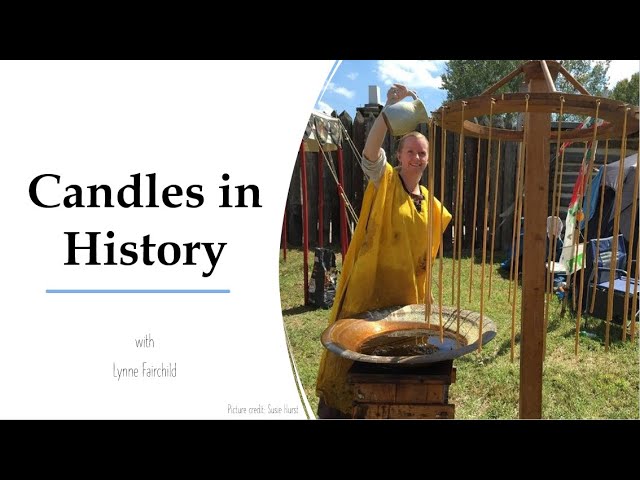
History of Candles & Medieval Lighting: From Oil Lamps to Rushlights
@LynneFairchild
5.5K views•2021-02-11

91:57
The Geopolitics of the Ukraine War and the Rise of Global Autocracy
@JordanHarbingerShow
468K views•2025-04-19

17:05
Understanding the Cold War: Superpower Conflicts and the Road to Détente
@OverSimplified
46.1M views•2019-01-24
Related Study Plans & Knowledge Roadmaps
Structured learning paths in History
history
Byzantine Iconoclasm: Theology, Art & Politics
01Foundations of Byzantium and Early Christian Images
02The First Iconoclasm: Leo III and the Crisis of Images
03Empress Irene, Nicaea II, and the Second Iconoclasm
+ 2 more learning modules
9h5 modules
Explore Roadmap
history
Iranian Revolution (Causes, Events & Legacy)
01The Pahlavi Dynasty and the Roots of Discontent
02The Spark of Rebellion and the Rise of Khomeini
031979: The Fall of the Shah and the Climax of the Revolution
+ 2 more learning modules
8h5 modules
Explore Roadmap
history
Mali Empire: Mansa Musa, Trade & Timbuktu
01Foundations of the Mali Empire
02The Trans-Saharan Gold and Salt Trade
03The Reign and Pilgrimage of Mansa Musa
+ 1 more learning modules
6h4 modules
Explore Roadmap
history
1947 Partition: Politics, Borders & Legacies
01Foundations of British India and the Divide
02The Political Negotiations and the Mountbatten Plan
03Drawing the Boundary: The Radcliffe Line
+ 2 more learning modules
8h5 modules
Explore Roadmap