















![[해외감동사연] 미국인들이 한국에 와서 가장 충격받는 의외의 모습 5가지! CNN취재 전세계충격](https://i.ytimg.com/vi/k1424gwMXtA/maxresdefault.jpg)





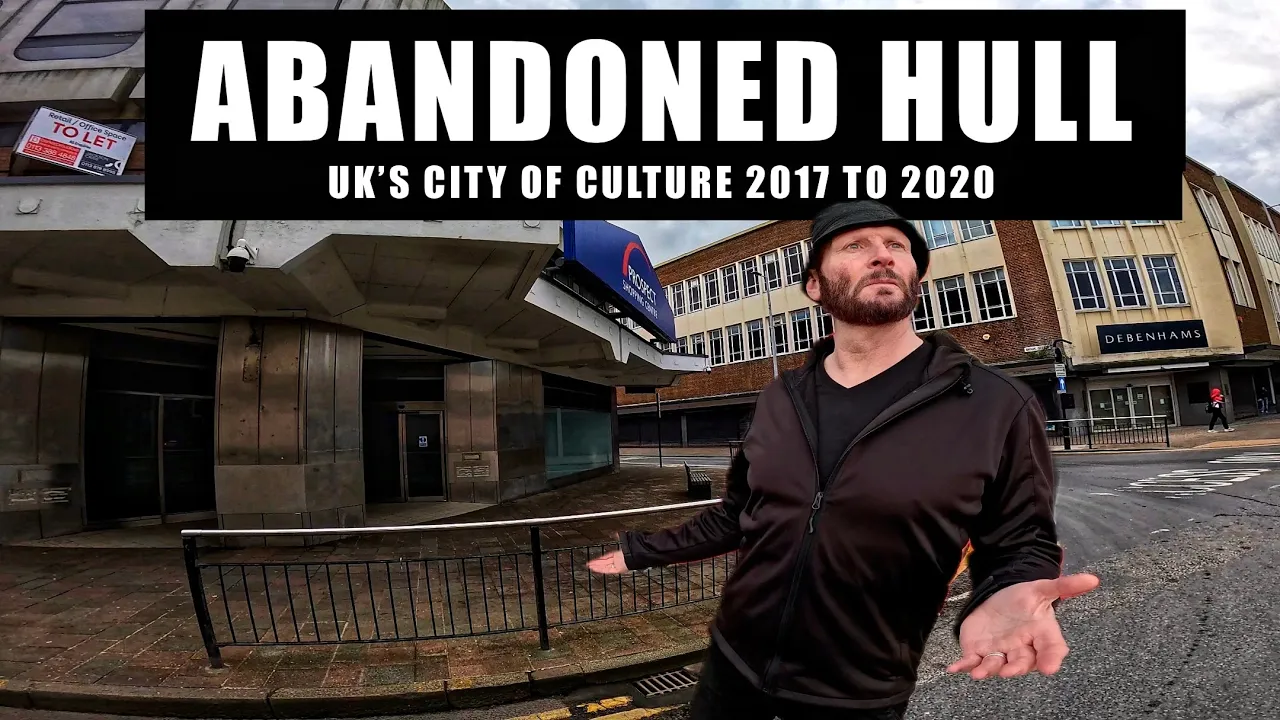
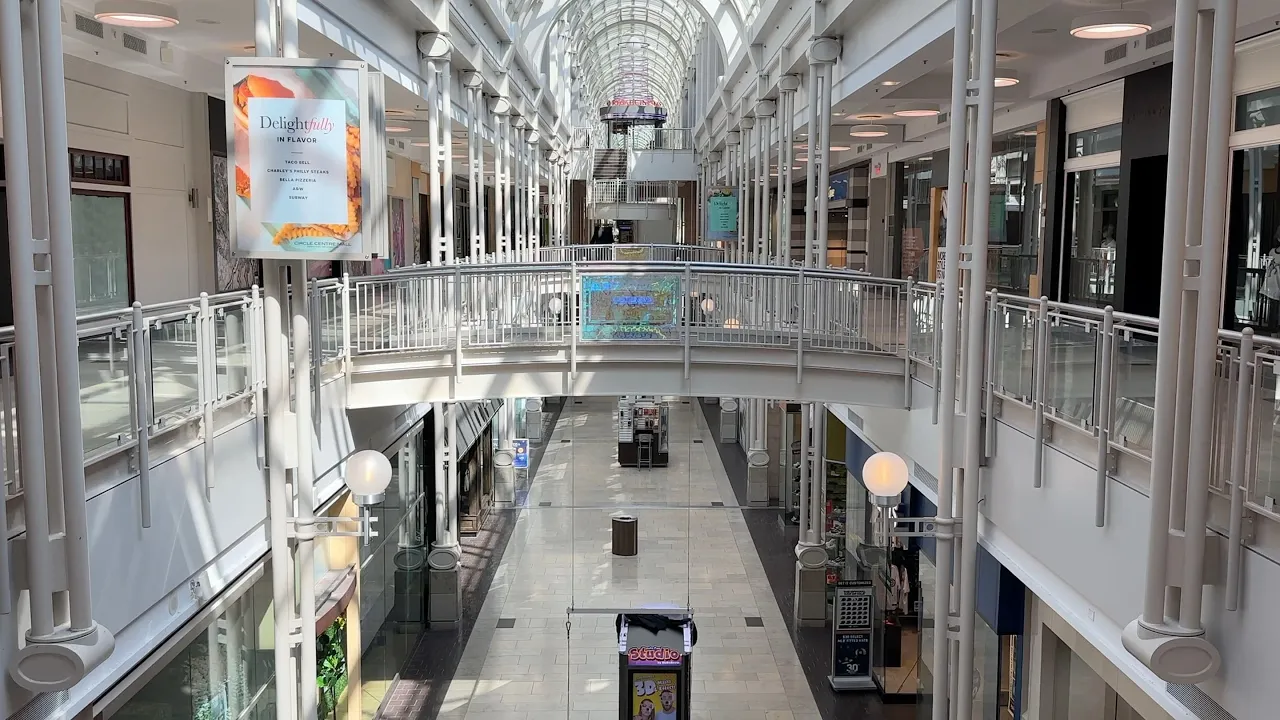

The 24-hour American city, which operated continuously from the 1950s-1960s through interconnected systems of shift work, transit, and late-night commerce, collapsed not from a single cause but from a chain of economic pressures (rising energy costs after the 1973 oil crisis), risk calculations (skyrocketing insurance premiums), and feedback loops that made nighttime operations increasingly unprofitable and unsafe, ultimately replacing the continuous urban night with fragmented, isolated nightlife zones and earlier closures.
How America's 24-Hour Cities Collapsed: An Urban Systems Analysis
Added:The fundamentals of Urban Economics, specifically agglomeration economies and how density drives commercial and cultural activity.
The history of municipal zoning laws in America, particularly the distinction between mixed-use development and single-use Euclidean zoning.
The critical role of public transit infrastructure and scheduling in supporting non-traditional labor shifts and late-night mobility.
The socio-economic transition of major American cities from industrial manufacturing hubs to service-, knowledge-, and entertainment-based economies.
The study of Night-Time Economy (NTE) governance, including the roles and policies of 'Night Mayors' in global cities.
An analysis of post-pandemic urban recovery, specifically the impact of remote work on central business districts and commercial real estate.
Comparative urbanism focusing on successful, resilient 24-hour infrastructure models in international metropolises like Tokyo, Berlin, and London.
Policy strategies and architectural frameworks for the adaptive reuse of vacant urban commercial spaces into vibrant, mixed-use communities.
697 views32likes17:40Original Release: 2026-01-02
At midnight in 1965, you could leave a Manhattan factory, grab a fresh steak at a packed corner diner, and catch a Subway home without checking the clock because America's cities were engineered to never sleep. But today, that allight rhythm has vanished. What force could dismantle a system built on shift work, relentless trains, and roundthe-clock storefronts?
The collapse wasn't sudden, but its consequences still shape every silent street after dark. To understand why America's 24-hour city fell, you have to see the machinery that once kept it running.
Shift work was the engine that kept the city's lights on long after sunset. In the 1950s and the 1960s, New York's factories ran on three shift rotations, 8 hours on, 8 hours off around the clock. garment workers, hospital orderlys, porters, and pressmen all moved in and out of jobs that never paused for nightfall. Every shift change sent waves of people into the streets, fueling a constant demand for movement and sustenance. The city's transit system was designed to match this rhythm. By 1957, late night subway trains arrived every 20 minutes or less, even in the small hours. Schedules were built to serve not just the day crowd, but the midnight and 4 in the morning crowds as well. A nurse finishing a graveyard shift at Belleview could count on a train home without a long wait. A press operator heading to a 2:00 in the morning start downtown did not need to check the clock. He knew the next local would come with or without him. This mesh of labor and mobility was not accidental. It was engineered block by block to support a population that moved in cycles.
The subway's continuous hum, the steady flow of buses, and the all-night trolley lines kept the city's arteries open.
Factories near the rivers and rail yards set their clocks by the availability of transit, and workers set their lives by the predictability of those schedules.
In neighborhoods like the Lower East Side and the South Bronx, the streets never truly emptied. The end of one shift was the beginning of another, and the city's pulse stayed steady through the night. The reliability of movement shaped the geography of the 24-hour city. Densely packed train lines and bus routes allowed workers to live far from the factories and still make it to work at any hour. This spread late night life beyond a single district. Manhattan's grid, Brooklyn's avenues, and Queens cross streets all pulsed with the comingings and goings of people tied to the clock of industry. The city's planners and transit engineers treated nighttime not as a gap to be endured, but as a regular part of daily life, one that demanded the same attention as rush hour. The result was a self-reinforcing system. Reliable mobility made night work possible, and night work kept the system running for decades. this interlock held. The city's nights were as structured as its days, and the machinery of movement kept turning hour after hour, long after the rest of the country went to sleep.
Midnight in New York once meant options, not obstacles. All night diners glowed at street corners, their neon signs cutting through the dark, promising a plate of eggs or a cup of coffee to anyone coming off a late shift or heading into one.
From the 1940s through the 1970s, these places were not rare. They formed a layer of the city's economy as real as the subway lines beneath them. Diners clustered near transit hubs, factories, and hospitals, drawing a steady stream of cab drivers, press operators, nurses, and porters.
The Waverly, Odessa, Hector's Cafeteria were familiar to anyone who needed a meal at 3:00 a.m. Bodeas, too, became a fixture of New York's nocturnal routine.
By 1970, thousands dotted the city, often just steps from subway entrances or bus stops. Their doors stayed open long after the last evening rush, stocked with sandwiches, cigarettes, and coffee for the night's workers and wanderers.
Many were run by families who lived above or behind the counter. Their lives intertwined with the rhythms of the street outside.
The bell over the door might ring at any hour, a reminder that the city's needs did not pause for sleep.
This network of 24-hour retail was not just about food or convenience. It was a safety net, a way for people to stay visible and connected in the off hours.
The clatter of plates and the hum of conversation in a diner at 2:00 a.m.
made the city feel less lonely, less risky.
The steady presence of open shops and lit windows gave late night streets a sense of order and watchfulness.
For workers whose lives revolved around shift changes, these businesses were anchors, a place to rest, eat, or wait for the next train.
The economic logic behind these all-night spots was simple. As long as there were enough people moving through the city at odd hours, there was money to be made. Diners near the Port Authority or Grand Central could count on a flow of customers from buses and trains at any hour. Bodeas in the Bronx or Brooklyn served neighborhoods where factories and hospitals never slept. The city's density made it possible. Enough feet on the pavement meant enough sales to justify the light staying on.
Other American cities followed the same pattern. Chicago's Greek diners along the L, Los Angeles's late night takaras near bus depots, and Philadelphia's corner delies all thrived on the movement of workers and travelers through the night.
In each case, the 24-hour city relied on a web of small businesses willing to trade sleep for steady revenue.
This retail backbone supported not just commerce, but community.
A regular crowd at a diner could keep trouble at bay. A bodega owner knew the faces of the night shift. The regulars who stopped in for a sandwich or a soda on their way home. The city's night economy was not just a curiosity. It was a system built on the expectation that if you needed something at any hour, someone would be there to provide it.
The arithmetic of late night business changed almost overnight. In the fall of 1973, the price of oil quadrupled after the OPEC embargo. For a city like New York, where every neon sign, refrigerator, and subway car depended on steady, cheap energy, the impact was immediate and unforgiving.
Commercial electricity rates jumped by more than 60% between 1972 and 1975.
For a small diner or bodega, that meant the cost to keep the lights on through the night could double in a single billing cycle.
Refrigeration, essential for eggs, milk, and cold cuts, became a luxury to run after midnight. The hum of machines that once faded into the background now sounded like money draining away hour by hour. Staffing costs did not stand still, either.
Minimum wage hikes in the early 1970s, combined with new overtime rules, pushed labor expenses higher. But the real shock came from the utilities.
A typical 24-hour diner running two fryers, a coffee earn, and a row of coolers faced an energy bill that could reach $1,000 a month by 1975, up from $600 just 3 years before. Owners who once calculated profit by the plate now ran the numbers by the hour. The late shift, which used to break even on coffee and sandwiches, started operating at a loss the moment the last rush faded. Delivery costs climbed as well.
Gasoline prices doubled between 1973 and 1975, squeezing the margins for every supplier. Bakeries and dairies that once dropped off goods at 2:00 a.m. began charging sir charges for nighttime routes or simply refused to deliver outside daytime hours.
Some businesses tried to pass the costs on to customers, a 10-cent hike on a cup of coffee, a nickel more for a bagel, but the late night crowd was price sensitive.
Many just stopped coming. The city transit system, already stretched thin, struggled to absorb the new costs. Fuel for buses and electricity for subways ate up a larger share of the operating budget. Maintenance crews worked with tighter schedules and equipment upgrades were delayed.
The reliability that once defined the late night grid began to fray at the edges. For businesses that depended on a steady flow of workers and customers at 2:00 a.m., every small increase in cost rippled outward, making the night less predictable and less profitable. In neighborhoods where the math no longer worked, the allnight glow began to fade.
Diners that had been open since the 1950s quietly cut back their hours.
Bodeas locked their doors at midnight, leaving only a handful of late night options in entire districts. Owners who once prided themselves on serving the city around the clock now posted signs with new closing times, sometimes with an apology, sometimes with nothing at all. The promise of the 24-hour city was built on the assumption that the numbers would always add up. After 1973, that assumption no longer held. The night became a liability, not an asset, and the old system of continuous commerce started to unravel, one bill at a time.
A small business owner in the Bronx opens an envelope stamped with the logo of a national insurer. Inside the new invoice is three times higher than last year as premium. The letter explains that recent burglaries in the neighborhood have changed the risk profile. To qualify for coverage at all, the owner must install a steel roll down gate, a new alarm system, and brighter exterior lighting. The cost of the upgrades is spelled out in a separate attachment. The scene feels intimate and the change feels sudden. This was not an isolated case. By 1978, burglary insurance premiums for corner delies and bodeas in high crime zip codes had soared. A deli that paid $800 a year in the mid 1970s now faced bills over $2,000.
For many, the insurance bill was higher than the rent.
The arithmetic of staying open after dark had changed in ways that coffee prices and sandwich markups could not fix.
Insurance companies responding to a wave of late night breakins rewrote the rules for urban storefronts.
After 10 in the evening, the risk multipliers kicked in. higher deductibles, mandatory security, and in some cases, outright refusal to renew coverage for 24-hour operations.
Underwriters poured over police blotters and claims records, recalibrating premiums zip code by zip code, block by block. The math was cold and impersonal.
If the numbers did not work, the policy did not renew.
Invoices from the period showed the new logic in black and white.
One example dated November 1978 lists a base premium then adds line items for late night hours and a high incident area search charge. The total is nearly triple the previous year s bill. In the margin there is a handwritten note that says install bars or reduce hours. The note is simple and final. For businesses that relied on the night, bodeas near the subway, diners on factory blocks, this was a financial tipping point. The cost of insurance, once a background expense, now dictated opening hours.
Some owners tried to game the system, closing for a few hours in the dead of night to qualify for lower rates. Others installed the required gates and alarms only to find that premiums kept climbing anyway.
The practical choices were limited. The security mandates themselves changed the street. Iron bars appeared in front of windows that used to glow through the night. Alarm company stickers crowded out old advertisements for egg creams and cigarettes. The late night city, once defined by its openness, began to look fortified even before the doors locked for good. Insurance underwriters, rarely seen by the public, became silent architects of the night. Their calculations, based on actuarial tables and police reports, determined which blocks would stay lit and which would go dark. For every business that decided to close at midnight instead of risking another year of rising premiums, the street lost another pair of eyes, another patch of safety, another reason for people to linger after hours. The change was quiet but structural. What started as a response to crime became a feedback loop. The fewer businesses that stayed open, the emptier the streets became. Emptier streets in turn justified even higher premiums. The arithmetic was relentless, and for many small businesses, the only rational response was to lock up early and hope the math might change next year. The promise of the 24-hour city, once underwritten by thousands of small bets on the night, began to unravel one invoice at a time.
A subway supervisor in the late 1970s could track the city's pulse by the way riders clustered on the platform after midnight. Official schedules promised a train every half hour, but in practice, delays stretched longer. Riders watched the clock, calculating how much risk they were willing to take. If you missed the next train, the weight could double.
The platform would thin out, then empty, and the sense of safety drained with the crowd. Unofficially, the last train was not the one printed on the timet. The last train was the one you trusted to get you home without incident.
Trust traveled among night shift workers and regulars. Leave before the platform got too quiet became common advice. Once enough people started making that choice, the pattern fed on itself.
Bodeas and diners near the station saw fewer customers. The streets outside grew patchy with stretches of silence broken only by the rumble of a train or the slam of a security gate.
The feedback loop was subtle but relentless.
As late night movement thinned, the city's self-p policing mechanism, the watchful presence of ordinary people, began to fail. The night became less about freedom and more about calculation.
The arithmetic of risk replaced the old certainty of movement.
Late night life in the city did not vanish everywhere at once. It shrank, folding in on itself, leaving only a handful of corridors where the light stayed on and the doors remained open.
By the late 1980s, the pulse of the night was no longer spread across neighborhoods, but concentrated into a few high margin zones, blocks near Time Square, stretches of the East Village, a handful of luxury hotels, and tourist strips. These bright islands were surrounded by growing darkness as most streets emptied out after midnight. The old promise of the 24-hour city was replaced by a more selective geography where only the most profitable or heavily policed areas could afford to remain open. For everyone else, the night moved indoors.
By 1990, more than half of American households subscribed to cable television. Home video and late night programming offered a new kind of after hours escape, one that did not require stepping outside or risking an empty street. The city's collective night shifted from public space to private screens. Instead of gathering in diners or lingering at corner stores, people stayed home, ordering entertainment on demand.
The machinery of the 24-hour city kept spinning in a few places, but for most, the night became something to be managed, not explored.
Tonight, most American cities go quiet by midnight. Even as millions still work, travel, and seek connection after dark. As costs rise and risks shift, the systems that once kept streets alive now leave them empty. The question isn't whether the night will return. It's what kind of city we're left with when it doesn't. The silence after hours is a choice. What fills it next is up to us.
Up Next

9:30
Parasocial Donations on Twitch: A $155,000 Case Study in Streamer-Viewer Dynamics
@PyrocynicalVEVO
415.5K views•2024-02-25

60:34
Why We Eat the Way We Eat: Food Culture with Ruby Tandoh
@ThisIsTASTE
130 views•2025-09-26

19:23
How to Analyze Conversations Scientifically | Elizabeth Stokoe | TEDx
@TEDx
1M views•2014-12-04

9:41
What is Sociology? The Sociological Perspective Explained
@crashcourse
4.6M views•2017-03-13
Related Study Plans & Knowledge Roadmaps
Structured learning paths in Sociology
sociology
Disaster Sociology: Risk, Power & Recovery
01Foundations of Disaster Sociology
02Structural Vulnerability & Social Inequality
03Ulrich Beck and the 'Risk Society'
+ 2 more learning modules
15h5 modules
Explore Roadmap
sociology
Celebrity Culture: From Hollywood to TikTok
01Foundations of Celebrity Sociology
02The Rise of Micro-Celebrity & Digital Platforms
03Parasocial Relationships & Algorithmic Intimacy
+ 2 more learning modules
12h5 modules
Explore Roadmap
sociology
Hostile Architecture: Space, Power & Control
01Introduction to the Sociology of Space
02Social Control and Surveillance in the City
03Hostile Architecture and Defensive Design
+ 2 more learning modules
12h5 modules
Explore Roadmap
sociology
Loneliness Epidemic: Third Places & Isolation
01Foundations of Social Capital and Community Cohesion
02The Death of Third Places and Urban Space Erosion
03The Privatization of Leisure and Atomization
+ 2 more learning modules
12h5 modules
Explore Roadmap