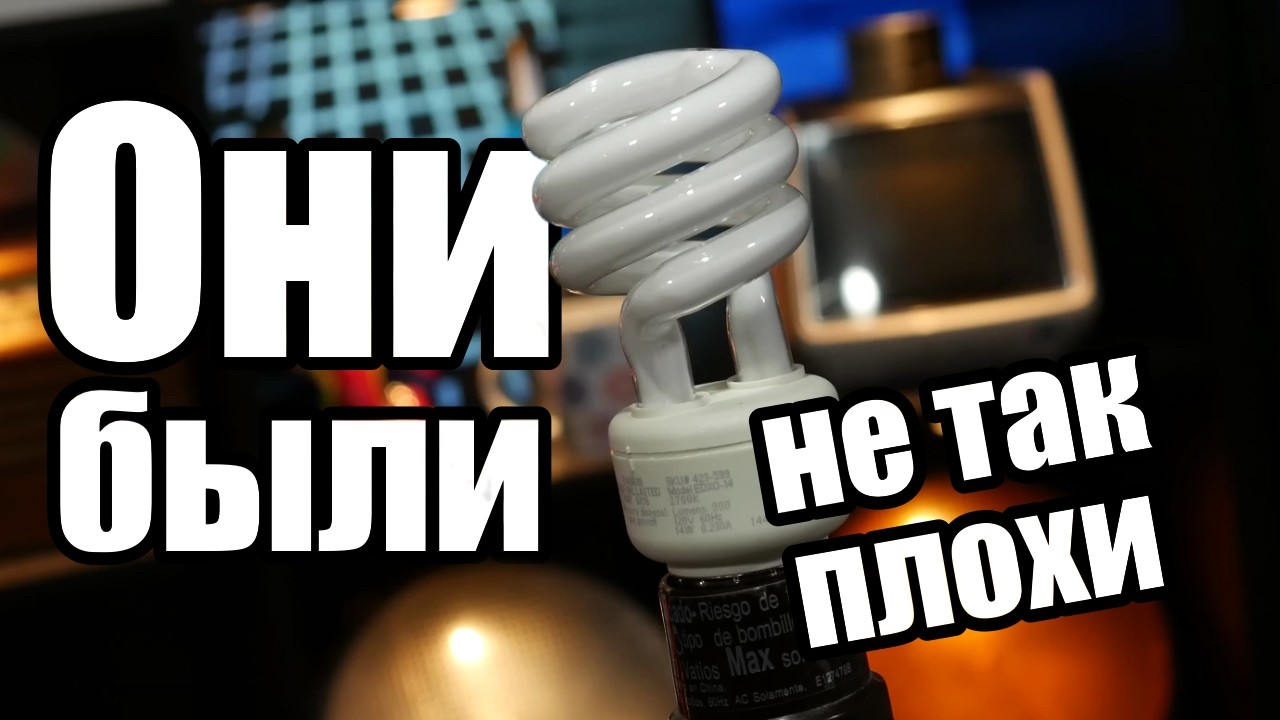
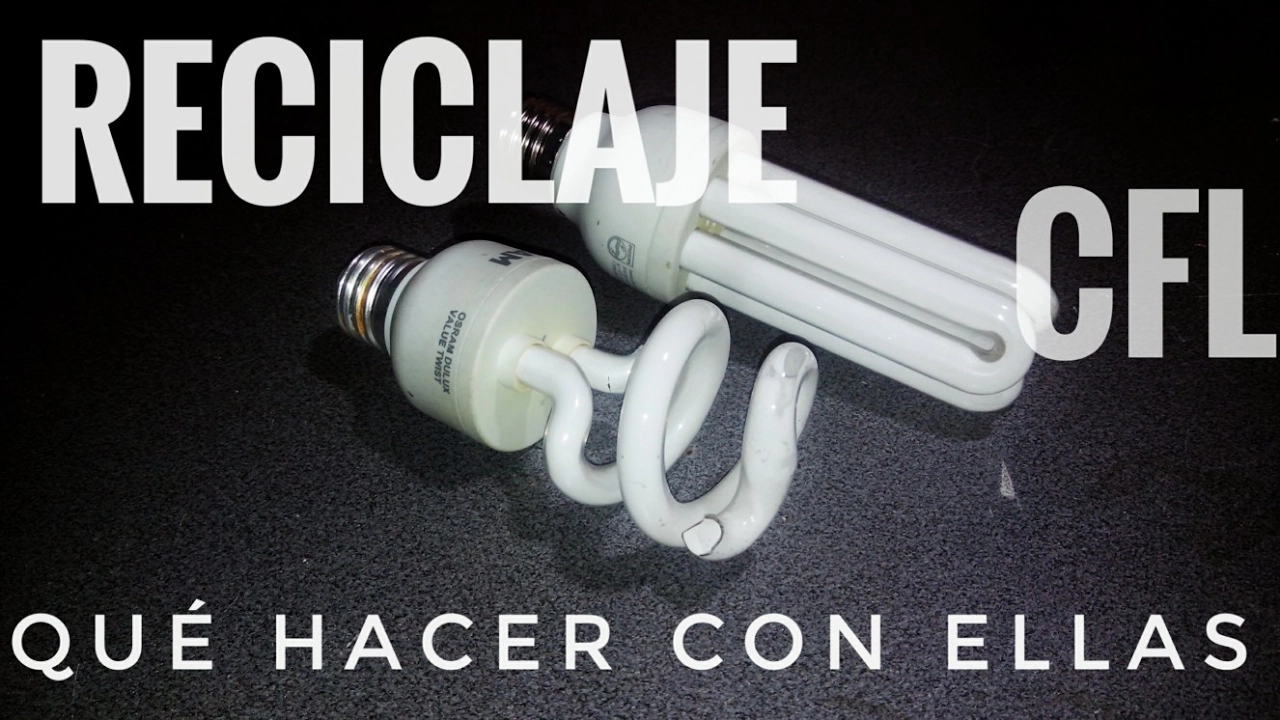

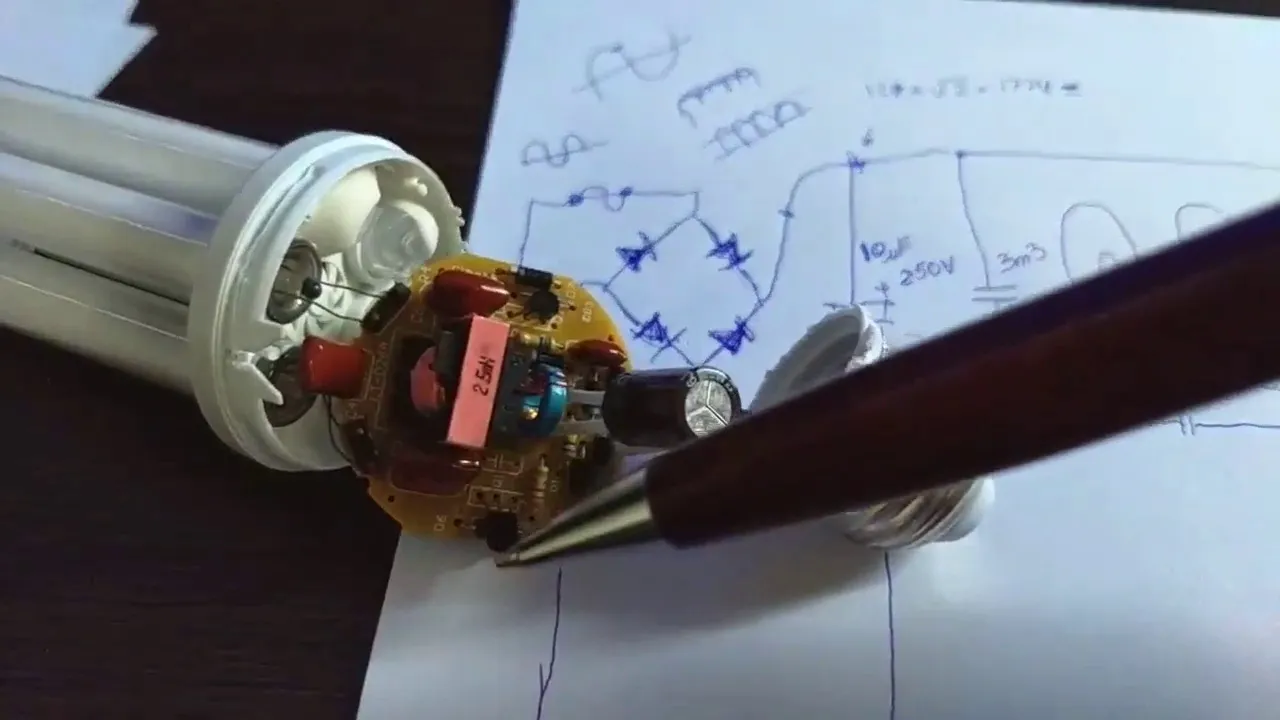

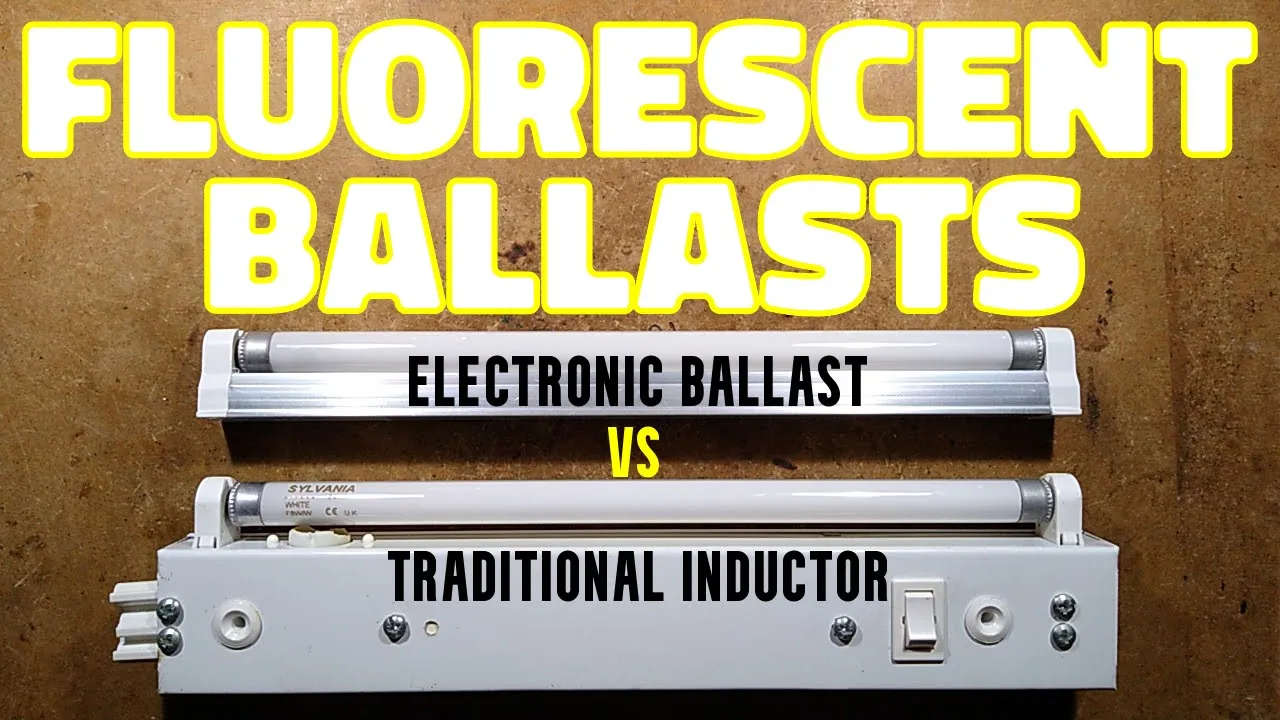























GE developed a hybrid compact fluorescent lamp (CFL) called 'bright from the start' that combines an incandescent halogen capsule inside a fluorescent spiral to overcome the slow warm-up time of traditional CFLs; this innovative design provides immediate full brightness by having the halogen capsule illuminate for about one minute until the fluorescent tube warms up and reaches optimal operating temperature, after which the halogen is automatically switched off, though this simple implementation has limitations such as a jarring light transition and inadequate temperature compensation for cold environments.
GE's Hybrid CFL- Halogen Bulb Design Explained
Added:Basic operational principles of Compact Fluorescent Lamps (CFLs) and halogen/incandescent bulbs.
The physics behind the 'cold-start' phenomenon in fluorescent lighting, including gas excitation and mercury vapor pressure.
Fundamental electrical circuit concepts, specifically how current is split or switched between parallel loads.
Understanding luminous efficacy (lumens per watt) and how it differs between thermal and gas-discharge light sources.
The transition to LED (Light Emitting Diode) technology as the ultimate solution for instant-on, energy-efficient lighting.
Advanced power electronics, specifically the design of electronic ballasts and starter circuits for hybrid appliances.
The environmental and disposal challenges associated with mercury-containing CFLs compared to LEDs and traditional halogens.
The principles of color rendering index (CRI) and color temperature tuning in modern smart lighting systems.
925.6K views38.6Klikes27:58Original Release: 2024-04-01
Today, I want to show you a weird light bulb of the not-too-distant past.
Ta-da!
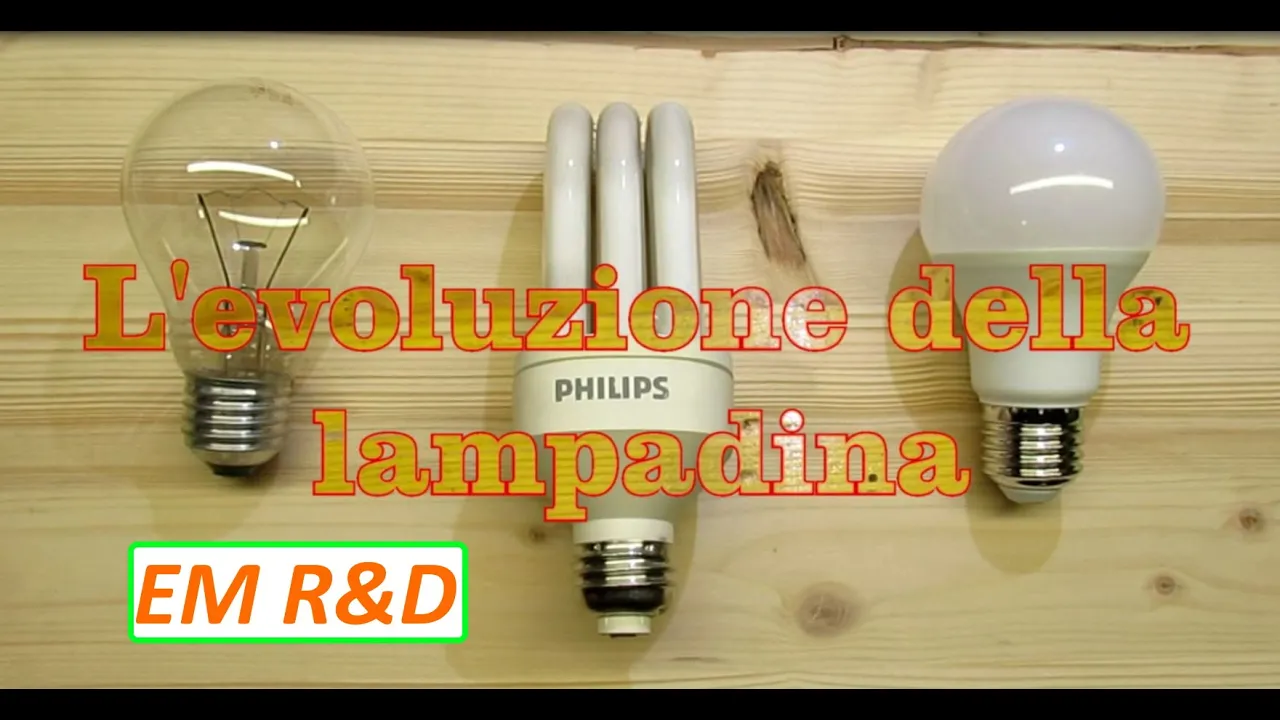
If you’re thinking, "that’s just a CFL stuffed inside a glass bulb to look more like a regular light bulb!"
you’re right!
But that simple visual trickery isn’t what’s special about this bulb.
Lots of manufacturers were doing that.
This one?
Well, for a brief while, GE was marketing a line of compact fluorescent lamps with a trick up their sleeves which they called “bright from the start” - and this is one of those bulbs.
They developed it to overcome one of the central issues of compact fluorescent lamp technology: the rather slow warmup time of a cold CFL.
And they did it by taking this already light bulb-in-a-light bulb lookin’ light bulb and going full turducken on it by stuffing an incandescent light bulb in the middle of the fluorescent light bulb inside of the faux light bulb.
With two lighting technologies in the same package, this is literally a hybrid light bulb.
Why does it exist?
Well, about 15 years ago in the way back when known as 2009, we still hadn’t really figured out how to make decent LED drop-in light bulbs.
If anybody out there remembers this groundbreaking LED bulb from Philips with its yellow phosphor coating on the exterior?
Yeah, this thing came out in 2010, and adjusted for inflation, these were $60 a pop.
We’ve come a long way in a very short time!
But in the years prior to the LED bulb becoming feasible and cheap, we had gotten very good at making compact fluorescent lamps.
These energy-saving wonders weren’t perfect by any means - the quality of light they produced was a downgrade from incandescent, unless of course you like deathly cold, certifiably institutional daylight-balanced lighting in which case they unlocked that for the first time in many household applications, but either way the mercury content of the discharge tube was an environmental trade-off.
Still, they used about a quarter of the energy of their incandescent counterparts and the not-crap ones anyway lasted a very long time if used correctly so they had their appreciators.
Including yours truly.
And a few models remain in production to this day.
But even if you like or merely tolerate the quality of light they produce and aren’t bothered by the mercury, they still have an Achilles heel: the bulbs themselves are pretty ugly.
In some light fixtures this doesn’t matter at all but anything leaning towards decorative where you could see the bulb itself would be at least somewhat ruined by the presence of one of them twisty boys instead of a nice round light globe.
And then there are the specialty bulbs like directional flood lights which use reflectors to direct the light they produce in a more directed fashion.
A CFL can’t do that.
But those mid-2000’s engineers weren’t just gonna give up - they decided to stuff the fluorescent coil inside something else to hide it or even alter how it releases its light.
You could just stuff it into a light bulb-shaped thing to make it look more like a regular light bulb, maybe even a sphere to CFLarize the decorative globes for a bathroom vanity.
Or you could stuff it inside a reflector to... kind of anyway mimic a flood light in form and, to a lesser extent, function.
And we didn’t stop there!
The days of CFL dominance were a wild time in weird light bulbs, and IKEA was particularly fond of cramming CFL tech into stranger and stranger applications.
This small spot-light is one of my favorites: just look at that wonky little zig-zaggy tube!
It’s even two-layers deep!
But while this technique improved the aesthetic issue and made a few more form factors possible, there was a huge catch to doing it.
CFLs did use quite a bit less energy than incandescent lights which meant they produced a lot less heat, but the discharge tube still gets pretty hot.
The standard exposed coil design can rely on the convection currents from moving air to help dissipate that heat and cool the tube which means the operating temperatures remain pretty reasonable.
But all of those decorative ones?
They are deliberately sealing up their tubes in some sort of cover which functions like an oven.
The tubes inside these will run quite a lot hotter than if they were left open to air.
Which is actually a pretty big problem which would lead to poor performance.
See, fluorescent lights work because of the ultraviolet light produced by the mercury vapor discharge happening inside the glass tube.
That largely invisible light is then converted by the phosphors coating the inside surface of the glass into light that we can see.
Those phosphors fluoresce under UV light which is why they’re called fluorescent lights.
But the effectiveness of that ultraviolet discharge is greatly influenced by the vapor pressure of the mercury inside the tube.
What is vapor pressure?
Well, according to this website I found, “equilibrium vapor pressure is the pressure exerted by a vapor in thermodynamic equilibrium with its condensed phases (solid or liquid) at a given temperature in a closed system.” OK, so what does that mean?
Well, mercury is a liquid at room temperatures.
And just as room temperature water slowly evaporates when left open to air, room temperature mercury does the same thing.
Some of it will transition to the gaseous phase even at low temperatures.
But when sealed up in a tube, every gaseous molecule that breaks free from the liquid phase increases the pressure inside that tube just a teeny tiny bit.
And once the gas pressure caused by those mercury molecules builds to a certain point, no more liquid mercury will evaporate.
That equilibrium point is the vapor pressure.
Now there are some wonky factors here which I’m skipping over.
For instance, the vapor pressure of a fluorescent tube is actually determined by the coldest spot of the glass because that cold spot will cause condensation which returns some of the gaseous mercury back to liquid - which of course then lowers the internal pressure of the tube a bit, so some liquid mercury somewhere else will just evaporate again to replenish what just condensed and keep it in equilibrium.
But anyway, the reason this matters at all is that fluorescent lights need a pretty specific mercury vapor pressure to work well.
If the vapor pressure is too low, the ultraviolet discharge that we’re looking for just doesn’t work at all - so we can’t have that.
But if it gets too high, well a higher vapor pressure means more mercury molecules are floating around per given volume, and in those close quarters, the mercury molecules start to absorb some of their neighbors’ discharge energy, so ultimately less ultraviolet light is produced by the discharge when vapor pressure gets too high.
For best results, then, we need the lamp to be operating within a fairly narrow goldilocks zone of acceptable vapor pressure.
Getting to that goldilocks zone isn’t impossible but it is tricky.
Because even if you get the pressures just right when making the tube, you aren’t in complete control of the ambient temperatures the tube will experience.
And as temperature increases, so does the vapor pressure.
High temperatures mean there’s more energy in the system which means that more liquid mercury will transition to the gaseous phase and then, because those molecules are trapped in a tube with a fixed volume, we run into that too many molecules problem.
In practice this means that if a fluorescent tube gets too hot in operation it will actually start to lose brightness.
Which for a thing which's whole purpose is to make light is the opposite of desirable.
In early fluorescent lighting designs, this was just a reality that we worked around and a limitation that we accepted.
So long as they were being used in an environment somewhat close to room temperature, they’d work fine - and their internal pressure was calibrated during manufacturing to meet that usage expectation.
But we humans are never satisfied with limitations so we worked on figuring out how to make the technology functional in a wider range of temperatures.
In addition to tackling that functional issue, though, we also wanted to make the technology more energy-efficient.
And it turned out that efforts to improve efficiency would force us to solve the temperature problem.
As we developed fluorescent technology, we found that increasing the intensity of the discharge by running more current through a narrower tube could produce more light with less electrical energy.
That's in part how a CFL can make so much light in this relatively small space and why fluorescent tubes kept getting skinnier as time went on.
But those skinnier tubes dissipated similar power levels as their predecessors through less gas and glass, so they got much hotter when operating which in turn elevated the internal vapor pressure well beyond the point where the mercury discharge would produce much light.
But clearly we figured it out.
This light bulb is a lightin’.
So what did we do to make this possible?
Isn’t the answer obvious?
Just amalgamate the mercury, Silly Billy!
For the record, I don’t like this word.
a-MALL-gum?
AA-mal-gam?
a-MAL-gum?
[synthesized voices saying "Amalgam"] We’ll go with that one.
If instead of just mercury you throw in an amalgam of mercury (which in simple terms means a mixture of mercury and some other metal or metals), you can bend the mercury’s temperature vs. vapor-pressure curve to better fit your needs.
Mix in a bit of indium and bismuth, or if you’re feelin' fancy some bismuth, lead, and tin, and you can run a fluorescent tube at much higher temperatures without diminishing the discharge because those extra elements will sort of hold on to the mercury and keep it from vaporizing quite so easily, which lowers the vapor pressure at high temperatures.
Which is great!
Oh - and remember that thing about the coldest spot of the glass influencing the vapor pressure?
Well, some CFLs have little bumps formed in the discharge tube specifically to be a cold spot.
This little pocket of glass sticks out beyond the confines of the discharge going through the tube, so it stays cooler than the rest of the glass and helps to regulate the internal vapor pressure when operating.
But back to the amalgam.
These new mercury amalgams for high-temperature tubes are in fact solids at room temperature.
Note that despite being a solid, some mercury will still evaporate (or I guess sublimate) into the gaseous phase.
The amalgam came in the form of little pellets.
Which, you might have noticed these before in certain lamps - sometimes it seems like there’s a little ball rattling around inside somewhere [rattling] and there is, in fact - though usually it’s held captive in a special pocket to keep it in one place so it doesn’t roll around and cause damage to the phosphor coating.
Some designs like that weird IKEA spotlight actually leave that pocket and the pellet visible, though most of the time it’s hiding near the electrodes as is the case for this ordinary CFL.
These solid pellets were much easier to deal with compared to liquid mercury which was tremendously helpful for manufacturing these but of course the main reason for their use is to lower the vapor pressure of the mercury when the lamp is running hot, as it will with narrow, high-efficiency tubes.
Except, there was a trade-off.
There always is!
With these amalgam pellets, there's less available mercury to form the discharge when the lamp is cold.
So when these high-efficiency lamps first start, they only operate at partial brightness.
It won’t reach full brightness until it’s at operating temperature and enough of the mercury in the amalgam has actually managed to vaporize and produce the correct vapor pressure inside the tube.
This is why CFLs and high-efficiency fluorescent tubes take time to reach full-brightness.
The amalgam of mercury inside them is deliberately suppressing the vapor pressure when the lamp is cold so that it becomes optimal once the lamp is hot.
Now, with most CFLs and high-efficiency tubes, this effect is noticeable but not that extreme.
The lamp produces a good deal of light right away but will roughly double in brightness over the next minute or so.
But if the tube gets very cold, say it’s being used outside or you stuck it in a freezer for a few hours for the purposes of demonstration, then the vapor pressure of mercury in the tube is far too low for it to do anything.
To allow the lamp to start in this condition, a starter gas (usually a mixture of argon and neon) also fills the tube.
That gas doesn’t produce much light - just a dull, pinky-purple glow.
But it does allow for a discharge through the tube to happen without the mercury contributing.
And that will produce some heat.
Therefore, the temperature inside the tube does increase with time, most quickly at the ends of the tube near the electrodes.
This heat helps more of the mercury in the amalgam to vaporize, increasing the vapor pressure in the tube, and once it’s correct that mercury contributes a lot of ultraviolet light to the discharge and the lamp is operating as intended.
And the key thing to this video is that how aggressive you need that amalgam to be depends on how hot you expect the tube to get.
An ordinary CFL with its tube open to air doesn't need a terribly aggressive amalgam.
The tube doesn’t get that hot in operation with airflow to cool it, so the amalgam is fairly tame and at room temperatures at least some mercury vapor is present throughout the tube.
Therefore it produces a good deal of light right away unless it’s very cold.
But if you expect the tube to get hotter in operation, you’ll need a more aggressive amalgam which will lower the mercury vapor pressure even more.
Which finally brings us back to bulbs like this.
How aggressive do you suppose we need the amalgam to be in these bulbs?
The answer is very aggressive.
The discharge tube sealed inside these is going to get MUCH hotter than usual once warmed up, so we need an amalgam formulation which will drastically lower the vapor pressure of the mercury.
That’s no problem - we know how to do that just fine.
But the trade-off?
There’s always a trade-off.
Very, very little mercury vapor is free inside the tube of these bulbs even at room temperature.
So those decorative or specialty CFLs?
They behave like the CFL kept in the freezer every time they start.
This CFL flood spot thing is currently at room-temperature.
Despite its relative warmth, it barely glows when switched on and takes a solid minute or more to reach full-brightness.
That IKEA spot from earlier?
Yeah, it does the same thing.
It’s pretty useless when you first switch it on.
Most if not all decorative CFLs exhibited this behavior.
They had to suppress the mercury vapor pressure a LOT because the tube inside would get very hot once warmed up, which meant they had terrible light output whenever they were first switched on.
Which means they’re kind of annoying to live with.
Although, shoutout to the decorative globe CFLs in the bathroom vanity when I was a kid.
It was actually pretty nice to have a very dim-at-first light when making a bathroom visit in the middle of the night.
Helps the eyes adjust.
In most cases though, this behavior is annoying.
Now, of course, the easiest solution is to just use open-air CFLs.
They usually didn’t have this problem unless you were using them outdoors in very cold weather.
But if you just had to cover up the ugly factor, or wanted to use a CFL in a specific application, you had no choice but to deal with the poopy cold starts of an enclosed tube.
Unless, of course, you do what GE did with these bulbs.
What did they do?
They just stuck a halogen capsule inside the fluorescent spiral, added a timer, and called it a day.
A halogen lamp will attain its full brightness in a fraction of a second (at the expense of using quite a lot of power).
But if you’re just using it to fill in that gap that occurs when a CFL warms up, then you could just power it up for about a minute and then switch it off once the tube had gotten bright.
Which is precisely what this light bulb does.
When power is first applied, the internal circuitry switches on both the halogen lamp and the fluorescent tube.
That gives it plenty of usable brightness the moment you need it.
And then, after about a minute of operation, the fluorescent tube has gotten plenty warm (with a little help from the halogen capsule, it should be noted) so it’s producing adequate light on its own, and the power-hungry halogen capsule is switched off.
Take a look at this power meter while I switch on the lamp.
At first, this is a pretty power-hungry bulb, pulling about the same power level as the 100W incandescent light bulb it’s meant to replace.
But before long, a large majority of its power consumption drops off and it operates close to the 25W the package claims.
It’s a very simple idea, but it’s very effective.
This bulb gets all of the pros of a CFL with the major con engineered out of the picture.
And this particular GE Reveal bulb is among the best CFLs when it comes to color rendering and incandescent-mimicry I’ve ever encountered.
It’s a genuinely impressive thing.
GE put this hybrid drivetrain(?) in several different bulb types, including this flood which I showed you earlier.
And here, because the front is clear and not frosted, we can actually see the halogen capsule resting in the middle of the fluorescent spiral.
This behaves identically to the larger bulb but this is only a 65 watt equivalent so it uses less power both in the hybrid startup condition and the CFL-only operation.
And if you’re wondering whether they did this for cool-white bulbs, the answer is yes!
And it’s really freaking weird!
When first powered up, the CFL is hardly contributing so it appears only slightly cool, like a very intense halogen lamp.
But as it warms up, the light output shifts cooler and cooler, and then the halogen lamp shuts off with a very jarring BLAM and the light appears… well like that.
I know some of you keep saying you like this but I’ll never understand it.
And that jarring transition from a crisp white to a very clinical dank cold white reveals the worst aspect of these bulbs: Which is... GE half-assed this.
Like, the idea is simple enough so perhaps justly they chose to perform a simple execution of the idea.
But in my opinion, it’s much too simple.
The halogen capsule is simply toggled off with no thought given to a seamless transition.
So even with the warm-white bulbs where the transition is much less jarring, you still notice a pronounced light drop-off when the halogen light goes out.
Of course, cramming in the circuitry required to slowly dim the halogen light’s output as the CFL warmed up would add complexity and cost so it’s easy to see why it didn’t happen.
But that’s not my biggest problem with this design.
Consider the idea of temperature compensation.
The halogen capsule doesn’t need to operate if, say, the light had only been switched off for a few moments then switched back on.
In that case, the fluorescent tube will still be plenty warm and it'll output full brightness right away.
If you test this, you’ll see that GE appears to have built this in.
The halogen capsule illuminates very briefly but then goes out, which suggests the bulb is aware of the ambient temperature.
Alas, they faked that.
The temperature compensation circuit in here is much like the one in modern toasters - likely using a capacitor which holds onto its charge for a while, the runtime of the halogen capsule is influenced by how long it has been since the last time it was powered on.
If it was just on, that capacitor still has a decent charge so the halogen capsule runs only briefly.
But if it’s been a while, that capacitor has little charge in it so the halogen capsule runs for the full minute.
This works well enough but, ironically, it fails when the lamp most needs the help.
Consider what happens when you use this outdoors in cold weather.
This one’s been in the freezer so the tube is very cold.
Upon power-up, you wouldn’t really know that because the halogen capsule is doing its job and providing plenty of light.
But the circuitry in control of the halogen lamp has no idea that the bulb is so cold.
It just knows it hasn’t been used in a while.
So the halogen capsule shuts off near the one minute mark like always, and the fluorescent tube is still much too cold to produce meaningful light on its own.
So, using one of these outdoors in a cold climate gives you a light which is bright *at* the start, but then suddenly gets very dim and needs a few more minutes to reach full brightness.
I mean I guess that’s better than not having the halogen capsule in there - especially since its heat could theoretically help the CFL to start if it’s in extreme cold.
But it’s far from ideal.
And even more ironically, they only claim these will start reliably down to freezing point which isn’t impressive at all.
Lots of CFLs claimed reliable starts down to 5 degrees Fahrenheit, which is - ya know what?
Ask a search engine for what that is in Celsius.
You can do that every time one of us silly Americans uses our silly numbers which, as a bonus, is a lot faster than complaining about it in the comments.
But I will tell you it’s quite cold.
Uh, anyway, the reason I find this particularly ironic is that, when we’re talking about bulbs which are being used indoors, arguably the only reason this feature needed to exist in the first place is that the tube is enclosed.
If you don't care about that, an open-air CFL produces useful brightness right away.
But either kind - enclosed or exposed tube - experiences terrible cold starts in cold weather.
So if they had designed this with actual temperature compensation which forced the halogen lamp to stay on longer in freezing conditions, they could have actually fixed a real problem with the technology - especially if they went the extra mile and disabled the CFL circuit until the tube got enough heat from the halogen capsule to actually start reliably.
That would have been a real game changer - if you remember the days of CFLs and experienced a cold porch light being useless when you needed it, an actually well-thought-out implementation of this idea would have been great!
But these bulbs will only give you one minute of full brightness no matter what.
Which isn't the most helpful thing in winters like ours.
Still, I very much admire the spirit shown here.
You may remember a video I made some years back on LED traffic lights and the fixation some people have with their inability to melt snow, despite all their other advantages.
That “but sometimes!” way of thinking could be dealt with either by refusing to progress as some rather annoyingly like to advocate loudly for these days or by applying one of my favorite parts of the human spirit and actually making the effort to fix the sometimes.
And much like LED traffic lights with heaters built-in or special covers which reduce snow buildup in the first place are now available, GE (and some other manufacturers from what I can tell) decided to fix the sometimes of the CFL by cleverly integrating a bit of old tech to quite literally fill in the gap.
They didn’t quite do it with as much finesse as I think they should have, but the idea at its core was pretty great.
But of course now that LED bulbs have gotten so cheap that you can pick them up for about a buck each, that sometimes isn’t even relevant in most applications.
These don’t care how cold it is - they’ll just work right away.
Oh, uh and carmakers?
People keep sending me links to articles about LED headlights not melting snow.
Before I have to make another video, add some defroster wires to the headlight housings why don’t ya?
You’re already doing it on the rear glass.
You can have that one for free.
And stop it already with the red rear turn signals!
Gosh!
How is that not an obvious problem to you?
And don’t just do a Stellantis and make the lamp color change - then you still lose the brake light on whatever side you're using the turn signal on and that’s hardly any better!
Why do I have to think of this crap?
It’s because I have too much time on my hands.
Anyway, these light bulbs show that we can make things better even when new technologies present us with new limitations and new problems.
And oftentimes one way to do that is to put a twist on the tech of the past.
I mean, how do you think the CFL became a thing in the first place, amiright?
Ho boy, better just end this right now.
Thanks for watching!
♫ initially smooth jazz ♫ Hey there, I’d like to announce that I will be at Open Sauce 2024.
That’s happening June 15 and 16 in San Francisco, and if you’d like more info visit opensauce.com (there’s a link in the description).
Oh and if you’re going, be sure to wear some flowers in your hair.
But, in the years prior to the LED bulb… and I’ve run too fast!
…you might just stuff it into a light bulb-shaped thing to make it look more like a standard light bulb or… you could lose your place in the teleprompter and need to back up.
Lots of CFLs claimed relialblel ba.
This is what happens when it’s a very long line!
But then suddenly gets very dim and needs another few minutes to reach full brightness.
I mean, I … another few?
Oh don’t tell me you’re dead.
Ha!
Well hold on, then, I gotta get a different bulb.
Some designs like that weird IKEA lamp… crap!
So, I released this on April Fool's Day.
Did you think this was an April Fools video?
Because the topic does seem pretty off-the-wall.
Unless you remember these, I guess.
Pretty bright idea, though.
Up Next

13:28
On-Time In-Full (OTIF) KPI: A Complete Guide for Supply Chain Efficiency
@ManufacturingSoftwareChannel
584 views•2024-10-16

178:38
Whole Brain Architecture: First International Workshop 2024
@thewholebrainarchitecturei9784
640 views•2024-07-22

60:15
Freeze Dryer Analysis: Performance, Costs, and Maintenance
@TechnologyConnections
3.5M views•2024-10-31

1:42
Game of Thrones Opening Credits: A Cinematic Analysis
@gameofthrones
46.3M views•2011-04-18
Related Study Plans & Knowledge Roadmaps
Structured learning paths in General & Interdisciplinary Studies
general-studies
Artificial Light: History, Tech & Human Impact
01The Pre-Electric Era: Fire, Oil, and Gas Lighting
02The Incandescent Revolution and Grid Electrification
03Gas Discharge and Fluorescent Illumination
+ 3 more learning modules
14h6 modules
Explore Roadmap
general-studies
Elevator Engineering: History, Physics & Cities
01From Hoists to Safety Brakes: The Dawn of Vertical Lift
02Hydraulic vs. Traction: The Engineering Physics of Elevators
03Modern Speed, Safety, and Algorithms
+ 2 more learning modules
12h5 modules
Explore Roadmap
general-studies
Rubber: Material Science, History & Geopolitics
01Origins of Natural Rubber & Mesoamerican History
02The Chemistry of Natural Rubber & Vulcanization
03The Geopolitics of the Rubber Boom & Colonization
+ 2 more learning modules
12h5 modules
Explore Roadmap
general-studies
Containerization: Evolution, Logistics & Trade
01Ancient Trade & Bulk Cargo: Amphorae to Barrels
02The Industrial Revolution & Cardboard Packaging
03The Containerization Revolution: Malcom McLean
+ 2 more learning modules
12h5 modules
Explore Roadmap