
















![[RE-AIR] CoinDesk Live at Chainlink's SmartCon 2025 | Day One](https://i.ytimg.com/vi/P7CZUO_zyek/maxresdefault.jpg)













Wall Street's tokenization initiatives, such as BlackRock's BUIDL fund and the ERC-3643 compliance standard, represent a strategic effort to bring traditional finance onto public blockchains while simultaneously implementing permissioned control mechanisms that enforce KYC/AML requirements, freeze assets, and replace permissionless finance with permissioned finance on public rails, raising concerns about whether this $7 trillion tokenization wave represents genuine mass adoption or a Trojan horse that undermines crypto's core principles of decentralization and financial freedom.
Tokenized Assets: The Compliance Trap Reshaping Crypto's Future
Added:Understanding the difference between permissionless (public) and permissioned (private/hybrid) blockchain architectures.
Familiarity with the ERC-20 token standard and how basic smart contracts manage token transfers on Ethereum.
The core concepts of asset tokenization and Real-World Assets (RWAs) in the decentralized finance (DeFi) ecosystem.
Basic knowledge of traditional financial compliance requirements, specifically Know Your Customer (KYC) and Anti-Money Laundering (AML) regulations.
An in-depth technical analysis of the ERC-3643 standard, including its identity registry and compliance engine interfaces.
The role of Decentralized Identity (DID) and Verifiable Credentials (VCs) in maintaining compliance without exposing sensitive user data on-chain.
Evaluating the systemic implications of institutional DeFi, specifically how permissioned pools interact with public, permissionless liquidity.
A comparative study of global regulatory frameworks (such as Europe's MiCA and US SEC guidelines) governing security tokens and tokenized securities.
80.6K views2.7Klikes19:07Original Release: 2026-03-05
Wall Street's largest asset manager just put its name on a fund that promises to bring trillions of dollars of traditional finance onto public blockchains. Larry Frink, the man who once called Bitcoin an index of money laundering, now says every stock, every bond, every fund, every asset on the planet can and will be tokenized. The marketing pitch is extraordinary. 24/7 liquidity, instant settlement, fractional ownership, and a flood of institutional capital that will send the price of base layer tokens to the moon. But buried inside own letter to investors is a single sentence that changes everything. He wrote that tokenized funds will become as familiar to investors as ETFs provided, in his words, quote, "we crack one critical problem, identity verification." Now, that's not a mere footnote. It actually does a lot of heavy lifting.
Because what Wall Street is quietly building is not a bridge that brings traditional finance onto crypto's terms, but a compliance architecture designed to bring crypto onto theirs. And once the rails are built, once the whitelists are in place, once every major protocol bends to the pressure, the trap is sprung and there's no going back. My name is Guy and you're watching the Coin Bureau.
So, is the $7 trillion tokenization wave actually the mass adoption breakthrough this industry has been waiting for? Or is it a Trojan horse that will gut everything crypto was built to achieve?
And what does any of this mean for the assets you're holding right now? Well, that's exactly what we're going to cover today. First though, let's look at the evidence behind Wall Street's sudden obsession with tokenization because the numbers here are genuinely staggering. BlackRock, the world's largest asset manager with 11.5 trillion under management, launched its Bidd4.
That fund has grown to over $1.8 billion in assets under management. JP Morgan's blockchain division, Kexis, has now processed over $1 trillion in transactions through its JPMCoin settlement infrastructure. Cityroup has deployed token services for crossber payments and published what has become one of the most widely cited reports in the space projecting the tokenized asset market could reach 4 to5 trillion by 2030. Now, the broader tokenized treasury market has already crossed $7.3 billion, up $256% in a single year. And the stated goal from every single one of these institutions is efficiency, instant settlement instead of the 2-day clearing cycle, programmable collateral instead of static balance sheets, and 24/7 liquidity for assets that currently freeze on weekends and holidays. Now, on the face of it, this all sounds fantastic. That's fantastic. Retail investors and crypto Twitter have been cheering this on, operating on the assumption that $7 trillion in traditional assets flowing onto public blockchains is straightforwardly bullish for the underlying networks. More utility means more demand for block space, which means higher prices for ETH, Soul, and every other base layer token. It's a clean, logical narrative. The problem though is that if you read the actual fine print of how these tokenized assets are permitted to move, a very different picture begins to emerge. Because while the headline is adoption, the subtext is control. To understand the trap, you have to understand the technical mechanics of how these tokenized assets actually work. Wall Street cannot legally allow a tokenized US Treasury bill to be anonymously traded by a pseudonmous wallet. Securities law and AML regulations prohibit it. So, every single one of these institutional tokenized products is wrapped in a smart contract standard that enforces strict KYC and AML whitelisting at the wallet level before any transfer can execute. The dominant standard for this is called ERC 3643. Originally developed by a Luxembourg company called Tokeny Solutions, ERC 3643 is built specifically to make permissioned tokens deployable on Ethereum's permissionless base layer. Here's how it works. A standard ERC20 token, the kind that powers most of DeFi, is permissionless by default. Anyone can send it, anyone can receive it, and no contract checks your identity first. ERC 3643 reverses that logic entirely. Every transfer is rooted through an onchain identity contract called onchain ID, which checks whether both the sender and receiver have been verified and whitelisted by a trusted issuer. If your wallet address is not on the approved list, the transfer fails. Full stop. The contract rejects you automatically before a single token moves. And the administrator of that whitelist has even more alarming powers built directly into the standard. They can freeze individual addresses. They can execute forced transfers of your tokens without your consent. And they can even recover tokens from wallets whose private keys have been lost. Tokeny, the company behind ERC 3643, now powers over $32 billion in tokenized assets using this architecture. DTCC joined the ERC 3643 association in March 2025, adding support to its core market infrastructure platform. So this is not a fringe experiment, but is rapidly becoming the standard compliance layer for institutional tokenization globally.
Now, let's look at BlackRock's Bidd specifically because it's the most powerful case study in how this compliance architecture actually operates in the real world. Bidd is a tokenized money market fund built on Ethereum. It holds US Treasury bills and generates yield. When you look at the smart contract, you find a built-in white list mapping approved investor wallet addresses. Any attempt to transfer biddens to an address not on that list is automatically rejected by the contract. The company managing that white list is Securitize which is also the entity BlackRock has made a strategic investment in and placed on its own board. Now Securitize is an SEC registered broker dealer and transfer agent. They run the KYC and AML onboarding process every participant must complete before their wallet address is added to the approved list. And the minimum investment to access bidd $5 million in USDC. The minimum redemption is $250,000. So this is not retail defy. This is a gated institutional product that happens to be deployed on a public blockchain.
And here's the part that should make every DeFi enthusiast pay close attention. In February 2026, Black Rockck announced a partnership with Securitize to list Bidd on UniS swap X, the leading decentralized exchange. On the surface, this sounds like a landmark moment. A trillion dollar asset manager bringing a regulated product onto a permissionless protocol. Except that is not what is actually happening. When you dig into the mechanics, only wallet addresses that have already passed securitizes verification process can hold Bidd tokens. The DEX infrastructure is being used purely as an execution layer. The compliance layer sits above it, filtering who can participate before any trade executes. The permissionless protocol is essentially being rented out to run a permissioned financial product. UniS swap's code may be open, but the market it's running is closed. And speaking of staying ahead of these regulatory and structural developments before they reshape your portfolio, this is exactly why you need the Coinb Telegram channel in your life.
It's where we share the latest breaking news, provide deep dive alpha, and give you the most important market updates, all pinged directly to your device so you don't miss a thing. Whether it's an institutional compliance move that changes the DeFi landscape or a regulatory signal that the rest of the market hasn't priced in yet, sign up today using the link down below or by scanning the QR code on screen. Now, here's where the story gets a little complicated because the bullish case for institutional tokenization deserves to be taken seriously before we tear it apart. At 4.05% 05% on the 10-year Treasury. There is a real yield arbitrage case for putting US government bonds on chain as programmable collateral. When DeFi money markets were yielding half a percent, there was no reason to tokenize treasuries. At 4%, there is an actual use case. And there is one token in the RWA space whose performance over the last 90 days tells a genuinely interesting story. Maker, now rebranded as Sky Protocol, is up 22.8 8% in the last 3 months, while every other RWA adjacent token has collapsed. Ono Finance, one of the most widely cited RWA narrative plays, is down 79% from its all-time high despite its platform TVL growing 404% year-over-year. Think about that divergence for a moment. The platform is growing explosively, but the token is in freefall. The reason is straightforward. Onondo is a governance token for infrastructure that Wall Street uses and Wall Street has absolutely no intention of sharing the revenue with retail token holders.
MKR by contrast uses actual RWA derived income to buy and burn tokens creating direct economic value for holders. Over the past year, real world assets generated nearly 80% of Maker Dow's fee revenue.
that revenue flows back to token holders through a deflationary burn mechanism. The difference between these two tokens is the difference between being in the room where it happens versus watching through a window while the institutions take everything. So yes, there is a bullish case, but it's narrow and it comes with a cost that most of the mainstream narrative is not pricing in.
But there's a further twist in this tale because the co-option of DeFi is not theoretical at this point. We're already watching it happen in real time. Ave, the world's largest decentralized lending protocol, built a fully permissioned version of itself called Ave Arc in January 2022.
Every user had to be whitelisted by Fireblocks, a regulated custodian, before they could access the liquidity pools. And critically, Fireblocks was given a guardian role in Ave Arc's governance, meaning a private regulated company had veto power over governance proposals if they judged them a compliance risk. A centralized override in a supposedly decentralized protocol. Now, Aveark eventually failed to attract meaningful volume and was quietly wound down. But Ave did not abandon the institutional direction. They doubled down. In 2025, they launched Ave Horizon, a new permissioned market for tokenized real world assets that uses Chainlink's automated compliance engine to enforce KYC and AML rules crosschain. The marketing phrase is revealing permissioned collateral, permissionless liquidity. In other words, the institutions get to decide which assets are acceptable and DeFi's open infrastructure provides the execution layer to make those assets more efficient. This is the pattern playing out across the entire ecosystem. Chainlink's cross-chain infrastructure protocol CCIP has deployed what it calls the automated compliance engine which enforces KYC and AML policies as assets move between blockchains.
The partners using this system include JP Morgan, A&Z Bank, UBS, and crucially, Chain Analysis, the firm that governments around the world used to track and analyze crypto transactions. Chain Analysis is now embedded directly into Chain Link's cross-chain compliance layer. When an asset moves from one chain to another through CCIP with the compliance engine enabled, it does not just teleport. It gets screened against regulatory policies before it arrives.
The permissionless movement of value across change is quietly being replaced by permissioned movement filtered through an institutional compliance infrastructure and 60 blockchain networks are now connected to this system. Then there's the question of what happened to Ethereum itself under regulatory pressure. In November 2022, following the OFAC sanctioning of Tornado Cashache, the percentage of OFAC compliant blocks on the Ethereum network peaked at 80%. Eight out of 10 blocks on the world's most important smart contract platform were censoring transactions to comply with US Treasury sanctions. Community push back eventually brought that number down to around 27%. But the lesson is stark. The censorship didn't require a protocol upgrade, and it didn't require Ethereum's developers to do anything. It only required a handful of private relay operators to make a commercial and legal decision about which transactions they would process. As one Ethereum Foundation researcher wrote at the time, quote, "Blockers are just people with families who might want to move to the United States, and it's understandable that they try to minimize the risk for themselves and their business. But that is not decentralization. It's centralization wearing the mask of decentralization. And that brings us to the bitter irony at the center of all this irony.
On the 3rd of January 2009, Satoshi Nakamoto embedded a message into Bitcoin's genesis block.
The Times Chancellor on the brink of second bailout for banks. It was less a timestamp and more a declaration of intent. Bitcoin was created to be money that no government or bank could control. Ethereum, meanwhile, was built to run unstoppable applications. The entire promise of this technology was financial freedom, the ability to transact peer-to-peer without asking permission from gatekeepers. Eric Hughes wrote in the Cipher Punk Manifesto in 1993 that privacy is necessary for an open society in the electronic age. That principle is what this entire movement was built on. But now those same gatekeepers are walking through the front door wearing the mask of institutional adoption and much of the market is cheering them on because number go up.
Jaime Diamond, who spent years calling Bitcoin rat poison and linking it to moneyaundering, now says JP Morgan's blockchain is private, meaning it has, in his exact words, total control of who uses the chain and how. And that sentence should stop you cold because that is the explicit goal, not efficiency, not democratization, control. The DeFi Education Fund put it plainly in late 2025.
Satoshi didn't invent Bitcoin so we could copy paste Wall Street gatekeepers into web 3 and call it compliance. And yet that is precisely what is being built. To be blunt then the $7 trillion tokenization wave is a double-edged sword and the edge facing retail investors is considerably sharper than the marketing suggests. The institutional infrastructure, efficiency gains, and the yield case for onchain treasuries at 4% are all real. And if you hold MKR or other tokens with genuine revenue sharing mechanics tied to RWA adoption, well, there is a case that this trend works for you. But Wall Street's version of DeFi is not DeFi. It's permissioned finance running on public rails where every participant is identified, every transaction is screened and the administrators of the white list have the technical power to freeze your assets and reverse your transfers. That is a feature, not a bug. The endgame of the RWA narrative is not to liberate traditional finance using crypto. It's to absorb crypto into the traditional finance surveillance state. And the mechanism is not regulation passing through Congress. It's institutional liquidity flooding into protocols that bend to compliance demands, slowly reorienting the norms of what DeFi is supposed to be until the original version is not destroyed, but simply forgotten. Now, Vitalic Peterin published a new proposal just days ago aimed at ensuring transactions cannot be fully censored from Ethereum's base layer, regardless of how centralized block building becomes. That fight is worth watching closely. and truly decentralized protocols with no central entity remain outside the scope of current regulatory frameworks. Which is exactly why self-custody and genuinely permissionless infrastructure matter more now than they ever have. The question is not whether tokenization will happen. The data makes it clear it already is. The question is whether we will recognize the crypto ecosystem on the other side of it. Because once those compliance rails are built, once the whitelists are in place, once every major protocol has a guardian with veto power, the architecture of financial control is not something you simply switch off. Bitcoin was created so that no chancellor would ever need to bail out a bank using money printed without your consent. We should now at least have the honesty to ask whether we're actually building something different. But what do you think? Is the RWA tokenization trend the mass adoption breakthrough we've been waiting for? Or is it the Trojan horse that will gut everything crypto was built to achieve? Let me know down in the comments because this debate is going to define the next decade of this industry. And if you want to understand how governments are using tax laws as yet another tool to control your crypto holdings, then check out our video on that right over here. All right, folks. Thank you all for watching and I'll see you again soon. This is Guy signing off.
Up Next
12:01
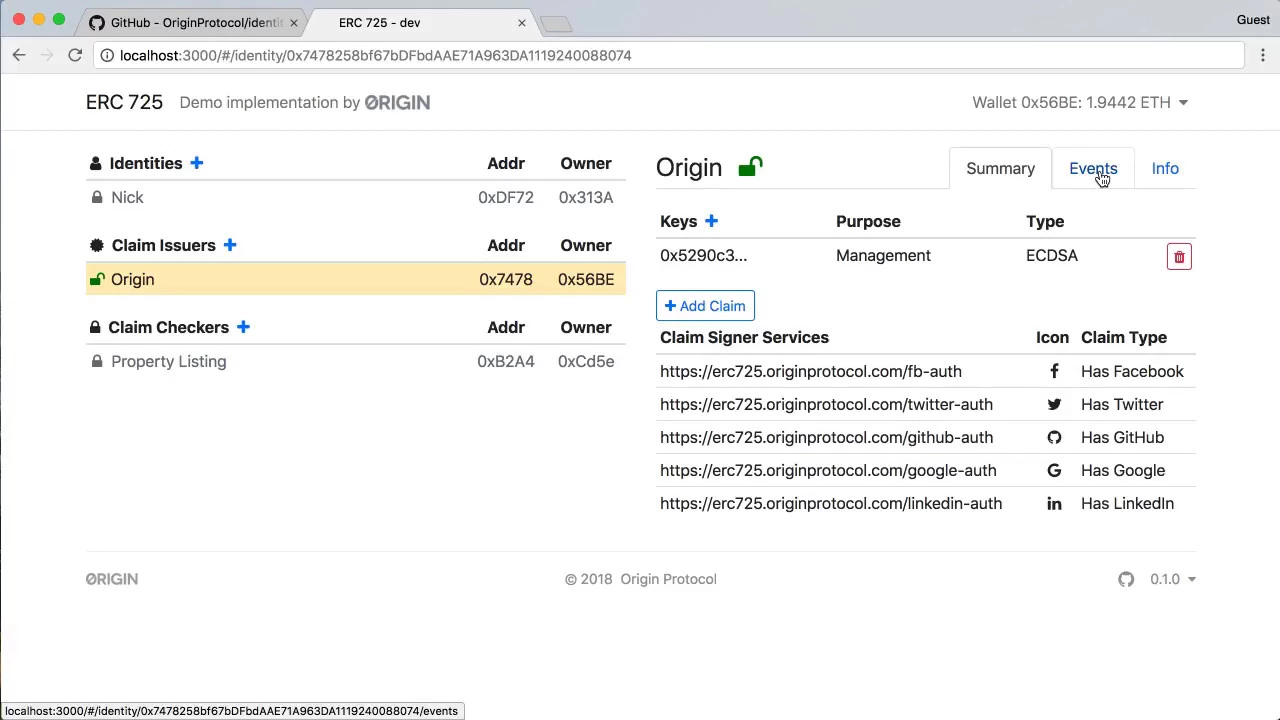
ERC 725 Identity Management: A Live Demo on Ethereum
@OriginProtocol
5.1K views•2018-04-19

52:00
Hybrid Key Establishment in Production: Post-Quantum Cryptography
@durumcrustulum
14.7K views•2025-08-27

21:15
Filecoin (FIL) Review: Decentralized Storage Explained
@CoinBureau
81K views•2020-10-23
11:49
Understanding Ethereum: A Comprehensive Beginner's Overview
@99Bitcoins
3.1M views•2018-06-26
Related Study Plans & Knowledge Roadmaps
Structured learning paths in Blockchain & Crypto
blockchain-and-crypto
MPC Wallets: TSS, DKG & Secure Custody
01Foundations of Cryptography & Digital Signatures
02Secret Sharing & Introduction to MPC
03Distributed Key Generation (DKG)
+ 2 more learning modules
24h5 modules
Explore Roadmap
blockchain-and-crypto
ERC-4626: Yield Aggregators & Leverage
01Blockchain, Ethereum, and Solidity Foundations
02DeFi Primitives: Lending, Pools, and Yield Farming
03Mastering the ERC-4626 Tokenized Vault Standard
+ 3 more learning modules
35h6 modules
Explore Roadmap
blockchain-and-crypto
DePIN: IoT Registries, Proofs & Rewards
01Foundations of Blockchain & IoT
02Introduction to DePIN and the Flywheel Effect
03Designing IoT Device Registries & Secure Identity
+ 3 more learning modules
30h6 modules
Explore Roadmap
blockchain-and-crypto
Building EigenLayer AVS: Operators & Contracts
01Blockchain, Ethereum, and Smart Contract Basics
02Proof of Stake and Ethereum Staking
03Introduction to EigenLayer and Restaking
+ 3 more learning modules
24h6 modules
Explore Roadmap