









![How to Become a Blockchain Developer? [Complete web3 Developer Roadmap]](https://i.ytimg.com/vi_webp/q54j35z3fPQ/maxresdefault.webp)










This video demonstrates how to create a basic ERC20 token on the Ethereum blockchain using Remix IDE and OpenZeppelin's pre-audited contracts. The process involves setting up a new Solidity contract file, importing the ERC20 contract from OpenZeppelin's GitHub repository, declaring the token name and symbol, implementing a mint function that uses OpenZeppelin's _mint method to create new tokens, and adding an 'onlyOwner' modifier to restrict minting privileges to the contract creator. The token is deployed to the Polygon blockchain using MetaMask, with minted tokens visible on Polygon Scan. The key insight is that tokens on Ethereum are essentially databases mapping addresses to token balances, and OpenZeppelin's standardized contracts provide secure, audited implementations that ensure compatibility with other Ethereum applications.
ERC20 Token Creation: A Step-by-Step Solidity Tutorial
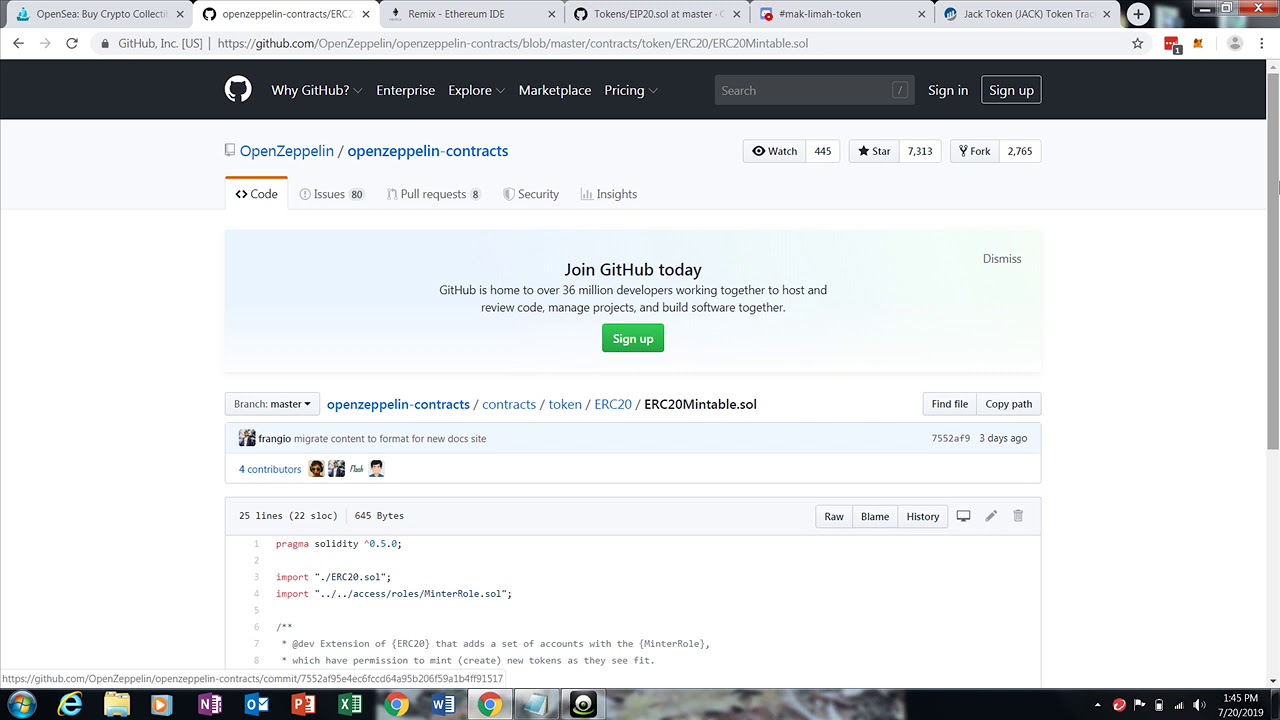
Added:hey Theodore here in this video I'm going to be showing you how to create a token and I'm also going to be walking you through me actually creating a token while explaining some of the stuff that you might not understand so the first place we're gonna go is this place called remix.othereum.org you want to make sure that it's exactly remix.othereum.org because there's a lot of websites that look like this that steal your crypto so I've double checked this one is remix.othereum.org and the first thing we're going to do is create a new smart contract so right here where it says contracts we're going to go ahead and click on that and that'll open up three smart contracts that are already created for us but we don't want to use these so I'm actually going to right click on this contracts right here and click new file now I'm going to call this one token.sol which stands for solidity I'm going to push enter and it will actually open that file up for us so right now we are in something called an IDE IDE stands for integrated development environment so this is actually ran inside your web browser and you can test your solidity code here so before I go into the specifics of what code we need to type out here I want to teach you a little bit about how a token actually works on the ethereum virtual machine so tokens are actually really simple I've got kind of a table here where we've got addresses and then we've also got balances here and literally what a token is is just an XY table of these two pieces of data where you have someone's accounts this is their wallet address maybe and then their balance of how many tokens they actually have so let's say I start off with 50 tokens this table would look like this now let's say that I transfer two tokens from me to bazel what it looks like on the chain and in the code is that I simply take two tokens from 50 so now my new balance is 48 and now bazel's new balance is two this is what is stored on the blockchain it's nothing too complicated it's not a literal token it's just a database of someone's account and their balance of a certain amount of tokens so for example if I wanted to send you 40 tokens they would deduct 40 from my balance which would leave me with 8 and then they would add 40 to yours which would give you 40. and this is exactly how tokens work so now that you have a rough idea of how tokens actually work that they're just a list of addresses paired with a balance let's go ahead and talk about something called open Zeppelin so open Zeppelin is this company out there that basically makes a bunch of money by doing security audits however as a way to advertise for free because it's kind of hard to advertise as a crypto company what they do is they give us free contracts that they've developed and audited to make sure that they're safe we can use them absolutely free and so that's what we're going to be doing to create this token we're going to be using the code that open Zeppelin has already created so that we know there's already been a bunch of eyes on this code and we don't have to worry about vulnerabilities another thing that open Zeppelin does is they abide by standards so we know that when we create this token it's gonna abide by the standards of all the other tokens out there so you can go to a play place called GitHub and view all of their different free contracts the specific one we're going to be looking at is a token contract it's called erc20 dot solidity and so this is the actual file that it takes to create a token now we're not going to be copying and pasting all of this code and you might not understand all of it but technically you don't need to to launch a token so if we go back up here to the top and we copy this URL this GitHub address we copy it and we bring it over to our remix IDE we'll just paste it in there like that we'll leave it for later now the first line of code that we're going to be doing is something called spdx- license identifier and I'm going to be using MIT and this single line of code right here is started with two backslashes and that means this is a comment which means it's not a real piece of code it's not doing anything it's just letting other people know how they can use our code now the MIT license basically says that anyone else can use our code and if you take a look at the open Zeppelin contract for a token here you can see they've also used an MIT license which means we're free to use their code so let's go back to the editor and we'll add in our second line of code now the second line of code is going to be telling remix which is this IDE this tool this online tool that we're using what version of solidity to use and it kind of is a little weird how you declare this but you say pragma solidity and then you declare the version number in this case we're going to be doing 0.8.13 and then we end any line of code with a semicolon that lets solidity know that we're done with this single line so the third line of code that we're going to be using is actually going to be using this GitHub link right here so we're going to go ahead and copy it and remove it from there and we can move everything else up to the top now our third line of code is going to be importing this open Zeppelin contract so that we don't have to write all of it ourselves and you do that by doing import and then you use double quotes and you put the link inside of there and remember we've got it in this line with a semicolon so now we've got three lines of code although technically one of them is a comment so it's not really doing anything the second one is just telling our compiler what version to use and our third one is literally importing someone else's code the next line that we'll be doing is actually declaring our smart contract so let's go ahead and leave some white space there so that it looks a little nicer we'll do contract and then what we'll do is we'll name our contract now I'm going to be calling this Theodore's token now Theodore's token is actually going to be utilizing this GitHub contract up here this solidity file of an erc20 token and the way that we use that code is we say contract theodors token is erc20 and the reason we say it is erc20 is because if we go back to this code here we actually are saying that our contract is actually this contract too in other words it's saying that we're copying all of their code now this specific code here actually takes in two arguments this means things you give it that it does with and in this case the two arguments we're going to be giving it are actually the token name and the token symbol so I'm just going to do token name as Theodore's token and then the symbol will do a comma and then the symbol will just be TT for Theodore's token and so now we've ended this line of code but we need to tell solidity that this contract has some data so we can open curly brackets and you can see that it actually automatically ended our curly brackets for us and we can push enter a couple times so now this is eight lines of code and if I were to deploy this this would be a real token in fact that's what I'm going to do next so if I do Ctrl s it will actually compile this project and what that means is it takes all of these human readable words and puts them into something called bytecode so that the ethereum virtual machine can actually read it and process it you'll see here that I got an error it even tells me what the error is it says source file requires different compiler version so if we go over here to where this one is this red circle you can see that our compiler is set to version 0.8.7 and we told it we're going to be using 0.8.13 so the simple fix is just to change this to 0.8.13 and now if we do Ctrl s again to recompile you'll see that it compiled successfully there's a green check mark right here now let's actually put this on a blockchain in fact I'm going to be using polygon so this tab right here is called your deployment Tab and right now we can deploy it on a virtual machine I'll actually show you how to do that really quick we have a virtual account here that's set up with a hundred ether and this is the contract that we want to deploy we could deploy any of these other contracts because we've imported them as well but specifically we want to deploy my token theodors token so let's go ahead and click the deploy button and you can see that there's a green check mark here that we have actually deployed this token so if you go down here and click this little drop down button there's a bunch of functions and other things that you can get data or input data about this specific token so for example we could get balance of our account so if we click this icon right here copy account to clipboard it copies our account address and we can put it in here and then we can simply click this button to call balance of and that will give us our balance of how many tokens we have which you can see are zero we don't have any tokens so we've basically created a token however there's no tokens out there we haven't minted any tokens so now I'm going to write something called a function that allows us the Creator to Mint ourselves some tokens so let's go ahead and do function and I think I'm going to call this one let's call it mint 50. mint 50. we'll do an open parenthesis and then a close parenthesis and then we have to tell solidity who can see this function in this case I'm just going to say public we'll open our curly brackets and we'll end our curly brackets and something I like to do is to take both of these highlight them and then push the tab button that way our curly brackets kind of line up and we don't get confused so now we have a function named mint 50 that we can use however right now it doesn't do anything so let's make it do something we'll do something called underscore mint which is a function that open Zeppelin has written in fact if we scroll down here just a little bit I'll make it a little bit bigger so everyone can see there should be a function in here called underscore mint that basically mints you some tokens there it is underscore mints and this is the code of what it does you can read it if you understand it and if you want to understand this and you don't you can go to whiteboardcrypto.com and join the wait list for my web 3 portfolio Builder bootcamp which is basically a 12-week program that teaches you how to completely understand all of this code and actually create any dap that you want to create anyways back to our code we're going to be using underscore mint and you can see that this function whenever we call it what it's going to do is whatever is inside of these curly brackets which is basically calling this function underscore mint however if we go back to underscore mint you can see that we have to give it two things we have to give it the account that we want to Mint tokens to and the amount of tokens that we want to Mint so let's go back to our IDE and give it those two pieces of data the first piece of data is going to be called message.cinder and this is basically a quick way to say whoever is calling this function is the one who should get the tokens that's who message.cinder is whoever is calling this function so if you call it you'll get the tokens if I call it I'll get the tokens next we're going to do a comma and let's say we called it mint 50 so we'll do 50 tokens however in reality solidity does not have decimals instead they use very large numbers and then we let other applications add decimals to that so for it to actually be 50 tokens we need to multiply it by 10 to the power of 18. however in solidity instead of this little carrot here for exponents we just do two asterisks so now if we click on this little X here and we basically get rid of that old contract we just wrote and we go ahead and click the deploy button and we control s to recompile you'll see that we get an error and that error is because we do not have a semicolon at the end of this line so let's go ahead and control s again and see if we get any errors we don't we got the green check mark So now let's click this deploy button to actually deploy this new contract I'm going to go ahead and copy my address and I'm going to put it in balance of to see how many tokens I have I have zero tokens now I want to use this function mint 50 to see if I can mint myself 50 tokens so I'm going to go ahead and click mint 50. you can see that a green check mark showed up and it successfully went through now if I click balance of again this should be a very large number starting with five zero and it is so if I take this number and I copy it and I open up I think it's eve converter yeah eth-converter.com and I put this value in as way you can see it equals 50 tokens like I said solidity does not like decimals so we have to do this now before I end this video you might be saying can anyone call this function and mint themselves 50 tokens the answer to that is yes yes they can we can go up here we can change our account to account number two and they can also mint themselves 50 tokens it went through successfully so how do we stop this well we apply something called a modifier that only certain people can use this function open Zeppelin has a modifier called only owner which we actually import whenever we import the erc20 token so let's go back to our IDE and add a special line of code called a modifier that is named only owner now only the owner of this contract only the person who creates it is allowed to call this mint function so let's go ahead and remove our old contract we'll do Ctrl s to save this and compile and you'll see that we get an error that we can't use only owner so now we have to import something that allows us to use only owner or write it ourselves and because this isn't the entire boot camp I'm not going to show you how to write it yourself but what we can do is go to open Zeppelin and basically I'm going to paste in their ownable contract here which is the code that you would need to write yourself if you wanted something to be ownable so I'm going to go ahead and copy this code and we're going to be importing it as well so import with our semicolon at the end there and because we want this to also be ownable we just need to add this to what Theodore tokens is using so Theodore's token is using an erc20 contract we can also say that it's using an ownable contract and when we compile this we should get the green check mark just like we just did and so now we can deploy this contract click the drop down button and mince ourself 50 tokens now if we copy our address and put it into balance of and we paste this here we should see that we do have 50 tokens and now if we change our address from account 2 to account 3 and we try to call Mint 50 we should get an error so let's go ahead and click this button and you can see that we got an error the error is caller is not the owner so now other people cannot mint themselves tokens cool so how do we actually get this onto an actual blockchain well I'm glad you asked let's change this environment right here we'll click on it and we'll go to injected provider dash metamask for some reason it's not working so I'm going to remove our previous contract and refresh the page we'll reload we'll go to contracts open up our token.sol that we were working on we'll go to our compile tab control s to compile it and see if it works and it does so now let's try to change from remix VM to injected provider and metamask will pop up and we should say yes to this I want to count one which has 10 Matic in it we'll connect it and we should be good to go so I'm going to go ahead and click deploy here metamask will pop up asking me to deploy this contract I'm going to click edit and I'm going to speed this up basically this works as a bidding system I'm going to go ahead and click edit and try to speed this up and when that goes through we will have success successfully launched our very first token it went through I'm going to go ahead and click on it it'll open up in polygon scan and right now it's not showing up and in a couple seconds it should let's refresh the page and see if it shows up and it does you can see who created the contract you can see the actual contract itself right here how much it costs to deploy this so this was around 50 cents to make this token polygon scan doesn't know this is a token yet so let's go back to our IDE and click this drop down button on our newly minted polygon contract and let's mint ourselves 50 tokens once that goes through we can then go back here and refresh the page to see if it updates and there we go you can see that we've minted 50 or called the function mint 50 and if we go into this transaction you can actually see that we went from basically nowhere into this account for 50 of Theodore's tokens usually when you're minting tokens and you're creating new ones it shows from null so we can actually click on this and see Theodore token's information that there is one holder that there's only been one transfer and there's 50 total Theodore tokens we can also sort by holders and we can see who holds the most which is the account that I just minted them to and if I wanted to I could send these tokens to anyone else so wrapping this video up we created a token in less than 10 lines of code this is actually a rather safe token as well we also deployed it so that it was on a real blockchain if you thought this was interesting and you'd like to learn more about the ethereum virtual machine and writing smart contracts and even building entire dapps you can join the waitlist for my boot camp that's going to be launching really soon you just go to whiteboardcrypto.com enter your name your email and you'll join the wait list tomorrow I'm going to be sharing a video where I basically create a bunch of meme coins that have really unique abilities so for example I created a token that you can only move one token per day I also created a token that you can't sell for an entire year there's also a token that if your account is dormant for more than 24 hours someone can steal your crypto which also means if you find other accounts that are dormant you can steal their crypto they're definitely meme coins though and to be quite honest I coded them just like I coded this except the lines of code that I added are a little bit more Technical and a lot more thought went into them I highly recommend joining the waitlist I really hope you enjoyed this video and most of all I hope to see you in tomorrow's video where I show you some meme coins that I've built thanks for watching and I'll see you guys later
Up Next

What Is the Ethereum Virtual Machine (EVM)? A Beginner's Guide
@busyjordy
2.3K views•2023-04-09
Hybrid Key Establishment in Production: Post-Quantum Cryptography
@durumcrustulum
14.7K views•2025-08-27
What Is AAVE? Decentralized Crypto Lending and Borrowing Explained
@WhiteboardCrypto
420.6K views•2021-05-25
Understanding Ethereum: A Comprehensive Beginner's Overview
@99Bitcoins
3.1M views•2018-06-26
Related Study Plans & Knowledge Roadmaps
Structured learning paths in Blockchain & Crypto