

![Penjelasan Ethereum dan Smart Contract Bagi Pemula | Kenapa Harga Ethereum Bisa Naik? [5 Menit]](https://i.ytimg.com/vi/dQtZduyRmw4/maxresdefault.jpg)














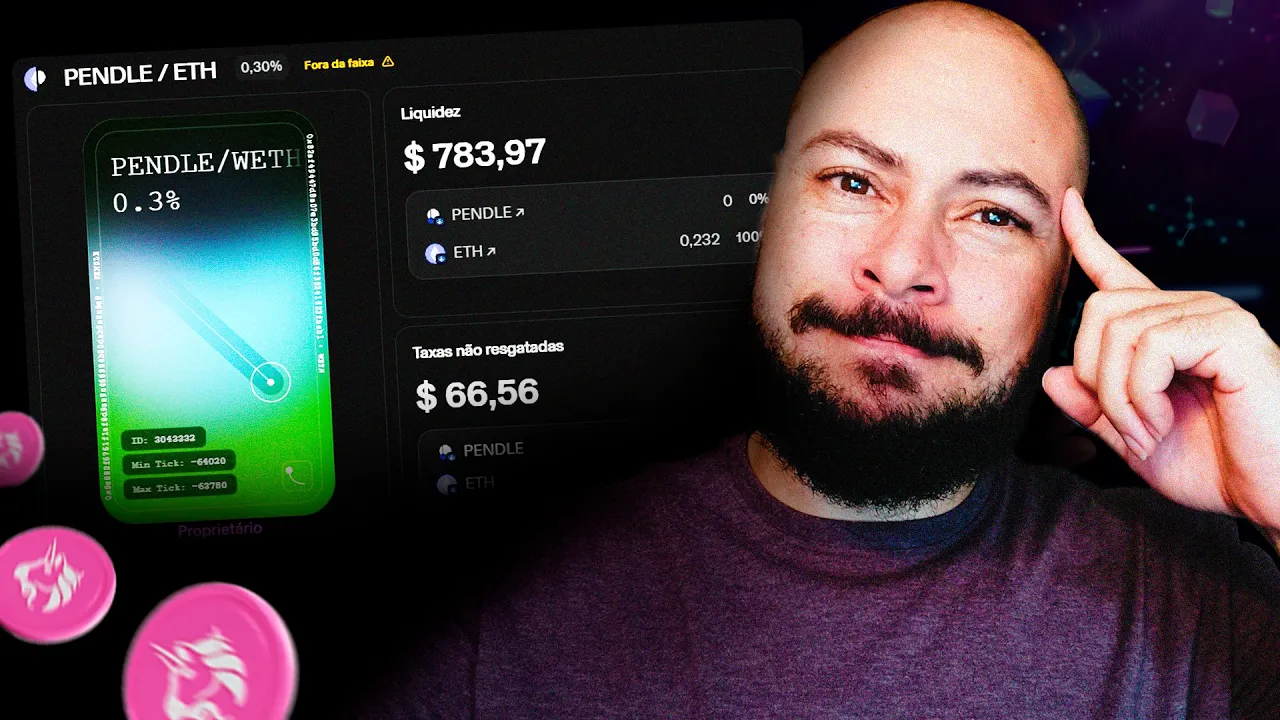














A liquidity pool is a crowdsourced pool of cryptocurrencies locked in a smart contract that provides liquidity for decentralized exchanges (DEXs) by allowing users to deposit assets and receive liquidity provider tokens (LPTs) representing their share, which entitles them to transaction fees; this mechanism, pioneered by platforms like Uniswap and PancakeSwap, enables traders to swap assets without traditional order books by using automated market maker (AMM) technology, where liquidity providers can define participation ranges to optimize capital efficiency and reduce slippage.
Liquidity Pools in Crypto: Uniswap & PancakeSwap Explained
Added:Fundamental understanding of blockchain technology and how smart contracts function on networks like Ethereum.
The distinction between Centralized Exchanges (CEXs) using order books and Decentralized Exchanges (DEXs).
Basic cryptocurrency concepts, including web3 wallets, gas fees, and token standards like ERC-20 and BEP-20.
The economic concept of market liquidity and why it is critical for facilitating efficient trading.
In-depth analysis of Impermanent Loss (IL) and how price divergence affects the profitability of liquidity providers.
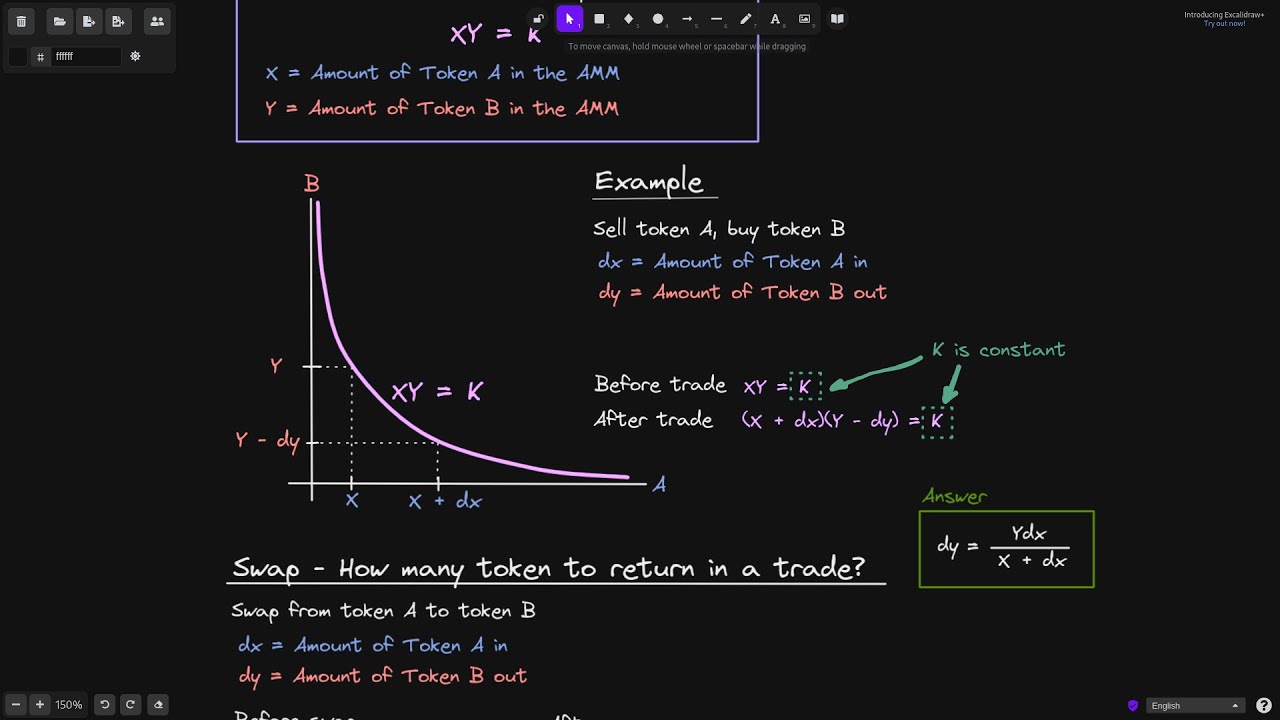
The mathematics behind Automated Market Makers (AMMs), specifically the Constant Product Formula (x * y = k).
Advanced liquidity provision strategies, such as Concentrated Liquidity introduced in Uniswap v3.
Yield farming optimization and the role of yield aggregators like Yearn Finance in compounding returns.
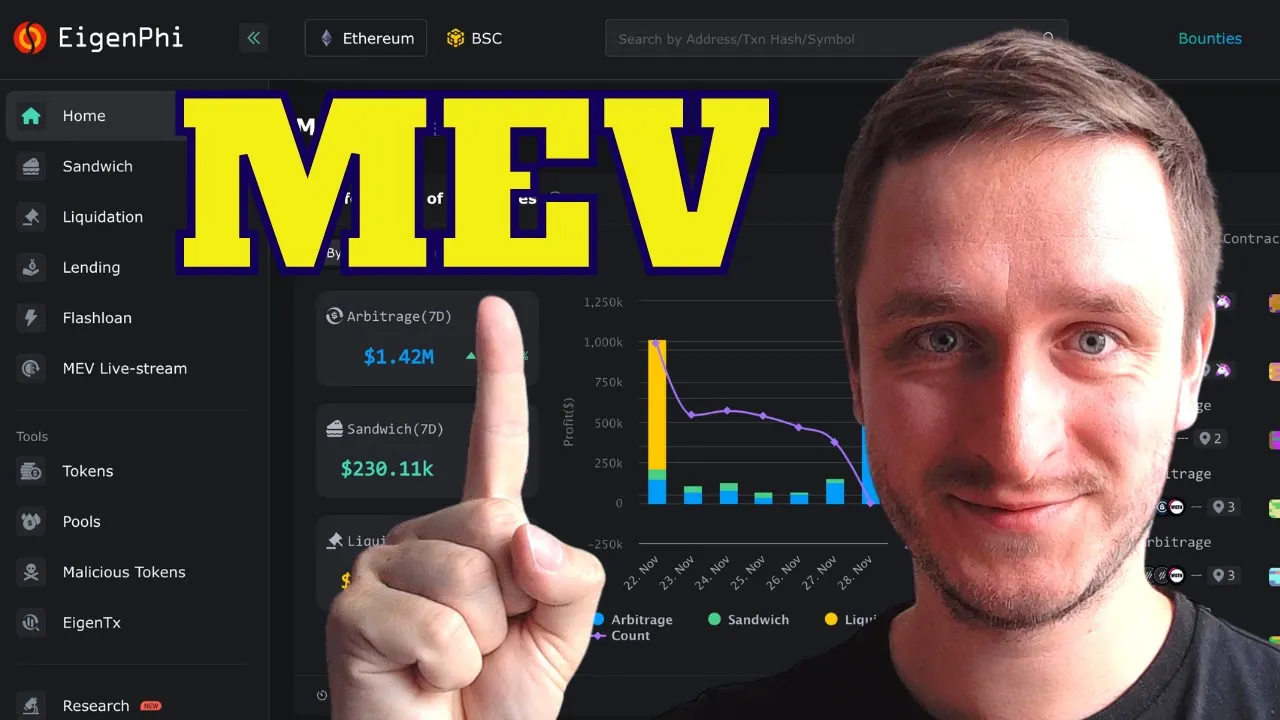
Understanding slippage, price impact, and the influence of Maximal Extractable Value (MEV) on decentralized trades.
412 views18likes8:56Original Release: 2021-12-05
how does the liquidity pool work in crypto uniswap and cake decentralized finance or defy has revolutionized the crypto industry before defy investors heavily relied on centralized exchanges and banks for trading and booking profits now there are many decentralized platforms for buying selling and parking crypto to generate passive income through yield farming hey guys welcome back to crypto animations the channel where we explain to our viewers about the different types of cryptocurrencies and everything new investors should know in today's video we will talk about what liquidity pools are how they work what they do and more so be sure to be attentive because you clearly don't want to miss out on an amazing opportunity to win a giveaway of a 25 crypto coin of your choice also if you are new to the channel be sure to subscribe to the channel and turn on post notifications by hitting the bell so you never miss any of our uploads now with the intro out of the way let's get into our topic for today a liquidity pool allows crypto traders and investors to gain market liquidity in the decentralized finance markets more specifically liquidity pools are a pool of funds placed into a smart contract to provide liquidity for decentralized exchanges also known as dex lending and borrowing protocols and other defy applications you can think of a liquidity pool as a decentralized alternative to an order book or matching engine powered by smart contracts crypto liquidity pools play an important role in the decentralized finance ecosystem in particular when it comes to decentralized exchanges liquidity pools are a mechanism by which users can pool their assets in a dex's smart contracts to provide asset liquidity for traders to swap between currencies liquidity pools provide much needed liquidity speed and convenience to the defy ecosystem before automated market makers came into play crypto market liquidity was a challenge for dexes on detherium at that time dexes were a new technology with a complicated interface and the numbers of buyers and sellers was small so it was challenging to find enough people willing to trade regularly amms fixed this problem of limited liquidity by creating liquidity pools and offering liquidity providers the incentive to supply these pools with assets all without the need for third-party mediators the more investments in a pool and the more liquidity the pool has the easier trading becomes on decentralized exchanges when liquidity providers deposit funds in a pool they receive a liquidity provider token also known as lpt representing their pool share liquidity provider tokens are used to determine the amount of funds lps contribute to a pool and the allocation of transaction fees they receive for providing liquidity this enables lps to have control over their assets while they are in the pool considering lpts have the same properties as other tokens of the blockchain they run on they can be staked traded or transferred to different protocols of the identical blockchain for example a bnb busd lpt can be staked on pancake swap to earn the trading platform's protocol token cake i know what you're thinking why are liquidity pools so important any seasoned trader in traditional or crypto markets can tell you about the potential downsides of entering a market with little liquidity whether it's a low cap cryptocurrency or penny stock slippage will be a concern when trying to enter or exit any trade slippage is the difference between the expected price of a trade and the price it is executed this market order price used in times of high volatility or low volume in a traditional order book model is determined by the ask spread of the order book for a given trading pair slippage is most common during periods of higher volatility it can also occur when a large order is executed but there is not enough volume at the selected price to maintain the bid ask spread this means it's the middle point between what sellers are willing to sell the asset for and the price at which buyers are ready to purchase it liquidity pools aim to solve the problem of illiquid markets by incentivizing users themselves to provide crypto liquidity for a share of trading fees trading with liquidity pool protocols like bancor or uniswap requires no buyer and seller matching this means users can simply exchange their tokens and assets using liquidity provided by users and transacted through smart contracts uniswap is the world's top decentralized exchange it runs on the ethereum blockchain and uses groundbreaking automated market maker technology to execute trades in 2020 uniswap infamously flipped coinbase's total trade volume the event marked a watershed moment in the evolution of dex technology from novelty to the future of finance trading on uniswap doesn't require counterparties like buyers and sellers instead you trade assets with the uniswap liquidity pools using the exchange's swap interface anyone can provide liquidity to the pools and anyone can trade with them this basic yet elegant exchange format has proven so popular that uniswap's structure gets cloned nearly daily suppose a pool that started with one eth and 2000 dai if you wanted to buy 0.5 eth the trade would throw the price of eth and dai wildly out with the larger market it would be so severe that it's unlikely that anyone would ever make such a large trade so if no one is ever willing to make trades that use most of the liquidity on one side of any pool that also means that no one would ever buy nearly as much eth as sits in the whole pool or almost as much dai only a portion of it is ever likely to be traded and so there is wasted liquidity uniswap's next version will create a different system one in which a liquidity provider can define a range of the amm curve at which they will participate if the price falls outside of that range their liquidity just sits it out that might sound like wasted liquidity but people will load up in the part of the curve where trades are most likely so it actually means there will be a lot more liquidity that has the impact of allowing traders to make much larger trades within the normal expected range of a given pair stablecoins provide the most straightforward example of why this is powerful one usdc should generally trade for one dai because both are closer to the dollar yet in simple amm a big trade can knock the prices for the two widely off the mark with uniswap version 3.0 though a trader will be able to define their liquidity as only participating in trades where dai sells for no more than a dollar one and no less than 99 cents usdc if they put in one million dollars of liquidity with that parameter a trader could be guaranteed a trade of say five hundred thousand dollars with slippage no greater than a penny pancake swap is a massive decentralized exchange and yield farming platform on binance smart chain you might be thinking if uniswap already exists why use pancake swap there are several reasons but the best have to do with trading fees yield farming and transaction speed for starters pancake swap trades tokens using the bep 20 binance token standard so if you intend to trade ethereum tokens on pancake swap you need to use the binance bridge to change your erc 20 tokens into bet 20 equivalents once done you're inside the bsc ecosystem and can enjoy the low fees afforded by the network's high throughput capabilities if it seems like a hassle converting your tokens just to use pancake swap consider the insane amount of yield farming opportunities the exchange offers pancake swap farms and cereal pools feature 200 plus yields paid in the exchange's native cake token on top of yields from farming staking your cake tokens entitles you to revenue share collected from trading fees the huge defy yields plus the revenue sharing feature of the cake token explain why pancake swap has its total value locked into its platform than uniswap right now pancake swap has 7.4 billion dollars locked across its liquidity pools and farms in the early phases of defy decks suffered from crypto market liquidity problems when attempting to model the traditional market makers liquidity pools helped address this problem by incentivizing users to provide liquidity instead of having a seller and buyer match in an order book this provided a powerful decentralized solution to liquidity in d5 and was instrumental in unlocking the growth of the defy sector liquidity pools are one of the core technologies behind the current defy technology stack they enable decentralized trading lending yield generation and much more these smart contracts power almost every part of defy and they will most likely continue to do so well guys that's all we have for you today what are your thoughts on liquidity pools in cryptocurrency let us know in the comment section down below if you guys like this video then be sure to give this video a big thumbs up also if you don't want to miss out on any new future videos then be sure to click on the subscribe button and turn on the notification under this video so that you're notified the next time we upload a video on the latest cryptocurrency news thanks for watching we hope you have a great day today and as always we'll see you in the next video
Up Next
90:40
EVM Internals: Solidity, Bytecode, Memory, and Storage
@EthereumEngineeringGroup
54.7K views•2020-06-10

52:00
Hybrid Key Establishment in Production: Post-Quantum Cryptography
@durumcrustulum
14.7K views•2025-08-27

9:11
What Are Gas Fees in Crypto? A Complete Guide to Ethereum Network Costs
@CryptoAnimations
3K views•2021-12-01
11:49
Understanding Ethereum: A Comprehensive Beginner's Overview
@99Bitcoins
3.1M views•2018-06-26
Related Study Plans & Knowledge Roadmaps
Structured learning paths in Blockchain & Crypto
blockchain-and-crypto
MPC Wallets: TSS, DKG & Secure Custody
01Foundations of Cryptography & Digital Signatures
02Secret Sharing & Introduction to MPC
03Distributed Key Generation (DKG)
+ 2 more learning modules
24h5 modules
Explore Roadmap
blockchain-and-crypto
ERC-4626: Yield Aggregators & Leverage
01Blockchain, Ethereum, and Solidity Foundations
02DeFi Primitives: Lending, Pools, and Yield Farming
03Mastering the ERC-4626 Tokenized Vault Standard
+ 3 more learning modules
35h6 modules
Explore Roadmap
blockchain-and-crypto
DePIN: IoT Registries, Proofs & Rewards
01Foundations of Blockchain & IoT
02Introduction to DePIN and the Flywheel Effect
03Designing IoT Device Registries & Secure Identity
+ 3 more learning modules
30h6 modules
Explore Roadmap
blockchain-and-crypto
Building EigenLayer AVS: Operators & Contracts
01Blockchain, Ethereum, and Smart Contract Basics
02Proof of Stake and Ethereum Staking
03Introduction to EigenLayer and Restaking
+ 3 more learning modules
24h6 modules
Explore Roadmap