







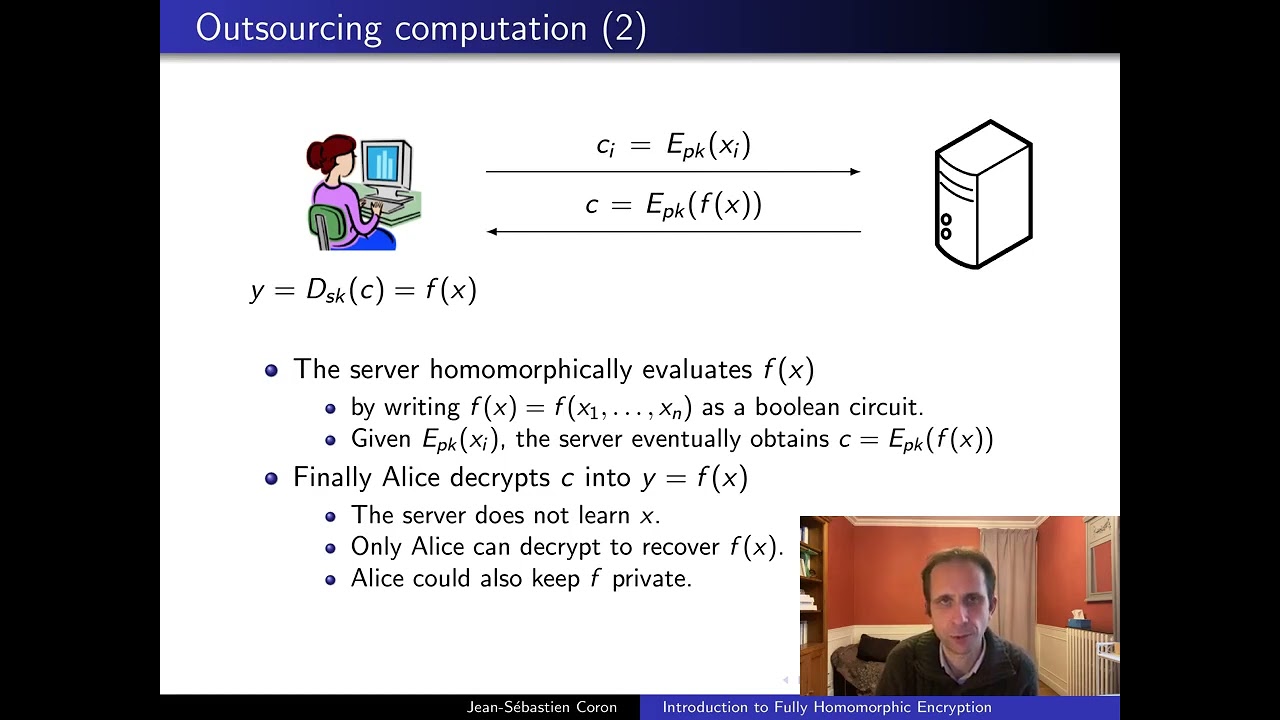












Orion Finance demonstrates how Fully Homomorphic Encryption (FHE) enables private vault strategies in DeFi by encrypting portfolio allocation weights (percentages of Total Value Locked) while maintaining composability with existing Ethereum liquidity. The protocol uses an intent-based architecture where portfolio managers submit encrypted target portfolios, and a co-processor decrypts and validates them without revealing the actual strategy to anyone, including the vault deployer. This approach allows asset managers to protect their proprietary alpha while still benefiting from onchain settlement, auditability, and composability features.
Privacy-Preserving Portfolio Management with FHE | Zama Demo
Added:Fundamental concepts of Decentralized Finance (DeFi), including smart contracts, on-chain asset management, and the concept of composability.
The inherent privacy limitations of public blockchains, specifically how transaction transparency leads to issues like front-running and MEV (Maximal Extractable Value).
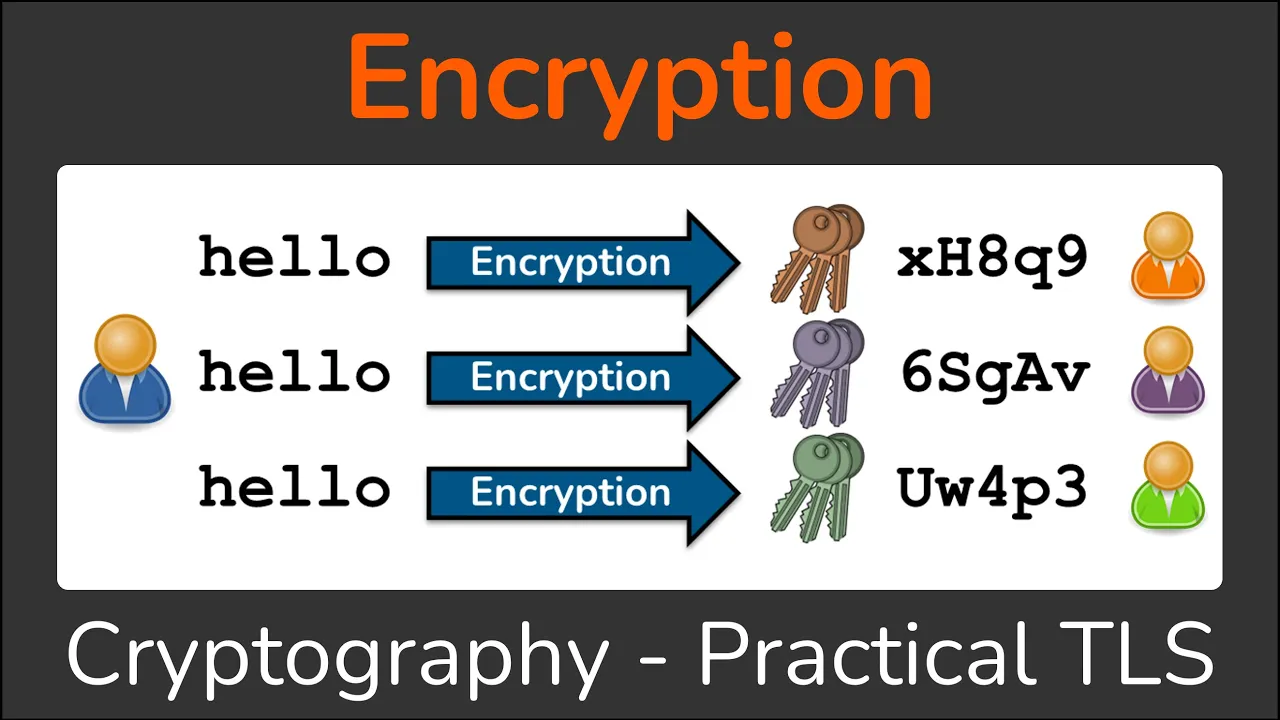
Basic cryptographic principles, including the difference between symmetric/asymmetric encryption and the limitations of traditional encryption when processing data.
An introductory understanding of Fully Homomorphic Encryption (FHE) and its core premise: performing mathematical computations on encrypted data without decrypting it first.
In-depth study of FHE-EVM (Fully Homomorphic Encryption Ethereum Virtual Machine) and how to write confidential smart contracts using Solidity and specialized libraries like Zama's fhEVM.
The integration of Zero-Knowledge Proofs (ZKPs) alongside FHE to achieve both privacy and verifiable off-chain computation in decentralized networks.
Advanced cryptographic schemes such as TFHE (Torus FHE) and CKKS, and their specific applications to real-world financial mathematics and machine learning.
Designing decentralized 'dark pools' and private order books that prevent front-running while maintaining liquidity and regulatory compliance.
415 views41likes47:06Original Release: 2025-10-30
[music] Hello everybody. Uh welcome Matio. So Matio is the CEO and founder of Orion Finance and Oruroi Orion Finance is a portfolio management protocol. Uh so it's designed to optimize onchain capital efficiency while obviously preserving uh privacy for managers and auditability for users. So it integrates uh advanced cryptography like FHE what we do at Zama and the FHEVM and the goal is to power private vault strategies encrypted performance tracking and protecting manager alpha while maintaining uh something auditable and verifiable. So that's enough from my side. Uh, welcome Matio and I'll let you present and demo Orion Finance.
>> Cheers. Thank you very much Jason. Nice to see you everyone. Um, yeah, it's a pleasure to be here. I would like to present more starting from the business scale let's say. So the opportunity we saw and why we started working using Zama. Um we saw a a big growth in asset management being performed on chain.
This was particularly happening last summer when what's called now risk curator wasn't even a category. We were around here looking around the growth of the vault curation business. That's that overall with a few exception let's say more historical uh started getting a lot of traction in the world of lending.
um we we really saw this appearing and we saw an interesting opportunity and I would say contradiction in the market uh in the sense that today we have a few billion being managed in so-called vaults probably many of you are familiar with vaults uh vaults enable us to tokenize funds and basically to exchange an underlying token with a share token that's built to systematically and algorithmically smart contract technology follow the P&L of a strategy profit and loss Uh now in the business model asset management of course there is uh a fee structure that's associated with the manager itself that is a management and performance fee usually. Uh so I would say coming out of this reflection looking at the opportunities offered by blockchain technology we identified what we see as a contradiction in the sense that asset managers today wanting to benefit from inhabiting uh onchain asset management. So making use of 24/7 settlement um verifiability coming with the transparency composability uh all these beneficial properties of not only tokenizing assets on chain but tokenizing basket products let's call them so portfolios on chain uh are today obliged to take in full transparency when it comes to uh wanting to benefit from the composibility and verifiability of blockchain. Of course, there are a few exceptions uh coming from standalone and solutions built exactly for this.
But um the value added in Z specifically that we can tap into the liquidity of in this example Ethereum mainet without breaking down the liquidity and losing composibility opportunities. So we can really benefit from uh the value of a mainet on L1 or even L2 in the chain without giving up [clears throat] on the depth of the liquidity. Um so I would say this is where everything started. Um another important feature that we value a lot in the FHVM ecosystem is the selective privacy feature we can have.
uh today of course uh it's uh difficult to build privacy preserving portfolio management that solutions that are built on baskets of privacy preserving tokens.
Of of course there is a big use case in confidential token per se confidential swaps and if you look into some documentation there's a lot but for us it was really about uh the confidentiality of the alpha so of the strategy generating the profit and loss of the share token associated with the vault rather than protecting the privacy of the LP tokens being exchanged as an underlying for the vault. Um, and this is very useful in the in the way of building smart contracts using FHVM because one as a builder can uh discretionally select features that require privacy and features that require full transparency. Um, and I would say in general it's super powerful to inhabit an infrastructure in which verifiability is not necessarily imply transparency. So what we like about Ethereum, we we never say like the famous sentence, don't trust verify, we never say don't trust look. The transparency is a way for us to verify and we really don't care about the transparency per se. What we care about is the verification and verifiability with FHVM is very powerful and uh yeah we can dig into how we enable this. Um maybe before starting with the code I wanted to go through um our infrastructural design so that you understand how privacy is achieved uh in in the Orion protocol. Basically uh we have a pseudo smart contracts EVM um in which we enable asset managers to deploy funds. These funds belong to a whit listed uh investment universe assets. So these funds can be confidential but can also be non-confidential. Think about the case of fully passive products in which the allocation of a basket of assets is solely determined by onchain states. There is no need for an offchain entity with alpha or IP that's driving the allocation of capital where in this case also privacy is not that needed. At the same time when with more aggressive strategies in which both the information and the IT of the manager is highly valuable confidentiality plays a big role. So in our infrastructure today we are able to deploy both transparent and encrypted vaults. Today of course we will focus on encrypted and the privacy is uh how is it achieved. Our protocol is the first intentbased >> [clears throat] >> uh vault curation infrastructure. This means that uh curators uh are not submitting rebalancing orders directly interacting with the markets and you know this could be more for markets year vaults uh more for meta vaults pendal principal token and the yield token you know at the end of the day here it's a it's a matter of defining the right adapters for liquidity management this interaction between the there is no direct interaction with the orders of the vault curator vault manager portfolio manager you Now curator has become the word but you know portfolio manager is the word in traditional finance. There is no interaction between portfolio managers and the actual investment universe. There is just a submission of an intent. So a target portfolio in our case a target portfolio is and I guess I can show you directly from the codebase. Uh let me see where is the protocol. Yeah in particular in the crypto bolt case.
Sorry, I'm in the factory.
It's defined as a list of encrypted intents. The encrypted intent for us, it's a tuple of token. So the asset I want to buy and the weights. We decided to define an interpretation here which is weight in the sense of percentage of TVL. Since this is the natural way for asset managers and quants to define a portfolio they have a certain AUM assets under management in the world of D5 this is TDL total value locked and they're interested in defining an allocation that's defined in percentage this is useful also to to to perform this management so coariance estimation terror risk management so to use a a normalized unit and at the end of the day the vault is defined as a list of these objects so we can define an intent which is a by portfolio manager as a list of tuples in which the weight in this encrypted case is an external ew encrypted integer coming from the f library.
Then as I said there is a degree of separation between the liquidity and the manager because of course there is some kind of batching happening enabling offuscation and confidentiality in which asynchronously we have an engine that's in a centralized manner is able to pull multiple intents from multiple vaults bash them in an encrypted sense and then decrypt the outcome. This enables us to have a system in which not even the deployer of the product itself are able to re reverse engineer the target portfolio of a manager and of course given that this is valuable specifically for cases in which the AP of chain nothing about the strategy of the vault manager is visible but the of course the LP interactions and more specifically the DNL line what's called the equity line of the fund. So the the historical time series of the prices of the share token associated with the fund and this is usually the setup you have in an hedge fund like infrastructure.
With this however because the token associated with the confidential fund is an ERC token you gain all the value of being part of of an EBM chain. So you have a composibility real-time settlement full auditability. Um you can also play with the degree of permissioning you want to achieve in a vault. In fact, we set uh and again here I can show you in the parent vault contract about both whitelisted asset. This means that a manager may be interested in enabling LPS to verify that the strategy is investing only in a set of whit listed investment universe assets without actually revealing the strategy.
And so there is an interesting balance between how much the manager wants to reveal about the strategy and how much needs to be protected to justify and maintain the hedge basically.
Okay.
So hoping the architecture is clear.
>> Maybe matio we already have a few questions from >> Okay. I guess we can stop here for yeah jumping into the code. Yeah, I think it's some general questions uh you can easily answer. So, first one is uh so can I understand that Orion Finance is kind of defy app with FH feature?
>> I think the answer is yes.
>> So, this is this was from Chen. Then another one is from Neo. How is Orion Finance using Zamas FH to protect portfolio data? what's the real difference for user versus regular vault? So I think the question is from the users perspective what concretely without talking about the maybe the the tech what is changing >> right I would say the good thing about users in the sense of LPs in the vaults don't have a big UX disruption uh we have an app that we are actively working on and this is what we have today uh the AP the the the UX of the LP interacting with the vault is the same as any other DAP main DAP there is the ability to deposit there is an underlying token associated with your ion vaults and these are redeemable using the share token of the vault so nothing changes ERC20 for ERC 4626 everything is transparent the amounts are visible on chain what's different is for the curator and that's a bit nuanced in the sense that from the perspective of these users nothing is changing like the a experience here and here is exactly the same. What is different here? I would say we we we worked hard to make it seamless for portfolio managers as well and we can show you now in the demo how it is the case to have a same UX both for interacting with a confidential fund and a fund. So that and and I would say also yeah the SDK from Zama and everything that uh that's part of the Zamak processor did a lot of heavy lifting. We try to do an extra mile in providing the same UX for managers as well. But we can look then at the contracts. So the implications are at the contract level and that's where the the tricky part happens when it comes to protecting the hedge of an asset manager on chain.
>> So I'd like our audience to understand very well this point. Uh can you explain a little bit more who are the big uh portfolio manager you are you are mentioning uh uh the life whose life will be different once this product is in production.
>> Yeah definitely. So a big family is what I call risk curators today. These are managers that are inhabiting already blockchain protocols and you have a a new category that came up a few months back on defile lama and you can just scroll over them. uh as I said the market today is mature when it comes to managing basket products of exposure to lending market but there is a big market of uh tokenized products in which there is an active of chain management happening already outside the lending something else maybe to be under to be stressed and I guess this goes hand in hand with our conversation with uh Abian Amro a Dutch bank that's looking into digital assets something to stress is that today looking Looking at Defy Lama, we can see the TVL associated with players that are already in the field of onchain asset management. It is yet to be determined the size of the market for asset managers that are willing to go on chain and experiment with this technology but are blocked among other things because of the lack of privacy.
So you know we have digital asset managers such as Vanek, Fidelity Digital, uh Krock to some extent um that are more and NAB number of course is another one that are more and more dedicated to digital asset technology and we hear from many of them that privacy is a blocker. So change life will change for these players to the extent that would be they would finally be able to participate in the onchain asset management economy.
>> All right. So right now they are not on defy they cannot join because it's too transparent and they don't want to reveal their strategy to the entire world. Uh which is we have a good transition with the last questions we have for this first part uh from Hung.
So in the current blockchain and security market there are many other solutions being developed. Uh how do you assess Zama's competitive position and what are its biggest strengths and the area of improvement?
Uh so this is a a really good question.
I'll let you Matthew answer but I I can just for the context give other privacy solutions which are ZK based, Tbased, MPC based for some of them and one big competitor that we often forget is just centralized stratfire which is our biggest competitor in the space. So what's difference with Zama from from your point of view Matthew?
Yeah, thank you. Yeah, thanks. Also, yeah, I appreciate the distinction you made. Like there is a bit of a tribalism when it comes to solutions for privacy preserving infrastructure. I think you did a great job with you are doing a great job with the with the open Zeppelin initiative to abstract away that differences and stress and stress more the the added value we can bring to to the big market of asset managers that are already still part of thy. Um so what one big distinction I see I mean uh when it comes to distinction between doing asset management on chain versus offchain as I said composibility 24/7 settlement nom minimum ticket size and therefore big democratization these are all valuable things that we should keep in mind uh now keeping this in mind starting to perform asset management on chain brings some problems that you know we see solutions being implemented to do this as tech as an L2 to um other blockchains which are not compatible with uh with Ethereum mainet for example I'm thinking about rails or canton network more recently uh all of these give up on the on the deep integration with with an L1 like Ethereum so they give up on security they give up on liquidity and uh I would say that all these reasons are a big driver for for us to to go with Zama because we can take everything that's already existing bulletproof mainet Ethereum that's something we trust in that's where the market is mature and there is the case for building portfolio products and just add you know it's it's as easy as adding an import contract I think two in this case yeah two and uh and you're good to go and you don't need to change anything about uh the composibility you have with third party protocols and I would say that's the main driver.
Um am I forgetting something about the question?
>> No, you know I think you did a great answer and you highlighted two of the core uh feature of ZMA protocol uh which are first as you mentioned uh you can build and you can tap into existing liquidity. So today uh if we zoom out most of the liquidity is on ethereum for defy most of the stable coin are there.
So instead of launching a new layer and we have seen we are seeing lots of new layer ones recently a new layer to a new ecosystem we are already you can stay where your money already is. This is big compared to most of the competitor. And the second one as you mentioned also is the simplicity of the devx. uh you just have to uh you use solidity. It's a simple new data type and uh it's quite easy to integrate for them.
>> So thank you Ha for this questions. So if you'd like to go on with the demo mat go on. We still have many more questions but I'll ask a little bit later.
>> Yeah. Okay. Thank you. Yeah. Let's try to dig a bit deeper into the contracts.
Um so we can close this. Um, by the way, our protocol is open source, so feel free to take a look. We are happy to to work in this way. Um, so I think we can go straight into the contracts. Let me let me think about what's best way to move forward because I would like not to waste time on the transparent equivalent.
Um, as I said, there are two places.
Maybe let's go super fast on where FHDM is integrated in our smart contract suit. As I said the encrypted vault. So here in this contract we are here we are in this contract here and uh these are the two imports we do when it comes to Z. Uh the supply config is something we need to inherit from when we define the contract so that we can uh our contract knows where the processor is and all the various gateways that live offchain um with respect to Ethereum maintenance of course. And here we import a few types. So we have an encrypted integer encrypted boolean and the FH uh main object.
In our intentbased protocol we have two states. One is the intent submitted by the portfolio manager which as I said is a list of addresses and percentage of TVL in an encrypted form and portfolios which are presenting shares.
Um I think we can go fast on this but the function I would like to show you is basically this submit intent. I think it's the most interesting one and it's what's enabling us to take the the perspective of the asset manager cuz as I said there is nothing innovative and I guess in a good sense about the interaction of DP with these products it's any it's like any other D you don't see any difference I would like to show you how to the extent to which accurator also doesn't see a big difference so the submit intent is associated with an encrypted uh list of objects the additional And this is something you also see in the Zama documentation. There is a proof that's enabling us not to blindly trust a black box living off chain but receive some guarantees about the computation being performed offchain when it comes to encryption in this case.
Um yeah I don't think there is a lot to discuss here at least not worth doing it now. Um I would like to go straight into um the callback function. So as you know Zama is able to decrypt uh a synchronously the states submitted to the contract. So in this submit intent function for example uh we have this is intent valid flag which we set to false by default and we let the zamak processor give it give us back the decrypted state of this variable.
So what is a valid intent for us? It's an intent for which each address belonging to the submitted intent list is whit listed in the vault and it's an intent in which the entries of the quantitative values sum up to one and are all positive definite. Um so the the beauty of FH is that we can perform operations on encrypted numbers return and that's why it's homorphic returning uh encrypted results and then decrypted results without needing to know anything about intermediate states. So in this case we initialize the total weight as an encrypted zero. So this is an encrypted number that we initialize to zero. But in the world of encrypted numbers, we then go forward summing up intermediate entries of the weights vector. So these weights we need to perform a transformation from the external encrypted type into the actual u 128.
That's a nuanced uh step. The interesting one is this addition. This is an addition performed in the world of encrypted numbers. So we take encrypted zero, we add it to encrypted something which we don't know where it is.
We can do this for every weight entry of the portfolio and then end up with a total weight state that is some summing up to something.
Once we have this we can validate the intent by asserting some equality condition again in the world of encrypted numbers the encrypted states it's not necessarily a number. In fact this is a boolean. So we have an encrypted true or false that we don't know in advance what it is.
Um so this is a basically we we've shown a map that brings us from a vector of encrypted integers to an encrypted boolean and then we can decrypt the state of this boolean without any knowledge about the individual entries of the encrypted weights which is where the IP lives.
So this is needed. This is not really the core of how we enable confidentiality but it's uh it's the first point in the protocol in which we intercept with the with the value of FHVM.
So this is intent evalid is the encrypted result of our computation.
Once we have all this we can populate the the payload for for the Zamak processor. This is a list of psych text defined as by 32.
We can now request decryption for this hypertext object and uh yeah again you can follow the documentation for the way in which this is done but this is then the function that's ped back by zama and here basically I am doing this actually I'm doing this we didn't want to make the graph too complex but the user story I'm showing now is basically from portfolio manager to fund from fund to FH processor and back and I my decrypted state.
Once I have my decrypted state, I can redecode it and I have my boolean here.
So today this demo I wanted to focus on this point.
Um I guess we can go straight into better scan and show you how basically of course I want to show you the user experience of the B curator because that's that's the entity for which privacy is paramount. Um and for this we built an SDK. Uh this is done in Python because it's compatible with the the quack or many of our collaborators and partner partners.
It's again open source. You can find it on pip. Just pip install it.
And what we did here I would say maybe we can mention the work we did on Zama here as well is to integrate their own uh SDK. So basically it's an SDK wrapping the Zama SDK in Typescript.
Um before going there though uh we will talk about it when actually calling the submit intent function.
Let us um define a new vault. So of course we on test net but uh yeah I just prepared this command hello some of curators this is all of us in Orion we have this SDK and these are the various commands you can use today and we can deploy vault that's one of the functions we can use uh let's take a look at the helper when it comes to the specific deployer and let me know if it's too So we have a vault type. A vault type is either encrypted or transparent. As I said, we can give a name to the vault. A symbol for the token associated with the vault. A fe type. This is all information related to the the UX and the business model of the manager, not the LP and the user of the DP. But it's crucial also for the when it comes to them LP's performance. F it's absolute.
We have a hard rate. Okay, we don't need to go into detail here. Performance management fee. So, we set all these and we can submit this order directly on chain.
Okay, very good. We have our transaction. We have our Satia link. We can go and take a look at the indexing.
In the meantime, here I opened the address of the core contract of Orion Finance. It's the configuration contract. Here we have many states which are global across all other contracts.
For example, uh I guess we can start using the config once this is done by looking for the newly created vault we just have in the protocol.
Okay.
So we we called this transaction on the Orion encrypted vault factory that you can find here and this enabled us to create a new Orion vault. Uh let's take a look again at the vault that was created. Okay, here is the address of the vault. Here we go. Orion encrypted vault. This is the contract I was just showing you.
And we can also find it from the configuration contract in the all Orion vaults. This is the list of transparent vaults. In this deployment, there is nothing. This is the list of encrypted vaults. Here are the three of them. And this is the one we just created. Let's look that the address is matching. Yes, it doesn't.
Okay. So now we are here. Uh we have a few states associated with the with the vault. And as we said, uh what did we say? The the thimble for example. We can take a look at it.
Okay. Hello Zama B curators I think it was. Yeah.
Um name. Yes. This is what we just did.
Now get intent here. There is nothing yet because no portfolio manager yet interacted with this vault.
However, we do have a curator that we can find here. And this is uh an address I'm using to test the deployments. FE model we have it here we have the fee type is zero because it's uh it's represent as an integer mapping to our absolute fee type performance fee in basis points management fee basis point the watermark that's used for fee accounting okay I guess we can go straight into the interaction with the intent submission and then we can have a discussion on the code itself. So beside the deployment uh as we said the included vault is particularly relevant for asset managers that have offchain ID. So we expect them to somehow in in a way that we don't specify generate a portfolio.
So in this case this is the portfolio.
It's a JSON that we see here. So as I was saying it's a tuple of address and percentage DVD.
This is a list of percentages summing up to one. Let's try now this with a valid intent. And now we will see the decryption working for a nonvalid intent. So now that we have this we can use the readme to submit an intent. And this is all that's happening from the perspective of the asset manager. As you see here there is nothing about FHE.
They just deployed a vault and they specified this instead of transparent.
But that's all they did to make use of this feature. Now they can just submit an intent.
Oh, sorry. I called the right the wrong function.
Okay. Updated the curator. I hope it's the right one.
Okay. Yeah. So I the curator with the one I already had. I guess we also had a transaction. Let's take a look.
This is the config contract. This is the vault contract.
Yeah. Okay.
Ah, sorry. I didn't do something very important.
After the deployment of the vault, I should have updated environmental variables to point to the right contract.
Sorry about that. So, I just submitted an intent to the wrong vault.
Uh let me stop sharing as I need to and in the meantime if there is some question.
>> Yeah we have a we have a few questions uh from the audience uh those are more technical but uh might be the good time to have them. So first question is from mashrom.
So while Zama FHVM provide the baseline confidentiality for users holding a true portfolio manager requires running active and conditional logic. How does Orion Finance architecture plan to use FHE to execute complex userdefined rules entirely on encrypted data >> right? Um so I would say the specificity of the requirements of portfolio management enable us to focus just on the preserving of the state of the portfolio. There is no need for a portfolio manager to make use of FHVM today in in the construction of the strategy itself.
It's just about protecting the outcome because that's where today's limit is.
uh about the today vault curation business model today no one is using onchain logic to generate the rebalancing orders on chain states are used as an input.
>> Okay. Yeah. Okay. I see. So yes. So you so I think you answer saying that because your your target audience is are creators and not real portfolio manager in the traditional uh finance uh sense.
Right.
Uh I mean yeah I mean they need to be managers of basket products of a of a basket positional products and curators are part of this because positions are markets in a landing sense uh managers of those exposures.
>> Okay.
>> Okay. Furthermore, so she has another she or he has another questions. How does it handle programmable privacy? For instance, allowing a user to prove to a third party lending protocol that their vault's value exceeds a 10,000 collateral threshold without ever revealing the vault's actual total value or its composition.
>> Right? So in today's contracts this is not yet supported but it's easily generalizable to to to or at least yeah adaptable to the to the case of uh lending. Um yeah I mean it's a different use case I would say the the the one we are discussing now is showing the overall logic. So we we showing the submission from offchain of a state which is non- encrypted. It's passing through the zam processor the zamary layer for encryption goes on chain it's then requiring a decryption offchain and then there is a call back uh so in a lending example you would have a transaction in which uh you you use an encrypted uh loan to value state which is encrypted and then you require you requested encryption to zama and then you have the outcome uh this is kind of similar to what's happening in your infrastructure in which the internal state orchestrator is taking as an input the call back output from zana to understand if a vault has a valid intent. So you could think that internal orchestrator is to anion encrypted vault as a lending market is to accending strategy.
>> All right, thank you. Uh that's it for the questions. You can go on on the code.
>> Cool.
Cool. Okay, so I updated the uh environmental variable associated with the with the vault. So now we can submit an intent.
Uh what's happening here?
Oh yeah, apologies about that.
Uh we just deployed a new feature in the contracts uh related to the whitelisting of vault owners. Let me quickly do that.
Okay, we are basically moving slowly from a fully permission infrastructure to partially permission infrastructure.
And I would say this is also talking about the the requirements we hear from institutional for institutional adoption. This is not just about privacy. It's overall about uh compliance and privacy is one big subject here. But whit listing of investment universe asset, whit listing of curators and down the line even uh gating and I see this is something very interesting if you look at metamorphob 2 when it comes to gate or unis swap before the opportunity to define custom logic around basic interactions.
uh all these movements are talking about the the satisfaction of S requirements for for addressing institutional adoption and so we are moving in the same direction.
Uh why is this not happy with me?
Did I add the right vault?
I guess for the interest of time I can just show you a video. Apologies about that.
So here it's the state we're at.
We have our own off-chain portfolio that's defined in per central TVL.
We can submit it to an Orion vault. And when we submit it, we receive a state which lives on chain and that's associated with an encrypted state. So you see what I'm underlying here is just bytes. No one visiting the state of the vault can make use of this state to infer the IP that was used to generate this state.
down the line. However, we have these transactions.
As soon as we submitted this intent and we satisfied this transaction, we we requested a decryption to the Zama call back function. And so just 20 seconds later, we are able to receive back a transaction happening from Zama to the same contract that was allowed. And on this maybe I can show you back the allow function from Z.
So we allowed the cop processor to perform to to treat some variables. So uh allowing the core processor to call back into this function. We are now able to let the crocessor from Zama without us needing to do anything else. As users of the DAP either curators or piece, we can wait for the just a few seconds for the co-processor which is the thing we all see here for it to ping back our contracts and update the state in the vault.
So in this case I can show you is intent valid moves to the default false to true because this intent was submitted um in an Orion intent compatible sets.
I think this is the majority of what of what I wanted to show you. Um if there are any more questions >> of course there are thank you Matio for for this presentation.
uh it was a bit technical but for anyone following closely uh the field of creators uh uh lending in general on defi I think it's a it's a really new primitive that you're showing that are really uh really uh really exciting. So I have questions for Marco I'm not sure to understand well but uh if you do uh you'll be able to answer. So Marco is saying so today is ju it's just real money strat for example 100% stable coin transfer to trade that notional or can I go long or short with leverage >> question makes sense if it does you can answer >> yeah yeah it does I would say yeah the assumptions is that uh uh the portfolio manager of the Orion vault is long only and unleveraged on an array of assets.
Now this instrument like yeah we are expecting the leverage to happen inside the instrument itself. So you can have looping strategies that are included in the best universe of the Orion vault but then once you have all these the Orion vault itself is wrong only leverage one that's correct.
>> Thank you. The next question is from Abdul Raman and I think it's for me. The question is is the FH computation handled entirely on chain or do you rely on off-chain component for efficiency?
Uh so the answer is uh it's done offchain. The real FH computation the heavy lifting of our protocol is done uh through a piece of architecture we call the co-processor. So you can check on on our uh documentation it's explained properly but uh Ethereum or any uh any blockchain today do not handle natively uh FHE uh our story so at the beginning when we started started working on integrating FH to blockchain uh the first version actually of our blockchain product uh we we added our library FH library TFHS directly as a pre-ompile into the virtual machine. Uh but for lots of reason we then decided to move to existing layer one because as I said earlier we want to tap into the deep liquidity where the money is where DeFi happens and so we couldn't of course modify EVM pre-ompiles on Ether mainet. So that's why we choose this architecture which we believe is the best uh tradeoff that that we make and everything is auditable. So it's not because the co-processor is centralized uh that it's bad because you can check the input you can check the output and uh our library is fully open source. So we are putting at stake our I would say our brand uh our brand equity uh on this and so this is something really valuable to us.
uh >> maybe if I can add something on this because I think it's very interesting uh the the back and forth that's happening at the background without the the portfolio manager knowing in the case of the included intent submission basically you can take a look at at our CLI and uh the encrypt function is basically calling a subprocess. So here we are in Python we are calling a subprocess using node and running our SDK the JavaScript SDK this is living again in the same repository and in the bundle that it's not human readable but it's coming out of this we are just basically preparing the payload and submitting it to the relayer from ZAM this relayer is again offchain and this is what's enabling us to encrypt a certain portfolio and then submit it to an Orion vault so basically going back to this diagram and there is some back and forth happening as well from the portfolio manager going into the Python SDK going to Zama coming back then going to the fund and then once the intent is here we have the call back actually happening from the onchain state to the core processor so that's a bit all the back and forth that's hidden from the user experience that's just about submitting a portfolio >> if you want to go into these details everything is available in our amazing documentation >> so another question. I think this one is also for me. So, do you plan to integrate with existing D5 platform like Ave or Lido to enable FH based portfolio management? Oh, no. So, I think it's it's for you. So, will Orion be natively integrated into A Lido?
uh of course of course we we are now starting integrating let's say from the uh top down in a top down approach we will start integrating the existing vaults that are part of a morpho lido oiler uh the vision is therefore then to integrate deep more and more deeply and to bring the vision of confidential curation let's say at a lower level um definitely All right, thank you. Um, we don't have any other questions. Uh, so I think it's uh okay on my side. Thank you a lot, Matio. If you're interested in Orion, do not hesitate to follow him on social media. Follow Orion and Matio directly on X or LinkedIn.
>> X LinkedIn. We have a Discord. We have a telegram so you can find everything on our website and documentation orion finance.ai.
>> So please also register for the next uh Zama builders ecosystem builder demo. We have a lot of really interesting project uh to come. Uh last one was Ziper. This week it's Orion and uh we have some amazing new ones to come. Uh so thank you all. Uh it's been a pleasure and uh see you very soon. Uh if you want to send this video to those people who couldn't attend uh everything will be available on YouTube of course. Thank you. Bye-bye and see you in a few weeks.
Bye >> bye. Thank you.
Up Next

2:48
Proof-of-Stake Slashing: Punishing Bad Validators in Ethereum
@CEXIO
21.6K views•2025-09-09

52:00
Hybrid Key Establishment in Production: Post-Quantum Cryptography
@durumcrustulum
14.7K views•2025-08-27

43:30
Implementing FHE on Ethereum: The fhEVM Co-Processor Approach
@zama_fhe
1.6K views•2024-07-09
11:49
Understanding Ethereum: A Comprehensive Beginner's Overview
@99Bitcoins
3.1M views•2018-06-26
Related Study Plans & Knowledge Roadmaps
Structured learning paths in Blockchain & Crypto
blockchain-and-crypto
MPC Wallets: TSS, DKG & Secure Custody
01Foundations of Cryptography & Digital Signatures
02Secret Sharing & Introduction to MPC
03Distributed Key Generation (DKG)
+ 2 more learning modules
24h5 modules
Explore Roadmap
blockchain-and-crypto
ERC-4626: Yield Aggregators & Leverage
01Blockchain, Ethereum, and Solidity Foundations
02DeFi Primitives: Lending, Pools, and Yield Farming
03Mastering the ERC-4626 Tokenized Vault Standard
+ 3 more learning modules
35h6 modules
Explore Roadmap
blockchain-and-crypto
DePIN: IoT Registries, Proofs & Rewards
01Foundations of Blockchain & IoT
02Introduction to DePIN and the Flywheel Effect
03Designing IoT Device Registries & Secure Identity
+ 3 more learning modules
30h6 modules
Explore Roadmap
blockchain-and-crypto
Building EigenLayer AVS: Operators & Contracts
01Blockchain, Ethereum, and Smart Contract Basics
02Proof of Stake and Ethereum Staking
03Introduction to EigenLayer and Restaking
+ 3 more learning modules
24h6 modules
Explore Roadmap