



















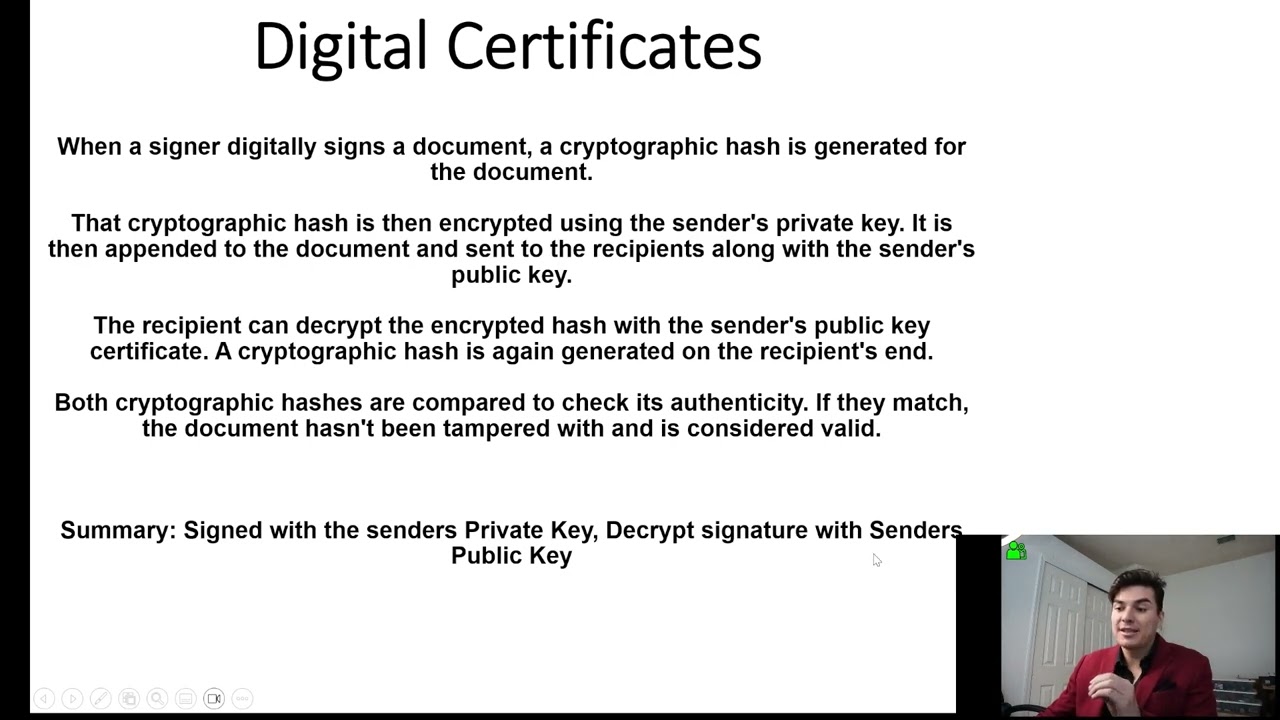







The key distribution problem—the challenge of securely transmitting encryption keys without interception—was solved by Martin Hellman, Whitfield Diffie, and Ralph Merkle in 1975 through public-key cryptography, which uses mathematical one-way functions (like multiplication being easy but factoring being hard) to allow secure communication without pre-shared secrets, enabling everyday applications like encrypted emails and credit card transactions.
Cryptography History: From Secrecy to Public Key Encryption
Added:Symmetric Encryption Basics: Understanding how traditional cryptography relies on a single shared secret key for both encryption and decryption.
The Key Distribution Problem: Comprehending the fundamental vulnerability and logistical challenge of securely sharing a secret key over an insecure channel.
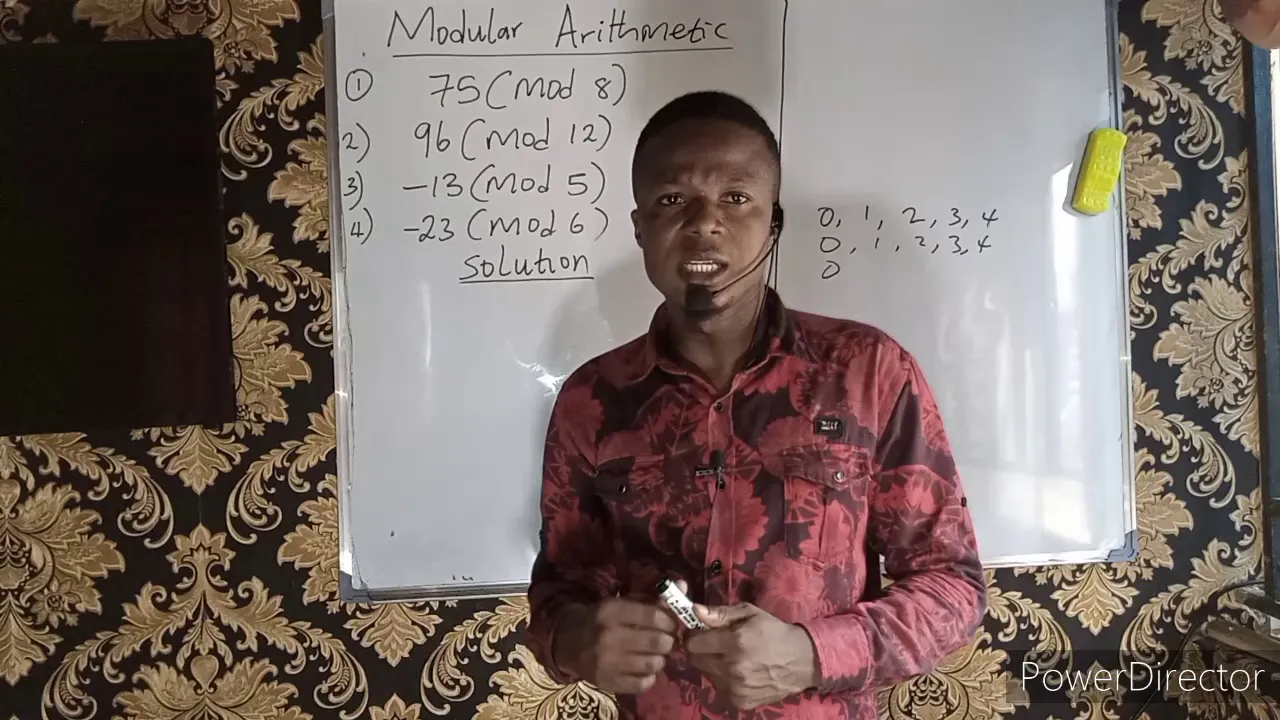
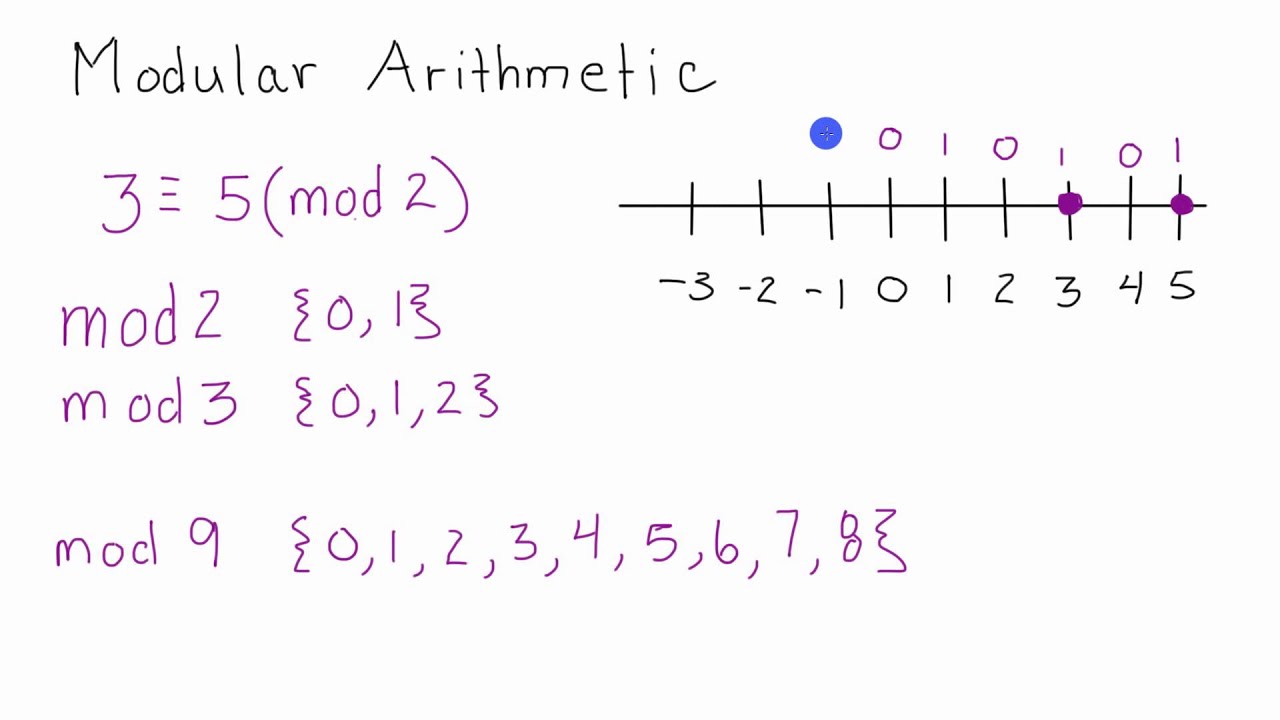
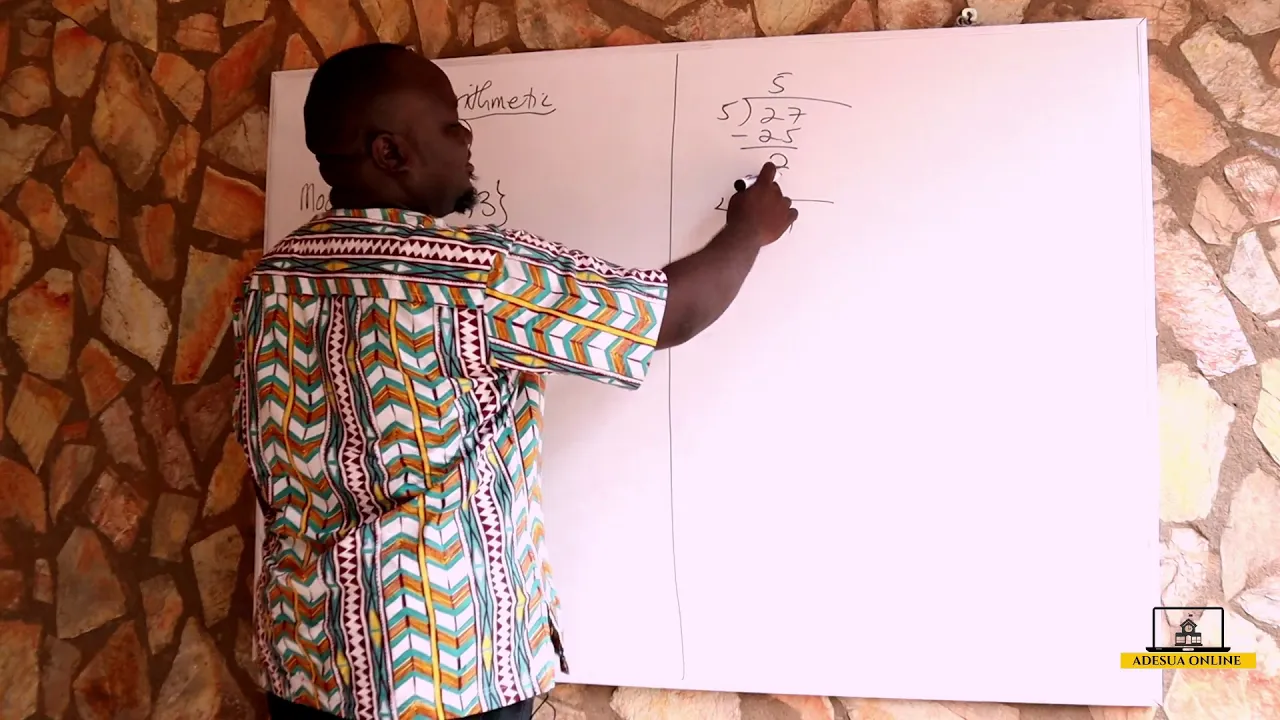
Introductory Modular Arithmetic: Familiarity with basic number theory, prime numbers, and modulo operations, which form the mathematical foundation of public-key algorithms.
Basic Information Security Goals: Understanding the core concepts of confidentiality, integrity, and authentication in digital communications.
The RSA Algorithm: Exploring the mathematical mechanics and implementation of Rivest-Shamir-Adleman (RSA), one of the first widely adopted public-key cryptosystems.
Hybrid Cryptosystems and TLS/SSL: Learning how modern web security combines symmetric encryption (for speed) with public-key encryption (for secure key exchange).
Public Key Infrastructure (PKI) and Digital Signatures: Understanding how trust is established on the internet using digital certificates and Certificate Authorities (CAs).
Post-Quantum Cryptography: Investigating how the advent of quantum computing threatens current public-key algorithms and the transition to quantum-resistant standards.
30K views99likes10:08Original Release: 2010-09-02
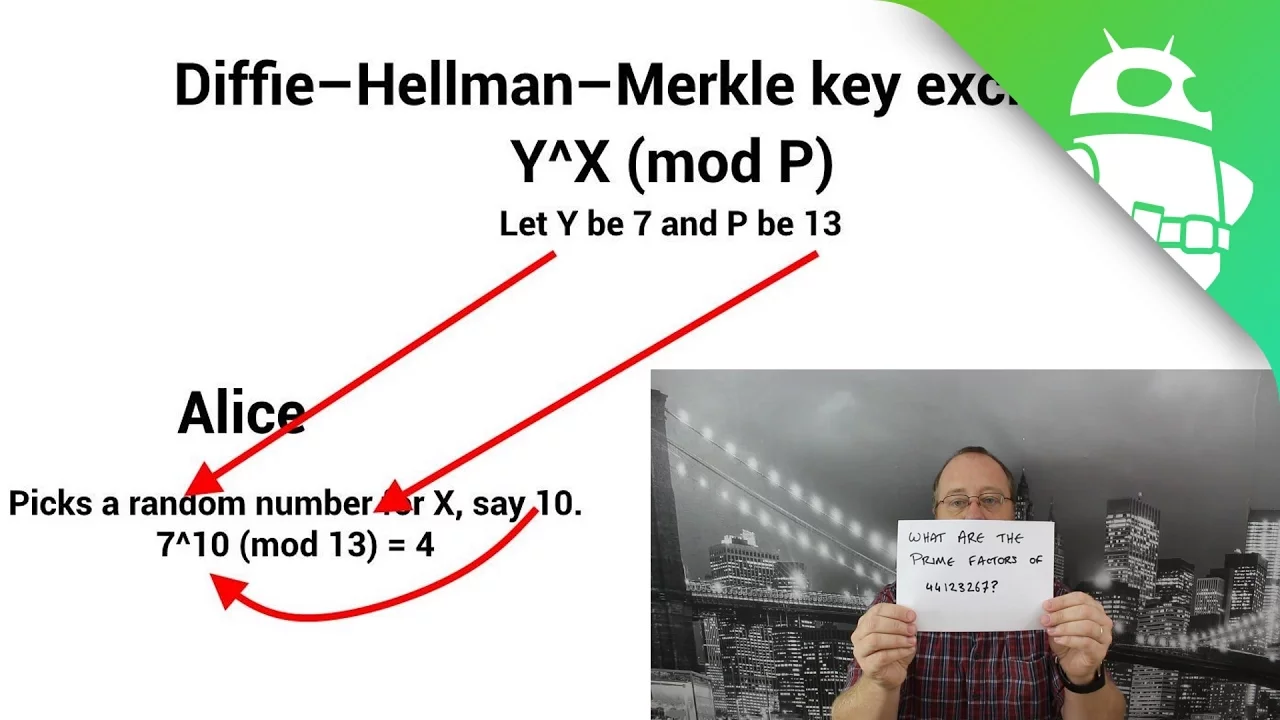
what was at stake was the future of the information [Music] revolution for 2,000 years cryptography the science of secrecy has fundamentally affected the course of history but even as recently as the late 1960s every code ever devised however complex still suffered from one fatal flaw the fundamental problem of cryptography can be explained like this now imagine I've got a highly secret note and I want to send it to a friend on the other side of the world now I'm worried that there's an Interceptor an eavesdropper who's trying to get get hold of the note so I have to protect it now the way I'm going to protect it is by putting it inside a box I close the lid and I padlock it shut now padlocking the Box putting the message inside the box is just like encrypting it it's another way of protecting the message now at this point I can safely send it on its way however there is a problem I've still got the key now the question is how do I get the key to my friend without the EAS dropper getting hold of it it's known as the key distribution problem and it's the oldest toughest problem in cryptography in cryptography the key is the special recipe for first scrambling and then unscrambling a secret message by the 1960s key distribution was costing a [Music] fortune Banks governments and big businesses literally paid heavily guarded couriers to travel around the world delivering encryption keys in person and imagine going through this every time you want to send a personal email or buy something online by the early '70s it was clear that something had to be done Martin Helman and Whitfield Diffy along with a third researcher Ralph Merkel were based in the electrical engineering department at Stanford University in California unlike most cryptographers they worked outside the secretive world of military intelligence I've been thinking about key distribution since 1965 the fundamental problem there were several but one of the critical ones we didn't in the public World know very much about cryptography at all and people were afraid to try to learn I I'm sure you got the same argument I did for my colleagues when i' start to tell them I was getting interested in cryptography they'd tell me you're crazy instead of it scaring me off it actually goated me on if anything kind of like I'll show them in the spring of 1975 after months of getting nowhere Diffy and Helman made an unexpected breakthrough I got up and I walked downstairs to get myself a Coke and as I got to the bottom of the stairs I was thinking I was thinking something interesting that I can't remember what it was almost lost it and then it came back to me and from then on I managed to hold on to it Diffy and Helman had come up with an idea that turned cryptography on its head for 2,000 years the sender of a secret message had taken the responsibility for encryption now what Diffy and Helman were proposing was that the receiver should take responsibility for encryption so I'd start by asking the receiver to send me his padlock and I then used use his padlock to lock up my message this whole system works because what we're doing here is exchanging padlocks not Keys the key was always with the receiver so there was no risk of the key falling into the wrong hands 2 3 7 9 3 4 1 6 5 7 3 8 4 two because the language of computers is numerical diff in Helman couldn't use a real padlock instead they had to find a mathematical padlock now a padlock is easy to snap shot but hard to open easy to do in One Direction but hard to reverse similarly a mathematical padlock is an operation that's easy to do in One Direction but hard to reverse now looking for a mathematical padlock is far from trivial and that's because most mathematical operations are easy to do in One Direction and just as easy to do in the opposite direction for example doubling I could give you a number say 24 and ask you to double it and you could tell me that the answer is 48 but I could have given you 48 and ask you to have it and you could have just as easily told me that the answer was 24 so doubling is not a mathematical padlock it's what we might call a two-way operation as opposed to a one-way operation a good example of a one-way operation is multiplication I can easily multiply two four-digit numbers together and it should take me less than a minute but if I gave you the answer and asked you to work backwards well that's a much much much harder problem for example if I gave you the number 7 Bill 837 m4499 189 and asked you which two numbers must you multip ly together to get that number well where do you [Music] start in fact there's only one combination of numbers which will give me that result but finding those two numbers would mean having to try thousands of different options in order to find the right one and that could take me all day in short multiplying is easy going backwards which is known as factoring is a mathematical [Music] nightmare so multiplying two large numbers is the mathematical equivalent of a lock but it's a lock without a key now the search was on for an operation that was irreversible unless you had the mathematical equivalent of a key and finding this was to prove fish difficult the first ones I came up with didn't work there were things involving um involving Matrix multiplications and uh some schemes involving exponentiation and none of the early ones actually worked they're very rare beasts God didn't make very many of them what's hard in a public hey system is a public hey system is only Apparently one way it's a trapdoor oneway function it's easy to go One Direction and it appears impossible to go backward uh to anyone who doesn't have the secret key but if you have that secret key the trapo information then you can easily do what no one else can can do that that's what's hard to find by 1975 Diffy and Helman had come up with a potential solution to the key distribution [Music] problem but they lacked The Specialist mathematical knowledge needed to make it [Music] work it was one of the most radical ideas of the 20th century but Diffy and Helman were unable to bring it to [Music] [Music] fruition little did dii and Helman know but somebody else was also working on the key distribution problem behind the closed doors of the top secret British government Communications Headquarters gchq in chelham there was a specialist Department called the communications electronic Security Group cesg which had already spent years trying to find a solution back in 1969 one of the British Bri government's foremost cryptographers James Ellis had come up with exactly the same idea as Diffy and Helman except that he was 5 years ahead of them having also conceived of the idea of a mathematical padlock he and everyone else in British intelligence were then unable to make it work until 1973 that is when a 22-year-old mathematical genius fresh out of Oxford University join the [Music] team
Up Next

1:41
Account Abstraction: Semantic Wallets and Blockchain Usability
@HiCpen
87.3K views•2026-03-07
52:00
Hybrid Key Establishment in Production: Post-Quantum Cryptography
@durumcrustulum
14.7K views•2025-08-27

64:25
Operational Security Essentials: A Guide for Hacktivists (OPSEC)
@hitbsecconf
157.4K views•2012-11-26
11:49
Understanding Ethereum: A Comprehensive Beginner's Overview
@99Bitcoins
3.1M views•2018-06-26
Related Study Plans & Knowledge Roadmaps
Structured learning paths in Blockchain & Crypto
blockchain-and-crypto
MPC Wallets: TSS, DKG & Secure Custody
01Foundations of Cryptography & Digital Signatures
02Secret Sharing & Introduction to MPC
03Distributed Key Generation (DKG)
+ 2 more learning modules
24h5 modules
Explore Roadmap
blockchain-and-crypto
ERC-4626: Yield Aggregators & Leverage
01Blockchain, Ethereum, and Solidity Foundations
02DeFi Primitives: Lending, Pools, and Yield Farming
03Mastering the ERC-4626 Tokenized Vault Standard
+ 3 more learning modules
35h6 modules
Explore Roadmap
blockchain-and-crypto
DePIN: IoT Registries, Proofs & Rewards
01Foundations of Blockchain & IoT
02Introduction to DePIN and the Flywheel Effect
03Designing IoT Device Registries & Secure Identity
+ 3 more learning modules
30h6 modules
Explore Roadmap
blockchain-and-crypto
Building EigenLayer AVS: Operators & Contracts
01Blockchain, Ethereum, and Smart Contract Basics
02Proof of Stake and Ethereum Staking
03Introduction to EigenLayer and Restaking
+ 3 more learning modules
24h6 modules
Explore Roadmap