Account abstraction transforms traditional crypto wallets into smart wallets that eliminate the need for seed phrases, simplify gas fee management, enable account recovery, and allow multi-signature transactions, making crypto accessible to everyday users without technical barriers.
Account Abstraction: Semantic Wallets and Blockchain Usability
Added:Deep Dive
Distinction between Externally Owned Accounts (EOAs) and Contract Accounts within EVM-compatible blockchain architectures.
EVM Explained: A Deep Dive into the Ethereum Virtual Machine's Architecture
10.2K
Ethereum has two distinct types of accounts: Externally Owned Accounts (EOAs) and Contract Accounts. EOAs are controlled by private keys (like those in MetaMask wallets) and contain only an address, nonce, and balance, with empty storage and code hash. They can only perform simple operations like token transfers. Contract Accounts, in contrast, contain an address, nonce, balance, storage hash, and code hash. They are controlled by their deployed smart contract code rather than private keys, enabling complex programmable logic. This distinction is fundamental to Ethereum's architecture, with EOAs serving as user interfaces and Contract Accounts hosting decentralized applications.
Click to watch →
MENARIK NIH BUIDLERS! SUHUNYA BLOCKCHAIN INDONESIA!
425
In Ethereum Virtual Machine (EVM) based systems, there are two types of accounts: External Owned Accounts (EOA) and Smart Contract accounts. EOAs are controlled by private keys, where one private key controls one account. If the private key is lost, the account cannot be recovered. Smart Contract accounts, by contrast, are controlled by code and can be designed with more complex access controls, such as requiring multiple signatures for transactions.
Click to watch →
Module-4 one shot|BCS613A Blockchain technology important questions|Vtu|MQP+Pyq|Eduyodha
425
The main differences between EOAs and Contract Accounts are: (1) EOAs are controlled by users using private keys, while Contract Accounts are controlled by smart contract code; (2) EOAs are created when users generate private keys, while Contract Accounts are created when smart contracts are deployed; (3) EOAs are primarily used for sending and receiving Ether, while Contract Accounts are primarily used for executing smart contract functions; (4) EOAs can initiate transactions, while Contract Accounts can only execute functions defined in their code; (5) EOAs store no code, while Contract Accounts store smart contract code; (6) EOAs require a private key for access, while Contract Accounts do not use private keys.
Click to watch →

EVM | Pawel Bylica | Lecture 17
377
Ethereum has two types of accounts: (1) Externally Owned Accounts (EOAs) - controlled by private keys, with addresses derived from public keys, capable of initiating transactions, but without code or storage (only balance and nonce), and (2) Contract Accounts - have code and storage, can manipulate their own balance, but cannot initiate transactions (only EOAs can do this).
Click to watch →

Solidity 01: introduction to Smart Contracts
1.3K
Ethereum distinguishes two account types. Externally Owned Accounts (EOAs) are controlled by private keys, enabling users to send/receive transactions and hold Ether. Contract Accounts can also hold Ether and send/receive transactions but never act autonomously—they require activation through incoming messages or transactions. Contract accounts are controlled entirely by deployed code, not private keys. Once deployed, creators lose control over contract behavior, which executes exactly as programmed. Addresses derive from public keys, with contract addresses combining deployer's public key and a nonce (transaction count) to ensure uniqueness for each deployment.
Click to watch →
Deep Dive
Fundamentals of public-key cryptography, specifically how private keys are used to sign transactions and secure digital assets.

Maurice Herlihy - Blockchains from a Distributed Computing Perspective
1.3K
Public-key cryptography uses pairs of keys: public keys (shared openly) and private keys (kept secret). Alice can encrypt messages with Bob's public key so only Bob can decrypt them with his private key. Conversely, Alice can sign messages with her private key, allowing anyone to verify the signature using her public key. This enables digital signatures—proof that Alice authored something without revealing her private key. These cryptographic primitives form the foundation for controlling digital assets on blockchains.
Click to watch →
JuniorDevSG Meetup - March 2020
257
Private keys are secret strings used to sign transactions and prove ownership of blockchain assets. The corresponding public key allows others to verify the signature without knowing the private key. When sending cryptocurrency, the sender signs a transaction with their private key pointing to the recipient's address, enabling secure, trustless transfers.
Click to watch →

Welcome to Blockchain l freeCodeCamp — Lesson #0
20.4K
Public key cryptography enables secure blockchain transactions through paired keys: a private key (kept secret) and a public key (shared openly). The private key is used to digitally sign transactions, proving ownership of funds. The public key, derived from the private key using algorithms like ECDSA (Elliptic Curve Digital Signature Algorithm), allows anyone to verify signatures without revealing the private key. The Ethereum address is derived from the public key through hashing and taking the last 20 bytes. This cryptographic system ensures only the private key holder can authorize transactions, while anyone can verify authenticity. The security relies on the mathematical impossibility of deriving the private key from the public key or signature, making unauthorized transaction signing practically impossible.
Click to watch →

61 - Before Bitcoin | Peter Pan
5.4K
Public key cryptography is a shift in the use of cryptography that secures most cryptocurrency protocols. It allows people to send encrypted information to a public address over unsecured channels, and only people with access to the corresponding private key can decrypt the information. The private key is also used to sign off and authenticate information sent away to verify the legitimacy of its origin. This was essential for enabling secure digital transactions and authentication.
Click to watch →
Crypto Keys, Wallets, and Addresses explained
7.7K
Private keys live on the wallet and are used to sign transactions. When a user wants to send funds from one address to another, their private key signs the transaction to verify that they are the owner of the public key associated with the sending address. This signature proves authorization for the transaction.
Click to watch →
Deep Dive
The concept of transaction fees (gas) and how users typically fund and execute state-changing operations on-chain.

Ethereum - Tutorial 7 - Gas and Fees
22K
Gas in Ethereum is a unit that measures the computational work required to execute smart contracts, with each operation having a specific gas cost (e.g., ADD costs 3 gas, MUL costs 5 gas). Users specify a gas price (bidding system) and gas limit (maximum units to spend), and the total transaction fee is calculated as (base fee + tip) × gas limit. The London upgrade introduced a base fee (minimum price per gas unit, automatically calculated and burned) and a tip (priority fee for miners), while Max fee per gas provides a ceiling for predictable transaction settlement with any excess refunded to users.
Click to watch →
Gas and Transaction Fees - Smart Contracts and Decentralized Finance
2.1K
Ethereum uses a gas-based fee system where each computational operation consumes predefined gas units (e.g., addition costs 3 gas, multiplication costs 5 gas, storage costs 20,000 gas), and users specify a gas limit (maximum computational steps) and gas price (willingness to pay per gas unit) to create an auction mechanism for transaction priority; EIP-1559 (implemented August 2021) improved this by introducing a dynamic base fee that adjusts by ±12.5% per block based on demand, which gets burned rather than distributed to miners, plus a priority fee tip for miners, making fees more predictable and reducing overpayment risks.
Click to watch →
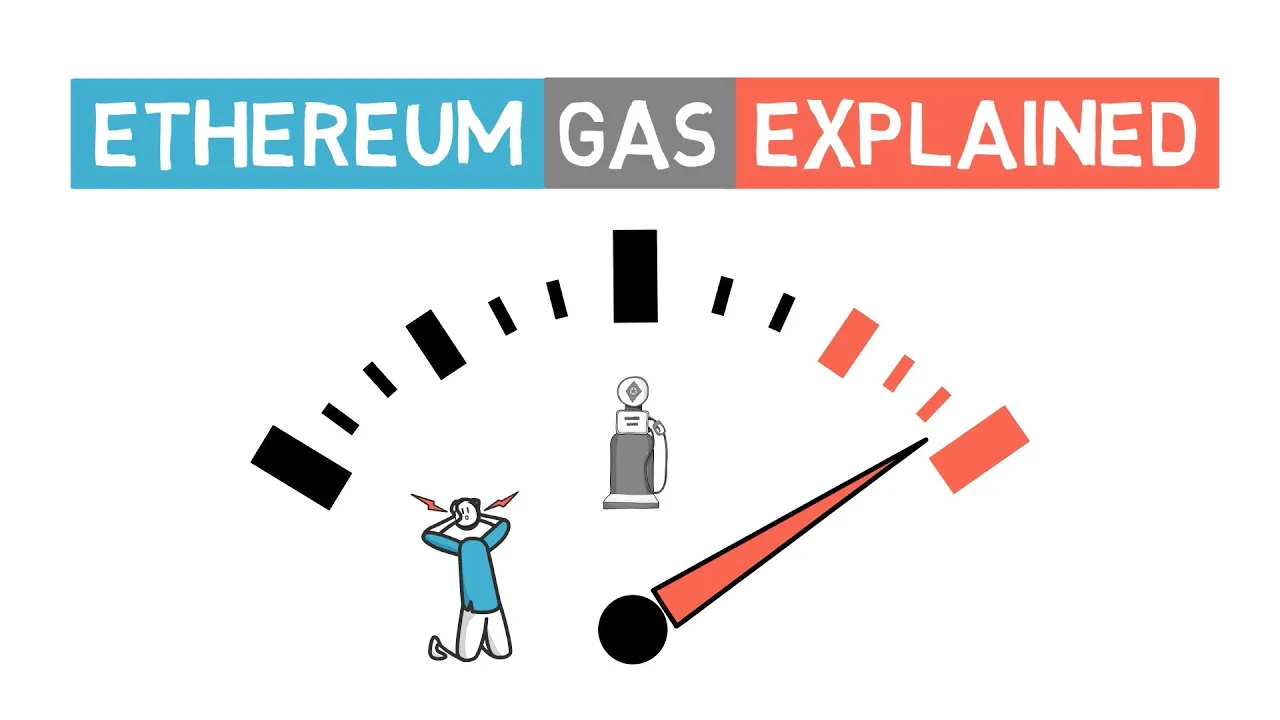
What Is Gas? Ethereum Transaction Fees Explained
331.9K
Gas is a unit measuring computational effort required to execute operations on the Ethereum blockchain, where each operation (like adding numbers, checking account balance, or sending transactions) has a specific gas cost; transaction fees are calculated by multiplying gas cost by gas price (measured in gwei), and high fees occur when network congestion increases competition for limited block space, prompting solutions like Layer 2 scaling, EIP 1559, and strategic timing of transactions to reduce costs.
Click to watch →

What is ethereum, and how does it work?
197.1K
Gas fees are transaction fees that users must pay when sending funds on the Ethereum network or when interacting with smart contracts. The term 'gas' is a metaphor for the computational effort required to process transactions. When users pay these transaction fees, they are essentially compensating someone they will never meet to run their code and process their transaction. The amount of gas required depends on the complexity of the transaction and the current network congestion.
Click to watch →

What Are Ethereum Gas Fees?
441K
Ethereum gas fees are transaction fees paid in Ether to miners for processing transactions and executing smart contracts on the network; these fees compensate miners for their computing power and electricity costs, serve as a mechanism to prevent network overload by limiting processing capacity, and can increase significantly during periods of high demand when network congestion occurs, as users compete to have their transactions prioritized.
Click to watch →
Deep Dive
Basic understanding of smart contracts, how they are deployed, and their ability to execute arbitrary programmable logic.

Smart Contracts - ETH.BUILD
18.9K
Smart contracts are self-executing programs deployed on the Ethereum blockchain. They combine storage (state variables), function calls, and executable logic into a single deployable unit. Deployment involves sending a transaction with compiled bytecode to no recipient (empty to address), where the Ethereum Virtual Machine interprets the bytecode as executable code. Contracts receive unique addresses upon deployment. Key concepts include public state variables (which generate automatic getters), and msg.sender (which identifies the transaction initiator). This foundational architecture enables deterministic execution of business logic on a decentralized network.
Click to watch →

Что такое смарт контракт простыми словами - Обучение Solidity урок 0
124
A smart contract is a self-executing program deployed on the blockchain that operates without servers or administrators. Once deployed, it cannot be modified, deleted, or changed. Each contract has a unique address (letters and numbers) that serves as its location in the blockchain. Contracts consist of code and storage (permanent data storage like a hard drive). Deployment involves writing Solidity code, compiling it to bytecode, and sending a transaction to create a new address. Contracts only execute when triggered by transactions or other contracts, making them deterministic machines. Gas serves as fuel for execution, with costs proportional to complexity (loops, arrays, operations). This prevents malicious infinite loops and ensures predictable resource consumption.
Click to watch →

The ULTIMATE Cryptocurrency Exchange Programming Tutorial for Blockchain - PT 1
78.7K
Solidity is statically-typed language for writing Ethereum smart contracts. Key concepts include: public state variables automatically generate getter functions; contract deployment uses Truffle migrations; the Truffle console enables interactive contract testing. Understanding these fundamentals allows developers to create, deploy, and test smart contracts that power decentralized applications.
Click to watch →
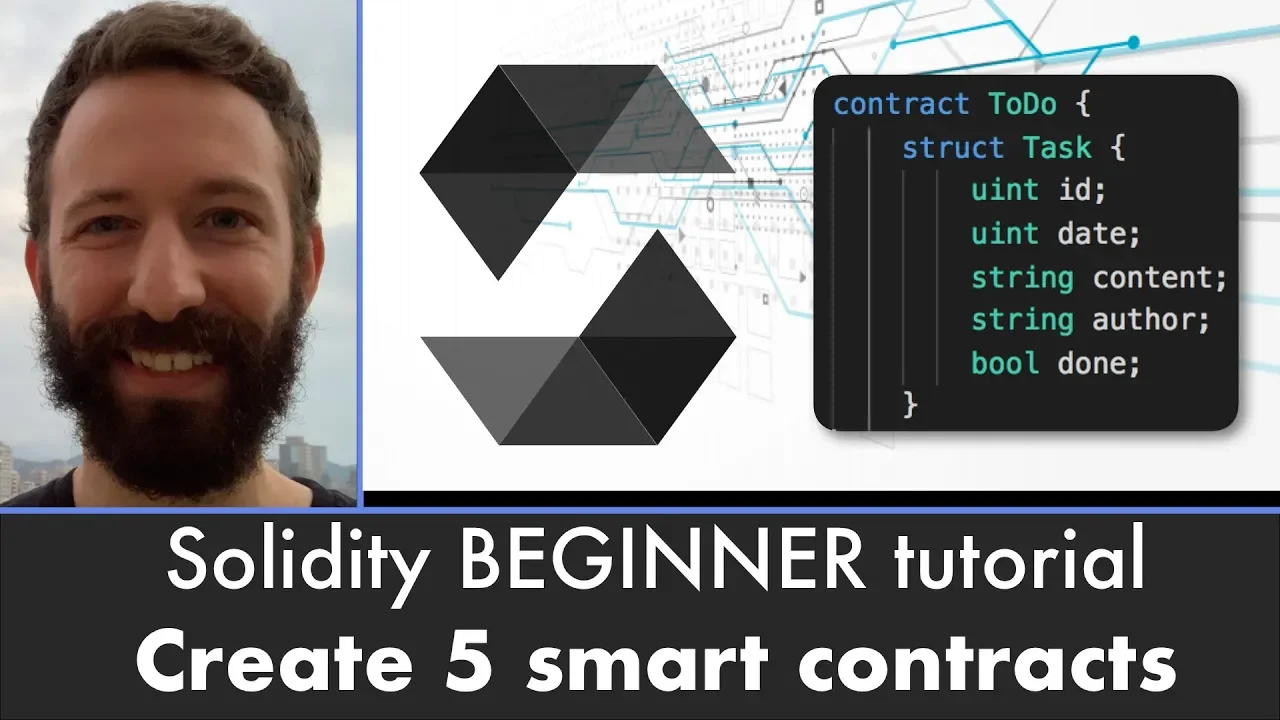
Solidity Smart Contract Tutorial: Building 5 Ethereum Contracts from Scratch
93.9K
A smart contract is a self-executing program deployed on the Ethereum blockchain that cannot be modified after deployment, and Solidity is the most popular programming language for writing smart contracts, which requires compilation into bytecode and uses a typed language structure with visibility specifiers (public, internal, private) to control function accessibility, along with state mutability keywords (pure, view) to indicate whether a function modifies or only reads blockchain state.
Click to watch →
Introducción a Blockchain y Web3 | Blockchain Bootcamp para Principiantes
3.6K
Smart contracts are self-executing programs deployed on blockchains that automatically enforce agreed-upon rules. Unlike traditional contracts requiring intermediaries, smart contracts execute automatically based on code. They can handle complex business logic beyond simple value transfers. Once deployed, they are immutable - code cannot be changed. This enables trustless execution where parties don't need to trust each other or intermediaries. The code enforces rules automatically regardless of participant intentions.
Click to watch →
Prerequisite Knowledge
- Concept 01Distinction between Externally Owned Accounts (EOAs) and Contract Accounts within EVM-compatible blockchain architectures.
- Concept 02Fundamentals of public-key cryptography, specifically how private keys are used to sign transactions and secure digital assets.
- Concept 03The concept of transaction fees (gas) and how users typically fund and execute state-changing operations on-chain.
- Concept 04Basic understanding of smart contracts, how they are deployed, and their ability to execute arbitrary programmable logic.
Subsequent Learning
- Step 01Technical implementation standards of ERC-4337, including the roles of Bundlers, Paymasters, and EntryPoint contracts.
- Step 02Advanced security features enabled by account abstraction, such as social recovery, multi-signature schemes, and time-locked transactions.
- Step 03Gas abstraction mechanisms, exploring how dApps can sponsor user transaction fees or allow users to pay gas in stablecoins.
- Step 04Intent-centric design patterns and how semantic wallets can leverage LLMs and AI to translate natural language into cryptographic transactions.
Smart Wallets
Smart Wallets
0:02Playing Section
- 1
Account abstraction transforms wallets into smart wallets via email login.
- 2
Features include spending limits, recovery, and app-paid gas fees.
- 3
This removes key barriers, driving crypto mass adoption.
The Centralization, Security, and Cost Overhead of Account Abstraction
While account abstraction (AA) promises to simplify user experiences, critics argue it introduces significant trade-offs in security, cost, and decentralization. Unlike Externally Owned Accounts (EOAs) secured by direct cryptography, AA relies on smart contracts, which increases the attack surface and exposes users to code vulnerabilities and exploits. Furthermore, AA transactions are more computationally intensive, leading to higher gas fees. Finally, the infrastructure supporting AA—such as bundlers and paymasters—introduces new intermediaries into the transaction flow. This reliance on third-party relayers can lead to centralization, potential censorship, and dependency on off-chain operators, which directly conflicts with the core Web3 principles of trustlessness and decentralization.
Deep Dive
Technical implementation standards of ERC-4337, including the roles of Bundlers, Paymasters, and EntryPoint contracts.
Exploring Account Abstraction with Alchemy Accountkit
545
ERC 4337 defines five roles: User (signs operations), Bundler (accepts and bundles operations), Entry Point (handles gas accounting), Paymaster (sponsors gas), and Smart Contract Account (makes state changes). The bundler is an offchain component that accepts user operations, bundles them into transactions, and signs them. The paymaster is a smart contract that can conditionally sponsor user gas based on rules. User operations are meta-transactions containing target, call data, and value fields but don't require user gas payment at protocol level. The bundler collects many user operations, bundles them into a single transaction, and sends them to the entry point for validation and execution.
Click to watch →
Кирилл Тимашев. Абстракция аккаунтов, или Новый подход к реализации крипто-кошельков
131
The EIP-4337 system architecture consists of interconnected components: User registration creates smart wallets with encrypted keys stored securely. User Operations (UserOps) contain sender contracts, nonces, init code, calldata, Paymaster data, and signatures. Bundlers aggregate UserOps into batches and submit them to the Entry Point contract. The Entry Point simulates execution, routes operations to appropriate smart wallets, verifies balances, and compensates bundlers. Smart wallets contain custom business logic, while the Wallet Factory generates wallets using Create2. Paymaster contracts enable users to pay gas fees using alternative currencies or have fees covered entirely by third parties, solving the gas payment barrier for new users.
Click to watch →

A Deep Dive into ERC 4337
7.5K
ERC 4337 enables smart contract accounts to initiate transactions through a meta-transaction flow where users sign user operations (containing data, nonce, initCode, gas parameters, sender, and paymaster info), bundlers collect and verify these operations by simulating them, then submit them to an entry point contract which validates each operation with the smart contract account and paymaster before executing the intended state changes and settling gas fees.
Click to watch →

Solidity Deep Dives #6 - EIP4337 Account Abstraction
509
User operations in EIP-4337 include: sender address, nonce (anti-replay), initCode (for deploying accounts), callData (transaction data), gas limits, and signature. The entry point contract is a singleton at a fixed address that validates and executes operations. Bundlers submit bundled operations to the entry point's 'handleOps' function. The contract validates prepayment, handles paymasters, and compensates beneficiaries. This creates an open market where bundlers can front gas costs (like sponsoring account creation) or accept payment in stablecoins. The validation data structure includes: 'authorizer' (who authorized the operation), 'validUntil' (maximum timestamp for execution), and 'validAfter' (minimum timestamp for execution). This allows accounts to implement time-based restrictions, multi-sig verification, or any custom validation logic. The entry point handles all error handling and validation itself.
Click to watch →

Builder Series LIVE! Modular Wallets with ERC-6900
197
ERC 4337 is a standard that helped formalize how smart wallets work by introducing key concepts like bundlers and paymasters. Bundlers aggregate multiple transactions into single batches for efficiency, while paymasters handle gas payments on behalf of users. This standardization enabled broader adoption of smart wallets by providing a common framework for developers to build upon, making smart wallet functionality more accessible and interoperable across different platforms.
Click to watch →
Deep Dive
Advanced security features enabled by account abstraction, such as social recovery, multi-signature schemes, and time-locked transactions.
Account Abstraction: Making Accounts Smarter
5K
Account abstraction enables several advanced features: social recovery and deadman switches for account inheritance after inactivity; per-device keys with biometric authentication; BLS signatures for gas reduction on Layer 2 networks; quantum-resistant signatures for future-proofing; role-based access control for corporate accounts; session keys for game transactions; and gas sponsorship for onboarding new users. These features transform accounts from simple signature-based systems into sophisticated, programmable entities.
Click to watch →
LE NARRATIF D'ACCOUNT ABSTRACTION (6 CRYPTOS)
45K
This extensive section provides deep technical coverage of account abstraction: (1) Current wallet limitations including private key management risks and inability to make recurring payments; (2) Smart contract accounts vs external accounts enabling multi-user wallets and social recovery; (3) Implementation through EIP-4337 on Ethereum and Starknet's built-in support; (4) Analysis of key projects: Biconomy (gas-free transactions), Nervos Network (cross-chain interoperability), Gelato Network (automation infrastructure), and Luxo (universal profiles for social blockchains). The speaker provides investment strategy guidance, recommending waiting for mainstream narrative adoption before investing in these projects.
Click to watch →

Talk | ERC 4337: Account Abstraction via Alternative Mempool
6.2K
Account abstraction replaces externally owned accounts (EOAs) with contract wallets controlled by keys, multisig, or complex mechanisms. Key use cases include: social recovery (friends help recover lost keys), transaction batching (combining approval and transfer into one call), gas abstraction (apps pay user gas, enabling non-crypto onboarding), and private withdrawals from ZK-rollups (maintaining anonymity). ERC-4337 enables these features without protocol changes, allowing immediate experimentation on any EVM chain.
Click to watch →
Account Abstraction : Retrouves Tes Cryptos Après la Perte de Ta Clé Privée || ERC-4337 Expliqué
316
Account abstraction provides four major advantages: (1) Social recovery allows users to designate trusted guardians who can help recover access if they lose their device or make mistakes; (2) Privacy preservation through transaction bundling combines multiple actions into single transactions, reducing on-chain footprint; (3) Gas fee flexibility enables payment with any token, not just native currency; (4) Fee sponsorship allows developers to pay transaction fees on behalf of users, improving accessibility.
Click to watch →
Haust.Network at Token 2049 | Simple and Secure Multichain Yield
5.8K
Account abstraction is a technology that enables more flexible and user-friendly account management in blockchain systems. It allows for social recovery mechanisms, meaning users can recover their accounts through trusted contacts or social networks if they lose their private keys. This feature significantly reduces the risk of permanent asset loss and makes blockchain more accessible to non-technical users who may not understand complex key management.
Click to watch →
Deep Dive
Gas abstraction mechanisms, exploring how dApps can sponsor user transaction fees or allow users to pay gas in stablecoins.
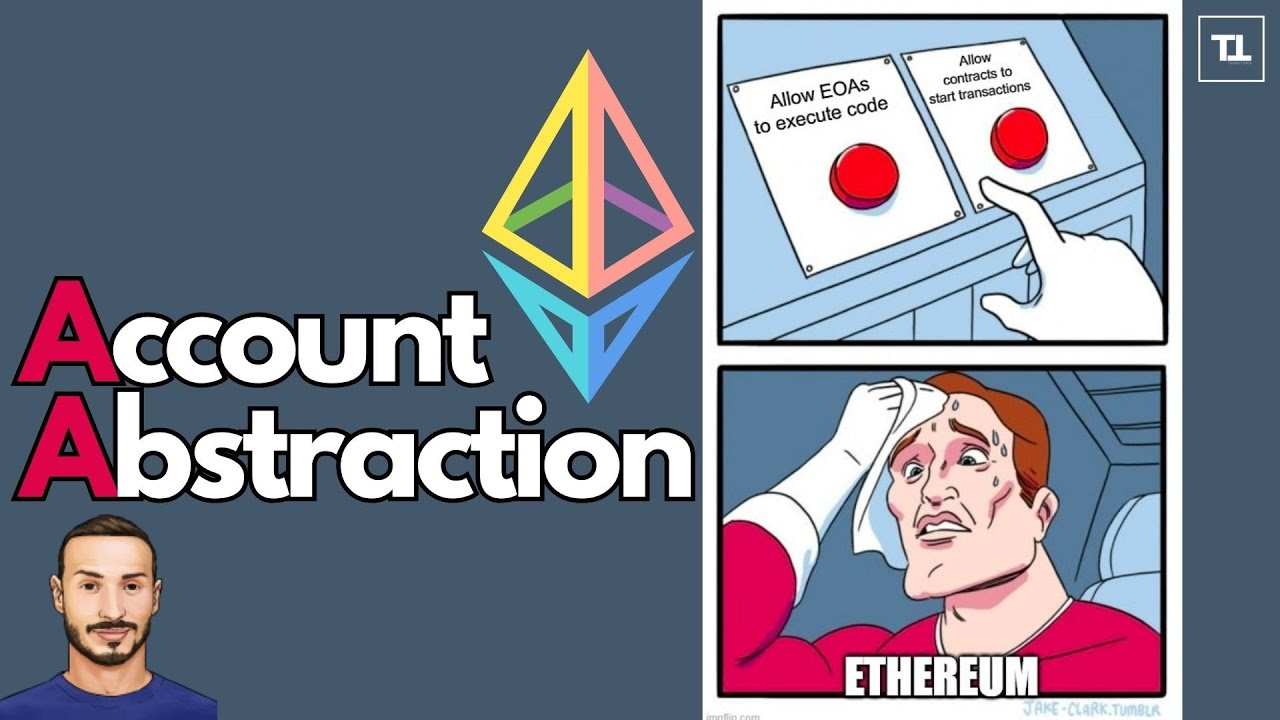
Account Abstraction 💥 (aka AA)
3.5K
Gas Abstraction does not eliminate gas fees but hides payment details. Pay Master Contracts can pay transactions on behalf of users, enabling sponsored transactions. Users can pay with ERC-20 tokens like stablecoins instead of native currency. Gasless transactions are possible through gas tanks provided by DApp creators that automatically refill ETH. Nonce Abstraction allows combining multiple operations into single transactions, reducing costs. Smart Accounts can process transactions in parallel, eliminating the sequential nonce problem that causes transaction congestion on EOAs.
Click to watch →
Account Abstraction: Making Accounts Smarter
5K
Account abstraction abstracts away gas payment, enabling third parties to pay for transactions. This supports onboarding new users who lack native token balances. Users can pay with their own tokens, useful for traders and applications. Gas sponsorship can be implemented with arbitrary logic—subsidizing specific transaction types, requiring authentication, or requesting repayment. This flexibility enables privacy preservation when using mixers, as users can use mixer withdrawals as gas payment, maintaining anonymity.
Click to watch →

How to Build a Onchain Telegram Mini App
100.9K
Account abstraction enables gas sponsorship by creating smart contract wallets for users. In the ConnectButton configuration, developers enable account abstraction by setting the chain and sponsorGas to true. This creates an ERC-4337 smart contract wallet for the user and sponsors all gas fees. Users can claim prizes without having funds in their wallet, as the developer pays for transaction costs on their behalf.
Click to watch →

Portis - Your Users Won't Pay Network Fees so Sponsor Them Instead | Consensus 2019
166
Decentralized applications can eliminate the barrier of network fees for new users by implementing a gas sponsorship system where dapp owners pay transaction fees on behalf of users, using a decentralized relay network with reputation-based abuse prevention to maintain security while enabling frictionless user onboarding.
Click to watch →

On Crypto Cards & Stablecoins
242
Stablecoin payment infrastructure is complementary to solutions that abstract costs and make networks cheaper and faster. Rather than competing in all markets, the focus is on being the rails that other solutions run on. There are two approaches to abstracting stablecoin payments: B2C apps like Base from Coinbase that abstract gas fees away for retail users, and B2B orchestration layers like Bridge that don't matter which blockchain is used. The goal is to make it simple for end users to send stablecoins without worrying about network complications.
Click to watch →
Deep Dive
Intent-centric design patterns and how semantic wallets can leverage LLMs and AI to translate natural language into cryptographic transactions.
AI on the Ledger: Transforming Blockchain with Artificial Intelligence - TOKEN2049 Singapore 2024
232
Products are being built that allow users to translate natural language into intents for trading in crypto markets. For example, a user could say 'I want to trade ethereum for solana at such and such an exchange rate and bridge the result to another chain,' and the LLM would translate this into blockchain transactions and execute it. This represents a new paradigm where natural language interfaces replace traditional app-based interactions.
Click to watch →
Illia Polosukhin - Building the Blockchain for AI - TOKEN2049 Dubai 2025
429
Intents represent a new type of transaction that creates binding agreements between parties. Unlike traditional transactions that specify actions to run, intents specify desired outcomes with conditions, allowing partners to execute according to their preferences. This works across AI agents—for example, one party might request running a marketing campaign while another specifies delivery requirements like 100 tons of steel. Intents are already live across multiple chains including Zcash, Polkadot, Barra, Stellar, and XRP, creating a unified non-custodial trading experience accessible through various wallets and platforms.
Click to watch →
Where We Are and Where We are Headed: Keynote from Emin Gün Sirer I Avalanche Summit London
1.5K
To democratize blockchain development and make it accessible to non-programmers, Avalanche is building chains where every validator runs an embedded Large Language Model (LLM). Instead of requiring users to write code in programming languages like Solidity, transactions can be written in natural language (English, Tagalog, German, etc.). The LLM interprets these natural language transactions as trusted execution, similar to a lawyer in the sky with no conflicts of interest, making blockchain accessible to everyone regardless of programming skills.
Click to watch →

2025 Q4 SWEAT Token Holders Briefing
3K
AI integration transforms crypto wallet functionality through multiple capabilities: (1) AI-guided onboarding with real-time translation into 28 languages, (2) Multi-chain aware AI assistant providing transaction analysis, balance checks, and status investigations, (3) Natural language transaction construction from text input, (4) Real-time support escalation to human agents when needed. This AI-driven approach removes technical barriers, simplifies complex operations, and makes crypto accessible to a global audience regardless of language or technical expertise.
Click to watch →

Forever Minting the Future
384
AI-powered wallets can interpret natural language queries to create transactions. Users can ask questions like 'Can I swap this many HBAR for pack token?' and the system generates reviewable transactions, enabling human-in-the-loop interaction with complex blockchain operations.
Click to watch →
Smart Wallets
Smart Wallets
0:02- 1
Account abstraction transforms wallets into smart wallets via email login.
- 2
Features include spending limits, recovery, and app-paid gas fees.
- 3
This removes key barriers, driving crypto mass adoption.
The Centralization, Security, and Cost Overhead of Account Abstraction
While account abstraction (AA) promises to simplify user experiences, critics argue it introduces significant trade-offs in security, cost, and decentralization. Unlike Externally Owned Accounts (EOAs) secured by direct cryptography, AA relies on smart contracts, which increases the attack surface and exposes users to code vulnerabilities and exploits. Furthermore, AA transactions are more computationally intensive, leading to higher gas fees. Finally, the infrastructure supporting AA—such as bundlers and paymasters—introduces new intermediaries into the transaction flow. This reliance on third-party relayers can lead to centralization, potential censorship, and dependency on off-chain operators, which directly conflicts with the core Web3 principles of trustlessness and decentralization.
Distinction between Externally Owned Accounts (EOAs) and Contract Accounts within EVM-compatible blockchain architectures.
Fundamentals of public-key cryptography, specifically how private keys are used to sign transactions and secure digital assets.
The concept of transaction fees (gas) and how users typically fund and execute state-changing operations on-chain.
Basic understanding of smart contracts, how they are deployed, and their ability to execute arbitrary programmable logic.
Technical implementation standards of ERC-4337, including the roles of Bundlers, Paymasters, and EntryPoint contracts.
Advanced security features enabled by account abstraction, such as social recovery, multi-signature schemes, and time-locked transactions.
Gas abstraction mechanisms, exploring how dApps can sponsor user transaction fees or allow users to pay gas in stablecoins.
Intent-centric design patterns and how semantic wallets can leverage LLMs and AI to translate natural language into cryptographic transactions.
87.3K views4.2Klikes1:41@HiCpenOriginal Release: 2026-03-07
What if using a crypto wallet was as simple as logging into your email? No seed phrases to memorize, no confusing gas fees, no fear of losing everything with one mistake. That's the promise of account abstraction.
Right now, using crypto feels like driving a manual car with no power steering. You need to manage private keys, approve every single transaction, and always have the right token to pay gas fees. One wrong move and your funds could be gone forever. Not exactly beginner friendly, right? Account abstraction changes all of this by turning your wallet into a smart wallet.
Think of it like upgrading from a flip phone to a smartphone. Your old wallet could only do one thing, sign transactions.
But a smart wallet, it can set spending limits, recover your account if you lose access, let a friend cosign big transactions, and even let apps pay your gas fees for you. Ethereum's Pectra upgrade made this a built-in feature, and it's already changing how millions interact with crypto. Apps can now onboard you with just an email or fingerprint, no seed phrase needed on day one. Why should you care? Because this is what brings the next billion users to crypto.
If your parents can't use it, mass adoption isn't real. Account abstraction removes the biggest barrier between everyday people and the world of web 3.
The future of crypto isn't just powerful, it's finally userfriendly.
Remember, this is education only, not financial advice.
Always do your own research.
Up Next

6:23
Deploy Your First Smart Contract: Solidity & Remix IDE for Beginners
@izaqDev
1K views•2025-08-18

52:00
Hybrid Key Establishment in Production: Post-Quantum Cryptography
@durumcrustulum
14.7K views•2025-08-27
64:25
Operational Security Essentials: A Guide for Hacktivists (OPSEC)
@hitbsecconf
157.4K views•2012-11-26
11:49
Understanding Ethereum: A Comprehensive Beginner's Overview
@99Bitcoins
3.1M views•2018-06-26
Related Study Plans & Knowledge Roadmaps
Structured learning paths in Blockchain & Crypto
blockchain-and-crypto
MPC Wallets: TSS, DKG & Secure Custody
01Foundations of Cryptography & Digital Signatures
02Secret Sharing & Introduction to MPC
03Distributed Key Generation (DKG)
+ 2 more learning modules
24h5 modules
Explore Roadmap
blockchain-and-crypto
ERC-4626: Yield Aggregators & Leverage
01Blockchain, Ethereum, and Solidity Foundations
02DeFi Primitives: Lending, Pools, and Yield Farming
03Mastering the ERC-4626 Tokenized Vault Standard
+ 3 more learning modules
35h6 modules
Explore Roadmap
blockchain-and-crypto
DePIN: IoT Registries, Proofs & Rewards
01Foundations of Blockchain & IoT
02Introduction to DePIN and the Flywheel Effect
03Designing IoT Device Registries & Secure Identity
+ 3 more learning modules
30h6 modules
Explore Roadmap
blockchain-and-crypto
Building EigenLayer AVS: Operators & Contracts
01Blockchain, Ethereum, and Smart Contract Basics
02Proof of Stake and Ethereum Staking
03Introduction to EigenLayer and Restaking
+ 3 more learning modules
24h6 modules
Explore Roadmap