Blockchain is a decentralized digital ledger system where transactions are recorded across thousands of computers worldwide, making it nearly impossible to hack or alter; it works by verifying transactions through multiple computers (nodes), adding approved transactions to blocks that are linked to previous blocks forming a chain, which ensures that no single person can change past transactions.
Understanding Blockchain Technology: A Comprehensive Overview
Added:Deep Dive
The fundamentals of cryptography, including cryptographic hashing functions and public-private key encryption.

【Udemy特別公開】暗号技術の基礎(ハッシュ関数・公開鍵・共通鍵など)/情報処理安全確保支援士【最安値クーポン】
879
Hash functions convert data of any length into fixed-length outputs. MD5 is non-cryptographic due to preimage resistance vulnerabilities. SHA-2 (SHA-224, SHA-256, SHA-512) and SHA-3 are modern alternatives. Key properties include preimage resistance (cannot reverse hash) and collision resistance (cannot find two inputs with same hash). SHA-1 failed collision resistance, as demonstrated by Google and CWI's attack. Symmetric encryption uses a shared secret key for both encryption and decryption. OpenSSL demonstrates implementation with AES-128 in ECB mode (non-cryptographic due to pattern preservation). Stream ciphers encrypt data bit-by-bit in real-time. RC4 is non-cryptographic. CAMELLIA (Japan-developed) and ChaCha20 are modern stream ciphers. Block ciphers encrypt data in fixed-size blocks (128 bits). DES and 3DES are non-cryptographic due to brute-force vulnerability. CAMELLIA and AES (NIST-standardized) are modern block ciphers. AES supports key lengths of 128, 192, or 256 bits. CRYPTREC classifies algorithms into Recommended, Candidate, and Operational Monitoring categories. Block cipher modes: ECB is non-cryptographic due to pattern preservation; CBC is non-cryptographic due to padding oracle attacks; CTR and GCM are cryptographically secure. MAC provides integrity and authentication using shared secret keys. HMAC uses hash functions, while CMAC uses block ciphers. Public key encryption solves the key distribution problem. RSA is based on prime factorization difficulty, with 2048-bit keys recommended. ECC (Elliptic Curve Cryptography) is based on elliptic curve discrete logarithm problems, providing equivalent security with shorter keys. RSA encryption is limited to small data sizes (256 bytes for 2048-bit keys). Hybrid encryption combines symmetric and asymmetric encryption for efficiency. RSA-based hybrid encryption lacks forward secrecy: if the private key is compromised, all past communications can be decrypted. Forward Secrecy (PFS) ensures that compromise of long-term keys does not compromise past session keys. DH (Diffie-Hellman) key exchange enables two parties to establish a shared secret over an insecure channel. DHE and ECDHE provide PFS by generating new ephemeral keys for each session.
Click to watch →
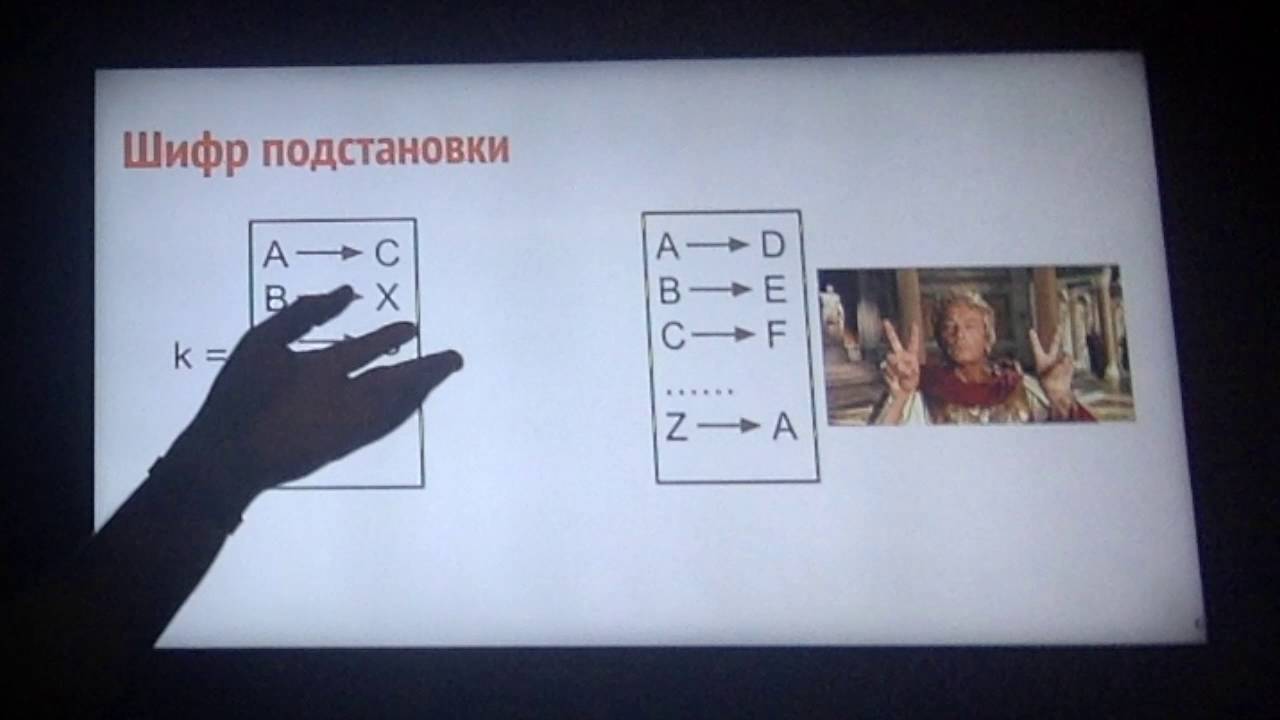
Основы криптографии - Денис Ковалев
2.7K
Cryptography is the science of securing information through mathematical algorithms, with symmetric encryption using shared keys (like DES, AES) and asymmetric encryption using public-private key pairs (like RSA), while hash functions (like SHA-256) provide data integrity verification; modern systems combine these techniques to achieve confidentiality, authentication, and integrity in secure communications.
Click to watch →

Intro To Cyber: 2-3
4.3K
Public key cryptography, developed by Rivest, Shamir, and Adleman (RSA) in 1977, solves key distribution through asymmetric encryption based on the mathematical difficulty of factoring large numbers. A public-private key pair enables secure communication: anyone can encrypt with the public key, but only the private key holder can decrypt. This also enables digital signatures for authentication. A fundamental challenge is verifying key ownership, addressed through PKI with Certificate Authorities issuing certificates, or decentralized web-of-trust models like PGP. Cryptographic hash functions map arbitrary data to fixed-size outputs with deterministic, one-way, and collision-resistant properties. MD5 (1992) was pioneering but flawed; SHA-2 and SHA-3 are now recommended. Hash functions enable secure password storage with salts and multiple iterations, and form the basis for Message Authentication Codes (MACs) and digital signatures.
Click to watch →

SC-900 Exam Cram - 2024 Edition (Full Course)
121K
Hashing is a one-way function producing unique message digests that cannot be reversed, while encryption is two-way with proper keys. Symmetric encryption (AES-256) uses shared keys for fast bulk encryption; asymmetric encryption (RSA, ECC) uses public-private key pairs for secure key distribution. Digital signatures use asymmetric cryptography to validate message authenticity and integrity. Hash functions require: any-length input, fixed output, easy computation, one-way functionality, and collision resistance. Cryptographic salt prevents rainbow table attacks by adding random data before hashing. These fundamentals form the basis for data integrity, confidentiality, and authentication in modern security systems.
Click to watch →

07-CompTIA Security+ (Summarizing Basic Cryptographic Concepts) By Eng-Ahmad Al-Mashaikh | Arabic
205
Cryptography is the science of encryption that converts readable data (plaintext) into unreadable data (ciphertext) using algorithms and keys. The three main components are: (1) Hashing - generates fixed-size strings for data integrity verification using algorithms like MD5 (128-bit), SHA-1 (160-bit), SHA-2 (256-bit), and SHA-3 (512-bit), (2) Encryption - converts plaintext to ciphertext using keys, (3) Key-based cryptography - uses keys for secure data protection. Encryption and decryption are reversible processes, while hashing is one-way. Hashing verifies data hasn't been modified during transmission by comparing calculated hashes. Common encryption types include symmetric (same key for encryption/decryption) and asymmetric (public-private key pairs). AES (128, 192, 256-bit keys) and RSA are widely used algorithms. Key length directly impacts security strength.
Click to watch →
Deep Dive
Basic understanding of Peer-to-Peer (P2P) network architecture compared to traditional centralized systems.
What is Peer to Peer Network ? | When Torrent is illegal ? | Problems Explained
155.8K
Peer-to-peer (P2P) network architecture enables direct communication between computers without central servers. Unlike traditional server-based networks where all data passes through central servers (like Gmail or YouTube), P2P allows resources such as printers, files, and applications to be shared directly between connected computers. This decentralized approach emerged from services like Napster, which enabled direct MP3 file sharing between users. The architecture eliminates the need for a central authority to manage resource sharing, making it more efficient for distributing files and accessing shared resources.
Click to watch →

How Peer to Peer (P2P) Network works | System Design Interview Basics
60.6K
A peer-to-peer (P2P) network is a distributed architecture where each device functions simultaneously as both a server and client, eliminating the single-point bottleneck of traditional client-server models; this is achieved by splitting large files into smaller chunks, distributing them to all peers initially, and enabling peers to communicate directly with each other to exchange missing chunks, which allows parallelized data transfer that grows exponentially faster than centralized approaches.
Click to watch →

What is Network Architecture? full Explanation | Peer to Peer and Client-Server architecture
638.8K
Peer-to-peer (P2P) network architecture connects multiple computers directly with equal privileges and responsibilities for data sharing, without a central server. All computers are directly linked, enabling direct communication between any two nodes. This architecture is ideal for small environments with fewer than 10 systems. Key advantages include low cost (no dedicated server), fault tolerance (individual computer failure doesn't disrupt the network), and simple setup/maintenance. However, significant limitations exist: poor security due to lack of centralized protection, and inability to perform centralized data backups, making data recovery difficult if data is deleted from any system.
Click to watch →

DELHI POLICE CONSTABLE 2023 || मंज़िल बैच DEMO CLASS-3 || COMPUTER || NETWORKING || BY PREETI MAM
260.3K
This segment provides a detailed comparison of the two main network architectures. In Peer-to-Peer (P2P) architecture, all computers are independent and can share data directly without going through a central server. Each computer has equal ability to send and receive data. This architecture is suitable for small networks like offices, libraries, or schools where computers are located close together. A P2P network can typically connect up to 10 computers. In Client-Server architecture, one powerful computer (the server) stores and manages data, while other computers (clients) request access to this data. Clients must obtain permission from the server to access resources. This architecture is suitable for long-distance networks and organizations where centralized data management is needed. The server controls all access and security. Key differences include: control (server has centralized control in Client-Server), dependency (P2P computers are independent), cost (P2P has lower cabling costs for short distances), and security (Client-Server is more secure with centralized control).
Click to watch →
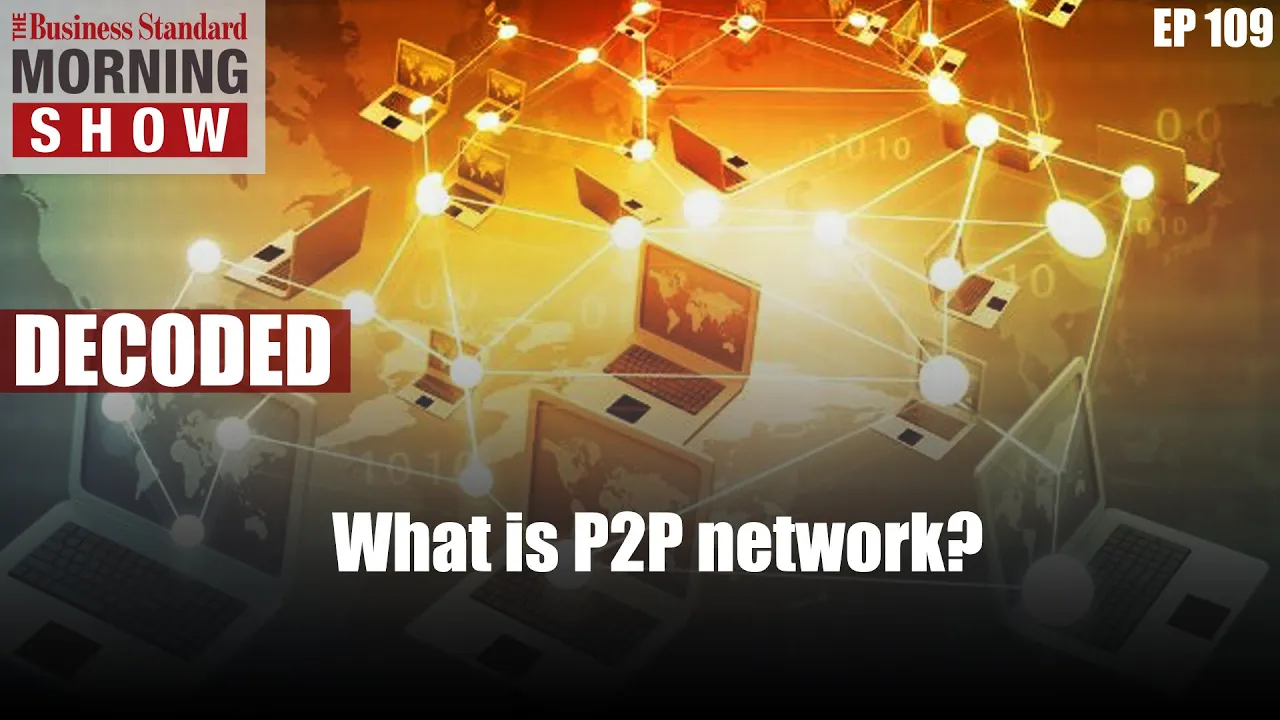
What is a P2P network?
55.1K
A peer-to-peer (P2P) network is a decentralized system where multiple devices connect directly to share and exchange information without relying on a central server; unlike traditional client-server models where data flows through a central hub, P2P allows each device to act simultaneously as both a client and server, enabling efficient resource sharing but also introducing vulnerabilities such as data fragility and security challenges due to the absence of centralized control.
Click to watch →
Deep Dive
The concept of digital ledger systems and how financial institutions historically prevent double-spending.

Criptomoedas - 1 - Introdução e Aspectos Técnicos
26.2K
Double-spending is the problem of spending the same cryptocurrency twice. In a centralized banking system, the bank prevents this by maintaining a central ledger. In cryptocurrencies, this is solved through the public ledger (blockchain). The system works as follows: (1) When a transaction is created, it is broadcast to the network; (2) Network participants verify the transaction's authenticity using digital signatures; (3) The transaction is then included in a block; (4) Once a block is added to the chain, the transaction is considered confirmed; (5) The ledger records that these specific coins have been spent. If someone tries to spend the same coins again, the network will detect that the coins are already spent and reject the transaction. This creates a permanent, immutable record of all transactions.
Click to watch →
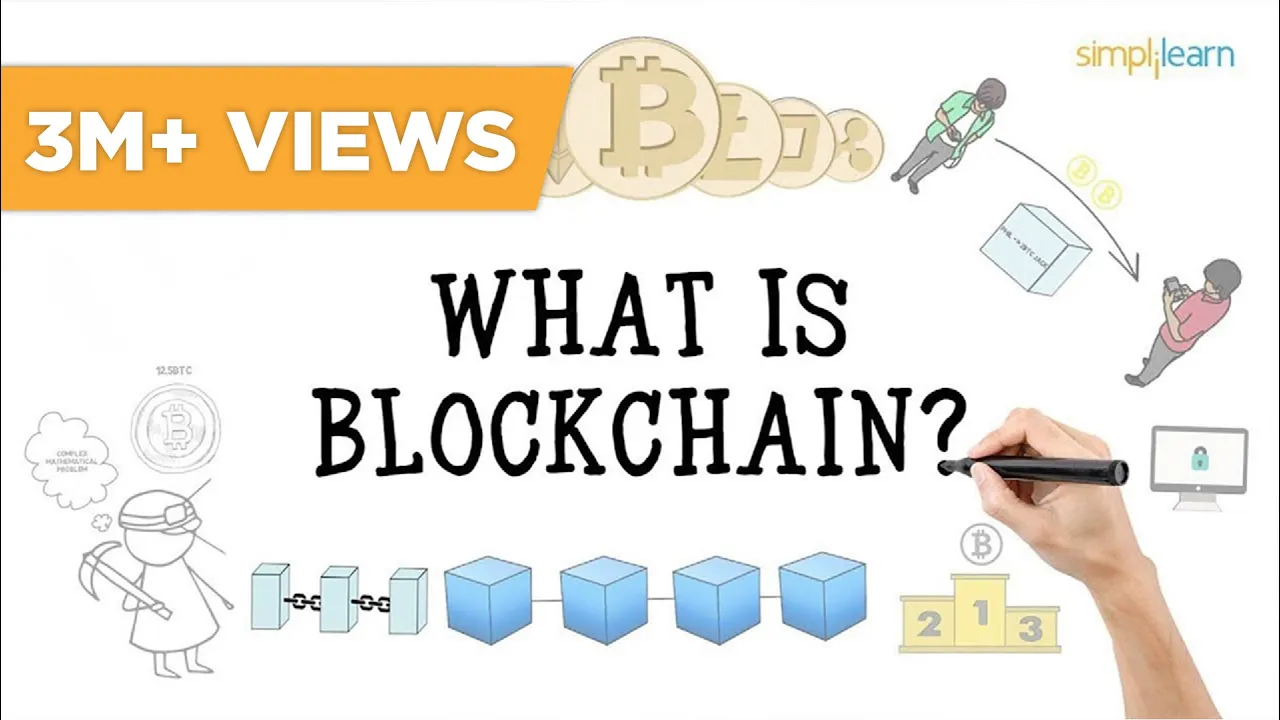
Blockchain In 7 Minutes | What Is Blockchain | Blockchain Explained|How Blockchain Works|Simplilearn
3.8M
Blockchain prevents double spending by maintaining a distributed ledger where all participants have copies of the same record. When a user attempts to spend more funds than they possess, the transaction fails because all network members can verify the sender's actual balance against their copy of the ledger.
Click to watch →

Milhões compram Bitcoin sem saber o que Satoshi realmente propôs (parte 1)
35.7K
The double-spending problem is the central challenge of digital currency: preventing someone from spending the same digital money twice. Traditional banks solve this by acting as arbiters, preventing simultaneous transfers. Satoshi's solution uses a peer-to-peer network that records transactions chronologically using proof-of-work. This creates an immutable historical record where altering past transactions would require redoing all the computational work, making attacks economically impractical.
Click to watch →

RETA FINAL | BANCO DO BRASIL | ATUALIDADES DO MERCADO FINANCEIRO | | PROF. ÍTALO TRIGUEIRO
637
Before blockchain technology, double spending (fraudulent duplication of transactions) was possible with digital currencies. Blockchain solved this problem by creating an immutable, distributed ledger where each transaction is verified and recorded across multiple nodes simultaneously. Mathematically, while theoretically possible to alter the blockchain by controlling 50% of all transactions, this requires enormous computational effort and is practically impossible, making blockchain extremely secure.
Click to watch →
Scaling Blockchains - Computerphile
142.8K
Double-spending occurs when a user attempts to spend the same digital asset more than once. To prevent this, blockchain nodes must traverse back through the blockchain history to confirm that from the point when funds entered a user's ownership, they have not been transferred to anyone else. If both checks pass (ownership proof and no prior spending), the transaction is considered valid.
Click to watch →
Prerequisite Knowledge
- Concept 01The fundamentals of cryptography, including cryptographic hashing functions and public-private key encryption.
- Concept 02Basic understanding of Peer-to-Peer (P2P) network architecture compared to traditional centralized systems.
- Concept 03The concept of digital ledger systems and how financial institutions historically prevent double-spending.
Subsequent Learning
- Step 01In-depth analysis of consensus mechanisms, such as Proof of Work (PoW) and Proof of Stake (PoS).
- Step 02Introduction to smart contracts, programmable blockchains (e.g., Ethereum), and decentralized applications (dApps).
- Step 03The concepts of Decentralized Finance (DeFi) and Tokenomics in digital asset ecosystems.
- Step 04Blockchain scalability issues and emerging solutions like Layer-2 protocols (e.g., Lightning Network, Rollups).
Core Concept
Central Flaw
Key Advantage
Block Creation
Chain Linking
Security Result
Core Concept
0:02Playing Section
- 1
Explains blockchain as a shared digital ledger.
- 2
Highlights its decentralized nature explicitly.
The Practical Limitations and Skepticism of Blockchain Technology
While blockchain is often hailed as a revolutionary tool for securing and decentralizing transactions, critics argue that its real-world utility is heavily constrained. A primary critique is the 'blockchain trilemma,' which asserts that a database cannot simultaneously achieve decentralization, security, and scalability; as a result, many blockchains suffer from slow transaction speeds and high costs. Additionally, Proof-of-Work systems consume massive amounts of energy, raising severe environmental concerns. Many computer scientists argue that blockchain is a 'solution in search of a problem,' noting that traditional centralized databases are vastly more efficient, cheaper, and easier to maintain for almost all business needs. Finally, the promise of absolute security is frequently challenged by smart contract vulnerabilities, governance centralization, and irreversible losses due to user error.
Deep Dive
In-depth analysis of consensus mechanisms, such as Proof of Work (PoW) and Proof of Stake (PoS).

Le BITCOIN ou la BOURSE ?
135.1K
Proof of Work (PoW) and Proof of Stake (PoS) are two fundamental consensus mechanisms securing blockchain networks. In PoW, miners compete to solve complex mathematical puzzles using computational power; the first to solve it gets to add the next block and receives block rewards. This process consumes significant energy and requires expensive hardware. In contrast, PoS selects validators based on the amount of cryptocurrency they hold and are willing to 'stake' as collateral. Validators with larger stakes have proportionally higher chances of being selected to validate transactions and earn rewards. PoS consumes dramatically less energy (up to 1000x less than PoW) while maintaining security through economic incentives rather than computational competition.
Click to watch →
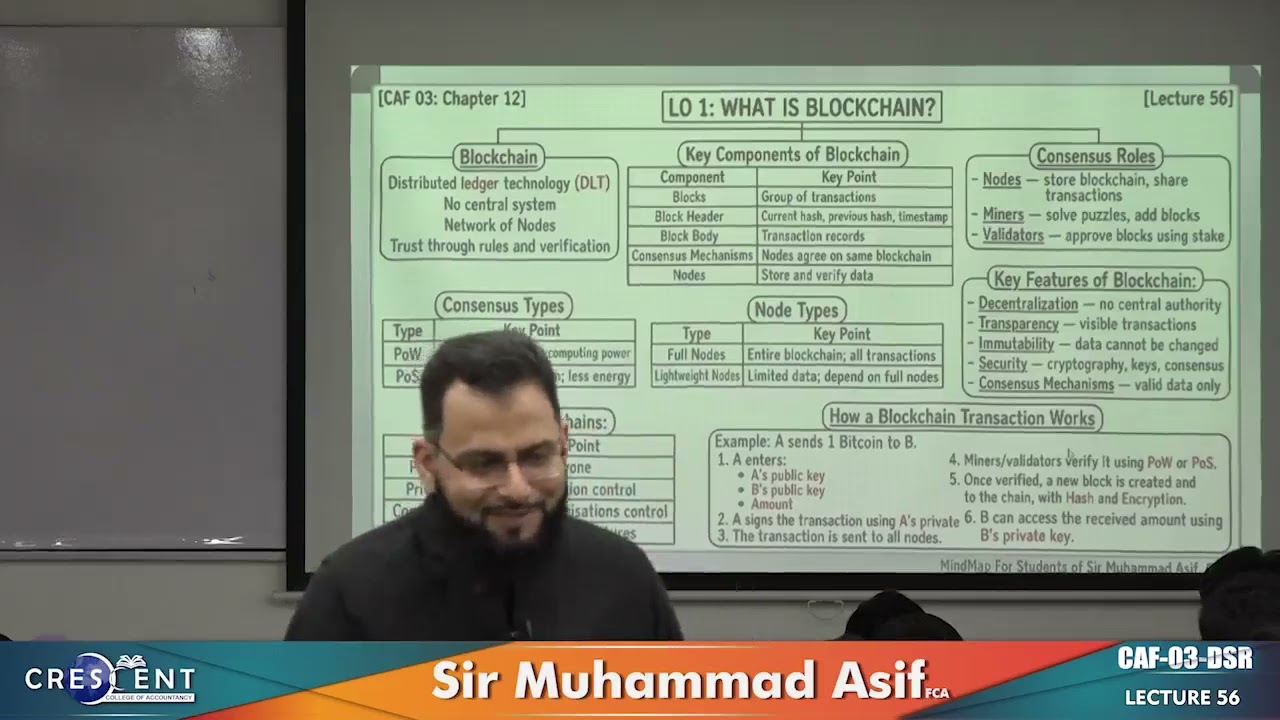
CAF 3 SIR MUHAMMAD ASIF LECTURE 56
217
Consensus mechanisms determine how nodes agree on transaction validity. Proof of Work (PoW) requires miners to solve complex mathematical puzzles before approving transactions, consuming significant computational power and energy. Proof of Stake (PoS) selects validators based on staked funds rather than puzzle-solving, making it more energy-efficient. PoW participants are called miners, while PoS participants are called validators. PoS consumes 1% or less of the energy compared to PoW.
Click to watch →

Proof of Work vs Proof of Stake Explained!
3.3K
Consensus mechanisms are methods cryptocurrencies use to validate blocks on the blockchain. Proof of Work (PoW), used by Bitcoin, requires computers to solve complex mathematical problems consuming significant electricity, with the fastest solver winning and receiving rewards through mining. Proof of Stake (PoS), used by Cardano and others, eliminates mining by requiring users to stake tokens in pools; the network randomly selects validators who verify blocks and earn transaction fees. PoS was designed to address PoW's energy inefficiency and scalability limitations.
Click to watch →

Explorando los Mecanismos de Consenso en Blockchain: Proof of Work, Proof of Stake y Más | Zenblock
3.8K
Consensus mechanisms enable decentralized networks to agree on transaction validity without central authorities. Proof of Work (PoW) requires miners to solve complex mathematical problems, offering high security and decentralization but with high energy consumption and slow processing. Major examples include Bitcoin and Litecoin. Proof of Stake (PoS) selects validators based on staked cryptocurrency, providing lower energy consumption and faster transactions but risking centralization and the 'nothing at stake' problem. Examples include Ethereum 2.0 and Cardano. Delegated Proof of Stake (DPoS) further improves efficiency by having users vote for a small group of delegates, enabling faster transactions and greater scalability but increasing centralization risk. Examples include EOS and Tron.
Click to watch →

A MAIOR OPORTUNIDADE DENTRO DA SOLANA ESTÁ NESSE SETOR!
493
This section explains the fundamental difference between Proof of Work (PoW) and Proof of Stake (PoS) consensus mechanisms. PoW, used by Bitcoin, requires miners to solve complex mathematical problems using computational power, consuming significant energy. PoS, used by Ethereum and Solana, replaces computational work with token staking, reducing energy consumption by over 99%. In PoS, validators lock up tokens to participate in block validation and earn rewards. The halving mechanism in PoW reduces block rewards by half approximately every four years, controlling inflation. PoS eliminates the need for expensive mining equipment while maintaining network security through economic incentives.
Click to watch →
Deep Dive
Introduction to smart contracts, programmable blockchains (e.g., Ethereum), and decentralized applications (dApps).

Code Your First Smart Contract on Ethereum | Beginner Tutorial
52K
Smart contracts are self-executing programs on the Ethereum blockchain that run forever once deployed and cannot be modified. They are written in Solidity, a JavaScript-like language. The video demonstrates building a trust fund contract where parents deploy the contract, send ether, and children can withdraw after a maturity date. Remix IDE provides a browser-based environment for developing Solidity contracts without installation. The contract structure includes pragma statements for version specification, contract declarations, and variable storage on the blockchain.
Click to watch →

AULA 6: TOP ATIVOS EXTERIOR E CRIPTO PARA 2026
8.6K
Ethereum is the second-largest cryptocurrency after Bitcoin and introduces the revolutionary concept of smart contracts—self-executing contracts with the terms of the agreement directly written into lines of code. These smart contracts automatically execute and enforce themselves without requiring intermediaries or third parties. This technology enables decentralized applications (dApps) and automated business processes that run on the Ethereum blockchain. The ability to create programmable contracts represents a fundamental innovation in how agreements and transactions can be conducted digitally.
Click to watch →

Solidity Course: Ethereum Blockchain Development & Smart Contracts
1.5M
Solidity is a statically-typed, contract-oriented programming language used to write smart contracts on the Ethereum blockchain, featuring data types like strings, booleans, integers, enums, structs, and mappings, along with functions, modifiers, and events for building decentralized applications.
Click to watch →

L'Ethereum expliqué simplement ( Ce que vous devez savoir)
59.5K
Ethereum's revolutionary power rests on two essential pillars: smart contracts and decentralized applications (DApps). Smart contracts are self-executing programs that automatically enforce agreements when conditions are met, eliminating intermediaries. DApps run on decentralized networks rather than centralized servers, benefiting from transparency, immutability, and security. Together, these features enable applications across virtually every sector—from real estate to insurance to logistics—where automated verification and execution would be beneficial. This combination distinguishes Ethereum from simpler cryptocurrencies and enables its transformative potential.
Click to watch →

Ethereum (Roadmap) in 30min by Vitalik Buterin - Devconnect
55.7K
Unlike earlier blockchains that were single-purpose protocols or Swiss Army knife protocols requiring hard forks for new applications, Ethereum embraces programmability. Users can upload computer programs called smart contracts that automatically run when users send transactions to interact with them. These are technical terms, not legal contracts, and represent the core innovation enabling decentralized applications.
Click to watch →
Deep Dive
The concepts of Decentralized Finance (DeFi) and Tokenomics in digital asset ecosystems.

AUGUSTO BACKES EXPLICA O QUE É BLOCKCHAIN | Cortes do Flow
67.9K
Tokenomics refers to the economic design of token distribution within a decentralized system. A well-designed tokenomics model ensures fair distribution among community members rather than concentrating tokens among developers, marketing teams, or early insiders. The YFI token is often cited as an example of successful fair distribution, where the creator did not retain any tokens and instead distributed them through liquidity mining pools. Decentralized Finance (DeFi) protocols enable automated lending and borrowing without traditional financial intermediaries. Users can deposit tokens into lending pools and earn interest from borrowers who take loans. The interest rates are determined algorithmically based on supply and demand. This system provides liquidity to the market while allowing users to earn passive income. The automation eliminates the need for human intermediaries while maintaining the security and transparency of the blockchain.
Click to watch →

Omar Yehia || Co-Founder of Prudentia Digital | Logan Jastremski Podcast #14
3.6K
Most existing DeFi financial primitives are objectively inferior to traditional financial instruments available through established institutions. Many DeFi applications replicate existing financial products digitally without providing meaningful improvement. Structural flaws include susceptibility to front-running, adverse selection, and toxic flow trading. Tokenomic systems face profound challenges because monetary economics remains an unsolved problem even after a century of central banking research. Creating token incentive structures that reliably produce desired economic outcomes requires deep first-principles understanding. Most tokenomic models fail to achieve their intended effects, and few have been sufficiently tested through complete economic cycles.
Click to watch →

LES PROJETS METAVERSE, L'écosystème Stellar prochain x10?, Ethereum, LUNA, Cycle BITCOIN
65.8K
This section explains DeFi ecosystem growth with $269 billion locked in smart contracts. Token burning creates deflationary dynamics when more tokens are destroyed than created. The impact of burning on price differs between short and long term: burning warehouse inventory doesn't immediately affect display prices but does when display inventory depletes. Established DeFi projects like SushiSwap and Uniswap may lag behind ecosystem growth, with value flowing toward newer projects before established projects follow the trend.
Click to watch →
Apidai - обзор проекта! Предварительная продажа в самом разгаре!!! Токен с потенциалом X100!!!
30.8K
Decentralized finance (DeFi) ecosystems are blockchain-based platforms that enable users to store, manage, and earn rewards on digital assets without central authority control. These platforms typically feature token pre-sales with tiered pricing structures, where early participants receive bonuses (e.g., 30% for level 1, 20% for level 2, 10% for level 3). Tokenomics—the study of token supply and distribution—plays a crucial role in ecosystem design, with total supply often divided into pre-sale allocations, airdrops, and liquidity pools. Security measures like locked liquidity pools help protect investors, while multi-chain support (e.g., Ethereum, Tron, BNB) enhances accessibility. Understanding these fundamental concepts helps investors evaluate potential opportunities in emerging crypto projects.
Click to watch →

Why XRPL EVM Is a Game Changer for XRP: Full Breakdown
66.7K
The XRPL EVM side chain transforms XRP from payment token to DeFi asset through fundamental tokenomic changes. While mainnet fees burn XRP, side chain fees reward validators, creating sustainable economic incentives. Most significantly, XRP holders can now use their holdings as DeFi collateral, borrow stablecoins, farm yields, and engage in leveraged positions—all without selling underlying assets. RLUSD serves as the backbone for lending and borrowing protocols. Early builders are racing to deploy core infrastructure: decentralized exchanges will likely emerge first, establishing liquidity pools and trading pairs that become the ecosystem's beating heart. Lending protocols will unlock capital from eXRP holdings, enabling whales and active users to leverage positions. Stablecoin integration via Axel and Wormhole will bring USDC, USDT, and others from multiple chains, creating ample liquidity for trading and yield farming opportunities.
Click to watch →
Deep Dive
Blockchain scalability issues and emerging solutions like Layer-2 protocols (e.g., Lightning Network, Rollups).
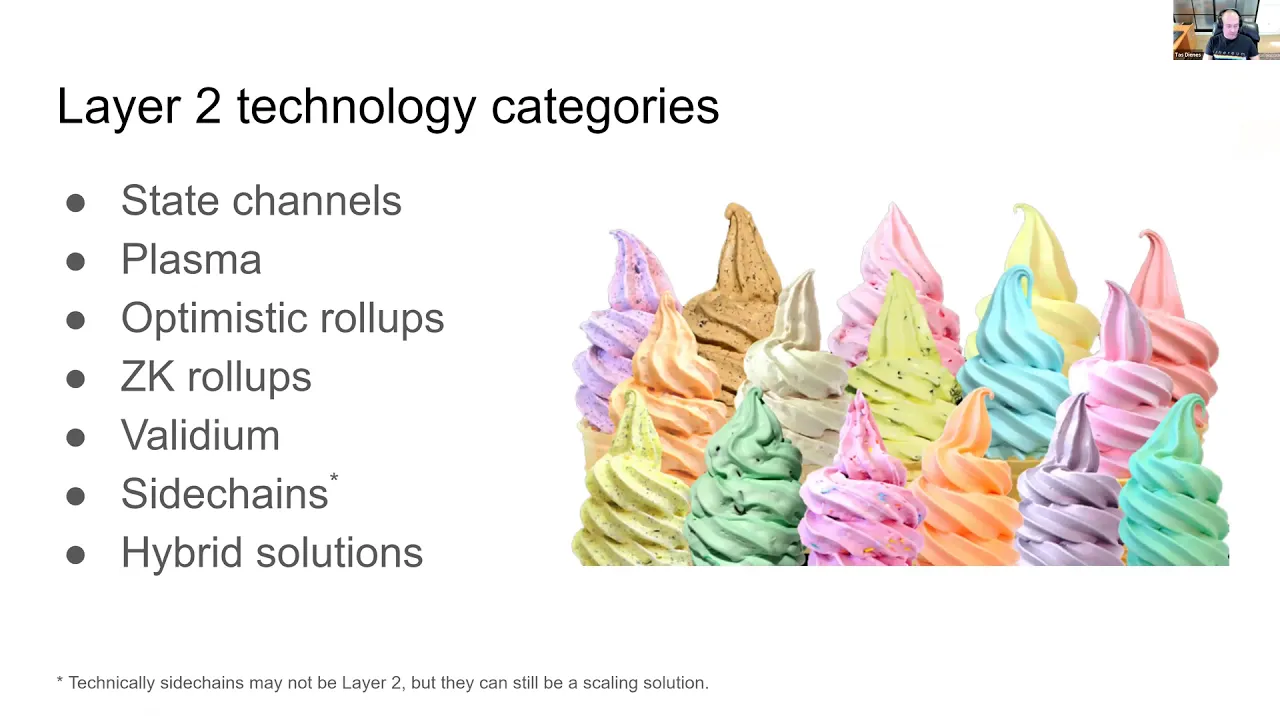
EEA Education Series IG, December 2020
170
The scalability trilemma states that blockchains can only achieve two of three properties: scalability, security, and decentralization. Most public blockchains sacrifice either decentralization or security for higher throughput. Layer 2 solutions address this by inheriting layer 1 security while providing greater capacity. Layer 2 protocols run on top of Ethereum, inheriting its security properties while enabling applications to handle many more users and transactions. Ethereum 2.0 sharding and layer 2 solutions complement each other multiplicatively, potentially achieving tens to hundreds of thousands of transactions per second. Enterprises traditionally favored private chains due to scalability and privacy concerns, but layer 2 solutions negate these concerns by providing throughput isolation, fast confirmations, fiat payment options, and privacy through private chains while maintaining layer 1's security guarantees. Layer 2 technologies evolved from 2016-2017 with the Lightning Network introducing state channels for Bitcoin, followed by Ethereum-specific solutions like Plasma in 2017. A two-by-two matrix categorizes solutions by data storage (on-chain/off-chain) and validity proof mechanism (zero-knowledge proofs/fraud proofs). State channels enable thousands of transactions per channel between parties with minimal fees but require setup time and capital lockup. Plasma achieves high scalability (tens of thousands of TPS) by anchoring to Ethereum for dispute resolution but cannot execute general computation. Rollups write transaction data to layer 1 as call data while performing computation off-chain. Optimistic rollups assume correctness by default with fraud proofs, achieving ~100x layer 1 capacity with EVM compatibility but introducing withdrawal delays. ZK rollups generate zero-knowledge proofs verifying correct computation, achieving similar capacity with instant finality but facing limitations in general computation support and high proof generation costs.
Click to watch →
Introduction to Validating Bridges and Layer-2 Protocols with Patrick McCorry | a16z crypto research
3.8K
Blockchains face a fundamental tension between decentralization and transaction throughput. Bitcoin processes only ~15 TPS, while users expect thousands of transactions per second. Solutions like Solana (65,000 TPS) and Polygon (7,000 TPS) claim to solve this, but haven't succeeded because decentralization requires artificially constraining network resources (CPU, storage, bandwidth), creating bottlenecks. The goal of layer 2 protocols is to scale by moving assets off-chain for local transactions while retaining Ethereum's security guarantees, allowing users to transact locally without trusting any single entity.
Click to watch →

Elizabeth Stark of Lightning Labs: "The Importance of Layer Two" | Blockstack Summit 2017
71.9K
Layer Two solutions like the Lightning Network address the fundamental scalability challenge of blockchains by enabling instant, high-volume off-chain transactions while using the underlying blockchain as a secure anchor for dispute resolution. This approach minimizes data on the main chain, allowing millions of transactions per second compared to the limited throughput of base layer blockchains, and can be extended to cross-chain atomic swaps between different cryptocurrencies.
Click to watch →
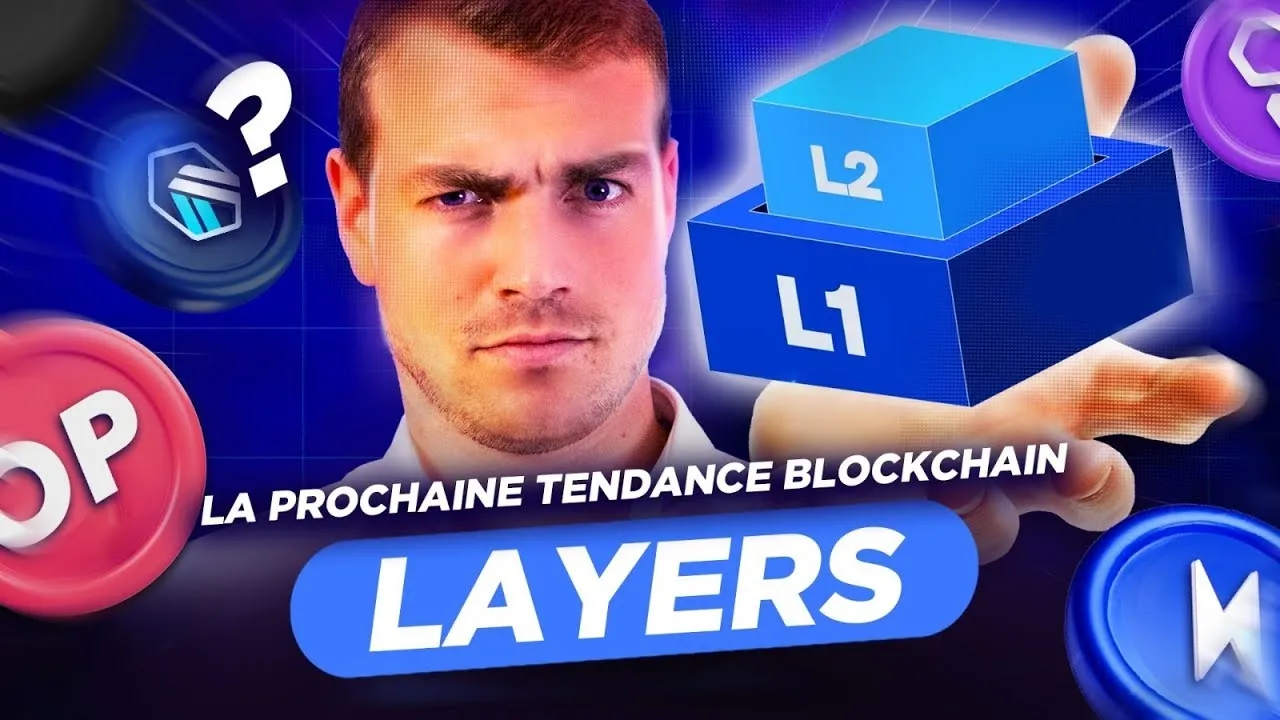
Qu'est ce qu'un LAYERS 2 | Blockchain & Crypto
107.3K
Layer 2 solutions are secondary blockchain layers built on top of Layer 1 networks (like Bitcoin and Ethereum) to address scalability limitations while leveraging the security and decentralization of the base layer. The main families of Layer 2 include state channels (like Lightning Network), optimistic rollups (like Arbitrum and Optimism), and zero-knowledge rollups (like Starknet), each offering different trade-offs between speed, security, and complexity. These solutions process transactions off-chain and only submit essential data to the main chain, dramatically increasing throughput without compromising the fundamental security guarantees of the underlying Layer 1 network.
Click to watch →
LSE Events | Dr Andrew Lewis-Pye | Cryptocurrencies: the issue of scalability
1.5K
Multiple approaches address blockchain scalability: Ghost Protocol resolves forks by selecting branches with most descendants rather than longest chains; sharding runs multiple independent blockchains in parallel, enabling linear scalability with proof-of-stake; Lightning Network enables off-chain payment channels where users conduct unlimited transactions off-chain with only final states recorded on-chain. Each approach targets different bottlenecks—Ghost addresses network latency, sharding addresses verification limits, and Lightning addresses transaction throughput—demonstrating that effective scalability requires combining multiple solutions.
Click to watch →
Core Concept
Central Flaw
Key Advantage
Block Creation
Chain Linking
Security Result
Core Concept
0:02- 1
Explains blockchain as a shared digital ledger.
- 2
Highlights its decentralized nature explicitly.
The Practical Limitations and Skepticism of Blockchain Technology
While blockchain is often hailed as a revolutionary tool for securing and decentralizing transactions, critics argue that its real-world utility is heavily constrained. A primary critique is the 'blockchain trilemma,' which asserts that a database cannot simultaneously achieve decentralization, security, and scalability; as a result, many blockchains suffer from slow transaction speeds and high costs. Additionally, Proof-of-Work systems consume massive amounts of energy, raising severe environmental concerns. Many computer scientists argue that blockchain is a 'solution in search of a problem,' noting that traditional centralized databases are vastly more efficient, cheaper, and easier to maintain for almost all business needs. Finally, the promise of absolute security is frequently challenged by smart contract vulnerabilities, governance centralization, and irreversible losses due to user error.
The fundamentals of cryptography, including cryptographic hashing functions and public-private key encryption.
Basic understanding of Peer-to-Peer (P2P) network architecture compared to traditional centralized systems.
The concept of digital ledger systems and how financial institutions historically prevent double-spending.
In-depth analysis of consensus mechanisms, such as Proof of Work (PoW) and Proof of Stake (PoS).
Introduction to smart contracts, programmable blockchains (e.g., Ethereum), and decentralized applications (dApps).
The concepts of Decentralized Finance (DeFi) and Tokenomics in digital asset ecosystems.
Blockchain scalability issues and emerging solutions like Layer-2 protocols (e.g., Lightning Network, Rollups).
3.8K views98likes1:09@SimpleExplanations-YTOriginal Release: 2025-02-14
blockchain you've probably heard this word a lot but what exactly is it and why is it so important let's break it down simply imagine a digital notebook where every transaction is recorded normally Banks and companies store this information in one central place which means they control it but what if that database gets hacked or manipulated this is where blockchain comes in it's a system where information is spread across thousands of computers worldwide making it nearly impossible to alter or hack here's how it works a transaction happens like sending Bitcoin it gets verified by multiple computers called noes once approved it's added to a block of other transactions that block is linked to previous blocks forming a chain hence the name blockchain and since this chain is stored on thousands of computers instead of one Central database no single person can change past transactions making blockchain extreme secure now you know what blockchain is and why it matters if you found this helpful hit like And subscribe for more simple explanations
Up Next

86:13
Cosmos App-Chain Thesis and ATOM 2.0: A Deep Dive with Zaki Manian and Jack Zampolin
@empirepod
5.7K views•2022-09-19

52:00
Hybrid Key Establishment in Production: Post-Quantum Cryptography
@durumcrustulum
14.7K views•2025-08-27

64:25
Operational Security Essentials: A Guide for Hacktivists (OPSEC)
@hitbsecconf
157.4K views•2012-11-26

11:49
Understanding Ethereum: A Comprehensive Beginner's Overview
@99Bitcoins
3.1M views•2018-06-26
Related Study Plans & Knowledge Roadmaps
Structured learning paths in Blockchain & Crypto
blockchain-and-crypto
MPC Wallets: TSS, DKG & Secure Custody
01Foundations of Cryptography & Digital Signatures
02Secret Sharing & Introduction to MPC
03Distributed Key Generation (DKG)
+ 2 more learning modules
24h5 modules
Explore Roadmap
blockchain-and-crypto
ERC-4626: Yield Aggregators & Leverage
01Blockchain, Ethereum, and Solidity Foundations
02DeFi Primitives: Lending, Pools, and Yield Farming
03Mastering the ERC-4626 Tokenized Vault Standard
+ 3 more learning modules
35h6 modules
Explore Roadmap
blockchain-and-crypto
DePIN: IoT Registries, Proofs & Rewards
01Foundations of Blockchain & IoT
02Introduction to DePIN and the Flywheel Effect
03Designing IoT Device Registries & Secure Identity
+ 3 more learning modules
30h6 modules
Explore Roadmap
blockchain-and-crypto
Building EigenLayer AVS: Operators & Contracts
01Blockchain, Ethereum, and Smart Contract Basics
02Proof of Stake and Ethereum Staking
03Introduction to EigenLayer and Restaking
+ 3 more learning modules
24h6 modules
Explore Roadmap