











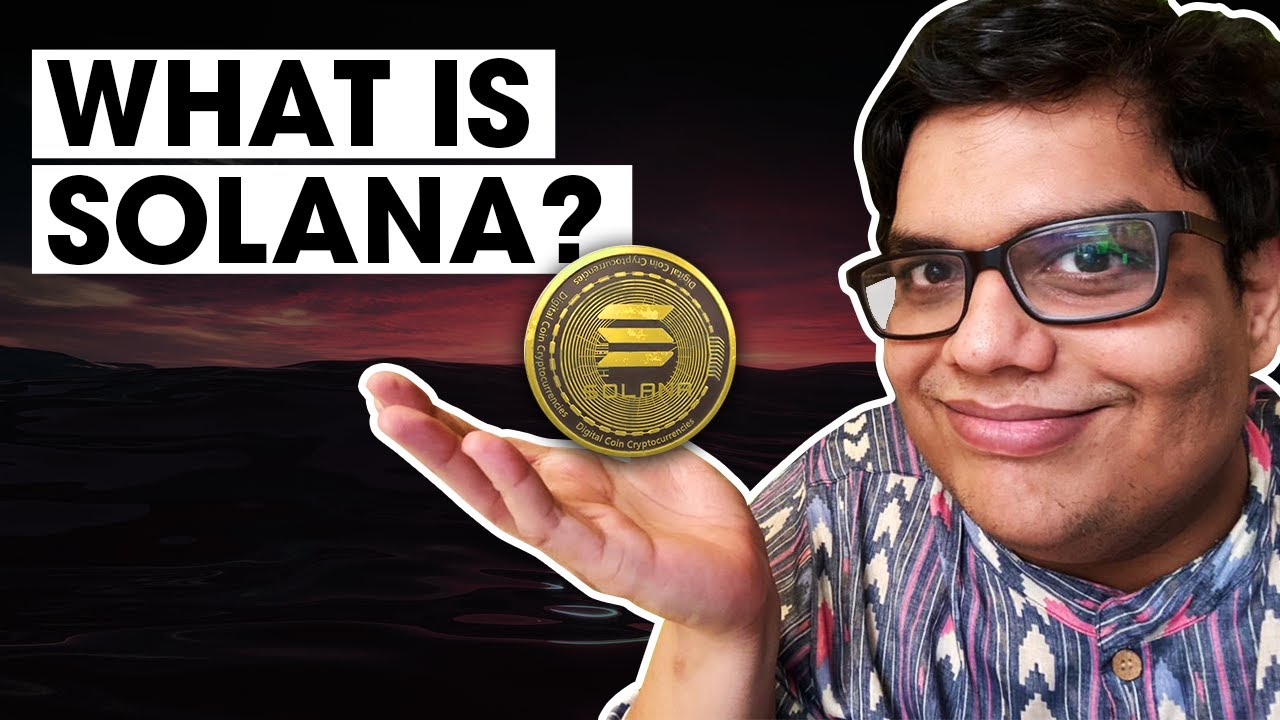





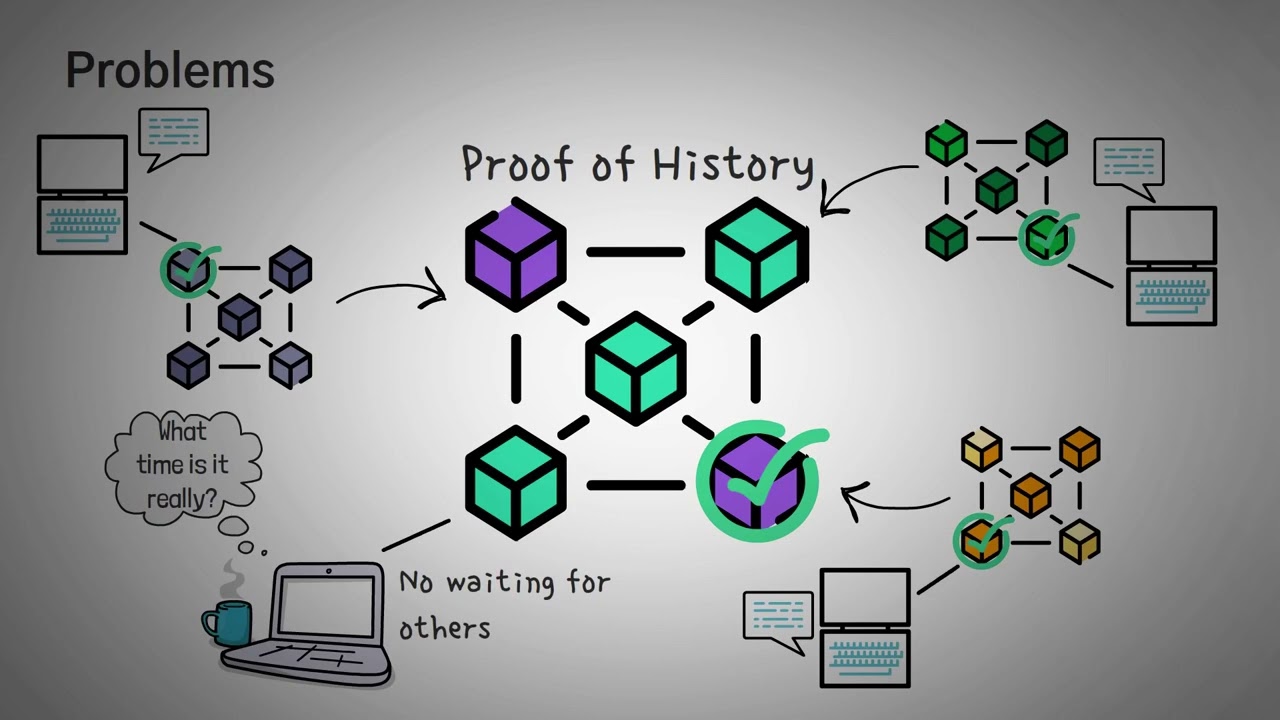


Solana is a high-performance blockchain platform that achieves unprecedented speed (400ms block time, 710,000 TPS) through its innovative Proof of History consensus mechanism, which integrates time into blockchain data using cryptographic timestamps, eliminating the need for continuous node communication to agree on time; unlike traditional proof of stake, Solana allows anyone to become a validator with minimal requirements, and its parallel smart contract execution (Sea Level) enables massive scalability, though the network remains in beta stage with an initial token supply of 500 million and ongoing inflationary tokenomics.
Understanding Solana: A Guide to Its Technology and Applications (2024)
Added:Basic Blockchain Architecture: Understanding decentralized ledgers, cryptography, and how blocks are chained together.
Consensus Mechanisms: Distinguishing between Proof of Work (PoW) and Proof of Stake (PoS) protocols.
The Blockchain Trilemma: The inherent trade-offs between security, decentralization, and scalability in distributed networks.
Smart Contract Fundamentals: Knowing how self-executing agreements function on a blockchain platform like Ethereum.
Proof of History (PoH) Deep Dive: Analyzing how Solana uses a cryptographic clock to order transactions without node agreement delays.
Solana Program Development: Learning the Rust programming language and the Sealevel parallel processing engine to build decentralized applications (dApps).
Solana Tokenomics and Governance: Investigating SOL token distribution, staking mechanisms, and network validator economics.
Evaluating Network Stability: Studying historical network congestion, outage incidents, and technical solutions like the Firedancer validator client.
2M views56Klikes10:27Original Release: 2021-09-13
holy cow i do not know how we got this far into creating animated videos of cryptocurrency topics without hearing of solana i mean i definitely have heard of it but wow i am surprised we haven't covered it yet and probably for good reasons though if you type in what is solana and youtube you get 50 price predictions three videos explaining proof of history and a bunch of interviews no good single video that simply just goes over everything that solana has to offer welcome to whiteboard crypto the number one youtube channel for crypto education and here we explain topics of the cryptocurrency world using analogies stories and examples so that you can easily understand them in this video we're going to explain what solana is some of the crazy unique technological improvements that they have over ethereum and then finally we will get into some tokenomics that you could use to make a price prediction now before we get into the technical stuff of solana let's talk about why it's amazing and who created it anatoly akavenko is the man behind the very first white paper one of the things you need to know about him is that he's quite smart and worked at the company qualcomm for like a decade i tried reading the white paper and it is quite technical with a few understandable sentences here and there but his blockchain is named after the solana beach that he really appreciated but let's get into why solana's price has skyrocketed in the past few months first of all solana has a block time of 400 milliseconds which means they are very fast especially when you compare that to ethereum's block time of 10 seconds or bitcoins 10 minutes also solana boasts that they can handle up to around 710 000 transactions per second which is like 30 times the amount that visa currently handles although they've never actually been able to go past 50 000 in the past this doesn't mean they can't do 710 000 it just means they haven't tried so the solana network is fast it's monstrous and it's also cheap i would say that it's comparable to the matic network with transaction fees around 100th of a penny next up let's get into what makes them so fast and so cheap the first thing that we must explain is their consensus mechanism which is a fancy way of saying how everyone agrees what the blockchain should be now they don't use proof of work and they don't really use proof of stake anatoly actually described a new system called proof of history in his white paper it's basically proof of stake but it adds in the special variable of time so you need to know proof of history is not a consensus mechanism but it is a way of integrating time into the blockchain data we use something called timestamps to place a specific date and time on the blocks and we do this so that it allows for a very fast sequencing of validators basically so that they know their order to submit blocks without having to communicate back and forth one big problem that other blockchains have is that they have to agree on time we'll take this for granted but computers have to constantly be going what time is it really since they can't do things like look at their phone or even the sun to determine it on other blockchains the nodes which is a fancy word that means computers on the network have to chat back and forth back and forth until they agree on a time and they have to do this before submitting a block and in the computer world this chatter can take up a lot of time solana fixes this using proof of history to have everyone timestamp their blocks and use a cryptographic proof so that they don't have to wait on everyone to agree on the time basically we can agree on the organization of the data in the blocks after the fact meaning we don't have to wait for other validators to check and approve our work let's use one of the famous whiteboard crypto stories think about it like this if you want everyone in your family to send you a letter and you want them to do it one day after the other you have to first send a letter to them and then they have to send all their letters to you the time that both of your letters are in the mail is a long period of time what if next time you saw them you just said hey send me a letter at 4pm on january 3rd that way you would know that it's coming in and you wouldn't have to waste time or resources asking them to long story short you could set it up so that your uncle sends a letter on january 3rd your aunt on january 4th your cousin on january 5th and then your grandma on january 6th we want to read these letters in order but the issue is that they each use different mail providers like you know ups and fedex sometimes they take different amounts of time and also your uncle is on a work trip so he's a few thousand miles away by having them all send their letters on the days that they're supposed to they may not arrive in the exact order but they wrote the time that they actually sent their letters in the letter so you can organize them when you get them basically proof of history allows nodes to just keep throwing a bunch of blocks at us and since some people have faster internet than others we can assume that they're telling the truth about their sending date and then organize them after we get them then add them to the blockchain now there's a little bit more that goes into proof of history but honestly it deserves its own video so make sure to hit that subscribe button if you haven't already oh by the way of course in this analogy our aunt our uncle cousin and grandma were actually all just different people sending in blocks and we can use math to find out that our uncle actually wrote his letter on january 3rd another interesting thing is that solana has like 25 blocks being validated by 25 people at once this is how they're actually able to surpass visa by such a large factor speaking of how they're similar to proof of stake one thing that i personally liked about solana is that there are no requirements to be a validator now before i explain this if you don't understand proof of stake you definitely should check out our video on how to understand some of these next terms so to compare ethereum 2.0 you must take around 32 ethereum which is equivalent to around 100 000 on solana you only need to hold a very small amount of the coin and pay a fee to vote each day there is a catch though the voting fee is the only thing i don't like right now it's like one solana per day so around 70 000 dollars a year which seems ridiculous but i mean right now there's almost a thousand people doing it so maybe they know something that i don't next up let's talk about something that no other big blockchain has tried yet it's called sea level technically this is just a fun term to describe that validators can actually run smart contract code in a parallel way now if you're not a developer let me explain it in simple terms let's say you have to do the dishes you have to switch the laundry and then you gotta sweep the floor a human would have to do each one of these things in order because they're only one human we call this a serial task one after the other in terms of solana the word parallel means you can do them all at the same time so it's like if you could make two more copies of yourself and actually do the dishes switch the laundry and sweep the floor all at the same time that is essentially what solana can do processing their smart contracts something else i caught on their website was this quote which describes how they are not bottlenecked by software or ideas but instead bottlenecked by hardware every time nvidia doubles the number of simd lanes our network will double in computational capacity to me it'll be interesting to see how bitcoin and ethereum handle the supercomputers that we have in 10 to 50 years from now one more thing before we get into the tokenomics of seoul is that you should know that solana has vastly different smart contracts than ethereum ethereum uses a virtual machine type system to run its solidity code while solana uses the rust programming language rust is a very low level language meaning it's much more powerful but it does require more work to create things one downside to this is that developers can't just copy and paste their adapts and projects like many other blockchains can from the ethereum network everything must be coded from scratch however they will have more power than ethereum smart contracts finally let's get into tokenomics as i know a lot of people watch our videos to get an idea of how a coin or project works so that they can invest in it this is a simple reminder that we will never offer investing advice we will never reach out to you to ask for money and we will never post our whatsapp number in the comments the spam comments are so bad lately please do not contact them so the coin on the solana network is the soul coin and it is used for transaction fees and used all over the blockchain ecosystem from as far as i can tell solana is both inflationary and deflationary it's deflationary because for a long time 100 of all transaction fees were burned and now it's around 50 percent that are burned but it's also inflationary because they recently approved an inflation schedule where staking rewards are paying out around 8 percent but they do get cut every few days by a very very small amount until the final staking rewards hit 1.5 in 10 years now in terms of total supply they initially started out with around 500 million tokens and of course it will keep increasing due to the proof of stake rewards also on the topic of early distribution there are four private funding rounds before their initial ico those four funding rounds and their ico sold around 36 percent of their supply and at a very cheap price too i mean they were selling these things for like 25 cents each while the price currently sits at 200 another 13 of the tokens went to the founders of the project another 10 went to the solana foundation and the remaining 39 went to fund community initiatives which is also currently held through the foundation now some weird thing that i found out was that there was a solana wallet holding like 13 million tokens and nobody knew why so they just burned a bunch of them definitely worth noting one more thing worth mentioning is that solana actually went down for around six hours in december of 2020. honestly to me this is a little scary because a decentralized protocol should never go down it means everyone participating in the network had the same bug this problem did absolutely nothing to the price though it seems nobody panic sold due to this news lastly solana is still in the beta stage so if you're an investor or want to develop a dap for them you should definitely know that now before i end this video i want to let you know that if you're interested in coin and token research including some guides on decentralized finance that i put together that actually walk you through from the beginning of knowing nothing to actually understanding how to make money by yield farming and avoiding scams you can check out whiteboardcrypto.com for our very first free guide thank you guys so much for watching we hope you enjoy this video we really hope that you learned something and most of all we hope to see you in our future videos
Up Next

12:06
Ethereum vs Solana: Technical Comparison for Smart Contract Platforms
@NathanHQ
140.7K views•2021-09-17

52:00
Hybrid Key Establishment in Production: Post-Quantum Cryptography
@durumcrustulum
14.7K views•2025-08-27
8:18
What Is AAVE? Decentralized Crypto Lending and Borrowing Explained
@WhiteboardCrypto
420.6K views•2021-05-25
11:49
Understanding Ethereum: A Comprehensive Beginner's Overview
@99Bitcoins
3.1M views•2018-06-26
Related Study Plans & Knowledge Roadmaps
Structured learning paths in Blockchain & Crypto
blockchain-and-crypto
MPC Wallets: TSS, DKG & Secure Custody
01Foundations of Cryptography & Digital Signatures
02Secret Sharing & Introduction to MPC
03Distributed Key Generation (DKG)
+ 2 more learning modules
24h5 modules
Explore Roadmap
blockchain-and-crypto
ERC-4626: Yield Aggregators & Leverage
01Blockchain, Ethereum, and Solidity Foundations
02DeFi Primitives: Lending, Pools, and Yield Farming
03Mastering the ERC-4626 Tokenized Vault Standard
+ 3 more learning modules
35h6 modules
Explore Roadmap
blockchain-and-crypto
DePIN: IoT Registries, Proofs & Rewards
01Foundations of Blockchain & IoT
02Introduction to DePIN and the Flywheel Effect
03Designing IoT Device Registries & Secure Identity
+ 3 more learning modules
30h6 modules
Explore Roadmap
blockchain-and-crypto
Building EigenLayer AVS: Operators & Contracts
01Blockchain, Ethereum, and Smart Contract Basics
02Proof of Stake and Ethereum Staking
03Introduction to EigenLayer and Restaking
+ 3 more learning modules
24h6 modules
Explore Roadmap