




















Celestia is the first modular blockchain network that separates the four core components of blockchains—execution, consensus, data availability, and settlement—allowing developers to choose their own technologies for each layer. Unlike traditional monolithic blockchains where validators handle all layers, Celestia focuses exclusively on consensus and data availability, enabling sovereign roll-ups with custom execution environments and settlement layers. Celestia achieves data availability through erasure coding (using Reed-Solomon's algorithm) and data availability sampling, where light clients can verify data integrity by randomly sampling transactions, providing exponential security improvements while maintaining scalability regardless of block size.
Modular Blockchains and Data Availability with Celestia
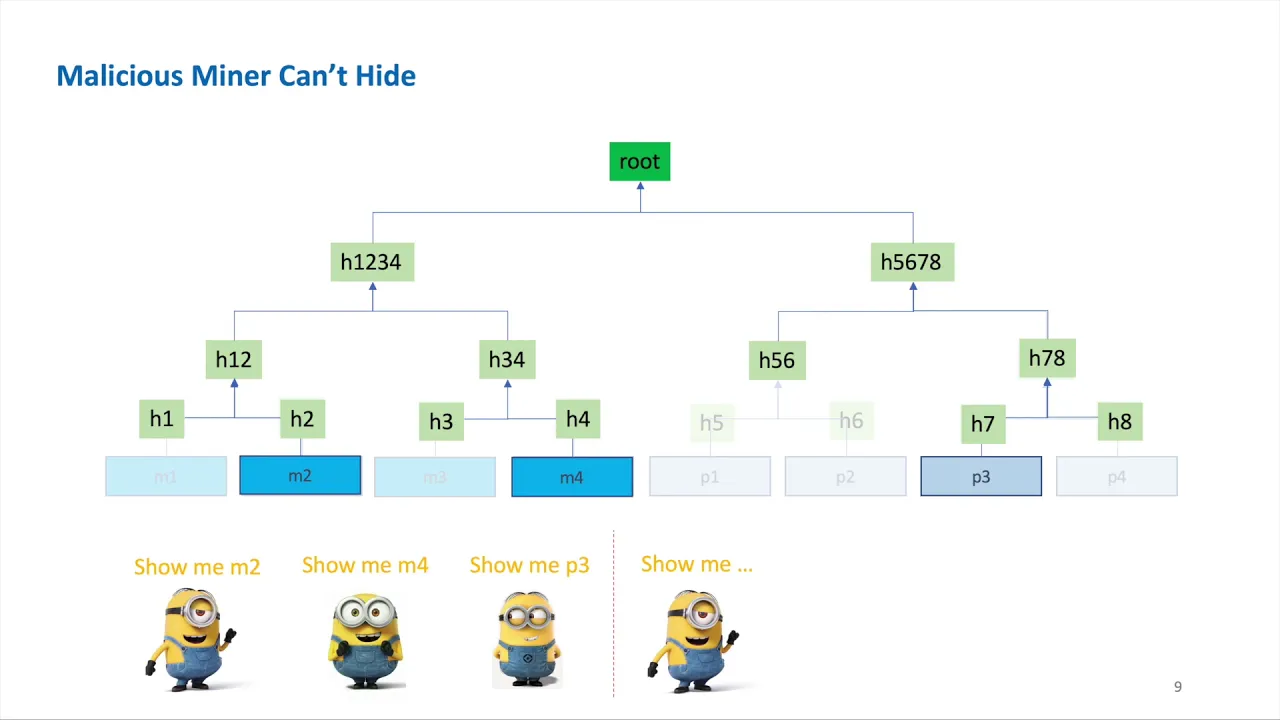
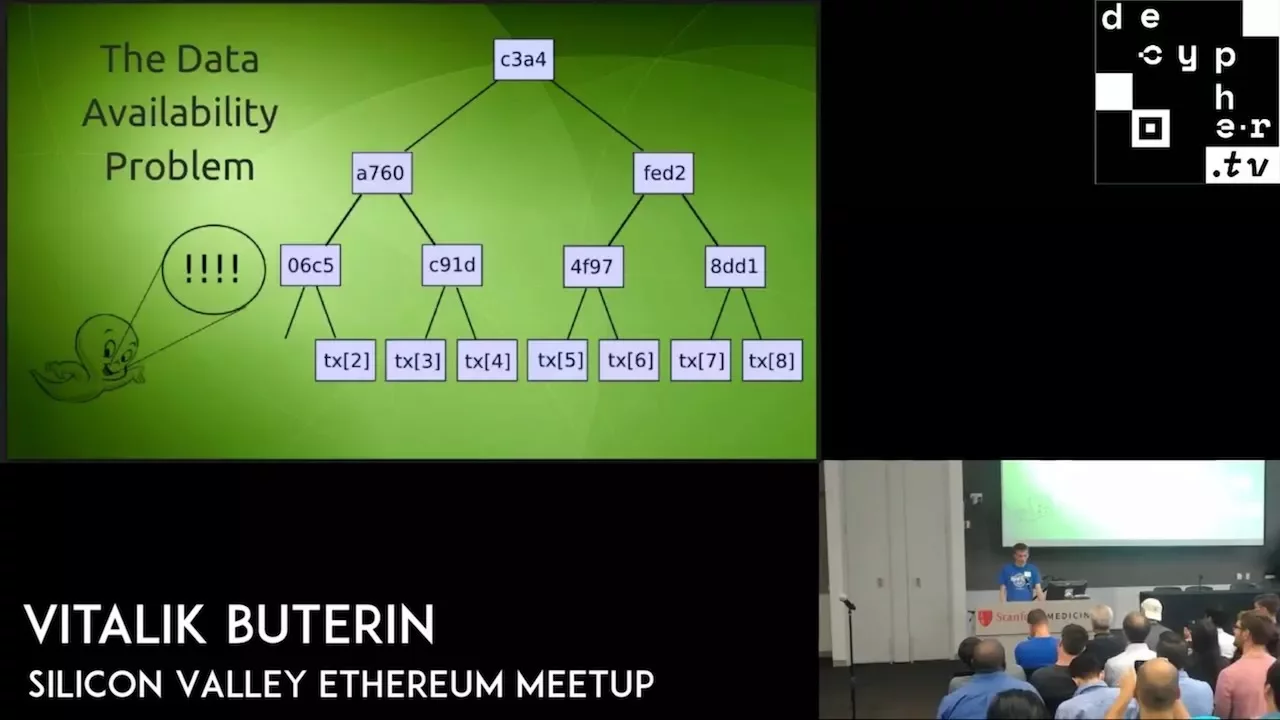
Added:Celestia is the first modular blockchain Network and it is one of the most hyper launches in all of crypto it allows for customizability scalability and something ethereum cannot offer Sovereign Roll-Ups allowing for new possibilities in blockchain and the founding team is absolutely stacked we have Ismail coffee previously a senior engineer at tenement and the entertain foundation and then John Adler founder of fuel and previously a scalability researcher at consensus and then we have the man who started it all Mustafa al-basam at 16 years old he was wounded by the FBI CIA and UK police for 82 individual charges of cyber warfare he had founded the hacktivist organization known as lolsek which had hacked multiple high-profile organizations governments like the United States United Kingdom and Malaysia gaming companies like Nintendo Sony Bethesda news corporations like PBS and Fox News but why exactly it's clear it wasn't for any Financial incentive and LOL SEC was short for LOL security and their motto was laughing at your security since 2000 11. lots of companies had terrible security practices and when they hacked Sony's Playstation network it was down on April 17 2011 and the outage lasted for 23 days and the co-founder of the hacktivist organization was none other than 16 year old Mustafa al-bassad who was later charged with community service and banned off the internet for two years but Mustafa learned a very important lesson when hacking PBS visa and MasterCard Wikileaks a non-profit which exposed governments in violation of human rights were treated unfairly by PBS in the media and visa and MasterCard removed their ability to donate money for the non-profit Mustafa realized the power of information and the importance of decentralized Technologies like Bitcoin which would later give him an interest in blockchain technology Mustafa would later found chain space which then was acquired by Facebook get a PhD in blockchain scalability at the University of London and write three papers on data availability fraud proofs and like clients all co-authored by vitalik buteran his background in these papers would be instrumental in the founding of Celestia and that's why I'm excited to say that this video is sponsored by Celestia they gave me money with the instructions of explain Celestia now Celestia is pretty complicated because it shifts the way we think of blockchains but luckily today we're going to have a low level Deep dive into the technology that powers it explaining it simply with custom diagrams and animations we're going to learn about monolithic versus modular blockchains and then the core features of blockchains data availability and consensus and then we're going to learn about how Celestia provides this data availability with Erasure coding and data availability sampling so let's learn about Celestia the first modular blockchain Network [Music] every blockchain has these four key components execution consensus data availability and settlement the traditional chains are used to are monolithic meaning validators are responsible for all layers but Celestia is bringing a new paradigm of modular blockchains modular blockchains separate these layers and allow developers to pick and choose the Technologies they want to use that's why Celestia's motto is modularism not maximalism Celestia allows you to pick your own virtual machine and execution environments like the evm ethereum virtual machine svm Solana virtual machine Cosmos SDK and cosmosum fuel VM optimism arbitrum ZK sync and many more meanwhile Celestia only focuses on consensus and data availability which will go into more depth later and the last part of the stack Celestia allows you to choose settlement layers like ethereum Neutron sevmos Dimensions or even your own rollup this means you can combine layers and have multiple options like a sovereign roll-up that uses its own execution environment Celestia for consensus and data availability but settles on its own chain or a settlement roll-up that uses its own executioner environment uses Celestia for consensus and data availability but settles to a different layer or even a validium which Celestia calls the celestium it uses its own execution environment uses Celestial only for data availability but uses ethereum for consensus and settlement so modular blockchains and Celestia are amazing but what exactly is consensus and data availability every blockchain from Bitcoin ethereum and Cosmos can be stripped down to have two core features consensus and data availability consensus meaning the agreement of ordering a transaction and data availability meaning the transaction data is available for anyone to download and verify themselves blockchains allow for an uninterrupted view of events and proof behind them and Celestia only does these two core functions something like double spend attacks have no effect effects if you can see the ordering of transactions and the data behind them and then simply disregard the second transaction data and this shows the importance of data availability and consensus how does celestia provide data availability Celestia only provides the key functions of a blockchain being consensus and data availability and allows Roll-Ups to decide the execution environment and settlement layer remember the double spend attack example this shows that transactions and execution environments are totally up to interpretation meaning Celestia doesn't even care if the data is valid it's just a system for ordering transactions and proving that data is available so Roll-Ups can dump their data onto Celestia and select their own execution and settlement layer but how do rollups prove that all their data is there you see Roll-Ups could have a data withholding attack only releasing the header and not the full transaction data of the block and like clients before Celestia could only verify the block header and not check to see if the whole block data is available and this is where Celestia introduces data availability sampling when scaling block change transactions per seconds matter but so does decentralization yes you can have a faster blockchain by just increasing the requirements of validators but not everyone can afford supercomputers which leads to centralization so you need a way to increase computation while at the same time keeping the cost to audit it very low and Celestia solves this with data availability sampling light nodes will check to see if the data is being correctly encoded by randomly sampling transactions in a block now full node validators don't know which exact transaction they're going to sample so they must keep the block 100 percent encoded and published so by randomly sampling transactions from a block you get these three really cool properties the first thing you have to realize is that I have not mentioned any block sizes and that's because sampling is regardless of block size and it isn't linear having bigger blocks doesn't mean more work because rather than being linear it's squared and gives us these really cool scaling properties second the more light nodes in a network the more secure it is every block has a minimum amount of sampling to ensure data availability and extra sampling on top of that just provides more assurance and security to the network third is let's say validators and block sizes get bigger does this mean the same for like clients no when block sizes get bigger you can just have more like clients participating in data availability sampling so those three properties let Celestia scale very easily but how exactly does data availability sampling work how do like clients check to see if the encoding is done correctly well this brings us on to the magic of data availability sampling Erasure encoding Erasure encoding is used to protect information whenever sending or storing it it does this by adding extra information for redundancy and Recovery it's used by CDs to play them smoothly if they get scratched and in satellites if some information across long distances gets lost in either scenario you can use parts of information to recover the full message and this ratio coding technology is used by Celestia for data availability sampling so our Relic data gets dumped into Celestia let's say these four squares are our data using Erasure coding it gives these blocks order and adds backup information called parity using read Solomon's algorithm it uses polynomials that look sort of like this the more blocks then the more longer this equation is now this algorithm is complicated and out of the scope of this video but essentially these polynomials combine the information from the original blocks into these new parity blocks this means if we lose blocks 1 2 4 and Parry two we can use the range interpolation we use existing pieces to draw a polynomial to solve for the missing pieces this means if someone tried to withhold any amount of data they would have to hide over the amount of parity in this example it would be over 4 8 in order for the information to be unrecoverable and this unique property of Erasure coding is also used for data availability sampling if they had one block and I only sample once there's a 50 chance of me being tricked but these samples are exponential meaning only after seven samples the chances of being tricked is less than one percent this means after a certain amount of samples you can have a very high probability of that block being available so first you get the initial data and Erasure code them horizontally into rows and then you do the same vertically into columns this means an attacker has to hide over one-fourth of the block to be unrecoverable but if it's less than one-fourth like in this example with Erasure coding you can recover all of column 3 and with this new information recover rows one two and four and with those new rows of information you can recover the rest although Erasure coding in this two-dimensional grid format has less compounding effect from the previously mentioned row which is one half down two grids which is only one-fourth this grid format makes it easier for light clients so we'll like clients check for data availability they request to sample transactions and check these two things first to see if the Erasure encoding is done correctly and second to see if transaction data is there they're able to prove this with an Erasure encoding fraud proof and a Merkel proof by organizing Erasure codes into rows and columns if incorrect the Erasure encoding fraud proof is now a smaller row or column instead of one fraud proof that's the size of the entire block and that's how this true dimensional eraser code format drastically lowers the barrier for like lines and there you have it Celestia explained hopefully you enjoy this video I know I had a lot of fun learning about Celestia and special thanks to Celestia for sponsoring this video and all the amazing people right here somewhere without them this video would not be possible overall been a big fan of Celestia for a long time now so the fact that they sponsored me is pretty cool enough being a fanboy time the end of video Celestia data availability sampling or like me and Celestia data availability simping [Music]
Up Next

Ethereum Layer 2 Scaling Solutions: Rollups, Sidechains, Validiums
@TapSwapChannel
763.2K views•2024-12-06

Hybrid Key Establishment in Production: Post-Quantum Cryptography
@durumcrustulum
14.7K views•2025-08-27

Operational Security Essentials: A Guide for Hacktivists (OPSEC)
@hitbsecconf
157.4K views•2012-11-26

Understanding Ethereum: A Comprehensive Beginner's Overview
@99Bitcoins
3.1M views•2018-06-26
Related Study Plans & Knowledge Roadmaps
Structured learning paths in Blockchain & Crypto