






![[2021학년도 고3 대학수학능력시험 해설강의] 사회문화- 박봄쌤 : 해설강의 풀버전](https://i.ytimg.com/vi_webp/xrmoh9iwoLQ/maxresdefault.webp)













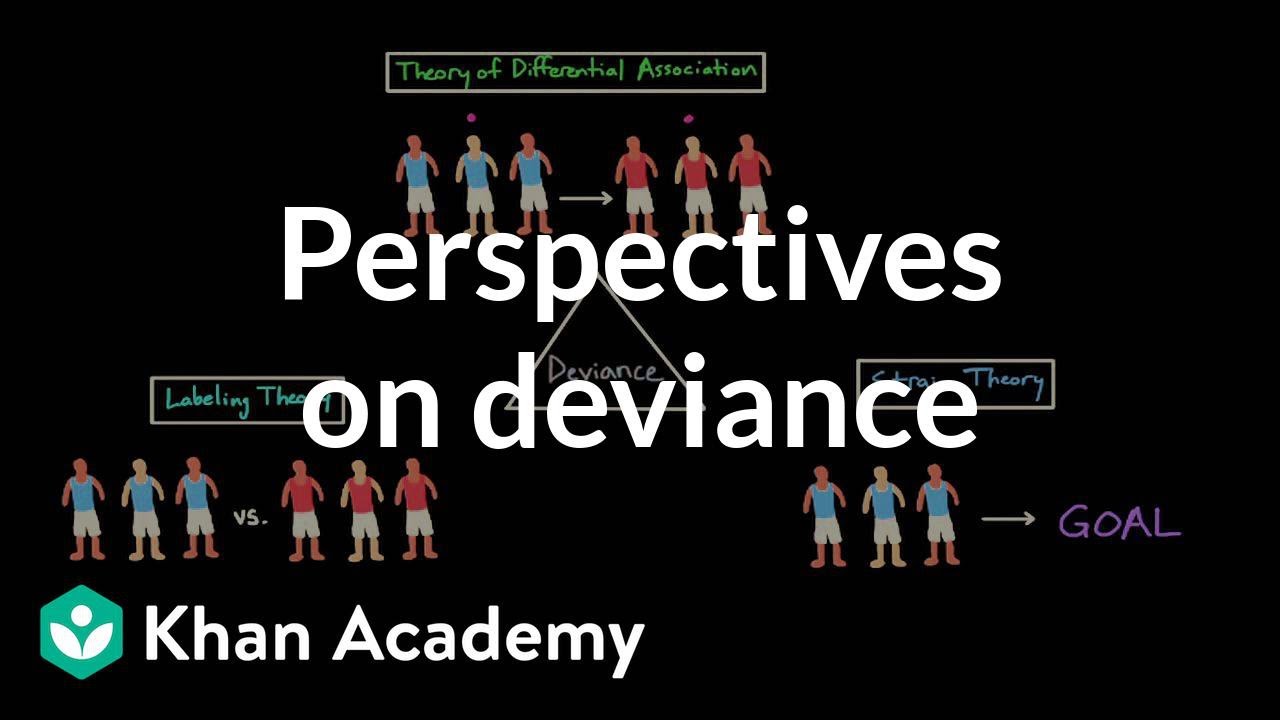
Three major sociological paradigms explain deviance differently: structural functionalism views deviance as serving four functions (defining cultural values, clarifying moral boundaries, uniting society, and encouraging social change); symbolic interactionism focuses on how labels transform primary deviance into secondary deviance and how differential association and control mechanisms influence behavior; and conflict theory argues that deviance reflects power dynamics, as norms and laws serve the interests of the powerful while powerless groups are more likely to be labeled deviant despite potentially less dangerous behavior.
Theories of Deviance: A Sociological Overview #19
Added:An introductory understanding of the three core sociological paradigms: structural functionalism, conflict theory, and symbolic interactionism.
The basic concepts of social norms, values, and how society encourages conformity through formal and informal social control.
The distinction between macro-sociological (large-scale social structures) and micro-sociological (individual social interactions) levels of analysis.
The concept of the sociological imagination, which connects individual experiences to wider historical and social forces.
Specific mid-level theories of deviance, such as Robert Merton's Strain Theory, Labeling Theory, and Differential Association Theory.
The 'medicalization of deviance,' examining how behaviors previously classified as deviant or sinful are redefined as medical conditions.
An analysis of the criminal justice system and how systemic factors like race, class, and gender influence who is labeled as 'deviant' or 'criminal.'
The concept of positive deviance, exploring how breaking social norms can sometimes lead to constructive and progressive social change.
790.3K views9.7Klikes9:45Original Release: 2017-07-24
As we noted last week, an armed robber and a pacifist have something in common: They're both social deviants.
But they're obviously also really different.
It's hard to imagine that some people resort to armed robbery for some of the same reasons that other people reject violence.
That’s why there are many different theories of deviance that can give us some perspective on how and why both the armed robber and the pacifist become deviant.
Through sociology, we can explore how the deviance of these two very different people relates to society at large.
[Theme Music] To understand where deviance comes from, we have to go back to the three major sociological paradigms.
And, as you might expect, structural functionalism, symbolic interactionism, and conflict theories each offer a different perspective on the matter.
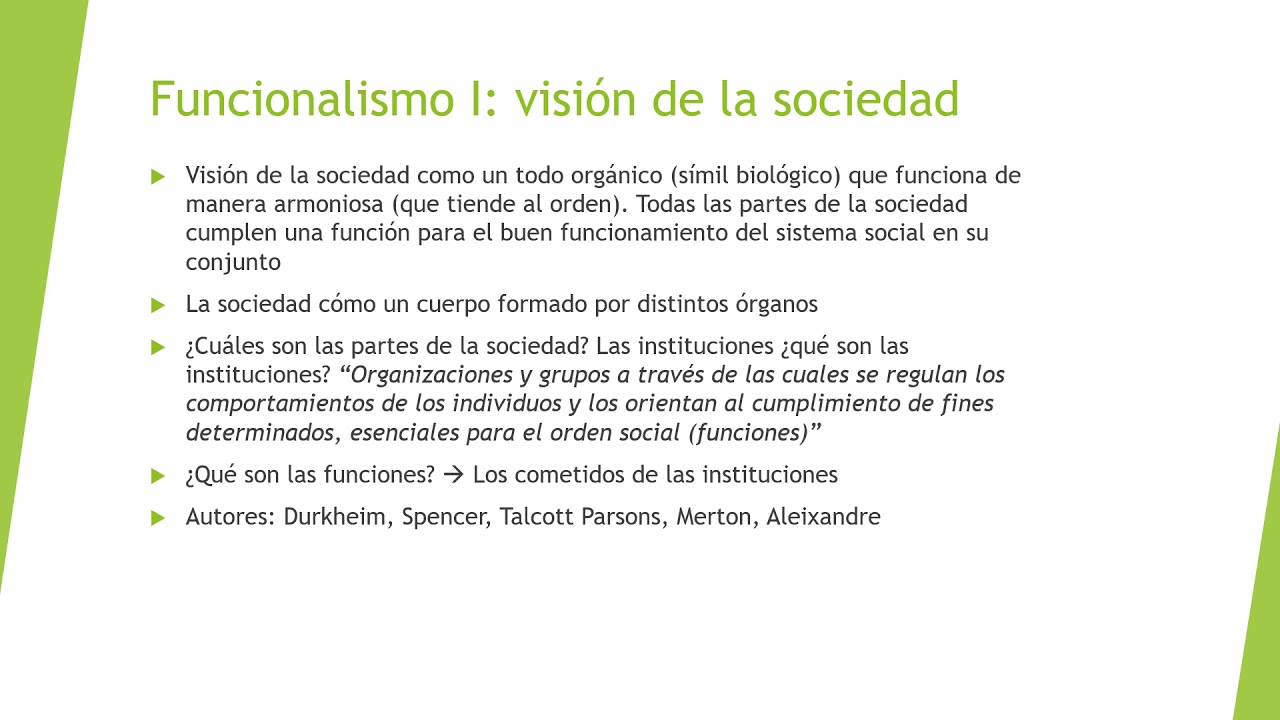
Way back in episode 5, we touched on Emile Durkheim’s structural-functionalist approach to deviance.
His basic insight was that, since deviance is found in every society, it must serve some function.
And Durkheim argued that deviance serves four functions in particular: First, he said, deviance helps define cultural values and norms.
Basically, we can only know what’s good by also understanding what’s not good.
He also argued that society's response to deviance clarifies moral boundaries.
This means that when society reacts to deviance, it’s drawing a line, saying that when behaviors cross a certain moral threshold, they can be sanctioned, either formally or informally.
So this can range from a bank robber being sent to jail, to someone being made fun of for the way they dress.
Durkheim also said that these reactions bring society together.
By reacting in similar ways to something that seems not-normative, we’re basically affirming to each other that we’re an “us,” and the deviants are “them.” And this isn’t necessarily a bad thing.
In the more serious instances of deviance – like, school shootings, for example – you see people uniting around that moral boundary that’s been breached, and supporting each other.
The spontaneous outpourings of outrage, grief, and charity that you see in response to school shootings are all examples of this pattern in action.
And finally, Durkheim pointed out that deviance can actually encourage social change.
We talked in episode 5 about Rosa Parks’ civil disobedience, which was by definition deviant, and it was a factor setting off major changes in American society, in the form of the Civil Rights Movement.
Now, while deviance might be necessary, some societies can have more or less of it than others.
To help explain the difference, American sociologist Robert Merton proposed, in the 1930s and ‘40s, what he called strain theory.
Merton argued that the amount of deviance in a society depends on whether that society has provided sufficient means to achieve culturally defined goals.
In the US, financial success is one of the strongest culturally defined goals.
And the means of achieving it include things like getting an education.
So what we call “the American Dream” – the idea of working hard to achieve financial stability – is a prime example of what Merton called conformity: achieving culturally set goals by way of conventionally approved means.
Go to school, get good grades, graduate, get a good job. Work hard. Get rich. Success.
Right? Well, of course, even if wealth is your goal, this approach isn't an option for a lot of people.
Many who are raised in poverty, for instance, lack a realistic path to prosperity.
And if you don’t have access to the means – like money for an education or good-paying job opportunities – then the goal will be elusive, too.
So one response to the lack of acceptable means is to use unacceptable means – that is, deviant ones.
Merton called this innovation, but here, innovation means something a little different from what you’re used to.
Merton used it to describe deviant solutions that people come up with to reach their goals.
In this case, it could include everything from petty thievery to organized crime.
The goal is still financial success, but the illegitimate means used to get there make it deviant.
Now, you might also respond in the opposite way, by giving up on the goal – in this case, economic success – and instead committing totally to following the rules.
You might decide that you may never be rich, but at least you’re not going to be deviant.
Merton called this ritualism, a deep devotion to the rules because they are the rules.
Of course, your other option is to reject the whole system altogether – the means, the goals, all of it.
In this kind of response, which Merton labeled retreatism, a person basically “drops out” of society, rejecting both the conventional means and goals.
Merton classed drug addicts and alcoholics in this group, because he saw these addictions as a way of escaping the pressures of the goals and means.
But rejection can also be constructive: Rebellion is a rejection of goals and means, but in the context of a counterculture – one that supports the pursuit of new goals according to new means.
The artist who doesn’t want financial success, but instead pursues recognition from their peers is an example of this.
So the structural functionalist perspective on deviance provides some useful ways of thinking about how deviance works on a macro scale.
But it works on the assumption that everyone who does deviant things will be treated as deviant.
The other paradigms of sociology call this into question: They point out that social status impacts how deviance is punished.
Or whether it’s punished at all.
For example, a symbolic interactionist understands deviance through what’s known as labeling theory – the idea that things like deviance and conformity are not so much a matter of what you do, but how people label it.
Let’s go to the Thought Bubble to see how labels can make a deviant.
Imagine a student skipping school.
This is an example of primary, or minor, deviance.
On its own, the transgression isn’t going to affect the student’s self-concept.
That is, it’s not going to cause her to think of herself, or label herself, as a deviant.
And if she’s an otherwise good student, then her teacher might just write it off as a one time thing, and the fact that she cut classes would just remain a minor, primary deviance.
But if the teacher responds more strongly, and punishes her, then that same infraction of the rules can escalate into secondary deviance.
In this case, a strong sanction could make the student start to think of herself as a truant.
And this can lead to what Erving Goffman called a stigma: a powerfully negative sort of master status that affects a person’s self-concept, social identity, and interactions with others.
One of the most powerful effects of stigma is that it leads to more labeling, especially of what a person has done, or might still do.
For example, a stigmatized student could be the subject of retrospective labeling, where her past is reinterpreted, so that she’s suddenly understood as having always been irresponsible.
Likewise, she could be subjected to prospective labeling, which looks forward in time, predicting her future behavior based on her stigma.
Thanks Thought Bubble.
As you can see, the whole process of labeling can be extremely consequential.
And it affects not only how we think of ourselves, but also who responds to deviance, as well as how they respond, and how the deviant person is understood in society.
Drug abuse, for instance, has largely been understood as a moral failing.
But it’s increasingly being seen as an illness.
And as that perception has changed, so too have the people who respond to drug abuse.
Instead of just being a job for law enforcement, today, instances of drug abuse often involve both police and medical professionals.
And instead of getting jail time, in some places, violators are given medical and psychological treatment.
In other words, how people respond is beginning to change.
And finally, instead of being judged as personally culpable for some moral failing, addicts are increasingly seen as suffering from a disease, freeing them, in part, from some degree of personal responsibility for their behaviors.
So the very way in which they’re understood is also evolving.
There are a couple other symbolic interactionist approaches to deviance that don’t focus on the power of labels.
Differential association, for example, argues that who you associate with makes deviance more or less likely.
And control theory focuses on a person’s self-control as a way of avoiding deviance, as well as their ability to anticipate and avoid the consequences of their actions.
All of these symbolic interactionist approaches highlight the interpersonal responses to deviance.
But a Conflict Theory approach links deviance to social power.
If we look at society, we find that the socially deviant are not necessarily the most dangerous.
Rather, a conflict-theory perspective points out that they are often the most powerless.
Conflict theory can explain why this is so in a few different ways: For one thing, conflict theory posits that norms and laws reflect the interests of the powerful.
So the powerful can defend their power by labeling as deviant anything that threatens that power.
For instance, in capitalist societies, deviant labels are often applied to those who interfere with the way capitalism functions.
And since capitalism is based on the private control of wealth, stealing is clearly labeled as deviant.
But there are also different rules for when the rich target the poor: Petty thieves are treated as deviant in a way that corporate criminals are not, even though they both steal from other people.
An employee taking goods out of the backroom is hauled in by the police, while the boss who withholds overtime pay often doesn’t even pay a fine.
And this is the case, according to conflict theory, because the powerful are able to defend themselves against labels of deviance, so deviant actions are less likely to lead to a deviant label and thus reactions to that deviance.
Finally, conflict theory points out that norms have an inherently political nature, but the politics tend to be masked by the general belief that if something is normative, it must be right and good.
So while we may take issue with how a law is applied, we much more rarely ask whether the laws themselves are just or not.
Conflict theorists see these explanations at work wherever the inequality of social power can be found – across gender, among races, and between groups of different socioeconomic status.
Ultimately, structural functionalism, symbolic interactionism, and conflict theory all give us useful tools for understanding deviance.
Each of these paradigms is powerful, and we'll be making use of all three next week, when we look specifically at crime.
Today we learned about how the three major paradigms in sociology approach deviance.
We talked about structural functionalism and how deviance can fulfill a function in society.
Then we turned to symbolic interactionism and looked at how deviance is constructed.
Finally, we discussed conflict theory and how deviance is connected to power and inequality.
Crash Course Sociology is filmed in the Dr. Cheryl C. Kinney Studio in Missoula, MT, and it’s made with the help of all of these nice people.
Our animation team is Thought Cafe and Crash Course is made with Adobe Creative Cloud.
If you'd like to keep Crash Course free for everyone, forever, you can support the series at at Patreon, a crowdfunding platform that allows you to support the content you love.
Thank you to all of our patrons for making Crash Course possible with their continued support.
Up Next

3:03
Labeling Theory: Primary vs Secondary Deviance Explained
@thesociologyprofessor
2.5K views•2024-09-20
54:57
Contemporary Sociological Theory: Micro, Macro, Integrative
@NaSESYNC
45.7K views•2016-02-17

11:31
Food Access and Agricultural Revolutions: A Geography Lesson
@crashcourse
117.1K views•2022-02-15
9:41
What is Sociology? The Sociological Perspective Explained
@crashcourse
4.6M views•2017-03-13
Related Study Plans & Knowledge Roadmaps
Structured learning paths in Sociology
sociology
Celebrity Culture: From Hollywood to TikTok
01Foundations of Celebrity Sociology
02The Rise of Micro-Celebrity & Digital Platforms
03Parasocial Relationships & Algorithmic Intimacy
+ 2 more learning modules
12h5 modules
Explore Roadmap
sociology
Hostile Architecture: Space, Power & Control
01Introduction to the Sociology of Space
02Social Control and Surveillance in the City
03Hostile Architecture and Defensive Design
+ 2 more learning modules
12h5 modules
Explore Roadmap
sociology
Loneliness Epidemic: Third Places & Isolation
01Foundations of Social Capital and Community Cohesion
02The Death of Third Places and Urban Space Erosion
03The Privatization of Leisure and Atomization
+ 2 more learning modules
12h5 modules
Explore Roadmap
sociology
Sociology of Tourism: Gaze, Power & Heritage
01Foundations of the Sociology of Travel and Leisure
02John Urry and the 'Tourist Gaze'
03Staged Authenticity and Cultural Commodification
+ 2 more learning modules
14h5 modules
Explore Roadmap