Labeling theory explains social deviance as a social process where an individual's initial deviant act (primary deviance) leads society to label them as deviant, and when this label becomes internalized into their self-identity, they may engage in subsequent deviant acts (secondary deviance); this demonstrates how societal perceptions and treatment influence individual behavior and identity formation.
Labeling Theory: Primary vs Secondary Deviance Explained
Added:Deep Dive
A basic sociological understanding of deviance, social norms, and conformity.

O que é DESVIO SOCIAL?
21.5K
Social deviance is a normal and organic part of society's functioning, referring to when a small percentage of people disregard established social norms and standards; according to sociologist Rafael Becker, social deviance provides society with opportunities to collectively reaffirm moral standards and maintain social order through collective reactions against deviant behavior.
Click to watch →

TRSR2 HENRY THE GREEN ENGINE BOOK 6 PART 3 'Gordon's Whistle'
93.8K
This story illustrates how social groups establish and enforce norms, and what happens when individuals deviate from them. Gordon criticizes Henry for having a new shape and whistling too much, stating 'no respectable engine ever whistles loudly at stations.' When Gordon violates this norm by whistling excessively, he causes widespread disruption: people come out of houses, air raid sirens start, fire brigades prepare, horses upset carts, and passengers hold their ears. The controller cannot be heard, and fitters must physically intervene to stop the noise. The story demonstrates that violating social norms leads to negative consequences for both the individual and the community, and that groups may need to enforce conformity through intervention.
Click to watch →

UCSP- (SHS)- Conformity and Deviance
28.6K
Conformity is the process by which individuals align their beliefs and behaviors with societal or group norms, occurring through three levels: compliance (temporary outward agreement while maintaining private views), identification (conforming to gain approval from admired individuals), and internalization (deeply adopting norms as personal values). Deviance refers to behaviors that violate established social norms, which can be formal (breaking laws) or informal (violating social customs), and while often viewed negatively, deviance can also drive positive social change by challenging existing systems and promoting progress.
Click to watch →
Deviance: Crash Course Sociology #18
1M
In sociology, deviance simply means being non-normative or different from societal norms. It is not inherently an insult or judgment about behavior quality. Deviance includes both harmful actions like crime and behaviors that are simply outside mainstream cultural expectations, such as veganism in a meat-eating society. The key distinction is that deviance refers to deviation from accepted social norms, not necessarily moral wrongness.
Click to watch →

Социальные отношения за 60 минут. ЕГЭ по обществознанию | Валентиныч
15.1K
Social norms regulate behavior through two categories: legal norms (state-enforced laws) and moral norms (informal expectations). Social control operates through formal sanctions (legal penalties) and informal sanctions (social approval/disapproval). Deviant behavior encompasses both harmful violations and positive deviations that benefit society. Understanding these mechanisms reveals how societies maintain order while allowing constructive innovation.
Click to watch →
Deep Dive
Familiarity with the Symbolic Interactionist perspective, which serves as the theoretical foundation for labeling theory.

Approaches to Sociology of Education/ Features/B.ed /M.ed/ teaching
8.6K
Interactionism, also called symbolic approach, was developed by Herbert Blumer and George Mead. It focuses on the subjective meaning of human behavior - how humans act and react in various situations. It is also called micro-structural approach, focusing on subjective aspects rather than objective ones. It prioritizes the image of human individuals over society. Symbolic interactionism focuses on easily observable interactions like face-to-face interactions. Humans are pragmatic actors who change behavior according to others. Society is created through negotiation and social construction of relationships. Labeling theory states that if someone is repeatedly told the same thing about themselves, they will adopt that label in their behavior, creating a self-fulfilling prophecy.
Click to watch →

CAPÍTULO VII: PARADIGMA ETIOLÓGICO Y LABELING APPROACH (segunda parte)
111
Labeling theory is situated within a sociological paradigm drawing from two main currents: Symbolic Interactionism (inspired by George Herbert Mead) and Ethnomethodology (inspired by Alfred Schutz). Symbolic Interactionism holds that social reality is constructed through concrete interaction between individuals, where typification assigns specific meanings to behaviors and individuals as subjects fulfilling social roles. Ethnomethodology argues that society cannot be studied as an objective plane, but norms can only be analyzed as constituted by cumulative processes of definition and simplification by individuals and groups. In the paradigm of social reaction, studying social reality means examining processes of definition of behaviors and ethics of labeling, from simplest to most complex behaviors at general social levels.
Click to watch →

Crim Ch 7 Social Process Theories
2.4K
Labeling theory has roots in symbolic interactionism, developed by George Herbert Mead and Charles Horton Cooley in the 1920s-30s. Symbolic interactionism argues that people interact using symbols, and how symbols are interpreted affects a person's self-concept and how others conceptualize them. This is a cornerstone for understanding how certain things are labeled as crime and how criminals are labeled.
Click to watch →

Ch 11 Introduction to Criminology
365
Labeling theory is grounded in symbolic interactionism, which focuses on how individuals create meaning through social interactions. Key concepts include: (1) The Looking-Glass Self, developed by Charles Horton Cooley, where individuals develop self-image through reflection from others; (2) William I. Thomas's concept of total situations, which considers both objective factors and subjective definitions of circumstances throughout one's lifespan; (3) George Herbert Mead's distinction between non-symbolic interaction (responding to gestures) and symbolic interaction (interpreting meanings and acting based on those interpretations).
Click to watch →

Eli Nurkhayati / PPG DALJAB Kategori 1 Angkatan 3 Tahun 2023
243
Symbolic interactionism theory states that social problems arise from symbolic interactions with people who engage in problematic behaviors. The labeling perspective within this theory suggests that society creates negative labels for certain groups or behaviors, which then perpetuates the problem. For example, areas associated with prostitution may be labeled negatively, affecting all residents regardless of their actual behavior. This creates a self-fulfilling prophecy where labeled groups are treated negatively.
Click to watch →
Deep Dive
Charles Cooley's concept of the 'Looking-Glass Self' and how self-image is constructed through social interaction.

GDC/BPSC/UP PGT-GIC | Sociology Practice Set 08 | Lawaniya Ma'am
1.3K
Charles Horton Cooley developed the 'looking-glass self' theory, proposing that self-concept develops through interactions with others. We form self-image based on how we believe others perceive us, how we interpret others' reactions, and how we incorporate these interpretations into our self-concept. This theory highlights the social construction of identity and demonstrates that meaning is not inherent in objects or actions but is constructed through social interaction and interpersonal relationships.
Click to watch →

Социальная психология. Теория зеркального "Я" Чарльза Кули.
10.3K
Charles Horton Cooley's theory of the 'looking-glass self' proposes that our self-concept develops through social interaction, where we imagine how others perceive us, interpret their reactions, and form our self-image based on these perceived judgments; this process occurs primarily in primary groups like families, where face-to-face interactions create unique, irreplaceable bonds that shape our personality and social identity.
Click to watch →

The Looking Glass Self - Charles Horton Cooley
60.3K
The Looking-Glass Self is a sociological theory developed by Charles Horton Cooley that explains how individuals develop their self-concept through social interactions; the theory proposes that people form their self-image by imagining how others perceive them, and then using this perceived judgment to shape their actual behavior and self-identity.
Click to watch →
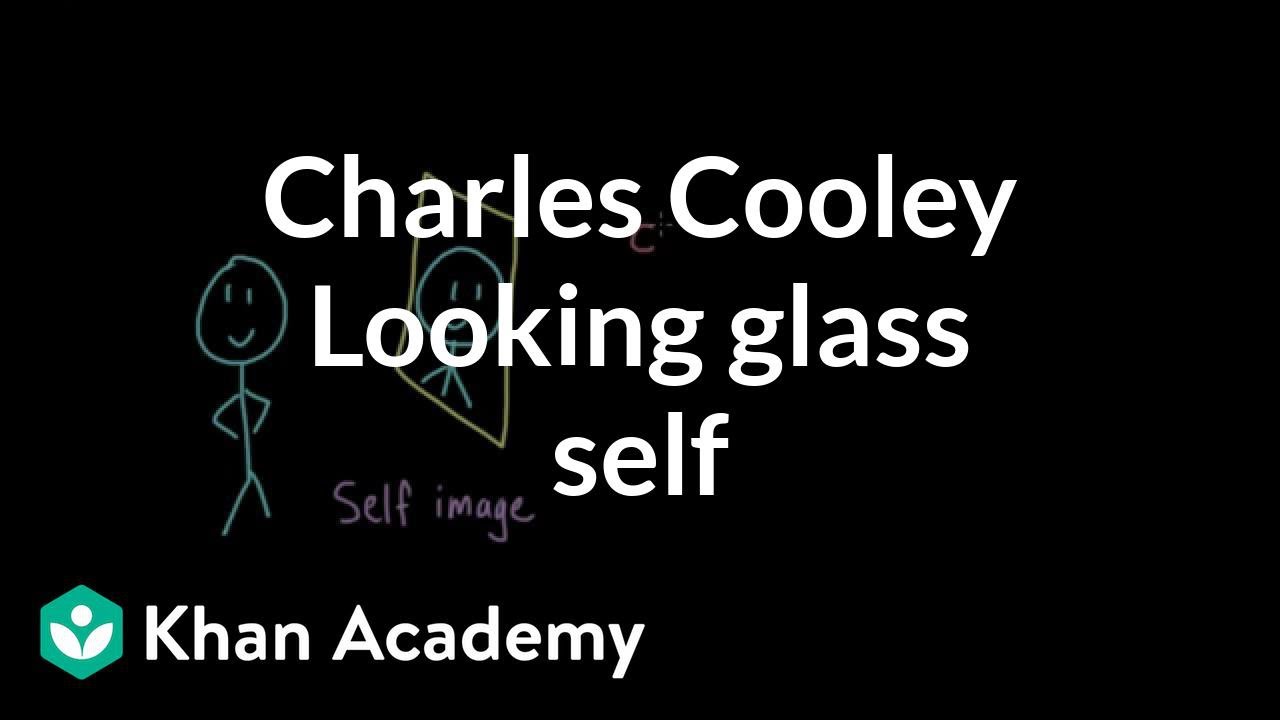
Charles Cooley- Looking glass self | Individuals and Society | MCAT | Khan Academy
455.9K
Charles Cooley's looking-glass self theory proposes that our self-image develops through a three-step process: (1) imagining how we appear to others, (2) imagining how they evaluate us based on their observations, and (3) developing feelings about ourselves based on these imagined evaluations; importantly, we are influenced by our perceptions of others' opinions rather than their actual opinions, meaning our self-identity can be shaped by both accurate and inaccurate beliefs about how others see us.
Click to watch →
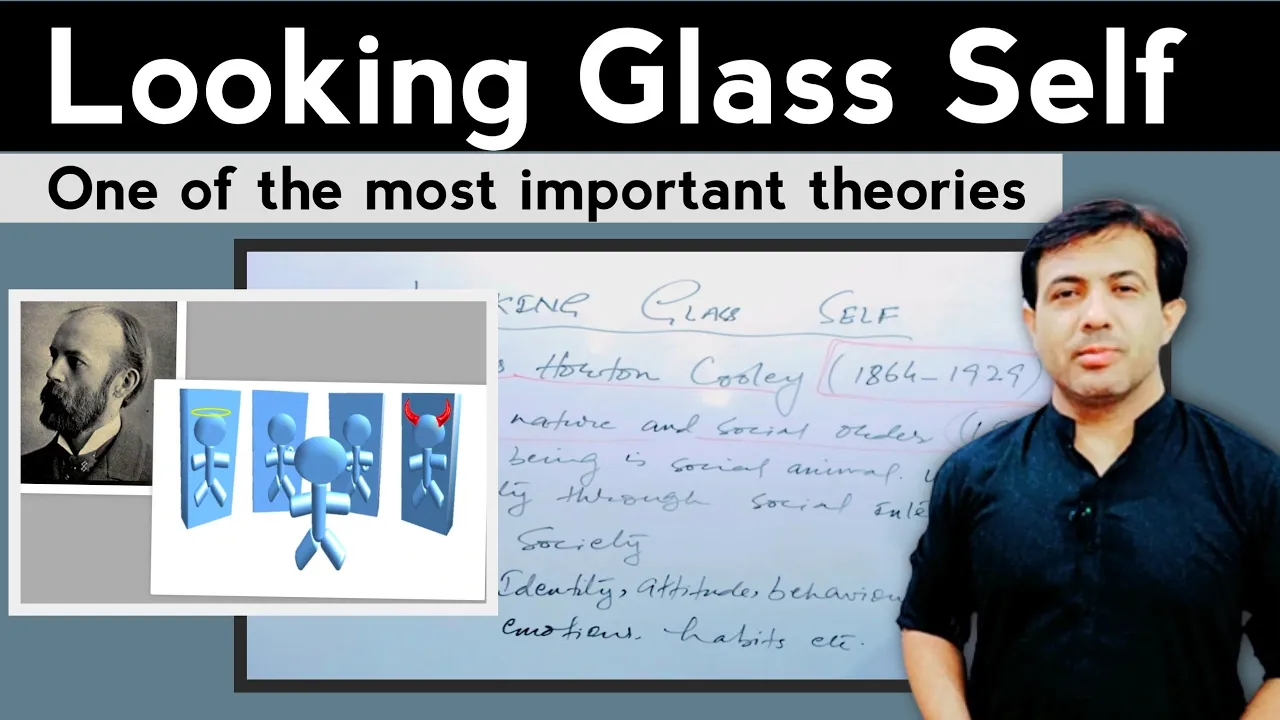
The Looking Glass Self Theory Of Charles Horton Cooley | Social Interaction | By Muhammad Akram
5K
The Looking Glass Self Theory, developed by Charles Horton Cooley, explains that our self-concept and personality develop through social interactions where we imagine how others perceive us, and this perceived judgment shapes our self-image and behavior. Just as a mirror reflects our physical appearance, social interactions reflect our social identity, making us fundamentally social beings whose sense of self is constructed through others' reactions and evaluations.
Click to watch →
Deep Dive
An introduction to social control systems, including the distinction between formal and informal social sanctions.
SOC106 Lecture
214
Social control refers to mechanisms societies use to regulate behavior and maintain order. It operates through two main systems: formal social control involves laws, legal instruments, and official systems including the criminal justice system where offenders are tried and sentenced. Informal social control operates through social pressure, disapproval, and consequences within communities, such as family disappointment or public protests. Social control uses both negative sanctions (punishment) and positive sanctions (rewards) to encourage conformity. Every society establishes systems to ensure members obey social norms in daily activities, whether through formal or informal mechanisms depending on what is at stake.
Click to watch →

Plus One Sociology - Public Exam | Rocket Revision | Eduport Humanities
11.5K
Formal social control refers to official mechanisms of social regulation, such as laws and government institutions, which enforce rules through formal sanctions. Informal social control refers to unofficial mechanisms, such as family, religion, and peer groups, which enforce norms through social pressure and informal sanctions. Both types work together to maintain social order.
Click to watch →

GCSE Sociology | Study Livestream | Social Control (Crime & Deviance)
3K
Formal social control involves official institutions enforcing social order. Examples include children's services fining parents for truancy and handling permanent exclusions, police and courts processing offenders, and the prison system as the ultimate punishment. A categorized activity demonstrates distinguishing between formal (monetary fines, permanent exclusion, custodial sentences, community service) and informal (curfews, peer pressure, grounding, gossiping) sanctions. Curfews can be both informal (parent-imposed) and formal (court-mandated with tagging). Gossiping, particularly targeting women, serves as an informal control mechanism that discourages deviant behavior through social reputation concerns.
Click to watch →

Treino de Elite PM CE - Soldado – Criminologia com Mariana Barreiras
2K
Formal social control is organized by the state and can result in punishment, including police, Ministry of Public Prosecution, Public Defender's Office, Judiciary, and Penitentiary Administration. Informal social control is realized diffusely by society and does not result in formal punishment, including family, neighborhood, workplace, churches, public opinion, clubs, associations, and mass media. The key distinction is that formal control derives from the state's monopoly on punitive power, while informal control operates through social pressure and informal sanctions.
Click to watch →

Lesson 3 Social Control
3K
Social control refers to the mechanisms society uses to encourage conformity to norms and values, preventing deviance; it operates through two main types: formal social control, which involves written laws enforced by state institutions such as the police, courts, and army, along with formal rules in schools and sports organizations that carry official sanctions; and informal social control, which operates through unwritten social norms enforced by agents of socialization including family, education, peer groups, workplace, media, and religion, using subtle pressures like approval or disapproval to guide behavior without formal punishment.
Click to watch →
Prerequisite Knowledge
- Concept 01A basic sociological understanding of deviance, social norms, and conformity.
- Concept 02Familiarity with the Symbolic Interactionist perspective, which serves as the theoretical foundation for labeling theory.
- Concept 03Charles Cooley's concept of the 'Looking-Glass Self' and how self-image is constructed through social interaction.
- Concept 04An introduction to social control systems, including the distinction between formal and informal social sanctions.
Subsequent Learning
- Step 01The concept of 'Master Status' and how a deviant label can come to dominate an individual's entire social identity.
- Step 02Erving Goffman's theory of stigma and the social management of 'spoiled identities'.
- Step 03Real-world applications of labeling theory in criminology, such as juvenile justice diversion programs and criminal record expungement.
- Step 04John Braithwaite's theory of Reintegrative Shaming, exploring how society can reintegrate offenders without reinforcing deviant identities.
- Step 05Critical limitations of labeling theory, including its tendency to minimize individual agency and its difficulty explaining initial acts of deviance.
Labeling Theory
Social Impact
Labeling Theory
0:00Playing Section
- 1
Defines primary deviance as initial rule-breaking acts.
- 2
Explains secondary deviance as acts after identity changes.
- 3
Key point: labels reshape self-image and future behavior.
Deterrence Theory and Rational Choice Perspectives
While Labeling Theory suggests that societal reactions and negative labels amplify deviance (leading to secondary deviance), Deterrence Theory and Rational Choice Theory offer a direct counterpoint. These perspectives argue that individuals are rational actors who weigh the costs and benefits of their actions. Instead of pushing individuals further into a deviant lifestyle, formal sanctions and social labeling serve as crucial deterrents by increasing the perceived cost of rule-breaking. Additionally, critics argue that Labeling Theory overemphasizes the power of social reactions, depicting individuals as passive victims of their labels while ignoring personal agency, deliberate choices, and underlying structural or biological causes of deviance that exist independently of social labeling.
Deep Dive
The concept of 'Master Status' and how a deviant label can come to dominate an individual's entire social identity.
Labeling Theory: Society's Reaction and Deviance Explained | Sociology
351.4K
A master status is a chief characteristic of an individual that becomes so prominent it follows them everywhere and overrides other aspects of their identity. When someone is labeled as deviant or a criminal, this tends to become their master status. For example, when someone has committed a felony, they are labeled a felon and must report this status when applying for jobs, cannot serve on juries, and may lose voting rights in many states. This demonstrates how a single label can permanently affect all areas of a person's life.
Click to watch →
Symbolic interactionist view of crime and deviance GCSE
182
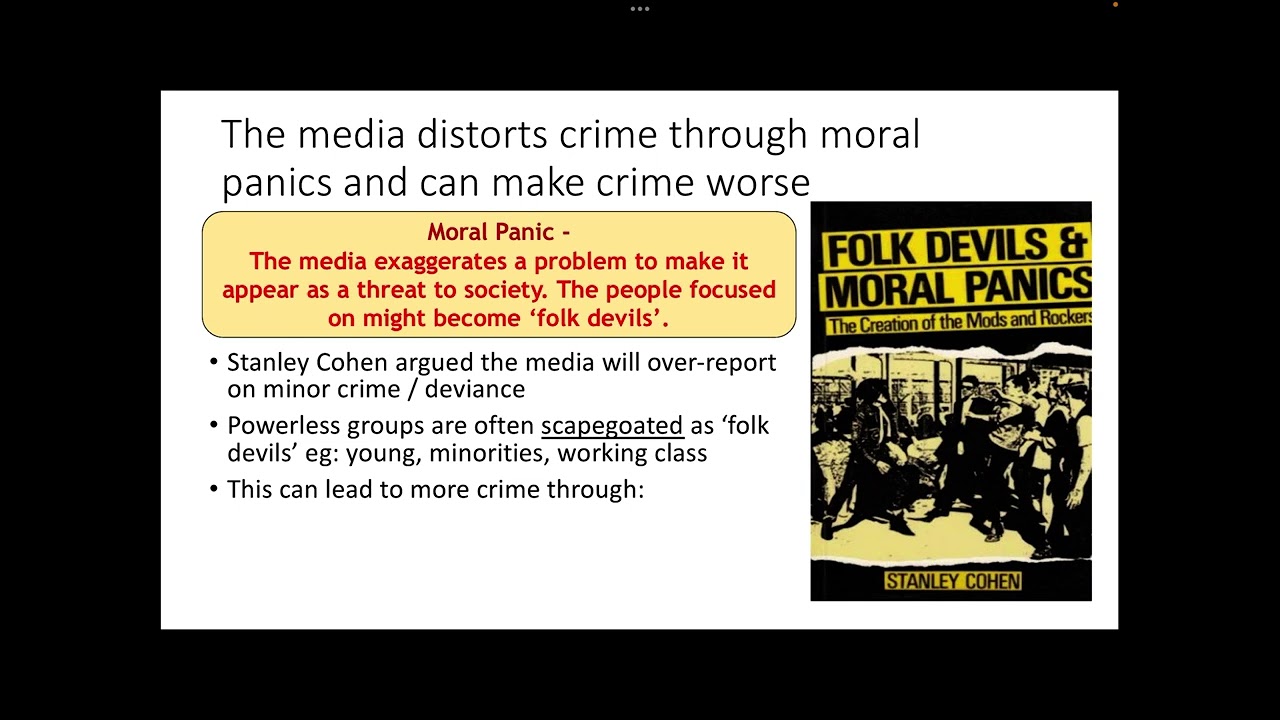
Master status is the dominant way people identify and think about an individual, overriding other roles and identities. When someone receives a criminal label, it becomes so powerful that it wipes out all other positive identities and labels. This criminal master status becomes the first thing people think of when encountering that person. Becker argues this process leads to deviant careers, where individuals face rejection from friends and family, inability to secure good employment, and social exclusion. These rejections create alienation, making individuals feel like outsiders. To cope, some turn to deviant subcultures for belonging, where crime becomes normalized. This creates a cycle where initial labeling leads to further deviance as individuals seek belonging within criminal communities.
Click to watch →

Lec 69: Sub-Cultural and Interactionist Theories of Deviance #sociology #upsc #deviance #net #jrf
5.6K
Master status is the primary social identity that defines how an individual is perceived by others in society. This status can be based on factors such as social class, race, gender, or other characteristics. Master status affects how individuals are treated in social interactions and can influence their opportunities and experiences in society. Self-identity is constructed through multiple interaction situations over time, as individuals internalize how they are perceived by others in different social contexts.
Click to watch →

UGC NET Sociology Mega Revision | UGC NET Sociology Unit 3 and 6 Complete Revision | Manoj Sir
14K
Status is a position or rank within society that every individual holds, regardless of economic background. It comes with associated duties, responsibilities, and expected behaviors. Status is hierarchical, with positions arranged in order of importance. A single individual can hold multiple statuses simultaneously. Status is divided into ascribed (pradhat) - involuntarily assigned at birth or later without consent - and achieved (achiq) - earned through personal effort, qualifications, and merit. Status set refers to the collection of all statuses an individual holds. Master status is a single status that dominates and overshadows all others. Status inconsistency occurs when there is a mismatch between different statuses, while status consistency refers to harmonious arrangements. Role refers to the duties and expected behaviors associated with a particular status. Role set is the collection of all roles associated with a particular status. Multiple roles occur when an individual holds multiple statuses simultaneously. Role conflict occurs when an individual faces opposing demands from different roles. Role strain refers to the difficulty in fulfilling role demands. Role expectation refers to what society expects from individuals holding particular statuses. Role behavior is how an individual actually performs their role, influenced by social norms and sanctions. Social sanction refers to rewards and punishments that society applies to control behavior. Identity refers to the distinctive characteristics that define an individual and make them recognizable to others. Frantz Fanon studied how colonialism affects identity and mental health. Nancy Chodorow's work examines how gender identity is constructed from early childhood within families. Homi Bhabha introduced the concept of hybridity, explaining how identity is formed through mixing of cultural influences and is never fixed but constantly evolving.
Click to watch →

What's Master Status in Sociology || With English Subtitles || ||Easy Method to Understand
3.9K
Master status is a social status that a society defines as having exceptional importance for a person's entire life, overriding all other statuses they may hold simultaneously; it can be either ascribed (inherited, like royal birthright) or achieved (earned through effort, like becoming a Member of National Assembly), and can be positive (mother, MNA), negative (corrupt politician, thief), or neutral (blindness).
Click to watch →
Deep Dive
Erving Goffman's theory of stigma and the social management of 'spoiled identities'.

What is Stigma? Explaining Goffman's Idea of Spoiled Identity
72.3K
Sociologist Erving Goffman defines stigma as 'spoiled identity' - a condition where an individual's identity is damaged by an attribute that causes them to be viewed as less than normal by a particular audience; Goffman identifies three main categories of stigma: abominations of the body (physical deformities), character defects (personal failings like dishonesty or addiction), and tribal stigma (race, religion, or national origin); importantly, stigma exists not in the person or attribute itself, but in the relationship between an attribute and an audience who views it negatively, meaning the same attribute can be stigmatizing in one context but not another; Goffman further distinguishes between discreditable individuals (who have hidden attributes that could spoil their identity if revealed) and discredited individuals (whose attributes have already been exposed), explaining why people invest significant energy in managing their identities to prevent discreditable information from becoming known.
Click to watch →

Stigma Lecture - Goffman
4.5K
Sociologist Irving Goffman defined stigma as an attribute that is deeply discrediting, which spoils a person's normal identity, and identified three forms of stigma: character flaws, physical flaws, and group membership; he also distinguished between discredited stigma (visible and immediately identifiable, such as tattoos or wheelchair use) and discreditable stigma (hidden until revealed, such as neurodivergence or mood disorders), and outlined three management strategies: passing (hiding stigma), covering (having others help conceal it), and disclosure (revealing it), with normalization occurring through either ignoring the stigma or reframing it positively.
Click to watch →

UCLA Gender Studies Professor Joins Jesse! (#166)
123.4K
Sociologist Erving Goffman coined the term 'stigma' to describe unwanted differences that mark individuals as outsiders. He argued that none of us are truly 'normal' - everyone carries some form of stigma that they tend to hide or downplay. Coming out can be understood as a process of revealing these hidden aspects of ourselves to others, sometimes to embrace our authentic selves and sometimes to challenge negative stereotypes. This theory provides a framework for understanding why marginalized groups use coming-out strategies as tools for liberation.
Click to watch →

Module 5 Deviance Part 2
123
Erving Goffman's stigma theory examines how attributes that are deeply discredited by others and marked with a deviant label affect individuals. There are three types of stigma: (1) Abominability - being part of an undesirable group; (2) Character flaw - personality traits; (3) Discreditable - attributes that can be concealed. Discredited stigma cannot be hidden and leads to immediate judgment, while discreditable stigma can be concealed. Double consciousness describes the experience of individuals who must navigate multiple identities, requiring constant stigma management.
Click to watch →

Goffman - Disability as a stigmatised identity | A Level Sociology | Stratification
396
Canadian sociologist Irving Goffman defined stigma as an attribute that deeply discredits an individual, reducing them from a whole person to a tainted one; he identified three types of stigma—physical abnormalities (disabilities), character blemishes (perceived moral failings), and tribal stigmas (race, nation, religion)—and explained how stigma leads to a 'spoiled identity' causing social marginalization and internalized shame; Goffman also examined how individuals manage stigma through strategies like passing, concealing, or corrective performances, while subsequent sociologists have expanded on his work by exploring the medical versus social models of disability, intersectionality with other social identities, and institutional approaches to reducing stigma through normalization and inclusive policies.
Click to watch →
Deep Dive
Real-world applications of labeling theory in criminology, such as juvenile justice diversion programs and criminal record expungement.

T.I., DeKalb Co. judge celebrate Project Pinnacle diversion program graduates
393
Juvenile diversion programs that provide mentorship, life skills training, and emotional intelligence education can help young people avoid criminal records and successfully transition to positive life paths, with successful completion potentially resulting in record expungement for non-violent offenses.
Click to watch →

NEW Criminology, Section 7.1: Labeling Theory
166
Labeling theory has influenced criminal justice reform through three main interventions: diversion programs that channel cases away from formal labeling, decriminalization that removes offenses from criminal jurisdiction, and deinstitutionalization that replaces incarceration with community-based alternatives. Despite empirical research showing limited support for the theory's causal claims, its intuitive appeal persists through anecdotal evidence. The tension between theoretical appeal and scientific validation continues to shape debates about how societies should respond to deviance.
Click to watch →

GWP고시학원 이찬엽 교수 교정학 전국모의고사 1회 1 1번~ 6번#교정학#교정학모의고사
140
Labeling theory explains how individuals become labeled as criminals through criminal justice institutions. It distinguishes between primary labeling (initial identification) and secondary labeling (consequences of being labeled). The theory connects to diversion programs, which can prevent individuals from being labeled and reduce prison overcrowding. Social reactions from institutions, peers, and family significantly influence whether individuals continue criminal behavior. Sutherland's career criminal theory emphasizes that some individuals develop a criminal identity and career over time, internalizing a criminal self-concept.
Click to watch →

Former Foster Child & Juvenile Justice System @VivianKingtv interviews Jade Miller on 08.02.23
118
Juvenile justice reform efforts in Harris County have reduced juvenile court cases from 11,000 to 2,600 by implementing diversion programs that redirect youth from minor offenses to community-based rehabilitation, while record expungement provides youth with a second chance by legally removing their criminal records from public view, though challenges remain with private background check companies retaining data.
Click to watch →

Hora da Verdade PC SP: Noções de Criminologia - Prof. Alexandre Herculano
19.8K
Critical Criminology (also called Radical Criminology or New Criminology) views criminality as passive resistance linked to capitalism, arguing crime results from social and economic inequalities. Labeling Theory (Reaction Social Theory) proposes criminal behavior is created through social labeling - once labeled as criminal, individuals are more likely to engage in crime. The School of Chicago pioneered urban criminology, studying how city conditions influence crime through social surveys of neighborhoods. These theories emphasize how social reactions and structural factors perpetuate criminal patterns.
Click to watch →
Deep Dive
John Braithwaite's theory of Reintegrative Shaming, exploring how society can reintegrate offenders without reinforcing deviant identities.

Reintegrative Shaming
1.2K
Reintegrative shaming theory, developed by John Braithwaite, distinguishes between two types of shaming responses to crime: disintegrative shaming (which brands offenders as permanent outcasts, denies them social bonds and employment, and increases recidivism) and reintegrative shaming (which applies shame to evoke remorse and behavioral change but then forgives and reintegrates offenders into society, thereby reducing crime). This theory highlights how cultural values—particularly individualism versus collectivism—affect the effectiveness of shame as a behavior modifier, with more community-oriented cultures successfully utilizing reintegrative approaches.
Click to watch →

Theories of Crime and Deviance - Brathwaite | A Level Sociology
11.4K
John Braithwaite's theory distinguishes between disintegrative shaming (labeling both the act and the individual, leading to isolation and increased recidivism) and reintegrative shaming (labeling only the act as deviant while assuming the individual made a mistake and deserves rehabilitation), which forms the foundation of restorative justice approaches that reduce reoffending by reintegrating offenders into society through making amends and showing remorse.
Click to watch →
Labeling Theory, Techniques of Neutralization, and Reintegrative Shaming
263
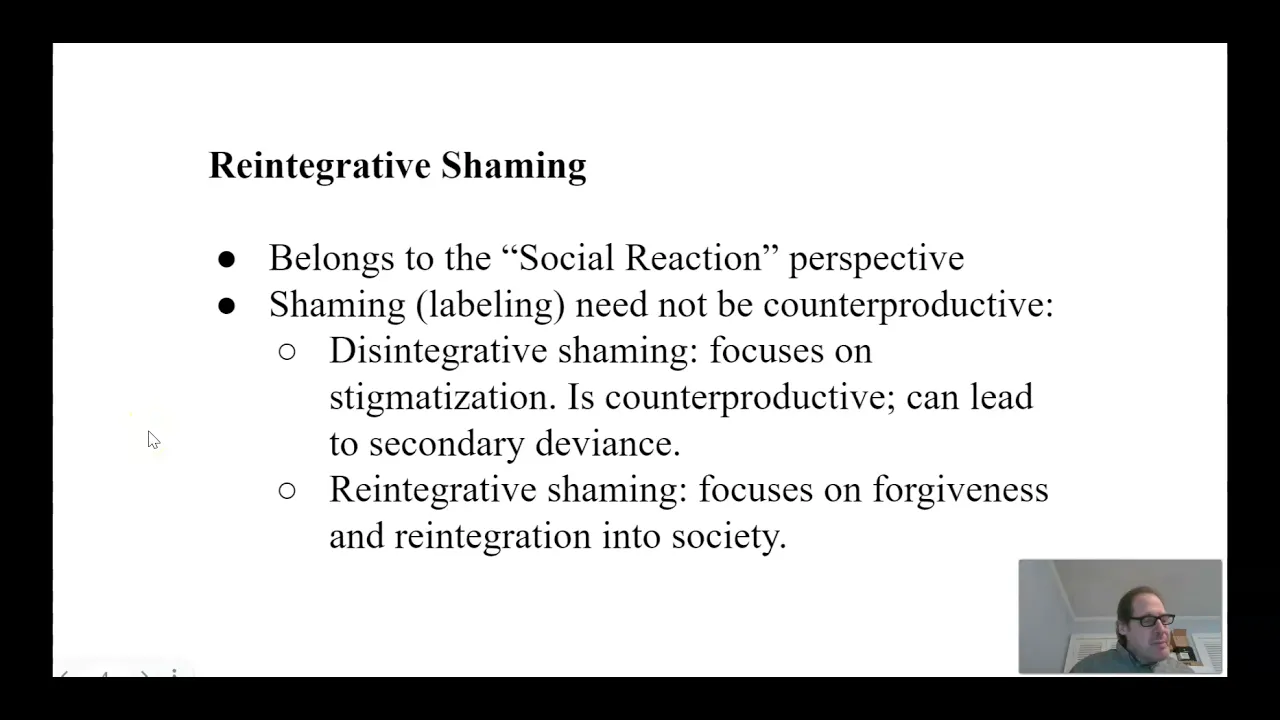
Labeling theory, developed in the 1960s, examines how society's responses to deviant behavior—such as labeling, punishing, and stigmatizing—can create secondary deviance by forcing individuals to internalize deviant identities; this theory distinguishes between primary deviance (the initial deviant act) and secondary deviance (subsequent deviance resulting from being labeled), and is complemented by techniques of neutralization (five psychological strategies offenders use to justify their behavior) and reintegrative shaming (a rehabilitative approach that focuses on forgiveness and community reintegration rather than stigmatization).
Click to watch →

TEORIA DELLA DEVIANZA # 7 - Labeling theory, come si creano i diversi con l'etichettamento
721
Bruce Link's 1989 Modified Labeling Theory expanded the framework to five stages: community perception of discrimination, institutional labeling timing, patient response to label, secrecy/withdrawal, negative life consequences, and vulnerability to future mental illness. John Braithwaite's reintegrative shaming theory distinguished between stigmatization (increases crime) and shaming without permanent labels (reduces crime), emphasizing restorative justice. Matsueda and Heimer's Differential Association Theory shifted focus to symbolic interactionism, explaining self-control through role assumption and empathy. Criticisms include overemphasis on future deviance without examining underlying processes and insufficient attention to positive labeling functions.
Click to watch →

Labeling & Reintegrative Shaming Theories
3.8K
Labeling theory proposes that powerful authorities apply stigmatizing labels to offenders, which then shape their self-concept and lead to further deviant behavior through a self-fulfilling prophecy; however, this theory has weak empirical support because it ignores primary deviance and assumes labels cause crime rather than result from it. Reintegrative shaming theory emerged as a revision, distinguishing between disintegrative shaming (rejecting offenders) and reintegrative shaming (reconciling offenders to society through respectful confrontation), with restorative justice serving as its primary policy implication.
Click to watch →
Deep Dive
Critical limitations of labeling theory, including its tendency to minimize individual agency and its difficulty explaining initial acts of deviance.

Social Problems in India | CUET PG Sociology | Revision Part 6
230
Labeling theory has faced several criticisms: (1) It does not explain why individuals engage in primary deviant behavior for the first time; (2) It fails to account for individuals who resist labeling and successfully conform to societal norms despite being labeled; (3) It does not adequately explain the initial causes of deviant behavior. Despite these criticisms, labeling theory remains important for understanding how societal reactions to behavior can perpetuate and shape deviant identities.
Click to watch →

ACs 2.3 & 3.2 - Sociological Theories - Interactionism - Labelling Theory (Updated 2022)
2.1K
Labeling theory offers valuable insights: it reveals law as a social construction shaped by power dynamics, explains overrepresentation of marginalized groups in crime statistics through selective enforcement, and demonstrates how control efforts can backfire. However, it has significant limitations: it cannot explain primary deviance occurring before labeling, assumes offenders are passive victims, ignores victims of crime, and is overly deterministic. The theory highlights systemic biases in criminal justice but may oversimplify individual agency in criminal behavior.
Click to watch →
Crim Ch 7 Social Process Theories
2.4K
Limitations include: (1) Deviance is limited by social apparatus capacity - more police means more crime detection; (2) Crime definition is not based on consensus but on powerful groups' interests; (3) Selective enforcement targets certain groups more; (4) Power and resources of accused affect labeling; (5) Community tolerance and visibility affect who gets labeled. White-collar crime often has less stigma than street crime, and law enforcement is selective and arbitrary.
Click to watch →
Labeling Theory: Society's Reaction and Deviance Explained | Sociology
351.4K
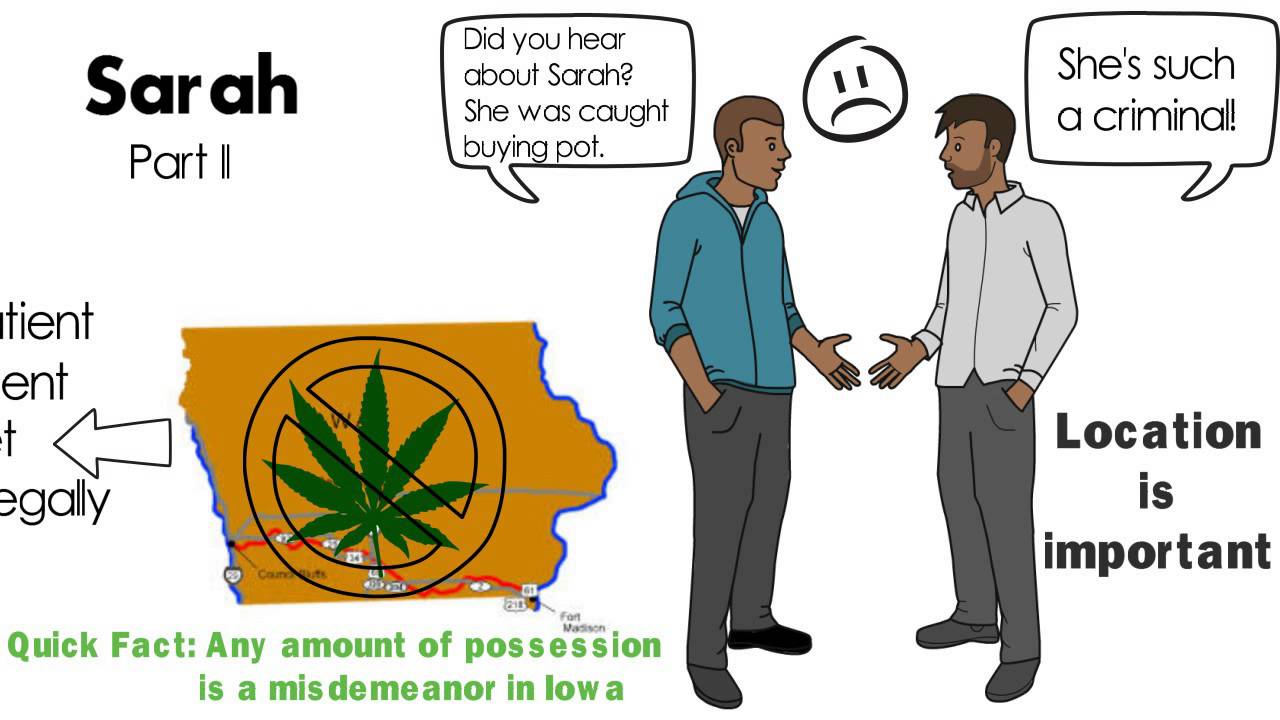
Labeling theory, rooted in symbolic interactionism, argues that society's reaction to behavior determines whether something or someone is considered deviant, not the behavior itself. Labels we assign to people shape our interactions with them and define what we consider deviant or criminal. The medical marijuana example illustrates this: identical behavior (using marijuana for medical purposes) is treated as non-deviant in Colorado (where it's legal) but as deviant in Iowa (where it's illegal). This demonstrates that context and societal response, rather than the behavior alone, determine deviance classification.
Click to watch →

Concurso PC SP 2022 escrivão e investigador: gabaritando Criminologia
4.1K
Labeling theory distinguishes between primary and secondary deviance. Primary deviance refers to the initial criminal act, which may occur without the individual identifying as a criminal. Secondary deviance occurs when the individual, after being labeled as a criminal, internalizes this identity and continues criminal behavior as a result of societal reactions. The theory emphasizes that the reaction to crime, not just the crime itself, shapes future criminal behavior and can create a cycle of continued criminality.
Click to watch →
Labeling Theory
Social Impact
Labeling Theory
0:00- 1
Defines primary deviance as initial rule-breaking acts.
- 2
Explains secondary deviance as acts after identity changes.
- 3
Key point: labels reshape self-image and future behavior.
Deterrence Theory and Rational Choice Perspectives
While Labeling Theory suggests that societal reactions and negative labels amplify deviance (leading to secondary deviance), Deterrence Theory and Rational Choice Theory offer a direct counterpoint. These perspectives argue that individuals are rational actors who weigh the costs and benefits of their actions. Instead of pushing individuals further into a deviant lifestyle, formal sanctions and social labeling serve as crucial deterrents by increasing the perceived cost of rule-breaking. Additionally, critics argue that Labeling Theory overemphasizes the power of social reactions, depicting individuals as passive victims of their labels while ignoring personal agency, deliberate choices, and underlying structural or biological causes of deviance that exist independently of social labeling.
A basic sociological understanding of deviance, social norms, and conformity.
Familiarity with the Symbolic Interactionist perspective, which serves as the theoretical foundation for labeling theory.
Charles Cooley's concept of the 'Looking-Glass Self' and how self-image is constructed through social interaction.
An introduction to social control systems, including the distinction between formal and informal social sanctions.
The concept of 'Master Status' and how a deviant label can come to dominate an individual's entire social identity.
Erving Goffman's theory of stigma and the social management of 'spoiled identities'.
Real-world applications of labeling theory in criminology, such as juvenile justice diversion programs and criminal record expungement.
John Braithwaite's theory of Reintegrative Shaming, exploring how society can reintegrate offenders without reinforcing deviant identities.
Critical limitations of labeling theory, including its tendency to minimize individual agency and its difficulty explaining initial acts of deviance.
2.5K views46likes3:03@thesociologyprofessorOriginal Release: 2024-09-20
Hi I'm Dr Joseph Comeau Associate Professor of Sociology at Georgia Southwestern State University in this video I'm going to explain Labeling Theory. Now Labeling Theory is a theory that says that social deviance is sort of this social process that involves interaction between an individual who engages in deviant and the society around them and involves these two key Concepts: primary deviance and secondary deviance. Now primary deviance is defined as the initial act of deviance that results in the individual being labeled by society as a deviant perhaps someone steals something gets caught and then everyone in their neighborhood knows that this is the kid that stole the candy bar from the convenience store and all of a sudden people start having sort of this negative attitude towards this person as a troublemaker or a deviant now primary deviance is that initial act secondary deviance is defined is all the subsequent acts of deviance that result once that person has internalized that deviant label so let's say this kid steals a candy bar gets caught and it's a small community so everyone knows and all of a sudden people just start looking at him a little bit differently parents tell their kids that you can't play with this kid because he's a troublemaker various other things happen maybe he goes to apply for a job at a local store when he gets to be a teenager and the the employer remembers that this is the kid who stole the candy bar down the street and just doesn't want to trust them so this person starts to kind of be treated differently and then starts to internalize that they start to be influenced by the perceptions of others because everyone treats them a certain way so that's how they feel they are seen and as that starts to become internalized and part of that person's identity they start to see themselves as a deviant potentially and then they may just decide well you know what if I'm going to do the time I might as well do the crime right if people are going to see me this way I guess that's who I am so if that person then engages in subsequent acts of deviance those subsequent acts of deviance that come after that deviant label has been internalized as part of their identity those are secondary deviance now I get it's much more nuanced in this and we're not taking away individual agency people have decisions to make and responsibilities to make the best decisions they can but how others see us does influence how we see ourself and if how others see us starts to influence or limit our legitimate opportunities that person's not hiring you from the job because they remember you're the kid who stole that candy bar well maybe we start to look for illegitimate opportunities so these things do have influence so in summary labeling theory is a theory that looks at how deviance is sort of this social process where an individual engages in an initial Act of deviance primary deviance and then Society labels them a deviant and as that becomes part of an internal part of their identity they then engage in subsequent acts of deviance or secondary deviance thank you for watching please please be sure to click like And subscribe
Up Next
4:57
Labeling Theory: Society's Reaction and Deviance Explained | Sociology
@sociologylive4343
351.4K views•2015-11-06

54:57
Contemporary Sociological Theory: Micro, Macro, Integrative
@NaSESYNC
45.7K views•2016-02-17

19:23
How to Analyze Conversations Scientifically | Elizabeth Stokoe | TEDx
@TEDx
1M views•2014-12-04
9:41
What is Sociology? The Sociological Perspective Explained
@crashcourse
4.6M views•2017-03-13
Related Study Plans & Knowledge Roadmaps
Structured learning paths in Sociology
sociology
Celebrity Culture: From Hollywood to TikTok
01Foundations of Celebrity Sociology
02The Rise of Micro-Celebrity & Digital Platforms
03Parasocial Relationships & Algorithmic Intimacy
+ 2 more learning modules
12h5 modules
Explore Roadmap
sociology
Hostile Architecture: Space, Power & Control
01Introduction to the Sociology of Space
02Social Control and Surveillance in the City
03Hostile Architecture and Defensive Design
+ 2 more learning modules
12h5 modules
Explore Roadmap
sociology
Loneliness Epidemic: Third Places & Isolation
01Foundations of Social Capital and Community Cohesion
02The Death of Third Places and Urban Space Erosion
03The Privatization of Leisure and Atomization
+ 2 more learning modules
12h5 modules
Explore Roadmap
sociology
Sociology of Tourism: Gaze, Power & Heritage
01Foundations of the Sociology of Travel and Leisure
02John Urry and the 'Tourist Gaze'
03Staged Authenticity and Cultural Commodification
+ 2 more learning modules
14h5 modules
Explore Roadmap