Writing systems are classified into three main types based on how they represent letters: alphabets (like Greek) have unique characters for both consonants and vowels; abjads (like Arabic) only have unique characters for consonants with optional vowel markings; and abugidas (like Devanagari) represent entire syllables with consonant-vowel pairs, where slight modifications indicate different vowels. The terms 'alphabet,' 'abjad,' and 'abugida' all derive from the first few letters of their respective scripts (alpha, beta, abjad, abugida), reflecting a common naming convention that traces back to the Proto-Sinaitic script.
Alphabets vs Abjads vs Abugidas: Writing System Differences
Added:Deep Dive
The phonetic distinction between consonant and vowel sounds and how they function in spoken language.
Phonetics (pt. 1)
337.2K
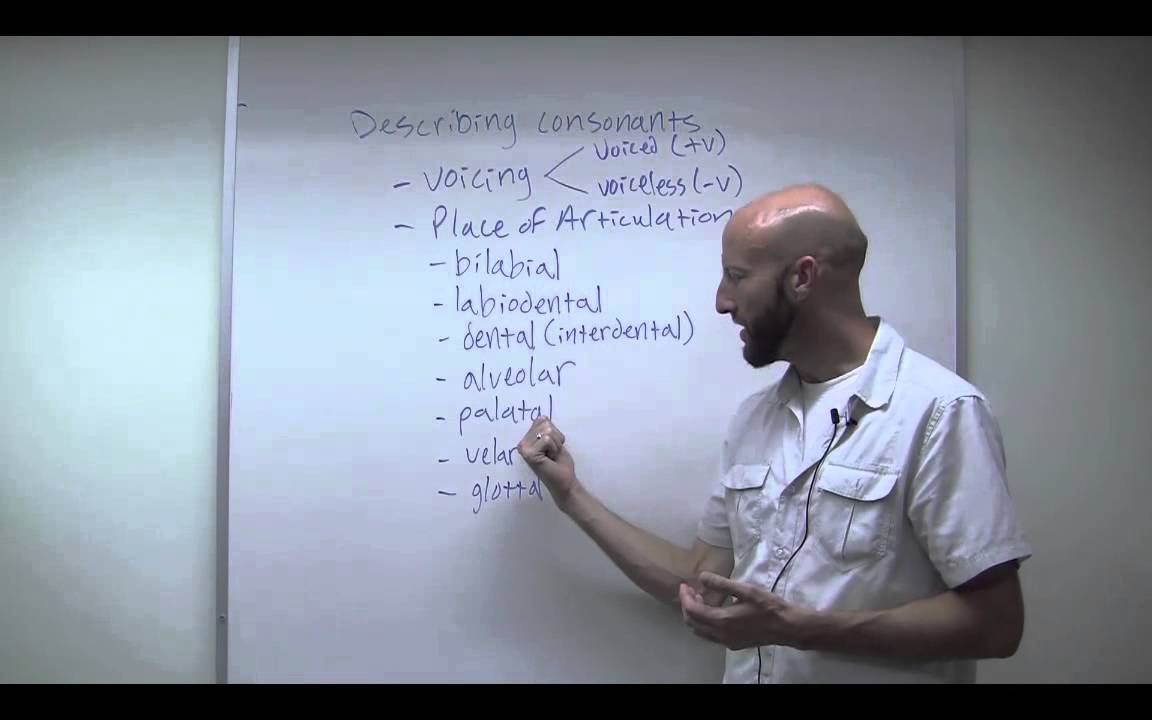
Articulatory phonetics studies how speech sounds are produced in the vocal tract, with consonants distinguished from vowels by air flow constriction; linguists classify consonants using three criteria: voicing (whether vocal folds vibrate, e.g., voiced /z/ vs voiceless /s/), place of articulation (where constriction occurs: bilabial, labiodental, dental, alveolar, palatal, velar, glottal), and manner of articulation (how air flows: stops, fricatives, affricates, nasals, liquids, glides); these criteria are described in the order of voicing, place, and manner.
Click to watch →

MEG 04 MARATHON CLASS 2026 | MEG 04 aspects of language | Ignou meg 04 important questions 2026
1.9K
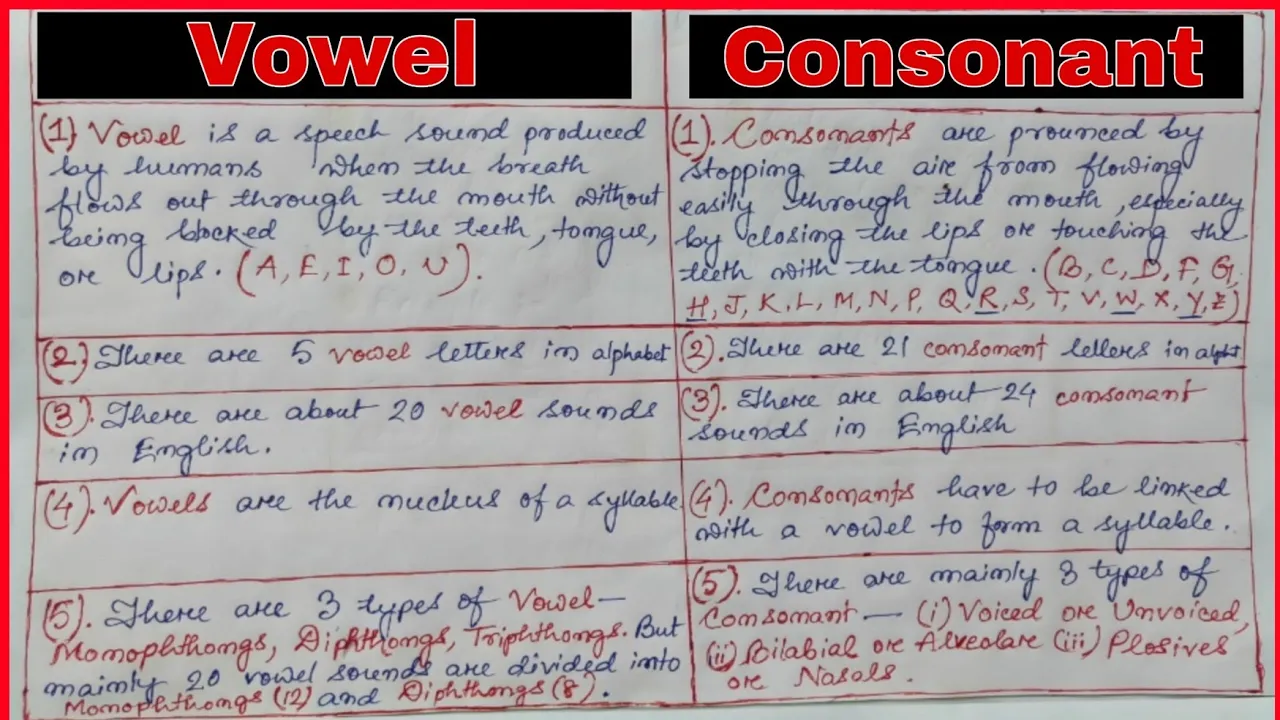
The main difference between vowels and consonants is how air flows through the mouth during speech. Consonants are produced when air flow is partially or completely blocked by speech organs like the tongue and lips (e.g., t, s, b). Vowels allow air to pass freely without blockage (e.g., a, e, i, o, u). English vowels are classified by tongue position (close, mid, open), lip shape, and sound length. Pure vowels have one clear sound throughout, while vowel glides involve tongue movement between vowels. Consonants are classified by manner of articulation: stops (complete blockage with air pressure release like p, b, t, d), fricatives (friction between organs like f, v, s, z), affricates (stop-to-fricative transition like ch, j), nasals (air through nose like m, n), laterals (air from tongue sides like l, r), and approximants (semi-vowels like w, y).
Click to watch →

Vowel Sounds ||Vocabulary || class 12||English|| Shyam Sir
29.8K
This segment introduces fundamental English phonetics, distinguishing between consonant sounds (described as 'governing sounds') and vowel sounds (characterized as 'man' sounds). The instructor explains that consonant sounds require effort to produce, while vowel sounds flow more freely. Examples like 'man' illustrate vowel sounds, while 'concerning' demonstrates consonant sounds. This foundational knowledge helps learners understand the basic building blocks of English pronunciation.
Click to watch →
Difference Between VOWEL & CONSONANT 📚Full Concept 📖 Explained in HINDI📘MEG 04📑 Aspects Of Language📕
28.6K
Vowels are speech sounds produced when the vocal cords vibrate and air flows freely without being blocked by the tongue or lips, while consonants are produced when the tongue, teeth, and lips interact to block or restrict airflow; in English, there are 5 vowels (A, E, I, O, U) and 21 consonants (B, C, D, F, G, H, J, K, L, M, N, P, Q, R, S, T, V, W, X, Y, Z), with vowels serving as the nucleus of syllables and consonants needing to be linked to vowels to form complete syllables.
Click to watch →

Fonética y fonología. Fonemas consonánticos y vocálicos
80.1K
Phonetics studies the physical production and perception of speech sounds, while phonology examines the abstract sound units (phonemes) that distinguish meaning in a language. Consonant phonemes are classified by their mode of articulation (occlusives, fricatives, affricates, laterals, vibrants), point of articulation (dental, alveolar, bilabial, labiodental, palatal, velar), sonority (sonorous vs. voiceless), oral/nasal quality, and continuity. Vowel phonemes are characterized by the absence of airflow obstruction and are classified by point of articulation (anterior, central, posterior), degree of mouth opening (open, closed, intermediate), and lip rounding (rounded vs. unrounded).
Click to watch →
Deep Dive
The basic definition of an orthography (writing system) as a standardized visual representation of a language.

Alfabetização e linguística (live aula 2)
5.7K
Orthography is a standardized writing system that does not reflect individual speech patterns. While people speak in different dialects (e.g., 'reiva' vs. 'raiva'), orthography provides a common written standard so all speakers can understand written text. Without orthography, readers would need to understand the author's specific dialect, creating widespread confusion. Orthographic rules (e.g., 'k' before 'a', 'c' before 'e') help students decode writing systematically through pattern recognition with approximately 20 words.
Click to watch →

Writing Systems: Crash Course Linguistics #16
148.6K
A writing system, also called an orthography, is a set of conventions used to represent a language in writing. It involves two main components: the symbols (graphemes) and what those symbols stand for in terms of linguistic information.
Click to watch →

Orthography
4.1K
Orthography is a standardized system of writing conventions that includes spelling, hyphenation, capitalization, word breaks, emphasis, and punctuation, serving as the bridge between spoken language and its written representation; it operates on a spectrum from prescriptive correctness to descriptive usage, with writing systems classified as logographic, syllabic, or alphabetic, and characterized by varying degrees of correspondence between spelling and pronunciation—from shallow systems like Japanese kana to deep systems like English, where historical sound changes create irregularities that make spelling less predictable.
Click to watch →

USO DE 'S' E 'Z' - REGRAS DE ORTOGRAFIA OFICIAL - Profa. Pamba
673.2K
Orthography is the study of the correct form of writing words in a language. The term comes from Greek, where 'orto' means correct and 'grafia' means writing. In Portuguese, orthography refers to the rules that determine how words should be spelled correctly according to grammatical norms.
Click to watch →

ИСТОРИЯ ДРЕВНЕРУССКОЙ ОРФОГРАФИИ
216.6K
Orthography (from Greek 'orthos' meaning correct and 'graphia' meaning writing) refers to the set of regularities that determine how words are written. The speaker emphasizes that the modern concept of 'correct' versus 'incorrect' writing should not be applied to historical materials, as this imposes contemporary values on ancient practices.
Click to watch →
Deep Dive
The concept of sound-to-grapheme correspondence, including terms like 'phoneme' (sound unit) and 'grapheme' (written unit).
تصحيح مباراة التعليم الابتدائي ديداكتيك اللغة الفرنسية 2024 شرح واضح و مفصل مع مراجعة الدروس ذ.شافي
32.5K
A phoneme is a sound unit that we hear but cannot see. A grapheme is a written character that we can see and read. The distinction is crucial: phonemes are auditory units while graphemes are visual units. When teaching pronunciation, focus on phonemes; when teaching spelling, focus on graphemes.
Click to watch →
Smart #Phonics 11 - #Grapheme #Phoneme Correspondence
174
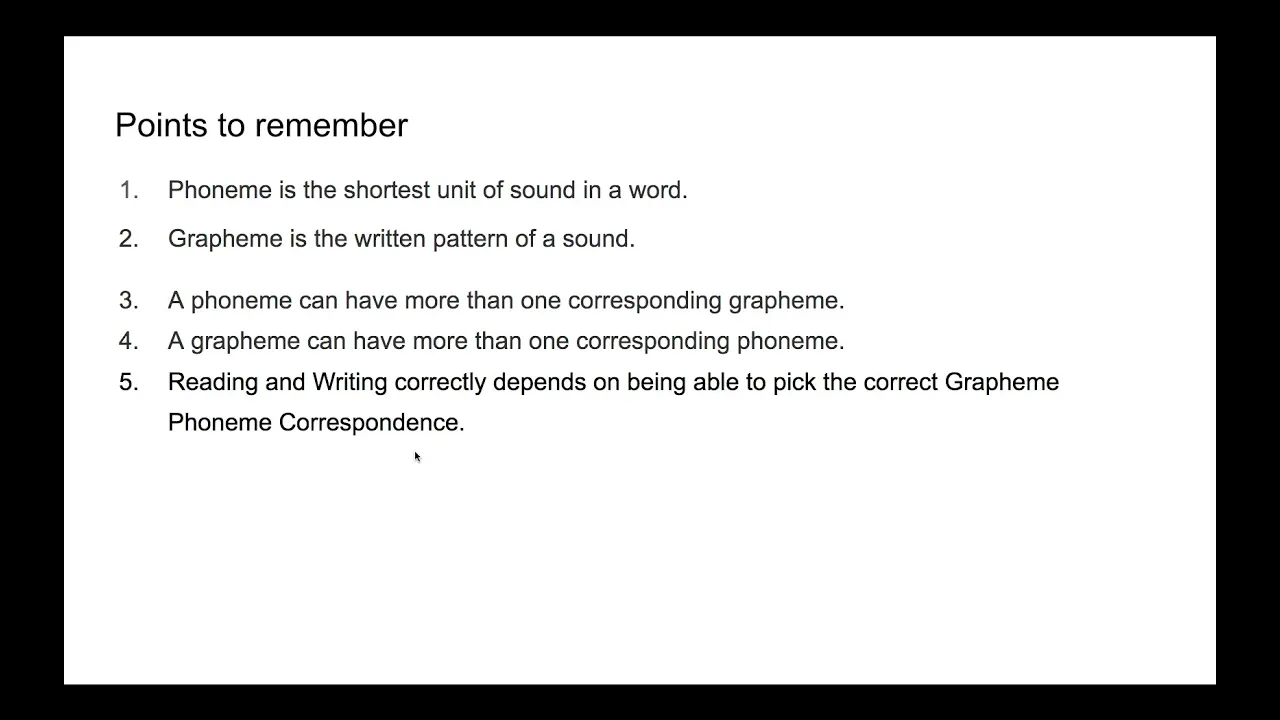
GPC (Grapheme-Phoneme Correspondence) refers to the relationship between sounds (phonemes) and their written representations (graphemes). Phoneme-to-grapheme conversion involves spelling a word when heard, requiring selection of the correct grapheme for each sound. Grapheme-to-phoneme conversion involves reading a word when seen, requiring interpretation of letters into sounds. A key principle is that one phoneme can correspond to multiple graphemes (e.g., /b/ can be written as 'b' or 'p' in certain contexts), and one grapheme can correspond to multiple phonemes (e.g., 'c' can be /k/ or /s/). The full phoneme-to-grapheme table shows that 50 sounds are represented in over 150 different ways, demonstrating the complexity of English orthography.
Click to watch →

Curso Completo de Português - Direto ao Ponto - Prof. Janaina Arruda
4.2K
A phoneme is the sound of a letter, while a grapheme is the graphical representation. There may or may not be correspondence between phonemes and graphemes. For example, in the word 'táxi', there are 4 letters but 5 phonemes because the 'x' represents two sounds (ks).
Click to watch →

Português com Empatia: Aula 01 - GRAFEMA, FONEMA E SÍLABA
39.5K
A grapheme is the written form of a letter (e.g., P, R, S). A phoneme is the sound produced by each grapheme (e.g., the sound of P, R, S). A syllable is the smallest unit of a word, formed by the combination of consonants and vowels. For example, in the word 'caneta', the syllables are 'ca' and 'ne'. The syllable represents the minimal unit of pronunciation in a word.
Click to watch →

Phonemes, Graphemes, and Morphemes!
205.3K
A grapheme is the smallest unit of writing that represents a phoneme. When spelling, we take the phonemes from spoken words and convert them into corresponding graphemes. For example, the word 'kit' has three phonemes (/k/, /ɪ/, /t/) and three corresponding graphemes (k, i, t). Each grapheme represents one phoneme in writing, establishing a direct correspondence between spoken sounds and written symbols.
Click to watch →
Deep Dive
A general awareness of historical linguistics and the concept that modern scripts can evolve and diverge from ancient common ancestors.

What on Earth Happened to the Assyrians?
303.8K
The Syriac script evolved into virtually all modern scripts seen in Arabia, India, and Southeast Asia today. This includes Greek, Latin, Cyrillic, Arabic, Brahmic, Tibetan, Southeast Asian, and Old Mongolic scripts. This demonstrates how writing systems can branch and diversify over millennia while maintaining common ancestral roots.
Click to watch →

Tower of Babel Explained The Greatest Biblical Story in Ancient History | History Before Sleep
208
Modern linguistics has developed sophisticated scientific understandings of how languages develop, diverge, and multiply. Contemporary linguistics recognizes approximately 7,000 languages currently spoken worldwide, belonging to various language families descended from common ancestors. The fundamental principle of historical linguistics is that languages change over time through multiple mechanisms: phonetic shift (sounds gradually change), semantic shift (word meanings change), and grammatical change (rules governing sentence structure evolve). When populations speaking the same language become geographically separated, their languages begin diverging. Initially, resulting varieties remain mutually intelligible (called dialects), but over sufficient time, continued independent change renders them mutually unintelligible, becoming distinct languages. The Romance languages provide a clear example—Latin diverged into French, Spanish, Italian, Portuguese, and Romanian over roughly 1,500 years. Linguists can reconstruct earlier languages by comparing related modern languages and working backward. Proto-Indo-European, the ancestor of languages from Iceland to India, has been partially reconstructed despite no written records existing. The time frame for language divergence varies considerably: significant mutual unintelligibility can develop within 500 to 1,000 years of separation, while complete inability to recognize linguistic relationship develops over several thousand years.
Click to watch →
A EVOLUÇÃO DAS FORMAS GRAMATICAIS
2.2K
Historical awareness is essential for understanding the development of linguistic ideas and for avoiding the misconception that contemporary linguistic theories are entirely new innovations. Many ideas that are often attributed to the 19th century actually have much earlier origins, and scholars who study the history of linguistics can identify important continuities and developments across different periods. This historical awareness helps scholars understand the intellectual traditions that shape contemporary research and provides important context for evaluating the significance of new theoretical developments. The study of the history of linguistics is therefore an important complement to contemporary linguistic research.
Click to watch →
UNDERSTANDING THE BASICS OF SANSKRIT l ITIHAS
162
Linguists assume that languages develop and change over time, which goes against the traditional idea that Sanskrit is eternal. The mode of linguistic thought is to find a common ancestor that explains why different languages have words in common because at some point they were the same language. Historical linguists look at certain shifts that are preserved, such as vowel shifts, consonant shifts, and morphological shifts on verbs and nouns, which are conserved across many languages. This is similar to how evolutionary biologists think about species with common ancestors.
Click to watch →

What Is Historical Linguistics? - The Language Library
203
Historical linguistics is the scientific study of how languages evolve over time, examining changes in sounds, word forms, sentence structures, and meanings; linguists reconstruct earlier language forms by comparing related languages to identify common ancestors and group them into families, such as the Indo-European family including English, Latin, and Sanskrit, while also studying etymology—the origins and evolution of individual words—through systematic comparison methods developed in the 19th century, which supports dictionary creation, language teaching, literary analysis, and preservation of endangered languages.
Click to watch →
Prerequisite Knowledge
- Concept 01The phonetic distinction between consonant and vowel sounds and how they function in spoken language.
- Concept 02The basic definition of an orthography (writing system) as a standardized visual representation of a language.
- Concept 03The concept of sound-to-grapheme correspondence, including terms like 'phoneme' (sound unit) and 'grapheme' (written unit).
- Concept 04A general awareness of historical linguistics and the concept that modern scripts can evolve and diverge from ancient common ancestors.
Subsequent Learning
- Step 01The study of other major writing system categories, specifically syllabaries (e.g., Japanese Kana) and logographies (e.g., Chinese characters).
- Step 02An in-depth exploration of the historical transition from Proto-Sinaitic through Phoenician to the Greek, Latin, and Arabic scripts.
- Step 03The grammatical and morphological features of Semitic languages (such as root-and-pattern systems) that make abjads uniquely suited for them.
- Step 04The computational linguistics and typographic challenges of digital encoding (Unicode) and rendering complex abugida scripts like Devanagari.
- Step 05Cognitive linguistics and the psychology of reading, investigating how the human brain processes alphabetic versus non-alphabetic scripts.
Writing Systems
Writing Systems
0:00Playing Section
- 1
Explains alphabets, abjads, and abugidas with examples.
- 2
Traces origins back to the Proto-Sinaitic script.
- 3
Highlights naming conventions from initial letters.
The Writing System Continuum and Critique of Rigid Typology
While traditional linguistics classifies writing systems into neat categories like alphabets, abjads, and abugidas, many modern typologists argue this taxonomy oversimplifies how scripts actually function. Scholars like Richard Sproat propose that writing systems exist on a multidimensional continuum rather than in discrete boxes. For example, 'abjads' like Arabic and Hebrew regularly employ vowel markers (matres lectionis), while 'alphabets' like English often rely on morphophonemic, non-phonetic spellings that function almost logographically. Furthermore, critics reject the teleological narrative—historically popularized by Ignace Gelb—that frames the evolution of writing as a progressive march from primitive logographs to the 'perfected' Greek alphabet. Modern consensus views script structures not as hierarchical stages of advancement, but as highly specialized, equivalent adaptations tailored to the specific phonological and morphological needs of their respective languages.
Deep Dive
The study of other major writing system categories, specifically syllabaries (e.g., Japanese Kana) and logographies (e.g., Chinese characters).

Writing Systems
99.3K
Writing systems are classified into five main types based on how they encode language: alphabets (where vowels and consonants have equal status with separate glyphs, like the Latin alphabet), abjads (which distinguish consonants and vowels but primarily write consonants, like Arabic), syllabaries (which encode entire syllables as single glyphs, like Japanese kana), abugidas (where each character represents a consonant plus an inherent vowel, like Devanagari), and logographies (where each character represents a word or morpheme, like Chinese characters); additionally, featural writing systems (like Korean Hangul) encode pronunciation features directly into letter shapes, while logographic systems like Egyptian hieroglyphs represent meanings through pictorial or symbolic characters.
Click to watch →
Writing Systems: Crash Course Linguistics #16
148.6K
Writing systems are classified by how they map graphemes to linguistic units. Alphabets (like Latin, Cyrillic, Greek) map each symbol to a phoneme. Abjads (Arabic, Hebrew) primarily mark consonants, leaving vowels unwritten. Syllabaries (Nāgarī, Japanese kana) map each symbol to a syllable. Logographic systems (Chinese) map each character to a word or morpheme. Japanese combines all three: kanji (logographic), kana (syllabic), and sometimes katakana for loanwords. Each system reflects the underlying language structure and has trade-offs in learnability versus efficiency.
Click to watch →
Cómo identificar un idioma cuando lo ves escrito (Asia)
59.6K
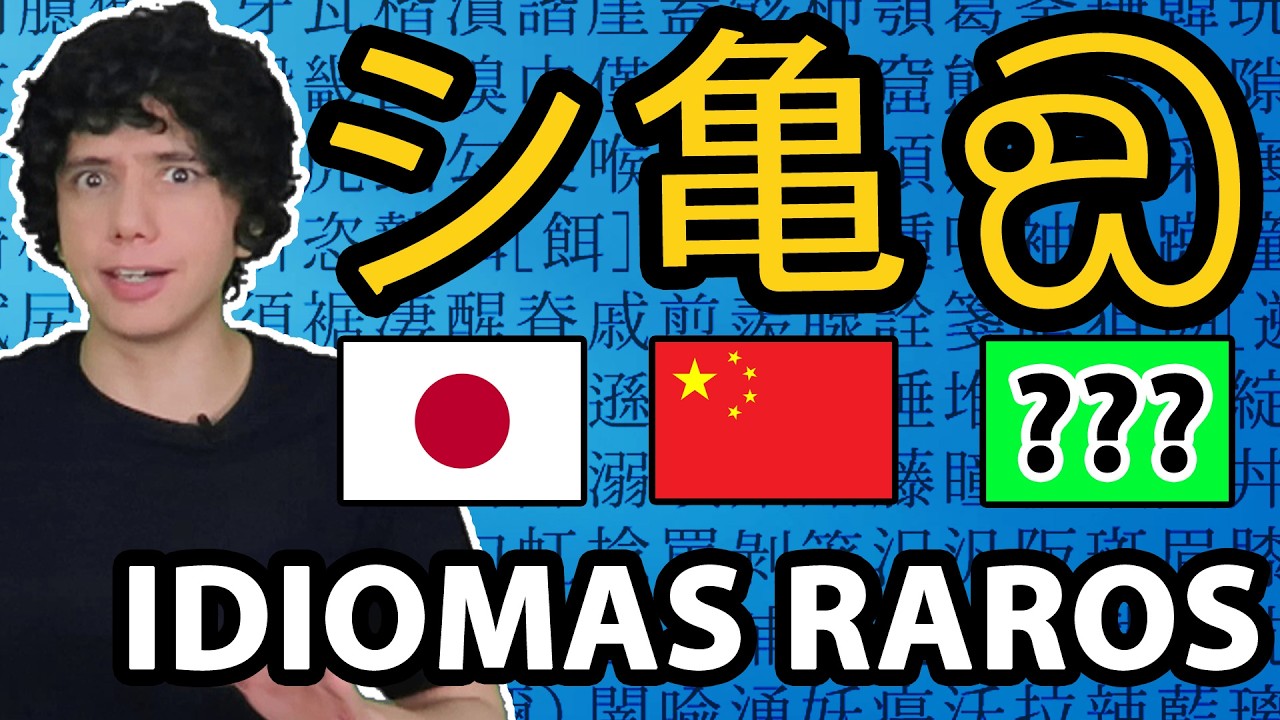
Asian writing systems demonstrate remarkable diversity in structure and complexity. Chinese writing requires learning thousands of characters (2,000+ minimum), each representing concepts through radicals—repeated stroke components that convey meaning. Japanese developed three interlocking systems: Kanji (Chinese characters for meaning), Hiragana (curved syllabary for native words), and Katakana (angular syllabary for foreign words). This multi-system approach solves the problem of homophones by providing visual differentiation. Korean uniquely responded to literacy challenges by commissioning Hangul, a logical 24-symbol alphabet designed for easy learning, proving that writing systems can be systematically engineered rather than merely inherited.
Click to watch →

Every Major Writing System | Explained
25.7K
Syllabic systems represent entire syllables as single characters, ideal for languages with regular consonant-vowel patterns like Japanese hiragana/katakana and Cherokee. Logographic systems use characters representing words or meanings directly, such as Chinese hanzi and Japanese kanji. These systems require learning thousands of characters but enable cross-dialect comprehension and historical continuity. Featural systems encode speech production features into symbol shapes, exemplified by Korean Hangul where consonants reflect mouth/tongue positions and vowels use geometric elements. Each system offers unique trade-offs between learning difficulty and communicative efficiency.
Click to watch →

Writing Systems of the World
1.4M
Syllabaries represent entire syllables (one consonant plus one vowel) with unique characters, requiring memorization of many more symbols than alphabets. Japanese uses hiragana and katakana for this purpose. Logosyllabaries, exemplified by Chinese, use thousands of characters where each represents both a syllable and a complete word or concept, demanding extensive memorization for literacy. Abugidas, used in India and Southeast Asia, modify consonant characters with small marks to indicate following vowels, combining features of alphabets and syllabaries. These systems evolved from different branches of ancient scripts, reflecting diverse linguistic and cultural approaches to writing.
Click to watch →
Deep Dive
An in-depth exploration of the historical transition from Proto-Sinaitic through Phoenician to the Greek, Latin, and Arabic scripts.
ASMR 4 hours Wax Carving Ancient Alphabets | Wadi el-Hol Inscription
708.8K
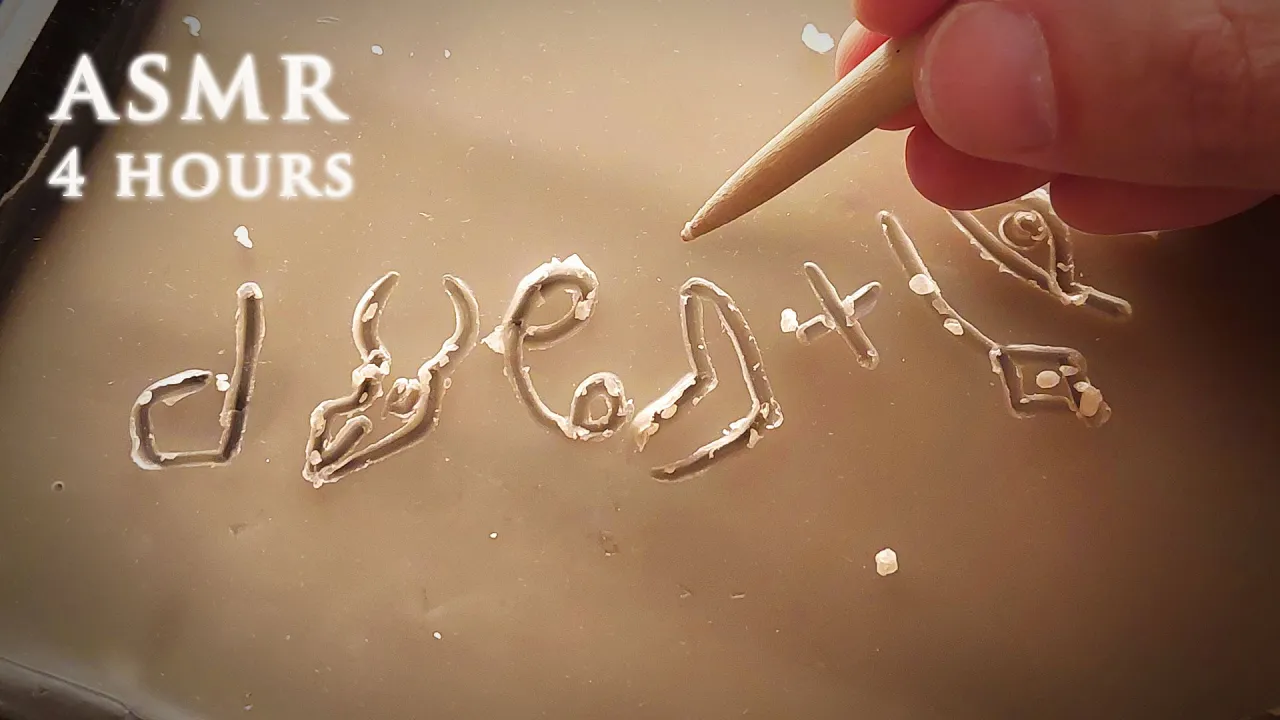
The Phoenician alphabet (1050-150 BCE) represents one of history's most influential writing systems. It evolved from Proto-Sinaitic script and borrowed hieroglyph shapes but assigned new sounds using the acrophonic principle. The alphabet contained only 22 consonants with no vowels, requiring readers to infer vowel sounds from context. This abjad system was adopted by Greeks, who assigned vowel values to unused consonants, creating the first true alphabet. From Phoenician descended Greek, Latin, Cyrillic, Hebrew, Arabic, and countless other scripts, making it the ancestor of nearly all modern alphabets worldwide.
Click to watch →
Secrets of the Hebrew Alphabet: Origins
189.6K
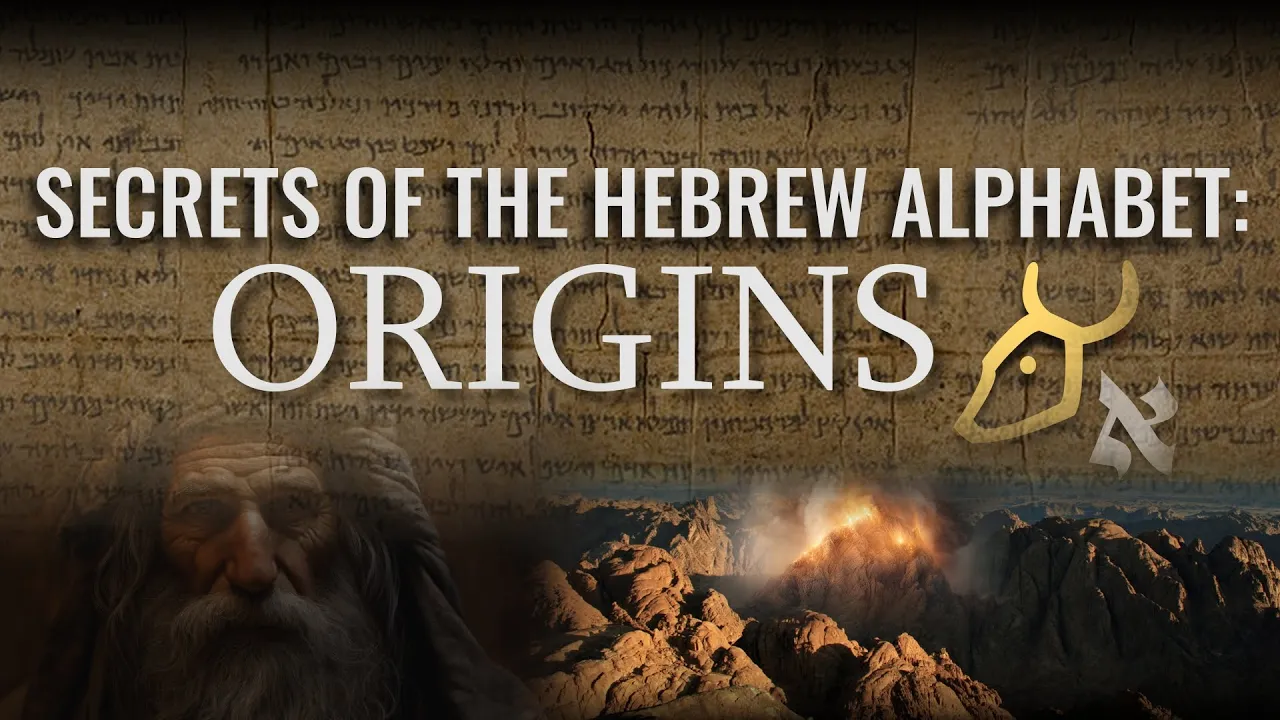
In 1905, British archaeologist Sir Flinders Petrie discovered petroglyphs at Wadi el-Sheikh in the Sinai Peninsula that represented an alphabetic script unlike any previously known. Sir Alan Gardiner deciphered these inscriptions in 1916, establishing they represented a Semitic language in the earliest known purely alphabetic script. Many characters resembled Egyptian hieroglyphs, but were used in entirely new ways to represent consonant sounds rather than their original meanings. Following its initial appearance in Egypt and Sinai, the proto-Sinaitic script spread to Canaan, becoming proto-Canaanite script. By the late 11th to early 10th centuries BCE, it evolved into paleo-Hebrew or Phoenician script. The Phoenicians then introduced this script to the Greeks, who developed their own alphabetic system that became the source of all Indo-European language scripts including Latin, English, and Cyrillic.
Click to watch →

Evolution of the Alphabet
2.7M
The alphabet evolved from ancient Egyptian hieroglyphs (logosyllabary) to the modern Latin script through several key stages: Proto-Sinaitic (around 4000 years ago, reducing hundreds of symbols to 20-30), Phoenician/Paleo-Hebrew (adopted by Canaanites around 1000 BCE), Archaic Greek (adding vowels to create the word 'alphabet'), Old Italic/Etruscan (adopted by Romans), Roman Square Capitals (23 letters, no J, U, or W), and various medieval scripts (Insular, Carolingian, Blackletter). Major letter transformations include: the Greek addition of vowels using alef/alpha and he/epsilon; the Roman creation of G from C with an extra line to separate G/K sounds; the splitting of the sixth letter into F and V/U; and the eventual addition of J, U, and W. The alphabet originally had only consonants (abjad), but Greek innovation made it vowel-inclusive, enabling more precise word representation.
Click to watch →
The World's Writing Systems: All you need to know
21.3K
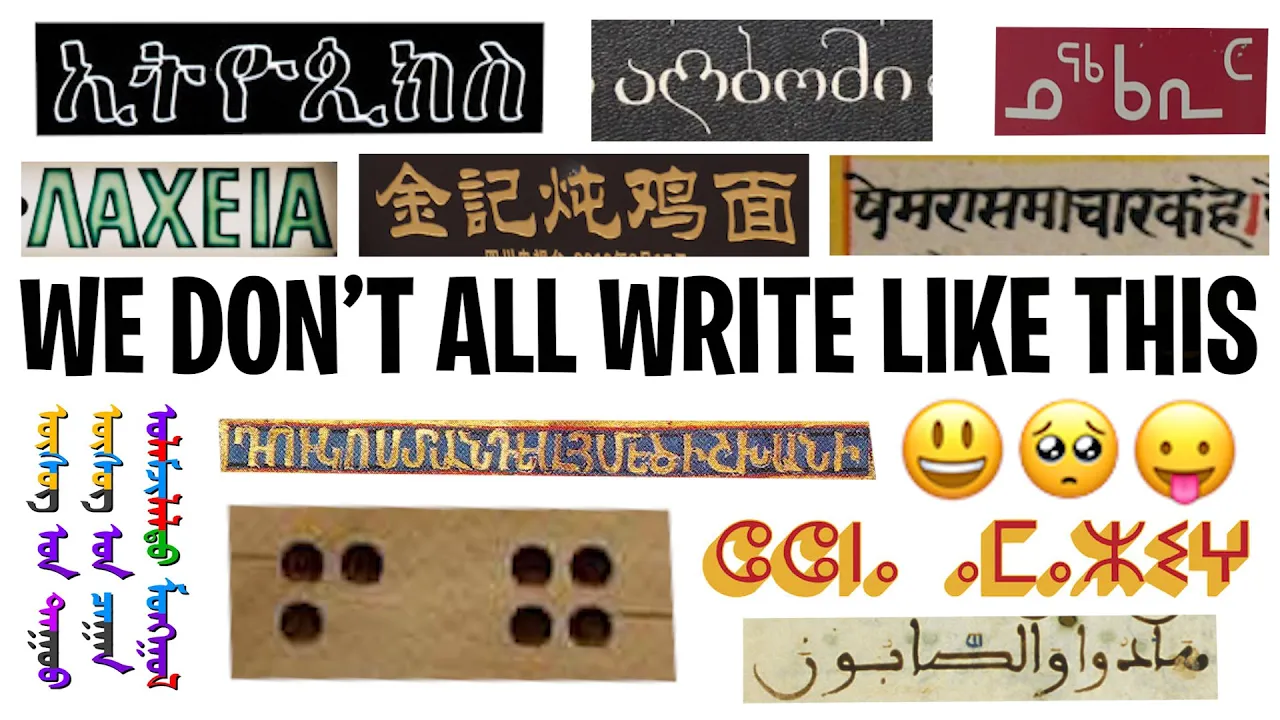
Writing emerged independently around 5,500 years ago in Mesopotamia, Egypt, China, and the Americas, each arising from practical needs like bookkeeping and trade. The invention enabled storing ideas externally, transforming empires, religions, and commerce. Modern systems trace to Proto-Sinaitic through Phoenician, Greek, and Roman adaptations. Five major families dominate: Latin (English, Spanish), Cyrillic (Russian), Arabic (Middle East), Devanagari (India), and Han characters (China). Classification includes alphabets (Latin, Greek), abjads (Arabic, Hebrew), abugidas (Devanagari, Ge'ez), syllabaries (Japanese kana, Cherokee), and logographic systems (Chinese). Direction varies: Arabic right-to-left, Mongolian top-to-bottom, Chinese historically multi-directional but now left-to-right.
Click to watch →

NUESTRA “A” ES UN BUEY DEL REVÉS | El Origen de Nuestro Alfabeto
25.6K
The traditional educational narrative held that the Latin alphabet descended from Etruscan, which came from Greek, and Greek from Phoenician, with Phoenicians credited as alphabet creators. However, modern scholarship reveals that the Phoenician alphabet actually descended from Egyptian hieroglyphic writing. This discovery was made by Flinders Petrie in 1905 and further developed by Alan Gardiner in 1916. The Sinai Peninsula served as the geographic bridge between these civilizations, where Semitic peoples from Canaan settled during the famine period around 2200 BC. Gardiner deciphered the proto-Sinaitic alphabet using the acrophonic principle, discovering that our letter 'A' originated from a bull's head symbol. This 24-symbol alphabet evolved into the Phoenician alphabet, which then influenced Greek, Etruscan, and ultimately the Latin alphabet. Gardiner concluded that Egyptian hieroglyphics 'remain alive in our writings, though in a totally different way.'
Click to watch →
Deep Dive
The grammatical and morphological features of Semitic languages (such as root-and-pattern systems) that make abjads uniquely suited for them.

Writing system
314
Alphabets use small sets of letters representing phonemes, with 'alphabet' derived from Greek alpha and beta. Abjads (like Arabic, Hebrew) have one symbol per consonant with no vowel marking, suited to Semitic languages where vowels are morphologically redundant. The term 'abjad' derives from Arabic alphabet consonants. Abugidas (like Devanagari) have consonants with inherent vowels, with modifications indicating other vowels. The Brahmic family includes nearly all scripts in India and Southeast Asia. Featural systems like Korean Hangul represent phonetic features (voicing, place of articulation) rather than whole phonemes, combining three levels of phonological representation.
Click to watch →
#lcc10 Dominique Stephan Bobeck - The Semitic Influence on Conlangs
289
Semitic languages use a templatic morphology system where words are built from consonantal roots combined with vowel patterns. The root consists of three consonants, and different vowel patterns applied to the same root produce different grammatical forms. Peterson explicitly stated he took inspiration from Semitic languages for this approach, applying template morphology to create systematic word formation in constructed languages.
Click to watch →

SEMITIC LANGUAGES
145.2K
Semitic languages form a branch of the Afroasiatic language family, spoken by over 330 million people across West Asia, the Horn of Africa, North Africa, Malta, West Africa, and immigrant communities worldwide; these languages primarily use abjad scripts that omit vowels since consonants carry meaning, with notable exceptions like the Geʽez abugida and Maltese which uses the Latin script and is the only Semitic language in the European Union.
Click to watch →

Ancient Semitic I: The Semitic Languages - A Brief Introduction
28.8K
Semitic languages universally employ root-and-pattern morphology, where words derive from consonantal roots (typically three consonants) combined with vowel patterns. Personal pronouns show remarkable cross-linguistic consistency across branches, with first person singular (I) appearing as ana, anaku, ani, ana, and he. Nominal inflection consistently marks feminine nouns with a t-ending, a feature shared across all Afroasiatic branches. Original Semitic languages were VSO (Verb-Subject-Object) in word order, though modern varieties often show SVO tendencies. Akkadian uniquely exhibits SOV order due to Sumerian influence. Semitic syntax also features nominal sentences without copulas, where subject and predicate simply juxtapose. These universal features demonstrate deep genetic unity despite superficial diversity across the language family.
Click to watch →

تاريخ اللغات السامية خصائص عامه
140
Semitic languages share fundamental morphological systems including definiteness markers, plural formation, verb patterns, and tense formation. Arabic uses Tanween for definiteness and Nun for broken plurals. Hebrew uses Nun or Yod-Nun for plurals. Aramaic uses F or Yod-Nun. Syriac uses Yod-Nun. Verb patterns (اوزان) with prefixes and suffixes change meaning, with Hebrew having seven patterns. The 'فعيل' pattern indicates causative transitivity. Passive voice is formed by changing vowel patterns. Reciprocal verbs indicate mutual action. Vowel changes indicate grammatical meaning. Short and long forms occur when vowels are shortened, particularly after 'Waw'. Tense formation uses prefixes and suffixes: Perfect uses suffixes, Imperfect uses prefixes and suffixes, Future uses prefixes. The 'Waw' contraction is a distinctive feature of Semitic verb morphology.
Click to watch →
Deep Dive
The computational linguistics and typographic challenges of digital encoding (Unicode) and rendering complex abugida scripts like Devanagari.

Devanagari alphabet | Wikipedia audio article
531
Devanagari punctuation includes danda (।) for sentence/half-verse ends, double-danda (॥) for full verse ends, and alpa virām (,) for natural pauses. Modern punctuation matches European usage. Multiple Unicode fonts serve Devanagari: Akshar, Annapurna, Arial, CDAC-Gist Surekh, Chandas, Gargi, Gurumaa, Jaipur, Jana, Kalimati, Kanjirowa, Lohit Devanagari, Mangal, Raghu, Sanskrit2003, Santipur OT, Siddhanta, Thyaka, Uttara. Uttara excels in ligatures but requires much vertical space. Santipur OT reflects medieval typesetting style. Google Fonts provides new Unicode fonts in Serif, Sans-Serif, Display, and Handwriting categories. Digital encoding includes ISCII (8-bit, largely superseded) and Unicode (three blocks: Devanagari U+0900–U+097F, Extended U+A8E0–U+A8FF, Vedic Extensions U+1CD0–U+1CFF). Input methods include InScript (Government of India standard, built into major OSes), typewriter layouts, and phonetic systems. Romanisation systems include Hunterian (national system), ISO 15919 (2001 standard with diacritics), IAST (academic standard for Sanskrit, established 1912), Harvard-Kyoto (simpler for machine readability), ITRANS (ASCII-based, lossless), Velthuis (TeX-based, case-insensitive), ALA-LC (library standard), and WX (computational processing with retroflex/dental mapping).
Click to watch →

Unicode
884
Many scripts including Arabic and Devanagari have orthographic rules requiring letter combinations to form ligature forms. Rules can be complex, requiring special script shaping technologies like Arabic Calligraphic Engine (1980s), OpenType by Adobe and Microsoft, Graphite by SIL International, or AAT by Apple. Instructions are embedded in fonts to tell operating systems how to properly output different character sequences. A simple solution assigns combining marks zero width and places glyphs left or right of base glyph depending on script direction. Standardized subsets include Microsoft Windows' WGL4 with 65,2 characters supporting contemporary European languages using Latin, Greek, or Cyrillic scripts. Rendering software that cannot process Unicode characters displays them as open rectangles or the Unicode replacement character U+FFFD.
Click to watch →

UTW 2023 Character to Glyph How Unicode® Text Makes It To Your Screen
173
The complete text rendering pipeline involves four stages: Layout Engine groups text by script using Unicode standards, Bidirectional Engine applies UAX #9 for mixed-direction text, Shaping Engine resolves characters to glyphs with substitutions and positioning, and Font Rasterizer converts outlines to pixels. Complex scripts like Arabic, Devanagari, and Tai demonstrate how identical character sequences produce vastly different visual outputs through contextual shaping rules. This illustrates why font technology requires deep integration with Unicode standards and writing system-specific algorithms.
Click to watch →

28-5-2020: 7-Day Workshop on "Digitization and Development of e-resources for Sanskrit" - Day2 - 1&2
335
Unicode is a universal character encoding standard that supports characters from all writing systems, including Indic scripts like Devanagari. It assigns unique numerical values to each character, enabling computers to represent and process text from different languages. Indic scripts present unique challenges for computing, including complex character combinations, conjunct consonants, and multiple writing styles. These challenges require specialized encoding and rendering solutions. ASCII (American Standard Code for Information Interchange) originally supported only 128 characters, making it impossible to represent characters from many languages including Indic scripts. Unicode was developed to address these limitations by assigning unique numerical values to each character from all writing systems.
Click to watch →
why Mongolia should change its encoding standard or alphabet (again)
53.7K
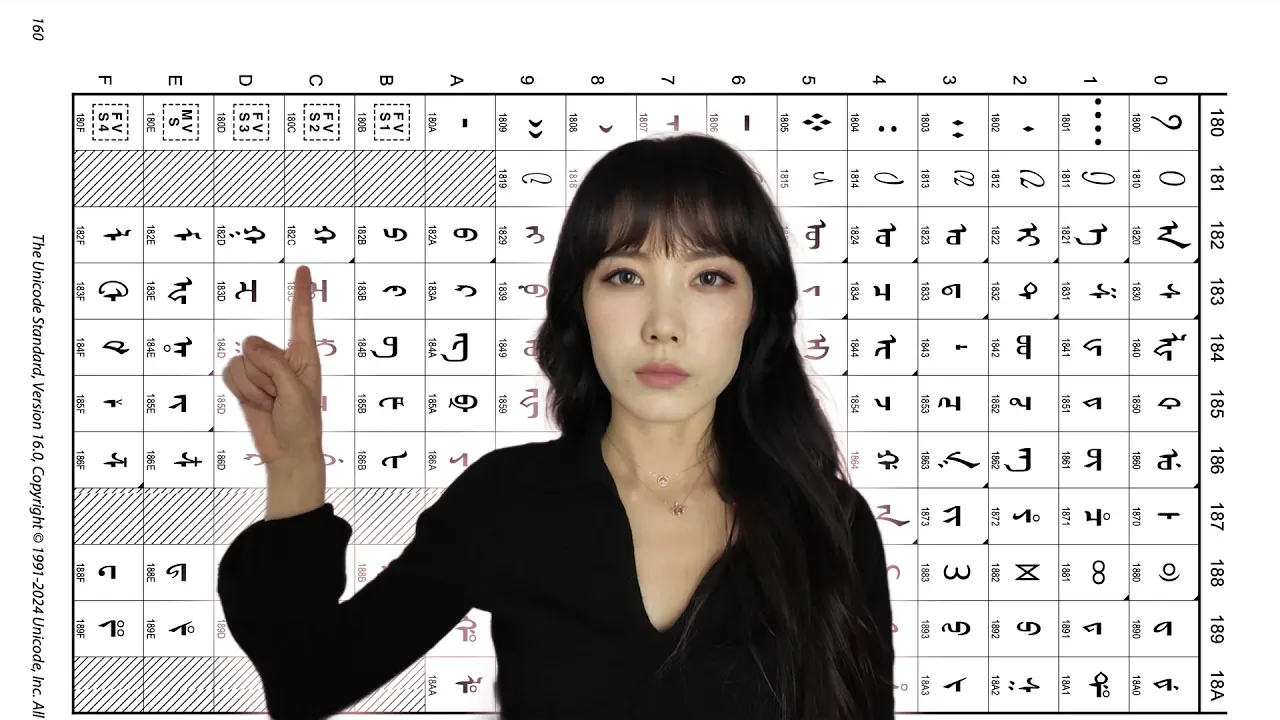
Traditional Mongolian script presents unique challenges for digital implementation because its letters change shape based on both position and surrounding vowels (unlike Arabic which only changes by position), requiring fonts to perform extensive contextual analysis through complex rule sets (11,374 lines of code compared to 312 lines for Latin scripts); the fundamental solution requires Unicode to assign separate code points for each contextual form rather than leaving all processing to fonts, which is currently not implemented.
Click to watch →
Deep Dive
Cognitive linguistics and the psychology of reading, investigating how the human brain processes alphabetic versus non-alphabetic scripts.

Aula 3 - Como a leitura transforma o cérebro - Clube da Leitura
1.3K
The human brain was not originally formed with all the connections necessary for reading. The capacity for reading was developed over millennia of human evolution. Today, humans have a 'reader's brain' adapted for reading alphabetic scripts. The brain processes different writing systems differently - Latin-based languages use letters that combine into syllables, while Chinese characters are images and symbols that convey complete ideas. A person who knows both languages does not have them in the same location in the brain - it is possible to lose one language while retaining the other.
Click to watch →
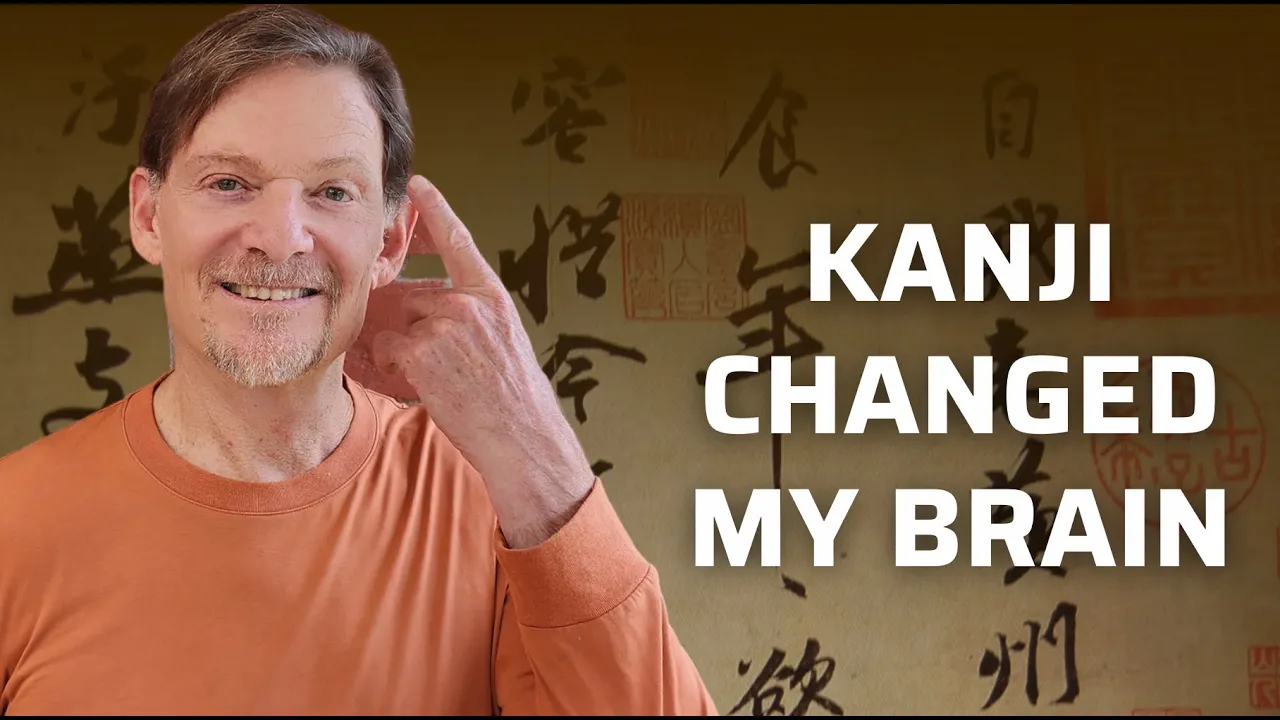
The Hidden Benefits of Learning Kanji and Hanzi: A 44-Year Journey
29.1K
Logographic readers develop stronger visual-spatial reasoning and engage the right hemisphere of the brain more than readers of alphabetic scripts. When writing basic characters like 'road,' one must recall radicals, stroke order, and spatial proportion. Research shows that people reading these characters activate their left middle frontal gyrus linked to visual orthographic processing much more than alphabetic readers.
Click to watch →

Stanislas Dehaene : « Face-à-face avec son cerveau : les progrès de la neuroimagerie »
5.3K
Despite differences in writing systems (alphabetic vs. logographic), the brain uses similar circuits for reading. Dyslexia involves different subtypes with different neural bases (phonological vs. visual). Emotions are integrated with cognition, not separate. The brain processes information probabilistically, encoding uncertainty. These findings reveal universal cognitive mechanisms underlying human intelligence.
Click to watch →

Podcast- CÓMO AMPRENDEMOS A LEER (Maryanne Wolf)
495
Neuroimaging reveals that writing systems shape brain structure and function: alphabetic readers show rapid left-hemisphere specialization for phonemic decoding; logographic readers (Chinese) show bilateral activation and recruit more visual and motor areas. Different languages present unique challenges: English has many inconsistencies between orthography and pronunciation; Italian and Spanish have direct letter-sound correspondence; Chinese requires learning thousands of characters with no phonological support. Emotional commitment is central to reading - the child who moves from recognizing letters to understanding them does so not only with logic but also with the heart. The emotional dimension of reading is not secondary but central to becoming a lifelong reader.
Click to watch →

CIÊNCIA COGNITIVA DA LEITURA - Diálogos Edube #6 - Maria Regina Maluf
3.5K
Cognitive science of reading is an evidence-based approach to literacy education that differs from traditional methods. It focuses on understanding how children learn to read and write through scientific investigation rather than intuition. Reading is not a natural ability like speaking but a learned skill requiring deliberate instruction. The alphabetic system of writing, invented approximately 4,000 years ago, represents sounds of speech through letters. This system is not innate to humans; it must be explicitly taught. The alphabet consists of 26 letters that represent sounds, and learning to read requires understanding how these symbols correspond to spoken sounds.
Click to watch →
Writing Systems
Writing Systems
0:00- 1
Explains alphabets, abjads, and abugidas with examples.
- 2
Traces origins back to the Proto-Sinaitic script.
- 3
Highlights naming conventions from initial letters.
The Writing System Continuum and Critique of Rigid Typology
While traditional linguistics classifies writing systems into neat categories like alphabets, abjads, and abugidas, many modern typologists argue this taxonomy oversimplifies how scripts actually function. Scholars like Richard Sproat propose that writing systems exist on a multidimensional continuum rather than in discrete boxes. For example, 'abjads' like Arabic and Hebrew regularly employ vowel markers (matres lectionis), while 'alphabets' like English often rely on morphophonemic, non-phonetic spellings that function almost logographically. Furthermore, critics reject the teleological narrative—historically popularized by Ignace Gelb—that frames the evolution of writing as a progressive march from primitive logographs to the 'perfected' Greek alphabet. Modern consensus views script structures not as hierarchical stages of advancement, but as highly specialized, equivalent adaptations tailored to the specific phonological and morphological needs of their respective languages.
The phonetic distinction between consonant and vowel sounds and how they function in spoken language.
The basic definition of an orthography (writing system) as a standardized visual representation of a language.
The concept of sound-to-grapheme correspondence, including terms like 'phoneme' (sound unit) and 'grapheme' (written unit).
A general awareness of historical linguistics and the concept that modern scripts can evolve and diverge from ancient common ancestors.
The study of other major writing system categories, specifically syllabaries (e.g., Japanese Kana) and logographies (e.g., Chinese characters).
An in-depth exploration of the historical transition from Proto-Sinaitic through Phoenician to the Greek, Latin, and Arabic scripts.
The grammatical and morphological features of Semitic languages (such as root-and-pattern systems) that make abjads uniquely suited for them.
The computational linguistics and typographic challenges of digital encoding (Unicode) and rendering complex abugida scripts like Devanagari.
Cognitive linguistics and the psychology of reading, investigating how the human brain processes alphabetic versus non-alphabetic scripts.
476.3K views28Klikes1:55@humantenelevenOriginal Release: 2026-01-11
I don't think most people realize that the word alphabet comes from alpha and beta, the first two letters of the Greek alphabet. This wasn't the first writing system in history, but it was the first alphabet under its technical definition, a writing system which has unique letters for consonants and vowels. The Greek alphabet comes from the Phoenician alphabet, or should I call it the Phoenician obj. Unlike alphabets which have unique characters for all consonants and vowels, objs only have unique characters for consonants. Arabic is a language that uses an obj. Though there are special markings for short vowels, they're entirely optional and you can write any word without writing the vowels in. In fact, Arabic is where we get the word abjad, named after the traditional first four characters of the Arabic script, alif, bim, and dal.
Contrast that with an abuga, a writing system that doesn't have individual letters for consonants and vowels, but for entire syllables, consonant and vowel pairs. Take the guga as an example. This letter makes the b sound, both the consonant and the vowel. But if we compare it with similar looking letters like BB ba bb, they all have vaguely the same shape representing the same consonant but slight modifications representing the different vowels. And if we replace that default letter with a different consonant, we can apply similar modifications to make all the other syllables. The word abugida also comes from gaz named after the first four letters in the traditional ordering of the script. Wait, are you seeing a pattern here? Alphabet, abjad, abugida.
Why are they all starting with similar letters? It's not a coincidence. All these languages and more have writing systems that originally come from the protositic script from which they inherit their alphabetical order. Alp bite gaml dart. And yes, that's where we also get abcd in Latin from which we get the words abisetery or abisidarium which is another way of saying the alphabet written out. But even if a writing system doesn't use this order, it's still really common to name it after its first few characters. Like the term foothark often refers to Germanic runes named after the first six letters in the traditional Germanic alphabetical order or bopo a transliteration system of Chinese named after its first four salabographs.
Up Next

9:40
Why Chinese Uses Characters Instead of an Alphabet: History & Linguistics
@TheOrientalOrator
417 views•2026-03-18
36:52
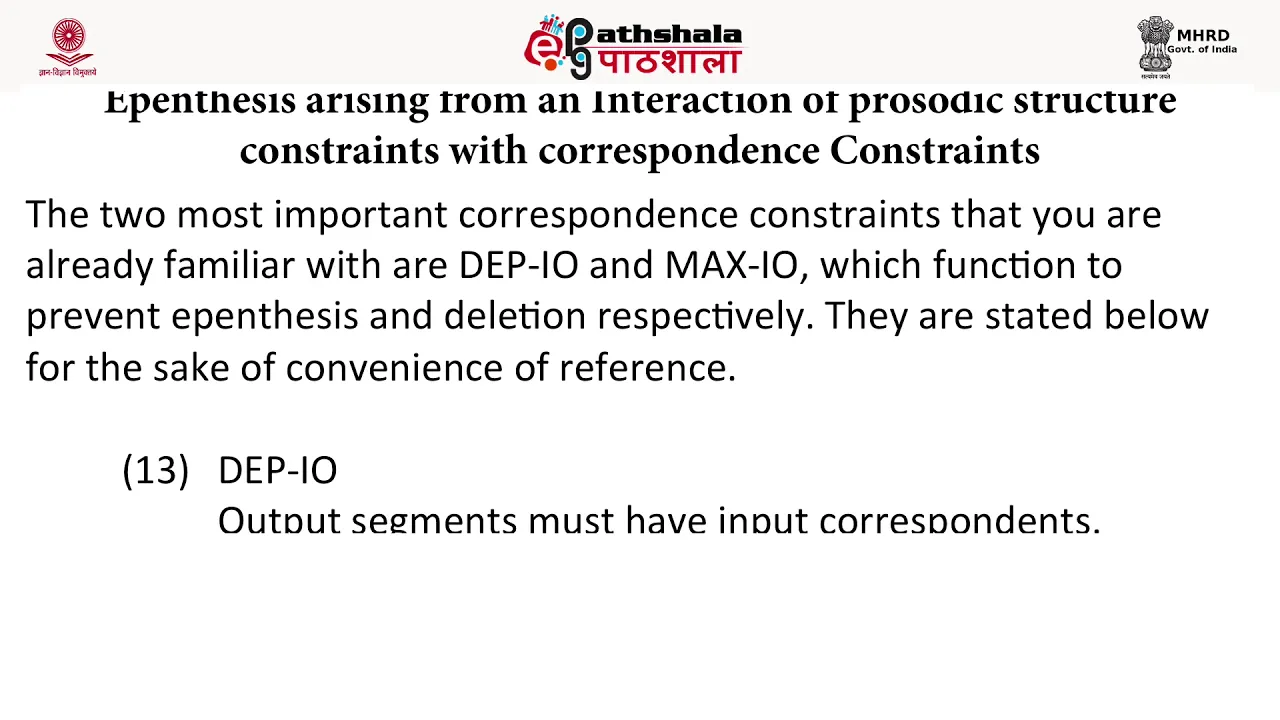
Constraint Interaction in Optimality Theory: Epenthesis & Deletion
@Vidyamitra
180 views•2018-08-20

8:59
Forensic Linguistics: How Language Solves Crimes | PBS
@pbsstoried
1M views•2024-01-25

21:32
Accent Expert Explains U.S. Regional Dialects | Part 1
@WIRED
9.3M views•2021-01-21
Related Study Plans & Knowledge Roadmaps
Structured learning paths in Linguistics
linguistics
Optimality Theory: Tableaux & Constraints
01Phonological Basics: Sounds, Syllables & Rules
02Foundations of Optimality Theory: GEN, CON, and EVAL
03The Constraint Inventory: Markedness vs. Faithfulness
+ 2 more learning modules
15h5 modules
Explore Roadmap
linguistics
Morphosyntactic Alignment: S, A & P Systems
01Foundations of Syntax: Transitivity and Arguments
02The Linguistic Variables: Mapping S, A, and P
03Nominative-Accusative Alignment
+ 3 more learning modules
12h6 modules
Explore Roadmap
linguistics
Analyzing Sign Language: Phonology & Syntax
01Foundations of Sign Language Linguistics
02Phonology: The Five Parameters of a Sign
03Morphology: Word Formation and Classifiers
+ 2 more learning modules
14h5 modules
Explore Roadmap
linguistics
Pragmatics: Speech Acts, Grice & Politeness
01Introduction to Pragmatics: Meaning in Context
02Grice’s Cooperative Principle & Implicature
03Speech Act Theory
+ 2 more learning modules
14h5 modules
Explore Roadmap