In her poem 'Her Kind,' Anne Sexton uses first-person narration to explore themes of female identity, societal misunderstanding, and personal transformation, demonstrating how confessional poetry allows poets to examine complex psychological and social experiences through intimate self-expression.
Anne Sexton Reads 'Her Kind' | Poetry Analysis & Context
Added:Deep Dive
An understanding of Confessional Poetry, its origins in the mid-20th century, and how it differs from traditional objective poetry.

MH Abrams | A Glossary of Literary Terms Part 5 | UGC NET English Literature by Aman Kakkar
509
Confessional poetry is a genre of poetry where the poet writes about their own personal experiences, emotions, and life events in the first person. It is highly subjective and personal, often dealing with difficult topics such as mental illness, family problems, sexuality, addiction, and other challenging life experiences. Key examples include: (1) Robert Lowell's 'Life Studies' (1959), which dealt with his bipolar disorder, (2) Sylvia Plath's 'Ariel' (1965), which explored themes of death, anger, and relationships with her father, (3) Allen Ginsberg's 'Howl' (1956), which addressed madness and American life, and (4) John Berryman's 'Dream Songs' (1964). The opposite of confessional poetry is impersonal poetry, which is associated with T.S. Eliot's objective correlative theory.
Click to watch →

What Is Confessional Poetry? - The Language Library
292
Confessional poetry is a mid-20th century literary movement (1950s-1960s) characterized by poets like Robert Lowell and Sylvia Plath who used first-person narratives to openly share deeply personal experiences including mental health struggles, marital issues, and private traumas, breaking away from traditional poetic conventions that kept the speaker separate from the poet; this style employs vivid imagery, emotional intensity, and free verse to create intimate connections between poet and reader while serving as a therapeutic means of self-expression and healing.
Click to watch →
Confessional Poetry: What It Is, And Why It Is Important? Sylvia Plath, Anne Sexton | Chapter 27
14.1K
Confessional poetry is a literary movement that emerged in the 1950s as a reaction against modernist impersonal poetry, where poets began openly confessing about their personal traumas, vulnerabilities, and intimate experiences in their work; Robert Lowell coined the term 'confessional poets' in his collection 'Life Studies,' and major practitioners include Sylvia Plath, Anne Sexton, D. Snodgrass, and John Berryman, whose works such as Plath's 'Ariel' and Sexton's 'Live or Die' explore deeply personal themes of mental illness, marital betrayal, and psychological pain.
Click to watch →

Write Your Heartache
6.2K
Confessional poetry emerged in mid-20th century America as a response to the loss of faith and certainty following World Wars, the Great Depression, and the Holocaust, drawing from philosophical traditions of Schopenhauer, Nietzsche, and Kierkegaard, as well as the rise of psychoanalysis and existentialism. This movement evolved from measured, literary approaches by poets like Robert Lowell and Sylvia Plath to raw, shocking self-exposure by Anne Sexton and John Berryman, ultimately enabling poets to explore their interior psychological states and personal trauma with unprecedented honesty.
Click to watch →
Confessional Poetry EXPLAINED | UGC NET English Paper 2 | Sylvia Plath, Lowell, Sexton
900
Confessional poetry is a revolutionary American literary movement that emerged in the 1950s-1960s, characterized by deeply personal, autobiographical writing that openly discusses taboo topics such as mental illness, addiction, trauma, and intimate life experiences. Unlike previous poetic traditions that relied on nature imagery or fictional personas, confessional poets like Robert Lowell, Sylvia Plath, Anne Sexton, John Berryman, and W.D. Snodgrass removed the mask and spoke directly from their own lives, creating raw, emotionally charged works that challenged societal taboos and transformed American literature by proving that poetry could be brutally honest and psychologically intense rather than distant or decorative.
Click to watch →
Deep Dive
Familiarity with the social and cultural expectations of women in 1950s and 1960s America, particularly regarding domesticity and mental health.

The Women of BookTok, Anime and Gaming: Shaming the Fangirl since '63
23.5K
In the late 1900s, women were expected to be quiet, pure, well-respected individuals who should only be finding a man to marry and take care of him and their children. They were not encouraged to form identities for themselves or figure out what they liked and didn't like. The image of girls screaming and crying directly contradicted the expected image of reserved, controlled women.
Click to watch →
The Unspoken Rules Every 1950s Wife Followed the Day She Lost Her First Pregnancy
119
In the post-war years, motherhood was a social expectation so powerful it functioned almost like a civic duty. The baby boom was in full swing, and suburban streets were filled with young families. For women who had not yet achieved the image of the smiling mother with her children, the message was gentle but consistent: keep trying. Women were encouraged by husbands, doctors, and mothers-in-law to focus on what was ahead rather than what had just happened. Women were expected to maintain their appearance as a form of courtesy to their husbands and the broader social world. The female body was understood to a significant degree as public property that reflected on the family, marriage, and neighborhood. A woman who visibly declined was considered to be failing in a fundamental responsibility.
Click to watch →
She Claims the 1950s Suburban America Put Everyone in Boxes
143
Many women and men who grew up in 1950s families experienced hidden struggles. A common pattern was mothers having nervous breakdowns during their children's high school years. Middle-class American housewives throughout the 1950s were drug addicted, using barbiturates, tranquilizers, and alcohol to relieve the pain of enormous expectations to be happy within a very narrow confined existence.
Click to watch →

Unit 17 Part 1 1950's
169
1950s society expected women to be perfect mothers and wives, with spotless houses and perfect children. Women took 'pep pills' to maintain energy. The 'Mrs. degree' was a joke for women seeking husbands. Fashion promoted tiny waists and big hips. Women were limited to secretarial, nursing, and teaching jobs. Birth control was illegal, and women were expected to be 'baby makers.' The media targeted women with appliances and beauty products, reinforcing domestic roles.
Click to watch →

What the 1950s Were Really Like | Talking Politics With Mom - Episode 03
139.3K
The 1950s represented an aberration for women, particularly those with ambitious careers or talents. Women who were intelligent, talented, and ambitious often found themselves trapped in the role of stay-at-home mothers with no outlet for their abilities. This created significant psychological distress, as women like the speaker's mother, who had worked during the Depression and wanted to be a doctor, were forced into roles that frustrated their potential and led to anger and depression. The era was built on a permanent class of indentured servants who performed valuable work without compensation.
Click to watch →
Deep Dive
Basic literary analysis skills, specifically the concept of the poetic 'persona' versus the poet's actual biographical self.

√ The Personas and Characterisation in Poetry Explained with Examples
2.9K
In poetry, the persona is the speaker or character through whom the poet expresses their ideas, representing a constructed viewpoint that may differ from the poet's actual self; this persona serves as a lens through which readers experience the poem's themes, emotions, and worldview, allowing the poet to convey complex ideas and feelings through a characterised voice rather than direct biographical narrative.
Click to watch →

Introduction to Poetry—Billy Collins with Dr. Khoi Le
1.5K
A poet develops a 'persona' - a verbal personality serving as a character or mask through which they write. This persona is often more sensitive than the poet themselves, lacking responsibilities like jobs or families, allowing it to observe life with heightened awareness. The persona acts as a transparent eyeball, observing the world with openness. Billy Collins describes his persona as drinking tea while he drinks coffee, representing subtle personality differences. The persona is not identical to the poet but represents an improvement or extension of their voice. Once found, the persona does most of the talking, and the question of craft becomes what the persona would say next.
Click to watch →
Write Out Loud Poetry Masterclass 2: Guest tutor Caroline Bird | 28.04.21
289
The eye of the poet is always a persona, meaning that poets never truly present their complete, authentic selves in their work. When reading poems, readers often sense that the poet wasn't actually experiencing things in the way described. This is normal and expected. The goal is not to pretend that the poet's eye is whole, but to use the persona as a vehicle for exploring truth.
Click to watch →
Poetry - Adrienne Rich (Part 4 of 4) - Leaving Cert English
2.8K
A poetic persona is when a poet adopts the personality, traits, and voice of someone other than themselves. In this poem, Adrienne Rich takes on the voice of the uncle, which immediately establishes a tone of arrogance and superiority. This technique allows the poet to explore perspectives different from their own while maintaining critical distance.
Click to watch →
Persona literary device/meaning/examples
809
A literary persona is an invented speaker or perspective that a writer creates to address a subject matter, which may differ entirely from the writer's own viewpoint; it is essential to distinguish between the speaker (persona) and the actual author when analyzing literary works, as the first-person 'I' does not necessarily represent the writer but rather the constructed character or voice the author has chosen to use.
Click to watch →
Deep Dive
Knowledge of the historical archetype of the witch as a symbol of female transgression, social alienation, and persecution.

El agua: Entrevista a Elena López Riera - Nueva Temporada #9 | Anita Fuentes | La Base
13.9K
The figure of the witch has been historically associated with women who were economically independent and refused to serve the patriarchal system. According to feminist theorist Silvia Federici, witches were often women who were not available to the capitalist system because they did not need men to provide for them. Throughout history, women who achieved economic independence have often been socially proscribed and viewed with suspicion. This pattern reflects a patriarchal system that resents women who do not need male support for survival. The figure of the witch serves as a symbol of this persecution, representing women who refuse to be controlled by systems that require their dependence on men.
Click to watch →
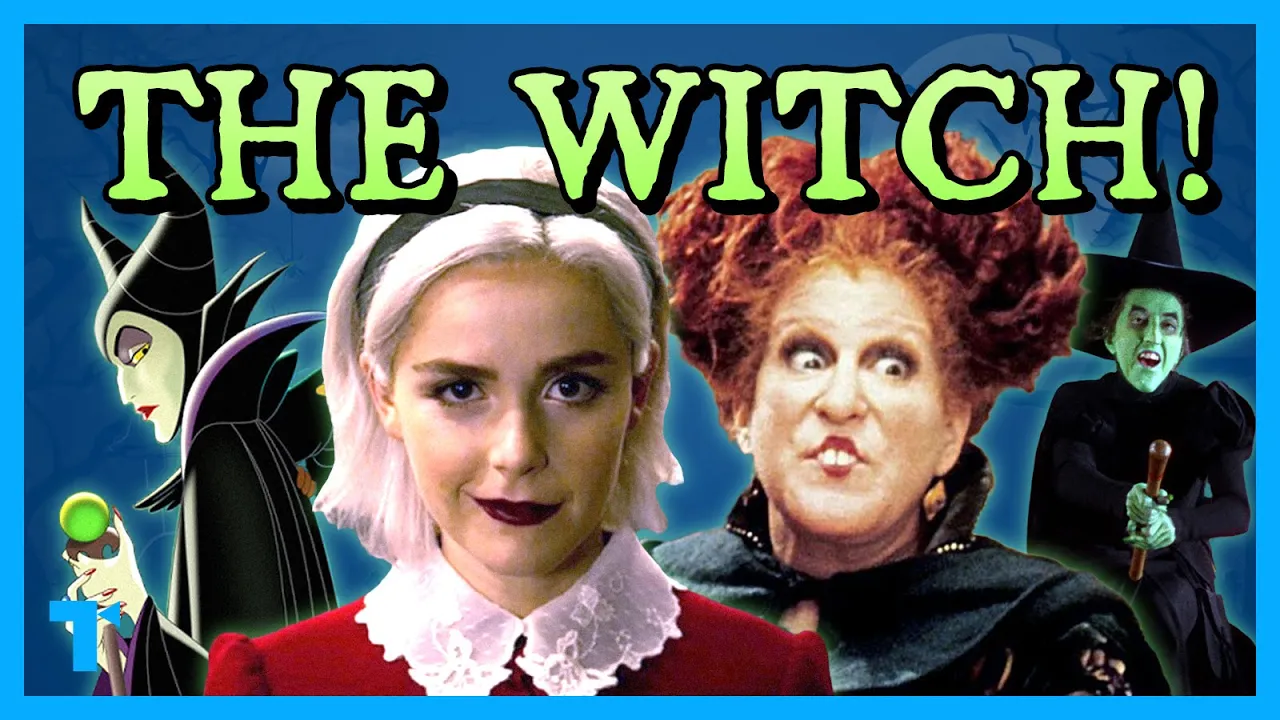
The Witch Trope, Explained
327.1K
The witch archetype represents society's fear of female power and transgression against traditional gender roles; historically, witches were persecuted vulnerable women who challenged patriarchal norms through their independence, knowledge, or sexuality, but modern portrayals increasingly reclaim the witch as a symbol of female empowerment and self-determination.
Click to watch →

Anna Göldi : le procès de la dernière sorcière d’Europe - Femmes coupables (2/8)
3.2K
The witch figure represents the ultimate symbol of female deviance from the path of righteousness. Between the two extreme archetypes of Eve (the sinner) and Mary (the virtuous), the witch occupies a space that is caricatural and unattainable. This figure allows society to interrogate its perceptions of femininity, the divergence from expected behavior, and the impact of 'the stray sheep' within a community. The work of historians on women condemned for witchcraft is fundamental because the history of witches is not just the history of a myth but also a part of our collective memory.
Click to watch →

Mona Chollet : "J'attends toujours de voir un beau personnage de sorcière positive sur les écrans"
21.2K
The sorcerer represents a woman who is openly evil without complex, joyfully transgressive, and anticonformist in her way of living. She embodies a woman freed from all dominations and limitations, serving as an ideal toward which to aspire. Feminist movements have reappropriated this figure throughout history, transforming the witch from a symbol of persecution into one of empowerment. This reclamation began with figures like Matilda Gage, who wrote the first feminist reading of witch hunts, and continues today through movements like WITCH, which uses the witch symbol to represent women fighting against patriarchal power structures.
Click to watch →

PODCAST ENOJADO s2 | #29 | Las Brujas y el Mundial
40.4K
The hosts explain that historically, women who practiced witchcraft were often persecuted and killed, with accusations of witchcraft sometimes being used to target women who did not conform to traditional social roles. They note that this persecution extended to women who had property without husbands or who lived independently. The hosts explain that this historical context helps explain why the figure of the witch has been reclaimed by modern feminism as a symbol of female power and resistance.
Click to watch →
Prerequisite Knowledge
- Concept 01An understanding of Confessional Poetry, its origins in the mid-20th century, and how it differs from traditional objective poetry.
- Concept 02Familiarity with the social and cultural expectations of women in 1950s and 1960s America, particularly regarding domesticity and mental health.
- Concept 03Basic literary analysis skills, specifically the concept of the poetic 'persona' versus the poet's actual biographical self.
- Concept 04Knowledge of the historical archetype of the witch as a symbol of female transgression, social alienation, and persecution.
Subsequent Learning
- Step 01A comparative study of Anne Sexton and Sylvia Plath, analyzing how both poets navigated themes of motherhood, depression, and female autonomy.
- Step 02An exploration of psychoanalytic literary theory to analyze how personal trauma and subconscious desires are manifested in confessional texts.
- Step 03Investigation of the evolution of feminist literature from the mid-20th century to contemporary spoken word and modern feminist poetry.
- Step 04A deep dive into Anne Sexton's Pulitzer Prize-winning collection 'Live or Die' to understand her broader thematic arcs of survival and mortality.
Portrait of a Witch
Lonely Outcast
Unconventional Identity
Cave Dwelling
Preparing Feasts
Misunderstood Being
Confronting Danger
Embracing Pain
Final Declaration
Portrait of a Witch
0:08Playing Section
- 1
A woman describes herself as a haunting witch.
- 2
She embraces her unsettling, otherworldly identity.
- 3
The poem sets a tone of dark self-acceptance.
The Critique of the 'Confessional' Label and Artistic Persona
While 'Her Kind' is widely celebrated as a foundational 'confessional' poem, a significant critical counterpoint challenges this strictly biographical framing. Literary theorists argue that labeling Sexton's work as 'confessional' reduces complex craftsmanship to mere autobiography or therapy. This perspective emphasizes that the speaker—the 'witch'—is a highly constructed, theatrical persona rather than a direct, unmediated expression of Sexton’s personal life. Conflating the poet with the speaker ignores the deliberate rhetorical strategies, myth-making, and formal control Sexton employed. Furthermore, some feminist critics argue that focusing solely on 'confessional' madness can romanticize female suffering and reinforce patriarchal stereotypes of hysteria, rather than presenting a politically agentic critique of gender roles. Thus, viewing the poem through the lens of conscious performance and artistic construction offers a vital alternative to purely autobiographical readings.
Deep Dive
A comparative study of Anne Sexton and Sylvia Plath, analyzing how both poets navigated themes of motherhood, depression, and female autonomy.

A HEFTY BOOK HAUL!
1.3K
Sylvia Plath (1932-1963) and Anne Sexton (1928-1974) were confessional poets known for their honest exploration of mental illness, depression, and personal struggle. Plath won the Pulitzer Prize for 'Crossing the Water' and is famous for 'The Bell Jar,' which chronicles a protagonist's psychological breakdown. Sexton, also a Pulitzer Prize winner, was friends with Plath and similarly took her own life. Both poets broke literary taboos by exposing personal pain, earning their place in the canon. The speaker discusses revisiting these works after years of avoiding poetry, noting her current interest in short stories and poetry.
Click to watch →

Entre-Visajes. Anne Sexton, al manicomio y casi de vuelta
228
This segment explores Anne Sexton's personal background including an absent mother, alcoholic father, and abusive husband, which deeply influenced her poetry. Her work organized thematically, with collections dedicated to people she blamed for her struggles. The collection 'Live to Die' debates between living with happiness versus dying because she could no longer bear her experiences. Her poem 'Betrothal with Angels' represents a rejection of traditional female identity, where the speaker decides to mix with Adam and Eve, representing both genders. The segment examines her relationship with Sylvia Plath, which was based on shared experiences of marital conflict, and how Plath's death led Sexton to write 'The Death of Sylvia,' claiming Plath 'stole' death from her. Her work manifests pain through violent, bloody cries of female figures who are naked and say 'this is happening to me and no one has spoken about it.'
Click to watch →

ENTRE VIE ET MORT : La poésie d'Anne Sexton
945
Anne Sexton (1928-1974) was an American confessional poet who began writing in 1957 after experiencing postpartum depression and psychiatric hospitalizations. Her poetry, particularly in the collection 'Mercies' (compiled by her daughter Linda), explores themes of depression, motherhood, sexuality, suicide, and femininity with remarkable artistic craftsmanship. Despite dealing with heavy personal subjects, her style is musical, imagistic, and surprisingly light and airy, using repetition, assonant rhymes, and dreamlike imagery to transform intimate experiences into carefully constructed poetic art. Her work is often compared to Sylvia Plath's, and 'Live or Die' (1966) is recommended as an excellent introduction to her poetry, presenting the central existential choice that haunted her life.
Click to watch →
Anne Sexton: Poet in America (1966 Documentary)
3.5K
Anne Sexton discusses her children, noting that they 'taught me how to be a mother because I hadn't had any motherings.' She describes writing a poem for her daughter at age 11-12, describing her as 'like a garden' and 'my lovely woman.' She describes her daughter as 'a miniature map of the world' and mentions 'market stalls of mushrooms and garlic buds all engorged' and 'the orchard next door where the berries are done and the apples are beginning to swell.' She describes waiting 'like a Target' and mentions the Roman belief that noon was 'the ghost hour.' She describes men bearing 'to the waist young Romans at noon where they belong with ladders and hammers.' She describes the concept that 'women are born twice' and explores the process of embryonic development through poetic imagery: 'the seed taking on its own life clapping the bedpost Bones from the pond thumbs and tombsterious eyes the awfully human head the heart jumping like a puppy the important lungs.' She describes herself as 'an old tree in the background' and her daughter as 'a white stone a good Stone as exceptional as laughter.'
Click to watch →

BRAOU M.A 1st Year English : Women's Voices
2.2K
Sylvia Plath and Anne Sexton are confessional poets who wrote in the late 1960s about personal experiences including pain, trauma, grief, and suffering. Anne Sexton began writing as a therapeutic exercise prescribed by her therapist. These poets wrote about subjects previously deemed inappropriate, such as addiction, mental health issues, and psychological trauma. Their poetry documents depression, unhappy relationships, and the desire for suicide, presenting these experiences openly. This differs fundamentally from T.S. Eliot's impersonal theory of art, which advocated for the artist's removal from reality.
Click to watch →
Deep Dive
An exploration of psychoanalytic literary theory to analyze how personal trauma and subconscious desires are manifested in confessional texts.
AN INTRODUCTION TO LITERARY THEORY: What is Literary Theory?
46.7K
Psychoanalytical theory in literature is based on Sigmund Freud's concepts of the ego, id, and subconscious mind. This theory searches for subconscious influences on characters' actions and comments, examining how innermost desires, feelings, fears, and motivations shape behavior. Since characters don't always come with complete backstories, psychoanalytical theorists also consider the author's psychological influences through their writing. In Pride and Prejudice, a psychoanalytical reading might examine Elizabeth Bennet's rejection of Mr. Collins' proposal as a subconscious assertion of independence, possibly reflecting her relationship with her detached father and her desire to reject her mother's embarrassing demeanor, revealing deeper psychological motivations beneath surface-level actions.
Click to watch →

Applying Psychoanalysis for Literary Theory
15K
Psychoanalytic literary criticism originates from Freud's theories of psychology, focusing on how unconscious desires, fears, needs, and conflicts shape human behavior and literature. According to Lois Tyson, repression does not eliminate painful experiences but causes unconscious behaviors that express conflicted feelings. Humans develop defense mechanisms including selective perception, denial, displacement, and projection to manage unconscious conflicts. Freud's structural model divides the psyche into the id (desires), ego (rational self), and superego (moral standards), which compete for dominance from infancy through adulthood. The Oedipus complex represents children's unconscious conflicts over parental attachment, manifesting as potential murderous rage against the father and desire to possess the mother. These unconscious elements influence all behaviors, including dreams and writing, making the author's own unconscious conflicts potentially visible in their work.
Click to watch →

Literary Criticism Ep 4: Psychological Approach
7.7K
Psychoanalytic criticism examines literary texts as manifestations of authors' unconscious desires and anxieties. Key principles include: literary works reflect the author's own unconsciousness through words, images, and symbols; characters serve as projections of the author's psyche; texts reveal unresolved emotions, childhood trauma, family dynamics, and sexual conflicts. Unlike formalism focusing on authorial intention, this approach explores repressed desires that surface unconsciously. Sigmund Freud's influence is central, emphasizing that unconscious sexual drives form the basis of all human behavior, with libido (sexual energy) as the prime motivating force behind decisions and actions.
Click to watch →

Psychoanalytic Criticism Explained - Main Figures & Key Concepts (Literary Criticism)
6.3K
Psychoanalytic literary criticism analyzes literature by examining the unconscious motivations behind characters' actions, using Freud's tripartite model of the psyche (id, ego, superego) and Lacan's concepts of the mirror stage and three orders (real, imaginary, symbolic) to interpret hidden desires, repressed fears, and symbolic meanings within texts.
Click to watch →
Secret Beyond the Door... (1947 Film-Noir) by Fritz Lang - where love meets fear
154.8K
According to psychoanalytic theory, traumatic experiences can become repressed into the unconscious mind, continuing to influence behavior without conscious awareness. The narrative illustrates this through Mark's inability to understand his own violent impulses toward Celia. Despite loving her, he experiences an overwhelming urge to kill her, which he cannot consciously explain. This demonstrates how unconscious psychological forces, formed from past traumas, can drive seemingly irrational behaviors. The narrative raises profound questions about whether individuals can be held responsible for actions driven by unconscious psychological patterns beyond their conscious control.
Click to watch →
Deep Dive
Investigation of the evolution of feminist literature from the mid-20th century to contemporary spoken word and modern feminist poetry.

Petrignani, Giovannini, Carmen Martín Gaite, Alba De Céspedes - Strane Coppie 2013 / 2 (prima parte)
1.1K
This segment traces the evolution of feminist literature from the early 20th century to contemporary times. Virginia Woolf's concept of 'a room of one's own' represents a foundational idea that women need both physical and interior space for creative freedom. The discussion explores how writers like Clarice Lispector expanded this concept by exploring the search for an interlocutor and the interiority of memory. The key insight is that feminist literature is not merely about reflecting a female perspective but about creating a new linguistic space that challenges dominant male language and allows women to express their unique experiences and consciousness.
Click to watch →
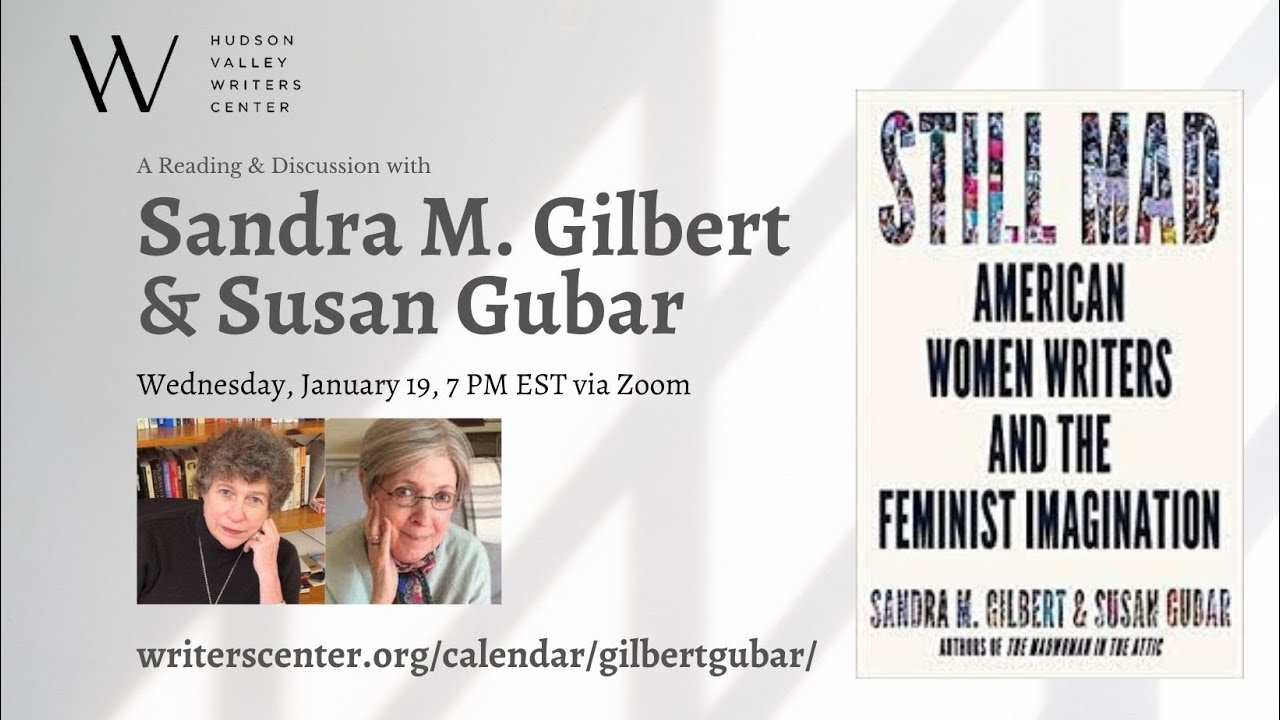
A Reading & Discussion with Sandra M. Gilbert & Susan Gubar
1.1K
Feminist literature has evolved through distinct waves, with each generation of women writers confronting similar systemic injustices while developing increasingly sophisticated literary forms to express their rage and resistance. Beginning with early 20th-century writers like Sylvia Plath, Adrienne Rich, and Audre Lorde who explored themes of domestic oppression and identity, the movement progressed through the second wave's theoretical foundations established by Gilbert and Gubar in 'The Madwoman in the Attic' (1979), to contemporary authors like Claudia Rankine, N.K. Jemisin, and Alison Bechdel who integrate intersectional perspectives on race, gender, and sexuality. Throughout this evolution, women writers have consistently used literary innovation—including dystopian and utopian narratives, graphic novels, and experimental poetry—to articulate their anger at persistent patriarchal structures while building upon the legacies of earlier feminist voices.
Click to watch →

Towards a Feminist Poetics
143
Feminist criticism emerged in the mid-19th century as a response to literature that portrayed women as second-class beings. First wave feminism (1840s-1880s) focused on women's suffrage and equality, with key figures like Mary Wollstonecraft and Lucy Stone advocating for women's right to vote. Second wave feminism (1960s-1980s) critiqued the universal womanhood concept, arguing that women from different social classes, races, and backgrounds face different problems. Third wave feminism (1980s-present) introduced intersectionality, developed by Kimberlé Crenshaw, which examines how multiple forms of oppression intersect. Judith Butler argued that gender is not an innate quality but a social performance. Elaine Showalter divided feminist literature into three phases: the Feminine Phase (1840-1880) saw women writers imitating male models; the Feminist Phase (1880-1920) saw women writers seeking distinct voices; the Female Phase (1920-present) established 'feminist fiction' as a distinct genre.
Click to watch →
Mes sorcières de la littérature
2.3K
This segment traces the evolution of feminist literature from the Middle Ages to contemporary times. Christine de Pisan (1364-1430) was the first woman in the late Middle Ages to earn a living through her writing, taking legal action to support her children after her husband's death. Her work 'The City of Ladies' honors famous women and critiques misogynist literature like the 'Roman de la Rose.' Carole Martinez, a contemporary French author and former literature professor, continues this tradition in 'La Terre qui penche,' where a 12-year-old girl learns that literacy is the source of power and independence for women. These works demonstrate how feminist literature has evolved from establishing women's existence to exploring their autonomy and self-determination.
Click to watch →
Lírica, memoria y narrativa que las mujeres aportan a la Historia
153
Contemporary feminist literature has developed thematic, stylistic, conceptual, and aesthetic connections to new forms of thinking enabled by feminism since the 19th century. The debate about women's writing as carriers of emotions liberated from dominant masculinity provided literary criticism with the purpose of highlighting character construction and writers' specific experiences. Writers like Isabel Hernández and Cecilia Sánchez explore how artistic expressions serve as antidotes to commercial knowledge transmission, which reproduces established and fixed knowledge. Their work reveals how knowledge carries accusations of hiding behind supposed neutrality a domination of gender, class, and colonialist phenotypes. A nation is understood as a weave of voices, texts, and languages that are rescued and languages that are oppressed because they can whisper differences. Both writers point to the urgency of returning to speak, to babble one's own experience, throwing a rope to those who wish to unlearn belonging and value images that emerge from shadows.
Click to watch →
Deep Dive
A deep dive into Anne Sexton's Pulitzer Prize-winning collection 'Live or Die' to understand her broader thematic arcs of survival and mortality.
ENTRE VIE ET MORT : La poésie d'Anne Sexton
945
Anne Sexton (1928-1974) was an American poet who began writing in 1957 after experiencing postpartum depression and psychiatric hospitalizations. Her psychiatrist advised her to write as exorcism and to express what others could not say. The 'Mercy' collection, selected by her daughter Linda, serves as a representative overview of her entire career. Her first collection 'To Bed Llam and Part Way Back' (1960) explores her complex relationship with motherhood, including her abortion and leaving her daughter with a foster family. The poem 'Herind' introduces the witch motif, representing her complicated relationship with femininity. She expressed feeling a distance from the female condition and even from the concept of gender itself, viewing gender as artificial and cultural rather than naturally anchored in the human spirit. In 'The Double Image,' she explores whether she truly feels like a daughter or if this identity is imposed by society. 'All My Pretty Woes' (1962) focuses on her parents' death and the beginning of her religious engagement. 'In the Deep Museum' explores the experience of being between life and death. 'Live or Die' (1966) marks her return to psychiatric hospitalization and explores themes of incest, her desire for death, and her addictions. The title presents the central existential choice that haunted her life.
Click to watch →

A reading of Anne Sexton's "For the Year of the Insane"
532
In this poem from her Pulitzer Prize-winning collection 'Live or Die' (1966), Anne Sexton uses confessional poetry to explore the intersection of mental illness and spiritual seeking, depicting a speaker who, despite feeling 'the unbeliever' and 'ugly submerged in my own past and my own madness,' engages with religious imagery (Mary, the rosary, communion) as a means of navigating psychological crisis and finding connection in silence.
Click to watch →

#podcast | Anne Sexton | Escritoras | Episodio 24
1.2K
Anne Sexton (1928-1974) was a pioneering American confessional poet who challenged literary conventions by writing openly about taboo subjects like menstruation, abortion, and mental illness, using her poetry as both a therapeutic tool and a means of artistic rebellion; her work, particularly the Pulitzer Prize-winning 'Live or Die' (1967), explores the fundamental tension between life and death, with her friend Maxine Kumin describing her legacy as 'the art of not dying from the truth,' and her final poem 'Letter of Love Written in a Burning Building' (1974) exemplifies her direct, emotionally raw approach to poetry that prioritizes verbs and sensory experience over adjectives.
Click to watch →
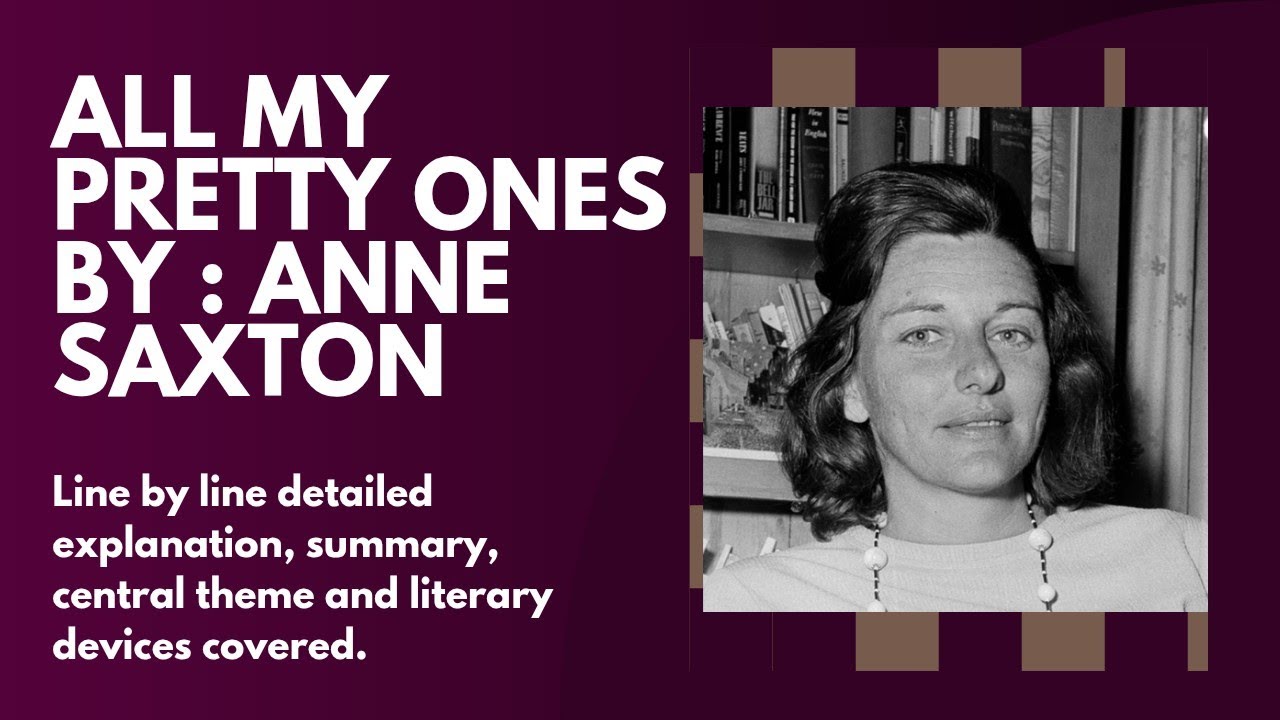
All My Pretty Ones by Anne Sexton – A Deep Dive into Loss & Memory . Detailed explanation.
968
Anne Sexton (1928-1974) was an American confessional poet who won the Pulitzer Prize in 1967 for 'Live or Die'. Confessional poetry emphasizes personal, autobiographical content. The poem 'All My Pretty Ones Are Dead' references Shakespeare's Macbeth, where Macbeth laments his lost children. The title symbolizes the speaker's grief over losing both parents—her father Ralph Churchill and mother Mary Grace Staples. The poem explores themes of grief, memory, loss, and reconciliation, examining the speaker's complicated relationship with her father, including his alcoholism, failed dreams, and financial struggles. Literary devices include personification ('bad luck rides apart'), euphemism ('cold slumber' for death), and metaphor ('bailing it's stone'). The poem symbolizes both literal and emotional processes of coming to terms with her father's life and death.
Click to watch →
Anne Sexton: Poet in America (1966 Documentary)
3.5K
Anne Sexton describes a transformative experience where 'life opened inside me like an egg' and she 'found the answer.' She describes the sun as 'a purifier' and 'solid' and 'an answer.' She describes 'lovers sprouting in the yard like celery stalks' and 'a husband straight as a redwood' and 'two daughters two sea urchins picking roses off my hackles.' She describes herself as 'an empress' and notes that 'we're an apron my typewriter writes it didn't break the way it warned.' She describes herself as 'even crazy I'm as nice as a chocolate bar' and notes that 'even with the witch's gymnastics they trust my incalcable city my corruptable bed.' She describes her children as 'the small and the Sun the smart one rolling in my arms' and describes 'the eight Dalmatians we didn't drown despite the warnings the abort the destroy despite the pails of water that waited to drown them.' She describes the puppies 'each one had first blowing bubbles the color of cataract blue and fumbling for the tiny tits' and notes that 'each like a birch tree.' She describes her promise to 'love more if they come' and notes that 'in spite of Cruelty and the stuffed railroad cars for the ovens I am not what I expected not an Eichmann.' She describes the poison 'just didn't take' and concludes with 'I say live live because of the Sun the dream the excitable gift.'
Click to watch →
Portrait of a Witch
Lonely Outcast
Unconventional Identity
Cave Dwelling
Preparing Feasts
Misunderstood Being
Confronting Danger
Embracing Pain
Final Declaration
Portrait of a Witch
0:08- 1
A woman describes herself as a haunting witch.
- 2
She embraces her unsettling, otherworldly identity.
- 3
The poem sets a tone of dark self-acceptance.
The Critique of the 'Confessional' Label and Artistic Persona
While 'Her Kind' is widely celebrated as a foundational 'confessional' poem, a significant critical counterpoint challenges this strictly biographical framing. Literary theorists argue that labeling Sexton's work as 'confessional' reduces complex craftsmanship to mere autobiography or therapy. This perspective emphasizes that the speaker—the 'witch'—is a highly constructed, theatrical persona rather than a direct, unmediated expression of Sexton’s personal life. Conflating the poet with the speaker ignores the deliberate rhetorical strategies, myth-making, and formal control Sexton employed. Furthermore, some feminist critics argue that focusing solely on 'confessional' madness can romanticize female suffering and reinforce patriarchal stereotypes of hysteria, rather than presenting a politically agentic critique of gender roles. Thus, viewing the poem through the lens of conscious performance and artistic construction offers a vital alternative to purely autobiographical readings.
An understanding of Confessional Poetry, its origins in the mid-20th century, and how it differs from traditional objective poetry.
Familiarity with the social and cultural expectations of women in 1950s and 1960s America, particularly regarding domesticity and mental health.
Basic literary analysis skills, specifically the concept of the poetic 'persona' versus the poet's actual biographical self.
Knowledge of the historical archetype of the witch as a symbol of female transgression, social alienation, and persecution.
A comparative study of Anne Sexton and Sylvia Plath, analyzing how both poets navigated themes of motherhood, depression, and female autonomy.
An exploration of psychoanalytic literary theory to analyze how personal trauma and subconscious desires are manifested in confessional texts.
Investigation of the evolution of feminist literature from the mid-20th century to contemporary spoken word and modern feminist poetry.
A deep dive into Anne Sexton's Pulitzer Prize-winning collection 'Live or Die' to understand her broader thematic arcs of survival and mortality.
22.9K views344likes1:38@PoetAnneSextonOriginal Release: 2012-06-01
[Music] I have gone out a possessed Witch Haunting the black Air braver at night dreaming evil I have done my hitch over the plain houses light by light lonely thing 12 fingered out of mind a woman like that is not not a woman quite I have been her kind I have found the warm caves in the woods filled them with Skillets carving shells closets silks innumerable Goods fix the suppers for the worms and the elves whining rearranging the disalarm a woman like that is misunderstood I have been her kind I have written in your cart driver waved my nude arms at Villages going by learning the last bright Roots Survivor Where Your Flames still bite my thigh and my ribs crack where your wheels wind a woman like that is not ashamed to die I have been her kind
Up Next

11:56
Anne Sexton Reads Her Poems: Housewife & More (1966)
@betapicts
19.2K views•2013-09-14

13:43
Formalism in Literary Criticism: An Academic Lecture Overview
@mattalberhasky9952
39.1K views•2015-08-05

6:08
Point of View in Fiction: First Person vs. Third Person
@magicalthriftyteacher
153.8K views•2014-03-31

15:25
1984: Orwell's Dystopian World and the Mechanisms of Totalitarianism
@AlternateHistoryHub
7M views•2017-03-04
Related Study Plans & Knowledge Roadmaps
Structured learning paths in Literature
literature
Graphic Memoirs: Visual Art, Trauma & History
01Foundations of Sequential Art and Visual Language
02Autographics and Processing Historical Trauma
03Visualizing Personal Trauma, Grief, and Graphic Medicine
+ 2 more learning modules
14h5 modules
Explore Roadmap
literature
Campus Novels: Evolution, Themes & Critique
01Introduction to the Campus Novel Genre
02Mid-Century Satire and the Post-War Academy
03Dark Academia and the Critique of Privilege
+ 2 more learning modules
14h5 modules
Explore Roadmap
literature
Theater of the Absurd: Philosophy & Plays
01Postwar Existentialism & Historical Roots
02Dismantling Narrative: Esslin & Absurdist Conventions
03Samuel Beckett and Tragicomic Existentialism
+ 2 more learning modules
12h5 modules
Explore Roadmap
literature
Revenge Tragedy: Justice, Madness & State
01Foundations of Early Modern English Theatre
02Anatomy of Revenge: Structural Conventions
03Psychological Complexity: Madness and Melancholy
+ 2 more learning modules
15h5 modules
Explore Roadmap