






















African-American English (AAE), also known as African-American Vernacular English or Black English, is a complete and distinct sociolect with its own sophisticated grammatical rules and pronunciation patterns, not a deficient form of English; it emerged from the language contact situation of enslaved Africans brought to America in 1619, who developed this dialect through communication needs despite being prohibited from reading or writing, and contrary to common misconceptions, AAE speakers are highly aware of their language's rules and use features like negative concord, zero copula, and specific verb conjugations that actually provide more temporal precision than mainstream American English.
African-American English: Myths vs. Linguistic Reality
Added:The distinction between descriptive linguistics (how language is actually used) and prescriptive grammar (arbitrary rules about how language 'should' be used).
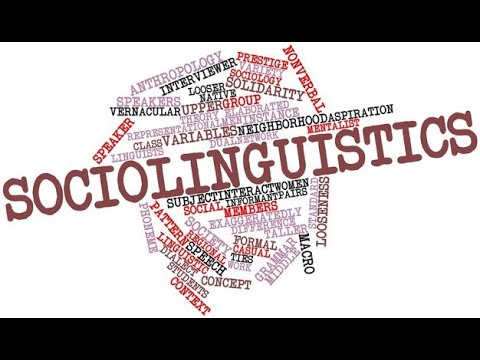
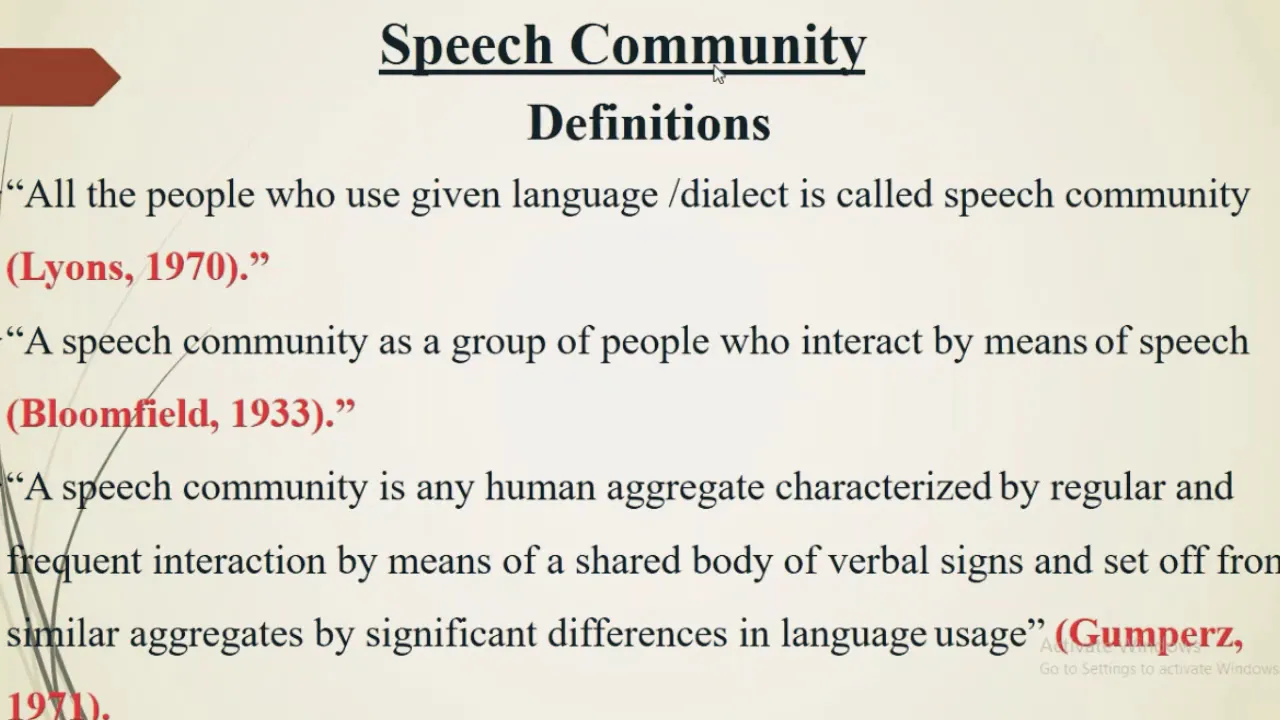
Basic sociolinguistic concepts, specifically how dialects and sociolects develop and function within distinct speech communities.
The understanding that all natural language varieties are rule-governed, systematic, and structurally complete, regardless of their social prestige.
Fundamental concepts of language contact, including how pidgins and creoles form when different language speakers interact.
The mechanics of code-switching and style-shifting, and how speakers navigate bilingual or bidialectal social environments.
The role of AAE in the American educational and legal systems, including landmark events like the 1979 Ann Arbor decision and the 1996 Oakland Ebonics controversy.
The ongoing linguistic debate regarding the origins of AAE, specifically comparing the Anglicist/Dialectologist hypothesis with the Creolist hypothesis.
The sociolinguistic impact of the appropriation and commodification of AAE in modern media, internet slang (African American Vernacular English on social media), and global pop culture.
768.5K views34.7Klikes11:40Original Release: 2021-06-16
- Bae, squad, fleek, basic, no cap, bet, yaaaaas, turn up, spilling tea, got receipts, keep it 100, finesse.
These are just a few terms and phrases that originated in black communities And have become popularized-- Some might say co-opted--by mainstream American culture, but this trend predates the internet by decades.
Americans have long embraced contributions to popular language from African-Americans, arguably more than they've been willing to embrace the people themselves.
This cultural dissonance is just one part of the long complicated history of African-American English.
And to unpack it, I'm joined by sociolinguist and AAE researcher, Dr. Rachel Elizabeth Weissler.
- AAE can go by several different names: African-American Language, African-American Vernacular English, and Black English.
"Ebonics" was coined in 1973 by African-American psychologist Robert Williams.
But since then, it has been co-opted by white speakers as a derogatory term and thus is not used by language researchers.
Despite the Internet's obsession with slang, AAE is a lot more than a collection of colloquialisms.
It is a complete and distinct sociolect, a dialect created by social rather than regional boundaries.
It is perhaps one of the most culturally impactful varieties of English on earth, but also the most misunderstood.
- Other words.
- In 1619, the English privateer ship, white lion landed at Point Comfort in Virginia.
Onboard were 20 enslaved Africans who were traded for supplies.
This transaction is of great historical and linguistic significance, because it marks the beginning of slavery in British colonial America, and the beginning of African-American English.
- The millions of people kidnapped from Africa and forced into slavery in North America came from more than 45 distinct ethnic groups and spoke many different languages.
In most cases, they couldn't communicate with each other or their captors, but communication is necessary for survival.
And in this language contact situation, the enslaved people were forced to learn the language of their captors, made all the more difficult by the fact that they were not allowed to read or write.
In adopting English, heritage languages were slowly lost, though some words did manage to survive in our lexicon to this day, such as yam, banjo and okra.
- There are several theories about the foundations of AAE.
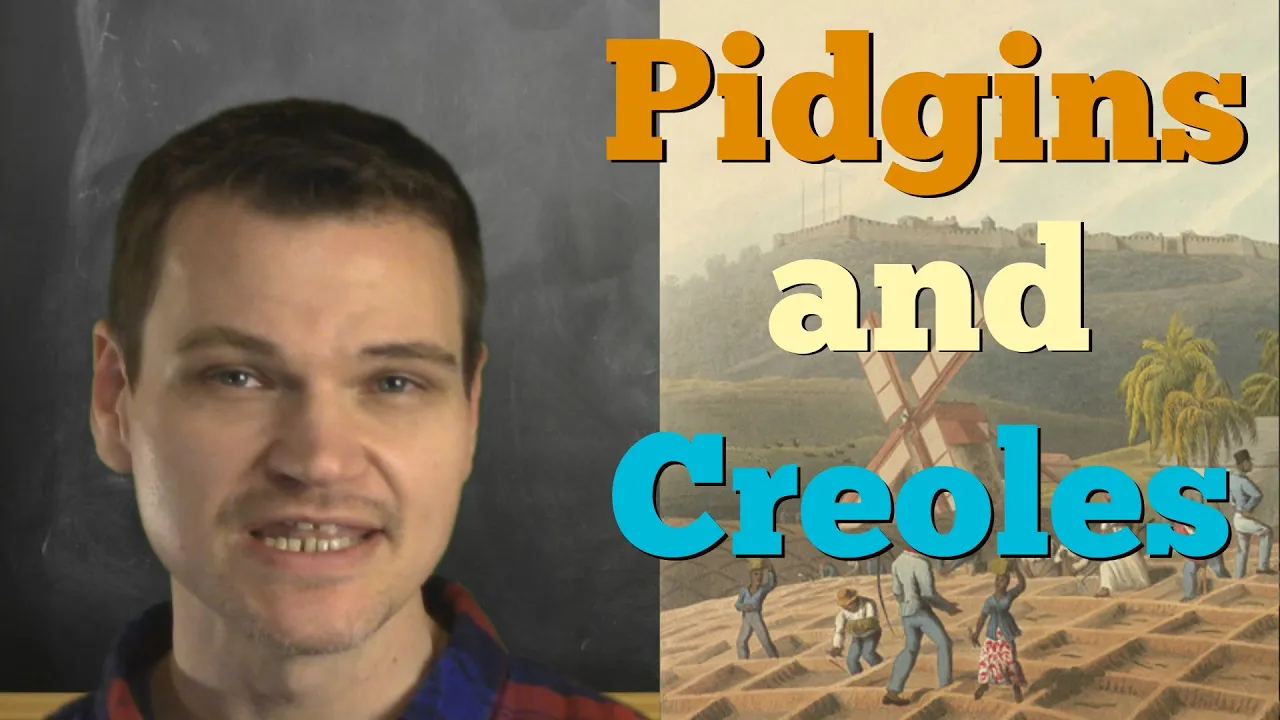
Perhaps it began as a pidgin, a hastily developed form of communication between groups that don't share a common tongue, or maybe it was the result of English words being dropped into African grammar systems.
But the most popular theory is that it grew out of the English dialect spoken by white rural southerners of the time.
In this region, slavery and then segregation kept black and white community separated creating an environment favorable to maintaining distinct varieties of English.
In the 20th century, millions of African-American seeking opportunities and fleeing racial persecution relocated to large metropolitan areas in the north known as The Great Migration, which is why today AAE is associated with urban areas.
There is a glaring misconception that AAE is a wrong or deficient version of what people call Mainstream American English or Standardized American English, but that isn't the case at all.
And when it comes to language, views about right and wrong are often forms of social prejudice.
AAE has its own rules of grammar, usage and pronunciation that are as elegant and consistent as any other dialect.
And contrary to negative stereotypes, speakers of AAE are not careless with language.
Like all people, they're very aware of the rules of their native dialect and instantly know when they're broken or misused.
- Are you sure that you wanna get turned with your girls this weekend?
- I promised them a free trip and it's turnt with a T - No matter what kind of English you speak, you're going to sound different if you're from New York City, Atlanta, or Philadelphia, and the regional phonetic variation in AAE reflects that.
However, there are some common phonological features.
TH stopping, where a D sound replaces a TH, so that this and that might be dis and dat.
TH can also be replaced by an F or a V, so nothing and smooth might be noffing and smoov.
Consonant cluster reduction, where multiple continents at the end of a word are simplified into one.
So for example, lift and test might sound like lif and tes.
The common pronunciation of ask as aks is an example of metathesis in which two speech sounds are allowed in flexible order.
Many English words were derived through metathesis.
For example, bird and horse used to be bridd and hros.
Several others are currently undergoing it, like nucular, introduce and prescription.
- In addition to sound features, AAE often differs from other types of American English in grammar, which is fairly constant across the country.
One of the most maligned features of AAE's grammar is the so-called double negative.
As in, I ain't see nobody, but this disparagement reflects a misunderstanding of how language works.
Language isn't like math, where two negatives cancel each other out.
In many languages like Spanish, Greek and Hebrew, a second negative serves to confirm or amplify the negation known as negative concord.
For instance, the Spanish sentence "No vi a nadie," literally translates to "I didn't see nobody."
Even standardized American English employs a bit of negative Concord.
If you wanna make this sentence negative, you have to adjust the verb and the object.
The "anybody" serves the same function as "nobody," to remind the listener that the statement is negative.
- Some other grammatical features of AAE include: possessive S absence.
Instead of "the man's hat" or "my mama's car," you'd have "the man hat" or "my mama car."
Question word order.
Instead of "why aren't they going?"
You might hear "why they ain't going."
"Finna", which etymologists trace back to the Southern phrase "fixing to" might replace "going to" or "gonna."
"I'm going to go to the store," might be "I'm finna go to the store."
Zero copula, the connecting verb "to be" can be removed from sentences where they would form a contraction.
So, "who is that" might become "who dat," and "she's my sister" might become "she my sister."
Other languages like Japanese and Russian also employs the zero copula.
For instance, "ona doma" literally translates to "she at home."
No S on third person singular.
MAE changes form only for third person singular verbs.
I run, you run, she runs, we run, they run, only one S in there.
AAE keeps all verb forms consistent and regular.
In many cases, AEs verb conjugation can actually achieve more nuance and precision than mainstream American English.
When I say "she is working," I generally mean one of two things, either she has a job or she is currently doing work right now.
In AAE, those are differentiated.
"She working" means that she is currently working at this moment, and "she be working" means that she works on a regular basis.
And the third option, "she been working."
She is working and has been for a while.
- Now, some of these features also occur in other varieties of English and not all of them are used by every speaker of AAE.
But taken together, they index AAE, which means they serve as a sign that points to a shared history and cultural identity.
Because of history is fraught with tension, discrimination and violence, it's not surprising that AAE is considered a controversial topic.
It is the most broadly studied variety of American English and has been the subject of many high profile court cases over issues like school instruction and linguistic profiling in employment and criminal justice.
Attitudes of stigma and language prejudice have forced many speakers of AAE to be bidialectal, able to speak both AAE and whatever's considered the mainstream norm of their region.
Alternating between two different dialects or languages or social linguistic practices is called "code switching."
It can occur casually, the way bilingual children of Spanish speaking parents will transition from English to Spanish, back to English in one sentence.
But it can also be socially mandated.
Say, if you speak in a formal register of Japanese with many honorifics when addressing your boss versus the more colloquial language you may use with your pals.
- Most speakers of AAE are adept at switching to MAE based on context and setting like a job interview or other professional situation.
- You wanna make some money here?
Use your white voice.
- My white voice.
- Hey, Mr. Kramer, this is Langston from Regal View.
- But this skill is not without its struggles.
Having to constantly scan social situations and adjust one speech patterns is a layer of extra mental effort that white speakers don't have to worry about.
And speakers of AAE may face blow back from their own communities when code switching, being accused of trying to sound white.
- You never wanna be the whitest sounding black guy in a room.
- There's also the question of why they should have to change the way they speak at all just to make others more comfortable.
It can be frustrating to know that despite the linguistic evidence, many Americans still hear AAE as an inferior or wrong version of mainstream American English.
- And yet ironically, AAE is also one of the most copied and co-opted English dialects.
Some non-black speakers might use features of the dialect to show affiliation with African-Americans or with traits they might stereotypically associate with them, like confidence, coolness or toughness.
♪ Yeah, I keep my TEC-9 on my waist cause I'm a gangster ♪ - I know they don't mean any harm, but they don't realize how ignorant it is.
Trying to have that black voice that some whites try to do, but they really don't do well.
- There are people like myself who do know what they're saying and could do it.
I think, I honestly think I could.
(audience laughing) - Both American pop culture and youth culture rely on and are shaped by black cultural practices, products and behaviors, including music and language.
As these cultural elements radiate outward from urban centers to the rest of the world, slang expressions that originated in AAE are constantly being adopted by other groups, groups that don't necessarily understand the background, context and appropriate usage, but enjoy the social clout they bring.
- AAE is a part of the cultural inheritance of many African-Americans.
And the strong sense of cultural identity is also one of oppositionality, of embracing the contrast with other groups and broader white society.
The history that shaped AAE has more than its fair share of tragedy and violence, the societal effects of which we are still living with today.
But the negative associations that many people attach to AAE cause us to overlook the triumphs, perseverance, and creativity that gave African-American culture an outsized role on the world stage.
Language, it turns out is more a reflection of the overcoming of obstacles than the obstacles themselves.
- Do what, what are you talking?
- I think I could write for you in your vernacular because of- - But what is my vernacular?
- Well, because I hang out with- - Yeah, but what is my vernacular?
What are you talking about?
- Well, like this hog is all on my yoke.
- Right, Dick, what are you talking about?
(audience laughs)
Up Next

36:50
Sociolinguistics: Study of Language Variation and Social Identity
@MartinHilpert
175.8K views•2014-01-10
36:52
Constraint Interaction in Optimality Theory: Epenthesis & Deletion
@Vidyamitra
180 views•2018-08-20

8:59
Forensic Linguistics: How Language Solves Crimes | PBS
@pbsstoried
1M views•2024-01-25

21:32
Accent Expert Explains U.S. Regional Dialects | Part 1
@WIRED
9.3M views•2021-01-21
Related Study Plans & Knowledge Roadmaps
Structured learning paths in Linguistics
linguistics
Optimality Theory: Tableaux & Constraints
01Phonological Basics: Sounds, Syllables & Rules
02Foundations of Optimality Theory: GEN, CON, and EVAL
03The Constraint Inventory: Markedness vs. Faithfulness
+ 2 more learning modules
15h5 modules
Explore Roadmap
linguistics
Morphosyntactic Alignment: S, A & P Systems
01Foundations of Syntax: Transitivity and Arguments
02The Linguistic Variables: Mapping S, A, and P
03Nominative-Accusative Alignment
+ 3 more learning modules
12h6 modules
Explore Roadmap
linguistics
Analyzing Sign Language: Phonology & Syntax
01Foundations of Sign Language Linguistics
02Phonology: The Five Parameters of a Sign
03Morphology: Word Formation and Classifiers
+ 2 more learning modules
14h5 modules
Explore Roadmap
linguistics
Pragmatics: Speech Acts, Grice & Politeness
01Introduction to Pragmatics: Meaning in Context
02Grice’s Cooperative Principle & Implicature
03Speech Act Theory
+ 2 more learning modules
14h5 modules
Explore Roadmap