













![Мы. Об антиутопии Евгения Замятина (Это фантастика) [RocketMan]](https://i.ytimg.com/vi/-Ue0-F5qlDk/maxresdefault.jpg)



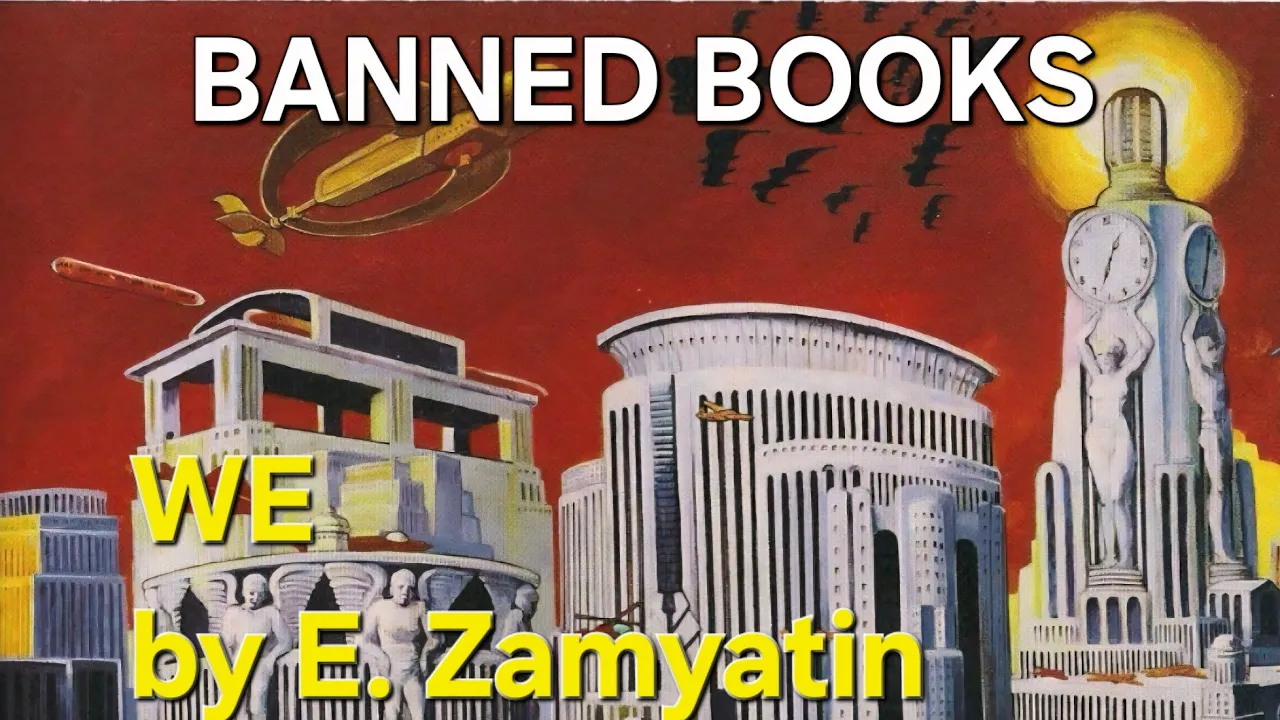

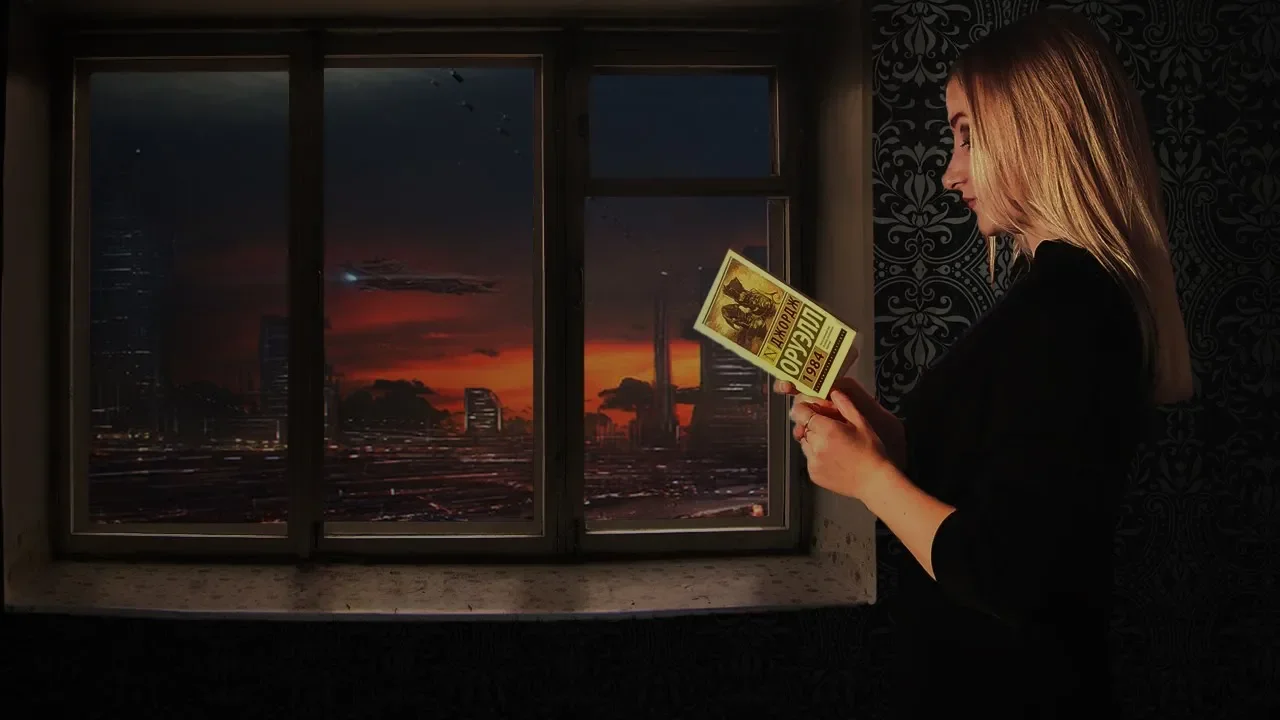
George Orwell's 1984, published in 1949, was not an entirely original work but rather a significant evolution of Yevgeny Zamyatin's 1921 novel 'We,' which is widely considered the first modern dystopian novel; both works explore the theme of individual versus the state through similar mechanisms including surveillance, loss of identity, linguistic control, and the suppression of love and desire, with Orwell transforming Zamyatin's abstract philosophical framework into a more grounded political critique by incorporating real-world totalitarian practices from Stalinist Russia and Nazi Germany.
How Yevgeny Zamyatin's 'We' Inspired George Orwell's '1984'
Added:A foundational understanding of the dystopian literary genre, including key characteristics like state surveillance, loss of individuality, and totalitarian control.
Familiarity with George Orwell's '1984', specifically its central themes of Big Brother, doublethink, and the suppression of free will.
Historical context of the early Soviet Union (post-1917 Bolshevik Revolution) and the rise of industrialization, which directly influenced Yevgeny Zamyatin's critique of the collective state.
The concept of literary intertextuality—how authors adapt, critique, and build upon the narrative frameworks of earlier writers.
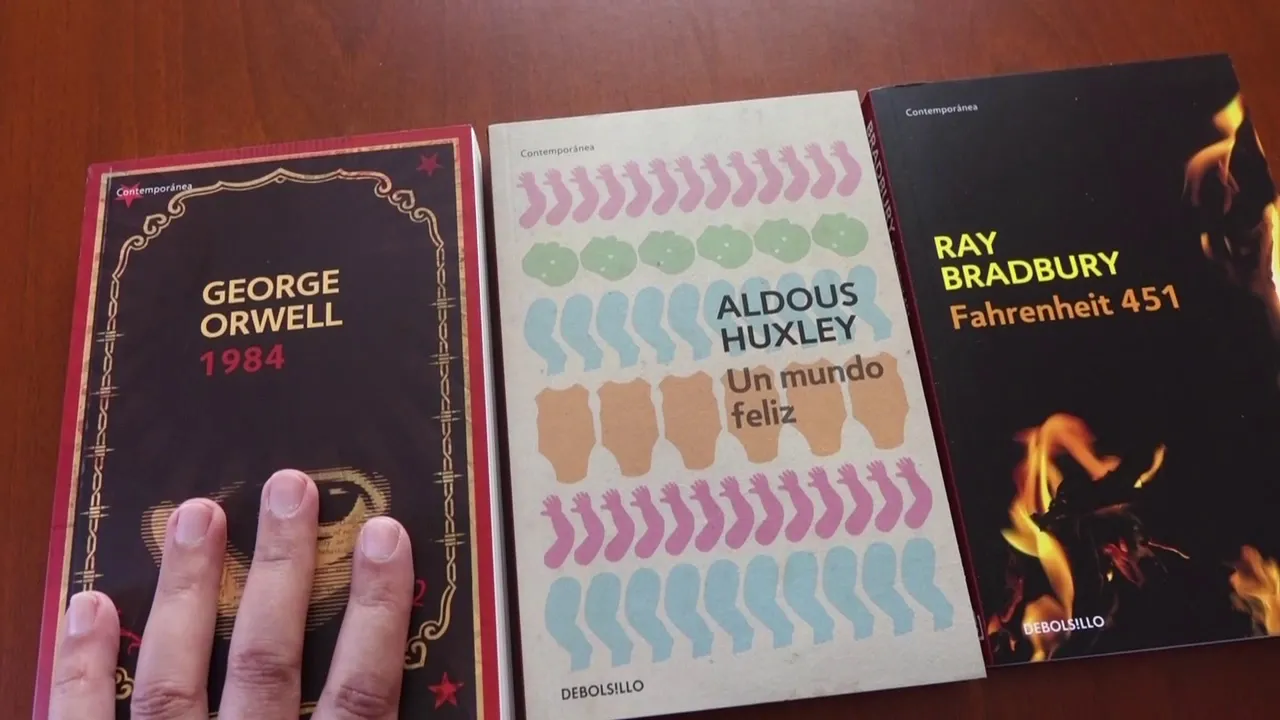
A comparative study of the 'Big Three' early twentieth-century dystopias: Zamyatin's 'We', Orwell's '1984', and Aldous Huxley's 'Brave New World'.
Analysis of how Zamyatin's mathematical and hyper-rational 'One State' compares to Orwell's fear-driven 'Oceania' regarding methods of social control.
The history of literary censorship and 'samizdat' (covert self-publishing) culture in the Soviet Union, given that 'We' was the first novel officially banned by the Soviet Glavlit.
An exploration of modern technological dystopian themes, examining how algorithmic conformity and surveillance capitalism echo the predictions of Zamyatin and Orwell.
166.4K views11.2Klikes27:38Original Release: 2025-08-14
And why then do you think there is a last revolution?
There is no last revolution. Their number is infinite. The last one is a children's story. Children are afraid of the infinite. And it is necessary that children should not be frightened so that they may sleep through the night.
[Music] Hi guys, it's Quinn here. On this channel, I only talk about books that I like. Quinn's Ideas has never done a paid sponsorship. If you appreciate my content, consider hitting the like button and subscribing. Thanks so much guys.
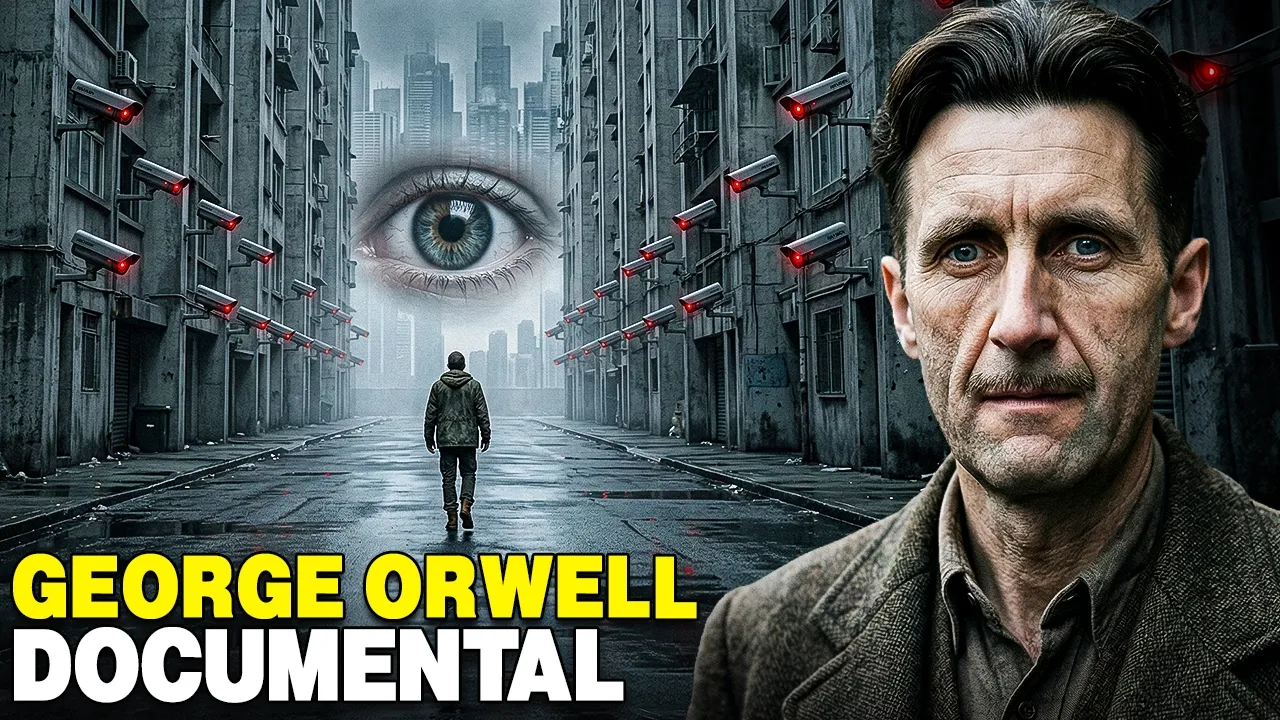
In 1949, George Orwell published one of the most enduring and chilling works of the 20th century, 1984. The book was written in the aftermath of World War II during a time when the world was reeling from unprecedented violence, mass propaganda, and the rise and fall of authoritarian regimes. Fascism had devastated Europe and Stalinism was casting a long shadow over the East. Orwell, having witnessed the manipulation of truth and the abuse of power firsthand during the Spanish Civil War and through his criticisms of the Soviet Union, wrote 1984 not just as a warning, but as a desperate cry against a future he feared was already beginning. By 1947, Orwell was living in near isolation on the remote island of Jura off the coast of Scotland. Battling the terminal effects of tuberculosis, he poured his remaining energy into crafting the novel. The bleakness of his personal circumstances infused the book with a sense of urgency and despair that's impossible to ignore. He wasn't writing from comfort or academic distance. He was writing from the edge, both politically and physically. The result was a novel that didn't just imagine a dystopian future. It felt like a final testament, a message in a bottle hurled from the edge of modern civilization.
At the time, the global political climate was shifting rapidly. The Cold War had just begun, and the world was becoming sharply divided between the capitalist West and the Communist East.
Orwell's fictional world of 1984 with its three superstates locked in endless war was a clear reflection of this new geopolitical reality. But unlike traditional science fiction of the era, Orwell wasn't interested in futuristic gadgets or alien civilizations, his vision of the future was one where language, truth, and memory were the battlegrounds and the casualties.
Science fiction during the 1940s was still largely relegated to pulp magazines and fringe literary circles.
Writers like Isaac Azimoff and Robert Heinland were laying the groundwork for the genre, but their stories often focused on space travel, robots, and the promise or peril of technology. Orwell, however, took a different path. He wasn't concerned with technology as much as ideology. Orwell's contribution was darker, more political, and far more immediate in its tone and subject matter. When 1984 was released, it was met with a mix of awe and apprehension.
Some critics found it too bleak, too paranoid, but many others saw it for what it was, a profoundly disturbing, but necessary vision of a future that felt disturbingly plausible. The novel quickly entered into the public imagination and terms like big brother and newsspeak and thought crime became a part of our political vocabulary. Orwell had not only expanded the boundaries of science fiction, he had also elevated it into the realm of serious literature and political critique. In the modern era, 1984 remains a cornerstone of dystopian fiction and political thought. often referenced whenever governments overreach, truth is distorted, or surveillance expands unchecked. And though Oro may not have thought of himself as a science fiction writer, the genre owes much to him. He showed that speculative fiction could be more than escapism. It could be a mirror held up to the darkest corners of our political and social instincts. Though it is arguably one of the most well-known and most influential science fiction books of all time, it was not the first of its kind. 1984 belonged to a growing subgenre of dystopian fiction alongside earlier works like Aldis Huxley's Brave New World and most importantly Yavghini Zamayatin's Wei.
Dystopian fiction emerged from the broader tradition of utopian literature.
But instead of imagining idealized societies, it turned its gaze towards cautionary visions of the future. Rooted in the social and political upheavalss of the 19th century and the early 20th century. Dystopian works often reflected anxieties about industrialization, the rise of mass production, and the loss of individuality in an increasingly mechanized world.
Some earlier examples would be Samuel Butler's Irwin, which was released in 1872, and of course HG Wells, The Time Machine, which was released in 1895.
These stories attempted to explore social critique through speculative settings. They were the kind of narratives that tried to balance this fascination with technological progress against the fears of its dehumanizing consequences. By the time we get to the 20th century, the devastation of World War I intensifies distrust in the promises of modernity. literature begins to interrogate not only the political systems of the time but also the psychological effects of living in controlled mechanized societies.
Here you have authors like Jack London in the Iron Hill 1908 preWorld War I but still relevant envisioning authoritarian regimes that dominate through a combination of political repression and economic control.
This period saw a huge growth in the interest in the intersection of science, governance and personal liberty. And as we all know, this is essentially the thematic convergence that would go on to define the modern dystopia.
And it was in this climate that what most people consider to be the first modern dystopian novel ever was formed.
When we talk about the origins of 1984, it's tempting to think of it as completely original, a prophetic vision conjured by Orwell alone. But the truth is more nuanced. George Orwell, though a literary giant in his own right, was a part of a lineage, a tradition of dystopian writers responding to political horrors of the 20th century.
And one name that looms particularly large in that lineage is Yvine Zamayatin.
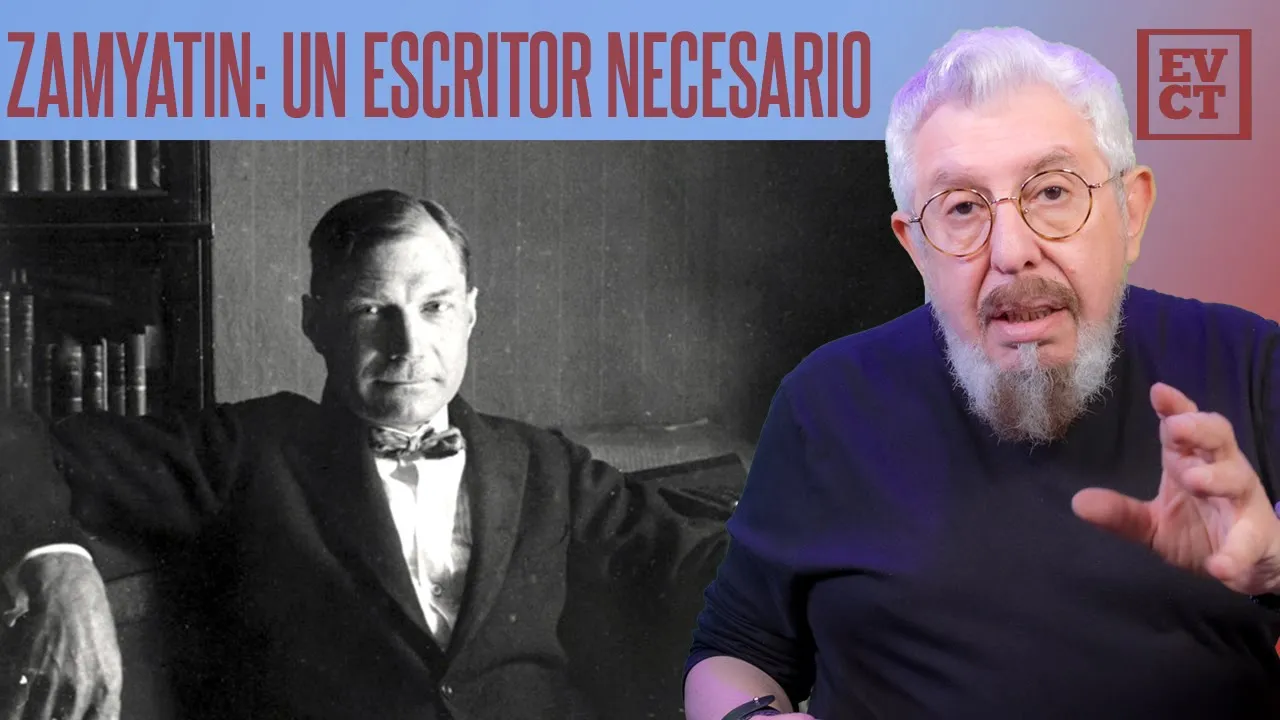
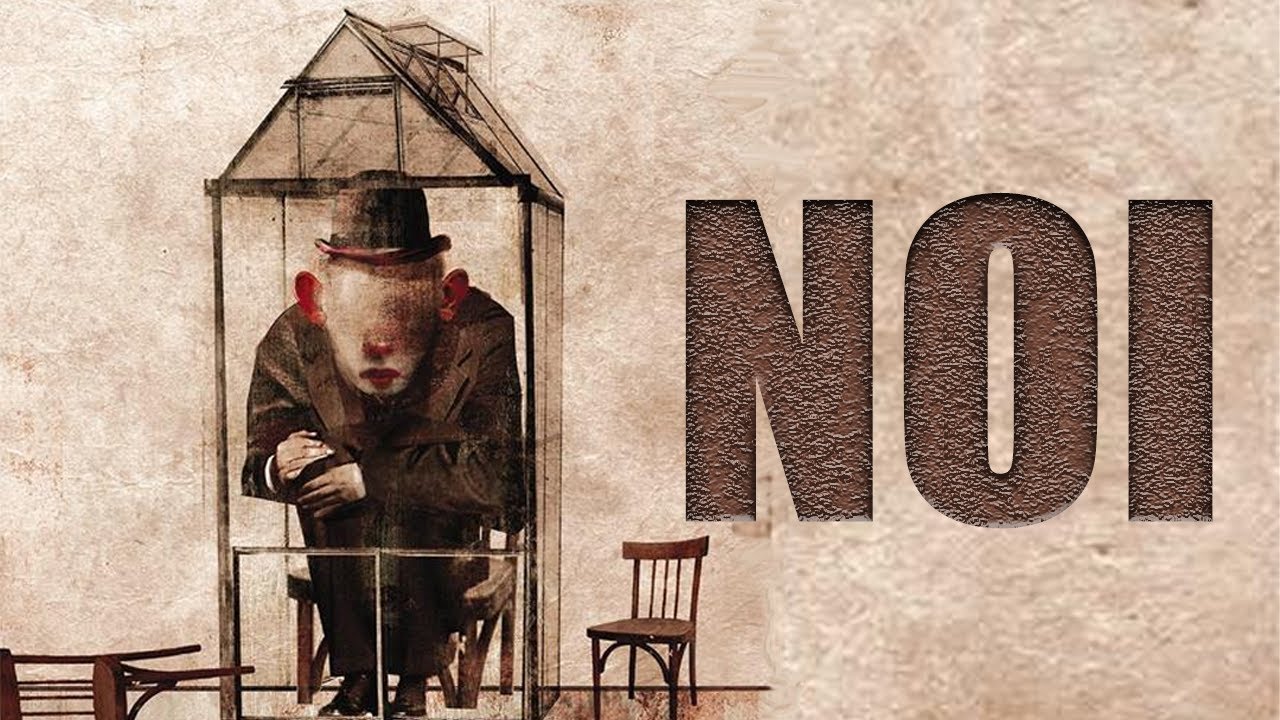
Zamayatin was a Russian engineer, a naval architect and a writer who in 1921 pinned a dystopian novel called Wii. It is widely considered the first modern dystopian novel. Wii was revolutionary in its vision of a future where the state exerts total control over the individual. While earlier speculative fiction such as HGL's the time machine or the world of the worlds imagined alternate futures, alien invasions or social evolution, they often did so through allegory or scientific curiosity. Zamayatin's work was different. Weii was a direct response to the rise of the Soviet Union and it turned speculative fiction into a political warning. It imagined a future where the pursuit of a perfect rational society leads not to paradise but to a dehumanizing nightmare. What truly makes we the first modern dystopia is its systematic portrayal of a mechanized society where logic and uniformity are enforced at the expense of freedom and emotion and imagination. Zamayatin introduced many of the tropes that would go on to define the genre. Constant surveillance, suppression of love and desire, rigid conformity, the rewriting of history, and a rebellion sparked by an individual awakening. In Wii, the one state is obsessed with mathematical perfection. People live in glass houses.
They have only numbers and not names, and they march in rhythmic unison under the watchful eye of the benefactor. The book blends political critique with a psychologically introspective narrative and it created the blueprint that dystopian writers would follow for the next century. Its influence is so foundational that without Wii, there likely would have been no 1984, or at least not the 1984 we know today. Wii's impact on Orwell is undeniable. In 1946, three years before 1984 came out, George Orwell actually wrote a review of Wii.
Orwell praised the novel and remarked that it was an interesting book and the first book to give a picture of a completely totalitarian state. That admission alone is strong evidence that Orwell had we in mind while writing 1984. But the similarities go far deeper than a passing comment in a book review.
Both Wii and 1984 are constructed around the same central premise, individual versus the state. In Wii, the one state is a totalitarian regime that has erased individuality through mathematics, surveillance, and strict routine. As I said earlier, citizens are referred to by numbers rather than names. D503 I3090.
This emphasizes the loss of personal identity. Orwell's 1984 employs a similar mechanism. The citizens of Oceanana are crushed under the weight of Big Brother, surveiled constantly and made to conform through language, control, torture, and propaganda. In both novels, the protagonist begins as a loyal servant of the regime, but becomes disillusioned after encountering love, desire, and personal emotion. D503 falls for the rebellious and mysterious I330, while Winston Smith in 1984 begins his awakening through his affair with Julia.
In both cases, love serves as the initial crack in the facade of state loyalty. Love is a dangerous human impulse that the regime must stamp out.
And that the thematic parallels absolutely do not end there. Zamayatin's one state enforces uniformity through what he called the table of hours, which was a rigid militarized schedule that dictated every moment of a citizen's day. Orwell translated this idea into 1984's 2-minute hate party rituals and constant indoctrination through telescreens.
The idea is essentially the same here. A state so powerful that it controls not just your actions but your time, your thoughts, and even your instincts.
Orwell's use of surveillance also obviously echoes Zamayatin. In we the one state is made of glass literally.
Every citizen lives in a transparent house. Privacy is a crime. Everyone must be visible at all times to the state's secret police.
Similarly, in 1984, the telescreens are a constant presence, always watching, always listening, monitoring every facial twitch, every whispered word.
They might even be able to read your thoughts. Both societies rely on surveillance as a weapon of psychological domination. One thing that's brought up over and over again when talking about 1984 is linguistic control and how it's used by the regime. Linguistic control is central in both books. In 1984, Orwell famously created Newspeak, a language that is designed to eliminate the possibility of rebellious thought. Now, we've talked about Wararf hypothesis before on this channel. The Wararf hypothesis, also known as the Sapier Warf hypothesis, proposes that the language a person speaks influences or even determines what they think and perceive in the world. For example, speakers of a language with multiple words for snow may be more attuned to subtle variations in snow types than speakers of languages with only one word. Zamayatin's Wii doesn't feature a constructed language exactly, but it does emphasize the degradation of individual expression through bureaucratic mechanized speech. D503, who narrates the novel, often speaks in abstract mathematical terms. His emotional world is filtered through logic, through geometry and equations until he begins to experience feelings that defy those categories. In we, one of the ways that the one state maintains its grip is by redefining the very meaning of happiness. In most cultures, happiness is associated with joy, with fulfillment, with love, desire, all the things that make us feel alive. But in the one state, those feelings are seen as threats. Desire is equated with suffering, and suffering must be eliminated for the sake of collective harmony. After undergoing the great operation which surgically removes imagination and emotion, the protagonist D503 becomes the perfect believer. He ends up rationalizing his new condition using the logic of the regime. A logic that recast emptiness as bliss.
Happiness. Well, desires are tortures, are they not? It is clear, therefore, that happiness is where there are no longer any desires. Not a single desire anymore. What an error, what an absurd prejudice it was, that formerly we would mark happiness with the sign plus. No, absolute happiness must be marked minus, divine minus.
What makes this so unsettling is that it's not just philosophical.
It's policy. This is the ideology that justifies surveillance, emotional sterilization, and even brain surgery to remove imagination. Zamayatin isn't celebrating this idea. He's warning us because a world where happiness is defined by the absence of desire is a world where no one is truly alive. This erosion of language and meaning obviously mirrors Orwell's concerns. In 1984, newsspeak, as we mentioned earlier, doesn't just simplify language, it actively shrinks it, removing words that might allow citizens to even conceptualize rebellion. The result is a kind of linguistic claustrophobia. You could say, a reality in which the regime controls even the tools of thought itself. The conclusion of Orwell's book is equally as disturbing as Zamatans, if not more so. Winston Smith, after brutal torture and re-education, finally learns to love Big Brother. The regime doesn't merely kill him. They convert him. Both endings speak to the same terrifying outcome. Not the death of the body, but the annihilation of the self. 40 years it had taken him to learn what kind of smile was hidden beneath the dark mustache. Oh, cruel, needless misunderstanding.
Oh, stubborn, self-willed exile from the loving breast. Two jinscented tears trickled down the sides of his nose. But it was all right. Everything was all right. The struggle was finished. He had won the victory over himself. He loved big brother.
>> Even the structure of 1984 follows a similar rhythm to Wii. Both novels are told from the first person perspective of a regime loyalist whose journal or writing becomes the key to their transformation. And both authors use this narrative device to explore the psychological dimensions of totalitarianism from initial confusion to awakening to betrayal and eventual defeat. But perhaps the most important parallel is the emotional trajectory of the reader. Both we and 1984 leave us with this deep sense of helplessness.
In neither book is the regime overthrown.
The revolution fails. The individual is broken. These are not heroic stories.
These are warnings. In this way, Orwell honored Zamayatin's vision by amplifying its core message that totalitarianism doesn't just dominate political life. It devours truth. It devours love. It devours identity. It devours hope.
What's also worth noting is the historical link between the two authors.
Zamayatin was a dissident in Soviet Russia. He was censored and eventually exiled for his refusal to conform.
Orwell through his writing from democratic Britain shared his spirit of resistance. He was fiercely critical of the ideological orthodoxy whether fascist or communist. Both writers believe that the greatest threat to human freedom came not just from bullets and prisons but from language conformity and the rewriting of reality.
Ironically, Wii was banned in the Soviet Union for decades, only circulating in underground editions, while 1984 became required reading in the West. But both novels speak to the same fear that we might build a future so efficient, so rational, so perfectly controlled that we forget what it means to be human.
What's fascinating is how Orwell transformed Zamayatin's framework into something uniquely his own. While Wii is abstract and dreamlike and at times surreal, 1984 has this brutal groundedness.
Orwell stripped the philosophical metaphors of Wii and replaced them with realworld political systems. And a lot of it was drawn directly from the Stalin purges or Hitler's propaganda machine or the British colonial surveillance tactics. Now, over the years, critics have debated the extent to which 1984 is derivative of Wii. And while Orwell undoubtedly borrowed ideas, he also transcended them. 1984 is not a copy, it's an evolution. Whereas Zamayatin provided the sketch, Orwell built the structure. Whereas Zamayatin hinted at ideological critique, Orwell named names. And where we explored the philosophical horror of utopia gone wrong, 1984 showed us how real world governments could make that nightmare into flesh. In the end, though 1984 may be the more widely recognized work, it is we that laid the critical foundation for modern dystopian fiction.
Zamayatin's vision of a regimeated mechanized society where the human spirit is subjugated to mathematical order and absolute control was not only ahead of its time but revolutionary in its direct challenge to authoritarianism. Through wein transform speculative fiction into a political act. He was attempting to expose the soulcrushing consequences of a totalitarian rule at a time when such criticism was actually life-threatening.
His novel introduced the core motifs of surveillance, loss of identity, and forced conformity, state controlled love, and thought that would shape this genre basically forever. Without Zamatan, Orwell may have never conceived his own terrifying portrait of tyranny.
But Wii's impact goes far beyond a single book. In a way, it sparked a literary tradition of resistance, proving that fiction can absolutely serve as both a mirror and a warning.
When we trace the roots of 1984, we go back to Wii, not just as a footnote, but as the origin point of this genre that continues to ask the most urgent question of all. What happens to humanity when freedom is no longer allowed to exist?
Thanks guys so much for watching. Have you read either of these novels? And what do you think about them? And how do you think it applies to the modern world that we live in right now? Make sure you subscribe for more videos on science fiction books.
And it is now time for Patreon questions. So to start things off, we got some really succinct great thoughts from Benjamin.
And I totally agree. Octavia Butler really does capture that slow unraveling of society better than almost anyone.
Like you said, it's not some big dramatic end of the world event. It's just people being people and that is enough to bring everything down. And that's what makes Parable of the Sewer and Parable of Talents feel so real and unsettling. Also, I love your point about I totally survived this fantasy because I think that's how a lot of us start there as kids. Like the best dystopian stories sneak up on you with that like deeper critique. They make the world feel strange and different but at the same time uncomfortably uh familiar.
So that is exactly as you put it that that's the tension. That tension is exactly what keeps them relevant. And I totally agree with what you said about Fahrenheit 451. Every reread feels sharper, like it's speaking more directly to the moment. The idea of people willingly giving up freedom just to avoid discomfort is such a brutal but accurate observation. I really appreciate you commenting. Uh really great points here. All right, up next we've got uh an amazing response from Donovan Carr as usual. So, Donovan, this is fantastic. Thanks for such a thoughtful response. uh that Cold War context really adds weight. Having to watch the war game or The Day After as a kid must have been uh kind of intense and it makes sense that dystopias would stick with you after that. You know, I've only played a bit of the Fallout games, but I I do totally get the appeal that mix of uh retro optimism and nuclear devastation. It's an interesting kind of unique flavor of dystopia. And I like this show as well. Uh, with Warhammer, I haven't read very much myself, but from what I've heard, it really leans into that sense of endless war and hopelessness in a way that feels um, pretty effective for the people that like it. And with Akira, I'm 100% with you there. It's one of those films that just leaves you kind of shaken. You know, it wrestles with questions that aren't easy to answer or handle. And lastly, as for your question, what scares me the most is I would say the loss of control but over identity itself. The collapse of society is obviously terrifying, but the idea that you lose yourself along with it is even more frightening to me.
So, next we have Joseph Niselik. And this comment stuck with me because I had a similar experience. I read The Giver in middle school or elementary school, I think around fifth or sixth grade, and it really stuck with me as well. Like something about like the fact that they didn't have a concept for color and that recognizing color made you like this different person that was kind of an outcast from society.
And the way the main character slowly over time starts to see the cracks in his society and starts to see the horror of his society and sees that everything he's been taught is is been a lie. And then also the fact that the ending of it leaves you guessing. You don't know what ultimately happens to him or the baby.
And it's just such a good book. And it's one of those that I read young and really stuck with me. Honestly, one of the best books I ever read like as a part of school curriculum.
Next up, we got Tumi. And this is a really good point. Lord of the Flies definitely shares a lot of the DNA, I would say, with dystopian stories, like the way the boys society fractures into, you know, just violence and authoritarianism. It to it totally mirrors the themes that you see in dystopia, like how fragile order is, how how quickly people fall um into destructive systems. So technically, Lord of the Flies, I don't think would be classified as dystopia since it doesn't depict a structured future society or like system, but more of a breakdown into chaos. Still, I think you're right that it resonates for the same reasons. It warns how close we're always slipping into those kind of, you know, destructive patterns over and over again. Um there is no last revolution as um is quoted from Wii. So, also I love the recommendations. I haven't read them, but thank you so much for the recommendations.
And lastly, we have Hugh Fischer suggesting a potential video on Neurommancer being a dystopia. And Neurommancer definitely is dystopian, and I could do an entire video just diving into that part itself. William Gibson uh was absolutely precient with Neurommancer.
Some very big things coming with Neurommancer. hopefully in the future in this channel. Really, really big. So big that I can't even talk about them publicly. So just be on the lookout maybe around next year. That's the end of Patreon questions for now. Thanks so much.
[Music] Oat.
[Music]
Up Next
12:40
The Handmaid's Tale: Dystopian Fiction & Feminist Critique
@crashcourse
1.4M views•2017-11-28

13:43
Formalism in Literary Criticism: An Academic Lecture Overview
@mattalberhasky9952
39.1K views•2015-08-05

40:02
Neuromancer: Cyberpunk Origins and Dystopian Themes
@QuinnsIdeas
1.5M views•2023-07-14

15:25
1984: Orwell's Dystopian World and the Mechanisms of Totalitarianism
@AlternateHistoryHub
7M views•2017-03-04
Related Study Plans & Knowledge Roadmaps
Structured learning paths in Literature
literature
Graphic Memoirs: Visual Art, Trauma & History
01Foundations of Sequential Art and Visual Language
02Autographics and Processing Historical Trauma
03Visualizing Personal Trauma, Grief, and Graphic Medicine
+ 2 more learning modules
14h5 modules
Explore Roadmap
literature
Campus Novels: Evolution, Themes & Critique
01Introduction to the Campus Novel Genre
02Mid-Century Satire and the Post-War Academy
03Dark Academia and the Critique of Privilege
+ 2 more learning modules
14h5 modules
Explore Roadmap
literature
Theater of the Absurd: Philosophy & Plays
01Postwar Existentialism & Historical Roots
02Dismantling Narrative: Esslin & Absurdist Conventions
03Samuel Beckett and Tragicomic Existentialism
+ 2 more learning modules
12h5 modules
Explore Roadmap
literature
Revenge Tragedy: Justice, Madness & State
01Foundations of Early Modern English Theatre
02Anatomy of Revenge: Structural Conventions
03Psychological Complexity: Madness and Melancholy
+ 2 more learning modules
15h5 modules
Explore Roadmap