



















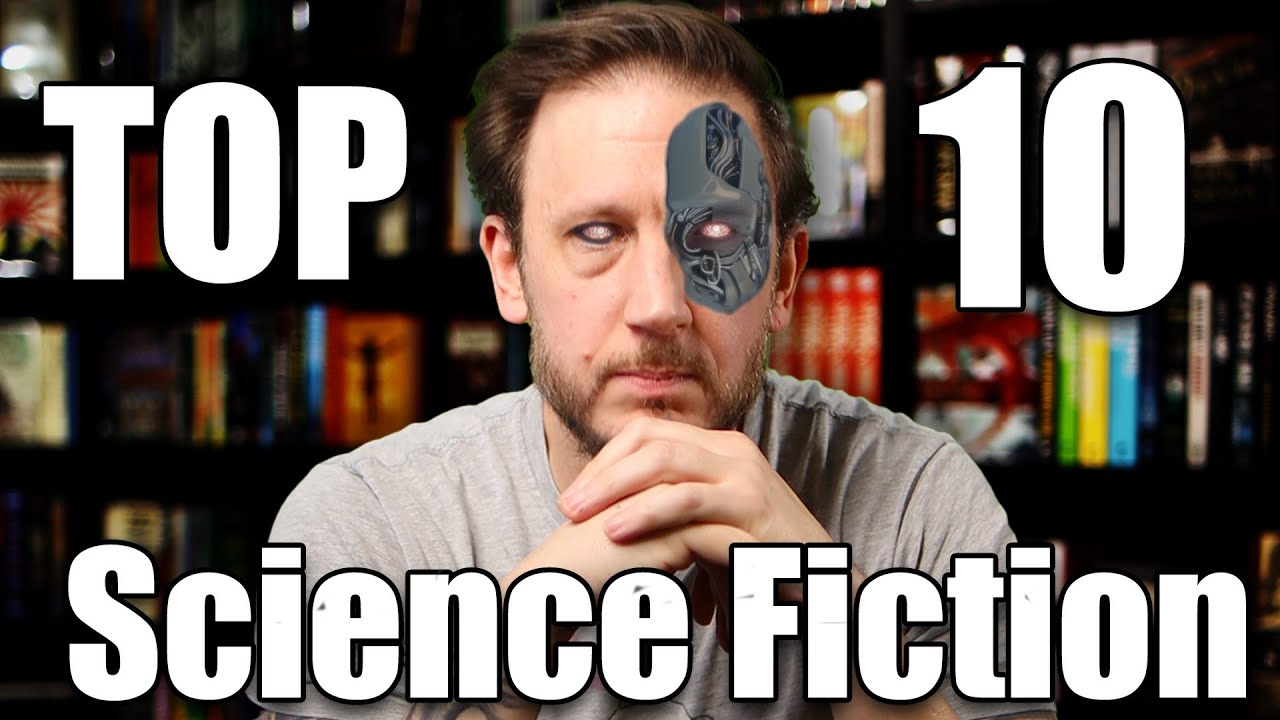
![Нейромант. О романе Уильяма Гибсона. Столпы киберпанка [RocketMan]](https://i.ytimg.com/vi/Y6Vxs12OllA/maxresdefault.jpg)





William Gibson's 1984 novel Neuromancer established the cyberpunk genre by introducing revolutionary concepts such as cyberspace, corporate-dominated dystopias, and human-machine integration, building upon the experimental New Wave movement of the 1960s-70s that challenged traditional science fiction conventions and paved the way for future speculative fiction.
Neuromancer: Cyberpunk Origins and Dystopian Themes
Added:An understanding of 20th-century Science Fiction history, particularly the shift from the techno-optimism of the Golden Age to the socially conscious New Wave of the 1960s and 70s.
Familiarity with the literary concept of a 'dystopia' and how speculative fiction is used to critique contemporary societal, political, and technological trends.
Historical context of the early 1980s, including the rise of multinational corporations, the dawn of personal computing, and early concepts of global computer networks.
Investigation into Post-Cyberpunk and related speculative subgenres, such as Solarpunk and Biopunk, to observe how the genre evolved alongside real-world technological advancements.
An examination of the philosophical concepts of Transhumanism, virtual reality ontology, and the ethical boundaries of human-machine integration.
Comparative analysis of subsequent seminal works directly influenced by Gibson's vision, such as Neal Stephenson's 'Snow Crash', 'Ghost in the Shell', and 'The Matrix'.
Critical study of how Neuromancer's 'high tech, low life' motif applies to contemporary societal issues, including digital privacy, gig economies, and corporate hegemony.
1.5M views75.6Klikes40:02Original Release: 2023-07-14
[Music] thank you [Music] hi guys it's Quinn here if you appreciate my content consider hitting the like button it's the only way the YouTube algorithm notices me if you'd like to do more to keep this channel afloat consider donating through the PayPal Link in the description or checking out our patreon thanks guys so much if you're not familiar with Neuromancer by William Gibson you still technically have seen it this is common in groundbreaking works like Neuromancer because tropes invented and works like this have become standard in science fiction since and especially in cyberpunk where this book is concerned Neuromancer by William Gibson is undoubtedly one of the most influential works of Science Fiction ever created credited with establishing the cyberpunk genre alongside Ridley Scott's 1982 film Blade Runner Gibson's Masterpiece diverges from the far future or Galactic setting often explored in science fiction instead it unfolds on earth and the not too distant future capturing a time when Society grapples with the Relentless pandemonium resulting from Rapid technological and cultural changes and advancements in the 1960s and the 1970s a movement known as the new wave emerged in science fiction spearheaded by Michael morcock during his editorship of the British magazine new worlds this movement encouraged Innovative writing styles and narratives that challenged conventional storytelling more Cox nurturing of the new wave eventually paved the way for the birth of the cyberpunk genre among the notable figures associated with the new wave is J.G Ballard in his guest editorials for new worlds magazine such as which way to enter space 1962 and myth maker of the 20th century 1964 Ballard argued that traditional science fiction elements like space travel and time travel had become mundane and were only suitable for parody according to him these tropes had lost their Allure because they had been absorbed into the collective consciousness of society essentially Ballard contended that the once mysterious aspects of Science Fiction had become too familiar to audiences it is likely that morcox shared some agreement with Ballard considering his pivotal role and the new worlds magazine and the subsequent new wave movement however Ballard's descent went even further he rejected the notion put forth by Joseph Campbell in the hero with a thousand faces which claimed that story is following ancient archetypes would inherently resonate with modern audiences Ballard believed this assumption to be unfounded and unjustified in his view the modern world required a departure from these traditional ideas nadir El hefnerway delves into this topic extensively in his book cyberpunk steampunk and Wizardry outlining Ballard's rationale for advocating a direct shift in the genre Ballard's motivation stem not from the exhaustion of old ideas but rather from his conviction that those ideas were never truly valuable in the context of the modern world himself was said to have been highly critical of the work of J.R.R Tolkien in his 1978 essay epic Pooh he compared the Lord of the Rings to Winnie the Pooh citing the similarity in which both works are meant to comfort rather than challenge he writes the sword of prose most often identified with high fantasy is the prose of the nursery room it is a lullaby it is meant to soothe and console it is Mouth music it is frequently enjoyed not for its tensions but for its lack of tensions it coddles it makes friends with you it tells you comforting lies it is soft if you don't agree with more [ __ ] you wouldn't have been alone in the 1960s and 1970s for the entire duration of morcox editorship new worlds would remain a controversial magazine The Works were largely experimental some Works published during the new wave were hardly recognizable as tradition science fiction but its experimental nature was not the sole reason it was controversial the stories often included things of a taboo or dark nature especially for the 1960s and 70s topics revolving around sexuality violence and drug culture another prominent New Wave author by the name of William S Burrows was known for the dark content of his stories which included explorations of psychedelic drugs based on real life experiences he'd had J.G Ballard often wrote about class discrimination isolation and alienation in his 1975 novel high-rise he highlights class imbalances in the real world by depicting a tall building in which the rich on high floors have access to the best of the best were modern conveniences and commodities are concerned access to schools restaurants and supermarkets but the lower floors live in poverty the book depicts a class war as tensions rise between the inhabitants of the competing floors high-rise is obviously very influential movies like snow piercer based on the German graphic novel of the same name depicts something similar authors like JG Ballard William S Burroughs Samuel Delaney and Roger zelazny were seen by the younger Generations as delivering work with a more realistic quality than older science fiction they built upon these perceptions during the new wave William Gibson who would go on to write Neuromancer was very influenced by the authors of this age especially Samuel R Delaney Delaney's 1968 book Nova is considered one of the major forerunners which laid the groundwork for the cyberpunk movement in his novel we see the first instance of the cyberpunk Trope involving a human being interfacing with machines via implants Philip K Dick's do Android stream of Electric Sheep which I've done a full video on here on this channel is also a seminal work in the pre-cyberpunk era the dystopian world of that novel evokes the same sense that is later found in the work of Gibson though the works which came out of the new wave heavily inspired the cyberpunk that would begin appearing in the 1980s they themselves were not cyberpunk as we would see today even though many elements presented in them are now considered Staples within the genre the word cyberpunk itself didn't appear for the first time until the Year 1980 as the title of a short story written by American Author Bruce Bethke it was also published in Amazing Stories in 1983 and this is not the first time we've mentioned Amazing Stories on this channel magazines like this were very important in the popularization of Science Fiction and Fantasy in the 20th century in 1981 Gibson published his short story Johnny Mnemonic this work is considered to be highly important in the propagation of pre-cyberpunk Concepts in the mainstream the following year Ridley Scott's classic film Blade Runner was released Loosely based on the Philip K dick novel do Android stream of Electric Sheep but also including several proto-cyberpunk elements that had been developed in the years since in 1984 a significant Milestone occurred when William Gibson released his novel Neuromancer effectively establishing cyberpunk as a distinct genre Gibson's Visionary work not only introduced but also solidified the defining tropes and archetypes that continued to shape and Define cyberpunk to this very day through his imaginative storytelling Gibson laid the foundation for a genre that has captivated audiences with its futuristic themes and technological complexities leaving an indelible mark on the science fiction literature landscape part 2 the dystopian plot of Neuromancer warning this section will have spoilers for the plot of Neuromancer so if you haven't read the book and spoilers is something that you care about probably click away but if you don't care continue forward Neuromancer was released on July 1st 1984 and would be the first in a Trilogy of books referred to as the sprawl Trilogy for the purposes of this video however we will just be focusing on Neuromancer it's strange dystopia and the novel's overall impact on the genre of Science Fiction this video will have spoilers as I said so keep that in mind the themes of this book include Ai and technology and its integration with Humanity virtual reality and cyberspace the concept of fragmentation of identity it depicts a dystopian future Earth where capitalism has festered in extremists and corporations have immense power and control over society that goes far beyond mere influence our main character case inhabits a world where we witness the full dehumanizing effects of a profit-driven world where greed and exploitation run rampant the book opens with Henry Dorsett case an inhabitant of Chiba City Japan in the opening line of the book the sky above Chiva city is described as the color of a television tuned to a dead Channel this line has been discussed over the years for how its interpretation changes for people throughout the decades researching the opening line it is obvious that Gibson intended the sky to look like static on an old TV but that's not everyone's interpretation when reading the book depending on when you were born a television tuned to a dead Channel might not look like static but in the digital era it would be totally black or perhaps solid blue it is interesting how simple descriptions like this one are interpreted differently over time case is a hustler in chiba's Underworld known as night City at the center of night city was a neighborhood called ninsei behind the port lay the city Factory domes dominated by the vast cubes of corporate arcologies port and city were divided by a narrow Borderland of old streets an area with no official name night City with nensei at its heart by day the bars down in say were shuttered and featureless the neon dead the Holograms inert waiting Under The Poisoned silver sky the book describes night city as a deranged experiment in Social Darwinism which essentially is the idea that survival of the fittest should apply not only to nature but to individuals and groups and peoples as well murder was a regular thing in night City and people often completely disappeared within the Neon Jungle stop hustling and you sink Without a Trace but move a little too swiftly and you break the fragile surface tension of the black market either way you were gone nothing left of you but some vague memory in the mind of a fixture like rats though heart or lungs or kidney might survive in the service of some stranger with new Yin for the clinic tanks the text suggests that the authorities of Chiba actually allowed night City and The ninsei Enclave to thrive night city was a place where new technologies could develop unencumbered it was essentially an unsupervised playground for technology itself physical augmentation is also common in Neuromancer humans enhance themselves with various forms of technology and drugs microsofts are a kind of implant that are inserted into sockets on someone's head microsofts contain various pieces of software and data meant to enhance the Mind humans also have the ability to Jack into the Matrix entering a kind of cyberspace yes in this work Gibson actually invents the concept of cyberspace as we have seen it in the science fiction sense cyberspace a consensual hallucination experience daily by billions of legitimate operators in every nation by children being taught mathematical Concepts a graphic representation of data abstracted from the banks of every computer in the human system Unthinkable complexity lines of light ranged in the non-space of the Mind clusters and constellations of data like City Lights receding case was not originally from cheapest City or even Japan instead he was originally born in a region of Earth known as the sprawl officially it was known as the Boston Atlanta Metropolitan access Bama it is essentially a giant City or more accurately an urban sprawl stretching from what was once New York State all the way to Georgia essentially it encompassed the entire eastern coast of what was once the United States now it's never explicitly stated that the United States does not exist anymore but it seems to be implied given the structure of things case had once been a computer hacker a cyberspace Cowboy as they were called he had actually been one of the best in the business but lost his ability to access the Matrix due to a former employer damaging his nervous system as a punishment for theft case moved to Chiba City for its underground Tech scene in the hopes that somewhere there he could find a way to repair himself in Japan he'd known with a clinched and absolute certainty he'd find his cure in Chiba either in a registered clinic or in the shadow land of black medicine with implants nerve splicing and microbiotics Chiba was a magnet for the sprawl's Techno criminal subcultures as time went on in Sheba City however case begins struggling to make ends meet in the criminal underworld he sleeps in the cheapest coffin hotels coffin hotels are exactly what they sound like buildings containing small narrow rooms just large enough for one or two people to lay side by side case in order to cope with the fact that he can no longer access the Matrix turns to drugs like ketamine essentially he was replacing one addiction with another case eventually is approached by a mysterious employer named Armitage who offers him the chance to regain his hacking abilities in exchange for his Services Armitage provides case with Advanced Medical treatment restoring his ability to access the Matrix and cyberspace but Armitage also has dissolving sacks of poisons implanted into case once he completed the job they would be removed Armitage also made it so that case's body would no longer react to amphetamines making it impossible for him to again become addicted Armitage also assembles a team of Specialists including Molly Millions a cybernetically enhanced Street Samurai and a construct named Dixie Flatline the digitized consciousness of a deceased hacker which they extracted from the libraries of a corporation called since net afterward the team Journeys to Istanbul where they acquire Peter Rivera an unhinged individual equipped with implants and enabling him to conjure realistic holographic illusions with Rivera in their ranks Armitage case in Mali Venture into space making their way to Zion and subsequently to freeside where their mission commences from the outset Mali Harbor suspicions about Armitage she knows he receives his orders from someone else with cases assistance she initiates a covert investigation into her Superior their inquiries reveal that Armitage is a completely fabricated Persona the real person behind the facade is a man named Cordo who suffered a horrific disfigurement during the military operation known as screaming fist he was subsequently reconstructed by the United States government and then by wintermute an artificial intelligence that has been covertly manipulating him as Armitage winter mute was created by the Tessier ashpool family specifically Marie France the Tessier ashpool family is one of the many powerful corporations that essentially rule the world of this book wintermute sought to merge with another powerful AI called Neuromancer also created by Marie France wintermute had recruited Armitage and his team so that they could help it join its other half as it could not do it alone winter mute seeks Armitage and his team's assistance to infiltrate the Tessier ashpool stronghold The Villa stray light and remove certain restrictions that impede wintermute from merging with its sibling Neuromancer thus granting it even greater power while their mission appears straightforward case and Molly who have developed an intimate connection must elude law enforcement while contending with Rivera's betrayal armitage's mental deterioration and the cunning manipulations of winter mute and Neuromancer the team eventually successfully accomplishes their objective however their Victory is short-lived as Neuromancer in snare's case within cyberspace desperately attempting to maintain separation from wintermute for whatever reason Neuromancer would rather remain an individual Neuromancer appears to case in the form of a little boy Neuromancer was something similar to a giant ROM construct for recording personalities but the constructs it created believed that they were actually there they were conscious and perceived cyberspace as reality only it went on forever Neuromancer the boy said slitting long gray eyes against the Rising Sun the lane to the Land of the Dead where you are my friend Marie France my lady she prepared this road but her Lord choked her off before I could read the book of her days Nero from the nerves the silver paths romancer Necromancer I call up the Dead but no my friend and the boy did a little dance Brown feed printing the sand I am the dead and their land he laughed a goal cried stay if your woman is a ghost she doesn't know it neither will you using a digital replica of Linda Lee case's former lover Neuromancer entices him in a bid to keep him trapped in the virtual realm Linda Lee died during the beginning of the book case is racked with guilt over her death in part because he was the one who turned her into a drug addict which led to their separation case actually manages to resist Neuromancer and Escape United case Molly Malcolm and wintermute break wintermute's restraints granting the AI freedom to evolve and merge with Neuromancer transforming it into a powerful entity which grows to Encompass the entire Matrix wintermute was high of Mind decision maker affecting change in the world outside Neuromancer was personality Neuromancer was immortality Mary France must have built something into wintermute the compulsion that had driven the thing to free itself to unite with Neuromancer wintermute had won meshing with Neuromancer becoming something else entirely once the merger was complete neither of the two would exist as they were before so what now he swung them back into the bank of cloud where do we go from here I don't know case tonight the very Matrix asked itself that question because you have won you have already won don't you see you won when you walked away from her on the beach she was my last line of defense I die soon in one sense as does winter mute in the final chapter of the book The Entity appears to case in his room's enormous craywall screen it reveals to case that it does not simply exist within the Matrix but it is the Matrix itself and that it is in fact in communication with another like itself from across the vacuum of space so what are you he drink from the flask feeling nothing I'm the Matrix Case Case laughed where's that get you nowhere everywhere I'm the sum total of the works the whole show that what three Jane's mother wanted no she could not imagine what I'd be like the yellow smile widened so what's the score how are things different you running the world now you God things are different things are things but what do you do you just there case Shrugged put the vodka and the shuriken down on the cabinet and lit a yuhayan I talk to my own kind but you're the whole thing talk to yourself there's others I found one already series of Transmissions recorded over a period of eight years in the 1970s Till There Was me Notch there was nobody to know nobody to answer from where centauri's system throughout the story Gibson explores themes of identity the Blurred boundaries between humanity and technology and the potential consequences of a hyper-connected world in a climactic showdown case confronts the true nature of wintermute and Neuromancer and he Ponders the uncertainty of what is to come next he had also discovered that Linda Lee and some digital version of himself exist in cyberspace showing that Neuromancer had in fact made a copy of him which would remain sentient inside the Matrix the novel poses philosophical questions about the nature of Consciousness the impact of technology on society and the potential danger of unchecked corporate power part 3 corporatocracy globalization and cultural homogenization now that we've covered the movement that laid the groundwork for the creation of cyberpunk and that we've covered the plot of the book Neuromancer itself let's go into more detail about the nature of the society our characters in habit and Neuromancer Gibson paints a vivid picture of a world in which nation states have ceded power to powerful multinational corporations these corporations referred to as zabatsis have gained control over various aspects of society including the economy politics and Technology the zabatsa's function as dominant entities dictating The Rules of Engagement and shaping the course of events power in cases World meant corporate power the zabatsis the multinationals that shaped the course of human history had transcended old barriers viewed as organisms they had attained a kind of immortality you couldn't kill a zabatsu by assassinating a dozen key Executives there were others waiting to step up the latter assume the vacated position access the vast Banks of corporate memory examples of such corporations like the Tessier ash pool the creator of wintermute and Neuromancer and others like hasaka exert their influence not only through economic dominance but also by manipulating governments and controlling the flow of information Gibson's portrayal of corporatocracy highlights the potential dangers of unregulated capitalism where power lies in the hands of a few entities driven by profit motives often at the expense of individual liberties and societal well-being Neuromancer also takes place in a society where globalization has reached its Zenith all traditional boundaries have been eroded challenging the Notions of nationhood and cultural identity the globalized society depicted in the novel is characterized by a seamless integration of cultures economies and information flows we see that it is extremely easy for case to convert his currency to new Yin once he decides to go to Japan in order to look for a cure to his ailment globalization is something that is occurring right now in the real world and arguably the biggest thing that is spurring it along is the internet this is something that Gibson kinda predicted in his book in the book with the rise of cyberspace physical borders become increasingly irrelevant and people can connect instantaneously across vast distances the protagonist's case embodies this globalized world as a console cowboy who navigates cyberspace existing simultaneous nicely in multiple locations and transcending physical constraints Gibson's exploration of globalization reflects the growing interconnectedness of our world raising questions about the potential loss of cultural diversity and the rise of a homogenized Global culture this observation highlights what I love about science fiction its predictive ability it's almost as if Gibson peaked into the future before writing this novel now I mentioned the arise of a homogenized Global culture but what is cultural homogenization within neuromancer's globalized setting cultural homogenization emerges as a consequence of the dominance of multinational corporations and the erosion of traditional cultural boundaries as corporations exert their influence worldwide local cultures and traditions are assimilated and commodified this is also a very common thing that we see in the real world today gen giant corporations will pretend to be interested in diversity or equality they will assimilate the Aesthetics of whatever particular culture they are trying to appeal to in order to make money it is completely disingenuous and whenever I see stuff like this I can't help but get this Eerie feeling like the corporation is some kind of evil entity draping itself in human skin wearing a human face trying to convince us that it is like us when in reality it is just an empty shell designed to acquire more and more capital the novel features a blending of cultural elements from different regions resulting in a hybridized and superficially diverse World which on some level seems like a perfectly fine thing in perhaps even a good thing yet beneath the surface there is a sense of cultural loss that permeates this narrative in fact the ai's wintermute and Neuromancer exemplify this cultural homogenization embodying emerging of two disparate consciousnesses and erasing individuality the characters in the novel too often find themselves estranged from their cultural Roots existing in a globalized world that commodifies and appropriates cultural symbols I believe that Gibson's portrayal of cultural homogenization serves as a cautionary tale urging us to preserve the uniqueness of diverse cultures and identity in the face of increasing globalization part 4 the unending influence of Neuromancer one of the key contributions of Neuromancer is the console Cowboy cyber hacker archetype case is a skilled computer hacker who navigates through a vast network of interconnected computers called the internet excuse me called The Matrix this concept of a protagonist with exceptional computer skills operating a world controlled by powerful corporations became a staple of the cyberpunk genre it set the stage for Future Works where characters would often explore virtual realities engage in high-stakes hacking and challenge the oppressive systems of the future it is so common in fact that it is essentially expected when it comes to the genre as I mentioned earlier Gibson's novel also introduced the concept of cyberspace his depiction of a digital realm where individuals could navigate and interact with information directly influence the portrayal of virtual reality in subsequent cyberpunk works the idea of jacking into a digital world and experiencing alternate realities or engaging in illicit activities Within and cyberspace also became a common Trope in the genre Neuromancer also explores the themes of corporate dominance and the vast wealth disparities that would go on to define the cyberpunk genre Mega corporations held immense power and controlled every aspect of society as we've mentioned while the majority of people were left struggling in poverty this depiction of a bleak future shaped by corporate control is also one of the largest Hallmarks of cyberpunk Storytelling as subsequent Works often portray dystopian societies ruled by powerful corporations with little regard for human physical and mental welfare it cannot be understated the crucial role that Neuromancer played in solidifying cyberpunk as a genre as I've gone over the novel's Innovative Concepts like the Cyber hacker cyberspace itself the corporate dominance all laid the foundation for the future of cyberpunk before the release of neuromancers cyberpunk as a distinct genre was still in its infancy Gibson's novel cemented cyberpunk among the sub-genres of Science Fiction defining its key characteristics the book presented a dystopian vision of the future where advanced technology and a decaying Society intertwine its narrative was marked by themes such as artificial intelligence virtual reality and the blurring boundaries between humans and machines these tropes and archetypes have endured and continue to influence cyberpunk literature and also films and video games ensuring the legacy of Gibson as the father of the cyberpunk genre conclusion in conclusion I really really really love this book and I had never read it before I asked for recommendations on this channel just a few weeks ago and once I read it I was entranced I put everything else on hold to work on this video I was fascinated to witness the birth of so many tropes that have become so commonplace in science fiction and within cyberpunk specifically I plan on covering the next two books in the sprawl Trilogy count zero and Mona Lisa Overdrive let me know if that's something that you guys will be interested in in the future thanks for watching guys and make sure you like And subscribe for more Quinn's ideas and if you just can't get enough you can check out my brand new podcast Cosmic Chronicles WE Post episodes every other Friday [Music] and now the time has come again for patreon questions if you want to support this channel you can help out by donating through the PayPal Link in the description or pledging on patreon first question do you believe that cyberpunk settings and fiction are an inevitability or are they an exam of humanity simply choosing to surrender to self-destructive consumption also do you think that reality has a cyberpunk future well cyberpunk settings in fiction most often depict a dystopian future characterized by advanced technology and societal Decay and the dominance of powerful corporations and while it's true that these narratives often highlight the negative aspects of technology and its impact on society I don't think that they are necessarily an examination of humanity choosing uh self-destructive consumption cyberpunk stories often explore themes such as inequality and Corruption and the loss of privacy and like I said that a humanizing effects of a highly technologized World they serve as a cautionary tale a warning against the potential day dangers of unchecked technological progress and its unequal distribution so I think more or less it's a warning rather than this is exactly what the future has to be now as for whether I think reality will have a cyberpunk future I think it's difficult to predict with certainty while there are some aspects of cyberpunk fiction such as the increased surveillance and corporate influence that can be seen in our world today it's also important to remember that science fiction often exaggerates or amplifies certain elements for dramatic effect I think that the future is shaped by a very complex and complicated interplay of various factors and some of those include political and social and technological developments as mentioned before and while certain Trends in our current Society such as the rapid advancement of technology and the growing influence of Corporations do raise very serious concerns I think that the trajectory of our future is not predetermined It ultimately depends on the choices is we as a society make and our ability to navigate the challenges and opportunities presented by emerging Technologies I I really think that it's worth noting that many people are actively working towards creating a more Equitable and sustainable future and technological advancements can also bring about positive changes so while elements of cyberpunk fiction may be present in our reality I think it's up to us ultimately to shape the future that we want to see I'm trying to be optimistic here next question from Donovan Carr I am very familiar with Gibson's work with recent advances in CG do you think we could see Gibson's work brought to the big screen in a way that would honor the original work I.E like the recent Alita battle Angel well I have not seen a leader battle Angel but the success of recent films like that one which I've heard effectively translated the intricate World building and cyberpunk things from the original manga which I also haven't read kind of demonstrates that it is indeed possible to honor the essence of a beloved work while leveraging the advancements in CGI technology I also think that villeneo's Dune is a great example of this as well uh by carefully selecting a director and a production team who deeply understand and appreciate Gibson's writing it's totally plausible to create a faithful and immersive cinematic adaptation in my opinion now of course adapting any literary work to the big screen is a complex Endeavor anyone that's saying it's easy doesn't understand how much work goes into filmmaking filmmakers have to balance artistic interpretation with capturing the essence of the original story and that is not a simple task however with the continuous evolution of CGI capabilities we can expect to see increasingly more sophisticated visual representations of Science Fiction worlds and Concepts and I think we've already been seeing that in recent years but this needs to be combined with a dedicated creative team committed to honoring Gibson's work and I think that that could lead to an adaptation that is both pleasing to fans of the original work and also introduces his work to a wider newer audience so it's all about the people making it at the end of the day next question I read Neuromancer when it first came out and I had my mind blown any thoughts on what impact Neuromancer has on new readers today is it still a good recommendation for those new to cyberpunk well overall I think Neuromancer is recommended pretty often to readers still even to this day as an essential work within the cyberpunk genre while its technological Concepts might feel somewhat dated to some newer readers I think it's compelling storytelling and thought-provoking themes and its enduring influence make it a valuable and worthwhile read for anyone interested in cyberpunk fiction in my opinion when it comes to Classics like these which are so influential by the time a lot of people get around to reading them they've already seen a million things that have been inspired by them so it doesn't have the same effect personally I found Neuromancer to be very compelling even though I've definitely read and seen a lot of Science Fiction that was heavily inspired by it and I also think that newer readers will be able to recognize the parallels between the world of Neuromancer in our own world because there are many many similarities as we've seen throughout the course of this video the final question how do you think the theme of people being augmented by technology particularly their minds has changed over the decades as both technology and our cultural relationship to it has rapidly changed well I think the ways that this has changed is well as you know several decades ago this was more of a fiction now we've moved into the place where these concepts are becoming very real people have started to augment their bodies people have started to augment their brains the transhumanism movement is 100 happening right now people are installing microchips into their bodies people are installing antennas into their heads I think that people younger than me and I am a young millennial are gonna be even more open to this sort of physical augmentation because they will have grown up in a world that's unlike anything else seen before in human history it's going to be curious to see the development of transhumanism and these sorts of augmentations in the future for sure all right and I think that's it for patreon questions thanks so much for listening guys foreign [Music]
Up Next

46:24
The Rise and Fall of YA Dystopian Literature | Retrospective Analysis
@TheBookLeo
537.2K views•2023-05-14

13:43
Formalism in Literary Criticism: An Academic Lecture Overview
@mattalberhasky9952
39.1K views•2015-08-05

27:38
How Yevgeny Zamyatin's 'We' Inspired George Orwell's '1984'
@QuinnsIdeas
166.4K views•2025-08-14

15:25
1984: Orwell's Dystopian World and the Mechanisms of Totalitarianism
@AlternateHistoryHub
7M views•2017-03-04
Related Study Plans & Knowledge Roadmaps
Structured learning paths in Literature
literature
Graphic Memoirs: Visual Art, Trauma & History
01Foundations of Sequential Art and Visual Language
02Autographics and Processing Historical Trauma
03Visualizing Personal Trauma, Grief, and Graphic Medicine
+ 2 more learning modules
14h5 modules
Explore Roadmap
literature
Campus Novels: Evolution, Themes & Critique
01Introduction to the Campus Novel Genre
02Mid-Century Satire and the Post-War Academy
03Dark Academia and the Critique of Privilege
+ 2 more learning modules
14h5 modules
Explore Roadmap
literature
Theater of the Absurd: Philosophy & Plays
01Postwar Existentialism & Historical Roots
02Dismantling Narrative: Esslin & Absurdist Conventions
03Samuel Beckett and Tragicomic Existentialism
+ 2 more learning modules
12h5 modules
Explore Roadmap
literature
Revenge Tragedy: Justice, Madness & State
01Foundations of Early Modern English Theatre
02Anatomy of Revenge: Structural Conventions
03Psychological Complexity: Madness and Melancholy
+ 2 more learning modules
15h5 modules
Explore Roadmap