



















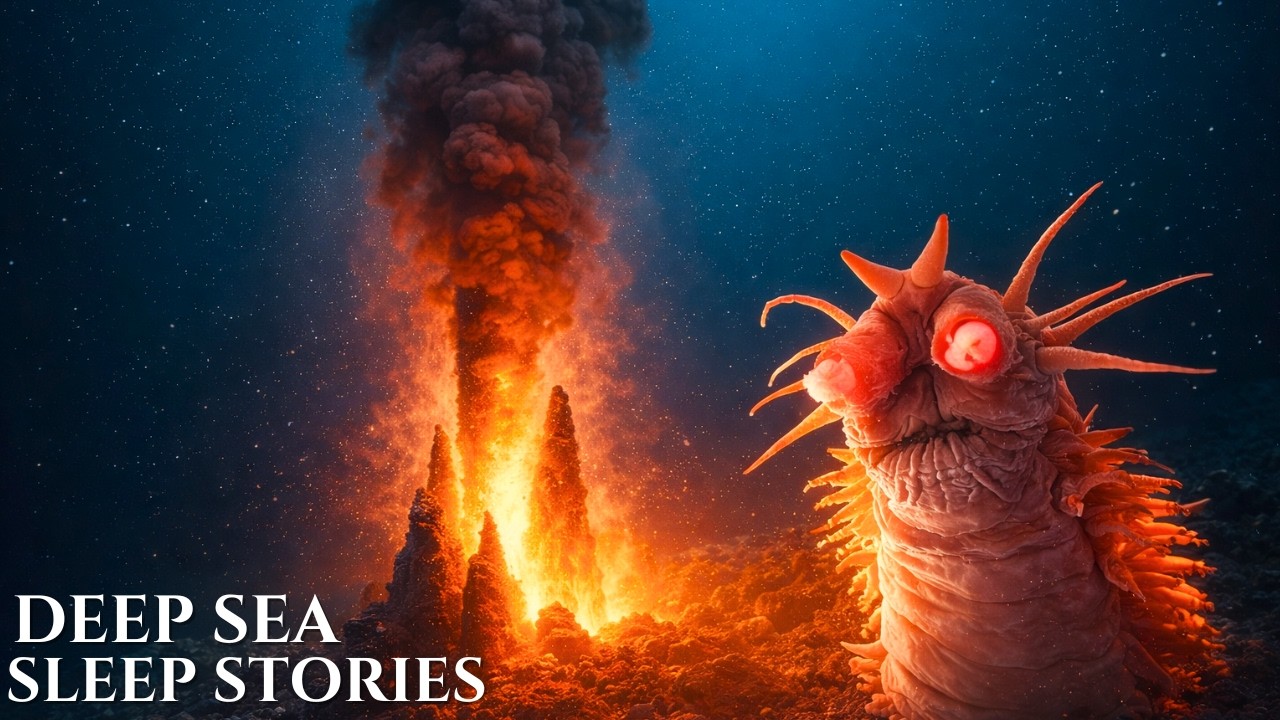




Deep sea hydrothermal vents are unique ecosystems formed at mid-ocean ridges where magma heats seawater that seeps into the crust, creating superheated hydrothermal fluids that emerge through cracks and form black smokers (hot, iron-rich) or white smokers (cooler, calcium-silica-rich). These vents support entire ecosystems based on chemosynthesis rather than photosynthesis, where chemolithoautotrophic microbes convert toxic vent chemicals into energy, forming the foundation of food webs that include giant tube worms, shrimp, and other invertebrates. The extreme environmental gradients at vents—temperature, pH, oxygen, and chemical concentrations changing dramatically over short distances—create hostile conditions that organisms have adapted to survive. Scientists believe these vents may hold clues to how life originated on Earth, as the serpentinization process that creates alkaline vents produces organic molecules and establishes proton gradients similar to those used by cells to generate energy through chemiosmosis, potentially providing the driving force that enabled the transition from non-living chemistry to living organisms.
Hydrothermal Vents Ecosystem Explained | Deep Sea Science
Added:Hi, I’m the Octopus Lady, you’re watching Alien Ocean, and let’s talk about deep sea hydrothermal vents today, shall we?
So this one is gonna be a little bit different.
For the first time on this channel, I’m not going to be talking about an organism, I’m gonna be talking about an ecosystem.
An ecosystem that shouldn’t really exist, but we’ll get to that later.
That’s not to say that I won’t ever make videos about any of the organisms that live at deep sea hydrothermal vents, CUZ I’M DEFINITELY GONNA DO THAT.
Like, I’m COMIN’ for you, giant tube worms! But in this video, I’m only gonna give a pretty basic overview of what lives there, because I want to talk about other things, like how the vents are formed, how they were discovered, and how life on Earth might have started there.
Well, WE want to talk about that stuff. Cuz, like, Chem Thug’s here.
Do y’all know Chem Thug? He makes videos about chemistry over on TikTok and his stuff is SO good.
His videos about white phosphorus and radium are my FAVORITES, they’re AMAZING.
Like, I hardly watch content about chemistry and I barely go on TikTok anymore, but when I do, it’s mostly just to see if ChemThug has posted anything new.
He’ll be along in a little bit, but if you are on TikTok, go follow him over there, I guess, but if you're on YouTube, which… Looks like you are!
You should go subscribe to his YouTube channel.
Cuz maybe then he'll start making more videos on YouTube and not on TikTok.
Cuz TikTok is a garbage platform that doesn't deserve him. Anyway!
So I usually start my videos talking taxonomy, but we can’t do that here, right?
Cuz taxonomy is technically the branch of science that classifies living organisms, and hydrothermal vents aren’t alive or an organism…buuuuut.
Also, in a more colloquial sense, taxonomy is just the process of sorting things into categories, so we can get a *little* taxonomical. As a treat!
The term “hydrothermal vent” is mostly associated with the marine ones, the vents found in the ocean, but you can find hydrothermal vents in other places, too.
We’ve found some in lakes, of which I couldn’t find any pictures of, and we’ve found some on land.
You ever heard of a hot spring? That’s a hydrothermal vent.
In terms of the marine ones, there are basically two types, the black smokers and the white smokers.
Funny side note, I typed exactly this into Google Scholar and I was extremely confused for a moment when I saw the results because I was like, “Wait, there’s nicotine at hydrothermal vents?” But no, they’re talking about people.
These studies are about people who smoke cigarettes, anyway!
To discuss the differences between black smoker and white smoker hydrothermal vents, we need to talk about how they’re formed.
And originally, this was gonna be a whole section about The Unifying Theory of Geology, which is plate tectonics.
And I was going to talk specifically about mantle convection, which is what I thought drove plate tectonics.
I did a bunch of research into it, and had actually completed a whole section of this script about it, but then I somehow stumbled across THIS, from THE Geological Society, where they said that mantle convection is a theory largely out of favor now. And Just. Like. That.
Several days of work and a whole script chunk got cast into the shadow realm, and I refuse to spend any more time researching anything related to geology.
So I’m just gonna do this fast and dirty.
The crust of the earth is broken up into a bunch of plates and they’re all constantly moving.
Why? I dunno! I thought I knew, but I was wrong. So we’re gonna skip over that part.
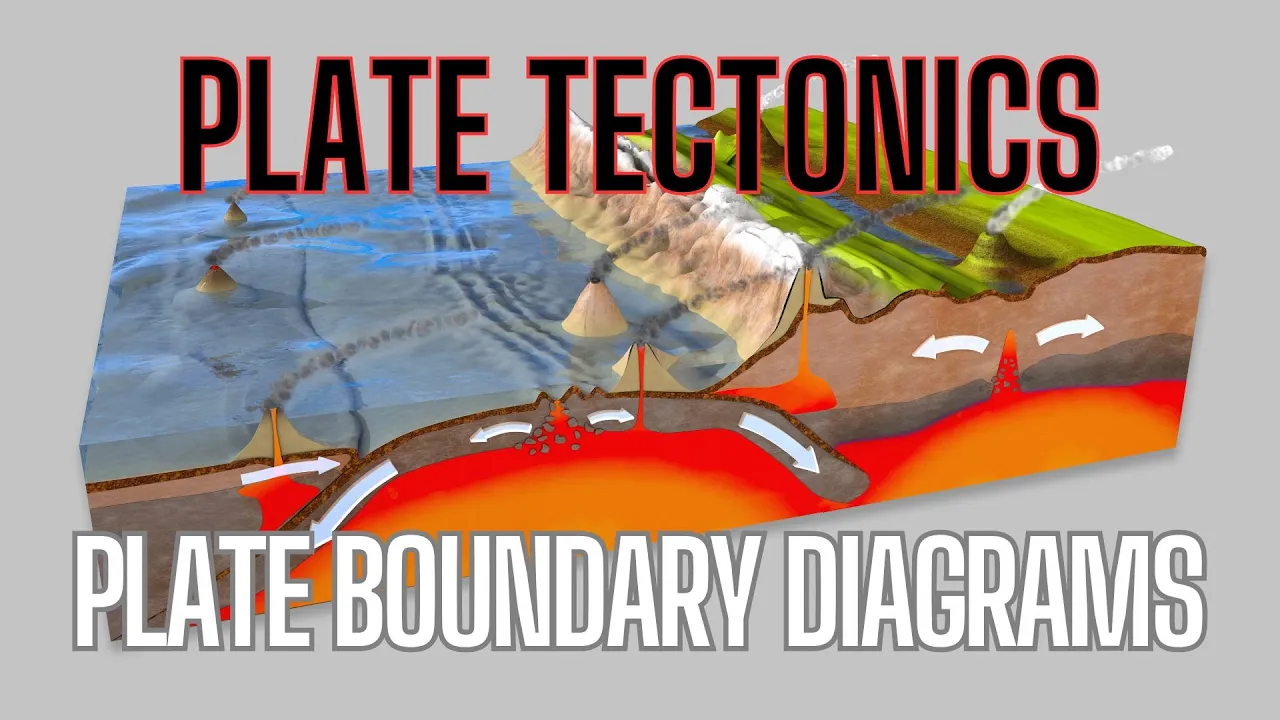
Because the plates are constantly moving, they’re either smashing into each other, spreading apart from each other, or sliding past each other. These create boundaries between the plates, which are called convergent, divergent, and transform boundaries, respectively.
When a divergent boundary forms at the bottom of an ocean, we get what’s called “seafloor spreading.” Right? The floor of the sea is spreading apart from each other.
Magma rises to the surface and fills the gaps as the plates separate, which can create a ridge, which is kinda like a mountain range.
Historical side note: did you know that plate tectonics is kind of a newish theory?
It was believed for a really long time that the crust of the earth was solid and it didn’t move, and it wasn’t until this German dude, Alfred… "Veg-ner"? came up with the concept of continental drift in the 1920s.
He believed that the continents did move, and at one point, they were all stuck together, in a supercontinent called Pangea.
And he came up with this idea, in part, because he noticed that there was a certain species of dinosaur whose fossils were found only in Brazil and South Africa.
This was explained at the time by saying that there used to be a giant land bridge that connected the two continents, and Wegener was like, “That’s stupid.” But everyone looked at his idea of continental drift and went like, “No, THAT’S stupid.” Well, actually, biologists apparently were super on board with it, and geologists were not, but that makes sense because… biologists are always just the coolest.
And then World War II happened, and sonar became a thing, and the US Navy was like, “Yo, there are MOUNTAINS at the bottom of the ocean?” which was also a really big deal because up until that point we thought that the bottom of the ocean was flat.
But even into the late 1960s, a good chunk of geologists were still like, “Yeaaaah, I dunno. We’re pretty sure the surface of the earth is static.” But towards the end of the decade, a BUNCH of scientists dropped a WHOLE ton of research, including, but not limited to, the discovery of seafloor spreading, which proved, once and for all, that the earth is made up of plates, and all the plates move, and that’s the history of The Foundational Theory of Geology, plate tectonics.
It hasn’t even been around for 60 years yet.
That feels so young to me, especially when compared to foundational theories of other sciences, like evolution. Or gravity. I mean, it makes sense *why* we didn’t *really* figure out plate tectonics until the 1960s.
Cuz in order to prove seafloor spreading, and some other things, we needed to use stuff like submersibles to, y’know, get to the seafloor, which we didn’t have back in Isaac or Chuck’s day.
But yeah, plate tectonics? It’s a BABY theory!
Anyway, ridges. In the ocean.
There’s lots of them! Actually, there aren't lots of them.
There’s one. There’s one ridge in the entire ocean. And it is unfathomably long.
It spans 65,000 kilometers, or over 40,000 miles, cutting across the earth like seams on a baseball. 90% of it is underwater, and you have to dive down, on average, about 2,500 meters, or 8,200 feet, before you can get to the top of the ridge. Just to the top.
And this giant ridge in the ocean is called… the mid-ocean ridge.
I know, who could have seen that coming?
And it’s along the mid-ocean ridge where you will find the majority of known deep sea hydrothermal vents.
You can also find them along volcanic arcs and back arc basins, but I don’t know what those are and I don’t want to do any research to find out because I’m DONE with geology.
So why do bunches of hydrothermal vents form along the mid-ocean ridge?
Well, it’s cuz magma rises there and some of it does ooze up and out and form new crust, but sometimes, it just pools near the surface like a reservoir.
And in case you didn’t know, magma is like, real hot.
So keep that in mind.
Meanwhile, the ocean floor is full of cracks and crevices, where seawater can seep into. And water does two things: 1) it dissolves stuff really well, and the hotter it is, the more stuff you can dissolve in it and 2) it sinks when it’s cold and rises when it’s hot.
So if there is a magma reservoir near the surface and there is sea water seeping towards it, that water’s temperature is going to go up. VERY up.
Potentially up to 500 degrees Celsius, or 932 degrees Fahrenheit.
Which means it’s going to start rising out of the crust, while at the same time, leaching a whole lot of minerals out of the surrounding rocks like... something that leaches stuff really well.
A leech? This now superheated water with a bunch of *~*crusty stuff*~* dissolved in it is no longer just called water, it’s called hydrothermal fluid.
This fluid eventually rises back up to the surface and vents out of other cracks and crevices in the ocean floor, hence the word “vent” in the name hydrothermal vent.
Now, again, this hydrothermal fluid has utterly absurd amounts of dissolved minerals in it, and it can only hold those amounts because it’s so hot.
The second that super hot fluid comes in contact with the very cold seawater, it can’t hold on to all that dissolved stuff anymore, so all the minerals precipitate out they go from being dissolved in the hot water to undissolved in the cold water.
And when that happens, it can look like there is smoke coming out of vents at the bottom of the ocean.
Which means we can finally talk about the two most well-known kinds of hydrothermal vents, black smokers and white smokers.
And it basically comes down to temperature.
Black smokers are just… hotter than white smokers.
Because the hydrothermal fluid of black smokers is so hot, it can dissolve stuff like iron sulfide compounds, which is why the “smoke” from black smokers is black, it’s cuz of all the iron in it.
The “smoke” from white smokers, meanwhile, is typically full of stuff like calcium, silica, and barium, which is why it’s white. Also, that means that these vents are spewing unbelievable amounts of incredibly toxic chemicals into the surrounding water, but we’ll talk about that more in a sec. And for both of these vents, some of the minerals precipitating out from them will form into structures like chimneys, which can get very tall, up to 60 meters or 200 feet.
White smoke from a vent can also indicate that that vent is winding down.
Typically, the reasons why white smokers are colder than black ones is because they’re further away from the magma reservoir, or the magma is crystallizing, or cooling down.
So you can find some really neat white smokers, but then come back later and discover that they’re all just dead now.
Black smokers tend to be much closer to the magma reservoir, but that doesn’t guarantee their longevity, and black smokers can become white smokers over time.
And also, both of these vents can get wiped out in an instant, because if you’re from a place like California or Japan, you know that living on a plate boundary can get kinda earthquake-y.
Also, sometimes? Those magma reservoirs?
They just explode without warning and completely obliterate everything in it’s blast radius.
Hi all, Octopus Lady from the future here.
There’s another vent I should probably mention, they’re commonly called alkaline vents, and they’re very interesting because they can exist without being in proximity to magma.
Their hydrothermal fluid gets its heat from a different source, but ChemThug is gonna talk about that more in his section.
So yeah, it’s really volatile down by the vents.
And not just on a geological level.
The whole ecosystem feels like an unpredictable mess because hydrothermal vents are a land of gradients.
OK, so, a lot of other ecosystems on this planet are pretty much the same, no matter where you are in them.
If you’re in a desert, for example, and you drive several miles through that desert, where you stop probably isn’t going to be that much different from where you started.
That is not the case at the hydrothermal vents.
All sorts of environmental factors can change wildly, depending on your location.
Temperature, unsurprisingly, can be very high when you’re near the vent, and very low when you’re far.
Oxygen concentrations can go from undetectable to ambient. pH! 4 to 8.
And the concentration of horrendously deadly chemicals can go from, “Oh god oh god how is anything still alive?
This amount of toxins should kill everything in the immediate area” to… zero.
And these gradients, sometimes they extend for tens of meters across a vent field, but other times, they’re only a centimeter, or even a few millimeters wide.
Particularly when you’re really, really close to the vents.
So one wrong step? And you could be dead. And honestly?
You don’t even need to take a step.
Shifting water currents can expose you to the full range of these gradients in just a few seconds.
So that would be like, you’re outside, chillin’, it’s a nice warm day, the air is perfectly breathable, but then there’s a little gust of wind and it’s suddenly a bajillion degrees.
All the oxygen is gone and has been replaced with poisonous gas, and oh! A bunch of acid just showed up outta nowhere.
Do you know what this sounds like? This sounds like Hell.
This sounds like actual, literal, biblical Hell how does anything live down here? How does anything live down here?
But of course, things do live down here. So many things.
An unreasonable number of things. And they don’t just survive, they thrive.
The discovery of these animals completely changed the way we look at biology, and…I have something to tell you all.
And it's very painful for me to admit this.
These animals were not first discovered by biologists.
They were discovered by a bunch of shifty, ne'er-do-well geologists.
OK, so it’s the 1970s.
Geology has accepted the idea of seafloor spreading and that ridges form at the bottom of the ocean, but no one has entertained anything like the idea of hydrothermal vents yet.
Enter geologist Clive Lister, who I could not find a picture of, so he will be played today by Clive *Owen,* and he was taking temperature measurements along… some section of the mid-ocean ridge?
The book I was reading didn’t specify where.
And he found that the ridge itself was a lot cooler than it should have been, according to theoretical calculations.
He proposed all…*this,* basically.
Seawater seeps into the earth’s crust, gets super hot, and then comes venting out, which takes a bunch of heat with it, as an explanation for the temperature discrepancies he was seeing.
Backed by this hypothesis, fellow geologists Jack Corliss, Richard Von Hertzen, and…Tuh-jeered van Andel? I’m so sorry to my Dutch viewers.
All jumped into a submersible, went to the bottom of the ocean and found a deep sea hydrothermal vent.
Which was *very* exciting! They just proved all this, beyond a shadow of a doubt!
And they were rejoicing and celebrating and having a good ol’ time, until they kinda stopped for a second and went like, “Hey, are there supposed to be a bunch of animals down here?” Y’all, these geologists had no idea what they were looking at.
They didn’t have a clue.
They knew that these animals were…*interesting,* like, they brought a few of them back to the surface, but then, apparently, ignored them for, like, a full 24 hours.
And when I read that, I swear I felt my soul leave my body.
These geologists didn’t realize that they had just discovered a whole new ecosystem.
One that shouldn’t have existed, because according to the at-the-time understanding of basic ecology, all life on earth depended directly or indirectly on the sun.
Before we discovered the vents, we *knew* that every living thing on this planet either was a photosynthetic thing, ate photosynthetic things, or ate things that ate photosynthetic things.
And this included animals we already knew lived in the deep sea.
Cuz that wasn’t the big reveal when the vents were discovered, we’d known for a long time that creatures existed at the bottom of the ocean.
We knew there weren't a lot of them, because their diets were made up of the scant few bits of dead things that would float down from the surface of the ocean.
But the fact remained, even in the darkest, deepest parts of the earth, life still depended on the sun. We knew this for a fact.
And then the hydrothermal vents showed up.
They were going to change biology forever. And these geologists didn’t have a clue.
OK, I’m being a little harsh on them.
They weren’t shifty, they weren’t ne’er-do-wells.
It wasn’t terribly surprising that it was geologists who first discovered life at hydrothermal vents because it’s next to impossible to find them without using geological techniques.
And it is not at all surprising that they didn’t have a clue.
Cuz honestly? The first biologists who heard about the hydrothermal vents didn’t have a clue either.
Before they left on another expedition to the vents, the geologists grabbed the science editor of the San Francisco Chronicle and brought him along, and of course, he started writing all these articles about the animals they were finding at the vents.
He would then radio these articles to the Woods Hole Oceanographic Institute, who would then forward them to the Chronicle.
And the director of Woods Hole at the time, thought that the science editor had, quote, “popped his lid” and was getting kind of upset that he was publishing these obviously exaggerated reports about what lived a t the bottom of the ocean.
The director of Woods Hole even told one of the other members of the expedition, quote, “Can’t you stop that guy from writing those articles?!"
Of course, it didn't take long for the field of biology to come around to the vents and one of the biggest questions biologists had was, “How does anything live down here without photosynthesis?” And the answer to that was chemosynthesis.
Although, apparently, the proper term is chemolithoautotrophy.
So that’s a WORD, right?
All these prefixes mean things that I’m not gonna super get into right now, but in general, chemolithoautotrophy is the process by which chemicals that can’t be used by living things, get turned into chemicals that can be used by living things, like sugars and amino acids and etc. And this process is performed by chemolithoautotrophic microbes at the vents.
They take in, not just unusable, but deadly chemicals, from the vents, and turn them into food.
How they do it, I’m not gonna get into specifics because I think I want to make a whole video about these microbes now.
Which was not the game plan, they were NOT on my endlessly long list of future video topics, but I guess they are now.
CONFOUND YOU, VENT MICROBES! You weren’t supposed to be this interesting!
But this is kinda similar to what plants and algae do at the surface, right? Through photosynthesis, they take stuff that animals can’t eat, like carbon dioxide and sunlight, and turn it into stuff they can eat.
Which puts plants and algae at the bottom of the food chain, unfortunately for them.
But it’s the same thing with the vent microbes.
Everything down here either eats the microbes, or eats the things that eat the microbes.
And vavoom! Just like that, we got an ecosystem!
These microbes are often found growing in large mats near the vents, but they’re also found inside the vents, in the plumes of “smoke” coming from the vents, and on and in the animals around the vents.
Of which there are many.
So many! And the kinds of animals you find at the vents varies depending on where the vents are.
Just like other ecosystems, right? Animals you would find in a forest here would be different from animals you find in a forest here.
But there are commonalities between them.
Every vent ecosystem seems to have a large, habitat-forming animal at the foundation of it, and they’re all almost exclusively invertebrates.
So for example, vent communities at the East Pacific Rise will form around alvinellid polychaetes and… sigh-bo-gli-nid tubeworms?
Sib-oh-gly-nide tubeworms?
Sigh-bo-gly-nide tubeworms!
More commonly known as Pompeii and giant tube worms, respectively.
Side note: if your only reference for worms are like, these guys, then I imagine these two don’t look very much like worms at all, but they are! Worms get real funky real fast in the ocean, y’all.
At vents around the mid-Atlantic ridge, you will find no tubeworms, but instead a whole lotta shrimp.
Yeti crabs and peltospiroid gastropods make up the foundational animals at vents in the Southern Ocean, and etc., and etc. All these invertebrates have a symbiotic relationship with the microbes found at the vents, making the invertebrates themselves the hosts, and the microbes, the symbionts.
And we’ve talked about these terms before, back in my dinoflagellates video, go check it out if you haven’t seen it yet.
But the giant tubeworms, for example, have no mouths or stomach.
Instead, they have a specialized organ called a trophosome and that’s where they keep all their symbionts.
The shrimp at the mid-Atlantic ridge, they host their symbionts in their enlarged gill chamber.
Yeti crabs grow the vent microbes on the hair that covers their bodies, and at least one peltospiroid gastropod stores them in its esophageal gland.
Because their symbionts rely on the heat and horrendously deadly chemicals coming out of the vents to survive, these invertebrates, and other organisms I haven’t even mentioned, are in constant competition with each other for the space directly around the vents.
And friendly reminder, that’s where, y’know, all those different gradients can get really wacky.
Not always, but sometimes.
So how do organisms here survive such wild changes in their environment?
Well, a lot of them just…move.
If it gets too unoxygeny, you just, y’know, back up a little bit.
For the ones that can’t move, there’s a whole bunch of different strategies they employ, but to give one example, the giant tube worms seem to be pretty good at metabolizing toxic chemicals so that they become less toxic. Some of the vent organisms are really tough, like, y’all.
They found a strain of bacteria at the vents that is so heat-resistant that it’s also radiation-resistant.
They unleashed a bunch of gamma rays onto this bacterium and it was fine.
In sharp contrast to that, though, some of the vent organisms don’t survive living there.
There are plenty of reports of vent shrimp, for example, being burned alive because they took one step in the wrong direction.
And since I’m here already rattling off random facts about these animals, I’m gonna rattle off a few more. Cuz I know if I don’t mention certain things, some people are gonna chew me out in the comments, even though, friendly reminder, they’re all gonna get their own videos at some point.
Let’s start with the Pompeii worms.
They have been able to survive in water up to 80 degrees Celsius or 176 degrees Fahrenheit, making them one of the most thermotolerant organisms to currently exist.
Which is great for them because they live in the walls of the chimneys that form around the vents. The – the outside walls, not the inside walls.
They’re hardcore, but they’re not THAT hardcore.
The giant tube worms can get up to be 3 meters or 10 feet tall, which is taller than the ceilings in my apartment.
You can’t see me right now but I’m staring at the ceilings of my apartment and I just – (confused Octopus Lady noises) That’s so TALL.
And the reason they’re bright red is because they have hemoglobin in their blood, like humans.
The vent shrimp don’t really have eyes, but they do have, like, a sensor on their back that can apparently see the light created by imploding bubbles that come out of the vents.
Yeti crabs are often seen doing a little dance to make sure that the bacteria growing on their bodies stays nice and oxygenated.
And finally, the peltospiroid gastropods include the volcano snail AKA the scaly-foot gastropod AKA the to ‘em!
sea pangolin and it is literally the most metal animal in the world.
Yes, even more metal than the sacoglossan slug, because its shell and these scaly looking things on its body are literally made out of iron. You can actually stick a magnet to ‘em!
Now, I want to address something really quick.
Earlier, when I was saying that life at the vents doesn't depend on the sun, I was sort of…exaggerating there.
It is true that vent animals don’t depend on photosynthesis to eat, which is still a huge deal! But they do depend on it to breathe.
Vent animals need oxygen, just like almost everything else on this planet, and nothing at the vents produces it.
All the oxygen that they breathe comes from photosynthetic organisms at the surface.
Now, I would argue that the vents are still kinda independent from the sun.
Like I mentioned in my diatoms video, there’s a ton of excess oxygen on the planet, so even if the sun blinked out tomorrow, and everything else on Earth died, vent animals really wouldn’t be hurting for O2 for a long time.
Also, they have found some anaerobic microbes at the vents, anaerobic meaning they don’t need oxygen to survive, so even if the sun never existed, there still might’ve been life at the vents.
It might’ve just been single-celled organisms, but…that’s still life.
And speaking of, let’s now talk about abiogenesis, or how life might have started on earth.
There are a bunch of different hypotheses about abiogenesis.
There’s one about clay, there’s one about a Zinc World, whatever that is.
NASA thinks it had something to do with meteorites, cuz of course they would, they’re so predictable.
But we’re not gonna talk about any of those because obviously, the hypothesis that says that life on earth started at the deep sea hydrothermal vents is the best one of them all.
Is it the correct one?
Well, that’s not important, what’s important is that it’s the best one.
And it’s so simple! It’s so easy to understand how life may have started there.
Here, let me read you a quote from one of these papers “In…ace…togens, methyl synthesis entails reduction of CO2 to formate via an NAD(P)H-dependent formate dehydrogenase…” Um. You know what? Maybe not this paper.
This paper breaks it down really clearly. I…I think “The main mineral comprising the precipitate mound having engine-like characteristics is green rust.” Oh my god.
OK, let’s just skip the text, let’s look at some diagrams like this o-- Uhh.
Uhhhh!
UHHHH.
ChemThug?!
“Yeah, what up?” Can you read these papers for me?
I don’t understand any of ‘em.
“OK. Bet.” So there's a lot to these papers.
There's a lot in general to how chemistry eventually becomes biology and how you go from a bunch of molecules hanging out at the bottom of the ocean, interacting with some geochemical processes over the course of 4 billion years that eventually becomes your pet dog.
One of the main ways we try to study and answer the question of how life originated on our planet is by studying and looking at those microbes that the Octopus Lady mentioned earlier, those autotrophs that live at these vents.
These organisms are the simplest of the simple.
It's just like a little membrane and a little reaction factory on the inside.
But we assume that the earliest forms of life that came into existence were probably a lot like those because they're the simplest ones.
These simple lifeforms were likely the first lifeforms to exist on our planet, and they would have existed in the Hadean Ocean, because as far as we are aware, that's probably when life came about.
Now, the Hadean Ocean is very different, or was very different, from our current day ocean. For one, it had a whole bunch of carbon dioxide dissolved in it. So much so, that that carbon dioxide was reacting with the ocean water to make what's called carbonic acid.
This molecule, carbonic acid, has two acidic protons on it, and that makes the ocean of the Hadean period very, very acidic, around a pH of like 4 or 5.
The Hadean ocean was also replete with a lot of minerals and metals as a result of magmatic and tectonic activity occurring in the crust of the early earth.
So you got like nickel and iron and tungsten, and a bunch of other stuff like ammonia, sources of nitrogen, that sort of thing.
So for a long time the prevailing theory was the Prebiotic Soup Mode where if you just have all of these molecules in concentration life will just spring forth from the mixture.
But we know now that that's not true – this theory has been debunked.
Life does in fact need a spark.
It has a driving force that has to be supplied in order for it to come into existence.
So this is where the alkaline vents actually become kind of special because they may hold the key to this spark that I'm talking about.
So the alkaline vents aren't like the smoker vents.
They don't sit on top of a magma chamber.
They sit on top of a chunk of rock called olivine.
Now this olivine can react with ocean water that seeps through the cracks of the ocean floor and gets into the rock structure.
This reaction with the ocean water and the carbon dioxide dissolved in it is called serpentinization because it turns that rock olivine into a different mineral called serpentinite.
But the name's not important. I just think it's a cool name.
The consequences of serpentinization are important though.
When the ocean water comes in contact with the olivine, it reacts and turns into hydrogen gas and the dissolved carbon dioxide turns into methane and acetate and ethanol and a bunch of other small carbon molecules.
And two things happen as a result of this reaction. One.
The water gets hot, not super hot, definitely colder than the smokers around 90 degrees Celsius.
The other thing that happens is that the carbon dioxide that was dissolved in this water is no longer in this water. So now this water isn't acidic anymore.
It's actually alkaline. And it's hot. So now it starts to rise back out of the crust.
All you alkaline water heads, the alkalinity is not that, it's not that important.
As this hot alkaline water rises out of the cracks, it comes in contact with the much colder ocean water that has a whole bunch of this carbonic acid dissolved in it.
Now one of the things that is still in this vent fluid is calcium, among a bunch of other things, but that calcium is important.
When it comes out and it hits that ocean water, you get a whole bunch of calcium carbonate precipitating out, and this is what forms your chimney stack. But it's not like a solid rock, right?
Like, if you were to cut this stack in half, it's porous.
It's got little cavities all throughout its structure.
Now, as that process goes on, and these chunks of calcium carbonate precipitate out of the ocean, they also end up incorporating small amounts of those iron and nickel and sulfide minerals that I mentioned that were just kind of in the early Hadean Ocean, and those end up stuck within the structure of the chimney.
So remember those small carbon molecules I mentioned from the serpentinization?
Those are still in play too, and they're coming out that vent fluid as well.
And they're also getting stuck in the chimney stack.
These molecules don't all just kind of get stuck randomly.
There's a degree to which some of them can move better through the carbonate chimney than others.
And so they concentrate kind of differently in some of these different pores.
Here you have a pretty much perfect situation for some chemistry to start happening.
Because you've got a little bit of heat from the vents.
You've got a bunch of organic molecules hanging out together.
And you've got some metal minerals that can act as catalysts.
What are catalysts? Catalysts, in short, are things that allow a reaction to happen that may not have happened otherwise.
They either make it take less energy or they allow it to happen more quickly.
Either way, they make it such that chemistry that couldn't happen before can happen.
And so now with these minerals and your organic molecules in these pores with the heat, you start to cook up some of the molecules that early life probably would have needed to come together.
And because some of these molecules, like I said, can move through the structure of the chimney easier than others, some can move after they've reacted and end up in a place that's a little cooler and they're a little more stable and they can hang out and concentrate.
So this is all well and good. But I still haven't explained the spark.
This still sounds like a prebiotic soup.
In order to really get how these vents provide this driving force, we gotta step back and remember the ocean water is very acidic because of a large concentration of carbonic acid.
And in particular, the two acidic protons on that carbonic acid.
The vent fluid itself is very alkaline.
It doesn't have much of this carbonic acid in it, if any at all.
And for this reason, you have a concentration gradient where you have a whole bunch of stuff on one side that wants to get where there isn't nearly as much of it on the other.
The magic happens when we think about that acidic ocean water trying to get to that alkaline vent fluid because all those protons that are in that acidic ocean water as a result of the carbonic acid, they don't like being all next to each other.
If there's some space where they can get to it is fewer of them.
They want to move and they will move through the chimney wall.
But they have to do so in a special way, a special way that results in a process called chemiosmosis.
So let me explain what that means, as I imagine it.
Carbonic acid in the ocean meets the chimney wall and says, I want to get my proton in there, but I can't just go through by myself.
I'm going to give my proton to one of the carbonate molecules that's in the chimney wall and the chimney wall takes that proton.
But then another carbonate atom directly next to that one takes the proton from it.
But it's a little further into the wall, and then the next one takes it, and the next one takes it, and this keeps happening.
Until that proton reaches, say, one of those cavities that I mentioned earlier.
That has not only a bunch of organic molecules that have just been hanging out, but also those mineral catalysts I mentioned.
So now this proton has some options. Instead of hopping on another carbonate, it decides to hop on, I don't know, acetaldehyde or acetone or something.
And when it does this, the acetone is like, “Oh!
Word! I'm up! I can do things now!” And it goes and it can go do other chemistry that it probably couldn't do before.
Especially in the presence of those transition metal minerals I mentioned that act as catalysts.
But through the process of this reaction happening, that proton that started it all…might just end up on another carbonate on the wall of this chimney, continuing its journey towards the actual vent where it might meet like an acetate ion that got made through serpentinization and get neutralized and become acetic acid.
Now consider there are hundreds of thousands of protons doing this at the exact same time.
On top of this, the process occurs on the scale of milliseconds.
And this process is going on over the course of several hundreds of thousands of years.
So as this process continues on over this time period, you have a system of reactions that can consistently happen.
Because you've got these protons that just keep passing through the chimney, because that keeps happening and energy can be derived from this to make other reactions happen, those other reactions continue to happen and sustain themselves based on the movement of these protons.
The movement of these protons through the chimney stack, and its ability to promote certain reactions to occur consistently, is kind of the underpinning of chemiosmosis.
The idea that you can get energy out of the process of substances in high concentration trying to move somewhere where there's a lower concentration.
In this case, protons in the acidic ocean trying to move to the alkaline vent where there are much fewer of them.
As it would happen, and I'm not a biochemist, but the energy currency of life, adenosine triphosphate is synthesized by our bodies through a somewhat similar pathway, wherein the movement of protons from one side of a cell membrane to the other, where there are a lot versus a little, is what provides the energy for the proteins in our bodies to generate this ATP.
If you're an actual biochemist at this point, you might start hearing things that are very familiar to you.
It's also very outside my wheelhouse, so I might stop here.
But in short, as you have this collection of molecules with just the right mineral catalysts present in a place with appropriate temperatures and this system of protons just trying to move its way through, providing some driving force, after a while, you start to get other reactions that happen because of the movement of these protons.
And then you get another reaction that happens because of that first one.
And over the course of four billion years...you end up with a pet dog.
There is a lot to this and there's a lot that I was not able to cover and explain, but I do hope that this at least, like, helped demystify to some degree how we think life started and why we think these vents are so important.
Thank you so much to the Octopus Lady for inviting me onto the channel to try and explain this.
And until the next time she invites me onto the channel to explain something, it's Chem Thug.
Thanks, Chem Thug! Isn’t he great? He’s so great.
Go subscribe to his YouTube channel. Do it.
DO IT NOW.
So there's this phrase I hear every once in a while that's about all of us, I guess, everyone who currently is alive right now, and it goes something like, "We are the middle children of history. Born too late to explore the earth, born too early to explore the stars" and whenever I hear that, it makes my brain want to snap in half because it is NOT too late to explore the Earth.
Not even close! And the hydrothermal vents are the perfect example of that.
We are still learning all sorts of new and amazing things every time we visit one.
Like, researchers from the Schmidt Ocean Institute recently discovered that there's a whole 'nother ecosystem? Underneath.
This. Ecosystem. Like, they cracked open and flipped over a bunch of rocks and were like, "Oh, look. Living things, I guess?" Like get the fu– like, get outta here! Like, that is so cool!
And continuing to explore the Earth is going to help us explore the stars.
We know that there are planets out there that have hot molten cores and are covered in water.
There is a not insignificant chance that they have hydrothermal vents too, which means that maybe, MAYBE, there's life on those planets.
And we might not even have to travel far to get to a planet like that.
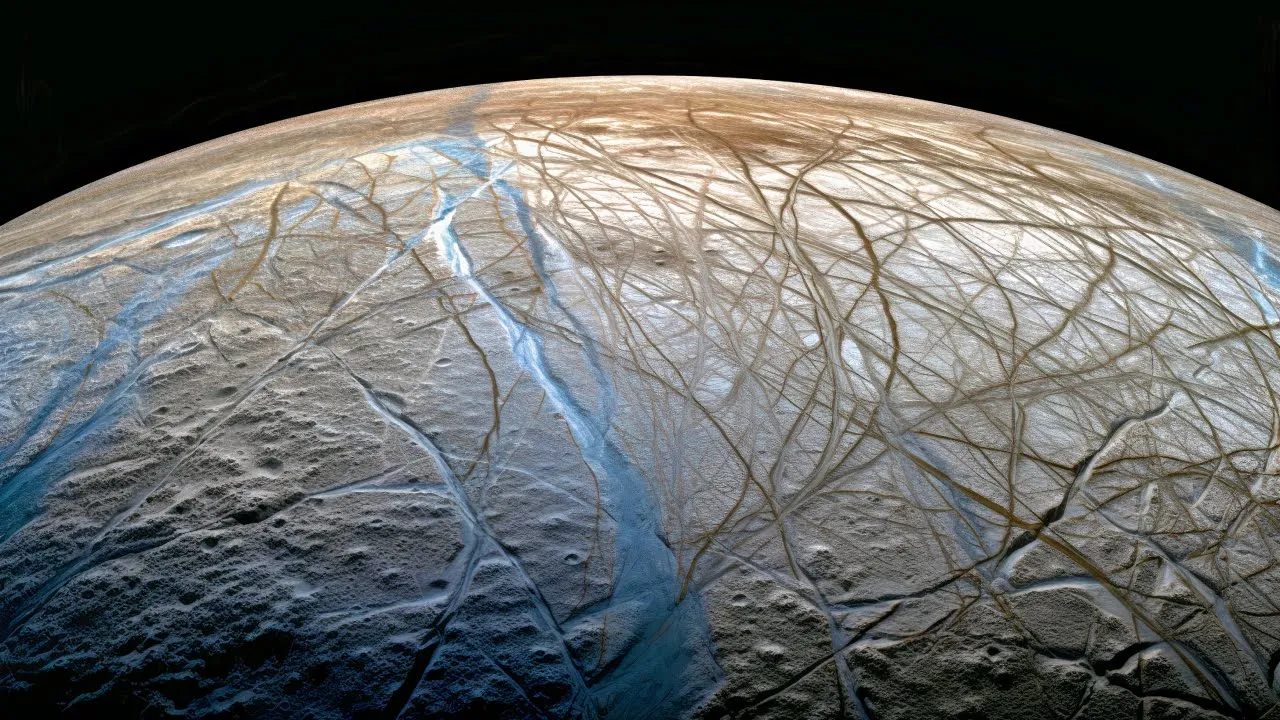
Europa, one of Jupiter's moons, potentially fits this description.
We probably aren't going to reach Europa in our lifetime, but that doesn't mean we won't have an effect on it, if and when we get there.
I have very little doubt that current research being done on the hydrothermal vents will be of great use to the future explorers of Europa.
And isn't that such a wonderful thought?
That the knowledge we glean now might continue to help guide humanity after we're gone?
I've met people who have found genuine despair in this sort of thinking, this sort of mindset, and if you share this mindset, I'm here to tell you… do not despair. There is still so much left to explore on this planet.
Which…is a good opportunity to talk about my streaming platform, Nebula. Eee! I can’t believe I just said that!
Nebula is a streaming service where a bunch of extremely talented video creators, like TierZoo and Chubby Emu and me! Look! That’s me!
All come together to create amazing videos, some of which are exclusive only to Nebula.
For example, Real Science has a Nebula original series all about human evolution, and y’all know me, I don’t care about mammals, and I especially don’t care about humans, but I was genuinely surprised by how fascinating this series was.
Especially the episode about sweat.
Didn’t think I would find sweat so interesting.
And when you join, you don’t just get access to Nebula Originals, you also get access to Nebula Classes, where creators from the Nebula community teach you to do the kinds of things that we do.
All of the content on Nebula is ad-free, and if you sign up using my link in the description, you’ll get 40% off annual plans, which shakes out to, like $2.50 a month, and you’ll be directly supporting me and creators like me.
Nebula is creator-owned, and when I first started making videos, I used to daydream about joining them, in part because it IS creator owned.
Nebula isn’t some third party company trying to squeeze as much content and profit out of us as possible, they’ve deliberately built a community of creators that are there to help and support each other, and I am EXTREMELY proud to say that I’m now a member of it.
So if any of this sounds appealing to you, again, you can sign up with Nebula using my link in the description.
Anyway, let’s wrap this up, thanks for watching another episode of Alien Ocean, and thanks again to ChemThug for collabing with me on this video.
I literally could not have made a whole chunk of it without you.
Again, the links to his YouTube channel and also his TikTok are in the description so let’s get him more subscribers, y’all, cuz he deserves them. Be sure to check out my Patreon as well, where you can get early access to my videos or your name in the beautiful credits, and you can also check out all my other stuff here, if you want.
And my hopefully interesting question of the day is, although it’s probably not that interesting, and it’s actually not a question, but if you know any other cool topics where chemistry meets marine biology, please let me know in a comment!
I’d love to have an opportunity to have ChemThug back on the show.
And until next time, this is your friendly neighborhood Octopus Lady -- and ChemThug! -- reminding you don’t have to go into space to find aliens.
(Music)
Up Next

Snake Locomotion Biomechanics: How Serpents Move
@zefrank
1.2M views•2024-08-31
Bacterial Communication: Quorum Sensing and Biofilm Formation Explained
@JHUAAP
12.6K views•2011-06-28

Enteric Nervous System Explained: The Gut's Brain | Neurobiology Lecture
@alumniu6029
438 views•2018-09-12

Bacteriophages: Earth's Deadliest Killers and Future Antibiotics
@kurzgesagt
34.6M views•2018-05-13
Related Study Plans & Knowledge Roadmaps
Structured learning paths in Biology