Brand licensing agreements require careful negotiation of five key legal terms: royalty rates (licensors seek high rates while licensees want low payments), net sales definitions (gross sales minus deductions, with disagreements over what can be deducted), exclusivity (licensors want flexibility while licensees seek competitive advantage), minimum royalty payment terms (including timing and structure), and approval processes (specifying timeframes and consequences for delays). The fundamental principle is that everything in a licensing contract is negotiable between the two parties.
Brand Licensing Agreements: Key Contract Clauses Explained
Added:Deep Dive
Fundamentals of Intellectual Property (IP) Law, particularly distinguishing between trademarks, copyrights, and patents.
Hammering John Oliver on Hammer Lawyers With Hammers
1.6M
This comprehensive segment covers the fundamental differences between intellectual property types. A trademark is a word, symbol, or phrase that identifies a manufacturer's products and distinguishes them from others, with the primary purpose of preventing consumer confusion about product source. Copyright protects original creative works fixed in tangible media like songs, books, and movies, granting exclusive rights to the author. Patents provide legal rights to inventions that offer new ways of doing something or solving problems. The segment explains that trademark infringement requires showing likely consumer confusion about product source, while copyright infringement relates to copying the expression of creative works. Geographic limitations apply to trademark protection, as lawyers are licensed to practice only in specific states, allowing multiple lawyers to use similar marks in different regions without infringement.
Click to watch →

IPL Law on Trademarks
119
Copyright, patents, and trademarks are three distinct intellectual property rights that cannot be interchanged. A trademark is any visible sign capable of distinguishing the goods or services of an enterprise, including stamped or marked containers and names or designations identifying an enterprise. Copyright protection is confined to literary and artistic works which are original intellectual creations, beginning from the moment of creation. A patent refers to any technical solution of a problem in any field of human activity which is new, involves an inventive step, and is industrially applicable. Utility models are also covered under patent protection.
Click to watch →

H.I. #2: Copyright Not Intended
289.3K
Intellectual property consists of three main categories: copyrights, patents, and trademarks. Copyrights protect creative works like stories and art; patents protect inventions with approximately 20-year protection in the US; trademarks protect brand identifiers like Coca-Cola. Copyright differs fundamentally from patents because creative works depend on prior cultural development, similar to how technological inventions build on previous innovations. This distinction matters because it shapes debates about appropriate duration and scope of protection.
Click to watch →

Why is Nintendo so Overprotective of its Intellectual Property?
719.1K
Intellectual property in the United States consists of three main categories: (1) Patents—exclusive rights to commercially exploit an invention in exchange for public disclosure; (2) Copyrights—the exclusive legal right to produce and distribute something one has made; (3) Trademarks—designs used to distinguish goods of one entity from another and indicate their source. For Nintendo, patents protect technological design, trademarks protect branding, and copyrights protect the right to reproduce and sell branded content. Most online discussions about Nintendo's overprotectiveness concern copyrights, but the company's primary concern is actually trademark protection.
Click to watch →

HUGE Fender Lawsuit News
179.6K
Intellectual property protection consists of three distinct types with different characteristics and applications. Patents protect inventions and last exactly 20 years from filing, after which designs enter the public domain. Copyright protects artistic works like songs, books, and creative expressions, lasting the author's lifetime plus 70 years (or 95 years for corporate works). Trademarks protect brand identifiers like logos, names, shapes, and colors, and can last perpetually as long as they are properly maintained. Guitar body shapes cannot be trademarked because they are considered generic rather than distinctive identifiers. The Stratocaster body shape was ruled generic because it appears in dictionaries as a generic electric guitar representation. This distinction explains why Fender's trademark attempts for body shapes failed while their copyright claim succeeded, demonstrating how different intellectual property frameworks apply to the same guitar design.
Click to watch →
Deep Dive
Basic principles of Contract Law, including offer, acceptance, consideration, and breach of contract.

Introduction to Contract Law | AS Law Unit 2 Essentials
12.9K
A contract requires four elements: offer, acceptance, intention to create legal relations, and consideration. An offer is a proposition from one or more persons to another, with the offeror making the offer and the offeree receiving it. Key distinctions include offers versus invitations to treat (shop displays, advertisements, auctions), reward posters as offers, and the Carbolic Smoke Ball case showing offers can be made to the entire world. Offers can be revoked, rejected, or terminated by counteroffer. Acceptance must be an agreement to all terms, by the intended offeree, and cannot be by silence. The postal rule applies: acceptance is effective when posted. For business agreements, courts presume legal bindingness, but parties can rebut this with evidence. For domestic agreements, courts generally presume no legal bindingness. Consideration is what each party puts into the contract, such as goods, services, money, or stopping doing something. It must have some value, though not necessarily substantial. Vague promises and past consideration are not acceptable. Breach can occur through non-performance, improper performance, or anticipatory breach. The innocent party seeks damages to put them in the same position as if the contract hadn't been broken. The remoteness test requires damages to arise naturally from the breach or be reasonably contemplated by both parties. Mitigation of loss requires the innocent party to take reasonable steps to minimize loss.
Click to watch →

BLAW | BUSINESS LAWS | PART-A | FULL EXPLANATION | SEM-2 | OSMANIA UNIVERSITY |@shivanipallela
2.7K
This section covers the foundational elements of contract law under the Indian Contract Act 1872. Offer (Section 2(a)) is a proposal expressing willingness to do or abstain from something with intention to obtain consent. Acceptance (Section 2(b)) is the offeree's agreement, making the offer a valid promise. Valid acceptance must be absolute, unconditional, communicated to the offeror, given only by the offeree, within reasonable time, and in prescribed manner. Consideration (Section 2(d)) is the 'price of promise'—something of value given in exchange for a promise. Valid consideration must be approved, desired by the promisor, move from the promisee, may be past/present/future, lawful, real, and have adequate value. These elements are essential for a valid contract; without lawful offer and valid acceptance, no contract exists.
Click to watch →

Contract Law - Consideration
51.3K
Consideration is the essential element of a contract that requires something of value to be exchanged between parties, defined as 'the price paid for a promise' (Dunlop v Selfridge, 1915); it can be executory (exchange of promises) or executed (performance in return for a promise), but past consideration is not valid consideration (Re McArdle, 1951); consideration must move from the promisee and be sufficient (though not necessarily adequate) - meaning it must exist but doesn't need to be fair or equal in value (Thomas v Thomas, 1842; Chappell & Co Ltd v Nestle Co Ltd, 1960); however, something that is already a legal or contractual duty cannot constitute valid consideration (Collins v Godefroy, 1831; Stilk v Myrick, 1809), though going beyond such duties can (Hartley v Ponsonby, 1857); the doctrine of promissory estoppel (Central London Property Trust Ltd v High Trees House Ltd, 1947) provides an exception where a promisee can rely on a promise even without consideration if three requirements are met: an unequivocal promise, a change in position by the promisee, and inequity if the promisor goes back on their word.
Click to watch →

Contract Act (Part 1) | Business Law | One-Shot Revision | CA Foundation Sep'26 |CA Shruti Chamaria
114
This section covers the essential elements of contract formation. For an offer to be valid, it must be certain, definite, not vague; must be communicated to the offeree; must be capable of creating legal relationship; may be conditional, specific, general, express, or implied; and must be made with view to obtaining assent. Acceptance must be communicated to the offeror, in the prescribed mode, within a reasonable time, and can only be given by the person to whom the offer was made. Consideration is defined as when at the desire of the promisor, the promisee and any other person has done or abstained from doing, or promises to do or abstain from doing something. Consideration can be past, present, or future. Legal rules: Consideration must move at the desire of the promisor; may move from promisee or any other third party; must be real and not illusory; need not be adequate; performance of legal obligation is not consideration. Exceptions to consideration requirement: Natural love and affection between parties in near relationship (must be in writing and registered); completed gift; bailment; agency; charity.
Click to watch →

Contract Act Lecture 2
190
A contract is a legally binding agreement between two or more parties that requires three essential elements: (1) Offer - a clear proposal made by one party to another, (2) Acceptance - the unqualified agreement to the terms of the offer, and (3) Consideration - something of value exchanged between parties. When these elements are present, a valid contract is formed that creates legal obligations enforceable in court. The contract must also meet additional requirements such as legal capacity of parties, lawful purpose, and mutual consent. Breach of contract occurs when a party fails to fulfill their obligations, and remedies may include damages, specific performance, or injunctions depending on the circumstances.
Click to watch →
Deep Dive
The concept of Brand Equity and how brand value is leveraged for commercial expansion.

Branding1
142
Brand equity is the differential effect that knowing the brand name has on customer emotion, attitude, and behavior related to a product or its marketing. It represents the value that a brand adds to a product beyond its functional attributes. Brand value is the monetary worth of a brand, calculated based on how much more customers are willing to pay for products with the brand compared to identical products without the brand. It represents the financial value that brand equity creates.
Click to watch →

Basics of Brand Management || Brand Equity concept || 100 top brand ||
568
Brand equity is the commercial value added to a product or service from consumer perception of the brand name. It represents the difference in marketing outcomes between branded and unbranded alternatives. Brand equity generates revenue recognition and creates value for businesses. When a brand name is attached to a product, marketing results differ significantly from unbranded equivalents. This concept explains why branded products command premium prices and maintain customer loyalty.
Click to watch →

MKT530_Lecture09
1.6K
Brand equity represents the additional value a brand adds to a product beyond its functional characteristics. To measure brand equity, marketers compare the price consumers are willing to pay for an unbranded product versus the same product with a known brand. Strong brands command premium prices, and this accumulated value becomes the brand equity. For example, Coca-Cola's total company value of $60 billion significantly exceeds its tangible assets of $4.5 billion, with the difference representing accumulated brand equity over time. This concept is fundamental to brand management strategy.
Click to watch →
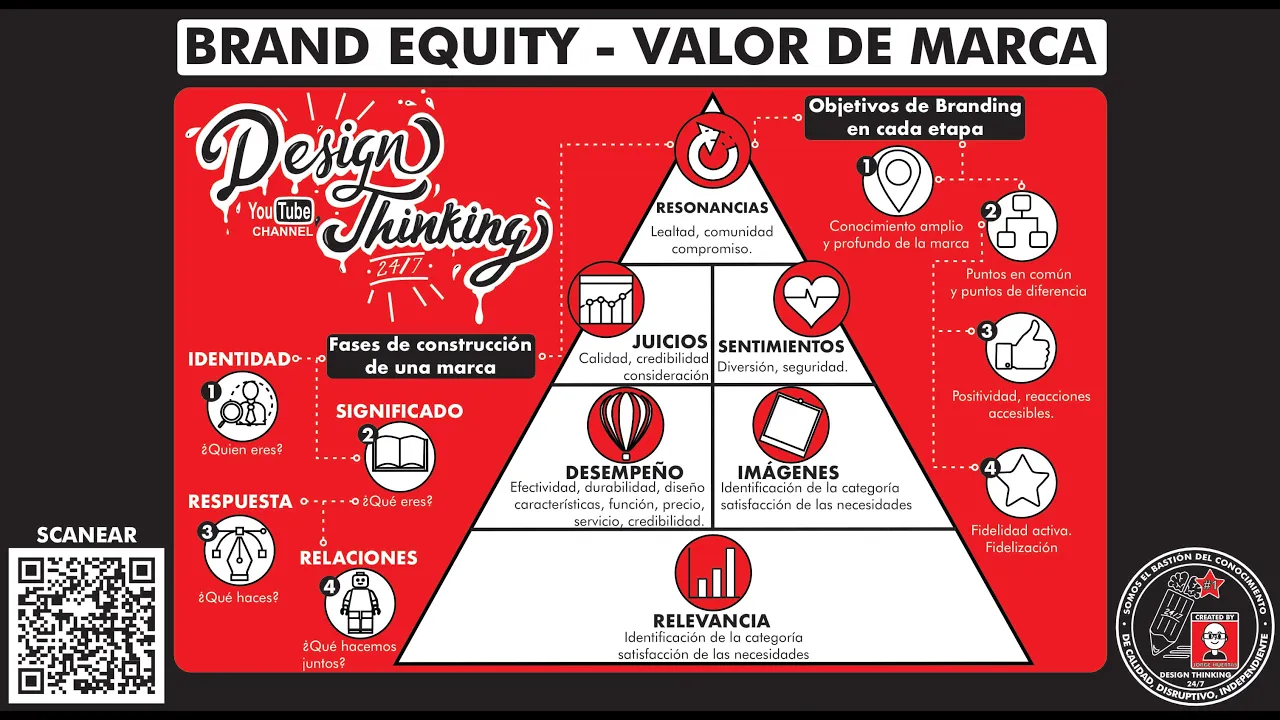
¿Qué es y cómo construir "BRAND EQUITY - VALOR DE MARCA"? ¿Para que sirve? Cómo aplicarlo. T41 E 632
453
Brand equity (valor de marca) is the value that brands add to their products and services, representing the social and perceived value of a known or emerging brand. It is built through four key elements: brand loyalty, brand awareness, brand associations, and perceived quality. The brand equity pyramid consists of five levels: relevance (identifying categories and satisfying needs), performance (effectiveness, durability, design, function, price, service, credibility), judgments (quality, credibility, consideration), feelings (emotional responses), and resonance (loyalty, community, commitment). Brand equity is measured through brand awareness, customer loyalty, views, retention, licensing potential, and brand enthusiasm. Positive brand equity facilitates long-term business growth by enabling easier product expansion and market entry, as customers become brand ambassadors who actively recommend the brand to others.
Click to watch →

Branding and Corporate Identity
343
Brand equity is the commercial value that a brand name adds to a product. For example, if a company manufactures two identical laptops, one without any brand name (generic) and one with the HP logo, customers would likely pay more for the HP laptop. The price difference between the generic product (e.g., 20,000) and the branded product (e.g., 30,000) represents the brand equity. This commercial value comes from the brand name alone, demonstrating why companies invest in building strong brands.
Click to watch →
Deep Dive
Basic financial terminology regarding business revenue streams, particularly the difference between profit-sharing and licensing fees.

한국 바이오 역사를 새로 쓰는 엄청난 계약! 삼천당제약의 수익배분 계약 대해부 #삼천당제약 #프로핏쉐어링
18.2K
Profit sharing is a licensing structure where parties divide profits according to agreed formulas rather than receiving fixed sales percentages. In a 50:50 deal, developers can earn 5 times more than traditional 5% royalty contracts. Traditional licensing involves upfront payments, milestone payments, and low royalty rates (5-20%), allowing quick risk reduction but limiting revenue share. Profit sharing represents a shift where developers retain greater ownership, accepting more responsibility for higher potential returns. The definition of 'profit' varies across contracts (net income, gross revenue, or fixed percentages), making the percentage figure less important than understanding which revenue stage it applies to.
Click to watch →

Bedanya Revenue dan Profit Sharing
15.2K
Revenue sharing calculates a percentage from total sales revenue (before expenses), while profit sharing calculates a percentage from net profit (after deducting costs like raw materials and rent). For example, with Rp100,000 revenue and 70% costs, revenue sharing at 10% yields Rp10,000, but profit sharing at 10% yields only Rp3,000. Franchise agreements typically use profit sharing because investors want to share actual business profitability, whereas revenue sharing is more common in venue rentals and exhibition booths where both parties share risks and rewards based on sales performance.
Click to watch →
Top 10 Reasons Laundry Delivery Businesses Fail to Thrive w/Dave & Carla S3E55 The LM Show
10.7K
Revenue sharing agreements differ from profit sharing agreements in a critical way. Revenue sharing takes a percentage of top-line revenue before expenses are paid, meaning the operator may have no profit left after the revenue share is taken. Profit sharing would only take a percentage of actual profits after all expenses are covered. This distinction is crucial because revenue sharing can leave operators with no profit even when the business is generating revenue.
Click to watch →

Perbedaan Revenue Sharing (Bagi Hasil ) dengan Profit Sharing (Bagi Laba)
6.3K
Profit sharing, or bagi laba, is a profit distribution method based on net profit (laba bersih). Net profit is calculated by taking the gross profit and further subtracting all expenses, taxes, and other deductions. This method ensures that only the actual remaining profit after all costs are covered is distributed among the partners.
Click to watch →

Riba dalam Akad Kerjasama - Ust. Indra Firmansyah
106
Taking a percentage of revenue (omset) is fundamentally different from profit sharing. Revenue sharing is riba because it guarantees income regardless of business performance. Profit sharing (bagi hasil) is only permissible when calculated from actual net profits, where both parties share in both gains and losses.
Click to watch →
Prerequisite Knowledge
- Concept 01Fundamentals of Intellectual Property (IP) Law, particularly distinguishing between trademarks, copyrights, and patents.
- Concept 02Basic principles of Contract Law, including offer, acceptance, consideration, and breach of contract.
- Concept 03The concept of Brand Equity and how brand value is leveraged for commercial expansion.
- Concept 04Basic financial terminology regarding business revenue streams, particularly the difference between profit-sharing and licensing fees.
Subsequent Learning
- Step 01Negotiation strategies for optimizing royalty rates and defining exclusivity boundaries.
- Step 02The mechanics of contract enforcement, including royalty audits and quality control compliance monitoring.
- Step 03International brand licensing considerations, including cross-border IP protection and jurisdictional conflicts.
- Step 04Legal frameworks for dispute resolution, breach of contract remedies, and agreement termination protocols.
Legal Basics
Key Terms
Legal Basics
0:10Playing Section
- 1
Counterfeiting is illegal and harmful to brands.
- 2
NFL now runs ads to educate fans about fake gear.
- 3
Legal contracts require careful negotiation between parties.
Relational Contract Theory and the Flexibility Critique
While traditional brand licensing emphasizes rigid, highly detailed contract clauses to protect intellectual property, Relational Contract Theory argues this approach can be counterproductive. Proponents of this view suggest that overly strict legal protections—such as aggressive royalty audits, absolute exclusivity, and suffocating approval rights—can foster distrust, stifle creative innovation, and make partnerships too fragile to survive rapid market changes. Instead, this perspective advocates for flexible, trust-based frameworks that prioritize long-term collaboration and mutual adaptation over rigid legal policing. Relying too heavily on adversarial legal clauses rather than relationship management can ultimately damage both the brand's equity and the partnership's commercial viability.
Deep Dive
Negotiation strategies for optimizing royalty rates and defining exclusivity boundaries.

The art of collaboration with Pelumi Nubi
114
Exclusivity means you cannot work with competing brands in the same category. This reduces your opportunities and potential income, so you should charge more for exclusive partnerships. Negotiate based on what you would have earned from working with competitors. There's no standard rate - it depends on your confidence in your value and your track record.
Click to watch →
Exclusivity Clauses Are Killing Your Deals | Here’s How to Fight Back
2K
Exclusivity clauses require creators to avoid working with brand competitors for specified periods, but can be defined so broadly they block entire industries. Brands use these clauses to protect marketing investments, but the scope and duration should match deal value. Key red flags include overly broad competitor categories, timeframes exceeding 30-60 days, and lack of additional compensation. Effective negotiation strategies include narrowing scope to direct competitors, shortening timeframes, and requesting higher rates for exclusivity. Always read fine print, push back on vague terms, and track contract terms systematically to protect future earning potential.
Click to watch →
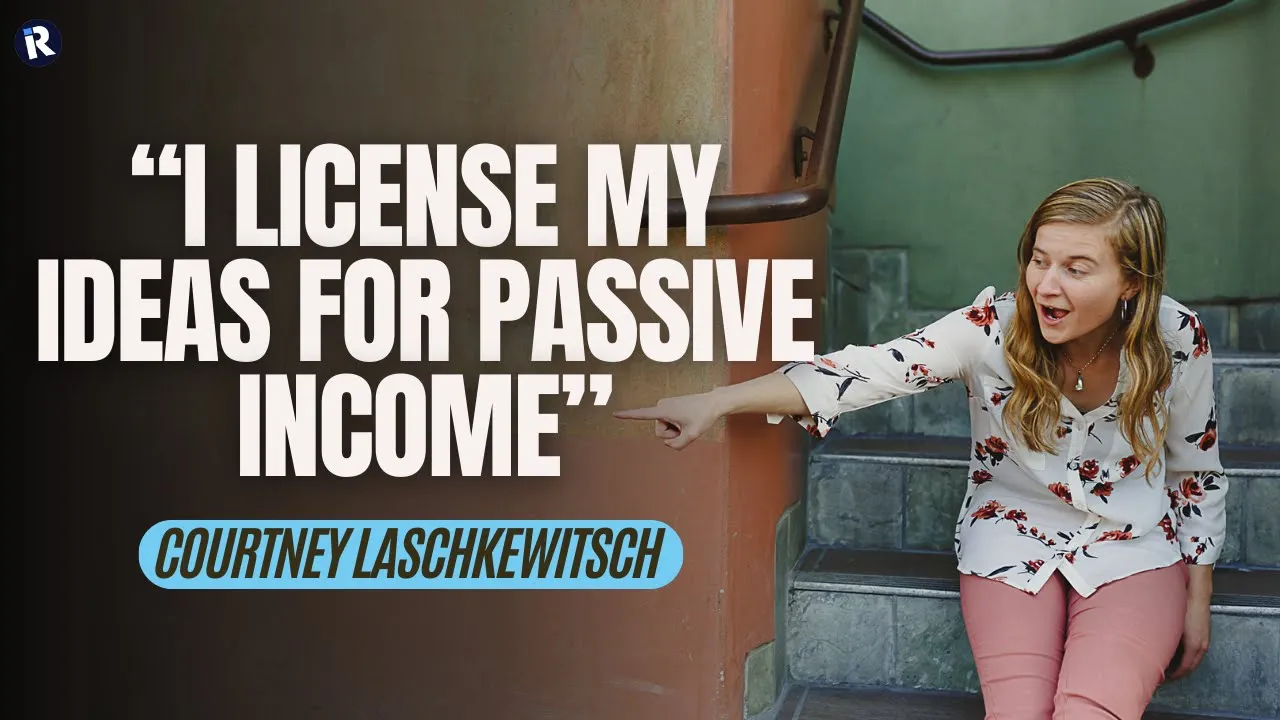
Sell Your Ideas for Products Using These 10 Steps — Here's How
4.6K
When negotiating licensing deals, focus on four key terms: (1) Exclusivity - whether the contract is exclusive or non-exclusive; (2) Territories - geographic scope (worldwide, select countries, or US only); (3) Term - duration of the contract (1-10 years); (4) Royalty rates - typically 3-5% but can vary. Always ask what percentage the company is considering first, as they may offer higher rates than expected (up to 7-10%). Remember that licensing is a relationship-building exercise - maintaining good relations opens doors for future product pitches.
Click to watch →

How to Get the Highest Possible Royalty Rate
3.2K
Mastering royalty rate negotiations requires understanding psychological tactics. Letting licensees make the first offer creates room for upward negotiation—responding to a 3% offer with a 7% counter is more effective than coming in too high. The anchoring technique involves stating a high initial request (e.g., 9%) while immediately showing flexibility, which psychologically frames negotiations around the higher number. Licensees seek long-term partnerships and often meet in the middle when presented reasonable compromises. Small percentage increases (even 2%) can generate significant annual income (potentially six figures), making these negotiation skills financially critical for inventors seeking maximum returns on their intellectual property.
Click to watch →

How to Get The MOST Out of a Brand Deal || Make Money as a Content Creator
935
Exclusivity clauses require brands to pay additional compensation because they restrict the creator's ability to work with competitors. The creator should charge a monthly rate based on the scope of exclusivity—narrow exclusivity (e.g., not working with other yogurt brands) costs less than broad exclusivity (e.g., not working with any dairy brands). The rate should reflect the potential lost business by analyzing past brand deals with competitors and calculating total earnings that would be forfeited.
Click to watch →
Deep Dive
The mechanics of contract enforcement, including royalty audits and quality control compliance monitoring.

Comisión de Minería - 20 de Junio 2018
191
Effective contractual compliance requires regular site visits, external consultants for independent assessment, audits for financial and operational compliance, environmental compliance monitoring, and tracking royalty payments. Contracts typically include remedies for breach: monetary penalties, termination, recovery of damages, suspension of operations, and transfer of assets. The state should have authority to require information and take action when parties fail to comply.
Click to watch →

Full Bộ : Dốc tiền cứu làng, nhận lại lòng tham - Tiểu Trang Sub
2.6K
Professional quality control requires systematic inspection and contractual enforcement. The management company's quality control team inspected all goods, rejecting substandard items and imposing penalties according to contract terms. This demonstrates that professional quality control requires systematic inspection and contractual enforcement to ensure compliance and protect against exploitation.
Click to watch →

Navigating the Brand Licensing Life Cycle
260
Quality control provisions set standards to protect brand reputation, ranging from general requirements (no lesser quality than existing products) to specific standards (maintaining star ratings). Licensees typically want certainty about requirements, while licensors prefer discretion. Audit rights allow licensors to inspect licensee records for accurate royalty payments, facility inspections for compliance with standards and laws, and verification of human rights compliance. These provisions are negotiated but rarely cause deal failures when acceptable provisions are reached.
Click to watch →
Gov. Abbott to speak at ILA Convention in Galveston
147
The organization is ensuring the contract is being adhered to and followed in the way it was intended and bargained. Everyone on both sides is expected to follow the contract, and the organization will make sure of it through safety audits, grievances, jurisdiction committees, and other mechanisms. This demonstrates that contract enforcement requires active oversight.
Click to watch →
Konferencija “Sutarčių vykdymas: receptai efektyviam sutarties valdymui” 1
1.4K
Effective contract monitoring requires centralized responsibility assigned to specific individuals rather than relying on individual purchasers, automated tools to track performance without manual management, and proactive oversight that makes contractors aware they will be monitored. Common barriers to enforcement include fear of supplier exclusion, fear of supplier relationships, fear of legal proceedings, and time constraints. Overcoming these barriers requires understanding that suppliers not treated fairly will eventually leave, maintaining proper documentation for legal proceedings, and recognizing that principled enforcement builds respect. Contract management is based on partnership principles: mutual respect, good faith performance, open communication, and fair treatment. Organizations should share knowledge cross-departmentally, consult legal counsel about common problems, and document lessons learned. For service contracts with hidden defects, organizations should accept some defects as normal, establish tolerance thresholds, document all defects, and consult legal counsel about consequences for defects affecting public interest.
Click to watch →
Deep Dive
International brand licensing considerations, including cross-border IP protection and jurisdictional conflicts.

農林水産研究における知財マネジメントセミナー 手引きを用いた知財マネジメントのポイント解説②
119
For international licensing: (1) Rights acquisition is important before marketing, (2) Rights are country-specific, so determine which countries/regions to protect based on production, processing, or consumption locations, (3) For variety rights, check if protection exists in export destinations and which UPOV Convention version applies, (4) Check novelty requirements, (5) Consider unified branding across multiple countries. Local partnerships may acquire rights with advantages of reduced costs and easier enforcement, but disadvantages include partners becoming rights holders and harder branding control.
Click to watch →

Protege Tu Negocio: Licencia Correcta y Evita Riesgos Legales
115
Brand licenses are territorial and do not transfer with products. When a company manufactures a product with a brand (such as Hello Kitty or Demon Slayer), the license is valid only for a specific country or region. Importing and selling such products in a different country without obtaining a separate license for that territory constitutes selling pirated products, even if the products are original.
Click to watch →
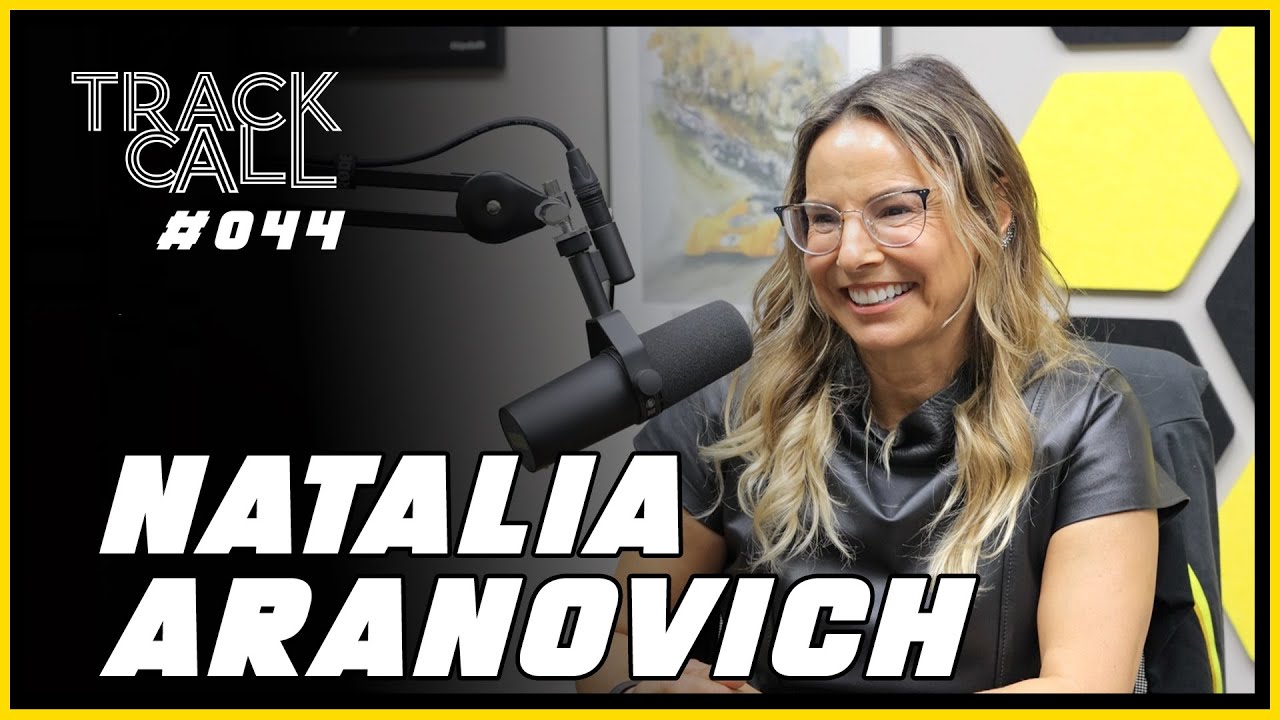
Track Call #44 - Natalia Aranovich (Intelectual Property Attorney)
1.1K
IP protection is territorial—rights exist only where registered. This creates loopholes where products can be manufactured in countries with weaker enforcement and sold internationally. International treaties like the Berne Convention provide some automatic copyright protection, but trademarks require separate registration in each country. The Madrid Protocol simplifies international filing but doesn't eliminate country-by-country requirements. Licensing agreements specify terms including product scope, exclusivity, time frame, and geographic territory. Assignment transfers all rights, while licensing grants usage permission while retaining ownership. Exporting products requires additional licensing for each destination country. The slot car industry faces unique challenges because manufacturers often produce replicas without authorization, requiring multiple licenses from car manufacturers, racing teams, and drivers.
Click to watch →

CLS How to Negotiate a Licensing Deal��PART 1
600
When licensing internationally, you must verify trademark ownership in each target country. A brand may own marks in one country but not in neighboring countries, or may own marks in one category but not another. For example, Under Armour may own their name in Mexico but not their UA logo due to prior ownership by another party. When expanding into new territories, you may need to have the licensee file trademarks in the licensor's name and work with local counsel to perfect those registrations. The licensee typically pays for these registrations, and the licensor may require this as a condition of the license to avoid liability until the marks are officially registered.
Click to watch →

Programa Visão & Negócios - Episódio 045 - Welinton Souza
133
To protect a brand internationally, registration must be obtained in each specific country or region where protection is desired. Examples include the European Community (Community Trademark) and Mercosul (South American trade bloc). Protection is not automatic across borders.
Click to watch →
Deep Dive
Legal frameworks for dispute resolution, breach of contract remedies, and agreement termination protocols.

Ngabuburit Ngomongin Hukum Perjanjian
582
Agreements can be terminated by: (1) mutual consent of all parties, (2) court proceedings under Article 1266 when parties cannot reach agreement, (3) fulfillment of the agreement's purpose, (4) legal events such as death or destruction of subject matter, or (5) expiration of the agreed time period. Breach of contract (wanprestasi) occurs when parties fail to fulfill their obligations. Before filing a lawsuit, parties should typically send a notice of default (somasi) demanding performance. Well-drafted agreements should include specific remedies for breach such as liquidated damages or interest on late payments. When disputes cannot be resolved through negotiation, parties may seek judicial intervention in the appropriate court (Pengadilan Negeri) to seek remedies for breach of contract.
Click to watch →

Introduction to Contracts for Small Business Owners 11/15
137
Dispute resolution clauses outline processes for resolving disagreements: negotiation first, alternative dispute resolution (mediation, arbitration), and legal proceedings. Mandatory arbitration can bar parties from suing later. Breach of contract occurs when parties violate agreed terms, ranging from non-payment to defective performance. Material breach allows termination and damages when outcomes differ significantly from contract. Minor breach requires continued performance while seeking damages. Remedies default to monetary damages compensating for losses, with specific performance available only for unique subjects like real estate.
Click to watch →

LAWS-GENERAL: UNDERSTANDING LEGAL FRAMEWORK FOR VALUATION: ESSENTIAL LAWS FOR IBBI VALUATION EXAMS
661
When breach of contract occurs, affected parties can seek remedies: (1) Damages - compensation for losses suffered; (2) Specific performance - court orders breaching party to fulfill obligations; (3) Injunction - court order preventing breach of non-compete clauses; (4) Rescission - cancellation returning parties to pre-contract positions. Contracts terminate through: (1) Performance - when both parties fulfill obligations; (2) Mutual agreement - both parties agree to end before completion; (3) Breach - when one party fails to perform; (4) Frustration - when performance becomes impossible due to unforeseen circumstances like destruction of venue by fire.
Click to watch →
Webketoan - Một số điểm lưu ý khi soạn thảo hợp đồng - ThS Ls Đỗ Trọng Hiền
373
Contracts may be terminated when: contract purpose is achieved, parties agree, one party no longer exists, or one party fails to perform obligations. Termination by notice ends all contractual obligations and releases parties from future performance. Dispute resolution clauses should specify methods (negotiation, mediation, arbitration, court), jurisdiction, applicable law, and language. Negotiation and mediation are voluntary and non-binding. Arbitration requires prior agreement and produces final, binding decisions. Court proceedings are public and allow appeals. Each method has trade-offs in cost, speed, confidentiality, and enforceability.
Click to watch →
Unit 4 II Law Of Contract-1 II Sem 1 II Full Syllabus With Notes II Adv. Varun Dixit #lawofcontract
2.9K
Breach of contract occurs when a party fails to fulfill obligations under a legally binding agreement. Two main types exist: Actual Breach (failure to perform by agreed date) and Anticipatory Breach (indication of unwillingness before due date). Under Section 39, the aggrieved party can terminate the contract immediately and claim damages, or wait until the due date. Remedies include: Rescission (Section 64) - cancellation releasing parties from obligations; Damages - compensation for losses including ordinary (natural losses), special (special circumstances), exemplary (wrongful motives), nominal (no substantial loss), liquidated (pre-agreed), and unliquidated (court-determined); Specific Performance (Section 10, Specific Relief Act) - court order to fulfill obligations when damages are inadequate; Injunction - court order to prevent actions violating the contract; Quantum Meruit - reasonable compensation for services/goods when contracts are terminated prematurely or are void.
Click to watch →
Legal Basics
Key Terms
Legal Basics
0:10- 1
Counterfeiting is illegal and harmful to brands.
- 2
NFL now runs ads to educate fans about fake gear.
- 3
Legal contracts require careful negotiation between parties.
Relational Contract Theory and the Flexibility Critique
While traditional brand licensing emphasizes rigid, highly detailed contract clauses to protect intellectual property, Relational Contract Theory argues this approach can be counterproductive. Proponents of this view suggest that overly strict legal protections—such as aggressive royalty audits, absolute exclusivity, and suffocating approval rights—can foster distrust, stifle creative innovation, and make partnerships too fragile to survive rapid market changes. Instead, this perspective advocates for flexible, trust-based frameworks that prioritize long-term collaboration and mutual adaptation over rigid legal policing. Relying too heavily on adversarial legal clauses rather than relationship management can ultimately damage both the brand's equity and the partnership's commercial viability.
Fundamentals of Intellectual Property (IP) Law, particularly distinguishing between trademarks, copyrights, and patents.
Basic principles of Contract Law, including offer, acceptance, consideration, and breach of contract.
The concept of Brand Equity and how brand value is leveraged for commercial expansion.
Basic financial terminology regarding business revenue streams, particularly the difference between profit-sharing and licensing fees.
Negotiation strategies for optimizing royalty rates and defining exclusivity boundaries.
The mechanics of contract enforcement, including royalty audits and quality control compliance monitoring.
International brand licensing considerations, including cross-border IP protection and jurisdictional conflicts.
Legal frameworks for dispute resolution, breach of contract remedies, and agreement termination protocols.
1.3K views18likes3:55@SeltzerLicensingGroupOriginal Release: 2015-07-30
okay moving right along let's talk legal okay again there's a separate seminar on legal so I'm just gonna touch on a few key points first point is counterfeit counterfeit and the lesson that you should all walk away with its counterfeit is bad the counterfeiting was legal we wouldn't be here the show wouldn't be here you wouldn't be in the trademark business there's a lot of counterfeiting going on out there a friend describes it as a game of almost wacom all the more they shut down the more the the more sites pop up and so forth we saw the NFL took an interesting approach let me show you a quick video they have now gone on the offensive instead of just policing which they continue to do they actually are running ads which they run like this I ran the last Super Bowl she thought she was supporting the Buccaneers not pirates they're supporting thieves not the Steelers they're not supporting the Ravens eagles falcons or seahawks they're supporting vultures counterfeit gear doesn't support your team and often supports criminal enterprises so make sure your gear is authentic NFL gear buy authentic NFL gear Brian so the NFL has done a great job and continues to do a great job that they are also one of the biggest targets for this the other thing I want to talk about for legal is that when you're doing a contract and talk about legal you have to talk about contracts there's a lot of points that get into going to the contract I'm gonna focus on five points that are in that contract and what happens is you're going to be negotiating between licensee and license or on these points and the five key points I want to point out or one is the royalty rate as we talked about before but there's two sides to every negotiation you have what the licensee wants and you have what the license or wants license or wants a high royalty licensee you know they want to pay as little as possible you have what we talked to you have the net sales definition and again we can cover this in Q&A if you want but bottom line it's a very important term when you negotiate because net sales equals gross sales or less deductions and what are those deductions that's the negotiation the license ORS don't want any deductions licensees say hey I need to deduct anything any defects or maybe slotting fees or maybe some other items exclusivity another key one especially with the goal being to have this license as your competitive stain sustainable advantage it's important for you that it's exclusive however the license or they want to have their their freedom they need to have room to get out if they need to and license somebody else minimum royalty payment we talked about that what we didn't talk about is how is that paid is that amount when we talked about fifty thousand before is that amount paid upfront or is it paid towards the back of the contract and finally the approvals that's another key area the items the license or has to approve the product but is it going to be ten days and what if they don't respond in ten days so the key thing it's all about negotiating and you know the two sides and just remember key rule to negotiating is that everything's negotiable
Up Next

9:45
Licensing Agreement Negotiation: Beginner's Guide to Term Sheets
@inventRight
42.9K views•2015-01-29
46:36
Retention Habits of Top DTC Ecommerce Brands Revealed
@SendItPodcast
44K views•2026-03-03

5:15
Financial Terms in Trademark Licensing Deals: Royalty Rates
@SeltzerLicensingGroup
9.9K views•2013-06-14

17:30
The Planned Obsolescence of Light Bulbs and Tech
@veritasium
25.3M views•2021-03-26
Related Study Plans & Knowledge Roadmaps
Structured learning paths in Business
business
Pop-Up Retail: Strategy, Design & Execution
01Introduction to Pop-Up Retail & Strategic Goal Setting
02Budgeting, Site Selection, and Legal Essentials
03Experiential Retail Design & Visual Merchandising
+ 2 more learning modules
15h5 modules
Explore Roadmap
business
Reg CF: Startup Funding, Marketing & Launch
01Introduction to Equity Crowdfunding & Reg CF
02Platform Selection & Legal Preparation
03Crafting High-Converting Campaign Assets
+ 2 more learning modules
14h5 modules
Explore Roadmap
business
Productized Services: Scaling Solo Freelance
01Foundations of Productized Services
02Packaging and Scope Definition
03Pricing and Subscription Models
+ 2 more learning modules
15h5 modules
Explore Roadmap
business
Gov Procurement: Find, Bid & Win Contracts
01Introduction to Government Procurement & Business Setup
02Small Business Certifications & Set-Asides
03Finding and Analyzing Contract Opportunities
+ 2 more learning modules
14h5 modules
Explore Roadmap