

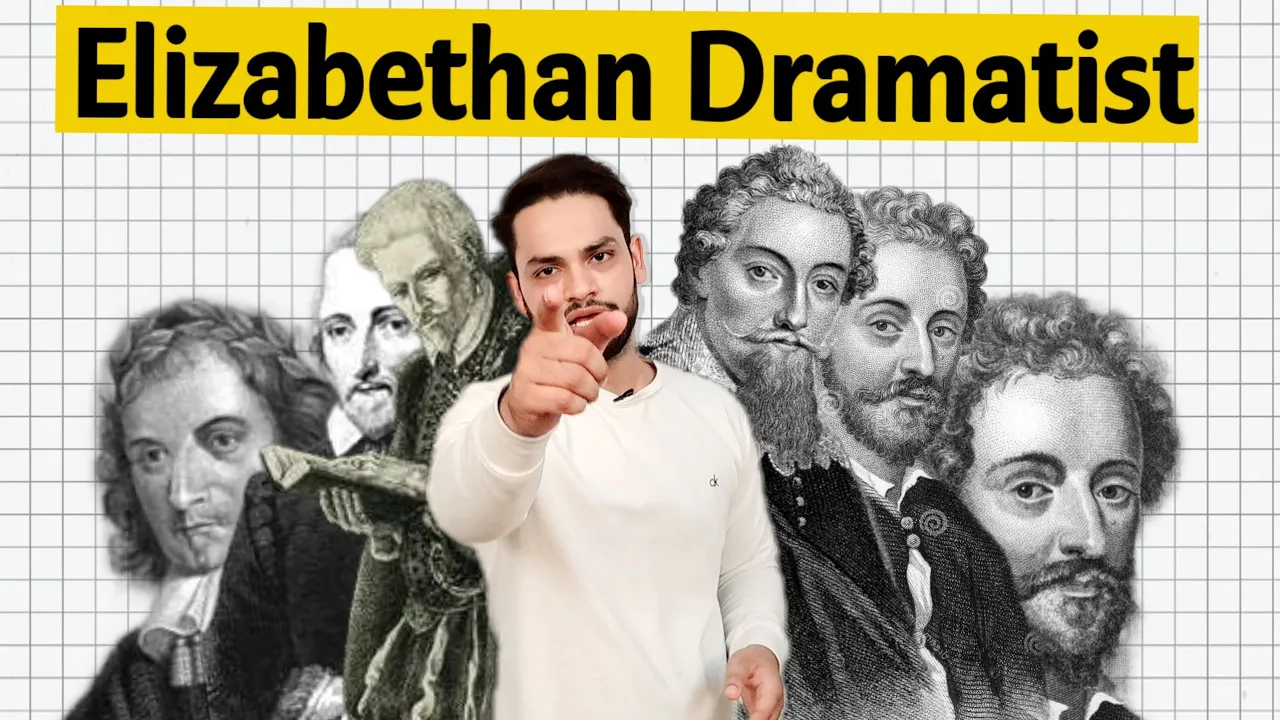










Jacobean drama (1603-1625) is characterized by its focus on metropolitan city life, political themes, and the depiction of a corrupt, decadent society. The major genres include revenge tragedy (featuring bloodshed and vengeance), city comedy (depicting lower-class London life), tragic comedy (mixing mirth and melancholy), and masks (performed by amateur courtiers). Key revenge tragedies include Shakespeare's Hamlet, Middleton's Revenger's Tragedy and Women Beware Women, Webster's The White Devil and The Duchess of Malfi, The Changeling (Middleton and Rowley), and Ford's Tis Pity She's a Whore. City comedies include The Night of the Burning Pestle, Bartholomew Fair, and A Chaste Maid in Cheapside. Major writers include George Chapman (famous for his violent translation of Homer and the controversial anti-Scottish play Eastward Ho), Ben Jonson (the leading mask writer), and Thomas Middleton.
Jacobean Drama Features & Key Writers | English Literature
Added:hey this is a discussion session on Jacobean period whatever we studied in our encyclopedia or contemporary encyclopedia of English literature you can revise here that is my idea okay topic is Jacobean drama what are the general features of Jacobean drama lately first ask you this is Jacobean drama about country life or city life Jacobean drama is about city lies correct Metropolitan Life okay is Jacobean drama about political themes or religious themes which was important political themes or religious themes Jacobean drama is about political themes okay did Jacobean drama presents a very ordered romantic society or did it show a very corrupt society ordered society virtuous society or corrupt society yes Jacobean drama presented a corrupt society was the Jacobean drama about the progressive society or a decadent society yeah Jacobean drama presented a decadent society it showed the decadent spirit so what are the general features of Jacobean drama it's about city life it is political it shows corruption and there is that decadent spirit okay what are the major genres in Jacobean drama within Jacobean drama what are the major genres what is the genre in which there is a lot of bloodshed but one group of people are killing another group of people yeah revenge tragedy revenge tragedy senic and revenge tragedy was an important Shondra okay next important Chandra is about lower class London life criminals and lower class people in London that is the theme in which Chandra it is City comedy so city comedy is about lower-class London life okay in which genre is there the mixing up of tragedy and comedy mirth and melancholy it is tragic comedy important genres of the Jacobean period are revenge tragedy City comedy tragedy comedy then Varna Chandra is there a kind of drama performed in cold by amateur courtiers what is that genre it is masks so revenge tragedy was their city comedy was a tragedy comedy was their mask was there all right now let me ask you about each of these genres first revenge tragedy I will tell you the name of the author you tell me which is his revenge tragedy okay Shakespeare's Hamlet correct Hamlet Shakespeare's Titus Andronicus is also a revenge tragedy but that was earlier in the 17th century Shakespeare's Hamlet Hamlet was written in 60-knot one just before Jacobean period started Jacobean period started in sixteen or three only when Elizabeth died okay next is revenge tragedy Middleton or towards nur one of these we don't know who Middleton or toerner wrote one revenge tragedy which is it Middleton or tour nurse the avengers tragedy correct third is revenge tragedy Middleton alone wrote one revenge tragedy what is it Middleton alone wrote women they were women women bigger women is a tragedy that Milton wrote alone okay so next is Webster's revenge tragedy Webster or to revenge tragedies what are they you know them the white devil the Duchess of Malfi the white devil and the Duchess of Malfi okay Middleton and Rowley together wrote Thomas Middleton and William Rowley together wrote of events tragedy what is it can you remember the changeling Middleton and Raleigh together wrote The Changeling and then one more one more one last revenge tragedy John Ford wrote one revenge tragedy which is the tragedy written by John Ford who is going in a Ford car that is my clue tis pity she's a hole this petite she's a hole is by John Ford these are revenge tragedies ok Shakespeare's Hamlet then Middleton October now wrote the revenger tragedy Middleton alone wrote women beware women Webster Road the white devil and Duchess of Malfi Middleton and Rowley together wrote The Changeling John Ford wrote tis a pity tis pity she's a hole next city comedies examples moment wrote wat city comedy moment the night of the burning pestle ok then Ben Jonson Ben Johnson City comedy is barceló me affairs ok Thomas Middleton's City comedy a chased made in Cheapside a chase made in Cheapside so which are the city comedies let us revise Bauman's the night of the burning pestle Ben Johnson's Bartolome affair Thomas Middleton's a chaste made in Cheapside next tragedy comedy which our Shakespeare strategy comedies Shakespeare's proper Raja comedies are his romances Shakespeare's dark comedies also have elements of tragedy comedy but his proper tragic comedies are romances ok which is Fletcher strategy comedy the faithful shepherdess flexures Falchi comedy is the faithful shepherdess Bowman and Fletcher together wrote a tragicomedy which is it dominant Fletcher together the Phil asked the philosopher not the Veloster sorry feel a stir or love lies a bleeding philosopher or love lies a bleeding okay come to masks masks who's the most important writer of masks in the 17th century correct Ben Jonson Ben Johnson wrote masks before Ben Jonson somebody wrote who John Lilly after Ben Jonson somebody wrote who John Milton okay so that is by way of introduction to Jacobean drama now let us talk about the major writers one by one what who is the first major writer in Jacobean drama the first major writer is George Chapman George Chapman do you know what jobs Chapman is most famous for George Chapman is most famous for what he's famous for his translation of home Chapman's translation of Homa what is the most important feature of George Chapman translation of Homa tell me most important feature of George batman's translation of Homa George Chapman wrote in a very bloody gory violent style his Houma is gory and violent okay next tell me George Chapman's first plane Chapman's first play which is his first play do you know the blind beggar of Alexandria the blind beggar of Alexandria who is the protagonist in blind beggar of Alexandria he is compared to somebody else he is compared to Marlowe's character blind beggar of Alexandria character is protagonist is clientís remember clientís and Tamburlaine Tamburlaine and klonda's are both shepherds they become things that is a connection then talk about Chapman you can't avoid mentioning another play Chapman along with two others wrote one play the title refers to a sailor's call which is at play Hoffman along with two others wrote eastward ho eastward ho is a very important play written by whom who are the three people who wrote it man Johnson and Marston Chapman Ben Johnson and Mastan now this play was very controversial at that time why was it controversial because it angered King James why because it is anti Scottish Chapman's eastward horizonte' Scottish do you remember there is another later play in Jacobean drama which is anti Spanish do you remember it is anti Spanish plays Middletons a game at chess eastward who is anti Scottish a game at chess is anti Spanish what happens in eastward ho there is one goal Smith okay not named proficient by proficient one man is there Goldsmith he had a modest he has a modest daughter and a foolish daughter and they fall in love with his apprentices when virtuous man is there and one ambitious rash man is their virtuous Golding an ambitious Quicksilver these are the two apprentices they fall in love with the Goldsmith daughter that is what happens in Chapman eastward hope okay now that is over Chapman is over don't worry I will ask you rapid-fire and cross connect in between next writer we will be Thomas Hayward that will be another audio clip another video that will be another video
Up Next
The Revenger's Tragedy by Thomas Middleton: Plot Summary & Analysis
@asm-literatureandpoetry4604
872 views•2024-01-08

Street Haunting: Virginia Woolf’s London Essay Analysis
@ExtraLiteraryAffairs
146 views•2025-01-24

Point of View in Fiction: First Person vs. Third Person
@magicalthriftyteacher
153.8K views•2014-03-31

1984: Orwell's Dystopian World and the Mechanisms of Totalitarianism
@AlternateHistoryHub
7M views•2017-03-04
Related Study Plans & Knowledge Roadmaps
Structured learning paths in Literature