
![하버드 출신 언어학자 충격! 한글에 숨겨진 충격적 비밀, 한자는 한국의 글자입니다 [해외감동사연]](https://i.ytimg.com/vi/B2D-r6CdyR8/maxresdefault.jpg)
![DÉCHIFFRER UNE ÉCRITURE VIEILLE DE 4000 ANS avec François Desset [INTERVIEW]](https://i.ytimg.com/vi_webp/pqLrU2KFah0/maxresdefault.webp)

![[FULL] Tóm tắt: Lịch sử thế giới cổ đại | Ai Cập - Lưỡng Hà - Hy Lạp - La Mã - Trung Quốc - Ấn Độ](https://i.ytimg.com/vi/tmti0f3sU4M/maxresdefault.jpg)










![Alfabenin Tarihi: Çiviyazısından Runik Yazıya [4K]](https://i.ytimg.com/vi/wHv4uxzjyHo/maxresdefault.jpg)

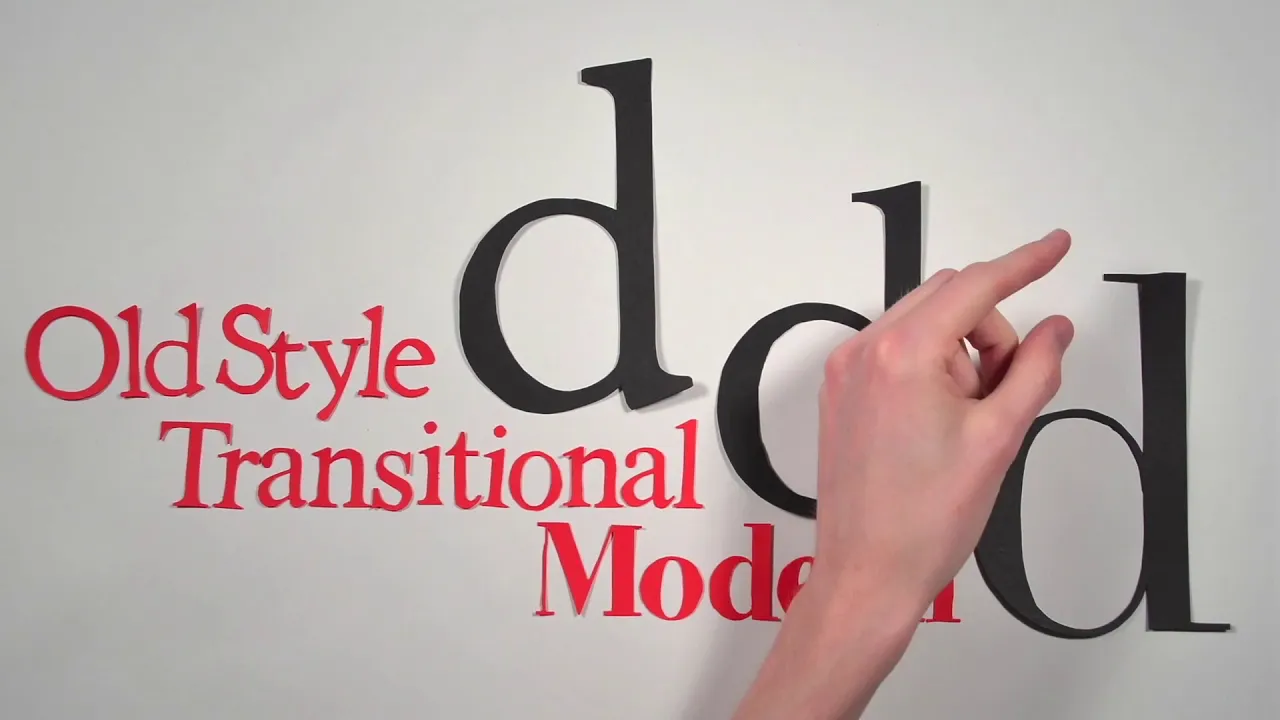






The modern Latin alphabet evolved over approximately 6,000 years through a chain of civilizations, beginning with Egyptian hieroglyphs that were adapted by the Canaanites for representing sounds rather than concepts, then refined by the Phoenicians, Greeks (who named them alpha and beta), Etruscans, and finally standardized by the Romans; many letters retain recognizable connections to their original pictographic origins, such as A from an Egyptian ox, C from a throwing stick, K from a hand, and R from a head, while others like W (double U), Y (from a Phoenician fork symbol), and Z (from a capital I) emerged from later adaptations and modifications across different cultures and time periods.
The Complete Origin of Every Letter in the Alphabet
Added:The fundamental difference between logographic systems (symbols representing words/ideas) and phonographic systems (symbols representing sounds).
A basic chronological understanding of key ancient civilizations, specifically the Egyptians, Phoenicians, Greeks, and Romans.
The linguistic concept of the 'Acrophonic Principle,' where a letter's shape originates from a pictogram of an object and represents the initial sound of that object's name.
Basic phonetic terminology, particularly the distinction between consonants and vowels and how they are articulated.
The field of Paleography (the study of historical handwriting styles) and Epigraphy (the study of ancient inscriptions on hard materials).
Comparative linguistics tracing how other modern writing systems (such as Cyrillic, Arabic, and Hebrew) diverged from the same Proto-Sinaitic roots.
The history of typography and print culture, focusing on how the printing press and digital media further standardized and altered letterforms.
Historical phonology and sound shifts (like Grimm's Law) to understand why the same letters represent different sounds in different modern European languages.
3.9M views108.4Klikes16:15Original Release: 2023-02-11
Did you know that A is actually an ox?
Or that K started off as a hand?
The letters we use to explain ourselves to the world also have their own stories to tell.
Tales as old as the pyramids of Egypt, the tragedies of Greece and the legions of Rome.
In this video we’ll explore the origins of our alphabet.
Who was the first to see a C? To write out Y or to have a P?
And what on earth is a naked E?
Let’s answer all these questions and more in another RobWords.
This is the alphabet.
You probably knew that.
More specifically, it’s our alphabet.
Not all alphabets look like this. In fact our alphabet gets its name from someone else’s alphabet.
You’ve perhaps also heard this referred to as the Roman or Latin alphabet.
And that’s because the majority of these mixtures of bendy and straight lines were settled in the configurations that we now know them by the scholars of Rome.
However behind each of these simple shapes is a story that goes way back.
In some cases, 6,000 years to the Egyptians.
The letter A for example, started out as an Egyptian cow.
Or at least this Egyptian hieroglyph of an ox. You may not think of the letters of the alphabet as being pictures of anything, but in some cases that’s precisely what they are.
The Egyptians famously constructed their sentences using these pictographs, which we call hieroglyphics, with each one representing a word. But a lesser known fact is that hieroglyphics were sometimes used kind of informally just to represent individual sounds.
You could then use them in combination to represent words. For foreign workers in Egypt - for example - it was easier to build the word you wanted to write using these sounds than to remember which of the around a thousand hieroglyphs represented that specific concept.
So say you couldn’t remember the hieroglyph for time, which for some reason was this picture of, I don't know, a button? Y ou could instead approximate the sound using the hieroglyph for the /t/ sound plus the hieroglyphs for I and for /m/.
Except, of course, you couldn’t because that would spell out the modern English word for time and would not help you communicate with anyone in Ancient north Africa.
But you get the system I'm trying to explain to you here.
Anyway, some of those foreigners I mentioned, a group called the Canaanites who came from the Middle East, enjoyed this system of spelling out words so much that they wanted it for their own Semitic language.
And they co-opted some of the Egyptian hieroglyphs for the job.
So, they chose this picture of an ox to represent the first sound at the start of their word for ox, which was Aleph. And they named the letter that too. They called it Aleph. Next they took this Egyptian hieroglyph which is supposed to be a representation of a sort of hut, and used it for the first sound in their word for house. These two pictures became the first of 27 representing all their consonant sounds. See where this is going?
The Phoenicians were the next to get hold of these letters.
They tweaked them just a little bit, then handed them to Greeks who changed their names to alpha and beta to better fit their own way of speaking and that is where alphabet comes from. The Greeks gave them to the Etruscans, who lived in modern day Italy. They meddled a bit more with the shape and called them Ah and Bay to reflect their sounds instead. Then they gave them to the Romans. The Romans tidied them up a bit and voila! And they haven’t really changed since.
A and B aren’t the only members of our modern alphabet that can be traced back to Egyptian hieroglyphs.
C started out as an Egyptian throwing stick.
It got passed around and bent about and turned into what we have today.
E, believe it or not, is thought to have originated with this Egyptian fella waving his hands around. He looks like he’s yelling “hey!” And that’s actually exactly the sound he represented to the Canaanites and the also to the Phoenicians as well. By the time the Greeks got him he looked rather different for a start, and they also wanted him to do a different job: to represent their sound /e/. So they dropped the /h/ at the start and named the letter naked E - epsilon - because it had been stripped of its H.
K is thought to have started out as a hieroglyph of a hand whose fingers simplified and spread.
And M was some wavy water. I mean, it basically still is.
N is believed to have begun as a snake that lost its head, but somehow kept its kink.
O started life as an Egyptian eye, believe it or not. Eye as in peeper, not as in the letter I. More on that one later.
And finally R has perhaps seen the biggest transformation - can you guess what it started out life as?
If you said “a head” - first of all, I’d love to know what’s going on in yours - and second, you’re right, If you look at how it changed between the civilizations it passed through, you can see that every individual tweak seems reasonable until we end up with something utterly different to what we started with.
So those are the ones that the smart folk who know about this sort of thing believe came from the Egyptians. But many more of our letters can be traced back to that alphabet developed for the Early Semitic language of the Canaanites.
L for example is thought to have started out as this symbol that looks a bit like a fishing hook.
It’s actually meant to be something called an ox-goad that’s used to not-so-gently encourage cattle to get moving.
Basically, a primitive cattle prod. Anyway as it passed through the hands of the phoenicians, the Greeks, the Etruscans and the Romans, it twizzled around and straightened out.
So which letter do you suppose this 4 thousand year old symbol turned into?
If you said W, you are absolutely… wrong.
This is actually thought to probably be where S started out.
D is also suspected of having come from the Early Semitic alphabet, although there’s some dispute over which letter is the daddy of D. It either started life as a door (apparently that is a picture of a a door) or a fish… Either way, it’s changed pretty radically over time. It actually took on two shapes to the Greeks.
One was passed to the Etruscans and became our letter D, and the other became Delta when the Greeks settled their own alphabet.
Q is also thought to have possibly come from the Early Semitic alphabet.
It started off looking like - I dunno - an O on a pogo stick? And hasn’t actually changed all that much over a few thousand years. What’s surprising about Q is that it’s survived at all. It does nothing that a C or a K couldn’t do. One of the suspicions is that, to the Phoenicians, Q made a slightly different sound to K, different enough for the letter to survive but not different enough to convince the Etruscans and Romans that they needed that sound too.
They instead deployed it for niche uses. So, for the Romans, a C went before an /a/ sound, K went before /e/ and /i/ and Q went before - like it tends to for us now - a U.
Now, U has its own fascinating story to tell. U is thought to have started out life as this Phoenician character. Which is also the ancestor of Y.
And of V. And of W.
And… most surprisingly of all… of F!
Yup - the Greeks took the two prongs of this ancient barbecue fork and bent them over.
It’s easy to see how the Phoenician character gave birth to Y because it’s barely changed.
It’s right towards the end of our alphabet because it was a late addition for the Romans, who deliberately imported it from the Greek alphabet in order to be able to spell out Greek words. That’s why in languages like French it’s actually called a “Greek I” - igrek. And why in others - like German - it’s called by the Greek name, ypsilon.
The Romans were just repeating a process that had already happened once naturally, because their letter U had also descended from ypsilon of the Greeks. And so had V. Why? Because to the Romans, U and V were one and the same!
They didn’t have a /v/ sound - any classical Latin words that look like they have a /v/ actually had a /w/ sound. This isn’t veritas it’s wear-ee-tass.
V got allocated the sound it has now in English after the Normans invaded England. They assigned it for use to distinguish between Old English’s two F sounds, which are represented in these words here. These are the old English words for wolf and wolves, pronounced wulf and wulvas.
The F is making a very different sound the second time round and you can see that that is why we say wolf and wolves. It's also the explanation for why we say half and halves, for example. I actually go into that in my video about weird English plurals. Give it a watch after you've watched this one.
Anyway, the final letter to have originated from that phoenician barbecue fork is W.
How? Well the clue is in the name. W started life as just a double U - two Us next to each other. Although they often looked like Vs because, as I said, to the Romans, U and V were the same,.
It was actually Germanic languages that started using two Us to make the /w/ sound, replacing their runic letter, wynn, which I love, but you have to say, looks too much like a P. In English we call that new letter double U but in other languages it’s called double V, like in French where it's double-V even though they barely use it actually. Do the French just use combinations of other vowels to make that sound?
Oui.
See Now having just gotten over the ugly ambiguity of U and V in Latin, let’s look at some more Roman double trouble.
To the Romans, the letters I and J were also one and the same.
They’re both thought to date back to this rather more complicated character that probably made a /y/ sound in semitic speech.
The shape itself may have started out as a pictogram of a hand and a forearm. Anyway, it was simplified significantly as it moved through the civilizations.
For the Romans, I served two purposes - as a consonant making that /y/ sound and as a vowel.
Just look at how the Romans spelt Julius, like Julius Caesar.
This was pronounced yoo-lee-oos, and the I at the start is performing a very different role to the one in the middle, as you can here: yoo- lee-oos J came into being much later when scribes wanted to differentiate between these two usages. Eventually the elongated version became standard for representing the consonant.
That Roman /y/ sound actually ended up developing in lots of different directions. In Spain it turned into a /h/ sound like in jamón and in France it became a /j/ sound like we use it now although over the centuries it has softened to a /sz/ sound in French like in jolie or jambon.
I don't know why I'm so into ham today.
Anyway, we’ve covered most of the alphabet now, but there are a few stragglers, so let’s blast through them.
First G. So when the Romans got hold of C, it was being used for both a /c/ and a /g/ sound but this was clearly one ambiguity too many for them, so they popped this little spur on there to show when it was meant to be said /g/.
H started out as this phoenician letter called het, which meant “fence” and that is precisely what it looks like, isn't it? The Romans eventually dropped its top and bottom crossbars, making it a much less formidable obstacle but giving us our letter H as we know it now.
The Phoenicians were the first to have a P. It started off as a vaguely bendy line that gained confidence over time.
T has actually barely changed over four thousand years, its crossbar has just migrated upwards.
X started off as this funky Phoenician fellow. It took on two forms in the lands that now constitute Greece - its form in the east went on to be xi in the Greek alphabet as we know it. The western form found its way to the Romans via the Etruscans and wound up in our alphabet.
And lastly - in its rightful place - is zed. Or should that be zee?
I’ll answer that in a sec. The letter likely started out as this Phoenician letter that looks like a capital I. But you can see how expediency, or laziness, turned it into a single stroke. The Romans actually didn't need Z for their own words. But they kept it in order to be able to write out Greek words.
As for the zee/zed question: well they’re both good.
To the Romans and Greeks, the letter was called zeta and when the Normans invaded England they brought two names for that letter with them.
They were zé and zéte, both of which have survived, one on each side of the Atlantic.
One of them being zee and the other one being zed.
And there we have it - an A to Z-slash-zee of alphabetic origins.
Now, I've only talked about the upper case letters, you may have noticed, but the lower case letters also have their own stories to tell. I mean, basically it's just a case of the upper case letters being written down and then turning all curvy and that. But if you do want to learn more about this I can highly recommend this really pretty book that I read while researching this. It's called A is for X, it's by Lyn Davies and it's really great.
It you’ve liked this video, do check out another one of my videos. I think the one that you're going to really like is my one about lost letters of the alphabet. It's basically about characters that we used to use but we don't use any more. I think it's my favourite video that I've made. If not, maybe I'll see you over in one of my other videos. Until then, take care.
[sings[ Frolicking in the snow.
Up Next

7:05
Root Word (Linguistics): Definitions & Examples
@audiopedia5493
2.7K views•2014-11-06
36:52
Constraint Interaction in Optimality Theory: Epenthesis & Deletion
@Vidyamitra
180 views•2018-08-20
20:45
Tracing English to Its Proto-Indo-European Roots
@RobWords
1.6M views•2024-07-13

21:32
Accent Expert Explains U.S. Regional Dialects | Part 1
@WIRED
9.3M views•2021-01-21
Related Study Plans & Knowledge Roadmaps
Structured learning paths in Linguistics
linguistics
Optimality Theory: Tableaux & Constraints
01Phonological Basics: Sounds, Syllables & Rules
02Foundations of Optimality Theory: GEN, CON, and EVAL
03The Constraint Inventory: Markedness vs. Faithfulness
+ 2 more learning modules
15h5 modules
Explore Roadmap
linguistics
Morphosyntactic Alignment: S, A & P Systems
01Foundations of Syntax: Transitivity and Arguments
02The Linguistic Variables: Mapping S, A, and P
03Nominative-Accusative Alignment
+ 3 more learning modules
12h6 modules
Explore Roadmap
linguistics
Analyzing Sign Language: Phonology & Syntax
01Foundations of Sign Language Linguistics
02Phonology: The Five Parameters of a Sign
03Morphology: Word Formation and Classifiers
+ 2 more learning modules
14h5 modules
Explore Roadmap
linguistics
Pragmatics: Speech Acts, Grice & Politeness
01Introduction to Pragmatics: Meaning in Context
02Grice’s Cooperative Principle & Implicature
03Speech Act Theory
+ 2 more learning modules
14h5 modules
Explore Roadmap