










Human language evolved through a gradual process spanning hundreds of thousands of years, beginning with anatomical changes like the descended larynx and flexible tongue, followed by neural rewiring including Broca's area, Wernicke's area, and the arcuate fasciculus, and culminating in the Upper Paleolithic Revolution around 50,000 years ago when fully grammatical language enabled cumulative culture, abstract thought, and complex social organization that ultimately allowed modern humans to outcompete other human species like Neanderthals.
The Origins of Language: How Human Speech Evolved
Added:Basic principles of natural selection and evolutionary biology, specifically relating to hominid lineages.
The anatomical differences in the vocal tracts of humans versus non-human primates that enable speech.
An introductory understanding of brain anatomy, particularly the roles of the cerebral cortex, Broca's area, and Wernicke's area.
The fundamental distinction between basic animal communication (gestures and alarm calls) and symbolic human language.
Historical linguistics, exploring how early proto-languages diversified into modern language families.
Theories of language acquisition, such as Noam Chomsky's Universal Grammar versus connectionist and usage-based models.
The cognitive science of multilingualism and how the brain processes multiple linguistic systems.
Computational linguistics and how understanding human language evolution informs modern Natural Language Processing (NLP) and AI development.
30.9K views389likes2:24:48Original Release: 2025-11-13
Imagine this. Somewhere in Africa, maybe 500,000 years ago, maybe earlier, a human being made a sound. Not a grunt, not a scream, not the kind of vocalization that every ape can make.
Something different. A sound with intention, with meaning, with structure.
And here's the incredible part. Another human heard that sound and understood it. not just reacted to it emotionally, like an animal responding to a warning call, but actually understood what it meant. They grasped an abstract concept that existed only in the first person's mind, translated it through vibrations in the air, and reconstructed it perfectly in their own consciousness.
That moment, whenever it happened, changed everything. It was the beginning of language and language made us human.
If you're using this to fall asleep, that's exactly why I make these. So maybe subscribe and tell me where are you watching from and what time it is. I check the comments and it's always this amazing snapshot.
Tokyo at sunrise, London at lunch, Los Angeles at midnight. All of us thinking about the same mystery together. Here's what keeps scientists awake at night. We don't actually know when language started. We don't know how it started.
We don't even know why it started when it did and not earlier. What we do know is that at some point in our evolutionary history, human brains underwent a transformation so profound, so complete that we became the only species on Earth capable of doing something absolutely extraordinary.
We can talk about things that aren't here. We can describe yesterday, plan for tomorrow, imagine worlds that never existed. We can tell lies, create poetry, explain quantum physics, teach someone a skill we learned decades ago, debate philosophy, make jokes that depend on three layers of shared cultural knowledge. No other animal can do this, not even close. Chimpanzees, our closest living relatives, can learn a few dozen signs or symbols. Parrots can mimic hundreds of words. Dolphins have complex calls that might communicate specific information, but none of them have grammar. None of them can take a finite set of sounds and recombine them infinitely to create new meanings. None of them can say, "Tomorrow we should probably avoid the area near the river where we saw the lion last week, but the week after that might be safe if the herds have moved through."
That sentence, which any 5-year-old human can understand, represents a level of cognitive complexity that no other species has ever achieved. The question is, how did we get here? How did human brains rewire themselves to make language possible? And here's where the story gets really fascinating. Language didn't just appear suddenly like someone flipping a switch. It required a whole series of changes. Physical changes, neurological changes, social changes, each one building on the last, each one happening over hundreds of thousands of years. Our throats had to restructure themselves. Our tongues had to become more flexible. Our breathing had to come under conscious control in a way that's unique among primates. And most importantly, our brains has to completely reorganize how they processed information.
The human brain, your brain right now, as you're listening to this, has regions specifically dedicated to language that don't exist in other animals. Areas that turn thoughts into words, words into mouth movements, sounds into meanings, grammar rules into unconscious patterns you follow without thinking.
These brain regions are so specialized, so crucial that damage to them can leave someone unable to speak while everything else about their intelligence remains intact. Or they can speak fluently but not understand a single word they're hearing. The fact that language can break in these specific weird ways tells us it's not just learned behavior. It's hardwired into our neural architecture.
But it wasn't always there. Somewhere back in time, our ancestors lived in a silent world. They had thoughts, probably complex ones. They had emotions, social relationships, knowledge about their environment.
But they couldn't express these things with words. They couldn't tell stories around the fire. uh they couldn't explain their reasoning or share abstract ideas or coordinate complex plans that required everyone to understand the same detailed strategy.
And then through a process we're only beginning to understand, something shifted, the human brain began to rewire itself for language. And once that rewiring happened, once our ancestors could communicate with words, everything else followed. Art appeared in the archaeological record. Sophisticated tools, evidence of trade networks spanning hundreds of miles, ceremonial burials suggesting abstract thoughts about death and meaning. The archaeological record shows an explosion of human achievement starting around 70,000 years ago. And most scientists think language was the spark that lit that fire. Tonight, we're going to explore how this happened. How evolution took an ape brain and transformed it into something that could learn words, combine them into sentences, and use those sentences to build civilizations.
We're going to look at the anatomical changes, the throat restructuring and tongue flexibility that made speech sounds possible. We're going to examine the neural rewiring, the brain reorganization that created dedicated language centers. We're going to investigate the theories about how language started, whether with gestures or sounds or some combination of both.
And we're going to ask the biggest question of all. Why us? Neanderthalss had brains as large as ours. Homo erectus survived for nearly 2 million years. But neither of them developed language the way we did. What made our brains different? What happened in our evolutionary history that turned us into the talking ape? The answers are going to take us deep into neuroscience and anthropology and linguistics. But don't worry, we're going to take it slow. This is designed to be relaxing, something you can drift off to while learning about humanity's greatest invention. The invention that made everything else possible. The invention that made us human. Language.
Before we can understand how language changed everything, we need to understand what came before, we need to picture a world of humans without words.
And here's the thing. That world existed for millions of years. Millions.
Modern humans have had sophisticated language for maybe 100,000 years, possibly less. But our ancestors, creatures recognizably on the human lineage, have been walking around for at least 2 to 3 million years. That's a lot of time spent being human without being able to talk about it. Go back 2.5 million years ago to East Africa. The landscape would look familiar in some ways. grasslands dotted with acacia trees, volcanic mountains in the distance, rivers cutting through valleys. But the humans, if you can call them that, would seem alien. These are oustralopithesines, creatures caught somewhere between ape and human. They walk upright, use their hands for manipulation instead of locomotion, but their brains are tiny, about 450 cm, roughly the size of a chimpanzee's brain, compared to our 1,350 cm today.
Watch one of these early hominins for a day and you'd see something that looks human doing things that seem almost human. They're making tools, crude ones, picking up rocks and smashing them against other rocks to create sharp edges. These older one tools, named after old Vi Gorge where they were first discovered, represent the earliest known technology. But here's what you wouldn't see. planning, abstract thought, conversation about what happened yesterday or what might happen tomorrow.
Because they couldn't talk, not the way we do, their anatomy simply wouldn't allow it. The larynx, the voice box that houses our vocal cords, was positioned high in their throats, almost where it is in modern apes. This high position meant they could breathe and swallow simultaneously.
useful for creatures who needed to eat quickly and stay alert for predators.
But it also meant they had almost no fingal space, that chamber above the larynx that humans used to modify sounds and create the incredible range of phonms that make up human speech. Their tongues were different, too. flatter, less muscular, incapable of the rapid, precise movements that let you distinguish between bar and da or shift seamlessly from vowel to consonant.
Try speaking without moving your tongue.
Actually, try it right now. You'll find you can make sounds, but you can't make words. That was their world. A world of grunts and cries and hoots, but not language. and their brains, even if we gave them modern vocal tracts, couldn't have handled language.
The neural architecture wasn't there.
Brain scans of fossil skulls show that the regions we associate with language production and comprehension, Broker's area and Vernick's area, were present but underdeveloped like having computer with the hardware installed but none of the software to run it. So, how did they communicate? We have a living laboratory that gives us clues. Modern great apes, chimpanzees, bonobos, gorillas, orangutans.
These are our closest living relatives, sharing 98% to 99% of our DNA.
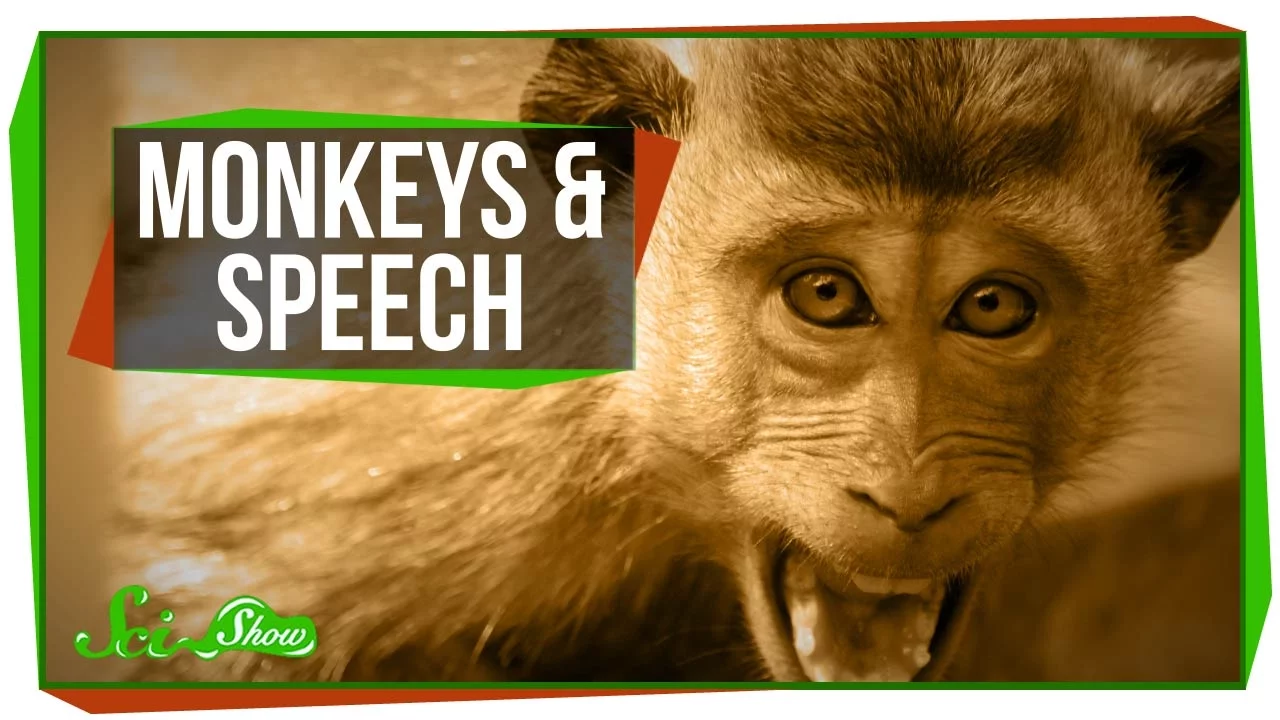
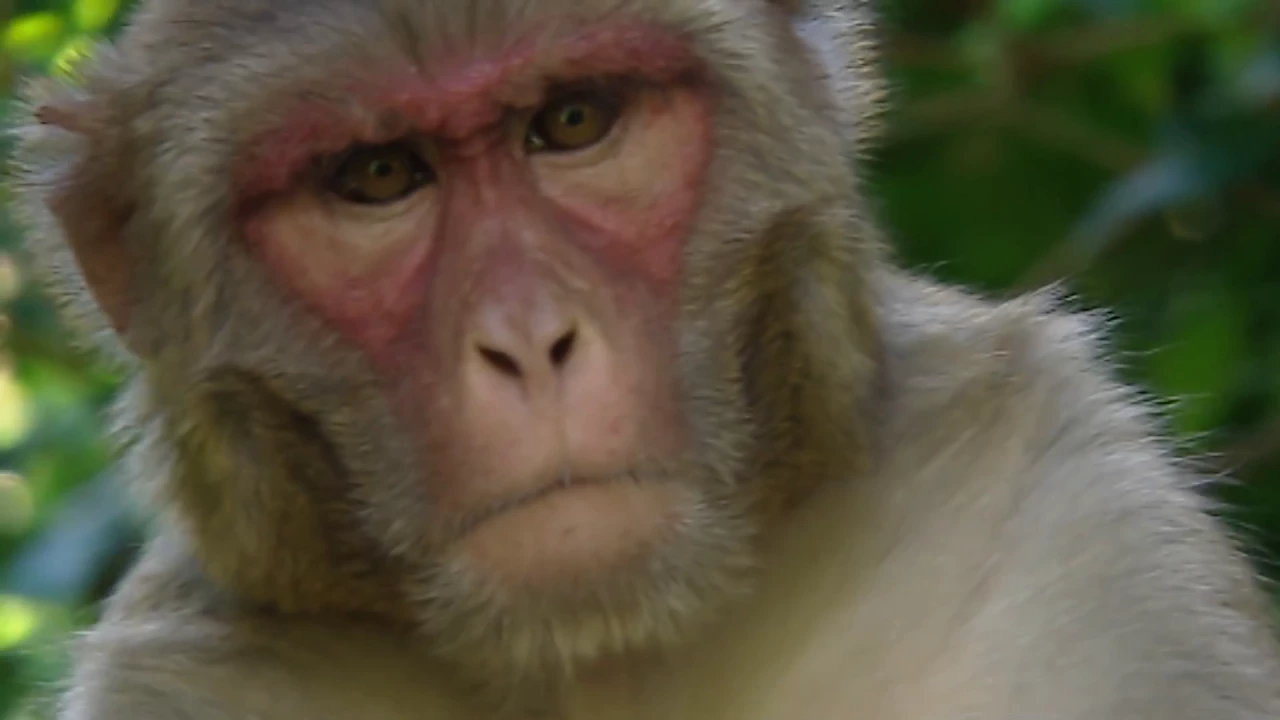
And watching how they communicate gives us a window into our pre-linguistic past. Chimpanzees have about 30 to 40 distinct vocalizations.
They have food calls that vary depending on what they've found. Alarm calls that differ based on whether the threat is a leopard, an eagle, or a snake. Pant hoots that identify individuals and maintain group cohesion. But here's what's crucial. These vocalizations are largely involuntary. They're emotional expressions, not intentional communication.
A chimp who finds food and makes a food call isn't thinking. I should tell the others about this. The call just bursts out, triggered by excitement or stress.
Where apes really shine is gesture.
Chimpanzees use dozens of intentional gestures. Arm raises that mean move away. Leaf clipping that signals sexual interest. Object shaking that means pay attention to me. Unlike vocalizations, these gestures are learned, vary between groups, and are used intentionally.
A young chimp watches adults and figures out what gestures mean. This is cultural transmission, the foundation upon which language would eventually be built.
Your ancestors 2 million years ago were probably doing something similar. Living in small groups of maybe 15 to 25 individuals communicating through a combination of involuntary emotional vocalizations and intentional gestures. Picture a hunting party. They've spotted a group of gazels in the distance. The leader, an older male who survived dozens of hunts, points toward the herd. He touches two younger males on the shoulder, then gestures for them to circle around from the left. Another gesture sends three more to the right. No words needed, just looks, points, touches, the kind of silent coordination you see in predatory animals who hunt in packs. and it worked for hundreds of thousands of years. It worked just fine.
We know this because the archaeological record shows increasing sophistication in tool use and hunting strategies, all without any evidence of the anatomical changes that would indicate language capability.
The olden tool kit, those first crude stone tools, persisted virtually unchanged for nearly a million years.
That's an almost unimaginable span of stability. For comparison, human technology has gone from the first computers to artificial intelligence in just 80 years. But the cognitive world of these pre-language humans was fundamentally limited in ways that are hard for us to imagine because we think in words. When you remember what you had for breakfast or plan what you'll do tomorrow, you're probably narrating it in your head using language. Your inner monologue is so constant that you might not even notice it's there. Now try to imagine thinking without words, not just being silent, but having no internal narration whatsoever. Your entire mental experience is images, emotions, immediate sensory input. You can remember what happened, but only as a series of mental pictures, not as a story you tell yourself. You can plan, but only in concrete terms. Go to that tree, wait for the animal, throw the rock. You can't think. If the weather changes, we'll need to modify our strategy. This is what psychologists call concrete thinking. the ability to deal with immediate tangible reality but not with abstract concepts.
You can see that the group has five people today when yesterday it had six and you can feel distress about the missing person. But you can't conceive of five as an abstract number. You can't count. You can't imagine scenarios that haven't happened. You can't think about the past except as memory replays. You can't really think about the future except as anticipation of things you've experienced before. And yet they were building increasingly complex social structures.
By 2 million years ago, early homoecies, Homohabilis and the early forms of Homoerectus were living in groups that required significant cooperation.
They were sharing food, something that's relatively rare in the animal kingdom.
When a chimpanzeee kills a monkey, everyone wants a piece. And who gets how much is determined by status and persistence and sometimes violence.
But evidence from early human sites shows systematic butchery and distribution of large animal carcasses.
This suggests social rules about sharing. Not formal laws obviously, but understood patterns of behavior. The hunters get the best parts. The old and the young get fed. Everyone gets something.
This kind of cooperation requires what pimeatlogists call social intelligence.
The ability to remember who did what for whom, to track favors and debts, to build alliances and navigate status hierarchies. And early humans were getting very good at it. Brain size was increasing slowly but steadily.
By 1 8 million years ago, Homo erectus had brains averaging about 900 cm.
Still smaller than ours, but 60% larger than the oralopithesines who came before. That extra brain tissue wasn't just sitting there looking pretty. It was processing increasingly complex social information. We can see this complexity in the archaeological record.
Around 1.7 million years ago, someone invented the Aulan hand axe. Now, this might not sound revolutionary, but compared to the older one choppers that came before, the Achillean hand axe was a masterpiece of engineering.
symmetrical, carefully shaped, requiring dozens of precise strikes to create.
Making one requires planning several steps ahead. You need to visualize the finished tool inside the raw stone. You need to understand how different angles of impact will create different flake patterns. You need to remember and apply techniques learned from watching others.
This is called hierarchical thinking.
the ability to break complex tasks into subtasks and execute them in sequence.
And it's devastatingly hard without language. Try teaching someone to tie their shoes without using words, just gestures and demonstration.
Now imagine teaching them to create a symmetrical hand axe through 30 minutes of careful napping. It's possible clearly because they did it. But it's inefficient. Knowledge transfer is slow.
Innovation is rare.
Which explains why once the Aulian hand axe was invented, it remained virtually unchanged for over a million years. A million years of making the same tool the same way. Think about that. We get frustrated when our smartphones don't update fast enough. But these were humans who perfected a technology and then passed it down through 40,000 generations without significant modification.
Not because they were stupid, but because without language, innovation is incredibly difficult. You can't describe a new technique. You can't explain why one approach works better than another.
You can't teach abstract principles. You can only demonstrate concrete actions and hope others can imitate them accurately enough. But evolutionary pressures were building. The groups were getting larger. By 500,000 years ago, some human populations might have numbered 50 to 100 individuals.
That's significant because there's something called Dunbar's number, the cognitive limit to the number of stable relationships a primate can maintain.
For species with our brain size, it's around 150. But that assumes you have language to maintain those relationships, to gossip, to reinforce social bonds, to negotiate conflicts.
Without language, the cognitive limit is much lower, probably around 30 to 40 individuals, similar to what we see in chimpanzeee communities.
As human groups grew beyond this size, the old system of gesture and grunt communication was becoming inadequate, you needed something more. Some way to maintain cohesion in larger groups. Some way to coordinate more complex activities.
Hunting was becoming more sophisticated, too. By 400,000 years ago, there's clear evidence of coordinated hunting of a large game. Wooden spears from Shunning, Germany, dated to 300,000 years ago, show sophisticated craftsmanship and understanding of aerodynamics.
These weren't crude sticks. These were engineered killing tools, but using them effectively required coordination beyond simple gestures. You needed to plan ambushes, discuss animal behavior patterns, strategize about how to drive prey toward kill zones. Food sharing was becoming more elaborate. Archaeological sites show central hearth surrounded by evidence of different activities. Tool making in one area, food processing in another, bone working somewhere else.
This suggests division of labor, specialization, people doing different tasks and sharing the results.
But specialization creates dependency.
If I'm the best spear maker and you're the best hunter and someone else is the best at processing hides. We need ways to negotiate who gets what and when. We need to maintain relationships across time, remember obligations, make promises about future behavior. All of this was pushing toward language, creating selection pressures for individuals who could communicate more effectively, remember more complex social information, teach skills more efficiently. The stage was being set.
The evolutionary pressures were building, but the transformation hadn't happened yet. These pre- language humans were living in a world we can barely comprehend. A world of eternal present tense where you couldn't tell stories about the past or make detailed plans for the future. Where you couldn't think about abstract concepts or imagine scenarios that hadn't happened. Where every piece of knowledge had to be painstakingly demonstrated rather than simply explained. It was a silent world, not in the sense of being quiet, but in the sense of being wordless, full of grunts and cries and gestures, but empty of the thing that makes us most human.
The ability to take a thought from inside our heads and transmit it with all its complexity and nuance into someone else's mind. That ability was coming. The anatomy was starting to change. The brain was rewiring itself.
The social pressures were becoming intense enough that any improvement in communication ability would provide massive survival advantages.
The silence was about to be broken. And when it was, everything would change.
But before we get to language itself, before we talk about the first words or the first conversations, we need to talk about something more fundamental.
something that happened in the bodies of our ancestors that made language physically possible in the first place.
Because here's the thing about human speech. It's not just a mental achievement. It's an anatomical miracle.
Every time you speak, you're using body parts that in almost every other mammal serve completely different purposes.
Your larynx, your tongue, your lips. The precise control you have over your breathing, all of it had to evolve specifically for the act of creating the complex sounds that make up human language. And those changes, they came with costs. Serious life-threatening costs that evolution only accepted because the benefits of speech were so overwhelming that they justified the risks.
Let's start with the most dramatic anatomical change, the descended larynx.
In almost every mammal on Earth, the larynx, your voice box, sits high in the throat. This makes perfect sense from a survival standpoint. When you're an animal that needs to eat and breathe at the same time, which is most mammals, you want your airway and your food pipe to be as separated as possible. A high larynx lets you lock your airway shut while you're swallowing, preventing food from going down the wrong pipe. Baby humans are actually born with high larynxes just like other mammals. For the first few months of life, human infants can breathe and swallow simultaneously.
It's one reason babies can nurse for extended periods without coming up for air. But then something strange happens.
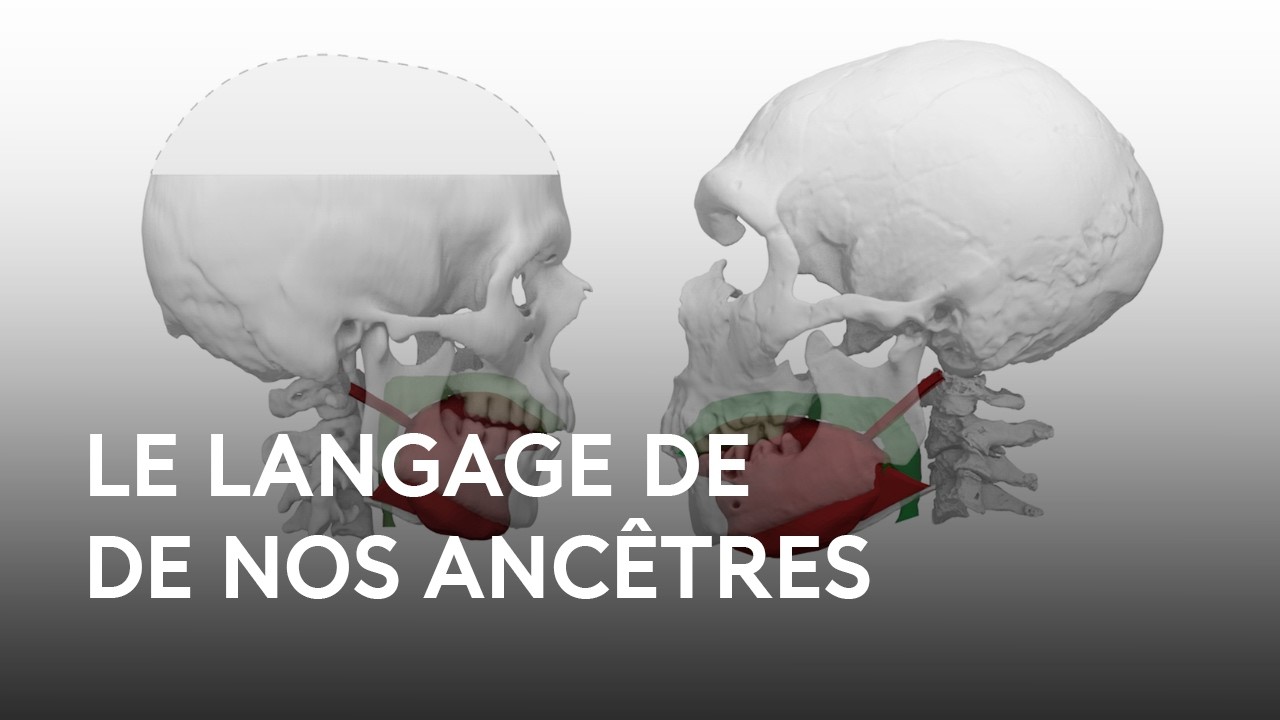
Around 3 to 4 months of age, the human larynx begins to descend. It drops lower in the throat, creating a much larger space above it. This space, the fernx, becomes a resonating chamber that allows us to produce the enormous range of sounds required for human speech. The descended larynx is the single most important anatomical feature that makes speech possible. It's what lets you create distinct vowel sounds. The difference between a and e and ooh comes from changing the shape of that fingial space using your tongue and throat muscles. No other primate can do this. Chimpanzees have maybe a dozen distinct vocalizations they can produce. Humans can create hundreds of distinct sounds, all because of that descended larynx and the resonating chamber it creates.
But here's what we gave up for this ability. The descended larynx made humans the only mammal on Earth that regularly chokes to death on its own food. That separation between airway and food pipe that works so well in other mammals. We lost it. In humans, food and air share the same pathway at the back of the throat. One wrong move, one piece of food that goes down the wrong way when the epiglotus doesn't close in time, and you're in serious trouble.
Thousands of people die from choking every year. It's the fourth leading cause of unintentional death in the United States.
And it's entirely because evolution decided that the ability to say, "Watch out for that predator behind you," was worth the risk of occasionally dying from a piece of steak lodged in your windpipe.
That's not a tradeoff evolution makes lightly. The fact that natural selection accepted this increased mortality risk tells us just how valuable speech must have been to our ancestors survival. So when did this happen? When did the larynx descend in human evolution?
The fossil evidence points to Homohidal begensis, the species that lived roughly 700,000 to 300,000 years ago. These were the descendants of the bottleneck survivors, the populations that were recovering and diversifying across Africa, Europe, and Asia. We can't see soft tissue like larynxes in fossils, but we can see the anatomical changes in the skull that accommodate a descended larynx.
The base of the skull in homohyal burgensis shows a more flexed arched shape compared to earlier human species.
This flexion creates space for a descended larynx and enlarged fernx.
Earlier species, Homoerectus and their predecessors have flatter skull bases.
They couldn't have supported a descended larynx. They couldn't have produced the range of sounds required for complex speech. But homohidal beganis could. And this is crucial because homohyal begensis is the common ancestor of three species. Modern humans, Neanderthalss, and denisven.
All three post-bottleneck species inherited the descended larynx. All three had the basic anatomical equipment for speech. This suggests that the selective pressure for speech evolution, the desperate need for better communication during and after the bottleneck affected all human populations.
But the larynx isn't the only change.
There's also the hyoid bone. The hyoid is a small U-shaped bone in your neck that doesn't connect to any other bone.
It just floats there, suspended by muscles and ligaments. In humans, it serves as an anchor point for the tongue muscles and the muscles that control the larynx. It's absolutely essential for the precise control of vocalization required for speech. For decades, anthropologists argued about whether Neanderthalss could speak because we had never found a Neanderthal hyoid bone.
Then in 1,983, archaeologists excavated Cabara cave in Israel and found a nearly complete Neanderthal skeleton from about 60,000 years ago. It had a hyoid bone and it was virtually identical to a modern human hyoid. This discovery changed everything. It provided the first solid anatomical evidence that Neanderthalss had the physical capacity for speech.
They weren't grunting cavemen. They had the same vocal hardware we do. More recently, researchers have found hyoid bones in even earlier specimens. A 530,000year-old homohidal beagensis site in Spain, Sema de los wisos contained multiple hyoid bones that show the same modern human configuration.
This pushes the anatomical capacity for speech back to at least half a million years ago.
Long before modern humans even existed as a separate species, our ancestors were evolving the body parts necessary for complex vocalization.
But bones only tell part of the story.
The really revolutionary evidence came from genetics. In 2000, researchers studying a British family with severe speech and language disorders identified a mutation in a gene they called FOX P2.
This gene, it turned out, plays a crucial role in the development of the neural circuits required for speech and language. Individuals with damaged FOXP2 genes struggle with the fine motor control needed for speech. They can think complex thoughts. They understand language, but they have tremendous difficulty coordinating the precise muscle movements required to articulate words clearly.
Fox P2 exists in all mammals. Mice have it, bats have it, primates have it.
But the human version is different.
Humans have two specific mutations in fox P2 that aren't found in chimpanzees or any other primate.
When did these mutations occur? Genetic analysis suggests they became fixed in the human lineage around 500,000 to 800,000 years ago. Right in the window of the bottleneck and its immediate aftermath. Right when Homohylebergensis was evolving the descended larynx and modified hyoid bone. This isn't coincidence. This is evidence of coordinated evolution. Multiple anatomical and genetic changes all occurring in the same time period, all contributing to the same evolutionary goal, making complex speech possible.
But here's where it gets even more interesting. When researchers finally sequenced the Neanderthal genome, they checked for the FOX P2 mutations.
Neanderthals had them. The exact same mutations as modern humans. This was stunning evidence that Neanderthals could speak, not just make sounds, but engage in the kind of complex articulated speech that requires the precise motor control governed by FOX P2.
The Denisvens, we've checked their genome, too. Same fox mutations. All three post-bottleneck human species shared the genetic and anatomical basis for speech. This suggests that language or at least the capacity for language evolved before the three species diverged. It was part of the survival toolkit that got refined during the bottleneck, then inherited by all three descendant species. But there's more to speech than just a descended larynx and a modified gene.
You also need incredible control over your tongue. The human tongue is an engineering marvel. It's actually eight different muscles working in coordination capable of assuming thousands of distinct positions with millimeter precision.
This precision is what allows you to create the subtle differences between L and R, between T and D, between all the consonant sounds that require your tongue to touch specific parts of your mouth in specific ways. Other primates can't do this. Their tongues are shorter, less muscular, and lack the fine motor control of human tongues.
They physically cannot produce the range of sounds that human speech requires.
How do we know ancient humans had this tongue control? We look at the hypoglossal canal. The hypoglossal canal is a small opening in the base of the skull where the hypoglossal nerve passes through. This nerve controls tongue movement. In humans, the hypoglossal canal is significantly larger than in other primates because our hypoglossal nerve is thicker, carrying more neural connections to control our more sophisticated tongue muscles.
Researchers have measured hypoglossal canal size in fossil skulls across human evolution.
Homo erectus living 1.8 8 million years ago had small hypoglossal canals similar to modern apes. But by 500,000 years ago, Homohidal Beenzis shows enlarged hypoglossal canals approaching modern human size. Again, we see the same pattern. Around half a million years ago, in the species that survived the bottleneck and gave rise to all later humans, the anatomical equipment for speech was being assembled. There's also your lips. Human lips are remarkably mobile compared to other primates. We have elaborate musculature around our mouths that allows for precise lip positioning. This gives us sounds like P, B, F, B, M. All of which require specific lip configurations.
We can't see lip muscles in fossils, but we can see the attachment points on the skull where those muscles connected. And yes, homohidal beansis shows evidence of enlarged attachment points for lip muscles compared to earlier species.
Every piece fits the same timeline.
Every anatomical change points to the same evolutionary pressure. the need for complex communication becoming so critical to survival that evolution was willing to rewrite the human body plan to accommodate it. But perhaps the most overlooked aspect of speech anatomy is breathing control.
Most mammals can't regulate their breathing precisely enough for sustained speech. Try to imagine a dog delivering a lengthy explanation of something.
Can't do it. Dogs, like most mammals, have breathing patterns that are linked to their movement and automatic physiological needs. Humans are different. We can override our automatic breathing patterns. We can take a deep breath and sustain a steady, controlled exhalation for 10, 15, even 20 seconds while we speak.
We can modulate the air flow through our vocal cords with incredible precision, creating subtle variations in volume and pitch. This requires specialized neural control over the intercostal muscles, the muscles between your ribs and the diaphragm.
Most mammals have much crudder control over these muscles. The neural pathways that give humans this breathing control developed relatively recently in evolutionary terms. Evidence from the spinal cord suggests these pathways were still being refined in homohidal begensis and possibly weren't fully developed until modern humans and Neanderthalss had diverged. This might explain something interesting about Neanderthal speech. They had all the same anatomical equipment as modern humans. Descended larynx, modern hyoid, fox P2 mutations, enlarged hypoglossal canals, everything.
But some researchers think their breathing control might have been slightly less refined than ours. This could have made their speech less fluent, requiring more frequent pauses to breathe. Not significantly different, not enough to prevent complex language, but perhaps enough to make extended storytelling or lengthy explanations more challenging.
It's impossible to know for certain, but it's a reminder that even when all the basic equipment is in place, subtle differences in control and coordination can have significant effects on how that equipment performs.
By 300,000 years ago, when modern homo sapiens first appeared in the fossil record, all of these anatomical changes were complete. We had descended larynxes, modern hyoid bones, fox P2 mutations, enlarged hyperglossal canals indicating sophisticated tongue control, elaborate lip musculature, and refined breathing control.
We had bodies built for speech. Bodies that had sacrificed safety. Remember that choking risk? For the ability to create the complex rapid fire sequences of sound that make up human language.
But having the equipment doesn't mean you're using it. A piano sitting in an empty room isn't making music. Someone still has to learn to play it. The anatomical revolution gave our ancestors the instruments.
But to make language, they still needed to develop the neural software to control those instruments with precision and purpose. That's where the real magic happened. Not in the body, but in the brain. Human brains were about to undergo the most dramatic rewiring in our evolutionary history. changes that would transform us from clever apes who could make sophisticated sounds into something entirely new.
A species that could think in symbols, reason abstractly, and share complex ideas across generations. The anatomical revolution had built the theater.
Now it was time for the main performance.
But before any words were spoken, before the first sentence was ever formed, something had to change inside the human skull. Something fundamental, something that no other creature on Earth had ever developed. The human brain had to rewire itself for language.
Now, here's what makes this so remarkable.
The basic structure of the mamalian brain hasn't changed much in millions of years. Take a chimpanzeee brain, a gorilla brain, even a monkey brain and compare them to ours. The fundamental architecture is essentially the same.
Same basic regions, same general layout, same types of neurons arranged in similar patterns. But somewhere along our evolutionary path, certain regions of the human brain began specializing in ways that had never happened before. And these specializations made language possible.
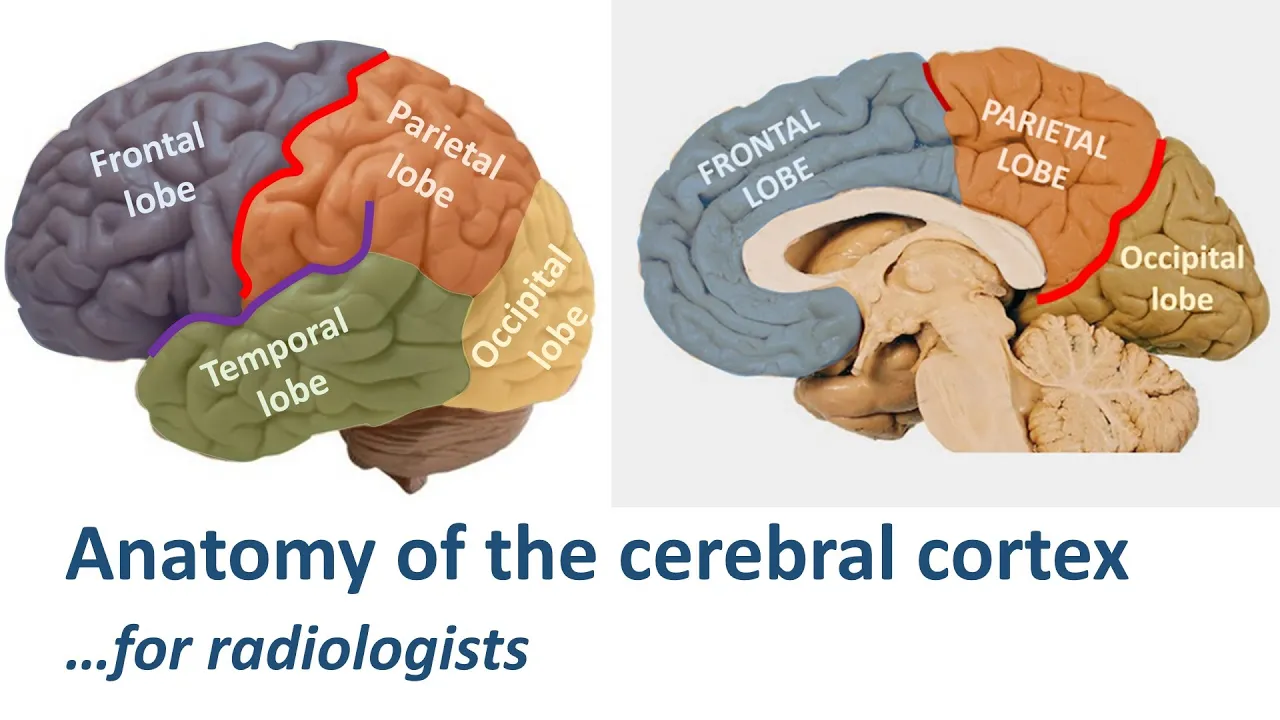
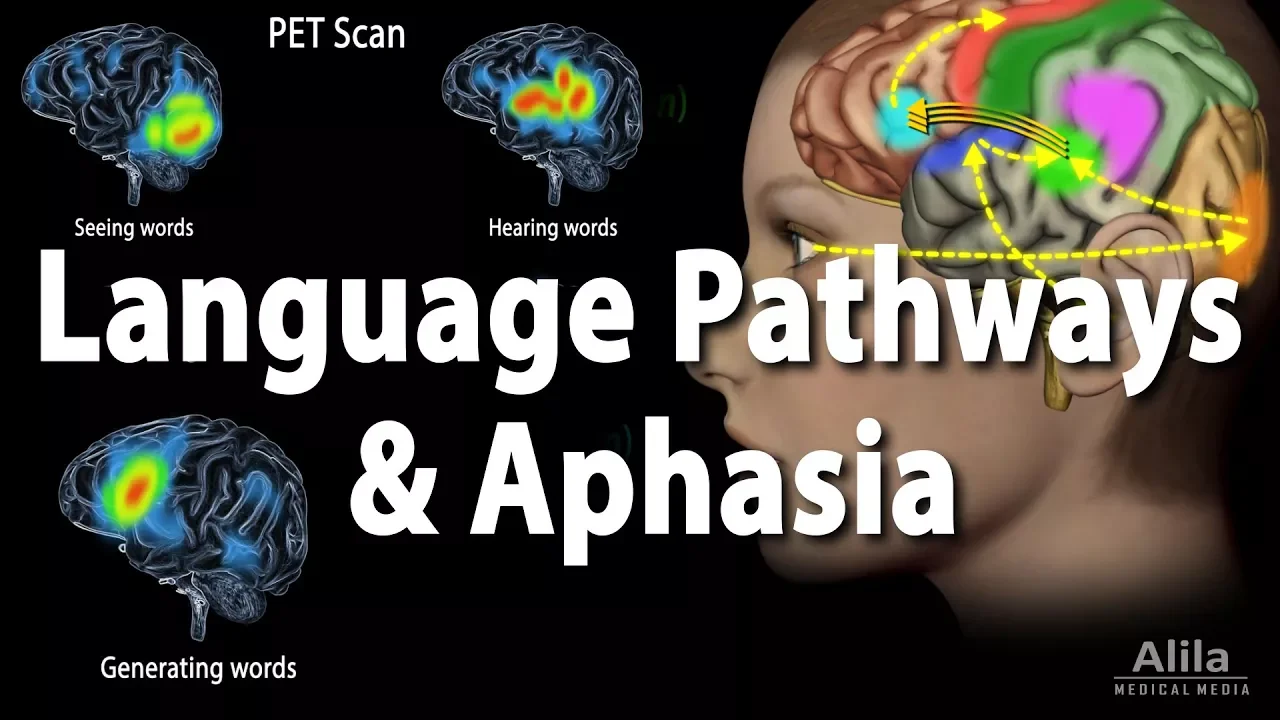
The most famous of these specialized regions is Brocker's area. Named after Pierre Paul Brocker, the 19th century French physician who first identified it. It's located in the left frontal lobe right behind your temple. This small region about the size of a walnut became humanity's speech production center. Here's how Brocker figured this out. In 1,861, he examined a patient who could understand language perfectly but could only speak one word.
Tan.
That's all the man could say despite clearly understanding everything said to him. When the patient died, Brocker performed an autopsy and found significant damage to this specific region of the left frontal lobe. But Brocker's area doesn't exist in other primates. I mean, they have the same region of the brain anatomically. The same neurons are there, but they're not specialized for language production.
They control facial movements, gestures, things like that. Useful, but not transformative.
In humans, though, this region underwent a radical specialization.
The neurons became wired to control the incredibly precise muscle movements required for speech. The tongue, lips, jaw, larynx, all coordinated in splitsecond timing to produce distinct sounds. We're talking about movements precise to the millisecond, coordinated across dozens of different muscles. No other animal can do this, not even close.
But speech production is only half the equation.
About 15 years after Brocker's discovery, a German physician named Carl Verne identified another critical language region. This one in the left temporal lobe near your ear.
Vernick's area became specialized for language comprehension.
Patients with damage to Vernica's area can speak fluently, but what they say doesn't make sense. They produce what sounds like language, complete with proper grammar and syntax, but the words are jumbled, meaningless. They also can't understand what others are saying to them. Again, this region doesn't function this way in other primates.
Apes have the equivalent brain region, but it's used for processing sounds generally, not for understanding the symbolic meaning of words, the grammatical relationships between them, the abstract concepts they represent.
But here's where it gets really interesting. Having two specialized language regions isn't enough. They need to talk to each other. And in the human brain, they do this through a bundle of white matter called the aruate faciculus.
Think of it as a neural superighway connecting Brocker's area and Vernica's area. It's a thick bundle of axons, the long projections of neurons wrapped in myelin, a fatty substance that speeds up signal transmission. In humans, this highway is massive compared to other primates. It allows rapid high bandwidth communication between the language production center and the language comprehension center. This connection is absolutely critical for language. When you hear a sentence, your vernic area processes the meaning. Then it sends that information along the aruate faciciculus to Brocker's area which can formulate a response. When you speak, Brocker's area is constantly receiving feedback from Vernica's area, monitoring whether what you're saying makes sense, adjusting on the fly. The aruate faciculus in chimpanzees and other apes is much smaller, less mileinated, less capable of high-speed information transfer. They simply don't need it because they don't have symbolic language to process.
But the changes go deeper than just these specific regions. The entire structure of the human brain became asymmetrical in ways that don't occur in other primates.
In most animals, the left and right hemispheres of the brain are essentially mirror images of each other. They do roughly the same things just for different sides of the body. But in humans, the left hemisphere became dramatically specialized for language processing.
About 95% of right-handed people and 70% of left-handed people have their primary language centers in the left hemisphere.
This left hemisphere dominance for language is unique to humans. Other primates show no such specialization.
Their brains remain symmetrical with both hemispheres handling communication roughly equally. This asymmetry suggests something profound.
Language isn't just another cognitive function that the brain happened to accommodate. It fundamentally reorganized how human brains develop and function. Evolution didn't just add language processing on top of existing brain structures. It rewired the entire system, creating specialized neural architecture that exists nowhere else in the animal kingdom. And then there's the preffrontal cortex. This is the region right behind your forehead, the most recently evolved part of the human brain. In our ancestors, starting around 2 million years ago with Homo erectus, this region began expanding dramatically.
The preffrontal cortex handles what neuroscientists call executive functions, planning, abstract reasoning, working memory, impulse control. But crucially for language, it processes symbolic thinking and grammatical structures.
Grammar isn't simple. It requires holding multiple pieces of information in your mind simultaneously, understanding relationships between words, applying abstract rules about how words can be combined. I can say the dog chased the cat, but I can also say the dog that chased the cat ran away.
embedding one idea inside another. Or I can go further.
The dog that chased the cat that ate the rat ran away. This is called recursion.
The ability to nest ideas within ideas indefinitely.
No other animal communication system has recursion.
Bird songs follow fixed patterns. Whale songs are complex but structured in ways that don't allow for infinite embedding of meaning. Even the most sophisticated attempts to teach apes language have failed to get them to use recursive structures naturally. The human prefrontal cortex expanded and reorganized over millions of years made this possible. It gave us the neural processing power to handle complex hierarchical recursive symbolic systems.
In other words, it gave us the hardware to run the software of grammar.
But there's another crucial neural innovation that made language possible.
Mirror neurons. These were discovered accidentally in the 19 by researchers studying motor control in macac monkeys.
They found neurons in the monkeykey's brain that fired both when the monkey performed an action and when it watched another monkey perform the same action.
The neurons mirrored what they observed.
Humans have mirror neurons too, but our system is vastly more developed, particularly in regions related to language. Our mirror neurons don't just fire when we see actions. They fire when we hear sounds, when we observe communication, when we interpret intentions.
This might be one of the most important neural adaptations for language development.
Mirror neurons give us the ability to understand what others are trying to communicate even before we fully understand the specific words they're using. They let us intuitit meaning from context, from tone, from gesture. Think about how children learn language. They don't start with grammar lessons. They start by observing, imitating, understanding through repetition and context. Mirror neurons make this possible. They create a neural bridge between observation and comprehension, between watching someone speak and understanding what speech is for.
This connects to something neuroscientists call the critical period hypothesis.
Young human brains are uniquely wired to absorb language. Children exposed to language before puberty learn it effortlessly, achieving native level fluency, regardless of how many languages they're learning simultaneously.
But this ability has a window. After puberty, the brain's plasticity decreases dramatically.
Learning new languages becomes much harder and true native level fluency becomes nearly impossible for most people. This suggests that human brain development is specifically structured around language acquisition.
During childhood, the brain is hyper sensitive to linguistic input, forming neural connections at an incredible rate. The language regions are like sponges soaking up patterns, sounds, grammar rules, vocabulary.
But this critical period doesn't exist in other primates. Young chimpanzees don't have a special developmental window for learning communication.
Their learning capabilities remain relatively constant throughout their lives because they are not learning a complex symbolic system that requires specialized neural processing. The human brain though evolved to prioritize language learning during development.
This wasn't just about making it easier for children to learn. It was about ensuring that each generation could fully acquire the increasingly complex communication systems that previous generations had developed. Because here's the thing, language isn't just transmitted genetically. It's transmitted culturally.
Each generation learns language from the previous generation. And each generation can potentially add to it, make it more complex, more expressive, more capable of conveying abstract ideas.
But this only works if young brains are capable of absorbing the full complexity of the language they're hearing. The critical period ensures this happens.
It's evolution's way of making sure that cultural information can be transmitted efficiently across generations.
Now, when did all these neural changes happen? That's the trillion dollar question. The fossil record gives us some clues.
When we look at endoccasts, fossilized impressions of ancient brains preserved inside skulls, we can trace the evolution of brain structure over millions of years. Homo erectus living around 2 million years ago shows the first significant expansion of the prefrontal cortex. Their brains were about 900 cm compared to 400 for earlier homins. This expansion suggests increased capacity for planning and symbolic thinking. Probably not full language yet, but maybe proto language, a simplified communication system more sophisticated than ape gestures, but less complex than modern human speech.
By the time we get to Homohyalbergensis around 600,000 years ago, brain size had increased to about 1,200 cm.
Still smaller than modern humans, but the shape of the brain had changed too.
The regions we associate with language processing, Brock's area and Vernica's area, show increased development in H Highleberg's endoccasts.
This timing is fascinating because it overlaps with the genetic bottleneck we talked about earlier. Those 117,000 years of near extinction from 930,000 to 813,000 years ago created intense selection pressure for any trait that improved survival. And what trait would be more advantageous during a climate catastrophe than better communication?
small scattered groups desperately trying to maintain contact across vast distances.
Individuals who needed to share complex information about resources, dangers, opportunities.
Parents who had to teach survival skills to their children in increasingly challenging environments.
Under these conditions, even small improvements in communication ability would provide massive survival advantages.
Individuals with slightly better developed brockers areas, slightly more robust aruate faciciculi, slightly enhanced mirror neuron systems. They would be more likely to survive, reproduce, pass on those neural traits to their children.
Over 117,000 years, this selection pressure would be relentless.
Generation after generation, the individuals with the best communication abilities would be the ones who survived. And gradually, imperceptibly at first, but accelerating over time, the human brain would rewire itself. The language regions would expand. The neural connections between them would strengthen. The prefrontal cortex would develop greater capacity for abstract reasoning. The mirror neuron system would become more sophisticated.
The critical period for language learning would become more pronounced.
By the time the bottleneck ended and populations began expanding again around 800,000 years ago, our ancestors brains had been fundamentally transformed. They weren't just slightly better at communicating. They had developed neural architecture that made symbolic language possible.
But having the hardware doesn't automatically give you the software.
Just because the brain was capable of language doesn't mean language existed yet. What happened next was the slow, painstaking process of actually developing language itself.
Not just the neural capacity for it, but the actual system of sounds, words, grammar, meaning, the transition from simple vocalizations and gestures to true symbolic communication.
And this transition, this moment where neural potential became linguistic reality, this is where human history really begins. Because everything that makes us human, everything that separates us from every other species on Earth flows from this single innovation.
The rewired brain was ready. Now it just needed something to say. Here's where the story gets really interesting.
Because for decades, linguists and anthropologists assumed language meant one thing. Talking. spoken words produced by sophisticated vocal anatomy and processed by specialized brain regions. But recent research has completely upended that assumption.
Language probably didn't start with speech at all. It started with your hands. This is the gesture first hypothesis and it's turning everything we thought we knew about language evolution upside down. The basic idea is this. Before our ancestors could speak, they communicated through manual signs, pointing, pantomimeing, creating iconic gestures that represented objects and actions. And these gestures weren't just crude approximations of communication.
They were the foundation of true symbolic language. Now, this might sound speculative, but the evidence is overwhelming.
When researchers put modern sign language users in brain scanners, something remarkable shows up. The same neural regions that process spoken language in hearing people light up when deaf people use sign language. BRS's area, Vernica's area, the entire left hemisphere language network activates exactly the same way whether you're speaking English or signing American Sign Language. This tells us something profound.
The human brain isn't wired for speech specifically. It's wired for language.
Period. Whether that language comes through your mouth or through your hands doesn't matter to the underlying neural architecture.
Language is language regardless of the channel it uses. And when you think about it, this makes perfect evolutionary sense. Our homminin ancestors already had sophisticated manual dexterity millions of years before they had the vocal anatomy for speech. They were making tools which requires precise hand eye coordination and the ability to plan complex sequences of movements. They were pointing at things, showing each other objects, pantomimeing actions. All the building blocks for gestural communication were already there.
Picture an early homminin, maybe homohidal burgensis, 600,000 years ago.
They're standing around a carcass they've scavenged. One of them wants to tell the others that there are lions nearby, that they need to hurry. They can't speak yet. Not really.
Their vocal tracts aren't developed enough for clear articulation, but they can gesture. They can point in the direction of danger. They can mime the padding gate of a big cat, the threatening posture, the danger, and crucially their companions understand.
Not because the gestures look exactly like lions, but because the group has developed shared conventions, that particular hand shape, that movement pattern, it means danger. It means predator. It means we need to move. Now, this is iconic communication becoming symbolic. The gesture starts out looking like what it represents, pantomime, basically.
But over generations, it becomes abbreviated, stylized.
Eventually, the gesture doesn't need to look like a lion anymore. It just needs to be the agreed upon sign that means lion. That's the transition from iconic to arbitrary symbols. The same transition that every language makes.
The evidence for this gestural origin is everywhere once you start looking for it. Modern humans still gesture constantly when we speak. We point. We wave our hands. We trace shapes in the air. Even blind people gesture when talking to other blind people who obviously can't see them. The impulse to communicate with our hands is so deeply embedded in human cognition that we literally can't stop doing it.
Researchers have found that when you prevent people from gesturing, either by having them sit on their hands or hold objects, their speech actually becomes less fluent. They have more difficulty finding words, more trouble organizing complex thoughts. The gestures aren't just decoration added to speech. They're part of the language system itself, active components of how we think and communicate. And here's the really wild part. Some gestures are universal across cultures. The open palm showing nothing is concealed, recognized worldwide as a gesture of honesty. Pointing, which might seem obvious, actually requires sophisticated cognitive abilities.
You need to understand that another person's attention can be directed, that a finger indicates a direction, that the thing being pointed at is significant.
Most animals can't grasp this concept.
But human infants start pointing around 9 to 12 months before they can speak more than a few words.
This suggests that the cognitive machinery for gestal communication is more fundamental than the machinery for speech. It develops earlier in individual humans and probably evolved earlier in our species too. But if gestures were so effective, why did we develop spoken language at all? Why add a completely new communication channel when the old one was working fine?
The answer comes down to efficiency and physics. Gestural communication has serious limitations. It requires light.
You can't sign in the dark. It requires line of sight. You can't communicate around corners or through dense vegetation. And most critically, it ties up your hands. When you're using manual signs, you can't simultaneously carry things, make tools, or climb. Your communication system and your manipulation system are competing for the same hardware. Vocal communication solves all these problems. Sound travels around obstacles, works in complete darkness, and leaves your hands free for other tasks. A vocal warning can alert dozens of people simultaneously, even if they're not looking at you. A spoken explanation can guide someone's hands while they're trying to learn a complex skill. No need to stop working to watch someone demonstrate.
The advantages were so overwhelming that once our ancestors developed the anatomical capacity for speech, it would have spread through the population incredibly fast. Any group that could combine vocal communication with gestal communication would outco compete groups that relied on gestures alone. They could hunt more effectively, cooperate on more complex tasks, share information more efficiently. But here's what's crucial. Vocal language didn't replace gestural language. It integrated with it. Our ancestors didn't abandon signing and switch to speaking. They developed a multimodal communication system that used both channels simultaneously, reinforcing and complementing each other. This integration phase is what researchers call proto language. Not quite modern human language with its complex grammar and infinite expressiveness, but not simple animal communication either. Something in between. a hybrid system that was far more powerful than either gestures or vocalizations alone. Picture that transition period maybe 300,000 years ago. Early homo sapiens or late homohidal burgensis.
They're sitting around a fire at night.
One of them starts telling a story about a hunt that went wrong. They're making sounds, not just emotional grunts anymore, but vocalizations that are starting to carry specific meanings.
Certain syllable patterns mean certain things. But they're also gesturing, showing the size of the animal, mimming the thrust of a spear, pointing in the direction where it happened.
The story emerges from the combination of channels. The sounds provide the backbone, the basic narrative. The gestures add detail, emphasis, emotional color. The facial expressions contribute tone, showing fear or excitement or frustration.
Together, these elements create a communication event far richer than any single channel could produce. And the children watching this storyteller, they're absorbing everything. The sounds, the gestures, the rhythms, the patterns. Their developing brains are learning to integrate all these channels into a unified language system. Each generation pushes the system a little further, makes it slightly more sophisticated.
Interestingly, we can see echoes of this multimodal proto language in how modern parents talk to infants. what researchers call motheres or infant directed speech. It's not just about the words. Parents instinctively exaggerate their facial expressions, gesture more broadly, use more varied intonation patterns. They're creating a rich multimodal communication environment that helps infants learn language. And crucially, the musical elements are enhanced. Mother is more melodic than normal speech. It has exaggerated pitch contours, rhythmic patterns, repetitive elements.
This isn't just parents being silly.
It's activating ancient learning mechanisms in the infant brain.
Mechanisms that probably evolved during the proto language phase when our ancestors were figuring out how to transmit information across generations.
Some researchers think musical communication might have actually preceded or developed alongside proto language. The idea is that early hominins might have used rhythmic vocalizations and group singing for social bonding long before these vocalizations became conventionalized into words.
These musical protocon conversations would have strengthened social bonds, synchronized group activities, and created the neural foundations for more complex vocal communication later.
There's evidence for this in how universal music is across human cultures. Every society has music. Every society uses it for similar purposes.
ritual, bonding, emotional expression, storytelling, and musical processing in the brain overlap significantly with language processing. They're not identical systems, but they share a lot of neural real estate. This suggests they might have co-evolved, developing together from shared precursor systems. Maybe the first proto language wasn't really language or music, but something combining elements of both rhythmic melodic vocalizations that carried emotional and social meaning, gradually becoming more conventionalized and symbolic over hundreds of thousands of years.
But regardless of exactly how musical elements fit in, the core insight remains. Language didn't emerge fully formed as spoken words. It evolved through a long transitional period where gestures, vocalizations, facial expressions, body language, and context all contributed to meaning. Our ancestors were learning to use every available channel, every possible way of transmitting information from one mind to another. And during this transition, natural selection was working overtime.
Every slight improvement in communication ability provided massive survival advantages.
Groups that could share information more effectively could hunt more successfully, avoid dangers more reliably, teach skills more efficiently.
Individuals who are better at understanding and producing these proto language signals were more likely to survive and reproduce.
Over tens of thousands of generations, this selection pressure finded human communication abilities to an extraordinary degree. The vocal tract continued evolving, becoming more capable of producing diverse sounds. The brain's language regions expanded and developed more complex circuitry.
The manual dexterity required for both tool making and signing was selected for simultaneously each reinforcing the other. The result was a communication system unlike anything else in the natural world. A system that could convey abstract concepts, describe events distant in time and space, share knowledge across generations, coordinate complex group activities, and create shared cultural meanings.
A system that was starting to look and function like true human language. But there was still one crucial step remaining, the development of grammar.
the rules that allow finite means to produce infinite messages. Because proto language, as sophisticated as it was, probably lacked the recursive structure that makes modern human language uniquely powerful. You could communicate basic ideas, tell simple stories, coordinate activities, but you couldn't yet express the full range of human thought. That final transformation, the emergence of true grammatical language would require one more critical innovation. And it would happen during the most challenging period our species ever faced, the very bottleneck that had nearly destroyed us.
Because sometimes the worst circumstances create the strongest pressures for innovation. And sometimes when survival hangs by a thread, that's exactly when everything changes. Your ancestors were about to make the final leap from proto language to the fully modern human language that would eventually let them dominate the planet, outlast their rival species, and build civilizations that would reshape the world.
The stage was set. The neural hardware was in place. All they needed was the right pressure, the right circumstances to push language across the threshold into full symbolic, grammatical, infinitely expressive communication. And that pressure was coming. Now, here's where things get really fascinating and honestly really frustrating because we're about to ask a question that has no definitive answer, that might never have a definitive answer, but thus we can't help asking anyway.
What did the first human words actually sound like? Think about it. You've got these early humans maybe 200,000 years ago, maybe earlier. Their throats have descended. Their neural pathways have rewired. They've got the hardware for speech.
But what were they actually saying? What sounds were coming out of their mouths when they first tried to communicate something more complex than a grunt or a cry? The problem is brutal. Language doesn't fossilize. We can dig up bones and tools and even preserved footprints, but we can't dig up conversations.
The first words ever spoken vanished into the air the moment they were uttered, leaving no trace except the languages they eventually evolved into.
And that's our only clue. The thousands of languages spoken today from Mandarin to Swahili to English to pira.
Somewhere buried in their structures, in their sounds, in their grammatical patterns are echoes of that original proto language. the mother tongue that started it all. Linguists have been working on this puzzle for generations, and they've developed some clever techniques for reconstructing what early language might have looked like. The most powerful tool is called comparative linguistics. You take multiple languages, especially languages that seem unrelated, and you look for universal features, things that show up everywhere, regardless of culture or environment or historical connection.
Cuz if something appears in nearly every human language, it probably appeared in the first human language, too. It's part of our species level linguistic inheritance. And what they found is remarkable. Despite the incredible diversity of human languages, there are patterns that show up almost everywhere.
Basic concepts that every language needs to express, fundamental sounds that almost every language uses, grammatical structures that seem to be hardwired into how human brains process information.
These universals give us our first clue about what early language sounded like.
Let's start with phonemes. The basic sound units that make up language.
Modern languages vary wildly in their phone inventories. English has about 44 distinct phonms. Hawaiian has only 13.
Some languages have clicks, others have tones, others have sounds that don't exist anywhere else. But when you analyze languages across the globe, certain sounds show up far more frequently than others. The consonants ya, p, b, t, d, k, g, yah, ya, and w appear in the vast majority of human languages. The vowels a r and u are nearly universal. These aren't random.
They're the easiest sounds for the human vocal tract to produce reliably. They require minimal coordination between tongue, lips, and vocal cords. They're acoustically distinct, meaning they sound different enough that you're unlikely to confuse them even in noisy environments.
This tells us something crucial about early language. It probably had a very simple phone inventory, maybe 10 to 15 sounds total, far fewer than modern languages. Early humans weren't capable of the fine motor control needed for complex consonant clusters or subtle vowel distinctions.
Their vocal tracks were still evolving.
Their neural control was still developing. They needed sounds that were easy to produce and hard to mistake. The phonological equivalent of big, simple stone tools before anyone figured out how to make precision blades.
But having sounds isn't the same as having words. And this is where reconstruction gets really interesting because we can make educated guesses about what kinds of words came first.
Not the specific sounds. We'll never know that. But the categories, the types of concepts that early language needed to express. The answer is surprisingly obvious once you think about it.
Concrete nouns, names for things you could point at. Water, fire, food, child, mother, father, predator, danger.
These concepts are so fundamentally important for survival that they had to be among the first words ever created.
Every modern language has words for these basic survival concepts. More tellingly, in early childhood language acquisition, concrete nouns are always the first words children learn before verbs, before adjectives, before anything abstract. Kids say mama and dada and milk, before they say want or go or big. This isn't cultural. It's developmental. And it probably reflects the evolutionary sequence, too. The first words were labels, names for important things in the immediate environment. Early humans probably went through a stage, maybe thousands of years, where their entire vocabulary was basically a list of nouns. They could point and name things, but they couldn't yet express relationships between things, couldn't describe actions or qualities, couldn't construct narratives. But even simple naming was revolutionary.
Once you have a word for something, you can think about it when it's not there.
You can plan ahead. You can warn others about dangers they haven't encountered yet. You can coordinate actions that require shared understanding of goals.
A wolf isn't just a scary thing you're looking at. It's a category, a concept that persists even when no wolves are visible. That's abstract thinking. And it only becomes possible with language.
The next stage was probably basic verbs, action words. Go, come, eat, sleep, hunt, run, fight, hide. Again, these are universal. Every human language has words for basic physical actions. And again, children acquire these words early in language development. The pattern repeats so consistently across cultures that it almost certainly reflects our evolutionary history.
What's really interesting is that early language probably went through a two-word stage just like modern children do. Around age two, kids start combining words in simple pairs. Want milk? Daddy go. Big dog.
These aren't full sentences with proper grammar. They're just two concepts smashed together. And remarkably, they communicate quite a lot. You can express needs, describe situations, even ask rudimentary questions using nothing but two-word combinations.
Linguists think early humans probably functioned at this level for a long time, tens of thousands of years, maybe more. They had vocabulary, dozens or hundreds of words. They could combine words in pairs to create meaning.
But they didn't yet have syntax, the complex grammatical rules that let you construct elaborate sentences with subordinate clauses and precise relationships between ideas. That would come later.
For now, communication was more like a sophisticated game of charades with sound effects.
Effective for immediate needs, but limited in scope. One of the most fascinating clues about early language comes from mata pier and sound symbolism. Words that sound like what they represent. Buzz, splash, crack, boom. Every language has them. And they're probably linguistic fossils.
remnants of a time when words weren't arbitrary symbols, but direct auditory representations of phenomena. This makes perfect sense for a species just beginning to develop language.
Before you have the abstract reasoning to assign completely arbitrary sounds to concepts, you start with sounds that have natural connections to their meanings. The sound of water becomes the word for water. The sound of breaking becomes the word for breaking.
Children do this instinctively, creating their own poetic words before they learn conventional language. And it's not just on a mata pua. There's something called sound symbolism where certain sounds seem to naturally evoke certain meanings across multiple unrelated languages.
Words for small things tend to have high front vowels like suste. Tiny, teeny, we petite. Words for large things often have low back vowels like a or o. Large, vast, enormous, grand. This isn't universal, but it's common enough to suggest some underlying connection between sound and meaning that predates modern languages. Early humans probably exploited these natural sound meaning connections extensively. Their proto language would have been rich in automate appear and sound symbolism.
Over time, as vocabulary expanded and grammatical complexity increased, most words would have lost these direct connections and become arbitrary.
But the earliest words, the foundational vocabulary probably sounded like what they meant. But having individual words, even being able to combine them in simple ways, still isn't full language.
Real language has grammar, rules for word order, markers for tense and number and gender, ways of indicating who did what to whom. And grammar is where things get really complex because grammar doesn't just emerge naturally from having vocabulary. It has to be invented. And we have modern examples of this process. They're called pigeons and creoles. And they're absolutely crucial for understanding language evolution.
Here's how it works. You take two or more groups of people who speak completely different languages and force them to interact. Maybe through trade, maybe through colonization, maybe through forced migration.
Neither group can learn the other's complex language quickly, so they improvise. They create a simplified communication system using vocabulary from both languages, but with minimal grammar. That's a pigeon. Pigeons are functional but limited. They let you conduct basic transactions, coordinate simple activities, but they can't express complex ideas or subtle relationships.
Crucially, pigeon speakers don't consider the pigeon their native language. It's just a tool, a means of getting by. But then something remarkable happens. Children grow up hearing the pigeon. And children's brains are language acquisition machines. They don't just learn the pigeon as they hear it. They spontaneously add grammar to it. They create consistent word order rules. They develop tense markers and plural forms.
They invent ways to express complex relationships between ideas.
Within a single generation, the pigeon becomes a creole, a full language with complete grammatical structure. This has happened repeatedly throughout history in the Caribbean, in West Africa, in the Pacific. And every time it follows the same pattern, adults create a simplified communication system. Children impose grammar on it. The result is a complete language that didn't exist before. This is probably what happened with early humans. They didn't wake up one day with full grammatical language. They went through a long pigeon-like phase using simple word combinations without complex grammar. Then at some point, probably driven by the cognitive development of children growing up in these communicationrich environments, grammar emerged spontaneously, inevitably because human brains once they have sufficient vocabulary and social complexity automatically create grammatical structure.
But this process took time, a lot of time. The comparative evidence suggests modern languages have been accumulating grammatical complexity for tens of thousands of years. The basic structure was probably in place by around 50,000 years ago. That's when we see the upper paleolithic revolution. The explosion of sophisticated tools and art and symbolic behavior that indicates fully modern human cognition.
You need full language to transmit complex technical knowledge across generations.
You need full language to create representational art. You need full language to develop the elaborate social structures that let you coordinate activities involving dozens of people.
But even 50,000 years ago, languages were probably still simpler than modern languages. Fewer tenses, simpler clause structures, more reliance on context and gesture to fill in gaps. The sophistication we see in modern languages. The recursive structures that let you embed sentences within sentences within sentences.
The elaborate systems of grammatical markers. The thousands or tens of thousands of words in typical adult vocabularies.
That all developed relatively recently.
The really full version of a language, the kind we use today, probably only emerged in the last 20,000 to 30,000 years. As populations grew and societies became more complex, language grew with them. More specialized vocabulary for new technologies and social roles. More sophisticated grammar for expressing increasingly abstract ideas. more elaborate discourse structures for storytelling and argumentation and teaching. And throughout this process, one thing was crucial. Repetition, rhythm, and ritual.
Early language wasn't just conversational. It was performative.
Think about how children learn language today. Not through explicit grammar lessons, but through songs and games and repeated phrases. rhythmic patterns that make sounds memorable. Ritual interactions where the same words are used in the same context over and over until their meaning becomes deeply embedded. Early humans probably relied heavily on these techniques. Songs for remembering important information.
Chants for coordinating group activities.
Ritual phrases for marking significant events. language embedded in performance, supported by gesture and melody and repetition.
This wasn't just language learning. This was cultural transmission.
Knowledge passing from generation to generation encoded in rhythmic memorable forms that could survive the death of any individual speaker. Some anthropologists think this is why music and language are so intimately connected in the human brain.
They didn't evolve separately. They evolved together. Early language was probably sung as much as spoken. Rhythm and melody weren't ornaments added to language. They were structural features that made early language learnable and transmittable in populations that didn't yet have writing or formal education.
So, what did the first word sound like?
We'll never know the exact sounds, but we can paint a picture. Simple phonemes heavily reliant on sounds like concrete vocabulary focused on survival essentials. Heavy use of onomatotopa and sound symbolism. Simple two-word combinations without complex grammar.
Everything embedded in rhythm and repetition and ritual performance. It would have sounded more like children speaking, like pigeon speakers improvising communication, like people chanting around a fire than like modern adult conversation.
But it was enough. Enough to coordinate hunting. Enough to share knowledge about food and water and danger. Enough to maintain social bonds across time and distance. enough to start the process that would eventually give us Shakespeare and Sophocles, Einstein's equations, and Tony Morrison's novels, the ability to transmit the accumulated wisdom of thousands of generations to a single child learning to speak. The first words were simple, but they changed everything.
Around 50,000 years ago, something extraordinary happened. Human behavior changed more in a few thousand years than it had in the previous million. And we can see it in the archaeological record as clearly as if someone had flipped a switch. Suddenly, and by suddenly I mean within just a few thousand years, which is nothing in evolutionary terms, humans started producing art. Not just random scratches or accidental patterns. Deliberate, sophisticated, meaningful art. Cave paintings of animals so lifelike they seem ready to leap off the walls. Carved figurines of humans and animals with carefully detailed features. Abstract symbols repeated across vast distances suggesting shared meanings and cultural connections. They started making music.
bone flutes capable of playing actual melodies, percussion instruments, archaeological sites from this period contain objects with no practical function except to produce sound.
Humans were creating beauty for its own sake. Their tools became dramatically more complex.
Not just better versions of what had come before, but entirely new categories of objects.
Specialized implements for specific tasks.
Composite tools made from multiple materials carefully joined together.
Technologies that required multiple steps to produce. Each step meaningless on its own, only valuable as part of a larger process. This is what archaeologists call the Upper Paleolithic Revolution. And for decades, they couldn't explain it. Why did human culture suddenly explode after remaining relatively static for hundreds of thousands of years?
Some researchers proposed a genetic mutation that rewired our brains. Others suggested population pressure forced innovation.
Some even argued it wasn't sudden at all, just an artifact of preservation bias in the archaeological record.
But the real answer was simpler and more profound language. Not the basic proto language that earlier humans probably used. Not just simple words for objects and actions, but fully developed, grammatically complex, symbolically rich language capable of expressing abstract ideas, telling complex stories, and transmitting detailed knowledge across generations.
Because here's the thing about complex skills. Before language, you could only learn them through direct observation and trial and error. If you wanted to learn how to make a sophisticated stone tool, you had to watch someone do it.
Then you had to practice yourself, probably failing dozens of times before you figured it out. And even then, you might not understand why certain steps were necessary. You are copying behaviors without comprehending the underlying principles.
This works fine for simple tasks.
Chimpanzees learn to crack nuts with stones this way. Early humans learn to make basic choppers and hand axes through the same process. But there's a limit to how complex a skill can become when it can only be transmitted through observation.
With language, everything changed. Now, an experienced toolmaker could explain not just what to do, but why to do it.
They could describe the properties of different types of stone, how to recognize good raw materials, why certain angles produce sharper edges.
They could warn about common mistakes before you made them. They could explain abstract concepts like leverage, force, and structural integrity.
More importantly, they could teach multiple complex steps in sequence, explaining how each step related to the others and to the final goal.
You didn't have to figure everything out through trial and error. You could learn in hours what might have taken months or years to discover independently.
This accelerated cultural evolution by orders of magnitude. A useful innovation could spread through an entire population in a single generation instead of taking hundreds or thousands of years to propagate through imitation.
Better techniques for hunting, gathering, tool making, fire management, all could be transmitted verbally, refined through discussion, and passed on to the next generation with minimal loss of information.
But the real revolution wasn't in teaching practical skills. It was in storytelling.
Because once humans could use language to describe things that weren't immediately present, their minds were freed from the constraints of the here and now. You could tell someone about a water source 3 days journey away. You could describe the route, the landmarks, the potential dangers, all without them having to discover it themselves.
Knowledge about distant places could be shared and accumulated, allowing humans to maintain mental maps of vast territories they'd never personally explored. You could describe past events, not just yesterday or last week, but stories passed down from your parents and grandparents.
Tales of droughts and migrations, of successful hunts and narrow escapes from predators.
Each generation could build on the knowledge of previous generations, learning from their successes and their mistakes. You could make plans for the future. Complex multi-step plans involving coordination between multiple people over extended periods. You could discuss contingencies, debate alternatives, assign roles and responsibilities.
When the herds migrate in two moons, half of us will follow them north, while the others stay here to fish and gather.
We'll meet back at the large rock formation when the leaves begin to turn.
This might sound simple, but it represents cognitive abilities that no other species possesses. You're discussing events that haven't happened yet. You're coordinating actions across time and space. You're using arbitrary symbols to represent concrete future realities and getting others to agree to behave in specific ways based on those symbols. This is where mythology and religion began. Because once you could tell stories about the past and plans for the future, you could also tell stories about things that never happened at all. Stories that explained the world, gave meaning to suffering, justified social hierarchies, bound communities together through shared narratives.
Why does the sun rise every morning?
Because the sun god travels across the sky in his chariot? Why do we bury our dead with their tools and jewelry?
Because they'll need them in the afterlife.
Why must we share meat after a successful hunt? because the animal spirits will punish selfishness and reward generosity.
These weren't just superstitions. They were social technologies, shared belief systems that allowed large groups of unrelated individuals to cooperate based on common values and expectations.
Archaeological evidence from 40,000 years ago shows increasingly elaborate burial practices.
bodies arranged in specific positions covered with red ochre accompanied by carefully selected grave goods. This suggests beliefs about death, probably concepts of an afterlife or spiritual realm.
Cave paintings from this period aren't just pretty pictures. They're evidence of symbolic thinking on a massive scale.
Some caves contain hundreds of images painted over thousands of years by successive generations.
They were sacred sites, places where the community came together to perform rituals, share stories, maintain connection with their ancestors and their mythology.
And the paintings themselves tell stories. Not random animals, but specific scenes, hunts in progress, migration patterns, dangerous encounters.
Some researchers think they might be pneummonic devices, visual aids for remembering complex oral traditions. The paintings triggered detailed stories that elders would tell, passing down knowledge about animal behavior, hunting strategies, seasonal patterns.
Language also enabled the development of truly cumulative culture. This is the process by which innovations build on previous innovations, creating an accelerating cycle of improvement. A hunter figures out that you can throw a spear farther with the spear thrower.
Someone else realizes you can make the spear thrower more effective by adjusting its length and adding a weight. Another person discovers that specific types of woodwork better. Each generation makes small refinements, and within a few thousand years, you've gone from handthrown spears to sophisticated projectile weapon systems that multiply human hunting effectiveness many times over. Without language, this cumulative process would be impossibly slow.
Innovations would have to be observed, practiced, perfected, and passed on through demonstration alone. Most improvements would be lost when the innovator died. With language, knowledge could be preserved, discussed, debated, refined, and transmitted with high fidelity across generations. This created what researchers call a ratchet effect. Cultural complexity could only increase, never decrease, because each generation inherited all the knowledge of previous generations and added their own innovations on top. Over thousands of years, this led to exponentially increasing technological and social complexity.
Language also allowed humans to discuss abstract concepts that had no physical reference. Time itself became a topic of conversation. Not just now, and not now, but past, present, and future as distinct categories. Yesterday, last week, last year, before I was born, tomorrow, next month, next year, after I die. Causality became explicit. Before language, you could learn through experience that certain actions led to certain results. Touch fire, get burned.
But with language, you could discuss why things happened. What caused the fire to burn? What causes rain? What causes disease? Why do children resemble their parents? These might seem like simple questions, but asking them required conceptual breakthroughs that were only possible through language. You had to abstract away from specific instances to general principles. You had to conceive of invisible forces and mechanisms. You had to develop theories about how the world worked and test those theories through discussion and observation.
morality became a subject of debate. Not just this action is punished, but this action is wrong. The difference is profound.
The first is just conditioning, operant learning that any animal can do. The second requires abstract concepts of right and wrong, good and evil, justice and injustice. It requires the ability to imagine alternative actions and evaluate them against ethical standards.
With language, humans could create and enforce social norms far more complex than anything possible through simple reward and punishment. You could explain why certain behaviors were prohibited or required. You could debate exceptions and special circumstances. You could develop elaborate moral codes that governed everything from food sharing to marriage to treatment of strangers.
Identity became something you could discuss and define. Who are we? Who are they? What makes someone part of our group? Language allowed humans to create imagined communities. Groups bound together not by direct kinship but by shared stories, beliefs, and identities.
We are the people who live by the great river. We are the people who descended from the first woman. We are the people who honor the wolf spirit. These imagined communities could be far larger than the face-to-face groups that other primates live in. A chimpanzeee troop rarely exceeds 100 individuals because that's the limit of direct social relationships you can maintain. But humans with language could cooperate in groups of thousands, eventually millions, all bound together by shared narratives they'd never personally verified but accepted because everyone else in their community accepted them.
This enabled cooperation at unprecedented scales. Trade networks emerged that connected communities separated by hundreds of miles.
Archaeological sites from 30,000 years ago contain raw materials that came from sources over 300 m away. Shells from coastal areas showing up in inland sites. Highquality stone from specific quaries traded across entire regions.
Amber, ochre, obsidian, all moving along trade routes that required coordination between multiple groups. These weren't simple exchanges. They required agreements about value, trust between strangers, probably elaborate giftgiving customs that maintained relationships over years and generations. And all of it was made possible by language, the ability to negotiate, make promises, establish reputations, and enforce social norms through communication rather than violence. The archaeological evidence from this period shows an explosion of long-d distanceance connections.
Similar art styles appearing across vast territories. Identical tool designs showing up in sites thousands of miles apart. Specific types of beads and ornaments made from materials only available in certain locations found everywhere. This suggests not just trade but shared cultural traditions maintained through stories, songs and rituals that connected far-flung communities into a vast web of human culture.
And within those communities, social hierarchies became more complex and formalized.
Before language, dominance hierarchies were maintained through physical contests and demonstrations of strength.
The biggest Strongest individuals got the best resources.
With language, leadership could be based on knowledge, eloquence, wisdom. The best storyteller, the most skilled healer, the elder who remembered the drought 30 years ago, and how the people survived it. Language allowed for specialization.
Not everyone had to know everything anymore. Some people could focus on tool making, developing specialized skills over decades of practice. Others could become expert hunters, learning animal behavior in incredible detail. Still others could specialize in gathering plant foods, understanding seasonal patterns and preparation techniques. And all of them could share their knowledge through language, teaching their skills to apprentices, contributing their expertise to the community's collective knowledge. This specialization accelerated innovation even further. A full-time toolmaker could experiment with new techniques, refine their craft, push the boundaries of what was possible. They didn't have to spend most of their time hunting and gathering. The community supported them because their specialized knowledge benefited everyone.
Within a few thousand years of the language revolution, humans had spread across the entire world. They crossed into Australia by 50,000 years ago, requiring sophisticated boat building and navigation skills. They reached the Americas by at least 15,000 years ago, possibly much earlier, traversing ice age environments that would have killed anyone without extensive cultural knowledge of cold weather survival. They colonized remote Pacific islands, developing oceangoing vessels and navigational techniques that allowed them to find tiny specks of land in vast expanses of water. And everywhere they went, they adapted, not through biological evolution, which would take thousands of generations, but through cultural evolution.
Within a few generations, humans who had lived in tropical Africa were thriving in Arctic tundra. Humans from temperate forests were successfully colonizing deserts. The biological organism hadn't changed. What changed was the cultural software. The accumulated knowledge and techniques that language allowed them to share, refine, and transmit across generations.
By the time modern humans encountered Neanderthalss and Inisven, they possessed something their cousins didn't. Not stronger bodies or bigger brains, but more sophisticated language and the cumulative culture it enabled.
The upper paleolithic toolkit that gave modern humans such advantages in competition with other human species wasn't the product of individual genius.
It was the result of thousands of years of cultural evolution. Small improvements building on each other, preserved and transmitted through language. The Neanderthalss had language too, probably. They certainly had symbolic thinking and social complexity.
But something about modern human language was more powerful, more flexible, more capable of transmitting complex information across generations.
Maybe our syntax was more sophisticated.
Maybe we had larger vocabularies.
Maybe we were better at teaching through verbal instruction. We'll never know exactly what the difference was, but we know the results. Within 20,000 years of developing fully modern language, humans had spread across six continents, survived in every climate zone on Earth, and accumulated cultural knowledge so extensive that individuals spent years learning the basics of their society's collective wisdom.
Language hadn't just changed how humans communicated, it had transformed what humans were.
We became a species whose primary adaptation wasn't physical but cultural.
Our survival depended not on our bodies but on our minds, not on our genes but on our memes, the ideas and knowledge we inherited from previous generations and passed on to the next.
That first person who strung together a grammatically complex sentence, who told a story about something that happened last year, who explained to their child not just what to do, but why to do it.
They triggered a revolution that would reshape the entire planet. They couldn't have known it. They were just trying to communicate more effectively, to teach more efficiently, to coordinate more successfully.
But they had unlocked the secret that would make humanity the most dominant species in Earth's history. Not strength or speed or physical adaptation, but the ability to accumulate and transmit knowledge through symbolic communication.
The ability to build on the discoveries of ancestors long dead, to share insights across vast distances, to coordinate actions among millions of people who would never meet.
Language made us human and everything that came after, every achievement of our species from the first cities to the space age was built on that foundation.
Here's the uncomfortable question that archaeologists debated for decades. Did Neanderthalss have language? Not simple communication. Every primate has that.
Chimps scream warnings. Bonobos gesture for food. Even prairie dogs have different alarm calls for different predators. No, the real question is whether Neanderthalss had what we have.
Full symbolic language, the ability to describe things that aren't present, to plan for events weeks in the future, to tell stories about the past, to explain abstract concepts, to lie. Cuz here's the thing, Neanderthalss were incredible. They survived ice age Europe for over 300,000 years. They buried their dead with apparent ritual. They created jewelry from eagle talons. They may have created cave art. Some sites in Spain show red ochre paintings that might be Neanderthal in origin, though that's still disputed. They had culture, sophisticated tool making, probably some form of religion or spiritual belief, so they must have had language, right? The evidence is maddeningly ambiguous. Let's start with anatomy.
When researchers analyzed Neanderthal skulls and reconstructed their vocal tracts, they found something surprising.
Neanderthalss could probably produce most of the sounds modern humans make.
Their hyoid bones, the little horseshoe-shaped bones that anchor the tongue, were positioned similarly to ours. Their earbones suggest they could hear the full range of human speech frequencies. Then came the genetic bombshell.
In 2007, researchers successfully extracted and sequenced the FOX P2 gene from Neanderthal remains. Remember Fox P2?
the gene we talked about earlier that's crucial for speech and language processing.
Neanderthalss had almost the exact same version we do. The same mutations that distinguish human fox P2 from chimp fox P2. They inherited it from our common ancestor. Probably that population that survived the bottleneck.
This seemed to settle the question. If they had the anatomy and the genes, they must have had language. But then researchers started looking more carefully at the archaeological evidence and they found something strange.
Neanderthal culture was remarkably static. Yes, they made sophisticated tools, but those tools barely changed over hundreds of thousands of years. The mysterian tool industry that Neanderthalss used 200,000 years ago looks almost identical to tools from 40,000 years ago.
There's refinement, sure, slight improvements, but nothing like the explosive technological innovation that modern humans showed. When modern humans appeared, tool technology transformed every few thousand years, new designs, new techniques, rapid adaptation to different environments. the upper Paleolithic toolkit we talked about earlier. Modern humans went from basic stone tools to spear throwers, fish hooks, bone needles, and sophisticated blade production in less than 20,000 years. Neanderthalss had hundreds of thousands of years and barely changed their basic toolkit. This is weird, really weird, because one of the key functions of language is transmitting complex information across generations.
If you can describe a technique verbally, you can teach it much faster than through simple demonstration.
You can explain the reasoning behind the technique.
You can pass on innovations efficiently.
Cultural stagnation suggests something was missing from Neanderthal communication. Not absent entirely, but limited somehow. Some researchers think Neanderthalss had what linguists call proto language, communication that's more sophisticated than animal calls, but less flexible than full human language. Think of it like this. They could probably coordinate hunts with specific signals. They could identify resources and dangers. They could communicate about the immediate environment and near future plans, but they might have lacked what linguists call displacement.
The ability to talk about things that aren't physically present. Past events, future possibilities, hypothetical situations, abstract concepts. This might sound like a small limitation, but it's absolutely huge. Displacement is what lets humans plan complex activities far in advance. It's what lets us learn from history. It's what enables teaching of abstract knowledge rather than just practical skills. It's what makes storytelling possible.
Without full displacement, Neanderthalss would have been limited to learning primarily through direct observation and practice.
Each generation would have to rediscover or slowly refine techniques rather than building rapidly on previous innovations.
This would explain the cultural stagnation. It would also explain something else that puzzles researchers.
Group size. Archaeological evidence suggests Neanderthal groups were small, really small, maybe 10 to 15 individuals typically. Modern human groups during the same period were larger, often 25 to 40 people, sometimes connecting into broader networks of hundreds.
Language isn't just for transmitting information. It's social glue. It allows large groups to maintain cohesion through gossip, storytelling, and shared cultural narratives.
Without sophisticated language, maintaining large group coherence becomes much harder. You're limited to social bonds that can be maintained through direct personal interaction.
Smaller groups means smaller knowledge bases, fewer innovations, less specialization.
If you've only got 15 people, everyone has to be a generalist. You can't afford to have specialists in tool making, hunting techniques, plant knowledge, and ritual practice. With 40 people organized in broader networks, you can have specialists, and language lets them share their expertise.
This creates a feedback loop. Better language allows larger groups. Larger groups create more complex societies.
More complex societies create selection pressure for even better language abilities.
Round and round, generation after generation.
Modern humans got caught in this feedback loop around 100,000 years ago.
Maybe earlier, Neanderthalss apparently didn't, or at least not to the same degree. But here's where it gets really interesting. Remember the interbreeding modern humans and Neanderthalss produced fertile offspring together. We know this because Neanderthal DNA is woven throughout modern non-African genomes.
Those hybrid children survived, reproduced, passed on their mixed heritage. This tells us something profound. Neanderthalss and modern humans could communicate well enough to form relationships, well enough to cooperate in raising children, well enough to integrate into each other's social groups, at least sometimes.
You don't successfully raise children with someone you can't communicate with.
You don't form lasting bonds across a language barrier that's completely unbridgegable. So maybe the question isn't whether Neanderthalss had language. Maybe the question is what kind of language they had and how it differed from ours. The current best guess, and it's still just a hypothesis, is that Neanderthalss had a functional language system that was less flexible and generative than modern human language. They could communicate complex ideas about the immediate environment and concrete plans, but they struggled with abstract reasoning, hypothetical scenarios, and the kind of recursive embedded grammar that modern human languages use. Think of recursion, the ability to embed clauses within clauses within clauses. The person who was chased by the bear that lived in the cave that we saw yesterday is my cousin.
That's recursion.
One idea nested inside another inside another. It's what gives human language its infinite generativity.
We can create completely novel sentences that have never been spoken before and others will understand them.
Recursion requires sophisticated mental processing. You have to hold multiple grammatical structures in your head simultaneously, tracking which clause belongs to which.
It's computationally expensive. If Neanderthal language lacked true recursion or had limited recursive capacity, it would explain a lot. Their communication would work fine for practical immediate concerns, but it would struggle with the kind of complex, abstract, temporally displaced communication that modern humans excel at. And here's the brutal truth. In the competition between species, that difference was decisive.
When modern humans arrived in Europe with their superior communication abilities, they had massive advantages.
They could coordinate larger hunting parties more effectively. They could plan more complex strategies. They could share knowledge across broader networks.
They could adapt faster to changing conditions because they could discuss abstract possibilities and make group decisions about future actions. Most importantly, they could maintain cultural innovations across generations.
When a modern human figured out a better way to make a spear point, she could explain the reasoning behind it. Future generations didn't just copy the technique. They understood the principles and could innovate further.
Neanderthalss locked into more concrete immediate communication were slower to innovate. Each improvement had to be discovered, demonstrated, and laboriously taught through observation.
Knowledge was fragile, easily lost when key individuals died. Over thousands of years, this small difference compounded into an insurmountable advantage.
Modern humans didn't exterminate Neanderthalss through warfare. The evidence doesn't support genocide.
Instead, they outco competed them through demographic expansion enabled by superior information sharing. The same thing probably happened with Denisuvens in Asia. We know even less about Denisven communication abilities, but the pattern is similar. Initial coexistence, some interbreeding, then gradual replacement as modern human populations expanded.
By 30,000 years ago, modern humans were the last human species standing. Not because we were stronger. Neanderthalss were more robust, not because we had bigger brains. Neanderthal brains were slightly larger on average. We survived because we could talk about things that weren't there. We could plan for futures that hadn't happened yet. We could learn from pasts we never experienced. We could imagine possibilities and coordinate group action to make them real. And then something even more remarkable happened.
As modern human populations spread across the globe, language itself began to diversify explosively.
Remember, all modern humans ultimately descend from that small population in Africa. We started with whatever language or languages those ancestral populations spoke. But as groups migrated into new territories and became isolated from each other, their languages began to diverge.
Not slowly, over millions of years, like biological evolution.
Fast. Archaeological and genetic evidence suggests modern languages began differentiating within just a few thousand years of major population splits. Today, humans speak over 7,000 distinct languages.
languages so different from each other that linguists still debate whether they share any universal features at all.
From the click consonants of Koisan languages in southern Africa to the evidential markers in Queta that require you to specify whether you witnessed something directly or heard about it secondhand.
From the dozens of words for snow in some Arctic languages to languages like Pira that allegedly lack number words entirely, this diversity is uniquely human. No other species has anything remotely comparable. Chimp populations separated for hundreds of thousands of years still use essentially the same vocal calls.
Bird species can develop regional dialects, but nothing approaching the structural diversity of human languages.
Why did human language diversify so explosively?
The capacity for infinite generativity?
Cuz human language isn't a fixed communication system. It's a generative toolkit that each culture uses to construct its own unique system. The underlying cognitive architecture is the same. The fox P2 genes, the brockers and vernikers areas, the neural circuits for processing grammar and meaning.
But the specific languages built on that foundation can vary infinitely.
This is the final piece of the puzzle.
Language didn't just make humans more effective at survival. It made human cultures infinitely diverse.
Each language encodes a unique way of categorizing reality, a unique set of concepts and distinctions that matter to its speakers. The GooGu Yimther language of Australia doesn't have words for left and right. Instead, speakers use absolute directions, north, south, east, west. A guimether speaker doesn't say the cup is to the left of the plate.
They say the cup is north of the plate.
This requires maintaining constant awareness of cardinal directions.
Speakers of the language can point accurately toward north at any moment, even in unfamiliar locations.
That's not just a different way of talking. It's a different way of thinking about space. Different languages literally wire their speakers brains differently, emphasizing different perceptual categories and cognitive strategies.
This cognitive diversity became modern humanity's secret weapon. Not just toolm ability or cooperative hunting, cognitive flexibility itself, the ability to think about the same problems in radically different ways depending on your cultural and linguistic background.
When modern human groups encountered new environments and new challenges, they could develop new conceptual frameworks.
New languages evolved to describe new realities. New ways of thinking emerged from new ways of talking. Neanderthalss, if they truly lacked full linguistic flexibility, would have been cognitively more uniform across their populations.
Successful survival strategies would spread. Yes.
But the explosion of different approaches, different cognitive styles, different ways of categorizing and understanding reality that required the kind of language that could endlessly recombine ideas into novel configurations.
So when researchers ask why modern humans survived and other human species didn't, the answer increasingly points to language, not just any language, but language with displacement, recursion, and infinite generativity.
Language that could talk about absent things, embed ideas within ideas, and generate endless novel expressions.
That small cognitive advantage refined over hundreds of thousands of years proved decisive.
We're the descendants of the humans who could tell stories about ancestors who survived the bottleneck.
Who could plan hunts for animals not yet seen? Who could imagine better tools and explain the reasoning behind them? who could create mythologies and laws and abstract concepts that bound together groups of strangers into functioning societies.
We are the species that learned to talk about things that don't exist yet. And that changed everything. So here we are at the end of a journey that spans millions of years. From silent gesture-making hominins moving through African forests to modern humans capable of discussing quantum physics, writing poetry, and recording videos about the origins of language itself.
Think about what we've covered. Your ancestors 2 million years ago walking upright but without the anatomy to produce complex sounds. their hyoid bones positioned wrong, their vocal tracks shaped for eating and breathing, but not for the precise articulation of speech. They communicated, sure, but through grunts, gestures, maybe a few dozen distinct sounds, nothing like what you're hearing right now. Then came the anatomical changes, slow, gradual modifications over hundreds of thousands of years. The larynx descending in the throat, the tongue becoming more flexible, the lips and mouth developing finer motor control. Each change was tiny, each generation barely different from the one before. But over deep time, these modifications accumulated into something revolutionary.
Bodies built for speech. But anatomy alone wasn't enough. The real transformation happened inside the skull. Neural pathways rewiring.
Brocker's area developing in the left frontal lobe for speech production.
Vernica's area emerging in the temporal lobe for language comprehension. The aruate faciciculus connecting them. All coordinated by expansions in the preffrontal cortex capable of handling the massive computational load of grammar, syntax, and meaning. This wasn't just evolution adding a new feature. This was the human brain fundamentally reorganizing itself to support something that had never existed before in the history of life on Earth.
True symbolic language. The ability to use arbitrary sounds to represent abstract concepts to string those sounds together according to complex rules to create infinite combinations of meaning.
And it probably started with gestures combined with sounds. Not speech suddenly appearing fully formed, but a gradual integration of visual and auditory communication.
Your ancestors pointing while vocalizing using hand shapes and mouth movements together. Slowly over thousands of generations, the vocal component became more important until it could stand alone. until words themselves carried meaning without the need for accompanying gestures. The first words were probably simple names for important things. Water, fire, danger, food.
But each word was a revolution. Each one represented a shared agreement between individuals that this sound meant this thing.
That required a level of social cooperation and mutual understanding that no species had achieved before.
Then came the cultural explosion.
Once language reached a certain threshold of complexity, everything changed.
Knowledge that had previously died with each individual could now be preserved and transmitted.
Technologies could be explained in detail and improved by each generation.
Stories could be told about the past.
Plans could be made for the future.
Abstract ideas could be debated and refined. Language made art possible, made religion possible, made science and philosophy and literature possible.
Every single human achievement of the last 70,000 years exists because our ancestors developed the ability to communicate complex ideas through speech. And it gave modern humans the decisive advantage over our cousin species.
Neanderthals and denisven were strong, smart, resourceful.
But the evidence suggests they never developed language with the same flexibility and complexity as modern humans. They could communicate.
Certainly, they could coordinate hunts and share information.
But they couldn't adapt and innovate at the speed that language allowed our ancestors to achieve. When modern humans with fully developed language encountered Neanderthalss and Inisans, it wasn't a fair fight. One species could share knowledge across vast distances, maintain complex trade networks, transmit detailed technical information about new environments, and coordinate actions between large groups with precision.
The others, however, capable were working with more limited communication systems. By 30,000 years ago, modern humans were the only human species left.
Not necessarily because we were stronger or even smarter in raw terms, but because we could talk to each other with a sophistication that made us unstoppable. Now, here's what's truly incredible. Every word you're hearing right now, every sentence forming in your mind as you process this information is the product of millions of years of evolution. The anatomy that produces speech sounds, the neural architecture that processes language, the cognitive frameworks that extract meaning from sequences of sounds. All of it was built over deep time through countless generations of natural selection. But here's the miracle. A child today, any child anywhere in the world, will develop language naturally if exposed to it.
What took millions of years to evolve is acquired effortlessly in just a few years of childhood.
By age three, most children have mastered the basic grammar of their native language. By age 5, they're producing complex sentences they've never heard before, combining words in novel ways to express new ideas. They don't need to be taught the rules explicitly. They don't need grammar lessons or vocabulary drills. They just need to hear language being used and their brains shaped by millions of years of evolution figure out the patterns automatically.
This is your inheritance. The ability to speak, to understand, to use language to share your inner mental world with others. It's the most sophisticated biological adaptation in the history of life on Earth. And you carry it in your neural circuits like your ancestors carried it in theirs.
Every conversation you have echoes that first conversation between ancient humans who discovered they could share complex thoughts through sounds. Every word you speak connects you to millions of years of evolution and to every human who has ever lived. We are all participants in this ancient invention.
All beneficiaries of the genetic and neural changes that made language possible. All descendants of those survivors who made it through the bottleneck and then developed the communication system that would allow their offspring to inherit the earth.
Language is humanity's ultimate invention because it made all other inventions possible. Every tool, every technology, every work of art, every scientific discovery exists because humans could talk to each other, could share ideas, could build on the knowledge of previous generations. And you're part of that chain right now.
listening to words that represent ideas about events that happened millions of years ago.
Your brain is effortlessly decoding sequences of sounds or written symbols and reconstructing meaning from them.
This is the ancient gift in action.
Before you drift off to sleep tonight, I want you to do something for me. Leave a comment below about where you're listening from. What part of the world are you in? It doesn't matter if it's New York or Tokyo or a small village somewhere. What matters is that wherever you are, whatever language you speak natively, we're all connected through this ancient adaptation. We're all beneficiaries of that first conversation. And if you enjoyed this journey through the origins of language, hit that like button and subscribe for more history content that helps you sleep while expanding your mind.
Now, as you close your eyes, think about this. Somewhere, probably in Africa, hundreds of thousands of years ago, two of your ancestors had a conversation.
Maybe they were planning a hunt. Maybe they were sharing a story about something that had happened. Maybe they were just talking about the weather. But in that moment, they were using one of the most sophisticated abilities in the natural world. An ability that had taken millions of years to evolve. An ability that would change everything. And tonight, that same ability lives in you.
Ancient, powerful, connecting you to every human who has ever spoken and every human yet to be born.
Rest well, knowing you carry the echo of that first conversation in every word you'll speak
Up Next

19:39
Learn Japanese Writing: Hiragana Syllabary, Vowels, Pitch Accent
@learnjapanesebod
231.4K views•2014-11-15

36:52
Constraint Interaction in Optimality Theory: Epenthesis & Deletion
@Vidyamitra
180 views•2018-08-20

8:59
Forensic Linguistics: How Language Solves Crimes | PBS
@pbsstoried
1M views•2024-01-25

21:32
Accent Expert Explains U.S. Regional Dialects | Part 1
@WIRED
9.3M views•2021-01-21
Related Study Plans & Knowledge Roadmaps
Structured learning paths in Linguistics
linguistics
Optimality Theory: Tableaux & Constraints
01Phonological Basics: Sounds, Syllables & Rules
02Foundations of Optimality Theory: GEN, CON, and EVAL
03The Constraint Inventory: Markedness vs. Faithfulness
+ 2 more learning modules
15h5 modules
Explore Roadmap
linguistics
Morphosyntactic Alignment: S, A & P Systems
01Foundations of Syntax: Transitivity and Arguments
02The Linguistic Variables: Mapping S, A, and P
03Nominative-Accusative Alignment
+ 3 more learning modules
12h6 modules
Explore Roadmap
linguistics
Analyzing Sign Language: Phonology & Syntax
01Foundations of Sign Language Linguistics
02Phonology: The Five Parameters of a Sign
03Morphology: Word Formation and Classifiers
+ 2 more learning modules
14h5 modules
Explore Roadmap
linguistics
Pragmatics: Speech Acts, Grice & Politeness
01Introduction to Pragmatics: Meaning in Context
02Grice’s Cooperative Principle & Implicature
03Speech Act Theory
+ 2 more learning modules
14h5 modules
Explore Roadmap