Jeanette Winterson discusses how her novel 'Oranges Are Not Only Fruit' emerged from her experiences as an adopted child, revealing how literature serves as a powerful medium for exploring complex family histories and personal identity; she shares how discovering hidden adoption records 25 years after writing the book led her to reconnect with her biological mother, demonstrating that while adoption stories rarely have Hollywood endings, they can ultimately lead to forgiveness and love through honest storytelling and self-exploration.
Oranges Are Not the Only Fruit: Adoption, Identity, and Literary Memoir
Added:Deep Dive
Familiarity with Jeanette Winterson's semi-autobiographical novel 'Oranges Are Not the Only Fruit' and its basic plot.

Plot summary, “Oranges Are Not the Only Fruit” by Jeanette Winterson in 6 Minutes - Book Review
2.1K
This video presents Jeanette Winterson's semi-autobiographical novel 'Oranges Are Not the Only Fruit,' which explores the conflict between religious fundamentalism and emerging sexual identity through the story of a young girl raised by a strict Pentecostal Christian mother who discovers she is a lesbian; the narrative demonstrates how rigid religious doctrines can clash with personal identity, leading to psychological trauma and eventual self-liberation through questioning and personal interpretation of faith.
Click to watch →
Oranges Are Not the Only Fruit by Jeanette Winterson Discussion | #FeministOrchestra
12.8K
Jeanette Winterson's semi-autobiographical novel 'Oranges Are Not the Only Fruit' explores the coming-of-age journey of a young girl growing up in a strict Pentecostal Christian household in Northern England, examining how religious upbringing, family rejection, and self-discovery intersect in the formation of identity; the book uses biblical narratives and fairy tales as metaphors for processing difficult experiences, ultimately portraying resilience and hope despite adversity.
Click to watch →

Oranges are not the only fruit
120
Jeanette Winterson's debut novel 'Oranges Are Not the Only Fruit' is a semi-autobiographical work that explores themes of love, family power dynamics, and self-discovery through the story of a young girl named Jeanette adopted by Pentecostal evangelists who falls in love with another girl, creating conflict with her mother Mrs. Winterson; the novel uses biblical narrative structures (Genesis through Ruth) to frame its sections and features a unique narrative technique where the fairy tales within the story are narrated by the author herself rather than the fictional Jeanette, demonstrating how fiction differs from autobiography even when based on real-life experiences.
Click to watch →

Oranges Are Not The Only Fruit by Jeanette Winterson / Summary
6.4K
Jeanette Winterson's semi-autobiographical novel 'Oranges Are Not the Only Fruit' (1985) explores how a sensitive teenage girl named Jeanette rebels against her fundamentalist Christian upbringing, navigating complex family relationships, same-sex relationships, and the tension between organized religion and personal faith, ultimately discovering her authentic identity through love and self-acceptance.
Click to watch →

My Top 10 Books of 2016 | Booksandquills.
52.6K
This book is about a young girl named Jeanette who is adopted by an Evangelical Christian family and raised to be a missionary. She doesn't realize her family is different from other families until she gets to school, where everything in her life is extremely focused on the Bible. As a teenager, she realizes she is a lesbian, which doesn't go over well with her family. The reviewer described the book as bizarre, funny, and heartbreaking. It was the reviewer's first Jeanette Winterson book and they plan to read more.
Click to watch →
Deep Dive
Understanding of the 'Bildungsroman' (coming-of-age) genre and how identity formation is depicted in literature.
O que é o BILDUNGSROMAN? + Leitura conjunta #DesafioLiteratureSe2019
10.9K
Bildungsroman (German for 'novel of formation') is a literary genre that traces the psychological and moral development of a protagonist from youth to adulthood, focusing on character formation, education, and social adaptation; it emerged in Germany in the late 18th century, closely tied to the rise of the bourgeoisie, and was first formally defined in 1810 by Carl Morgenstern, with Goethe's 'Wilhelm Meister's Apprenticeship' serving as its foundational example.
Click to watch →
Same old story? How tiny houses make people want less | Katra Bryam | TEDxOhioStateUniversity
96.6K
The bildungsroman (German for 'formation novel') is a literary genre that first emerged in Germany around 1800 and appears in many forms across Western literature, including works like Jane Austen's novels, Great Expectations, The Outsiders, and Harry Potter. The story follows a protagonist who begins feeling stifled by social expectations, breaks free on a journey of self-discovery and exploration, and ultimately returns home or to another stable place in society. This narrative structure represents a story about autonomy, self-actualization, and finding one's place in the world—essentially about asking for more than society expects from you.
Click to watch →
Hayata Bakış Açımı Değiştiren Üç Roman
527K
'The Catcher in the Rye' is a bildungsroman (coming-of-age novel) that explores the conflicts between wanting to be different and wanting to belong. The protagonist's struggle to maintain authenticity while navigating social expectations reflects universal adolescent experiences.
Click to watch →
nunca li tanto na vida
15.7K
Coming-of-age literature explores how family dynamics shape identity formation during adolescence. In 'Mary Jane,' the protagonist's conservative family is emotionally absent and overly controlling, while the family she works for is loving and supportive. The reviewer notes that Mary Jane, at 14, is in a classic age for teenagers to begin disengaging from their parents and seeking their own identity. The contrast between her dysfunctional family and the healthy family she works for demonstrates how family environments can either support or hinder healthy identity development. The book handles serious topics like sex, drugs, and relationships with responsibility, making it suitable for adult readers despite its coming-of-age themes.
Click to watch →
a complete guide to Kyle XY
56.1K
Kyle's journey mirrors classic coming-of-age narratives as he learns essential life skills: using the bathroom, sleeping, going to school, making friends, and understanding social norms. Once he masters these basics, he begins questioning deeper mysteries about his identity, specifically why he lacks a belly button and possesses extraordinary abilities while having no childhood memories.
Click to watch →
Deep Dive
Basic knowledge of the tension between religious fundamentalism (specifically Pentecostalism) and personal identity/sexuality.
What Happened at Hillsong Church with Noemi Uribe | Season 2; Ep 10
16.6K
Fundamentalist Pentecostal churches create rigid structures where members are told who they are rather than discovering their own identity. These churches often impose significantly more rules on women than men, prohibiting pants, certain hairstyles, and requiring head coverings. The responsibility for avoiding 'lustful looks' falls on women, creating an environment where they feel constantly judged. This rigidity conflicts with adolescent individuation, the natural process of becoming one's own person. Many individuals recognize they are queer at a very young age, sometimes as early as four or five, but religious environments that do not accept LGBTQ+ identities create psychological harm, forcing individuals to wear masks and lie about who they are.
Click to watch →

Ep 502 Mkhulu Became Gay At The Age Of 65 "Angry Wife"
372.5K
The video depicts a conflict between religious identity and personal sexual identity. The individual was a pastor (umfundisi) in the church, which created tension when their personal attractions conflicted with their religious role. The video shows how religious leaders may face challenges when their personal identity differs from their public religious role, and how this can lead to family conflict and questioning of one's calling.
Click to watch →
Kong Hee: Simultaneous Glossolalia –Tongues (APS 2025)
2.7M
Fundamentalism arose as an intellectual reaction to liberals, but Pentecostalism arose as a spiritual response to the lifelessness in the church. Fundamentalists want doctrinal recovery; Pentecostals pursue spiritual renewal, passionate worship, tongues, prophecy, healing, and miracles. This divergence created distance—by 1928, twenty years after Azusa Street, fundamentalist denominations officially condemned Pentecostals as a sect. Pentecostals didn't want to be alone, so from the 1940s-1970s they aligned with the evangelical movement, which brought respectability but diluted their distinctives like pacifist convictions, egalitarian views on women's roles, and ecumenical openness to Catholics and Orthodox traditions.
Click to watch →

Episodio 6, pt 2
178
Pentecostalism underwent a process of institutionalization similar to the early church's development from the first century to the third century. The kingdom of God has not changed, even though society has. Pentecostal identity involves both spiritual gifts and denominational affiliation, creating tension between movement identity and institutional structure. Pentecostal denominations should remain open to learning from other denominations while maintaining their own identity, as truth is found across denominational lines.
Click to watch →
Dolly Parton "The Seeker"
10K
Pentecostal churches are characterized by intense emotional worship experiences where congregants may fall down and roll on the floor during services, earning them the nickname 'holy rollers.' These churches often maintain strict rules about personal appearance, such as prohibiting eyebrow plucking and leg shaving. The speaker describes how her grandfather, a pastor, was deeply concerned about her soul during her childhood, creating tension between her desire for spiritual salvation and her personal expression. This illustrates how religious upbringing shapes personal identity, values, and the ongoing struggle between individual expression and religious conformity.
Click to watch →
Deep Dive
An introduction to the literary distinction between autobiography, memoir, and autobiographical fiction.
What's the difference between memoir, biography, and autobiography?
18K
Memoirs, autobiographies, and biographies are distinct non-fiction genres: memoirs are personal narratives written by the subject focusing on emotional experiences and lessons rather than chronological events; autobiographies are first-person chronological accounts of a person's life written by themselves; and biographies are researched accounts written by someone else about another person's life, using sources like interviews and documents.
Click to watch →

Biography | Autobiography | Memoir explained with examples
61.3K
Biography is an objective account of a person's life written by someone else, involving the collection of facts, documents, and testimonies from various sources to present a chronological narrative of the subject's life events and character qualities. Autobiography is the subjective life history written by the individual themselves in first-person perspective, covering their childhood, education, career, experiences, achievements, and personal reflections. Memoir differs from both as it focuses on specific experiences, people, and events in the author's life rather than presenting a complete life history, often sharing emotional stories of private and public happenings.
Click to watch →

Class 12th Hindi | 18 फरवरी पेपर में यहीं से आएगा | गद्य-पद्य + साहित्यिक परिचय | UP Board 2026
265.9K
There is a distinction between autobiography (aatmkatha) and autobiographical memoir (sansmaran). An autobiography is a complete life story written by the person themselves. An autobiographical memoir is a selective account of life events, often focusing on specific periods or themes. The book 'Singhavalokan' by Yashpal is classified as a memoir (sansmaran), not an autobiography.
Click to watch →
Where Do You Start Your Book?
1.8K
Autobiography and memoir are fundamentally different genres that serve different purposes. An autobiography tells the entire story of a person's life from birth to the present, while a memoir focuses on a specific story, search, or theme. When readers encounter an autobiography in a bookstore, they don't know what the book is about because it covers everything. A memoir, however, has a central idea that can be understood from the beginning. For example, 'Educated' is about overcoming childhood limitations through education, not about being born. Readers need to know what the book is about before they will invest in reading it. The key is to identify what your book is fundamentally about and structure your memoir around that idea rather than chronologically from birth.
Click to watch →

특별강연 : 조갑제의 회고록 쓰기 가이드!
522
The speaker clearly distinguishes between autobiography (자서전) and memoir (회고록). Autobiography is written chronologically from birth to present, covering the entire life in chronological order. In contrast, memoir focuses only on specific parts or moments that the writer feels are particularly important to preserve. This distinction is crucial because memoirs are less burdensome to write and allow writers to focus on what they most want to share with future generations. The speaker presents three fundamental principles for effective writing: (1) Write briefly (짧게 쓰라) - avoid redundancy and unnecessary elaboration, (2) Write simply (쉽게 써라) - use clear, accessible language, and (3) Write accurately (정확하게 써라) - ensure factual correctness. These principles naturally lead to writing with fewer adjectives and adverbs, focusing instead on nouns and verbs.
Click to watch →
Prerequisite Knowledge
- Concept 01Familiarity with Jeanette Winterson's semi-autobiographical novel 'Oranges Are Not the Only Fruit' and its basic plot.
- Concept 02Understanding of the 'Bildungsroman' (coming-of-age) genre and how identity formation is depicted in literature.
- Concept 03Basic knowledge of the tension between religious fundamentalism (specifically Pentecostalism) and personal identity/sexuality.
- Concept 04An introduction to the literary distinction between autobiography, memoir, and autobiographical fiction.
Subsequent Learning
- Step 01Analysis of Winterson's companion memoir, 'Why Be Happy When You Could Be Normal?', to compare fictionalized vs. non-fictionalized accounts of trauma.
- Step 02Exploration of Queer Theory in literature, focusing on how narrative structure can subvert heteronormative and patriarchal expectations.
- Step 03Study of the psychological and literary themes of adoption, maternal rejection, and the quest for self-actualization.
- Step 04Examination of postmodern narrative techniques, such as the integration of fairy tales and myths, to process personal history.
Adoption Origins
Reuniting Past
Adoption Origins
0:02Playing Section
- 1
Recalls childhood with adoptive mother and early family conflict.
- 2
Discovers original motivation for writing her novel.
- 3
Finds new unsettling facts about her own adoption.
Critical Adoption Studies and the Critique of Biological Essentialism
While Winterson’s memoir and semi-autobiographical work highlight the trauma of adoption and the quest for biological origins, Critical Adoption Studies offers an important counterpoint. Scholars in this field caution against the 'biological essentialism' often found in adoption narratives—the assumption that an adoptee’s identity is inherently fractured or incomplete without biological connection. This perspective argues that overemphasizing the 'primal wound' of maternal separation can pathologize adoptive kinship and romanticize biological ties as the only source of authentic identity. Furthermore, critical theorists argue that focusing on individual psychological trauma and personal forgiveness in literary memoirs can obscure the broader socio-economic and systemic inequalities—such as classism, sexism, and state intervention—that drive the adoption system in the first place, reducing a structural societal issue to a personal narrative quest.
Deep Dive
Analysis of Winterson's companion memoir, 'Why Be Happy When You Could Be Normal?', to compare fictionalized vs. non-fictionalized accounts of trauma.
Why Be Happy When You Could Be Normal? - Jeanette Winterson
36.4K
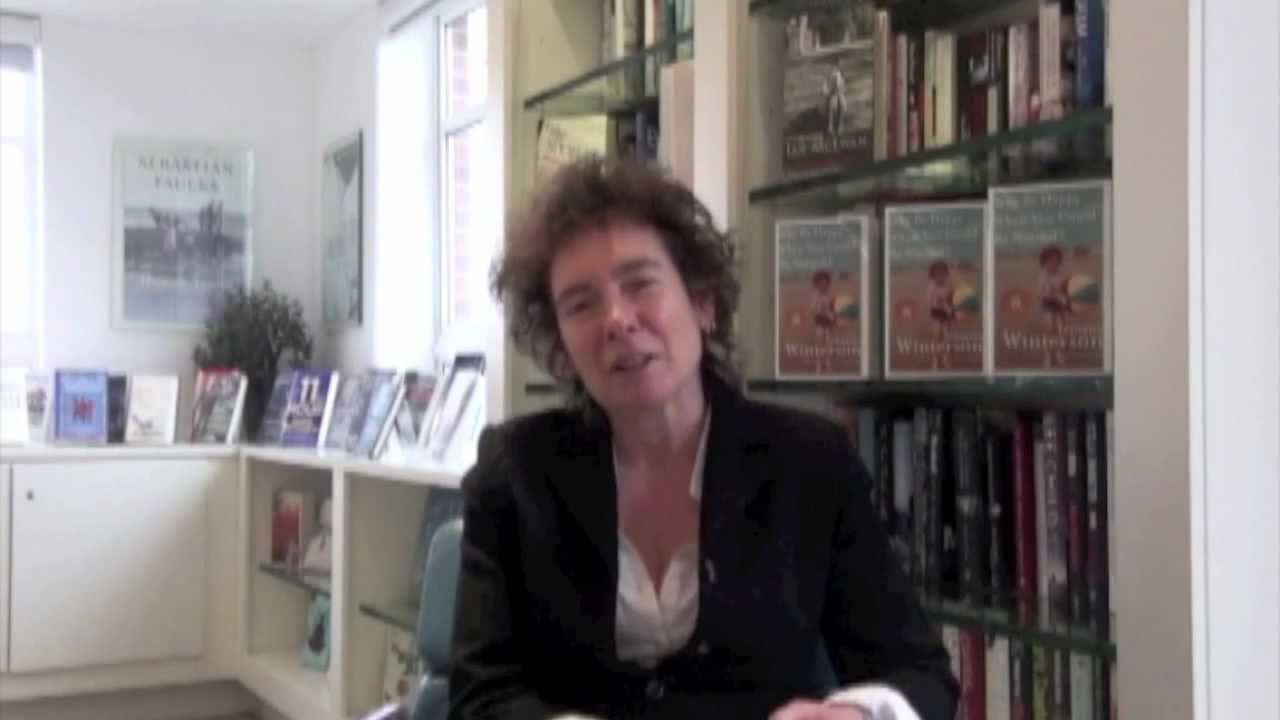
Jeanette Winterson’s book is presented as the silent twin to her 1985 novel Oranges Are Not the Only Fruit, which she describes as a cover story—a fictionalized account of her childhood in a terraced house in Accrington, her adoption, and her relationship with her adoptive mother, Mrs Winterson. This book reveals the unvarnished truth behind that earlier narrative, filled with hurt, humor, and a fierce love of life. It details her pursuit of happiness, lessons learned through love, and her search for her biological mother. The narrative traces her journey into madness and her eventual emergence from it. Winterson presents the work as generous, honest, and true, offering a raw and personal account of emotional survival. Unlike her first novel, which was a fictionalized version of her past, this book confronts the painful realities she had previously obscured. It is not a retelling but a deeper excavation of her identity, trauma, and resilience. The book explicitly connects her childhood experiences with her adult psychological struggles and her quest for belonging and self-understanding.
Click to watch →

June 2016 Wrap-Up
732
Jeanette Winterson's memoir 'Why Be Happy When You Could Be Normal' explores the differences between her real life and her fictionalized biography 'Oranges Are Not the Only Fruit.' The book provides advice on writing and being a creative person, particularly about living on the edge of society. Winterson recommends this memoir only for readers who have already read 'Oranges Are Not the Only Fruit,' as it serves as a companion piece that offers deeper insight into her creative process and personal journey.
Click to watch →

Quei mitici cartoni | Book tag
536
Why Be Happy When You Can Be Normal by Jeanette Winterson is a memoir exploring the author's childhood in provincial Lancashire, England, where she was adopted by a religious, obsessive mother who constantly told her she had been adopted by mistake. The memoir addresses Winterson's realization of her lesbian identity and her rejection of her mother's advice to be 'normal' rather than happy. The book is praised for its intelligent, ironic, and light prose that even tempers dramatic moments, making it an accessible exploration of identity and self-acceptance.
Click to watch →

Al Ghaoui Hesna: MIÉRT PONT ÉN /// Márciusi Köny\/elem
152
The boundary between fiction and non-fiction can be important in trauma writing. Hesna initially considered writing her experiences as fiction to gain creative freedom, but ultimately chose non-fiction because: (1) The truth of her experiences was important to convey, (2) Readers deserved accurate representation of her journey, (3) The emotional authenticity of her experiences was valuable, and (4) Fiction would have diluted the impact of her message. This decision reflects the ethical considerations involved in representing traumatic experiences.
Click to watch →

Joshua Whitehead, Making Love with the Land
764
The speaker discusses the difference between writing fiction and non-fiction. For non-fiction about personal narratives, trauma, relationships, and mental health, there was no mask to wear, but it was a very harmful and dangerous almost extractive work of pulling traumas out and putting them on the page. They felt an imperative to do so if only to maintain their own role within the community and communities, to actively ask for mental health services and for these conversations to not be taboo or hidden. They had to strip themselves and be 'here you are, I did it, hopefully there's a way forward for you to do it too.' They took a long break from non-fiction, finding a balance between the fantastic, fictional, a character that is in love and lovely, and the personal memory and memorial extractions that sometimes stories cost and ask about.
Click to watch →
Deep Dive
Exploration of Queer Theory in literature, focusing on how narrative structure can subvert heteronormative and patriarchal expectations.
Queer Theory and Malazan BotF - Silverfox and The Mhybe *SPOILERS*
584
Queer theory examines how identities diverge from established norms without necessarily being opposites. Heteronormativity assumes heterosexuality as default, structuring laws and institutions around reproductive nuclear families. Sara Ahmed's concept of orientations reveals how we are positioned in society without noticing, while disorientation makes these structures visible. Erikson uses literary disorientation to challenge reader expectations, forcing recognition of cultural frameworks we unconsciously bring to texts. This approach demonstrates that seemingly natural structures are actually constructed and can be challenged.
Click to watch →
ENG 201 (Lecture 8.2): Warner, Berlant, and Edelman
2.2K
Heteronormativity, as defined by Michael Warner and Lauren Berlant, refers to the institutions, structures of understanding, and practical orientations that make heterosexuality appear coherent and privileged, manifesting as an unmarked default setting, a natural state, or an ideal moral accomplishment; queer theorists and activists oppose this structure rather than heterosexuality itself, as heteronormativity has no parallel in organizing homosexuality as its opposite, and Lee Edelman argues that queers must respond to the fetishization of the child in the symbolic order by explicitly challenging the social order and its future-oriented logic.
Click to watch →

Queer Theory Literary Theory Explained
2.5K
Queer theory is a literary criticism approach that emerged in the 1980s, building on feminist and gender studies, which challenges dominant heterosexual and gender binaries by examining how literature reinforces homophobia and patriarchal norms; it questions what constitutes 'normal' versus 'abnormal' in sexual and gender identities, explores performative aspects of gender construction, and seeks to recover marginalized voices and representations of LGBTQ+ experiences in literature.
Click to watch →
"Gaga Feminism: Sex, Gender & the End of Normal": A Chat with Jack Halberstam and Thaddeus Russell
28.4K
Queer theory challenges normative assumptions about identity, sexuality, and social structures by examining how cultural norms function as disciplinary mechanisms that regulate behavior, even when individuals don't consciously conform; heteronormativity enforces heterosexual expectations through invisible cues and socialization, creating a system where certain behaviors are rendered normative while others are pathologized, and this framework can be applied to analyze broader social issues including foreign policy, immigration, and economic policy.
Click to watch →

“Veredas, sertões e travessias em Guimarães Rosa” Eixo 1 Sessão 4
152
The term 'queer' has multiple meanings: originally meaning strange or eccentric, pejoratively used to designate homosexual men and women, then reclaimed by LGBTQ+ movements in the late 1980s as resistance against heteronormativity. Etymologically connected to Latin 'quere' (twisted, entangled) and German 'quer' (transversally), it continues Foucault's genealogical project of investigating how discourses constructed sexual identities. Diadorim's name contains the prefix 'diá-' (through, across), reinforcing 'atravessamento' (crossing). The term 'diáfono' (translucent) reinforces Diadorim's image as 'lusco fusco', creating partial revelation. Diadorim's presence subverts normative order, transiting between feminine and masculine spectra at the frontier - a place of relationship, encounter, crossing, and confrontation. The narrative employs a strategy of suspension maintaining the reader in the middle of the telling, similar to 'travessia' (crossing). While Freud's melancholia has a clinical dimension, in literature it functions as an aesthetic state - the narrator remains in a suspended space that is simultaneously strange and familiar, fantastic and distant.
Click to watch →
Deep Dive
Study of the psychological and literary themes of adoption, maternal rejection, and the quest for self-actualization.
2017 Maps of Meaning 04: Marionettes and Individuals (Part 3)
1.2M
This lecture analyzes Disney's Pinocchio as a psychological allegory illustrating how individuals can be manipulated by adopting a victim identity that enables abandonment of responsibility, leading to destructive hedonism and eventual transformation through confronting chaos and embracing genuine self-responsibility; the narrative demonstrates that meaningful life requires acknowledging one's full range of capabilities, accepting personal responsibility, and facing challenges rather than seeking easy escapes, ultimately leading to authentic self-realization and integration with cultural wisdom.
Click to watch →
PISCES♓️ You REJECTED a TIMELINE❌ LEGACY PATH is HERE💰🎯 NO F's GIVEN
6.4K
The journey begins with rejecting limitations, insecurities, fears, and old conditioning through the 'flipping the bird' gesture. The Fool card (Card Zero) connected to Uranus represents spinning on your side and doing things differently. Self-actualization involves recognizing that fears, restrictions, and family/community stories are not who you truly are. The most important person to see this truth is yourself. When you accept these limitations are not you, you start caring less about who sees your transformation. The Devil card represents an inaccurate reflection of yourself, and the unexpected income pathway involves proving something to yourself through transformational, spirit-led career changes or receiving unexpected income.
Click to watch →

‘I wanted to be noticed’ – three famous adoptees on how it made them successful | The Daily T
148.4K
This comprehensive segment explores the profound psychological effects of adoption on self-perception and family relationships. It examines how knowing one is adopted creates a dual sense of belonging—feeling connected to adoptive families while simultaneously experiencing questions about genetic origins. The discussion covers the 'nagging sense of rejection' that many adoptees feel, the tension between gratitude toward adoptive parents and curiosity about birth parents, and the complex emotions surrounding reunion decisions. Through personal testimonies, the segment reveals how adoption shapes identity formation, influences career choices, and creates lasting psychological dynamics that persist throughout adulthood.
Click to watch →

Родители и взрослые дети: как выстроить гармоничные отношения // Это не Фрейд
91.2K
Shame for parents stems from self-rejection rather than actual parental flaws. The solution involves self-acceptance by honestly evaluating one's own life path and appreciating personal qualities that enabled progress. Holding onto childhood grievances causes adults to psychologically regress to their childhood age, limiting personal development. The purpose of addressing these grievances is not to make parents feel better but to free oneself from regressive behavior. Forgiving someone means allowing them to treat you in certain ways, while releasing a grudge is a separate process. Grudges are rarely isolated issues but part of a complex pattern of self-doubt. The most self-actualized individuals have resolved their issues with parents and moved forward freely.
Click to watch →
Por fin ha llegado, tu momento es ahora - Carl Jung
59.6K
True personal transformation occurs through a process of facing and overcoming extreme difficulties, which prepares individuals for a profound shift in consciousness where they become more selective with their energy, reject what no longer serves them, and develop an unshakable sense of inner completeness that allows them to receive abundance without fear or desperation.
Click to watch →
Deep Dive
Examination of postmodern narrative techniques, such as the integration of fairy tales and myths, to process personal history.

Off-Kilter: Fairy-Horror-Tales in the 21st Century | World Voices Festival 2023
231
Winston Churchill described fairy tales as 'a riddle wrapped in a mystery inside an enigma,' capturing their surreal nature and multi-layered complexity. Fairy tales function as a shared language that almost everybody knows, with basic movements and language that everyone recognizes. Writers use fairy tales as a way to write personal history and provide courage for telling difficult stories, describing fairy tales as 'the hands of a thousand very old women reaching out and guiding' them. The fairy tale tradition feels like a garment that can be worn while telling stories, providing permission and guidance for exploring themes of motherhood, stepmotherhood, and simply being human.
Click to watch →
Dreams, Fairy Tales, and the Demons of AI | Jonathan Pageau | EP 364
424.3K
Postmodern collage storytelling (Shrek, Marvel crossovers) can provide insight when done thoughtfully—smashing characters reveals relationships not obvious before. Ancient traditions did this too: Dante met all historical characters in hell and heaven. The problem with postmodernism is its deep cynicism leaving little satisfaction. The revenge of the repressed occurs when societies shy away from discussing puberty, transformation, and sexuality—these elements manifest in fragmented, horrifying ways. Proper approach tells stories honestly while integrating elements into transcendent narratives. The postmodern enterprise contributed to returning to ancient stories with explicit utility understood. The return to fairy tales represents an increment in consciousness—we're returning to ancient stories but understanding their explicit utility in ways previously unavailable. The four female fairy tales (Snow White, Rapunzel, Sleeping Beauty, Cinderella) are connected by themes of beauty, transformation, and the dangers of how beauty is treated. Rapunzel and Snow White represent opposites—one mother is jealous and mistreats her daughter, the other protects her completely; the resolution integrates these extremes.
Click to watch →

Conférence de Chiara BATTISTI
426
Angela Carter's 'The Bloody Chamber' represents a postmodern rereading of fairy tales. Carter's intention was not to do versions of fairy tales but to extract latent content from traditional stories and use it at the beginning of new stories. Postmodern transformation of fairy tales operates to different degrees, generating new solutions for interpreting and decoding their contents. Postmodern revisions expose the fairy tales' complicity with exhausted forms and the ideology of traditional Western narrative, particularly as such rules contribute to naturalizing subjectivity and gender. In traditional fairy tales, the role of women is always sleeping or waiting for the prince, while the prince's function is to go and rescue them. In modern reinterpretations like 'Shrek,' this situation is turned upside down because the prince is far from embodying the figure of the prince because he is a dwarf, while the real prince is Shrek, who is a monster. This demonstrates how postmodern rereadings question the construction of roles and gender roles that are present in traditional fairy tales. Carter deliberately drew fairy tales out of shape, causing the monsters and princesses to lose their places in the old script and cross forbidden boundary lines. The aim of postmodern rereadings is to create doubts and destroy shared certainties about the relationship between the sexes and about social roles, considering gender identity as something produced by historically and socially determined conventions rather than as something natural and biologically determined.
Click to watch →

MCQ ON POST MODERN AGE LITERATURE / UP LT GRADE ENGLISH / UP LT GRADE ENGLISH PRACTICE PAPER
713
Postmodern narrative techniques include historiographical metafiction (combining historical narrative with self-conscious storytelling), multiple endings, and unreliable narrators. Key works include 'The French Lieutenant's Woman' (multiple endings), 'Midnight's Children' (first-person confessional with magical realism), and 'The Position of Women' (Booker Prize 1990). These techniques challenge traditional narrative authority and question how historical truth is constructed.
Click to watch →

What It Was Like Growing Up With A Mass Shooter on the Loose (True Crime)
39.4K
The host proposes that true crime represents a modern form of fairy tales. Fairy tales originated from real events that were embellished over generations, and true crime similarly presents real events that audiences process through the lens of cultural narratives. When you strip away the fantastical elements of fairy tales like Little Red Riding Hood, they sound not all that different from true crime stories—a girl walks through the woods unattended and something bad happens. The real world doesn't have talking wolves, but the basic bones of the story are unfortunately not all that different from stuff that happens all the time. Postmodernism is a cultural approach where understanding is shaped by awareness of previous cultural works rather than direct engagement with the world. The host uses Godzilla as an example—created as a metaphor for nuclear war, it became so embedded in cultural consciousness that it became a touchstone for understanding nuclear devastation. True crime represents fairy tales for people so familiar with stories that it has fundamentally shaped their perception of reality. True crime occupies a 'stranger than fiction' space where events seem so unbelievable they feel like they belong in movies or books rather than real life.
Click to watch →
Adoption Origins
Reuniting Past
Adoption Origins
0:02- 1
Recalls childhood with adoptive mother and early family conflict.
- 2
Discovers original motivation for writing her novel.
- 3
Finds new unsettling facts about her own adoption.
Critical Adoption Studies and the Critique of Biological Essentialism
While Winterson’s memoir and semi-autobiographical work highlight the trauma of adoption and the quest for biological origins, Critical Adoption Studies offers an important counterpoint. Scholars in this field caution against the 'biological essentialism' often found in adoption narratives—the assumption that an adoptee’s identity is inherently fractured or incomplete without biological connection. This perspective argues that overemphasizing the 'primal wound' of maternal separation can pathologize adoptive kinship and romanticize biological ties as the only source of authentic identity. Furthermore, critical theorists argue that focusing on individual psychological trauma and personal forgiveness in literary memoirs can obscure the broader socio-economic and systemic inequalities—such as classism, sexism, and state intervention—that drive the adoption system in the first place, reducing a structural societal issue to a personal narrative quest.
Familiarity with Jeanette Winterson's semi-autobiographical novel 'Oranges Are Not the Only Fruit' and its basic plot.
Understanding of the 'Bildungsroman' (coming-of-age) genre and how identity formation is depicted in literature.
Basic knowledge of the tension between religious fundamentalism (specifically Pentecostalism) and personal identity/sexuality.
An introduction to the literary distinction between autobiography, memoir, and autobiographical fiction.
Analysis of Winterson's companion memoir, 'Why Be Happy When You Could Be Normal?', to compare fictionalized vs. non-fictionalized accounts of trauma.
Exploration of Queer Theory in literature, focusing on how narrative structure can subvert heteronormative and patriarchal expectations.
Study of the psychological and literary themes of adoption, maternal rejection, and the quest for self-actualization.
Examination of postmodern narrative techniques, such as the integration of fairy tales and myths, to process personal history.
60.7K views256likes3:48@omagikOriginal Release: 2011-12-08
you gave her away you were glad enough then weren't you running off with your fancy man just let me see her God gave her to me you have nothing to do with God you've a Heart of Stone don't be in Hell who told you to come out here I said who told you was that my real mother I'm your real mother she was just a carrying case of boy I wrote oranges are not the only fruit because I wanted to talk about what it was like growing up as an adopted child using some of my own experiences 25 years after I wrote oranges I discovered some new and disturbing facts about my own adoption [Music] behind this front door I spent most of my childhood with Mr and Mrs winterson I never asked her if she loved me I think she loved me on those days when she could love me that was the best that she could do locked out on this doorstep I knew there was no safe place outside of myself so so I had to find a safe place inside myself and that's how I found the books when my mother was angry with me which was often she said the devil led us to the wrong crib the image of Satan taking time off from the cold war of mcarthism to visit Manchester 1960 purpose of visit to deceive Mrs winterson has a flamboyant theatricality to it my mother was a flamb boyant depressive a woman who kept a revolver in the duster drawer and the bullets in a tin of pledge it's places like this where you'd find me in all weathers I came up here to escape the rages and regrets of Mrs winterson she had adopted me but I wasn't what she wanted you think I'm not exactly the poster girl for adoption but it it was better for me to be with her than to be in a children's home she was a monster but she was my [Music] monster after my dad died I found some old forms about my adoption Mrs winterson had hidden them for nearly 50 years I decided to try and find out if my birth mother was still alive Mrs winterson had always said that she was dead I had been damaged and an important part of me had been destroyed that was my reality but on the other side of the facts was who I could be how I could feel and as long as I had words for that images for that stories for that then I wasn't lost I found my biological mother and that's been a wonderful thing and a difficult thing for both of us there is no Hollywood happy ending but there is forgiveness and there's love
Up Next

11:09
Reading Experimental Literature: Surreal Horror, Poetry, and Outsider Anthologies
@ChanelChapters
141 views•2026-03-21

13:43
Formalism in Literary Criticism: An Academic Lecture Overview
@mattalberhasky9952
39.1K views•2015-08-05

6:08
Point of View in Fiction: First Person vs. Third Person
@magicalthriftyteacher
153.8K views•2014-03-31

15:25
1984: Orwell's Dystopian World and the Mechanisms of Totalitarianism
@AlternateHistoryHub
7M views•2017-03-04
Related Study Plans & Knowledge Roadmaps
Structured learning paths in Literature
literature
Graphic Memoirs: Visual Art, Trauma & History
01Foundations of Sequential Art and Visual Language
02Autographics and Processing Historical Trauma
03Visualizing Personal Trauma, Grief, and Graphic Medicine
+ 2 more learning modules
14h5 modules
Explore Roadmap
literature
Campus Novels: Evolution, Themes & Critique
01Introduction to the Campus Novel Genre
02Mid-Century Satire and the Post-War Academy
03Dark Academia and the Critique of Privilege
+ 2 more learning modules
14h5 modules
Explore Roadmap
literature
Theater of the Absurd: Philosophy & Plays
01Postwar Existentialism & Historical Roots
02Dismantling Narrative: Esslin & Absurdist Conventions
03Samuel Beckett and Tragicomic Existentialism
+ 2 more learning modules
12h5 modules
Explore Roadmap
literature
Revenge Tragedy: Justice, Madness & State
01Foundations of Early Modern English Theatre
02Anatomy of Revenge: Structural Conventions
03Psychological Complexity: Madness and Melancholy
+ 2 more learning modules
15h5 modules
Explore Roadmap