




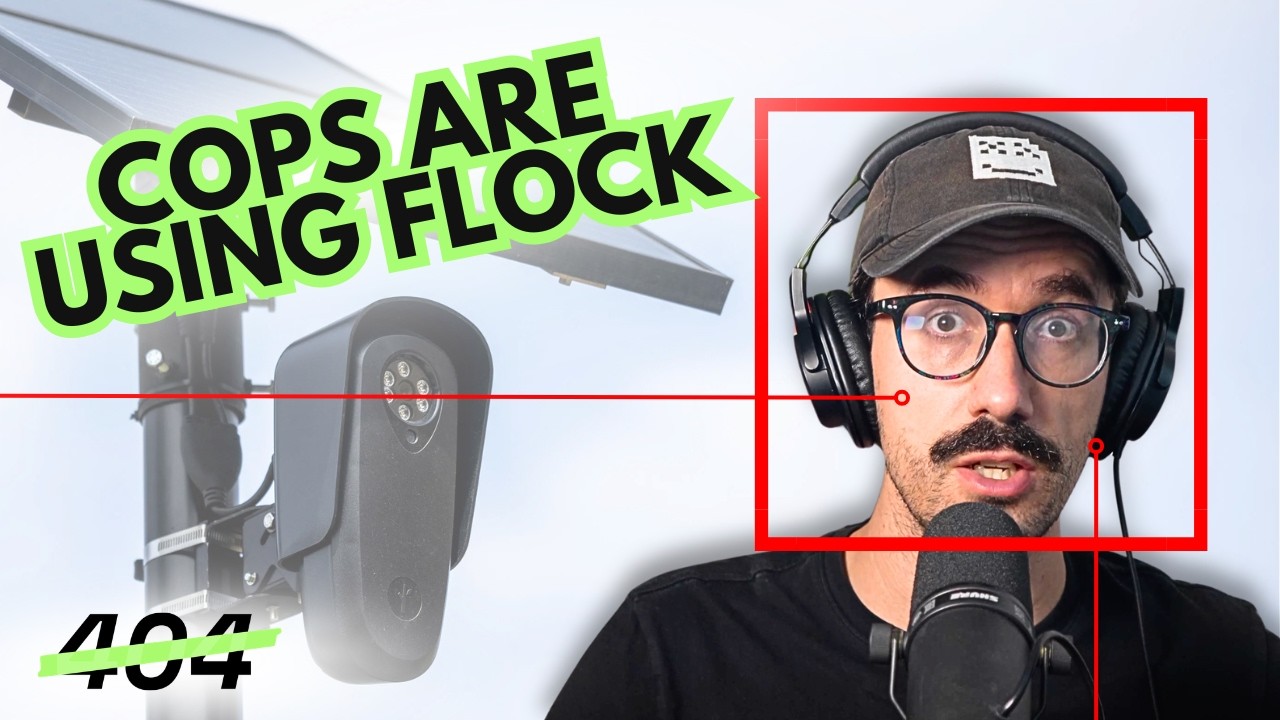

















An affirmative defense is a legal justification that accepts the factual reality of a crime but provides a legal reason why the defendant should not be held criminally liable (such as self-defense, duress, or necessity). In the Tyler Robinson case, Baron Coleman's argument that the absence of flock camera footage should constitute an affirmative defense is legally flawed because such footage, if it existed, would only show a vehicle's license plate, not who was driving it. The absence of evidence does not prove innocence, and courts require specific legal justifications for acquittal, not merely the lack of certain evidence.
DummyVision Explained: Legal Analysis of Charlie Kirk Assassination Case
Added:Understanding of the Fourth Amendment and the legal limits of government surveillance, specifically relating to public privacy expectations.
Basic knowledge of Automatic License Plate Reader (ALPR) technology, commonly known as 'Flock cameras,' and their role in modern law enforcement.
Familiarity with the rules of evidence and the legal standards required to establish a credible defense or prosecution in criminal law.
An introduction to legal skepticism, including how to distinguish between conspiracy theories, speculative arguments, and admissible legal facts.
An analysis of digital privacy rights and the ongoing legislative debates regarding unregulated municipal surveillance networks.
Advanced study of digital forensics, focusing on how metadata and automated camera logs are authenticated and presented in court.
Examination of legal epistemology, evaluating how high-profile political figures utilize legal narratives to shape public perception.
Comparative analysis of federal vs. state prosecution strategies in cases involving alleged threats or conspiracies against public figures.
4.1K views368likes4:00:50Original Release: 2026-07-21
fight fight fight >> hypocrisy.
Hey, what's up guys? Welcome to law explaining the interwebs. I am your host Nick Ricada of Ricada Law, a small uh destroyed law firm in central Minnesota.
And with me today for the first time, for the first time, although it's been too long coming, a lot of that going around is Jim Tells You, my good buddy.
How you doing, man?
>> I'm doing good. It's been great.
>> Well, welcome.
>> Welcome to the show, guys.
>> I encourage you guys to check him out at Jim Tells You on Rumble and YouTube.
Whatever your preferred poison is, he delves into all sorts of subjects. He does a daily news show. He's talking constantly and nightly about what's going on in the world and um and if you want some updates on it, he's a great great place to check out. Also, he's just a nice guy. He's a good gentleman.
>> I try.
>> I don't think you're ready for this.
>> I don't think you're ready to laugh. I need a good laugh. We're what we're about to encounter is is just Tonight we are doing the second episode of Dummy Vision. I love Dision >> and I cannot wait. I have been meeting so many smart people online like Baron Coleman. Uh Baron Coleman is the attorney who initially represented um >> Gavin McKinn, right? Yeah, Gavin McInness. Yeah, >> Gavin McInness versus the Southern Poverty Law Center. He's actually his local council. Ron Coleman is lead counsel. Uh it was Baron Coleman's um complaint that I initially reviewed.
Ron Coleman uh has filed an amended complaint. I thought that case was dead in the water, but it's not actually dead in the water. Uh Ron had has the judge he's waiting for a ruling on um whether or not the judge will accept the amended complaint. Some of the matters were dismissed out. The way amending complaints work is some of the defects can be cured by amendment. If you have some small error like you know some factual misstatement, they don't get to go aha I win. You can say, "Well, well, hold on." Like, "We need to, you know, you learned something new or you you made a mistake early on." You can rectify that. The courts are there to The courts are not there to let people um trounce all over someone just because of a a technical error. So, they want to get to the core of what happened and they have rules to do that. The rules are not intended to punish the parties.
So, >> I would think that case might have a little more legs now with the stuff happening with the SPLC. And it's very possible that that's the case. Uh but he's been waiting like five years for this ruling or something because I mean I reviewed this thing back in 2019, the first complaint, and it's just been sitting in front of a federal judge and he has not um he has not done anything with it. Uh well, that's not true. He did rule allowing the first amended complaint. Um then the next thing is will he allow the amendments to go through? Will he accept the complaint?
And so they're waiting on that. But uh Baron Coleman's initial complaint was very very deficient for multiple reasons. And I had forgotten he existed.
Like uh I knew Ron Coleman existed. I like Ron just fine. Baron is a completely different story. And he is now popped up in the Tyler Robinson uh commentary case. He's actually I mean he's the fucking he's bringing the thunder. Hundreds of thousands of views on every single live stream. It's incredible. Uh YouTube is loving him and they are uh you know they're distributing it out and you guys know me that doesn't make me mad or upset. I love when people make money. I don't care if they disagree with me. I don't care if I think they're retarded. I think that creating a product that people want to buy is the height of capitalism. And I love that. I love that. That's what everyone misunderstands me when I say I hope someone makes a million dollars. I actually hope they make a million dollars. I want that to happen. People think that that's snarky or sarcastic.
It isn't. It isn't. Although it's become that and that's funny to me. Um but uh Baron Coleman is I mean he is a premium legal mind and today today I saw a video clip of him.
Someone's like, "Oh shit, Baron Coleman just made the defense attorney's closing argument. It's a minute and a half long." So, you know, that's going to be great, very thorough, and he discusses exactly what he would do with the Tyler Robinson case. And so, we're going to get insight on Baron Coleman's uh legal analysis and acumen. Trust me, guys, he knows exactly what he's talking about.
He's very astute. So, we'll uh we're going to do that. We're going to watch that. And then I met this other guy named Steve Cameron. Are you familiar with Steve Cameron at all, Jim?
>> Is that the guy from what's it called?
Like uh >> I protest. I protest.
>> Something like that. I think >> I I think I've seen some clips.
>> So, Steve Cameron is uh he's a guy who wrote a book about about the JFK assassination. Sort of it.
It's like an interview with some uh some deputy who was there. I don't know that I don't know enough about the story. I don't care. Like I'm not I'm not into the JFK thing. I don't I don't have an opinion on it. Uh I'm certainly willing to accept that it was someone other than Lee Harvey Oswald or that he was acting in concert. Doesn't, you know, doesn't bother me either way. Um and I know nothing about this book, but he wrote a book. I know that. And it is available on uh Google Google or Goodreads or something or Amazon. Uh you can get it for free on Kindle I think.
Uh or it's like 15 bucks in paperback.
But uh maybe if if you're interested in JFK stuff like legitimately you should check it out more than you should ever listen to me on JFK stuff. I know nothing about it. However, he is now bringing that hard-hitting journalism to Tyler Robinson's case, and he has a panel show that he has done with um who is this guy? Uh Donald Jeff.
Donald Jeff. His He's the host of I Protest.
>> I Don Jeff. Yeah, I Protest.
>> Yeah, Don Jeff.
>> That's where I've seen him. Okay. And so I've got a couple uh I've got a couple videos from him. We have we have hours and hours of live stream that we can cover tonight. Uh so I don't I don't know how far we'll get into each of these things. I'm not going to do Baron's whole show. Most of Baron's show. Like I can't I don't I think I would I would find a Jew to blow up my neck with a microphone if I watched Baron's whole show. I think I would lose it. I I would I would not be able to make it through that.
>> Is Baron Coleman Jewish?
>> No.
>> Okay.
>> No. Otherwise, he would have killed Charlie Kirk.
>> Okay. I was I was wondering. I was like, I was like, what is this like an like is he working for Israelis trying to throw us all off?
>> No. He thinks that like uh people like I am, I think.
>> Okay.
>> I've been accused of working for everybody uh today alone. And I'm like, actually, no. I'm not getting I'm not getting paid by any of these organizations.
Um, they could pony up here though. I think that's a little, you know, they could fucking get to work and start writing me checks for all of the good work that I'm doing. But, um, but yeah, so we're gonna, we'll get into that and we'll start up in just a minute. But I have a bunch of clips and live streams from these guys and man, uh, I met Steve Cameron for the first time today and I was blocked within a little bit of time. So, I'm not I'm not sure how or why that happened, but it does happen from time to time.
So, how often do you get blocked on Twitter, Jim?
>> Uh quite a bit, really. Uh you know, I don't take it personally anymore, but uh you know, >> uh Opie podcast says, "Nick, you you do look like a guy who'd run arms or other stuff for the CIA." Yeah, like probably bootleg seaman and uh and guns. That would definitely that's kind of the goal. I love I love dressing uh ridiculously.
Um it makes people very like they they're like why is he why is he dressed like a homosexual CIA agent because it's funny like it's the funniest thing to me and it it kind of it bothers people. So I've been I'm embracing that fully.
Um but yeah, so uh so absolutely I'm that's intentional. I'm glad it's working. We've got uh our first chat of the night member for five months. Bob Vetca, do we have to behave while you have company? Never. Never. Ever. Ever.
Uh there's no such thing as behaving.
>> I'm normally in the chat anyway, so it doesn't really matter. You're not No one's going to offend me.
>> Correct. Correct. Jim Jim's cool, guys.
He's cool. Don't worry about it. He's cool. He's cool. It's good.
>> No cops, bro.
>> Rita Castillo, hola, Rita. Uh, she says, "My hair looks right today." Which I'm glad because I it's it's at this awkward stage where it's uh not long enough, but also too long. And I I have no idea if I try and style it, it just goes like that. So, I kind of just sleep on it and and then it works out. Um, I will be on occasion munching on cylindrical objects to start the show. Uh, I haven't had time to eat. It's school shopping season, getting the kids ready for school with their school supplies. And, uh, Lady Rackets forced me to do that today for just one of the children. And I was like, I I don't know how I'm I'm not going to make it through this experience.
So, as a comfort, I'll be chewing on cylindrical meat.
Um, next up, tossing salad with Kurt.
Stop. You better stop that. Uh, we do have we do have super tips available uh today, of course, although because of the way the audio is set up, um, I will be able to play them, but we just have to play them at like specific times. So, Uh, as much as I want you guys to use the super tips to interrupt the show, they won't today. I really need to figure out how to make that work better, but for now they they won't interrupt.
>> Thought you could set it for like a a minimum charge like 20 50 bucks to interrupt the show.
>> Yeah. Yeah, you can. I'm I'm saying the audio won't play on them because of how I have the audio set up. I have to manually like set the audio up and like mute you otherwise we're going to get a bunch of weird echoes and stuff. So, we'll do that though. Any super tips that do come in uh will be played like normal. It's just um you know, it's just it's they're not going to be played immediately. So, if you uh if you're looking for that feature, it's it's not going to be there. Uh the other thing is, you know, guys, um it's hard out here in these streets. So, if you uh if you would be so kind, share and let people know about the show and stuff like that, that would be great. It's always uh those shares do more than you can imagine to bring people in uh to let people know uh because YouTube doesn't do the greatest job of it. Um, and we do we are live on Rumble of course and uh and so you know you guys you guys too you guys too everything I say about YouTube applies to Rumble as well. And uh we'll get started in just a second on these things. I want to I'm going to pin the super tip link in chat early in the show because I I'm really bad at that.
Uh, >> so Jim, is there anything you want to say to promote your channel while we while we get >> No, I I mean I just do it's like a nightly show usually 7 o'clock at night Monday through Friday and then uh later on Saturdays and Sundays anywhere from 9 to like 11 at night. I just go over like whatever the news of the day is. I get like a bunch of stories that I follow and you know like of the day I'll just get like 15 20 stories. They'll try to I I let Grock decide which are the most viral stories to use and they puts them in order and I don't know I don't know if it's good or not but >> no one ever does. No one knows what's good anymore. Like honestly, when I uh you know, you may think that you know what good content is and you're out there and you're doing whatever and then you watch the World Cup finals and uh you see that the halftime show uh is run by I show speed like he's the featured guest is I show speed and and I'm like I mean wow like I didn't I didn't realize that the guy who got in trouble in Japan for like being Is that the guy who went to Japan and got in trouble? I show Speed.
>> No, no, no. I show Speed's like the biggest live streamer there is. Uh, >> the black guy, right?
>> Yeah. I don't think he got in Johnny Somali got in trouble.
>> No, no, not Johnny Somali. This like I can swear that he went to like Japan, got >> You might be right.
>> You might be right.
>> Like he didn't get arrested or anything, but uh >> but it's I'm loud. Okay, I can turn it down. The other thing that's great about I show speed is and and I am not complaining about the halftime show or the the o closing ceremonies. It was awesome. Like he did he did phenomenal.
I just I didn't know that he did uh like that type of content like uh music and stuff like that. I I don't watch him so I I don't get it. I'm too slow. Um so I didn't know about that but uh I enjoyed what I saw. Um, the crazy thing is to see a guy like Speed show up at the World Cup to do the closing ceremonies for like one of the biggest sporting events in the world every four years and akin to the Olympics, right? Probably better viewership than the Olympics. And he's the guy that just a little bit ago he was on stream with a woman and he said, "Hey, if you and I were the last two people on Earth, would you help me repopulate the Earth?" and she says no and he says who's gonna stop me like that it was the funniest thing he could have possibly said but you're sitting there like there's no way how does he how did he pull this off how is he you know able to then maintain um acceptability with something because most people that would shut them down like you would I mean you could continue on but you're not going to get major promotional things because they'd be like, "Holy fuck, you can't do that. You can't you can't say that." But it was it was hilarious. Obviously, he didn't mean anything by it. It was just funny. And uh and I'm I'm happy to see our society moving past like stuff like trying to cancel people forever over stuff like that. But that's that's what I mean. You never know like what is going to be great. Like that Blippy weirdo.
>> I was mentioning this on Katie Bid's show.
>> Did he get in trouble for like child something with kids? Yeah. And he's like the biggest kid streamer there throwing shovels in pools. Like, will it float?
No, it won't float. It's a shovel. What the fuck are we talking about? But it's like the, you know, billions of views.
Like, okay. All right. I get it. I don't get it. But I, you know, I do. So, that's why I tell people, don't don't try to, you know, don't focus on trying to like do something. Just do what you like. And if and do it as as well as you can. And if it's good, you know, it'll happen. And if it's not good, it well, it might not happen, but you'll be happy doing it. That's that's the main thing.
You'll be enjoying yourself no matter your level of success. And if you get successful enough to make it a career, awesome. But if you don't, like just have fun with your fun hobby. Um, here we go. We've got uh Okay, so here's one of those things. I'm gonna mute you for just a second and then I'm going to play this uh super chat or super tip.
Stunning and brave for Chris Nolan to cast starving Marvin as the hottest woman. Eva Hollywood burning them books.
Thank God we got Black History Month in Junth.
>> Yes, thank you very much. Black history month and Junth and thank you Bouch for doing that. I said um because of the like uh belabored way in doing that we'll um >> that's fine. If those come in, we'll uh we'll do them all like in segments and stuff. All right, we got two chats and then we're going to start with the first video. DX Mania 95 says, "Hey Nick, can I get a birthday toast for my dad? He wasn't supposed to live six days and turned 66 today." That's three sixes. Is he satanic? If so, I mean, we don't discriminate. What do you mean he wasn't supposed to live six days like as a as a baby? is is like a thing. Also, big uh big shout out to Bulldozer 74 who has raided us over on Rumble. You are all welcome here. Um and you will be uh properly I mean you'll be fluffed during the show. So, thank you. Um, to DX Mania, a toast to your father. Uh, a man who has taken a doctor's opinion and turned it into a mockery, living 66 years and hopefully many, many more.
Bringing a wonderful family into the world and changing it in those little ways that we all do with our everyday acts of greatness, kindness, expertise, and skill. May he continue to do so. And may he enjoy the fruits of his labor and reap the reward of his sewing. Cheers.
Okay. He was born premature and they said he wouldn't make it. Prove them all wrong. Very cool, man. Happy birthday to him. And then Chad Meme 69 member for nine months. That's a pretty That's a pretty good member. says, "Uh, pay Jim tells you with this super chat money.
The check is already in the mail."
>> Yes.
>> Along with the 5,000 subs, uh, >> you know what? You can shut your horror mouth right now.
>> I'm waiting on it, too.
>> Me, too. Me, too. Uh, I do see the glare in the chat. What's up? Uh, welcome to all the mods, also. Sleeping Psychopathy, Rita, Bouch, uh, Ryan the editor, Still Fired, is here. Um, it's a it's a nice cast we have going tonight.
All right, guys. Let's get to Okay, I'm gonna start with a segment of Baron Coleman's show. It's about eight minutes long and it is about flock cameras. Jim, do you know about flock cameras?
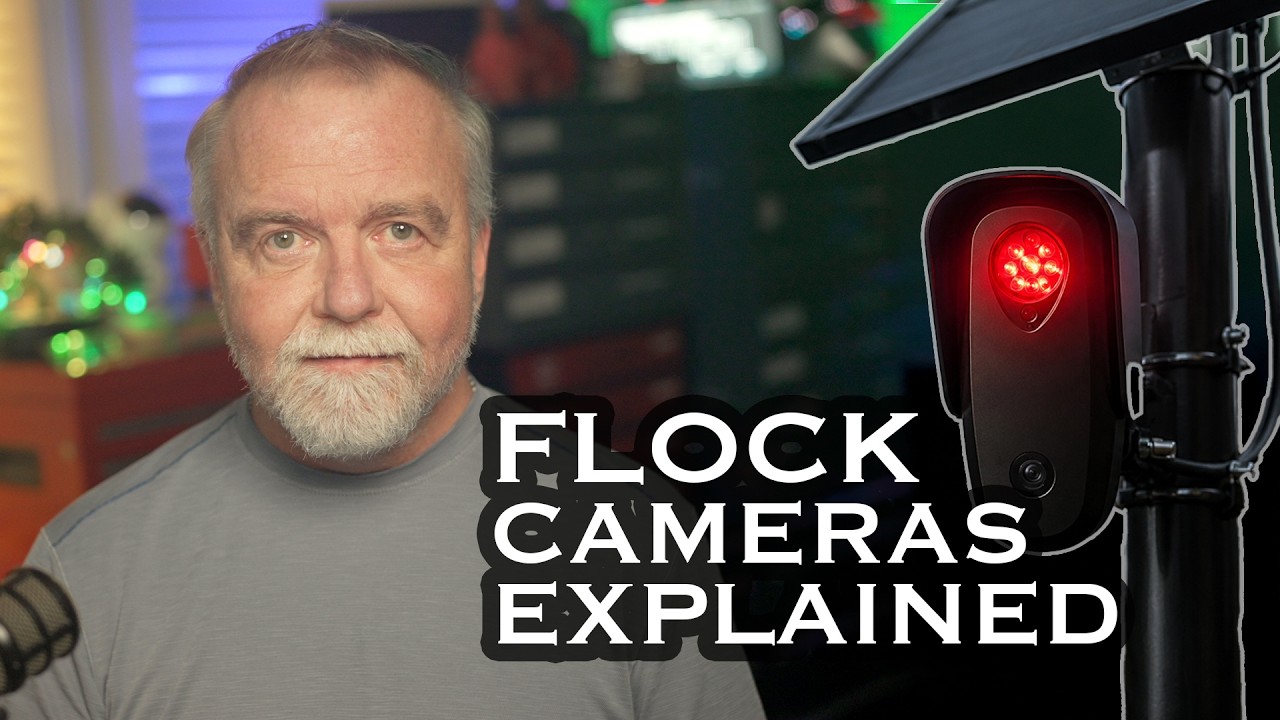
>> Yeah. Uh, it's a company. They put these cameras all around and they basically it's it's legal because you have no expectation of privacy in public and then they have contracts where they sell it to police departments or cities and different stuff. And it's become highly questionable because they're supposed to use as an aid to make uh to solve crimes, but they're using it and basically instead of as an aid, they're saying like, "Oh, we got this person and they were here, so we're just going to go arrest them." It's like, well, no, that doesn't really, you didn't catch him on video committing a crime, >> right?
>> And the other thing they do, uh, this has been a a controversy is I I believe like cops are like tracking their girlfriends.
>> Oh, yeah.
>> And stuff like that.
>> Um, so, uh, a flot camera. Now, I know a little bit about these. My senior thesis, uh, from law school, my long paper was about this. It was about digital surveillance. Um because there was uh there was USV Jones which had been recently decided way back when I gradu I've been a lawyer for over a decade which is kind of weird. But um >> I also know another fact about block cameras too.
>> Oh, what's that?
>> They contain two grams of gold and over four pounds of copper.
>> Just saying if anyone was interested.
>> Yeah. I mean that's that's good if you're homeless or whatever.
>> Yeah. Uh, >> it's like over 300 bucks.
>> Yeah, it's pretty cool. Like, uh, it's amazing.
>> Definitely leave those alone.
>> Yeah. Don't do not do not take them and take them into a scrapyard. Do not do that.
>> That'd be bad.
>> Bad. So, uh, a decade ago, well, a little longer than a decade ago, I wrote my long paper and it was, uh, partially in response to an opinion by Scalia in 2012, USV Jones, and it was about the physical placement of a GPS tracker on a car outside the scope of the warrant.
They had waited too long. They had gotten a warrant to place the tracker on, but, they missed it by like a day or two. They slapped it on there anyway, etc., etc. Now, Scalia said that what they did was unconstitutional in that case, but not because they were tracking a guy digitally without a warrant. He didn't care about that. His problem was that they put the tracker on the car, which is a physical trespass on the car without a warrant. That was that was Scalia's issue. And so my long paper talked about that, but it also talked about the coming reality that GPS tracking wouldn't really be necessary, especially in urban areas because they had these uh license plate cameras. Now, they're commonly known as flock cameras, but uh they're these cameras that are typically stationary, although they they can be mounted to a squad car or whatever. And what they do is whenever they see a license plate and they they'll take a snapshot of that license plate and they will note a GPS location and the time and it's just a database.
And exactly like you said, Scalia says, "You have no expectation of privacy when you're out on a public road, so this is fine." That's faulty reasoning. Although I I am kind of glad Scalia ruled the way he did because that got rid of the thing where they would put chalk on your tire at like a parking meter.
>> Like this the this case obliterated that because that's a physical trespass and they would need a warrant to do that to your car.
>> But um but other than that, his reasoning was very bad because just because someone's out in public and you might encounter them and that's fine.
You can't track their movements. That's when it becomes illegal. You can't follow someone around if they don't want you to follow them around. That is that's harassing or stalking behavior and doing it digitally typically falls under cyberstalking. But Scalia wrote the opinion and allowed for this to continue. So now this has grown and spread across the country. Um, and there are, you know, there are TV shows that have been talking about stuff like this forever with the the amount of cameras that are out there and the amount of uh data that the government has access to.
Uh, even if they don't aren't looking at it right now, it gets stored and archived and they can go back and find it. And these flock cameras are are part of that. But they they take a picture of your license plate and they they note the the time and the GPS location and then it's just stored around. And so what they can do is they can or they can pull all the data on a particular license plate and kind of follow it around depending on where the cameras are and if they happen to catch it. I mean if there's, you know, sometimes license plates are obscured, it's rainy, it's foggy, there's another car in the way, whatever. So they're not perfect, but they are they're there. And that is the context in which Baron Coleman is talking about uh he's going to use that to lead into his Tyler.
>> Before you do that, did you pay any attention to the latest the last like maybe two two weeks ago the Supreme Court case about the uh the geoence warrants?
>> Uh no, I haven't seen it.
>> So suppose I I haven't the best I can understand it. I'm not a lawyer, but the best I can understand is basically they're saying that they you have to get a warrant now for the person that you're identifying in the geoence warrant. You can't just gather everybody up. You have to get separate warrants for everybody.
>> That makes sense. Uh so what a geoence warrant is for the chat who may not be caught up on this topic is where they get they would get these generalized warrants for a geo fenced area. So, a a a geographical area, typically like a a set of city blocks or intersections, etc., and they would get a warrant to surveil the entire area and everybody who enters into it. And so, you're saying that there's now a a Supreme Court decision that came out or there it's being fought or they >> No, it came out the decision came out like two weeks ago and >> Okay. And they're saying that Yeah. You have to >> you got to get you have to get a warrant for each person.
>> Yeah. And it it's it's great because government will always push the bounds of what they can do. It's their job.
It's and it it is nefarious because it's government, but it's also not nefarious because any large organization per uh you know it's it naturally will expand its power and influence and it will um you know attempt to preserve itself. So those things those things happen and uh that happening is is kind of uh >> they were using I think before that they were using the business you know what is it like the business uh the >> business records exception. But yeah, business records exception where it's like, oh, well, they keep these records.
They just give them to us. It's like, well no, but yeah, they can give you these records, but once you want to see who the person is or go, you have to get a warrant for their information, >> right?
>> Yeah. And that's that's good. That's good. Uh, all right. So, we've got Baron Coleman. He is uh he is here. He is utilizing a an article from Mother Jones, and this will take us into a discussion about Tyler Robinson's case.
And uh guys, I wanna I wanna if you haven't seen it, I'm here to introduce you to the brilliant legal mind that is Baron Coleman. Um Lamar Kumia says, "Jim, what's the deal with Pat Dixon bullying you on his show? He was so agitated and annoyed over trivial disagreements uncomfortable for viewers." But you were on a show with Pat Dixon >> a couple times. Yeah, I've been on a show.
>> Why Why does he hate you?
>> He doesn't hate me. We're I mean, he's friendly. I've known him for a while.
He's No, I don't I got no problem with him.
But he just No, I It was something going on and I tried to sing along with a song and I guess there was a delay and he got all upset because I was singing along with a song he was singing.
>> You're messing up his fucking harmonies, bro.
>> I know. And I didn't I didn't know there was a delay. I didn't know there was a delay.
>> Okay, that makes sense cuz I was going to say I met I met Pat at Hackamania 3 and he was super nice.
>> Yeah, nice guy. Real nice guy.
>> Yeah. Yeah.
>> A lot of times I think it's just a thing he's doing, you know, like a bit so I don't Right.
>> I like him. I think he's funny um and stuff like that. So, uh, and I love when he I like when he plays piano along with the jokes and shit like that. Like that.
That's a cool, uh, neat like a g like, you know, a gimmick or >> he used to do this great show called, uh, was it called with the I can't remember what it was NFL or something like that, the Nicknog Ferroball League with this guy Starks and uh, and yeah, no, it was fantastic. you know, basically tracking murders and stuff like that around the country and like who would be, you know, win the, you know, the OJ trophy for the most murders in a year.
>> That'd be great. I wish I could do that.
Oh, there we go. Now we're bigger and cooler. Uh, I don't like the defaults on Streamyard. They They don't make us awesome enough. Okay, here we go. So, we're gonna we're gonna play this. And I don't know how this I haven't watched this segment in its entirety. I only watched a short amount of it. So, I'm excited for it.
>> Well, people, police, excuse me, keep losing their jobs for using cameras to stalk people.
>> Advocates say it's too easy to abuse automated light uh plate reader technology. I saw this article and I thought, what in the world? What's going on here?
>> Because how do you not know?
Okay, sorry. And we're gonna I'm gonna have to I need a therapist. I need a therapist. This guy is like government conspiracy lawyer number one right now. And he's like, "I saw this." And I'm like, "What the hell? You didn't know about this? How How do you not?" It's like one of the one of the most persistent Fourth Amendment violations I can imagine. It's all just fine. Nobody has any problem with this because here's the here's the thing. It catches it catches criminals. It really does. It's you can show them going to their drug dealers houses and you don't have to have a warrant on it because they just happen to pass by a camera.
That's not how it should work, but it does work. And when you when you do that and you rake in uh you know, convictions and stuff like that, judges don't want to change it. They really really like stuff like this. Plus, cities and municipalities are spending tons of money on these cameras. And if you s like they did this in Minnesota with the the the red light cameras um where they had the red light cameras and they were convicting people and then they're like you can't fucking do this. You don't even know who's driving the car. Like how can you red how can you send someone a ticket in the mail based on their license plate running a a red light without identifying them?
>> Yeah. But governments will always go for anything that could make them a little extra money without costing them money.
So it's oh we don't have to pay a cop to actually pull people over. We can just give people tickets and they have to pay us and there's no way to dispute it.
Yes. signing us up.
>> Yeah. So, I like my first thing is how do you not know about this? Like how how is this new to him? This bothers me. I'm not saying every attorney should know about these things, but like if you're if you're on the police are have too much power, government surveillance and and infringement on rights is too pervasive.
You should know about this a little bit.
Pendar 7, thank you for the super chat.
Pendar says, "See money for the haircut GoFundMe.
It We need to We've got goals, ladies and gentlemen." Uh, the haircut GoFundMe is is real. Is real. Um, I'm gonna have a shape charge just blow my hair off.
Actually, that's what I'm going to do.
Okay, here we go. Cameras play a role in this case. In fact, we just watched a preliminary hearing where absolutely no flock camera footage was shown.
>> Wow.
>> There no no data was discussed.
>> Oh my goodness.
>> Over the weekend, I got a call from a friend of mine who lives in the same town I do, same small town I do, and he said, "You know, there are flock cameras all over the place, every avenue in and out of town and all through the town.
You cannot move in this town without being picked up by flot cameras." Now, I want to point out that that doesn't mean it's the same in Utah, right? Like, I don't know what small town he lives in that has flock cameras on every street corner. Mine doesn't.
I I think I live in a smaller town than him. Mine does not have block cameras at every intersection. There's only like three. No, there's only there's only two with stop lightss. But, but we don't have flot cameras everywhere. Uh this that's not a ubiquitous experience.
But this is part of the problem. He's he's like they didn't even have they didn't even talk about flock cameras.
It's like well do they have them? Have we checked?
>> Is that is that a thing? I have no idea.
Do you know how many flock cameras are in Utah, Jim?
>> I have no idea.
>> Why not?
>> I don't know. I don't really I guess I should pay more attention.
>> Do you even care? Do you even care about life?
>> Well, I don't know. I mean, I don't commit a lot of crimes.
you are missing out.
Uh let's see. Does Utah have flack cameras?
I don't even know the answer to this.
They are present in Utah.
Let's see. Uh flock safety cameras are automated license plate readers.
See deployment in Utah. Ogden is one of the largest users in Utah with 41 flock cameras, including one mobile unit that moves to follow crime trends. Most cameras are concentrated in the project safe neighborhood zones covering areas from 12th Street to 40th Street between Washington Avenue and Monroe Boulevard.
Now, I don't know where is um UVU or whatever that uh where the assassination took place. What city is that in?
>> I I don't even know. I think if I'm not mistaken, I believe Ogden is in the north of Utah.
>> Where is UVU? I mean, it occurs to me that I forget that Utah exists on the average day.
>> The only reason I know that is because the they had uh from that TV show Hell on Wheels, they kept talking about Ogden and the coal fields and it was north of where the railroad was.
>> Okay. Flat cameras are being used in Utah in Oram, Utah. City has installed more than 200 of Flax solar powered internet connected cameras across its area. So, that's cool. That's way more than they just said were in all of Utah.
So, thank you AI for nailing that one.
Uh, these cameras can capture vehicle plates, which indicates their active use in monitoring traffic and enhancing public safety. And is Flock the only company that does this? Is that why they're all called Flock cameras? Or is there other companies that do it? The cities do it on their own and not contract their Flock, or is it their technology and they own it?
>> I have no idea. Uh, I would assume so.
Let's see. There's a there are these ALPR maps.
Let's see. Let's um real quick. I'm I don't know any like we got to look into this. So, here's the map.
Here's uh Utah's down here. So, I think Oram is one of these guys. There's Ogden. Logan.
>> Where the fuck is Oram?
>> It should be I thought it was South Utah.
is where the from that >> Yeah. And again, it it occurs to me that I barely know that Utah is a state most days.
>> Og people should be more worried about Ring camera and what Amazon does with all the Ring information. They just give that stuff away.
>> Well, yeah.
>> When you sign up, you basically say they could take anything off your Ring camera.
Is there a Where the is Oram?
>> Says just north of Provo. It's >> just north of Provo. So Oh, here it is.
Uh, okay. So, interestingly though, it says there's 200 of them. This uh ALPR maps doesn't have any listed in ORM.
Let me see if I can find There's a There should be another one here.
Uh, While ORM Utah lacks the dense surveillance networks of major US cities, a combination of UBU campus security def maps.
See what this says. This will probably end up being pornography.
The love of your life, Nester, lives in Utah. I I'm going to sue you for that.
Uh, so here we go. You Salt Lake. Whoa, look at that. That's a heat map if I've ever seen one. Hot.
Uh, so Provo is Good. I can't even see it.
Somewhere around here, right? I I lost it.
This is topshelf entertainment as I look at this fucking stupid map.
I don't know. So, there are Oh, there we go. There's a search ad or Utah.
Yeah, that one. Okay. So, here we go.
Here's Oram in general.
any where is the college? Wait, there's University Parkway.
So, it looks like uh we have this right here. So, here's the the college campus. I'm guessing >> I I did hear something which I don't know if it's true. I heard that the the college like shut a bunch of cameras off because they were worried about ICE picking up illegal aliens.
>> That could be that could be I but not back when Charlie Kirk was there, right?
That would have been before or after. I don't know.
>> But either way, we have one, you know, like here's the the college campus down here and we only have a couple cameras.
So, like the idea that I don't know if Tyler Robinson like looked into this and planned his route, we we have no idea.
This is part of the problem with the claims of uh people who engage in sort of specious reasoning or whatever is is that they don't they just ask the question, right? Like they're like why why aren't there why aren't there more pictures of his license plate?
>> He does seem to have planned it out better than I would think a 22 what was he 22 23 kid would have planned it out. You know, have a change of clothes, have a place to stash this, know where your It does seem, you know, and I'll just say right now, like I think in my op, it's my total opinion that Lance Twigs was involved. I'll just say that right now.
I think Lance I think the text messages between them are pretty shady.
>> Stuff don't seem right. Like it seems Yeah, I don't buy it that you know he's never said mentioned Charlie all the stuff. He's never mentioned Charlie Kirk. All this stuff doesn't seem >> but that still doesn't mean that like he was working for the Israelis or anything. I just think that this was a >> The other question is did um when did he make these statements, right? Like did he make these statements uh when um when he didn't have immunity yet and stuff like that, right? Like the these are these are important timetables about about this. I go, "Oh yeah, uh no, he never talked about anything." It's like, "Well, you have immunity." Yeah, he talked about him all the time, right?
like that. It changes immediately the moment you are no longer in danger of going to prison for the rest of your life. But um I think Lance Twigs may have had more involvement than is led on. Certainly I mean his post his post murder involvement would uh would lead me to think that they could maybe stick an accessory after the fact.
Uh >> he burned the letter, right? Yeah, he he burned the letter allegedly >> destruction of evidence, >> right? And uh may have attempted to delete some text messages, may have deleted some like we don't we don't know exactly what happened there. So, um there certainly seems to be some sort of involvement. And I mean, his reactions in those text messages are are like, "This is your reaction to your >> and then he supposedly just went to bed after he found out that this guy just murdered somebody and he's like, okay, all right.
>> What are you going to do? You're tired.
You're tired.
>> Well, he said he just woke up and so I'm going to go back to bed and then like >> I don't know.
>> Look, if you call me in the middle of the night and I'm asleep and and I wake up to take your phone call about how you commit your cool murder, I'm going right back to bed the second we hang up. Like that's true. But um but no, like his his reactions are a little weird and and it's like you didn't do this. You're not the guy who did it, are you? And he's like I am. He's like oh well that's that's frustrating.
They're very weird, but just because they're weird doesn't mean they're not true. And this is this is something that of course is being relied heavily upon by these people. Uh well, these people behave strangely, therefore it must be nefarious. And it's like, well, but maybe they just behave strangely in general. They behave in ways that we we don't.
>> Yeah. I mean, I I from what I understand, Twigs likes to dress up in a costume and do this weird. I don't know, you know, like >> Yeah. and and I can't talk to I can't talk to people who are in their early 20s. Like I I can't do it. I can't follow like I'm I'm like I'm frustrated immediately. So I can't understand how they communicate just on a normal level.
So I'm not going to say that that makes them odd. Like that's pretty that's pretty ubiquitous for me and people in that age range. I just I don't get it most of the time. Uh, dead end 3001 says if leos are losing jobs, misusing flocks, system is doing its job.
Auditors checking and holding PDs accountable and catching bad guys, everyone wins. Yeah, I mean that that's true. I think the worry is that, you know, for every caught officer, there would be a significant amount of people who skirt by the system. I think that's what people are worried about. Uh Jefferson Electric says Rackets, a friend got reported for sexual assault from 10 years ago. Cops called him in.
He talked to them. He hired an attorney.
He passed a lie detector. He's wondering how long before the prosecutor decides to pursue um not all I mean 10 years ago statute of limitations on that is probably out unless it depends on the nature of the sexual assault and the state that he's in. It's it's hard to say. But um how long how long has it been? Like that's one of the questions.
But you you won't know anytime up to the statute of limitations. It could be the last day and they could file uh or make an arrest, you know, and and you won't know. So just keep the general advice.
Shut his fucking mouth and don't talk to anybody about anything related to that until it's until he knows he's clear.
Um, who's it? Remember for eight months says, "Buzzing from your mic is killing me. Good to see you."
>> I don't hear any buzzing.
>> I never understand what people hear or not hear. I think when I was closer to my mic, it might have been getting a little feedback, so I backed off of it, but I I have no idea. I don't hear buzzing.
Fletcher Boy, Laura Owen's parents got roasted for lying to the bankruptcy court. The audio would make a good topic for a show. Yeah, I need to get back into looking at those. Thank you, Fletcher Boy. I Asia Fraser, how you doing, girl? says, "When was the last time you asked a guest balls or no balls?" It's It's been a minute. Maybe we'll ask Jeff or Jim tonight. Why did I call you Jeff? Don't I'm not cheating.
>> Oh, you're trying to >> Wait, are you mad that I'm not cheating on you?
>> All right, here we go. So, he says, "You cannot move in this town without being picked up by flot cameras." But he's not talking about Oram, Utah. We we can tell like you can move pretty significantly through Oram, Utah without being picked up by flock cameras. They are not everywhere. Um he's talking about his own town. All right, another thing.
Well, it's this way where I am, so it must be this way everywhere. Good job.
Good reasoning skills. You could just look. Here we go.
>> If you're on the run, not on the run, if you're out running errands, the flock cameras are picking you up left and right.
They aren't. Apparently, they're not.
>> And then I saw this headline. I thought, well, what the hell's going on here with the police? Flock cameras, solar powered automated license plate readers weighing less than three pounds and designed to be unobtrusive.
>> Whoa. Can be found on 80,000 street corners throughout the country.
Company behind the cameras built an 8.3 billion business empowering empowering officers to track people's movements.
Well, wouldn't that have been convenient in this case? We wouldn't have had to look at Miss Noble's blurry underwater looking nest camera footage. We could have just pulled up a flock camera and said, "Here's where we saw Tyler Robinson last. This is his license."
>> I don't know what he This is such a fucking lie. And this annoys me.
Block cameras take pictures of license plates.
They would never accept that Tyler was driving the car.
Not at all. They would say, "Oh, well, who's driving the car?" Which is a logical question. If you just got a picture of a license plate, how do we know Tyler was driving? And for him to to pretend that Candace Owens is the Baron Coleman's of the world would ignore that obvious question and just blindly accept that a flot camera of Tyler's license plate is better than a grainy image from a campus security camera where he has to where that's showing him at the university. for him to just pretend that those two are the same thing and would be accepted uh you know foot and mouth I I don't even know what the expression is but that they would just be accepted is is very dishonest and it it bothers me. I don't like dishonesty and every time I say that every time I say I don't like dishonesty uh Turning Point USA sends me a check for $250.
>> Can I get some of that?
>> No. No. Sorry. Jews only. Um, GMBB615 says, "Yo, Nick, good to see you on Paramount Tactical." Hey, that was fun.
Uh, that was fun. Gary was a very gracious host. Also, every time I mention Paramount Tactical, I get I get $85 from uh, Turning Point.
>> Are you really hungry, Nick?
>> Yes.
>> Do you like protein? Like beef? Would you like some very good Texas beef from King of Billong at www.billongusa.com?
If you use promo code nose, you'll actually get 10% off. Or you could use code Jim.
>> Wait a minute. Are you getting paid to do this ad?
>> YES.
>> That's fucking hilarious. I like the King of Bill Tong guy.
>> He's awesome. He was on my show, Fred.
He's a great guy, man.
>> Yeah, I've mentioned him on stream and and the company billongusa.com.
If you guys like uh cured meats that are, you know, uh they're healthy proteinbased snack, stop eating. Come and eat some bilton display. This was his car moving. Here's a picture of it. Here's the here's the data from the license plate reader. We got none of that >> because they nationwide cameras log billions of license plates each month.
>> That's nationwide. And now dozens of reports are emerging of police using the cameras not to solve crimes but to stalk their partners and exes.
>> What are they?
>> Over a two-month period in 2025, Milwaukee police officer Jose Ayala searched the license plate number of someone he was dating over 200 times.
According to court documents, he also searched for his partner's ex. That's kind of psychotic if we're being honest.
I mean I just another Milwaukee officer boyfriend Tanji Chapman was assigned to investigate Ayala's case. Ayala was charged with misconduct, resigned and was sentenced to one years probation as he should have been. That's abusing the technology. Then this week Chapman too WAS CHARGED. THE GUY >> I SAW THIS story the investigator got charged with doing the same thing.
>> What's funny is how is it abusing the system though, right? like because now I know the answer because I'm a good I'm a good >> Well, it's a I think it's a violation of their policies because you're only supposed to use it for official business. So, I don't I don't know if it's against the law, but it's probably a policy violation.
>> All police records management uh has the idea or has uh with it the understanding that you must be accessing the system for a legitimate purpose that's non-personal. uh it has to be connected to an investigation. You can't just run people's plates for a friend or whatever. Like you have to you have to have uh a reason to do it. And that's that's actually in most state laws and and the federal law about accessing uh government databases, any government database that's in there. So that is Yeah. But but it is funny because it's like what do you have these cameras for if not for this literal purpose of just tracking out where people go?
My question was did did Chapman and the other guy did they did they find anything? Did they like find out their girlfriends were hoes or whatever?
>> They they never really said it. There was one another one I heard it was either in I think it was Mexico somewhere where they were filming a movie and a cop was on se on set for like security and was like started hitting on this actress and she kind of blew him off and then all of a sudden he told her like he told her I'll find you and then he came flying up on her pulled her over because he was tracking her on flock. He ended up going to jail for it.
Like there was a whole thing where he's like, "Yeah, I did it."
>> Yeah. That just doesn't seem like a good idea.
>> I told you I'd find you again. She filed a complaint and now you're going to jail.
>> Exactly.
>> Who was investigating? The guy who was abusing flock cameras was charged with abusing flot cameras.
>> Yes. It's a It's a big >> He was charged with misuse of GPS information. While investigating Ayala for abusing flock cameras, he allegedly was engaged in the exact same misconduct using the technology to track people in his own life.
>> Okay.
Yes. Look curiously at us, please. Is that why we don't have any flock camera footage of Tyler Robinson? Was everybody in Utah doing the same thing? Stalking their exes, stalking their girlfriend?
No. Retard. THAT WOULD HAVE THAT WOULD HAVE NO IMPACT. That would have no impact on whether or not the cameras acquired an image.
They were just so busy stalking their girlfriend. The camera didn't take a picture. That's this is dumb. Now, I'm sure he's trying and failing at telling a joke here. But this is this is the kind of reasoning that's being used over and over in this stuff. It's like, well, why don't we have it? Because we don't.
You know, there are cameras all over the place uh in general, not just flock cameras. And and the big question and stuff is why don't we have this? And there's usually one of two reasons. One, there isn't an image. Like there isn't footage of it. And two, sometimes, like in Karen Reed's case, there might have been images and they just didn't investigate. The cool thing about flock cameras is they're way different than personal ring cameras. Personal ring cameras, you have to retrieve the data really fast or it goes away. Flat cameras stockpile it. So, the footage would be there still today if it exists.
But it not existing is no indication that he drove past those cameras and it took a picture and like it was wiped away or whatever or that he didn't drive past those cameras. They they're not perfect. They're not perfect systems.
I hate this stuff. I hate things.
>> Most major cities >> too busy stalking all these people >> monitoring cameras too to monitor traffic patterns and stuff like that that they're picking up things and you know there's there's cameras pretty much everywhere >> and and again a whole lot goes into it.
If you pull up to an intersection and it doesn't have a clear view of your license plate, it that camera that picture is useless.
No. Why did it do that? I didn't want it to do that. Very racist. say, you know, we have a murder suspect.
>> Do we?
>> We ought to see where he's been. He drove 4 hours to get here and four hours home. Oh my god. He drove Surely there's flock uh uh data all over Utah of this guy all up and down the interstate.
Whatever the interstate number did, I think 15. Surely is not. There is surely is just surely. But again, you can you can check and they they actually don't install a ton of flock cameras on interstates. They install them in cities like that. That's more useful because a bunch of crime doesn't happen on interstates. They don't need to track people that way. And if you're going from city to city, you'll show up on the flot cameras on one and then on the flot cameras on the next city. If you do, maybe something like that. All up and down Interstate 15, all over Orum, all over St. George, all over. He should be everywhere.
Why? It would have been pretty open and shut case if you be on if you're being honest. If you're trying to prove probable cause, we can use the testimony of a guy who thinks he's a cat, Lance Twigs, we can use Catboy, or we could use flock cameras. Isn't that what they're supposed to be for? Is that why >> flock cameras would be less accepted by the people critiquing this case than Lance's testimony?
Lance's testimony is really difficult on a practical level to overcome. Lance is the person that Tyler was talking to.
Lance has no particular reason to lie because he has an immunity agreement. In fact, the immunity agreement, contrary to popular belief, incentivize truthful testimony, a truthful testimony is how his uh immunity agreement is preserved.
If he lies, if they find out he perjures himself, if he gives uh you know, anything like that, he will lose his immunity agreement and likely be prosecuted as an accessory to murder or maybe even prosecuted for murder as part of a conspiracy. Um, it would be an insane thing. Now, that doesn't mean people do lie about stuff, but that as far as the court is concerned, Lance Twigs's testimony about Tyler Robinson admitting that he's the shooter and admitting that he planned to shoot uh Charlie Kirk when he left that morning.
Those two admissions right there, that's that's almost sufficient probable cause on its own. probably is, but you'd never you'd never have a prosecutor rely on just that information. That's sufficient probable cause on its own. You don't get to controvert the fact unless you can prove that Lance definitely did not make those uh have that text conversation with Tyler, which they can't do that.
So, at Probable Cause, that's all you need. You don't need the flock cameras.
They may they may even have flock camera evidence that they're not presenting because they don't need it at probable cause.
But this guy's like, "Wouldn't that be better?" No, you wouldn't accept it either way because it's it's your your MMO is to not accept it. And that's a fine thing, but let's not pretend that there's this group of evidence that these people would all suddenly accept.
Well, if if we just had this, we'd be fine with it. Especially one that wouldn't it necessarily wouldn't have a picture of Tyler Robinson in it. It just be his car, which anyone could be driving. That's the whole thing. He could have parked his car uh you know outside of the ring camera area or flat camera area and he could have gotten a ride in with someone else. Like we don't know what happened. He could have walked in. He could have taken public transportation, an Uber. Like we're not privy to those details yet. Presumably the FBI will have uh made some sort of uh they'll have some sort of idea about it, but maybe not. They don't have to prove how he got to campus. They just have to prove that he was on campus. And they did that acceptably at probable cause with with video. And >> and they got the videos of him in the parking lot, right? They were very clear. You could tell it's him and >> Yes. Yeah. And and I I love how the the big thing it's going to come up later is like those are grainy videos and blah blah blah. We used to convict people without video just fine and we still do.
Not most murders aren't on video. It doesn't happen. Uh it's a very inconvenient thing, but most murders are not videoed. And so uh people have this expectation that because we video everything and everybody's got a cell phone that all murders will be captured on video, but that's just not true.
>> We have them to track crimes.
>> No. Wouldn't that be the ideal scenario in which to use them?
>> Block cameras are not there to track crimes. Not because some sergeant's trying to get his rocks off, wondering where his girlfriend is during the day while he's on the shift.
>> Is that how sergeants get their rocks off, >> but to actually track suspected murderers?
>> No. I thought their whole purpose of a camera was they identify somebody with a suspended license or something like that or somebody with a warrant so they can find them. That's what I thought the purpose was.
>> It's I mean it's really just for and this sounds horrible and I don't like them by the way. I hate flot cameras. I I do think that they are a violation of the Fourth Amendment. U very specifically because like I said just because you encounter like if I see someone at a stoplight like a flock camera would I and I take a picture of their license plate and note where they are and then I follow them to the next stoplight and take a picture of their license plate and note where they are and I GPS tag every single photo and I do that 15 times like as if they passed 15 cameras. That's illegal. And that's why I don't like flock cameras in general. But they're not there to track crimes. They're there to track where people are when they're out in public on public roads. And uh that's that's the purpose. They're not good at tracking crimes because they don't take pictures of crimes. They take pictures of cars moving. They're not even they're not even there to like uh they're not speed cameras. They're not red light cameras.
They're not expired registration cameras or anything like that. It's literally just here's where this car was at this time. That's it. And and >> I think they can like the the police departments in this or can put like a they can enter in a plate number and say, "Hey, I want to find this plate."
And it'll pop and then when it'll come up, they'll get an alert. They'll say this car, you know, like they'll have mobile ones and like cop cars or whatever where the car drives by and it'll alert and it'll come up and say, "This car is on this list that we're looking for." You know?
>> Yeah. that and and I'm sure they have something like that. But again, he's like, "What? Isn't it for tra for uh recording crime?" No, they're not like that's not their purpose. They're not good at it. Uh they're they're very bad at it.
>> The one thing we had for reporting crime was the Shot Spotter thing that they used to have in the cities until they decided that that was racist and you had to get it out of the cities. And surprisingly, the shootings went down because they weren't reported anymore.
Like why uh why are all these shootings coming from black neighborhoods?
I don't know. Very weird.
>> But that's not how they get used.
Apparently that's not how they get used.
>> It is.
>> Either that or there is no flock footage.
>> In fact, >> you nailed it.
>> If they go to trial and don't introduce flock footage, I think by now they're so ubiquitous.
>> An affirmative defense just might be.
Pardon me.
What you guys are about to hear is one of the most retarded legal takes that exists.
And I say that without a hint of irony.
It also is a very strong demonstration that Baron Coleman, alleged attorney, does not know what an affirmative defense is. We'll discuss that in a minute. Let's back this up for just like 15 seconds.
Self-defense is an affirmative defense.
Right.
>> What?
>> Self-defense is an affirmative defense.
Right.
>> Right. So, an affirmative defense, let's let's preface this uh from a real suspended lawyer. An affirmative defense is a legal justification for what has happened. Self-defense is your legal justification, not a factual justification. Factual justification, I didn't kill them. Legal justification, I did kill them because they were trying to kill me. Boom.
>> Like a sanity defense would be an affirmative defense, right? Or temporary sanity.
>> Uh necessity. I like um do you know if you're if you assault someone, for example, because you're trying to rescue someone who's drowning, right? And you have to push someone out of the way to get past them. That that could be a necessity type defense. There there's stuff like that. Or you're you're violating traffic laws because you're in an emergency and you're trying to get someone to a hospital. Um, these are necessity defenses that that are there.
But affirmative defenses importantly do not get rid of the factual reality of the crime. Uh, there's duress, right?
Like you you shot someone because someone held a gun to your head and said, "I'll fucking kill you if you don't shoot them right now." Right? You you you commit a crime because someone else is forcing you to. You these are the types of things that are affirmative defenses. And some of them are perfect defenses, like perfect self-defense.
Some of them are not. Some of them are kind of like explanations and the court says, "Well, this might mitigate something. It might eliminate aggregate aggravating factors, etc., but it's not a perfect defense." Like imperfect self-defense um is one of those things.
So, a an affirmative defense is accepting of the factual record of the crime. So, if Tyler Robinson's affirmative defense is flat camera footage, it'll be saying, "I murdered Charlie Kirk, but it's okay cuz you didn't catch me on flot cameras.
>> You didn't catch me on flot cameras."
That is not an exaggeration.
That is how dumb this guy's analysis is.
And it blows my mind. He He says this unironically. Here it goes.
In fact, if they go to trial and don't introduce flock footage, I think by now they're so ubiquitous and affirmative defense just might be.
They don't even have me on flock. That couldn't have been me. It is not. If it had been me, they'd have brought in the license plates and said he was here at 4:15 a.m. He was here at 4:27 a.m. He was here at 5:13 a.m. He was here at 6:15 a.m. Ladies and gentlemen, you can just track that timeline and it takes him right to Oram, Utah. And he pulls in right at 8:30 when we told you he was in the park.
>> When does he pull out? Am I right?
>> Yeah.
>> And then we watch him drive down and get a ribeye. And then we watch him drive right back up to >> Let's entertain this for one second.
Let's say, Dick, that uh the state doesn't introduce flock cameras and flock cameras of this did exist and they subpoenaed the flock cameras and flock said, "Well, no, the footage is gone because the state didn't tell us to preserve it and we erased it." That would be something they could make hay out of in court. Correct.
>> Yeah. Now, here's the crazy. But here's the thing. An affirmative defense.
>> I'm not saying an affirmative defense.
I'm just saying like an actual >> Right. Right. Right. So, but I I want to draw this I'm not saying >> like there was a bad investigation or something like that.
>> Right. And I'm not I'm not saying this is what you're saying. I I want to draw the distinction. An affirmative defense eliminates the criminal act if you can uh you know, some states have um self-defense motions, right? Like stand your ground motion in Florida. And if you win the stand your ground motion, which is an affirmative defense, I stood my ground under the statute. I, you know, uh, did self-defense, basically, they go, you win, you win your trial because if you can prove by preponderance of the evidence that you self-defensed, they cannot prove beyond a reasonable doubt that you're a murderer. Right? like if because you're you're basically establishing reasonable doubt and they they have established an affirmative defense motion um of of self self-defense. Understand your ground that that's what they've done. They've established a process for doing that.
What you're talking about is a traditional defense which you where you make an argument to the jury and you say, "Look, they've got these cameras everywhere and those cameras, you know, that footage is just missing or you know, we don't have them on there. How can they possibly say he got there?
Now, you tell me, Jim, you're a juror or you're you're looking at a jury and you go, how well do you think that argument is going to work on a jury and say, "Look, they don't have his car on these flock cameras.
Here's all the evidence that they presented, but they don't have this. Can we can he even have possibly murdered Charlie Kirk?" Like how do you think that's going to work out with a jury? I I have my theory.
>> And the only way it would work is if they were able to show like here's these flock cameras. Oh, here's one. Here's one. Here's the list. Here they are on the map and there's no way he could have got there without driving past them and they don't have them on them. That might make someone say reasonable doubt, but you still got to get past the fact that you have him on video in his car. I've seen video of him in his car like driving. They have him on, you know, on campus on video in his car. They have or his car on campus. They have him walking from his car in the parking lot. They have him grainy, whatever you want to call it, through the hallway. I know there's been weird angles with it. Oh, it can't be him. Look at the height and blah blah blah, but that's it's not scientific any of the things that they're trying to show. But anyway, sorry.
>> Right. And you know, you can you can certainly make an argument and arguments uh do work and don't work based on the factual reality. The problem is right now they have a lot of evidence as you're talking about against Tyler Robinson. As far as murder trials go, people are people are expecting more from this murder trial because it involves the assassination of a major political figure. Right. And and that's that's a true thing.
>> So the murder trial of Zachariah Anderson, he got convicted with none of this evidence.
>> Right. Exactly. And that's what I'm saying for a regular murder trial, which that's actually the standard that will apply in court is the regular murder trial. Us watching from the peanut gallery, we're like, "Oh, this is a big trial. They will need more evidence to convict." That's not true. That's not true. But speaking of what is true, we have been raided by good logic, purveyor of exploding microphones.
What's up, Joe? Glad to have you here, brother. And welcome to all of Good Logic's viewers. Uh please make sure you get your complimentary hand job uh for joining the stream. Um you can you can get it from yourself or uh a friend uh preferably of the same gender. We don't want any sexual assaults happening.
>> Hey, join the chat.
>> So uh this this is a big one because uh you can make this argument to the defense, but that's always going to or as as part of your defense, but that's always going to be weighed against the rest of the case. And like you said, there are certainly circumstances where you can go, why don't we have this footage? It seems like we should. The footage did exist and now isn't available. That's that's a good argument. That's a good argument, but it's not enough on its own, typically speaking, because the reality is cars drive by flat cameras every day and don't have their license plate picture taken. Now, Baron Coleman is overlooking one of the critical difficulties in using this uh affirmative defense as he's putting it. He has to through the court process adequately explain to a jury what a flot camera is and he has to explain to a jury why a flock camera not taking a picture of this car matters.
he's got a huge relevancy issue unless the state attempts to introduce flock evidence somewhere because if if his argument is just I want to bring in an expert to explain flock cameras and then say there isn't any, the judge is going to go like well why though?
It's like well there should be images and he'll say why?
Right? Like this this is a huge problem for Baron or Baron's theory is why would the judge allow testimony about something that has not been brought to court?
>> Will the judge allow an explosives expert to come in and testify about explosive microphones?
>> I you know what? I don't think so. I don't think so. There's no there's no state recognizable evidence. And I don't I don't mean the prosecution. I mean the court. The court is looking at this and uh you're gonna have to really sell something like an exploding microphone um with a with a shaped charge. You're going to have to really sell this this flock camera thing and you're going to have to do it. And the judge is going to go, but we have, you know, they've presented evidence that he's on campus, so we know he makes it there. They don't have to prove how he got there. That's not part of proving whether or not he pulled the trigger.
>> What if he flew there on an Egyptian plane?
>> That's true. That's possible. I hear those were around.
>> But it's it's uh you know the these are one of the things I think people overlook a lot in their trial analysis is how do we get to this evidence? And especially in a case like this that is heavy on the conspiracy uh heavy on the government intervention, how does the defense get to make this argument in the first place? Because the judge is going to go, how is it relevant that there isn't a picture?
Then they would have to bring in someone uh an expert and the judge will probably have a a closed hearing on this if he even allows it. and that expert is going to testify about how likely it is that he should have a picture, right? Like that's what they'd have to do. They'd have to show that it's relevant that there isn't one. And you're either going to do that by showing that the data did exist and has been deleted or that every other car in Orum had a picture taken, just not his. Like that's that's the way you do this. And and there's almost no way you can say this with a straight face in front of >> I mean, why couldn't they try to subpoena a flock and get footage proving he wasn't there because he was captured on one of these other flocks somewhere else?
>> Yeah, that that would be See, and that would be useful. That's a much better thing. Like, hey, we know he wasn't caught on a flat camera in Oram because he was down in Provo at the strip club or whatever. Like I don't think they have those there. But uh you can watch Mormons uh strip down into a suit I think.
But if if they have his car somewhere else in the time frame that he's supposed to be in Oram, that would be excellent.
Excellent. But presumably they don't.
And of course we all have to pretend that the the defense isn't doing any work to entertain all of this. that the defense hasn't looked for this. And the FBI would have to provide like if the FBI looked for flock camera evidence and they found a picture of his uh his Dodge in a different city, they would have to give it to the defense. Otherwise, it's a Brady violation because that would be exculpatory. No matter when it is on that day, at any point in that day, they would have to provide it. So, the defense has this information. The defense knows this. And you go, "Well, why didn't they present it?" You go, "Oh, wait. I forgot." The defense is I think Nester is a terrible defense attorney and I also think she's a terrible dietician, but she has been doing this for 30 years.
>> The man, the guy, I can't think of his name. The guy that he's got seems halfway decent, though.
>> I haven't watched him yet. I I need to watch more of the hearing, which I'll get to eventually.
>> He was the one making most of the arguments about not letting this in or not letting that in.
>> But this this is crazy. Like this argument he's making right now is sucked.
>> It's an insane argument and uh and and attempting to call it an affirmative defense. Like I'm being nitpicky there.
Maybe he meant something else. He just got the terms mixed up. That's okay. I can forgive that. But the way he's presenting it, he's presenting it as if one, he's like, "The cameras are so ubiquitous. this should be an affirmative defense, which means he that this should be available by statute or rule to every defendant that if they're not on a flock cam that they're not guilty. That's crazy. Like, that's a crazy assertion to make. And it it completely misunderstands flot cameras.
It completely misunderstands legal defense. I don't know what this guy does. I know he does civil work. I don't know if he's ever done a criminal case at all or if he knows criminal law. He doesn't seem to granddaddy's 306. Here we have him looping around campus. I mean, my goodness, people.
I think it becoming an affirmative defense. If I'm the defense lawyer, I'm raising it. I'm making the judge tell me I can't.
>> He will. He'll do that happily. The judge will look at the exhibit list and if they don't have any flock camera, I'm using that in my opening. You know what you're not going to hear, ladies and gentlemen. You're not going to see flock footage. You're not going to see it.
>> And the the jury will be sitting there going, "Fuck is flock footage.
What is that? What is that?" They don't know what that is. So, you're going to use that in your opening. You're going to have to spend precious time in your opening explaining flock footage. And then you're going to have to explain that they don't have it and the juryy's not going to see it. And the jury's going to go, "Okay, but like what are we going to see?"
And I think you run a real risk presenting um you're not going to see this video evidence to the jury whether the juryy's going to be paying attention to the video evidence that is there, maybe even a little closer. And that is not what you want if you are Tyler Robinson's counsel. You do not want them looking into the video and replaying it and going, "Can we assess this?" Baron is setting up in his opening argument that cameras placed around a location can adequately track the movement of a defendant. He's setting that up. He's telling the jury that that can happen.
He's saying it didn't happen for his car. and the prosecution will have just laid out very succinctly that yeah, we actually have tracked him by cameras and we have pictures of him all over campus and we're going to show you the timeline. We're going to show you as he walks around campus and these cameras uh are able to give us a precise time and location of all of his movements.
And then Baron's going to come in in there and talk about talk about well they don't have it for his car though.
This is a terrible strategy. It's legally specious and uh a judge may just actually tell him to shut the fuck up if he tried to present something this dumb court. Honestly, >> why? Because he wasn't there.
You're going to see grainy underwater footage that may or may not be Bigfoot or space aliens.
>> This is not a good argument. But you're not going to see flock footage that would put my client clearly at the scene.
>> And again, the flock footage doesn't do that. That's not its purpose. Flock footage shows a car's license plate.
That's it.
>> Maybe he was wearing >> draw and make the judge tell me I can't say it.
>> What was that? Maybe he had a license plate around his neck like >> Yeah, I actually I I did that with my old license plates for my car that uh when I got them replaced with the blackout ones, the original ones that say Law Pope, I had them made into a giant flavor of Flave style chain. I wear them around.
Yeah. He's like, I would I would do this and I would draw an objection and then make the judge tell me I can't say it.
Okay. Like, how is this helpful?
Do you think you're gonna appeal and win on that? Do you think that's that's how that's going to go?
All right.
Okay.
But we'll see. You never know. You never know. Um All right. Uh where was it?
Oh. Oh, yeah.
Lest you think there is no flock footage in Oram, Utah. Check this out.
Show us this out. It's rendering a map.
Ladies and gentlemen, hold please.
>> Look at the number of flock cameras you would have to drive past in order to commit a crime in Oram, Utah.
>> Just in this little view, we have 121 117 of them. We come down here all up and down the highway. There's 64 in this view. All up and down the highway.
Here's the campus right here. We have two right here.
>> Wait, no, the campus. That block camera right there should have picked up >> uh >> Or does he have it oriented differently?
>> Uh or no. Is that one? Yeah, that one right there should have picked up the uh the chain gang taking Charlie Kirk to the hospital.
>> What does that have to do with anything?
>> All up and down the highway. All I mean you you So he brings that up. That's an interesting question. Okay. Did it >> right? Like did did it pick up the whatever the chain gang bring I don't know what the chain gang is referring to. I'm assuming the the TPUSA security that brought him to the hospital, but like did it pick them up? Because if not, you've got a really big fucking problem because we know that that did happen. So if it didn't pick them up, you would know then that it's not a perfect system.
>> Someone is saying that purple is the Motorola cameras, not Flock, >> whatever that means. I don't know.
>> Is there purple on here? I'm not >> I don't know. He see Senator Rumble R.
Zelian saying there's 329 cameras in Salt Lake City, but they have 128 Motorola ones that aren't flock. Oh, >> okay. So, yeah. So, uh, Aelion over on Rumble says there, yeah, there aren't that many flat cameras in Salt Lake City. 329. They have 128 Motorola ones aren't flocks, so this guy is retarded.
It's very important that you include that last part. Um, I do appreciate that very much. Thank you.
But again uh yeah this whole and again his whole thing is this must have happened and we haven't seen it yet therefore it didn't happen therefore he wasn't there is crazy like it this is one the def or the the prosecution could be sitting on a big stack of flot camera evidence. We have no idea. They were they're under no obligation to present it at this point.
they would have given it to the defense, but the defense isn't going to be out there saying this stuff. The defense, you know, they're going to keep their lips uh mostly sealed on this stuff. And they know that this would not have been necessary at probable cause, >> but you don't they don't need to turn all this information over for a probable cause here. And there's like a certain deadline right before trial that they have to turn all the discovery over.
Correct. Or >> I mean, yes, but mo like most if they have this stuff, they will have already turned it over, right? like at at this point. Um but uh and and then they had a deadline for when uh evidence had to be given to the defense and if any evidence had come in after that, it wasn't usable at the probable cause hearing for example. I think it was sometime in March even or maybe a little bit later.
But uh you know they had a March evidence dump that contained all this stuff. So the the defense was like crying for a little while that they they were crying foul. I don't I don't mean they were crying. I'm not trying to disparrage them. They were crying foul because they said that some stuff was withheld and the prosecutor calmly stated at the hearing, "No, it was actually it was in this email. They must have just missed it." And it turns out they did. They missed it. I mean, we're talking they get thousands and thousands of pages. You know, you miss a report.
That's not that big of a deal. It happens. Um, so I'm and and that hearing was actually that hearing was such an interesting preview as to how this is going to go.
That hearing between the defense, the prosecution, and the judge about um continuing out the probable cause hearing that that happened a while back was so collaborative and so differential from the state. the state's like, "Look, if they need more time to read these reports, all they have to do is ask. We want them to read the reports. We want them to know what's in them. We're willing to give them more time." But if they're going to say they need more time because we haven't provided the stuff, your honor, we have provided the stuff.
We've given it to them. Maybe they missed it.
>> I'm really interested to hear what their arguments are going to be about why they didn't meet the constitutional standard for probable cause because that briefing is going to have to like be hysterical to read. I don't know.
>> Yeah. Because probable cause is really easy. Here's here's the problem. And and to me, this is kind of a problem. When you have a probable cause hearing, all factual questions are resolved in favor or like factual disputes are resolved in favor of the state. So, if the state goes, "Here's my grainy camera footage and that's Tyler Robinson." And the defense goes, "No, it isn't." The state wins and for the purposes of probable cause, that's Tyler Robinson.
Like, that's it. There there unless you can show that Tyler Robinson was definitively not there that he was somewhere else and you can prove it and factually annihilate the possibility to where it's not a disputed fact you say no no no here's where he was here's the time stamp of the photograph you know like if you can show that otherwise it's resolved in favor of the state so they don't need to they don't need to do any of this because they've got a bunch of footage They say, "Look, this is Tyler Robinson. We know this here, here, and here. We're watching him walk, and people can cry about how like low res and grainy it is, but in probable cause, it's going to be resolved in favor of the state, and they're going to get to continue. There's there's no way they did not present sufficient probable cause evidence in this case.
Can't get away from flock cameras.
>> You can look at this. They got so many up here, it's turned orange.
But all up and I don't know how I made that threedimensional. Yeah, there we go. All up and down the highway. We've got them.
>> There's not very many.
>> Yeah. Oh man. Not going to get through here without getting caught.
Flock boy. Uh-uh. You toasted going through there.
>> That's right. Oh, Panguage. Yeah, Panguage. Uh, yep. Got >> the place where he allegedly had the state. Pang stake. Penguin doesn't have a single fucking camera in it at all.
Notice he zoomed right back out on that one. He's like Penguin. Oh, P. Oh, shit.
There was nothing there.
>> I didn't understand that argument about the the steak and stuff. Anyway, so if he was having a steak, that was after Charlie Kirk was dead.
>> Okay, so here's here's the deal. Uh, the timeline of the text suggests that, you know, he tells Lance that he has to stay in Orum longer for the opportunity to get his gun, right? And it pushes the retrieval timeline back. If he was at Cowboys smokehouse, >> uh, >> and he was lying in a text, that would just prove that him and Lance were lying about what was going on and the text messages were staged. That's all that would prove.
>> So, I agree with you, but here here's what they're here's what they're hinging on. And there there is a little validity to this argument, but it's not a perfect argument. It's um it it has it has problems. All right. Uh Lance or not Lance, Tyler was encountered on campus allegedly by a campus security officer later that night.
Now, I think that's the the thing where the body camera didn't pick him up or like the body camera shut down right before the thing, but but the campus uh police officer says that he had an encounter with Tyler Robinson uh you know on campus late at night and that time which is like 12:30 a.m. or something like that. I I can't remember the exact timeline.
the time that he left the steakhouse allegedly is it's like two hours and 45 minutes and the drive is is like well over three hours. So he would have to either be driving over 100 miles an hour the entire like pretty much the entire way which is possible but kind of like it's unlikely that would happen. he'd be have having to drive over 100 miles an hour.
Or the more likely thing is he didn't go to that fucking steakhouse. There's no evidence that he was there at all. There are eyewitness servers who claimed the next day when they released the the grainy picture of Tyler Robinson, we're looking for this guy, they said, "Oh, that guy was here, we think." And so they've turned over all that information to the FBI apparently and uh you know seemingly they don't believe that he was there.
They can't place it. Now there's there's a receipt floating around that Candace Owens has said. I have seen Tyler Robinson's name on the receipt. I can't really figure out where that name would be on that receipt in that >> she wrote it there. That story is now changed a little bit to well maybe it was his debit card and if he used a debit card and a pin number it would have like an authorization code and not his name. But you know who lets Candace Owens doesn't let things like that get in her way. She has seen Tyler Robinson's name on the receipt. Nobody else has. The owner has said we have no information that says that Tyler Robinson ate here that night.
>> Didn't she also see Mcronone's wife's penis? Well, I mean, who hasn't really like all you have to do is get her on Instagram him or whatever? But, uh, but yeah. So, um, but that's the idea of this steakhouse is that he went to the steakhouse and it it really compresses the timeline on him going back to retrieve the gun from Orum. But there's nothing about it that disproves the text messages. Cuz if he's eating at the steakhouse and he just maybe doesn't want to text to Lance where he is and he says, "I got to hang around Oram a little while longer because he's planning to go back." Like that would certainly work. But I think the reality is we don't need to engage this because there's no evidence that he went there other than a server with no camera, no pictures, no confirmation, and apparently no receipt. A server claims that Tyler Robinson sat at the bar and ate there from 8:55 to 9:47 p.m. That's all. That's it. That's all we have. Someone claims it. And again, the photo that was released is one of the grainy photos that they've criticized as not being Tyler Robinson.
And so it's like, wait, wait. So you said you guys look at that picture and go, that's not Tyler Robinson, but you believe that a server who looked at the same picture positively IDs the real Tyler Robinson from it. Okay? Like that doesn't make sense at all. Again, these these the way you have to entertain conspiracy is you have to look at each fact as if it is the only fact, right?
Like you have to do that and you have to shed all the others. But that causes problems when you go all of the other facts are building a cohesive sensical narrative. This one fact is a problem.
Well, maybe that fact is wrong.
They get stuff wrong in these narratives. It doesn't mean that they're wrong about the whole thing because they get one fact or one one uh link in the chain is >> what if the server was wrong about the time?
>> Well, the time is on the receipt.
So, they show the time that the order was placed, which is 8:55 p.m. So, we know that he was there sometime before that.
>> But didn't the steakhouse come out and say that's not the right receipt anyway?
And it's they don't it is >> the steakhouse is not their wording is a little weird. Their wording is we have no indication that this receipt belongs to Tyler Robinson or that he ate here that night. But there that receipt in theory hypothetically could be linked to a different person named Tyler Robinson. That's possible.
For example, like we don't know that, but that could be like they could have a debit card. The last four numbers link up to someone named Tyler Robinson who ate there. That would be a possible thing. But presumably they would take the four numbers at the end of the debit card and they would match them to Tyler Robinson's actual debit card. This one.
And so, but we don't know that. What we know is that the owner has said we have no indication that he ate there that night. And I think if you have a receipt that says Tyler Robinson and a positive ID, you'd have some indication that maybe he did.
But, uh, that that's what we're left with so far. And this will be, you know, this will eventually be resolved. But, uh, we're almost at the end of Baron's segment here.
>> That hit going to Penguin.
Look at this. Just to get out of St. George and get up there, you're going to get hit with fly camera. So, I expect to see some flock camera footage. But here's the crazy thing. Okay, you might have like it's very likely that if he drove past those flock cameras that he's tagged on them, but they're far away from Orum. They're they're relatively irrelevant.
I mean, I guess you can use it to to nail down parts of the timeline, but there's a reason they wouldn't be the If I show you a flat camera uh snap of the license plate from 200 miles away, four hours before the murder, that doesn't say anything, right? Or well, I guess five hours before the murder.
We'll we'll put it 200 miles. Pretty be a nice clip for four hours. So, we'll say five hours before the murder, 200 miles away, a flat camera picks him up.
Okay, that could mean literally anything on the planet. That doesn't mean he's going to Orum. That that just leaves the possibility that he could have gotten there in in under five hours. All right, that's not useful. It's not helpful. It doesn't prove a fact more or less likely to be true. Now, I guess if you build out the whole profile of flock camera snaps that he would have had to drive by, sure. But we don't I don't know that we really know that he would have driven by any of these cameras and that it would be available. Certainly inside Oram there were routes he could take that avoided him according to the map because there's only a couple. But here we go. We'll we'll finish this bit.
>> I expect to see Tyler Robinson 10 and two driving down the road.
>> Why would you expect to see that? They take a picture of the license plate >> two and >> nothing because he's texting his plans to his lover.
>> I don't know. We'll see. Uh let me show you real quickly. Changing gears ever so slightly. The you guys remember lying.
>> Okay. So he now he's going to go into talking about Andrew uh Andrew Kulvet and I don't I don't want to sit and watch this. Uh, Andrew Kulov is the current like um show director for Charlie Kirk show or whatever. I guess I don't know. I don't really know the guy that or anything. I've never talked to him. You >> heard about Andrew take arrested, right?
>> Yeah, that was funny. Was Spongebob.
>> His outfit was Yeah. And his outfit was hysterically funny. He's wearing like girls pants or something. It's like what are you doing, dude?
>> Yep. Okay. So, um I have a I have a very uh I have a a long full podcast from Steve Cameron and this guy um Don Jeff and but there's also some clips.
But first, I want to I want to bring up a Steve Cameron's photo. Uh, uh, he blocked me today, which I thought was very rude.
Um, I don't know why anybody would do that.
I'm a nice gentleman.
Hold on. Let me I'm trying to figure out where I should pull this up.
Steve Cameron is some like again he wrote a book that has something to do with uh JFK's assassination which is not a not a huge interest area for me so I don't really care. Um all right so this is here we go. We'll share this tab.
All right. So, uh, come on.
So, yes, uh, this is the post. Uh, he blocked me. I said, was it something I said? He blocked me right after I posted this, which is his picture. And he said, I call this artistic photo dreaming of cock.
>> I don't know. I don't know why that might make someone angry, but but it is true. Uh, >> maybe he thought you were reading his mind.
Help solve has raided the stream over on Rumble. Welcome. Welcome to Oh, wait.
That's uh Flag Rants. Flag Rants has raided the stream.
>> I don't know. It shows me the the rants like uh >> it does that. I don't know why it does weird.
>> Yeah, it picks up the like the main channel name account name.
>> So, anyway, welcome to Flag Rants. Hope I didn't just dox your secret account, but welcome to all you all of you guys.
And we're talking about Tyler Robinson.
And most importantly, we're talking about Steve Cameron. I dream of weenie.
He is there. And he's uh we're gonna we're gonna watch some video of him and some other astute minds. Um like Greg Lake. Uh this is this is uh these are the people that we have. Um so here's uh Don Jeff. Notice this is what Steve Cameron looks like now up here in the middle. And and I I showed you that other picture. His his head shot way different than um his normal look. Uh and as someone who went through some physical changes, I will say he looks like he eats dick for meth. I I don't want to impugn him, but that's what he looks like. So, he's here. Uh, this is Don Jeff. I don't He's uh he runs this show. I protest. We've got Muppet. I don't know who Muppet is at all. Adam, the Real One podcast, John Aaron Bray, and then of course, of course, of course, of course, Eth Enth Entheenic Esquire, Greg. Greg who's presumably an attorney. He looks like one. So, that's good. I can't get Is this guy uh the real one? Is it I don't I hope he's it's not like a skin condition because he looks like he's just got a really dirty face. Like got done working on a car.
Yeah, it looks like he's like like he just got done working on his car and the grease got on him. He didn't have time to get it off. And >> I have he started going, "Hello, my mommy. Hello my darling. Hello my dag time girl."
>> Yeah, I have I have no idea. I have no idea. I have worn that same costume for Halloween, but I don't know what he's doing here.
>> It was so hard to get that shoe polish off, though.
>> Yeah, it's it's tough. Uh, and then we have Wait, why can't I bring this up?
>> Okay, that's weird. There was a chat from Say Hello to DC that says Unk alert. And then uh but it won't let me pull it up. It must have It must be gone. Must be gone.
Uh, all right. So, this is this is this and this is just a a twominute excerpt from their show. And I we may just like start watching their show, I think, because I think it'll be I don't think there's a moment that will be not funny, but this is a two-minute excerpt. And it says, "Attorney Greg Lake questions the true motivations of Tyler Robinson's defense team."
So he's he's got to question the true mo the false motivation presumably would be that uh >> they're working for Israel.
>> Well, no, the false motivation would be that they're working for Tyler Robinson's defense and the the true motivation must be like the Israel thing or or whatever. So I figured let's just take a peek at this. So, you know, where I said that there's there's some force behind the scenes that get to these defense attorneys, but you know, these people at the restaurant had apparently spoken with the FBI. They had reached out to the state prosecutor. Uh I think presumably the defense, at least through Candace's show, should have known about this. Yet, none of them followed up with it, right? None of them follow.
>> The witnesses say they didn't. They the witnesses said nobody came out to interview them. The defense didn't come out to interview them. So, when people concerted effort, right? This is a concerted Okay, let me let me >> Maybe Nick, maybe the defense asked Tyler, "Did you eat at this restaurant?"
He goes, "No, I've never been there."
And so why are they going to waste their fucking time?
>> Yeah, this this is the big problem with uh alleged alibis, especially ones that come from somewhere else. If the defense isn't researching them, it might be because the defense doesn't find it credible. They they find no value in it.
They don't believe it happened. They don't believe they can get a witness, whatever.
Now, on this, I I agree. There's three witnesses, all this stuff. They should be following up, but we have to presume that they didn't rather than that they did. And this is one of those things, if they could do this, if they could show this, it would annihilate the timeline of the prosecution. And it may they may be able to show that Tyler Robinson couldn't have done everything else the prosecution said.
Now, it's it's not a perfect defense because it doesn't it doesn't show that he didn't shoot Charlie Kirk. It shows that everything else didn't happen the way that the state is presenting it. But it would be useful to do that. It would it would also be useful in public for them to do that. And that's a consideration that that we have to have here. start poking some holes in the prosecution's theories then and it gets in public. People go, "Oh, wait. This this this and so then it's good to add up and maybe you convince somebody, >> right?" And they have every opportunity to at the public hearing raise these these points that might help their client and his public image that might give people out there a reason to say, "Hey, maybe this narrative is wrong."
That's an okay thing. That's actually a good thing for them to do because you know Tyler Robinson if he is somehow acquitted of this he will still carry the emblem of being Charlie Kirk's assassin forever like OJ did. The difference between OJ and Tyler Robinson is OJ well at least for a while was rich and he was monetizable no matter what.
Tyler >> Why did he waste all that time searching for those killers if it was >> I don't think he spent much time doing it at all.
>> He was looking on every golf course around America. Exact. That's true. Hey, they're hiding in these holes. Uh Kaufman Kaufman 921 says, "Tell me Don Jeff is not Voldemort." I will do no such thing. I will do no such thing.
Here we go. So, back back to this. And Steve Cameron, I'm I'm loving the look. I mean, it's crazy.
>> I thought it was Chad Zumac at first, but then again, >> he's got the lesbian look down hat like uh he stepped right out of a Subaru Outback >> effort amongst all sides in this towards the same goal. And I guess we don't know what that quite is yet, but the prosecution of Tyler Robinson essentially.
>> So, my question to you about that, Greg, real quick, is that >> there's no reason why the defense shouldn't have interviewed him. So, I mean, I'm on Yeah, exact. I mean, so there's no uh whether it was true or not, the defense should have been up.
>> There's a ton of reasons that the defense shouldn't interview these people.
>> If if they asked Tyler and he says, "No, I've never been there. They're why go talk to them? Why waste your time? Their time is money."
>> If they're limited time, you know, >> if they're if the information that they get, which they will have to then turn those interviews over to the prosecution. That's how discovery works.
If they go interview these guys, the prosecution gets a hold of these interviews, they can just pick them apart completely and make it look even more like Tyler Robinson was there, right? And that you could then start to cast doubt on any possible other identifications out there because there bound to be a ton of misidentifications of Tyler Robinson. It's very common in major murder cases where a where a picture is put out, especially if the picture isn't that the clearest that people will look at it and have seen him, you know, in their mind. They they believe they've seen, oh, I saw that guy at the grocery store. I swear he was here and then it kind of fits with like uh the story and they're like, "Okay, yeah, I think that was him. It must have been like it it must not have like it that there's nothing saying it must have been, but that's how people's brains work."
the defense wasting time, money, effort interviewing people for an extremely weak alibi that doesn't actually solve their client's problem.
That that's not a good thing to do. They have they need to focus on actually defending his case. And these guys cannot fathom it. They're like, "Well, but like this this would win everything." It wouldn't >> there. So, I mean, this is why I think that the the the defense is in on >> Yeah. Yeah. Me, too. Oh yeah, that >> that and then also not not and let me say this about not cross-examining Brian Davis and why I think it's the whole courtrooms in on it because you know it happened right before the lunch break.
You know, they conveniently stopped the state's direct examination just right before the lunch break and then judge just kind of quietly asked about, "Okay, well then we're going to cross-examine."
And then, you know, the attorney quietly said no. And within 10 seconds, they're like, "Okay, going to lunch." And just, you could tell there was a concerted effort to really keep it quiet that they weren't going screaming, yelling. a lot of courtroom um >> yeah talking in a uh reserve tone in court. It's very common when there's no need for any emotion. And if ever if the judge is like, "All right, well, we're done with the states examination, the defense intend to cross, they say, "No, your honor, you just go to lunch." And then they just go to lunch. Like, that's that's normal. That's not >> What would they have for lunch, Nick?
>> Matzah.
Lots of matzah.
>> It was It was very kosher. Yeah, definitely 100% is is handled appropriately.
>> You know, them working in tandem with one another. I've seen >> Well, this is this is a pattern again we've seen in so many of these. Debbie Smith, thank you very much in the chat.
John, I want to give you a chance to chime in. What are your general thoughts of the preliminary hearing?
>> You're just going to skip over there's a pattern we've seen in so many of these cases. I'm not gonna talking about >> I know it's a pattern we've seen where the defense is completely in on it and does and is working in collusion with all elements of the state to prosecute someone and it's like do you know like there's a million attorneys watching this case none of them think this well other than n theogenic esquire Greg he thinks this but the overwhelming uh majority of attorneys who don't look like um you know that they're lusting after a Chevy Malibu.
They don't believe at all that the defense is in collusion with the prosecution and actually the would probably find that assertion to be ludicrously offensive to the profession to everyone involved. If any indication of that that was going on came out, everybody loses their license forever.
Like and and probably criminal charges like there there would be there'd be no mercy on that. But these guys are just like, "No, that that's probably what happened."
So I have Tyler Robinson framed in Charlie Kirk assassination.
Oh boy.
Um, I think I think that's Is that this one?
Yeah, I think I think this is the full version of that.
So, we've got uh Oh, I don't want to watch the I don't want to see that here. Let me pull this up.
>> So, here we have the Should I leave the chat up on screen?
>> No. Oh, their chat. Yeah, >> that would be hysterical.
>> I think so, too. So, uh Oh, wait. We forgot to do an important an important thing. Um, how do you rate Baron Coleman based on the video that we watched?
Dummy or not dummy?
>> Dummy.
>> I'm very surprised by that.
>> Really?
>> No.
>> He might be an idiot.
>> I mean, he might be like I don't know.
Maybe he's a like you said, maybe he's a civil lawyer. Maybe he does specific areas. Some people do, you know, and they that maybe he hasn't done any criminal law since, you know, any study nothing since law school. Hasn't even taken a, you know, since crim, you know, crim whatever. And have never practiced criminal law. Never did any traffic, you know, nothing. So, I don't know.
>> And it's I mean, criminal defense is completely different than civil plaintiff's work and civil defense work.
It's completely different. I mean, some of the rules are the same. The rules of evidence are the same, but the procedural rules are very different. The standards of proof are wildly different, right? Preponderance of the evidence or clear and convincing evidence versus beyond a reasonable doubt. You've got massively different standards and different tactics and and and you're fighting a different opponent. You're fighting someone who's level with you rather than in criminal defense. You're fighting against the government with effectively unlimited resources and unlimited anger. like so they will just keep coming down on you and it's a whole different thing. It's excusable. It's excusable to not know every nuance and and and whatever. But if you're going to be sitting here like commenting on it and you don't know the basic concepts of like what an affirmative defense is, for example, how on earth are you delivering accurate information? Like how how are we supposed to trust any of that? And >> you would think a guy with the name Coleman would bring the heat.
>> I would think he would bring the blackface.
>> Um, but that's me. All right, so let's This is We're not going to watch all of this. This is two hours long.
>> Where'd the blackface guy go?
>> I I think he hasn't joined yet. Okay, >> at this point. So, >> and welcome to I protest. This is Donald Jeff coming to you from just outside the swampfest of Washington DC as we do every Friday at this time. We have another great panel discussion for you.
You want to go into uh >> it's a little presumptuous. You don't know if it's >> Kyler Robinson, Charlie Kirk part two.
We have some more uh people here who have really uh delved into this deeper than I have. And uh so look forward to a great >> I gota I got to address this real quick.
Uh Cynthia Udy, I guess I don't know if I'm pronouncing that right. It says, "I stand with Candace. Christ is king." Um Christ is king, of course. Standing with Candace is fine. People are welcome to make up their own minds. I I don't I don't begrudge people's decisions here.
There's no like requirement. Um I'm not even trying to get people to change their minds. All I like to do is to say here's what I see and here's what I know. And I'm sharing that with you. You make up your own mind on whatever. Um, what I won't do is call you part of like the Jewish conspiracy or say that you're being paid off by, you know, Candace Owens or her husband or and you're not part of like the anti- French movement or something. I won't do any of that.
Um, which I wish that courtesy was extended back to me, but I I actually don't mind that much. But this is just approach things critically.
That's all I ask people to do. And there's no motivation for me other than hey this thing I saw was retarded share it with people because it's usually funny also to me at least >> discussion. We have of course Steve Cameron back again from last week. Uh good to see as always Steve and Greg Lake back again from uh from last week as well. And we have Muppet Masher who's uh >> Muppet Masher.
>> An interesting exchange uh just a few days ago on X Spaces uh with uh Blake Nef. I don't know again I don't know how much of my audience knows about this case but Blake Nef is one of the more >> visible uh officials with Turning Point USA and uh Candace Owens talked it was an interesting exchange and I I think he may be able to play that for us. So >> any welcome to all you guys um >> great to have you here Muppet Master since you're you know you're in an un ungodly hour there in Australia I'll give you a chance so if you want to do what you want to do and then you can go get some sleep if you want. First of all, thanks for coming on.
>> No, thank you for having me on. I Yeah, appreciate the opportunity.
>> Yeah. So, tell us about this. Um, I assume you must have been u deeply involved in this if you went on the spaces and uh you got attention and this I'm sure it was a lot of people on there. So, I know having done spaces I know it's not easy to do sometimes. So, >> very difficult.
>> He got his attention. He's probably sorry that he got your attention. Talk about what happened there.
>> Yeah, sure. Um, it was Louisiana Space on X and um, >> Hold on. Is that a bald spot or is his hair like a like he got like a jean gr or whatever it's called? Like a blonde white.
>> I think I think he's got like a No, I don't think you're talking about uh down here.
>> Esquire Greg. No, I think what that is is that's his bangs >> like uh swoop down and there's there's a space. There is a little I don't think it's >> like a comb over type of thing or >> Well, I don't know if it's that. I I just think it's how his hair is laying.
Like I think he has long bangs now. He's got the rest of his hair pulled back in a pony, but his bangs maybe aren't long enough to get back there. So they're they're down in front and swooped to the side. And there is like just a little >> Yes, I'm petty. I know. I just I saw it.
I was like, >> "Yeah, I mean it it's fine. I have See, I didn't even pay attention to that because I hate Australians so much."
>> Well, it's not even a real place, so I can't take anything he says seriously.
He's probably in some, you know, prison in England or something. I love I love how these guys think immediately. He's like he had a he had an encounter with Blake Nef or whatever and he's like uh he probably regretted that. It's like I bet he didn't. I bet he didn't care at all. It's I just had a guess. He doesn't give a shit. And people uh this Steve Cameron guy like did that with me. By the way, I love this. The Steve Cameron guy was funny. He said that uh because I shared I shared a clip from this show and he's like, "Yeah, this is you like trying to use me to boost your dwindling numbers." And I looked on his channel and his his clips have 10 views, 10 12 views. And that is true. I am trying to boost off his very good show, but it's um so he nailed me there. But it was like Wait, are you saying I'm not going to get a boost from being here? Because that's the only reason I'm here.
>> No, you won't get a boost. Actually, you'll go down in viewership. So, that's that's the price you pay.
>> If I go any lower, I'll be in the negative.
>> Yep.
Yep.
>> I'm friends with Louisiana. So, the spaces just popped up when she started.
>> Took me a little while to get in there.
And Gary >> Yeah. I don't know if that's like just because he's Australian, he can't pronounce something like if that's supposed to be something different than Louisiana, but maybe it's like like maybe it's a person named Louis Zanna, right? Or something like that. I I don't know what's getting mixed up there. Or if it is Louisiana, if that's a a streamer.
The The thing I love about this corner of the internet is all of these people with like 12 followers, they all know each other. They're all like aware of everybody else and you're like everybody else you know. You go around the whole world be like have you ever heard of this person? They'll say no. No. And then you ask these guys and they're like yes and I know all of their associates as well. It's amazing. I can't keep track of any of them. I am loving this this haircut he's got going on here.
This is great. But >> that's not >> No, that's Steve Cameron.
I don't know if Steve ever stole anyone's credit cards, right? Like I don't know that >> there to start with. Um they were having a bit of a back and forth and then Blake Nef showed up. So >> Oh god.
>> Um I have I've been working on this Charlie Kurt case for 10 months. I've done over like 5,000 hours of research into this. So >> I've got a pretty good background knowledge of what happened on the day.
Okay, but like do you actually have a good knowledge of what happened on the day or do you have a knowledge of the conspiracy side of what happened on the day which might incidentally be what didn't happen that day?
>> 5,000 hours is more than two years.
>> You you need to stop >> 24 hours a day. It's like >> you need to stop stop with your your vile vitriolic math.
He's got 5,000 hours. Uh you you have to understand that he is >> in the future.
>> Oh, that's why he knows because he's in the future in Australia. So he knows ahead of time what's going to happen, >> right? He's also he's also working with probably a quarter of a mind, which means he researches four times as fast.
>> And but there were some timeline gaps that I was trying to fill. And when I saw come on there, I thought, "Oh, it's a golden opportunity to to fill in some blanks in the timeline."
>> So, um, yeah, I just kind of pushed in and asked him the first question of >> where he went that morning after he got off Charlie's plane. And he was cy from the start. So, um, I kind of sensed there might be a can of worms here to open up. So I I just kept pushing him and >> so Blake Nef didn't want to tell you exactly where he went after getting off a plane. Like he didn't want to tell you an Australian stranger his exact itinerary after getting off the plane.
It's very strange.
>> And I have to point out, yes, I understand 5,000 hours is not two years.
I But when you if you work 40 hours a week, you know, 50 weeks out of the year, that's 2,000 hours, >> right?
>> That's why I was like two years anyway.
>> Yeah. Yeah. No, I I followed along with what you're saying. I'm a discerning gentleman.
>> Yeah, it turned into >> But even so, nobody on earth thinks this guy did 5,000 hours of research on this, right? Like, nobody does that.
He has not put in two years of full-time work into researching this.
>> A bit of a circus.
>> Oh, yeah.
>> Muppet, do you have the clip by chance?
Can you play that?
>> Um, I do.
>> I do.
>> Go ahead. Looking for that if you had a follow.
>> That would be great. So, I was under the impression it was Blake Nef's spaces, so he just he just showed up on somebody else's spaces.
>> He did. Yeah. Um, okay.
>> Yeah. Paramount Tactics.
>> Louisiana has a pretty big following on X and I think she's had >> Gary on there a couple times before. I think Blake showed up because Gary Melton was in there. And I think he had a he thought he had a bit of a shield um and a bit of support in there. So >> um I don't I have no idea why he actually got on there, but he wasn't prepared.
>> Yeah, if you I don't know if you know how to go down to the bottom and share, you could >> like look I'm always prepared because I'm an asshole and that's how I I live.
I'm I'm always prepared to go into a Twitter spaces or whatever and make fun of someone. I may not be prepared to comment on what's going on, but I will definitely call someone fat and ugly.
So, that's true. But he's like, he wasn't prepared. Prepared for what? To be to be accosted by a random Australian asking him questions about what he did that day. Yeah, he might not be. What?
He wasn't expecting that. He He wasn't prepared. What did you tell him that this is going to happen? Was it scheduled? Preparation usually requires some fornowledge, I would think.
can share the uh if you I guess if you haven't Steve would he be able to do doesn't have to be a URL if it's an audio file how does he share that I'm not sure >> I'm not sure it should uh you don't have the clip on it like posted up on it's it's yeah it's pinned to my ex post if you can pull that up easy >> okay >> yeah okay >> I did clip out the actual questions that I asked Blake and just put it into a little video, but it is pinned to my profile.
>> How many How how long ago did you Oh, it's pinned. It's at the top. Oh, yeah.
Okay.
>> It is here.
>> Uh let's see. Uh I Let me see if I can Hey, there's John Bray.
>> John, can you hear us?
>> Yeah, I got you.
>> Thanks for coming on, John.
>> Michael Stson in the chat. It's been just over 6800 hours since Charlie was assassinated and he's claiming 5,000 hours of research.
Yes, I believe him now.
>> John, I appreciate it.
>> Honored to have you >> so much. Thank you. Good to see you, John. And uh I I sent you a text via X.
Sorry for the delay, but uh we're kind of running by the seat of our pants here.
>> Yeah, we had a problem with the link.
Sorry.
>> You send me a DM on X. It may be three days, so I'll get it.
out.
>> You don't get some riff raff hitting you up on uh XD, John.
>> No, no. Everybody's pretty cool, you know, for I guess from what I perceive, they may be riff raff, but I don't see it that way.
>> I don't know who this John Aaron Bray guy is.
>> Okay.
>> Okay. So, we >> Has anybody heard of >> in the chat? Have you guys heard of any of these people before this?
>> I guess this is a share. I guess this is it. Are you seeing it?
>> Got to be serious. He's filming from like a >> kind of mall.
>> Oh yeah. Yeah. Okay.
>> Kitchen of some sight. I don't know.
>> Or a lab.
>> I guess this is the clip. I'll try to play the a Let me turn it up for a second. One second.
>> This will be good.
>> I just have some detailed questions if I can ask to be with Erica.
>> Nothing.
>> Nothing crazy. Um, who did you fly in with, Blake?
>> You don't know. Fuck you.
>> With Charlie on Charlie's plane. So, at the Salt Lake City interview at Sabry Fund, how many security guards did he have with him there?
>> I don't know.
>> You couldn't remember. You can't count them up.
>> I mean, it was a number greater than one. And I don't know the exact number of people he had at any particular >> Well, think just think back. You were there. So, >> well, okay.
>> How many security would he have had?
Charlie, the amount of security Charlie would have. I mean, you would have uh Dan, you would have Brian Harpole, and among other things. Yeah. I just don't remember. I couldn't tell you off the top of my head the exact number.
>> Yeah. Well, wait. You didn't know Brian Harpole with him because Brian was already at UVU. So, >> wait, so wait, hold on. This is Isn't that what you said? And you >> at the Saver Fund interview with Andrew Smith before we went to UVU.
>> Prior I wasn't at that event. I was in the uh I was in the other SUV.
So, where were you in between time when you got off the plane? Where did you go?
>> I was in the other SUV. Did you go straight?
>> Did you go straight to UVU?
>> We had two SUVs. I was in the one Charlie wasn't in and I was somewhere. I don't I actually have no idea where they parked it.
>> What do you mean you don't know where you were?
>> I've never been I'd never been to Utah before. We had >> So, you got off the >> I just want to point out these are perfectly reasonable answers.
Like this is if I'm getting a ride in an Uber. Like I I went to Washington DC lately which I've never or recently which I've never been to outside of like I stopped there briefly to go to the Tim Pool show but I didn't stay in Washington DC. I didn't go to the capital area or whatever. So when I took an Uber into into Washington DC from my Airbnb, I couldn't tell you where the fuck I was. I have no idea.
Especially since that city's laid out in a wheel and spoke pattern, >> right? But like I've never been to Utah.
I have no idea where the the SUV driver took me. Like I I don't know.
You don't know where you were? Like no, I don't know at all where they >> How did you know you were in Utah if you didn't know where you were?
>> How do you You know what? I actually This is a thing that bothers me. You have no fucking idea, Jim.
>> Yeah, you go.
>> You get on a plane that says you're going to Arizona, you have no clue that you arrive in Arizona. Like, you don't know unless you've like been there and then you can verify it or what. You have no idea. You trust that the plane brought you to where you're supposed to go and you trust that it looks like the map that you've seen a picture of, but that's it. Like, you have no fucking idea. They could fly you anywhere and be like, "Yeah, no, this is what Arizona looks like. There's swamps and stuff."
I know. I mean, we just we take it for granted. It It's amazing that this just one of the things that kind of bothers me. Also, the earth is flat to play with Charlie. You jumped in the other SUV.
Where did you go?
>> We went somewhere. Why would I Why would I >> You went somewhere.
>> Why would I remember that? Like, can you consider for just one moment that I did not know was going to >> Did you go straight to the UVU event?
>> The ORM, Utah area. We went >> Hang on, hang on, hang on. Could surely you can remember where what you did that morning.
>> I'm a key witness to Charlie's life. I'm not a particularly important witness to the murder.
>> So, you got off the plane, you got in the SUV. Where did you go?
>> Crime scene.
>> Hang on, let me finish the question.
Where did Where did you go?
>> What do you mean where did I go?
You got off the plane, you got in an SUV.
>> Did you go to a restaurant? Did you go to a club? Where did you go?
>> We drove somewhere and because I wasn't going to that event, we just like parked and we marked time until the actual Utah Valley event. And then we >> You realize You realize you're making yourself look really bad right now by not answering that question, but just go ahead. Continue.
>> He is answering the question. He doesn't know where they went because he didn't go with Charlie to UVU. That's what he's saying. He didn't go there. He knows that much. He just doesn't know where he was. He's like, "I don't know. We went somewhere and we waited around until the event started."
I love I love these people. Like any anything that doesn't comport with their preconceived narrative must be negative.
That's what it always must be.
question too is well the day must be really for somebody who was friends with Charlie and who was there and all this stuff like >> the days the the time when the like the shooting happened is probably like this it's there in his mind all this stuff like the five minutes before and five minutes after is burned in but before it is probably a blur.
>> Yeah. uh until his until that day becomes relevant to him.
Everything that happened up to that point, >> it's like they've done hundreds of other times on a day. He's going to this and this and this. It's just they bleed into each other, >> traveling, going to these uh you know, different schools, different things where Charlie's talking here, doing this. That's what I'm saying. It's just a >> you know, there was no reason for him to remember any of it, >> right? And again, if if what you do is completely mundane and like you said, it's it's the same thing you do like every time you go to a new town, you land, get in the SUV, drive somewhere, you wait, event setup happens, you get out, you do the event, and then you go, you may never know where you fucking are. Like precisely, like if he was at the college, he'd be like, "Well, I mean, we got to the college at some point. What time?" I don't know. I just got off a plane. I was sleep. I would be asleep in the SUV immediately. If you get me off a plane out of an airport and you put me in a car and it's like, "Well, we got to drive for an hour and then wait two hours." I'm fucking out. Like, I'm asleep. I don't care what is going on in the world. I'm done. Kane 1984 says, "Doesn't the psy always die in these stories? Why is Tyler alive? He's a psy also confessed half a dozen times.
>> It ain't over yet."
>> Yeah. I mean, there's still time. He could still get merked. Uh then we have it's Courtney's fellowship oddballs member for eight months. That's beautiful. Says hey Nick and hey everyone. Uh Nick is a flatearther. Look I am whatever I'm whatever you need me to be Courtney. If you need me to be a flat earther because you are like or whatever I will be one just for you. But otherwise uh I just know that Australia is fake. Like that's what I know.
Everything else is irrelevant.
>> Uh why is that making me look really bad? Like what do you want to check? So when did you meet up? Let me let me let me finish it. Let me finish. So, when did you meet up with Charlie to follow him to UVU?
>> I actually don't I don't believe I ever did meet up with Charlie. I think he went to that.
>> You followed him in?
>> You followed him into UVU?
>> But in the event, I believe we drove there and I I was not directly outside that event. So, the memory I have is us driving to the event and then I was talking on the phone with >> You were in the SUV right behind Charlie. So, you must have met up with him to travel there together.
>> When did you start?
>> Okay, I'm going to pause this so everybody can hear me.
>> How does he know that? That's what happened.
>> Okay. Muppet, how much longer does it go? You want me to keep playing through this or you want?
>> But then the the other thing is I'll give it to him. This guy's put 5,000 hours of research into this. So, he does know that that is what happened. Okay.
So, I'll accept that.
Okay. But he doesn't know that he's in the back of an SUV. And if those SUVs linked up at some point in the drive, he clearly does not know that that occurred. At least that's what he's saying. He's lying to say, but he doesn't know that that happened. He's just like, I don't know.
Like at some point it happened, I guess.
And this guy's like, no, you folded him in. You did this. You did this. He's like, I'm trying to tell you what. It's This is crazy. And so mountains out of mole hills is the >> comment on what he said so far and then we'll keep playing. just cut. That's brilliant. Gold there.
>> Yeah. Well, this was the part where the I have a feeling that he was um in a a location that he shouldn't have been.
And >> Wait, what?
>> Yeah, I was just trying to get it out of him cuz we we know that he followed Charlie into UVU.
>> What location should he not have been embassy or something? I don't know.
Somebody in the chat, please, if you know that this like this theory, please help me. Where should Blake Nef not have been?
>> I don't Tyler Robinson in a parking lot somewhere.
>> I don't understand.
>> It's a joke, people. I'm not saying that's what happened.
>> No, it is what happened. You've made that positive assertion here on the Ricada Law Show.
>> Get sued now. Oh, thank you.
>> You heard it first. Jim tells you promised on this show.
I I I can't I have no idea. Like I can't even picture in Oram, Utah where Blake is not supposed to be. Like is he is he like trying to insinuate that he's having an affair with someone? Like is he did he go to like a strip club? Did he go to like a secret FBI hangout? What did he do?
your mom's bed. My mom's bed is not in Oram, Utah. I don't think last I checked. So, I don't think that's it.
>> Um, he was the in the SUV right behind him as they came through the car.
>> I would have seen him complete random.
>> They must have met up somewhere. Um, and there's about about 2hour gap there that we can't work out exactly where Blake went. So >> for uh everyone that just joined in Muppet, can you just explain who Blake Nef is again for people that missed it?
>> Yeah, Blake Nef is the producer of the Charlie Kirk show.
>> But again, so this is a typical red herring. What does it matter where he went for the two hours prior to the event? Now, unless he's going to assert that he met up with the obvious Patsy Tyler Robinson and said, "Sorry, bud.
you're going to take the fall for the murder of this person, you're going to go to prison for the rest of your life.
Maybe the death penalty. Um, but it's important.
>> He was getting the exploding microphone from the MSAD agent.
>> Right. Right. Like what what is the assertion? I I just can't figure out like what the what he wants it to be. And I want to know I want to know what he thinks this guy was doing that he shouldn't be doing cuz cuz that would explain it if it's like if he if his assertion is we have a two-hour gap. He met with Tyler or he met with so and so to set up the assassination.
Okay, just fucking say it then. Go. Um he actually doesn't work for TPUSA and he's not normally at campus stops with Charlie. Um, so it's very unusual for him to be there as well. Um, which is >> Wait, what?
>> Another thing that he pushed on that he was trying to help Charlie prepare the questions that the the Mormons were likely to ask him, but that's not that's not Blake's job either. So, >> do you want me to continue? I'll continue.
>> So, he just said he doesn't work with Charlie Kirk, right?
He said he doesn't work with for Charlie Kirk and that he's not normally with him, >> but on December 10th, he's currently a producer on the podcast, the Charlie Kirk show, December 10th of 2025, which would be after the assassination. Right.
That was September 11th or September 10th.
But he used to work for Tucker Carlson.
Oh, now it's this this is getting interesting. Tucker was involved.
Let's see.
Uh, exposed. Blake Nef just showed exactly why people don't trust Turning Point USA anymore. That's true. I think that's true.
>> So, yeah. I I don't know that.
>> Wait, don't people call Mormons Mountain Jews >> or Right.
>> No, I think Mountain Jews are Mountain Jews. I don't know if Mormons are Mountain Jews.
See, stupid April coming in with relevant commentary. She says, "I lived in Orum for one and a half years. It's mostly Mormon temples that line the towns like casinos in Vegas. Uh, there's no trouble to get into there. No alcohol, no clubs, just long skirts and covered shoulders. Oh, it sounds like hell.
Thank you, stupid April, for helping us out with that. I Utah is a place that every time I hear about it, I'm like, I I literally never want to be there ever.
It even if you're not looking for trouble, it just sounds overtly boring.
>> Do you have any questions?
>> Yeah, there's only there's only a couple I think it only goes for about four and a half minutes. Does it before we uh play the rest of it, does anyone else have any literally what we've heard so far?
>> Great.
>> Uh yeah. No, I just want to say uh thank you from, you know, coming from down under and holding these assholes account.
>> How did you hold him accountable?
>> You just asked him questions he didn't know the answer to.
>> All right. Uh Don, anything?
>> No, I I just I want to hear the rest.
>> Okay, here we go.
following Charlie in your ride.
>> Don wants to hear the rest, but there there's approximately five minutes left and we don't know if he will live through it. Or wait, no, no, no. That's a Okay. No, that's that's hours. I guess we don't know if he'll live through the rest of this. He is very old. He's just a reminder. He's up here. He's the one that is currently desecated.
>> I don't >> Yeah.
>> Like again, you like ask these like these are incredibly important questions and the truth. They are very important questions for details of the timeline of events for that morning >> because it is an incredibly >> I love I and I love this too. These are irrelevant questions to the criminal case. Blake Nef is not an accused party.
He's not an associated party. There's no indication that Blake Nef participated in the murder of Charlie Kirk uh or even really has any relevant information as far as we know. So when they're saying like these are important questions, they're not. They don't understand what they're saying at all, there is nothing important about this because nothing that they've asked Blake Nef about his timeline, about where he was, etc. makes it more or less likely that Tyler Robinson killed Charlie Kirk. Not a single goddamn thing. And this is what happens over and over and over. They're like, "Well, what about this guy?" It's like, "What about him?" No one said he even was there. Kain uh member for 14 months says the rebellious girls in Utah are wild lots of fun. Well, that may be true, but I I don't think uh I don't think I have Mormon girl fishing days ahead. Pants Ma remember member for 10 months. Pastaist for 10 months says your handlers must be very happy with this show. They aren't actually. They're texting me right now. They're saying this I'm not doing well.
important question that's not answer presented a single reason why this would be important.
>> I can tell you because it fills in the timeline of events.
>> Who was in your car? Questions that Mormons are going to ask. Yeah, we get that. That's fine.
>> Who else was in your >> I like how someone just said it in the in the chat. No, you haven't presented a single reason why these are important questions. Uh very true.
>> Do you have a security guy with you?
running.
>> Can I ask one really specific question, Blake? There's um I have a text exchange between Phil Lyman and a couple of other people and he specifically states in that that Tyler Boyer threatened him back in December and he mentions you in this in the text exchange.
>> Apparently, you contacted him after that.
>> So, I have I I don't know off the top of my head what you're referring to.
>> Hang on. Can I just clarify? Go ahead.
>> Um, it was when Phil Lyman was in DC.
Um, Sarah, what does this have to do with Tyler Robinson?
>> It specifically states that Tyler Boyer contacted Phil Lyman in December and threatened him. And then a day or two later, you joined into that same conversation. And there's no context. We don't know what the threat is. We don't know what the context of the conversation is. Can you clear that up?
>> I don't have any real memory of this.
And I'd probably have >> It'll be in your phone. You You had text messages with Phil Lyman.
>> Yeah, but I don't want to pull up my text to faggot Australian.
>> Maybe you can come back to it. Blake, >> did he say the guy joined the text message days later?
>> Pause there for a second, >> right? And he said, "You joined the conversation two days later."
>> Well, if you join the conversation two days later, he's not going to have the conversation that happened before that two days, right?
You'd think >> that's how that works, right? I think >> I think so. But again, what is what does this have to do with Charlie Kirk's murder?
And and we don't know like they're not they're not clear on it. So, this is another thing with conspiracy theorists is when you get deep into conspiracy theory, and I don't say that poratively.
I really don't. But when you get deep in to conspiracy theory, uh they're you develop necessarily your own lexicon, your own set of accepted facts and parties and all of that stuff. And they they build up B you need your own wiki for it to f like to get introduced. And it's um it's an excellent way to gatekeep the flow of information. Um they did the same thing with uh with trans with the trans movement. um and and the the sexual orientation, gender identity movement. Uh if people remember this, this would have been um 15 10 to 15 years ago. But you you notice the the word cisgender came out of nowhere. No one had ever heard this term before.
Like normal people never used the term cisgender in their life. They didn't know what it meant. And so all these people uh who have access to the special lexicon, the special knowledge, they're able to comment on this. And and the moment you come in, you're like, and they're like, "Well, you're a cisgendered male." And you're like, "I don't know what the fuck a cisgendered male even is." They're like, "Uh, how could you expect to participate in this conversation? You don't even know the language. You don't know anything about it." And they gatekeep the conversation.
They gatekeep the access to facts, the access to analysis, and they gatekeep the importance of opinions that way.
It's the same thing with this. Like, if you are not fully boned up on Muppet Mashers, 5,000 highquality hours of research and you don't know like what Blake Nef was doing on a particular date, then how can you even fucking talk about Tyler Robinson, you piece of shit?
And that's how this goes. And the so I'm I love this type of stuff. I love how how these little uh micro movements develop and and these communities build up around a thing. They the best part is guys, Tyler Robinson will go to jail for the rest of his life. Or be killed by Utah. Both of those are funny outcomes.
That will happen. And the other thing that will happen is these guys will be talking about this stuff in this way for the rest of their lives. That will go on forever. They will never accept a different position because all of that information about what happened to Tyler Robinson is incorrect because it came from outside of the circle of knowledge.
And uh that will be a hallmark of who they are forever. every dinner party, everybody's gonna have to be like, "Fuck, we have to listen to fucking Greg again and tell us about Charlie Kirk and how is all set up." And like, they're going to have to think about that every time they invite them to Thanksgiving.
>> Tell everybody uh that's listening here who Phil Lyman is and and what we're what you're referencing.
>> Yeah, sure. Um Phil Lyman was running for uh Go for Congress actually in Utah.
I um he just after Charlie's incident is when he actually launched his uh campaign for the >> I really want to I want to address this real quick because this is a good this is a good comment from Jake Gajof Gaj.
He says there's no fucking trust with the system. Get it? Yes. Believe none of you hate government more than me. I promise. Not a single one of you. I would I would have all of them execute twice. I would have I would make them do it to themselves. I hate government. I hate everybody in it. I'm sorry. I just do. Uh but he says, "Uh, get it." So, yes, I I get that there's no trust within the system. I don't trust the government. Uh that's why paving over a crime scene two days later and no exit wound for high-powered rifle are very real questions that have no real answers. No, the problem is that they do have answers. They do have answers and they may not be great answers, right?
like but they are there and we may not have heard them yet. Whatever it may be, they will come out eventually. The question is will you accept that answer or not? And I think you're saying no because you said there's no trust with the system and and that's a fine thing, but you can't pretend like there aren't answers. And are there weird anomalies that have happened? Sure. Are they explainable? I mean, in some capacity, they'll be explained. You don't have to think that it's a good explanation or bad explanation. That's all up to you, brother. But just because there are weird things that happen doesn't mean that all the nonweird stuff of a very normal progression towards murder that we see didn't happen either. Like one doesn't automatically beget the other. an error in the timeline or a curiosity like paving over the crime scene two days later etc. That doesn't mean that the crime didn't happen there and saying why did they pave over the crime scene skips a critical question. Was there anything there and I know we can't know or whatever. Was there anything there that shouldn't have been paved over that would help us solve this murder?
And I don't think paving over the spot where Charlie Kirk died would solve the question of did Tyler Robinson pull the trigger from 140 yards away from where he died. Do you understand? Like I hope you're following that. I'm not sure what physical evidence you're going to get from that spot. Is it weird? Yeah. But it might also be completely normal in what happened.
So, um, >> was it a planned like something like being paved over? That would have been something that would have been planned like well in advance. Like they had plans to do it two months before this happened or something like if if they just all of a sudden decided right after let's pave this over real quick. Then I might be like, well that's kind of suspicious. That's is suspicious. Like why would you make that decision right after someone's killed there?
>> Maybe. But maybe the reason is for example and this is hypothetical.
Maybe an explanation is cleanup became difficult. It was a blood stained concrete. We couldn't get it washed out.
Maybe there was damage to the concrete from uh the the ruckus or whatever and it became unsafe. There there are reasons and they are you know that is one of the suspicious things. But the question is what about the paving over tells us that Tyler Robinson did or didn't pull the trigger? And when you say well there's a cover up. It's like, no, you assume there's a cover up because you assume there's a relevant fact that got covered up there. What would that relevant fact be? Well, we don't know. Well, if you can't guess at it, if you can't take a stab and say it might be this, then that starts to hurt the uh the assertion that it definitely was there that or that there definitely was something. If you can't name what that is, and now maybe they can name what what it is. I I don't I don't really care because if that's relevant to the defense, they'll introduce it at trial and if you know if it's a scary question, the prosecution will have an answer and then we'll get to assess it.
But until we get to that point going, well, what about this? What about it?
What do you think was there that is no longer there? Because if it's if it's blood or whatever, like we know that Charlie Kirk was there. We know that he was shot there. We know that his blood was was picked up there. We know there was DNA. Are you expecting to find other DNA there? Like what is it? And and those things have to be incorporated into the just asking questions because if you're just asking, well, what about this? The answer is, well, what about it? Tell me why I should care. And until you do, it's not um it's really not landing in the way people want it to.
I'm gonna really quickly play these super chats. So, I won't mute you, Jim, but just uh stay quiet for a minute or it'll echo really bad. Here we go.
>> How's about flat cam ruse? Just blast a bunch of blunderbust bullshit at some dumbass uh who won't act right. It would have stopped my mass murdering ass.
>> Flat cameras definitely could have stopped him.
>> The Odyssey sucked. An affirmative defense is John's dead.
>> It really did. The Odyssey is not good.
Uh, the pants maestro says, "See, I make a funny joke and you have to make a crack about pasta." You're a bad man, Nick. Do better. I can't. I can't do better.
I can't. Just like Italians. I'm unable to. All right. Uh, back to Let's go back to this uh video here, >> the congressional race. And they well luckily he lost but um Phil Lyman was there on the day. He had um a meet and greet with Charlie beforehand and had some photos taken and there's a lot of people that are associated with Phil from the day. A lot of the eyewitnesses that claimed that Charlie was shot in the chest um they're all very closely associated with Phil Lyman.
Who cares that they say that Charlie was shot in the chest? You know, you know why I say who cares? Because I watched a fucking video and I saw exactly where the bullet went. Right here. It didn't go into his chest. It was It was here.
It was in his neck.
And that's not a question.
You can watch it happen. This is >> uh George Zinn, the the decoy. He's very closely associated with Phil. Um and there's quite a few people that played a key role on the day that were all associated with Phil Lyman. So, I was very accusative at the start and thought Phil played some kind of role in this.
And um I ended up reaching out to Phil Lyman and we had some phone call conversations and then it was um h I had a bit of a falling out because >> God damn it. Kane creates for you says you may have had bad experience with Aussies. No, never. Not once. But not all Aussies are fake from a fellow Aussie. You guys aren't fake. The land that you claim to live in is fake. We know that you guys all live uh you know somewhere in Ohio and that u the government conspiracy is that Australia exists. But what they do is they just fly a plane out off a coast around the ocean for a while and then they fly it back and they land you in Ohio and they call it Australia.
Australia is too funny to be real. Like that's I it can't be. Everything murders you there. So, I found out Phil had lied to me. And I I have a big issue with liars. Um, >> wasn't the wasn't the issue that uh he he originally said the story was that his family member, I guess it was his aunt or cousin or somebody lived across the street had sent the uh ring cam footage to TNZ and that >> Yes. Uh yeah, but then he came back and said that the police took his footage that that person's footage is Phil Lyman's relative >> and yes to >> told Phil to send it to TMZ. But he he said that this the footage was returned like a day or two after and that the police were told him to send the footage to TMZ, which is that what the lie you're talking about? Because that footage was sent to TMZ.
>> Holy fuck, this is boring and esoteric.
Yeah, it was the the police came and collected the SD cards out of the camera and they actually downloaded from um another camera next door cuz they didn't have a SD card in it.
>> Yeah, >> cameras don't have SD cards.
>> Maybe they're using the clouds.
>> Maybe they're using Ring camera colloquially, just saying like local mounted camera. But either way, I would expect the police to download the data from the cameras. Like I would expect that to be a thing. Um, I'm I'm and I am honestly lost in this conversation. I think I might uh fast forward it a bit because this is this is so pointless.
Um, stupid April says, "Do Aussies believe that being exiled in a penal colony make them lawyers? If so, please tell them they are actually just cactus, I think is what she wrote. It certainly wouldn't be cunt."
>> You think it was what?
>> Cunts.
>> Cunts. Oh, no.
>> They say it all the time in Australia.
>> No one would use that word around. They use it all the time and British use it and Australians and it's perfectly fine.
>> Mean a silly cunt.
>> Just like they say, "Can I have a fag off you?" And it's a cigarette.
>> Oh, is that what they meant?
>> Yeah.
>> Oh my god, I did that wrong. Um, okay. Let me see. I'm gonna I'm gonna fast forward this because this guy sucks.
This is a great show. Uh oh, this is Oh, the the blackface guy is here. So maybe he'll explain his deep tan. and uh your your research on it.
>> Uh basically my first uh kind of um run in with the whole was the event was just seeing scrolling through my phone a video on X. Uh I believe it was the 13 MP4 which is like the front view but a little bit further away and it just looked fake to me. Like my immediate reaction was like oh this is just you know people that hate Charlie Kirk making some AI slop. So immediately I go and look uh for news articles and then I see that you know Charlie Kirk shot. Uh but then the very next thing my brain jumps to is that um you know he was obviously shot in the chest and I thought he had like soft body armor on and because I was trying to explain the shirt movement. Like the the very obvious thing is like why does one shirt jump up you know up around your face?
Like it was a very strange movement of the shirt especially the shirt collar.
So, uh, >> my man is looking fucking dirty. What is up with this guy? Holy shit. What's going on here, Adam?
Does he have a skin disorder? Does anybody know the real one podcast?
>> You know, maybe it's that thing. What is it? There's like a disease. That thing, remember Ben Sass had it? They were talking about some kind of B thing cause your face to like some kind of uh it's not monkey pox but close.
>> Wow.
>> Offensive.
>> Yeah. Very racist.
>> Well, that's why they look like that.
>> They now >> those people.
>> Oh my god. I didn't realize I was having this kind of conversation today.
Uh he's back. Okay. So again, everybody's confused about the shirt.
Look, I'm not an expert on shiology. I'm not. But I know basic physics. I've explained this a bunch of times. Uh that bullet as it travels is transferring a massive amount of energy into any of the air molecules that are ahead of it and it pushes them around. And um it's a supersonic round. It's actually it's pushing past this sort of like it's it's constantly creating like a little wave of pressure in front of the bullet and it's pushing actually through that and then creating another and another and another an infinite amount of them effectively just constantly doing that.
And as it does that it anything traveling faster than the speed of sound does this and creates a shock wave as it breaks through that. And that that shock wave makes a sound as it travels by you.
that sound is later than than what you would see, etc., etc., but there's an actual force being exerted on actual air that is present in the atmosphere that the bullet is flying through. In a vacuum, it would not do this, but it we're not in a vacuum. Air is a fluid that moves, fluid, aic gas, whatever.
And so that hits you, that hits you. And something like a shirt, which is very thin and moves, might move because of how that happens. And it might move in very weird ways. It kind of depends.
Now, he is hit here and his shirt line is, you know, like, it's a t-shirt that he's wearing, so it's down a little lower. And so you kind of expect that the the wave that's hitting it is one of those shock waves or whatever kind of traveling downward and it gets under the shirt or moves it around. Look, I'm not saying 100% that that's what happened, but I'm saying that it is an explanation that does happen. And when people say, "I've never I've never seen a shirt move like that." It's like, well, how many people have you seen shot in this way by a supersonic round frame by frame? Because it's it's a really fast ripple. It's like two frames of time that his shirt just goes and that's done after that. And that makes sense.
The energy transfer is very quick. And though it is a a lot of energy being transferred into the air, air doesn't have a lot of mass. So, it's not transferring a ton of energy uh into the shirt, but enough to move a shirt. Like, you can you can move a shirt by blowing hard on it. And this is going to be more pressure than a hard breath. So, um this shouldn't be a thing that that bothers people. Uh it it does not mean that the microphone that was on the other side of his shirt exploded and and had a curving explosion back into his neck. But I love this. He says, "We know he was shot in the chest." No, we we watch we've all seen him be shot in the neck, but I guess their theory is that maybe that he gets shot in the chest and the neck is the exit wound somehow. Is that is that Are you familiar with this?
>> No, I I I thought he got you see the blood come spurting up out this way or like this come out of his neck. I mean, I I watched it today and his So, the shot it's above his clavicle, right? It's above It's above that that uh collar bone. I >> mean, it wasn't like through It wasn't like here. It was like here.
>> Yeah. It's It's I'm probably pointing a little too high. It's >> right. Probably like right here.
>> Yeah. And I could I could see people being confused that and thinking that it was on the chest because it's low on the neck, but I don't think that's what they're saying.
I don't think that they're saying that that's an entry wound. I think they're saying he was shot in the chest separately from that, but but that's that's just what I think. I don't know.
>> Um I have a background in body armor.
So, uh ballistic testing with body armor, so I understand like >> Okay. So, what is your background in body armor? That would be interesting.
>> He bought a piece of body armor once, >> right? Having a background in body armor doesn't tell me anything. So, what is your background uh to Was Charlie Kirk wearing body armor that day? Does anybody You and I were talking about this before.
>> I I thought he might have been simply because of the threats and stuff like some soft body armor just in case somebody took a shot at him with a pistol or something. I have never heard anything though confirming that he was wearing any type of body armor at all.
>> Right. I I haven't heard that either, but I uh I'm not saying that that does means he wasn't wearing it. I just I haven't heard I haven't really heard anybody talking about it.
Uh so someone says yes, another person and then Pants Maestro says no vest. And then Rage Bronson says no, he was not wearing body armor. Confirmed. Okay. So again, if but I'm sure here's the thing.
you, your government source confirmed it, right? Like your handler confirmed it. This guy, this guy knows >> how it moves, how it kind of reacts to impact. So, I started to make a Python script that could give me an indication of where he was uh shot at cuz through the giant kind of helps of the soft armor, the the layers, it's like a catcher mitt. You know, the deepest point of deformation shows you where the impact was. So, I thought I would be able to get an idea of where he was shot at and tried to explain like it had to be a edge shot, right, for the the neck wound obviously wasn't a direct bullet impact. I knew that from the first time seeing it. Like that wasn't a rifle impact directly to the neck. I thought it was a deflection. So, uh my goal in making the first script that I ran was to figure out how close to the edge the bullet struck the soft armor and to try to explain why the the bullet kind of was deflected and struck his neck.
You're >> right. armor would have deflected. If he was wearing a plate, it might have deflected.
>> Excuse me, sir. He has a background in body armor. How fucking dare you?
>> You're going to question this man?
>> Yes. Yes, I will.
>> And uh you know, soft body armor. This is a this is a high velocity round. Again, a lot of energy is not stop it. I'm gonna stop. going to go through >> soft armor.
>> Um, that's that's the thing, you know, to to hope to stop a rifle round, you need a plate and uh with with ceramic, you know, you ceramic plates in there. And those don't always they're not 100% either. You you know, like uh these bullets are again, they're transferring a tremendous amount of energy into a tiny spot and that point takes all of that energy. It's it's and you know the total since the mass of a bullet is very small even though they're traveling very fast the total energy that they transfer is not much. That's why it's funny watching a movie and watching people get knocked over knocked back by bullets.
Those bullets don't carry anywhere near enough energy to launch a 200lb man like six feet. They they don't. But they have enough energy focused at a tiny point to puncture through skin, bone, uh you know, other obstructions before the body. That's that's the damaging power of a bullet. It's not the total energy transfer. It's that all of that all of the energy that it does transfer is in a very small space and and that that's what penetrates uh the human body and causes the damage. Um but like This isn't going to his thing is like that that this so like this soft armor which is a cloth that's designed literally to trap a bullet not to deflect it like a Kevlar weave is designed to catch a bullet. Uh that that is going to deflect the bullet upward and into his neck is is very I don't know that's a very strange sort of concept here. He didn't have any armor on that day. The only thing that was underneath his shirt when he was sitting there was his cross pendant necklace and microphone. But I went ahead and ran this cross pendant, any armor on that day. Um, but it didn't take me very long to realize that obviously he didn't have any armor on that day. The only thing was underneath his shirt.
>> Well, that was a waste of a conversation. We could have just waited a second for him to go, "So, I did this and it wasn't relevant. So, let me tell you about that first." He was wearing his cross pendant necklace and >> Yeah. Well, he had his uh he had the microphone on which had like a little bit of cord, you know, and and apparatus to attach it to the shirt. And then Yeah, he had some sort of chain on.
>> Depending on what the chain was made out of. If the bullet hit the chain, it could deflect it, deform it, cause it to break apart.
>> Yeah. And that that's that's a thing that people may or may not realize. It's hard to know what people know about this stuff or um a bullet coming into contact with anything exerts uh you know a an opposite force on it equal and opposite up to the point where that thing gives way to the force coming in. Right? So, uh the tensile strength of your skin um will push an equal force back on the bullet until it punctures the skin and then it'll go through. That's just how it works. And and that's how it works with anything with depending on the density of whatever you have, the material it's made of. Like you said, it sure I mean it can cause uh it can strip off part of this this bullet. You you got to remember that again equal and opposite reaction. So the force that the bullet would be exerting on a chain, which is sufficient to break it, the chain's exerting back on the bullet and it could shear off parts of it. um you know, it could cause it to to deflect in some way or whatever, but it's hard for us to know how that would work without knowing some some real details about it. But it it certainly opens up some possibilities >> and the microphone. But I went ahead and ran the script that I made for the soft armor and it kept flagging the uh peak deformation kind of the epicenter of the event underneath the microphone around that white collar bone which made no sense to me. Right? It's the opposite side of his body.
>> So you wrote script the video down and you could see the the kind of trajectory of the microphone clasp. It kind of crosses his center line. Um, which made no sense to me either, right? Why is his left collar raising up around his face and why is the magnetic clasp underneath his right collar bone crossing his center line kind of towards the same >> Ken Krauss asked me to read this chat and I I saw it. So, he says, "Tyler had his grandfather's gun with old ammunition. It was degraded in original photos, not polish. Trust me, shoot shooting old ammo. I am questioning.
>> I don't know how old the ammo was. It was Remington Corlock 306 soft point."
How old is that?
>> Right. And and and the other thing is I don't want to assume what you're questioning. What are you questioning?
Are you you questioning that a round was even fired? Like okay, they did find an empty shell casing in the rifle, right? Like that's that's an important thing. And the presumption would be that that was fired and that the bullet that was in that shell casing was transferred into Charlie Kirk, right? I think that's that's the presumption. But where is >> the gun was old, but the ammo I don't think was that old. I think it was hunting ammo that they bought. I mean, it's soft point ammo. It's what you use for hunting, >> right?
But I mean, yeah. And and so I just want to know what they're what they're questioning. What is it that you're questioning? Because I don't want to I don't want to assume that like you have a certain opinion or not. So what is it? Jugal Debo over on Rumble says he was deep inside Erica's tasty snatch.
Would you tell a faggot that you fucking that you're fucking Charlie's wife?
Damn.
Yeah, I think that'd be the best person to tell is your gay best friend, right?
Jim, would you do that? Would you tell a homosexual if you're plugging Erica Kirk? Like, would you be like, "Hey, guess >> I would tell everybody if I was plugging her."
this would not be a government secret.
Okay guys, >> trajectory where we see the neck wound.
Um, so that immediately, you know, it wasn't even a year before that we had the Lebanese pager attack. So immediately in my mind right away, I was like, "All right, this this could be a modified electronic device, right, that we're witnessing that the you know that we're the the rifle."
>> Guys, I can answer this question definitively. It isn't.
there. I I I will save you all the thought that you have on it being an exploding modified microphone uh made by Jews or otherwise. It isn't.
It isn't. That's not what it is. It's not what happened. I promise.
You can take that to the bank. You can take it to the courthouse. You can take it to your mom. Show her your homework.
It didn't happen. It's not it. And that that's going to be something that people are going to need to get around because no one's going to bring that theory to court. No lawyer on the defense is going to stand up there and be like, "We're going to talk about shaped charges inside road microphones today." Uh, made by Australian Jews. Road also being a fake company. We know because it's from Australia. But that is that's what we're going to talk about. No defense lawyer is going to do that because there is no credibility to this theory.
It's not how physics works. It's not how shape charges works. It's not how any any of this shit works. Can you put uh an explosive inside some sort of alleged electronic device? Sure, of course you can. You can put an explosive in anything. You could put it in people if you want, but that's not what happened here because we know really easily what did happen here. A bullet went into his neck. They found the bullet, like they pulled a bullet out of his body.
That happened. And I I don't know why this is a hard thing for people to understand, but the alternative theory, I guess, is that he died and then someone went in and planted a deformed mass of lead inside of his body and it didn't get in there on, you know, any other way. It went in this this weird way. That's the strange way a bullet gets in. And that's going to need explaining because the other way the bullet gets in is it got fired out of Tyler Robinson's gun and went into Charlie's neck. That's the easy way.
That's the one that makes sense. It's the simple answer. If you've got a weird fucking answer about how that got in there without being shot out of a rifle, you're going to have to come up with evidence for it. And until you do, you don't need to be worried about an exploding mic. If you can't explain how that bullet got in there in a reasonable way that is intelligible, researchable that the court will uh listen to, then you're not going to be worried about an exploding uh piece of electron.
>> Did somebody find bits and pieces of an exploded mic somewhere?
>> The microphone shattered.
His lavalier mic that was over here shattered. And uh people are like, "How could that happen?" It's like, well, again, there's a bunch of energy transfer going on when this shot hits.
I don't know what shattered means. I don't I don't know like how badly damaged it was. I don't know if it the clip got blown off his shirt when his shirt deformed or whatever, but the microphone uh the microphone sustained some sort of damage. And uh we'll probably see that at trial. Like that will be brought up. But what is probably not going to be brought up, if I had to guess from the defense, is a theory that Jews put explosives in his road microphone and murdered him because he doesn't like Ben Shapiro anymore.
>> So if he had a mic on this collar here, right?
>> Yes.
>> That exploded, >> right?
>> Wouldn't there be like a burn mark here or some kind of damage on him here, not over here?
>> Now see, now you're getting into trouble. Um, one uh that the theory is that this becomes then an exit wound for the explosive charge which must have entered over here somewhere.
>> Well, then there would be some damage on his body here, correct?
>> That's covered up, I'm sure, by the government. The other thing is people have asserted that there are burns um because there there's a there's a nipple picture of Charlie Kirk, very hot. There's a nipple picture and then there's some discoloration on his skin.
Now, that discoloration kind of looks like uh dried blood or or like drying blood to me. I don't know what it was. I wasn't there. But it kind of looks like >> also be like when when like if depending on how they loaded him in a car, they might have put him so that the wound was up so they could hold pressure on it or something like this. So, if he's laying like this, then you get pooling of blood. When you're dead, the bud pools pretty fast and you get discoloration.
I'm not saying that's what happened. I'm just giving an example of what could have happened.
>> To me, it looks similar to blood like fountain out of his neck, landed on his chest, and kind of just, you know, as they moved him around or whatever, it's going to go in different ways. And it kind of left its its mark. Now, some people though claim that that uh that image is not of blood, but that that is of a burn and that the burn is an ind indication that the microphone exploded, etc., etc. Um, I don't think that's true.
Based on what I've seen, it it looks quite a bit like the kind of leftover blood you would expect from uh blood that kind of fountain and then trickled down his body and dripped off or whatever. Like it kind of looks like that to me. So, um I can't say definitively obviously. I don't know.
But I don't think I saw anything to indicate that there was an explosion.
There's no indication of a separate entrance wound. This relies on a lie being told about Charlie Kirk's uh alleged like about the state of the body.
And if you're willing to believe that everybody's lying about it, then you can believe that uh that this other thing happened. But you have to believe that the thing that's going to be examined by everybody, both the prosecution and the defense and the jury and everybody online who's looking at it once it come if it comes out. um that they're going to just completely lie about what happened to his body for some reason and and assume that that will never be discovered even though it almost certainly will be discovered at trial if they're lying about it. So like we have to wonder why they're doing that. Like what is the purpose of it?
And guys, like do you think that if they if they did lie about it, they said no, no, Charlie was definitely shot in the neck. And then we get to trial and the defense presents an autopsy that says there's a hole right here and a travel path where shrapnel could have gone through and blown out of his neck that people aren't going to believe it because that they didn't say it earlier.
Like are we do we think that people won't take that information go holy shit like that actually did happen? Of course it I would, you know, if you show me that, you get a you get a medical examiner to tell me about the travel path of shrapnel and how it burst out through his through his neck and you you just show it to me. I'm easily willing to accept that that could be what happened, but it isn't like that's not that's not what happened. They have uh a medical examiner report that confirms what we saw, which is a bullet going to a neck. And that's that's the tough thing to get around here.
To to get around these questions, you have to assume that you're being lied to. And if you're being lied to, how do you have access to the special correct information that no one else has access to? How does that happen?
shot obviously didn't impact him anywhere because we didn't see any ballistic evidence of a rifle impact where Charlie was. We heard a ri >> I mean we we did we saw ballistic impact in his neck like it and then it fountain's blood right after >> rifle shot but outside of that like there's no evidence that Charlie was struck by a rifle. So, I just had to piece together from the the few video angles that we had to try to kind of reconcile the the the data that was clear, right? The shirt balloons, the magnetic clasp moves across his chest in a trajectory that's similar to where the neck wound appears and his shirt collar raises up around his left side of his face. And we get a neck wound that has delayed bleeding. It's a kind of a rectangular shape.
>> I'm sorry. I'm sorry. We have a neck wound that has delayed bleeding. It bleeds immediately.
It bleeds immediately. It fountains blood out in less than a second and a colossal amount of it. Again, it's very disturbing. I've watched the the videos of 306 rounds entering animals and stuff. They don't burst out blood typically because you're not hitting you're not hitting a corateed artery and a jugular, right? Like you're not hitting those typically when you're shooting an animal. Um, so that's, you know, it or at least in the videos that I saw, they were hitting more uh body mass and so you're not going to get the same thing, but like delayed bleeding.
He bleeds immediately and catastrophically. I don't know what the fuck he's talking about. Uh, K creates for you says fragments of microphone found in SUV. Thank you for sharing that. And again, I'm I'm always willing to look at at evidence.
>> Maybe they when they threw them in the SUV, it smashed the microphone.
>> Right. Well, and and also we know that his his chain was allegedly broken by the bullet, right? Anything in this area is subject to a bunch of different energies being put on it. Like that's just true. Who knows? But yeah, the microphone could have been shattered by other things after the shot. Absolutely.
It could have been damaged by the uh the shock wave that is accompanying the bullet. Like I don't, you know, there's a lot to unpack there, but we'll get some info on it. Um, Sledge Entertainment, Nick, I'm late. You're gay. I'm thankful I never watched that video of Charlie. I didn't want that picture in my mind. It's It's a It's a bad one. Like, it's it's tough to watch.
And I like I've watched cartels deal with people. Like, I don't uh I can handle some rough stuff, but, you know, there's a bunch of other stuff that makes that uh kind of terrifying.
Assassinations are scary. I mean, especially if it's I'm I'm not a speaker like Charlie Kirk is, but I do do public events and I do publicly speak from time to time and it like that's one where you go, "Holy shit, like that could, you know, that could be me in some way."
>> Yeah. The only video I've seen ever was more graphic was there was one where a guy was like laying on the ground and some guy walked up and shot him. It was like a video, it was on the internets for a while. was like some gang shit where a guy with like an AK like Draco walks up and just claps him right in the head and his head just goes all over the place. That was it was like oh my god, you know that was bad.
>> Yeah, I mean I' I've seen people get machete and chainsawed to death because I'm a I'm a disturbed individual, but like uh you know it's that stuff's hard to watch. Nazer says, "Any exploding mic experts in the chat? They like to compare the mic theory to pagers in the Middle East. CNN even fired someone for joking about it." which just goes to show that it's more likely to happen >> like a medium velocity impact more like a impact you would expect from like a shrapnel a secondary event from an explosion. So taking all that data together and having a real world example >> and again what are you talking about like this guy's like oh it looks to me like a medium velocity impact like shrapnel from an explosion. How many of those have you seen? Where are you getting this? Where is this guy's expertise from? He just said I have a background in body armor. Okay. Are you an explosive scientist too? Like what what the hell multi-isiplinarian over here >> ago that you know electronic devices were modified and detonated remotely. My mind immediately went that the microphone had to have something to do with it and that kind of started it all.
has Candace to you at all or have you talked to Candace?
>> I mean that I don't know if he's the guy that came up with it, but he did come up with it for him.
>> So I I don't know if this is the guy that came up with it that that all exploding mic theory that he's the he's the primogenitor of like then I'm I'm even more satisfied with it.
>> Yeah. Yeah. I've um my first interaction with Candace is when she showed the she showed the SUV pictures, but it was when she was very candid about showing them.
She was saying they were too glory >> and I asked her if there was black uh >> glass or plastic fragments in the floorboard and she immediately, you know, said yes and she shared those images. Um >> holy shit, black.
>> And so that's kind of started our plastic >> going back and forth and she's she's mentioned my name several times. She she uh >> if you want to know what's going on right here, this is it.
This is it.
Homeg girl John is being mentioned by Candace Owens.
This is probably the greatest thing in his entire life.
This is the most exposure he's ever had.
And so now he's like, "Yeah, I remember the first time Candace mentioned me."
It's like, "All right, buddy. You get it, queen. I'm proud of you." Bougie McFaden says, "I argued IRL and online and on stream with people. When you fire a gun, when did you fire a gun last, etc. I saw Charlie got shot in the neck with a bullet. He couldn't live." Yeah, it I don't know. You don't have to be a doctor to watch that video and go, I don't I don't see how anyone survives that at all.
If you had maybe if you had a trauma surgery team present who could immediately somehow stan the bleeding and get a blood transfusion going, but probably not because it's destroying these critical avenues of blood flow to the brain between the brain and the heart, which is why he died so fucking fast. Also, you know, any any sort of damage right above the aortic valve of the heart that pumps the blood up this way to your head. If you damage this and puncture any of the the large arteries or veins there, you're talking about death within under like under a minute, full-on death, you're you're done.
there. There's nothing not much at all you can do to stop that unless you can somehow stop the bleeding immediately and reconnect those things really fast because not only do you need to stop the blood loss, you need to be able to get that blood flowing up into the brain again. So, it's a mess.
>> Ryan's show, she she specifically said my name and she said she's mentioned me several times on her show. She's given me all credit for it. Um, you know, but and and her style, she's kind of like a u >> I'm proud of him.
>> It's it's a it's like a narrative that she builds. It's kind of she slow rolls her crowds into the final kind of outcome of what she's working to. And so, you know, >> default anonymous says at Mr. Brennan, okay, whatever. This entire bullet issue will be what gets Robinson off. Also, fuck you. Take care. Bye.
I mean, that was I don't know what happened in the chat before that, but I liked it. I like the that was passionate. Um, again, >> I saw somebody I think it was Owen Benjamin or somebody making a big deal about testimony at the at the at the prim, you know, probable cause hearing that the ballistic expert said that the case that, you know, like the the the bullet jacket was frangible, which and he's like, they don't make free. Oh, they don't have to make the fragile bullets. It was not a fragable bullet.
It's like, no, no, the bullet wasn't fragile. The jacket is fragile. It's made to basically peel apart and deform as the bullet deforms. It's not intended on like staying that way. It's that's what she meant. I understood it. He didn't. And it was like weird. Making a fucking big deal about something like >> Yeah. And and a lot of a lot of these things do come from misunderstandings.
Like, let's remember that all of this, by the way, this guy's entire exploding microphone theory comes from the fact that he wrote a Python script to watch the video and the Python script determined the point of impact to be on the right side of his chest rather than the left side of his neck. That that's where his entire exploding mic theory comes from is that he wrote a Python script to look at this. Now, is that open source? Like, are we do we trust that this guy wrote an accurate script?
What if he flipped some numbers and it's just on the wrong fucking side? Like, I I have no reason to believe that this guy's Python script is better than my goddamn eyes. My eyes see a wound right here. My eyes don't see one over here anywhere. And and no one else seems to be talking about that. But this >> we don't even know how many Python scripts this guy wrote before. Maybe it was the first time he ever did it. Maybe he sucks at coding, >> right? I could write a Python script and it would tell you the wrong answer right now.
It's it's amazing that it's like this entire microphone theory that Candace Owens is being pushed off of is because John Aaron Bray, who has an a background in body armor, which is weird, uh that he wrote a Python script to wa to analyze a video and that's all we know about it. It's amazing.
You may see four episodes of her talking about it, but in when she originally kind of introduced the idea, uh, she definitely credits me.
>> Well, that's good to hear because that doesn't always happen.
>> I want to know who Greg's talking to right now.
>> In my work in JFK, assassination research and 911, all that stuff.
Typically, the bigger names don't always >> I just want to know the the script he wrote. Was it uh Life of Brian?
>> Wait, what?
>> I want to know if it was Life of Brian or Holy Grail. all the money Python script he wrote.
>> Yeah.
I like how this guy's like, "Yeah, the bigger names in these conspiracies don't always name us smaller guys."
Sure, Don.
>> For all the good work that you do from So, we're going to go back. We got a lot Adam the Real One podcast. Welcome to the show. Tell us about, you know, how long you've been working on this and I assume this is your specialty, too. Uh, so I guess uh I I guess I got started just right after all this happened. Um, you know, um, I'd always thought about doing this for years, wondered what I would, uh, what kind of topic, subject, what kind of material, and then, um, yeah, after after what happened to Charlie, I was watching a lot of different creators and I thought, you know what? I guess now is just as good a time as any. Um, I really like all that long form stuff. you know, your Baron Coleman's and and the two and three hour podcast, but a lot of people don't have time for all that. So, I try to kind of condense that, pick all the little uh, you know, condense it down for the those that can't sit through a three-hour podcast. So, >> well, that's great. It's great to have >> Is this guy just permanently filating a diesel truck exhaust? Like, what is going on with his complexion? I don't get it.
I don't think he's black. Do you would they let a black guy on?
>> I put a picture in the private chat which I think he might be suffering from the same thing Ben Sass has. It's the only thing I can come up with.
>> Okay. And Naser says, "Do you envision a world where Candace will say she was wrong? Never mind. She's a woman." Damn, that was that seems sexist.
I don't know. I don't know about that.
uh in the private chat. Let me see where is fuck is the private chat. Here we go.
Let me take this.
Maybe that's like the fucking Sam Ramy's evil dead disorder.
>> It's whatever that's that former senator.
>> Greg Greg Lake, I didn't want to leave you out. You were here last time, so I wanted to get the people that weren't here before. So great to have you back on. I don't know if we asked you last time about how you're >> Oh, I can't wait. We're finally going to get to hear from the uh enthogenic esquire. Now, I've never heard the term enthogenic before. Have you heard that?
Are you familiar with it?
>> No.
>> Okay. I love language. I want to look at what enthogenic ma means. Enthoenic.
Uh, okay. It's the adjective form of enthogen.
is derived from the ancient I don't care. It's a psychoactive substance used to induce spiritual, mystical, or religious experiences.
>> Oh, he takes that.
>> He's a mushroom. He's a mushroom lawyer.
I love this guy. I'm >> I was thinking of DMT, but whatever.
>> Yeah. DMT, mushrooms, iawaska, whatever it is. It doesn't matter. I'm on his side.
>> He's taking all of it. He's taking all of it. had a mean queen. I was sharing the same dreams.
>> Now, if he would have said he was ethnoenic, I would have believed it.
>> Antheogenic. So, this guy, you know what? That explains why he looks like this.
That is the look of an LSD centered attorney. Trust me, I've seen it in the mirror dozens of times.
>> You were asking who he was talking to earlier. was talking to the machine elves. He's got all the answers now.
>> Holy fuck. He is. He's like, "Who wasn't I talking to?" He's He's talking to JFK right now who's helping him solve this.
>> So, I didn't Oh, man. I'm so happy about this.
>> Uh, how you got started down this path of >> Tell us about it, Greg.
>> Tyler Robinson, Charlie Kirk.
>> You know, man, I had been checked out of politics for about 20 years and kind of doing my own thing. And uh when I first saw this event go down, when I heard that they were alleging a 306 to the neck, being from Northeast Texas and Joemo, you're only helping his credibility. I want him to be credible.
You misunderstand me. I think this is great.
>> Now, dear Hunter, like automatically thought something's not right there. And then they had this immediate political posturing on leftist furry agenda, right? That didn't strike me, you know.
No. And then I learned that the Hunter Kak was asking him some trans violence question at the time of the incident, it it all didn't sit right with me. And then once enough evidence came out to suggest that this was not as it seems, uh, I made a commitment as a gun violence to share with the public.
>> I think he was asked. You're talking about Greg here.
>> No, no, he said he was that that Charlie was being asked a trans violence question. I swear it was about gun violence.
>> I have no idea. I'll take your word for it. Or he >> maybe I'm wrong. Right.
>> I'll take both of your words for it.
Maybe it was a trans gun violence question. So like it was knife violence that wanted to identify as gun violence.
>> I journey to the truth and try to my perspective as a lawyer through the court case uh you know in furtherance of those endeavors. So that's kind of how I got here. Thanks for asking Don. Hope you're doing well like >> No, no, it's great to have you. I wanted to ask I just throw this around. I was watching uh last night patriotic housewife. I mean there's so many people that are coming and and Yeah. and uh she I don't know if you guys are familiar but I was fascinated you know the more I don't know if you saw about the turning point USA and the uh what the libertarian I forget the name of the libertarian but it's associated with turning point USA >> that they were giving these uh parties uh with a lot of underage girls there and letting them drink and they had strippers on stage you guys know what I'm talking about >> yeah the underage girls were the strippers >> what are your thoughts on that I mean that that was a little Matt Gates was supposedly there which given the allegation Given the allegations against Matt Gates, we know there were underage strippers there and he was having sex with all of them and the boys.
Look, I I I'm not deeply entrenched in uh big politic or whatever. So, I don't go to like uh >> You don't get invited to the State Department for special passports and stuff like that? No. Listen, that that happened a little bit differently than that wasn't politically related at all.
That was a personal that was a personal connection. Um that said, uh I won't be discussing that.
>> I just fucking around.
>> No, no, no. It's it's fine. But like I don't I don't go to like uh you know um CPAC or any of those places. I don't get invited to those things, but I know people who do and I've heard some great stories. Like I've heard it's like, "Oh, I could probably get along there just fine if I wasn't on probation. That'd be fine." But like, uh, I'm there's degeneracy that goes on in any event full of, you know, you got to remember a lot of these people are actually fairly young. And a lot of these people, uh, you know, it might be okay for them to sleep with, uh, random people like they they might not be otherwise attached. A lot of them are in college or just out of college. They're interning, etc. There's a lot of excitement. There's a lot of energy. Uh liquor is flowing.
Other substances may be present, etc., depending on on what afterparties you're attending. Yeah. There's there's definitely degeneracy that goes on. But to to get up there and be like, Yeah.
Also, Turning Point was doing these parties with underage strippers. Like, holy fuck, bro.
That's a that's a wild allegation for an overtly Christian organization at such as Turning Point like and and like to to just come out with that and and to say, "Yeah, well, we know this is going on."
How the fuck do you know that? Like, tell me all about it. I I can't imagine that that is part of the official that strippers are part of the official TPUSA event behind closed doors. And that would definitely come out, by the way. That the first person to get fired is telling the story of the underage strippers at TPUSA. That like that is happening. That would be a card you could hold forever, >> which I defended him from a long time ago, but it was odd that he was there.
And uh >> I'm always the way I've always looked at that stuff. Now, obviously underage and and and you know, contributing and all that, that's a different thing. But as far as just partying in general, if you want to do that, that's fine. and just let everybody know >> what's going on with his arms.
>> Hypocritical.
>> Doesn't look like he has arms.
>> He just has he has them pulled back.
>> Like it's like they're missing almost.
It looks like he's armless.
>> You can see on his shirt. His shirt is stretching. He's he's just kind of like >> he's got like little alligator.
>> He's like grabbing his I think he's nervously grabbing the arms of his chair.
>> Oh, like this.
>> Like that's what I've got right now. I'm holding on to my chair like I'm giving >> I just thought it was like something weird going on here.
>> Uh let's see.
Default anonymous says, "Hey Nick, they say being gay is not a choice." You know, I'm maybe explain why God never made gay mentally challenged people. Our word YouTube doesn't like. Uh wait. Oh.
Oh. Oh. That's because all people with Down syndrome like tits. Like they're not You see that girl? There was a meme of that girl saying that on like a really hot girl at a bar saying they all like >> They do. It's It's funny. Like I didn't know this and then I started like looking into it. That's a real thing.
All Down syndrome people like they love boobies. Like they're the funniest thing. And I mean I think it's because deep inside all of us do. Women only think they don't love tits until they like uh until they're free to like kind of explore that. Then they're like, you know what? These are great. These are really really fantastic things. God nailed it on that one when he's like, "I'm gonna give women these cool little bumps and some of them are gonna be giant.
Everybody's gonna love it. It's gonna be great."
>> Act like we're better than you cuz we don't >> It doesn't fit with their uh public agenda. you know, you know, um there's a guy Matt Tuteroni who used to work for TB USA in Arizona who's made the podcast rounds a few times and he's he's openly homosexual, really nice guy, as a matter of fact, but you know, he says that you know there's a lot of underground uh you know, homosexuality going on within TPUSA and I think that a lot of it has to do with compromising Hunter Bay just talked about the Closet mafia or whatever, right? The whole >> Yeah, I 100% believe that there's a bunch of homos in in all of these organizations. But here's the thing, there have to be.
You can't not hire a homosexual because they're homosexual.
Even if they are Republican, you you got to be you got to hire the log jam and Republicans. You have to do that. You can't not hire them. Be like, "Sorry, we don't allow the gays in Turning Point.
you will get sued into fucking oblivion.
I don't think it's that big of a deal that like just because you hire homosexuals does not mean that everybody's sucking cock.
Just most of them.
Plus, I think they're overlooking the reality of the bro job, right? Like some It's not gay to suck your friend's dick when he needs it.
>> You haven't heard that?
You know what they say, you build one bridge >> and if you're a woman, it collapses.
Sorry, that was that I35 bridge in Minnesota as it's still like that's still sensitive. bring these people in, get them involved in like under the table homosexual or other devious acts and then use that as kind of and this all allegedly as kind of like a method to control people within the organization.
It's all if it's true, >> you get butt fucked and then they control you with it.
>> We're going to tell your dad that you got you got pounded in the ass and you liked it.
I believe that that happens. I don't know if it happens at Turning Point USA, but I believe that that does happen.
That's a real thing. That's true. They do it in prison, right? Like that's that's part of the the prison like thing is they they will uh assault someone in a way that it'll get reported like that because then they'll have to call like the person's baby mama or emergency contact and they know that she's going to go blab to all her friends about how her dude got violated in prison and it's >> I've heard stories about people like they'll beat somebody up and then spit in their ass or something like that then it gets reported as they were raped because bodily fluids and >> Yes. 100%. Yeah. They and first they'll eat some hot Cheetos first when they spit in there. It's got that little bit of spice so you get the fire ring going. But yeah, it's uh they do that because putting that uh putting that fluid into a body orphice gets reported uh they get rape kitted and that rape kit gets reported to uh their emergency contact. And yeah, the the entire idea is that she will then go to the hood and and spread the word to all of his homies that he got raped in prison. Then when he gets out, he gets made fun of tremendously, which is the funniest thing. Like honest, holy shit. Like that's elaborate.
And that's why uh that's why chili ramen is like the most popular flavor, too.
They'll they'll use ramen seasoning if they don't have hot Cheetos.
>> It's a very sick system that they have going over there.
Yeah. No, it is. And I I just again it kind of it's because doesn't Blake Nessus, we were talking about it earlier, doesn't wasn't he uh fired some for somewhere for racist and racist. Yeah. Tucker fired.
>> Tucker fired. That's right. Yes.
>> Tucker fired him for being >> also worked for the Stu Peter show >> and got fired from there as well.
>> Yeah.
>> Oh, okay.
>> Yeah.
>> This guy sounds funny. So, it's incred.
Well, let's So, how do we uh >> I talked to Blake Nef the other day, actually, >> attorney. Y >> I was on a Twitter spaces that Blake Nef was on and I I briefly talked to him u and I said, "Good job with all of the homosexuality and the racism."
I'm just kidding. I didn't say that, but I will next time. And you can take that to the bank.
>> Have a break until September when they come back. But, um >> yeah.
>> How did how did you think the defense did during the preliminary hearing?
Because again, we talked about the one time definitely where they should have jumped up and cross-examined on the uh the time stamp and and the Discord chat and all that.
>> Um >> Yeah. Okay. Again, what do you mean they should have jumped up and crossam cross-examined on the time stamp in the Discord chat?
What the fuck does he mean? That's not a thing. That's not how cross-examination works. Cross-examination is not a that's not a jump up and do it thing. What is he talking about?
Do you have any idea?
>> Well, there there supposedly there was a time stamp on a Discord chat that was after Tyler supposedly turned himself in. But that could be because of where they got it from. Maybe it was in Pacific time. You know, a different time zone could have caused that. And they know that. It could have been, you know what I'm saying? You know, you know how it works. Internet depending on where it comes from, what server it's on. It's going to have a different time stamp.
>> Or it could be that he had a program for an automated message to go out like at a certain time, >> right? Because we know he did that cuz he did that with the message that went to uh what's his face? Uh Gay Furry uh Twigs. Uh that it was Oh, it's automated message. I meant to delete that. So >> I just Lance Twigs really Lance Twigs like penetrate faggot. Like that's that's literally his name is comical if you think of him as a gay bottom, right? Like Lance Twigs. Yeah, that that makes sense to me 100%. Okay, so there's there's something, but they're suggesting they should have like leapt up and cross-examined them. Um, and again, I I guess these guys don't realize this. There's not a lot of point in cross-examining at a probable cause hearing unless your cross-examination can make a fact impossible.
Indisputably not happening, which you almost can never do. There are very few things that can do that. But other than that is probable cause. Your cross-examination, your undermining of whatever isn't going to win. They get all the difference. They get all of the things. There's no reason for the defense to do that. And they're like, "Well, we wanted the defense to do it."
Why? It's pointless at this point.
>> Do you think that uh they will break tradition with all the other all the other trials like this we've had going back to the Lindberg baby trial uh where they get this kind of representation where they just they're not even as good as a a public defender. What are your thoughts on there on that?
>> Yeah. So, and you know, I've I've tried to uh withhold >> despite my best efforts to malign Nester as the worst attorney I've ever seen and also uh inable uh to count calories. Um, despite my efforts, I get emails from attorneys in Utah who say, "Look, uh, the Corey Richens trial is a tough trial because you got a bad fact scenario, but Nester is an extremely good attorney, well accomplished." Now, I don't believe these I don't believe them because I haven't seen evidence of it personally.
However, like these are people who work with this person telling me she's good. She's actually really good.
>> Maybe those were prosecutors that were like, "She's the greatest public defender there is. We love her.
>> No, it's just like they say she's she's good at what she does. She's thorough."
The problem with Corey Richens was that bitch was so guilty.
It was obvious how guilty she was and the stack of evidence they had against her was tremendous. There wasn't much that Nester could do. Um, her fashion choices were their own crime, but that's separate from her representation.
So far, her representation of Tyler, I mean, she's being fucking annoying, doing some of this annoying stuff that the defense does, trying to just muddle some things and delay things, whatever. But it's not bad representation. She hasn't done anything that's harming his case. It's just she's annoying and she doesn't make great arguments from what I've seen. But you're not going to keep hearsay evidence or other evidence out of a probable cause hearing. It's coming in.
There's nothing you can do about it.
It's going to come in. Um because uh that's how probable cause works.
inadmissible evidence at trial can be used at probable cause hearings because that's the the purpose is to say do we have the grounds to make the arrest and and bring the charge not not proving out the conviction that comes later. So I don't know I I it remains to be seen. It remains to be seen. Like you said uh you you said the guy that she's working with is that the older guy with like the ponytail or does he have a ponytail? No, I'm thinking of a different case. I was thinking of uh I was thinking of that lady cop who got shot um that Mike Mate or whatever. He had a ponytail. Mike Mate, it doesn't matter. Um no, there was a there was like an older guy. It wasn't the guy in the Corey Richens trial, the young like Latino guy.
>> So this is a guy I'd say that's in his 50s or 60s. He's >> Yeah. Yeah. Yeah. Not old, but older.
>> Yeah. Just old. Not like old old like some some you see some lawyers that are in their 80s up there going >> Yeah. Well, like Harput, right, in >> he's old the Murdoch case. Like >> he's like, "I remember each of you justices from when we when you were born.
>> I I was there. I was holding your mama's hand." He has your head popped out and crowned, right? Like that was that guy is ancient. But no, he and uh but I haven't seen him do anything yet personally.
>> Hold a a firm judgment on that as long as I can. But, you know, I had a a colleague of mine, Charles Kerry, on a live stream on my channel a few days ago and he's he's very experienced. He's been a state prosecutor and he's been a federal public defender before. And so, you know, I got his take on it and yeah, he's at a loss, too, to understand how they could have, you know, their performance is unexplainable in terms of they're actually trying to do their job. So, like now people are wondering, well, are they actually in on this operation doing that bad? Um, and to what degree?
So, yeah. No, I I do not think that they are. I think they're keeping with tradition.
>> Yeah.
>> Any of you other guys or >> Wait a minute. So, does he believe that they're in on it or not?
>> No, not me.
>> Looking at somebody mentioned riff raff as one of the common riff raff. I'm looking >> Steve Cameron has said I think nothing in this entire podcast so far. So I'm I'm really liking that. His appearance here is great. It's very encouraging >> looking at it and uh you know just but this is the way it always happens. Again it goes back to if you know read what Halpman's trial for the Lindberg baby kidnapping. he didn't get a defense and you know all the way through uh you know the surviving brother the Sarna brother whatever the Boston bombing trial and uh >> wait what >> the Batman Aurora killing and >> what wait a minute so he went the Lindberg fucking trial which is 120 years ago or something like that it was like what 190 1910 1915 somewhere was like oh no I'm sorry it was after was it before World War I >> I don't know it was a long fucking time ago he's got that and then then he's going to Sarn the boss marathon bombing.
It's like, wait, do people think that they didn't do it? The Sarna brothers?
Like, is that is that there? And then now he's going to Batman Aurora killing.
That was the Aurora theater where the guy like walks up to the front of the theater during the Batman movie with a with a 12 gauge and he just starts pumping rounds into the audience and he murdered a bunch of people. Wait, was are we doubting these events?
>> Doubt everything.
#nois is real. Holy fuck. Uh, Naser says yes, it was trans related. He wrote furryish on a bullet. Okay, that that's the trans related uh gun violence we were talking about earlier.
>> I Well, I I He wrote that Chow Bella thing about the Antifa song on the on the bullet, too. On one of those bullets. So, I mean, like I think this is like transif.
>> I think the least likely thing is someone with his inverted chin using a Dremel or having one or using one like right like I I don't expect him to be able to use any power tool of any kind that doesn't go inside of an anus.
I mean, I guess a Dremel could do that.
That would hurt though.
uh Jared Lee Laughofner, the Gabby Gfords, I mean all the ones where they survive, which isn't all that often. Uh it turns out that they don't get any kind of representation and there's never do we know did Tyler Robinson because we hear all kinds of things. He confessed a million times and and one side says, but did he plead?
>> He didn't say a million times. I think there are two admissions.
There are two there. I've seen two admissions to Lance uh you know based in um it's it's part of the same admission but there are two statements that look that are clear admissions and then allegedly there's an admission to his parents.
Those are the the two admissions. I don't think there's a million confessions that they're talking about.
What >> guilty or is he plead?
>> Yeah, he pled not guilty.
>> Yeah, he he plead not guilty. So what we found out later Yeah. But what we found later is that, you know, he did not in fact confess to his parents. He's definitely not confessed to law enforcement officials. And let me say this, I think, you know, the thing is is that the attorneys that Tyler Robinson has are otherwise qualified and competent. I mean, I can see that in their, you know, where they are doing good stuff, right? And so there has to be some force in my opinion behind the scenes that are either telling them to do this.
>> The force is he really looks guilty.
Like that's the force. That's the hard thing about this case or some suggestion to not go full force because there's no other way to explain why they're getting inadequate representation. At least in this case, I feel >> you're not getting representation.
>> Oh, go ahead. Go ahead. Go ahead.
>> Oh, hey, uh, uh, first, Adam. Hey, man.
Good to meet you.
Kind of in person.
>> Thanks. Thanks a lot for getting this together. I want to I give a shout out to Brett Booth. Brett Booth, too.
>> Just a reminder that Steve Cameron dreams of Cox. So, I wanted to put that out there. That is a factual statement.
He does dream of Cox.
>> Getting together as well.
>> I always say he's the man. He's the man.
>> Thank you, Brett.
>> Uh, Greg, yeah, I do have a quick followup with that. I don't have has or anybody, this is to anybody, have you been noticing the way this is being spun on social media >> with uh so for instance, oh, why didn't the defense uh cross agent Brian Davis?
And then you have people in the comments saying, oh, if there was anything to it, the defense would have, you know, would have said something or now there's a Yeah. Exactly. Right. And then and also >> if there is anything to it at at a pre-trial uh probable cause hearing that that's different than if there's anything to it at trial. That's where they'll cross them. They'll cross them at trial.
>> Uh there's a this is kind of like one of the newest things. Uh researcher Diligent Dennis. He went to the cowboy smokehouse and interviewed the employees >> and has them on video. Employ I don't know. Have you seen this Don?
Have you have you followed that thing at all? The receipt from the Cowboys >> a little bit. Just like I said, I didn't we talked about it. I don't I don't know what like I said, it doesn't prove he didn't kill him. That might prove that he was lying about where he was.
>> It's also text messages.
>> It's also Yeah, I I forgot we had we talked about it earlier. It's also just amazingly the they're willing to accept an unnamed employee who's on video except that you can't see their face. It's just their torso. Uh they're on video saying definitively that they saw Tyler Robinson whom they do not know that night.
that that's it. That they they did that.
They're like, "Yeah, I served I served him. He sat there. He ate a steak alone and quiet at the bar."
It's like they're willing to accept that testimony from an unnamed, unverifiable source, but everything else is wrong. Like everything else is a lie. Everything else is not trustworthy. And it's like, I mean, I I don't want to impugn the good name of diligent Dennis, but this is not this is one of the most nonsensical things I've seen in a public murder trial in a while. The idea that this is a credible thing. and and he's been forwarding this receipt theory for days now, despite the owner coming out and saying, um, look, we turned over all the information to the FBI and we have no indication that he ate here at all. They're like, he's like, oh, they got to him. They got to the owner is the whole thing. Now, now the owner is like trying to cover up for I guess whatever. It's it's crazy town.
And and he said something about the we know he didn't confess to the parents.
How do you know he didn't confess to the parents? Maybe the parents just had him turn himself in and said we're not talking and refused to talk because they don't have nothing to say. Like the cops said no we're not talking because they don't want to sell their kid down the river and you know be involved.
>> Here's uh that was from AJ by the way.
Uh says I'm AJ aka Ibrien. I I never know >> Aan A.
That's not her name.
member for six months says I'm digging Jim. Hope you have money on again.
>> Don't dig me a grave.
>> You're gone, buddy. You're toast. But um what were we just talking about? Aging >> distract bar that they call a steakhouse.
>> Right. So there, you know, this this steakhouse receipt again, there's there's no evidence that anybody can see that ties this to Tyler Robinson, but these people all have special knowledge and everything else is fake. And it's it's amazing. But, uh, the owner, like I said, the owner has come out and said, "We have no indication that Tyler Robinson ate here this night." That that's it. That's what they've they've come out and said publicly. And uh this is after they've gone through like here's the receipt. You know, you could here's the time, it's this ticket number. They could presumably go they use toast point of sale uh equipment.
They could go to that. They could enter in the the ticket number from that date and they could pull it up and print it immediately. They could see who uh who wrote on it or what card was or who paid for it or what card was attached to it.
It was paid by a this particular check was paid by a debit card. So they could literally check all of this stuff. Um and and their indication is we have we have no indication that he was here that night.
>> No.
>> So >> yeah, he he showed the receipt too.
>> And he showed the receipt. So, Tyler uh Tyler Robinson, I think Candace Owens actually brought this out first very early on >> that she had a source and this guy, the the person that Diligent interviewed.
>> I mean, she had a source. Fox News reported on this when the restaurant came out in January and said, "One of our servers believes that they serve Charlie Kirk. We're fully cooperating with the FBI."
That was in January. Now they say, "Yeah, we have no indication that he ate here."
So, one of one of a couple things is happening. Either the FBI looked into it, said, "Yeah, don't worry about it.
It doesn't seem to be him." And they're like, "Okay, we have no indication that it's him. Great. That's done." Or they're lying for hashtag reasons.
>> Isn't Cash Pat Mattel's girlfriend supposedly an Israeli spy? Yes.
Supposedly 100% true, verified Jewish pure blood, >> dude, was the source. And he just interviewed him like maybe a week ago, I think, has him on camera.
>> This guy's dog just bit.
>> He says uh >> he says that uh the the the person that uh took the bill and you know took the money from Tyler Robinson, he said that he was there at around 8. They didn't take money from Tyler Robinson. It was a payment made by card. It's on the fucking receipt.
>> 55 p.m. on September 10th and he left at around 1000 p.m. right around closing time.
>> And it takes from the the city does what was the name of the city?
>> Time for you to go.
>> You don't even know the name of the city. You guys are supposed to be investigating this for 55,000 hours. You don't know the name of the city.
>> Penguin. Panguitch, Utah.
Penguin the smoke.
Panguish. So Panguish, I guess, is three hours south of Provo, Utah. So it would have taken Tyler Robinson from if he would have left Panguage at 10 p.m.
he wouldn't have arrive arrived in Provo, Utah until 1:00 a.m. But the state is saying that Tyler Robinson >> there are ways to get there faster like driving faster than the posted speed limit >> Egyptian airplane.
>> I've met at least one person who has done that before. Um, but but I'm willing to say that it's a, you know, it's a three-hour drive and cutting cutting a half hour or more off it is not the simplest thing. I mean, that's that's a pretty significant speed increase. So, but again, this all assumes that he actually was at the restaurant and there's no evidence, including Tyler not saying that this happened. Like, this is not part of anybody's timeline.
was there like it hiding out waiting for the cops to leave so he could go retrieve grandpa's rifle.
>> Well, and they're basing his guilt on the text messages when he his text messages said he was there at, >> you know, at 12 a.m. at around 12 a.m.
>> and his fingerprints >> again. His text messages tell his boyfriend that he's going to be a little longer coming home because he has to retrieve the rifle. he hasn't had a chance yet. And they're saying, well, it says he's there. It's like he just says he has to stick around Oram longer. It doesn't necessarily say I'm in or at this location right now. They're really stretching the bounds of the Plus, if you're if you just murdered someone and it's all over the fucking news that this person got murdered. So, this is a this is a prominent one, you got to be wondering if your communications are compromised. I mean, he clearly he told Lance, "Delete this conversation." Like, "Delete the whole thing.
He may not want to tell him where he is." Also, the reality is he's not at the fucking restaurant, so he's not going to say he's at the restaurant.
Like, the most likely explanation that handles all of this is that nobody except for one server who likely misidentified him says he's at the restaurant.
nobody else.
And they're like, "Well, why didn't he why did he say this? Why did he say he was somewhere else?" He was. It's really easy. That solves all of the problems.
And until you show me a reason to believe something else. Why would I do that? Why Why are we supposed to believe it was something other than the obvious?
And that's what I can't figure out right now.
>> It's I know why you can't figure it out.
>> Why is that?
>> The Chebacca defense. Oh, >> yeah. I agree.
>> They're on his fingerprints are on his rifle that he literally.
>> Yeah, imagine that.
>> He also has an interaction with um Officer Worth at 12.
>> Yeah, his fingerprints are on the rifle.
Um >> so his DNA on a towel, >> right? Gross. His and lances. Icky. It's probably just skin. I mean, if you live somewhere, your DNA is everywhere. it's on. It doesn't matter if it's your clothes or someone else's. DNA goes all over the place. Um, especially when you're a gay furry, but the real like, yeah, there's DNA on the gun in all the places you'd expect it. The thing that they're again, they look at everything.
They're like, "Aha, that's obvious. Of course there is." Yes, of course there is. But also, that is the gun that appears to be the murder weapon. Like that's what makes that important is that there does appear to be his DNA on the murder weapon itself.
>> 30 back at UVU.
>> Yeah. Allegedly.
>> Allegedly. And the driving time just doesn't fit in with their timeline.
And let me that's the problem. So at UVU, >> he's encountered by a police officer allegedly around 12:30 a.m. And they say uh from the steakhouse back to the campus is going to take 3 hours, not 2 and a half.
He leaves at I think he leaves at 9:47.
The crazy thing is the timeline doesn't actually I mean the timeline is actually still very doable even if he is at this restaurant but he's not like even I hate saying that the timeline is doable if he's there because we have no indication that he's there. That's like saying, well, he could have been at a blockbuster an hour away, just the last Blockbuster in existence, just perusing the wares and then he decided to go back to Arm and pick up.
>> I mean, technically, if he was driving 70 instead of 60, that would be an extra 10 miles an hour that he would be going.
So, in 3 hours, he would went an extra 30 miles.
I mean, he could technically make it there in less than three hours.
>> Yeah. I mean, yes. and and it he drives a Dodge Charger perfectly. And now it's a V6, but that thing can go I mean those can go 140.
>> I rented one once and uh they can go 140 miles an hour like uh I learned >> from someone else driving. Um that's possible. So it's not a huge stretch. I don't know what the speed limits are.
I just don't like to say, "Oh, well, he could have made it if he sped." Like, yeah, he could have. Might have been difficult to do. So, he didn't get pulled over. He gets lucky. But there was a big portion of my life where I I would frequently drive 20 to 30 miles over the limit constantly. And um and so certainly driving 10 15 over averaging 10 to 15 over the limit is not that big of a stretch.
>> Real quick, Greg.
>> Yeah. Go ahead. Go ahead. the people on the socials are saying, "Oh, well, first of all, they're like not getting it."
They're like, "This doesn't prove he has an alibi. The, you know, the uh unaliving of Charlie Kirk happened at, you know, 12:30 p.m. They're not getting it that the the state says that Robinson was in Provo during this time that he was in >> Panguage. Yeah. And so and and and and everyone uh you know trying to counter this and they're trolls, they're bots.
We know what side of the >> Oh, Donna Donna Pat she's right or not. She said Tyler Robinson has not entered a plea yet.
Maybe they don't enter a plea until the real trial.
>> No, no, he's he's plead not guilty. And let me say one thing about that. So yeah. So I said that there's some force behind the scenes that get to these defensive Did it just freeze?
I think Nick just froze. Or is it me?
That Nick that froze or me? Well, looks like I just took over Nick's show. Uh, follow me on all your channels.
Jim tells you. Uh, can you guys hear me?
Am I good? Jim's good. All right. So, uh, these guys are, uh, what you would call, uh, retards. And uh the fact that they're saying that Candace Owens is getting the information from them makes should make everyone realize that maybe Candace Owens is not a person to be trusted. So u just maybe. So yes, follow Jim. Uh right there, Jim tells you. I can't share anything or do anything because uh I don't have anything to give uh you know any any control over the stream unfortunately.
So wait people on the internets could why yeah James so using Candace as a source proves how stupid they are. No supposedly Candace is using them as a source. The guy says that he's the one who came up with the exploding mic and that Candace is using that from him. So, if anybody has any questions in the chat, I will gladly answer anything. Uh, do a recap. Uh these guys basically talked for a bunch of time uh glazing each other about how they're the uh greatest thing in the world and you know they're the ones who came up with these uh stories about the exploding mic uh or you know the this guy said this whole thing about he created a uh Python script to talk about to to discover what what kind of body armor he was wearing and where the hit was and this and that and then you know he realized he wasn't wearing body armor, but yet he still used the script to determine that it was an exploding mic or something.
Yes, I I could answer it exactly like this. Uh, everything that guy said is bullshit, just like from my cousin Vinnie.
Uh, aim your camera at your monitor if you want to share. No, I would love to see Nick's frustration right now.
Jim is the captain now. Uh, it's kind of when uh crooked cop goes, I investigated myself and I found I did nothing wrong.
How's Bella? Bella's good. You want to see Bella? Let's see here. I can put Bella on real quick for you.
There's Bella. There's Bella. She's just sleeping, chilling out.
Uh, Jim, can you tell us how you know that Candace Owens didn't murder Nicole Simpson and Ron Goldman? Hey, I'm just asking questions. I mean, I don't know.
You know what? I don't know. Does anybody know where Candace Owens was on that night in 1995?
So, yeah.
Uh, Bella is Bella is a sweet baby. Yes, she is. Tell us about your upcoming streams. Uh, I stream every uh every Monday. I I pretty much stream every night uh of the week. Uh, Monday through Friday, usually at 7 p.m. Usually on Thursdays, I stream uh late night with Joe Nearman, Good Logic, at like 10:30, 11 o'clock, except when there's Jewish holidays and stuff or when he's on Tim P and forgets to mention that he streams with me on Thursday nights normally.
And then on Saturdays and Sundays, I do streams at around uh some usually 8, 9, 10, 11 o'clock, depending on what I'm doing during the day and what I can get done. Um, uh, do we know who Candace was when the Lindberg baby went missing? Maybe Candace did kidnap the Lindberg baby for the, uh, Good Logic also didn't say anything about the cult when he was on Tim. Well, that's terrible. Yes, this is awesome.
Yes, it's awesome. How much will Nick be paying you for your services? Nick doesn't pay me anything. I'm here just because I like Nick. He's a friend and not Joe is a good dude. Uh, shower shabos. I don't know what that means.
Leaving me out. Yeah, it was terrible.
So, let's see. Did anything come out about the man who claimed he did it on the scene? That's the one thing that I find like that that guy from what I understand, he's has a history of doing weird shit like that. like he's caused other problems and have been arrested and charged for other stuff. So, you're a bad grifter. Nick has failed you. Well, I don't know how to grift really. Um I don't I'm not really a grifter. Uh how is Bella tonight? She's fine. I just showed her on I just showed her. I could show her again. I could show Bella again.
There's Bella. See, she's just sleeping, having a good time. She likes to sleep.
Frisky's right over there. Let's see.
Let me do this. I'll show you Frisky.
Oh, Bella's up now. She sees the cat.
She sees Frisky. She doesn't like Frisky screwing around. She's gonna get very angry here in a second and start chasing the cat. Uh, what is back, bro? Back me.
What happened? Hey, so my my internet has crashed.
>> Wow.
>> So I'm I'm like out uh Iranians took out Minnesota.
>> They got me. They got me. So I'm going to have to end the stream here from my phone.
>> No problem.
>> Uh but I've had a good time.
>> Let's see. Can I >> fix this so that Nope. No, no, no. Don't do that.
I can't even change the format. I can't do shit. No, that's not what I want.
Anyway, well, thanks everybody. Sorry for the uh we'll have to make it an abrupt ending.
>> Hold on one second.
>> Jim, thanks for coming on, man.
>> Hold on one second. Back me bro is a new crowdfunding website that Shane Davis and his wife Yansy started to try and counter the censorship on Indiegogo and Kickstarter and stuff like that. So, if you want to check it out and buy if you like comic books, but I was just told by somebody that comic books are for kids, so I should stop spending money on them.
>> Yes, you should. How dare you.
>> Anyway, >> that's all I got.
>> Anyway, if anybody hasn't subscribed to Jim Tells You on YouTube or Rumble, either one, please subscribe. I'm When I hit 10,000 subs, I'm gonna do a 24-hour stream of something. I don't know what but for 24 hours but something.
>> God bless you. God bless you. They're brutal. So hit me up if you do it. I'll I'll help fill in a segment or two.
>> All right. No problem.
>> All right guys, you heard him. Get over there. Subscribe to Jim Tells You YouTube and Rumble. Get him to 10,000 subscribers. Naser says they ran Python script against your internet. Yep, that's what happened. But, uh, we'll be we'll be back, uh, or I'll be back or whatever, um, presumably tomorrow. Um, looking to stream several days this week and and get everything going. So, thanks for hanging out with us tonight and, uh, until next time. Uh, peace.
Peace.
Okay, now I have to end the stream.
Where is it? Here it is. Oh, I have the outro. All right. Catch you guys later.
See you later, Jim.
Oh, he drinks a fair bit, but you realize that it just helps get his noggin and jogging along with his glass by his side and his kids asleep tight.
We'll hear some losing tonight with his microphone muted. They'll laugh at this boomer until he explains it's all part of the plan. Watch his face become red as he becomes better raging at idiots from Twit and land. From the white shores of men to the hills of Glen Rivet, there's no one better than Nick.
So out of glass for the ones who have passed to make the law what we have now.
Oh, his lady is fair and she handles herself with the grace of one who has borne many children. As the wife of a law man, she make sure that he has the time and the place to provide for them there. So pour out an spirits as the ones who get unemployed.
So pour out a glass for the deep post on Twitter as we hear losing tonight. From the white shores of man to the hills of clan limit, there's no one who claims the town better than Nick. So pour out a glass for the ones who have pass to make the love what we have now. All the guests are all plentiful.
They bring their perspective and spice to the mix. But the reason we're here and the one that we cheer is the one who is showcasing us is career.
Oh, yeah. Yeah.
So pour out more spirits blow as the one should get a new blood. So pour out a glass for the deep post on Twitter as we hear losing tonight. From the white shores of to the hills of clen limit there's no one who claims the thumb better than Nick. So pour out a glass for the ones who have passed to make for love what we have now.
You around us to
Up Next
12:17
Castle Doctrine: Legal Origins and Home Defense Rights
@funkstarnorthstar
2K views•2023-09-20
4:27
US Secondary Sanctions Impact on EU Businesses and Blocking Legislation
@Bureauvandijk
1.6K views•2019-03-20
5:27
Forensic Phonetics: Speaker Identification in Legal Cases
@nptel-nociitm9240
539 views•2025-03-19

24:42
Police Interrogation Tactics: False Confessions & Legal Reform
@LastWeekTonight
7M views•2022-04-18
Related Study Plans & Knowledge Roadmaps
Structured learning paths in Law
law
Self-Defense Law: Imminence & Castle Doctrine
01Foundations of Self-Defense Law
02Imminent Threat & Reasonable Belief
03The Principle of Proportionality
+ 3 more learning modules
12h6 modules
Explore Roadmap
law
Defamation Law: First Amendment & Actual Malice
01Introduction to civil torts and the First Amendment
02Elements of Defamation: Libel and Slander
03Public Figures vs. Private Individuals
+ 2 more learning modules
8h5 modules
Explore Roadmap
law
Hearsay Rule: Trial Evidence & Exceptions
01Introduction to Trial Evidence & Courtroom Basics
02Demystifying Hearsay: The Core Definition
03Non-Hearsay: Exclusions Under FRE 801(d)
+ 3 more learning modules
14h6 modules
Explore Roadmap
law
Medical Malpractice: Law, Liability & Care
01Foundations of Tort Law and Civil Liability
02The Four Elements of Medical Malpractice
03Defining and Proving the Standard of Care
+ 2 more learning modules
12h5 modules
Explore Roadmap