









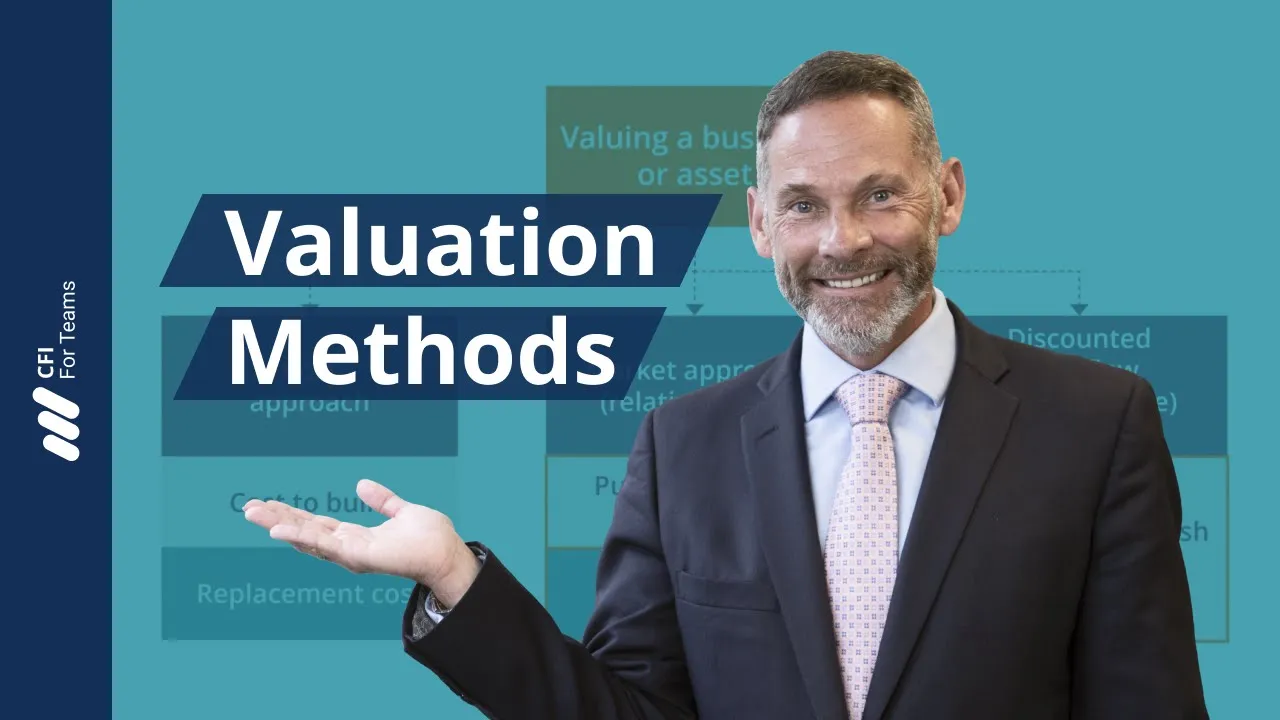





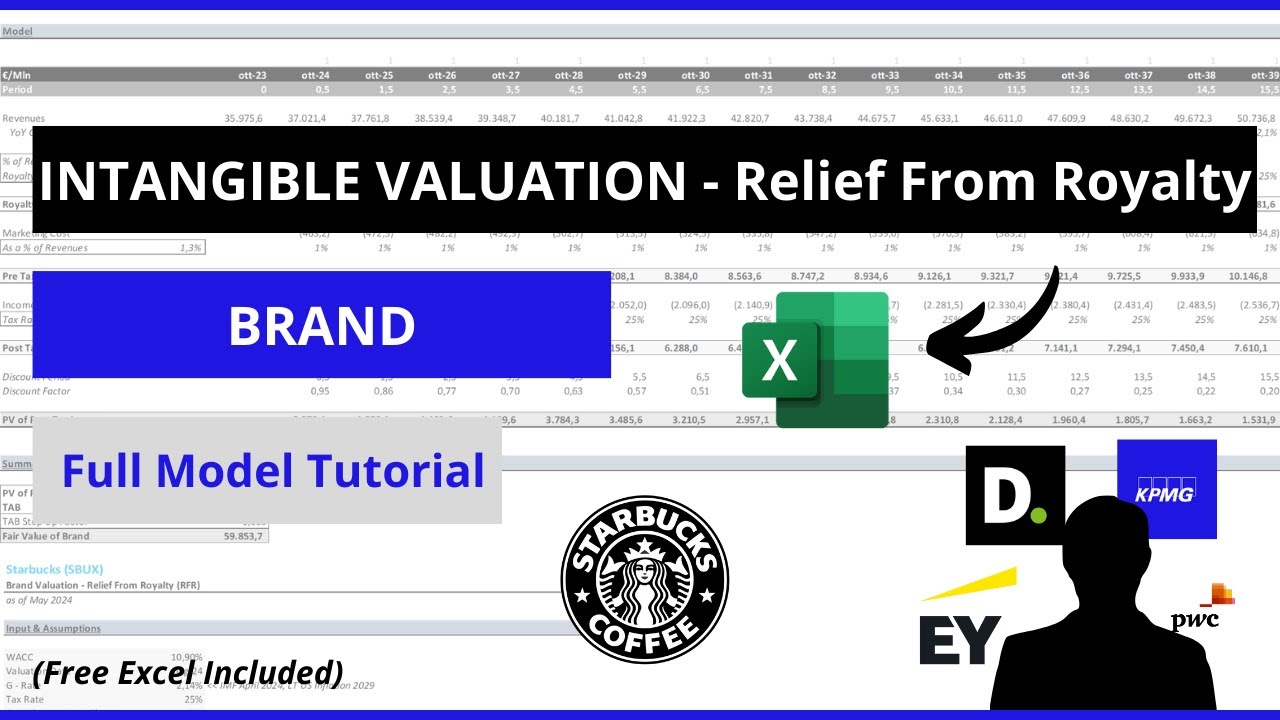


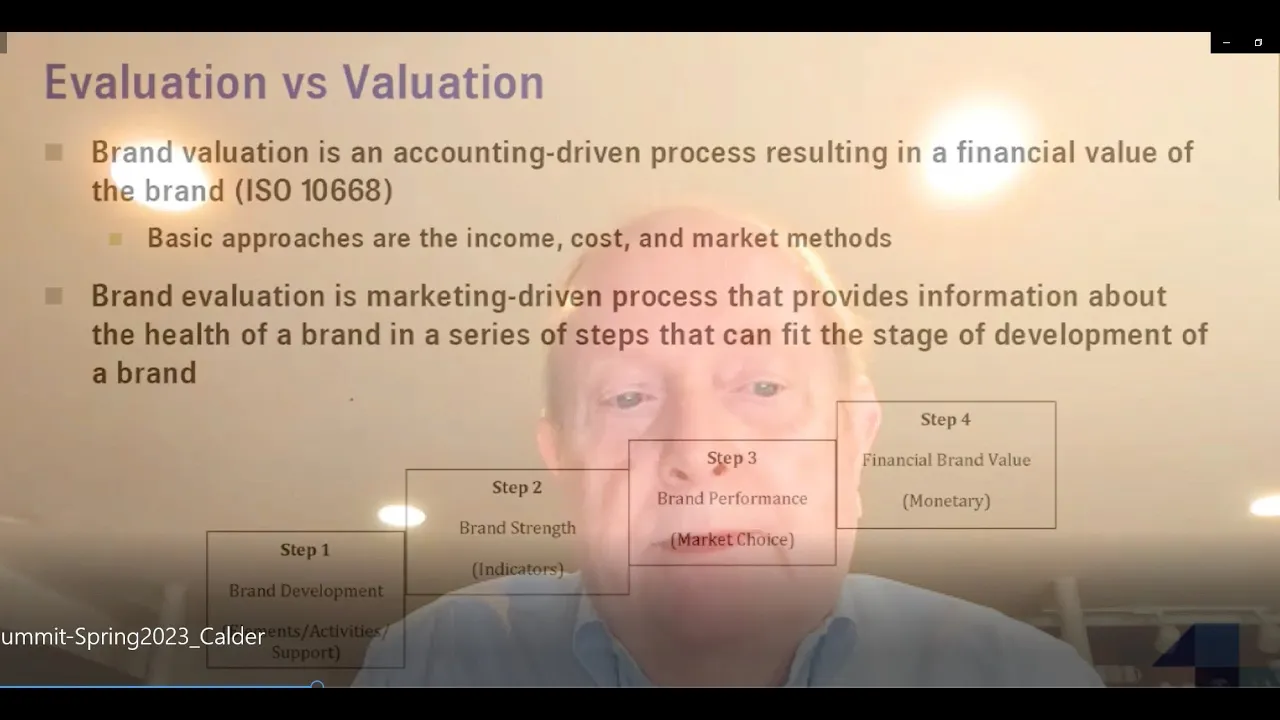






Brand valuation is the process of assigning a monetary value to a brand's impact on business performance, bridging the gap between marketing and finance. This involves measuring brand equity through consumer perception surveys, financial analysis, and royalty relief valuation methods. The process helps organizations understand how much their brand is worth, determine appropriate marketing investments, assess potential damage from brand misuse, ensure tax compliance, and unlock value in brand acquisitions. Modern brand valuation increasingly incorporates digital transformation metrics, social media influence, and AI-driven analytics while maintaining rigorous standards through ISO certifications (ISO 10668 for brand valuation and ISO 20671 for brand evaluation).
Bridging Marketing & Finance: Brand Valuation Insights
Added:[Music] hello and welcome to denish gu the city ABC open Business Council YouTube podcast series we are here again to continue with our series of profile interviews and uh as well discussions and conversations with some of the global leaders in technology Finance branding and the especially looking at how we can actually create better ways directions Visions to solve problems that we're facing in the world of in our society in our businesses in our operations and specifically creating solutions that actually can actually Empower us as humans as Society one of the things we've been doing in over 150 interviews that comprehend ministers government official leading universities and as well some of the top CEOs in the world is precisely finding ways how technology can empowers us can be used with a Force for good but as well our business can actually look at Solutions uh that can actually make a difference in our day-to-day operations and as well learning with each other connecting with each other and finding Bridges and U as well uh organizations no man is an island like John Don said and I think we are all part of this archipel of ideas and business and ecosystems and I think it's an ecosystem nowadays that makes any business become special or any organization or any ecosystem so today um I Welcome to our series risher a that is the managing director of brand finance and uh as well graduated from University of Oxford and um is working in a project so brand Finance is a project that I'm quite a huge fan in the sense of creating Solutions in terms of uh ma first of all measuring the brand impact in finance and as well creating a lot of research consultancy around that and I think this is a critical element in terms of how you can actually look at any business worldwide so Richard uh is the managing director of brand Finance he has lectured at universities and Business Schools including London Business School on topics surrounding brand valuation and management and from his expertise and working with Leal Global Brands and different sectors from banking to telecoms Airlines Sports media food and much more um has been actually looking how brand impact is bigger and bigger and as well how to look at the first of all how we can actually measure branding especially nowadays that everything is digital but as well finding the kind of the brand hierarchy concept that use and as well how to recommend better methods to improve branding architecture portfolio management and brand position and I think this is I would say for any startup listening to us is a key uh and I'm sure that Richard is going to bring us a lot of valuable uh insights but as well uh intelligence that can actually be used and as well Richard is like I mentioned a ba in mathematics from University of Oxford he's a chatra accountant and is as well um part of the charter Institute of marketing and brand Finance um so welcome to our series Richard I'm quite excited to have you here thanks for having me I'm looking forward to having a discussion my pleasure so I want to start so so brand finest is really doing very exciting uh work and um your background is really quite interesting as well in terms of this but before we go to Brand finance and the things you you're doing can you tell us a bit about you background what you've been doing and how did you create it and manage brand Finance uh so I didn't uh actually create brand Finance um David Hay my father created brand finance and that might give some people uh an idea as to how I got into it in the first place um as you say I did maths at University when I left University I'd already been doing various stints at Brand finance and I thought it was particularly interesting um so I came to work uh and essentially started my accy training and then did some courses in marketing as well with the chartered Institute of marketing um and over the years I just specialized in the various different forms that brand Finance has to offer you know some of the tax items I worked on a big tax case uh in the states with brand Finance I've worked on a lot of our Sports offerings so I've I've really got a lot of broad experience across the the group and across the various different nations that we operate in um I spent some time in Singapore spent some time in Sydney um and so I've got a good view of our different network so can you tell us about the history of brand Finance so it was founded in 1996 with the aim of Bridging the Gap between marketing and finance and I really like that because it's two areas that are very dear to me so can you tell us about that and of course through 20 years you have helped managing companies and organizations all types to connect so a bit of the history and I know that is a family business I even respect that more because I think everyone likes the family to run and to go and I'm particularly fond of family business that are strong and passing from father to son like yourself yeah so when um when when David set up brand Finance 25 years ago he had he originally qualified at PWC and he had a lot of accountancy experience and but he really found a fascination with brand and how it affected businesses generally so he wasn't just satisfied with doing all the numbers and sitting in the background he actually wanted to get to the Forefront and so when he set up brand Finance he found that it wasn't not everyone agreed with him not everyone thought that it was uh that they should be connected and so it's been an uphill struggle for the last 25 years uh but there have been significant advancements uh in the field and within the company as well in terms of the technical rigor that's required to do this sort of analysis and I think over time people have started to realize that particularly as big Tech that we'll get on to shortly as other forms of intangible assets have become more important in businesses the acceptance that an intangible asset in the form of brand can have a significant impact on the business has generally been accepted as well so it's been it's become slightly easier over time i' I'd hope that we in some small way had a hand in in pushing forward the the case that brand is an important financial asset to be used um but certainly the environment has changed dramatically um not least because of globalization requiring the the cross charge of that intellectual property and intangible assets um but branding has needed to be measured and has become much much more sophisticated over the course of the last 25 years um brand Finance is a company we have offices uh across the globe we've got about 25 offices now um and for the last 15 years we've been producing rankings of the most valuable brands in the world and that's one of the things that we are most well known for but that is just um more to heighten people's awareness of the fact that you can value a brand you can put a dollar value on the impact that that trademark and the brand is having to your overall business and that's primarily Why We Do It ultimately we're a consultancy and we help companies to overcome those brand related decisions so whether it's transitioning from Brand a to brand B whether it's rationalizing a portfolio whether it's understanding how the brand is impacting the business that's the sort of thing that we do you know to earn our money and the the the rankings are just a very good way of heightening people's awareness surrounding it so one of the things I saw as well that you guys have been so you have like uh different divisions of the group and one of them is about education as well it's the brand Finance Institute that is your educational division um and of course the the purpose is to create and Foster professional environment for knowledge sharing and networking acoss uh practitioners and experts in the market so can you tell us about that because I know that is like you mentioned um from probably the the when the company started of of course branding was not as important as this is now because now for instance if you look even the billionaires are positioned their own brands from the Bloomberg lists to Forbes lists and and this is becoming critic government and for me as an influencer as well this is dear because all the influencer lists and right now together with the Fortune 500 are becoming the the global benchmarks for companies and then same ways can actually create a big difference create a lot of business network but create a lot of Criterium about this so if you can tell a bit some of the products you have especially like the brand Finance Institute but other the different things and some of the rankings that you want to highlight sure yeah the the brand Finance Institute um we we set up because ultimately the best way to get people to adopt something is to get them to understand it um and when it comes to understanding the evaluation and measurement of Brands the best thing to do is make sure that teams and clients are fully on board with what you're doing there's nothing worse than walking into a client and having some ative member of the board or something like that say oh no I don't know anything about this and therefore it's no good so the brand Finance Institute was really set up as a way of helping people to understand both how to appreciate brand and how to measure and manage it um so that they can better sort of action the results of of our work uh we've been doing it for many years we organize a lot of um webinars well over the last year it's been mostly webinars but before then it was events um and uh it's been generally very well received a lot of our other rankings so as as you mentioned everyone loves a ranking even influencers like you um the big difficulty has been oh well sorry not difficulty well I suppose it is a difficulty in deciding which ones to do and when to do them as I mentioned we do these commercial rankings of the most valuable brands in the world but we also do uh one on the most valuable sports clubs um which is primarily focused around football clubs um we also do one on the soft power of Nations which is a particularly interesting one that we started uh many years ago and we've recently enhanced with a global survey of 880,000 people in 100 different countries uh and that is all on perceptions of Nations and how that impacts people's decisions related to those um those countries and a final one which is more personal is the brand governance index which we started about two years ago or three years ago when we began launching our tables at the world economic Forum in Davos um and that is primarily focused on bringing the CEO into the discussion about brand and ranking their brand governance uh of the organization that they are ultimately the brand ambassador for um and that's been very well received um and we're hoping it will continue to bring the the boardroom into the discussion about brand in a big way not just for the the well-known CEOs but for all of the CEOs who perhaps are more engineering focused um who are yet to fully embrace the the power that a brand can bring to an organization yeah this is kind of I would say the most important thing for for our times and I think especially it's becoming increasing even more powerful because of covid-19 and everything that is happening in the last two years that that we have a a substantial increasing uh impa act on the digital impact of a brand and as well of course right now there's a lot of considerations in terms of ESG and different areas so so from the work you've been doing on this um so for people that know less about you guys can you tell us how it works the the different reports you doing and as well um so for instance you mentioned a couple of the the reports you have the soft power index as well that is an interesting one for the top 100 nations with over 75,000 people surveyed so B how how we create this impact this these uh indexes and as well um how you look at expanding this but purely from a from a a digital perspective and of course from a research perspective how you put this together yeah I mean I I suppose if I want to go into the methodologies on each of those different ones I I will have to talk about each one specifically so the brand governance index focuses on um a a survey of equity analyst and their perceptions of different CEOs as well as some other measures that that are available such as um social listening to see what the sentiment is regarding those CEOs um and some other measures related to brand from our tables um they're then aggregated together and weighted in terms of different importance uh levels um and included within that ranking of uh an index score out of 100 the soft power as I mentioned mentioned that is a survey of 88,000 people in 100 different countries and again that is split into Seven Pillars um which are based on the perceptions of those respondents um ultimately it's things like uh are are there big brands that you know um is the culture what you like do you like the food um do is the education good are you aware of them do they have a good reput ation do they match your cultures and values so a whole host of of different measures um from a questionnaire about 32 different questions and again they then come together we wait them to an index score out of a 100 and that's the uh that's the end result for the soft power um it's very interesting I mean there's a full in-depth um Deep dive uh report that's available on our website if you want to know more about that one um but I I could get lost talking about that because it's absolutely fascinating um and and then when it comes to the commercial valuations which also applies for the sports teams we do what's called a royalty relief valuation where essentially we imagine if I didn't own this brand and I had to pay someone to use it how much might I be willing to pay um so it's financially oriented but also there's an element of Behavioral analysis and perceptions because ultimately what you're willing to pay for a brand will be based on how much uplift you think it's going to be giving to your business and so if you think it's a strong brand and people like it and respond to it then you're going to be willing to pay more and so what we do for that is a global brand Equity monitor uh which is once a year we interview uh I think this year it's going to be about 50,000 people in 40 different countries uh and 40 different Industries to get their perceptions of about 4,000 different brands which then feed into our tables uh that's a very important part because understanding how good or bad essentially the brand is both from a perception level and also a financial level is what's important when creating those lists and analyzing how any brand is affecting a business so it's it's different different things for different or different solutions for different questions really um and so each of those different studies we do in a slightly different way when it comes to how we look at digital and the impact that that has we can look at it in two different ways both the direct impact and the indirect impact so we could put in measures and sometimes we do it depends on the specific circumstance that are specifically digitally focused but sometimes what we do is we'll just measure the perceptions of those digitally focused aspects so we might question respondents does this brand have good websites and apps for example uh and if it does or if their perception is that it does then that's half the battle really because you can have great websites and apps but if nobody knows about them or thinks that they're good then you haven't really solved that need or question um and I suppose that's that's one of the big questions when it comes to digital transformation is making sure that those leaps forward are actually resonating with the uh with the stakeholder that you're hoping that they do I I want to touch a bit this because this is a very very important thing and and so let's let's look for instance at probably one of your most high profile um rankings that is the top 100 nation brands where we surveyed over 75,000 people can you specifically uh elaborate on this one because I think it's quite a big one and 75,000 people is quite a lot of people um but as well I'm interested to look because one of the biggest things is when it talks talks about nation and Brands this is a big thing that touches everything especially right now with economical constraints and challenges that we have with covid but as well as we become including increasingly digital economics um I I might ask you to sort of elaborate on exactly what sort of angle you're you're looking at there yeah just just elaborate how it works the first of all how it works the survey um the na the 100 Nations Bruns um the power index on that level um and as well well let's look at this one in particular how it works um how we look top level of course uh the methodology uh because I'm particularly interested on this and of course this this podcast is cities ABC open Business Council is all about Brands and Nations so it's quite interesting as well for me yeah so um the the mechanically the way that we do it is an online survey but we also have some specialist audiences um as well that go into the study so those are um people from embassies the the academics those from universities things like that and they have particular specialist knowledge ofar countries and it's interesting comparing and contrasting the average public to those specialist and informed um respondents both of them are follow a very similar questionnaire um and that is mechanically how we go about doing it and you have with that comes all of the same uh difficulties that you get with any form of market research um when it came to the uh the creation and Genesis of of the study we looked at all the materials available um we looked at some of the things that say Joseph NY had originally started talking about when he started talking about soft Power Nations and things like that and Incorporated that into the framework that we use for the study um it's it then launched every year in our report in uh middle of February sort of generally around the 22nd of February uh this year we had um Hillary Clinton as our um headline speaker last year we had uh Banky Moon as our headline speaker and alongside them we have various other um very very interesting and um recognized experts in their various different fields the list is about two dozen every year so I won't list them all now um but it's available online if anyone wants to see that uh and and see what they had to say about it the reason that we did it was not just because we wanted to pick you know in a political sense one country against another we were doing it from a perspective of well these these countries all produce Brands and they all uh use their brands to en entice um money into the market so for example German cars work particularly well as an example uh because people like German engineering they like Germany they they have they think it's very reputable and so they have a lot of respect for the brands that they produce in those specific Fields so product of origin and Geographic branding and all of that sort of clustering that still occurs like it did back in uh the Middle Ages is still something that's incredibly powerful and and all these countries are are vying to create um hubs for whatever it might be an example that is very close to home for me is is the great campaign for for the UK so they they launched this campaign about a decade ago to try and deliberately Foster a lot of different Industries and demonstrate their potential internationally and so that was all about creating this um Center of Excellence within the UK to say our our products are very quality uh and that's a way that they can have a Competitive Edge against the international market so we were trying to see how how nations in Geographic origin helps commercial Brands while at the same time um surveying what is a very interesting study um to digress slightly one of the most interesting things is seeing what the country thinks of themselves versus what the world thinks of the country um that's always very enlightening particularly for somewhere like the UK that doesn't always match up uh particularly around around brexit yeah it is interesting and I'm sure that you find a lot of interesting I would say findings that sometimes a bit out of the scope that you would think in a lot of layers so coming back to the this uh and continuing on the the Global Soft power index so so just for me to understand so from some of the findings um so I know that most of these reports then you have to uh pick them and people companies can buy it but have you been for instance collaborating with the countries uh or this is purely uh report based and then consultancy companies can buy it or you have as well a relationship with these countries in this case specific of the the the Global Soft power index well so when it comes it depends what you mean specifically by country um there are plenty of national institions some some of national institutions yeah there are there are plenty that are interested in the study and we you know we provide them with the data uh for a fee uh and we help them with whatever Nation branding questions that they have um so there are plenty of Nations that are you know engaged and involved in in the study itself yeah okay very interesting and then so from from let's say from the work that you've been working in terms of for that's the the brands ranking as well because you have I mentioned right now the nation Brands and um the global brand so you have a lot of different areas here for you have back country you have the airports Leisure and tourism so what would be like the most successful that you have and a bit of uh if you want to just highlight about one of them because you have quite a lot I saw here around 626 I think that appear in your website well it's it's not 626 I mean that is every year I understand all the years yeah well but still is rankings for every year let's put it that way yeah yeah uh well we do about 90 um each year um and I suppose I mean the obvious one to say is the global is is our most uh popular because it includes all countries and all all Industries um but if I'm ignoring that one and saying uh which ranking is is the most popular it would probably be the banking study um again banks are very highly branded very competitive always looking to compete against one another and therefore brand is particularly important it's also an easy industry for most of the people are quite numer and therefore they like the whole measurement aspect so that's very popular um but then the football ranking is also always exceptionally popular as as one would assume and so we probably get more engagement from CEOs uh with the football study than with the with the studies of their respective um Industries or countries because they're just personally interested in how it works and things like that so yeah it's it's a bit of variety really it's difficult to say which one but probably it would be the banking or the football so let's go through Banking and football I have some questions on that so so on the banking um so for instance I I'm uh so there's the every year one and that's do banking 500 so and this established the world most valuable banking Brands um and as well their impact so could it just highlight a bit about specific this one the banking 500 from 2021 I'm particularly interested to hear your views from perspective of the producer of the report um views in what sense views in how they've done no some some of the conclusions that you have for in comparation to previous years um and some of the the the the things some of the findings so for people listening to us from a more kind of top level perspective um what has been the focus of the the banking 500 uh well I mean one of the changes that we've we've been seeing is digital transformation and how that is how banks are adapting to that obviously 2020 was a very difficult year for many banks as well and so there was a lot of struggle and a lot of banks yeah well not just Banks but all Industries the brands of and went backwards in terms of brand value so um the banking study this year was really about that change and that transition and and how are they going to get through and how are they going to recover uh while at the same time all of the other themes that we're seeing around the world such as the rise of Chinese Brands and particularly the Chinese Banks um off the top of my head I can't remember exactly the top 10 but I think it's it is now largely dominated by the Chinese um big Banks uh and that will continue to be so uh and they will continue to sort of dominate the position the question is whether they're going to go Global in in a bigger sense um the the other themes of digitalization we we covered uh in 2019 uh or actually at 2020 in our global forum and we were talking about how and whether blockchain um would be impacting just generally the way that we perceive uh the finance industry whether it would be more broad than just crypto I think it's almost certainly going to be the case that it will be because the applications are are quite numerous um but they just haven't got to that point yet uh there there was a big question um two years ago as to what direction people thought the world would go when it came to Banking and whether because of the rise of blockchain things like that there would be a big ShakeOut of hundreds of Banks and you would end up with just Reserve Banks and um the the miid 2 regulations would allow it to be such that you then didn't need quite as many payment systems or we didn't need quite as many banks to facilitate all the payments that would be needed through these various new technologies coming in and that was very interesting and I don't think it's it's been proven to be true or nearly as fast as some people thought that it would happen because consumers are slow moving they still like the big brands that they know they still that cozy feeling uh and so those those new and a bit more out there Technologies just haven't been adopted quite as quickly as they thought they would be this is very interesting insights and that's the podcast in itself so I want to touch uh so so just on this part of the the research about the brand Finance so for instance special the banking 500 one of the things I see here as well um is that you have for instance the Chinese banks that you mentioned but there's as well for instance US Bank uh I still have five spots and then the spotlight in Vietnam and Emerging Markets so are you doing so This research in terms of for we collaborating with Oxford University and first they have a huge focus on Emerging Markets so for this kind of research you do it purely based on the banks or you have as well teams going to these countries doing research just for me to understand this kind of insights that you have sorry I can't quite recall what specific aspect you're talking about so my question is in terms when you do research in terms of geo geographic um location of for instance Brands um because of course you have teams around the world but just for me to understand for you have the spotlight on Vietnam that you see as the the greatest year on-ear brand value growth compared with other Nation so can you tell us some some of the metrics you use for that because it's an interesting part it's very difficult as well because for instance um one of the things I've been finding um when I do research and actually I I ask companies to work with us on these different things is okay how do you look at language details how do you look at the digital perception uh even the different demographics and things like that so I just want to like to understand this Geo geographical uh part of The Branding um more L some kind of the levels of the metrics that you use okay that's uh there there are a few few different ways to answer this question um so from a financial side we do the valuations and the rankings that you see on our website they are based on where the company and the brand is headquartered so although obviously Koke operates around the world and might be one of the biggest brands in many different countries we only feature it in our us table as an example so when it when we look specifically at Vietnam it is all of the brands and companies that are headquartered in Vietnam um and they might be increasing and that might not just be in Vietnam that might be any of their operations globally um that are increasing as well when we do the valuation we look at where they are creating the revenue not just where they are based so if they're creating it uh say in Thailand as well as Vietnam then we will do both of those evaluations simultaneously but separately um and look at the brand in those two different markets which then gets me on to the second point where we're not just looking at the financial side of things but we're looking at the uh perception side of things as well and so we get into the consumer equity research and some of the other measures that we include in our brand strength index which is um part of the valuation process and evaluation process that we use to again crudely to to assess the strength and you know how good or bad the brand is in doing its function of um influencing the perceptions of of various different stakeholders so we'll do our online survey of consumers to see how they think and feel about the different brands Vietnam has been growing uh very quickly and one of the reasons why uh it will have been increasing in our table as the fastest growing will largely be financially oriented um they their brands have been growing quite rapidly um across the entire spectrum and that's why they will be you know one of the fastest growing in our table um that's essentially It's a combination of both the perceptions and also the financial elements um I can go into more detail in terms of how we do that if you'd like no I think it's okay because I want to go through a couple of other questions and it's you you answer very well thank you so much and I think it's very important because I I've been working with countries and governments and one of the things sometimes that is challenging is definitely to find the data uh both around the country but as well the banks and I think you your methodology seems to be fantastic on that level and it touches a lot of these metrics that are really critical so I want to go right now to Brand Finance football so I'm interested of that because of course you are deer in the Euro I'm not a huge crazy football fan but I have a lot of respect for the industry so just I know that is a complete different area but it shows as well the the versatility of of your platform and as well the work you've been doing so um I'm looking right now at the brand Finance fot World 50 from 2021 um I don't know if it's something that you have top of your mind if you want to open probably the the window and never look but I just just top level no no take your time no worries I think it's important I can just go through a couple things so you have from u a lot of interesting insights of course this is an interview snapshot about all the different things you guys are doing but it shows as well the strength of the the brand directory.com and this isn't available for people listening to us to Brand directory.com on the ranking sections and of course the the strength of the the brand finance and of course this is an interesting thing because for instance we football but a lot of the other sports for I was studying uh cricket in India and for instance if you look at all the sports of tennis or things like that is really a big a big thing right now and I think especially as we get into an economics of society and E and wellness and different eras this is going to be even more important yeah I forgot to mention the IPL study we've been doing that for many years as well um which and that always gets very good pickup but only in specific parts of the world the football seems to be more um yeah it's more yes so I don't know if you have time but just just some highlights about the the the way you look at this and of course this is football just for people listening to us is football 50 which is the the top football uh most powerful brands in football I think worldwide uh and it has a lot of interesting insights but I think it shows as well the work the the the wealth of the work you guys are doing yeah I mean I I don't know where to start with with it really um just a sum snapshot we started it 15 years ago uh because our finance director at the time was uh obsessed with football and we set up the corporate tables and he thought I've got to do that for football Brands um and so he did and in the first year that we did it uh it had some questionable measures because he did it almost as a a personal interest piece one of the measures was his personal opinion as to the style of play by each of the different teams those meas that one is a very subjective [Laughter] one those measures have long come out they came out in about the second or third year and we've replaced them now with uh a fan survey of football fans in seven different markets five European markets plus China plus the US again asking them on their perceptions of both the brands the sponsors um and various other different measures about the leagues and what they know and who they follow and the the results of that have been fascinating as well the difference between China and the US for example in terms of consumption of football both European football and their own domestic leagues is very interesting um some of the work that we've done regarding sponsorship analysis and the sort of the Decay rate of people being aware of football clubs or of the sponsorships of football clubs is very interesting as well and it shows the longevity that a sponsorship can give to a brand um what I mean once we get into the topic of sport and sponsorship and all that sort of stuff it's very fascinating to see clubs uh like or companies like inos who have make made a very conscious Choice recently to get into sport to get themselves known uh the relationship between uh Brands and Formula 1 and Motorsports so car brands um but not just car brands oil and gas Brands so shell being a very obvious one uh and their relationship with Ferrari over the years all of these different sponsorship aspects have been been fascinating to look at and and analyze because of not just uh the impact that they can have in the short term if they are activated and done in the right way but the long-term impacts that these these uh relationships can have and and how long they can go on and how long they sort of remain in in the minds of people so the football survey or the football ranking although it started off as a little bit of a joke uh we quickly realized that actually the applications were were much more um fasc and to give a very quick Financial summary of of how we do it there are three main or three primary revenue streams for football club there's Match Day Revenue which is obvious broadcasting Revenue which is obvious and Commercial Revenue which is sort of a catch all for everything else and that's mostly related to sponsorships and Partnerships and things like that and so we are ultimately again if the club didn't own the brand how much would it have to pay to someone else to use it brand on those various different uh Revenue generating streams it's a bit difficult for some people to get their head around particularly if they live right next to the football club because they would never dream of of of changing Club it's the they are the fan I mean they are born into it but in a way you can think of that as just a brand with a very very high loyalty almost you know 100% loyalty but then when you look at the brand internationally particularly in sort of China or any other Market um that's where the concept of it being a brand makes a lot more sense um and you know the commercial that can come behind it and all that sort of stuff but I mean the the state of the market is changing um China has an ambition to win the World Cup um and with that comes the building of a domestic League which I'm sure will start to rival some of those in Europe relatively soon I don't know when exact but it is almost certainly on the horizon um and so the shape of the table may change um but again it's down to information and if we don't have the financial information we won't be able to include them uh so hopefully we will but you know that yet that's yet to be seen so I I mean I could keep keep talking about the various different things we're doing is is there anything in particular you'd uh like no I think it's it's great and I have a couple of more questions and of course we we're picking the time so I want I'm cautious of your time but I I have two more questions more broader so I thank you so much for for all the insights and intelligence around these different ranks which is congratulations really massive amount of work that is here but it shows as well the strength because like you mentioned it start probably as a joke but football is a massive multibillion dollars industry that is going to become probably even bigger uh and of course it's especially one of things I learn working with countries and Nations and CI is is the important it is because one event like this can actually bring a huge amount of business for a City and this is it as well Tes a completely different ranking of the city if you look at cities like Dubai Barcelona um or even Singapore which is a city state part of their brand has been buil around events like this and as well creating um a lot of different perception of taking this to the next level so um just just to jump that I mean it it ties in nicely with the soft power element sport being a great vessel for soft power um because it is both you know building awareness of the city of the venue it's also demonstrating the importance of sport and competitiveness and those those different values that that any sport not just football um can bring so cities and Nations getting involved in it is a great way of having that sort of soft diplomacy to to get their message out there um and when we're doing our soft power this year we're actually going to be approaching various different cities to see if they would like to be uh featured and whether they'd like us us to include questions about them internationally uh and see what people think of them and whether they're aware of the cities and all of that sort of stuff because it's almost more important to cities and regions than the Nations themselves um in terms of attracting attention and investment because if you attract International attention it also attracts domestic attention as well um and so that's you know the going to be the next step up for the softare power is not just looking at countries but also cities sorry I I I got on a bit of a tangent because of the sport connection there but uh you know we we often get asked about how sport can be used as a as a vessel to soft power yeah I would say there is more than soft now right now is the power you can take the soft because in the end of the day the cities that don't really perform on these areas they want attract tourism they want attract business they want attract investment let's let's look even in London where we based that is of course one of the top cities in the world part of success is the bridge between Events sports like the Olympic Games and and as well the all the different relationships between business tourism attraction and as well the different areas so this is really actually very powerful and very demanding as well so that that brings me to my uh last part of the interview that is about the um the brand valuation which is of course critical and of course uh you have the websites for people listening to us brand finance.com and brand directory.com which is a very powerful website as well in terms of search and he has most of the rankings we're talking about so um I of course you guys are Global experts in brand valuation and for instance right now we have all the Forbes lists we have as well Bloomberg trying to position themselves specially in billionaires lists which is right now competition between the two rankings but one of the things I've been finding out is is really when it comes to especially so social and economical Benchmark uh like you just mentioned for cities and for countries this kind of rankings become more and more important because for instance first of all a city can actually better manage they attracting attraction of talent attracting of funding or even marketing and PR on business but at same time it can create a lot of social economical benchmarks because if you start understanding that the perception of a city is very negative International you better do something about it um so I would like just to understand from from the the expertise that you guys have been branding uh for instance there's a in in your website there's a a fantastic part here that is how you look at the brands business case and I think this is particularly because of course I work with a lot of startups and and Founders and investors and our audiences a lot of people within the the the sea level and as well entrepreneurs so there's five things here that you guys highlight and I would like for elaborating a bit that but elaborate that from the digital angle perspective so there's the question how much much my brand is worth how much should I invest in marketing uh how much damage does brand muge cause am I tax compliant with the latest transfer pricing how do I unlock value in a brand acquisition uh and I think these five questions are critical I think you can replace the word uh brand in business because the two things are more more blurred and I would like to understand of course the question is quite big I'll try to make it as clear as possible so the bridge between the brand um valuation which is the the key element here the business valuation and as well the digital part of the brand versus the offline part of the brand so I like to see this for this three different angles how do you look at it and as well the some of the top level of course some of the uh the experience you have on this and I know that the digital part is becoming more and more relevant but as well understand well I would say the brand is is most more relevant because branding is ke here right now but the digital and the business so the three things blurred together but I would like to hear your opinions within the context of your research and and as well the the metrics that you've been studying sure yeah well I'll start with that last question first uh in relation to Brand you know both digital and offline and I would say that it's it's um dangerous to distinguish the two because ultimately the brand needs to be everything all the different touch points that you have not just to Consumers but to all different Stak stakeholders ultimately the best companies live the brand through and through and it's embedded entirely in their organization from their hiring policy to their appraisals to the way that they deal with suppliers and things like that and so ultimately whilst the digital aspect of the brand is just one different touch point it it shouldn't necessarily be separated and and looked at um completely differently some businesses only have digital brand elements um and some obviously L are now having to go through that transition to have more of a digital presence and again it comes down to what is relevant what is actually driving value to the business often it's very easy as anyone that's worked with lots and lots of data will understand it's very easy to look at the wrong things and concentrate on all of these different metrics and that's one of the difficulties with digital branding at the moment is there's so much noise there's so many different data points that you can take the question is should you bother looking at them or should you like which ones should you look at and which ones should you potentially ignore and that's going to differ from organization to organization based on what the specific challenges uh and and pinch points are at any given time but it is something worth doing obviously and to work out what is really driving the business uh and how investment into various different aspects can help improve those different stakeholder perceptions for whoever it might be um does that answer the the I know he very well so so I want to touch one question related with this and I think it's an area that I don't see you guys uh so much Focus but it's particularly important for me as a as a social media influencer um and and is the the social media impact and the influencer industry on The Branding because for instance even me that I've been working with big Brands myself and both uh as a consultant or both as actually working in Investment Bank and and big Tech and finance companies and one of the things I found especially in the last 10 years and especially specifically in the last five years is a shift from of course the likes of the Giants of Google and Facebook they control a huge part of the they still control a huge part of the marketing and budget for Branding and for anything related with business developing um I would say that from most of the studies I think from each $100 spent in in marketing or in business uh probably 80% goes to Facebook and Google Groups uh Alone um but one of the questions I see and this is the the finding that I that I've been really getting is that influencers um and I'm not talking just about b2c and B2B and b2c are really becoming really one of the biggest right now drivers of business and of course even your compan is an influencer as a brand as well but of course there the the business and the influencer part of this so how do you look at the social media angle um when it comes to branding and to the research that you're doing because I know that you guys touch that but it's not complet your area of focus yeah it's it's it's a difficult one because again it's going to be different in every specific scenario and you're going to have to look at it slightly differently in terms of the way that people interact but broadly we do uh look at it in terms of um tracking uh this the general sentiment and the word of mouth and and whether people have been talking um about the brand online and various things like that so we do we do look at it in a sense and we look at how much people are investing and and whether they are um you know some some rudimentary things like follower numbers and all that sort of stuff but it almost feels like that is somewhat irrelevant now um versus the way that you could look at it in a more sophisticated way ultimately this actually is a is a good question when it comes down to broadly how we do the rankings and how we do more bespoke projects so when we're looking at more bespoke projects we can uh take take account for the Nuance in the scenario whereas when we're looking at the rankings we have to do something that's a bit you know one fits all to because the ultimate goal is benchmarking cross industry cross country a lot of Brands so that people can have a general understanding of where they where the Line in the Sand is and where they sit it's not uh designed to be um pinpointing the strategy decisions that they need to make we do that in a different way uh and that would come with with analizing how influencers can drive the different sales channels because ultimately it's just the same old things in a brand new way um when it comes to influences and advertising online um it's it's just something that that companies will have to adapt to and and use in new and exciting ways and and an influencer I mean whether it's you whether it's I wouldn't really say that we are necessarily an influencer but if you say so um it's it's just the same as you know old print media they were influencers of the time a journalist or whatever you just you just use it in different ways um so you know you just have to adapt to what you're doing and and how you're appreciating things and we do as I said we do we do look at some of those measures um but it's much harder unless you're doing a specific detailed project on it so I'm going right now a bit provocative but in a good way so for instance with the data that you have which is quite amazing because it's 25 years of measuring some of the biggest brands and ecosystems around the world so are you using tools like machine learning or artificial intelligence right now to start creating patterns and understanding for instance benchmarks on that level because I think this is another area that you're going to have to deal that is uh artificial intelligence machine learning driven brand building and it's already a lot of automation around brand building but of course it's it's about authenticity and that you cannot automate but I just would like your opinion interestingly um we are going through a process of more automation even with a company that is a consultancy like us um there is a lot of automated items that we can um just make more simple um there are when it comes to machine learning and AI related specifically to the the valuations we don't H we have some data points but we don't have uh really enough data points to pinpoint exactly what's going on uh in all situations um but we do have it in a lot of situations so when it comes to the research that we're doing related to uh the consumer Equity study that goes into to the league tables uh we've got some very good uh analytical software there that can look at what the brand drivers are and what's most important in in driving things forward and that's that's really fascinating um when it comes to machine learning that's a little bit more difficult in terms of what we need to do and the problem there is that there are thousands of different cases so to train the machine into what is correct or not is very very difficult we we don't have enough cases where we can say okay this is the correct answer and train the machine in that way um there's a lot more judgment in it um but hopefully over time we will be able to incorporate some of those things um because you know they they are coming in and they're getting more sophisticated um but uh but right now you know every day when we're looking at the way we do these Brands there's a new case as to how someone has specifically you know organized their brand architecture or how they're endorsing this one or that one or how they are engaging in this in this way or that way or how they report their finances and so to do that machine learning uh is is very very difficult to find enough cases where you can say okay that's the the definitively correct way of doing that um but yeah I mean in an ideal scenario we'd have loads of machine learning and Automation and things like that it's just not uh not quite as easy to to get to that point and I think it's really going to be one of the I what I see right now especially for instance with Tik Tok um not necessarily because of the IP around Tik Tok but what I find looking at Tik Tok is the formidable capacity of looking at how they look the trendings around topics and they create benchmarks it's all driven by Ai and it's really very impressive because Facebook was already impressed in terms of creating Trends and all the H tags and stuff like that and I see a lot of Brands even coming to us and trying to engage that but I've been finding a huge really impact that this is going to be and as well I would say the next 5 to 10 years is I think the ones that control this will actually be the ones building the biggest brands and that's well disrupting a lot of different things but of course I think there still the basics and the foundations that will not change it's just the tools that we use for these foundations so that gives me to and I'm cautious of your time I think we're passing around one hour so just um one or two more questions if you still have time MH so um in terms of the this work that you guys have been doing from from uh the different um um both the work of benchmarking Brands and the valuation of Brands and the finance around the brands there's as well a work with experts and with an industry that you've been um nurturing and creating and a lot of the things you guys have been doing is working um and and looking at me methodology that you partly touch with International outlines like ISO um ISO standards and things like that so can you elaborate how we look at your work and your research with the this kind of international benchmarks and for people listening to us ISO is an international standard um that is used to look at requirements around a lot of different benchmarks for business both from technology to other things and this part of a um well I think it's difficult to put this but it's an international independent non-governmental international organization and a me ship with 165 National Standard bodies so for people listening to us because I know that a lot of people don't think about this but this is going to be increasing more and more important sorry question I think you're clear I mean the iso is a very interesting organization it obviously has hundreds of Standards on on a whole variety of different things from it security to whatever uh but it it now has two specifically related to Brands one on brand valuation and one on brand evaluation so the iso 106 68 is the one on brand valuation um that is what we uh helped to write and then the ISO 20671 on brand EV evaluation is also another standard that we help to write uh and both of them do things in slightly different ways but ultimately are are there to evaluate the brand and give guidance as to how uh you should do that I mean brand valuation I've seen some books say there are 300 different ways to value a brand and I mean I would argue I would argue that that's true because that in in Broad terms a lot of those 300 are actually the same methodology with very very slight nuanced tweaks related to the specific industry that you're doing it which I wouldn't really consider as a different way of doing it I would just consider a different application of the same way of doing it if you see what I mean but the standards are incredibly important um they give people confidence in the fact that it is a respected um discipline that it is a discipline in it in itself um and give people confidence that it's going to be done in a consistent way so that they can go to whoever the provider is hopefully brand finance and get evaluation and know that it's it's meeting certain criteria and know that it will be done with a certain amount of rigor and Independence um that means it can be relied upon um and I mean going back to your question about what those questions are on our website so how much is my brand worth it's very important for people to understand where best to allocate their resources when it comes to a different in um asset that they have at their disposal how much should I invest in marketing that's very difficult sort of question to answer but that's something that marketing departments often come to us to say I've got a budget I need to know where to spend it or I need to um I need to demonstrate that I should have a budget to my CFO can you sort of demonstrate the the uplift um how how much does uh the damage of brand misuse cause that's sort of more of legal aspect so again when it comes to Legal arguments you need standards so that you can make sure that when you go um to to court uh you can demonstrate that it's been done in the right way uh when it comes to the tax compliance they're the ones that have really driven a lot of these standards not just through the iso but through things like the ivsc as well which is the international valuation standards committee uh or Council sorry and uh and it's the tax authorities that are are really driving a lot of this different change because they want to make sure that people will stick within the guidelines and that there are guidelines in place as to how Brands can be uh charged for cross border and things like that and also when somebody whether they overvalue or undervalue a brand in specific circumstances again having an ISO standard um is incredibly important to the the confidence that you can have uh behind the way that uh the valuation has been done so of of the various different brand valuation firms you see out there some of them do follow the iso uh and have the iso some of them don't um but I would I would definitely say that that making sure that the person that you are dealing with is accredited uh is an incredibly important thing so that you know that they are doing it in the right way yeah know this is kind of a critical element and I think shows as well the the inquir or the increasing uh requirements that business and Brands need to follow because you cannot just get into that without looking at this um so uh well there's been a lot of things here I think to digest so I would like probably as the last uh last notes is so any things that you I think from the work that you do right now I know that there's a lot of continuous reports that are coming for you mention um U we had football we had the finance we had the banking we had a lot of the soft power and as well for inst the work you did with the uh in in February you had the Hillary Clinton as well being part of one of your events so that shows as well the impact and as well the the global dimension of your platform but uh from all the different things that you have right now what would be the highlights for people listening to us that don't know so much about brand Finance uh well I'd say that the highlights are probably the insights section of our website so there is some there are some fascinating articles there that sort of demonstrate many different use cases for how monitoring and measuring the value of brand can bring significant benefit benefit to your business uh there are some great articles about how using it in brand architecture scenarios or sponsorship scenarios can help to unlock significant value in licensing scenarios how it can be used to make sure you don't leave any money on the table in m&a as well to make sure that things are are best planned um so I'd say that that's probably one of the highlights that actually we haven't talked about um but when it comes to the work that we do um I mean there's some fascinating stuff that we do with with regression analysis to look at how we are or how brand changes customer and consumer habits um and that's some very interesting stuff as well uh to to monitor or to quantify that and see how it impacts not just brand but overall business performance as well so that's very interesting too yeah know and I think one one of the articles that that is I think from uh David of course so it's it's a vision and it's actually recent I want to this if it's okay uh it's from the family but I think it's important there's one article that I really like that is our vision for improving brand valuation so can you highlight on this so I will just for people listening to us so this is an article from April 2021 um that is on the 25th anniversary of brand Finance um and I think I'll just read a bit of an introduction we have been Bridging the Gap between marketing and finance continuously since 1996 we have maintained the same principle through those 25 years and they now present in 25 so I think if you could uh uh highlight this so This Vision after 25 years because I think that is really very important because of course a lot of people right now special depends of when what how much you are into branding or how much you are into digital are more normally thinking short term but with 25 years you can actually have a lot of powerful insights especially with the data that you guys have there's a lot of um maturity and as well wisdom that I think I always try to learn with the best yeah I mean I suppose it just goes on top of all all of the things that I've been talking about so far um when it comes with 25 years the experience that we've got in terms of all the different industries that people often don't think are branded uh over the years we've had a lot of work from cement brands for example and O oil and gas and steel brands that many people think oh it's just a commodity how could that possibly have a brand but over the course of that period of time we've demonstrated that in even one even scenarios where um the the client came to us and said no I'm not sure that there's really anything here but let's just check anyway there has been significant positive business impact as a result of quantifying it and then using the brand in the right way and I think what David is is is saying in his article is that uh you need to make sure that it is being done in a in a replicable and a transparent way by an independent assessor uh which is what brand Finance is uh that can be done in a way uh that can be communicated to the decision makers um to help them understand how to make the most out of their business and how to make the most out of the brand um and it's been interesting there have been some situations where we've had a client come to us and say oh our competitor has outcompeted us because they have a much stronger brand than us and then you have the same conversation with them saying okay well here's what you need to do you need to invest more in brand and they say oh no that doesn't work for us only our competitor can spend more in marketing because we're not a marketing organization so even when they come to you and say that they want to do it they they they don't and it it's through measurement that they can start that conversation and sometimes it feels like turning an oil tanker these big organizations but it starts with one step down the road and a small project to demonstrate the value uh to demonstrate to many of those decision makers how the process works and the various different inputs that you're putting into it and also what the outcome is going to be um so you know he's David has spent 25 years trying to get Brands to start down that road and take that first step um and there seems to be a lot more acceptance and willingness to do that now than there was many years ago across the Spectrum as there are more and more examples of um highly branded in uh companies in in any industry um so you you know the conversation is still ongoing obviously with with boards and things like that but uh I think we're moving in the right direction no completely so so that's two parts here um that that is part of that article I don't want to touch and you touch one of them the other not so much so I want to go and probably can be a way of wrapping up so one in this article the the first thing of course there's there's the idea of Define the brand in business which you touch the second one is incorporate brand stakeholders and the third is transparency so can elaborate on the brand stakeholders and how to incorporate brand stakeholders in the brand for people listening to us and I think this is really very important but I would like to hear from your side and as well the transparency because of course a brand crisis it's much more expensive like you said than than actually try to save money because if you have a crisis and you're not prepared then you have a serious problem and transparency normally is the way of killing ISU or being prepared for isues because everyone can have ISU sometimes you don't expect them and they come so I think these two points are really key I would like to have your own sides on this yeah so when it comes to um the various different stakeholders I suppose the ones that we're talking about most specifically are Financial audiences tax audiences and legal audiences within the organization uh they're the ones that want to be told straight spoken to without what many might consider sort of the the noise that is branding and they want to see how is this actually impacting the bottom line how is this actually helping the business um and so often I will change the way that I speak to various different stakeholders depending on the the level of knowledge that they're coming to the conversation with and so when it's when it's a more financially oriented um stakeholder or person that I'm SP speaking to I can be much more direct and I can say this is what's happening here's here's how the the various different cost and revenue lines are changing um and stepping them through and this comes down to the transparency aspect as well helping them to understand how we're going about this so that they can be led down that road and they can see that they could do it themselves if if they if they really wanted to uh but having an independent um assessor is the right way to do it but ultimately once you get those stakeholders on board then it makes the whole process much easier in terms of justifying the decisions that are being made as well but it it really does come down to having those open conversations having the standards in place like the iso that we just talked about so that there can be credibility and there can be uh understanding as to exactly how the process is is happening and What needs to go into it that's how you get those stakeholders on board you don't you don't ruffle I mean you don't muddle around the edges you don't sort of try and obscure what you're trying to do um you don't you definitely don't have a black box which many uh people might think is the way that you you look at Brand um you just speak to them direct and you get them on board and you say this is how the brand is bringing value to the business and as soon as you can start demon demonstrating that and this has been true in in many of the the clients that have um been most engaged over the years is when there's a small business case for use of the brand and you can actively demonstrate that more money has come out of it as a result and so often the tax author the tax department is probably the best people uh because there there are much more situations where they can genuinely see the the benefit um but yeah it's it is it is having those straightforward conversations without obfuscating the point and and getting down to those uh fin natural numbers that's the most important thing when you come to engaging different stakeholders yeah very wise and very necessary so last one is um so from from the experience that you and your organization have um it's U how to deal with PR crisis related with brand and especially the impact that is I think if you can tou a b that because of course um it has you have a lot of ites and for people listening to us I think you can just go to the website and find a lot of fantastic insights on this section but I would like to hear purely from a a business brand because I think of course there this is would be a big discussion on that level but I'm more interested from a a business brand and brand the finance value because I think like you said like people come to you and they want to do a big change but they don't spend money or they don't understand impact I've been seeing that all over in my career but I I one of the things that I I always struggle to see is okay how people are really negligent in terms of PR crisis and the importance of these things as the technology becomes more valuable and everything becomes more digital and more brand Focus yeah I mean I I would say when it comes to PR crises um the first thing to say is that a brand is basically great insurance people are going to be much more forgiving to you as your organization if you have a strong brand in the first place if you have a relatively weak brand and a crisis happens things are going to be much much worse than if you have a strong brand and a crisis happens um there have been studies um from some of our competitors actually uh that show that those that are the most reputable companies um can suffer three substantial PR crises before they really start to see damage to their business most can recover quite quickly when it comes to actually managing it in the moment in and the Tactical side of the of the crisis PR obviously having a plan place and implementing it very quickly uh is is the only way to go when it comes to it trying to pretend that it doesn't exist and it's going to go away is probably just going to make things worse uh but most of the crises that you know most of the very famous crises that have happened um the brands have recovered from so the emission Scandal many of the um car brands have recovered from that when Toyota had some uh breaking problems it recovered very well again it had a very strong brand so that was you know how it got through but then some of the others like BP it was already it would people already sort of anticipated that it was a bit uh Cavalier and sort of uh Reckless because it's an oil and gas company and therefore there was sort of negative headlines related to it um and there are and many of the other oil and gas companies have seen that and have been really actively trying to um enhance their their brand and their Persona over the last few years and they're now moving towards the energy so when it comes to crisis PR basically having a strong brand is is the best insurance policy um and making sure that you you manage through the the day byday tactical elements of it is is also essential when it when it actually happens thank you so much I think it's very very clear and very wise as well so rich I want to thank you for this insights and for your time as well because we pass almost one hour and something so um a lot of things I may as mention I'm a huge fan of the work you guys have been doing so I want to thank you for your time we're going to put links to all of these and promote uh uh the work and a lot of these ranking some of them I'm more familiar than others I will study as well more and I suggest everyone listening to us to look as well because there's a great um first of all a lot of learning but as well a lot of insights that you can do and of course if you are more a corporation or a big organization definitely this is much more relevant even even for them so thank you so much Richard I would appreciate and the wishing all success continues for the next probably 25 to 50 years thank you thanks very much [Music]
Up Next

AI and the Knowledge Economy: Impact on Work and Wages
@luohanacademy9117
181 views•2025-07-25

Retention Habits of Top DTC Ecommerce Brands Revealed
@SendItPodcast
44K views•2026-03-03

Decoy Effect: How Pricing Psychology Influences Consumer Spending
@bobinvestsUS
90K views•2026-01-05

The Planned Obsolescence of Light Bulbs and Tech
@veritasium
25.3M views•2021-03-26
Related Study Plans & Knowledge Roadmaps
Structured learning paths in Business