























![[VC Unlocked] Amit Bhatti, Convertible Securities Webinar](https://i.ytimg.com/vi/_SOOzeXI0Ww/sddefault.jpg)


When setting your pre-seed startup valuation, you're not establishing a real valuation but rather a cap that guides investor ownership in future rounds; industry standards suggest first-time founders should aim for $1-5 million post-money valuations, with fresh founders starting lower (around $2M) and more experienced founders targeting the upper end ($4-5M), as the valuation represents a growth trajectory toward building a valuable company rather than reflecting current worth.
Pre-Seed Startup Valuation: Setting Your Cap Correctly
Added:Understanding of the startup financing lifecycle, specifically the distinction between pre-seed, seed, and Series A funding stages.
Basic knowledge of convertible financial instruments, particularly SAFEs (Simple Agreements for Future Equity) and Convertible Notes.
The concept of equity dilution and how ownership percentages are calculated when new capital is introduced.
The fundamental difference between pre-money valuation and post-money valuation.
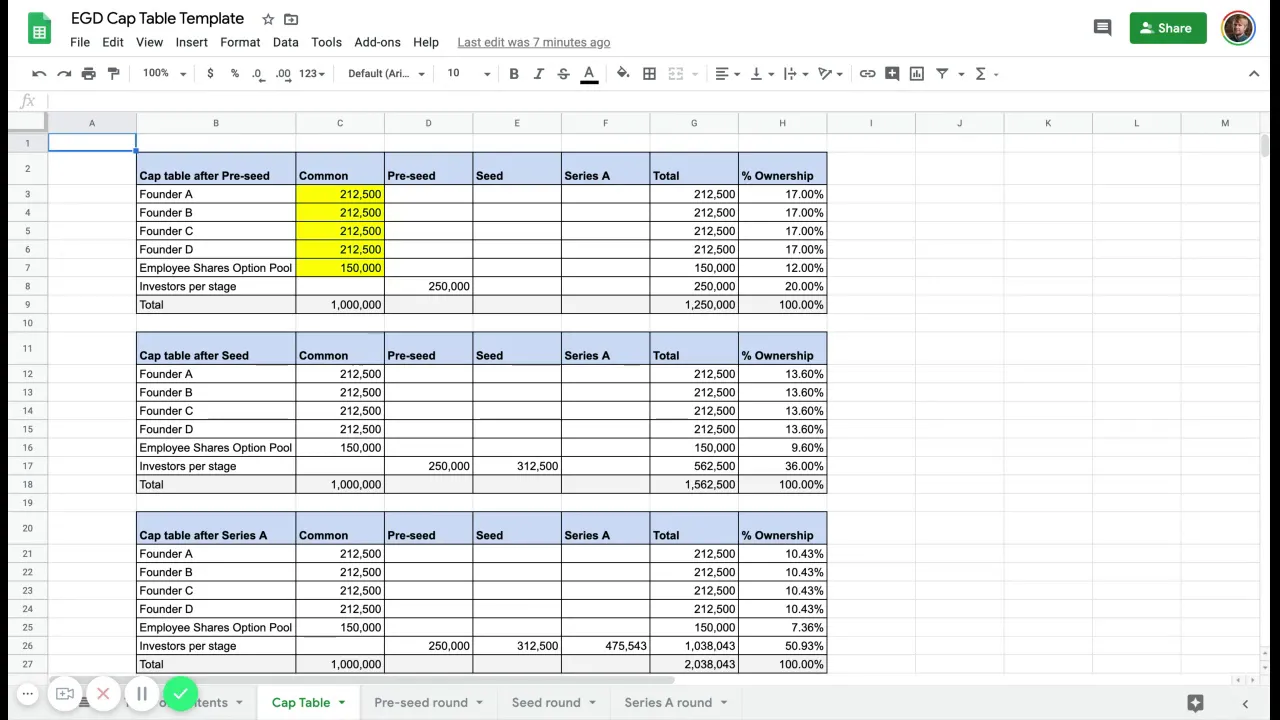
Advanced capitalization table (cap table) modeling to simulate how valuation caps impact dilution during a subsequent priced round.
Strategies for negotiating valuation caps and discount rates with early-stage angel investors and venture capitalists.
Understanding the long-term risks of overvaluation, such as down rounds, recapitalizations, and high investor expectations.
The mechanics of transitioning from convertible instruments to priced equity rounds, including the calculation of conversion prices.
5.6K views182likes4:07Original Release: 2022-06-30
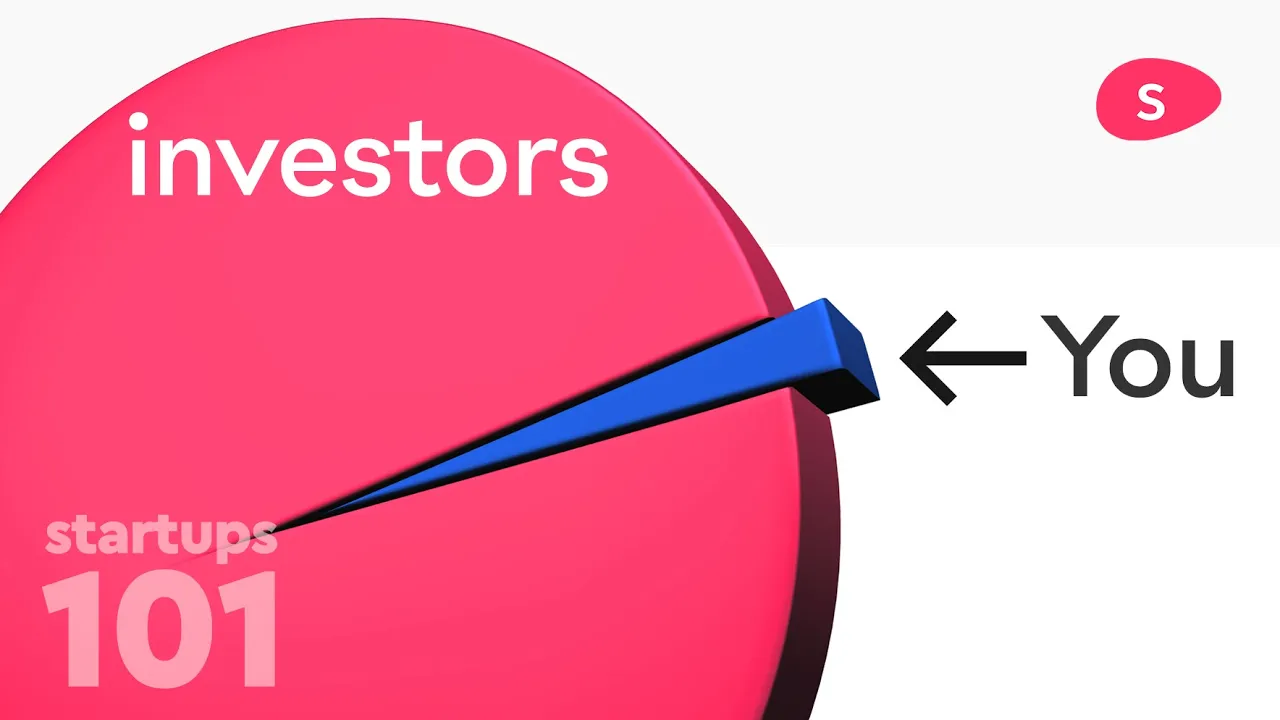
when you start your company what should you set your valuation at in this video we're going to go over how to think about setting your valuation what is a potentially low and high number and why this even matters so first of all when you're setting a valuation for your company you're usually not actually setting a real valuation generally you're setting a cap if you're using a safe because when you raise your first hundred grand 200 grand this isn't a price round which is generally equity this is generally a safe which is a simple agreement for future equity so which means when you people invest on a safe they don't actually get real equity in your company yet it's an agreement to get equity later which means you don't have a valuation but to keep ownership kind of predictable there's this vehicle called a cap where you can say i'm raising a hundred thousand dollars on a five million dollar post money cap which effectively means your valuation you know for all intents and purposes is five million dollars okay so that's the first thing to realize is this isn't a real valuation because you're so early you're kind of kicking that down the road but you're picking a cap to kind of to kind of uh guide the investors on how much ownership they'll have once you do raise the price run okay so when you think about what to price your company at when you're raising you know a safe round or an angel round you know what your number is going to be is not going to be reflective of your current valuation ideally you pick a valuation that you can kind of grow into over time that puts you on a trajectory to build a billion dollar company or something that gets to a hundred million arr in like seven to ten years so i talk to a lot of founders that are like oh like should my evaluation be 300 grand like we have you know we have a thousand on revenue or should it be 400 grand and it's not the right way to think about it right now the way to think about it is there's a standard in the industry of you know one million to five million um for first-time founders and if investors sees that you're priced you know outside of that either higher or lower they might get skeptical that you don't understand how the game works um if you're saying oh we're raising a you know around a 333 thousand dollar post money they might be well that's not normal you don't understand pass versus you say we're raising around you know at a three million post money you might think you may not be worth three million dollars but the end of the day that's kind of what the industry expects a first round to be in the range of like one to five million um so so that's how to think about that right it's not what your valuation is now it's what you'll grow into and guess what when you raise the next round it'll be the same thing are you gonna be worth 10 15 20 million dollars as a small company no but the hope is that over time you grow into it so then when you you know you're making hundreds of millions a year you're actually worth that valuation that's the game of venture capital now for the last point um you know how do you think about to pricing yourself one or five million or for us we started at six million post money like how do you think about this at the end of the day it's really about probability of you getting funded um kind of multiplied by how early you are to the game so if you've never raised any money in your life you don't have any investor connects you don't really know how this works i would definitely start sub 3 million if not you know 2 million for your early investors if this is your second company even if your first one failed and you kind of understand how things are going i would say it's okay to get in the four million five million range um no you're gonna have investors that say it's that's gonna say it's too high that's okay you're not optimizing for the ones that don't believe you're only optimizing for the believers and there's only a few of them in the beginning okay so that is how to think about early stage valuations first it's not a real evaluation it's just a way to keep everything organized second um you know you want to keep in this range of one to five because that's what the industry kind of expects and you know investors are going to think about do you understand how venture capital works if you're raising then third you know you're going to want to raise on the the the earlier side of that that amount if you're a fresh founder and maybe the leader side if you're a a little bit more of an experienced founder hope this video was helpful
Up Next
5:46
Top Equity Crowdfunding Platforms: Comparative Analysis of Reg CF Portals
@MoeLueker
8.6K views•2022-10-15

46:36
Retention Habits of Top DTC Ecommerce Brands Revealed
@SendItPodcast
44K views•2026-03-03

15:23
Decoy Effect: How Pricing Psychology Influences Consumer Spending
@bobinvestsUS
90K views•2026-01-05

17:30
The Planned Obsolescence of Light Bulbs and Tech
@veritasium
25.3M views•2021-03-26
Related Study Plans & Knowledge Roadmaps
Structured learning paths in Business
business
Pop-Up Retail: Strategy, Design & Execution
01Introduction to Pop-Up Retail & Strategic Goal Setting
02Budgeting, Site Selection, and Legal Essentials
03Experiential Retail Design & Visual Merchandising
+ 2 more learning modules
15h5 modules
Explore Roadmap
business
Reg CF: Startup Funding, Marketing & Launch
01Introduction to Equity Crowdfunding & Reg CF
02Platform Selection & Legal Preparation
03Crafting High-Converting Campaign Assets
+ 2 more learning modules
14h5 modules
Explore Roadmap
business
Productized Services: Scaling Solo Freelance
01Foundations of Productized Services
02Packaging and Scope Definition
03Pricing and Subscription Models
+ 2 more learning modules
15h5 modules
Explore Roadmap
business
Gov Procurement: Find, Bid & Win Contracts
01Introduction to Government Procurement & Business Setup
02Small Business Certifications & Set-Asides
03Finding and Analyzing Contract Opportunities
+ 2 more learning modules
14h5 modules
Explore Roadmap