















Finnish has 15 grammatical cases that indicate different relationships between words, including the nominative (basic form for subjects/objects), genitive (possession, necessity, past positions), accusative (object of pronouns), partitive (unspecified amounts, negatives, numbers), inessive (inside, having something), elative (from somewhere, made of), illative (movement to somewhere, time), adessive (on something, by instrument), ablative (off, from), allative (onto, to someone), abessive (state, function, position), translative (change into, for), comitative (accompanied by), instructive (by means of), and ablative (without). Each case has specific endings and usage patterns that convey nuanced meaning in Finnish sentences.
Finnish Grammar Explained: All 15 Cases Overview
Added:The concept of grammatical cases and how agglutinative languages use suffixes instead of prepositions or postpositions to show relationships.
Finnish vowel harmony rules (vokaaliharmonia), which determine whether a case ending uses back vowels (a, o, u) or front vowels (ä, ö, y).
The basics of consonant gradation (KPT-vaihtelu), as adding case suffixes often triggers weak or strong grade changes in the word stem.
The distinction between a noun's nominative (dictionary) form and its inflectional stem (vartalo), to which case endings are actually attached.
Mastering Finnish verb government (rektio), which dictates which grammatical cases must accompany specific verbs.
Advanced rules of the grammatical object, specifically understanding when to use the partitive, genitive, or nominative/accusative for total versus partial objects.
Studying Finnish nominal word types (declension classes for words ending in -e, -nen, -in, etc.) to correctly apply case endings across different stem variations.
Analyzing spoken Finnish (puhekieli) contraction patterns to see how these 15 case endings are shortened or altered in daily conversation.
23.6K views834likes21:51Original Release: 2023-10-02
and welcome to my channel so in today's video we are going to learn about the 15 finished cases in form of an overview so that means we are going to focus on what cases do exist what to expect behind the names of the cases when to use them and then we are also going through many examples for each of the cases as a short info I will later on also make separate videos to each of the cases which will be way more detailed including formations but for now it's just an overview to get a feeling what these cases are actually about so let's start with the first case the nominative the nominative ends either in nothing or t if we're talking about the nominative plural the nominative is the basic form and it refers to the subject or the object here two examples Mainline and ilma Denon on means what's the weather like today so ilma which means weather is standing here in the basic form Milan and ilma denan on what's the weather like today next example Austin means I'm buying the apples from the store so omanat is denominative plural of the word omna which means Apple it's standing here in the nominative plural because we're talking about a specific amount of apples so let's repeat Austin I'm buying the apples from the store our next case is the genitive degenerative ends either in N then or 10 with a Double T we use the genitive when we're talking about possessions objects necessity past positions and more here's some examples means matisket is enhancing so Martin is the genitive case of the name mati and Martin means of mati so mati is standing here in the genitive case because we're talking about the possession of his The Possession in this sentence is the cat so we're talking about matisket here Martin Kisser on helsingisa mati's cat is in Helsinki next one Mina Luan means I'm reading the book kyrian is the genitive case of the word curia which means book and here it's standing in a genitive case because we're talking about the whole book so we are reading the book till the end next one episcone means the students have to go to the library obesity is the genitive plural of the word obescalia which means student and it's standing here in the genitive case because this sentence is a necessity sentence we recognize the necessity sentence by the structure genitive plus Delta plus infinitive verb so that's why we say opiscalion Delta Mana kyria Stone the students have to go to the library next one linto on Talon eraser linto on Talon eraser the bird is in front of the house Edison means in front of and it's called a past position when we have a direct local post position we have to put the genitive case in front of it so the structure is genitive plus position that's why we say Talon which is the genitive case of the word talo which means house the bird is in front of the house next case is the accusative the accusative case is a complex one because the object can appear as a genitive case T plural case or a nominative case the most important thing here is that the accusative refers to the object of personal pronouns here's one example ion Synod Auto La colon means I'm driving you to school by car so C note is the accusative case of the pronoun Sina which means you singular so the question is who do I draft scope I drive you to school by car so that's why we say C naught here and use the accusative case I'm driving you to school by car next one the party teeth the partitive which is a very big topic that I am going to discuss in a later video more detailed so the positive ends either in with the Double T as TA or te depending on the vowel Harmony the positive is used when we're talking about an unspecified amount when we build negative sentences it's also use of the numbers in greetings blessings and more here's some examples Mina Austin labor means I'm buying bread and Lepa here is the positive case of the word Lepa which means bread it's then a cure in the positive case because we're talking about an unspecified amount of bread so we don't know how much bread I'm going to buy means I don't have a car this is a negative sentence and that's why we put the car into the positive case so outwise the positive case of the word Auto which means car I don't have a car minola Eola next one henella on kaksi koira means he has two dogs koira here is the positive case of the noun koira which means dog and it's standing here in the positive case because it's following a number henella on he has two dogs and it's also used in blessings for example huva matka means have a nice trip it's a blessing so that's why it's standing in a positive case and we move on to the next one the inner Sif case this one is ending in either SA or SE the inner Civ case is used when we're talking about something that is inside then it's also used to express that an object has something and it's also used in some common phrases means I'm now in the store so cowpasa is the innocent case of the word kaupa which means store Allen nut cowpasa I'm now in the store next one Icona can be translated as in the bathroom there is a window but it can also be translated as the bathroom has a window and then we can also find the inner safe and common phrases like Cena OLED oikasa which means you're right we move on to the next case the elatif the elatif does end either in star or star and it can be used to express from somewhere or when we want to say that something is made of some specific material or when we also want to say that we like something and more Mina Orland kotois in noriesta means I'm originally from Norway so noriasta is the relative case here of the word noria which means Norway I'm originally from Norway the next example is something you can probably see on bus stations Helsinki means from turku which is a city in Finland to Helsinki so turosta here is the relative case of the city turku and helsinkien is the illitive case of the city Helsinki so turusta helsinkien means from turoko to Helsinki next one means the closet is made of wood so here we want to say that the closet is made out of something that's why we use the elitif case so booster is the additive case of the word boo which means word next one minute means I like German bread so success is the additive case of the word saxelinan which means German and levasta here is the elitive case of the word Lepa which means bread and we put these two words into the relative case because of the verb Dukan which is the first person singular of the verb which means to like says I like German bread then we have the illitif case it can end either in a vowel plus n in h vowel n or in San or for plural scene it's used when we're talking about a movement to somewhere into something it's also used in a Time related context with verbs and more here's some examples means mati goes to the store he goes somewhere he goes to the store that's why we say taoban which is the illitive case of the word cowpa which means store mati Mina kaoban mati goes to the store next one means in January I plan to travel to London so London is the illitive case of the city lontor which means London in January I plan to travel to London next one means Aki goes home at seven o'clock goddin is the iterative case of the word Gotti and it means to home towards home so let's repeat again Aki goes home at seven o'clock and the illitive case is also used in other combinations as which means I go sleeping so no command here is the illitive case of the fourth active infinitive of the verb which means to sleep next one is the additive case it ends either in LA or LA and it's used when we want to say on it can be also used when we want to say that we did something with a specific instrument but not necessarily a music instrument more in the sense of I'm traveling by car or I'm writing the text with a pan so let's say the additive is used when we do something with a specific thing which we call instrument the other Sif is also used when we're talking about possessions and it's also used in a Time related context here's some examples means the vase is on the table bodilize the adhesive case of the word boita which means table so the base is on the table next one matkostan Helsinki means I'm traveling to Helsinki by bus means he has a new boat so here we have Again The Possession structure henella on which means he has so henella is the adhesive case of the pronoun hand which means he or she means next week I'm going to Stockholm big Cola is the adhesive case of the word vicco which means week so let's repeat NCB Cola Mana Tu karlman next week I'm going to Stockholm then we have the ablative case it ends either in Elta or Elda it means off or from when we're talking about the surface it's also used in time-related expressions and also with verbs and more Mina Austin omenat van halta means I bought the apples from the Old Market is the ablative case of the word vanha which means old and dorelta is the operative case of the word Dory which means market and banha has to stand in the operative case because it refers to the Tory which is Market next one means the chorus is ending at 6 30. here we have said samelta which is the ablative case of the number seitzman and then we also use the operative case because the verbs can require it for example which means to sound one common phrase is which means sounds good the next case is the relative case it ends with Le and it means Anto or also to someone and it's also used with verbs and more means he goes onto the balcony so we don't say he goes into the balcony we say he goes onto the balcony that's why we have part of a Gala which is the relative case of the noun bharavaka which means balcony let's repeat hand man he goes onto the balcony next one mati antoi minola means Mata gave me a present the question is who did mati give a present to he gave it to me so that's why we say minola minola is the relative case of the pronoun Mina and it means to me gave me a present then we carry on with the Asif the Asif as and it's used when we want to express a state in the sense of a temporary state or a function or position and it's also used with time expressions and more for example Yuan kahvin kumana means I'm drinking the coffee hot so the state of the coffee is hot so we say Yuan kumana I'm drinking the coffee hot or in a hot state next one when we're talking about functions or positions means aqueous in Norway as a tourist so toristina is the SF case of the word touristy which means tourist and here we use the Asif because tourist Dina implies that Aki is there as a tourist all right next one Minato means I'm coming on Monday is the SF case of the word Manon Thai which means Monday Mina Dolan malandina I'm coming on Monday next case is the translative case it's ending in c and it's used when we want to express that something changed into something else that can be for example again a state or a function or position and it's also used when we want to express four here's some examples means the teacher got old so one hacks is the translative case of the word vanha which means old and it's standing here in the transitive case because we're talking about the change of a state of the teacher so in easier words that means the teacher was before young and then as the years went by he got older and that's why we have to use the transitive case the teacher got old or he became old next one isaksi Saxon means for the summer we go to Germany guest sexy is the translative case of the word Gesa which means summer and here it means for the summer for the summer we go to Germany now we're moving on to the very rare cases one is the commutative the ending of the commutative is inner and the commutative is used when we want to say that someone is being accompanied by someone or something it also expresses with one important thing you are to mention is that the ending inner is always followed by the positive suffix we will see what that means means he came to the party with his wife or he came to the party accompanied by his wife so we know the word vimo which means wife and the inner indicates either with or being accompanied by and then we have en at the end which works as a positive suffix and indicates that we're talking about his wife he came to the party with his wife technically it could also mean he came to the party with his wives because the Finnish letter e or the English I implies the plural so here you actually always have to look at the context the next one is the instructive also very rare it is ending with n and it's used when we want to express by means of and it's also used in set Expressions some of them are for example Omen silmin which means with one's own eyes or Omen Corvin which means with one's own ears here's some examples them are on guessing which can be translated as this is made by hands or this is handmade so kassin is the instructive of the word Cassie which means hand next one maticulisan Omen Corbin in English we would translate it as mati herded with his own ears Omen Corbin means with one's own ears and because we're talking about mati here we say matthi heard it with his own ears and then the instructive is also used in very common expressions which means with kind regards the phrase that is often used at the end of letters or emails image formal situation now we're moving on to the last case which is the apasive and it's ending either in ta or te with a Double T it means without and it's also used in some set expressions without any reason so we focus here on the word sutta which means without a reason sutta is the opposite case of the word Su which means reason or cause so when we see the top or that at the end and no it's the episode case then we know it means without so mati got mad without a reason mati sotoi and sotoi is the past tense of the verb which means to get mad next example means he left without saying anything is a very common expression and it means without saying anything and Sanu Mata is the abusive case of the word Sanoma which is the agent participle of the word sanawa which means to say so let's repeat and boy story she left without saying anything that's it for today thank you so much for watching I hope this video was helpful to you if you liked it and want to learn more finish please don't forget to subscribe to this channel have a nice day and see you next time
Up Next

61:41
Polysynthesis Typology in Northwest Caucasian Languages
@iliran-spb
212 views•2021-12-01
36:52
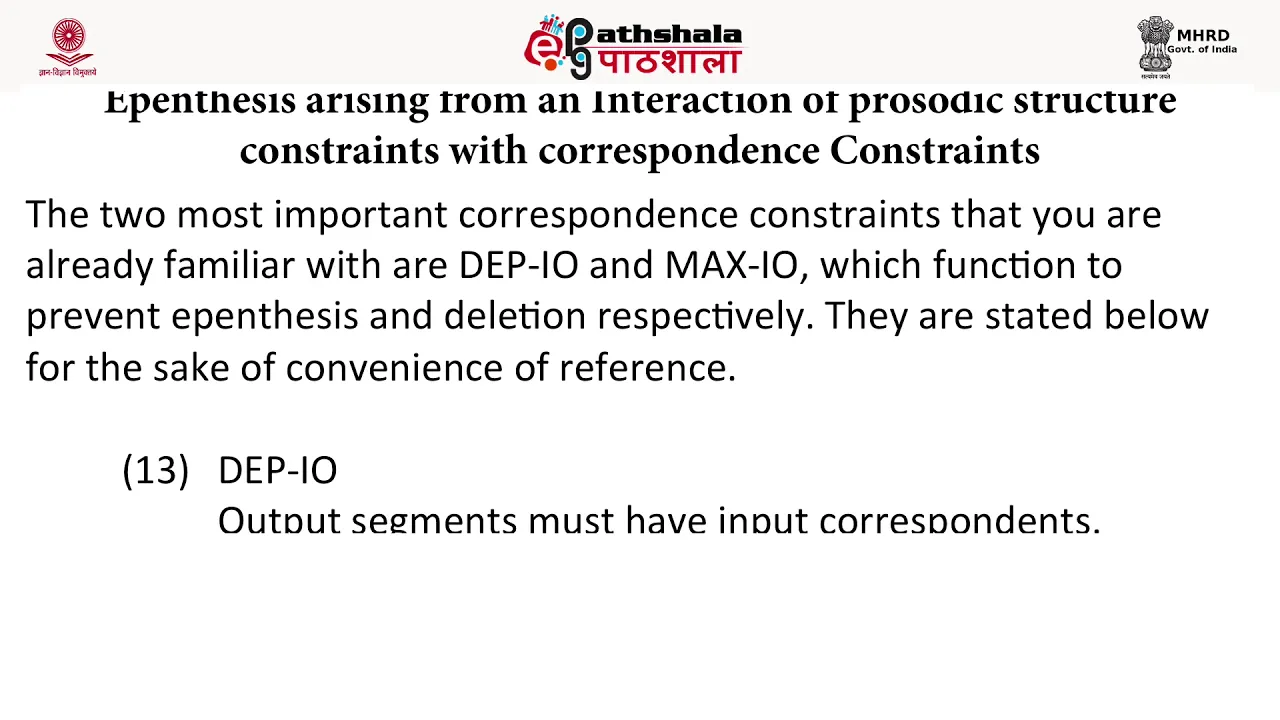
Constraint Interaction in Optimality Theory: Epenthesis & Deletion
@Vidyamitra
180 views•2018-08-20

8:59
Forensic Linguistics: How Language Solves Crimes | PBS
@pbsstoried
1M views•2024-01-25

21:32
Accent Expert Explains U.S. Regional Dialects | Part 1
@WIRED
9.3M views•2021-01-21
Related Study Plans & Knowledge Roadmaps
Structured learning paths in Linguistics
linguistics
Optimality Theory: Tableaux & Constraints
01Phonological Basics: Sounds, Syllables & Rules
02Foundations of Optimality Theory: GEN, CON, and EVAL
03The Constraint Inventory: Markedness vs. Faithfulness
+ 2 more learning modules
15h5 modules
Explore Roadmap
linguistics
Morphosyntactic Alignment: S, A & P Systems
01Foundations of Syntax: Transitivity and Arguments
02The Linguistic Variables: Mapping S, A, and P
03Nominative-Accusative Alignment
+ 3 more learning modules
12h6 modules
Explore Roadmap
linguistics
Analyzing Sign Language: Phonology & Syntax
01Foundations of Sign Language Linguistics
02Phonology: The Five Parameters of a Sign
03Morphology: Word Formation and Classifiers
+ 2 more learning modules
14h5 modules
Explore Roadmap
linguistics
Pragmatics: Speech Acts, Grice & Politeness
01Introduction to Pragmatics: Meaning in Context
02Grice’s Cooperative Principle & Implicature
03Speech Act Theory
+ 2 more learning modules
14h5 modules
Explore Roadmap