
![Morphology: Intro to Linguistics [video 4]](https://i.ytimg.com/vi_webp/oqO3zKxSeGE/maxresdefault.webp)


![Morphosyntactic Alignment [Syntax 3]](https://i.ytimg.com/vi/QSAxXcTsNv4/maxresdefault.jpg)




![ЯЗЫКИ КАВКАЗА [ENG SUB]](https://i.ytimg.com/vi/47DI2a_lKbU/maxresdefault.jpg)


![Что такое Полисинтетические языки? [Интересности о языках #23]](https://i.ytimg.com/vi_webp/U7wKiaCwTeQ/maxresdefault.webp)
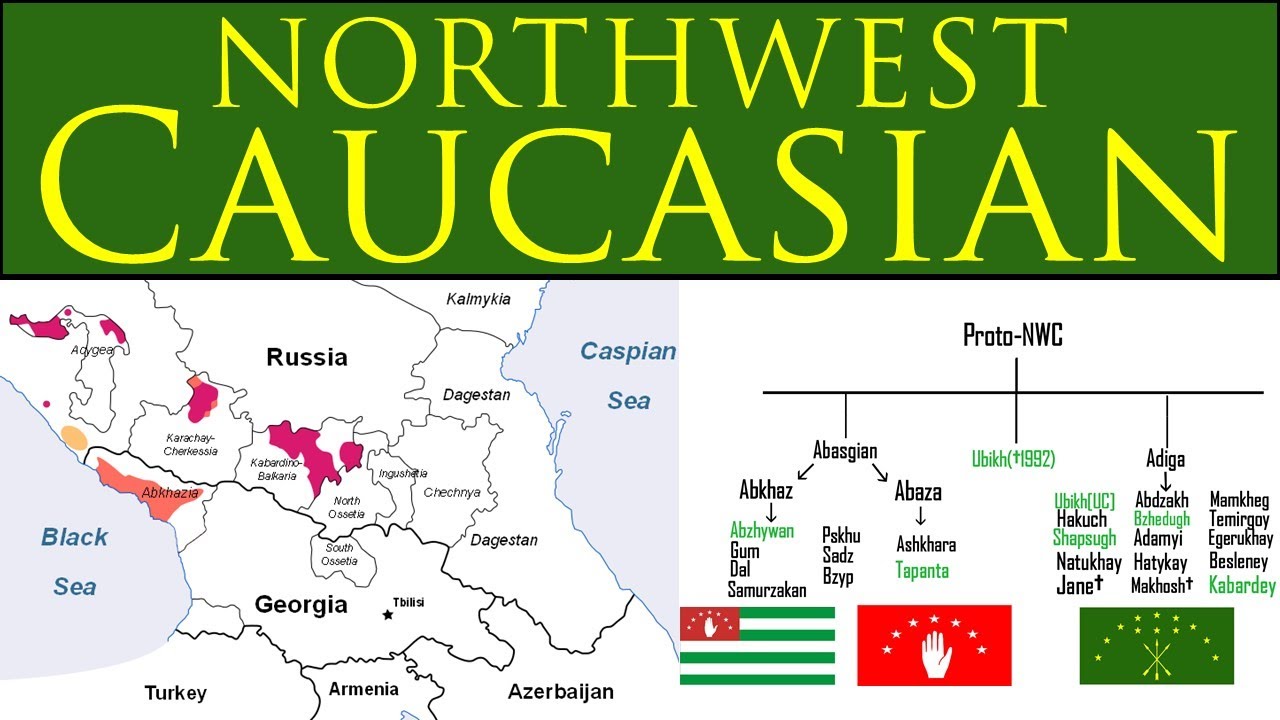





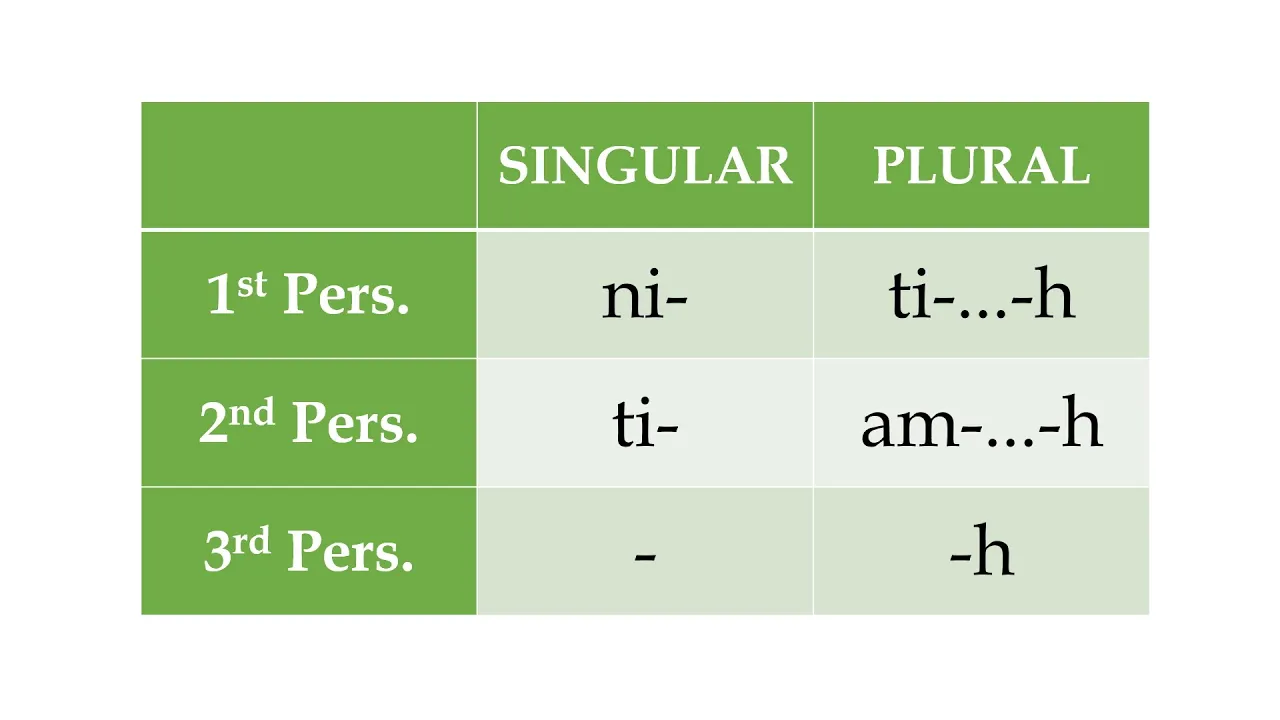

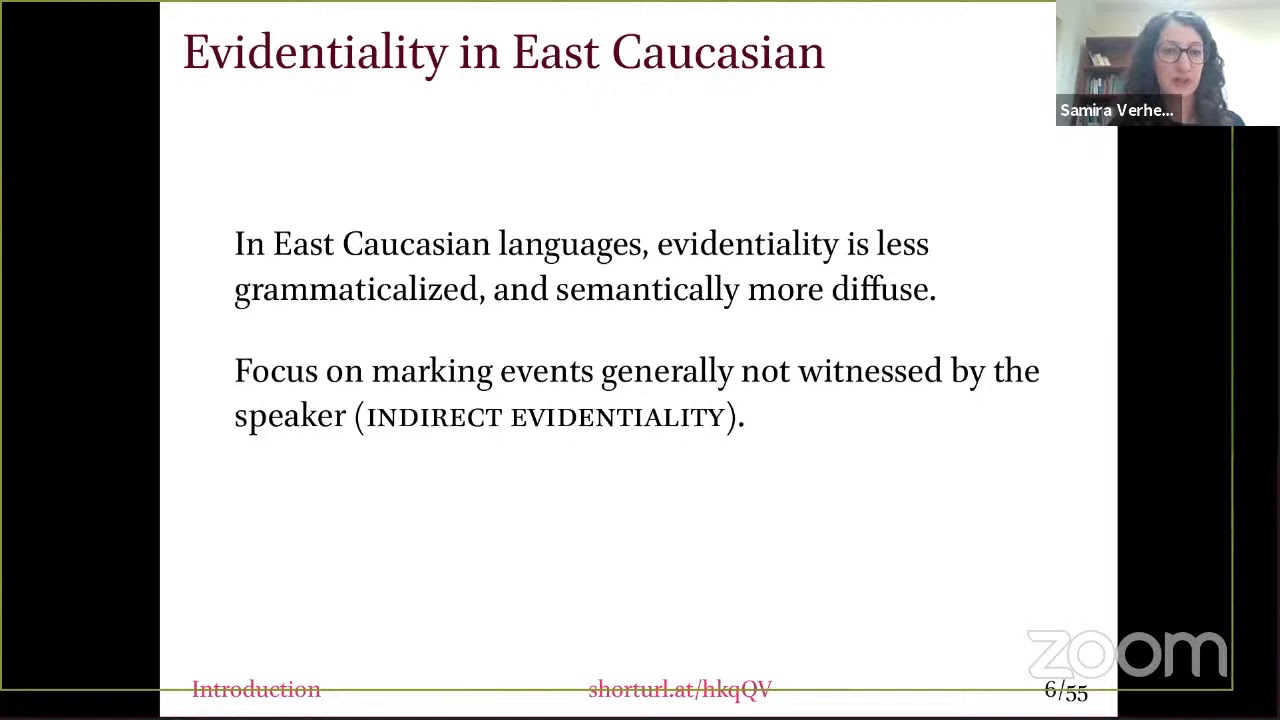
Polysynthesis is a linguistic phenomenon where languages encode complex meanings through single words containing multiple morphemes, characterized by holophrases (verbs representing entire clauses), polypersonalism (multiple argument markers), lexical affixes (meaningful bound morphemes), and incorporation. Northwest Caucasian languages exemplify this through extraordinary polypersonalism with up to five participant forms, rich applicative systems, and spatial lexical affixes, demonstrating how polysynthesis represents a specific way of drawing boundaries between morphology and syntax, often favored by small, isolated communities with limited language contact.
Polysynthesis Typology in Northwest Caucasian Languages
Added:Fundamental concepts of morphological typology, specifically the distinction between isolating, agglutinating, fusional, and synthetic language structures.
An understanding of basic morphosyntactic alignment systems, particularly ergative-absolutive and nominative-accusative patterns.
The concept of head-marking versus dependent-marking in grammatical relations, as polysynthetic languages are predominantly head-marking.
Basic familiarity with the linguistic geography of the Caucasus region, distinguishing the Northwest Caucasian family (e.g., Abkhaz, Adyghe, Kabardian) from other regional families.
A comparative typological analysis of polysynthesis across globally diverse language families, such as comparing Northwest Caucasian with Eskimo-Aleut, Athabaskan, or Algonquian systems.
Theoretical frameworks of word formation in formal syntax, including Mark Baker's 'Polysynthesis Parameter' and generative approaches to morphology.
Advanced study of specific morphosyntactic phenomena in Northwest Caucasian languages, such as polypersonal agreement, complex locative prefixes, and clitic climbing.
Application of these typological insights to the field of language documentation, grammar writing, and revitalization efforts for endangered Caucasian languages.
212 views10likes1:01:41Original Release: 2021-12-01
first of all i would like to thank the organizers of this conference for inviting me it is a great pleasure and a great honor for me to uh give a lecture at this conference and also a great responsibility because at this conference has always been and are hopefully will remain the ideal place for one to share one's ideas with and thoughts and findings with a distinguished linguistic audience and so i hope to to be up to this challenge uh and last but last but not least i certainly deeply regret the owner thing actually what i regret is that we can't all see each other in person and bump our elbows or shake our shake hands or probably hug each other which i would so gladly do to many of my dear friends there in st petersburg and elsewhere so without further ado i shall start um [Music] but your should remove everything which is not needed so can you see my presentation well yes great so i'm going to talk about polysynthesis um i assume that everyone in the audience has some idea what police interest is however uh the point is is that well the point is to try to go beyond these ideas and to and to say something slightly more precise about it so the term palestinians was coined by the french and also american linguist ethnologist and diplomat pierretien du ponzo also known as peter dupont so uh and this term refers to structures in his body in which the greatest number of ideas are comprised in the least number of words and i'll also give here our equation from his french treatise on the languages of north america indeed this term was first applied to the languages of native americans than to chokotkan languages all in the first half of the 19th century and later similar structures were found elsewhere another important thing to remember about polar synthesis is that this notion is holistic linguists have and still tend to speak about polysynthetic languages rather than polysynthetic verbs or polysynthetic constructions in contrast to well or the fact that in general linguists stopped speaking about ergative languages or flexive languages we all know that it is particular morphological or syntactic patterns which are urgative flexive and so on but palace synthesis it is different linguists still find nothing wrong in speaking about languages being polysynthetic so what is polysynthesis according to more contemporary definitions while the simplest approach is the one presented for incident disquotation from marianne matune's important article of 1988 polysynthetic languages are by definition those that exhibit a high number of morphines per board and indeed polysynthetic languages form the extreme point of the client from isolating languages to analytic languages and synthetic languages are as famously presented uh in a numerical form uh in greenberg's classic paper on mythological typology where he uh simply stated that polysynthetic languages are those that that have three or more morphemes per word on average however uh one can and should certainly ask whether polysynthetic languages are in fact more than just languages with very long words and if we want this notion to be meaningful and to yield any interesting results we necessarily have to go beyond this are very simple but also very crude characterization let's look at some examples um and at this point let me let me remind you that uh this presentation is available in the google fold in the google folder and also in the chat and i advise everyone to get hold of the file because i won't have time to dwell on examples too much and also not and also by necessity i will have to skip certain things which may be of interest so i'm not going to discuss any of these examples in detail just to show you what these languages with or rather what these are verbs having lots of morphines in them look like so that's an example from barbarino an extinct language in california that is a very different example from tv are a language from northern australia this is still a very different example from abbasia a northwest caucasian language and remember that i'm going to speak about polythene polysynthesis in northwest caucasian languages in greater detail so in this example we see that a our is able to express as a single word form or something which is a complex by clausal construction in english but finally i simply can't help giving you an example from another language i have worked on for quite some time that is from lithuanian this is a very long and complex verbal form in lithuanian which is also translated into english as a well as a simple sentence but with but with a sentence containing quite a bit quite a lot of words and the question is is this also an example of polysynthesis and most people would say no but the question is or if it's not polysynthesis then why it's not polysynthesis and actually address this question in a recent paper of mine which you can find in the references so uh the problem is that there is no general and agreed upon definition of polar synthesis and even the recent encyclopedic more than uh almost 1 000 page thick oxford handbook of polysynthesis doesn't provide a general and agreed-upon definition so we have to discuss some of the recent definitions and try to try to see what they tell us about polysynthesis so nicolas evans and hansjorg and zelsa in their introductory chapter to our volume entitled problems of polar synthesis of 2002 say that are a prototypical and i'd like to underscore this uh this word the prototypical polysynthetic language is one which encodes information about both the predicate and all its arguments in a single word and allows this word to serve alone as a freestanding utterance another definition now from the oxford handbook of polysynthesis by michael fortescue reads as follows to qualify as a core polysynthetic language recall evans and zasa write about prototypical polysynthetic languages and photos writes about core polysynthetic languages and language must display holophrases that is has an ability to represent a whole clause including all bound core phenomenas by a single bird and must allow more than one lexically heavy morphine within the holophrasic verb and there was also a different definition also from the oxford handbook by johanna martinson where she says that languages qualify as polysynthetic is that if they have complex polymorphinic verbs which necessarily integrate productive non-root bound morphemes with lexical and grammatical meanings and further in another paper of hers madison are observed that polysynthesis is not a homogeneous principle of language structure but comprises a range of heterogeneous phenomena such as polypersonalism noun incorporation verb root serialization and some others and this is all very important are for uh an understanding of polar synthesis and also for uh the typology of this phenomenon um i shall yeah i shall skip this slide with further quotations are from marianne methune um yeah and go to uh the characteristic features of polysynthesis which can be distilled from all these definitions so these characteristic features are colorphrases that is a verb can stand for a whole clause polypersonalism that is expression of arguments by bound pronominal affixes um the so-called productive non-inflectional concatenation a term entity used by willem derosa which is a special kind of morphology characteristic especially characteristic of polysynthetic languages are related to these or the so-called lexical affixes that is affixes with very concrete meanings and we shall discuss them in greater detail later and also incorporation or more generally dependent head synthesis um and all these um [Music] all these characteristics contribute to polar synthesis but uh it is often the case that any particular polysynthetic language shares only some of these characteristic features and not all of them um what i'd like to add to this general picture probably somewhat speculatively is that our polysynthesis can be viewed as a specific way of drawing boundaries between lexical and grammar on the one hand and within grammar between morphology and syntax or the other indeed if according again to uh a quotation from dupont so that in polysynthetic languages we can form birds indefinitely the distinction between inflection and derivation and more generally between lexical storage versus online creation of complex morphosyntactic units is are probably blurred uh however there has been that has been uh large disagreement between linguists regarding this um i shall also skip some tentative evidence from first language acquisition which is very important for our understanding of polysynthetic languages and also a burning our issue because very few of these languages are still acquired by children and i will go to the the second point um so again polysynthesis can be viewed as a specific way of drawing boundaries between morphology and syntax in polysynthetic languages verbal morphology is employed to express and manage syntactic relations both intraclausally and often interclausally to what can be considered a greatest possible extent and in turn the productive subsystems of polysynthetic morphology often displays syntax like properties like additivity compositionality and recursion at least to a certain extent and this is partly and largely uh what characterizes the rules as productive non-inflation concatenation and later when i'll talk about northwest caucasian languages i will mainly focus on these aspects of polar synthesis because i think that northwest location languages nicely illustrate this particular point um and importantly um even in polysynthetic languages uh regardless of the fact that as i have just said they in a certain way withdraw boundaries between morphology and syntax in a specific way the distinction between these two components are at least in some polysynthetic languages while at least in those polysynthetic languages uh which i have worked i have worked on are still exists it is not the case that these languages have only a morphology or which plays a role of both morphology and syntax or what or it's that's not the case that we cannot uh distinguish between these two uh components of grammar and anyway uh although this is probably a small point i'd like to point out that the validity of the distinction between morphology and syntax which has recently been put to doubt by hospital is orthogonal to the nurse to the question of photosynthesis they're all polysynthetic languages well they are both polysynthetic and non-polysynthetic languages which have robust and this robustly distinct morphology and syntax and there are both polysynthetic and non-polysynthetic languages while this distinction is blurred to to some or even to a great extent and i'm not going to dwell upon this our problem anymore um photosynthesis is a case of extreme morphological complexity which takes extended periods of time to develop and is simultaneously vulnerable in situations of asymmetric language contact and also importantly polysynthesis is argued to be favored by specific sociolinguistic conditions such as small communities with dense social networks geographical isolation and low degree of language contact and especially no or just very few second language speakers and last but not least most polysynthetic languages are endangered and therefore it is linguists it is the linguists duty to document and describe them before they are all gone so so far so good now i'm going to speak about classifying and topologizing polar synthesis again uh i give these examples from mapudongun and western apache just to show you that polysynthetic languages can look really very different and indeed polysynthetic languages differ widely and long many parameters both quantitative and qualitative such as average or maximal number of morphemes per word number and type of semantic features that they are grammaticalized and express in their morphology number of paradigmatically opposed affixes for each slot maximal number of participants expressed by phenomenal affixes type of arrangement of morphemes within the bird degree of morphological and morphophonological transparency or opacity are presence productivity and types of incorporation etc etc and are facing this huge diversity is is an important task and surprisingly are there aren't at least to my knowledge many comparative works based on representative samples of polysynthetic languages and aiming to map their diversity and to parameterize their similarities and differences indeed are most of the important publications in polysynthetic languages including those to which i refer in this presentation deal with just one particular language or several selected languages there is a famous exception of mark baker's monograph the polar synthesis parameter approaching this phenomenon from a generative perspective and this is indeed very important but i'm not going to to deal with this but his ideas are in this presentation at all not because i don't like them but because they deserve a whole separate investigation and discussion uh what i'm going to base myself upon is a series of works by johanna mattison who are has proposed a structural typology of polar synthesis on the basis of a 75 language sample this is certainly not the last word on the issue but of course it is a useful basis on which one can build future broker upon so madison proposes three basically three parameters of the topology of polar synthesis or the first one is whether the verb stem can contain more than one lexical root and he should distinguish compounding versus effects of polar synthesis in fact madison speaks about compositional polar synthesis but compositional uh can be misleading so i prefer to call this type compounding the second parameter concerns the internal organ organization of the polysynthetic verb and the third parameter relates to the number of arguments indexed in the verb by phenomenal affixes and we shall dis briefly discuss each of them in turn so there are several subtypes of compounding found in polysynthetic languages the best known one is non-cooperation which has been subject to an enormous literature and importantly noun and cooperation is by no means limited to languages that are usually considered polysynthetic there is also adverb and cooperation and also verb root serialization um non-incorporation are can be exemplified by chukchi and this is more or less straightforward and familiar adverb and cooperation is less well-known it is found in many languages actually in chukchi as well but i gave an example from binin gunbok agun wingan language of northern australia where you see elements like again and wrongly incorporated in the verb and verb root serialization is our compounding of several verbal roots in in one verbal form and this is nicely exemplified by yimas a papuan language of new guinea um let's now turn to lexical affixes which is more or less the same as what fortescue has called lexical heteromorphams and madison non-rude bout morphines with rather concrete meanings what are lexical affixes these are bound morphines that are unable to firm boards by themselves and this is what distinguishes them from roots found in compounds however they express meanings that are similar to the meanings encoded by roots or independent words in the same or other languages um this is more or less the best characterization one can give so while clear cases of lexical affixes are perhaps uncontroversial the notion itself is necessarily fuzzy there are many semantic subtypes of lexical affixes most amply are catholicized by madison in her 2006 paper um so some examples in prohibiture uh a language isolate from mexico there are lexical affixes denoting locations such as on the patio in the street inside a house etc in bella cooler language dialectic affixes corresponding to body parts and in central alaska and ubiq and in many and it is actually a very robust and important trait of our eskimo elliot languages there are many suffixes with predictive meanings such as have something or eat or use something be tired of something etc um and this example from new chapter are previous formerly known as newt khan percussion language actually illustrates that the lexical meaning [Music] of the verb can be expressed by lexical affixes alone because here according to the description of the language the root itself is just a dummy it doesn't doesn't provide any lexical meaning it is needed for the verbal form to be well-formed or as something to which lexical affixes can attach to um well again lithuanian where as i argue in my paper something like lexical affixes can also be found and lithuanian is not alone because while russian and slavic or verbal prefixes are the closest are these languages have to can can provide uh well the closer these these languages come to lexical affixes and again since the notion is fuzzy uh it isn't a simple task to to distinct to well to to draw a boundary between our lexical and non-lexical affixes so to say um your internal organization um there are basically two major types the one called layered or scope ordered when the order of elements is determined by their semantic scope and templatic when the order is rigid and in many respects opaque and many languages show elements of both types of organization in different subparts of their morphology so here i show your here i show an example of scope ordered morphology from southern sierra mi walk where we have the same affixes which can attach to the verb in two different orders yielding predictably different semantics and we'll see similar examples from northwest caucasian languages as well and this is an example of templatic morphology in cat where lexical and grammatical morphines are interspersed in the verb so um madison um [Music] madison offers a well um a topology of polysynthetic language it's based on these two parameters and and i won't go into details here because uh we have no time and ah we can't justify uh justified her solution by looking at these individual languages uh finally i'd like to discuss polypersonalism that is indexing of at least two participants by bound phenomenons in the verb are also known as head marking the notion of polar personalism is ruled into some definitions of polar synthesis for instance into the one by fortescue however it can also and probably should be viewed as a parameter of variation indeed uh while we have tri-personal indexing as in your career or by personal indexing as in kumbalang where you see that over the three participants of a dire transitive verb only two are indexed on the verb the object the direct object the theme doesn't have any uh phenomenal effects corresponding to it however one can also find monopersonal indexing of just one participant in more or less in a language which is more or less controversially polysynthetic otherwise and finally surprising as it is as it may seem uh we also find a personal polar synthesis that is polar synthetic languages are well a language which looks polysynthetic on all other parameters but lacks a pronominal indexing in the verb an example is how to one of the languages of new guinea and another point is that polar personalism is found in many non-polar synthetic languages in fact personalism is more or less the default uh for the languages of the world um and indeed we find trap personal indexing in basque which is not a polar synthetic language at all and in their suspect it's important uh the following quotation from fortescue is important it says that whereas head marking is essentially a matter of inflection polysynthesis contains an essential derivational component so even if polar personalism is one of the characteristic traits of polar synthesis it is neither are necessary nor sufficient to counter language as polysynthetic so i'm afraid i have to skip quite a bit if i want to tell you anything about northwest caucasian languages so i'll skip a number of things and so let us look more closely at a polysynthetic language family northwest caucasian languages are one of the three indigenous language families of the caucasus alongside north dakota and katrina it uh comprises three branches circassian consisting of west circassian or digger and east circassian or cabardian up has a browser consisting of abhors and abaza and which is unfortunately extinct our north-east caucasian is arguably distantly related to the north dakotan family which is however not very important for our purposes um i'll have to yeah i'll skip the socio-linguistic information this is the map um so let's now turn to major typological traits of these languages they're famous for having uh a great number of consonants and very few vowels are they also have a weak distinction between between major lexical classes they are all purgative in their morphology and partly in their syntax um they have rich system of spatial marking in the verb which is important for polysynthesis a complex system of clause combining and they are all head marking and polysynthetic um so this is a bastion a cabardian polysynthetic predicate um which contains lots of morphemes and this is a bethenny cabordian polysynthetic nominal and i have to skip the discussion of nominals altogether although it's in fact it in fact can be interesting um the occasions are as follows first it is exuberant polypersonalism second it is a rich system of locative efficacies and a number of generally a number of productive productive affixes with different degrees of well lexicality these languages possess an intricate and intricate mixture of templating and layered organization and finally a complex system of morphological expression of syntactic information so let's have a look at polypersonalism this is a relatively simple verbal form from a buzzer and it is not constructed by found in a text and this verbal form translates as i will tell this to him about you so it has four affixes corresponding to four participants of the situation and in generally in northwest location three participant forms verbal forms are common four participant forms like the one i've just shown are uncommon but they are attested in texts but that's not all even five participant forms can be constructed and parsed by speakers at least by speakers of circassian languages and they are reported in grammars of serpasian languages and some of these grammars have been written by native speakers on five participants forms however are apparently impossible in the other branches of the family and this is also some theoretical can be of some theoretical importance but um won't dwell on it what facilitates for the personalism in northwest caucasian is a rich system of semantically specialized applicatives introducing indirect objects yeah thank you sonia i think i need to speak till 10 to 6.
hopefully not hopefully not hopefully not more um so uh applicatives in these languages are very numerous they do not normally affect core arguments because they introduce indirect objects and not affect the s a and b they combine with all types of verbs both transitive and transitive and their semantics ranges from something very general to something hard specialized um so um you've actually already seen a benefactive applicative in in the example from a buzzer i gave you above and here is applicative stacking in west circassian or they were making me read it to you but in fact if together with us committed it or there is some applicative recursion also invested also in the best circassian i write to him benefactive for their benefit also benefactive um some arguments are obligatorily expressed by applicatives um for instance various or various uh recipients or indirect objects of or by validating transitive verbs such as touch um there are also locative applicatives or an actually a great variety of them and also lexicalized applicatives um and from applicatives it has would naturally come to lexical affixes but in northwest occasion because these classes of affixes actually intersect to a considerable degree um there are actually quite a lot of lexical affixes and quite a lot of different types of lexical affixes in these languages at least according to madison's ontology um give some examples so um this is from and while one could probably argue that these affixes are grammatical and not lexical but while i'm basing myself on medicine and for her that is some of them count as lexical um yeah that's an example from a bosa also with a bunch of effects that this is listed but importantly the largest set of lexical affixes in northwest caucasian languages express spatial meanings these are simplex and complex locative proverbs uh of which there is a great number in these languages these are also directional suffixes which are most prominent in circassian and prefixes and suffixes often combined with each other and some combinations are lexicalized and importantly many locative proverbs actually in circassian old lucrative proverbs are applicatives um so these are examples of locative prefixes and standard kabbalian uh you see that there was a lexical root meaning lie or more um actually it has a more general locational meaning and it obligatory can uh obligatory occurs with a prefix specifying well the topological type of the location being in a plate is different from being in a cupboard etc um these are examples of directional suffixes and circumferences like around or up um and importantly there are chronically most located proverbs in northwest caucasian go back to incorporated nouns mainly denoting body parts or other objects um so in bicircassian intestines as a verbal prefix means something like inside or through and mouth means something like near and some proverbs can be synchronically viewed as incorporated nouns because they denote the same object as the known and can host phenomenal prefixes which refer to the possessor of the now they are marginal in circassian and more widespread in the other branches so in cabardian we have incorporated had an incorporated hand in a buzzer we have incorporated face for example but in a buzzer also non-relational nouns can be incorporated so we have incorporated treadle and in our parts we have incorporated winter and there was also some evidence of verb root serialization as well but i have to skip it because i don't have time anymore which is which is a pity but it almost always happens with me so in terms of madison's topology northwest location polar synthesis is transitional between compounding and fixel and um so it's an interesting case because on both normal cooperation and verb root serialization are attested but they apply to close classes of roots and these incorporated roots tend to become grammaticalized and morphologically and more of a syntactical pattern but affixes for instance become applicatives so uh i have to yo i have to skip lots of interesting things because i want you to be able to ask some questions so i'll skip some things and yeah let me tell you that morphological organization in northwest location is not uniform and defines any straightforward analysis in terms of semantic scope or syntactic derivation and on the other hand it doesn't fit into a [Music] rigid template either and it obviously reflects different historical layers of successive remedicalization and morphologization as well as obviously lexicalization and importantly a large part of the northwest location polysynthetic morphologist serves the purposes of syntax and these are pronominal affixes applicatives causative and other valency changing mechanisms mechanisms reflexive and reciprocal marking nominalizations and converbs the nominal complex about which i have told you nothing and relativization which is also expressed by bound phenomenals of sorts um like here relative affixes in northwest location occupy the same slots as the corresponding personal affixes and they can be considered morphologically bound presumptive pronouns and this i skip and so i conclude northwest caucasian languages adhere to the cross-linguistic prototype of polysynthesis but show a number of specific features such as extraordinary proto-personalism enhanced by an extremely rich system of applicatives vestiges of different types in their chronic layers of incorporation in the system of lexical affixes predominantly spatial profile of lexical affixation which is in fact an aerial feature which even goes beyond the caucasus and last but not least highly developed syntactic functions of morphology including a cross-linguistically rare pattern of relativization forming one of the core aspects of the more syntax of these languages and some general observations so while one of the take-home messages of this talk is certainly that polar synthesis is an evasive and vague notion however is this notion useless well it depends on one's perspective if one wishes to formulate universal generalizations like green books with polysynthesis as a part of the premise then probably this notion won't help however if one wishes to map the blank spots of linguistic diversity then this notion in my view is helpful polysynthetic languages are highly variable and in many respects exceptional even though we can find polysynthetic flag traits in many more familiar languages and both their variation and their exceptionality offer linguists and linguistics unique treasures of empirical facts and testing routes for hypotheses and methods and last but not least most still living polysynthetic languages being endangered it is the linguist's responsibility and duty to avail themselves of these treasures by means of unbiased description on documentation before it's too late thank you very much in many languages and apologies for for skipping too much and not being able to be on time thank you very much for such an interesting talk uh we have seven minutes for questions and discussion uh please if you have a question you can raise your hand or put in in the chat mush please ah thank you i've have i have a question concerning the last question of usability of the term policy forces and it seems like it has a lot to do with baker's ideas but even if we put them up uh it seems that the idea of palestinians being connected to poly personal agreement is uh questionable if we um adhere to the usual uh definition of polysynthesis because well there is a clear logical connection between the two uh obviously if you have uh poly personal agreement it is more likely that you will have a lot of muffins pervert so it would seem clear that you would have to count them at themes without counting their personal agreement by themes to make sure that there is some connection uh i i guess it has been done but i'm not sure whether it has uh so that that's basically the question if if there would still be a tendency for uh polar personal agreement in polysynthetic languages if you do not consider the agree it's when counting yeah that's it thank you oh thank you marcia i hope i have understood your question correctly well i actually don't know how to answer it properly and quickly uh i'll probably be ambiguous and say well yes and no because well um and also i showed this this slide with the picture from fortescue's encyclopedic paper encyclopedic article where he outlines certain pathways to polar synthesis uh and importantly he says that in his definition of polar synthesis uh there are two components one related to head marking and another related to well compounding or lexical ethics lexical affixation and he says that our photosynthesis arises um basically by combining the two and while polysynthetic languages actually differ quite a lot in or how much weight they they give to well polypersonalism on the one hand and are other types of morphemes on the other hand because well in eskimo languages there is more or less one are morpheme expressing participants and lots of morphine expressing everything else in northwest caucasian languages there are many more films expressing participants at least two and if you have three participants then you will more often than not have an applicative ethics introducing that uh that move him and if you want to have four then you must have an applicative but again uh if it were only applicatives and personal affixes it won't be probably won't be enough uh while there are bundle languages which have lots of applicatives and lots of personal prefixes but they are aren't usually considered polysynthetic in this sense because they arguably don't have um lexical is well semantically very specific addicts or did i answer or not well actually i don't think so but i think it would be better to continue the discussion thank you please yeah thank you for a very interesting talk uh i wanted to ask maybe it's a very um particular question but it's so interesting what i decided to ask it um it is for me interesting i mean [Music] uh can one say at least generally that the lexical affixes which as far as i understood correspond to to full-fledged verbs in so-called in not poly synthetic languages are they could they be classified let's see is it true that the corresponding verbs in non-palestinian languages are usually raising verbs or do they have some other types of verbs for example maybe control verbs yeah absolutely that's an interesting question fija thank you well first of all it's necessary to it's necessary to underscore that lexical affixes need not necessarily have verbal meanings most of them probably have nominal meanings um well with respect to with respect to those which have verbal meanings this is really an interesting question and don't uh since well since the languages i have worked on actually don't have uh many of these i can't tell and but i'm wondering if specialists on on eskimo languages have thought about it in this in these terms probably yes one should look into into this sort of literature this is well this is certainly a question worth pursuing in in a typological investigation thank you so the last question from luba well i've got a question about photosynthesis and language acquisition do you have some information how is the acquisition of polysynthetic languages is homogeneous between with each other having some differences from non-policy and polysynthetic languages uh thank you very much this is a good question well i certainly can only base myself on on the available literature so uh and there isn't much literature on this topic again because very few polysynthetic languages are still acquired by children but there is some there is some evidence from inuit here's a quotation from helen children acquiring inner languages become competent in complex morphosyntax at an early age producing productive causatives passive synonym operation structures as early as age two and this presents a striking contrast to children learning english who are still struggling with basic mythology at the same age on the other hand while marianne mithune in her on paper on acquisition of the hawk uh presents data which is um well not so divergent from what we actually find in languages such as english or russian and she also says that there is a great role of memorizing and uh memorization and or chunking in polysynthetic in both acquisition and production of polysynthetic morphology than one might suspect so i think that it's different in different languages and again it's something one should study before it's too late thank you
Up Next

5:14
Noun Incorporation in Compound Verbs | Linguistic Analysis
@AzeLinguistics
1.4K views•2020-02-26
36:52
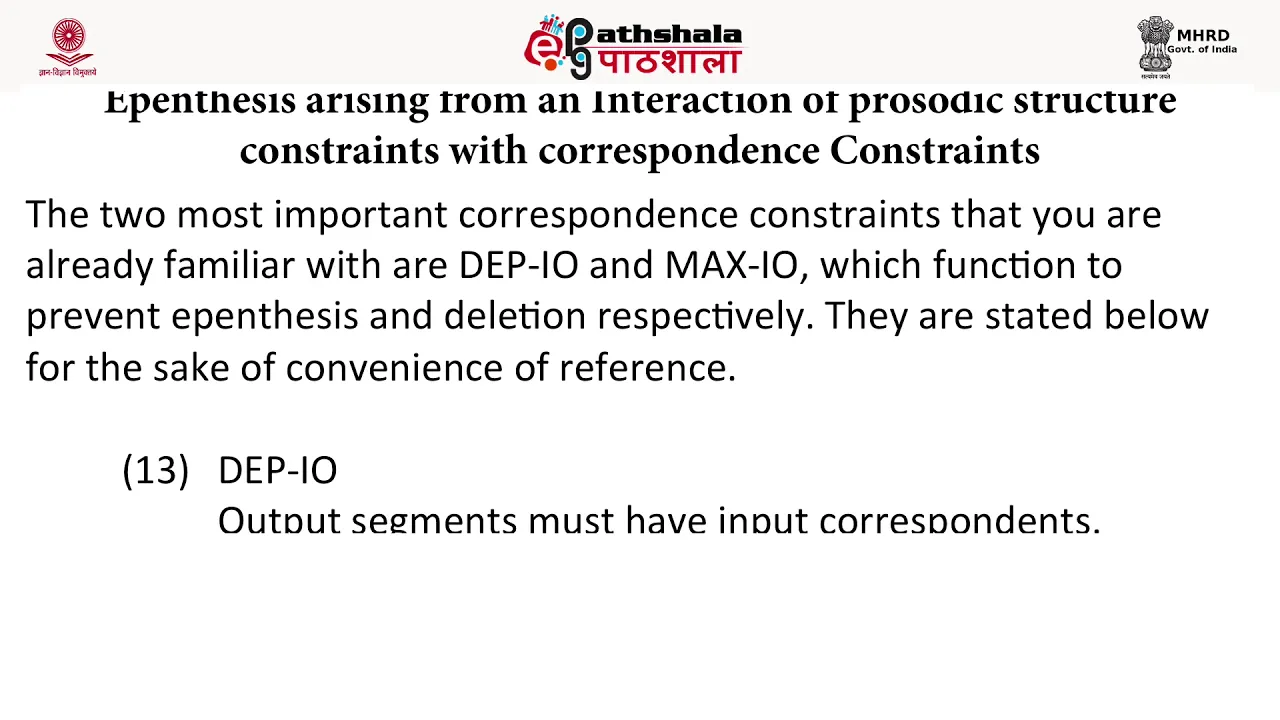
Constraint Interaction in Optimality Theory: Epenthesis & Deletion
@Vidyamitra
180 views•2018-08-20

8:59
Forensic Linguistics: How Language Solves Crimes | PBS
@pbsstoried
1M views•2024-01-25

21:32
Accent Expert Explains U.S. Regional Dialects | Part 1
@WIRED
9.3M views•2021-01-21
Related Study Plans & Knowledge Roadmaps
Structured learning paths in Linguistics
linguistics
Optimality Theory: Tableaux & Constraints
01Phonological Basics: Sounds, Syllables & Rules
02Foundations of Optimality Theory: GEN, CON, and EVAL
03The Constraint Inventory: Markedness vs. Faithfulness
+ 2 more learning modules
15h5 modules
Explore Roadmap
linguistics
Morphosyntactic Alignment: S, A & P Systems
01Foundations of Syntax: Transitivity and Arguments
02The Linguistic Variables: Mapping S, A, and P
03Nominative-Accusative Alignment
+ 3 more learning modules
12h6 modules
Explore Roadmap
linguistics
Analyzing Sign Language: Phonology & Syntax
01Foundations of Sign Language Linguistics
02Phonology: The Five Parameters of a Sign
03Morphology: Word Formation and Classifiers
+ 2 more learning modules
14h5 modules
Explore Roadmap
linguistics
Pragmatics: Speech Acts, Grice & Politeness
01Introduction to Pragmatics: Meaning in Context
02Grice’s Cooperative Principle & Implicature
03Speech Act Theory
+ 2 more learning modules
14h5 modules
Explore Roadmap