




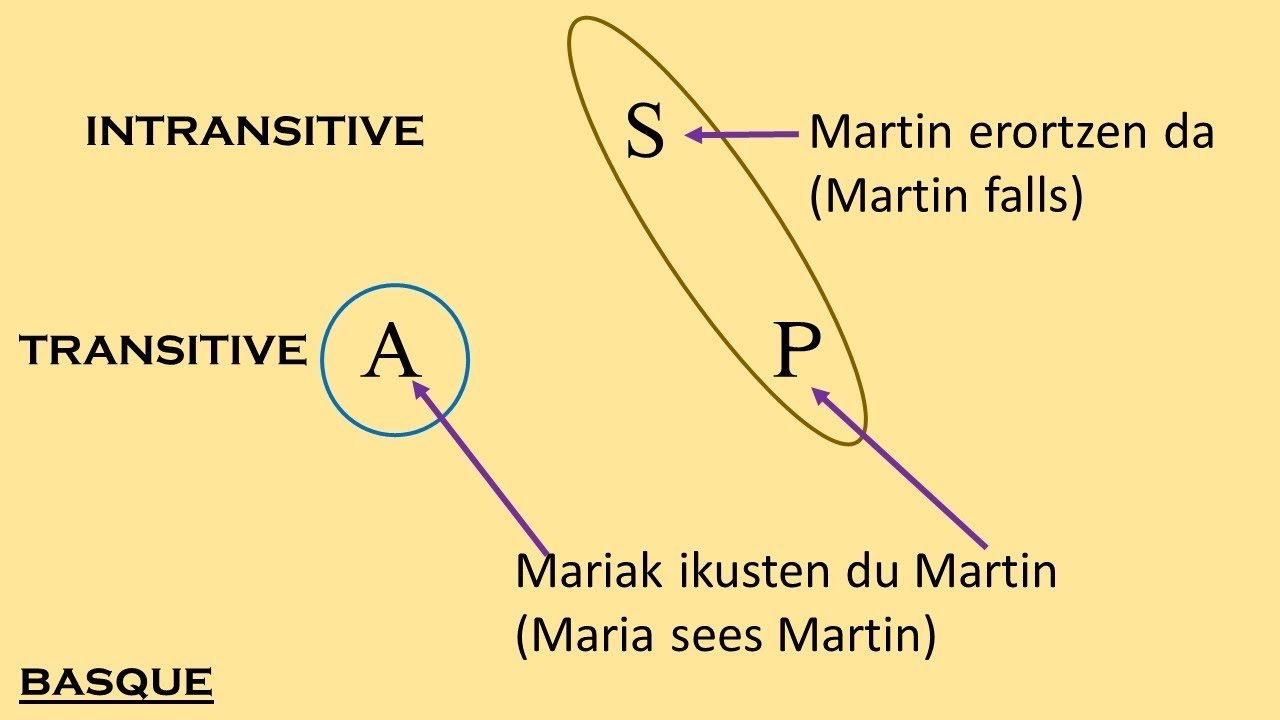
![A. François – [#T2] Relations actancielles – cours de Typologie linguistique](https://i.ytimg.com/vi/Ls40MWTFRaM/maxresdefault.jpg)


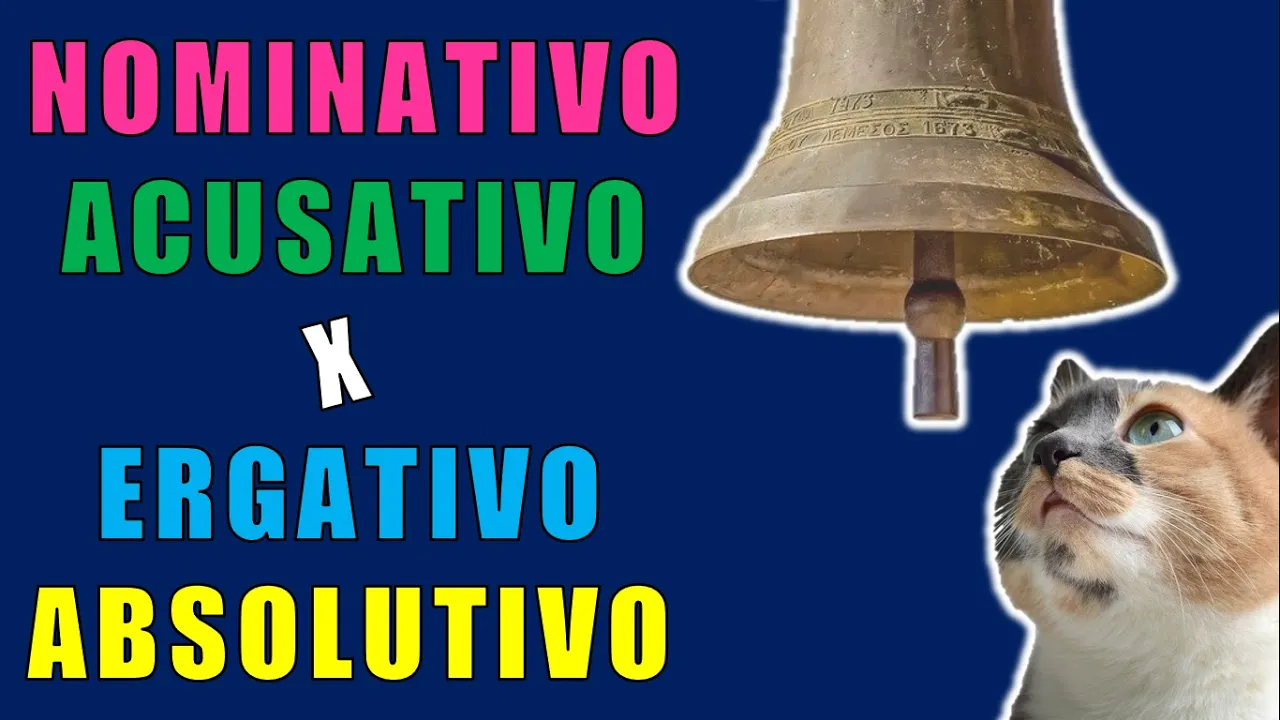















Ergativity is a grammatical alignment system used by approximately 25% of the world's languages where the subject of an intransitive sentence (e.g., 'I ran') shares the same grammatical form as the object of a transitive sentence (e.g., 'the house was built'), rather than the agent (the doer of the action). This contrasts with nominative-accusative alignment used by English, where the agent in both types of sentences shares the same form. Ergativity arises naturally through the 'passive-to-ergative pipeline,' where passive constructions evolve into standard ways of expressing completed actions, and it is often conditioned by factors like tense, aspect, and the animacy hierarchy of nouns.
Ergativity Explained: How 25% of Languages Challenge Grammar
Added:Core grammatical relations: understanding the distinctions between semantic roles (Agent, Patient) and syntactic arguments (Subject, Object).
Transitivity and valency: knowing the fundamental difference between intransitive verbs (with one core argument) and transitive verbs (with two or more core arguments).
Nominative-Accusative alignment: familiarity with how languages like English group the subject of intransitive verbs and the agent of transitive verbs together, distinct from the patient/object.
Morphological case marking: understanding how inflections, affixes, or particles are used in various languages to indicate grammatical functions.
The Antipassive Voice: exploring how ergative-absolutive languages reduce verb valency and shift grammatical relations, comparable to the passive voice in accusative languages.
Deep vs. Shallow Ergativity: analyzing the difference between languages that are only morphologically ergative and those that are syntactically ergative (where syntax rules like coordination target the absolutive argument).
Alternative morphosyntactic alignments: investigating tripartite, active-stative (split-S), and direct-inverse systems to round out typological knowledge.
The Animacy Hierarchy: examining how semantic features (such as first/second-person pronouns vs. inanimate nouns) condition split-ergative marking in languages like Dyirbal or Georgian.
42.3K views2.4Klikes14:53Original Release: 2026-03-09
If I can get this, you can get it, too.
In English, the sentence, I ran and I built a house, feel the same in their underlying logic. You're the subject.
You're the one doing the work, whether it's running or building. But in erative languages, making up about 25% of the world's languages, that isn't true. In those languages, the version of you that runs is grammatically identical to the house being built, not the person building it. Today, we're going to look at the mystery of the subject and the backwards logic of urgativity. If you're new to the channel, welcome. I'm Dr. Taylor Jones. I've got a PhD in linguistics from the University of Pennsylvania. And here on the channel, I talk about everything related to language, linguistics, language learning, and culture. If you're into those topics, be sure to subscribe and ring the bell for notifications. Today, I'm going to attempt taking a notoriously challenging concept in linguistics and putting it into the simplest possible terms. It's not inherently complicated. It just requires breaking things down into smaller pieces and a slight perspective shift. Once you see it, there's a sort of elegance to the system. And more importantly, it has recently provided us with a window into deeper aspects of human language. Both in terms of how some languages see the world and how some mind-bending patterns can arise naturally. People think linguists have basically solved language. But we're talking huge discoveries in 1972 and 1978. Dozens of you have asked me to cover erativity.
>> There are dozens of us.
>> So, let's get into it. This is Language Jones.
I constantly get requests for an explanation of urgativity, and it's no mystery why. It's a topic you're likely to encounter if you're at all interested in linguistics, and it's also one that is often poorly explained. I think the main reason for this is that it requires breaking our assumptions about grammar and how the world works. But, and this is crucial, it's actually not that hard to grasp once all the pieces are in place. If I can do it, you can do it.
What one man can do, another can do.
>> What one man can do, another can do.
>> I'm going to kill a bear. So, I'm going to attempt to make it as clear and simple as possible. By the end of this video, you'll understand what urgativity is and how it works, what a split erative system is, how urgativity arises, and the difference between morphological and syntactic erativity.
But in order to get there, we have to break a fundamental piece of grammar that has been simply assumed to exist since the time of the ancient Greeks.
This is the mystery of the subject.
Traditional approaches to grammar going all the way back to Aristotle posite the idea of a subject. And it's a pretty intuitive idea, especially for English speakers. And I guess for speakers of ancient Greek, too. The subject is the thing we're talking about. It's the topic. It's the noun that the verb has to agree with. And in an aristatilian framework, it's the thing that the whole rest of the sentence is commenting on.
The predicate comes on the subject. A sentence like John goes to work late every Tuesday would have the subject John and the predicate literally everything else. But as with many things, when you start digging into subjects, it's more complicated and fuzzy than it seems at first glance.
What's the subject of it's going to rain? It is there a subject in a sentence like Joey. What a character.
Remember those old cartoons where a school of fish would swim in the shape of a bigger fish than the fish that was trying to eat the little fish in the school? No, just me. Well, the grammatical subject once people started questioning it seriously is a little bit like that. From the distance, it looks like one thing, one big school of fish.
But when you get closer, you realize you're looking at a lot of different things all working together in some languages to give the appearance of being one thing. So, in English and related languages, the default case is one where the topic, agent, and nominative case all line up. Let's define those. Topic is kind of intuitive. It's what we're talking about. But it doesn't have to be the other two things. So, take that sentence, Joey, what a character or President Nixon now more than ever. The noun isn't controlling a verb. What's the verb in that sentence? And it doesn't really make sense to say there's a subject and a predicate. The 1972 campaign slogan wasn't President Nixon is now more than ever. It just asserts a topic, President Nixon, and comments on it. And languages do this all the time.
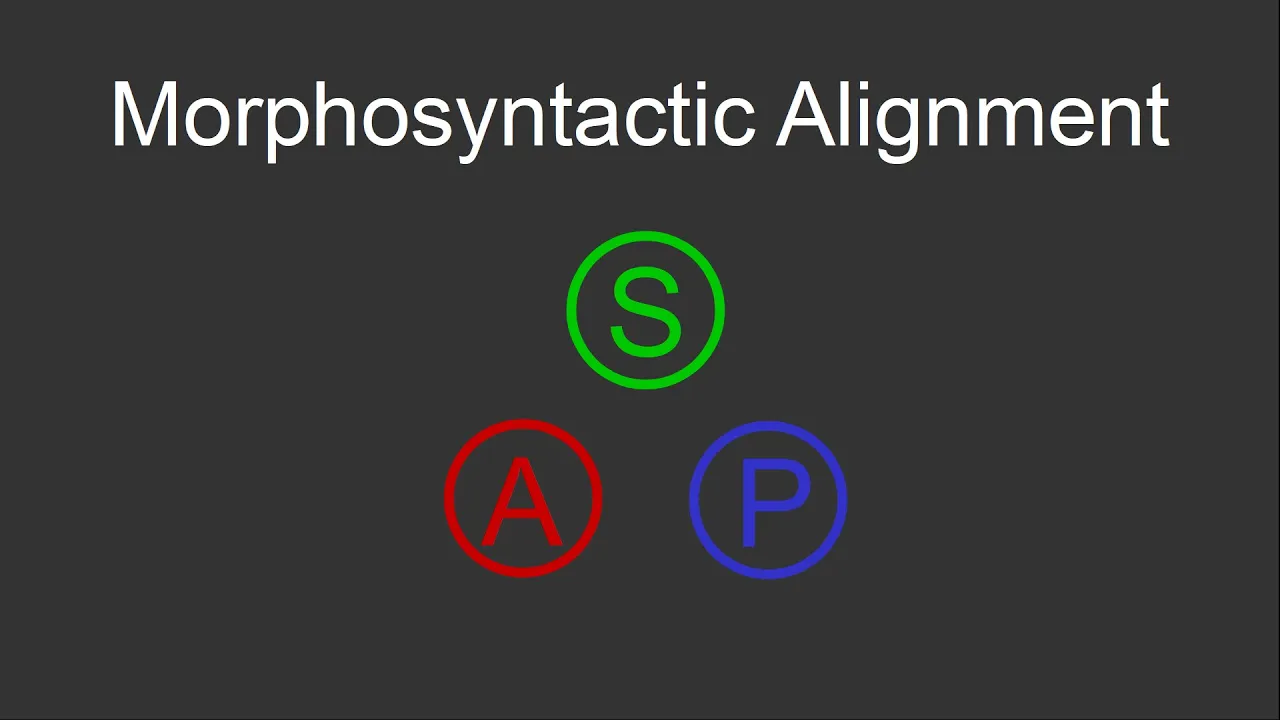
It's a main default approach to the grammar of Mandarin, which is spoken by about two billion people. Agent, on the other hand, is a semantic role. I've talked about these on the channel before. Semantic roles, also known as thematic roles or theta roles, if you want to sound jargony and futuristic, but you're a huge dork, are a group of conceptual categories about what a noun is doing in a sentence. So, my dog ate my homework. The dog is the agent, the active doer, and the homework is the patient, the thing acted upon. There are others, including experiencers, themes, goals, and so on, but they don't really matter here. and linguists argue about exactly what they are and how many of them exist. Lastly, nominative case is where we start getting into circular reasoning territory. I'm going to try to avoid all that by just saying it's often the unmarked or default form of the word and in equal sentences. Sentences like X is a Y, a corgi is a dog. It's often the case on both of the nouns if the language marks case. Our concept of subject conflates all three. It's not a regular adult businessman going about his day. It's three children in a trench coat with sunglasses and a fake mustache. And erative alignment just works differently. By the way, now is as good a time as any to mention that if you're into this kind of thing, I'm currently building a digital introductory course in linguistics for regular people that will cover all the topics that you'd learn in Ling One, but better, clearer, more engaging, and a whole lot cheaper than tuition at the Ivy League I last taught at. You can sign up for updates and get on the wait list at www.languagejones.com/bloopprint if you're interested. So, erativity is doing its own thing, but how? Well, we need a couple of building blocks. First, we want to differentiate between sentences like Will left and Stevie played the piano. I think about this like once a week. So, sentences with one noun and sentences with two. And we also need to distinguish between thematic roles of agent, the doer, and patient, the the doey, the done to. The literature on erativity accomplishes this by comparing relationships among three things S, A, and P. S is ostensibly single and is the only participant in an intransitive sentence, the one with one noun. The man runs.
Bernard Comry notes that it's also perhaps intentionally evocative of subject. A is the agent in a transitive sentence, the man in the man sees the woman. And P is the patient, the undergoer in the transitive sentence, the woman in the man sees the woman. I'm not sure if the usual way of representing this visually works, but this is the way that is usually done.
The idea is that in nominative accusative alignment languages, what English speakers think of as the default, the agent in a transitive sentence looks the same as the only noun in an intransitive sentence. And more often than not, that's the sort of default form a noun takes, especially if you have a language with morphological case marking, meaning different shapes of the words depending on what they're doing in the sentence. In erative absolute languages, it's the other possible configuration. And that's actually how erative gets its name.
Ergative comes from ancient Greek erat worker laborer with the English if suffix on it. It marks the worker, the doer. Fun aside, eratus also comes from ergon work and that comes ultimately from protoindo-uropean wear, hence work in English. The absolutive part is just a word that means the default normal everywhere not special form of the word.
So you have a usual form of the word.
But when it's the worker or the doer in a transitive construction, then it gets a specific morphological marker. It gets erative case. So to put this into imaginary erative English using pronouns to illustrate it, it would be like if you said he saw her, but you had to say him runs for it to be grammatical or her runs. There's a lot more cool stuff to discuss, which I'll get to in a second.
But the basic idea is just this one.
There are two types of sentences we care about here. Sentences with a verb and one noun and sentences with a verb and two nouns or more. When you have two nouns, which one looks the same as when it's in a sentence with one noun? And which one gets marked somehow? And three, I'm going to use pronouns to illustrate this using English, but it's exactly the same idea. In nominative accusative languages, the noun that appears alone, he runs. The pronoun there stays the same as when it appears with another, as the agent, the doer, the worker, he sees her. In erative languages, you have one form of a noun or pronoun when it's the only one in the sentence. He runs. But when there's another noun in the sentence, the agent gets explicitly marked and the patient is added in its regular default normal form. Him sees she. I'm banking on English's fixed word order being more powerful for you than English's case marking on pronouns. The idea is the man is the one seeing the woman. So there's two ways of doing this thing and languages pick between them. But why on earth would any language, let alone nearly one in four of them, choose the erative alignment? There are good historical reasons for this. And maybe choose was a strong word. Ergativity develops naturally. And I'll get to how that happens in a second. Hang in there.
It's evolution. But first, let's think about the logic of why it might stick around once it's happened. Let's take a look at the new discovery of syntactic erativity. And let's see how many many people's brains can seamlessly make a switch between erative and nominative systems on a daily basis thanks to a linguistic gender distinction, but not the one you might be thinking of. The first important concept to understand how these systems stick around is economy of marking. The basic idea is that if you want to differentiate between two things, you don't need two markers. You need one marker that can be present or absent. Two states, one and zero, on and off. So languages often leave the default state unmarked. In erative systems, the absolute that's S and P is the zero marked base while the erative a the agent is the special case used only when disambiguation is needed.
And this makes even more sense when you realize that many many languages don't have fixed word order like English. So it might not be clear who's doing what to whom without marking it somehow as I had to with who and whom? Anyway, but is erativity really how we think about these things in our brains or just a weird little morphological game some languages play? Well, RMW Dixon has an example from the Dearbball language of Australia that he argues indicates a deeper level of erative alignment in our thought rather than just a surface marking of nouns and pronouns. He has a pivot test for what he calls syntactic erativity. And it goes like this. The man saw the woman and ran. So here's a question with an obvious answer. Who ran? But it's a trick question. In English, the only possible meaning of this is that the man ran in durable. The only possible meaning of this is that the woman ran. After all, woman would have the same case marking in the man saw the woman and the woman ran. It's P in the first sentence and the unpronounced noun is S in the second sentence. That's urgative alignment.
This one blew my mind when I first read about it, not going to lie. For English speakers and speakers of many European languages, the idea of being able to use erative alignment at all sounds daunting. But many people not only use it, but switch between nominative accusative and erative absolutive alignment with ease all day, every day.
And that includes indescendants of protoindo-uropean that are distantly related to English. We're talking Hindi, middle Persian and others. Although modern farsy has shifted back to fully nominative accusative alignment. So let's take a classic Hindi example. The boy reads the book. Forgive my pronunciation is part is boy. Kab is book and parta is to read. And the verb agrees with boy. But the boy read the book does two things.
First, it marks the agent, the boy with nay, but it doesn't mark the book, the patient with anything. So, you get an extra morphological marker on the agent.
That's erativity, baby. And second, the verb agrees with the book now because it's not part the feminine like the book.
And here's something really interesting.
Ergativity is often conditioned by gender, but not like masculine feminine.
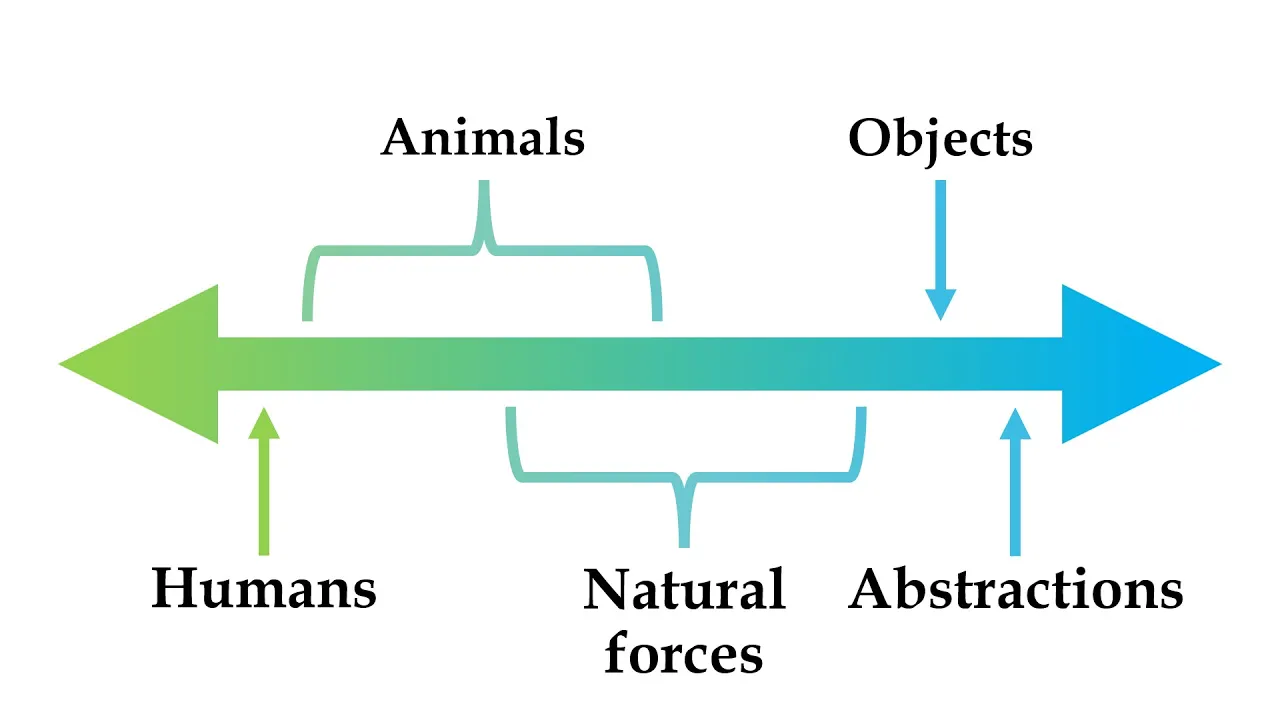
No, I mean noun class and more specifically the animacy hierarchy. Not all languages mark animy explicitly like Zulu and Cherokee, but even in those that don't. Animacy can play a really important role. And it's not just animate or inanimate. It's a whole gradation with gods and humans at the top above domesticated animals, wild animals, forces of nature, and like rocks and Hindi's animacy effects are too complicated for this video, but it does play a role. And split erativity can be split in different ways. In many languages, there's a shift between tenses. In others, it might be that pronouns stay nominative accusative, but nouns follow an erative absolutive alignment, marking the in some ways unexpected doer. The unexpected doer sounds like a romance mystery. Okay, but how does this even happen? Well, first of all, remember that Hindi data? The language has nominative accusative alignment in the present tense, but erative alignment in the past. When an action is finished, we view it from the perspective of the result rather than the process. and that focuses on the patient and that's related to the passive to erative pipeline. Let's take something active. I built a house. Now you can make it passive. A house was built. Optionally, you can mark who did the building by me. And you'll notice there's an extra word by and it's me, not I in the nominative case. We have extra morphological marking for the doer. With high enough frequency, you can get a change over time where the passive construction loses its passive flavor and becomes the standard way to express the past. The by me is doing a sort of instrumental thing and that becomes the new erative case marker. From a functionalist perspective, it's not backwards. It's a solution to the problem of marking who did what while prioritizing the undergoer as the most stable reference point in a completed action. And if all that feels weird, well, we have traces of that in English. We historically sometimes called it the meopassive. Not quite active, not quite passive, it's the meopassive. What do you do with a sentence like the vase broke or the tailored suit wears well or that sentence reads poorly? This was a question that bothered David Pearlmutter and Jeffrey Pull who coined the term unacquitive to describe these. And a sentence like I arrived is by analogy unerative. It's precisely those verbs that require to be instead of to have as an auxiliary verb in romance languages like French where you say and not for I have arrived. I am arrived. Some languages even have a special verb conjugation for the unacquisitive, but that's another video for another day.
Leave me a comment if you want to see it. If you like this kind of content, don't forget to sign up for updates and secure a spot in my linguistics blueprint class. It's an intro to linguistics open to anybody. And of course, like, subscribe, and of course, like and subscribe if you haven't. And please leave me a comment.
They're great for the algorithm. I'm Ron Burgundy.
Damn it. Who typed a question mark on the teleprompter?
>> You can support the channel here on YouTube with superthanks or over on Patreon at patreon.com/ languagejones. Until next time, happy learning.
Up Next
9:18
Morphosyntactic Alignment: Understanding Ergativity
@learningrarelanguages1497
4.2K views•2023-01-15
36:52
Constraint Interaction in Optimality Theory: Epenthesis & Deletion
@Vidyamitra
180 views•2018-08-20
15:26
What Experts Wish You Knew About African American English
@languagejones
69K views•2022-02-01

21:32
Accent Expert Explains U.S. Regional Dialects | Part 1
@WIRED
9.3M views•2021-01-21
Related Study Plans & Knowledge Roadmaps
Structured learning paths in Linguistics
linguistics
Optimality Theory: Tableaux & Constraints
01Phonological Basics: Sounds, Syllables & Rules
02Foundations of Optimality Theory: GEN, CON, and EVAL
03The Constraint Inventory: Markedness vs. Faithfulness
+ 2 more learning modules
15h5 modules
Explore Roadmap
linguistics
Morphosyntactic Alignment: S, A & P Systems
01Foundations of Syntax: Transitivity and Arguments
02The Linguistic Variables: Mapping S, A, and P
03Nominative-Accusative Alignment
+ 3 more learning modules
12h6 modules
Explore Roadmap
linguistics
Analyzing Sign Language: Phonology & Syntax
01Foundations of Sign Language Linguistics
02Phonology: The Five Parameters of a Sign
03Morphology: Word Formation and Classifiers
+ 2 more learning modules
14h5 modules
Explore Roadmap
linguistics
Pragmatics: Speech Acts, Grice & Politeness
01Introduction to Pragmatics: Meaning in Context
02Grice’s Cooperative Principle & Implicature
03Speech Act Theory
+ 2 more learning modules
14h5 modules
Explore Roadmap