





![Morphology: Intro to Linguistics [video 4]](https://i.ytimg.com/vi_webp/oqO3zKxSeGE/maxresdefault.webp)








Noun incorporation is a linguistic process where a noun is tightly combined with a verb to create a compound/polymorphemic verb, with the noun typically representing the object; this process is relatively limited in English (as seen in examples like babysit, handpick, and fact check) but is quite common in polysynthetic languages such as those in the Chukotko-Kamchatkan language family, where the object can be directly merged into the verb to form a single word.
Noun Incorporation in Compound Verbs | Linguistic Analysis
Added:Basic morphological concepts, including free vs. bound morphemes, roots, and compounding processes.
Syntactic argument structure and verb valency, particularly the relationship between transitive verbs and direct objects.
An introduction to morphological typology, specifically distinguishing between isolating, agglutinative, and synthetic languages.
The syntactic and semantic effects of noun incorporation, such as valency reduction and the intransitivization of verbs.
Mark Baker's structural theory of incorporation and head-movement within generative grammar.
In-depth case studies of productive noun incorporation in specific polysynthetic languages, such as Mohawk, Nahuatl, or Inuktitut.
The pragmatic and discourse-level motivations for using incorporated structures versus standard syntactic phrases.
1.4K views50likes5:14Original Release: 2020-02-26
welcome to ace linguistics this channel is both all things linguistic so let's see what we've got today there is a particular category of compounds which is which are compound verbs and the consists of noun verb for example to babysit you're a grown-up I'm not gonna babysit you so baby said in the compound babysit it consists of two routes baby or two bases and sit sit being a verb the category of the last route determines the category of the compound that rule of course didn't always apply but it applies here so here you can say it's head head final compound because the head is sit so babysitting is a kind of sitting but in what kind of babysitting its babysitting but the verb itself consists of a noun which is baby and a verb which is sit to hand pick to hand pick your pick by hand or to cherry pick cherry picking is choosing the best things or people you want from a group before anyone else has a chance to take them can hand pick is carefully chosen well one of them probably nowadays very common verb which consists of noun verb is fact check so you can fact check people it means check their facts so we need to keep in mind that compounds different frequencies some compounds are are very productive like noun noun compounds which render noun compounds are very productive in English verb noun compounds are more limited which we discussed like scarecrow like killjoy they are very limited noun-verb compounds are more common than those they're less common than now now compounds and more common then well this is this is all about English but this thing you see for example babysit so sit baby to see the baby or sit a child and in this case baby is the object have said well in hand pick your hand is not the object or cherry pick is not necessarily cherry is not the object to pick although in fact check so I can put fact check up here with babysit so in both of these cases the object has been incorporated into the verb so this is called noun incorporation in which you incorporate the object into a verb so this thing which happens on a very limited scale in English on a very limited scale in English is actually quite common in certain other languages it doesn't have to be the object anyway the point is the noun has been incorporated but I can give you examples from other languages for example there is a language is spoken in a particular region in Russia which is called a lute or a youth or it's it belongs to the Chu coil Chukotka branch of the Chukotka come chat con language family so in this language in the following example gamma so Tamang good talk so in this one means first singular monkey means hand and it will get tough means wash and then ack is also first person singular so it literally means I hand washed so in this language instead of saying I washed my hand or I washed the hand you can say I hand washed so this is a very frequent process in this language so there are many languages especially polysynthetic languages which are morphologically very rare that allow compounds in which the object or the noun merged into one single verb this process is called noun incorporation [Music] thanks for your time and attention and see you again soon [Music]
Up Next

15:36
Greenlandic Grammar Part I: Morphology & Polysynthesis
@GreenlandicGrammar
21.7K views•2023-07-15
36:52
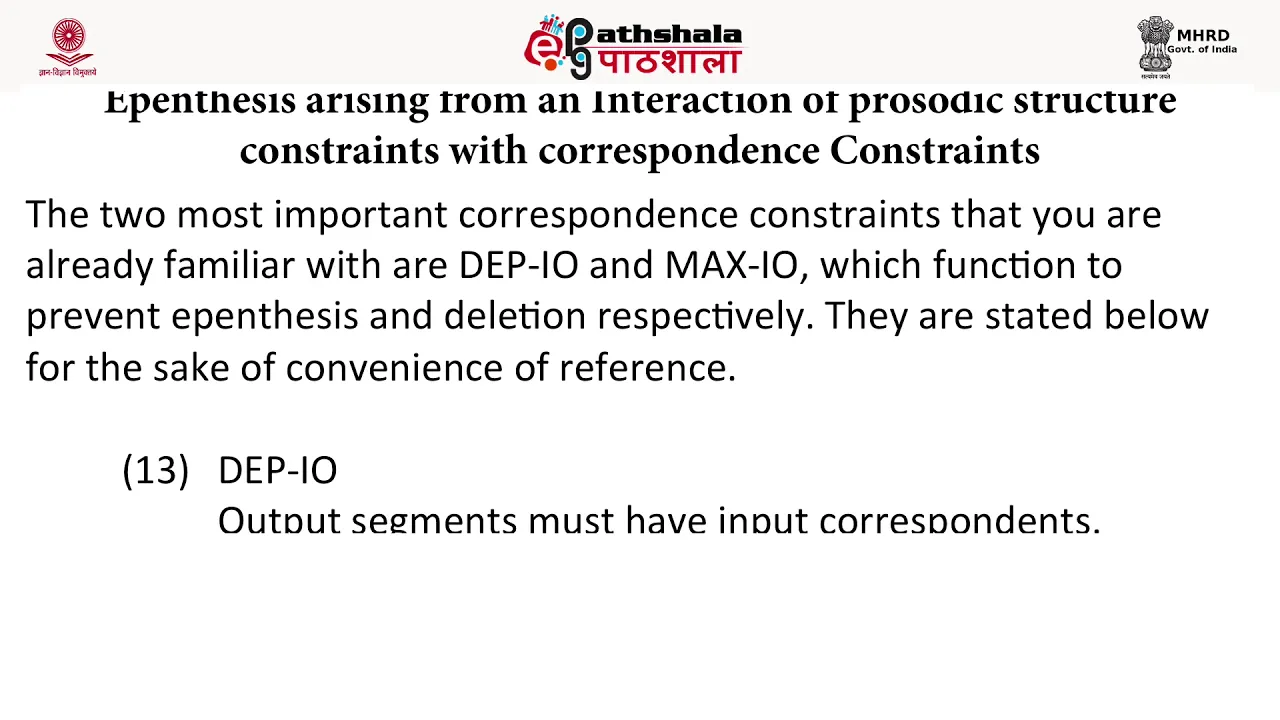
Constraint Interaction in Optimality Theory: Epenthesis & Deletion
@Vidyamitra
180 views•2018-08-20

6:13
Pidgin Languages in Sociolinguistics | Contact Vernaculars
@AzeLinguistics
9.4K views•2022-07-20

21:32
Accent Expert Explains U.S. Regional Dialects | Part 1
@WIRED
9.3M views•2021-01-21
Related Study Plans & Knowledge Roadmaps
Structured learning paths in Linguistics
linguistics
Optimality Theory: Tableaux & Constraints
01Phonological Basics: Sounds, Syllables & Rules
02Foundations of Optimality Theory: GEN, CON, and EVAL
03The Constraint Inventory: Markedness vs. Faithfulness
+ 2 more learning modules
15h5 modules
Explore Roadmap
linguistics
Morphosyntactic Alignment: S, A & P Systems
01Foundations of Syntax: Transitivity and Arguments
02The Linguistic Variables: Mapping S, A, and P
03Nominative-Accusative Alignment
+ 3 more learning modules
12h6 modules
Explore Roadmap
linguistics
Analyzing Sign Language: Phonology & Syntax
01Foundations of Sign Language Linguistics
02Phonology: The Five Parameters of a Sign
03Morphology: Word Formation and Classifiers
+ 2 more learning modules
14h5 modules
Explore Roadmap
linguistics
Pragmatics: Speech Acts, Grice & Politeness
01Introduction to Pragmatics: Meaning in Context
02Grice’s Cooperative Principle & Implicature
03Speech Act Theory
+ 2 more learning modules
14h5 modules
Explore Roadmap