



















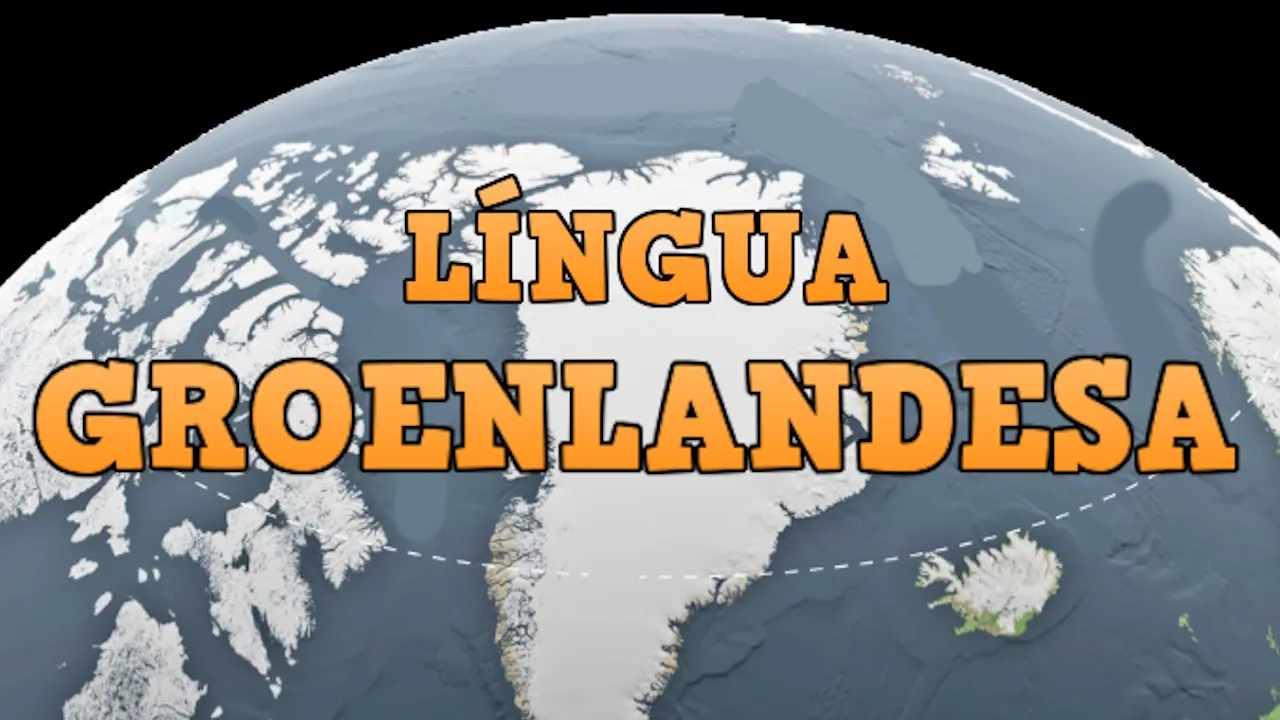


Greenlandic (Kalaallisut) is a polysynthetic language from the Eskimo-Aleut family, characterized by extremely long 'sentence words' formed by combining multiple morphemes (the smallest units of meaning) through affixation, including prefixes, suffixes, and noun incorporation, allowing a single word to express entire sentences; this contrasts with analytic languages like English, which typically use separate words for each grammatical component.
Greenlandic Grammar Part I: Morphology & Polysynthesis
Added:Basic linguistic morphology, including the definitions of morphemes, roots, stems, and affixes.
Morphological typology, specifically the differences between isolating, agglutinating, fusional, and polysynthetic languages.
The distinction between derivational morphology (creating new words) and inflectional morphology (modifying words for grammatical categories).
Fundamental syntactic concepts, such as how subjects, verbs, and objects function in standard sentence-level grammar.
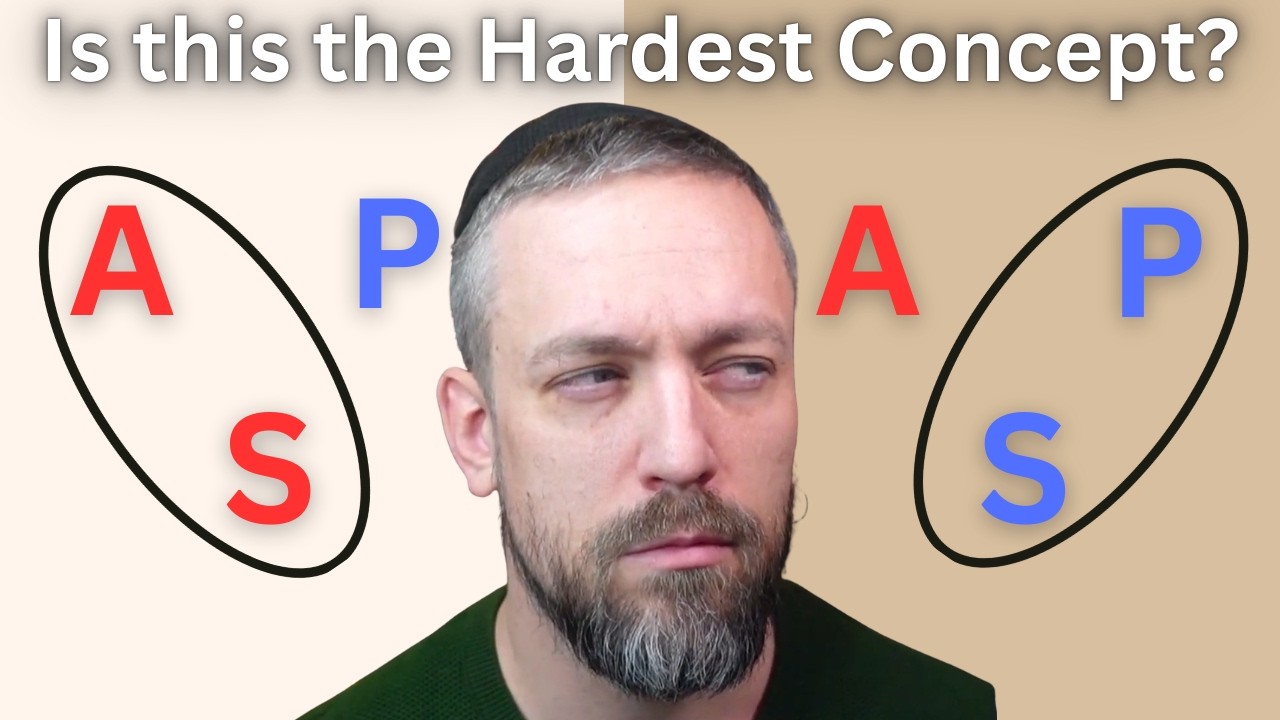
The ergative-absolutive alignment system, which governs case-marking and grammatical relations in Kalaallisut.
Morphophonological processes in Greenlandic, focusing on sound changes, consonant assimilation, and vowel deletion at morpheme boundaries.
Syntactic phenomena characteristic of polysynthetic structures, such as noun incorporation and antipassive constructions.
Comparative Eskimo-Aleut linguistics, analyzing how Kalaallisut morphology compares to Inuktitut or Yupik.
21.7K views1.5Klikes15:36Original Release: 2023-07-15
[Music] the anthem of Greek we put it hold up that's actually a word before you translate this thing let's start from the beginning this piece of Greenland is called Greenland you probably know it from its beautiful icebergs colorful houses and magnificent Northern Lights but Greenland is home to yet another hidden treasure that cannot be captured in just a single picture I'm actually talking about the greenlandic language also known as galaxisood greenlandic is part of the Eskimo elude language family which is one of the world's major language families the first documented split within the family happened between the Eskimo allude branches about 4 000 years ago a more recent split of about a thousand years ago happened between the Inuit and yupik branches the origins of the Eskimo Allied languages remain shrouded in mystery but it appears that the homeland of proto-eskimo eliud was located either in Alaska or Siberia from this area Inuit started to settle in the northern part of Canada and eventually arrived in Greenland around 800 years ago interestingly several cultures had settled in Greenland before but none of these cultures had managed to survive until the arrival of the Inuit we focus on the Inuit languages we can see they can be subdivided into four larger groups from west to east these are in Europe Western Canadian Inuit Eastern Canadian Inuit which includes inuktitude and lastly green Landing we can also see there is a language Continuum rather than a strict division between Inuit languages this means neighboring languages tend to be more or less mutually intelligible if we zoom in on greenlandic we can see three main dialects considered separate Languages by some galaxies also known as West greenlandic literally means like a greenlander and is spoken by about 50 000 people or east greenlandic literally means like an inhabitant of the backside and is spoken by about 3 000 people this name may seem a little strange but greenlanders orientate themselves by using their position relative to the Sea so if you are facing the sea in West Greenland then East Greenland will be located behind you or on your backside lastly inuktun or North greenlandic literally means like a human and only has about a thousand speakers this dialect is actually more similar to inuktitude than to grenandik in this video series we'll only look at the grammar of galaxies Yes you heard me grammar [Music] grammar may sound boring at first but Greenland grammar is fascinating besides I'll tell you many fun facts about the greenlandic language [Applause] take for example the greenlandic word for Northern Lights [Music] literally this word means ball games yes ball games according to an old Inuit Legend the Northern Lights can be seen whenever the spirits of dead people are playing soccer with skulls pretty cool huh I split up my video series into six parts covering different aspects of Greenland grammar these are morphology phonology syntax nouns verbs and lastly demonstrative in case all of this sounds like Abracadabra don't worry we'll look at each of these Concepts one by one in this video we'll start with part one morphology morphology refers to the process of word formation in any language [Music] please one glance at just a single green ending word may be enough to tell you that this language is vastly different from English greenlandic is notorious for its long sentence Words which as the name suggests can contain the meaning of an entire sentence in English the word means you really can't pretend not to be hearing all the time right to understand the translation of this word we need to break it down into smaller bits in other words we need to have a closer look at its more themes morphemes can be considered the smallest units of meaning they are essentially the building blocks used to construct words in any language let's have a look at an example in English ironically enough we can break up the word unbreakable into three separate morphemes or building blocks [Music] if we literally translate each morpheme we get not to break possible the verb to break is the so-called root of this word and may also occur as a word on its own the first morpheme is a so-called ethics or prefix because it is always attached to the beginning of a word it can be used to obtain the negative meaning of a word but it cannot occur on its own which is why we call it an ethics and not a root the last morpheme is also an Ethics but since it is attached to the end of a word it is called a suffix in English the potential to form different words by stacking affixes onto a single word stem is actually quite Limited let's see how this compares to other languages such as green Landing languages can be classified based on their morphology or to be more precise based on their potential to form words by combining more themes this can be visualized as a spectrum from analytic to synthetic to poly synthetic languages which also includes further subdivisions analytic languages tend to show very little inflection and often use words consisting of just a single morphe Modern English is an example of such a language isolating languages such as Vietnamese take this to an extreme that almost exclusively form words consisting of only one morpheme synthetic languages often combine morphemes to modify the meaning of a word fusional languages these morphemes tend to fuse together so that the individual morphemes may be hard to tell apart also a single morpheme in a fusional language May denote numerous grammatical features at once for example the suffix e in the Spanish word gomi meaning I8 denotes the indicative mood preterite tense and first person singular agreement corresponding to I in English in agglutinative languages morphemes tend to remain much more distinct as they are glued onto a word one by one for example the Southern Kitchen word mikotani or however that should be pronounced also means I ate but it contains two separate morphemes denoting the past tense and first-person singular agreement unlike in Spanish holy synthetic languages are like a better I mean a more extreme version of synthetic languages they tend to combine many morphemes into a complex word which typically involves both fusion and agglutination also many of these languages make extensive use of noun incorporation which involves the inclusion of a noun root into a verb to give it a more specific meaning is a schoolbook example of such a language so let's have a look in English One More theme often corresponds to one word such as in the sentence I drink coffee wait something's not right ah better in greenlandic it is possible to express that you drink tea as a habit by attaching multiple suffixes to just a single word root resulting in a much higher morphine pervert radio if we literally translate each morphe then we get t to drink habitually in negative mood first person singular T is the root of this word and obviously means d the suffix to means to consume or to drink and incorporates the noun root tea into a verb meaning to drink tea hence it is a verbalizer note that because this is a suffix it cannot stand alone there is no such word as po meaning to drink it can only be attached to a noun root the next ethics indicates that this is a repeated action which is also used for habits lastly there's a verb ending that consists of a mood marker and a person marker this verb has the indicative mood which is used for General statements and the first person singular corresponds to I in English now let's colorize all of the affixes from the long sentence word that I showed you earlier ah look at all those pretty colors going from left to right the first morphing we can identify is a verb root meaning to hear followed by not and the intransitive participle this may sound complicated but it basically turns the verbal phrase to hair not into a noun meaning someone who doesn't hear or a deaf person to put it differently it is a nominalizer this is immediately followed by a verbalizer meaning to pretend to be in this case to pretend to be someone who doesn't hear next comes a series of verbal suffixes starting from continuously and only which together can be translated as all the time next come three suffixes meaning can not and really this is followed by verbal ending denoting the indicative mood second person singular corresponding to you in the English and this finally gives us the full translation you really can't pretend not to be hearing all the time now let's talk about derivation which is the formation of new words from existing words derivation plays a central role in the morphology of green Landing so I'm going to show you how this process works take for example the word root okak which is a noun meaning tongue as you can see this route can also be used as a verb meaning to speak let's see how the meaning of this verb root changes as we attach more suffixes to it the first affix gives us a which means word however a more literal translation would be speaking to words can be used to speak so they are essentially a tool for speaking note that the first affix is a nominalizer by adding two more ethics's we get which means sentence literally this means a pair of fellow speaking tools or improper English a group of words a sentence is basically a group of words even this word can be further modified to obtain a new word with a derived meaning now we have which means syntax at this point the literal translation is getting quite cryptic speak to fellow pair off work with abstract participle the effects Lori means to work with in this case to work with sentences so it is a verbalizer that turns the noun sentence into a verb meaning to work with sentences lastly we have a normalizing suffix that simply turns the word into a noun again so that the meaning becomes working with sentences and this is exactly what syntax is about because syntax refers to the analysis or structure of sentences this example clearly shows that greenlandic has a high potential for word derivation by attaching different suffixes to a common word root in contrast English often used completely different word roots to denote Concepts that are related in meaning because of this you don't have to memorize as many word roots when learning greenlandic compared to English but instead you often have to memorize long words that are entire descriptions on their own all right it's time for a fun fact [Applause] did you know greenlandic and other Eskimo languages have over a hundred words for different types of snow and eyes or so they say interestingly whether the statement is the truth or just a myth is still under debate at least on the internet to understand what all this fuss is about we need to take a closer look at morphological derivation in greenlandic but I think I'll cover this in a separate video sorry guys [Music] let's wrap up what we've learned today greenlandic is part of the Inuit branch that belongs to the Eskimo Eliot language family it is a poly synthetic language that is characterized by a high morphine pervert ratio and extensive noun incorporation which may result in long sentence words lastly green andek has a high potential for word derivation by attaching different suffixes to a relatively small number of word roots that being said let's have a quick look at one of the slides I showed you earlier if you paid attention you might have noticed that some letters went missing in the process of word formation can you see which ones let me help you for a second in this example the last letter of the word disappeared each time upon the addition of one or two affixes apparently the addition of suffixes may involve sound changes that affect the final form of the word if you want to be able to make green Landing words by yourself you need to know the rules that describe these sound changes in part 2 of this video series we are going to look at the sound system or the phonology of the greenlandic language thank you for watching my first video on the greenlandic language if greenlandic is your native language or if you are a learner of the language what is the longest sentence word you've ever encountered please let me know in the comments also don't forget to leave a like And subscribe to my channel for more videos takus
Up Next
10:39
Interlinear Glossing: Methods, Conventions, and Best Practices
@ELSEA25
1K views•2025-01-24
36:52
Constraint Interaction in Optimality Theory: Epenthesis & Deletion
@Vidyamitra
180 views•2018-08-20

8:59
Forensic Linguistics: How Language Solves Crimes | PBS
@pbsstoried
1M views•2024-01-25

21:32
Accent Expert Explains U.S. Regional Dialects | Part 1
@WIRED
9.3M views•2021-01-21
Related Study Plans & Knowledge Roadmaps
Structured learning paths in Linguistics
linguistics
Optimality Theory: Tableaux & Constraints
01Phonological Basics: Sounds, Syllables & Rules
02Foundations of Optimality Theory: GEN, CON, and EVAL
03The Constraint Inventory: Markedness vs. Faithfulness
+ 2 more learning modules
15h5 modules
Explore Roadmap
linguistics
Morphosyntactic Alignment: S, A & P Systems
01Foundations of Syntax: Transitivity and Arguments
02The Linguistic Variables: Mapping S, A, and P
03Nominative-Accusative Alignment
+ 3 more learning modules
12h6 modules
Explore Roadmap
linguistics
Analyzing Sign Language: Phonology & Syntax
01Foundations of Sign Language Linguistics
02Phonology: The Five Parameters of a Sign
03Morphology: Word Formation and Classifiers
+ 2 more learning modules
14h5 modules
Explore Roadmap
linguistics
Pragmatics: Speech Acts, Grice & Politeness
01Introduction to Pragmatics: Meaning in Context
02Grice’s Cooperative Principle & Implicature
03Speech Act Theory
+ 2 more learning modules
14h5 modules
Explore Roadmap