








![[Шесть лекций о лингвистике] Грамматическая система и грамматикализация](https://i.ytimg.com/vi_webp/gxFF42YyQgE/maxresdefault.webp)



![[MONDAY LIVE] 1/19(월) 선재국어 월요 훈련 라이브🏃️ I 매주 극대화되는 실전 감각](https://i.ytimg.com/vi/ZA8II-yrjoY/maxresdefault.jpg)

![Morphosyntactic Alignment [Syntax 3]](https://i.ytimg.com/vi/QSAxXcTsNv4/maxresdefault.jpg)



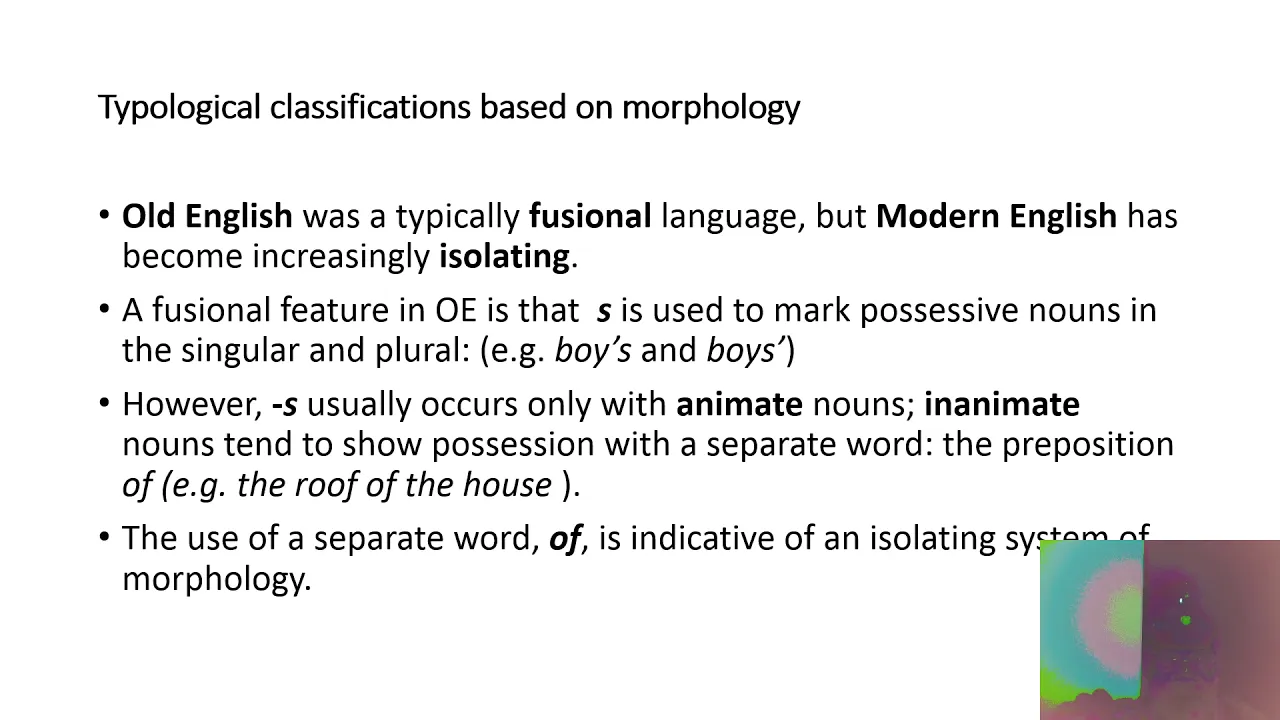
Languages can be systematically classified using three main parameters: (1) Morphological structure along an analytic-synthetic continuum, where analytic languages (like Chinese) have minimal internal word structure while synthetic languages (like Turkish and German) allow word segmentation into morphs, further divided into agglutinating languages with unambiguous morphs and fusional languages with morphs having multiple grammatical functions; (2) Syntactic word order, which is the most important typological parameter, with the vast majority of languages using SVO, SOV, or VSO orders where the subject precedes the object; and (3) Phonological structure, including tonal phenomena (pitch variations affecting meaning) and rhythmic organization (stress-timed vs. syllable-timed languages).
Language Classification: Morphological, Syntactic & Phonological
Added:At present there are about 7,200 living languages ranging from regional types to the dominant languages of the Indo-Uropean or Sotibbatan families. This e lecture discusses and exemplifies the main linguistic parameters with which languages can be classified. We will proceed as follows.
First we will provide an overview of the parameters with which languages can be classified and then we will discuss each of these parameters in detail. In principle, one could choose any linguistically relevant parameter to classify languages. For example, the use of color terms, the number of vowels of a language, the numerical system a language uses, or the complexity of syllables, to name a few. However, in looking at a vast number of languages, it has turned out that there are some linguistic parameters along which languages can best be classified. For example, there is the morphological or structural parameter.
Another one concerns the classification of languages in terms of its basic word order pattern. Whereas the first parameter, the morphological or structural one classifies languages on the basis of their word structure in particular in terms of its inflectional properties.
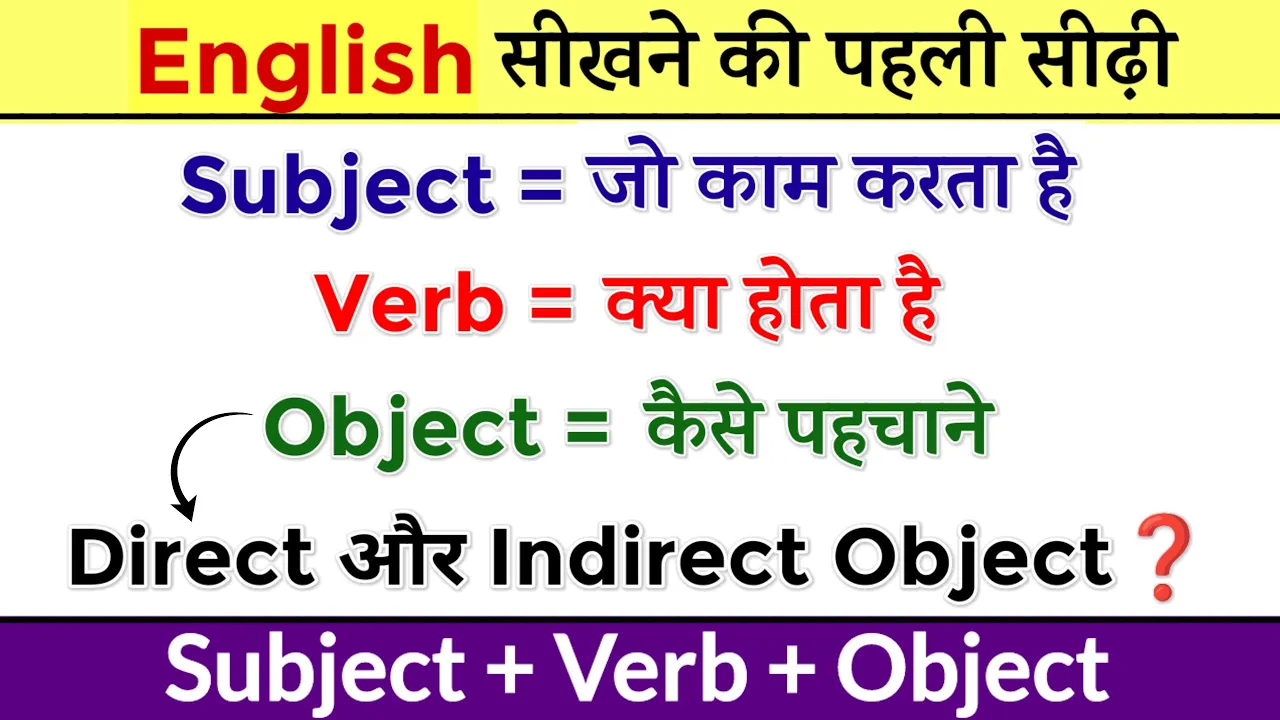
The second uses the sequence of the basic functional elements of clause structure that is subject, verb and object.
A third parameter can be used to classify languages on the basis of their phonological structure. Let us start with structural aspects. Languages can be morphologically classified on the basis of the inflectional structure of their words. Thus in terms of a continuum. Now this continuum is symbolized by this vertical line here.
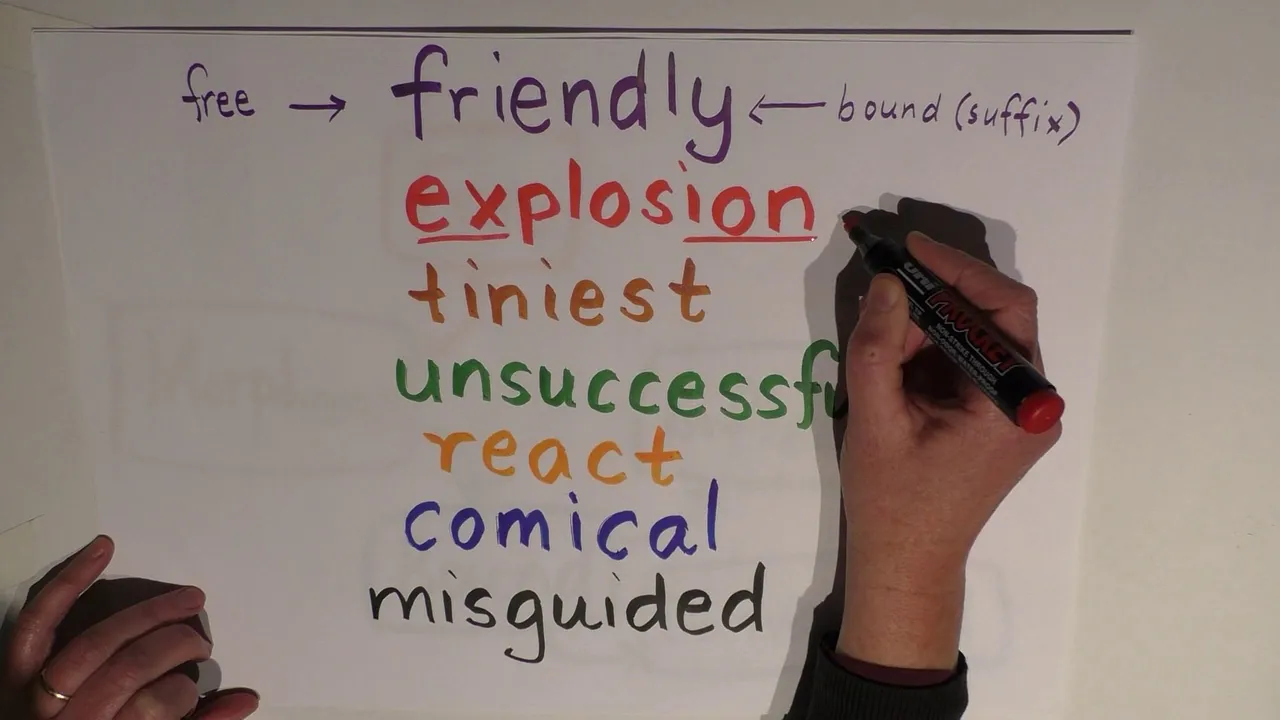
At one extreme of this continuum, we find so-called analytic or isolating languages whose words have little or no internal structure. At the other extreme, we have synthetic languages which do allow the analysis of their words into smaller parts or morphs. Let us look at these two extremes in more detail.
Analytic languages also referred to as isolating generally do not allow the segmentation of their words. That is the words of an analytic language cannot or hardly be split into smaller units. Thus, a typical analytic language is a language where there's a onetoone correspondence between words and morphes.
Well-known examples of analytic languages are Chinese and Vietnamese. Synthetic languages by contrast do allow a segmentation of their words into morphs. Here are two examples. The first is an example from Turkish. Adam laren which means men in the genative case consists of three morphs. A second example has been taken from German mention humans consists of two moss. So both languages allow the segmentation of their words into moths.
In other words, they are synthetic. The degree of synthesis is different. One could argue that German is less synthetic than Turkish because there are fewer inflectional possibilities in German. Let us now look at the function of the morphs in German and Turkish in more detail. Now in Turkish we have a clear-cut correspondence between morphs and their grammatical function.
Adam which means man is the stem. L stands for the plural and un stands for the genative. In German the same holds for mench which is the stem. But what about the aics? Well in Turkish we can say the two bound morphs plural and genative la and in are functionally unambiguous.
But in German, by contrast, well, we have a problem. The aix can denote the plural in its nominative case, the plural in its genative case, in the dative and in the accusative case. It can even denote the singular genative as in dismention giz, the human's face. In other words, whereas in Turkish the bound morphs are functionally unambiguous, in German, the bound morphs exhibit several grammatical functions.
Thus, depending on the function of these morphs, we can define two types of synthetic languages.
On the one hand, we can define so-called aglutinating languages and this is the case for Turkish whose morphs are by and large functionally unambiguous. In such a language which is sometimes also called a glutinativ, a word may consist of more than one morph, but the boundaries between the morphs are always clearcut.
Moreover, a given morph has mostly a reasonably invariant shape so that its identification is also straightforward. Another example of an eglutinating language is Japanese. So let's you move Japanese over here into a position close to Turkish. On the other hand, we have synthetic fusional languages like German.
where the dependent morphs often have several grammatical functions associated with them. In fusional or inflecting or inflective languages, there are no clear-cut boundaries between the morphs.
Also, several grammatical properties are often fused together to give a single unsegmentable morph.
Most Indo-Uropean languages are fusional. For example, Latin, well, which is fairly synthetic and fusional. Russian, which is also fairly synthetic and fusional, but but perhaps less synthetic than Latin, but more synthetic than German. So, these Indo-Uropean languages are synthetic and fusional. And what about present day English? Well, English is traditionally or has traditionally been classified as a synthetic fusional language, but it also has a large number of indivisible that is analytic words that is conjunctions, prepositions, pronouns etc. So, English perhaps should be placed somewhere over here. It involves a high degree of analysis but also has synthetic elements which are of course fusional rather than aglutinating. Note that it is often difficult to assign a language to the aglutinating or fusional type. Many languages have properties of both. Let us now look at the second parameter. The syntactic parameter of word order.
The order of the functional constituents of clause structure that is subject, verb and object has been made into the second or maybe even the first the most important typological parameter along which languages can be classified. This provides us with six theoretically possible word order types.
For example, languages could exhibit the SVO structure. Then languages could be organized in terms of SOV. Another possibility is to have the verb in the first position then the subject and then the object or to have the verb in the first position then the object and then the subject.
And it's also imaginable that languages start their sentences with objects then the subject and then the verb or they have a structure where the object is followed by the verb and then the subject. In fact, all six theoretically possible types are used in the languages of the world.
However, the distribution of these types across the languages of the world is relatively remarkable because we find that these orders here, the first three, cover the vast majority of the languages of the world and that the other types, these three are very much marginal. Well, what do the first three have in common? Well, they have in common that the subject always precedes the object. Let us illustrate this with some languages. For example, English is a typical SVO language. Turkish is an example of an S or V language and Arabic is an example of a VO language. So these are the three main types and in fact the vast majority of the languages of the world use any of these three types of word order. The main question arises now how do we establish the basic word order of a language? Well let us illustrate this with present day English.
In present day English, declarative sentences and these are the sentence types we are going to explore. The following word order types can be found or not. We all know that English has many examples where we have the subject indicated in red, then the verb blue, and the object represented in green. The man saw the woman. No problems with that word order.
SOV by contrast is impossible in present day English. So the man the woman saw is absolutely impossible. There's no sentence in present day English which can exhibit the sob structure. Now VSO is an interesting type of word order which is possible in present day English. However, as you can see in the example never has the man seen the woman, there must be an adverbial preceding. The adverbial of course is never. And then we have a VSO word order. However, the adverbial has to be of a negative kind. Uh, by no means has the man seen the woman is possible, but always has the man seen the woman does not work. So, this is possible but exceptional. Verb, object, subject is certainly impossible. Never has the woman seen the man. Well, superficially it looks as if the first sentence never has the woman seen the man is possible.
However, please note that the woman is the object and the man the subject. We can illustrate the impossibility of the sentence by replacing them with pronouns. And then you have never has her seen he and that's of course totally out OSV. The next word order, the woman the man saw is impossible. However, quite interestingly, it works in cases of object fronting under certain um thematic pressure. The woman he saw or I always remember the famous Metallica line, trust I seek from nothing else matters. The old rock musician comes through. So, this works however in very rare cases. In fact, the condition is that the subject he must be nominative marked. So for example you have I, he, she, we, and they. And finally, ovs. The woman saw the man. Again, this looks superficially as if it was possible the woman saw the man. However, please note the woman indicated in green is the object. The man the subject. If we draw a parallel with pronouns, then you can easily see that her saw he is impossible. So what can we conclude from this? Well, we con can conclude that in present day English declarative sentences, the overwhelming majority of sentences exhibits the SVO word order.
Thus, present day English is an SVO language. And this can easily be supported by the analysis of English text corpora. Over and above the basic word order, there are interesting correlations that is ordering patterns that concern other head modifier relationships and there may be problems.
However, these will be discussed in a separate e lecture on word order typology. Let's finally look at the funological parameters of language classification.
Well, there are several possibilities of classifying languages phologically. For example, one could use segmental aspects such as the presence or absence of certain segments or segmental effects. Examples could be the pre-ups, presence or absence of particular vows or consonants or the use of nasalization. However, such segmental uh parameters are less significant than supra segmental aspects such as the classification of tonal phenomena or the rhythmic organization of a language. So let's look at them in more detail.
Now pitch variations that affect the meaning of a word are called tones. A language that uses this technique is referred to as a tone language. Well, let's illustrate this on the map. The simplest kind of tone language uses two possible tones that is high tones and low tones.
Such languages are called registered tone languages and they can be found primarily in Africa for example within the Bantau languages. More complex tone systems use contour tones. Tones that involve gliding movements for example rising tones falling tones fall rise or rise fall. The most well-known contour tone languages can be found in Asia. for example in the Senotibetan languages or the in the Austriatic languages. Let us listen to some Chinese tones to illustrate this effect. Now here are the numbers 1 to 10 in Chinese taken from a dialect spoken in Wuhan. Let's listen to the tones clearly. A level tone. R rising sun level rising falling level level level falling and level again. So this should suffice to illustrate the tones in Chinese.
The second phological parameter which is often applied is a rhythmic parameter. Now according to the rhythmic organization of speech, languages can be subdivided into two types. Stress timed and syllable timed.
A language is defined as stress time when it shows at a given rate of speech a rhythmic patterning where tone units are roughly perceived as equal in length. English is such a case. Now here you have a sentence represented phologically with syllable boundaries. Many intelligent students go to Marberg. And the line I've just inserted indicates that we have two tone units with one nucleus each.
Stew and ma. Many intelligent students go to Marberg. Both tone units with one nucleus are roughly perceived as equal in length. Thus, English is a typical stress timed language.
This can be contrasted with Italian. Now the direct translation of this sentence into Italian is multi-student intelligent vano amarborg. And if you listen carefully you will find that here we have a tendency for every syllable to be heard as lasting approximately the same amount of time. So Italian is syllable timed. Let us summarize. We have defined several parameters for the classification of languages.
Morphologically languages can be classified in terms of a continuum between analytic and synthetic.
Syntactically the basic word order that is the order of the main functional elements in declarative sentences constitutes the central parameter. In phology segmental as well as supra segmental features and here in particular tonal and rhythmical aspects constitute the basis for a typological classification of the languages of the world.
In addition to these central parameters, numerous specific parameters ranging from phology to syntax and even beyond come in. But that's a different story.
Up Next

Isolating, Synthetic, Agglutinative, & Fusional Morphology Explained
@isabelthelinguist
39.9K views•2018-02-26
Constraint Interaction in Optimality Theory: Epenthesis & Deletion
@Vidyamitra
180 views•2018-08-20
Understanding Grammatical Case: A Cross-Linguistic Study
@oer-vlc
13K views•2012-10-30

Accent Expert Explains U.S. Regional Dialects | Part 1
@WIRED
9.3M views•2021-01-21
Related Study Plans & Knowledge Roadmaps
Structured learning paths in Linguistics