













![Morphology: Intro to Linguistics [video 4]](https://i.ytimg.com/vi_webp/oqO3zKxSeGE/maxresdefault.webp)





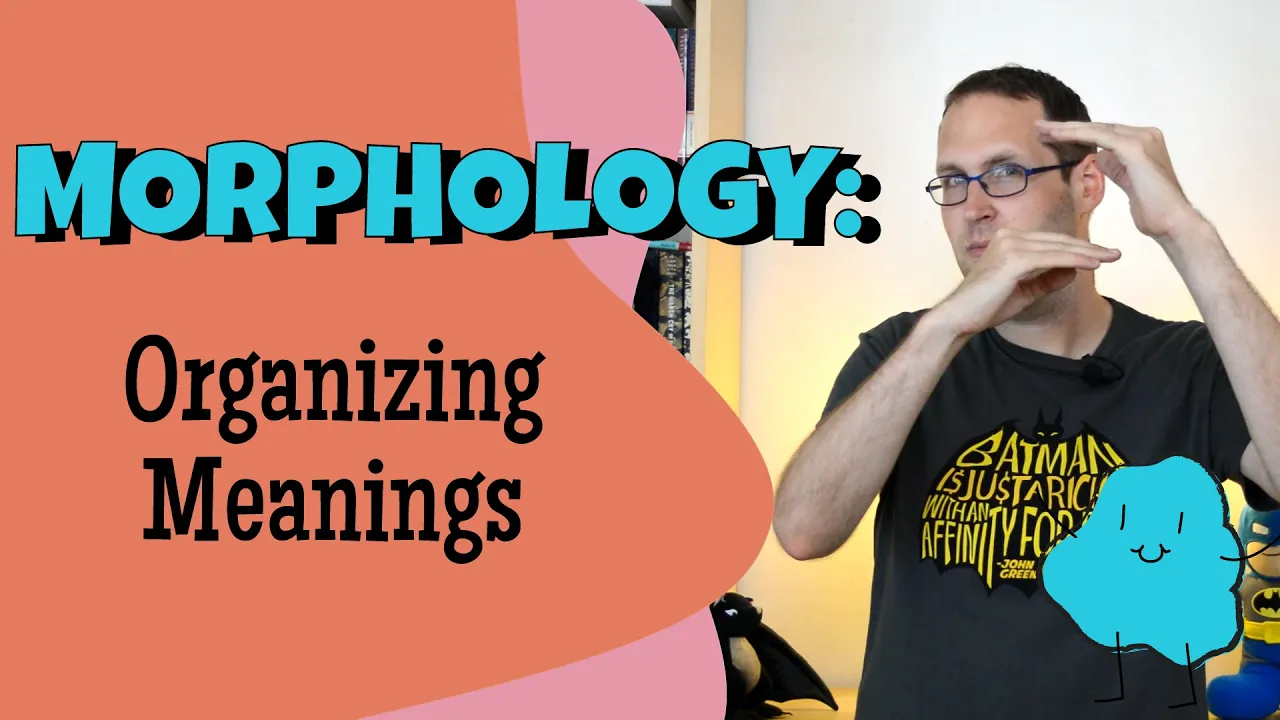
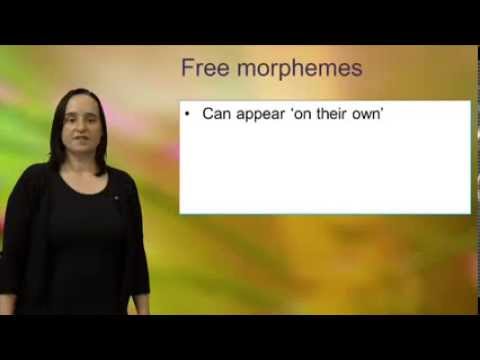
Morphemes are the smallest units of meaning in language, and they are divided into free morphemes (which can stand alone, like 'dog') and bound morphemes (which must attach to other morphemes, like the plural '-s' in 'dogs'). Bound morphemes that attach to free morphemes are called affixes, and there are four types: prefixes (attached to the front, e.g., 'un-' in 'unhappy'), suffixes (attached to the end, e.g., '-ness' in 'happiness'), infixes (inserted within words, rare in English), and circumfixes (attached at both ends, not common in English). Bound morphemes serve different functions including changing word meaning (derivational), changing word class (like turning adjectives to nouns), or providing functional information like tense markers.
Free vs Bound Morphemes | Morphology Episode 2
Added:hi there this is enna last video we began exploring morphology learning about morphemes and their structural importance to our English language now today we're going to divide morphemes into two distinct subsets free morphemes and bound morphemes so the titles are quite useful in helping us to understand which type of morpheme each one is and we can summarize it like this a free morpheme can stand alone a bound morpheme cannot the ban morpheme must be bound to another morpheme might be bound to another bound morpheme or it could be bound to a free morpheme so for example if we were to take the word dogs there are two morphemes in dogs as we discovered in the last video we have the word dog and the dog is a free morpheme because it can stand alone it has its own unit of meaning and then we have the S which gives us some functional information about the word dog telling us that there's more than one it's plural information and it's a bound morpheme because it's on its own doesn't mean anything it has to be attached to the free morpheme there so therefore it's a bound morpheme it doesn't carry its own meaning so let's check out some other free morpheme bound morpheme combinations to make sure that we understand the difference between the truth our first word that we have here is unhappiness so let's first of all step one break up unhappiness into the different morphemes we have unn we have happy now you'll notice that there's an I in happy instead of a y and of course sometimes when we add an FX or a bad morpheme on to a free morpheme we do have to alter the spelling in order to accommodate that but still happy is still the free morpheme in that and then we have nest so there are three morphemes in this and is changing the meaning of the word as a derivational morpheme here it's changing the meaning of the word and nurse is changing the form of the word so it's converting the word from an adjective happy to the noun happiness okay so there we have two bad morphemes so this one is a bound morpheme this one is a bound morpheme and this one is a free morpheme okay three more themes found free bound let's have a look at the next word the next word is amoral so first steps we have to divide amoral into the two morphemes that it is we have AA and moral and moral here is our free morpheme it's the one that's providing the meaning can stand all alone ah on the other hand is actually changing the meaning it's giving a negative context from being moral to being a moral okay so that's a derivational morpheme it's a bound morpheme so in this instance we have two morphemes one bound and one free and here's our final word it is curiosity so let's just get my green texture for this and I once again think that we have two morphemes in this we have curious which is an adjective and then it E which is turning the adjective into a noun so I once again I've used a derivational morpheme that's interesting so here we go this is the free morpheme curious and then it E is our bound morpheme so what this shows us is that when we're looking at free morphemes and bound morphemes when they're put together they can be put together with a bow a morpheme is stuck onto the front where the bow morpheme is stuck onto the end or it could be stuck one it can be set on to both but when they are second to both they have different meanings so in those instances where we have a bad more thing that is attached to a friend morpheme we call this these bound morphemes affixes and we call the process of adding an ethics to a free morpheme like this it's called a fixation in some cases we call it agglutination but we're going to call it a fixation for the purpose of this video so we're going to be talking about ethics is now and there are four different types of FX's all these X's are bound morphemes they all have to attach to a free morpheme for them to exist as fixes and the different types of a fixes that we have are these four here the prefix the suffix the in fix and the circum fix and I'm hoping that from your knowledge of prefixes and things they could almost figure out which one is which but I'm going to go through them with you anyway just in case so here we have it here but it all written out for you the prefix is an attachment of the ethics to the front of a free morpheme so a fixes such as Co in co-create and in unambiguous and dis in destroying are all examples of a prefix suffix is an attachment to the end of a free morpheme so ethics is such as Asian in starvation eek in heroic and the ing in playing are examples of a suffix now both of these prefixes and suffixes occur regularly in our standard English language we do however have these additional infections of circum fixes and they don't exist in our standard English language however the infix does exist in our non-standard Australian varieties we use in fixes such as bloody in fan bloody tastic but there are languages other than English that have in fixes that is part of their standard grammars and the discussion of these are really out of the scope of my videos because I'm really only talking about the English language but you will come across them if you study other languages now the final ethics type is the circum fix which relies on part of the affix place at the beginning of the free morpheme and the other part at the end essentially surrounding the word in English we can put ethics is at the front and end of a free morpheme at the same time but they are not part of the same ethics they are two different ethics is playing two different roles and so this is not considered a circumflex in fact I don't think that you will ever see a certain fix in the English language I know certainly that German has certain fixes but again this is out of the scope of the videos as because it's not English grammar and there might be other languages as well that has a second fix but we won't be seeing it again in our studies here okay so before we sign off today we're going to have a little mini quits firstly in each of the following words we need to identify which is the free and which is the bound morpheme and then once we've done it we want to decide what type of ethics it is is it a prefix or a suffix I have not included in fixes because they're not part of our standard English varieties just our non-standard varieties I'll only wait a moment on the video is before I go through them so it might be worth hitting a pause now and then I'll start ok so our first word here is friendly and in this instance I believe that we have two morphemes we have friend and we have Li and friend I think is our free morpheme and Li is our bound morpheme and I think that the bound morpheme is on the end so therefore it's a suffix and of course the purpose of this suffix is to turn the noun friend into the adjective friendly so it's actually changing its the mid class of the word okay so now let's move on to explosion and I've included an explosion because I just want you to see that sometimes it's not got a quite work all right I'm gonna show you why that's the case okay so it will take the word explosion and we I think we can pretty quickly see that X is a common prefix that usually means out and we have a suffix the IO in there as the suffix which is often a suffix that changes the word class to a noun so we've got these clearly identify FX's here so this is an ethics and this is an ethics however that means that we're left with this word yeah applause now the way we understand able to be freestanding and plos is not a free-standing morphine it actually comes from an old Latin word plod dairy which means too clever and that's where explosion comes from but it's no longer in use it's no longer in English and so here we have a situation where we've got to ethics --is that are clearly joined on to a root word but they're but the root has no meaning to us anymore and so it's not freestanding and so a little bit down the track in a couple of videos I'm going to explain to you another way for us to classify morphemes rather than free and bound they can help us deal with situations like this one I'm alright so we're going to definitely say that IO n is a suffix and we're going to say that X is a prefix so they're both types of ethics is but I think that's really the only conclusion we can come to at this point in time for explosion and we'll look at that again in a bit down the track alright so now let's get back on to tiniest tiniest does very easily break up into free morpheme and bound morpheme and we'll see how that's done first of all we can find the morphemes we've got tiny and esthe once again we've changed the Y on tiny into an eye to accommodate the spelling of adding this disband morpheme here we can say that this is a bear morpheme and then of course it's a suffix that this suffix is actually creating the superlative for a adjective and that means that this is the free morpheme here okay tiny good okay let's look at unsuccessful get my green pin for this I'm successful once again we're going to just break it up into its morphemes first so um is a morpheme success I think can't be broken down any further and for so here we have success that's our free morpheme here it's standing alone we have at the front so that's a prefix and it's a derivational prefix which means that it's actually changing the meaning of the word from to the opposite okay and ful also derivational suffix it's a suffix it's a bound morpheme I should say that's bound here down prefix and this is a bound suffix and that's telling us that it's changing the word class from the noun success to the adjective successful so it's also a derivation we'll learn about that soon so here we have a prefix bound morpheme a suffix bound morpheme and a free morpheme in the middle no problem okay now we'll get to react and once again we can very clearly divide this into two morphemes we have our e which is a very common prefix and it's bound meaning again usually and we have acted on the other side which is our frame or thing okay let's keep going we've got comical comical is once again clearly defined into two more faves we have comic on one side which of course is a noun and then the a and that's the free morpheme and then we have the AL on the end which is a suffix and and morphine which is a suffix and it's playing the role to change comic into an adjective comma comma cool suffix good okay and the last one that we're going to look at today yeah is the word misguided and I think I can see three morphemes in this one we have miss we have guide and we have Edie I'm going to see it's kind of down the middle really isn't it because guide belongs to guide but of course the suffix is Edie on the end of course in this instance probably just had to put the D there but so we have guide is our free morpheme here we have our bound morpheme here which is a prefix and you'll notice that the prefix are all down the left-hand side of the page and then we have another bound morpheme at the end and this time it's a suffix and it it's giving a functional role of telling us that it's in the past tense so that's what that morpheme is doing so having put in these a fixes on the front or the end of our English words use the process of ethics ation over that set so well done now you may have noticed that the bound morphemes didn't always play the same role sometimes they serve to change the meaning of the words such as the opposite meaning like from successful to unsuccessful and sometimes they serve to change the word class such as from comic the noun to comical the adjective and sometimes they gave functional information such as the Edie unplayed to tell that the playing happened in the past now I have actually already posted a video about this quite a while ago now and so if you haven't seen that video or you want to refresh under this new context understanding about a little bit more about suffixes and ethics is generally Ben now it's probably a really good time to go back and watch that video I've placed a link below to help you find it and after that once you've got that under your hat you can then return to this and I'll be looking at lexical and functional morphemes which is how we can break down our free morphemes so if I show you in a table what I'm talking about here here's a table of what we know so far so we know that there are morphemes and we know that this morphemes can be broken into free morphemes and bound morphemes and we know that the bound morphine's themselves can be broken up into inflectional and derivational morphemes and that's what's shown in the video that I made earlier that I suggest you go and look at what we're going to be looking at next is what happens here I've in this corner here how can free morphemes be further subdivided as we look at lexical and functional morphemes as a way of dividing up free morphemes so until then thanks for watching the language code
Up Next
Sheng: Kenya's Urban Vernacular | SOAS Linguistics Talk
@soasuni
623 views•2016-07-25
Constraint Interaction in Optimality Theory: Epenthesis & Deletion
@Vidyamitra
180 views•2018-08-20

Forensic Linguistics: How Language Solves Crimes | PBS
@pbsstoried
1M views•2024-01-25

Accent Expert Explains U.S. Regional Dialects | Part 1
@WIRED
9.3M views•2021-01-21
Related Study Plans & Knowledge Roadmaps
Structured learning paths in Linguistics