














![[Шесть лекций о лингвистике] Грамматическая система и грамматикализация](https://i.ytimg.com/vi_webp/gxFF42YyQgE/maxresdefault.webp)



Languages can be classified along a spectrum from isolating (where each meaning is expressed as a separate word, with each word being one morpheme) to synthetic (where multiple meanings are combined into single words); synthetic languages further divide into agglutinative (where each meaning remains in its own identifiable morpheme within the word) and fusional (where multiple meanings are fused into a single morpheme, making relationships between forms arbitrary and requiring memorization). Most real languages are not purely isolating or synthetic but combine elements of both approaches.
Isolating, Synthetic, Agglutinative, & Fusional Morphology Explained
Added:Basic understanding of morphology as the subfield of linguistics that studies word structure and formation.
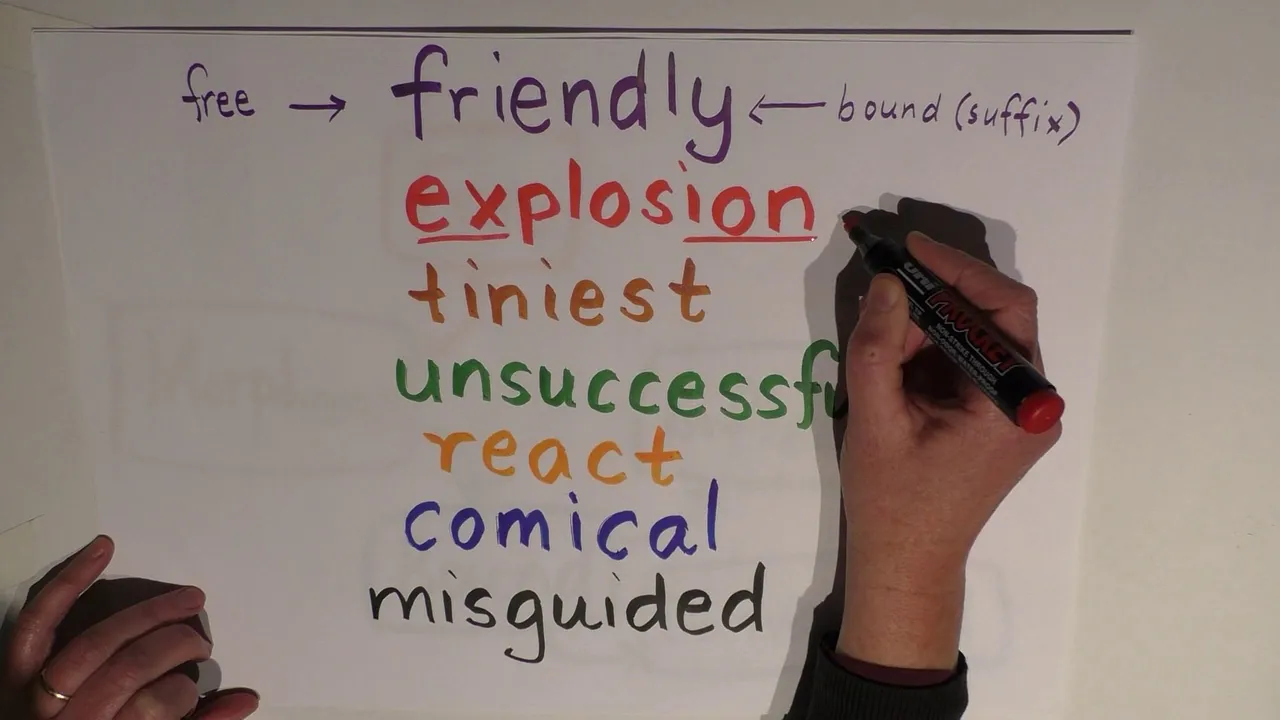
The distinction between free morphemes (which can stand alone as words) and bound morphemes (such as prefixes, suffixes, and infixes).
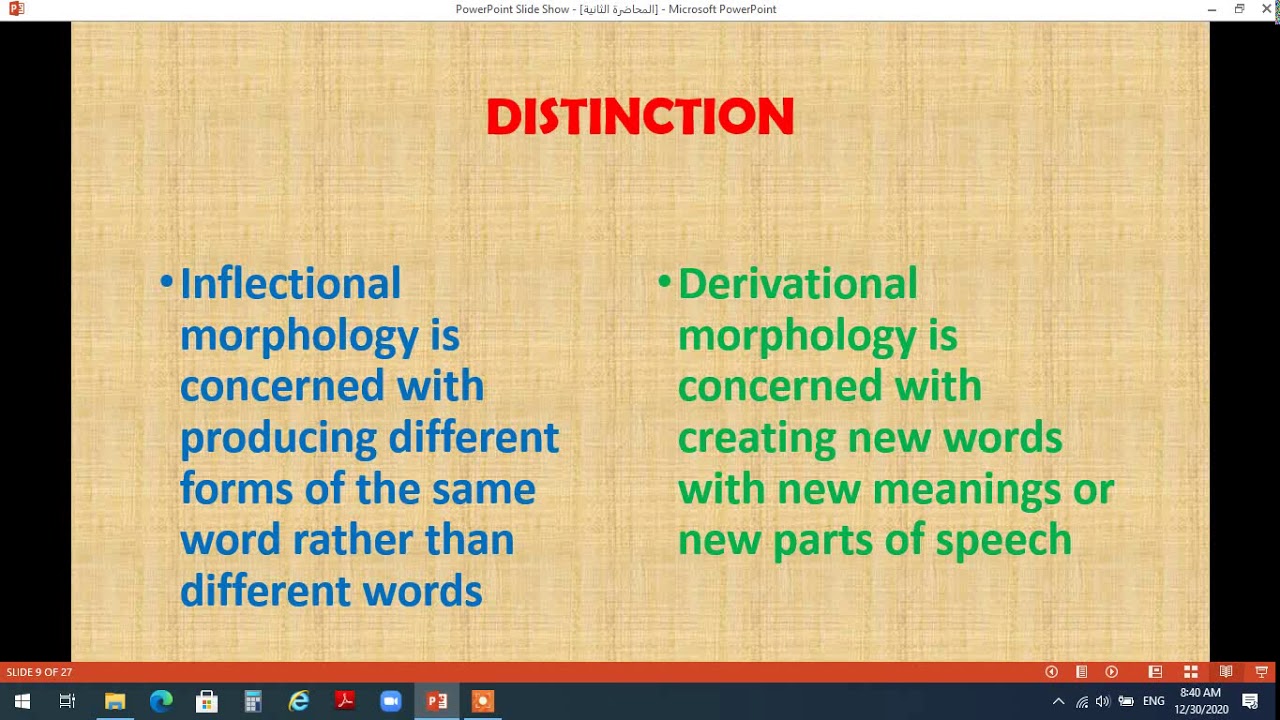
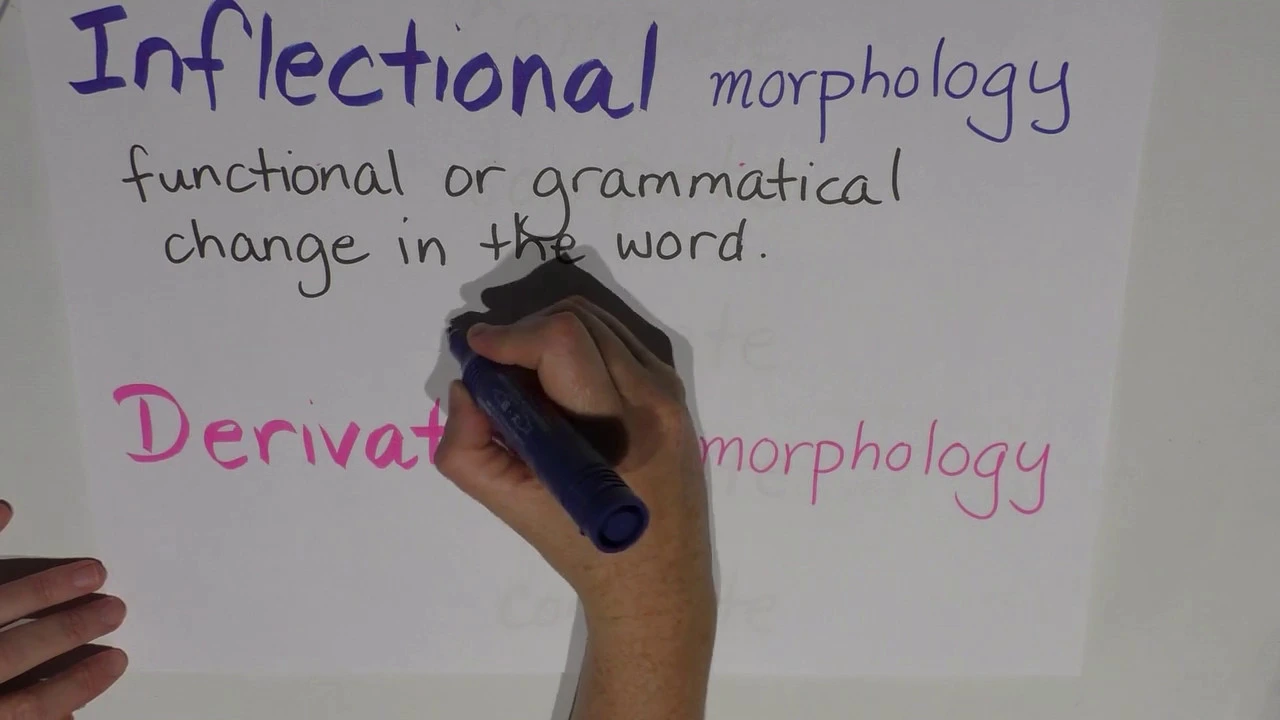
The difference between inflectional morphology (modifying a word to express grammatical categories) and derivational morphology (creating new words with new meanings).
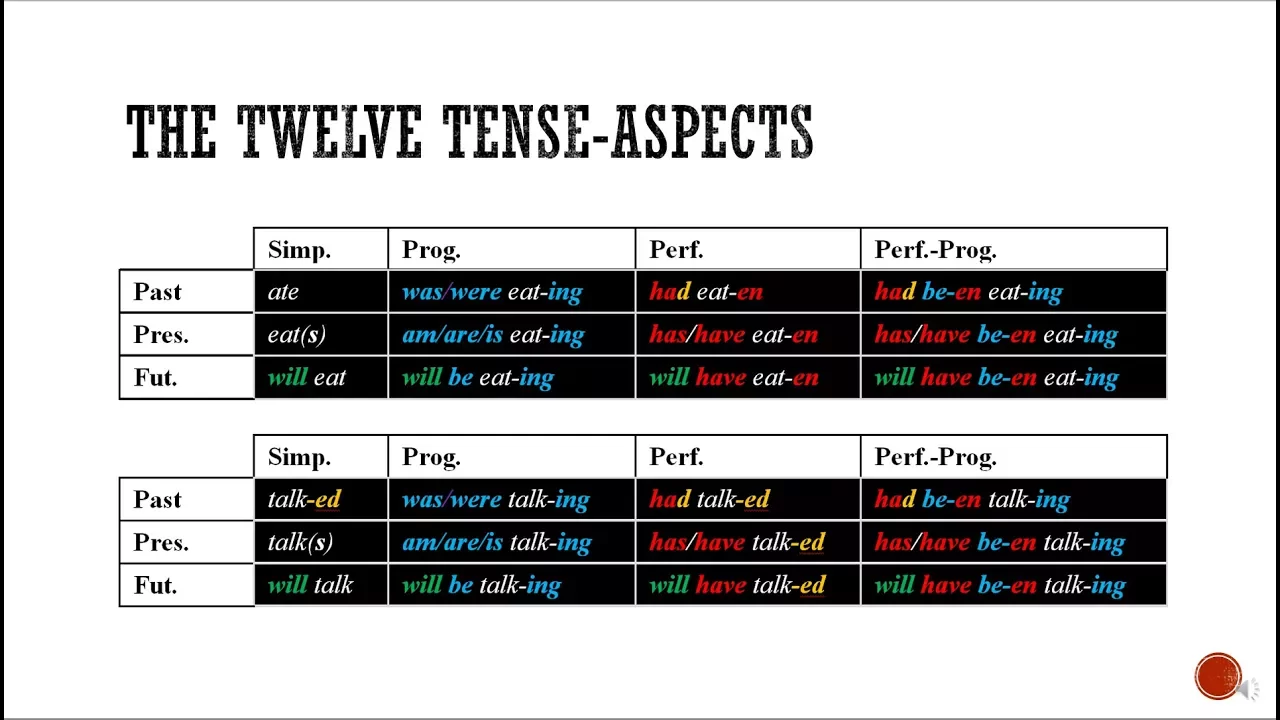
Familiarity with basic grammatical concepts such as tense, aspect, gender, number, and case.
The concept of morphological typological continuums, including the Index of Synthesis and Index of Fusion used to measure language structures quantitatively.
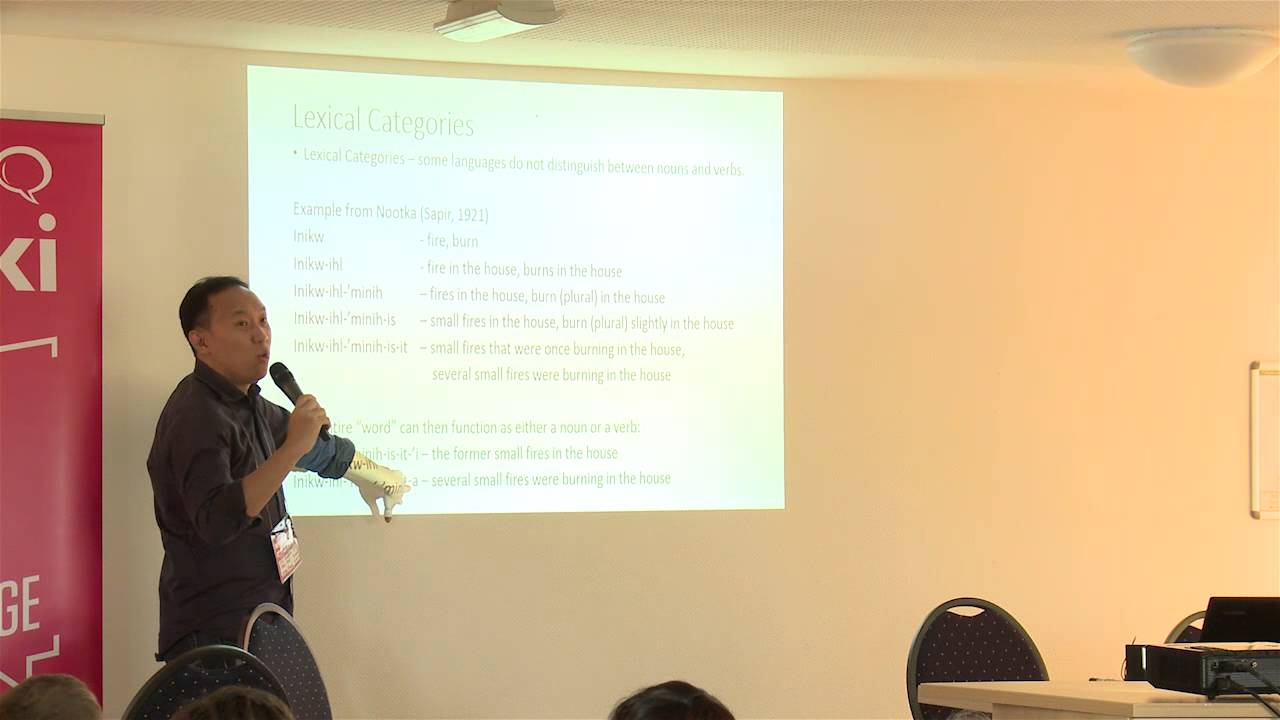
Advanced study of polysynthetic languages, exploring how entire sentences are constructed within a single complex word (e.g., in many Native American languages).
The theory of grammaticalization and historical language cycles, detailing how languages shift over centuries among isolating, agglutinative, and fusional types.
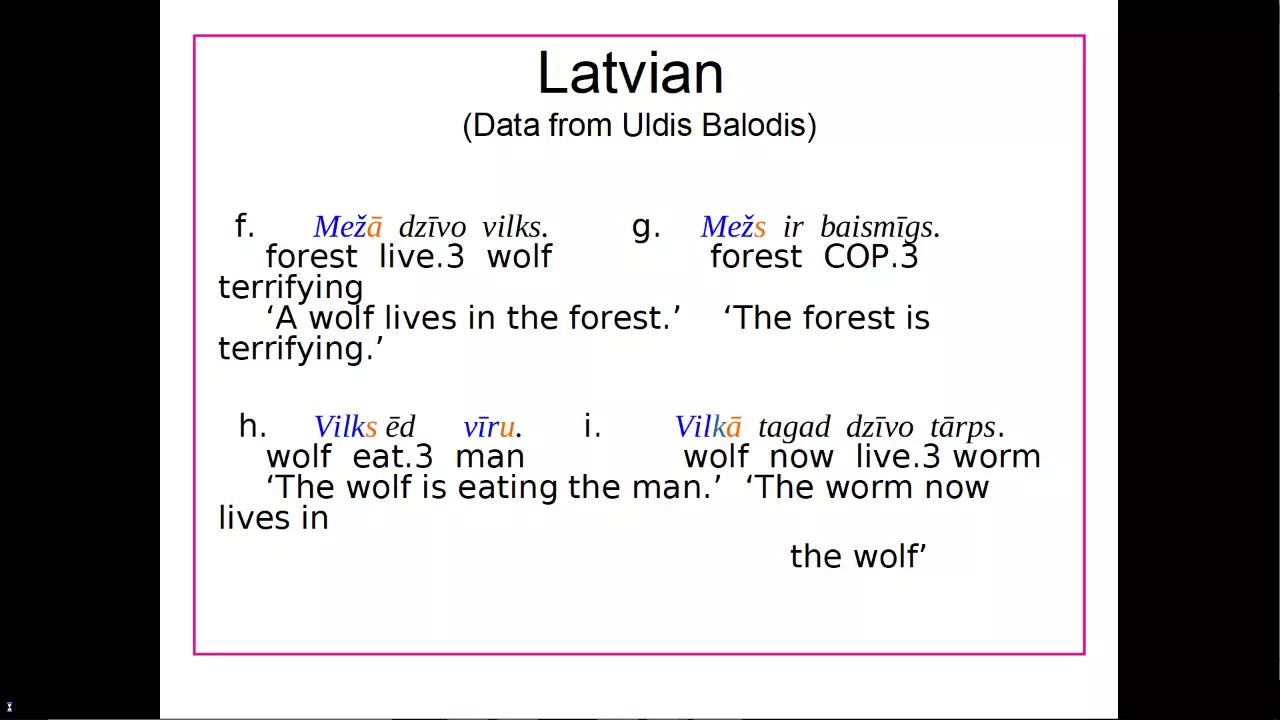
Practical application of interlinear morphemic glossing (Leipzig Glossing Rules) to analyze and transcribe texts from morphologically diverse languages.
39.9K views1Klikes6:17Original Release: 2018-02-26
alright so in this video we are gonna go over the four main words that I really want you guys to make sure you understand from this week isolating synthetic agglutinative in fusional and what they mean in terms of languages morphology alright so we're gonna start with isolating and synthetic now these two words have to do with how many different meanings you squidge into a single word right so here we have an isolating language where we've got three meanings a B and C of different types so this could be electrical meaning like house this could be a case marking like nominative and it could be a plural marking for example now in an isolating language you've got one word for every meaning right so an individual word separated by you know whatever people used to separate out words right so each meaning is mapped to one word right so this necessarily means that each word is going to be its own morpheme this is just because you don't get a morpheme if there's no meaning associated with it right so the only way you can have an isolating language is every word is one morpheme and each morpheme has one meaning right so that's an isolating language they're way at one end of the spectrum a fully synthetic language might have want to display the same three properties right house a case marking and plural right but in a synthetic language they all go into one word somehow they're all going to end up in the same word now in reality there there are no languages in the world that are fully isolating and no languages in the world that are fully synthetic we're going to talk about why there's no such thing as a totally synthetic language in another video most languages in the world are somewhere on the spectrum for example they'd maybe put meaning a in here and meanings B and C in here right so in a fully synthetic language you would expect that a whole sentences worth of meaning has to be crammed into one word right that's that's the extreme end of its synthesis in most languages you've got some parts crammed into one word and some parts get their own words there are languages that are pretty far in the isolation spectrum English is pretty far on this spectrum we don't have all that much inflection for example but it's not all the way please don't kick all my markers off the desk at all right but synthetic languages can be done in several different ways so this is any language that has any level of synthesis right you don't have to be fully synthetic to have this happen right but we've got two subdivisions of languages that have any sort of synthesis so a fully isolating language can't be divided into these two categories but anything you know in this area in between or fully synthetic can be divided in this way alright so we've got this separate division which is agglutinative and fusional which has to do with how those different meanings that we're squidging into one word get divided within that word right so if we've got meanings a b and c and we want to put them together into different in into the word in in a fusion or in a synthetic language if we put each meaning into one part of that word that can show up predictably so we know this part means a this part means b this part means c then we've got an agglutinative language right we've got individual morphemes that's what these red boxes are there are individual morphemes and they each have some meaning this is a lot like an isolating language which we saw up here right where we have one meaning per morpheme except that you can have you can switch those meanings together into one word and then the other option is fusional where we take all of those different meanings and we squidge them all into one morpheme we will do another video about why fusion only works Oh far but you get fusional languages have one morpheme that means you know so you'd have a separate word for a a nominative plural version of house would be completely distinct like it would have a different lexical item right so we might have nominative plural would meet would be houses but nominative or but nominative singular would have to be or sous or something like that right it would be they would be mapped completely arbitrarily there would be no way that you could tell that those were connected versions of the same word unless you've had it memorized right in reality again most languages are not fully agglutinate or fully fusional most languages he'll take like meaning a and put it in not morpheme and meanings B and C and put it into that morpheme right so this is languages like Latin where we saw men's Arum where this one was genitive plural and this one means mind right so we've got a fusional morpheme here where we've got two pieces of meaning in one morpheme and we've got an agglutinative e morpheme here where it just means one thing regardless of what this affects is all right so hope that clears that up I'm now going to make a video about the problem with fusion taken to extremes
Up Next
8:27
A Comprehensive Guide to Conlang Types: Analytical to Polysynthetic
@Artifexian
301.6K views•2017-11-13
36:52
Constraint Interaction in Optimality Theory: Epenthesis & Deletion
@Vidyamitra
180 views•2018-08-20

6:49
Object Alignment in Linguistics | Mini-Lesson
@isabelthelinguist
2.1K views•2018-03-23

21:32
Accent Expert Explains U.S. Regional Dialects | Part 1
@WIRED
9.3M views•2021-01-21
Related Study Plans & Knowledge Roadmaps
Structured learning paths in Linguistics
linguistics
Optimality Theory: Tableaux & Constraints
01Phonological Basics: Sounds, Syllables & Rules
02Foundations of Optimality Theory: GEN, CON, and EVAL
03The Constraint Inventory: Markedness vs. Faithfulness
+ 2 more learning modules
15h5 modules
Explore Roadmap
linguistics
Morphosyntactic Alignment: S, A & P Systems
01Foundations of Syntax: Transitivity and Arguments
02The Linguistic Variables: Mapping S, A, and P
03Nominative-Accusative Alignment
+ 3 more learning modules
12h6 modules
Explore Roadmap
linguistics
Analyzing Sign Language: Phonology & Syntax
01Foundations of Sign Language Linguistics
02Phonology: The Five Parameters of a Sign
03Morphology: Word Formation and Classifiers
+ 2 more learning modules
14h5 modules
Explore Roadmap
linguistics
Pragmatics: Speech Acts, Grice & Politeness
01Introduction to Pragmatics: Meaning in Context
02Grice’s Cooperative Principle & Implicature
03Speech Act Theory
+ 2 more learning modules
14h5 modules
Explore Roadmap