

![De 0 a 100 [Masterclass IA GRATIS 2025] | Mr Santos](https://i.ytimg.com/vi_webp/goLa6FXMFsE/maxresdefault.webp)





















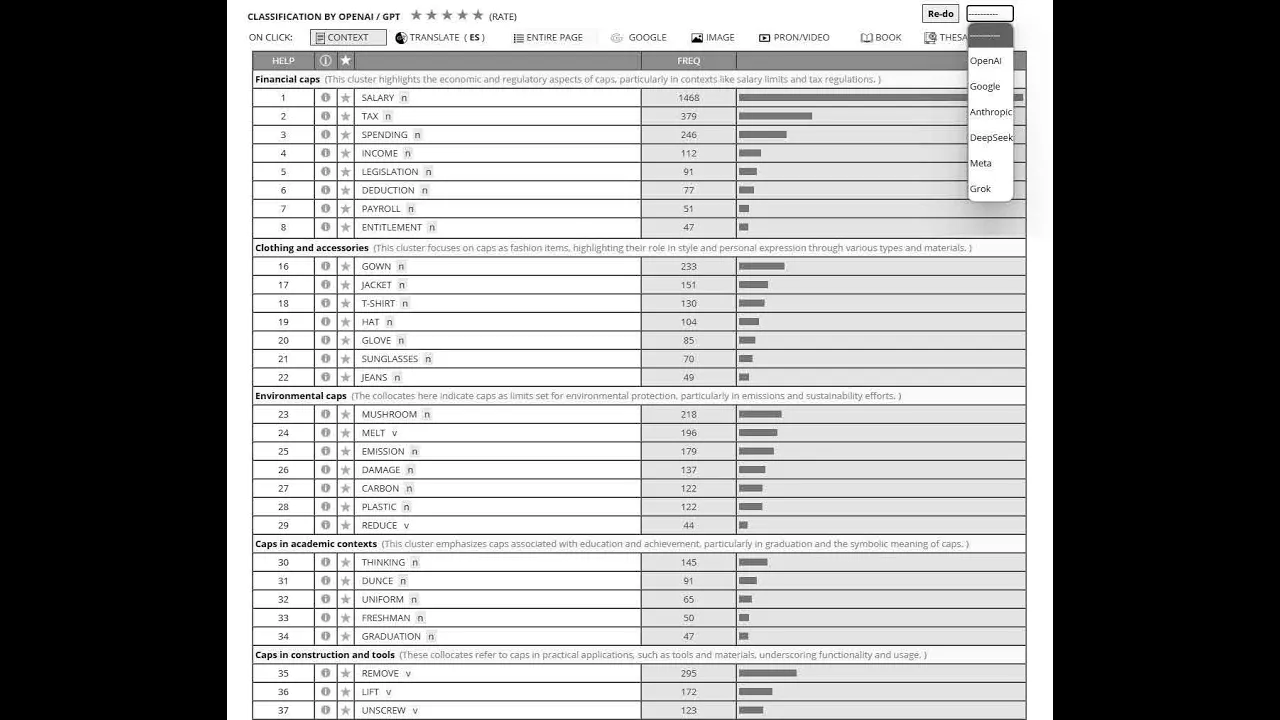
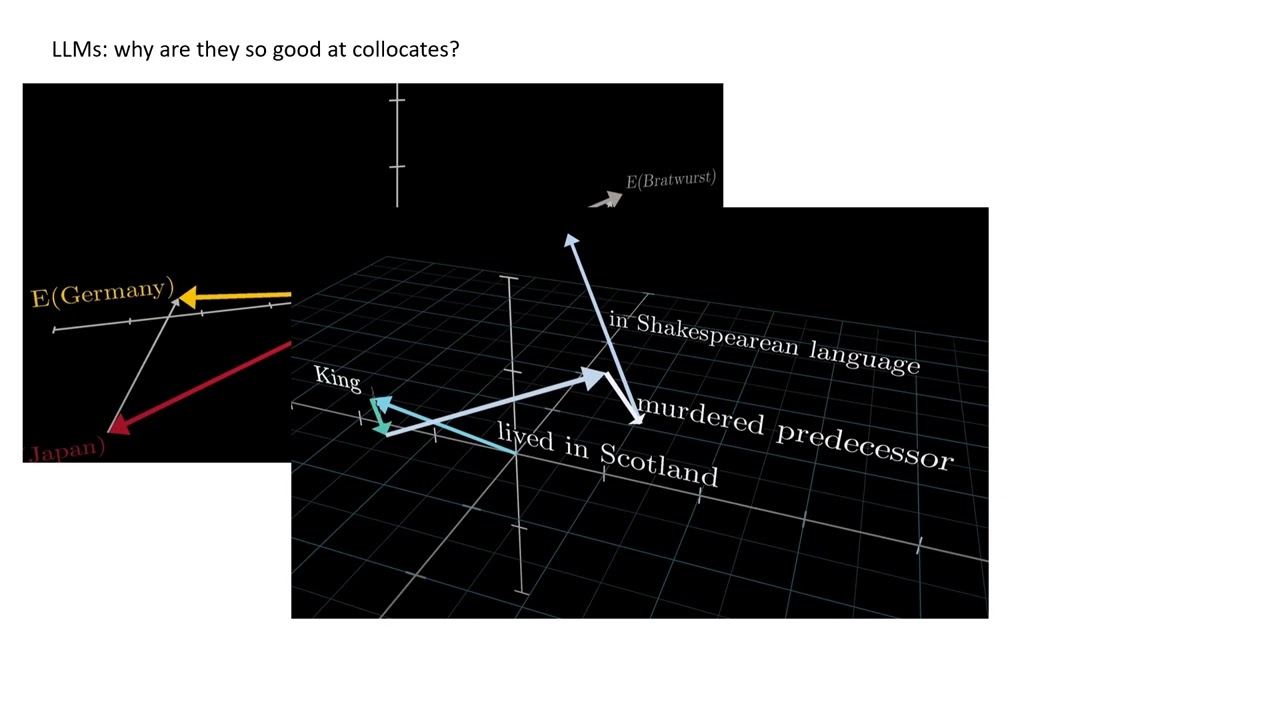

To effectively use AI for language learning, structure your study around four key components: (1) mastering phonological inventory and sound-spelling correspondences first, (2) building a comprehensive grammar foundation, (3) acquiring high-frequency vocabulary (target 5,000-10,000 words), and (4) practicing thematic communication scenarios. Use LLMs strategically as a research assistant to generate targeted content like Leipzig glosses, vocabulary lists, and grammar explanations, then integrate this material into spaced repetition systems like Anki for memorization. Avoid endless conversational practice with AI, as it wastes time; instead, use AI to create personalized, science-backed study materials that you then actively memorize and apply in real-world contexts.
AI for Language Learning: A Linguist's Guide to LLMs
Added:If you're using chat GBT to have random conversations in Spanish or French or whatever, you're wasting your time. And I can prove it. Look, I spent three months doing exactly what everyone tells you to do with AI language learning. I opened chat GBT. I asked it to chat with me in my target language and correct my mistakes. And you know what happened?
Almost nothing. My progress was painfully slow. But then I discovered something that changed everything. It turns out ChatGBT and other LLMs are incredibly powerful for language learning, but only when you use them as one part of a specific pipeline, not as a replacement for actual learning.
Today, I'm going to show you exactly what that pipeline looks like, why the way most people use AI doesn't work, and how you can actually use these tools to reach fluency faster than you ever thought possible. Let's get into it. If you're new to the channel, I'm Dr. Taylor Jones. I've got a PhD in linguistics from the University of Pennsylvania. And on the channel, I discuss everything related to language, linguistics, language learning, and culture. If you're into those topics, be sure to subscribe and ring the bell for notifications. This is Language Jones.
LLMs can be a tremendously powerful tool, but they also have a massive social gap. They can't teach you the actual cadence of real conversation, especially one from a culture with high conversational overlap or the cultural nuances of a joke. For that, you need highquality fuel for your study sessions. And for that, I use LingoPi.
LingoPi is a language learning platform that uses real TV shows and movies to immerse you in the language. It's not just watching content. It's an interactive study tool with dual subtitles, audio looping, adjustable playback speed, and even built-in flashcards and review. And those real movies and shows, they're the source material for all those LLMs. Anyway, sticking with the theme of this video, here's my new workflow. I find a paragraph or a dialogue in a real scene, click it to save to my word bank, and then use that exact content in my LLM to generate Leipig glosses for the content.
More on those later in the video, or 10 more sentences on the same subject matter and then dump it all into space repetition. It turns a static AI prompt into a dynamic native level drill. Then I just keep watching and enjoying. And once I've really learned that material, I'll go back and watch the same show again in a month. The comprehension boosts from Lingo Pie are incredible.
They support 12 languages, including Spanish, French, and Japanese. Use the link in my description for a 7-day free trial and 55% off the annual plan. This is a great method for an intermediate learner, but let's start with how to use an LLM from the ground up and work our way up to this. So, listen, we've got more language learning resources than ever before, but somehow that's just made it harder, not easier, to know what's worth your time. Everyone's got a different system, a different app, a different secret, and you're left paralyzed trying to figure out who's right and what's worth your time.
Separating the real strategies from the garbage has become a full-time job. I had resisted using LLM for language learning for a long time, but I've changed my tune, especially since the new batch of LLMs have addressed most of my concerns. After testing out the top LLMs and working them into a study pipeline built on learning science, I'm convinced of their usefulness. I even deleted Dolingo. So, first, why bother using a large language model like ChatGpt, Gemini, Claude, Perplexity, or DeepSeek, or whatever instead of a textbook, app, class, podcast, or other resource? I'll start with a caveat that I think one or all of these options have a place in a learning routine. But for the foreseeable future, I'll be structuring my learning with LLMs, and that's a huge 180 for me. There are a few reasons to structure your learning with LLMs. First, your learning can be personalized. Second, it can be much faster when done right because you're leveraging language, learning science, structured targeted learning, and precise feedback. And in fact, as a third point, this might just be the ideal use case for LLMs. You're not asking about historical facts, which they can get wrong, or for information that can be downstream of so-called poison pill propaganda attacks. You're not asking for a statistical analysis where it's just as likely to hallucinate or make numbers up as it is to actually crunch the numbers. You're asking it to do what it was designed to do. Make plausible sentences. And it's been fed hundreds of thousands of textbooks and grammarss and billions of words of news, history, fiction, magazines, subtitles from films, etc. Your textbook won't teach you any of the vocabulary you need to know to buy new diapers to avoid diaper rash or to discuss your emotions in a sophisticated way, drawing on lessons from therapy, or how to talk about a rabid stray dog or all the parts of a tree or art history. an LLM will.
The problem is that the way most people use LLMs for language learning is well, stupid. Endless conversations that can feel fun, but they're actually a huge waste of your time. And in a previous video, I mentioned some of the other dangers of too much LLM use. So, what we need to do now is optimize how we use LLMs and how we structure our learning.
And that's where I think I finally cracked the code. And just a quick aside here, a YouTube polyglot or an AI tech bro is not going to give you good advice here because they lack the entry-level knowledge to know what really needs to happen. For that, you need to understand linguistics. Lucky for you, I do. And by the way, if you want to understand linguistics, I'm launching a course later this year. It's going to cover everything that you'd learn in ling one at an Ivy League, but better because it's not an overworked grad student teaching as part of their stipend or an assistant professor who drew the short straw and is teaching an intro class because nobody else wants to reading verbatim from a handme-down PowerPoint.
Now, it's actually going to be fun and interesting. And if you like this channel, you're going to have a blast.
To get updates and get on the wait list, you can go to languagejones.com/bloopprint.
So, let's think about this. What's our goal with LLM assisted language study? I don't know about you, but my goal is a solid base for real world language use.
Done right, that can be with a broader base of knowledge than I can get from traditional resources. But how do we do that? Well, the real goal is effective targeted learning using the best practices from learning science and instructional design so that you can actually learn the maximum amount of material and gain the maximum proficiency in the minimum amount of time. In other words, not endless chat with a chatbot that fawns over you.
enough of you are getting messiah complexes from chat GBT. You don't need to develop one in Spanish, too. It's also not endless conversation without locking in what you're exposed to. So, this means it can't be all inside a chat. It has to be LLM use in conjunction with the basics of how to memorize. I'm going to build out a full course on this this year. So, if you want to join the weight list and be notified when that's ready, definitely go over to languagejones.com/acelerator.
Man, I got a lot of stuff in the works, but the first things you need to know are how to memorize, which practically nobody teaches. I use a lot of the lessons from Gabriel Winer's Fluent Forever, which I made a review of that I'll link at the end, and I have my own preferences and best practices I have found work for me using a spaced repetition software. I use Ani to lock things into my long-term memory. I'll link both videos at the end and in the description. So, let's say you're set to use a good protocol with effective encoding strategies. You've got your lifestyle dialed in. So, you have sleep and nutrition for consolidation and you have effective testing and recall structured with spaced repetition.
Again, I discuss all that in other videos. It'll be in the class. I'll link. Don't worry about it if you have no idea what any of that is. Now, you have the question of what to learn.
Where do you start? Well, the first things to learn are the sounds and sound patterns. What you need at the beginning is an understanding of the inventory of sounds of your target language and how they're related to spelling rules. Let me give you an example. And for fun, let's make it a language with a large and different phological inventory and a spelling system that fossilized before like a bajillion sound shifts. That's right, it's time for French. Here's a couple of good starting prompts. List all the consonants used in French using the IPA with example words for each orthographic representation of the sound, prioritizing words within the top 5,000 most common words. And of course, now do the same for the vowels. If you're thinking, "How am I going to learn that?" Don't worry. First of all, I've got you on IPA and you don't even need to learn the whole thing. But second of all, later in the video, I've got a hack for hearing the spoken language that feels like magic. But take a moment to notice something really important that I did here. I did the inverse of what most textbooks do, especially if there's a new script to learn. They'll say, "This is the alphabet. This letter makes this sound.
This letter makes these other sounds."
And so on. What we want to do is start with the sounds, the actual building blocks of the language, and learn the different ways that they're represented in writing. This is how you learn to read in your first language if you use an effective method like phonics.
Second, you'll want a basic understanding of the grammatical structures, that is the contents of a reference grammar for your target language, for instance. Third, you'll want the most common words. 5,000 is a decent intermediate level. 10,000 is what anybody would consider respectable.
and 40,000 is an overeducated native speaker nerd. I have an expansive definition of vocabulary, so I include chunks, phrases, idiomatic expressions, and so on. What linguists might call lexims or lexical items or lexical entries. Fourth, and finally, you'll want to learn thematic use of language in a wide variety of real world situations, widening the circle from basics for everybody to your own needs and interests, recognizing that needs and interests are two different things.
So, let's start with a plan based on what's realistically doable using ANI for memorization. For basically anybody, 10 new cards a day is extremely doable.
That's a maximum of 100 reviews in a sitting and is achievable in a few minutes. 50 new words a day is doable in a targeted sprint, but I find I have to break up my daily reviews when I'm learning that much because I get too antsy and uncomfortable to finish in one sitting. And 50 a day is just an unsustainable pace for me. For a normal person, we'll say somewhere in the middle there. 15 to 25 new words is ideal in my opinion. Whatever you can do, whatever the maximum is. But if you're doing 10, that's 3,650 new words in a year. If you're doing 25, that's 9,125.
For reference, a vocabulary of about 10,000 words is well beyond what you'd need for travel and enjoyment and being able to get around in the language.
5,000 is like a strong intermediate baseline. One way then to decide what to learn is to develop a targeted learning plan. Personally, I like to take a textbook and model my learning off textbook contents first. They generally cover the most important grammar, the most common vocabulary, and the highest value thematic content for early in your learning. You don't have to go with a textbook, but you might be reinventing the wheel. If you choose to reinvent the wheel, you'll want to make sure you cover all the basic grammatical structures and vocabulary that you need.
But you can actually just ask an LLM something like, imagine you're writing a textbook to teach French from scratch.
The goal is to get a learner from A to C1 with an extensive vocabulary and a strong command of all the relevant grammatical structures based on the best textbooks available. How should you structure the course? Be specific with learning goals. For instance, IR verbs in the present tense, thematic content, for instance, going shopping, and communicative goals.
Then follow up with something like, "Are there any important grammatical concepts that are left out of this course structure?" It's going to add stuff there. And now integrate these additions into the initial structure and create a document I can refer to as a learning plan. As an example, here's what Claude generated with that prompt. Assuming you've already taken my advice about learning the sounds and the sound spelling correspondences in your target language, it's time to generate learning content in chunks. You can do this monthly, weekly, or even daily depending on your interests, goals, and level.
I'll give you some specific prompt ideas in just a moment. But once you've done that, you can have your LLM format the output as a CSV that can be imported into a space repetition system like ANI.
Lately, I've been using cards where I have the word, phrase, chunk, or simple sentence in English and an image on the front of the card and then the word in my target language, audio, a pneummonic image, and notes on the back. So you'll want to have it output a CSV with consistent columns for your format and then we'll add the images and audio next. You can batch import the whole CSV into an in one sitting and the smart way to do it in my opinion is as a subdeck for whatever you're learning. Once you've done that, you can use HyperTS or similar to generate audio. If you want really highquality audio, you can use Speechify, but there's an additional step. You'll want to have it read all the target language bits. Maybe dump only the target language words and sentences into a text file and separate the lines or something and then record.
For instance, using audio capture on QuickTime or OBS or any number of audio captures, then automatically split the audio in Audacity and then manually add it to each card. It's a lot of work, but it's really good. I use Hypert, which is good enough, and just generate the audio in batches. But the trade-off is that you'll have to fix errors, especially in languages like Hebrew or Farsy. And the audio is excellent, but Speechify is better. The next step is to add images.
You can use whatever you want. Because I intend to share some of my decks, I use Freepic, Wikipedia Commons, and memes, but in theory, you could use anything.
Learning the word for brother. Use a picture of your actual brother. The key is not to waste time getting bogged down in finding the exact perfect image, but instead to get to the first thing that's good enough. And sometimes there just isn't anything. In which case, just go without. It's fine. You'll be fine.
Especially if you're making cards for all the conjugations of a particular verb. you're just not going to find 22 compelling images of people, I don't know, receiving packages or whatever.
Doing this alone, working through all the grammar, vocabulary, and communicative contexts, and chipping away at memorization with a daily study habit and a weekly or monthly session, adding content to memorize will absolutely get you learning 10 times faster and more effectively than with Duolingo, for instance. But there's ways to turbocharge this, too. For targeted practice, you could do short AI sessions, maybe one to two times per week, working on things that you've been learning for a while in an mature cards.
Here's some options. Option one, generate a paragraph or short story about X topic using Y grammatical construction and Z vocabulary. For instance, generate a paragraph about getting dressed to go out for a date and be sure to include reflexive verbs.
Focus on the future tense use. Then use speechify to listen to your new tailored content exactly at your level using what you've worked on. You can even give the LLM your Anki deck or your spreadsheet and ask it to use specific groups of vocabulary items. Option two, quiz me on conjugations for X verb and Y tense or aspect or mood. For instance, provide sentences in a fill-in- thelank format and an answer key. Option three, free conversation about a topic, ideally with the preceding constraints. Option four, start getting further clarification. One recent chat that I had was asking for clarification when it comes to deontic modality in Hebrew. that is talking about your musts, ughoughts, have to, and need to. I dug around in various grammars, but I wasn't clear on how mukra was an externally imposed obligation. I missed that there was an axis of both intensity of commitment and whether it's an internal or external commitment. Now, it's important to note that the responses allowed me to figure that out, but didn't necessarily spell it out for me in the same terms. When you're using an LLM, you still have to, you know, think. A second way to accelerate the system is to practice outside of the LLM in the real world. I know it's scary. You'll be okay. It doesn't actually have to be the real real world either. So, at regular intervals, maybe on a one to two month lag with what you're learning, log on to Eyealkie or whatever platform you use for spoken interactions with real people. I've got a whole video on how to best use it. I just released after using it for years, but only just recently figuring out how to optimize my time there. Notice how I said to do it at a lag. Notice a pattern emerging. It's not really worth it in my mind to have a structured conversation with a native speaker when you just don't know the words you'll need. But once you have them at your command, you can start to practice how they flow in conversations.
And here's some novel combinations that tickle your brain a little bit. I'd also confirm all the initial work on the sounds of the language with an Ialkie tutor at first, just to confirm everything and to get targeted feedback and guidance on speech production. So, let's put this all together so we can get a handle on the language and not spend time with an LLM just spinning our wheels. For the first 6 months to a year, you should focus on getting a handle on all of the grammar and a baseline of vocabulary and communicative situations. The first week or two of focusing on sounds and spelling if needed. And let me rephrase that to be even clearer. You should be able to get a baseline level of knowledge of all of the topics covered in a grammar of your target language in under a year. Now, don't beat yourself up if it takes longer, but don't do what I did in high school and take four years to learn most, but not all of the structures of French. After that first 6 months to a year, you could start doing two things.
First is just getting extensive vocabulary following a frequency dictionary, a resource like the Ultimate Spanish Review and Practice, or some other educational resource. Hey, it's Jones from the future. And don't worry, I'm not here to tell you about anything bad. It turns out you can snap a photo of a page of a book like that and ask for a CSV with the target language in one column and translation in another or even in your preferred format for ANI. I did it with the ultimate Italian review and practice and was impressed. Second, and this is where an LLM really shines is extensive vocabulary and more targeted situations, especially those that you might not find in a textbook or educational resource. Some recent examples I've added to my vocabulary and the languages that I'm learning are using the bathroom, academic writing, underpants, child care, romantic intimacy, and bugs. I literally sat bolt upright in bed at 4 a.m. and said, "I should ask Claude about Beatles." And then went back to sleep. Whatever your interests are, here are some of my recent prompts and the outputs. And this is important. By 6 months, you should be engaging with real content in your language, not just AI output all the time. But you can use AI as a bridge.
For instance, I'm going to read a book about Leonardo da Vinci and the Italian Renaissance. Generate a list of the most important vocabulary to know in advance with some sample paragraphs. It's a great bridge. Or I'm going to read by Kimu. Generate essential vocabulary to discuss the main themes with sample sentences. Summarize the contents in simple language. So as I'm reading, I'll have my bearings. Also note any difficult grammatical concepts I might come across. And there's a few in that book. Hey, it's Future Jones again. One thing I tried after scripting and filming that I highly recommend if you're a certain kind of person, and face it, you're here, you are, is taking a book you're reading and snapping a photo of a page or if it's a podcast or a blog or whatever, copying and pasting, and then ask your LLM to do a line by line translation and lip gloss. Leipig glossing is a standard notation in linguistics that breaks up all the parts of words in a whole sentence. So you can see exactly what's going on in every word with a hyperliteral translation and then an idiomatic translation with it.
It looks something like this. And regardless how you get the text into your computer, >> they're in the computer.
>> You can have speechify read it to you, too.
There's so many other options, but the point is that AI can be a bridge to extensive reading or listening, not a replacement for those things. So, if you choose to use it as a tool, it can be an incredibly effective tool. But if you go in with no direction and ask it to just teach you a language, you're going to be wasting a lot of time and energy and water probably. This is a completely different approach than most AI integrated apps and than the advice you get from YouTube polyglotss. And it's not necessarily intuitive. Of course, it's much easier to ask ChatGBT to just teach me Spanish, but determining the parameters of what it means to learn Spanish and when and how you'll want to use it and then building a finite learning plan for structures and communicative competencies and populating that with highfrequency, high-value content, and doing so with all the best practices from memory science, smart encoding, consolidation, space repetition of active recall.
That's a good way to use an LLM to build a uniquely personalized learning path that covers the material you need to learn while making it interesting with the material you want to learn. If you want a free PDF prompt guide, you can grab one at languagejones.com/acelerator and I'll link in the description and pinned comment. If you like what I'm doing with the channel, you can support it on YouTube with superthanks or over on patreon.com at patreon.com/languagejones.
Please leave a comment. They are great for the algorithm. and subscribe if you haven't already. Until next time, happy learning.
Up Next

LLC vs S Corp: Tax Classification and Business Structure Explained
@allupinyobiz
28.4K views•2022-02-02

Triumph of Orthodoxy Icon: Byzantine Art & History Explained
@BenCallan
2.1K views•2024-08-06

FastAPI vs Flask vs Django: Choosing the Right Python Web Framework
@TechWithTim
302.5K views•2024-05-26

Game of Thrones Opening Credits: A Cinematic Analysis
@gameofthrones
46.3M views•2011-04-18
Related Study Plans & Knowledge Roadmaps
Structured learning paths in General & Interdisciplinary Studies