






![Scope ambiguity [How to write better in Japanese 1.1]](https://i.ytimg.com/vi_webp/TuuFBor0tK4/maxresdefault.webp)















Object alignment refers to how languages mark the different types of objects in transitive and ditransitive sentences; in dative object alignment (the most common pattern), the transitive object and the theme (thing being transferred) receive the same marking while the recipient receives dative marking, whereas in secondary object alignment, the recipient and transitive object share the same marking while the theme differs; English demonstrates a neutral system where all objects receive identical marking regardless of their role.
Object Alignment in Linguistics | Mini-Lesson
Added:Understanding basic grammatical relations, specifically identifying subjects (S/A), direct objects (P/T), and indirect objects (R).
The concept of verb valency, including the distinction between intransitive, transitive, and ditransitive verbs.
Familiarity with semantic thematic roles, particularly Agent, Theme (the entity being transferred), and Recipient (the entity receiving).
A basic grasp of morphosyntactic alignment, such as how languages group arguments in simpler Nominative-Accusative or Ergative-Absolutive systems.
Analyzing the formal distinctions between Indirective alignment (Dative-Accusative) and Secundative alignment (Primary-Secondary Object).
Studying the syntactic behavior of 'Double Object' constructions and 'Dative Shift' alternations across different languages.
Exploring Differential Object Marking (DOM) and how factors like animacy, definiteness, and person hierarchies influence alignment.
Using typological databases like WALS (World Atlas of Language Structures) to map and analyze the global geographical distribution of ditransitive alignment types.
2.1K views74likes6:49Original Release: 2018-03-23
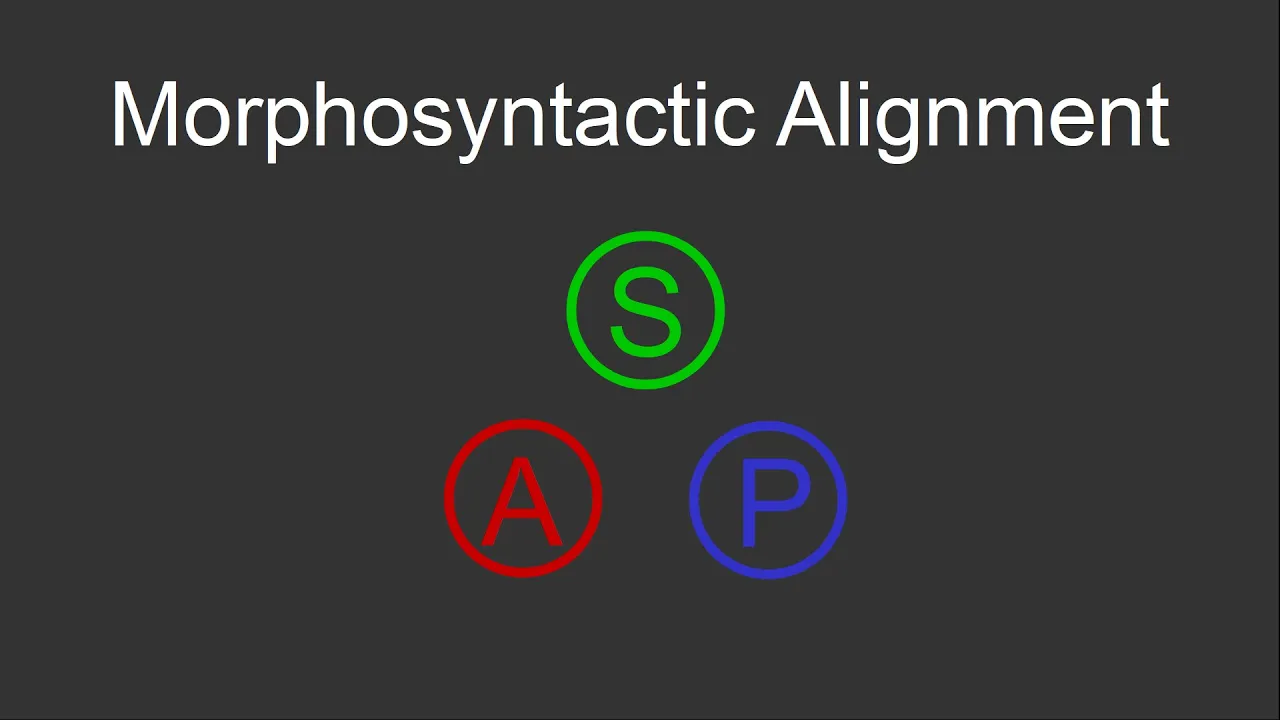
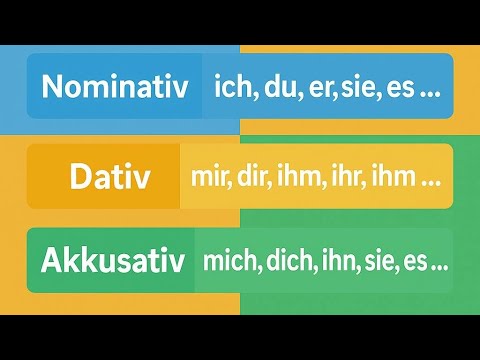
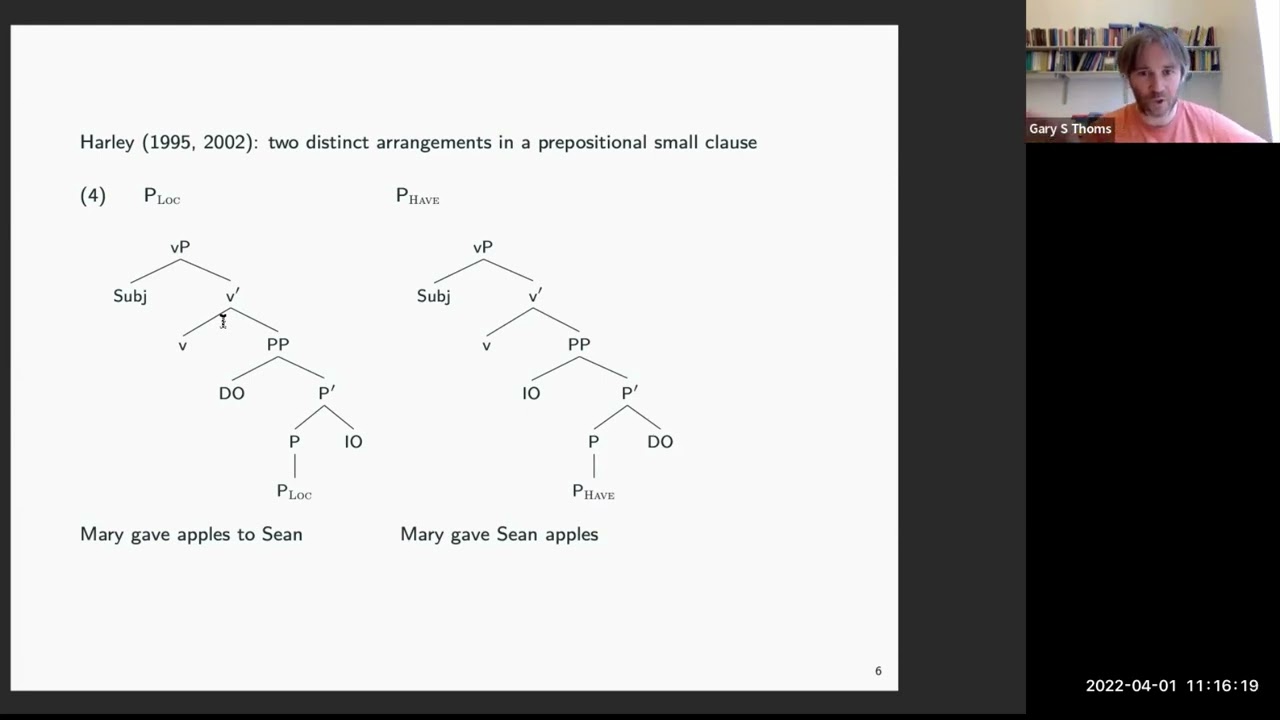
alright so contrary to what you're looking at right now this video is going to be about object alignment I just want to start off with a very brief review of exactly what subject alignment is even though we have talked about this already I just want to go over it so that we can see it in the context of object alignment as well so when we're figuring out the subject alignment of a language we look at an intransitive sentence and compare that to a transitive sentence and we look at how the subject of an intransitive sentence and the subject and object of a transitive sentence get marked with regard to one another now in a nominative accusative language like English on the subject of an intransitive and the agent of a transitive verb or mark the same way sna right so so this means he flies he likes flowers they get the same marking the same form of he verses he flies he likes him him is an accusative form it's different and so it has a different marking in contrast in a negative absolutive pattern you see the subject of an intransitive is marked the same way as the object of a transitive verb right so the sub the the the s and the and the and the patient are marked the same way so this would be like if we said in English he flies and then him likes he right so then that would be an architect of pattern that's not what we had so now we're going to talk about object alignment so in subject alignment we compared an intransitive sentence to a transitive sentence in a knob when we looking at object alignment we're comparing transitive sentences so sentences like bees like flowers to die transitive sentences so these are sentences that have two objects two objects two objects in it die transitive second so things like give bring and send where John gave Mary a cake right for example right Mary and a cake of objects so when we are doing this we just like we did before we mark this with a and P right this is our transitive sentence right we have the transitive subject as an A and the transitive object is a P when we move to die transitive x' bees give people honey this is still marked as an a because it's still a subject and agent but then people is the is the person who receives the honey right and so as such as marked as a recipient with our right bees give people and then honey is the thing that's being transferred so it gets marked as a T which doesn't stand for transfer but it stands for theme but that's a good way to remember it is we have receive and transfer right that's a good memory device so similarly if we had a sentence Tom sent Marge a card we would have an an a a recipient of the card and the card is the thing that travels so so P marks patience the transitive objects T marks the theme the move thing and our marks the recipient which is the person who gets the thing so in a lot of languages that you guys have probably studied if they have more cases than just nominative and accusative the next one that they add is usually a dative case and and most of these are are called in directive object alignment or these are all called in directive object alignment but this is the case where the object of a transitive gets the same marking as the thing that is being transferred in a die transitive so this means that in our in our lovely bees like honey versus bees give people honey we would mark honey the same way and people would get some sort of dative marking right these usually are both accusative and then people is dative right secondo is another is another way of doing marking and this is a little more unusual it's not as common but it is it does happen out there so it's good to know about this is the case where the recipient and the object of the transitive received the same marking whereas the the theme the thing that does the traveling in AD I transitive is marked differently so in this case we would we would be marking Marge the same way as we marked honey and then a card would receive some sort of different marking as the thing that travels so that's a Secunda pattern what we have in English love Lili enough that was terrible phrase but we have a neutral system which means that we mark all objects the same way so how do we test that in English we think about giving pronouns that's the best way to do it right so Tom gave him a card right that so we put an accusative here bees like him we put an accusative here Tom sent Marge him this is a little bit awkward in English but you know that's how you would say it it's certainly better to say Tom sent Marge him then Thomas Aunt Marge he for example right so they all just receive this lovely accusative marking they all are accusative and tada a wonderful system now the reality in English is that most nouns receive no marking at all so we really have a neutral system throughout most of our system it's neutral for for both object alignment and subject alignment it's only we only see a nominative accusative pattern in in pronouns and then it's neutral here regardless of whether we're using pronouns or full nouns all right so object alignment has to do with how we treat the patient the theme and the recipient with regard to marking and they create several different categories of languages
Up Next

17:07
How to Express Verbs in Ælis Without Verbs: A Guide to Syntax
@binznakama
129 views•2019-11-30
36:52
Constraint Interaction in Optimality Theory: Epenthesis & Deletion
@Vidyamitra
180 views•2018-08-20

8:18
Split Systems in Linguistics: Definitions & Types | Mini-Lesson
@isabelthelinguist
4K views•2018-03-23

21:32
Accent Expert Explains U.S. Regional Dialects | Part 1
@WIRED
9.3M views•2021-01-21
Related Study Plans & Knowledge Roadmaps
Structured learning paths in Linguistics
linguistics
Optimality Theory: Tableaux & Constraints
01Phonological Basics: Sounds, Syllables & Rules
02Foundations of Optimality Theory: GEN, CON, and EVAL
03The Constraint Inventory: Markedness vs. Faithfulness
+ 2 more learning modules
15h5 modules
Explore Roadmap
linguistics
Morphosyntactic Alignment: S, A & P Systems
01Foundations of Syntax: Transitivity and Arguments
02The Linguistic Variables: Mapping S, A, and P
03Nominative-Accusative Alignment
+ 3 more learning modules
12h6 modules
Explore Roadmap
linguistics
Analyzing Sign Language: Phonology & Syntax
01Foundations of Sign Language Linguistics
02Phonology: The Five Parameters of a Sign
03Morphology: Word Formation and Classifiers
+ 2 more learning modules
14h5 modules
Explore Roadmap
linguistics
Pragmatics: Speech Acts, Grice & Politeness
01Introduction to Pragmatics: Meaning in Context
02Grice’s Cooperative Principle & Implicature
03Speech Act Theory
+ 2 more learning modules
14h5 modules
Explore Roadmap